Training guide

How to do thrusters: the front squat into an overhead press, how heavy and how many

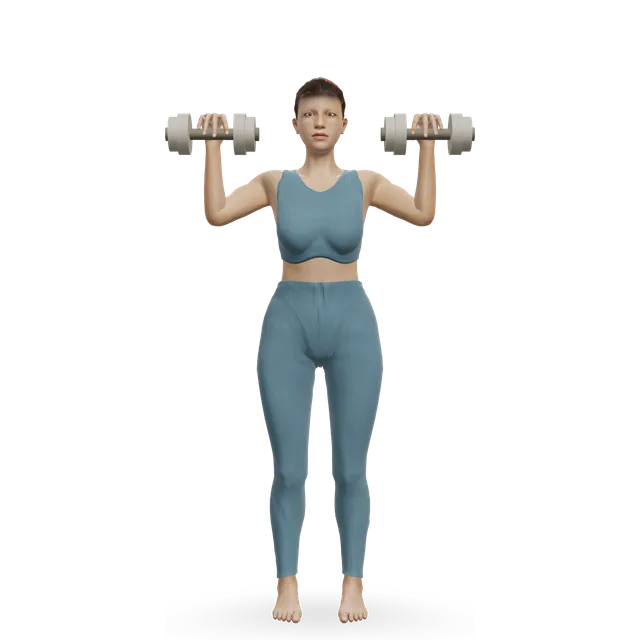
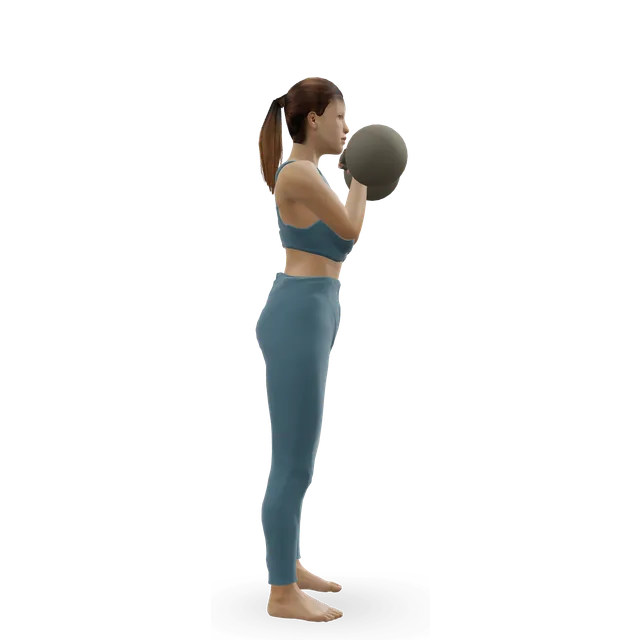
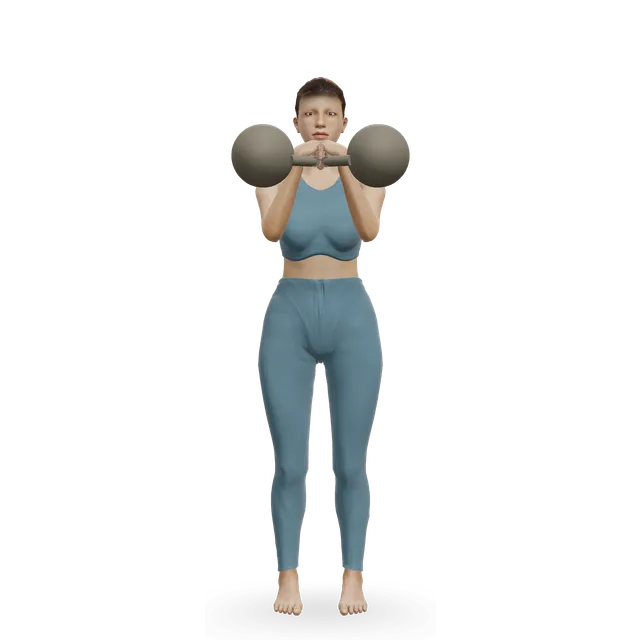
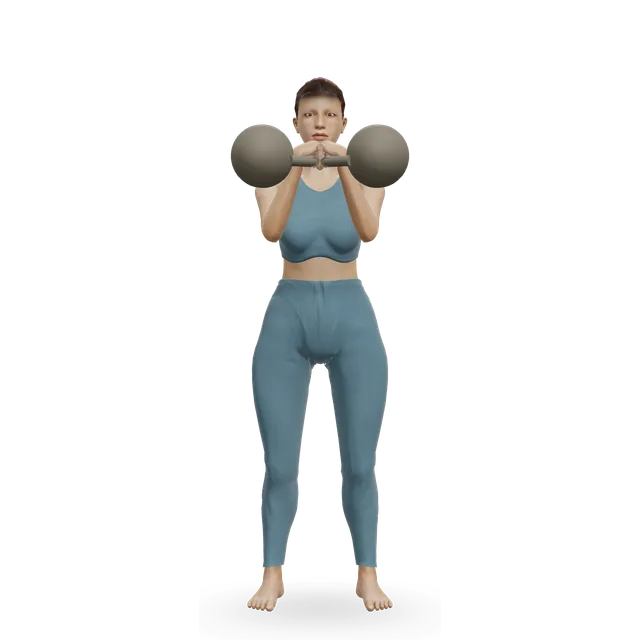
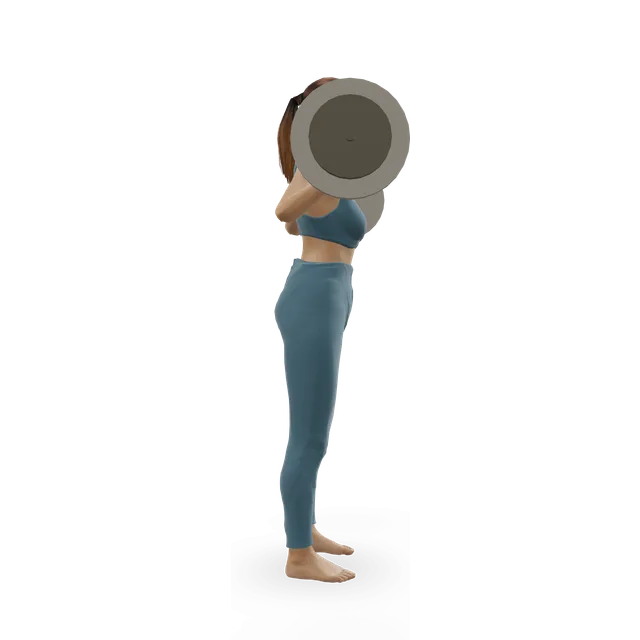
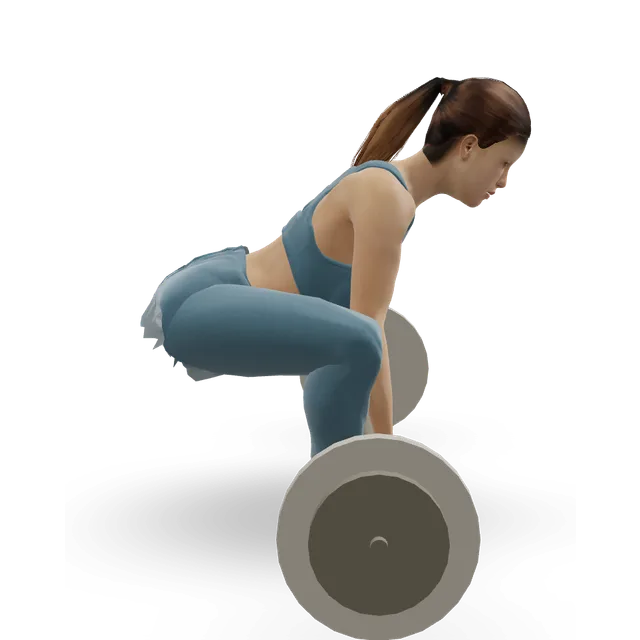
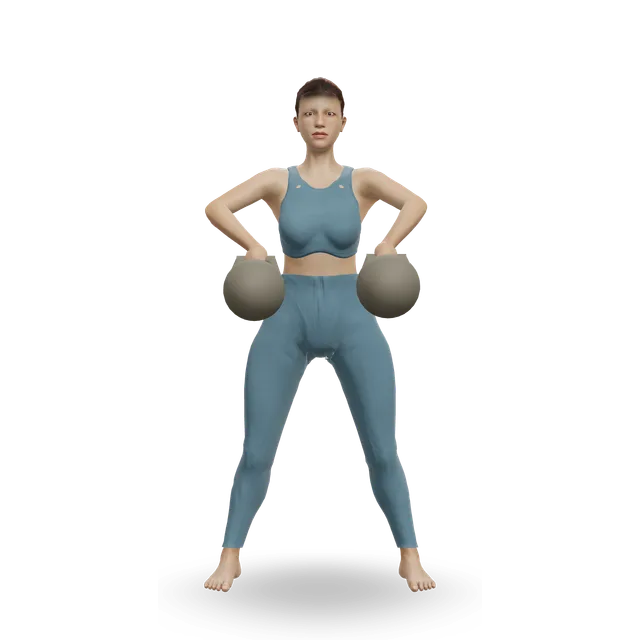
A thruster is a front squat that flows straight into an overhead press. You sit down with the weight at the front of your shoulders, stand up hard, and let the drive of your legs carry the weight overhead in one movement. You can do it with a barbell, two dumbbells, two kettlebells or one weight in one hand; our 3D figure shows two kettlebells.

No study has measured muscle activity in the thruster itself, so what it works is our reading of its two halves. Its best-known workout has been studied in the lab, though: trained athletes' heart rates peaked at about 180 to 187 beats a minute, with a bar about half as heavy as their best single lift. It isn't only for CrossFit: a coaching body teaches it, an NHS physiotherapy leaflet uses a gentle version, and it suits a home workout.

This guide covers the technique step by step, the parts to learn first, how heavy and how many for strength or conditioning, breathing, your wrists, shoulders and pelvic floor, thrusters and wall balls for Hyrox, and the warning signs.

The short version

Your legs start the press

Hold the weight at the front of your shoulders, squat until your hips are below your knees, then stand up hard and press as your legs straighten. The drive comes from your legs, as in a push press (our push press guide), which produced as much peak power as a jump squat in 17 trained men.

Sources 1, 2

It's hard work

In the best-studied thruster workout, 21, 15 and 9 thrusters alternating with pull-ups, trained athletes' heart rates peaked at about 180 to 187 beats a minute. It was mostly aerobic work, and the researchers say full recovery can take more than 24 hours.

Sources 3, 4, 5

Lighter than you think

That workout's bar (about 43 kg for men and 29 kg for women) was about half of trained men's best single thruster. Start with an empty bar or light dumbbells or kettlebells, and choose by your own strength: 2 to 3 sets of 5 to 8, stopping 2 or 3 reps short, is our editorial starting point.

Sources 4, 6

Pace the conditioning

The same work done every minute on the minute kept heart rate, lactate and effort well below racing the clock, and 6 weeks of mostly easy training improved a workout of 50 thrusters as much as mostly hard training. It doesn't have to leave you on the floor to work.

Sources 7, 8

Breathe with each rep

Brace as you sit into the squat and breathe out as the weight passes your face. With high blood pressure, heart disease, glaucoma or diabetic eye disease, a hernia or recent surgery, or in pregnancy, breathe out through every drive and keep the weight moderate.

Sources 9, 10

Look after your wrists and shoulders

A barbell rack needs a lot of wrist bend; dumbbells held palms in, or kettlebells, spare stiff wrists. Shoulders and backs each took about a quarter of injuries in high-intensity functional training, though no study singles out thrusters.

Sources 11, 12

What a thruster is, and what it works

The move

A thruster, also called a squat to press or squat and press, joins a front squat and an overhead press into one continuous movement. The American Council on Exercise (ACE) rates the dumbbell version advanced: when your hips are below your knees, you push both legs into the ground to stand up and press the dumbbells overhead at the same time. An NHS physiotherapy leaflet makes its standing shoulder press harder in the same way, by starting it from a squat.

It isn't the hip thrust, a glute exercise done with your back on a bench, which search engines often mix in.

Sources 1, 13

What it works

No study has measured muscle activity in the thruster itself, so this is our reading. It joins two lifts the site already covers: the front squat (your thighs and glutes, with your trunk holding you upright) and the overhead press (the front and side of your shoulders and your triceps, with your shoulder blades turning up as your arms go overhead). Because your legs start the press, you can press more than in a strict press, as in the push press.

Source 2

What it asks of your joints

Deep hips, knees and ankles at the bottom; wrists bent back and elbows high in a barbell rack; and full overhead reach at the top. In 20 CrossFit athletes, a good catch of the bar on the shoulders went with about 92 degrees of wrist extension and 173 degrees of shoulder flexion.

Source 11

Before you start

You need a goblet or double kettlebell front squat to below parallel with your heels down and your trunk upright, and a press overhead without arching your back. Our overhead press guide's wall check (arms flat on the wall overhead without your lower back lifting) is a quick test of overhead reach. For a barbell, you also need a rack position your wrists tolerate.

How people differ

Long thighs or stiff ankles tip your trunk forward in the squat: raise your heels slightly or use dumbbells, as our front squat guide advises. Limited overhead reach means a weight that finishes in front of your head: press one arm at a time, use the landmine version, or press only as high as your back stays flat. Stronger athletes finished the benchmark faster, and a fixed weight is a bigger share of a smaller person's strength, which is why loads set by each person's strength evened out the effort in one study.

Sources 14, 15, 6

How to do a thruster, step by step

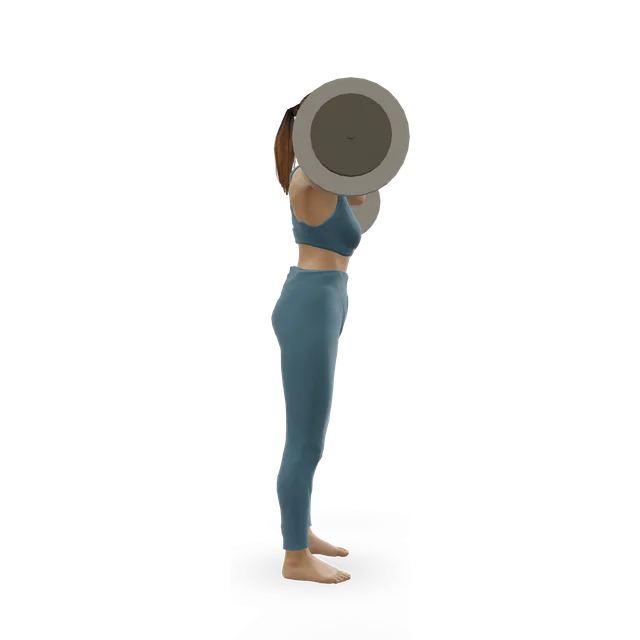
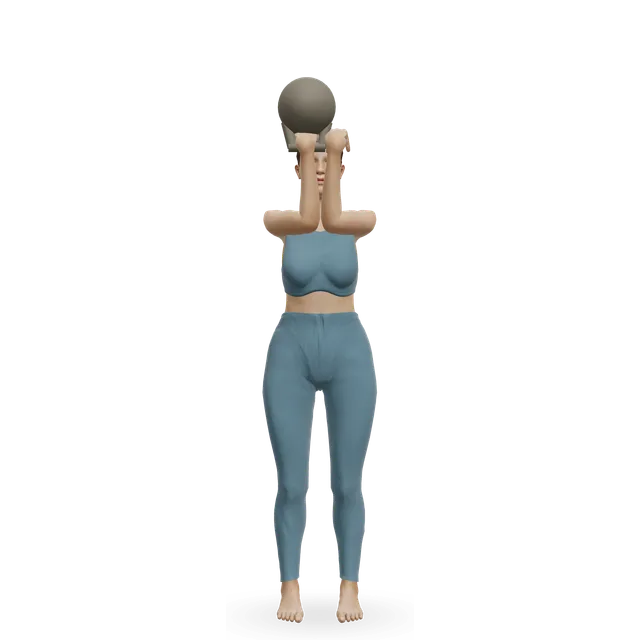
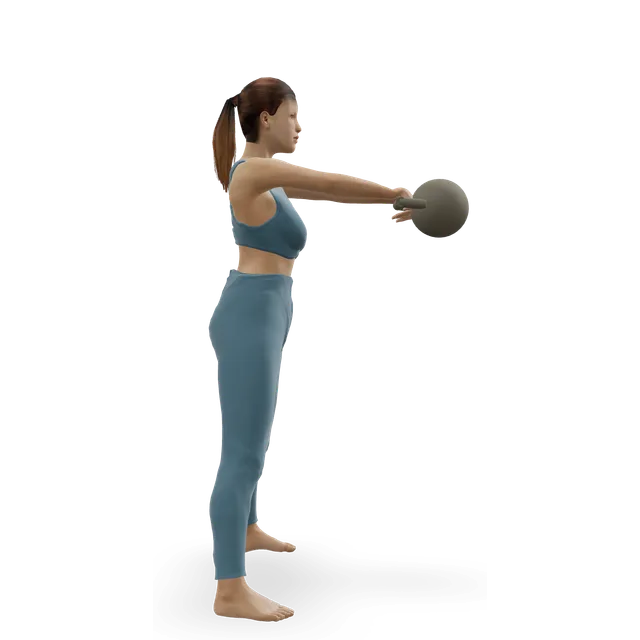
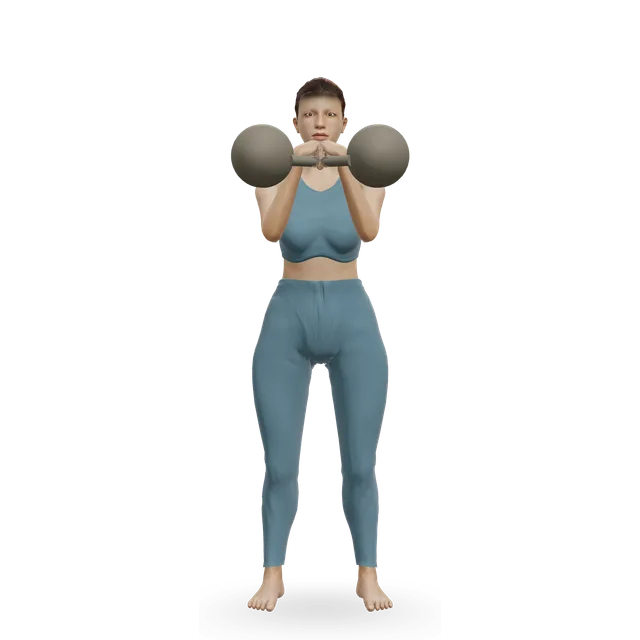
From our move page, ACE's squat to overhead press and our front squat and overhead press guides. The demo shows two kettlebells; the barbell and dumbbell versions follow the same steps. Ending the set when the reps change is our suggestion.

  1. Set up: clean two kettlebells to the front of your shoulders (or lift two dumbbells there), wrists straight and elbows tucked in front. With a barbell, take it from a rack at shoulder height, hands just outside your shoulders, fingertips under the bar and elbows high. Feet about shoulder-width apart, toes turned out a little.
  2. Breathe in and brace your trunk.
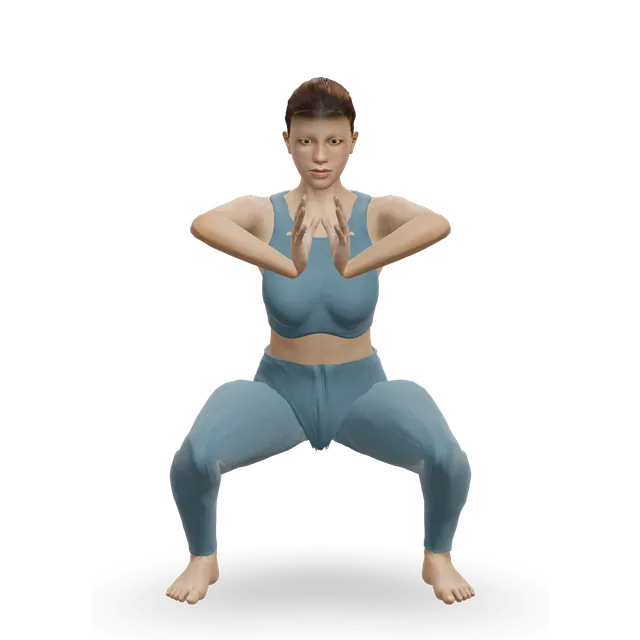
  3. Sit down between your heels, chest and elbows up, until your hips are below your knees, or as low as you can keep your heels down and your back in shape.
  4. Drive up through your whole foot without pausing at the bottom, keeping your elbows up as you rise.
  5. As your hips and knees straighten, let the drive carry the weight off your shoulders and press it to locked arms, biceps beside your ears and the weight over the middle of your feet. With a barbell, tip your head back a little as it passes your face and bring your head through once it's past your forehead.
  6. Breathe out as the weight passes your face.
  7. Bring the weight back to your shoulders under control, not dropping it onto your chest, and let your knees soften to start the next squat.
  8. End the set when the weight drifts forward, your squat gets shallower or your lower back arches at the top.

Loading the 3D figure…

Gets into position, then repeats the movement. Technical checks passed; qualified exercise review is pending.

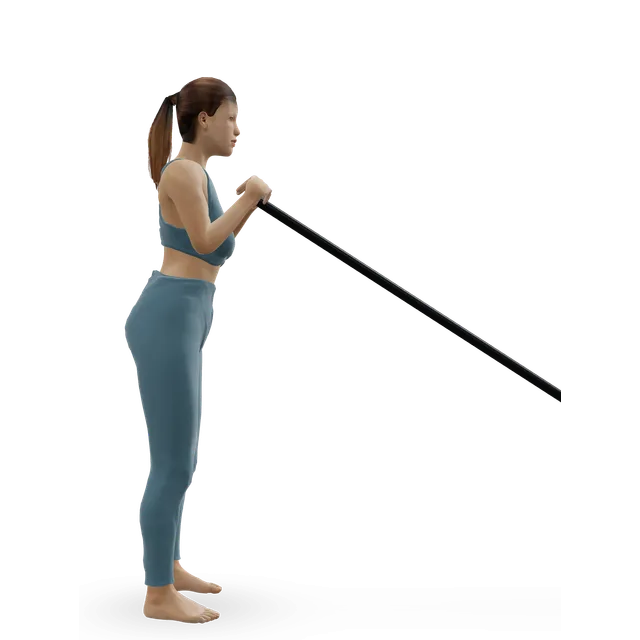
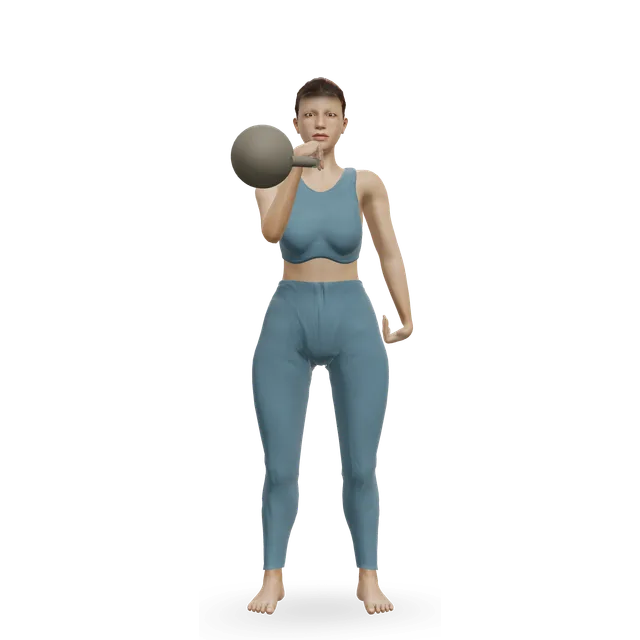
The movement on the figure: Double kettlebell thruster

Barbell, dumbbells, kettlebells and one arm

Barbell

Use the clean grip, the only grip you can press from: the bar sits on your shoulders in the squat, and your hands take it as you drive. Crossed arms and straps, the front squat guide's options for stiff wrists, don't work for a thruster.

Two dumbbells

Hold them at your shoulders with your palms facing each other and your elbows close to your body, as ACE describes. They spare stiff wrists and let each arm find its own path, and they suit a home workout.

Source 1

Two kettlebells (the demo)

The bells rest in the rack on the outside of your forearms, wrists straight, as in our kettlebell press guide.

One arm

One dumbbell or kettlebell at one shoulder: your trunk works to stop you leaning towards it. Use a lighter weight and do both sides (our suggestion).

Landmine

The free end of a barbell, anchored in a corner or a landmine, pressed up and forward along its arc: easier on stiff or sore shoulders. Our landmine jammer demo shows the dip-and-drive version; squat deeper for a thruster (our suggestion). Our landmine press guide teaches the press and the jammer.

Wall ball

A medicine ball held at your chest, a squat to below parallel, then a throw to a target, catching the ball into the next squat. We don't have a demo of it; the double kettlebell thruster is the closest move on our figure, which is why our Hyrox workouts use it.

Source 16

Learn it in steps

In order: bodyweight squats, 10 slow reps (as in our warm-ups); goblet squats, 2 sets of 5 with a 3-second descent (our front squat technique workout); the standing dumbbell press, 2 to 3 sets of 8 to 12 (its move page's dose); the double kettlebell front squat, 2 sets of 5 (our front squat technique workout), or the clean-grip front squat, 3 to 4 sets of 3 to 6 (its move page's dose); the double kettlebell military press, 2 to 3 sets of 5 to 8 (our editorial starting point); the double kettlebell push press, 2 sets of 5 (editorial), or the barbell push press, 3 sets of 3, light (our weightlifting technique workout); then the thruster, 2 to 3 sets of 5 to 8 (its move page's editorial starting point). Move on when every rep looks the same.

Breathing and bracing

One breath per rep

Breathe in at the top or on the way down, brace through the squat, and breathe out as the weight passes your face. That's our suggestion, in line with our overhead press and breathing guides.

On long sets

Take an extra breath at the top rather than holding it across reps (our suggestion).

When to take extra care

In 5 bodybuilders lifting heavy to failure with a held breath, blood pressure reached an average of 320/250 mmHg in a leg press, and above 480/350 in one man. With controlled high blood pressure, the American Heart Association says low- to moderate-intensity strength training with proper breathing is fine. With high blood pressure, heart disease, glaucoma or diabetic eye disease, a hernia or recent surgery, or in pregnancy, breathe out through every drive and keep the weight moderate, as our breathing guide says.

Sources 9, 10

Common mistakes and how to fix them

Pressing before your legs finish

Your arms do the work and the press slows. Stand up hard and let your legs start the press, as the move page cues.

Elbows dropping in the squat

The weight rolls forward and your back rounds. Keep your elbows up, as in a front squat.

Pausing at the top of the squat

Each rep becomes a squat and then a strict press. Keep the drive continuous (our suggestion).

Pressing out in front, or leaning back to finish

Press close to your face and finish over the middle of your feet. If you have to arch your back, the weight is too heavy or your overhead reach is limited, as our overhead press guide explains.

Dropping the weight onto your shoulders

Bring it back under control rather than letting it crash onto your chest, as the move page warns.

A squat that gets shorter as you tire

Depth is usually the first thing to go. End the set, or take weight off (our suggestion).

Heels lifting or knees caving in

Raise your heels on small plates or work on your ankles, and keep your knees over your toes, as our front squat guide advises.

A conditioning weight that's really a strength weight

If you can't do 10 good reps, it's too heavy for a circuit (our suggestion).

What the evidence says

How hard the benchmark workout isEmerging evidence

The best-studied thruster session is a benchmark of 21, 15 and 9 thrusters alternating with pull-ups, done for time. In 25 trained athletes it took about 3 to 3.5 minutes (177 seconds for men, 206 for women), with heart rate peaking at 187 and 180 beats a minute and blood lactate at 15.7 and 14.6 mmol/L. In 15 trained men it took a median of 242 seconds, with heart rate peaking at 182; in another 15 trained men and women it took about 6 to 8 minutes, and 95 trained adults reported times of about 5 to 6 minutes. These are small studies in trained athletes.

Sources 3, 4, 15, 17

Mostly aerobic, and tiring for more than a dayEmerging evidence

Done without stopping, by 20 trained athletes, the workout drew 62% of its energy from aerobic metabolism, 26% from the fast lactate-producing system and 12% from the muscles' quickest stores. Afterwards, jump height was down 8% and plank endurance 46%, and the authors say recovery can take more than 24 hours. Split into three rounds with 30-second rests, the aerobic share fell and the lactic share rose round by round.

Sources 5, 18

About half your best lift, about 30 in a rowEmerging evidence

In 15 trained men, the workout's bar (43.2 kg) was about 49% of their best single thruster (median 88.6 kg), and they managed a median of 30 thrusters in a row with it. The number of reps they could do with that weight tracked their workout time more closely than anything else measured.

Source 4

Strength helpsEmerging evidence

In 14 competitive athletes, whole-body strength (squat, press and deadlift added together) explained part of the variation in benchmark times; aerobic fitness measures didn't predict them.

Source 14

Pacing lowers the strainEmerging evidence

In 12 trained adults, the same circuit of power cleans, pull-ups, dumbbell thrusters and burpees took 20 minutes done every minute on the minute and 12 minutes done all out. Paced, average heart rate was 153 against 171 beats a minute, effort 4 against 7 out of 10, and lactate 6.5 against 11.2 mmol/L. A muscle damage marker rose after both.

Source 7

Easy training works tooEmerging evidence

In 30 trained athletes, half of them women, 6 weeks of mostly easy functional training (3 of 4 weekly sessions below the first lactate threshold) improved strength and a benchmark workout including 50 thrusters by about 10%, as much as mostly hard training, with about 38% less training load.

Source 8

A weight set by your own strengthEmerging evidence

In 35 participants doing a circuit, a weight set by each person's strength, instead of one fixed weight, evened out the reps done and the effort felt between stronger and weaker people, while keeping the physiological demand.

Source 6

The power is in the driveEmerging evidence

No study has measured the thruster's power, so this comes from its nearest relative. In 17 resistance-trained men, push press peak power was highest at about 75% of their best single push press and mean power at about 65%, and its best peak power matched the jump squat's. Our reading: a thruster moved fast with a moderate weight trains power, and long sets train conditioning.

Source 2

What it builds: our readingEmerging evidence

No trial has trained the thruster on its own. In the American College of Sports Medicine's 2026 overview of 137 reviews, maximal strength rose most with heavy loads (80% of your best single lift or more), and power with moderate loads (30 to 70%), fast lifting and no more than about 24 reps of a lift a session. The weight of a thruster is capped by what you can press, so your legs rarely work near the loads that build the most strength. We use thrusters for power and conditioning, and squats and presses for strength.

Source 19

How it feels, and what followsEmerging evidence

In a survey, 101 CrossFit exercisers rated their sessions harder than 56 people doing conventional training (7.3 against 5.5 out of 10), named the thruster workout as their hardest more often than any other, and reported more severe after-effects, such as excessive fatigue (42 against 8). In 22 healthy adults, 5 met the first stage of kidney injury criteria by a blood test after the thruster workout; the authors suggest a short-lived, subclinical change, mainly after a longer workout.

Sources 20, 21

Wall balls and recoveryEmerging evidence

In 8 trained men, 150 wall balls (9 kg thrown to a 3 m target) raised a muscle damage marker at 24 hours, back to normal by 48 hours, and lowered how recovered they felt at 24 hours. The authors conclude that the sense of recovery may need 48 to 72 hours.

Source 22

How heavy

Choose by your own strength

Published workout weights describe trained athletes: the well-known benchmark's bar was about half of trained men's best single thruster. Set the weight by the reps you can do well, not by a number from a workout.

Sources 4, 6

For learning and strength

A weight that leaves 2 or 3 reps to spare at 5 to 8 reps, with 3 or 4 to spare in your first two weeks, as our plans advise. Stopping short builds about as much muscle as going to failure, and people underestimate the reps they have left by about 1, more so on long sets.

Sources 23, 24

For circuits

A weight you could lift about 15 to 20 times, as our circuit training workout chooses its dumbbells, so the reps stay clean when you're tired (our editorial starting point for thrusters).

A barbell

Start with the empty bar, or a light technique bar, and add weight once every rep of every set looks the same (our suggestion).

How many, and how often

Learning

2 to 3 sets of 5 to 8, resting about 2 minutes, once or twice a week: the move page's editorial starting point, with the rest our kettlebell clean and press workout uses.

Power

3 to 5 sets of 3 to 6 with a moderate weight moved fast, resting 2 to 3 minutes: our editorial starting point, after the American College of Sports Medicine's finding that power improved most with moderate loads and no more than about 24 reps of a lift a session.

Source 19

Conditioning

An EMOM (every minute on the minute) of 5 to 8 thrusters for 8 to 12 minutes, choosing reps you can finish in 30 to 40 seconds, as our EMOM workout sets them; or 40 seconds on and 20 off in a circuit. The one EMOM study designed in about 30 seconds of rest a minute.

Source 7

Hard sessions

Treat any long set of thrusters, or any thruster circuit, as hard interval work: once or twice a week for most people, up to three, as our high-intensity interval training (HIIT) guide says. Keep all-out benchmark efforts to every week or two at most (our suggestion).

Sources 5, 20

Progressing

Add reps within the range, then weight, as our plans do. In an EMOM, add minutes, up to 12, before you add weight (our suggestion).

Thrusters, wall balls and Hyrox

Hyrox has wall balls, not thrusters

The race ends with 100 wall balls: start standing tall, squat until your hips are below your knees and throw the ball to the target. The 2026/27 singles rulebook sets 4 kg to 2.70 m for women, 6 kg to 2.70 m for Women Pro, 6 kg to 3.00 m for men and 9 kg to 3.00 m for Men Pro. Check the current rulebook before you race.

Source 16

Our Hyrox workouts

Our Hyrox strength workout uses 2 to 3 sets of 5 to 8 thrusters, and the compromised running workout 50 reps in sets you choose, as the closest move on our figure. Practise real wall balls to a target when you can.

Wrists, shoulders, back, knees and pelvic floor

Wrists

A barbell rack bends your wrists a long way back. Of 270 CrossFit athletes, 20% had had a hand or wrist injury, mostly at the wrist, and 73% went back to unmodified training within a month. Use dumbbells held palms in, kettlebells or a lighter bar, and see our wrist pain when lifting guide.

Sources 11, 25

Shoulders

Across 28 studies of high-intensity functional training, the shoulder took 26% of injuries, but no study singles out the thruster; in one survey the push press, its nearest relative, was behind 2.7% of injuries. Coached training went with fewer injuries in another. Press close to your face, finish over your feet, and drop the weight before your form changes.

Sources 12, 26, 27

Back

The back took another 26% of those injuries. Keep your chest and elbows up in the squat and your ribs down at the top, and go only as deep as your back stays in position, as in our front squat guide.

Source 12

Knees

Squat only as deep as is comfortable, and use our knee pain guides if your knees complain. A box or bench behind you sets a depth (our suggestion).

Pelvic floor

Among 105 women who do CrossFit, those who had given birth reported more leaking with box jumps, rope jumps, thrusters and squats, and across 13 studies of 4,823 women, 44.5% reported leaking, mostly with jumps. Leaking is common and treatable: a reason to see our pelvic floor guide and a pelvic health physiotherapist, not to stop lifting.

Sources 28, 29

Mobility for the rack and the press

Before you lift: the wrist and forearm flow, 60 seconds; thoracic rotation, 6 each side (its move page's dose); the overhead lat stretch at a bench, 2 holds of 30 to 45 seconds; and knee-to-wall rocks, 10 each side (its move page's dose). Afterwards: a deep squat hold, 60 seconds holding a support, and the wrist flexor stretch, 30 seconds each side (as our front squat technique workout uses them).

Workouts to follow

Our thruster workout builds the lift from its parts, then adds an optional 8-minute EMOM. The Hyrox workouts use thrusters as the wall ball's stand-in, the circuit and EMOM workouts show the formats, and the front squat and kettlebell clean and press sessions teach the rack and the press.

Thruster workout: learn the squat-to-press, then an 8-minute EMOM

A 35-minute thruster session: warm up your wrists and shoulders, groove the squat and push press with two kettlebells, then thruster sets and an EMOM.

35 minIntermediate11 movesCardio machine, A bench or box

Hyrox strength workout: legs, pulling, carries and sleds

A 50-minute strength session for Hyrox and fitness races: squats, lunges, Romanian deadlifts, sleds or step-ups, thrusters, carries, calf raises and planks.

50 minIntermediate14 movesCardio machine, A wall

Hyrox compromised running workout: runs and stations

A 60-minute fitness-race session: four 1 km runs at goal pace, each followed by stations at half race distance, from rowing and sleds to lunges and thrusters.

60 minIntermediate14 movesCardio machine, A sled

Circuit training workout: 8 stations, dumbbells or bodyweight

A full-body circuit of 8 stations: dumbbell squats, push-ups, rows, lunges, deadlifts and cardio moves, 40 seconds each, for 2 or 3 rounds.

35 minBeginner14 movesA dumbbell, A bench or box

EMOM workout: every minute on the minute

A 16-minute EMOM: start squats, push-ups, lunges or jumping jacks at the top of each minute and rest for what's left, with easier and harder targets.

22 minBeginner9 movesA wall

CrossFit-style workout for beginners: learn the lifts, then a short scaled workout

A 45-minute beginner session in the shape of a CrossFit class: a warm-up, goblet squats, deadlifts, push-ups and rows, a 10-minute EMOM, then core work.

45 minBeginner15 movesCardio machine, A wall

Front squat technique workout: the rack, the grip and the depth

A 30-minute practice session for the front squat: loosen your wrists and upper back, groove an upright squat, then find your grip and depth with a light bar.

30 minBeginner12 movesA wall, A bench or box

Learn the kettlebell clean and press

A 35-minute practice session for the kettlebell clean and press: hinge and swing, the clean in three steps, then strict presses from the rack, with one bell.

35 minIntermediate12 movesA kettlebell, A dumbbell

Plans that use them

The Hyrox training plan uses both Hyrox workouts; the kettlebell plan builds the clean and the push press that the kettlebell thruster grows from.

Who should change it

High blood pressure, heart disease and eye conditions

Breathe out on every drive, use weights you could lift 10 to 15 times, and leave heavy sets and all-out workouts until your blood pressure is controlled and you've had advice, as our breathing and high blood pressure guides say. The same goes for glaucoma and diabetic eye disease; with active proliferative, or moderate to severe non-proliferative, diabetic retinopathy, the American Heart Association advises against high-intensity resistance training.

Sources 10, 9

A hernia or recent surgery

Use lighter weights with more reps, breathe out on the effort, and leave heavy straining sets until it's repaired and your surgical team says so, as our hernia guide suggests.

Pregnancy

The NHS says strength training is fine if you already do it, but not to start a new vigorous activity in pregnancy. If thrusters are already part of your training, keep them lighter, breathe out on every drive, and stop if you feel uncomfortable, too hot or unwell; skip the all-out workouts.

Source 30

After a birth

The NHS advises avoiding high-impact exercise and heavy lifting to start with. Build back through our postpartum guide's strength steps before loaded thrusters (our suggestion).

Source 31

Stiff wrists or shoulders

Hold dumbbells palms in, or use the landmine version; with limited overhead reach, press one arm at a time or only as high as your back stays flat, as our overhead press guide explains.

Back pain

Keep the weight light and the squat to a depth that doesn't bring the pain on, and follow our back pain guides' pain rule.

Warning signs

Stop and get medical help

For chest pain or pressure, unusual breathlessness, dizziness or fainting, or a racing or irregular heartbeat during exercise, as our plans advise. The American Heart Association says these need immediate medical evaluation.

Source 10

Call 999 (911 in the US)

For sudden chest pain or discomfort that doesn't go away, pain that spreads to your arms, neck, jaw, stomach or back, or chest pain with sweating, feeling sick, light-headedness or breathlessness; someone who faints while exercising; palpitations that don't go away, or come with chest pain, breathlessness or feeling faint; a headache that starts suddenly and is extremely painful, for example during a heavy set; or the signs of a stroke, even if they've stopped. Don't drive yourself to A&E.

Sources 32, 33, 34, 35, 36, 37

Muscle breakdown after a big session

Same day (call NHS 111, or go to A&E if you feel very unwell): after a big or unusual session, such as hundreds of thrusters or wall balls, or a benchmark workout done for time, muscle pain, swelling or weakness far worse than the session explains, and dark pee (red, brown, tea or cola coloured), sometimes starting hours or days later. Dark pee isn't always there, so muscles far sorer, more swollen or weaker than the session explains still need the same-day check. It can be rhabdomyolysis, a breakdown of muscle that can harm the kidneys; in one hospital, 6 of 11 people who had it after CrossFit were beginners. Call 999 for sudden, severe pain in a swollen, tight muscle, as our pain guides advise.

Sources 38, 39, 40

Your shoulder

Call 999 or go to A&E if, after a fall or the weight coming down on you, your shoulder looks out of place or has changed shape, or you can't move your arm; don't try to put it back in yourself. Ask for an urgent GP appointment or get help from NHS 111 for sudden or very bad shoulder pain, pins and needles that don't go away, or severe pain in both shoulders. See a GP or physiotherapist if shoulder pain is getting worse or hasn't improved after 2 weeks of looking after it yourself, or if your shoulder has partly or fully come out of joint, or you worry it might.

Sources 41, 42

Your wrist

Contact NHS 111 for severe wrist pain, a snap, grinding or popping noise when it happened, a wrist you can't move or hold things with, one that has changed shape or colour, or lost feeling in your hand. See a GP if wrist pain hasn't improved after 2 weeks of looking after it at home, is getting worse, keeps coming back or stops your normal activities.

Source 43

Your back or knees

Call 999 or go to A&E for back pain with pain, tingling, weakness or numbness in both legs, loss of feeling around your genitals or bottom, new trouble peeing or controlling your bladder or bowels, or changes in genital sensation during sex. Get advice from NHS 111 if your knee is very painful, you can't put weight on it, it's badly swollen or has changed shape, or it locks or gives way.

Sources 44, 45

A hernia

See a GP if you think you have a hernia. Get help from NHS 111 for pain in or around it, a bloated tummy, being sick, constipation, a high temperature or sudden confusion. Call 999 or go to A&E for a femoral hernia (a lump at the top of the thigh) with very bad tummy pain, being sick, being unable to fart or poo, a high temperature or sudden confusion.

Sources 46, 47

Check before you start

If you haven't exercised for some time or have a medical condition, speak to your GP first, as the NHS advises. Check with your GP before hard intervals if you're inactive and have heart, metabolic or kidney disease, or symptoms when you're active, as our HIIT guide says.

Source 48
Myths

"A conditioning workout only works if it leaves you exhausted"Emerging evidence

Six weeks of mostly easy functional training improved strength and a 50-thruster workout as much as mostly hard training, and the paced version of a circuit kept effort well below the all-out one. Across 137 reviews, training to momentary fatigue didn't consistently change results. Exhaustion has costs: more severe after-effects in one survey, and beginners among those treated for muscle breakdown in another.

Sources 8, 7, 19, 20, 40

"Thrusters are only for CrossFit"Emerging evidence

ACE teaches the dumbbell squat to overhead press, an NHS physiotherapy leaflet starts its standing press from a squat, and research circuits use dumbbell thrusters. Two dumbbells or kettlebells at home will do.

Sources 1, 13, 8, 49

"Thrusters can replace your squats and presses"Emerging evidence

No trial has compared them. The weight is capped by what you can press, so your legs rarely work near the heavy loads that build the most strength. Our reading: squats and presses for strength, thrusters for power and conditioning.

Source 19

"Go as fast as you can on every rep"Emerging evidence

Speed belongs in the drive out of the squat. Rushing the descent shortens the squat and lets the weight drift, and the paced version of the same work kept heart rate and effort lower.

Source 7

"Thrusters burn belly fat"Emerging evidence

No exercise burns the fat over one area: 6 weeks of ab exercise changed no fat measure in 24 adults. Thruster circuits are vigorous work (the Compendium of Physical Activities rates vigorous circuits with kettlebells at 7.5 METs, metabolic equivalents: multiples of your resting energy use), which helps an overall energy deficit, nothing more.

Sources 50, 51

"Thrusters wreck your shoulders"Mixed evidence

Shoulders took about a quarter of injuries in high-intensity functional training, but no study singles out thrusters, and coached training went with fewer injuries. Build the press and the rack first, and stop the set when the weight drifts forward.

Sources 12, 26, 27

Questions people ask

What is a thruster?

A front squat that flows straight into an overhead press: you squat with the weight at your shoulders, then stand up hard and let your legs drive the weight overhead in one movement. It's also called a squat to press, and you can do it with a barbell, two dumbbells, two kettlebells or one weight.

What muscles do thrusters work?

No study has measured muscle activity in the thruster itself. It joins the front squat (thighs, glutes and the trunk holding you upright) and the push press (shoulders and triceps, with your legs starting the press), so our reading is that it works all of those.

Are thrusters cardio or strength?

Both, depending on how you do them. Heavy sets of 3 to 6 train power, while long sets and circuits are hard conditioning: in the best-studied thruster workout, trained athletes' heart rates peaked at about 180 to 187 beats a minute.

How heavy should my thrusters be?

For learning, a weight that leaves 2 or 3 reps to spare at 5 to 8 reps; for circuits, one you could lift about 15 to 20 times. The well-known workout weights (about 43 kg for men and 29 kg for women) were about half of trained men's best single thruster, so they're not a beginner's starting point.

How many thrusters should I do?

Start with 2 to 3 sets of 5 to 8, resting about 2 minutes, once or twice a week. For conditioning, try an EMOM of 5 thrusters a minute for 8 to 12 minutes; paced work like this kept heart rate and effort well below racing the clock in a study.

Dumbbell, kettlebell or barbell thrusters: which is best?

None is best: choose what suits your wrists and shoulders. A barbell needs a lot of wrist bend in the rack; dumbbells held palms in, or kettlebells, spare stiff wrists, and one-arm versions add a challenge for your trunk.

What's the difference between a thruster and a push press?

A push press starts standing: a short dip of the knees drives the press. A thruster starts from a full squat, so it's harder work and usually done with a lighter weight. Our push press guide teaches the push press.

Are thrusters a good substitute for wall balls?

They're the closest move we can show, and our Hyrox workouts use them. But the race standard is a squat to below parallel and a throw of a 4, 6 or 9 kg ball to a 2.7 or 3.0 m target, catching it into the next squat, so practise real wall balls when you can.

Do thrusters burn belly fat?

No exercise burns the fat over one area. Thruster circuits are vigorous work, which helps your overall energy use, but your eating and overall activity matter most.

How should I breathe during thrusters?

Brace as you sit into the squat and breathe out as the weight passes your face, taking a breath each rep. With high blood pressure, heart disease, glaucoma or a hernia, breathe out through every drive and keep the weight moderate, because heavy lifts with a held breath send blood pressure very high.

Why do my shoulders or wrists hurt doing thrusters?

Often it's the rack position or your overhead reach. Try dumbbells held palms in, a lighter weight or the landmine version, and keep the press close to your face; if pain is getting worse or hasn't improved after 2 weeks, see a GP or physiotherapist.

Can I do thrusters when pregnant?

The NHS doesn't recommend starting a new vigorous activity in pregnancy, but says strength training is fine if you already do it. If thrusters are already part of your training, keep them lighter, breathe out on every drive, and stop if you feel uncomfortable, too hot or unwell.

Sources

  1. ACE · Squat to overhead press (exercise library, rated advanced, American Council on Exercise)
  2. Lake 2014 · Power in the push press across loads, against the jump squat, in 17 resistance-trained men (lab study, J Strength Cond Res)
  3. Rios 2025 · Men's and women's responses to the Fran workout, in 25 trained athletes (lab study, Curr Res Physiol)
  4. Leitão 2021 · Thruster strength, repetitions and Fran times in 15 trained men (lab study, Int J Environ Res Public Health)
  5. Rios 2024 · Energy systems and fatigue in the Fran workout, in 20 trained athletes (lab study, Int J Sports Physiol Perform)
  6. Oliver-López 2024 · A fixed weight or one set by each person's strength in a CrossFit circuit, in 35 participants (crossover study, Int J Sports Med)
  7. Smith 2024 · The same functional training work done for time or every minute on the minute, in 12 trained adults (crossover study, Front Physiol)
  8. Held 2024 · Mostly easy against traditional functional interval training for 6 weeks, in 30 trained athletes (randomised trial, Front Physiol)
  9. MacDougall 1985 · Blood pressure during heavy lifting in 5 bodybuilders (lab study, J Appl Physiol)
  10. Paluch 2024 · Resistance exercise training with and without cardiovascular disease: 2023 update (American Heart Association scientific statement, Circulation)
  11. Cejudo 2022 · Upper-limb range of motion and the clean catch in 20 CrossFit athletes (cohort study, Int J Environ Res Public Health)
  12. Knapik 2022 · Injuries in high-intensity functional training: 28 studies, 11,089 people (systematic review and meta-analysis, J Spec Oper Med)
  13. NHS Ayrshire & Arran · Exercises for painful and weak shoulders, including the standing press started from a squat (physiotherapy leaflet)
  14. Butcher 2015 · Strength, fitness and benchmark workout times in 14 competitive athletes (lab study, Open Access J Sports Med)
  15. Malheiro 2025 · Physiology, technique and Fran times in 15 trained men and women (exploratory study, J Funct Morphol Kinesiol)
  16. HYROX · Rulebook for singles, season 26/27: the sled push and wall balls (race rulebook)
  17. Mangine 2022 · Body composition and self-reported Fran times in 95 trained adults (cross-sectional study, Front Physiol)
  18. Rios 2023 · The Fran workout done in three rounds with rests, in 20 experienced athletes (lab study, Int J Sports Physiol Perform)
  19. Currier 2026 · Resistance training for muscle function, size and performance in healthy adults: 137 reviews (ACSM position stand, MSSE)
  20. Drum 2017 · Perceived effort and after-effects in 101 CrossFit and 56 conventional exercisers (survey, J Sports Med Phys Fitness)
  21. Kodikara 2023 · Kidney function after two intense workouts, in 22 healthy adults (study, Intern Med J)
  22. de Sousa Neto 2022 · Recovery after 150 wall balls, in 8 trained men (study, Front Physiol)
  23. Refalo 2023 · Training to failure against stopping short, for muscle growth: 15 studies (meta-analysis, Sports Med)
  24. Halperin 2022 · How accurately people predict the reps they have left: 12 studies (scoping review and meta-analysis, Sports Med)
  25. Tawfik 2021 · Hand and wrist injuries in 270 CrossFit athletes (survey, Cureus)
  26. Weisenthal 2014 · Injury rates and patterns in 386 CrossFit participants (survey, Orthop J Sports Med)
  27. Lenz 2024 · Training injuries and the movements behind them in 308 CrossFit members (survey, Open Access J Sports Med)
  28. Yang 2019 · Leaking during CrossFit exercises in 105 women (cross-sectional study, Neurourol Urodyn)
  29. Dominguez-Antuña 2023 · Leaking in women who do CrossFit: 13 studies, 4,823 women (systematic review and meta-analysis, Int Urogynecol J)
  30. NHS · Exercise in pregnancy
  31. NHS · Your post-pregnancy body
  32. NHS · Chest pain (past its review date: reviewed August 2023, review due August 2026)
  33. NHS · Heart attack
  34. NHS · Fainting
  35. NHS · Heart palpitations
  36. NHS · Headaches
  37. NHS · Symptoms of a stroke
  38. NHS · Blood in urine
  39. NHS · Acute kidney injury (AKI)
  40. Hopkins 2019 · Rhabdomyolysis in 11 of 523 people treated for CrossFit injuries at one hospital (case series, J Sci Med Sport)
  41. NHS · Dislocated shoulder
  42. NHS · Shoulder pain (past its review date: reviewed May 2023, review due May 2026)
  43. NHS · Wrist pain
  44. NHS · Back pain
  45. NHS · Knee pain
  46. NHS · Hernia
  47. NHS · Femoral hernia
  48. NHS · Physical activity guidelines for adults aged 19 to 64
  49. Pearson 2020 · A Tabata-style session of rowing, dumbbell thrusters, kettlebell swings and burpees, in 11 men (crossover study, Exp Physiol)
  50. Vispute 2011 · Six weeks of abdominal exercise and belly fat in 24 adults (randomised trial, J Strength Cond Res)
  51. Compendium of Physical Activities 2024 · Conditioning exercise: energy costs in METs (adult compendium)

Exercise education, not a personal prescription, and clinical review of these guides is pending. Check with a GP before starting hard training if you have a heart condition, chest pain, dizziness or breathlessness when active, and stop for sharp or increasing pain. Health disclaimer.