How to do leg raises: on the floor or a bench, your lower back, the lower abs, and how many
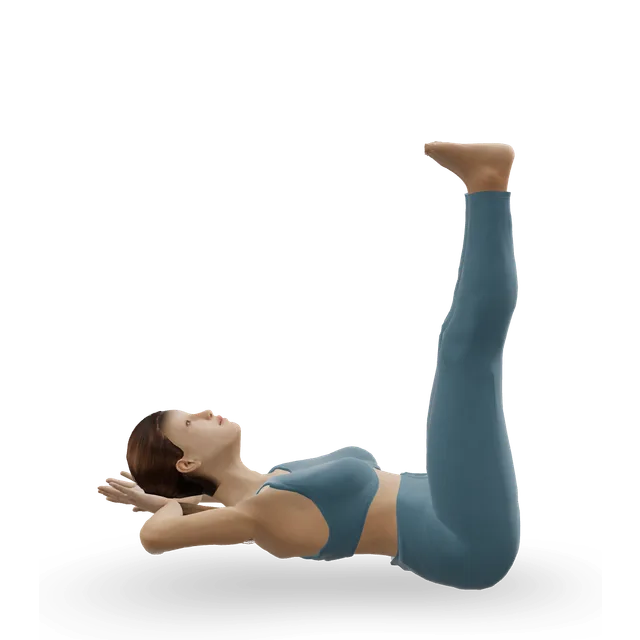
A lying leg raise lifts your straight legs from the floor or a bench until they point at the ceiling, then lowers them slowly, only as far as your lower back stays down. Your hip flexors lift your legs; your abs hold your pelvis so your back doesn't arch. That hold is the exercise: the lower your legs go, the harder your abs work, and the sooner your back wants to lift.
Leg raises don't single out your lower abs: the six-pack muscle works as one, and studies find at most a small shift in emphasis. They do work your hip flexors hard, and nobody has measured the load on your spine, so the range your lower back can hold is your guide.
This guide shows you the floor and bench versions step by step on the 3D figure, the hip lift at the top, easier steps from heel taps and harder ones up to hanging raises, how many to do, and how a leg raise differs from the straight-leg raise for your knees.
Lift, then lower only as far as your back stays down
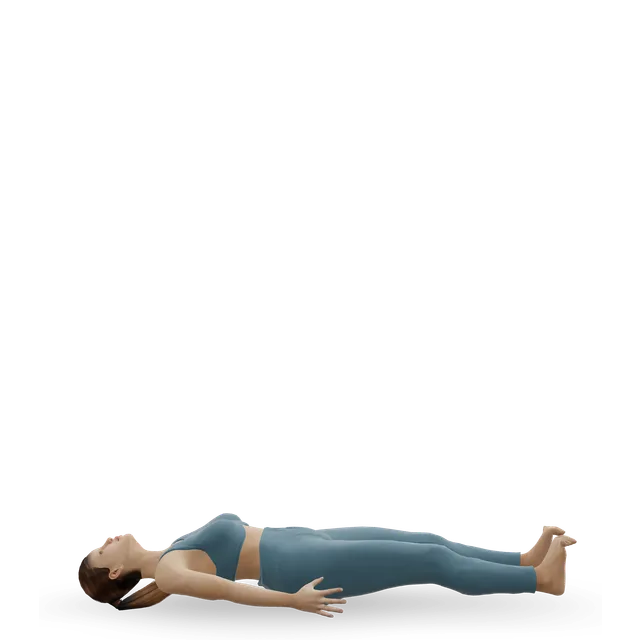
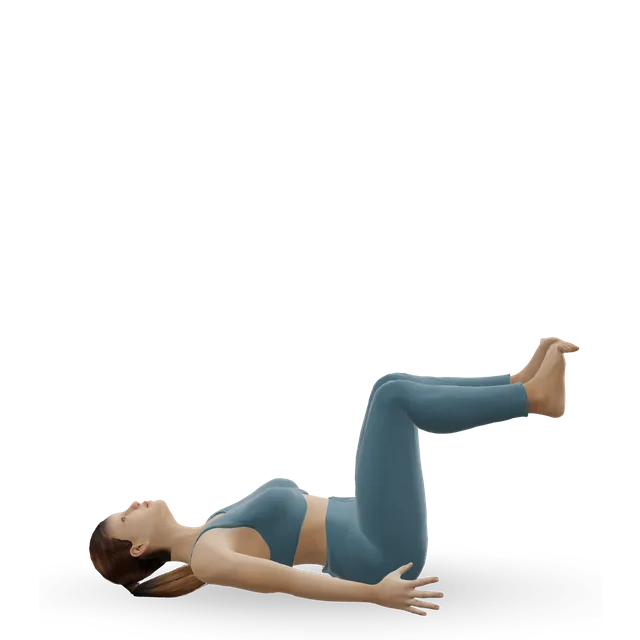
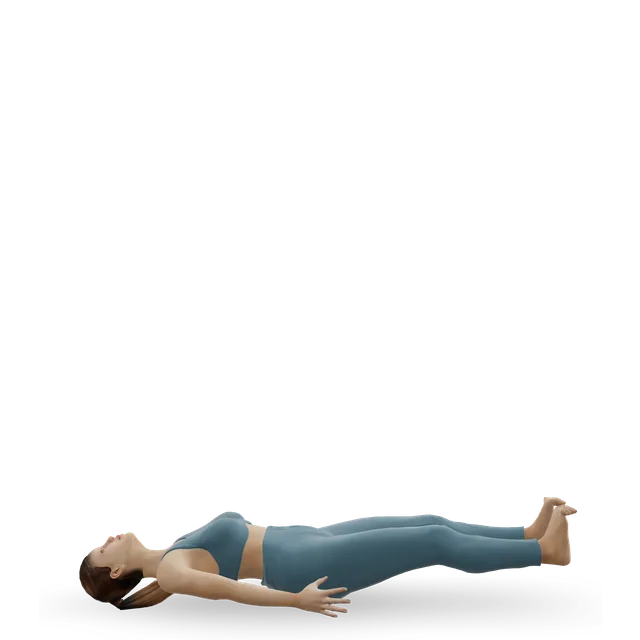
Lie on your back, flatten your lower back gently, and lift your straight legs until they point at the ceiling. Lower them over about 3 seconds and stop as soon as your lower back starts to lift: as straight legs lower, the pelvis tips forward early, even in people trying to stop it.
Lifting both legs needs your abs to hold your pelvis; lifting one leg doesn't. In 20 students, a lying leg raise worked the hip flexors more and the six-pack muscle less than a sit-up.
The upper and lower parts of the six-pack muscle worked alike in two muscle activity studies. On ultrasound, the part nearest the moving legs changed most in a leg raise, but crunches worked the whole muscle more. You can shift the emphasis a little; you can't single it out.
We found no study of spine load in a lying or bench leg raise. The hanging straight-leg raise reached about 3,000 newtons of compression in 14 men, and ACE advises against exercises with unsupported legs if you have diagnosed low back pain. With a sore back, bend your knees or stay with heel taps and dead bugs.
2 to 3 sets of 6 to 12 slow reps, lowering over about 3 seconds, stopping 2 or 3 reps short or when your back starts to lift (our editorial starting point); on a bench, 3 sets of 6 to 10, as our dragon flag progression uses. Once 3 sets of 12 are smooth, make it harder rather than doing more.
Ab exercises strengthen the muscles underneath but don't remove the fat over them. Fat comes off your whole body with your overall activity and eating habits.
Lying on your back on the floor or a flat bench, you lift both straight legs from long to vertical by bending at the hips, while your pelvis and lower back stay still, then lower them slowly. It's also called a lying leg raise, a leg lift or a double leg raise. The leg raise with a hip lift adds a small curl of your pelvis at the top, which bends your lower back like a reverse crunch.
What it works
Your hip flexors (the iliopsoas deep in your hip, the rectus femoris at the front of your thigh, and the sartorius) lift your legs; your six-pack muscle and obliques hold your pelvis so your lower back doesn't arch. In 20 students, the leg raise drew 17.6% of maximum in the iliopsoas and 21.7% in the rectus femoris, against 13.2% and 10.8% in a sit-up, and about 21% in the six-pack muscle against about 28%. The iliopsoas works hardest between about 30 and 60 degrees of hip bend.
These numbers come from EMG (electromyography: electrodes measuring how hard a muscle works), which shows effort in one session, not what a muscle will build.
Straight legs are long and heavy. The load on your abs and hip flexors is greatest with your legs low and nearly nothing with them vertical, so how low you go sets how hard it is (our explanation, matching the leg-lowering studies).
Controlled reverse crunches, as the bench leg raise's move page says, and dead bug heel taps with your lower back still.
How people differ
Longer legs make a longer lever, tight hamstrings make straight legs hard to bring to vertical (bend your knees slightly), and a back that arches easily needs a smaller range for now. If the front of your hips cramps, bend your knees for a while (our suggestions).
How to do a lying leg raise, step by step
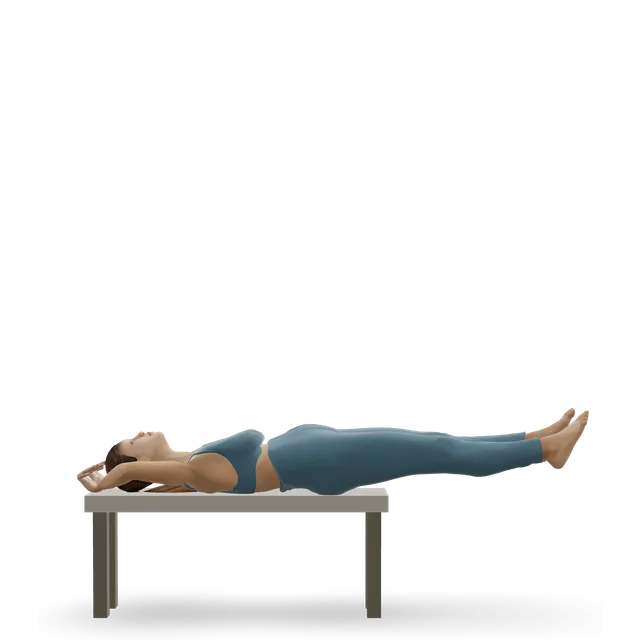
From our move pages (the bench leg raise; the hip lift from the vertical-leg hip raise, whose page says to bend your knees to bring your legs down), with the 3-second lowering from a muscle activity study and the flat lower back from studies of the pelvis in leg lowering. The demo shows the bench; on the floor it's the same movement, with your legs stopping above the floor. For an easier start, keep your knees bent, as in the leg pull-in.
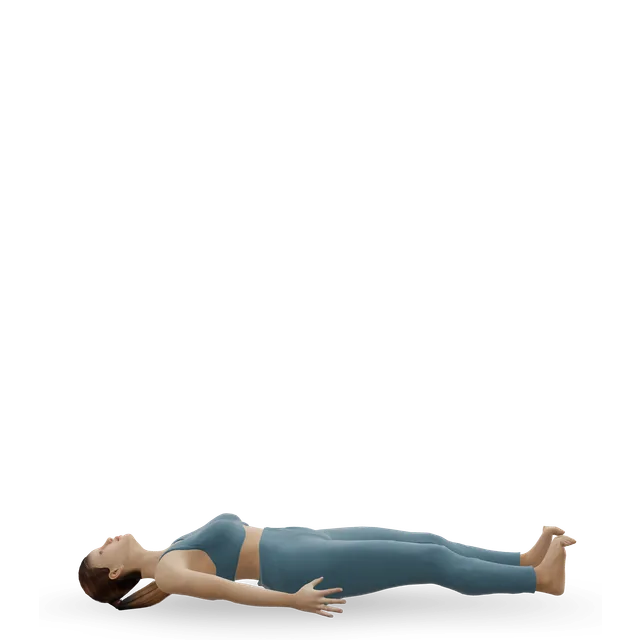
Lie on a flat bench with your legs off its end and your hands holding its sides. On the floor, lie with your legs long and together and your arms by your sides, palms down.
Breathe out and gently flatten your lower back into the bench or floor.
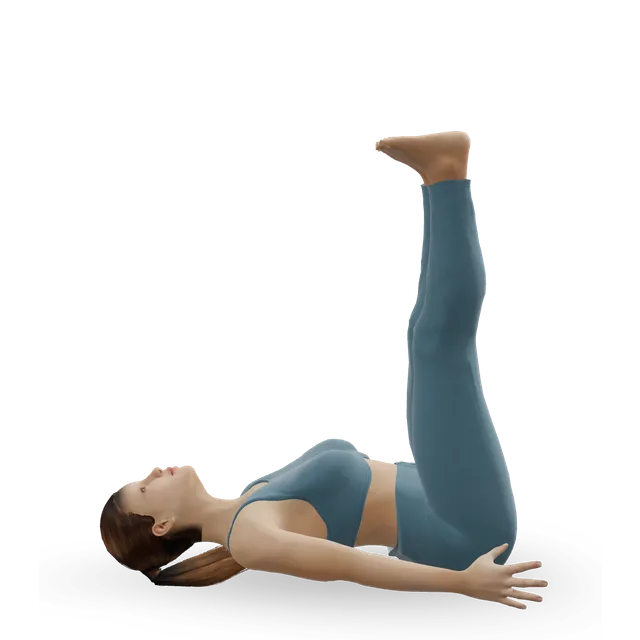
Keeping your legs long, lift them until they point at the ceiling. A slight bend in your knees is fine if your hamstrings are tight.
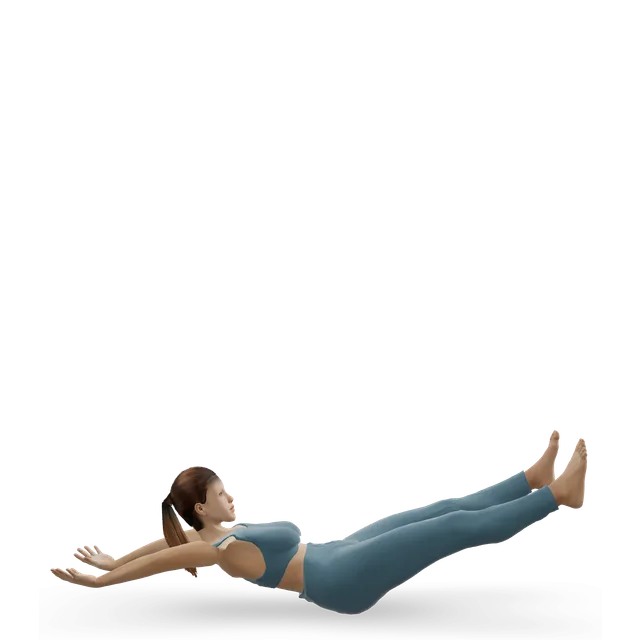
Lower them slowly, over about 3 seconds, and stop as soon as your lower back starts to lift: on the floor, with your heels still off the floor or higher; on a bench, no lower than the bench.
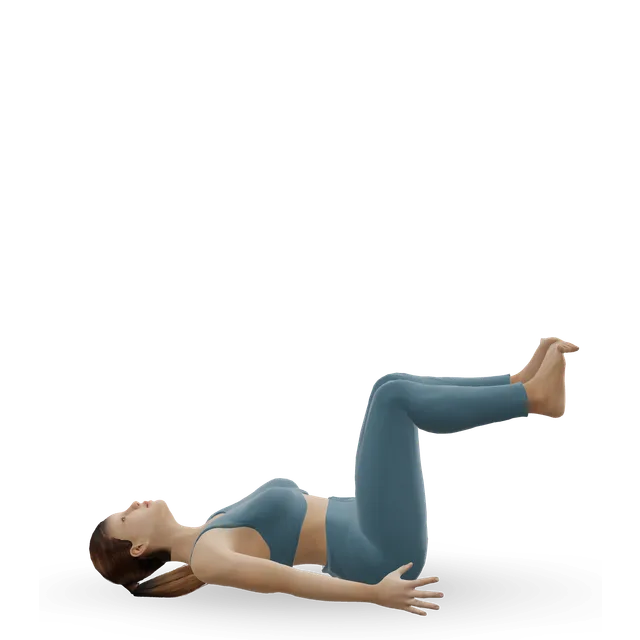
Optional hip lift: with your legs pointing at the ceiling, curl your pelvis so your hips lift a little and your feet press up, then lower your hips slowly. At the end of the set, bend your knees to bring your feet down.
Loading the 3D figure…
Drag to turn
Gets into position, then repeats the movement. Technical checks passed; qualified exercise review is pending.
In 20 students (8 men, 12 women), a lying leg raise done 3 seconds up and 3 down, shoulders held, drew 20.7% of maximum in the upper six-pack muscle, 21.7% in the lower, 14.5% in the external oblique, 17.6% in the iliopsoas and 21.7% in the rectus femoris; a sit-up drew more ab and less hip flexor activity. In 6 men doing 38 exercises, lifting both legs needed the abs but lifting one didn't. Across 9 small studies of straight-leg raises, the iliopsoas worked above 60% of its maximum around 60 degrees of hip bend, and in 9 men the psoas worked hardest late in the lift and at the top.
In 21 adults, hanging knee raises with arm straps and a reverse crunch on a 30-degree incline were among the top ab exercises. In the ACE study, which wasn't peer reviewed, the captain's chair drew 212% and 310% of a crunch's six-pack and oblique activity. The hanging straight-leg raise passed 130% of maximal six-pack activity in 14 men. A review of 87 studies found that inclines and added load make ab exercises work the abs harder.
In 16 men, lowering the legs over 1, 3 or 5 seconds changed when the abs switched on, not how hard they worked overall. Slow lowering keeps you in control, which is why we suggest about 3 seconds.
We found no training trial of the lying leg raise on its own, no study of spine load in a lying or bench leg raise, and no study comparing the floor and the bench.
Do leg raises work the lower abs?
A little emphasis, no isolationMixed evidence
The upper and lower parts of the six-pack muscle worked alike in 11 lean adults and in 8 adults, where curl-ups worked both parts harder than leg lowering. Tilting the pelvis back worked the lower part harder only in trained people doing it correctly, in 33 adults. The balance between the parts shifted between a curl-up and a bent-leg raise, but they worked as one unit. On ultrasound in 15 students, the segment nearest the moving legs changed most in a leg raise, but crunches thickened the whole muscle 36% more. The ACE researchers concluded the parts act as one sheath.
Leg raises are a good exercise for the whole six-pack muscle and your hip flexors, and they may tilt the work a little towards the lower part. A flatter lower belly comes from losing fat overall, not from a particular exercise, as our hanging leg raise and get abs guides say.
Leg raises and your lower back
The pelvis tips earlyEmerging evidence
As both legs lowered from vertical, the pelvis tipped forward after a mean of 3.6 degrees of lowering, whether or not people tried to stop it, and more as the legs went lower, in 17 adults. That forward tip is what arches your lower back.
In 16 men holding both legs just off the floor, a pelvis tilted back (lower back flat) raised upper and lower six-pack activity against a pelvis tipped forward, without changing the front thigh muscle. Lowering both legs with a flat back worked the abs harder than a curl in 15 men. In the Sahrmann leg-lowering levels, both legs hovering worked the six-pack at a median of 36% of maximum against 18% with heels resting, in 22 young men, and a leg-lowering test tracked ab activity and hip loading in 10 adults.
We found no study of spine load in a lying or bench leg raise. The hanging straight-leg raise reached about 3,000 newtons of compression with more than 130% of maximal six-pack activity in 14 men. A lying double leg thrust drew high front thigh activity, which its authors say could be a problem for people with low back problems, and an inclined reverse crunch study gave the same caution. ACE says exercises with unsupported legs are not recommended with diagnosed low back pain.
With a healthy back, keep the range your lower back can hold, and lower slowly. With back pain, bend your knees, stay with heel taps and dead bugs, and use the back pain rule: pain no more than about 5 out of 10 that settles within an hour or so and is no worse the next morning, as our back pain guides say. Stop anything that sends pain down a leg.
On the floor or a bench, and the hip lift
On the floor
The floor ends the range, which keeps beginners safe from lowering too far. Keep your heels off the floor between reps only while your lower back stays down; resting them takes the work away.
On a bench
Your legs start off the end of the bench and can drop level with it, a longer range at the hardest part, and holding the bench steadies your trunk. It's a step up from the floor, not twice as effective: no study has compared the two. Our dragon flag progression uses it at 3 sets of 6 to 10.
The hip lift
With your legs pointing at the ceiling, curl your pelvis so your hips lift a little, as in the vertical-leg hip raise. It adds a curl for the six-pack muscle at the top. Lift your hips, don't swing your legs over your face, and bend your knees to bring your feet down at the end of the set, as its move page says.
Adding weight
Once 3 sets of 12 are smooth, ankle weights or a light dumbbell held between your feet make it harder, as our hanging leg raise guide does for knee raises (our suggestion). Add weight rather than more reps.
Easier and harder: from heel taps to the bar
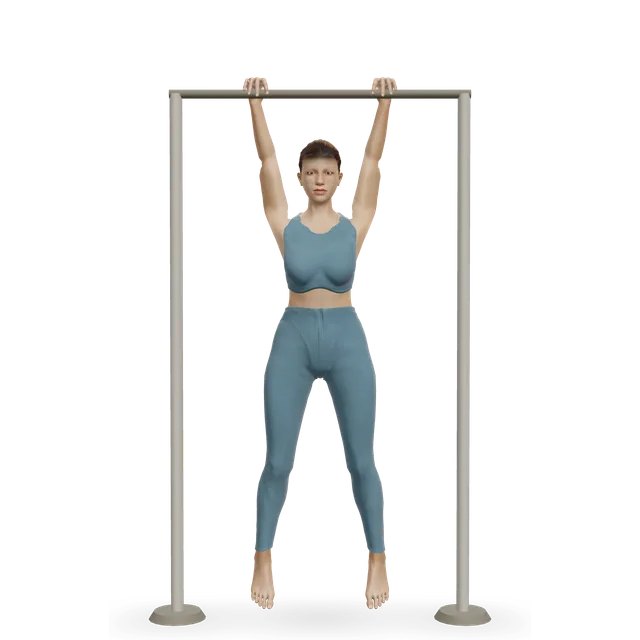
Move up once every set reaches the top of its range for 2 sessions with your lower back still (our editorial rule, as in our 30-day ab challenge). Dead bug heel taps, 2 to 3 sets of 6 to 10 each side (our 30-day ab challenge); reverse crunches, 2 to 3 sets of 8 to 15 (our 30-day ab challenge and hanging leg raise progression); the leg pull-in, 2 sets of 6 to 8 (our flutter kick progression); the lying leg raise, 2 to 3 sets of 6 to 12 on the floor (our editorial starting point) or 3 sets of 6 to 10 on a bench (our dragon flag progression); the vertical-leg hip raise, 2 to 3 sets of 10 to 15 slow reps with 2 or 3 reps in reserve (its move page's dose); then the captain's chair and hanging knee raises, 2 to 3 sets of 8 to 12 (our hanging leg raise progression).
2 to 3 sets of 6 to 12 slow reps on the floor or a bench, stopping 2 or 3 reps short or as soon as your lower back starts to lift. That's our editorial starting point: no study has tested a dose. NASM gives 2 to 3 sets of 8 to 15 for moving ab exercises.
45 to 60 seconds between sets, as the curl block of our 30-day ab challenge rests, on 2 or 3 days a week with 2 or 3 ab moves a session, as our get abs guide suggests. With weekly sets matched, how often you train a muscle made little difference to growth.
Reps up to 12, then a slower lowering, then a lower range or the bench, then the hip lift, then a little weight rather than more reps.
Counting bending reps
Reverse crunches and hip lifts curl your lower back, so count them with any crunches towards about 60 bending reps a session, one expert review's untested suggestion. A leg raise without the hip lift keeps your spine still (our reading).
Lift with control. In the hip lift, lift your hips rather than swinging your legs, and don't rock for momentum.
Legs swinging over your face in the hip lift
Keep them vertical and press your feet up towards the ceiling.
Lowering straight legs to the floor at the end
Bend your knees to bring your feet down, as the vertical-leg hip raise's move page says.
Straining your neck and shoulders
Keep your head down and your grip or palms light.
Holding your breath
Breathe out as you lift, as our breathing guide advises.
Cramping at the front of your hips
Bend your knees or shorten the range. Pain that lasts belongs to our hip flexor pain guide.
Moves that go with it
The bench leg pull-in, 2 to 3 sets of 10 to 15 slow reps with 2 or 3 reps in reserve, and the bent-knee hip raise, the same dose (their move pages' doses); the Pilates double straight-leg stretch, lowering both legs with your head and shoulders curled, 6 to 10 reps (its move page's dose); scissor kicks, 2 to 3 sets of 20 to 30 seconds, stopping before your lower back lifts (its move page's dose; our flutter kick guide); the hollow hold, 2 to 3 holds of 10 to 30 seconds with your knees bent at first (our 30-day ab challenge); bird dogs, 1 to 2 sets of 6 each side with 3 to 5 second holds, and glute bridges, 1 set of 10 to 12 (our flutter kick progression); and the half-kneeling hip flexor stretch, 30 seconds each side (our hanging leg raise progression).
Lying with one knee bent, you tighten and lift the other leg: a thigh exercise for your knees, not this ab exercise. Its move page teaches it.
The straight-leg raise test
A doctor's test for a trapped nerve, in which they lift your straight leg for you. Our sciatica guide covers sciatica; pain shooting down a leg during any leg raise means stop.
Lifting your top leg while lying on your side works the side of your hip, as its move page shows.
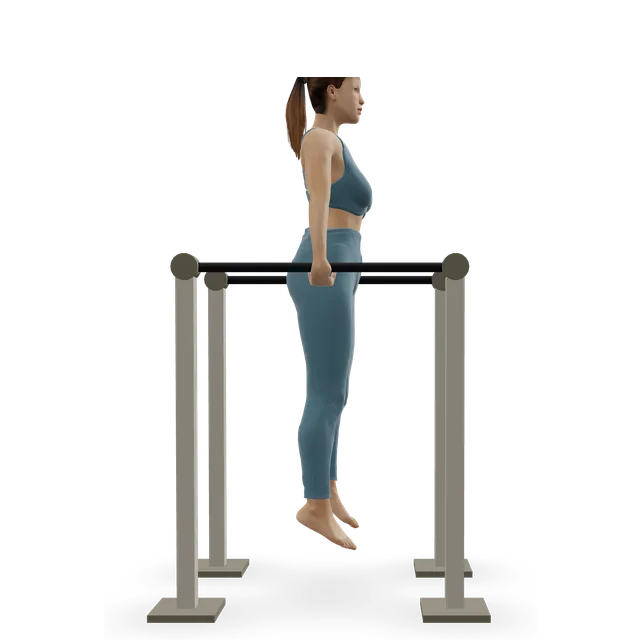
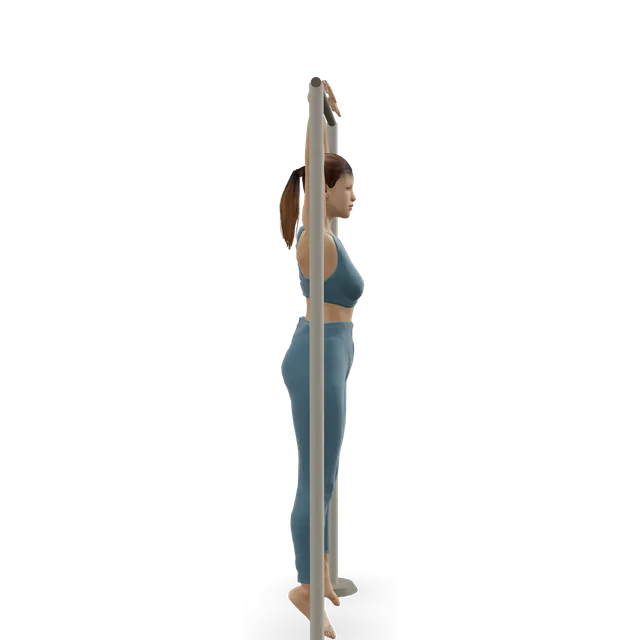
Hanging leg raises
The same movement hanging from a bar or held up on a captain's chair, much harder, with grip and swing to manage. Our hanging leg raise guide takes you from the floor to the bar.
The double-leg-lowering test
Physiotherapists sometimes measure ab strength by how far you can lower both straight legs before your lower back lifts. It's the lowering half of this exercise: in 17 healthy adults the pelvis started tipping after only a few degrees, and in 10 adults the test tracked how hard the abs worked.
Our lower ab workout is the ladder on this page as a 15-minute session, from heel taps to bench leg raises and the hip lift. The flutter kick progression builds from heel taps to low flutter kicks, the hanging leg raise progression takes reverse crunches to the bar, the dragon flag progression uses bench leg raises with the hip lift, and core session A of our 30-day ab challenge brings in reverse crunches.
With diagnosed back pain, ACE advises against exercises with unsupported legs. Bend your knees, use heel taps and dead bugs, and follow the back pain rule above.
A leg raise without the hip lift keeps your spine still. Leave out the hip lift and reverse crunches, which curl it: the UK consensus advises modifying or avoiding repeated rounding of the spine (our reading for this exercise).
After the first trimester, don't do leg raises lying flat on your back: the NHS advises avoiding lying flat for more than a few minutes in later pregnancy. Side-lying leg lifts suit pregnancy better, as our pregnancy guide shows.
The NHS advises gentle tummy exercises first. Start with heel slides, knee folds and heel taps, and bring in double leg raises once the curl-up stage of our diastasis recti guide feels easy, with no doming you can't control (our editorial reading of its stages).
UK stoma and hospital leaflets advise against double leg raises at first after tummy surgery, as the bench leg raise's move page says, and our hernia guide leaves them out at first after an umbilical or incisional repair. Build up through gentler core work and stop if you notice bulging around a scar, a stoma or the hernia.
A prolapse
Leave out double leg raises while they bring on heaviness or leaking, and follow our prolapse guide (our suggestion).
Cramping hip flexors
Stay with bent knees and the leg pull-in for a while, and stretch the front of your hips afterwards.
Warning signs
Stop and get medical help
If you get chest pain or pressure, feel faint or dizzy, are unusually breathless, or your heart races or beats irregularly during exercise, as our plans advise. The American Heart Association says these need immediate medical evaluation.
For chest pain that feels tight, heavy or squeezing, or spreads to your arms, neck, jaw or back; a sudden, extremely painful headache, especially while straining; someone who faints while exercising; or palpitations that don't go away, or come with chest pain, breathlessness or feeling faint. Don't drive yourself to A&E.
Call 999 or go to A&E for loss of feeling or numbness around your genitals or bottom, new trouble peeing or controlling your bladder or bowels, changes in genital sensation during sex or problems with erections or orgasm, or pain, tingling, weakness or numbness in both legs. These are signs of cauda equina syndrome, which needs treating in hospital urgently; don't drive yourself. See a GP if back pain or sciatica isn't improving after a few weeks.
If you haven't exercised for some time or have a medical condition, speak to your GP first, as the NHS advises. Breathe out as you lift and never hold your breath, especially with high blood pressure, heart disease, glaucoma, a hernia or recent tummy surgery, as our breathing guide explains.
See a GP if you think you have a hernia. Get help from NHS 111 if you have a hernia and pain in or around it, a bloated tummy, sickness, constipation, a high temperature or sudden confusion. Call 999 or go to A&E for a femoral hernia (a lump at the top of the thigh) with very bad tummy pain, sickness, being unable to fart or poo, a high temperature or sudden confusion.
A sudden sharp pain in your tummy wall, groin or the front of your hip during a set may be a strained muscle. Get help from NHS 111 or an urgent treatment centre if it's very painful or getting worse, badly swollen or bruised, or not getting better with self-care. Our abdominal strain and hip flexor pain guides cover recovery.
Aching abs or hip flexors for a day or two after a new session are normal. Sharp pain isn't: the NHS says to stop exercising straight away if you feel any pain or become unwell, and to get help from 111 if you're worried or it doesn't go away.
"Leg raises work only the lower abs"Mixed evidence
The six-pack is one muscle. Some studies found a little more activity near the moving legs, others none, and crunches still worked the whole muscle more on ultrasound. Leg raises also work your hip flexors hard.
"Leg raises are just a hip flexor exercise"Emerging evidence
Your hip flexors lift your legs, but lifting both legs needs your abs, keeping your lower back flat raised six-pack activity, and an isometric both-leg raise drew more six-pack activity than a plank.
Nobody has measured spine load in a lying leg raise. The problem is the arch: the pelvis tips forward early as the legs lower. Lowering only as far as your back stays down is the fix, and with diagnosed back pain, ACE advises against unsupported leg exercises.
"Go all the way down to the floor"Emerging evidence
The lower your legs, the more your pelvis tips, and resting your heels takes the work away: legs hovering worked the six-pack about twice as hard as heels resting. Stop where your back stays down.
No study has compared the floor and the bench. The bench gives a longer range at the hardest part; the floor gives a natural stop. Use whichever lets your back stay down.
"Leg raises burn lower belly fat"Strong evidence
Ab exercises don't remove the fat over them: training a body part didn't reduce the fat over it across 13 studies of 1,158 people.
Lie on your back, flatten your lower back gently, and lift your straight legs until they point at the ceiling. Lower them over about 3 seconds, only as far as your lower back stays down, then lift again.
Do leg raises work the lower abs?
They work your whole six-pack muscle; its upper and lower parts work together. One ultrasound study found a little more change near the moving legs, but crunches worked the whole muscle more, so you can shift the emphasis but not isolate the lower abs.
Do leg raises work the abs or the hip flexors?
Both. Your hip flexors lift your legs, and your abs hold your pelvis so your back doesn't arch. In one study, a leg raise worked the hip flexors more and the six-pack muscle less than a sit-up.
Why do leg raises hurt my lower back?
As your legs lower, your pelvis tips forward and your lower back arches. Lower your legs less far, bend your knees, or go back to heel taps. With diagnosed back pain, ACE advises against exercises with unsupported legs.
How do I make leg raises easier or harder?
Easier: bend your knees, lower less far, or move one leg at a time. Harder: lower further while your back stays down, lower more slowly, use a bench, add a hip lift at the top, then ankle weights or hanging raises.
Are leg raises better on a bench or the floor?
A bench lets your legs travel further and gives you something to hold; the floor gives you a natural stop. No study has compared them, so use whichever lets your back stay down.
How many leg raises should I do?
2 to 3 sets of 6 to 12 slow reps, stopping 2 or 3 reps short or when your back starts to lift, 2 or 3 days a week, is our starting point. Once 3 sets of 12 are smooth, make them harder rather than doing more.
Leg raises or hanging leg raises?
Lying leg raises are the easier floor version of the same movement; hanging raises add grip and swing control and drew some of the highest ab activity measured. Our hanging leg raise guide takes you from the floor to the bar.
Do leg raises burn lower belly fat?
No. They strengthen the muscles underneath, and fat comes off your whole body with your overall activity and eating habits.
Is the straight-leg raise the same as a leg raise?
No. The straight-leg raise lifts one leg with the other knee bent, to strengthen the front of your thigh for your knees, and the straight-leg raise test is a doctor's test for a trapped nerve. The double leg raise is the ab exercise on this page.
Can I do leg raises when pregnant or after having a baby?
Not flat on your back after the first trimester. After a birth, start with heel slides, knee folds and heel taps, and bring in double leg raises once the curl-up stage of our diastasis recti guide feels easy, with no doming you can't control.
Why do my hip flexors hurt during leg raises?
They lift your legs and work hardest partway up and near the top. Cramping usually means the lever is too long for now: bend your knees or shorten the range, and see our hip flexor pain guide if the pain lasts.
Exercise education, not a personal prescription, and clinical review of these guides is pending. Check with a GP before starting hard training if you have a heart condition, chest pain, dizziness or breathlessness when active, and stop for sharp or increasing pain. Health disclaimer.