Yoga flows
Yoga for stamina: a 30-minute flow that keeps you moving
Most yoga classes stop to hold poses, which builds strength but keeps your heart rate low. This class keeps you moving for about 20 minutes at a pace where you can talk but not sing, the effort that counts as moderate activity, with slow breathing to finish. Do it 2 or 3 times a week alongside walking, cycling or running, not instead of them. Step back rather than jump, lower your knees whenever you need to, and slow down if you can't talk.
Warm up (about 5 minutes)
- Beginner · 3D demoSitting or standing; in through your nose for about 4, out for about 6, with no holdsEasier: Breath reachHarder: Crocodile breathing (prone diaphragmatic breathing)
- Standing march2 minBeginner · Hip flexors, Abs, Glutes · 3D demoEasy at first, then pick up the pace, arms swingingEasier: Seated marchHarder: Standing band hip flexion
- Sun salutation A (Surya Namaskar A)2 slow roundsIntermediate · Shoulders, Hamstrings, Triceps · 3D demoOne breath per movement; step back, lower with your knees down, and use cobra instead of upward dogEasier: Downward-facing dog (Adho Mukha Svanasana)Harder: Sun salutation B (Surya Namaskar B)



Flow (about 6 minutes)
- Sun salutation A (Surya Namaskar A)4 min of continuous roundsIntermediate · Shoulders, Hamstrings, Triceps · 3D demoKeep moving at about one breath per movement: you can talk but not sing. Rest in downward dog for a breath if you need toEasier: Downward-facing dog (Adho Mukha Svanasana)Harder: Sun salutation B (Surya Namaskar B)
- Standing march1 minBeginner · Hip flexors, Abs, Glutes · 3D demoBrisk; let your breathing settle a little without stoppingEasier: Seated marchHarder: Standing band hip flexion
- Beginner · Hip abductors, Shoulders, Calves · 3D demoStep out as your arms sweep up; no jumping. Hold a chair back if your balance is unsureEasier: Seated marchHarder: Jumping jack

Standing strength, on the move (about 6 minutes)
- Chair pose (Utkatasana)3 holds of 20 s, marching for 20 s betweenBeginner · Quads, Glutes, Shoulders · 3D demoSit back, weight in your heels; march on the spot between holdsHarder: Revolved chair pose (Parivrtta Utkatasana)
- High lunge (crescent lunge, Ashta Chandrasana)5 breaths each sideIntermediate · Quads, Glutes, Hip flexors · 3D demoBack heel lifted; lower the back knee if balance is the limitEasier: Low lunge (Anjaneyasana)Harder: Warrior III (Virabhadrasana III)
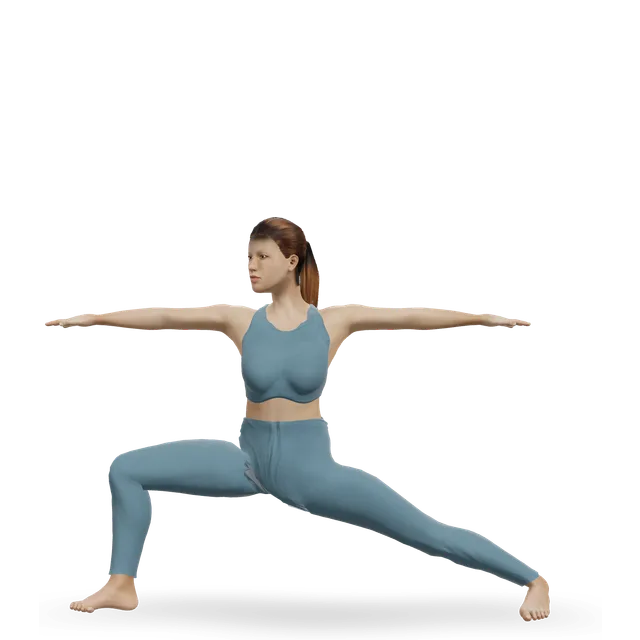
- Warrior II (Virabhadrasana II)5 breaths each sideIntermediate · Quads, Glutes, Adductors · 3D demoFront knee over your second toeEasier: Chair pose (Utkatasana)Harder: Extended side angle (Utthita Parsvakonasana)
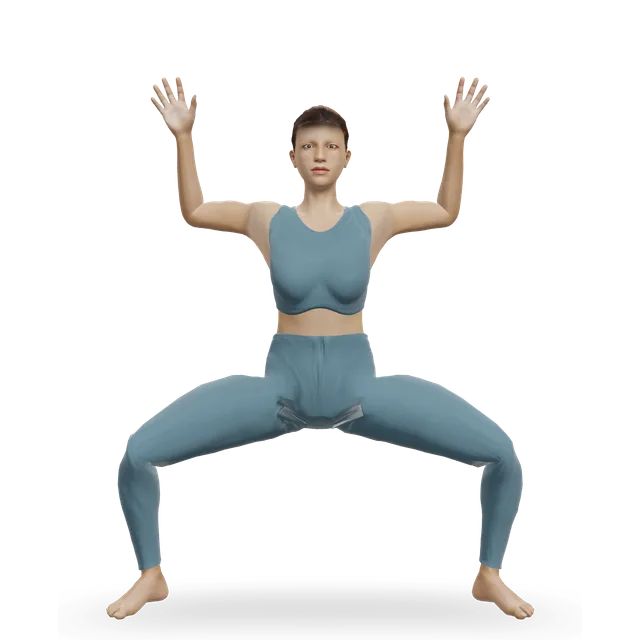
- Goddess pose (Utkata Konasana)12 slow pulsesBeginner · Quads, Adductors, Glutes · 3D demoKnees track over your toes; stay shallow with knee painHarder: Deep squat hold
- Beginner · Hip abductors, Shoulders, Calves · 3D demoArms to shoulder height if your shoulders complainEasier: Seated marchHarder: Jumping jack



Flow (about 6 minutes)
- Sun salutation B (Surya Namaskar B)4 min of continuous roundsIntermediate · Quads, Shoulders, Glutes · 3D demoAdds chair pose and warrior I; drop your knees in the lowering whenever your form fadesEasier: Sun salutation A (Surya Namaskar A)
- Standing march2 minBeginner · Hip flexors, Abs, Glutes · 3D demoSlow the pace down graduallyEasier: Seated marchHarder: Standing band hip flexion
Cool down and breathe (about 6 minutes)
- Beginner · Shoulders, Hamstrings, Calves · 3D demoKnees bent, pedal your heels. Keep it brief with glaucoma or high blood pressure that isn't under controlEasier: Extended puppy pose (Uttana Shishosana)Harder: Half handstand at the wall (Ardha Adho Mukha Vrksasana)
- Beginner · Back, Shoulders, Glutes · 3D demoKnees wideHarder: Extended puppy pose (Uttana Shishosana)
- Supine spinal twist (Supta Matsyendrasana)45 s each sideBeginner · Back, Glutes · 3D demoKnees on a cushion; twist gentlyHarder: Seated twist, bottom leg straight
- Beginner · 3D demoLying or sitting; let your breathing return to normalEasier: Breath reachHarder: Crocodile breathing (prone diaphragmatic breathing)
- Beginner · 3D demoShorter than the pose's own page, to fit the session; stay longer if you have time




Tips
- Use the talk test: if you can't say a sentence, slow down; if you could sing, move a little faster.
- Build up over the weeks: longer flow blocks first (5, then 6 minutes), then a quicker pace once the slower rounds feel easy.
- With osteoporosis, keep the forward folds to a flat-back halfway lift. With glaucoma or high blood pressure that isn't under control, keep the head-down parts brief.
- Keep up what you already do, but the NHS says it's not recommended to start a new vigorous activity in pregnancy, such as running. As your bump grows, step rather than jump, and swap the face-down parts for all fours.
- With a heart or lung condition, check with your rehab team first, and keep the pace easy.
- Stop for chest pain, palpitations, dizziness or breathlessness that's out of proportion to what you're doing, and sit or lie down if you feel faint (our suggestion). Fainting during exercise is a 999 call.
The doses are suggested starting points, not a prescription. Choose a range you can control and stop for sharp or increasing pain, numbness or tingling. Get individual advice after an injury or surgery, or if you are pregnant or managing a health condition.
Guides that recommend it
Find more moves like these
More yoga flows


Beginner yoga flow
A 20-minute beginner yoga sequence: mountain, chair, warrior II, triangle, tree, down dog, cobra and child's pose.
20 minBeginner11 movesStep
Sun salutation flow
A 20-minute flow built on sun salutations A and B, with warrior poses and a short cool-down.
20 minIntermediate8 movesNo equipment



Yoga for tight hips
A hip-opening yoga sequence: low lunge, lizard, goddess, pigeon, bound angle and happy baby.
25 minBeginner10 movesWallQuestions people ask
How long does the yoga for stamina: a 30-minute flow that keeps you moving take?
About 30 minutes, including any warm-up and cool-down listed. Shorten it by doing fewer rounds; lengthen it by adding one.
What equipment do I need?
No equipment: your body and some floor space. A mat makes floor work more comfortable.
Is it suitable for beginners?
It is written for beginners. 8 of its 13 moves have an easier option listed beside them if you need one.
How do I make it easier or harder?
Use the easier or harder option listed under each move, change the number of rounds, or adjust the rest. Progress one change at a time.