Fascia guide

Fascia release for headaches: massage, trigger points and self-release for tension headaches and migraine, and when a headache needs checking

Fascia release for headaches usually means massage or pressure on tender spots in the temples, the jaw, the back of the head and the tops of the shoulders, from a therapist or from yourself. It can ease a tension headache for a while, mostly through the nervous system. It can't release fascia, and tender spots look more like a result of frequent headaches than their cause.

The honest headline: hands-on treatment beats doing nothing, but in the best-controlled trial, trigger point massage did no better than a fake treatment, and for migraine it hasn't beaten usual care.

This guide covers the headaches that need urgent help first, then what tender spots are, what the trials found, and a gentle self-release routine that keeps off the neck.

The short version

Tender spots are real, but probably not the cause

Tender muscles around the head, jaw, neck and shoulders are the main physical finding in tension headaches. In a study that followed 1,000 people for 12 years, pain sensitivity rose only after people developed frequent headaches, so it seems to follow headaches rather than cause them. That rests mainly on this one study, and reviews still allow that muscles feed into occasional headaches.

Sources 1, 2, 3, 4

Release works through the nervous system

Dense fascia needs forces far outside the normal range to change shape. In 63 healthy people, painful pressure on the muscles under the skull switched on the body's own pain dampening, as dipping a hand in cold water did. Nothing is being released or broken up.

Sources 5, 6, 7

Better than nothing, not better than a fake treatment

Manual therapy cut headache days by 6.4 a month more than GP care in 82 people with chronic tension headaches, and soft tissue treatment beat no treatment on low-quality evidence. But in the only massage trial with a fake treatment (56 people), trigger point massage cut how often headaches came no more than switched-off ultrasound did.

Sources 8, 9, 10

Self-release and migraine

Self-rolling didn't beat a placebo on pain in a pilot of 38 people, and we found no trial of balls, scalp tools or massage guns for headaches. For migraine, manual therapy did no better than GP care over a year in 67 people.

Sources 11, 12, 13

What works better

Relaxation and psychological treatments cut about 4.5 headache days a month, the National Institute for Health and Care Excellence (NICE) suggests acupuncture for chronic tension headaches, and painkillers belong below the overuse limits. The NHS suggests exercise, yoga and massage to help you relax.

Sources 14, 15, 16

Keep pressure off the neck itself

Neck artery tears have followed a week of massage-ball use on the neck and finger self-massage of the neck in case reports. Press the shoulders and upper back, never the front or sides of the neck or the base of the skull.

Sources 17, 18

Check first: headaches that need help today

Release is never a test for these. A&E means accident and emergency.

Call 999 or go to A&E

  • Call 999 or go to A&E: a headache that came on suddenly and is extremely painful, or a headache after a head injury within the last 3 months, for example from a fall or accident. A sudden, extremely painful headache can be a bleed on the brain.
  • Call 999 or go to A&E: a headache with a seizure (fit), numbness or weakness in the body or face, difficulty speaking, balancing, walking or remembering things, drowsiness or confusion, or loss of vision.
  • Call 999 or go to A&E: a headache with a rash that does not fade when a glass is rolled over it, a very high temperature, a stiff neck, or bright lights bothering you. These can be signs of meningitis.
  • Call 999 or go to A&E: an extremely painful headache and the white of the eye is red.

Sources 19, 16

Same day: a headache with jaw pain or a sore scalp

A headache with jaw pain when eating or talking, a sore, tender scalp or temples, or problems with your vision. In people over 50 especially, this can be giant cell arteritis, which can lead to a stroke or blindness if not treated quickly. If you suddenly can't see from one or both eyes, call 999 or go to A&E.

Source 20

Same day: urgent GP appointment or NHS 111

Same day (urgent GP appointment or NHS 111): a headache with vision or eye problems, a headache triggered or made worse by coughing, sneezing, bending down or exercising, or a headache with vomiting.

Source 19

Pregnancy or a recent birth

Get urgent medical help: you're pregnant or have given birth in the last few weeks and have symptoms of pre-eclampsia, such as pain below the ribs, a severe headache that does not go away with simple painkillers, vision problems such as blurred vision or seeing flashing lights, sudden swelling of the face, hands or feet, heartburn that does not go away with heartburn medicines, being sick, or feeling very unwell. If you're pregnant, call your maternity unit if you have the number; if you've recently given birth or cannot call your maternity unit, call 111.

Tension headaches, tender spots and what release changes

Tension headaches

The common headache: pain on both sides of the head, face or neck, a feeling of pressure or tightening, and a tender area that may hurt more when touched. You can usually carry on with your day, and each headache lasts at least 30 minutes, sometimes days. The NHS names stress, sleep problems and caffeine as common causes, and painkillers taken too often. About 26% of people worldwide have them.

Sources 16, 21

Tender muscles and trigger points

The international headache classification calls increased tenderness of the muscles around the skull "the most significant abnormal finding" in tension headaches. Tender spots called trigger points are common in tension headaches and migraine, go with lower pain thresholds across the body, and can send pain into the head in the pattern of a headache. But a review of the muscles' role found that firm evidence of a problem in the muscle itself is still lacking.

Sources 1, 22, 23, 4

Cause or consequence?

In 1,000 Danish adults followed for 12 years, pain thresholds were normal at the start and fell only in people who went on to have chronic tension headaches; the authors concluded that increased pain sensitivity is a consequence of frequent headaches, not a risk factor. Reviews suggest muscle input matters in occasional headaches, and that the nervous system turning up its own volume (central sensitisation) drives the chronic form. In 203 people, shoulder muscle stiffness was only weakly linked with how much headaches affected life.

Sources 2, 3, 24

Headaches from the neck

A cervicogenic headache is caused by a problem in the neck's joints, discs or soft tissues, usually with neck pain. When tender neck muscles are the cause, the classification counts it as a tension headache. Estimates range from 0.4% to 2.5% of people. Our neck headache guide covers it.

Sources 25, 26

Migraine is different

Migraine is often one-sided and throbbing, made worse by activity, and can come with feeling sick or sensitivity to light and sound. In some people, pressing on tender spots can set off a migraine attack.

Sources 27, 22

What release changes

In a modelling study, dense fascia needed forces far outside the normal range to compress or shear by even 1%. Reviewers conclude that rolling and pressure work through receptors in the skin and fascia, the body's own pain control and muscle tone, and a living review of 62 reviews found moderate-quality support for nervous-system changes with hands-on therapy against critically low-quality support for changes in the tissue. Pressure eases a tender spot for a while: in 119 people, 90 seconds of gentle pressure or 30 seconds of firmer pressure on upper trapezius trigger points eased pain straight away.

Sources 5, 7, 28, 6, 29

The scalp

People search for scalp fascia release and scalp tools, but we found no trial of either for headaches. Gentle fingertip massage of the temples may feel relaxing; nothing shows a tool releases the scalp's fascia.

What the evidence says

Hands-on treatment against usual care or nothingEmerging evidence

In 82 people with chronic tension headaches, physiotherapy-based manual therapy cut headache days by 6.4 a month more than usual GP care at 8 weeks, and was still better at 26 weeks. Across 15 trials (1,131 people), soft tissue treatment beat no treatment for how bad and how often headaches were, on low-quality evidence, while quick thrust manipulation didn't. A network analysis ranked joint mobilisation plus exercise best for frequency in the short term, at low confidence, and Danish guideline work made only weak recommendations.

Sources 8, 9, 30, 31

Trigger point massage did no better than a fake treatmentEmerging evidence

In 56 people with tension headaches, 12 sessions of trigger point massage of the head and neck over 6 weeks cut how often headaches came, but so did switched-off ultrasound, with no difference between them. How bad and how long the headaches were didn't change. Massage did ease tenderness, and people felt it helped more. The authors warn that trials without a placebo group risk overestimating a treatment's own effect.

Source 10

Pooled trials: big numbers, weak evidenceMixed evidence

Trigger point treatment cut tension headache attacks by about 3.5 a month across 4 trials, on very low certainty evidence, with 3 of 7 trials at high risk of bias. Pooled myofascial release trials report large effects with results that vary widely, and inconsistent results for migraine. One myofascial release trial in 63 people reported 59% fewer headache days against 13% with slow soft stroking, in a trial run at the authors' own therapy foundation. Across physiotherapy treatments, pain fell by about 1.1 points out of 10, which the authors judged too small to matter, and 19 of 26 trials were at high risk of bias. An umbrella review found moderate-quality evidence for less tension headache pain, and limited evidence for fewer headaches.

Sources 32, 33, 34, 35, 36

Self-release: barely testedEmerging evidence

In a pilot of 38 people with tension headaches, 4 weekly sessions of supervised self-rolling or a therapist's manual therapy both improved, but neither beat a placebo on pain after treatment; at 1 month only the therapist's treatment did. A self-release tool under the skull did as well as a therapist's hands for one 5-minute session in neck pain, measured for 45 minutes. We found no trial of massage balls, scalp tools or massage guns for headaches.

Sources 11, 37

MigraineMixed evidence

In 67 people with migraine and neck pain, manual therapy, including mobilisation, exercises and myofascial techniques, did no better than GP care for migraine days over 52 weeks. A graded review found manual therapy didn't change the outcomes it studied. Older reviews were positive but noted many flaws in the trials, and one trial of 47 people found weekly massage improved migraine frequency during treatment and for 3 weeks after.

Sources 12, 13, 38, 39

Headaches from the neckEmerging evidence

Manual therapy beat a fake treatment in the short term, with about 1 fewer headache a week on moderate certainty evidence, but not at 12 months. In 200 people, a low-load neck exercise programme reduced headaches for a year.

Sources 40, 41

Craniosacral therapyEmerging evidence

Across 4 trials it lowered headache pain by 1.1 points out of 10, a change the authors called clinically unimportant, on very low certainty evidence.

Source 42

What has better evidenceStrong evidence

Psychological treatments cut about 4.5 headache days a month, on moderate-quality evidence. NICE says to consider a course of up to 10 sessions of acupuncture over 5 to 8 weeks for chronic tension-type headache, and makes no recommendation on manual therapy, massage or exercise. The European guideline says physical therapy may be valuable but has no robust evidence.

Sources 14, 15, 43, 44

ExerciseEmerging evidence

Strength training had a moderate effect on tension headache pain on very low certainty evidence, and band training was no better than posture advice in 60 people. But 2 minutes a day with a band cut neck and shoulder pain and tenderness in 198 office workers, deep neck muscle training added to physiotherapy reduced headaches at 6 months in 81 people, and neck and shoulder strength and relaxation reduced chronic tension headaches across 9 trials. Aerobic exercise cut about 0.6 migraine days a month.

Sources 45, 46, 47, 48, 49, 50

Where the evidence is thin

Only one massage trial for headaches had a fake treatment to compare with, self-release has one small pilot, and nothing has tested scalp tools or massage guns. We read most studies' summaries (abstracts), not their full texts.


Self-release for a tension headache in about 20 minutes: breathe, press, stretch, strengthen

The breathing, upper trap and levator doses are their move pages', and the breathing follows the NHS breathing exercise for stress. The temple method is our jaw guide's, from NHS leaflets; the pressure holds come from a trial of trigger point pressure (Hou 2002); the chin tuck dose is our tension headache guide's editorial starting point; the band dose is from a trial in office workers (Andersen 2011). Self-release hasn't been shown to beat a placebo for headaches, and this sequence hasn't been tested.

  1. Check first: a sudden, extremely painful headache, or one with a stiff neck and fever, a rash, weakness, confusion or loss of vision, is a 999 call, and a headache with jaw pain when eating or a sore scalp needs checking the same day.
  2. Breathe slowly for at least 5 minutes, breathing out for longer than you breathe in.
  3. Temples and jaw: with your index and middle fingers, make small, gentle circles over the tender areas of the temples, moving up and back into the hairline, then over the jaw muscles in front of the ears, about a minute an area. No tools, and nothing on or near the eyes.
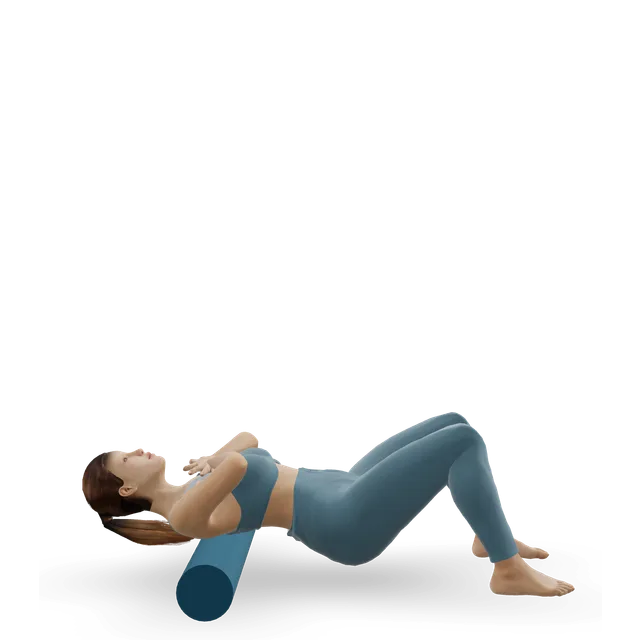
  4. Upper back and shoulders: roll the upper back on a foam roller for about 90 seconds, keeping it off the neck. Then lean a massage ball against a wall between your shoulder blades, or press the top of your shoulder with your fingertips, and hold one or two tender spots: gentle pressure for up to 90 seconds, or a little firmer for about 30 seconds.
  5. Never press the front or sides of your neck, the base of your skull or the bony middle of your spine. Stop at once for dizziness, blurred vision or tingling in an arm.
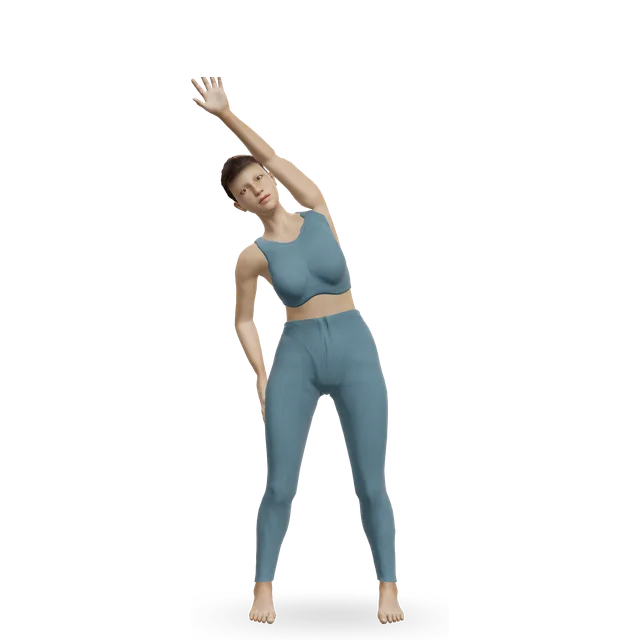
  6. Stretch: the upper trap release, 2 slow holds of 30 seconds each side, then the levator scapulae stretch, 20 to 30 seconds, 2 to 4 times each side.
  7. Lying chin tuck: a very light nod, up to 10 holds of 10 seconds, once a day.
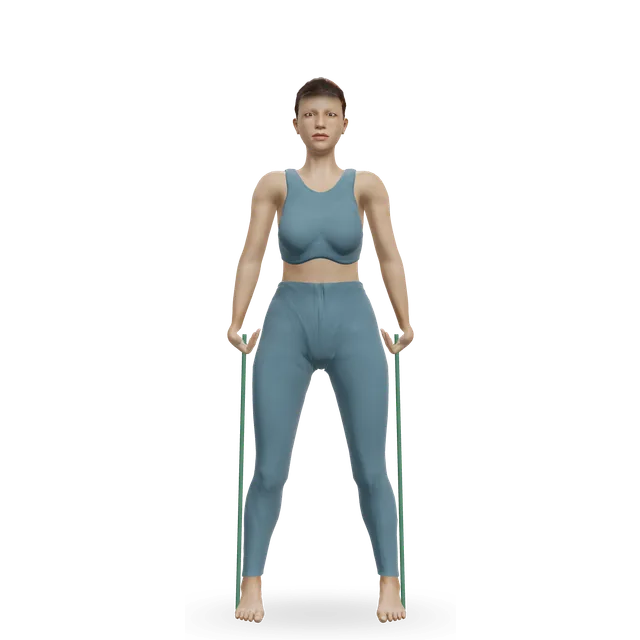
  8. For lasting change: 2 minutes a day of band lateral raises, 5 days a week.

Loading the 3D figure…

Gets into position, then repeats the movement. Technical checks passed; qualified exercise review is pending.

The movement on the figure: Upper trap release

What helps: doses and the order to try them

Each dose names its source or is our editorial starting point. Doses are starting points, not prescriptions.

Slow breathing

At least 5 minutes, done regularly, as in the NHS breathing exercise for stress, which is the slow breathing move page's dose; once or twice a day is our editorial starting point.

Source 51

Temples and jaw

About a minute per area, 2 or 3 times a day, the range our jaw guide takes from NHS leaflets. Keep it gentle and stop if it sets off a headache.

Shoulders and upper back

Roll the upper back for about 90 seconds, the move page's dose from a review of rolling studies. On a tender spot, gentle pressure for up to 90 seconds or firmer pressure for about 30 seconds, the doses that eased trigger points in a trial; one or two spots is our editorial starting point.

Sources 52, 29

Stretches

The upper trap release, 2 slow holds of 30 seconds each side, and the levator scapulae stretch, 20 to 30 seconds, 2 to 4 times each side: both their move pages' doses, the second labelled our editorial starting point.

The part that lasts

The lying chin tuck, up to 10 holds of 10 seconds once a day, is our tension headache guide's editorial starting point; deep neck muscle training reduced headaches in a trial. Two minutes a day of band lateral raises, 5 days a week for 10 weeks, is the dose from a trial in office workers. Judge it by a headache diary.

Sources 48, 47

Painkillers

Simple painkillers help a tension headache, but taking them too often can cause more headaches. NICE's thresholds are paracetamol, aspirin or anti-inflammatories on 15 or more days a month, or triptans, opioids or combination painkillers on 10 or more, for 3 months or more. Our tension headache guide covers this.

Sources 15, 16

Breathe

At least 5 minutes of slow breathing, breathing out for longer than you breathe in.

Press and stretch

Roll the upper back, not the neck, then stretch; with a sore neck, use separate nods, tilts and turns instead of neck circles.

Strengthen: the part that lasts

Start with the lying chin tuck and 2 minutes a day of band raises, and lighten anything that sets off a headache.

Routines to follow

The knots routine pairs pressure on the upper back with stretches and the strength work from the headache trials; the yoga class is a calm practice for headache days.

Safety: where never to press, and who should ask first

Where never to press

  • The front and sides of the neck, the base of the skull and the bony middle of the spine: neck artery tears have followed massage-ball use on the neck and finger self-massage of the neck in case reports, which show this can happen, not how often.
  • On or near the eyes.
  • Anywhere that brings on dizziness, tingling or a new kind of pain.

Sources 17, 18

Headaches after release

In a survey of 776 professionals, headaches were among the side effects of foam rolling reported most, and pressing tender spots can set off a migraine in some people. Mild soreness for a day is common; a severe or unusual headache after pressure near the neck needs urgent help.

Sources 53, 22

Expert cautions for rolling

In an expert consensus of 37 researchers, open wounds and broken bones were reasons not to roll, and inflammation, a clot, a bone infection or bone forming in a muscle after an injury were at least reasons for caution.

Source 54

Ask first

Keep the pressure light, or ask your doctor first, if you take blood thinners, which make bruising more likely, or have a nerve condition such as peripheral neuropathy: the NHS lists these among the reasons hands-on treatments may not be safe.

Sources 55, 56

Massage guns

We found no trial of massage guns for headaches. Keep them off the head, face, eyes and neck: our massage gun guide covers the case reports of artery tears and eye injuries.

When to see a GP about headaches

The 999 and same-day signs are near the top of this page.

Stop and call 999 during self-release

Stop at once and call 999 for dizziness, a severe headache, blurred vision, slurred speech, a drooping face, or weakness or numbness in an arm, even if it passes.

See a GP

  • You've tried treating a headache yourself and it isn't getting better or is getting worse, or you get headaches regularly: see a GP.
  • You get headaches several times a week or they're severe, painkillers and relaxation don't help, you have a throbbing pain at the front or on one side of your head, or you feel sick, vomit and find light or noise painful: see a GP. These can be signs of migraine or cluster headache.
  • You've been taking painkillers for headaches on 15 or more days a month (paracetamol, aspirin or anti-inflammatories), or on 10 or more days a month (triptans, opioids or combination painkillers), for 3 months or more: see a GP. Taking painkillers too often can itself cause headaches (medication overuse headache).
  • A new headache with a weakened immune system, a past cancer that can spread to the brain, or vomiting with no other cause, or a big change in what your headaches are like: see a GP promptly.

Sources 19, 16, 15

Myths

"Tight fascia causes your headaches"Mixed evidence

Tender muscles are real, but in a 12-year study pain sensitivity rose only after people developed chronic headaches, a problem in the muscle itself hasn't been found, and dense fascia doesn't change shape under hand pressure.

Sources 2, 4, 5

"Find and press the trigger point and the headache goes"Mixed evidence

Trigger point massage did no better than a fake treatment on how often headaches came, pooled trigger point trials are very low certainty, and pressing trigger points can set off a migraine.

Sources 10, 32, 22

"A ball or tool under the skull releases headaches"Mixed evidence

A tool matched a therapist's hands for one session of neck pain, but self-rolling didn't beat a placebo on headache pain, and neck artery tears have followed self-massage of the neck. We don't recommend pressing under the skull.

Sources 37, 11, 17

"Fascia release fixes migraine"Mixed evidence

Manual therapy did no better than usual care over a year, a graded review found no effect, and myofascial release results for migraine are inconsistent.

Sources 12, 13, 33

"Scalp fascia release cures headaches"

We found no trial. Gentle scalp and temple massage may feel good, but nothing shows a tool releases the scalp's fascia or treats headaches.

"A massage gun on your head or neck sorts out a headache"

We found no trial, and our massage gun guide keeps guns off the head, face, eyes and neck because of case reports of artery tears and eye injuries.

Questions people ask

Can tight fascia cause headaches?

Not in a way anyone has shown. Tender muscles and fascia around the head and neck are common in tension headaches, but in a 12-year study they followed frequent headaches rather than came before them, which points to a sensitised nervous system.

Does myofascial release help tension headaches?

A little, for a while. Hands-on treatment beats doing nothing, but in the best-controlled trial, trigger point massage cut how often headaches came no more than a fake treatment. Treat it as a comfort alongside the plan in our tension headache guide.

Can fascia release help migraines?

Probably not much. Manual therapy did no better than usual GP care over a year, and myofascial release results for migraine are inconsistent. Regular aerobic exercise and relaxation have better evidence.

What is suboccipital release, and is it safe to do at home?

It means pressure on the small muscles under the base of the skull. A tool there did as well as a therapist for one session of neck pain, but neck artery tears have followed self-massage of the neck, so we don't recommend pressing under the skull or into the neck.

Where are the pressure points for a tension headache?

Tender spots are usually in the temples, the jaw muscles, the back of the head and the tops of the shoulders. Gentle fingertip circles on the temples and jaw, and pressure on the shoulders and upper back, are reasonable; keep off the neck itself.

Can a massage gun help a headache?

We found no trial. Keep guns off the head, face, eyes and neck, where case reports describe artery tears and eye injuries.

Can massage or fascia release cause a headache?

It can. Headaches were among the side effects professionals reported most after foam rolling, and pressing tender spots can set off a migraine in some people. A severe or unusual headache after pressure near the neck needs urgent help.

Does scalp massage or a scalp fascia tool help headaches?

We found no trial. Gentle scalp massage may feel relaxing, and the NHS lists massage among things that help you relax, but nothing shows a tool releases scalp fascia.

What works best for tension headaches?

Simple painkillers on fewer than 15 days a month, relaxation and psychological treatments, regular exercise, and for chronic headaches, acupuncture. Our tension headache guide has the plan.

When is a headache an emergency?

Call 999 or go to A&E for a headache that came on suddenly and is extremely painful, or one with a stiff neck, a high temperature, a rash, weakness, confusion, a seizure or loss of vision. A headache with jaw pain when eating or a sore scalp needs checking the same day.

Sources

  1. International Headache Society · ICHD-3 2. Tension-type headache
  2. Buchgreitz 2008 · Pain sensitivity follows frequent headache rather than causing it (12-year population study of 1,000 people, Pain)
  3. Ashina 2021 · Tension-type headache (review, Nature Reviews Disease Primers)
  4. Bendtsen & Fernández-de-las-Peñas 2011 · The role of muscles in tension-type headache (review, Current Pain and Headache Reports)
  5. Chaudhry 2008 · A 3D model of how fascia deforms in manual therapy (modelling study, Journal of the American Osteopathic Association)
  6. Castien 2025 · Manual pressure on the neck and the body's pain-dampening system (crossover study of 63 healthy people, Pain Reports)
  7. Behm & Wilke 2019 · Do self-myofascial release tools release fascia? (narrative review, Sports Medicine)
  8. Castien 2011 · Manual therapy for chronic tension-type headache (randomised trial of 82 people, Cephalalgia)
  9. Kamonseki 2022 · Manual therapy for tension-type headache (meta-analysis of 15 trials, Disability and Rehabilitation)
  10. Moraska 2015 · Trigger point massage against sham ultrasound for tension-type headache (placebo-controlled randomised trial of 56 people, Clinical Journal of Pain)
  11. Espí-López 2022 · Foam rolling against manual therapy for tension-type headache (randomised pilot trial of 38 people, Journal of Clinical Medicine)
  12. Amons 2026 · Manual therapy to prevent migraine (randomised trial of 67 people, Archives of Physiotherapy)
  13. Beier 2022 · Mobilisation, activity, psychological treatment, acupuncture and education for migraine (systematic review, Cephalalgia)
  14. Yuan 2025 · Psychological treatment for tension-type headache (meta-analysis of 19 trials, Journal of Headache and Pain)
  15. NICE CG150 · Headaches in over 12s: recommendations (2012, updated 2025)
  16. NHS · Tension headaches
  17. Liu 1993 · A neck artery tear after neck massage with massage balls (case report, Kaohsiung Journal of Medical Sciences)
  18. Shibata 2023 · A neck artery tear and a tongue nerve palsy after neck self-massage (case report, Cureus)
  19. NHS · Headaches
  20. NHS · Temporal arteritis (past its review date: reviewed August 2023, review due August 2026)
  21. Stovner 2022 · The global prevalence of headache (review of 357 studies, Journal of Headache and Pain)
  22. Do 2018 · Myofascial trigger points in migraine and tension-type headache (narrative review, Journal of Headache and Pain)
  23. Fernández-de-las-Peñas 2007 · Trigger points and sensitisation: a pain model for tension-type headache (review, Cephalalgia)
  24. Shimada 2025 · Trapezius stiffness and headache severity (cross-sectional study of 203 people, European Journal of Neurology)
  25. International Headache Society · ICHD-3 11.2.1 Cervicogenic headache
  26. Haldeman & Dagenais 2001 · Cervicogenic headaches (critical review, Spine Journal)
  27. NHS · Migraine
  28. Keter 2025 · How manual therapy works (living review of 62 reviews, PLoS One)
  29. Hou 2002 · Pressure and other treatments for neck trigger points (randomised trial of 119 people, Archives of Physical Medicine and Rehabilitation)
  30. Jung 2022 · Physiotherapy for tension-type headache (network meta-analysis, Cephalalgia)
  31. Krøll 2021 · Mobilisation, supervised activity, psychological treatment, acupuncture and education for tension-type headache (systematic review, Journal of Headache and Pain)
  32. Falsiroli Maistrello 2018 · Trigger point manual treatment for primary headaches (meta-analysis of 7 trials, Frontiers in Neurology)
  33. Lu 2024 · Myofascial release for tension-type headache, neck headache and migraine (meta-analysis, Pain Research and Management)
  34. Ajimsha 2011 · Myofascial release for tension-type headache (randomised trial of 63 people, Journal of Bodywork and Movement Therapies)
  35. Luedtke 2016 · Physiotherapy treatments for headache and migraine (meta-analysis, Cephalalgia)
  36. Varangot-Reille 2022 · Exercise and manual therapy for primary headache (umbrella review of 31 reviews, Physical Therapy)
  37. Pérez-Martínez 2020 · A self-release tool for the muscles under the skull (randomised trial of 58 people, Spine)
  38. Chaibi 2011 · Manual therapies for migraine (systematic review, Journal of Headache and Pain)
  39. Lawler & Cameron 2006 · Massage for migraine (randomised trial of 47 people, Annals of Behavioral Medicine)
  40. Demont 2023 · Physiotherapy for headache from the neck (meta-analysis of 14 trials, PM&R)
  41. Jull 2002 · Exercise and manipulation for headache from the neck (randomised trial of 200 people, Spine)
  42. Carrasco-Uribarren 2024 · Craniosacral therapy for headache (meta-analysis of 4 trials, Pain Management Nursing)
  43. Linde 2016 · Acupuncture for preventing tension-type headache (Cochrane review)
  44. Bendtsen 2010 · EFNS guideline on treating tension-type headache (European Journal of Neurology)
  45. Varangot-Reille 2022 · Exercise for migraine and tension-type headache (meta-analysis of 19 studies, Journal of Pain)
  46. Madsen 2018 · Strength training for tension-type headache (randomised trial of 60 people, Cephalalgia)
  47. Andersen 2011 · Two minutes a day of band training for neck and shoulder pain (randomised trial of 198 office workers, Pain)
  48. van Ettekoven 2006 · Physiotherapy with deep neck muscle training for tension-type headache (randomised trial of 81 people, Cephalalgia)
  49. Onan 2025 · Physiotherapy for chronic tension-type headache (meta-analysis of 9 trials, Journal of Oral and Facial Pain and Headache)
  50. Lemmens 2019 · Aerobic exercise and migraine days (meta-analysis of 6 studies, Journal of Headache and Pain)
  51. NHS · Breathing exercises for stress
  52. Hughes & Ramer 2019 · How long to roll each muscle (systematic review of 22 studies, International Journal of Sports Physical Therapy)
  53. Bartsch 2025 · Foam rolling in practice: cautions and side effects (survey of 776 professionals, Frontiers in Physiology)
  54. Bartsch 2021 · Expert consensus on when not to foam roll (Delphi study of 37 experts, Journal of Clinical Medicine)
  55. NHS · Herbal medicines and complementary therapies
  56. NHS · Anticoagulant medicines: side effects

Movement education, not medical advice. Stop for sharp or increasing pain, numbness or tingling, and get individual advice if you are pregnant, after an injury or surgery, or managing a health condition. Health disclaimer.