Fascia and pregnancy: relaxin and loosening tissues, the back, pelvis and tummy, massage and rolling in pregnancy, after birth, and staying safe
Pregnancy changes your connective tissue: hormones such as relaxin rise, joints get looser, and the band of fascia down the middle of your tummy stretches. That doesn't make fascia fragile or stretching unsafe. Gentle release in a safe position can ease aches for a while, and massage helps a little, but exercise has much better evidence for back and pelvic pain.
The honest headline: rolling in pregnancy has never been tested, so the rules come from what is known about clots, positions and the bump.
This guide covers relaxin, the back, pelvis and tummy gap, massage and rolling in pregnancy, a 12-minute routine with no lying on your back, after the birth, and the signs that need your midwife now.
In 35 women, 54% had at least 10% more looseness in the wrist by the third trimester, and looseness rose in 5 of 7 joints in another study. Fascia cells carry receptors for relaxin and oestrogen, and relaxin changed what fascia cells made in a laboratory dish. The NHS says the ligaments soften and stretch to prepare for labour.
Looseness didn't track relaxin levels in either study, and 3 of the 4 high-quality studies found no link between relaxin and pelvic girdle pain. Nothing shows fascia becoming unsafe to stretch; exercise is safe in pregnancy.
Exercise is the best-tested help for back and pelvic pain
About 45% of pregnant women have pelvic girdle pain, low back pain or both. Across 34 trials, an 8 to 12-week exercise programme cut the number reporting back and pelvic pain by about a third.
Across 10 trials (1,198 women), hands-on therapies eased pain more than usual care but not more than sham treatment. The NHS lists a massage or a warm bath among things that ease pregnancy back pain.
The only "foam rolling" trial in pregnancy used the roller as something to press the feet and knees against, in women on bed rest, not for rolling. Gentle rolling of the feet, forearms or upper back in a safe position is reasonable for comfort, but untested.
Clots are more likely in pregnancy and for 6 weeks after birth, so never roll or massage a swollen or painful leg. Don't press on your bump, and in later pregnancy avoid lying flat on your back for more than a few minutes.
Release is never a test for these. A&E means accident and emergency.
Pregnancy warning signs
Get help for any of these in pregnancy: vaginal bleeding, fluid leaking from your vagina, a change in your baby's movements, a high temperature, a severe headache, vision problems such as blurring or seeing flashing lights, or sudden swelling in your face, hands, legs or feet (vision problems and sudden swelling need checking immediately). In the first 12 weeks, contact your GP surgery or early pregnancy unit; from 12 to 19 weeks, your midwife or early pregnancy unit; from 20 weeks, your midwife or maternity unit. Always call 999 if you think it's a life-threatening emergency, and call NHS 111 if you're not sure what to do.
Tummy pain or bleeding
Call your maternity unit immediately if you have tummy pain with lower back pain, regular cramping or tightenings, bleeding or spotting, unusual discharge or fluid leaking, pain when you pee or pee that looks cloudy, pink, red or brown, or tummy pain that is severe or doesn't go away after 30 to 60 minutes' rest. If your maternity unit isn't available, call 111.
Call 999 if you're pregnant and bleeding and you have severe pain in your tummy, pain in your shoulder, you feel sick, faint or dizzy or pass out, or the bleeding is heavy (soaking a period pad soon after putting it on).
A severe headache or vision changes
Get urgent medical help: you're pregnant or have given birth in the last few weeks and have symptoms of pre-eclampsia, such as pain below the ribs, a severe headache that does not go away with simple painkillers, vision problems such as blurred vision or seeing flashing lights, sudden swelling of the face, hands or feet, heartburn that does not go away with heartburn medicines, being sick, or feeling very unwell. If you're pregnant, call your maternity unit if you have the number; if you've recently given birth or cannot call your maternity unit, call 111.
Back or pelvic pain with a fever
Contact your GP or midwife urgently: back pain in the second or third trimester of pregnancy, or back pain in pregnancy with a fever, vaginal bleeding, pain when you pee, or pain in one or more of your sides (under your ribs). It could be early labour or an infection.
Same day (urgent GP appointment or NHS 111): throbbing pain in one leg (rarely both), usually the calf or thigh; swelling in one leg (rarely both); red, blue or darkened skin around the painful area, which may be harder to see on brown or black skin; or swollen veins. This can be a deep vein thrombosis (DVT). It is more likely after surgery, a hospital stay, 3 or more days in bed, a journey of over 4 hours, pregnancy or a recent birth, cancer, a previous clot, or contraception or hormone replacement therapy (HRT) that contains oestrogen.
Call 999 or go to A&E if breathing suddenly becomes difficult, if pain in your chest or upper back comes on suddenly with breathlessness or a very fast heartbeat, or if someone passes out. These are the NHS's signs of a blood clot in the lungs (a pulmonary embolism) or another serious condition. Don't drive yourself.
Relaxin, oestrogen and progesterone rise in pregnancy. Human fascia cells carry receptors for relaxin and oestrogen, and in a laboratory dish relaxin made fascia cells produce less collagen. The NHS says the ligaments soften and stretch to prepare for labour, which can strain the joints of the lower back and pelvis.
Joints do get looser: 54% of 35 women had at least 10% more wrist looseness by the third trimester, and looseness rose in 5 of 7 joints in another study. But looseness didn't track hormone levels in either study, joint pain in pregnancy wasn't linked with looseness, and relaxin levels weren't linked with pelvic girdle pain in 3 of the 4 high-quality studies. Nobody has measured fascia becoming fragile in pregnancy.
About 45% of pregnant women, and about 25% after the birth, have pelvic girdle pain, low back pain or both; they are different problems with similar mechanisms. The NHS says pelvic girdle pain affects up to 1 in 5 to some degree, and Cochrane reviewers put back pain at more than two-thirds of pregnant women; the figures differ with how pain is defined.
The linea alba, the band of fascia down the middle of the tummy, stretches and thins as the bump grows. A gap of 2 or more finger widths between the six-pack muscles was found in a third of first-time mothers at 21 weeks and 60% six weeks after birth, falling to a third at a year. In women with a gap, a natural curl-up narrowed it but distorted the linea alba, and drawing in the deep tummy muscle first reduced the distortion. Our stomach guide covers the tummy in detail.
Clots in the legs are more likely in pregnancy and for 6 weeks after giving birth. Massaging a leg that already holds a clot can send it to the lungs: a woman 25 weeks pregnant collapsed with a massive clot in her lungs shortly after a leg and foot massage, and her baby died. It is a single case report, but the rule is simple: leave a swollen or painful leg alone.
In later pregnancy, the NHS advises avoiding anything that means lying flat on your back for more than a few minutes, because it can make you feel dizzy and isn't good for your baby. For massage, HealthLink BC, a Canadian health service, advises sitting or lying on your side, not lying on your front after 12 weeks or on your back after the fourth month, and no massage of the belly.
We found no trial of rolling, massage balls or massage guns for pain in pregnancy. The one trial called "foam rolling" gave 86 women on bed rest from 20 weeks strength exercises that pressed the feet and the backs of the knees into a roller, with compression stockings; blood flow in the leg veins rose after a week. It tested exercise with a roller as a prop, not rolling.
Gentle rolling of the soles, the forearms or the upper back, sitting, standing at a wall or lying on your side, is reasonable for comfort: our editorial view. Keep everything off the bump, leave the calves and thighs alone if they are swollen or painful, and in later pregnancy don't lie flat on your back on a roller.
There are no trials. Keep a gun off your tummy and off any leg that is swollen or painful, and keep it light and brief; our massage gun guide lists where never to use one. Ask your midwife if you're unsure.
Tell the therapist you're pregnant and choose one with special training in pregnancy massage. Sit or lie on your side as pregnancy goes on, and avoid massage of the belly, because firm massage of the pregnant belly could cause serious problems (HealthLink BC).
There's no good evidence for fascia blasting at any time, and its bruises are a harm, not progress: our fascia blasting verdict explains. Keep all tools off the bump.
What the evidence says
Exercise firstStrong evidence
In a Cochrane review of 34 trials (5,121 women), exercise on land eased pregnancy low back pain (low-quality evidence), and an 8 to 12-week programme cut the number of women reporting back and pelvic pain together by about a third (moderate quality) and cut sick leave. Side effects were minor and short-lived. A Canadian guideline found moderate benefits and no harms from activity in pregnancy, and the NHS recommends 150 minutes a week, including 2 strength sessions.
Across 10 trials (1,198 women), mostly massage and osteopathy, hands-on therapy eased pain against usual care and relaxation, but not against sham treatment. In 400 women in the third trimester, 7 osteopathic sessions over 9 weeks beat usual care for pain and function but didn't differ from placebo ultrasound, with no extra move to high-risk status. Single studies in the Cochrane review found osteopathy helped back pain, and acupuncture or craniosacral therapy helped pelvic pain, more than usual care.
Massage research in pregnancy is thinEmerging evidence
A review by the leading massage researcher reports less depression, anxiety and leg and back pain with massage in pregnancy, mostly from that group's own trials. A crossover pilot of massage for pelvic girdle pain, which 24 women started, could only report that a bigger trial is feasible.
The "foam rolling" trial that wasn't rollingEmerging evidence
In 86 women on bed rest from 20 weeks, pressing the feet and the backs of the knees into a roller as strength exercises, with compression stockings, raised blood flow in the leg veins and lowered a clot marker after 7 days. It doesn't test rolling for comfort or pain.
Six studies have tested relaxin levels against pelvic girdle pain, and 3 of the 4 high-quality ones found no link. Joint looseness rose in pregnancy but didn't track relaxin in two cohorts. The evidence doesn't support blaming hormones, or fascia, for the pain.
After birth, a weekly class with daily pelvic floor training didn't change how many women had a gap at 6 or 12 months (175 women). Reviews found only very low quality evidence for any programme, and an update of 15 studies found no difference with deep tummy muscle training. An older review of 8 poor-quality studies found exercise in pregnancy cut the number of women with a gap by 35%. We found no trial of release or massage for the gap.
No trial has tested rolling, massage balls or massage guns in pregnancy, and the massage trials are small or compared with usual care rather than a sham. We read most studies' summaries (abstracts); the bed rest trial we read in full.
Gentle release in pregnancy in about 12 minutes, without lying on your back
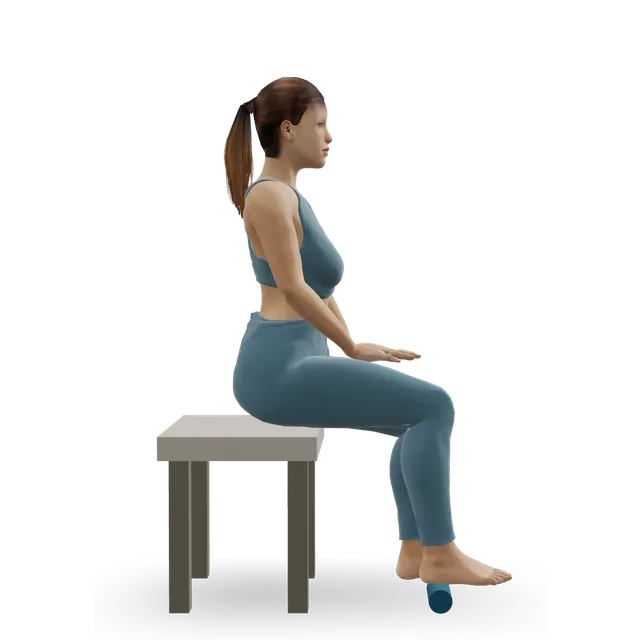
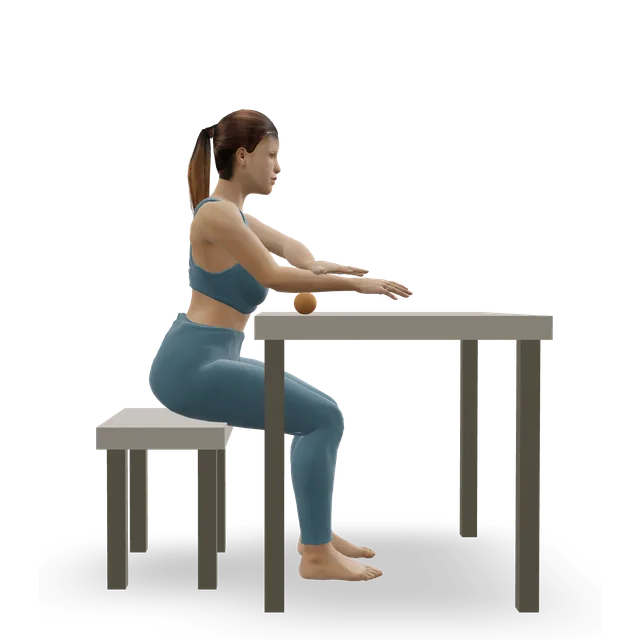
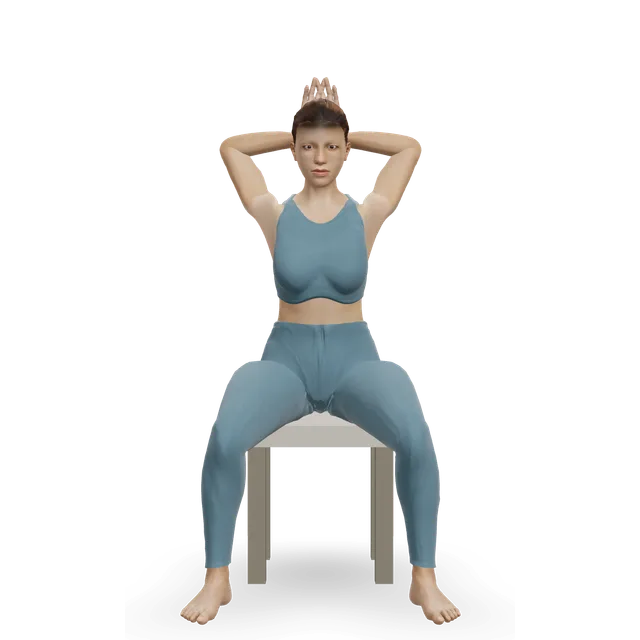
The foot roll, forearm roll, side bend, seated twist (the NHS seated twist dose), child's pose and open book doses are their move pages', several of which their pages call editorial. The all-fours back arch is the NHS back pain in pregnancy exercise, and the breathing time is our editorial starting point. No trial has tested release in pregnancy, or this sequence.
Check first: any of the warning signs above, or a leg that is swollen, painful, red or warm, needs help, not release. Keep everything off your bump, and stop if you feel uncomfortable, too hot or unwell.
Breathe: sitting tall, take slow breaths with a longer breath out for 2 to 5 minutes.
Feet: sitting, roll the sole of each foot over a soft ball for 1 to 2 minutes a foot, at a gentle pressure.
Forearms: at a table, roll a ball from near the elbow to near the wrist, palm down then palm up, for 45 to 60 seconds a side. Stop if your fingers tingle or go numb.
Sitting: lean to each side, holding 10 to 20 seconds, 2 or 3 times a side; then turn your upper body, holding each turn about 5 seconds, 5 times a side. Leave out any forward lean.
On all fours: gently raise your back towards the ceiling, hold for a few seconds, and return to a flat back, 10 slow times.
Rest in child's pose with your knees wide so your bump has room, for 1 to 3 minutes.
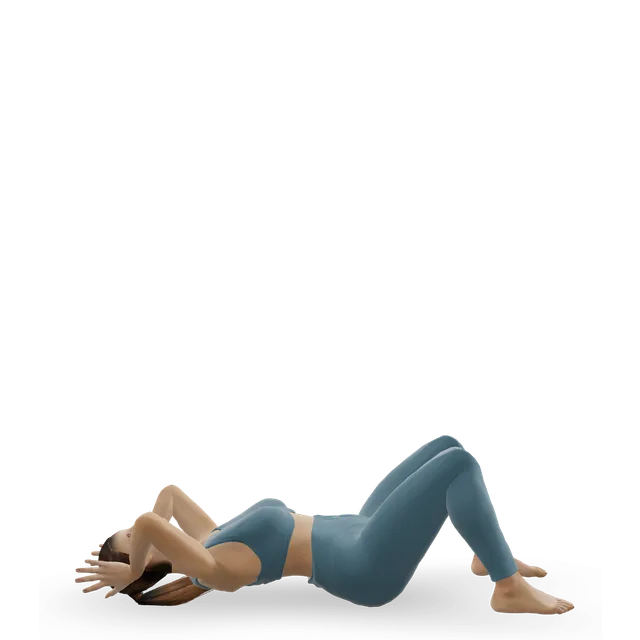
Lie on your side with a pillow between your knees and open your top arm like a book, 8 to 10 slow times each side.
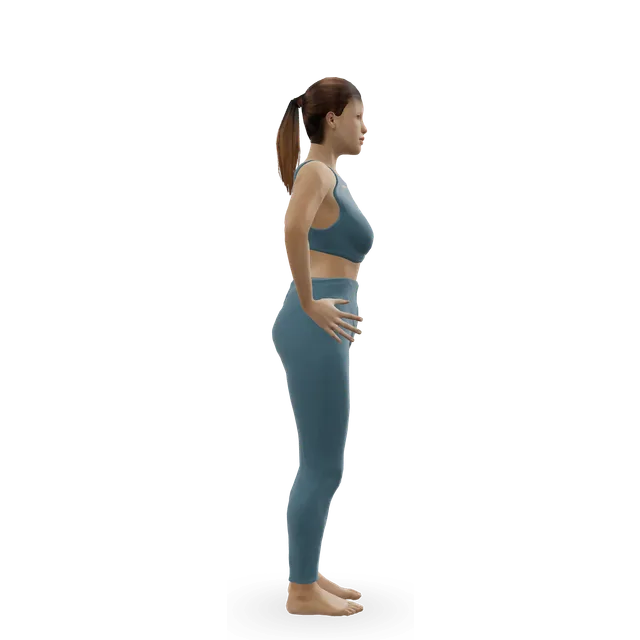
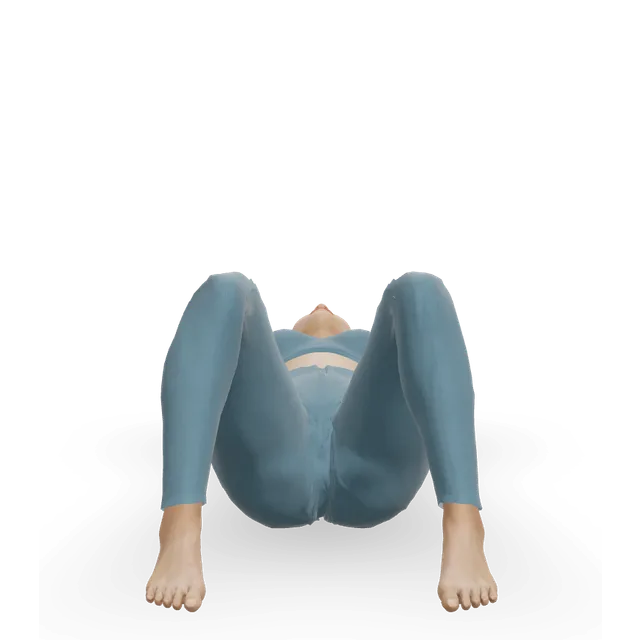
Loading the 3D figure…
Drag to turn
Gets into position, then repeats the movement. Technical checks passed; qualified exercise review is pending.
Each dose names its source or is our editorial starting point. Doses are starting points, not prescriptions.
Move every day
Aim for 150 minutes a week of moderate activity, including 2 strength sessions, as the NHS advises; if you're new to exercise, start with about 10 minutes a day. Exercise has the best evidence for back and pelvic pain.
The seated foot roll, 1 to 2 minutes a foot, and the forearm roll, 45 to 60 seconds a side: their move pages' doses, which those pages call editorial starting points. As often as it feels good, sitting or standing: our editorial view.
The back arch on all fours
Raise your back gently, hold for a few seconds and return to a flat back, slowly and rhythmically 10 times: the NHS's exercise for back pain in pregnancy.
Eight slow squeezes held for up to 10 seconds and 8 quick squeezes, 3 times a day, building towards 10 of each: the pelvic floor move page's dose, from the UK's pelvic health physiotherapists.
Pelvic girdle pain
Keep active but avoid what makes the pain worse, put equal weight on each leg when standing, sit down to get dressed and keep your knees together getting in and out of a car, as the NHS suggests. Your midwife or GP can refer you to a physiotherapist, who may suggest exercises or a support belt.
If you had a straightforward birth, you can start gentle exercise, such as walking, gentle stretches and pelvic floor exercises, as soon as you feel up to it. The NHS suggests getting advice at your 6-week postnatal check before high-impact exercise such as running.
The NHS says your ligaments and joints stay more supple and flexible for a few months after birth, so there's a higher risk of injury if you stretch or twist too much. Gentle release and stretching are fine; don't push to your limits.
Many gaps shrink on their own over the first year, and we found no trial of release for the gap; our diastasis recti guide has the exercise plan. Massage a caesarean scar only once the wound has fully healed: our scar tissue guide explains how.
In later pregnancy, avoid lying flat on your back for more than a few minutes. Clots are more likely in pregnancy and for 6 weeks after birth: a pregnant woman had a clot reach her lungs shortly after a leg massage, so never roll or massage a swollen or painful leg.
HealthLink BC, a Canadian health service, advises avoiding massage of the belly in pregnancy, because firm massage of the pregnant belly could cause serious problems. Don't press on your bump.
Keep the pressure light, or ask your doctor first, if you take blood thinners, which make bruising more likely, or have a nerve condition such as peripheral neuropathy: the NHS lists these among the reasons hands-on treatments may not be safe. If you have a health condition or a high-risk pregnancy, ask your midwife which activities are safe for you.
In an expert consensus of 37 researchers, open wounds and broken bones were reasons not to roll, and inflammation, a clot, a bone infection or bone forming in a muscle after an injury were at least reasons for caution.
Call your midwife or maternity unit if you're less than 37 weeks pregnant and you have regular contractions or tightenings, period-type pains, a gush or trickle of fluid from your vagina, or backache that's not usual for you. You can also call if you're unsure or worried about anything.
Pelvic pain that makes moving hard
Call your midwife or GP if you have pelvic pain and it's hard for you to move around, it hurts to get out of a car or turn over in bed, or it's painful going up or down stairs.
If your backache is very painful, or the pain is causing you a lot of distress, tell your GP or midwife: they can refer you to a physiotherapist who specialises in pregnancy.
"Pregnancy hormones make your fascia unsafe to stretch"Mixed evidence
Joints do loosen and fascia cells respond to relaxin in a dish, but looseness doesn't track hormone levels and no study shows fascia becoming fragile. Exercise is safe in pregnancy; the NHS's caution is not to stretch or twist too much in the months after birth.
"You can't foam roll when you're pregnant"Mixed evidence
No trial has tested rolling in pregnancy, for benefit or harm. The real rules are about clots (never a swollen or painful leg), the bump, and lying flat in later pregnancy.
"Massage in the first trimester causes miscarriage"Mixed evidence
We found no study linking massage to miscarriage. HealthLink BC's pregnancy massage advice is about positions and the belly, not about avoiding the first trimester. Tell the therapist you're pregnant and choose one trained in pregnancy massage.
"Pressing points on the ankle or inner thigh can start labour"Mixed evidence
In 22 trials of 3,456 women, acupuncture or acupressure given on purpose to bring on labour at term showed no clear benefit on caesarean rates. Keep pressure light anyway, and never on a swollen or painful leg.
"Back pain in pregnancy means your fascia is out of place"Mixed evidence
Back and pelvic pain come from changing load and how the joints are controlled, and the exact mechanisms are unclear. Exercise is the best-tested help.
Rolling hasn't been tested in pregnancy. Gentle rolling of the feet, forearms or upper back in a safe position is reasonable for comfort, but never roll a swollen or painful leg, never press on the bump, and in later pregnancy don't lie flat on your back for more than a few minutes.
Is myofascial release safe during pregnancy?
In pregnancy trials, side effects of the treatments tested were minor and short-lived when they were reported. Tell the therapist you're pregnant, choose one trained in pregnancy massage, sit or lie on your side, and avoid massage of the belly. Ask your midwife first if your pregnancy is high risk.
Can I use a massage gun when pregnant?
There are no trials. Keep it off your tummy and off any leg that is swollen or painful, keep it light and brief, and ask your midwife if you're unsure.
Does relaxin make my fascia or joints unstable?
Joints do get looser in pregnancy, and fascia cells respond to relaxin in a laboratory dish. But looseness doesn't track relaxin levels, relaxin isn't linked with pelvic girdle pain in most good studies, and exercise stays safe.
Is it safe to stretch in pregnancy?
Yes, gently. Exercise is safe in pregnancy, but don't start a new vigorous activity, and stop if you feel uncomfortable, too hot or unwell. After the birth, joints stay more supple for a few months, so take care not to stretch or twist too much.
Can I roll or massage my legs in pregnancy?
This is the one place to be careful. Clots are more likely in pregnancy and for 6 weeks after birth, and a woman 25 weeks pregnant had a massive clot reach her lungs shortly after a leg massage. Never roll or massage a leg that is swollen, painful, red or warm; our routine leaves calf rolling out.
Does massage help back pain in pregnancy?
The NHS suggests a massage or a warm bath. In trials, massage and osteopathy eased pain more than usual care but not more than a sham treatment, and exercise has the strongest evidence.
Can I lie on a foam roller when pregnant?
In later pregnancy, avoid lying flat on your back for more than a few minutes, because it can make you dizzy and isn't good for your baby. Sit, lie on your side or stand at a wall instead.
Can fascia release close my tummy gap?
We found no trial of release or massage for the gap. Exercise narrows it a little at most, and many gaps shrink on their own over the first year; our diastasis recti guide has the plan.
When can I start fascia release after giving birth?
Gentle exercise can start as soon as you feel up to it, and the NHS suggests advice at your 6-week check before high-impact exercise. Leave a swollen or painful leg alone, as clots stay more likely for 6 weeks, and massage a caesarean scar only once it has fully healed.
Can I use a fascia blaster while pregnant?
There's no good evidence for fascia blasting at any time, and bruising is a harm, not progress. Keep all tools off the bump.
Movement education, not medical advice. Stop for sharp or increasing pain, numbness or tingling, and get individual advice if you are pregnant, after an injury or surgery, or managing a health condition. Health disclaimer.