Pilates guide

Pilates for circulation: the calf pump, sitting all day, cold hands and feet, varicose veins, and what the evidence shows

Pilates can help your circulation a little, mostly by getting you moving and, with the right moves, working your calf muscles, the pump that pushes blood back up your legs. But most mat Pilates works the trunk and hips rather than the calves, it doesn't detox or flush your blood, and no study has measured whether it improves blood flow to the legs, hands or feet. Add calf raises, ankle work and walking, and break up long spells of sitting.

"Poor circulation" isn't one condition: it can mean narrowed leg arteries, leaky leg veins, small blood vessels that spasm in the cold (Raynaud's) or a clot, and each needs its own advice. Pilates never replaces treatment for vein or artery disease, compression stockings where they're prescribed, or the walking programme for leg pain on walking.

This guide covers what the evidence shows, the calf pump, sitting all day, cold hands and feet, leg pain on walking, varicose veins and swollen legs, legs-up and upside-down moves, compression and hot classes, and the signs that need a GP (general practitioner) or 999. It ends with our calf-pump Pilates class.

The short version

"Poor circulation" isn't one condition

It usually means narrowed leg arteries (peripheral arterial disease, PAD), leaky leg veins (varicose veins), small blood vessels in the fingers and toes that spasm (Raynaud's) or a clot (deep vein thrombosis, DVT). Each has its own advice, and its own guide on this site.

Sources 1, 2, 3, 4

No study shows Pilates improves blood flow to your legs

We found no Pilates study in vein or artery disease, Raynaud's or swollen legs, and none that measured blood flow to the legs, feet or hands. The few Pilates trials in people with raised blood pressure found lower blood pressure, and in one, less stiff arteries.

Sources 5, 6, 7, 8

Your calf muscles are the pump

Standing still, the pressure in a vein on top of your foot is 80 to 90 mmHg; walking or rising onto your toes brings it down to 20 to 30. Most mat Pilates works the trunk and hips, so add heel raises, ankle pumps and walking (our reading of the physiology).

Sources 9, 10, 11

Sitting still is the problem to fix

Sitting for an hour or more lowered how well the arteries in the legs worked, and short breaks protected them. The NHS says get up and move around every hour or so.

Sources 12, 13, 4

With leg pain on walking, walking is the treatment

The National Institute for Health and Care Excellence (NICE) recommends a supervised exercise programme for everyone with leg pain on walking from narrowed arteries; it added about 82 metres of pain-free walking in trials. Pilates can add strength on other days, not replace the walking.

Sources 14, 15, 1

Pilates doesn't flush or detox your blood

Going upside down raised blood pressure and lowered the heart's output in healthy men, and raising your legs moves blood towards the heart only briefly. The "internal shower" idea comes from Joseph Pilates' 1945 book; no study has measured it.

Sources 16, 17, 18

Circulation, and what "poor circulation" means

Arteries, tiny vessels and veins

Arteries carry blood from the heart to your muscles, the smallest vessels let oxygen and waste pass in and out, and veins carry blood back. Working muscles get more blood because they need it: no move "sends" blood anywhere.

  • Narrowed leg arteries (PAD): the NHS describes the main symptom as "pain in your legs when walking that goes away when you stop and rest for a few minutes".
  • Leaky leg veins (varicose veins): aching, heaviness or swelling, often worse after standing and better with your legs up.
  • Small vessels that spasm (Raynaud's): fingers and toes change colour and go numb when you're cold, anxious or stressed.
  • A clot (DVT): throbbing pain and swelling in one leg.
  • Swollen ankles, feet and legs: often from standing or sitting too long, and sometimes from other health problems.

Sources 1, 2, 3, 4, 19

The calf muscle pumpStrong evidence

The trip back from your legs relies on one-way valves in the veins and the squeeze of your calf and foot muscles. The European vascular surgeons' guideline: standing still, foot vein pressure is high, but with the calf pump working, "as during tip toe exercise or walking", it falls to 20 to 30 mmHg. In vein disease, the calf pump empties the veins less well.

Sources 9, 20

What a Pilates class does to blood flow

Mat Pilates is light to moderate exercise that mostly works the trunk and hips, much of it lying down. So on its own it does little for the calf pump unless you add ankle and calf work, standing moves or walking. That's our reading of the physiology, as our Pilates for varicose veins guide says; no study has measured it. Reformer footwork and heel raises at the wall do work the calves.

Breathing helps a littleEmerging evidence

In 20 young men, the peak speed of blood in the main thigh vein was 10.1 cm a second at rest, 15.5 with deep breathing, 20.7 with ankle exercise and 26.5 with both. Ankle work moved more blood than breathing; slow breathing while you pump your ankles does both.

Source 11

The "internal shower"

Joseph Pilates believed his exercises cleansed the blood: a studio blog quotes his 1945 book, Return to Life, as saying "Contrology exercises purify the blood in the bloodstream". It's a belief, not a finding. We couldn't open the book itself, and no study has measured a cleansing effect.

Sources 18, 21

What the evidence says

No Pilates study of leg blood flowStrong evidence

Our searches found no Pilates study in varicose veins, venous insufficiency, peripheral arterial disease, leg pain on walking, Raynaud's or leg swelling, and none that measured blood flow to the legs, feet or hands over a programme.

Source 5

Stiffer arteries: one small trialEmerging evidence

In 28 young women with obesity and raised blood pressure in the US, 12 weeks of mat Pilates lowered arterial stiffness (pulse wave velocity fell by 0.7 m a second) and blood pressure by about 5 mmHg, against no exercise. It's one small trial with a no-exercise control group.

Source 6

Artery lining function: mixedMixed evidence

In 28 women taking blood pressure medicines in Brazil, 13 weeks of Pilates lowered 24-hour systolic blood pressure by 10.3 mmHg, but the lining of the arteries worked no better (flow-mediated dilation didn't change). In 34 adults aged 60 to 75 in Thailand, mat Pilates lowered blood pressure but arterial stiffness didn't differ between the groups, and blood flow in the legs wasn't measured. Other studies were a single reformer session, tiny trials in low-oxygen rooms and an uncontrolled study.

Sources 7, 22, 8, 23, 24, 25

Exercise in general helps blood vesselsStrong evidence

In trials of 4 weeks or more, aerobic exercise improved artery lining function by about 2.8 percentage points and strength training by about 2.5. Yoga raised it by 1.23 points in 6 controlled studies. Pilates probably shares some of this, but that's untested.

Sources 26, 27

Vein disease: very little evidence for any exerciseMixed evidence

A Cochrane review found 5 small trials (146 people) of exercise for leaky leg veins and rated every result very low certainty. Calf training improved how well the calf pump empties the veins, but not the leaky valves, and symptoms didn't change in the main trial. European vascular surgeons still say exercise "should be considered to reduce venous symptoms".

Sources 28, 29, 30, 9

Leg ulcers: exercise plus compressionEmerging evidence

In people with venous leg ulcers, adding exercise to compression helped more ulcers heal (about 14 more per 100 at 12 weeks; a 2026 analysis of 9 trials agreed), though the trials were small and low quality. Every trial combined exercise with compression.

Sources 31, 32, 33

Leg pain on walking: walking worksStrong evidence

In 32 trials (1,835 people), exercise added about 82 metres of pain-free walking and 120 metres in total (high-quality evidence), without unblocking the artery. Supervised programmes beat home exercise and advice. Cycling, leg strength training and arm cranking did about as well as walking, on low-certainty evidence.

Sources 15, 34, 35, 36

Raynaud's: no exercise trialMixed evidence

No exercise or yoga trial exists in primary Raynaud's. In 32 people with systemic sclerosis, a condition that usually brings Raynaud's, 12 weeks of interval and strength training improved blood flow in the skin and eased Raynaud's-related pain. In 313 people with primary Raynaud's, a medicine (nifedipine) cut attacks by 66%, while learning to warm the hands by relaxation did no better than a comparison.

Sources 37, 38, 39, 5

Your calf pump, and how to use it

Moving your ankles moves the bloodEmerging evidence

In 20 people, actively moving the feet and ankles raised the speed of blood in the leg veins by 38% on average and 58% at its peak, more than when someone else moved them.

Sources 10, 11

Pilates moves that work the pump

Heel raises, ankle pumps and circles, marching, and sit-to-stands work the calves; on the mat, bridges, single-leg circles and side kicks work the thighs and hips. Lead with the calf work (our suggestion, as in our calf-pump Pilates class).

Ankle pumps with slow breathing, step by step

As our yoga for circulation guide gives them, from our calf pump routine's dose (10 pumps, then 5 circles each way), with the slow breathing that moved the most blood when combined with ankle exercise in a small study.

  1. Sit tall on a chair with your feet flat, or lie on your back.
  2. Lift one foot a little off the floor.
  3. Point your toes away from you, then pull them back towards your shin, slowly and as far as is comfortable. That's one pump.
  4. Do 10 pumps, breathing in slowly through your nose and out for a little longer, with no holds.
  5. Then draw 5 slow circles with your big toe each way, and change feet.

See the movement on the 3D figure: Ankle circles

Sitting all day, and long journeys

Short breaks protect your leg arteriesEmerging evidence

Sitting for an hour or more lowered artery function in the legs (not the arms), and breaks kept it higher. A 2026 analysis of 36 studies found breaks improved leg artery function and limb blood flow, with moderate certainty. Five-minute walks each hour, or even fidgeting one leg, protected the legs in small lab studies.

Sources 12, 13, 40, 41, 42

How often: our editorial starting point

Every 20 to 30 minutes of sitting, 2 to 3 minutes of ankle pumps, calf raises, marching or a short walk. At the very least, the NHS says get up and move around every hour or so. Our 3-minute desk movement break is built for this.

Sources 43, 4

Long journeys and clotsStrong evidence

Long journeys roughly doubled the risk of a clot, and after flights of 4 hours or more the risk was about 1 clot per 4,656 flights, highest in the first 2 weeks. In 5,591 older women, longer unbroken sitting bouts went with more clots, though total sitting time didn't. The NHS advises moving around on journeys of 4 hours or more; our seated circulation routine is built for them.

Sources 44, 45, 46, 4

A morning ride helped, in one lab studyEmerging evidence

In 15 young adults, 45 minutes of cycling before 3 hours of sitting kept leg artery function steady, and sitting with one leg bent lowered it in that leg only. A moderate ride isn't a short Pilates routine, but it's a reason to move before a long sit.

Sources 47, 48

Leg pain on walking (peripheral arterial disease)

Walking is the first treatmentStrong evidence

NICE says to "offer a supervised exercise programme to all people with intermittent claudication" (leg pain on walking that eases with rest), with about 2 hours of supervised exercise a week for 3 months. The NHS lists an exercise programme among the treatments, and says don't smoke, because smoking can make symptoms worse.

Sources 14, 15, 1

How to walkStrong evidence

The likely best supervised prescription in a 2026 analysis was intermittent walking 3 times a week, walking into the pain and resting, for 12 weeks. Our exercise for peripheral arterial disease guide and its walk-rest-walk workout have the programme.

Sources 36, 15

Where Pilates fitsMixed evidence

No trial has tested Pilates in PAD. Leg strength training did about as well as walking in some trials, and combined walking and strength training looked most promising in one analysis. So Pilates on other days can add leg strength and balance (our suggestion), never in place of the walking.

Sources 35, 49, 5

Varicose veins and swollen legs

Varicose veinsStrong evidence

The NHS advises exercising regularly "to improve blood flow", putting your legs up when possible and not standing for long periods. NICE asks for advice on light to moderate physical activity. Exercise eases symptoms a little at most and won't make varicose veins disappear; our Pilates for varicose veins guide covers the moves to use and change.

Sources 2, 50, 9

Swollen ankles and legs

Swelling from standing or sitting too long usually eases with moving and raising your legs. Swelling in one leg, or swelling that is severe, painful or sudden, needs checking (warning signs below). Our Pilates for lymphatic drainage and Pilates for lymphoedema guides cover swelling from the lymph system.

Source 19

Cold hands and feet, and Raynaud's

What the NHS advisesStrong evidence

Keep warm, wear warm clothes in cold weather, avoid sudden changes in temperature, exercise regularly ("this helps improve circulation", the NHS says), try breathing exercises or yoga to help you relax, don't smoke, and don't have too much caffeine.

Source 3

Keep warm in class

Scleroderma & Raynaud's UK, the charity, says the relaxation at the end of a class can cool you down, so take layers. Afterwards, warm cold hands and feet slowly: the NHS advises against putting them on a radiator or under hot water.

Scleroderma & Raynaud's UK also advises lots of thin layers, and keeping warm when you exercise in the cold, because sweat cooling on your skin can bring on an attack.

Sources 51, 52

Moving warms you; it isn't a treatmentMixed evidence

Scleroderma & Raynaud's UK says even moderate exercise can help keep you warm, and women with Raynaud's in a Dutch study were more active than other women, so symptoms needn't stop you. But no trial shows exercise treats Raynaud's; a GP can help if attacks are bad.

Sources 51, 37, 53

Legs up the wall, and upside-down moves

Legs up: a small, short effectEmerging evidence

In 9 young women, 15 minutes with the legs raised shrank the calves by 3.1 mm with the legs up a wall, 4.6 mm lying flat and 5.4 mm with the calves on a ball. Raising the legs moves about 300 mL of blood towards the heart, an effect that can vanish within a minute. It eases heavy legs; it isn't a treatment.

Sources 54, 17

Upside down doesn't boost circulationEmerging evidence

In 20 healthy men, hanging upside down raised heart rate, blood pressure and resistance in the blood vessels, and lowered how much blood the heart pumped. Pilates' legs-overhead moves (the roll-over and jack knife) add nothing for your circulation, and their own cautions (neck problems, glaucoma, uncontrolled blood pressure, osteoporosis, pregnancy) still apply.

Source 16

Who should skip legs up the wall or ask first

The move page's cautions: from the end of the first trimester of pregnancy, or if lying flat makes you dizzy, prop your upper body on cushions or skip it; with glaucoma, ask your eye doctor first; with high blood pressure that isn't under control, don't raise your hips; with heart failure, or kidney or liver disease that causes fluid build-up, ask your doctor first.

Compression, hot classes, rollers and standing still

Compression stockings

The NHS says compression stockings aren't suitable if you have problems with blood flow in your arteries, and that a specialist can check for this. Ask before buying strong ones.

If a professional has fitted stockings and checked your circulation, wear them for Pilates if they're comfortable (our suggestion, as our varicose veins guide says). We found nothing showing compression and exercise clash: every leg ulcer exercise trial combined them. NICE doesn't offer compression to treat varicose veins unless vein treatment is unsuitable.

Sources 2, 50, 31, 33

Hot Pilates

The European guideline advises avoiding heat with vein disease, so skip hot classes if your legs ache or swell in the heat (our suggestion). With Raynaud's, the cool-down at the end of a class matters more than the heat: take layers.

Sources 9, 51

Rollers, rings and massage

Keep foam rollers, massage guns, cups and deep massage off varicose veins: the NHS advises trying not to injure your legs, to help prevent bleeding. Never roll or massage a calf that's swollen, red or throbbing, because it could be a clot. The European guideline advises avoiding heat, so hot tubs and saunas may make heavy legs feel worse.

Sources 2, 4, 9

Don't stand still

Between standing moves, march on the spot or rise onto your toes rather than standing still (our suggestion, as in our varicose veins guide).

The calf pump, sitting

Ankle circles (10 pumps, then 5 circles each way), the seated calf raise (15) and the seated march (1 minute), all our calf pump routine's. Do them every 20 to 30 minutes when you sit for long.

The calf pump, standing

Slow calf raises (2 sets of 10 to 15, a hand on the wall), tibialis raises (10 to 15), the standing march (1 minute), sit to stand (10) and the wall side leg lift (10 each side), all our calf-pump Pilates class's.

Pilates leg work on the mat

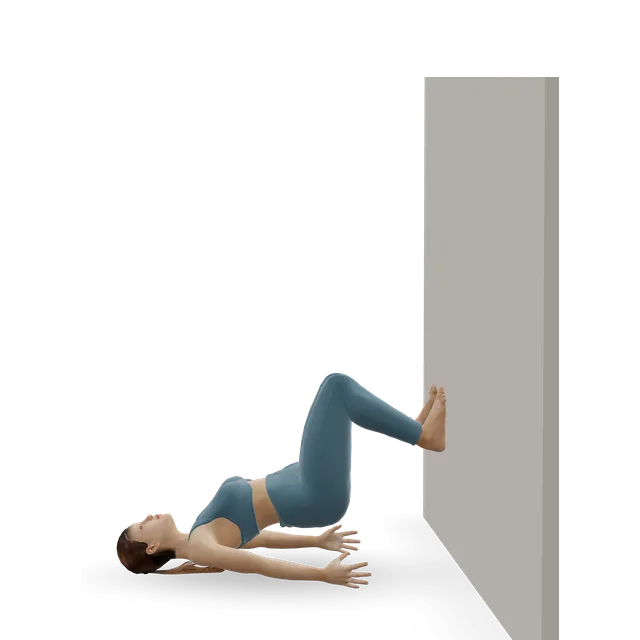
The wall bridge (8 to 10), heel slides (10 each side), single-leg circles (5 each direction, each leg), the knee fold (5 to 8 each side), the glute bridge (2 sets of 8), the side kick (8 each side) and side-lying leg circles (8 each direction, each side), all our calf-pump Pilates class's.

Legs raised, then up slowly

Legs up the wall (3 to 5 minutes, or with your legs on cushions) and slow breathing (5 breaths, in for 4, out for 6), both our calf-pump Pilates class's. Roll to your side and sit for a moment before you stand.

Hands and arms, for cold hands

Arm circles (10 to 15 slow circles each way, once or twice through, as part of a warm-up, from the move page's dose), shoulder rolls (10 to 15 slow circles each way, from the move page's dose) and tendon glides (4 to 6 of each position, holding each for 5 seconds, from the move page's dose). Moving warms you; none of these treats Raynaud's.

Moves to change or leave out

Legs-overhead moves

The roll-over, jack knife, corkscrew in its advanced form, boomerang and control balance don't help your circulation, and their own cautions still apply. Legs up the wall raises your legs without weight on your neck (our reading).

Source 16

Long standing holds

Break up long standing balances with heel raises or marching on the spot (our suggestion).

Rings, balls and rollers

Keep them off bulging veins, and never roll a calf that's swollen, red or throbbing (the line above).

Kneeling with numb feet

Come out of kneeling at once if your feet go numb or tingle (the line below).

Classes to follow

Our 25-minute calf-pump Pilates class is the one to follow: standing calf work first, then leg work with your legs raised, side-lying moves and legs up the wall. No trial has tested it. The 5-minute seated routine is for journeys and long sits, the desk break for every 20 to 30 minutes at a desk, and the walk-rest-walk workout for leg pain on walking once a GP has diagnosed it.

Calf-pump Pilates for varicose veins: a 25-minute standing, legs-raised and side-lying class

A 25-minute Pilates class for varicose veins and heavy legs: calf raises to work the pump, mat work with your legs raised, side-lying hip work and legs up the wall.

25 minBeginner19 movesWall, bench or box

Seated circulation exercises: a 5-minute leg routine for journeys and long sits

A 5-minute routine you can do in a plane, train or car seat, or at a desk: ankle pumps, heel raises, knee lifts and leg straightening, then slow breaths.

5 minBeginner7 movesBench or box, something with weight

3-minute desk movement break

A 3-minute standing break to repeat every 30 to 60 minutes at your desk: sit-to-stands, calf raises, marching, an upper-back turn and chin tucks.

3 minBeginner5 movesBench or box, wall

Calf pump exercises for varicose veins and heavy legs

A 15-minute calf pump routine for varicose veins and heavy, swollen legs: ankle pumps, calf raises, a brisk walk, calf stretches and legs up to finish.

15 minBeginner10 movesBench or box, wall

No-floor office Pilates: a 15-minute class by your desk, with a chair, a wall and an optional band

A 15-minute office Pilates class with no floor work: seated breathing and upper-back lifts, band and wall strength, standing legs and hips, and an unwind.

15 minBeginner15 movesBench or box, band

Yoga for circulation: a 20-minute legs-first class with no head-down poses

Twenty minutes of yoga for blood flow in your legs and feet: ankle pumps and calf raises, standing poses that make your legs work, and a rest with your legs up.

20 minBeginner14 movesBench or box, wall

Claudication walking workout: walk-rest-walk

The walk-rest-walk session for leg pain from narrowed arteries: walk until the pain is close to the most you can bear, rest until it goes, repeat to 30 minutes.

45 minBeginner8 movesWall, cardio machine

Walking plans

Walking works the calf pump more than any mat move, and it's the treatment for leg pain on walking.

Warning signs: when to see a GP, and when to get help

This is general information, not a diagnosis. A&E means accident and emergency; in the US, call 911 for 999, and use your doctor's urgent line or urgent care for NHS 111.

A cold, pale or painful leg or foot: call 999

Call 999 or go to A&E (accident and emergency) if a leg or foot suddenly turns cold, pale or blue, numb, weak or very painful without an injury (our suggestion, summing up the emergency line in our exercise for peripheral arterial disease guide, which explains why).

A clot in the lungs: call 999

Call 999 or go to A&E if breathing suddenly becomes difficult, if pain in your chest or upper back comes on suddenly with breathlessness or a very fast heartbeat, or if someone passes out. Do not drive yourself. It can be a blood clot that has reached the lungs.

Sources 55, 4

Chest pain or fainting: call 999

Call 999 if:

  • You get sudden pain or discomfort in your chest that doesn't go away; it can feel like squeezing or pressure, burning or indigestion.
  • The pain spreads to your left or right arm, or your neck, jaw, stomach or back.
  • You have chest pain and feel sweaty, sick, light-headed or short of breath.
  • Someone faints while exercising, can't be woken within 1 minute, or has chest pain or a pounding, fluttering or irregular heartbeat.

Sources 56, 57, 58

Breathlessness

Call 999 or go to A&E (accident and emergency) straight away for severe difficulty breathing (gasping, choking or not able to get words out), a chest that feels tight or heavy, pain that spreads to your arms, back, neck and jaw, lips or skin turning very pale, blue or grey, or sudden confusion. If you're more short of breath than usual, or your heart is racing, fluttering or skipping beats, contact NHS 111.

Source 59

Same day: a swollen, painful leg

Same day (urgent GP appointment or NHS 111): throbbing pain in one leg (rarely both), usually the calf or thigh; swelling in one leg (rarely both); red, blue or darkened skin around the painful area, which may be harder to see on brown or black skin; or swollen veins. This can be a deep vein thrombosis (DVT). It is more likely after surgery, a hospital stay, 3 or more days in bed, a journey of over 4 hours, pregnancy or a recent birth, cancer, a previous clot, or contraception or hormone replacement therapy (HRT) that contains oestrogen.

The NHS's DVT page now also lists having varicose veins, being over 60, smoking and being dehydrated among the things that make a DVT more likely (our suggestion, from that page).

Source 4

Also get help the same day

  • Swelling in one leg that you can't explain, or swelling that is severe, painful or came on suddenly.
  • A varicose vein that bleeds: ask for an urgent GP appointment or call NHS 111. Our varicose veins guide has what to do while you wait.
  • Same day: you have diabetes and a new foot problem, such as an ulcer or wound, signs of infection, or a hot, swollen foot with a change in colour, even if it doesn't hurt. Contact your diabetes foot team or GP: NICE asks for these to reach a specialist foot service within 1 working day, and a suspected Charcot foot is kept off weight until it has been checked.

Sources 4, 2, 19

See a GP: leg pain

See a GP if you have pain in your calves, thighs, feet or bottom when walking that goes away after resting for a few minutes, leg pain that is there all the time and is worse at night, or other symptoms such as hair loss on your legs, gradual numbness or weakness, or sores that do not heal.

Source 1

See a GP: Raynaud's

The NHS says see a GP if:

  • Your symptoms are very bad or getting worse.
  • Raynaud's is affecting your daily life.
  • Your symptoms are only on 1 side of your body.
  • You also have joint pain, skin rashes or muscle weakness.
  • You're over 30 and getting symptoms for the first time.
  • Your child is under 12 and has symptoms.

Source 3

Fingers or toes with ulcers or black areas

Get them seen as soon as possible (our suggestion): our exercise for Raynaud's guide lists them among the signs that need a doctor or nurse specialist quickly.

See a GP: chilblains

See a GP if chilblains aren't getting better after 2 to 3 weeks, there's pus coming out, you have a very high temperature or feel hot, cold or shivery, you keep getting them, or you have diabetes.

Source 52

See a GP: varicose veins

The NHS says see a GP if you have varicose veins and symptoms such as pain, itching or swelling in your legs, a sore on your leg that has not healed after 2 weeks, or veins that are getting worse.

Source 2

During a class

If calf pain on walking or standing comes on during a class, rest until it goes, as in walk-rest-walk. Come out of kneeling poses at once if your feet go numb or tingle. Come up slowly from lying and from legs up the wall: roll to your side and sit for a moment. Stop for chest pain, unusual breathlessness or dizziness.

Stop the session if

You feel any pain or become unwell, as the NHS advises for its Pilates videos, and especially for chest pain or pressure, unusual breathlessness, dizziness or fainting. If you have a health problem, an injury or any symptoms, get advice from a healthcare professional, such as a GP, before you start.

Source 60

Before you start

The NHS advises getting advice from a healthcare professional first if you have a health problem, an injury or symptoms, or have recently had a heart attack or an operation.

Source 60

Myths

"Pilates improves circulation by detoxing the body"Strong evidence

The "internal shower" idea comes from Joseph Pilates' 1945 book. No study has measured a detox, and none has measured blood flow to the legs, feet or hands over a Pilates programme.

Sources 18, 5

"Pilates cures poor circulation" (or varicose veins)Strong evidence

No Pilates study has been done in vein or artery disease. Exercise eases vein symptoms a little at most and doesn't repair leaky valves, and it doesn't unblock narrowed arteries. Varicose veins are treated by a vascular service.

Sources 5, 28, 30, 15, 50

"Upside-down moves flush your circulation"Emerging evidence

Going upside down raised blood pressure and lowered the heart's output; raising the legs moves blood only briefly. Legs up the wall is a restful position, not a treatment.

Sources 16, 17, 54

"Compression and exercise don't mix"Emerging evidence

Every leg ulcer exercise trial combined exercise with compression, and we found nothing showing they clash. Wear prescribed stockings for Pilates if they're comfortable.

Sources 31, 32, 33, 30

"With leg pain on walking, rest your legs"Strong evidence

Once a GP has diagnosed narrowed arteries, walking into the pain and resting is the treatment, and it added about 82 metres of pain-free walking in trials.

Sources 15, 14

"Deep breathing pumps blood round your body"Emerging evidence

Breathing nudges blood up from the legs a little, but ankle exercise moved more, and the two together moved the most.

Source 11

"Cold hands mean poor circulation that exercise will fix"Mixed evidence

Cold hands are often Raynaud's or just cold. Moving keeps you warm, but no trial shows exercise treats Raynaud's, and some patterns need a GP.

Sources 3, 37, 51

"You need a reformer for real Pilates"Mixed evidence

The Pilates blood vessel trials used mat work, equipment, or both. For circulation, calf raises and walking matter more than any machine.

Sources 6, 8, 7

Questions people ask

Is Pilates good for circulation?

A little, mostly by getting you moving and, with the right moves, working your calves, the pump for your leg veins. In small trials, Pilates lowered blood pressure and in one lowered arterial stiffness, but no study has shown it improves blood flow to the legs, feet or hands.

Does Pilates improve blood flow in the legs?

No study has measured it. Most mat Pilates works the trunk and hips, often lying down, so add heel raises, ankle pumps and walking, which work the calf pump that lowers the pressure in your leg veins.

What are the best Pilates moves for circulation?

Ankle pumps and heel raises first, then marching and sit-to-stands, mat leg work such as bridges, single-leg circles and side kicks, and a rest with your legs up the wall. Our 25-minute calf-pump Pilates class puts them in order.

Is Pilates good for varicose veins?

It's a good way to stay active, and European vascular surgeons say exercise should be considered to ease vein symptoms, but no study has tested Pilates for varicose veins and exercise won't make them disappear. Our Pilates for varicose veins guide covers the moves to use and change.

Can Pilates help leg pain when walking?

Leg pain on walking that eases with rest needs a GP first, because it can be narrowed leg arteries. The treatment is a walking programme, which added about 82 metres of pain-free walking in trials; Pilates can add strength on other days, not replace the walking.

Is Pilates good for cold hands and feet?

Moving warms you up, and the NHS recommends regular exercise for Raynaud's, but no trial shows exercise treats it. Keep warm, take layers to class for the cool-down at the end, and see a GP if attacks are bad or getting worse.

Does Pilates help if I sit all day?

Yes, as one way to break up sitting: short movement breaks protected leg artery function in small studies. Every 20 to 30 minutes, do 2 to 3 minutes of ankle pumps, calf raises or a short walk.

Is legs up the wall good for circulation?

It eases heavy legs for a short time, but it isn't a treatment: calves shrank by about 3 mm in 15 minutes, less than lying flat. Prop your upper body up or skip it in later pregnancy, and ask first with glaucoma or uncontrolled blood pressure.

Do upside-down Pilates moves boost circulation?

No. Going upside down raised blood pressure and lowered the heart's output in healthy men, and raising the legs only moves blood briefly. The roll-over and jack knife add nothing for your circulation.

Can I wear compression stockings to Pilates?

If a professional has fitted them and checked your circulation, yes, if they're comfortable. We found nothing showing compression and exercise clash; stockings aren't suitable if you have problems with blood flow in your arteries.

Does Pilates detox your blood?

No. Joseph Pilates believed his exercises cleansed the blood, but no study has measured that, and your blood doesn't sit waiting to be flushed.

When should I see a doctor about poor circulation?

Call 999 for a leg or foot that suddenly turns cold, pale, numb or very painful. Get help the same day for throbbing pain and swelling in one leg. See a GP for leg pain on walking that eases with rest, sores that won't heal, or Raynaud's that is bad or getting worse.

Sources

  1. NHS · Peripheral arterial disease (PAD) (last reviewed October 2026)
  2. NHS · Varicose veins
  3. NHS · Raynaud's (past its review date: reviewed July 2023, review due July 2026)
  4. NHS · DVT (deep vein thrombosis)
  5. PubMed · Our search for Pilates studies of blood flow, veins, arteries, swelling and Raynaud's, and for exercise trials in Raynaud's (2 November 2026; Europe PMC and ClinicalTrials.gov also searched)
  6. Wong 2020 · Mat Pilates and stiff arteries in 28 young women with obesity and raised blood pressure (randomised trial, Am J Hypertens)
  7. Ruider 2026 · Pilates, 24-hour blood pressure and artery function in 28 women on blood pressure medicines (randomised trial, J Hypertens)
  8. Woramontri 2024 · Mat Pilates in 34 adults aged 60 to 75 with high blood pressure (randomised trial, Sports; read in full)
  9. De Maeseneer 2022 · Chronic venous disease of the legs: the ESVS guideline (guideline, Eur J Vasc Endovasc Surg; read in part; a correction couldn't be read)
  10. Sochart 1999 · Foot and ankle movements and blood flow in the leg veins in 20 people (study, J Bone Joint Surg Br)
  11. Kwon 2003 · Ankle exercise, deep breathing and blood flow in the thigh vein in 20 young men (study, Aust J Physiother)
  12. Paterson 2020 · Prolonged sitting, breaks and artery function: 22 trials (meta-analysis, Sports Med)
  13. Wang 2026 · Activity breaks during long sitting and blood vessel function: 36 studies (meta-analysis, Nutr Metab)
  14. NICE CG147 · Peripheral arterial disease: diagnosis and management (guideline, updated 2020; read in full)
  15. Lane 2017 · Exercise for leg pain on walking (intermittent claudication): 32 trials (Cochrane review)
  16. Heng 1992 · The heart and circulation upside down in 20 healthy men (study, Int J Sports Med)
  17. Monnet 2015 · Passive leg raising (editorial, Crit Care; read in full)
  18. Flow Pilates and Wellness · April showers (a studio blog quoting Joseph Pilates' Return to Life on circulation; the book itself couldn't be opened)
  19. NHS · Swollen ankles, feet and legs (oedema)
  20. Williams 2014 · The calf muscle pump revisited (review, J Vasc Surg Venous Lymphat Disord)
  21. Pilates Method Alliance · Pilates history
  22. Ruider 2026 · Pilates, mood and blood pressure in the same 28 women (randomised trial, Eur J Appl Physiol)
  23. Rangabprai 2024 · One reformer Pilates session and artery function in 17 older adults (crossover trial, Gerontology)
  24. Jung 2020 · Band Pilates in normal or low-oxygen air in 32 women with obesity (randomised trial, Int J Environ Res Public Health; read in full)
  25. Jung 2026 · 12 weeks of mat Pilates in 32 women, with no control group (uncontrolled study, Metabolites; read in full)
  26. Ashor 2015 · Exercise types and artery lining function (systematic review and meta-analysis, Sports Med)
  27. Patil 2024 · Yoga and artery lining function: 18 studies (systematic review and meta-analysis, J Integr Complement Med)
  28. Araujo 2023 · Exercise for leaky leg veins without ulcers: 5 trials (Cochrane review)
  29. Orr 2017 · Exercise and the calf muscle pump in vein disease: 14 studies (systematic review and meta-analysis, Ostomy Wound Manage)
  30. Padberg 2004 · Calf strengthening in 31 people with vein disease (randomised trial, J Vasc Surg)
  31. Jull 2018 · Exercise with compression for venous leg ulcers: 6 trials (systematic review and meta-analysis, JAMA Dermatol)
  32. Turner 2023 · Exercise for venous leg ulcers: 7 trials (systematic review and meta-analysis, J Vasc Surg Venous Lymphat Disord)
  33. Pagani 2026 · Exercise programmes for venous leg ulcers: 9 trials (systematic review and meta-analysis, Wound Repair Regen)
  34. Hageman 2018 · Supervised, home or advice-only exercise for claudication: 21 trials (Cochrane review)
  35. Jansen 2020 · Walking, cycling, strength or arm exercise for claudication: 10 studies (Cochrane review)
  36. Prosser 2026 · The most effective exercise prescription for claudication: 64 trials (network meta-analysis, Eur J Vasc Endovasc Surg)
  37. Raynaud's Treatment Study 2000 · Nifedipine or hand-warming biofeedback in 313 people with Raynaud's (randomised trial, Arch Intern Med)
  38. Mitropoulos 2019 · Exercise and skin blood flow in 32 people with systemic sclerosis (randomised trial, Microvasc Res)
  39. Mitropoulos 2020 · Exercise in systemic sclerosis: feasibility and quality of life (randomised trial, Clin Rheumatol)
  40. Thosar 2015 · 3 hours of sitting and leg artery function in 12 young men (crossover study, Med Sci Sports Exerc)
  41. Restaino 2015 · 6 hours of sitting and leg blood vessel function (study, Exp Physiol)
  42. Morishima 2016 · Fidgeting one leg during 3 hours of sitting (study, Am J Physiol Heart Circ Physiol)
  43. He 2026 · Breaking up prolonged sitting and artery lining function: 24 studies (systematic review, Front Cardiovasc Med)
  44. Chandra 2009 · Travel and the risk of clots: 14 studies (meta-analysis, Ann Intern Med)
  45. Kuipers 2007 · Clots after long-haul flights in 8,755 employees (cohort, PLoS Med; read in full)
  46. Harrington 2025 · Sitting bouts and clots in 5,591 older women (cohort, J Thromb Haemost)
  47. Morishima 2017 · Exercise before sitting and leg artery function in 15 young adults (study, Clin Sci)
  48. Walsh 2017 · 3 hours with one leg bent and artery function (study, Physiol Rep)
  49. Tremblay 2023 · Exercise types and walking in claudication: 18 studies (network meta-analysis, J Cardiopulm Rehabil Prev)
  50. NICE CG168 · Varicose veins: diagnosis and management (guideline, 2013; read in full)
  51. Scleroderma & Raynaud's UK · Managing your Raynaud's symptoms (archived copy of October 2026)
  52. NHS · Chilblains
  53. van de Zande 2025 · Activity and quality of life in 929 women with Raynaud's (cross-sectional study, Clin Rheumatol)
  54. Chen 2020 · Leg raising and calf size in 9 young women (lab study, Int J Environ Res Public Health)
  55. NHS · Pulmonary embolism
  56. NHS · Chest pain (past its review date: reviewed August 2023, review due August 2026)
  57. NHS · Heart attack
  58. NHS · Fainting
  59. NHS · Shortness of breath
  60. NHS · Pilates video for beginners, with its safety advice

Exercise education, not a personal prescription, and clinical review of these guides is pending. If you are pregnant, have a health condition or have had recent surgery, check with a doctor, midwife or physiotherapist before starting, and stop for sharp or increasing pain. Health disclaimer.