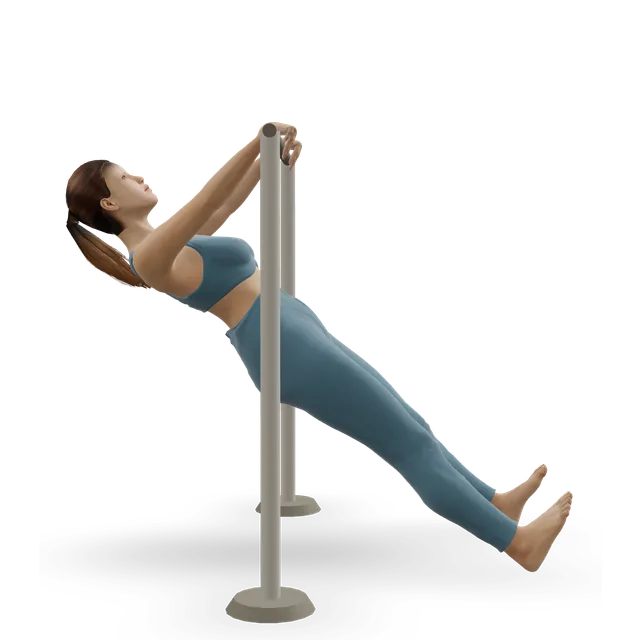
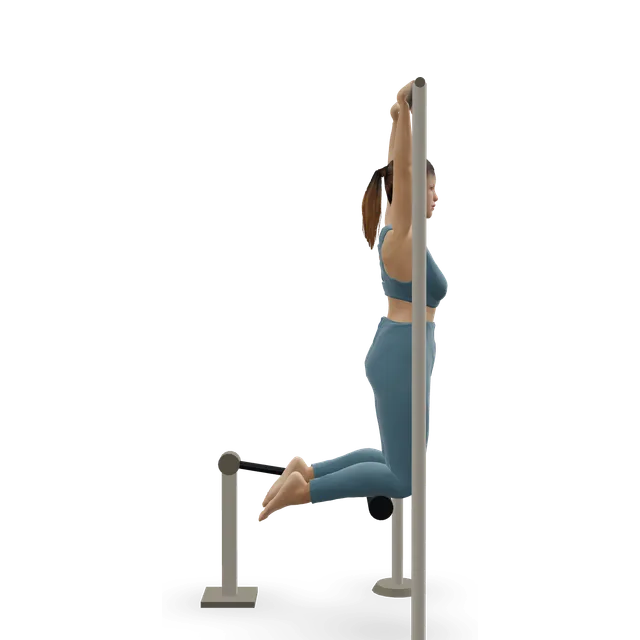
Training guide

How to do a dead hang: active and passive hangs, your grip and shoulders, how long to hang, and the spine claims

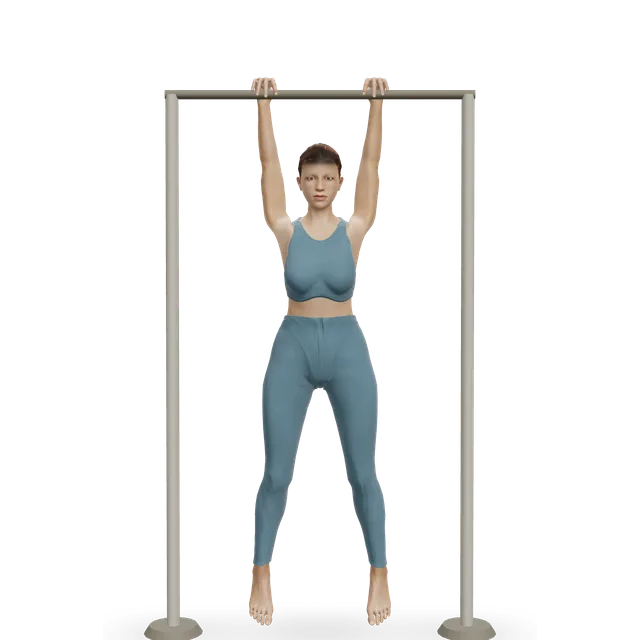
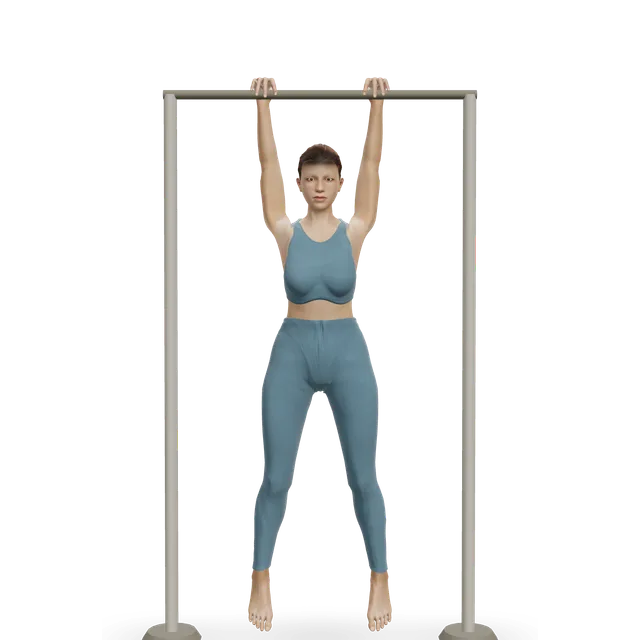
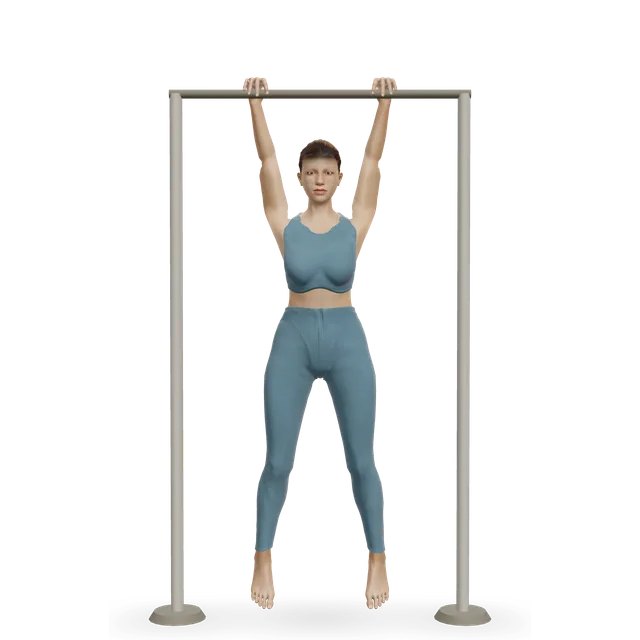
A dead hang means hanging from an overhead bar on straight arms, both hands, feet off the floor. To dead hang, take an overhand grip a little wider than your shoulders, step off a box, draw your shoulders down a little, breathe, and step back down before your grip gives out. Start with 2 or 3 hangs of 10 to 20 seconds with your feet ready to help.

Hangs train your grip and shoulders and are the first step to a pull-up. They don't fix your posture, and any stretch of your spine fades within minutes of standing, so they aren't a treatment for back pain. There's also no proper standard for how long you should hang.

This guide shows the active and passive hang on the 3D figure, what the studies say about hang times, your spine and your shoulders, how to build up step by step, when to leave hangs out, and our dead hang progression workout.

The short version

Step off, hang, step down

Stand on a step under a bar that holds your weight, take an overhand grip a little wider than your shoulders with your thumbs wrapped round, and step off onto straight arms. Breathe slowly and step back down before your grip gives out, rather than dropping: falls cause most pull-up bar injuries. Start with your feet ready to take your weight.

Source 1

Active first, relaxed later

An active hang draws your shoulder blades down a little, so your shoulders sit away from your ears; a passive (relaxed) hang lets your body weight lift them towards your ears. Start active and ease into relaxed hangs over weeks, as our move page does. No study has compared the two; in MRI scans of other arm positions, pulling the arm down widened the space at the top of the shoulder, which supports the cue.

Sources 2, 3

There's no standard hang time, and it isn't a health test

We found no adult norms for a straight-arm hang. Inactive young men hung about 40 to 47 seconds before training and 57 to 71 seconds after 8 weeks of pull-up practice, and 123 gym members (mostly women, average age 43) averaged about 50 seconds. Targets like 60 seconds or 2 minutes have no sourced basis. Grip strength measured by a squeeze is linked with a longer life, but we found no study linking hang time to health.

Sources 4, 5, 6, 7, 8

Your spine: a few millimetres, for a few minutes

Inversion, harness suspension and traction lengthen the lower spine by a few millimetres while you do them (nobody has measured a hang by the hands), but most of it is gone within minutes of standing, and lying down regains almost as much. Traction made little or no difference to low back pain across 32 trials, and NICE says not to offer it. Hanging isn't a back pain treatment.

Sources 9, 10, 11, 12, 13

Posture and shoulder claims are untested

We found no study of hanging for posture: the only paper is a 2026 theory piece that calls for trials, and hanging straightens a scoliosis curve only while you hang. The idea that hanging remodels the shoulder comes from a self-published book. Leave hangs out after a recent dislocation or with a shoulder that feels loose.

Sources 14, 15, 16, 17

How to build up

2 or 3 times a week, do 2 or 3 hangs of 10 to 20 seconds with your feet ready, about a minute apart, and add a few seconds a session up to 30 (our editorial starting point). About 20 seconds unlocks scapular pull-ups, and a relaxed 60 seconds comes before any one-arm hanging, as our move pages say. Hang time rose with pull-up training whether or not people added forearm work.

Sources 18, 4

What a dead hang is, and what it works

The position

You hang from an overhead bar on straight arms, both hands, feet off the floor, and hold it without swinging. It's the start position of every strict pull-up, as our pull-up guide says. Our move page calls it the bar hang; "dead hang" means the same thing. A flexed-arm hang, with your arms bent and your chin above the bar, is a different test.

Active and passive

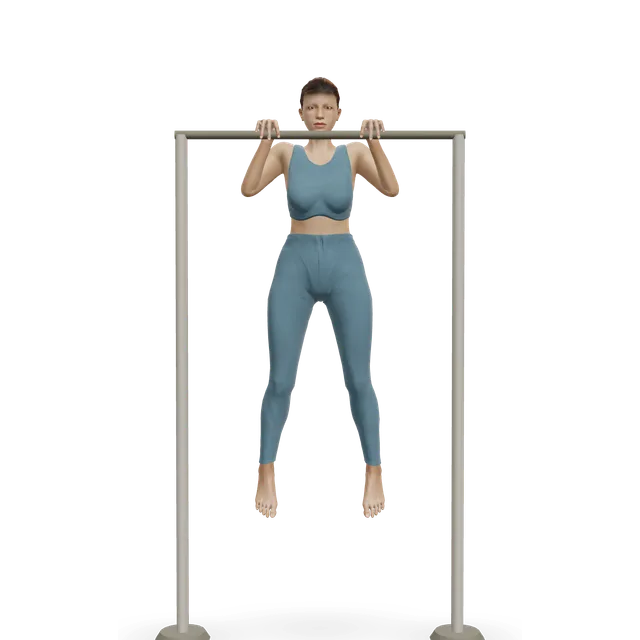
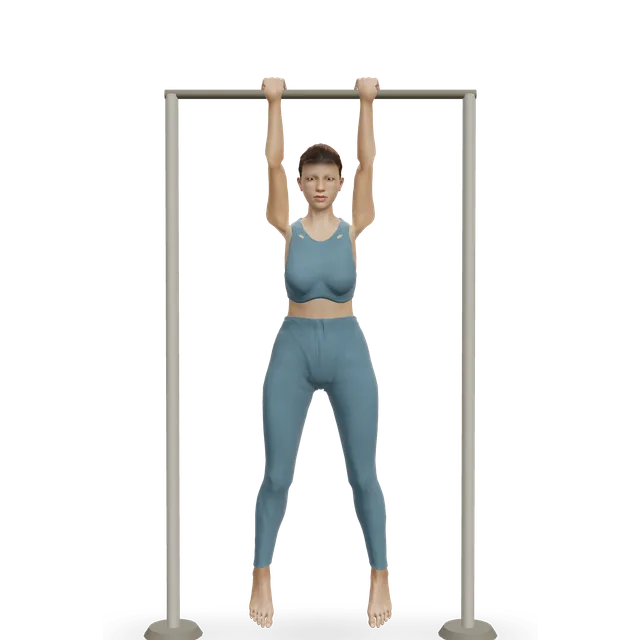
In a passive (relaxed) hang, your body weight lifts your shoulder blades towards your ears and your arms are fully overhead. In an active hang you draw your shoulder blades down a little, so your body rises an inch and your shoulders sit away from your ears. The scapular pull-up is the active hang done as a repetition, with a 3D demo below.

What it works: our reading of the anatomy

Your fingers and thumb close round the bar, so the finger-bending muscles in your forearm hold your weight. Your elbows are straight, so the tendons at the inner and outer elbow are under tension. Your shoulders are fully raised, with the arm bone hanging from the shoulder blade, held in place by the lats, the lower trapezius and the rotator cuff.

In 11 climbers hanging to failure (from a 20 mm edge, not a bar), the grip tired first and the shoulders and arms took on more of the work as it faded. That's the only study of the muscles in a hang we found.

Source 19

The spine

The weight of your legs and pelvis pulls down on your lower spine while you hang, which is why "decompression" is claimed. The spine does lengthen a few millimetres while it's unloaded, and settles back within minutes of standing, as the spine section below explains. Your spine also shrinks a little over every day and regains the height overnight, as our yoga for height guide explains.

Source 10

What you need first

Shoulders that are comfortable reaching overhead (our move page's prerequisite), a bar that holds your weight, and a step or box so you can get down without dropping. Test a doorway bar with some of your weight before you trust it, as our pull-up guide says: in US emergency department data, falls caused most pull-up bar injuries, some from bars slipping or coming loose. If you can't take your whole weight yet, keep your feet on the step and take as much weight through them as you need.

Source 1

How people differ

Hang time depends on strength relative to your body weight. In college women the flexed-arm hang tracked strength relative to body weight rather than absolute strength, heavier people held fingerboard hangs for less time, and 8.3 kg of police kit cut bar hang time by 14.8%. So compare yourself with yourself.

Loose (hypermobile) shoulders and shoulders that have dislocated move further under a downward pull: keep the hang active, as our hypermobility guide advises, or leave it out. A towel over the bar or a thicker bar makes the grip harder, and chalk helps sweaty hands (coaching practice).

Sources 20, 6, 21, 22, 23

How to do a dead hang, step by step

From our bar hang page, with our editorial wording. To start, keep your feet on the step and take some of your weight through them.

  1. Check the bar holds your weight (test a doorway bar with some of your weight first) and put a step or box under it.
  2. Stand on the step and take an overhand grip, palms facing away, a little wider than your shoulders, thumbs wrapped round the bar.
  3. Draw your shoulders down a little, away from your ears, then step off and let your weight settle onto straight arms. Bend your knees if the bar is low.
  4. Keep your arms straight, your legs still and your ribs down, and breathe slowly and normally.
  5. Hold while your grip feels secure, and step back onto the box before it starts to slip, rather than dropping.
  6. Over the weeks, if your shoulders are comfortable, let them relax upwards in some of your hangs (the passive hang), and practise drawing them down again (the scapular pull-up).

Loading the 3D figure…

Gets into position, then repeats the movement. Technical checks passed; qualified exercise review is pending.

The movement on the figure: Bar hang

Active and passive hangs

Which to do

Start active, with your shoulders drawn down a little, as our move page cues ("active rather than slack at first"), and ease into fully relaxed hangs over weeks if they don't pinch. Many popular guides mix the two up in one list of cues; they're different positions. No study has compared them for strength or safety.

Pulling the arm down widens the space at the top of the shoulderEmerging evidence

In 12 healthy volunteers, the narrowest gap under the acromion (the bony roof of the shoulder) fell from 7.0 mm with the arm raised 30 degrees to 3.9 mm at 120 degrees. Light activity in the muscles that pull the arm down widened that space at every arm position tested, up to 150 degrees. These were MRI scans of other positions, not a hang: they support cueing an active hang, but nobody has imaged one.

Sources 24, 2, 3

Your grip changes how the shoulder blade movesEmerging evidence

In 11 people doing pull-ups, the wide and the reverse (chin-up) grips moved the shoulder blade in ways the authors linked with impingement risk, including in the hanging phase. No injuries were measured. Our move page uses an overhand grip a little wider than your shoulders.

Source 25

The active hang as a repetition: scapular pull-ups

From our scapular pull-up page, whose prerequisite is a dead hang of about 20 seconds. The dose is our first pull-up workout's; the move page gives none.

  1. Hang from the bar with straight arms and an overhand grip.
  2. Without bending your elbows, draw your shoulder blades down and back so your body rises an inch or two.
  3. Hold for a moment, then let them travel back up under control.
  4. Do 2 sets of 6 to 8, holding the top for a second, once you can hang for about 20 seconds.

Loading the 3D figure…

Gets into position, then repeats the movement. Technical checks passed; qualified exercise review is pending.

The movement on the figure: Scapular pull-up

How long can people hang?

We found no adult normsEmerging evidence

Two small samples give the only numbers we found. 30 physically inactive young men hung 40.4 to 47.2 seconds on average before training. 123 members of one Californian gym (98 women, average age 43) averaged 50.1 seconds, with a 2-minute cap and a wide spread.

That gym paper's bands (for men, under 20 seconds limited and 90 or more advanced; for women, under 15 and 60 or more) were set by its first author from clinic testing, and the paper says no published standards exist. It also cites a grip strength study as if it were about hanging; it wasn't.

Sources 4, 5

60 seconds, or 2 minutes?

Popular targets have no sourced basis. If you want markers, 30 seconds with active shoulders is the base our front and back lever guides ask for, and a relaxed 60 seconds is our one-arm dead hang page's prerequisite: steps on a ladder, not health standards.

Source 5

Hang time is mostly strength for your sizeEmerging evidence

In college women, the flexed-arm hang tracked strength relative to body weight and was unrelated to absolute strength or muscle endurance. Body weight and grip strength per kilogram predicted how long 48 adults could hold a fingerboard hang, and even a finger-hang endurance test in climbers was mostly a measure of finger strength.

Sources 20, 6, 21, 26

The children's test is a different hang

The FITNESSGRAM flexed-arm hang, with your arms bent and your chin above the bar, counts more than 15 seconds for boys and more than 8 seconds for girls aged 17 and over as healthy. The bent-arm hang is reliable in adolescents and adults, but it's a different test from a straight-arm hang, and its scores don't carry over.

Sources 27, 28, 29

Grip strength, not hang time, is linked with lifespanStrong evidence

Each 5 kg lower grip strength on a dynamometer went with a 16% higher risk of death from any cause in 139,691 adults in 17 countries, and a 20% higher risk in women and 16% in men in 502,293 UK adults. Those are associations with a squeeze test, not proof that training changes your risk. We found no study linking hang time to health or lifespan; the nearest was a Finnish cohort in which teenage fitness, including a bent-arm hang in girls, went with a smaller waist in middle age.

Sources 7, 8, 30

What builds a longer hangEmerging evidence

In an 8-week trial, 30 inactive young men did the same pull-up programme twice a week plus interval running, forearm work or core work. Hang time rose in every group (from about 40 to 57, 46 to 71 and 47 to 70 seconds), with no difference between them, though the trial was too small to rule one out.

In climbers, repeated finger hangs at 60 to 80% of maximum built endurance over 4 weeks, but 10 weeks of hangboard training raised finger strength without changing dead-hang time against controls. Regular pulling and hanging builds the hang.

Sources 4, 31, 32

Does hanging decompress your spine?

The spine lengthens a little while it's unloadedEmerging evidence

On inversion devices, X-rays of 20 people with chronic low back pain showed the lower disc spaces widening by 0.3 to 4.0 mm. Suspended upright in a harness, 60 people with and without back pain gained more than about 3 mm in each disc space. In 10 young people, traction at a third of body weight added 8.94 mm of height in 25 minutes, against 3.33 mm lying with the knees bent.

None of these is a hang by the hands, which unloads the spine for much less time. We found no study of the spine during a dead hang.

Sources 33, 9, 34

It doesn't lastEmerging evidence

After drop jumps, 20 minutes of inversion added 5.18 mm of height in 8 men, and 4.07 mm of it was gone within 40 minutes of standing; the authors call the effect short-lasting. Lying in a flexed position regained almost as much height as 15 minutes of aquatic traction (4.21 against 4.99 mm, 60 people).

In 16 assembly line workers, 3 minutes on a spinal traction device in two extra breaks didn't offset the working day's loss of height. Inversion gave the most height recovery of four unloading positions in another study, whose authors say whether that matters clinically still needs research.

Sources 10, 11, 35, 36

Traction doesn't treat back painStrong evidence

Across 32 trials of 2,762 people, traction alone or added to other treatments had "little or no impact" on pain, function, overall improvement or return to work. NICE says: "Do not offer traction for managing low back pain with or without sciatica." Our back pain guides say the same, and set out what does help.

Sources 12, 13

The one bar-hanging trial is weakEmerging evidence

In Iran, 50 people with a slipped (herniated) lumbar disc and leg pain hung from a door-mounted pull-up bar 20 times a day for 30 seconds, for 2 months, plus medication, against medication alone; pain eased more and the disc bulge looked smaller on MRI. But the patients weren't blinded, the groups started unequal, its trial registry gives a different dose, and the journal isn't indexed in PubMed.

A review of vertical traction (3 trials, 90 people) found very low quality evidence of short-term benefit, and no long-term data.

Sources 37, 38

Inversion before disc surgery: one pilotEmerging evidence

In 24 people waiting for disc surgery, 10 of 13 who used inversion therapy avoided surgery, against 2 of 9 without it, but pain, disability and MRI didn't differ. It's a pilot, and hanging upside down is a different exercise from a dead hang.

Source 39

So, for back pain or sciatica

Don't hang to treat back pain or sciatica. NICE advises exercise programmes, not traction, and our back pain, sciatica and herniated disc guides set out the exercise that helps and the signs that need urgent care. Hanging for your grip or for a pull-up is fine if your back feels no worse.

Source 13

Posture, height and scoliosis

Hanging for posture: untested

We found no study of hanging for posture. The only paper is a 2026 theory piece proposing hanging and swinging for "upper crossed syndrome" (rounded shoulders and a forward head), which says randomised trials are needed. Corrective exercise programmes did change posture measures in 28 trials (901 people), but their effects on pain and function were inconclusive.

Sources 14, 40

Posture and pain are only loosely linkedEmerging evidence

A review of 41 systematic reviews found no consensus that spine posture causes low back pain, and in 396 adults followed for a year, bending the neck while using a phone didn't predict neck pain. Our posture guides cover what does help.

Sources 41, 42

ScoliosisEmerging evidence

Hanging straightens a scoliosis curve only while you hang: surgeons use dead-hang X-rays to test how flexible a curve is before surgery. In 27 teenagers with scoliosis, a semi-hanging exercise made trunk rotation worse straight afterwards. Scoliosis care belongs with your specialist team; our scoliosis guide explains.

Sources 15, 43

Height

It's the same short-lived stretch: hanging won't make you taller once you're back on your feet, as our yoga for height guide explains.

Source 10

Your shoulders and elbows

The "remodelling" claim

The idea that hanging remodels the shoulder and cures impingement comes from orthopaedic surgeon John M. Kirsch's self-published book and its unpublished case series of 92 people; we found no peer-reviewed report. A 2026 review argues from comparisons with apes for loading the shoulder through the hands, but says current research hasn't examined these mechanisms directly.

Sources 16, 44

Loose and dislocated shouldersEmerging evidence

With the arm at the side, loose (multidirectionally unstable) shoulders shifted about 26 to 27 mm under a downward pull, against 7 mm in normal shoulders. After a dislocation, the NHS says there's an increased risk it could happen again, and recovery usually takes 6 to 12 weeks. So our move page leaves hangs out after a recent dislocation, or if a shoulder feels unstable or slips when you hang.

Sources 23, 17

Painful, stiff shoulders

A hang holds your arm at the top of its range under your body weight. While a shoulder is painful and stiff, or pinches when you raise your arm, leave hangs out and follow our shoulder pain, shoulder impingement or frozen shoulder guide.

Your elbows

Straight-arm hanging loads the tendons at the inner and outer elbow. With tennis or golfer's elbow, build up from short hangs once carrying weights is comfortable, as our move page says, and our elbow pain from pull-ups guide brings hangs back after carries.

Discomfort up to about 3 to 4 out of 10 is fine if it settles within an hour and your elbow is no worse the next morning; otherwise go lighter, not to nothing, as our elbow guides say.

The shoulder rule

Keep shoulder pain to about 5 out of 10 or less during the exercise, back to its usual level by your next session, as our shoulder guides advise. A sharp pinch means lower, lighter or stop.

Source 45

Build your hang: the steps

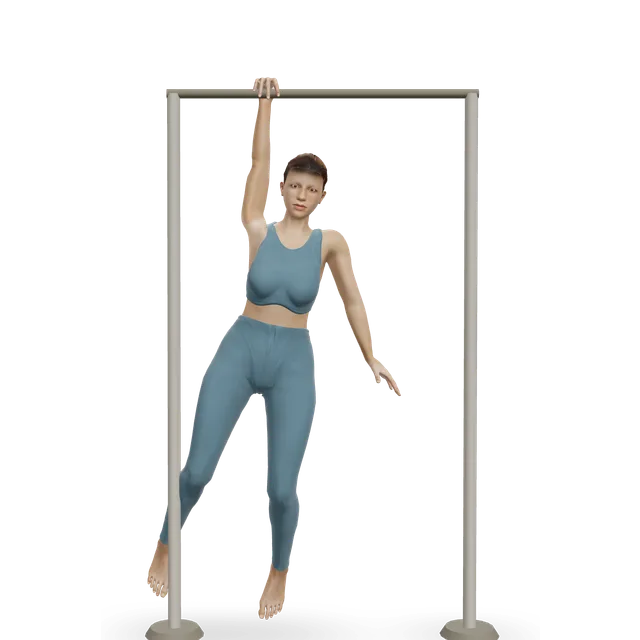
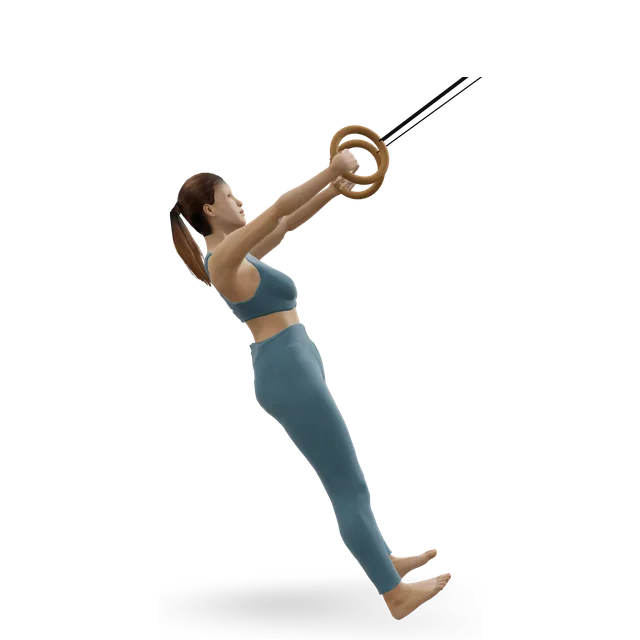
Move down the list as each step becomes steady. The supported hang uses the bar hang demo with your feet on a step. The towel or thick-bar hang has no demo, and neither does the false-grip hang on rings, a separate skill (5 to 8 hangs of 5 to 15 seconds, two or three times a week, feet supported at first, the move page's dose).

The steps, with doses and when to move on

Our editorial ladder, built from the move pages' prerequisites and our workouts. No study has tested a dead hang programme.

1. Supported hang

Feet on a box, taking as much weight through them as you need: 2 to 3 holds of 10 to 20 seconds, with a little less weight on your feet each session (our pull-up challenge workout's first level). Move on when 3 holds of 20 seconds need little help from your feet.

2. Full hang

Feet off, shoulders active: 2 or 3 holds of 10 to 20 seconds with your feet ready (our grip strength workout), building to 30 seconds. Move on when 20 seconds feels steady.

3. Active hangs

Scapular pull-ups, 2 sets of 6 to 8 holding the top for a second, and 2 hangs of 20 to 30 seconds with your shoulders active (our first pull-up workout). Move on when 30 seconds feels comfortable, the base our front and back lever guides ask for.

4. Longer and relaxed hangs

3 hangs of 30 to 60 seconds, mixing active and relaxed hangs if your shoulders are comfortable (editorial; our pull-up progression uses 3 hangs of 20 to 30 seconds). Move on at a relaxed 60 seconds on both hands, our one-arm dead hang page's prerequisite.

5. Harder grips

A towel over the bar or a thicker bar (no demo), then the one-arm dead hang: a few holds of 5 to 10 seconds each side, the other hand ready to take the bar, keeping the two sides even (editorial). Our move page asks for months of regular hanging and pulling first, and none while an elbow or shoulder hurts.

Can't hang yet, or no bar?

Rows build the pulling strength: incline ring rows, 1 to 2 sets of 8 to 12 (our pull-up challenge workout), or band rows, 3 sets of 10 to 15 stopping 2 or 3 reps short (the move page's dose). Farmer's carries build the grip, and a low bar or a playground bar lets you practise supported hangs.

How long, how often, and testing your hang

Starting dose

2 or 3 hangs of 10 to 20 seconds with your feet ready, about a minute apart, 2 or 3 times a week with a day between (our editorial starting point; our grip strength workout uses the same). Strength rose most with at least 2 sessions a week.

Source 18

Building

Add a few seconds a session. Most of our workouts use 2 hangs of 20 to 30 seconds, and our pull-up progression 3. End each hang a few seconds before your grip would fail, as our pull-up challenge says: step down before your grip gives out.

Every day?

Short, easy hangs on most days are fine if your hands, elbows and shoulders feel normal the next morning (editorial); for building your hang, 2 or 3 sessions a week is enough. The self-published book behind the shoulder claims suggests about 30 seconds, three to five times, at least five days a week: coaching practice, not evidence. Don't hang to failure every day.

Source 16

Testing your hang

If you want to time it, do it fresh after a warm-up, no more than every few weeks, and step down when your grip starts to slip. There's no score to beat: our 30-day pull-up challenge caps its first test at 60 seconds, and the gym study capped hangs at 2 minutes.

Source 5

Where it fits

At the start of an upper-body or pull-up session as a warm-up, or at the end as grip work. Don't hang to failure before your pull-ups, which our pull-up guide puts first, while you're fresh.

Breathing and blood pressure

Keep breathing slowly. In 31 healthy men, a hard grip held for 45 seconds kept blood pressure up even as the force faded, and a brief breath-hold was unavoidable above about 80% of maximum effort. Holds at 50% of maximum or more can push blood pressure above 200/100 mmHg, which is why isometric guides say breathe normally.

Nobody has measured blood pressure in a dead hang; for many people, holding their whole weight is a hard grip (our reading). With blood pressure of 160/100 or higher that isn't yet treated, keep hangs short and easy, as our grip strength guide says.

Sources 46, 47

Your grip, and pull-ups

A hang isn't a grip strength testMixed evidence

In a hang you hold your whole body weight, so your size counts as much as your grip, and hang time rose with pull-up training whether or not people trained their forearms. We found no study comparing hang time with a grip dynamometer; our grip strength test page uses the dynamometer.

Sources 4, 21

Do hangs help pull-ups?Emerging evidence

They train the grip and the start position, but pull-ups need pulling strength too. In the same trial, the forearm block (wrist curls, reverse wrist curls, reverse curls and farmer's walks) raised grip and pull-ups most, but not hang time measurably. Our pull-up guide has the full ladder, with hangs as its first step.

Source 4

Hangs, carries or curls?

Carries train holding on while you move, hangs train it overhead, and wrist curls train the wrist through its range. Our grip strength guide uses all three, and our farmer's carry and wrist curl guides teach the other two.

Grip and pulling moves that build your hang

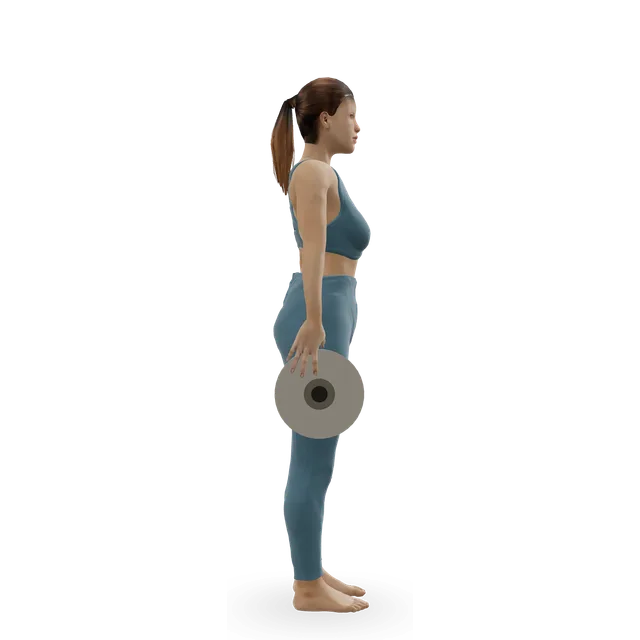
Farmer's carries, 2 or 3 walks of 20 to 30 m, and wrist curls, 2 sets of 12 to 15, light and slow (our first pull-up workout); plate pinches, 3 or 4 holds of 10 to 30 seconds with each hand (the move page's dose); incline ring rows, 1 to 2 sets of 8 to 12 (our pull-up challenge workout); band-assisted pull-ups, 2 to 4 sets of 8 to 12 with a band that lets you finish each set in good form (the move page's dose, from the American Council on Exercise); and negative pull-ups, 3 slow lowerings of 3 to 5 seconds (our first pull-up workout).

Common mistakes

Hanging limp on day one

Start active and ease into relaxed hangs over weeks, as our move page says.

Shrugging hard into your ears

Draw your shoulders down a little and keep them there, at least at first.

Holding your breath

Breathe slowly: a hard grip with your breath held pushes blood pressure up.

Dropping off the bar

Step down to the box. Falls cause most pull-up bar injuries.

Swinging or kicking

Keep your legs still; a swing is a different exercise.

Bending your elbows

That's a flexed-arm hang, a different test. Keep your arms straight.

Chasing one long hang

Several comfortable hangs build it better than one to the last second, as our move page says.

Hanging through a pinch

Stop if the front or top of your shoulder pinches. A hang shouldn't hurt.

Workouts

Our dead hang progression takes you from a supported hang to a relaxed 60 seconds, with a shoulder and wrist warm-up and grip work. The grip and pull-up sessions use hangs as one part, and the climbing warm-up ramps them over 5, 10 and 20 seconds.

Plans

Who should leave hangs out or wait

A shoulder that has dislocated or feels loose

Leave hangs out after a recent dislocation or shoulder surgery until your physiotherapist or surgical team clears you; there's no fixed time, and the NHS says recovery usually takes 6 to 12 weeks. Leave them out too if a shoulder feels unstable or slips when you hang, as our move page says.

Source 17

A painful, stiff shoulder

While a shoulder is painful and stiff, or pinches when you raise your arm, follow our shoulder pain, shoulder impingement or frozen shoulder guide before you hang.

Elbow tendon pain

With tennis or golfer's elbow, or pain at the front of the elbow from pulling, hangs come back once carrying weights is comfortable, as our move page and our elbow pain from pull-ups guide say.

After surgery

After a recent shoulder dislocation, or shoulder or elbow surgery, follow your surgical team's limits first.

After heart surgery through the breastbone, or a heart or lung transplant, follow your surgeon's advice before pushing, pulling or lifting with your arms; after breast cancer surgery or reconstruction, follow your team's advice on lifting your arm above shoulder height (our move page's cautions).

Pregnancy

The NHS says it's not recommended to start a new vigorous activity in pregnancy, and to stop if you feel uncomfortable, too hot or unwell. Ask your midwife before hanging later in pregnancy; our pull-up challenge swaps in rows rather than jumping up to a bar.

Source 48

Back pain with leg symptoms

Pain, tingling or numbness spreading down a leg: see our sciatica guide rather than hanging for it.

Source 49

High blood pressure, and hanging upside down

With uncontrolled high blood pressure, check first, as the box below says. Hanging upside down (inversion) is different from a dead hang: it raised blood pressure by about 17/16 mmHg and caused headaches and blurred vision in a few people, and researchers suggest people with high blood pressure may need to avoid it.

Sources 33, 50

Warning signs

Stop and get medical help

If you get chest pain or pressure, feel faint or dizzy, are unusually breathless, or your heart races or beats irregularly during exercise, as our plans advise. The American Heart Association says these need immediate medical evaluation.

If you feel light-headed during a hang, step down before you let go, and sit or lie down.

Source 51

Call 999 (911 in the US)

For chest pain that comes on suddenly and doesn't go away, feels tight or like squeezing, spreads to your arms, neck, jaw, stomach or back, or comes with sweating, feeling sick, light-headedness or breathlessness; arm pain that comes on suddenly with pressure, heaviness or squeezing across your chest; severe difficulty breathing, or a chest that feels tight or heavy; someone who faints while exercising; palpitations that don't go away, or come with chest pain, shortness of breath or feeling faint; or a headache that starts suddenly and is extremely painful, especially while lifting or straining. The NHS says a bleed on the brain may be more likely when lifting something heavy. Don't drive yourself to A&E.

Sources 52, 53, 54, 55, 56, 57, 58, 59

A headache with effort

Ask for an urgent GP appointment or get help from NHS 111 for a headache that's triggered or made worse by coughing, sneezing, bending down or exercising.

Source 58

A fall from the bar

Call 999 or go to A&E: after a fall or injury, your shoulder looks out of place or has changed shape, you cannot move your arm, or your shoulder is painful, bruised or swollen. Do not drive yourself, and do not try to put it back in yourself.

Source 17

A knock to the head

Call 999 if someone has hit their head and has been knocked out and not woken up, can't stay awake, has a fit, has fallen from a height of more than 1 metre or 5 stairs, has problems with their vision, hearing, balance, walking or speech, or has new numbness or weakness. Get help from NHS 111 after a head injury if you're being sick or feel dizzy. If you're told to go to A&E, don't drive yourself.

Keep a step under the bar and a clear space around it.

Source 60

Urgent GP appointment or NHS 111: your shoulder

Ask for an urgent GP appointment or get help from NHS 111 for sudden or very bad shoulder pain; not being able to move your arm; a shoulder or arm that has changed shape or is badly swollen; pins and needles that don't go away; or pain that started after an injury or accident, like a fall. In the US, contact your doctor or urgent care. See a GP if shoulder pain is getting worse or hasn't improved after 2 weeks. While your shoulder is sore, the NHS says not to make up your own strenuous exercises or use heavy gym equipment.

Source 61

Same day: a pop at the elbow or upper arm

A pop or snap with sudden pain at the front of the elbow, especially with bruising, a gap at the front of the elbow or a bulge in the upper arm, can be a torn biceps tendon. Go to an urgent treatment centre or A&E (in the US, urgent care) the same day, and don't wait for it to settle, as our biceps guides say.

Source 54

Your hands and wrists

Stop if your fingers tingle or go numb: that's a nerve, not a tired muscle, as our grip strength guide says.

Get help from NHS 111 if you heard a snap, grinding or popping noise when you hurt your wrist, or you can't move it or hold things.

Source 62

Back pain

Call 999 or go to A&E: loss of feeling or numbness around the genitals or bottom, new trouble peeing or controlling your bladder or bowels, changes in genital sensation during sex or problems with erections or orgasm, or pain, tingling, weakness or numbness in both legs. These are signs of cauda equina syndrome, which needs treating in hospital urgently. Don't drive yourself.

See a GP if pain spreading down a leg hasn't improved after a few weeks of home treatment, is getting worse or stops your normal activities. Sciatica on both sides, or weakness or numbness in both legs that's severe or getting worse, is a 999 call or a trip to A&E.

Sources 63, 49

Swollen muscles and dark urine

Very sore, swollen, tight muscles and dark urine after an unusually hard or high-rep session need medical help the same day: it could be rhabdomyolysis, as our elbow pain from pull-ups guide explains. Normal soreness peaks a day or two after a new exercise and fades.

A new lump or bulge in your groin or tummy

See a GP if you think you have a hernia, a bulge or lump that may get bigger when you strain and smaller when you lie down. Get help from NHS 111 if you have a hernia and pain in or around it, a bloated tummy, you feel or are sick, you're vomiting blood or your vomit looks like coffee grounds, you're constipated, you have a high temperature or feel hot, cold or shivery, or you've suddenly become confused. Call 999 or go to A&E for a femoral hernia (a small lump at the top of your thigh, in your groin) with very bad tummy pain, sickness, being unable to fart or poo, a high temperature or sudden confusion.

The NHS lists lifting heavy weights among the causes of a femoral hernia. After an inguinal hernia repair, avoid heavy lifting or strenuous activity for at least 4 to 6 weeks.

Sources 64, 65, 66

Before you start

Speak to your GP first if you haven't exercised for some time or have medical conditions or concerns, as the NHS advises. Get advice before hard or straining work if your blood pressure is uncontrolled (140/90 or higher at a clinic, or 135/85 at home), or you have heart disease or chest pain when you're active, a pacemaker or defibrillator, diabetic eye disease, glaucoma, a hernia, recent eye or tummy surgery, or you're pregnant, as our breathing guide lists.

With controlled high blood pressure, the American Heart Association considers low- to moderate-intensity strength training with proper breathing safe. Breathe out as you lift, as our breathing guide advises.

With a pacemaker or defibrillator, the American Heart Association asks you to check with your doctor before upper-body strength training, because repeated arm movements can damage or dislodge the leads.

Sources 67, 68, 51
Myths

"Dead hangs decompress your spine and fix back pain"Strong evidence

The spine lengthens a few millimetres while it's unloaded and settles back within minutes of standing, and lying down does almost as much. Traction had little or no impact on low back pain across 32 trials, and NICE says not to offer it. The one bar-hanging trial, in 50 people with a slipped disc, is weak.

Sources 10, 11, 12, 13, 37

"Hanging fixes your posture"

We found no study of it; the only paper is a theory piece that calls for trials. Posture measures can change with exercise without easing pain, and posture and pain are only loosely linked.

Sources 14, 40, 41

"Everyone should hang for 60 seconds, or 2 minutes"

No study sets a target. The only adult bands in print were made up by one paper's first author, who says no standards exist, and inactive young men started at about 40 to 47 seconds. Compare yourself with your last hang.

Sources 5, 4

"Your hang time predicts how long you'll live"

That's grip strength on a dynamometer, an association in large studies. We found no study of hang time and lifespan, and one paper wrongly cites the grip research for hanging.

Sources 7, 8, 5

"Hanging remodels your shoulder and cures impingement"

The claim comes from a self-published book and an unpublished case series; we found no peer-reviewed test. Drawing the arm down widens the space under the shoulder's roof in MRI scans of other positions, which is why we teach active hangs, but nobody has imaged a hang. With a painful, stiff or unstable shoulder, leave hangs out.

Sources 16, 2

"A dead hang is a grip strength test"Mixed evidence

Hang time is mostly strength for your body weight, and it rose with pull-up training whether or not people trained their forearms. No study has checked it against a dynamometer, as our grip strength guide says.

Sources 6, 21, 4

"Hang every day, for as long as you can"

Several comfortable hangs build it better than one long one, as our move page says, and hard holds with your breath held push blood pressure up. Short, easy hangs most days are fine if your hands, elbows and shoulders feel normal the next morning (editorial).

Sources 46, 47

"Dead hangs make you taller"Emerging evidence

The same short-lived lengthening: your height settles back once you're upright, as our yoga for height guide explains.

Sources 10, 11

Questions people ask

How do you do a dead hang?

Stand on a step under a sturdy bar, take an overhand grip a little wider than your shoulders, and step off onto straight arms. Draw your shoulders down a little, breathe slowly, and step back down before your grip gives out. Start with your feet ready to take your weight.

How long should I be able to dead hang?

There's no standard: we found no adult norms, and targets like 60 seconds or 2 minutes have no source. Inactive young men hung about 40 to 47 seconds before training, and gym members averaged about 50 seconds. Compare yourself with your last hang, not a chart.

How long should a beginner hang?

Start with 2 or 3 hangs of 10 to 20 seconds with your feet ready, a minute apart, and add a few seconds a session up to about 30. That's our editorial starting point, as in our grip and pull-up workouts. If you can't hang yet, keep your feet on a step and take a little less weight through them each session.

Do dead hangs decompress your spine?

Only a little, and only while you hang: inversion, suspension and traction lengthen the spine by a few millimetres, and most of it is gone within minutes of standing. Nobody has measured a hang by the hands. Traction made little or no difference to back pain across 32 trials, and NICE says not to offer it.

Are dead hangs good for lower back pain or sciatica?

We found one weak trial of hanging from a door bar in people with a slipped disc, and it isn't enough to recommend it. NICE advises exercise programmes, not traction, and our back pain and sciatica guides have the plans. Pain, numbness or weakness in both legs, or numbness around your bottom, is a 999 call.

Do dead hangs improve posture?

We found no study that tested it. Posture measures can change with exercise, but that hasn't reliably eased pain, and posture and pain are only loosely linked. Our posture guides cover what does help.

Are dead hangs good for your shoulders?

For healthy shoulders, an active hang is ordinary shoulder and grip training. The claim that hanging remodels the shoulder and cures impingement comes from a self-published book, not a published study. Leave hangs out after a recent dislocation, if a shoulder feels loose or slips, or while it's painful and stiff.

Should I do an active or a passive dead hang?

Start active, with your shoulders drawn down a little, away from your ears. In MRI scans of other arm positions, that kind of muscle activity widened the space at the top of the shoulder. Once that's comfortable, relaxed hangs are fine if they don't pinch; no study has compared the two.

Can I do dead hangs every day?

Short, easy hangs on most days are fine if your hands, elbows and shoulders feel normal the next morning (our suggestion). For building your hang, 2 or 3 sessions a week is enough. Don't hold your breath or hang to failure every day.

Do dead hangs help you do a pull-up?

They train your grip and the start position, but pull-ups need pulling strength too. In an 8-week trial, hang time rose in every pull-up training group, with or without extra forearm work. Our pull-up guide has the full ladder.

Are dead hangs good for grip strength?

They train holding on, but a hang isn't a grip strength test, because your body weight counts as much as your grip. Grip strength measured with a squeeze is linked with a longer life in large studies, as an association. Our grip strength guide pairs hangs with carries and wrist curls.

Why do my hands, shoulders or elbows hurt when I hang?

Sore palms are common at first; build up gradually, and chalk can help. A pinch at the front or top of the shoulder means stop, and with elbow tendon pain, hangs come back after carries, as our elbow guides say. Fingers that tingle or go numb, or feeling faint, mean step down straight away.

Sources

  1. Shabbir 2026 · Pull-up bar injuries in US emergency departments, 2015 to 2024 (national surveillance study, Injury)
  2. Hinterwimmer 2003 · Arm-down and arm-out muscle activity and the space under the shoulder's roof (MRI study, MSSE)
  3. Graichen 2005 · Arm-down and arm-out muscle activity, shoulder movement and the space under the shoulder's roof (MRI study, J Biomech)
  4. Sepehri Rahnama 2025 · Forearm or core training added to pull-up training in 30 inactive young men (randomised trial, Sports)
  5. Kawahata 2026 · Functional movement tests, including a bar hang capped at 2 minutes, in 123 gym members (cross-sectional study, J Funct Morphol Kinesiol)
  6. Clemons 2014 · What a modified flexed-arm hang test measures, in college women (validity study, JSCR)
  7. Leong 2015 · Grip strength and death in 139,691 adults in 17 countries: the PURE study (cohort, Lancet)
  8. Celis-Morales 2018 · Grip strength and death in 502,293 UK Biobank adults (cohort, BMJ)
  9. Tekeoglu 1998 · Distraction of the lumbar vertebrae in harness suspension, in 60 people with and without back pain (X-ray study, Spine)
  10. Boocock 1990 · Changes in height after drop jumps and gravity inversion, in 8 men (lab study, MSSE)
  11. Simmerman 2011 · Aquatic vertical traction against lying flexed: spinal height in 60 people with low back symptoms (crossover trial, PM R)
  12. Wegner 2013 · Traction for low back pain with or without sciatica: 32 trials, 2,762 people (Cochrane review)
  13. NICE NG59 · Low back pain and sciatica in over 16s: assessment and management (guideline, last updated July 2026)
  14. Ishibashi 2026 · Hanging and swinging movement as a theory for technology-related posture problems (theory paper, J Bodyw Mov Ther)
  15. Ovali 2023 · Dead-hang X-rays to test how flexible a scoliosis curve is before surgery, in adolescents (retrospective study, Medicine)
  16. Ersoy 2018 · Shoulder pain? This may help!: a column on John M. Kirsch's self-published book on hanging (newspaper column, The Garden Island)
  17. NHS · Dislocated shoulder
  18. Currier 2026 · Resistance training for muscle function, size and performance in healthy adults: an overview of 137 reviews (ACSM position stand, MSSE)
  19. Exel 2026 · How the grip, arms and shoulders share the work in dead hangs held to failure by 11 climbers (lab study, Eur J Sport Sci)
  20. Clemons 2004 · The flexed-arm hang and measures of muscular fitness in college women (validity study, JSCR)
  21. Dindorf 2022 · What predicts how long climbers can hold a fingerboard hang, in 48 adults (cross-sectional study, J Funct Morphol Kinesiol)
  22. Marins 2020 · Police kit and fitness test results in highway police officers (lab study, JSCR)
  23. Jalovaara 1992 · How far loose and normal shoulders shift under a downward pull (stress X-ray study, Clin Orthop Relat Res)
  24. Graichen 1999 · The space under the shoulder's roof as the arm rises and turns, in 12 volunteers (open MRI study, Surg Radiol Anat)
  25. Prinold 2016 · Shoulder-blade movement in pull-up techniques in 11 experienced people (motion study, J Sci Med Sport)
  26. Berta 2025 · Finger strength and endurance tests in a large sample of female and male climbers (validity and norms study, J Sports Sci)
  27. The Cooper Institute 2013 · FITNESSGRAM Healthy Fitness Zone standards (published by the Illinois State Board of Education)
  28. Ortega 2008 · Reliability of fitness tests, including the bent-arm hang, in European adolescents: the HELENA study (reliability study, Int J Obes)
  29. Cuenca-Garcia 2022 · Reliability of field-based fitness tests in adults (systematic review, Sports Med)
  30. Laakso 2024 · Teenage fitness and heart and metabolic disease 45 years later (cohort, Scand J Med Sci Sports)
  31. Devise 2022 · Three hangboard training intensities over 4 weeks in 54 climbers (randomised trial, Front Sports Act Living)
  32. Hermans 2022 · Ten weeks of hangboard training in 35 climbers (randomised trial, Front Sports Act Living)
  33. Gianakopoulos 1985 · Inversion devices and distraction of the lower spine in 20 people with low back pain (X-ray study, Arch Phys Med Rehabil)
  34. Bridger 1990 · Lumbar traction and body height in 10 healthy young people (lab study, Spine)
  35. Rabal-Pelay 2021 · A spinal traction device in work breaks for 16 assembly line workers (trial, Int J Environ Res Public Health)
  36. Healey 2005 · Four unloading positions and recovery of height (lab study, Clin Biomech)
  37. Khani 2015 · Repeated hanging from a door-mounted pull-up bar for a herniated lumbar disc in 50 people (randomised trial, Neurosurg Q)
  38. Vanti 2021 · Vertical traction for leg pain from a lumbar nerve root: 3 trials, 90 people (systematic review, Arch Physiother)
  39. Prasad 2012 · Inversion therapy for people waiting for lumbar disc surgery, in 24 people (pilot randomised trial, Disabil Rehabil)
  40. Khorramroo 2026 · Corrective exercise for upper crossed syndrome: 28 trials, 901 people (systematic review and meta-analysis, BMC Sports Sci Med Rehabil)
  41. Swain 2020 · No consensus that spine posture or physical exposure causes low back pain: 41 systematic reviews (review of reviews, J Biomech)
  42. Correia 2025 · Neck bending while using a smartphone did not predict neck pain in 396 adults followed for a year (cohort, Braz J Phys Ther)
  43. Akçay 2024 · The immediate effect of a hanging exercise on trunk rotation in 27 adolescents with scoliosis (trial, Healthcare)
  44. Luedeka 2026 · Shoulder problems through an evolutionary lens, and loading the shoulder through the hands (narrative review, J Funct Morphol Kinesiol)
  45. NHS inform · Exercises for shoulder problems (NHS Scotland)
  46. MacDougall 1992 · Blood pressure during heavy lifting and sustained grips in 31 healthy men (lab study, J Appl Physiol)
  47. Baffour-Awuah 2023 · Isometric training in high blood pressure: how well it works and how safe it is (evidence review, Clin Hypertens)
  48. NHS · Exercise in pregnancy
  49. NHS · Sciatica
  50. Haskvitz 1986 · Blood pressure response to inversion traction (lab study, Phys Ther)
  51. Paluch 2024 · Resistance exercise training with and without cardiovascular disease: 2023 update (American Heart Association scientific statement, Circulation)
  52. NHS · Chest pain (past its review date: reviewed August 2023, review due August 2026)
  53. NHS · Heart attack
  54. NHS · Elbow and arm pain
  55. NHS · Shortness of breath
  56. NHS · Fainting
  57. NHS · Heart palpitations
  58. NHS · Headaches
  59. NHS · Subarachnoid haemorrhage
  60. NHS · Head injury and concussion
  61. NHS · Shoulder pain (past its review date: reviewed May 2023, review due May 2026)
  62. NHS · Wrist pain
  63. NHS · Back pain
  64. NHS · Hernia
  65. NHS · Femoral hernia
  66. NHS · Inguinal hernia repair
  67. NHS · Physical activity guidelines for adults aged 19 to 64
  68. NHS · High blood pressure

Exercise education, not a personal prescription, and clinical review of these guides is pending. Check with a GP before starting hard training if you have a heart condition, chest pain, dizziness or breathlessness when active, and stop for sharp or increasing pain. Health disclaimer.