Training guide

How to do a back lever: the tuck to the straddle and full lever, the shoulders and elbows, rings or a bar, and how to train for it

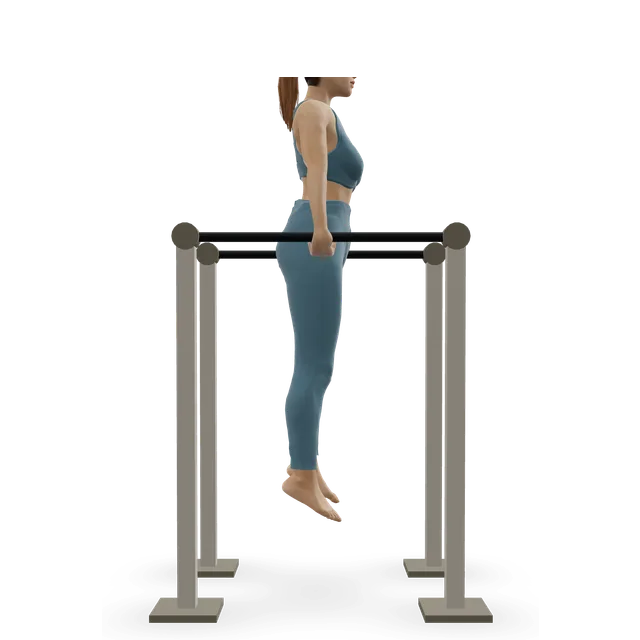
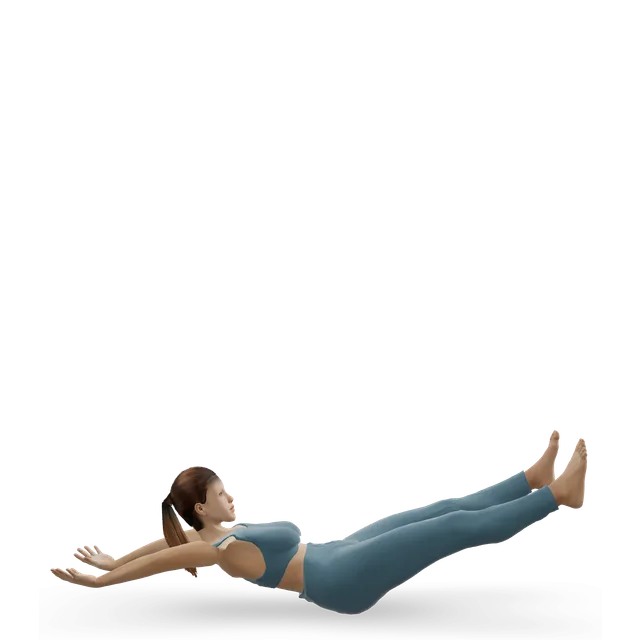
A back lever means hanging from a bar or rings with straight arms and your body held level, face down, your arms behind you. You get there by rolling back through your arms from a hang and lowering until you're level, and you build it like a lever: tucked first, then flatter, then with your legs straddled and finally together.

We found no study of the back lever itself, so this guide is honest about what's known from ring gymnastics, tendons and injury surveys, and about what is coaching practice or our own judgement. It holds the front of your shoulder near the end of its range and your biceps at full stretch, so it rewards patience more than effort.

It covers the German hang and skin the cat that come first, how to hold a tuck back lever, the ladder to the full lever and when to move up, rings or a bar and your grip, how long and how often to practise, what to watch in your shoulders and elbows, and our back lever progression workout, with 3D demos of the German hang, the tuck and the full lever.

The short version

Roll back, lower, hold level

Hang from a bar with straight arms, tuck your knees and roll back through your arms until you're upside down, then lower slowly until your body is level and face down, arms straight behind you, and hold. Come out the way you went in. Our demos use a bar and an overhand grip.

Sources 1, 2

A lever you lengthen one step at a time

First the German hang, with your feet supported at first, and skin the cat. Then the tuck, the advanced tuck (back flat), one leg straight, a straddle and finally legs together, each learnt as a slow lowering and then a pause. No trial has tested this ladder; it is coaching practice.

Sources 3, 4

Nobody has studied it

We found no study of the back lever itself. Gymnastics' rule book gives the back and front levers the same lowest value on rings, and coaches say the back lever comes sooner for many people. That doesn't make it a beginner's move: it holds the front of your shoulder near the end of its backward range and your biceps at full stretch.

Sources 5, 6, 3, 7

Go slowly with your shoulders and biceps

The shoulder was the commonest injury site in two calisthenics surveys. In videos of biceps tendon tears at the elbow, most happened with the elbow almost straight, the palm turned up and the arm holding still; the videos show the arm's position when tears happened, not how likely a tear is. Use the overhand grip of our demos, not a chin-up grip, and never drop into a German hang.

Sources 8, 9, 10, 11

Tendons adapt more slowly than muscle

In training studies, strength rose a month or two before the tendon changed, and tendons changed most in programmes of 12 weeks or more. Those were leg tendons; nobody has studied the arm's. Stay on each step longer than you think.

Sources 12, 13, 14

How to practise

2 or 3 times a week, not on consecutive days, first in your session. Tuck back lever: 4 to 6 holds of 5 to 10 seconds; full back lever: 4 to 6 holds of 3 to 8 seconds (our move pages' doses). Hold for about half to two-thirds of your best, rest about 2 minutes, and move up when your best clean hold reaches about 15 to 20 seconds (our front lever guide's rule; editorial). A steady bar is all you need.

Sources 15, 16

What a back lever is, and what holds it up

The position

You hang from a bar or rings with straight arms, roll back through your arms into an upside-down hang, then lower your body until it's level and face down, your arms straight and angled behind you, and hold it still. GymnasticBodies lowers the tuck "with straight elbows until your hips reach shoulder height" and cues a slight spread of the shoulder blades and pressing down through the hands. Gymnastics' rule book calls it a hanging scale rearways: a 2-second hold with the arms straight throughout.

Sources 1, 2, 6

The steps before it

In the German hang you roll all the way through and hang face down with your shoulders fully opened behind you; GymnasticBodies says it prepares the shoulder for extreme ranges of motion. Skin the cat takes you into the German hang and back out. Then come the tuck (knees to chest, back level), the advanced tuck (back flat, thighs at a right angle to your body), one leg straight, the straddle and the full lever. Straddling your legs is easier than keeping them together.

Sources 17, 18, 4

What holds it up: our reading of the anatomy

No study has measured muscle activity in a back lever. Our reading of the anatomy: gravity tries to swing you down into a German hang, so the muscles that bring your arms forwards from behind your body hold you up. That means the front of the shoulder, the chest and the biceps, which crosses the front of both the shoulder and the elbow. The muscles round your shoulder blades set the shoulder, and your glutes, hamstrings and trunk keep your hips from sagging or piking.

Coaching sources list different muscles: GymnasticBodies names the shoulders, trapezius, lats, biceps and abs, and GMB says the posterior chain (the back of the body). Steven Low, a physical therapist and former gymnast, writes that straight-arm skills put the biceps at full length, so they take a lot of strength to do safely. Arms straight behind the body do stretch the long head of the biceps over the front of the shoulder, in cadavers and in 15 young men.

Sources 2, 3, 7, 19, 20

How people differ

A longer body and longer legs make every step past the tuck harder, because your feet sit further from your shoulders, as our front lever guide explains; tall people do learn the levers. Backward shoulder range differs too: women's was about 5 to 10 degrees greater than men's in 6,635 people. Some people have loose shoulders, which OrthoInfo describes as a sense of the shoulder slipping in and out. If yours has dislocated or feels as if it slips when you hang, the back lever isn't for now.

Sources 21, 22

What the evidence says

No study of the back lever itself

We found no study of muscle activity, movement, training, hold times or injuries in the back lever, the German hang or skin the cat. A systematic review of still-rings research found 37 studies of 263 elite gymnasts, nearly all observational, and none on the back lever. The ladder, the prerequisites and the doses on this page are coaching practice or our editorial choice.

Source 5

How gymnastics rates itStrong evidence

The 2025 to 2028 men's code of points puts the back lever and the front lever on rings in the same lowest value group (A, worth 0.1); the planche on rings is a C and the swallow a D. A hold counts after 2 seconds with straight arms. That's how elite judges rank the holds, not how hard either is for you.

Source 6

Straight-arm strength builds slowly, even in elite gymnastsEmerging evidence

Elite men training about 25 hours a week gained 4.1% (swallow) and 3.6% (planche on rings) after 4 weeks of slow-lowering training (9 men), and 8 to 9% after 3 weeks of a combined programme (10 men); only 4 of 19 elite men could hold the swallow at their own body weight. Neither trial had a control group. The authors note that muscles adapt faster than tendons and ligaments.

Sources 23, 24, 25

Bent-arm strength helps but isn't enoughEmerging evidence

In 52 male gymnasts, bench press strength and iron cross holds were only moderately linked (a correlation of 0.41): the authors say the bench press seems necessary but not sufficient. Elite coaches build a general strength base first, especially in young athletes. So keep your pull-ups and dips, and practise the hold itself.

Sources 26, 27

A shorter lever means less loadEmerging evidence

In elite gymnasts, assisting devices that shortened the lever in ring strength elements lowered the stress on the shoulder and elbow, though they changed how the shoulder muscles worked together. That's the logic of starting tucked and with your feet supported.

Sources 28, 29

Holds build strength mostly at the angle you holdEmerging evidence

In a 4-week trial of 22 adults, holds raised strength 12% at the trained angle and 5 to 11% at others. A review found hard holds, at about 70% of maximum or more, were needed to change tendons. Another review suggests maximal-strength holds of 1 to 5 seconds at 80 to 100% effort, 30 to 90 seconds in all a session, and coaches hold for about 60 to 70% of their best time. So practise the lever position itself.

Sources 30, 31, 32, 16

Injuries in calisthenicsEmerging evidence

62% of 93 street workout athletes reported an injury in a year, the shoulder most often (23% of injuries), with tendon problems the commonest diagnosis; about 1 in 10 of the injured were doing front levers, and the back lever wasn't named. 59% of 181 Dutch calisthenics athletes reported an injury, the shoulders most often (32%). Both were self-selected surveys, so neither gives a risk per hour of training.

Sources 8, 9

Biceps tendon tears and straight armsEmerging evidence

In 57 videos of biceps tendon tears at the elbow, 98% happened with the palm turned up, 89% with the elbow within 10 degrees of straight and 88% while the arm was holding still; 5 were in a calisthenics planche. A second study of 56 videos found the same pattern, 3 of them in calisthenics (the two searches may overlap). None was a back lever, and the videos show the arm's position when tears happened, not how likely a tear is.

Sources 10, 11

Tendons adapt over monthsEmerging evidence

In 8 people training knee-extension holds, strength rose about 30% by 2 months and 40% by 3, but tendon stiffness changed only at the end. Tendon collagen renews far more slowly than muscle protein, and the core of the adult Achilles tendon is essentially not renewed. Across 27 studies, and a later review of 61 studies (763 people), tendons stiffened with heavy loading, most in programmes longer than 12 weeks. All of this is leg tendons; nobody has studied the biceps tendon.

Sources 12, 13, 33, 14, 34

Rings or a bar: no lever studyEmerging evidence

No study compares them for the levers. Ring muscle-ups drew more biceps, forearm and upper trapezius activity than bar muscle-ups in 10 men, ring dips used less shoulder extension than bar dips in 13 men, and across 137 reviews unstable equipment didn't consistently add strength.

Sources 35, 36, 15

Before you start: the strength and range you need

Hanging, pulling and pushing

Hang comfortably for 30 seconds with your shoulders active, as our front lever guide asks, and do a few strict pull-ups and dips (our suggestion; our pull-up and dip guides teach both). Elite coaches build a general strength base in the upper body before straight-arm ring work.

Source 27

What our move pages ask

The German hang asks for comfortable bar hangs, some existing shoulder extension, and low rings or a spotter for the first tries. The tuck back lever asks for comfortable German hangs and controlled skin the cats; the full back lever, a steady 15 to 20 second tuck back lever and comfortable German hangs. No study has tested any of these thresholds.

Not before easier ring strength work

GymnasticBodies says the back lever shouldn't be attempted before mastering less advanced ring strength progressions. The ladder below is how you get there.

Source 2

Equipment

A solid bar you can reach from the floor or a low box, or rings at about head height so your feet can touch down, as in GymnasticBodies' assisted German hang. Clear space and a mat underneath. Test a doorway bar before trusting it, as our front lever guide says.

Source 17

How to do a German hang, and skin the cat

From our German hang page and GymnasticBodies. Move slowly enough that you could stop at any point, and never let gravity drop you into the position (the move page's cue and caution). Skin the cat has no 3D demo of its own.

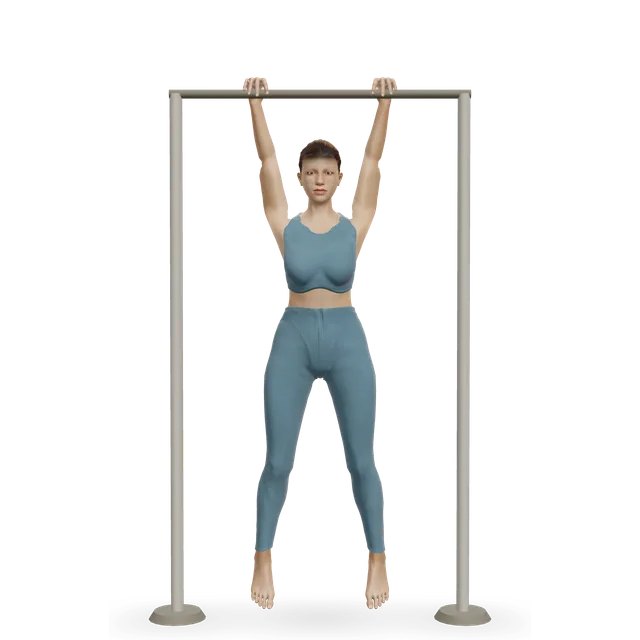
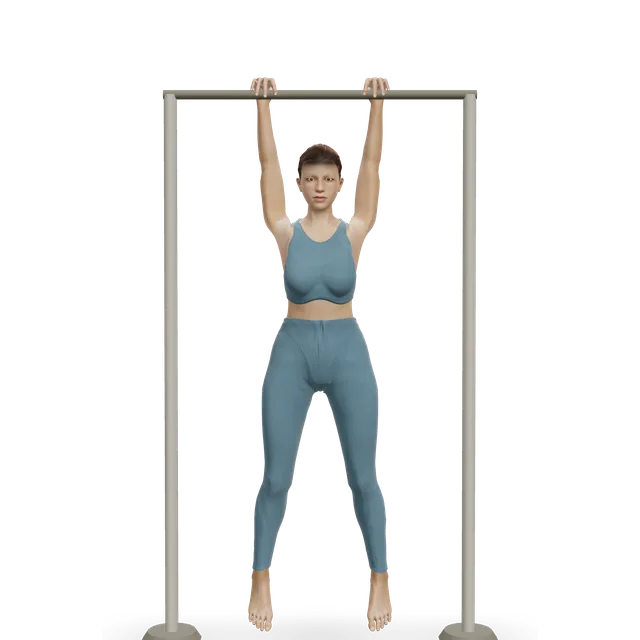
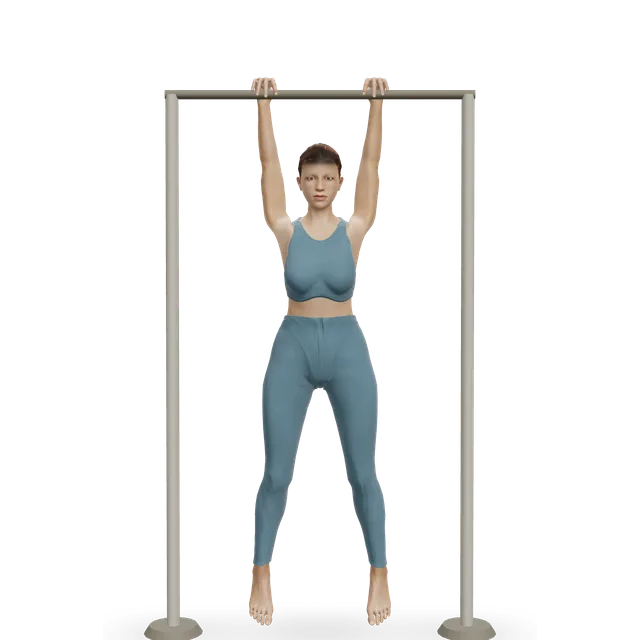
  1. Hang from a low bar or rings with an overhand grip and straight arms; while you're learning, keep your feet on the floor or a box.
  2. Tuck your knees to your chest and lift them up between your arms, rolling backwards slowly until your hips pass below your hands.
  3. Straighten your body so you hang face down, arms straight behind you, opening your shoulders only as far as they go without pain.
  4. Hold, breathing steadily, then tuck your knees and roll back the way you came, or put your feet down.
  5. Skin the cat is the same journey without the hold: roll into the German hang and straight back out, slowly and without swinging.

Loading the 3D figure…

Gets into position, then repeats the movement. Technical checks passed; qualified exercise review is pending.

The movement on the figure: German hang

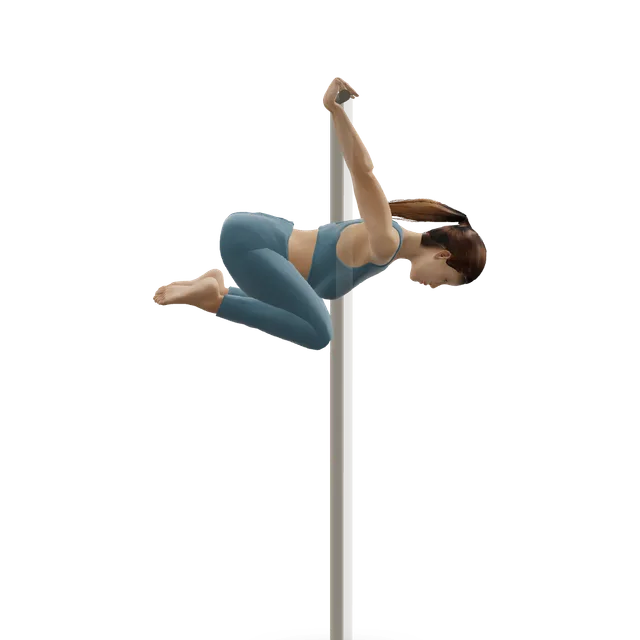
How to do a tuck back lever, step by step

From our tuck back lever page and GymnasticBodies; the stopping rule and the breathing are our front lever guide's (editorial). For the advanced tuck, flatten your back and open your hips until your thighs are at a right angle to your body.

  1. Hang from a bar with an overhand grip about shoulder-width apart and straight arms.
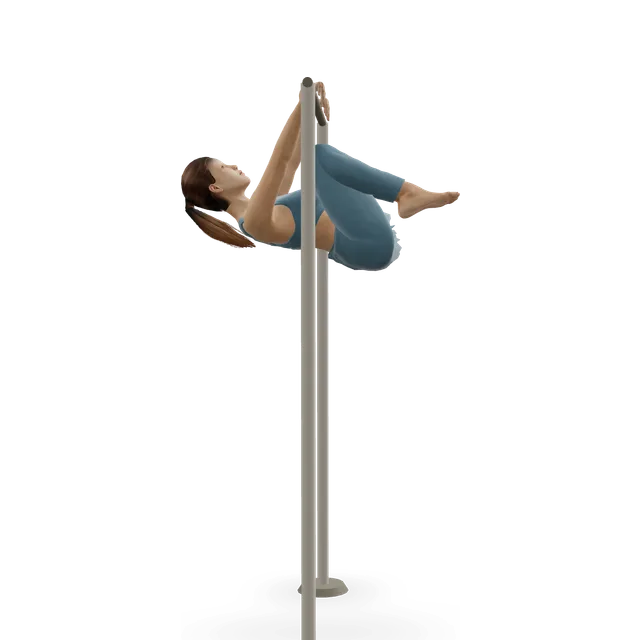
  2. Tuck your knees to your chest and roll back through your arms until you're upside down, hips above your shoulders.
  3. Keeping your knees tucked and your elbows straight, lower slowly backwards until your back is level, facing the ceiling, your hips at shoulder height.
  4. Press down through your hands and spread your shoulder blades slightly to hold still; keep breathing.
  5. Hold for about half to two-thirds of your best clean hold. End it as soon as your hips drop, your elbows bend or your shoulders shrug.
  6. Lift your hips back up through the upside-down hang and roll forward to a hang, or keep lowering into a German hang and put your feet down.

Loading the 3D figure…

Gets into position, then repeats the movement. Technical checks passed; qualified exercise review is pending.

The movement on the figure: Tuck back lever

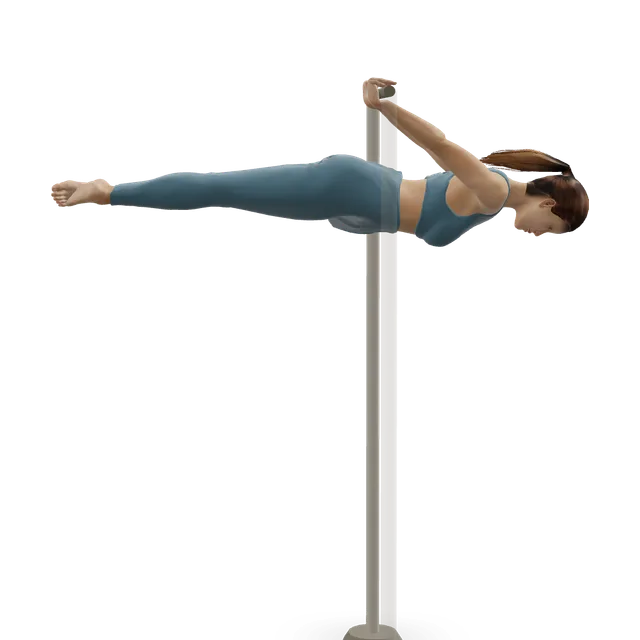
The full back lever

From our back lever page and GymnasticBodies, which cues tight glutes and pressing down through the hands. Don't pike at the hips to make it easier: use a tuck or a straddle instead (the move page's cue).

  1. From a hang, tuck and roll back until you're upside down, hips above your shoulders, as for the tuck.
  2. Straighten your hips and legs so your body is one line, squeezing your glutes and legs.
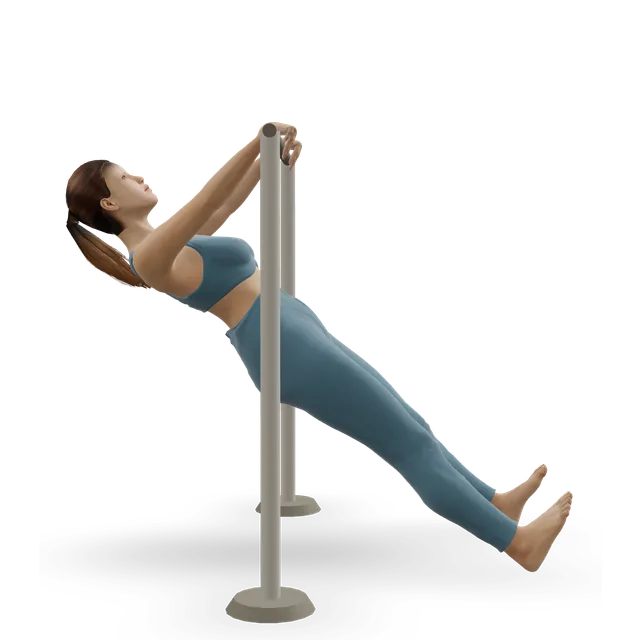
  3. Lower backwards slowly with straight elbows until your body is level and face down.
  4. Press down through your hands and hold, breathing steadily; end the hold as soon as your hips sag or pike or your elbows bend.
  5. Come out by lifting your hips back up, or by bending your knees and lowering into a German hang, and put your feet down.

Loading the 3D figure…

Gets into position, then repeats the movement. Technical checks passed; qualified exercise review is pending.

The movement on the figure: Back lever

The ladder

Move down the list as each step becomes steady. Skin the cat, the advanced tuck, the one-leg lever and the straddle have no demo of their own: skin the cat is the German hang in and out, and the others are the tuck and full levers with your back flattened, one leg straightened or your legs apart.

The steps, with doses and when to move up

The move-up points are our editorial choice. Coaching sources disagree, and no study has compared them.

Base: hangs and shoulder-blade pulls

Bar hangs, 2 sets of 20 to 30 seconds with your shoulders active, and scapular pull-ups, 2 sets of 8 holding the top for a second, as in our front lever progression workout.

1. German hang

3 holds of 10 to 20 seconds, starting with your feet supported (the move page's dose). Take weight off your feet only as your shoulders allow, over weeks rather than sessions (editorial).

Source 17

2. Skin the cat

3 to 5 slow repetitions, resting a full minute between (the move page's dose), without swinging and slow enough to stop at any point.

Source 18

3. Tuck back lever

Knees to your chest, back level: 4 to 6 holds of 5 to 10 seconds, early in a session on fresh arms (the move page's dose), resting about 2 minutes. Learn it first as a slow lowering from the upside-down hang, then as a pause.

Source 3

4. Advanced tuck, one leg and straddle

Flatten your back and open your hips until your thighs are at a right angle to your body; then one leg straight, swapping legs each set; then both legs straight and wide, the wider the easier. 4 to 6 holds of 3 to 8 seconds at each (editorial, between the move pages' tuck and full doses). As one coach puts it, nobody goes from the tuck to the advanced tuck in a day.

Source 4

5. Full back lever

Legs together: 4 to 6 holds of 3 to 8 seconds with long rests, two or three times a week at most (the move page's dose). Our back lever page asks for a steady 15 to 20 second tuck back lever and comfortable German hangs first.

When to move up

When your best clean hold reaches about 15 to 20 seconds and 4 or 5 holds of about 10 seconds feel solid, as our front lever guide suggests; one coach moves on after a 15-second hold. Test your best hold every 2 to 4 weeks, when you're fresh.

Source 37

Slow lowerings at every step

Coaches teach each step first as a slow lowering into the position from the upside-down hang, then as a pause. Our editorial dose: 3 sets of 1 to 3 lowerings of 3 to 5 seconds, counted in your holding time.

Source 3

How long to hold, how often, and how hard

How long to hold

Hold for about half to two-thirds of your best clean hold, adding up to about 30 to 60 seconds of holding a session, with about 2 minutes between holds and 3 for the hardest steps (our front lever guide; editorial). In your first two weeks, about 30 seconds of holding in all. Coaches use about 60 to 70% of their best hold time, and a review suggests 30 to 90 seconds in all for maximal-strength holds.

Sources 16, 32

How often

2 or 3 sessions a week, not on consecutive days, with the lever first after your warm-up (our editorial starting point). Strength rose more with at least 2 sessions a week and with exercises done early in a session. Training the front lever too? Do one lever first each session, or alternate days, and keep straight-arm work to 3 hard sessions a week in all (editorial).

Source 15

How hard

End each hold before your hips drop, your elbows bend or your shoulders shrug. Training to failure isn't needed, and a lever that collapses with bending elbows loads your elbows and shoulders hardest, as our move page warns.

Sources 38, 15

Warm up and breathe

3 to 5 minutes of easy movement, shoulder circles, bar hangs and scapular pull-ups, then 1 or 2 easy holds at an easier step (our front lever guide; editorial). Keep breathing through every hold with steady out-breaths; don't strain with your breath held, as our breathing guide explains.

Lighter weeks, and what else to train

Every 6 to 8 weeks, halve your holding time for a week, as our plans do. Keep pull-ups and dips for bent-arm strength, and a hollow hold for the straight body line the lever needs.

Rings or a bar, and your grip

A steady bar is all you need

Our demos use a bar. Gymnasts do the back lever on rings, the competition apparatus, but unstable equipment didn't consistently add strength across 137 reviews, and a bar is easier to set up low enough to put your feet down.

Sources 15, 6

Rings let your hands turn

Some coaches find rings kinder to the elbows because your hands can turn; nobody has tested that. Ring muscle-ups drew more biceps activity than bar muscle-ups in one small study, a reminder that rings change the load rather than remove it (our reading).

Sources 3, 35

On a bar: overhand, as for a pull-up

Hold the bar overhand, about shoulder-width apart, which is what our demos use. A chin-up grip, palms towards you, keeps your forearm turned palm-up, the position in which most filmed biceps tendon tears happened. That's our inference from the tear videos and our move pages; no study has measured biceps load by grip.

Sources 10, 11

On rings, coaches disagree

GMB says an overhand grip puts the emphasis on the biceps and elbows, and an underhand grip less on the biceps and more on the shoulder; GymnasticBodies turns the rings so your palms face behind you. Neither has been tested. On rings, use the hand position that keeps your elbows within our elbow rule (editorial).

Sources 3, 2

Common mistakes

Bent elbows

Our move page's cue: elbows locked, because bending them turns the lever into a pull, and a failing lever with bending elbows loads your elbows and shoulders hardest. Go back a step.

Hips sagging or piking

The lever is too long for you right now: shorten it with a tuck or a straddle rather than bending at the hips.

Shrugging

Set your shoulders and press down through your hands, as if pushing the bar or rings towards your hips.

Dropping into the German hang

Or swinging through skin the cat. Move slowly enough to stop at any point; the move pages warn never to let gravity drop you into the position.

Rushing the ladder

Stay on a step until your best clean hold reaches about 15 to 20 seconds. Tendons need the time even when your muscles feel ready.

A chin-up grip on the bar

Use the overhand grip of our demos, as for a pull-up.

Holding to collapse, or training every day

End each hold before the shape breaks, and keep to 2 or 3 sessions a week.

Holding your breath

Breathe steadily through each hold, as our breathing guide explains.

Your shoulders and elbows

Your shoulder's backward rangeEmerging evidence

The usual reference value for how far the arm goes back behind you is about 40 to 60 degrees; 39 active adults reached 68.8 degrees, and 13 experienced men reached about 89 on a dip bar. Women's backward range was about 5 to 10 degrees greater than men's in 6,635 people. Nobody has measured the angle in a back lever or German hang; the German hang looks to go well past these (our reading). Build it slowly, feet supported.

Sources 39, 40, 36, 21

The front of the shoulder at the end of its rangeEmerging evidence

The dip study's authors suggest that loaded shoulder extension at the end of its range may strain the front of the shoulder capsule: a hypothesis, not a finding. A complete chest tendon tear in a calisthenics athlete happened in a hold with the shoulder extended 70 degrees (one case report). Of bench, bar and ring dips, ring dips used the least shoulder extension, about 69% of the men's maximum, which suggests people limit their own range on rings (our reading).

Sources 36, 41

The biceps at full stretchEmerging evidence

Arms straight behind the body stretch the long head of the biceps over the front of the shoulder, in cadavers and in 15 young men. With the elbow straight as well, the biceps is at full length, which is why coaches build straight-arm skills gradually.

Sources 19, 20, 7

Shoulder surgery in gymnastsEmerging evidence

In high-level male gymnasts needing shoulder surgery, 12 of 30 shoulders were hurt on rings, 3 of them in strength holds, and the long head of the biceps and the labrum (the rim of cartilage round the socket) were often involved; 91% returned to competition, after about 9 months. Male college gymnasts had about twice the shoulder and elbow injury rates of female gymnasts, and across 22 studies men's injuries were mostly in the arms and shoulders, which reflects the men's apparatus, rings and high bar, as much as sex. None of this measures the risk of a back lever.

Sources 42, 43, 44, 45, 46

Biceps tears are rare, and usually suddenStrong evidence

Tears of the biceps tendon at the elbow happen to about 2.55 in 100,000 people a year, 95% of them men, at an average age of 46. OrthoInfo says they usually happen when the elbow is forced straight against resistance, which in a lever means one that collapses or a sudden jolt, more than a steady hold (our reading).

Sources 47, 48

The elbow rule

An ache at the front of the elbow of about 3 to 4 out of 10 that settles within an hour and is no worse the next morning is acceptable, as our elbow guides say. If it breaks that rule, drop back a step for a week rather than stopping all training.

The shoulder rule

Keep shoulder pain to about 5 out of 10 or less during the exercise, back to its usual level by your next session, as our shoulder guides advise. A sharp pinch means lower, lighter or stop.

Source 49

Build the strength

Pull-ups, 3 sets of 3 to 8 stopping 1 to 3 reps short, and hollow holds, 2 sets of 20 seconds, as in our front lever progression workout; dips, 3 sets of 3 to 8, only as deep as your shoulders are comfortable (our full-body calisthenics workout); shoulder circles and the round-the-world stretch at their move pages' doses.

How long it takes

Our rough estimate, not a promise

No study has timed it, and one coach says the progression can take months for most people. If you can already hang, pull and dip comfortably, a steady German hang and tuck back lever often come within weeks to a few months; the straddle and full lever often take many months to a year or more of regular practice. Taller bodies often take longer, and many people settle happily at the tuck or the straddle.

Source 37

Back lever vs front lever

Two hanging levers, facing opposite ways

The front lever faces up, held mainly by the lats pulling your arms down towards your hips; the back lever faces down with your arms behind you, held by the muscles that bring the arms forwards (our reading; neither has been measured). Both load the biceps at full length and need the same slow build-up.

Source 7

Which comes first

Gymnastics' rule book rates them the same, coaches say the back lever comes sooner for many people, and another coach calls the front lever the harder move. You can train both: do one lever first each session, or alternate days (editorial). Our front lever guide covers the other one.

Sources 6, 3, 37

And the planche and the muscle-up

The planche is a straight-arm hold on your hands, leaning forward, and is rated two values higher on rings; the muscle-up is a bent-arm move up and over the bar. Our planche and muscle-up guides cover them.

Source 6

Workouts

Our back lever progression puts this page into one session: the warm-up, your step on the ladder, then pull-ups, dips and a hollow hold. The front lever progression is its sibling, and the pull-up and dip progressions build the base.

Plans

Who should skip it or wait

A shoulder that has dislocated or feels as if it slips

Our German hang page rules it out for now after a shoulder dislocation, and skin the cat isn't appropriate with shoulder instability. OrthoInfo says a shoulder that has dislocated is vulnerable to dislocating again. Follow our shoulder dislocation guide, which leaves out hanging from a bar; the NHS says recovery usually takes 6 to 12 weeks, and up to 16 weeks for some sports.

Sources 22, 50

Biceps or elbow tendon pain

Front-of-elbow pain that builds up, or biceps tendon trouble: leave the German hang and the levers out and follow our distal biceps tendinopathy and elbow pain from pull-ups guides (the move pages' cautions).

Pain at the front of the shoulder when you reach back

OrthoInfo describes biceps tendinitis as pain reaching backwards, such as putting on a seatbelt or a coat. Leave the German hang and the back lever out for now and follow our biceps tendinitis and front of shoulder pain guides, which bring loaded positions with the arm behind the body back last.

Source 51

After surgery

After a recent shoulder dislocation, or shoulder or elbow surgery, follow your surgical team's limits first.

NHS inform says anyone with a shoulder condition or recent shoulder surgery should follow their healthcare professional's advice.

Source 52

Pregnancy

This isn't the time to learn the back lever: the NHS says not to start a new vigorous activity in pregnancy, and to avoid activities where there's a risk of falling (our reading is that hanging upside down is one).

Source 53

Children and teenagers

Elite coaches build a general strength base before straight-arm ring work, especially for young athletes. Learn it with a gymnastics coach.

Source 27

Warning signs

Stop and get medical help

If you get chest pain or pressure, feel faint or dizzy, are unusually breathless, or your heart races or beats irregularly during exercise, as our plans advise. The American Heart Association says these need immediate medical evaluation.

Source 54

Call 999 (911 in the US)

For chest pain that comes on suddenly and doesn't go away, feels tight or like squeezing, spreads to your arms, neck, jaw, stomach or back, or comes with sweating, feeling sick, light-headedness or breathlessness; arm pain that comes on suddenly with pressure, heaviness or squeezing across your chest; severe difficulty breathing, or a chest that feels tight or heavy; someone who faints while exercising; palpitations that don't go away, or come with chest pain, shortness of breath or feeling faint; or a headache that starts suddenly and is extremely painful, especially while lifting or straining. The NHS says a bleed on the brain may be more likely when lifting something heavy. Don't drive yourself to A&E.

Sources 55, 56, 57, 58, 59, 60, 61, 62

A headache with effort

Ask for an urgent GP appointment or get help from NHS 111 for a headache that's triggered or made worse by coughing, sneezing, bending down or exercising.

Source 61

Same day: a pop at the elbow or upper arm

A pop or snap with sudden pain during a hold, especially with bruising or a bulge in the upper arm, can be a torn biceps tendon. Go to an urgent treatment centre or A&E (in the US, urgent care) the same day, and don't wait for it to settle, as our biceps guides say: OrthoInfo says a repair is ideally done in the first 2 to 3 weeks.

A sudden, sharp pain at the shoulder or upper arm, sometimes with a pop, can be a torn long head of the biceps: see a GP or get help from NHS 111 the same day, as our biceps tendinitis guide says.

Sources 48, 57, 63

A fall from the bar

Call 999 or go to A&E: after a fall or injury, your shoulder looks out of place or has changed shape, you cannot move your arm, or your shoulder is painful, bruised or swollen. Do not drive yourself, and do not try to put it back in yourself.

Source 50

A knock to the head

Call 999 if someone has hit their head and has been knocked out and not woken up, can't stay awake, has a fit, has fallen from a height of more than 1 metre or 5 stairs, has problems with their vision, hearing, balance, walking or speech, or has new numbness or weakness. Get help from NHS 111 after a head injury if you're being sick or feel dizzy. If you're told to go to A&E, don't drive yourself.

Train over a mat, with the bar or rings low enough to put your feet down (editorial).

Source 64

Urgent GP appointment or NHS 111: your shoulder

Ask for an urgent GP appointment or get help from NHS 111 for sudden or very bad shoulder pain; not being able to move your arm; a shoulder or arm that has changed shape or is badly swollen; pins and needles that don't go away; or pain that started after an injury or accident, like a fall. In the US, contact your doctor or urgent care. See a GP if shoulder pain is getting worse or hasn't improved after 2 weeks. While your shoulder is sore, the NHS says not to make up your own strenuous exercises or use heavy gym equipment.

Source 65

Your wrists

Get help from NHS 111 if you heard a snap, grinding or popping noise when you hurt your wrist, or you can't move it or hold things.

Source 66

Swollen muscles and dark urine

Very sore, swollen, tight muscles and dark urine after an unusually hard or high-rep session need medical help the same day: it could be rhabdomyolysis, as our elbow pain from pull-ups guide explains. Normal soreness peaks a day or two after a new exercise and fades.

A new lump or bulge in your groin or tummy

See a GP if you think you have a hernia, a bulge or lump that may get bigger when you strain and smaller when you lie down. Get help from NHS 111 if you have a hernia and pain in or around it, a bloated tummy, you feel or are sick, you're vomiting blood or your vomit looks like coffee grounds, you're constipated, you have a high temperature or feel hot, cold or shivery, or you've suddenly become confused. Call 999 or go to A&E for a femoral hernia (a small lump at the top of your thigh, in your groin) with very bad tummy pain, sickness, being unable to fart or poo, a high temperature or sudden confusion.

The NHS lists lifting heavy weights among the causes of a femoral hernia. After an inguinal hernia repair, avoid heavy lifting or strenuous activity for at least 4 to 6 weeks.

Sources 67, 68, 69

Before you start

Speak to your GP first if you haven't exercised for some time or have medical conditions or concerns, as the NHS advises. Get advice before hard or straining work if your blood pressure is uncontrolled (140/90 or higher at a clinic, or 135/85 at home), or you have heart disease or chest pain when you're active, a pacemaker or defibrillator, diabetic eye disease, glaucoma, a hernia, recent eye or tummy surgery, or you're pregnant, as our breathing guide lists.

With controlled high blood pressure, the American Heart Association considers low- to moderate-intensity strength training with proper breathing safe: breathe out as you lift.

With a pacemaker or defibrillator, the American Heart Association asks you to check with your doctor before upper-body strength training, because repeated arm movements can damage or dislodge the leads.

Sources 70, 71, 54
Myths

"The back lever is easier than the front lever, so it's safe for beginners"Emerging evidence

The rule book rates the two equally and coaches say the back lever comes sooner for many people, but easier to reach isn't safe to start with. GymnasticBodies says not to attempt it before easier ring strength work; it holds the biceps at full length with the elbow straight and the palm turned, the position of most filmed tears; and the front of the shoulder works near the end of its range. No study has measured either lever's safety.

Sources 6, 3, 2, 7, 10

"You can learn a back lever in 30 days"Emerging evidence

Nobody has timed it. Even elite gymnasts training about 25 hours a week gained about 4 to 9% in ring hold strength over 3 to 4 weeks, and coaches say the progression can take months.

Sources 23, 24, 37

"Straight-arm work is safe from day one"Emerging evidence

Tendons adapt more slowly than muscle, the shoulder is the commonest injury site in calisthenics surveys, and the tear videos show where problems happen. None of this measures risk, so it doesn't make the lever dangerous; it's why every ladder starts short and moves up slowly.

Sources 12, 13, 8, 9, 10

"The back lever works your lats and back"

Nobody has measured it. The lats pull the arm down and back, the direction gravity already pulls in a back lever; by the anatomy, the front of the shoulder, the chest and the biceps hold you up, with your glutes and trunk keeping you straight (our reading). Coaching sources disagree, from the posterior chain to a list that includes the lats.

Sources 3, 2

"Push your German hang as far as it goes to get the range faster"Emerging evidence

Untested. Our move page's caution is to enter slowly, never let gravity drop you into position, and build the hold from the feet-supported version. Loaded shoulder extension at the end of its range may strain the front of the shoulder, a hypothesis from a dip study.

Source 36

"You need gymnastics rings"Emerging evidence

A steady bar is all you need, as for the front lever; unstable equipment didn't consistently add strength across 137 reviews. Rings are the competition apparatus and let your hands turn, which some coaches prefer, untested.

Sources 15, 6

"Tall people can't do levers"

A longer body takes more strength and often more time, but tall people do learn the levers, as our front lever guide explains. Nothing here suggests changing your weight.

Questions people ask

How do you do a back lever?

Hang from a bar with an overhand grip, tuck your knees and roll back through your arms until you're upside down, then lower slowly until your body is level and face down with your arms straight behind you, and hold. Start with the tucked version and lengthen it one step at a time. Come out the way you went in.

What muscles does the back lever work?

Nobody has measured it. Our reading of the anatomy is that the front of your shoulders, your chest and your biceps hold you up against gravity, while your glutes, hamstrings and trunk keep you straight. Coaching sources list different muscles, some including the lats.

Is the back lever easier than the front lever?

Gymnastics' rule book rates them the same, and coaches say the back lever comes sooner for many people. It still loads your biceps and the front of your shoulder hard, so it needs the same slow build-up. Our front lever guide covers the other one.

How long does it take to learn a back lever?

No study has timed it, and coaches say it can take months. Our rough estimate, not a promise: if you can already hang, pull and dip comfortably, the tuck often comes within weeks to a few months, and the full lever often takes many months to a year or more of regular practice.

What should I learn before the back lever?

Comfortable 30-second hangs and a few strict pull-ups and dips, then the German hang, with your feet supported at first, and skin the cat, as our move pages' ladder does. If your shoulder has ever dislocated or feels as if it slips when you hang, the back lever isn't for now.

How long should I hold a tuck back lever, and how many sets?

4 to 6 holds of 5 to 10 seconds early in a session, which is our move page's dose, each about half to two-thirds of your best and adding up to about 30 to 60 seconds, with about 2 minutes' rest. Move up when your best clean hold reaches about 15 to 20 seconds.

Can I train the back lever every day?

We'd suggest 2 or 3 times a week, not on consecutive days, at the start of a session. Strength rose more with at least 2 sessions a week, and tendons adapt more slowly than muscle, so your elbows and shoulders need the days off.

Should I do the back lever on rings or a bar?

A steady bar is all you need, and our demos use one. Gymnasts do it on rings, and some coaches find turning rings kinder to the elbows, but nobody has tested that, and unstable equipment didn't add strength in a large overview of reviews.

Which grip should I use for the back lever?

On a bar, hold it overhand, as for a pull-up. A chin-up grip keeps your forearm turned palm-up, the position in which most filmed biceps tendon tears happened; that's our inference, since no study has measured grip in a back lever. On rings, coaches disagree about the best hand position.

Is the back lever bad for your shoulders?

It isn't proven to be, but it holds your shoulder near the end of its backward range under your body weight, and the shoulder was the commonest injury site in calisthenics surveys. Build the German hang slowly from your feet, never drop into it, and keep shoulder discomfort to about 5 out of 10, settled by your next session.

Why do my elbows or biceps hurt in the back lever?

Straight-arm holds pull hard on the biceps tendon. An ache of about 3 to 4 out of 10 that settles within an hour and is no worse the next morning is acceptable; otherwise drop back a step for a week. A pop with sudden pain, bruising or a bulge in the upper arm needs an urgent treatment centre or A&E the same day.

Can you do a back lever on a pull-up bar at home?

Yes, if the bar is solid and low enough to put your feet down, with a mat underneath; test a doorway bar before trusting it. Roll through slowly, and stay with the German hang and the tuck until they feel easy.

Sources

  1. GymnasticBodies · Tuck back lever (exercise library)
  2. GymnasticBodies · Back lever (exercise library)
  3. GMB Fitness 2019 · How to learn front levers and back levers on the rings (coaching article)
  4. Kizirian (Antranik.org) · Progression exercises for static holds (coaching article)
  5. Malíř 2023 · Forces, movement and muscle activity in still rings elements: 37 studies of 263 elite gymnasts (systematic review, Sports)
  6. FIG 2024 · Code of Points 2025 to 2028, men's artistic gymnastics: rings strength and hold elements (rule book, Fédération Internationale de Gymnastique)
  7. Low 2017 · The fundamentals of bodyweight strength training (coaching article by the author of Overcoming Gravity)
  8. Ngo 2021 · Injuries in 93 street workout practitioners (survey, Orthop J Sports Med)
  9. Mohammad 2025 · Injuries in 181 Dutch calisthenics athletes (cross-sectional survey, J Sports Med Phys Fitness)
  10. Jukes 2022 · How distal biceps tendons tear: 57 videos and 22 patients (video analysis, Bone Jt Open)
  11. Lappen 2022 · How distal biceps tendons tear: 56 online videos (video analysis, BMC Musculoskelet Disord)
  12. Kubo 2010 · How muscle and tendon change over 3 months of training and 3 months off, in 8 people (training study, JSCR)
  13. Mersmann 2017 · Muscle and tendon developing out of step in young athletes (narrative review, Front Physiol)
  14. Bohm 2015 · How tendons adapt to loading: 27 studies (systematic review and meta-analysis, Sports Med Open)
  15. Currier 2026 · Resistance training for muscle function, size and performance in healthy adults: an overview of 137 reviews (ACSM position stand, MSSE)
  16. Low 2017 · How long to hold: tables for bodyweight isometric and eccentric exercises (coaching article)
  17. GymnasticBodies · German hang (exercise library)
  18. GymnasticBodies · German hang pull, also called skin the cat (exercise library)
  19. Lamplot 2020 · How the long head of the biceps tendon moves through the shoulder's range (cadaver study, Orthop J Sports Med)
  20. Iwane 2023 · Shoulder position and stretch of the biceps in 15 young men (lab study, J Biomech)
  21. Fleisig 2023 · Active shoulder range of motion in 6,635 people (cross-sectional study, JSES Int)
  22. AAOS OrthoInfo · Chronic shoulder instability (patient information, American Academy of Orthopaedic Surgeons)
  23. Schärer 2019 · Slow-lowering machine training and ring strength elements in 9 elite gymnasts (uncontrolled trial, Int J Environ Res Public Health)
  24. Schärer 2022 · Combined slow-lowering and loaded training and ring strength in 10 elite gymnasts (uncontrolled trial, Sports)
  25. Schärer 2021 · Maximum strength benchmarks for static ring elements in 19 elite male gymnasts (cross-sectional study, Sports)
  26. Tom 2025 · Bench press strength against iron cross holds in 52 male gymnasts (cross-sectional study, Eur J Sport Sci)
  27. Schärer 2025 · Preparatory strength benchmarks for the inverted cross in 19 elite and junior male gymnasts (cross-sectional study, Sports)
  28. Bernasconi 2006 · Shoulder muscle activity in a ring strength element with and without assisting devices in elite gymnasts (EMG study, JSCR)
  29. Bernasconi 2009 · Shoulder muscle coordination in a ring support scale and in training exercises for it, in elite gymnasts (EMG study, JSCR)
  30. Lanza 2019 · How angle-specific are strength gains from isometric training? (controlled trial in 22 adults, Eur J Appl Physiol)
  31. Oranchuk 2019 · Isometric training and long-term adaptations: muscle length, intensity and intent (systematic review, Scand J Med Sci Sports)
  32. Lum 2019 · Isometric strength training, strength and dynamic performance (narrative review, Int J Sports Med)
  33. Heinemeier 2013 · Little renewal of the adult Achilles tendon core, measured with carbon-14 (lab study, FASEB J)
  34. Lazarczuk 2022 · How healthy leg tendons adapt to loading: 61 studies (systematic review and meta-analysis, Sports Med)
  35. Walker 2023 · Ring and bar muscle-ups compared in 10 active men (muscle activity study, Int J Exerc Sci)
  36. McKenzie 2022 · Bench, bar and ring dips: shoulder movement and muscle activity in 13 experienced men (lab study, Int J Environ Res Public Health)
  37. Christopher 2021 · How to build up to the back lever (coaching article, Breaking Muscle)
  38. Refalo 2023 · Training to failure against stopping short, for muscle growth: 15 studies (meta-analysis, Sports Med)
  39. Physiopedia · Range of motion normative values (professional wiki, quoting the American Academy of Orthopaedic Surgeons' reference values)
  40. Konrad 2024 · Chest muscle stiffness and shoulder extension range in 39 active adults (cross-sectional study, Front Physiol)
  41. Choo 2021 · A complete pectoral tendon tear in a calisthenics athlete (case report, Malays Orthop J)
  42. Gendre 2021 · Surgically treated shoulder injuries in 26 high-level male gymnasts (case series, Orthop J Sports Med)
  43. Gendre 2021 · Return to competition after shoulder surgery in high-level male gymnasts (case series, Orthop J Sports Med)
  44. Gerhardt 2014 · The gymnast's shoulder (narrative review in German, Orthopade)
  45. Trikha 2023 · Injuries and return to sport in 673 college gymnasts (multicentre cohort, Orthop J Sports Med)
  46. Campbell 2019 · Injuries and risk factors in competitive artistic gymnasts: 22 studies (systematic review, Br J Sports Med)
  47. Kelly 2015 · Distal biceps tendon ruptures in a large population database (epidemiological study, Am J Sports Med)
  48. AAOS OrthoInfo · Biceps tendon tear at the elbow (patient information, American Academy of Orthopaedic Surgeons)
  49. NHS inform · Exercises for shoulder problems (NHS Scotland)
  50. NHS · Dislocated shoulder
  51. AAOS OrthoInfo · Biceps tendinitis (patient information, American Academy of Orthopaedic Surgeons)
  52. NHS inform · Shoulder problems (NHS Scotland)
  53. NHS · Exercise in pregnancy
  54. Paluch 2024 · Resistance exercise training with and without cardiovascular disease: 2023 update (American Heart Association scientific statement, Circulation)
  55. NHS · Chest pain (past its review date: reviewed August 2023, review due August 2026)
  56. NHS · Heart attack
  57. NHS · Elbow and arm pain
  58. NHS · Shortness of breath
  59. NHS · Fainting
  60. NHS · Heart palpitations
  61. NHS · Headaches
  62. NHS · Subarachnoid haemorrhage
  63. AAOS OrthoInfo · Biceps tendon tear at the shoulder (patient information, American Academy of Orthopaedic Surgeons)
  64. NHS · Head injury and concussion
  65. NHS · Shoulder pain (past its review date: reviewed May 2023, review due May 2026)
  66. NHS · Wrist pain
  67. NHS · Hernia
  68. NHS · Femoral hernia
  69. NHS · Inguinal hernia repair
  70. NHS · Physical activity guidelines for adults aged 19 to 64
  71. NHS · High blood pressure

Exercise education, not a personal prescription, and clinical review of these guides is pending. Check with a GP before starting hard training if you have a heart condition, chest pain, dizziness or breathlessness when active, and stop for sharp or increasing pain. Health disclaimer.