Training guide

How to do a JM press: the bar path, the elbows, barbell, Smith and dumbbell versions, the triceps, and how many

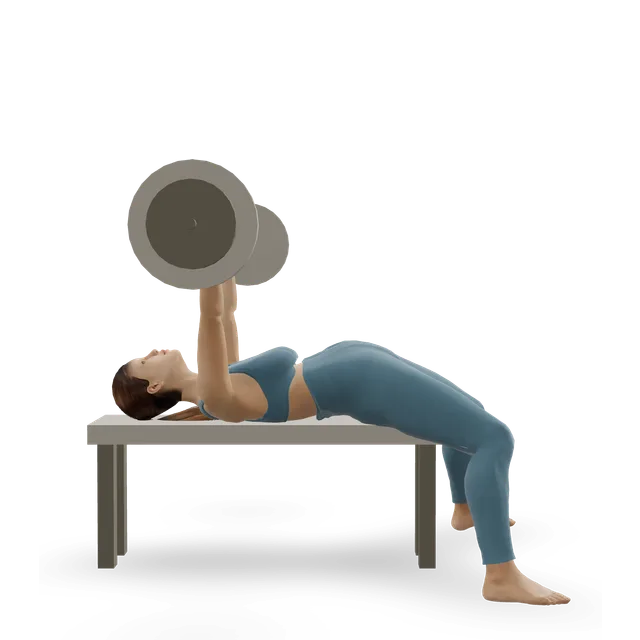
The JM press is a triceps exercise that's part close-grip bench press, part skull crusher. Lying on a bench with your hands about shoulder-width apart, you lower the bar by bending your elbows and letting them travel towards your feet, so the bar comes down towards your chin or throat, then press it back up. Set safety bars first, start light, and do 2 to 3 sets of 10 to 15.

Nobody has studied the JM press itself, so this guide is honest about what's known from its two parent lifts: what it works, why the elbow position matters, whether it's kinder to your elbows than skull crushers (untested), and how it compares with the close-grip bench.

It covers the barbell, Smith machine and dumbbell versions, how heavy and how many, and the warning signs, with a 3D demo of the lift.

The short version

Part press, part skull crusher

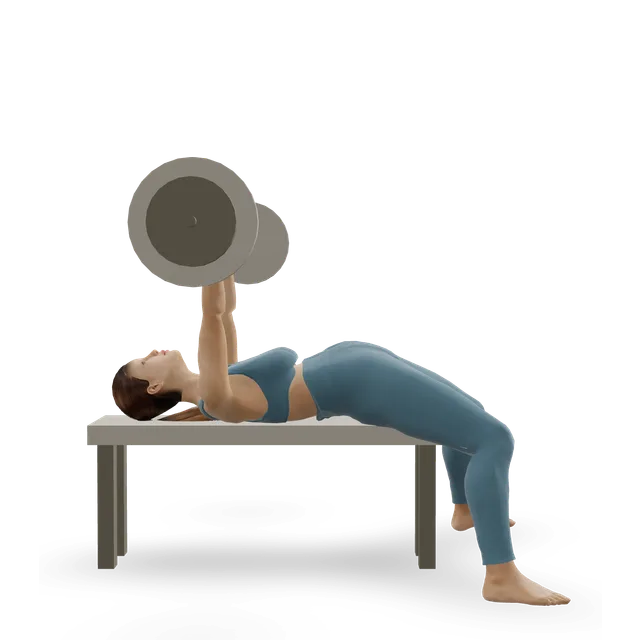
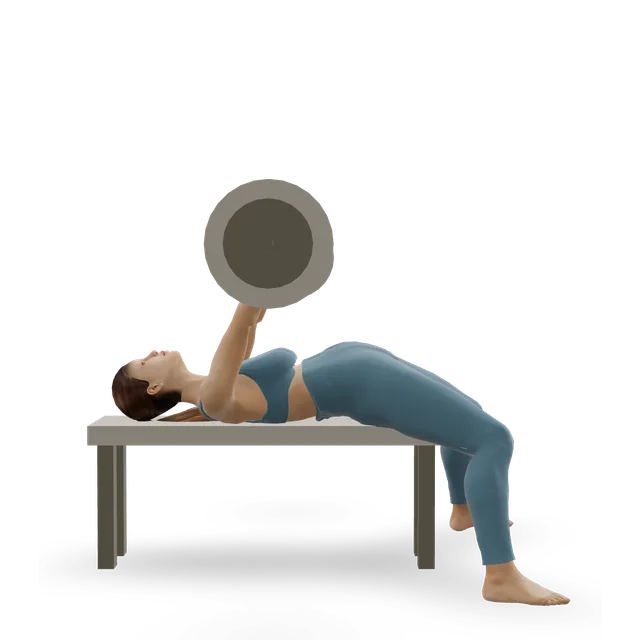
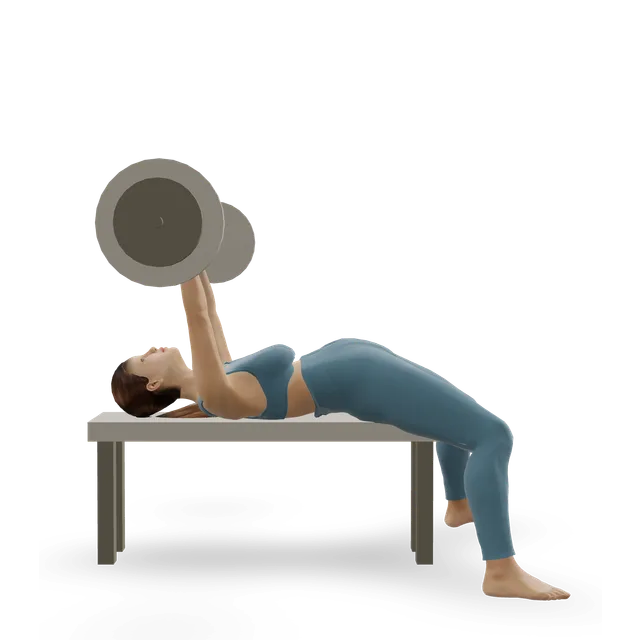
Hands about shoulder-width apart, the bar over your upper chest. Lower it as you would a skull crusher, then let your elbows travel towards your feet so the bar drifts down towards your chin or throat, stop when your forearms meet your upper arms, and press back up.

Sources 1, 2

Nobody has studied it

We found no study of the JM press: the only data is a one-person student poster. Its parents, the close-grip bench press and the lying triceps extension, drew similar triceps activity in one study of 15 women, the lying extension favouring the long head.

Sources 3, 4

Elbows about 45 degrees from your sides

Pointing towards your feet, not tucked tight and not flared straight out: the inventor's method and our move page agree. In a bench press study of 35 trained adults, narrow grips with the elbows travelling out put the most load on the elbow.

Sources 2, 5

Not proven kinder to the elbows

Nobody has measured elbow loads in the JM press. Narrow pressing raised them in the one bench press study that measured them, so the JM press probably loads the elbow at least as much: that's our inference from one bench press study, and even its coaching sources say it can still put pressure on the elbows.

Sources 5, 6

Safety bars, and start light

The bar ends over your throat, so set safety bars just below the bottom of its path or use a spotter, and never go heavy alone. Spend 2 to 3 weeks with an empty bar or light EZ bar while you learn the path (our editorial starting point; the inventor's advice, as one coach reports it, was a few weeks of sets of 10 before going heavy).

Source 6

How many

2 to 3 sets of 10 to 15, stopping 2 or 3 reps short, with 90 seconds to 2 minutes' rest: its move page's dose, from a coaching library's sets of 10 to 20. For bigger triceps, pair it with an overhead extension, which grew the long head more than arm-at-your-side work in a 12-week trial.

Sources 1, 7

What a JM press is, and what it works

The lift

Catalyst Athletics describes "a hybrid between a close-grip bench press and skull crusher", lowering "to the neck or chin depending on proportions" with the elbows and shoulders bending together. The inventor's method, as elitefts teaches it, uses a grip of about 38 to 46 cm (15 to 18 inches), elbows at about 45 degrees from your body, and a bar path towards a point between your lower chin and throat. It's named after JM Blakley, who taught it.

Sources 1, 2

How it differs from its parents

In a skull crusher your upper arms stay still and the bar comes to your forehead, as ACE's lying extension describes. In a close-grip bench press your elbows stay by your ribs and the bar comes to your lower chest. In a JM press your elbows bend deeply and travel forward together, so the path sits between the two.

Source 8

The muscles

The triceps straighten your elbow. Its long head starts on the shoulder blade, so it crosses the shoulder too; the lateral and medial heads start on the upper arm bone. The chest and the front of your shoulder help as the upper arm moves. A review notes the medial head works in all elbow straightening, the other two mainly against resistance.

Sources 9, 10

Which head works hardest is untested

Catalyst says the JM press emphasises the medial head, and other coaching pages say the long or the lateral head; none cites a study. Which head does most of the work shifts with your shoulder angle in unloaded tests, but nobody has measured the JM press.

Sources 1, 11

What you need first

A steady close-grip bench press and a controlled skull crusher, as its move page asks, comfortable elbows and wrists under a bar, and safety bars, a Smith machine or a spotter.

How people differ

Longer forearms and bigger arms change where the bar ends, at the throat for some and the chin for others, and big forearms and biceps meet sooner, which shortens the range. In bench pressing, women had higher peak elbow loads relative to their strength than men in one study, so whoever you are, start light.

Sources 1, 2, 12

Muscle activity isn't growth

Many triceps comparisons use EMG (electromyography: electrodes measuring how hard a muscle works over a few reps). It isn't a validated predictor of which exercise grows a muscle more, so treat the numbers on this page as clues.

Source 13

What the evidence says

No study of the JM press itself

Our searches found only a course poster in which one man did both lifts: triceps activity of 0.65 against 0.53 millivolts for the JM press and the skull crusher, with no statistics. It can't tell us anything general, so every note below is about the parent lifts or pressing in general.

Source 3

Its parents work the triceps about equallyEmerging evidence

In an ACE-funded thesis, 15 women aged 20 to 24 did one set of 7 reps at 70% of their maximum: the close-grip bench press and the lying barbell triceps extension each drew 62% of the triangle push-up's triceps activity. The lying extension worked the long head more than the lateral head (70 against 55); the close-grip press didn't (61 against 63). One set, not growth, and not peer reviewed.

Source 4

Grip width changes triceps activity only a littleMixed evidence

In 28 men, a wide grip lowered triceps activity against a medium or narrow one, but narrow and medium didn't differ. In 12 competitive bench pressers, triceps activity didn't differ across grips. In 14 men, the inner (medial) head worked harder with medium and narrow grips than a wide one, and in another 14 the chest-to-triceps balance barely changed. Small studies, small differences.

Sources 14, 15, 16, 17, 18

A close grip costs some weightStrong evidence

Narrowing the grip cost about 5% of a 1-rep maximum in 27 trained adults, 6 to 11% at a 6-rep maximum in two studies, and 19% in one group of trained men. The direction is consistent across studies.

Sources 19, 15, 14, 16, 17

Narrow grips raise the load on the elbowEmerging evidence

In 35 strength-trained adults (16 women), the peak turning load on the elbow was 44.5 newton metres with a narrow grip and the elbows travelling out, 40.0 narrow with the elbows in, 37.7 medium and 35.4 wide. The authors suggest people with elbow pain start with wider grips. The JM press bends the elbow further than a close-grip press, so it probably loads the elbow at least as much: our inference from this one bench press study; nobody has measured the JM press.

Source 5

Elbow loads rise as a set nears failureEmerging evidence

In 18 men bench pressing to fatigue, the side-to-side forces on the elbow rose as they tired: one more reason to stop 2 or 3 reps short.

Source 20

Pressing grows the outer triceps; extensions grow the long headEmerging evidence

In 43 young men, wide-grip bench pressing alone grew the triceps' lateral head 7.2% but the long head only 2.1%, while lying barbell extensions grew the long head 17.5%. A one-arm dumbbell press grew the triceps about 20% in 12 weeks with no change in long-head thickness in 24 young men, and light bench pressing thickened the triceps in another trial. Where the JM press sits is untested.

Sources 21, 22, 23

Overhead extensions have the best growth evidenceMixed evidence

In 21 adults over 12 weeks, overhead extensions grew the long head 28.5% against 19.6% with the arm at the side, and the whole triceps 19.9% against 13.9%. A 6-week trial in 9 untrained women found no difference. Two small trials that don't agree.

Sources 7, 24

Will it raise your bench?Emerging evidence

In the 43-men trial, lying extensions alone didn't raise the bench press maximum; bench pressing did. No trial has tested the JM press for the bench.

Source 21

The shoulder: one computer modelMixed evidence

In a model built on experienced lifters using a light 16 kg bar, grips under 1.5 times shoulder width lowered the load on the joint on top of the shoulder, but the authors suggest avoiding the narrowest grip with the elbows tucked to 45 degrees with pain under the top of the shoulder. That's the close-grip bench; nobody has modelled the JM press.

Source 25

Set-up: safety bars, grip and wrists

Safety bars or a spotter

The bar ends a few centimetres above your throat. In a rack, set the safety bars just below the lowest point of the bar's path (try it first with an empty bar), use a spotter, or use a Smith machine with its stops set at the same height. Never go heavy alone. That's our editorial set-up, following the move page's caution.

About shoulder-width

The width across the bony points of your shoulders, the narrow grip the close-grip studies used, or about 38 to 46 cm in the inventor's method. Not hands together.

Sources 15, 16, 2

Thumbs round, wrists straight

Wrap your thumbs round the bar so it can't roll out of your hands, and hold it low in your palm with your wrists stacked, as our bench press guide teaches. Some coaching pages suggest a thumbless grip; with a bar over your throat, we wouldn't.

How to do a JM press, step by step

From our move page, Catalyst Athletics and the inventor's method as elitefts teaches it; the 45-degree cue joins the inventor's angle and our move page's "elbows in, pointing toward your feet". The breathing follows our breathing guide; the safety bar set-up and stopping point are editorial.

  1. Set the safety bars just below the lowest point of the bar's path. Lie with your eyes under the bar, feet flat and shoulder blades drawn back and down.
  2. Grip the bar about shoulder-width apart, thumbs round it, and unrack it to straight arms over your upper chest.
  3. Breathe in and bend your elbows to start lowering the bar, as for a skull crusher.
  4. About halfway down, let your elbows travel towards your feet, about 45 degrees from your sides, so the bar drifts down towards your chin or throat. Keep your elbows up rather than letting them drop to your ribs.
  5. Stop when your forearms meet your upper arms, the bar a few centimetres above your throat. Don't bounce.
  6. Breathe out and press the bar back up and slightly back to straight arms over your upper chest.
  7. End the set 2 or 3 reps short of failure, and rack the bar.

Loading the 3D figure…

Gets into position, then repeats the movement. Technical checks passed; qualified exercise review is pending.

The movement on the figure: JM press

Your elbows: tucked, flared or in between?

The coaching disagreement

Coaching pages say "tucked, not flared", "flared out at a 45-degree angle from the midline of your body" (the inventor's method), or tucked about 45 degrees from your sides and pointing towards your feet. Two of the three describe the same position.

Source 2

Our cue: about 45 degrees, pointing towards your feet

That's the inventor's angle and our move page's "elbows in, pointing toward your feet". Flaring them straight out raised elbow loads in the bench press study, and clamping them tight turns the lift into a close-grip bench.

Source 5

If your elbows get hot

The inventor's own site says to back off the weight straight away if your elbows get "hot", because muscles get stronger faster than tendons adapt. Keep any discomfort within our elbow rule.

Source 2

Learn it in steps

Easiest first. The close-grip bench press, 1 lighter set then 3 sets of 6 to 8 (our tricep workout); the lying triceps extension to the chin, 2 to 3 sets of 8 to 12, stopping 2 or 3 reps short (its move page's dose), which teaches the bar's arc towards your face; or an EZ-bar skull crusher, 2 to 3 sets of 10 to 15 (our tricep workout); then the JM press, light for 2 to 3 weeks (editorial), building to 2 to 3 sets of 10 to 15, stopping 2 or 3 reps short (its move page's dose).

Smith machine, EZ bar and dumbbells

On a Smith machine

The same steps with the bar on its track and the stops set just below the bottom of the bar's path; the fixed path makes it easier to learn. In the bench press, people lifted about 3% less on a Smith machine than with a free bar, and chest growth over 8 weeks was similar either way. Our figure shows the Smith machine set-up as its own move; the JM press demo shows the path.

Sources 26, 27

With an EZ bar

The same steps on the bar's angled grips, which many people find kinder to their wrists. That's coaching practice; no study has compared them, as our skull crusher guide says.

With dumbbells

Palms facing each other or facing your feet, lower the dumbbells towards your shoulders as your elbows travel forward, then press back. Expect lighter weights: in the bench press, dumbbells cost 14 to 17% of the load and drew less triceps activity than a barbell or a Smith machine. We have no 3D demo of this version.

Sources 26, 28

On a chest press machine

People search for this version, but we found no reliable description of it. Learn the bar version first (editorial).

JM press vs skull crushers and the close-grip bench

Against skull crushers

A skull crusher keeps your upper arms still and lowers the weight to your forehead; the JM press lets your elbows travel and brings the bar to your chin or throat, so it's part press. Lying extensions grew the long head more than pressing in one trial; the JM press hasn't been tested against either. Our skull crusher guide teaches the lying extension.

Sources 8, 21

Against the close-grip bench

The close-grip press keeps your elbows by your ribs and lowers the bar to your lower chest, and lets you lift more; the JM press keeps your elbows up and folds them much further. Both work the triceps hard. Our close-grip bench guide covers the press.

Source 4

Against the Tate press

The Tate press is a lying dumbbell extension with your elbows pointing out and no press at all. It's lighter and needs no safety bars; our Tate press guide covers it.

Against pushdowns, overhead extensions and dips

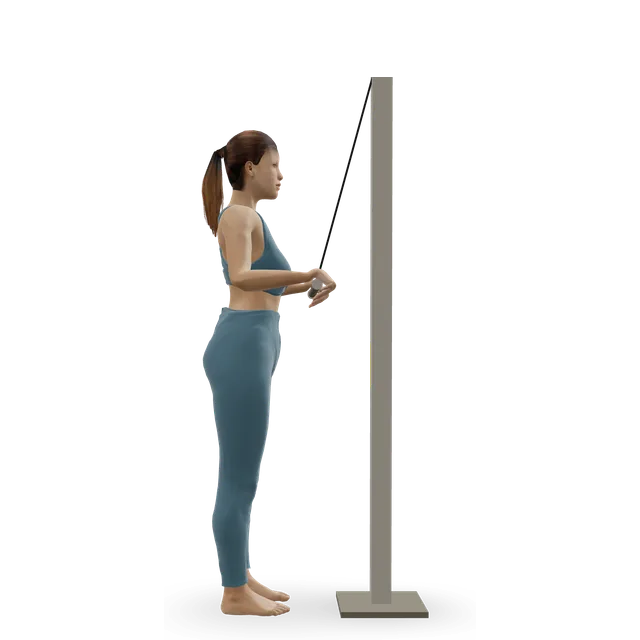
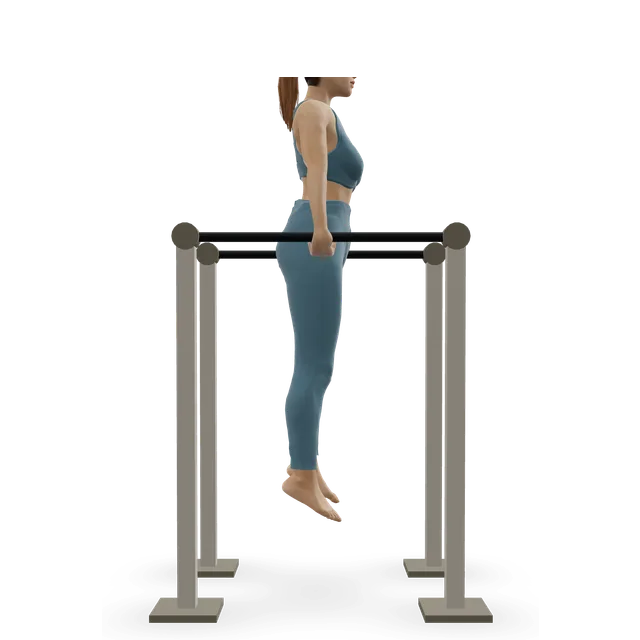
Pushdowns keep your arm at your side and suit most elbows; overhead extensions have the best growth evidence; dips load the triceps with your body weight. Our tricep extension and dips guides cover them. Use two or three of these across a week rather than one.

Source 7

Sets, reps and how often

Sets and reps

2 to 3 sets of 10 to 15, stopping 2 or 3 reps short: its move page's dose, from Catalyst's "sets of 10-20 reps". We found no dose from any study, the NSCA, the ACSM or ACE; the ACSM's general advice for beginners is loads you can lift 8 to 12 times, with multi-joint lifts before single-joint ones.

Sources 1, 29

How hard

Every set 2 or 3 reps short of failure, never to failure, because the bar ends over your throat (editorial); 3 or 4 short in your first two weeks. Going to failure added a trivial amount of growth at most across 15 studies, and people underestimate the reps they have left by about one.

Sources 30, 31

Rest

90 seconds to 2 minutes, as our plans give for compound lifts in sets of 8 to 12 (editorial for this lift). A review found a small growth benefit from resting more than about a minute.

Source 32

How often, and weekly sets

Once or twice a week, as one of your triceps moves. About 10 or more hard sets a week builds a muscle; count each JM press set as a triceps set (editorial: most of the lift is elbow straightening), and each set of bench presses, push-ups or dips as about half a set.

Sources 33, 34

Progressing

Add reps until every set reaches 15, then add the smallest plates you have. Adding reps and adding load both worked as progression in a trial of 43 trained people.

Source 35

What to expect

Triceps size rose about 10 to 20% over 10 to 12 weeks in the growth trials above, mostly in untrained people, and people vary widely: arm size changed from a 2% loss to a 59% gain in 585 adults on the same programme.

Sources 21, 7, 36

Common mistakes and how to fix them

Turning it into a close-grip bench

Your elbows drop to your ribs and the bar comes down to your lower chest. Keep your elbows up and let the bar travel towards your chin.

Turning it into a skull crusher

Your upper arms stay fixed and the bar heads for your forehead. Let your elbows travel towards your feet from about halfway down.

Elbows flaring straight out

Bring them back to about 45 degrees from your sides, pointing towards your feet.

Dropping into the bottom

Lower under control and stop when your forearms meet your upper arms; don't bounce.

A thumbless grip or bent-back wrists

Wrap your thumbs and stack your wrists over your elbows, as our bench press guide says.

Going heavy too soon

Learn the path with a light bar for a few weeks and let your elbows, not your muscles, set the weight.

Your elbows, wrists and shoulders

The elbow pain rule

Discomfort up to about 3 to 4 out of 10 is fine if it settles within an hour and your elbow is no worse the next morning; otherwise go lighter, not to nothing, as our elbow guides say.

NHS inform's elbow exercises keep pain within 0 to 5 out of 10 and no worse the morning after; the two agree in practice.

Source 37

Back-of-elbow pain

An ache where the triceps tendon meets the elbow, worse straightening against resistance, usually means too much load too soon. Leave the JM press out and follow our triceps tendinopathy guide, which brings skull crushers, overhead extensions and close-grip pressing back last. In case series, up to a third of people who tore the triceps tendon had back-of-elbow pain beforehand.

Sources 38, 9

Tingling in your ring and little fingers

Deep elbow bending squeezes the ulnar nerve at the inner elbow. Shorten the range or swap to pushdowns, as the move page advises, and see our ulnar nerve guide if it keeps coming back.

Wrists

No study has measured wrist loads under a bar in the JM press. Keep the bar low in your palm and your wrists straight; an EZ bar may feel better. Our wrist pain when lifting guide has more.

Shoulders

If the front or top of your shoulder pinches, widen your grip a little and see our shoulder pain when bench pressing guide. With a sore shoulder the NHS advises not to make up your own strenuous exercises or use heavy gym equipment; see a GP if shoulder pain is getting worse or hasn't improved after 2 weeks.

Sources 39, 25

Moves that go with it

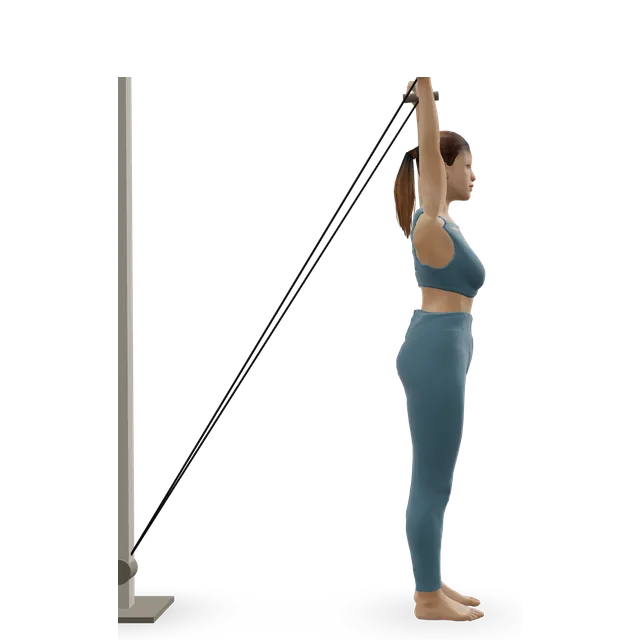
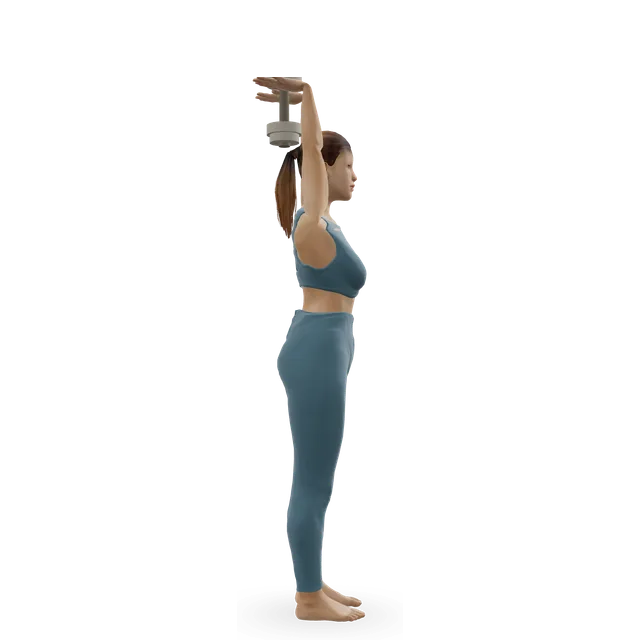
An overhead cable extension, 3 sets of 10 to 15, and pushdowns, 2 to 3 sets of 10 to 15 with the last set 0 to 2 reps short (our tricep workout); an overhead dumbbell extension, 2 sets of 10 to 12 (our dumbbell upper body workout); dips, 2 to 3 sets of 6 to 12 (our chest and triceps workout); band pull-aparts, 15 reps to warm up, and face pulls, 2 sets of 15 (our bench press strength workout). None of these has a dose on its own move page.

Workouts to follow

The tricep workout starts with a close-grip press, and the JM press is one of its options for that slot, at 2 to 3 sets of 10 to 15 with safety bars. The chest and triceps workout and the bench press strength workout use close-grip pressing, and push day B uses skull crushers.

Who should change it

Back-of-elbow pain

Leave the JM press out until skull crushers are comfortable again, following our triceps tendinopathy guide (editorial order).

Tingling in the ring and little fingers

Shorten the range or swap to pushdowns, which keep your elbow less bent.

Sore shoulders

A slightly wider grip, or pushdowns and an extension that don't hurt; our shoulder pain when bench pressing guide covers pressing.

Pregnancy

In later pregnancy, the NHS advises against lying flat on your back for more than a few minutes: use an incline bench, or a seated or standing triceps move. Strength training at a gym is fine if you did it before.

Source 40

High blood pressure

With controlled high blood pressure, the American Heart Association considers low- to moderate-intensity strength training with proper breathing safe: breathe out as you lift.

Source 41

After surgery

After a recent shoulder dislocation, or shoulder or elbow surgery, follow your surgical team's limits first.

After a dislocated shoulder, the NHS says recovery takes 6 to 12 weeks and up to 16 weeks for some sports.

Source 42

Warning signs

Stop and get medical help

If you get chest pain or pressure, feel faint or dizzy, are unusually breathless, or your heart races or beats irregularly during exercise, as our plans advise. The American Heart Association says these need immediate medical evaluation.

Source 41

Call 999 (911 in the US)

For chest pain that comes on suddenly and doesn't go away, feels tight or like squeezing, spreads to your arms, neck, jaw, stomach or back, or comes with sweating, feeling sick, light-headedness or breathlessness; arm pain that comes on suddenly with pressure, heaviness or squeezing across your chest; severe difficulty breathing, or a chest that feels tight or heavy; someone who faints while exercising; palpitations that don't go away, or come with chest pain, shortness of breath or feeling faint; or a headache that starts suddenly and is extremely painful, especially while lifting or straining. The NHS says a bleed on the brain may be more likely when lifting something heavy. Don't drive yourself to A&E.

Sources 43, 44, 45, 46, 47, 48, 49, 50, 51

A headache with effort

Ask for an urgent GP appointment or get help from NHS 111 for a headache that's triggered or made worse by coughing, sneezing, bending down or exercising.

Source 50

A pop at the back of the elbow

Go to an urgent treatment centre or A&E for a pop or snap at the back of the elbow during a press, then sudden pain, a gap you can feel at the back of the elbow, or weakness straightening the arm, especially overhead. Don't wait to see if it settles. Most triceps tendon tears come from pushing a heavy load, and anabolic steroids and steroid medicines are risk factors. In the US, go to urgent care or the emergency department.

Sources 9, 46, 52

Go to an urgent treatment centre or A&E

If you've injured your arm and heard a snapping noise or it has changed shape, or your arm tingles or feels numb after an injury.

Source 46

Get help from NHS 111

If your arm hurts when you exercise but the pain goes away when you rest; or for severe wrist pain, a snap, grinding or popping at the time of an injury, or a wrist you can't move or hold things with. In the US, contact your doctor or urgent care.

Sources 46, 53

See a GP

If elbow or arm pain hasn't gone after a few weeks, or wrist pain hasn't improved after 2 weeks of looking after it yourself. NHS inform advises avoiding sports or heavy lifting until you have less discomfort and good movement.

Sources 46, 54, 53

Back pain

Call 999 or go to A&E: loss of feeling or numbness around the genitals or bottom, new trouble peeing or controlling your bladder or bowels, changes in genital sensation during sex or problems with erections or orgasm, or pain, tingling, weakness or numbness in both legs. These are signs of cauda equina syndrome, which needs treating in hospital urgently. Don't drive yourself.

See a GP if pain spreading down a leg hasn't improved after a few weeks of home treatment, is getting worse or stops your normal activities. Sciatica on both sides, or weakness or numbness in both legs that's severe or getting worse, is a 999 call or a trip to A&E.

Sources 55, 56

Swollen muscles and dark urine

Very sore, swollen, tight muscles and dark urine after an unusually hard or high-rep session need medical help the same day: it could be rhabdomyolysis, as our elbow pain from pull-ups guide explains. Normal soreness peaks a day or two after a new exercise and fades.

A new lump or bulge in your groin or tummy

See a GP if you think you have a hernia, a bulge or lump that may get bigger when you strain and smaller when you lie down. Get help from NHS 111 if you have a hernia and pain in or around it, a bloated tummy, you feel or are sick, you're vomiting blood or your vomit looks like coffee grounds, you're constipated, you have a high temperature or feel hot, cold or shivery, or you've suddenly become confused. Call 999 or go to A&E for a femoral hernia (a small lump at the top of your thigh, in your groin) with very bad tummy pain, sickness, being unable to fart or poo, a high temperature or sudden confusion.

The NHS lists lifting heavy weights among the causes of a femoral hernia. After an inguinal hernia repair, avoid heavy lifting or strenuous activity for at least 4 to 6 weeks.

Sources 57, 58, 59

Before you start

Speak to your GP first if you haven't exercised for some time or have medical conditions or concerns, as the NHS advises. Get advice before hard or straining work if your blood pressure is uncontrolled (140/90 or higher at a clinic, or 135/85 at home), or you have heart disease or chest pain when you're active, a pacemaker or defibrillator, diabetic eye disease, glaucoma, a hernia, recent eye or tummy surgery, or you're pregnant, as our breathing guide lists.

With controlled high blood pressure, the American Heart Association considers low- to moderate-intensity strength training with proper breathing safe: breathe out as you lift.

Sources 60, 61, 45, 41
Myths

"The JM press is just a sloppy bench press"

It's a deliberate hybrid with its own path, the bar travelling towards your chin or throat as your elbows bend and move forward. Coaches treat drifting into a close-grip bench as the mistake, not the lift. No study has measured either.

Sources 1, 2

"The JM press is kinder to your elbows than skull crushers"Emerging evidence

Nobody has measured elbow loads in the JM press or compared it with skull crushers. In the bench press, narrower grips raised elbow loads, most with the elbows travelling out, and a coach writing for the inventor's own site says it can still put pressure on the elbows. Treat it as untested, with the nearest evidence pointing the other way.

Sources 5, 6

"The JM press hits the medial head"Emerging evidence

Or the long head, or the lateral head, depending on the page you read; none cites a study. Which head works hardest shifts with shoulder angle in unloaded tests, but the JM press hasn't been measured. Every press and extension works all three.

Sources 1, 11

"The JM press will break your bench plateau"Emerging evidence

No trial has tested it. Lying extensions alone didn't raise the bench press maximum in 43 young men while bench pressing did. Use it as triceps work alongside benching, not instead of it.

Source 21

"Go heavy: it's a strength lift"

Its own coaching sources start light for weeks and warn that muscles get stronger faster than tendons adapt, and most triceps tendon tears come from pushing a heavy load. Sets of 10 to 15 are its move page's dose.

Sources 6, 2, 9

"You need the JM press for big triceps"Strong evidence

Every press and extension trains the triceps. The best growth evidence is for adding an overhead extension, and light and heavy loads both build muscle when sets are hard. Pick the moves your elbows like and do enough hard sets.

Sources 7, 62, 33

Questions people ask

How do you do a JM press?

Lie on a bench with your hands about shoulder-width apart and the bar over your upper chest. Lower it as you would a skull crusher, then let your elbows travel towards your feet so the bar drifts down towards your chin or throat, stop when your forearms meet your upper arms, and press back up. Set safety bars first.

What muscles does the JM press work?

Mainly the triceps, with the chest and front shoulders helping. Its parent lifts, the close-grip bench press and the lying triceps extension, drew similar triceps activity in one study. Nobody has measured the JM press itself.

Which triceps head does the JM press work?

All three; which one most is untested. Coaching sources say the medial, long or lateral head, and none cites a study. For the long head, an overhead extension has the best growth evidence.

JM press vs skull crusher: what's the difference?

In a skull crusher your upper arms stay still and the bar comes to your forehead. In a JM press your elbows travel towards your feet and the bar comes to your chin or throat, so it's part press. Neither has been shown to build more muscle, and the JM press isn't proven gentler on the elbows.

Is the JM press just a close-grip bench press?

No. A close-grip press keeps your elbows by your ribs and lowers the bar to your lower chest; the JM press keeps your elbows up and folds them much further, bringing the bar towards your throat. If your elbows drop and the bar heads for your chest, you've drifted into a close-grip press.

Is the JM press bad for your elbows?

Nobody has measured it. Narrow-grip pressing raised elbow loads in the one study that measured them, so build up slowly, stop 2 or 3 reps short and keep discomfort within our elbow rule. With pain at the back of the elbow, leave it out and see our triceps tendinopathy guide.

Should my elbows be tucked or flared in a JM press?

In between: about 45 degrees from your sides, pointing towards your feet, which is what the inventor's method and our move page describe. Flaring them straight out raised elbow loads in a bench press study.

How do you do a JM press on a Smith machine?

The same steps, with the bar on its track and the stops set just below the lowest point of the bar's path. The fixed path makes it easier to learn; expect to lift a little less than with a free bar.

Can you do a JM press with dumbbells?

Yes: palms facing each other or facing your feet, lower the dumbbells towards your shoulders as your elbows travel forward, then press back up. Expect lighter weights, because dumbbell pressing cost 14 to 17% of the load and less triceps activity than a barbell in one study.

How many sets and reps of JM press should I do?

2 to 3 sets of 10 to 15, stopping 2 or 3 reps short, with 90 seconds to 2 minutes' rest, once or twice a week. That's our move page's dose, taken from a coaching library; no study has tested a dose.

How heavy should a JM press be?

Light while you learn: an empty bar or a light EZ bar for the first 2 to 3 weeks. After that, a weight you can lift 10 to 15 times with 2 or 3 reps to spare. There are no JM press standards or bench ratios worth following.

Will the JM press increase my bench press?

It may help through stronger triceps, but no trial has tested it. In one trial, lying extensions alone didn't raise the bench while bench pressing did, so keep benching and add the JM press as triceps work.

Sources

  1. Catalyst Athletics · JM press (exercise library)
  2. elitefts · How to perform the JM press: a step-by-step guide from the inventor (coaching article, 2025)
  3. Puluka 2026 · JM press against skull crusher movement analysis in one man (student course poster, not peer reviewed, Monmouth University)
  4. Boehler 2011 · Triceps muscle activity in eight exercises in 15 women (ACE-funded thesis, not peer reviewed, ACE Certified News)
  5. Mausehund 2022 · Elbow and shoulder loads in four bench press grips, in 35 strength-trained adults (biomechanics study, J Strength Cond Res)
  6. Schillero 2015 · 3 JM press variations to build your bench lockout (coaching article, elitefts)
  7. Maeo 2023 · Triceps extensions overhead against with the arm at the side for 12 weeks in 21 adults, measured by MRI (within-person trial, Eur J Sport Sci)
  8. ACE · Lying barbell triceps extensions (exercise library, rated intermediate, American Council on Exercise)
  9. AAOS OrthoInfo · Triceps tendon tear at the elbow (patient information, American Academy of Orthopaedic Surgeons)
  10. Landin 2018 · Functions of the triceps in humans (review, J Clin Med Res)
  11. Kholinne 2018 · The three heads of the triceps at five arm angles in 10 adults (modelling and EMG study, Acta Orthop Traumatol Turc)
  12. Mausehund 2023 · Differences between women and men in bench press joint loads and muscle activity (biomechanics study, J Strength Cond Res)
  13. Vigotsky 2022 · Muscle activity measured in one session isn't a validated predictor of muscle growth (review, Sports Med)
  14. Saeterbakken 2021 · Grip width, strength and muscle activity in the bench press, in 28 novice and trained men (EMG and strength study, IJERPH)
  15. Saeterbakken 2017 · Narrow, medium and wide bench press grips in 12 competitive bench pressers (EMG and strength study, J Hum Kinet)
  16. Larsen 2020 · Wide, medium and narrow grips at a 1-rep max bench press, in 14 trained men (biomechanics study, Front Sports Act Living)
  17. Tanimoto 2023 · Sideways bar force and muscle activity in wide and narrow bench press grips, in 14 men (lab study, Sports)
  18. Lehman 2005 · Grip width and forearm rotation in the flat bench press, in 12 men (EMG study, J Strength Cond Res)
  19. Lockie 2017 · The close-grip against the traditional bench press at a 1-rep max, in 27 trained people (lab study, Sports)
  20. Huang 2014 · Elbow joint loads as a bench press set reaches fatigue, in 18 men (lab study, J Athl Train)
  21. Brandão 2020 · Bench press, lying triceps extension or both: chest and triceps growth in 43 young men (randomised trial, J Strength Cond Res)
  22. Wakahara 2013 · Where the triceps grew after 12 weeks of a one-arm dumbbell press, in 24 young men (training study, MSSE)
  23. Kikuchi 2017 · Push-ups against a light bench press for 8 weeks in 18 men (randomised trial, J Exerc Sci Fit)
  24. Stasinaki 2018 · Pushdowns against overhead extensions for 6 weeks in 9 untrained women (within-person trial, J Funct Morphol Kinesiol)
  25. Noteboom 2024 · Bench press technique and modelled shoulder joint loads, with a 16 kg bar (computer modelling study, Front Physiol)
  26. Saeterbakken 2011 · Smith machine, barbell and dumbbell chest presses compared in 12 trained men (EMG and strength study, J Sports Sci)
  27. Marcos-Frutos 2025 · Free-weight against Smith machine squat and bench press for 8 weeks in 37 students (randomised trial, Int J Sports Physiol Perform)
  28. Farias 2017 · Dumbbell, barbell and machine bench presses and triceps extensions, in 19 trained men (EMG and strength study, J Strength Cond Res)
  29. ACSM 2009 · Progression models in resistance training for healthy adults (position stand, MSSE)
  30. Halperin 2022 · How accurately people predict the reps they have left: 12 studies, 414 people (scoping review and meta-analysis, Sports Med)
  31. Refalo 2023 · Training to failure against stopping short, for muscle growth: 15 studies (meta-analysis, Sports Med)
  32. Singer 2024 · Rest between sets and muscle growth: 9 studies (Bayesian meta-analysis, Front Sports Act Living)
  33. Currier 2026 · Resistance training for muscle function, size and performance in healthy adults: an overview of 137 reviews (ACSM position stand, MSSE)
  34. Pelland 2026 · Weekly sets and training frequency against muscle growth and strength: 67 studies, 2,058 people (meta-regression, Sports Med)
  35. Plotkin 2022 · Adding load or adding reps as progression, 8 weeks in 43 trained adults (randomised trial, PeerJ)
  36. Hubal 2005 · Variation in arm muscle and strength gains after 12 weeks of training in 585 adults (training study, MSSE)
  37. NHS inform · Exercises for elbow problems (NHS Scotland)
  38. Shuttlewood 2017 · Injuries of the triceps tendon at the elbow: 47 papers (systematic review, World J Orthop)
  39. NHS · Shoulder pain (past its review date: reviewed May 2023, review due May 2026)
  40. NHS · Exercise in pregnancy
  41. Paluch 2024 · Resistance exercise training with and without cardiovascular disease: 2023 update (American Heart Association scientific statement, Circulation)
  42. NHS · Dislocated shoulder
  43. NHS · Chest pain (past its review date: reviewed August 2023, review due August 2026)
  44. NHS · Heart attack
  45. NHS · High blood pressure
  46. NHS · Elbow and arm pain
  47. NHS · Shortness of breath
  48. NHS · Fainting
  49. NHS · Heart palpitations
  50. NHS · Headaches
  51. NHS · Subarachnoid haemorrhage
  52. NHS · Tendonitis (past its review date: reviewed June 2023, review due June 2026)
  53. NHS · Wrist pain
  54. NHS inform · Elbow problems (NHS Scotland)
  55. NHS · Back pain
  56. NHS · Sciatica
  57. NHS · Hernia
  58. NHS · Femoral hernia
  59. NHS · Inguinal hernia repair
  60. NHS · Physical activity guidelines for adults aged 19 to 64
  61. NHS · Physical activity guidelines for older adults
  62. Lopez 2021 · Light, moderate and heavy loads for muscle growth and strength: 28 studies, 747 adults (network meta-analysis, MSSE)

Exercise education, not a personal prescription, and clinical review of these guides is pending. Check with a GP before starting hard training if you have a heart condition, chest pain, dizziness or breathlessness when active, and stop for sharp or increasing pain. Health disclaimer.