Training guide

How to use a shoulder press machine: seat and handles, your shoulders and back, machine against free weights, and how many

A shoulder press machine, or machine shoulder press, is a seated overhead press on a guided path: you sit with your back on the pad and press two handles up from shoulder level until your arms are straight. Set the seat so the handles start level with your shoulders or just above, keep your back on the pad, and press without locking your elbows hard. Do 2 to 3 sets of 8 to 12.

You'll lift more on the machine than with a barbell, and a barbell works the shoulder muscles a little harder in each rep, but in training trials machines and free weights built strength and muscle alike. The one trial that measured a machine shoulder press was in novice men, so that part rests on a single study.

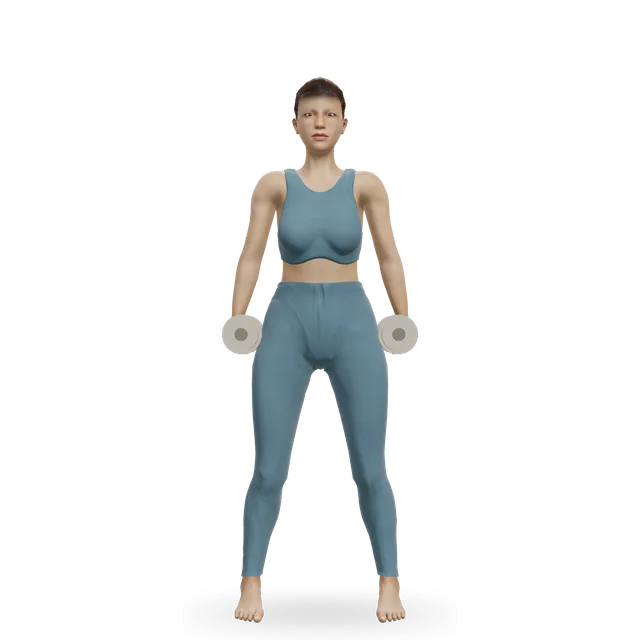
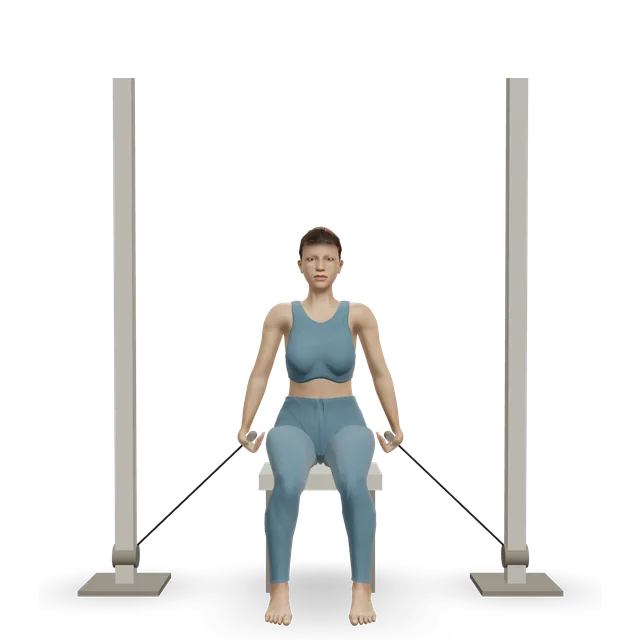
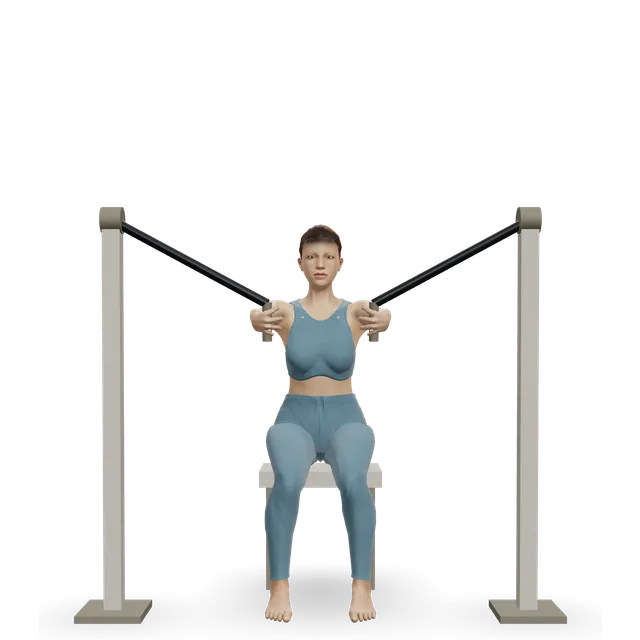
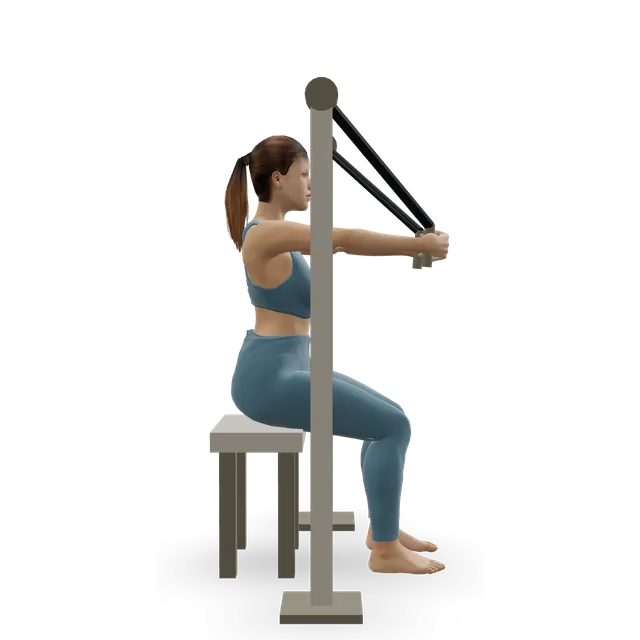
This guide shows the set-up step by step on the 3D figure, which handles to use, what it works, how to look after your shoulders and lower back, how much weight and how many, and a machine shoulder workout to follow.

The short version

Set it up before you load it

Seat so the handles start level with your shoulders or just above them, back and head on the pad, feet flat, a full grip with straight wrists. Press up until your arms are straight but not locked, then lower slowly to shoulder level. The American Council on Exercise (ACE) rates the machine press a beginner exercise. No study has tested seat height: this is coaching practice.

Source 1

It works the front and side of your shoulders

The front deltoid and triceps do most of the pressing, with the side deltoid and upper chest helping. Your back is supported, so your trunk does very little: sitting cut abdominal activity in a dumbbell press by about 81% against standing in 15 men.

Sources 2, 3, 4

Machines build strength and muscle like free weights

Across 13 studies of 1,016 adults, machines and free weights raised strength and muscle alike head to head. In the one trial with a machine shoulder press outcome, 36 novice men, the machine group's dumbbell shoulder press rose as much as the free-weight group's. That's one small trial in beginners.

Sources 5, 6, 7

But your machine number isn't your dumbbell number

Eight bodybuilders pressed 95 kg on the machine and 82 kg with a barbell, and in 31 trained men nothing predicted the machine shoulder press from its free-weight version. Strength is specific: if you want a bigger dumbbell or barbell press, practise those too.

Sources 2, 8

Keep your shoulders comfortable

In gym-goers, impingement signs went with raises and upright rows above shoulder height, not pressing, and pressing behind the neck went with signs of a loose shoulder. Press in front of your head and keep pain to about 5 out of 10, settled by your next session.

Sources 9, 10

How many

2 to 3 sets of 8 to 12, stopping 2 or 3 reps short, with 90 seconds to 2 minutes' rest, once or twice a week alongside your other shoulder work: our editorial starting point, inside the American Heart Association's 1 to 3 sets of 8 to 12.

Source 11

How to use a shoulder press machine, step by step

From ACE's machine seated shoulder press (handles "level with your shoulders or just higher", elbows "slightly forward", "fully extended, but not locked", "avoid arching your back"), our move pages and a hospital handout's rule that you should always be able to see your hands. The 2-second lowering is editorial. Your shoulder blades turn up as you press, which is normal.

  1. Set the seat so the handles start level with your shoulders or just above them, and set the pin (on a plate-loaded machine, load both sides evenly).
  2. Sit tall with your back and head against the pad and your feet flat; take the handles with a full grip, thumbs round them, wrists straight.
  3. Let your elbows sit a little in front of your body rather than flared straight out to the sides, and settle your shoulder blades against the pad.
  4. Brace gently and breathe out as you press the handles up until your arms are straight but not locked, without arching your back away from the pad.
  5. Pause, then lower slowly, over about 2 seconds, back to shoulder level, stopping just before the weight touches down.
  6. Keep your head still and your hands in view in front of you; finish the set 2 or 3 reps short of failure, then return the handles to the rest.

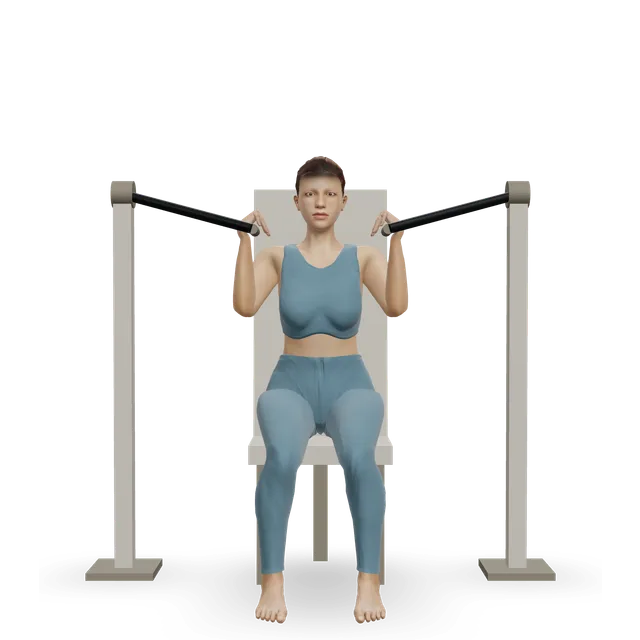
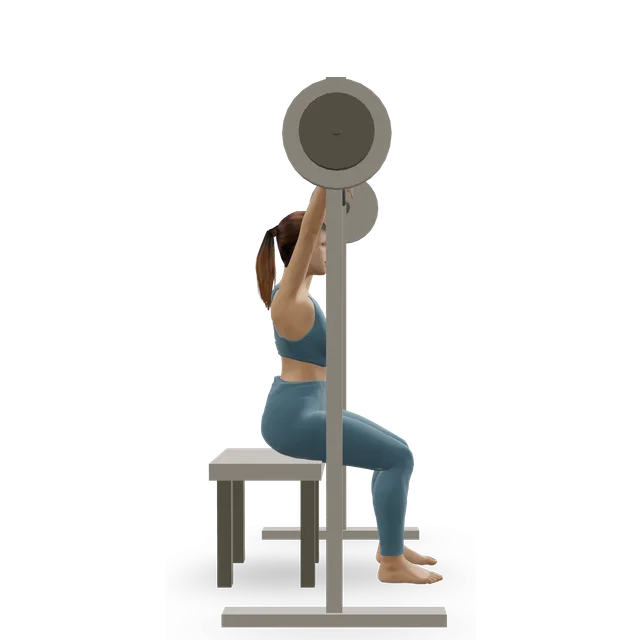
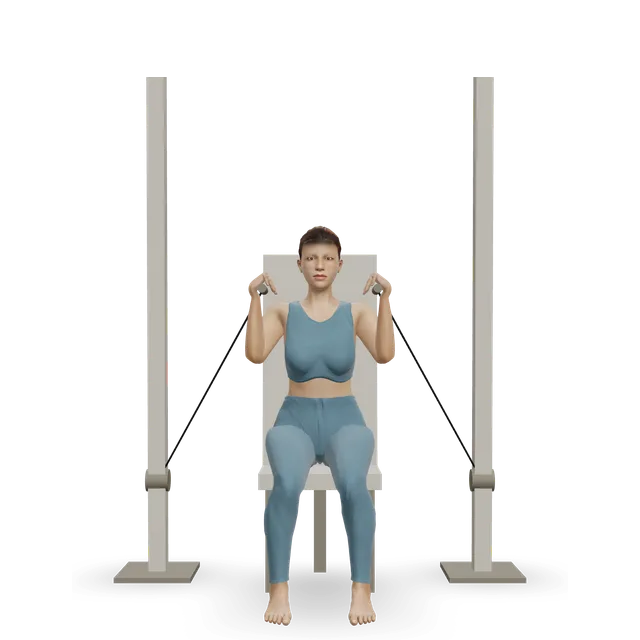
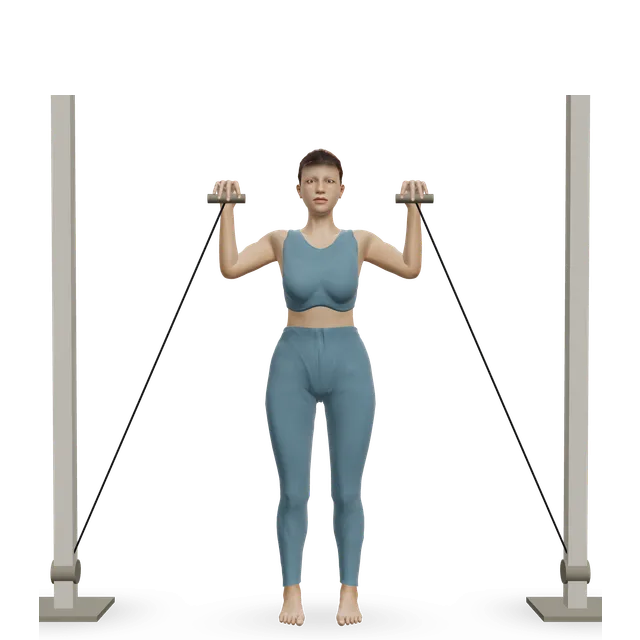
Loading the 3D figure…

Gets into position, then repeats the movement. Technical checks passed; qualified exercise review is pending.

The movement on the figure: Machine shoulder press

What it is, and what it works

The machine

A seated overhead press on a guided path. Pin-loaded machines use a weight stack; plate-loaded lever machines take plates on each arm, and some arms move separately. Many have two pairs of handles: forward-facing (neutral, palms facing each other) and wide (palms forward). Many machines move in an arc: in one study's machine, the handles rotated around an axis and ended much closer together than a barbell would.

Source 2

What it works

In 13 trained men pressing seated, the press worked the front deltoid hardest of the exercises tested (33% of a maximal test effort) and the side deltoid about as much as a lateral raise (28% against 30%), with the rear deltoid at 11%. The triceps straighten your elbows and the upper trapezius helps. Your shoulder blades turn upward and tilt back as your arms rise, which is what lets your arms get overhead.

Sources 3, 12, 13

What the machine changes

The steadier the set-up, the more you lift and the less the shoulder muscles work per kilogram: standing dumbbells were about 7% lighter than a standing barbell and 10% lighter than seated dumbbells in 15 men, and wobblier set-ups mainly lowered the load in 30 trained people. A cable press drew more biceps and trunk activity than a selectorised machine press. Seated and supported, your trunk does little.

Sources 14, 15, 16, 4

How people differ

Very short or tall people may not get the handles to shoulder height on every machine: write down the setting that works. Stack numbers depend on each machine's levers, and a plate-loaded machine's empty arms weigh something too, so compare yourself only on the same machine. In 31 untrained adults, the machine press averaged 42.7 kg in men and 16.6 kg in women: there's no standard to hit.

Sources 8, 17

Seat height, handles and grip

Seat height: handles at or just above your shoulders

ACE: "Adjust the seat height so that the handles are level with your shoulders or just higher than your shoulders." A manufacturer's manual says the same. We found no study that varied seat or handle height, so this is coaching practice. If the bottom of the rep pinches, raise the seat a notch and note what works.

Sources 1, 18

Which handlesEmerging evidence

No study has compared the neutral and wide handles in a press. In the one machine study, the front machine press used the neutral handles, but grip and front-or-behind position were mixed together. Many people find the neutral handles easier on the shoulders: use them if yours prefer them (our suggestion).

Source 2

Elbows a little forward

ACE puts the elbows "in the 4 and 8 o'clock position", slightly in front of your body. In 11 trained men pressing a barbell, a narrower grip let them lift more and lowered the turning force at the shoulder, while a wider grip lowered it at the elbow.

Sources 1, 19

A close-grip option

ACE's close-grip machine press, elbows pointing forward, "shifts more of the load into the triceps and away from the shoulders", and ACE suggests it for people who find the usual press uncomfortable. That's untested advice.

Source 20

Your back on the pad

ACE: "do not press your low back into the backrest. Maintain the natural arch in your low back and avoid arching your back throughout the exercise." If you can only finish a rep by arching away from the pad, the weight is too heavy.

Source 1

Machine or free weights? What the evidence says

Against a barbell, in one pressEmerging evidence

In 8 competitive bodybuilders, the front machine press allowed a heavier maximum than the front barbell press (95 against 82 kg), while the barbell drew more side and rear deltoid activity and the front deltoid worked about the same. The authors warn their sample is small, and muscle activity over a few reps doesn't show what a muscle will build.

Sources 2, 21

Focusing on the muscleEmerging evidence

In 31 untrained adults on a machine press, thinking about the deltoid raised its activity from 58% to 66% of a maximal test effort. A cue can help you feel it; it's not been tested for growth.

Source 17

Machines and free weights build strength and muscle alikeStrong evidence

Across 13 studies of 1,016 adults, training for 6 weeks or more, machines and free weights raised strength and muscle alike when compared head to head; each raised strength most on its own kind of test. A second meta-analysis agreed, and a 2026 overview of 137 reviews found equipment type didn't consistently change results. The pooled studies tested chest presses, not shoulder presses.

Sources 5, 6, 22

The one trial with a machine shoulder pressEmerging evidence

36 novice men trained twice a week for 10 weeks, 3 sets at their 12-rep maximum, on machines, free weights or machines then free weights. The machine shoulder press rose from about 35 to 48 kg with machines and 37 to 50 kg with free weights, and the standing dumbbell press from about 12 to 16 kg in both, with no difference between groups. Nobody lost anything switching from machines to free weights. It's one small trial in beginners, and muscle was measured by tape only.

Source 7

In trained men tooEmerging evidence

38 trained men did the squat, bench press, a prone row and the shoulder press on barbells or machines for 8 weeks: strength changes were within 1.8% and muscle growth within 2.0% of each other, with no more joint discomfort, though each group gained most on its own equipment. We read only the summary, so the shoulder press's own numbers aren't known. In 46 young adults whose machine programme included a shoulder press, gains matched free weights over 8 weeks.

Sources 23, 24, 25

Your machine number doesn't transferEmerging evidence

In 31 trained men, maximums were higher on plate-loaded machines for every exercise, and no measure predicted the machine shoulder press from its free-weight version. The same share of your maximum moved faster on free weights than on a machine. Across 43 studies, strength rose about twice as much in the trained lift as in an untrained test.

Sources 8, 26, 27

A Smith machine pressEmerging evidence

In 24 trained men, 10 weeks of seated Smith machine presses, 3 sets at 65 to 90% of maximum twice a week, raised their maximum by about 17.5%. There was no comparison group.

Source 28

Full rangeEmerging evidence

Pressing to straight arms drew more activity in every muscle measured than stopping with the elbows bent, in 6 lifters. Press all the way up, without snapping your elbows locked.

Source 29

Plate-loaded, Smith and cable versions

The plate-loaded machine at its move page's dose, 2 to 3 sets of 8 to 12 stopping with 2 or 3 reps in reserve; the Smith machine press at 2 to 3 sets of 8 to 12 (our Smith machine guide); the seated cable press at the same dose (our editorial starting point); the standing cable press at 1 lighter set, then 3 sets of 8 to 12 (our cable shoulder workout). Neutral-handle and one-arm machine presses have no separate 3D demo: the machine press shows the path.

The press ladder

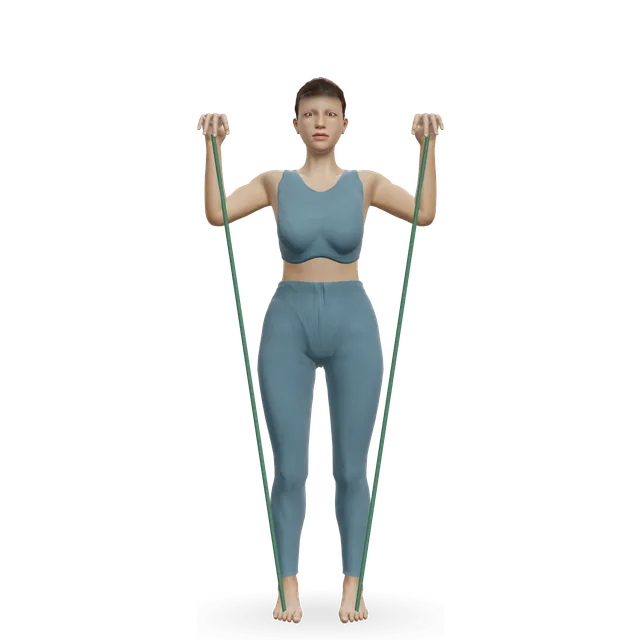
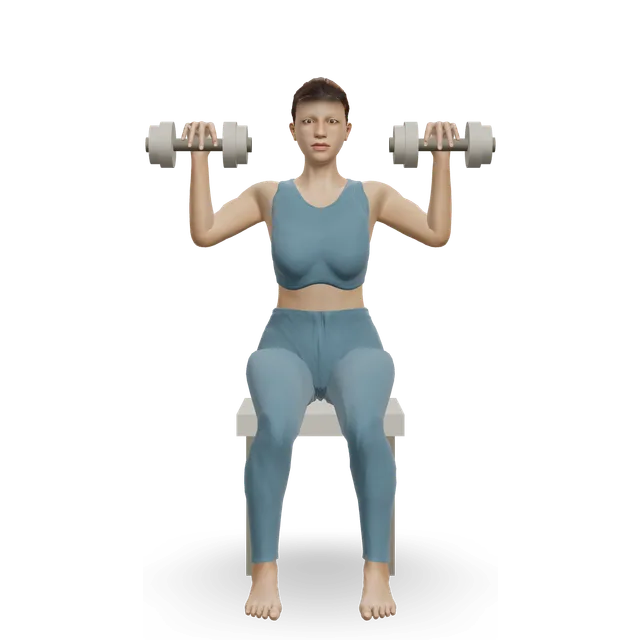
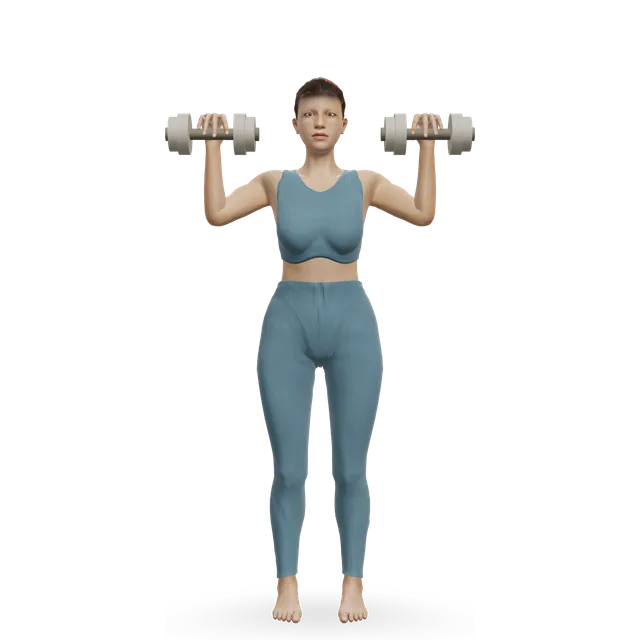
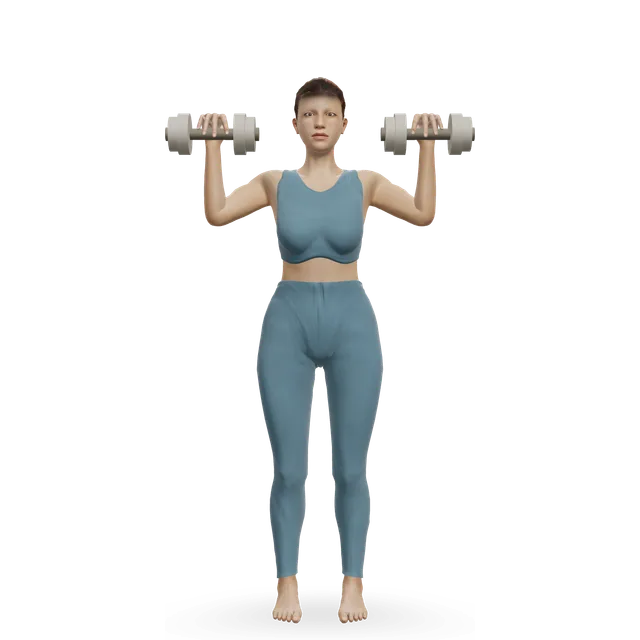
Our overhead press guide's order: check your overhead reach with the wall angel; a band or machine press at 3 sets of 10 to 15, stopping 2 or 3 reps short; the seated dumbbell press at 3 sets of 8 to 12; the standing dumbbell press at its move page's dose; then the barbell, the empty bar for 3 sets of 5.

How much weight and how many

Your first weight

Pick a weight you think you could lift 10 to 12 times, do 8, and keep 3 or 4 in the tank for your first two weeks, as our plans advise. 2 sets is plenty.

Sets and reps

2 to 3 sets of 8 to 12, stopping 2 or 3 reps short: our editorial starting point, inside the American Heart Association's 1 to 3 sets of 8 to 12. Your very first loaded press: 3 sets of 10 to 15, as our overhead press guide's ladder starts. The one trial used 3 sets at a 12-rep maximum, twice a week.

Sources 11, 7

How hard

You don't need failure: it added at most a trivial amount of muscle across 15 studies, and people misjudge the reps they have left by about one. The machine lets you push hard safely, but 2 or 3 reps short is enough.

Sources 30, 31

Rest

About 90 seconds to 2 minutes, as our plans suggest for sets of 8 to 12. Longer rests tended to help growth only slightly across 9 studies.

Source 32

How often

Once or twice a week, counted with your other shoulder work: about 10 or more hard sets a week built more muscle across reviews, and lateral raises do more for the side of the shoulder than any press.

Source 22

Moving up

When every set reaches 12, add the next pin and go back to 8. Machine steps can be big for the shoulders: use an add-on weight or a half-step if your machine has one.

Common mistakes

The seat too low or too high

Too low and every rep starts in a deep stretch; too high and you're doing half reps. Set the handles at or just above shoulder level before you load it.

Arching away from the pad

It turns the press into an incline press and loads your lower back. Lower the weight and keep your back on the pad.

Elbows flared straight out

Keep them a little in front of your body, as ACE describes.

Snapping your elbows locked, or letting the stack crash

Straight but not locked at the top, under control at the bottom.

Holding your breath through hard sets

Breathe out as you press, especially with high blood pressure.

Comparing numbers

Between machines, or with dumbbells. Compare yourself on the same machine.

Pressing behind your head

Some machines allow it. Press in front: behind-the-neck pressing went with signs of a loose shoulder in weight trainers.

Your shoulders

The shoulder rule

Keep shoulder pain to about 5 out of 10 or less during the exercise, back to its usual level by your next session, as our shoulder guides advise. A sharp pinch means lower, lighter or stop.

Is a machine safer?Emerging evidence

The American Heart Association says machines are likely safer than free weights for people with joint or muscle limitations, advanced arthritis, severe osteoporosis, nerve damage or a past stroke. In US emergency departments, 90% of weight-training injuries involved free weights, but older lifters had a larger share of theirs on machines (18% against 9%), and nobody counted how often each was used. In a survey of 1,387 gym-goers, machine exercises were linked with the least reported pain. None of this shows a machine can't hurt: it sets the path, not the range or the load.

Sources 11, 33, 34

Pressing and impingementMixed evidence

Up to 36% of reported weight-training injuries are at the shoulder. In 46 weight trainers, signs of impingement (a pinching pain as the arm rises) went with lateral raises and upright rows above shoulder height; the study's summary doesn't single out pressing, and strengthening the muscles that turn the arm out went with fewer signs.

Sources 9, 35, 36

Behind the neckEmerging evidence

In 123 weight trainers, behind-the-neck presses and pulldowns went with signs of a loose shoulder at the front. Press in front of your head.

Source 10

The space at the top of the shoulderEmerging evidence

The gap under the shoulder's bony roof narrowed from about 7 mm with the arm raised 30 degrees to about 4 mm at 120 degrees in 12 volunteers, and your shoulder blade turns up to make room as you press. That's why a press that pinches near the top needs a shorter range, a lighter weight or a different handle, rather than pushing through.

Sources 37, 13

A sore shoulder

Our shoulder pain when doing overhead presses guide brings pressing back in steps: a band press, then a landmine press, then dumbbells with the palms facing in. If you use the machine, go light, use the neutral handles, start with the handles at or just above your shoulders and stop short of the painful point. A hospital handout lists the shoulder press machine in a usually safe programme and says you must always be able to see your hands looking straight ahead. While it hurts, the NHS says don't make up your own strenuous exercises or use heavy gym equipment, but don't stop using your shoulder completely.

Sources 38, 39, 40

A pop in the chest or arm

Same day (NHS 111 or an urgent treatment centre): a pop or tearing at the front of the armpit or chest during a lift, a dip or a tackle, followed by bruising into the chest or upper arm, a change in the shape of the chest or armpit (a thinner or lost armpit fold, or a chest or nipple that looks uneven), or weakness pushing. Don't wait for it to settle: it can be a torn pec tendon. In the US, go to urgent care.

Your lower back and your breathing

Seated and supportedEmerging evidence

Sitting with back support cut abdominal activity by about 81% against standing in a dumbbell press, with lower-back muscle activity unchanged. We found no study of lower-back load in a machine press. Keep your back on the pad without flattening it hard, as ACE says, and stop the set when you start to arch.

Sources 4, 1

Back pain that's worse arching back

This includes spinal stenosis and spondylolisthesis. Our overhead press guide's swap is to press seated with your back supported, which is what the machine does; keep your ribs down and stop short of arching.

Blood pressure climbs in hard, breath-held setsStrong evidence

Blood pressure rose to extreme levels in bodybuilders lifting to failure, overhead presses included. A brief breath-hold becomes hard to avoid above about 80% of maximum effort, and breathing out slowly lowered the peak in a heavy leg press (198/175 against 311/284 mmHg). One-arm military presses at 70% peaked at 261 mmHg systolic in 17 healthy older men, similar to stair climbing. With high blood pressure, breathe out on each press, use weights you could lift 10 to 15 times and leave maximal lifts until you've had advice, as our overhead press guide says.

Sources 41, 42, 43, 44

Holding your breathEmerging evidence

Holding your breath raises the pressure in your tummy, which may help you brace, but its health risks during lifting "remain unconfirmed". Breathing out through the press is the safer default for most people.

Source 45

Moves that go with it

Lateral raises at 2 or 3 sets of 12 to 20 (our lateral raise guide), or the seated cable raise at 2 sets of 15 to 20 (our full-body machine workout); face pulls at 3 sets of 12 to 15 and the reverse fly machine at 2 to 3 sets of 12 to 20 (our back and biceps workout) for the back of the shoulder; band external rotations at 2 sets of 12 to 15 at the end of a pressing session (our overhead press guide's editorial dose); and a pull, such as the machine row at 3 sets of 12 to 15 (our full-body machine workout).

Workouts to follow

The machine shoulder workout builds a whole shoulder session on machines: the shoulder press machine, a seated cable lateral raise, the reverse fly machine and rotator cuff work. The full-body machine workout uses the machine press inside a full-body session; the cable and dumbbell shoulder workouts and the overhead press technique workout cover the free-weight side.

Plans that use it

The machine press comes round in these plans through the full-body machine workout.

Who should change it, and warning signs

Stop and get medical help

If you get chest pain or pressure, feel faint or dizzy, are unusually breathless, or your heart races or beats irregularly during exercise, as our plans advise. The American Heart Association says these need immediate medical evaluation.

Source 11

Call 999 (911 in the US)

For chest pain that feels tight, heavy or squeezing, or spreads to your arms, neck, jaw or back; a sudden, extremely painful headache, especially while straining; someone who faints while exercising; or palpitations that don't go away, or come with chest pain, breathlessness or feeling faint. Don't drive yourself to A&E.

Sources 46, 47, 48, 49, 50, 51

A headache with effort

Ask for an urgent GP appointment or get help from NHS 111 for a headache that's triggered or made worse by coughing, sneezing, bending down or exercising.

Source 48

Your shoulder

Ask for an urgent GP appointment or get help from NHS 111 for sudden or very bad shoulder pain, an arm you can't move, a shoulder that has changed shape or is badly swollen, pins and needles that don't go away, no feeling in your arm or shoulder, an arm or shoulder that's hot or cold to touch, pain after an injury or a fall, severe pain in both shoulders, or feeling feverish or unwell. Go to A&E if, after an injury, you can't move your arm or your shoulder looks out of place or has changed shape. See a GP if shoulder pain is getting worse or hasn't improved after 2 weeks.

Sources 39, 52

A pop at the elbow

A pop or snap with sudden pain at the front of the elbow, especially with bruising, a gap at the front of the elbow or a bulge in the upper arm, can be a torn biceps tendon. Go to an urgent treatment centre or A&E (in the US, urgent care) the same day, and don't wait for it to settle, as our biceps guides say.

A snap at the back of the elbow with sudden pain and weakness straightening the arm needs an urgent treatment centre or A&E.

Source 53

Your lower back

Call 999 or go to A&E: loss of feeling or numbness around the genitals or bottom, new trouble peeing or controlling your bladder or bowels, changes in genital sensation during sex or problems with erections or orgasm, or pain, tingling, weakness or numbness in both legs. These are signs of cauda equina syndrome, which needs treating in hospital urgently. Don't drive yourself.

Call 999 or go to A&E: back pain with chest pain, or back pain that started after a serious accident, such as a car crash.

See a GP if pain spreading down a leg hasn't improved after a few weeks of home treatment, is getting worse or stops your normal activities. Sciatica on both sides, or weakness or numbness in both legs that's severe or getting worse, is a 999 call or a trip to A&E.

Aim for discomfort you'd call mild to moderate, no more than about 5 out of 10. It should settle within an hour or so, and your back should be no worse the next morning, as our back pain guides say. Pain, pins and needles or numbness spreading down a leg are the exception: stop, and see our sciatica guide.

Sources 54, 55

Your neck

Neck pain, or pain or tingling down the arm: no behind-the-neck pressing, as our overhead press guide says. See a GP if neck pain comes with pins and needles or a cold arm, or hasn't gone after a few weeks.

Source 56

A hernia

See a GP if you think you have a hernia, a bulge or lump that may get bigger when you strain and smaller when you lie down. Get help from NHS 111 if you have a hernia and pain in or around it, a bloated tummy, you feel or are sick, you're vomiting blood or your vomit looks like coffee grounds, you're constipated, you have a high temperature or feel hot, cold or shivery, or you've suddenly become confused. Call 999 or go to A&E for a femoral hernia (a small lump at the top of your thigh, in your groin) with very bad tummy pain, sickness, being unable to fart or poo, a high temperature or sudden confusion.

The NHS lists lifting heavy weights among the causes of a femoral hernia. After an inguinal hernia repair, avoid heavy lifting or strenuous activity for at least 4 to 6 weeks.

Sources 57, 58, 59

After heart, lung or breast surgery, or a dislocation

After heart surgery through the breastbone, or a heart or lung transplant, follow your surgeon's advice before pushing, pulling or lifting with your arms.

After breast cancer surgery or reconstruction, follow your surgical team's advice on when you can lift your arm above shoulder height, or push, pull or lift with it.

After a recent shoulder dislocation, or shoulder or elbow surgery, follow your surgical team's limits first.

Pregnancy

The NHS says strength training at a gym is fine if you already do it. Follow our pregnancy guide, and breathe out on the effort rather than holding your breath, as our overhead press guide says.

Source 60

Before you start

Speak to your GP first if you haven't exercised for some time or have medical conditions or concerns, as the NHS advises. Get advice before hard or straining work if your blood pressure is uncontrolled (140/90 or higher at a clinic, or 135/85 at home), or you have heart disease or chest pain when you're active, a pacemaker or defibrillator, diabetic eye disease, glaucoma, a hernia, recent eye or tummy surgery, or you're pregnant, as our breathing guide lists.

With controlled high blood pressure, the American Heart Association considers low- to moderate-intensity strength training with proper breathing safe. Breathe out as you lift, as our breathing guide advises.

With a pacemaker or defibrillator, the American Heart Association asks you to check with your doctor before upper-body strength training, because repeated arm movements can damage or dislodge the leads.

Sources 61, 62, 11

Sore, or hurt?

Muscle soreness for a day or two after a new or harder session is common and fades. Sharp pain, or pain that builds during a set or lingers into the next day, isn't: swap to an easier version, and see a clinician if it persists, as our plans advise. The NHS says to stop exercising straight away if you feel any pain or become unwell, and to get help from 111 if symptoms worry you or don't go away.

Source 63
Myths

"Machines don't build real strength"Strong evidence

Head to head across 13 studies, machines and free weights built strength and muscle alike, and in the one trial with a machine shoulder press, the machine group's dumbbell press rose as much as the free-weight group's. Strength is specific, so you get best at what you train.

Sources 5, 6, 7

"Pressing overhead is bad for your shoulders"Mixed evidence

We found no study showing it. Impingement signs in gym-goers went with raises and upright rows above shoulder height. Press in front of your head, build up gradually and change the press if a shoulder is sore.

Sources 9, 35, 36

"A machine can't hurt your shoulder"Emerging evidence

Machine users reported pain less often in one survey, but no study has counted injuries per hour of use, and older lifters had a larger share of their emergency injuries on machines. The machine sets the path, not the range or the load.

Sources 33, 34

"You must master free weights first"Emerging evidence

Novice men did as well starting on machines and lost nothing when they switched to free weights, and ACE rates the machine press a beginner exercise.

Sources 7, 1

"Machine presses are only for beginners"Emerging evidence

Trained men gained strength and muscle alike on machines and barbells over 8 weeks.

Source 23

"Your machine number is your dumbbell number"Emerging evidence

Maximums were higher on the machine in both studies, and nothing predicted the machine shoulder press from free weights.

Sources 8, 2

Questions people ask

How do you use a shoulder press machine?

Set the seat so the handles start level with your shoulders or just above, sit with your back on the pad and your feet flat, and press up until your arms are straight but not locked. Lower slowly to shoulder level, stopping just before the weight touches down.

How high should the seat be on a shoulder press machine?

So the handles start level with your shoulders or slightly above them. No study has tested seat height; that's the American Council on Exercise's and a manufacturer's advice. Write down the setting that works for you.

Which handles should I use on the shoulder press machine?

Either pair. No study has compared the neutral (palms-facing) and wide handles in a press; many people find the neutral ones easier on the shoulders. Keep your elbows a little in front of your body rather than flared straight out.

What muscles does the shoulder press machine work?

Mainly the front of your shoulders and your triceps, with the side of the shoulder and the upper chest helping. Your back is supported, so your trunk muscles do very little.

Is the shoulder press machine as good as dumbbells?

For building strength and muscle, yes: machines and free weights matched head to head across 13 studies, and in one trial in novice men the machine group's dumbbell press improved as much as the dumbbell group's. You lift more on the machine, so don't expect the same number with dumbbells.

Is the shoulder press machine safer than free weights?

It's easier to control and needs no spotter, and the American Heart Association calls machines likely safer for people with joint problems. But no study has compared injury rates, and a machine sets the path, not the weight or the range.

How much weight should I use on the shoulder press machine?

One you think you could lift 10 to 12 times: do 8 and keep 3 or 4 in the tank for your first two weeks. Stack numbers vary between machines, so compare yourself on the same one.

How many sets and reps on the shoulder press machine?

2 to 3 sets of 8 to 12, stopping 2 or 3 reps short, with 90 seconds to 2 minutes' rest, once or twice a week alongside your other shoulder work. Add the next pin when every set reaches 12.

Is the weight on a plate-loaded shoulder press per arm?

The plates you add go on each arm, and the empty arms weigh something too, which differs by machine. Log what you load on each side and compare only on the same machine.

Why does the shoulder press machine hurt my shoulder?

Usually the seat is set so the handles start too low, the weight is too heavy, or your elbows flare out. Raise the seat, use the neutral handles, shorten the range and lighten the load, keeping pain to about 5 out of 10, settled by your next session; our shoulder pain guides have a step-by-step plan.

Why does my lower back hurt on the shoulder press machine?

Usually you're arching away from the pad to finish reps. Keep your back on the pad, lighten the weight and end the set when you start to arch; pain that travels down a leg needs checking.

Shoulder press machine or overhead press?

Both build the shoulders. The machine lets you press heavier with less balance to manage; a barbell or dumbbell press works more muscles to steady the weight and builds free-weight strength. Many people start on the machine and add free weights.

Sources

  1. ACE · Seated shoulder press on a machine (exercise library, rated beginner, American Council on Exercise)
  2. Coratella 2022 · Front and behind-the-neck presses with a barbell and a machine in 8 bodybuilders (muscle activity study, Front Physiol)
  3. Campos 2020 · Deltoid activity in shoulder presses and raises in 13 trained men (muscle activity study, J Hum Kinet)
  4. Saeterbakken 2012 · Core muscle activity in seated and standing, one- and two-arm exercises (lab study, Eur J Appl Physiol)
  5. Haugen 2023 · Free weights against machines for strength, muscle growth and jumping: 13 studies, 1,016 adults (systematic review and meta-analysis, BMC Sports Sci Med Rehabil)
  6. Heidel 2022 · Machines and free weights compared for muscle size, strength and power (systematic review and meta-analysis, J Sports Med Phys Fitness)
  7. Aerenhouts 2020 · Machines or free weights for 36 novice men over 10 weeks, machine shoulder press included (randomised trial, Int J Environ Res Public Health)
  8. Lyons 2010 · Free weights against plate-loaded lever machines: specific upper-body maximums in 31 trained men (study, J Strength Cond Res)
  9. Kolber 2014 · Signs of shoulder impingement in 77 men, 46 of them weight trainers (cross-sectional study, J Strength Cond Res)
  10. Kolber 2013 · Signs of shoulder instability and looseness in 123 weight trainers and 36 non-lifters (cross-sectional study, J Strength Cond Res)
  11. Paluch 2024 · Resistance training with and without heart disease: 2023 update (American Heart Association scientific statement, Circulation)
  12. Luczak 2013 · Shoulder muscle activity in flat, incline and shoulder dumbbell presses in 24 women (muscle activity study, J Sports Med)
  13. Ichihashi 2014 · Shoulder blade and collarbone movement in the military press in 16 men (motion study, J Shoulder Elbow Surg)
  14. Saeterbakken 2013 · Seated and standing, barbell and dumbbell shoulder presses compared in 15 men (muscle activity study, J Strength Cond Res)
  15. Kohler 2010 · Seated barbell and dumbbell presses on a bench and a Swiss ball in 30 trained people (muscle activity study, J Strength Cond Res)
  16. Signorile 2017 · Cable and selectorised weight-stack machines compared (muscle activity study, J Strength Cond Res)
  17. Kim 2026 · Focusing on the muscle during a machine shoulder press in 31 untrained adults (muscle activity study, J Clin Med)
  18. Precor · Experience Strength C-Line shoulder press user's guide (manufacturer's manual, 2008)
  19. Gundersen 2026 · Grip width in the seated shoulder press in 11 trained men (biomechanics study, Sports Biomech)
  20. ACE · Seated machine close-grip shoulder press (exercise library, American Council on Exercise)
  21. Vigotsky 2022 · Muscle activity measured in one session is not a validated predictor of muscle growth (review, Sports Med)
  22. Currier 2026 · Resistance training prescription for muscle function, size and performance in healthy adults: an overview of 137 reviews (ACSM position stand, Med Sci Sports Exerc)
  23. Hernández-Belmonte 2023 · Free-weight and machine training equally effective for strength and muscle in 38 trained men (randomised trial, Med Sci Sports Exerc)
  24. Hernández-Belmonte 2023 · Athletic performance and muscle architecture after free-weight or machine training in 34 trained men (randomised trial, Scand J Med Sci Sports)
  25. Schwanbeck 2020 · Free weights against machines for 8 weeks in 46 young adults: muscle, strength and hormones (randomised trial, J Strength Cond Res)
  26. Hernández-Belmonte 2023 · Bar speed at the same share of maximum on free weights and machines, shoulder press included, in 50 men (study, J Strength Cond Res)
  27. Saeterbakken 2025 · How much strength training carries over to strength you didn't train: 43 studies (systematic review and meta-analysis, Sports Med)
  28. Hernández-Belmonte 2021 · Bar speed in the seated Smith machine shoulder press in 48 trained men, and 10 weeks of training in 24 of them (study, Biol Sport)
  29. Paoli 2010 · Full or partial range in the seated military press in 6 lifters (muscle activity study, J Strength Cond Res)
  30. Refalo 2023 · Training close to failure and muscle growth: 15 studies (systematic review and meta-analysis, Sports Med)
  31. Halperin 2022 · How accurately people predict the reps they have left: 12 studies, 414 people (scoping review and meta-analysis, Sports Med)
  32. Singer 2024 · Rest between sets and muscle growth: 9 studies (systematic review with Bayesian meta-analysis, Front Sports Act Living)
  33. Kerr 2010 · Weight-training injuries in US emergency departments, 1990 to 2007 (descriptive study, Am J Sports Med)
  34. Bernstorff 2023 · Which gym exercises people find painful, and where: 1,387 recreational athletes (online survey, Sports)
  35. Kolber 2010 · Shoulder injuries from resistance training (review, J Strength Cond Res)
  36. Keogh 2017 · Injuries across the weight-training sports (systematic review, Sports Med)
  37. Graichen 1999 · How the space under the shoulder's roof narrows as the arm rises, in 12 volunteers (MRI study, Surg Radiol Anat)
  38. Mass General Sports Medicine · Strength training for the shoulder (patient handout)
  39. NHS · Shoulder pain (past its review date: reviewed May 2023, review due May 2026)
  40. NHS · Shoulder impingement
  41. MacDougall 1985 · Blood pressure during heavy lifting in 5 bodybuilders (lab study, J Appl Physiol)
  42. MacDougall 1992 · What drives blood pressure up in heavy lifts and holds, in 31 men (lab study, J Appl Physiol)
  43. Narloch 1995 · Breathing out or holding the breath in heavy leg presses: blood pressure in 10 athletes (lab study, Arch Phys Med Rehabil)
  44. Benn 1996 · Blood pressure during weight lifting, walking and stair climbing in 17 older men (lab study, J Am Geriatr Soc)
  45. Hackett 2013 · Holding your breath while lifting: tummy pressure and safety (review, J Strength Cond Res)
  46. NHS · Chest pain (past its review date: reviewed August 2023, review due August 2026)
  47. NHS · Heart attack
  48. NHS · Headaches
  49. NHS · Subarachnoid haemorrhage
  50. NHS · Fainting
  51. NHS · Heart palpitations
  52. NHS · Dislocated shoulder
  53. NHS · Elbow and arm pain
  54. NHS · Back pain
  55. NHS · Sciatica
  56. NHS · Neck pain and stiff neck (past its review date: reviewed April 2023, review due April 2026)
  57. NHS · Hernia
  58. NHS · Femoral hernia
  59. NHS · Inguinal hernia repair
  60. NHS · Exercise in pregnancy
  61. NHS · Physical activity guidelines for adults aged 19 to 64
  62. NHS · High blood pressure
  63. NHS · How to warm up before exercising

Exercise education, not a personal prescription, and clinical review of these guides is pending. Check with a GP before starting hard training if you have a heart condition, chest pain, dizziness or breathlessness when active, and stop for sharp or increasing pain. Health disclaimer.