Training guide

How to do Zottman curls: the turn at the top, the forearms and biceps, dumbbell and preacher versions, and how many

A Zottman curl is a dumbbell curl with a twist: you curl the weights up with your palms facing up, turn your hands palms down at the top, and lower them slowly palms down. That makes one rep two curls: a normal curl on the way up and a reverse curl on the way down, with a weight you chose for the stronger grip. Start lighter than your usual curl, and do 2 to 3 sets of 8 to 12.

It works the biceps, the brachialis underneath it and the brachioradialis in your forearm, as every curl does, and the turn brings in the muscles that rotate your forearm. Is it the best forearm exercise? Nobody has studied the Zottman curl itself, and the studies of curl grips disagree.

This guide shows the lift step by step on the 3D figure, what it works and why the lowering is the hard part, the preacher version, how heavy and how many, and how to look after your elbows and wrists.

The short version

Up palms up, down palms down

Curl the dumbbells up with your palms facing up, turn your hands palms down at the top, lower slowly with your palms down, and turn them back at the bottom. That's the lift as our move page and the American Council on Exercise (ACE) describe it.

Source 1

Two curls in one rep

Palms down, your elbow is roughly half as strong: 113.6 against 213.6 newtons palms up in 11 men, and 39% weaker than thumb-up in 85 students. But people can lower more than they can lift, about a third more in an arm curl. So you lower palms down a weight you couldn't curl palms down, and the lowering is probably still the hard part of the rep (our arithmetic across separate studies).

Sources 2, 3, 4, 5

The same three muscles as any curl

The brachialis, the biceps and the brachioradialis bend your elbow in every grip; in an MRI (magnetic resonance imaging) study of 4 men they gave about 47%, 34% and 19% of the force. The turn at the top uses your forearm's turning muscles, and palms-down work brings in the wrist muscles on the back of your forearm (indirect evidence).

Sources 6, 7, 8, 9, 10

Not shown to be the best forearm exercise

We found no study of the Zottman curl. Which grip works the brachioradialis hardest varies between studies, and while lowering, the grip made no difference to biceps or brachioradialis activity in 10 bodybuilders. Ordinary incline and preacher curls grew the brachioradialis 13.5% and 17.6% in 12 weeks in one trial.

Sources 11, 12

Lighter than your usual curl, 2 to 3 sets of 8 to 12

Start at about two-thirds to three-quarters of the dumbbell you'd curl palms up: our editorial starting point, our arithmetic from strength studies in different people; nobody has measured it. End the set when you can't lower slowly palms down. Do 2 to 3 sets of 8 to 12, stopping 2 or 3 reps short (the move page's dose), once or twice a week, counted with your other curls towards about 10 hard sets a week for the elbow muscles.

Source 13

Your elbows

Keep discomfort to about 3 to 4 out of 10, settled within an hour, as our elbow guides say. Tennis elbow is linked with gripping and twisting the forearm, so leave Zottman curls out until reverse curls are comfortable. A pop at the front of the elbow with bruising and a bulge in the upper arm needs an urgent treatment centre or A&E the same day.

Sources 14, 15

What a Zottman curl is, and what it works

The move

A dumbbell curl in which your grip changes during each rep: up with your palms facing up (a normal bicep curl), a turn of the hands to palms down at the top, down slowly with your palms down (a reverse curl), and a turn back at the bottom. Our move page cues about three seconds on the way down and no swing of the trunk. The preacher version rests the backs of your upper arms on a pad, so they can't swing.

Source 1

The idea behind it

A National Strength and Conditioning Association (NSCA) technique column says it may help forearm and grip strength through extra lowering (eccentric) load on the forearm muscles; its summary offers no evidence. The logic is sound physics rather than a tested result: you're much weaker palms down, but stronger lowering than lifting, so the palms-down lowering gets a weight you chose for the stronger palms-up lift.

Sources 16, 2, 5, 4

Three elbow benders

The brachialis lies deep under the biceps, attaches to the ulna and bends the elbow without turning the forearm. The biceps bends the elbow and turns the palm up, switching on as the palm turns up and off as it turns down. The brachioradialis is the long muscle on the thumb side of your forearm. In an MRI model of 4 men, the brachialis gave about 47% of the elbow-bending force, the biceps 34% and the brachioradialis 19%.

Sources 6, 17, 18, 19, 8

The turn

Turning your palms down at the top uses both pronator muscles of the forearm together, the pronator teres near the elbow and the pronator quadratus near the wrist, in a study of 12 people; our pronator teres page lists the Zottman curl for this. Turning back up at the bottom brings the biceps in again.

Sources 20, 18

The back of the forearm

Palms-down elbow work and forearm turning bring in the wrist extensors on the back of your forearm, the muscles that hold your wrist straight. That evidence is indirect: we found no study of these muscles in a reverse or Zottman curl. Grip itself is mostly trained by wrist curls, carries and hangs, as our grip strength guide covers.

Sources 9, 10

What you need first

A controlled dumbbell curl (the move page's prerequisite), and wrists and elbows that are comfortable palms down. If reverse curls hurt your outer elbow, the Zottman will too.

How people differ

Some people's elbows angle out more, so they can't hold dumbbells at their sides without bending their wrists, as ACE notes for the hammer curl: turn only as far as is comfortable. Palms-down strength varied a lot between people, women and men were both weakest palms down, and arms respond to the same training very differently, from a 2% loss to a 59% gain in biceps size in 585 adults.

Sources 21, 3, 22, 23

Activity isn't growth

Grip studies use EMG (electromyography: electrodes measuring how hard a muscle works over a few reps), which isn't a validated predictor of what a muscle builds over months.

Source 24

Who was studied

Muscle activity studies of 10 to 36 people, mostly young men; strength studies of 11 to 85 people; one growth trial of 21 untrained adults; and no study of the Zottman curl itself.

Sources 11, 3, 12

How to do a Zottman curl, step by step

From our move page and ACE's description of the lift. The 3 seconds down is the move page's cue; how far to turn, and ending the set when the lowering speeds up, are our editorial advice.

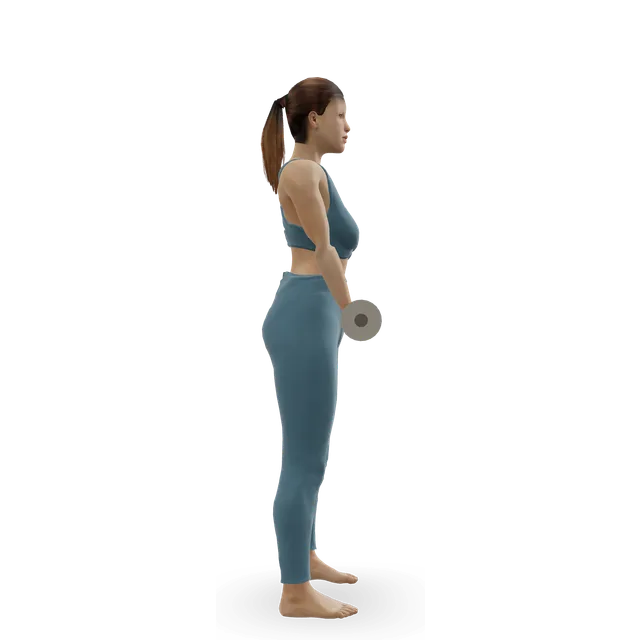
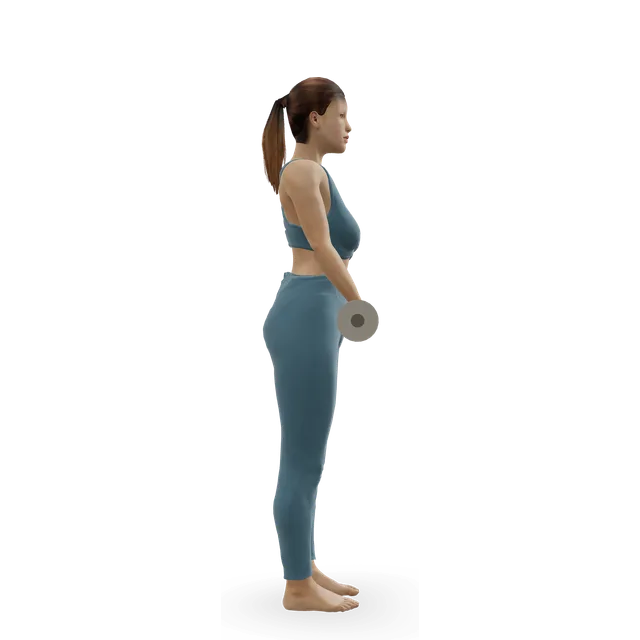
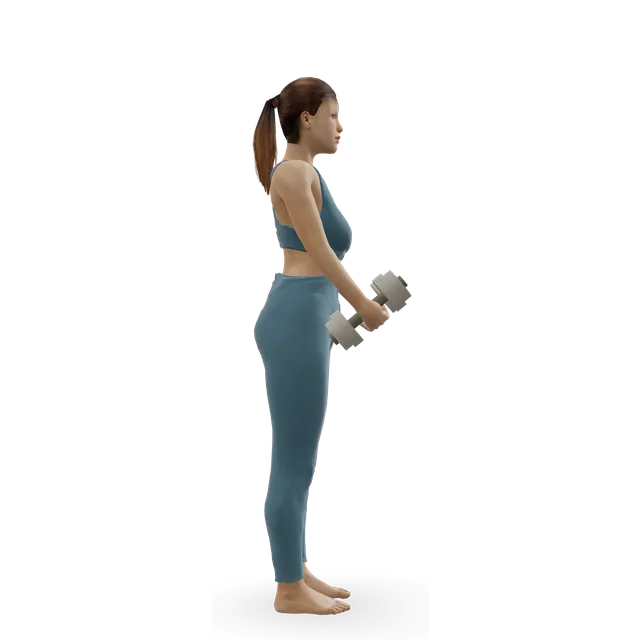
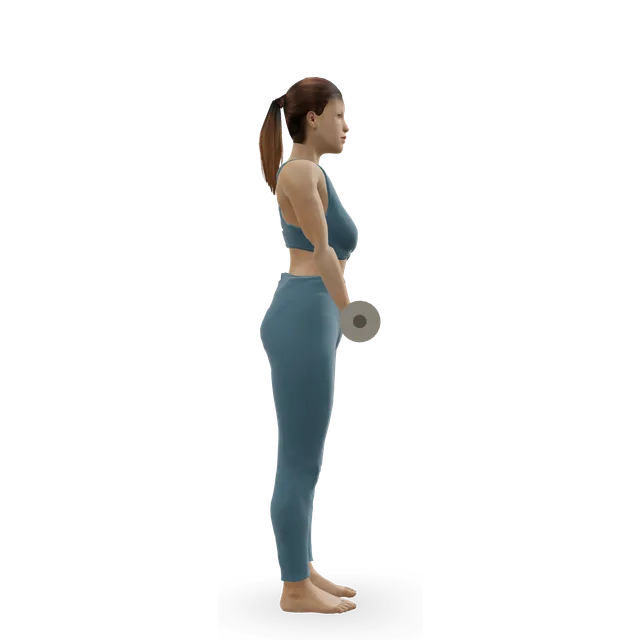
  1. Stand tall with a dumbbell in each hand at your sides, palms facing forward and elbows close to your body.
  2. Keeping your upper arms still, breathe out and curl the weights up to shoulder height with your palms up. Squeeze for a second.
  3. At the top, turn your hands so your palms face down. Turn only as far as is comfortable; you don't need a full half-circle.
  4. Breathe in and lower the dumbbells slowly, over about 3 seconds, with your palms down and your wrists straight.
  5. At the bottom, with your arms straight, turn your palms back to face forward, and start the next rep.
  6. End the set when you can no longer lower slowly with your palms down, or 2 or 3 reps short of failure.

Loading the 3D figure…

Gets into position, then repeats the movement. Technical checks passed; qualified exercise review is pending.

The movement on the figure: Zottman curl

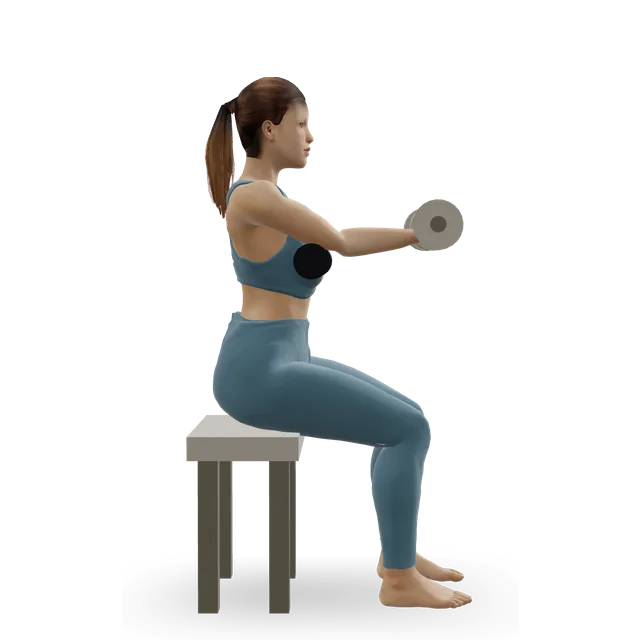
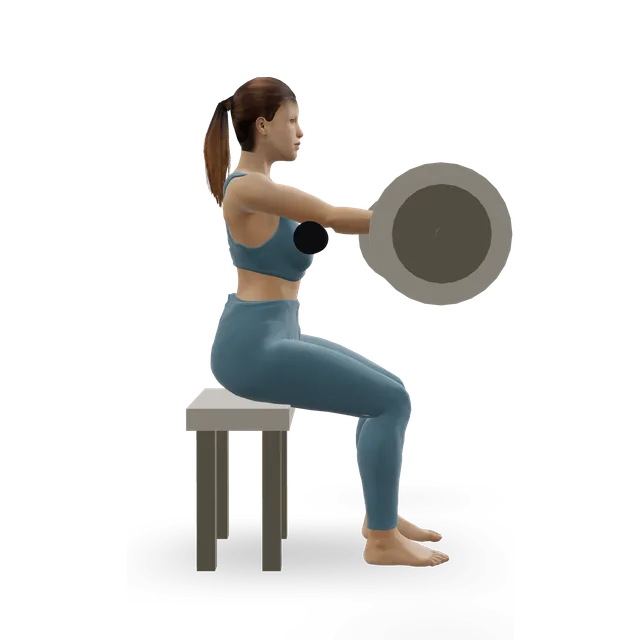
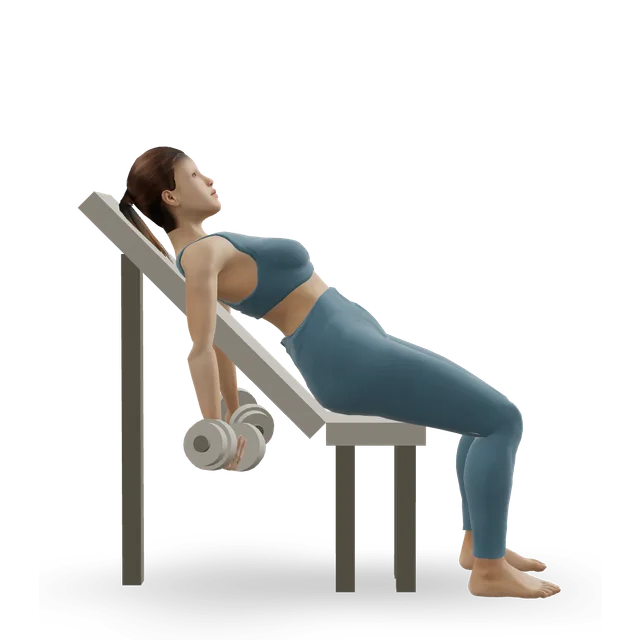
On a preacher bench

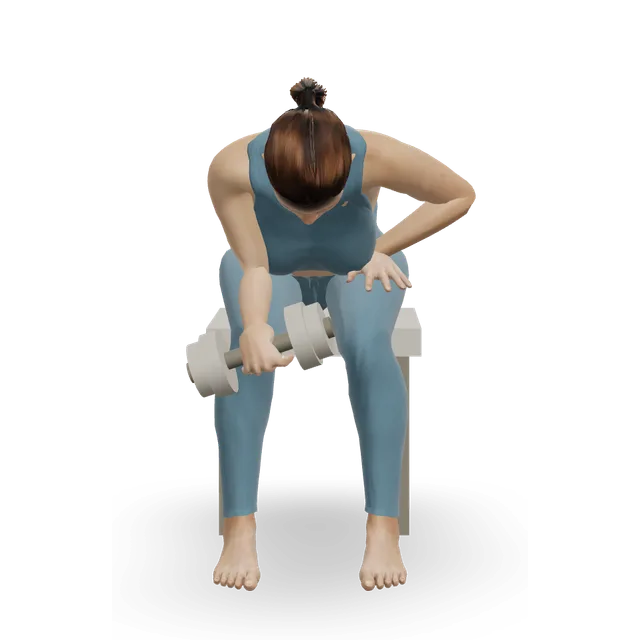
Our move page's steps and cues: keep your upper arms on the pad. On a pad the bottom of the curl is the hardest part, so control it; the American Academy of Orthopaedic Surgeons (AAOS) explains that the biceps tendon at the elbow tears when the elbow is forced straight against a load.

  1. Sit at a preacher bench, or stand behind an incline bench, with the backs of your upper arms on the pad and a dumbbell in each hand.
  2. Curl the dumbbells up with your palms facing up until they reach shoulder height, and squeeze for a second.
  3. Turn your hands palms down at the top, then lower slowly until your arms are straight, without letting the weights drop into the bottom.
  4. At the bottom, turn your palms back up for the next curl.

Loading the 3D figure…

Gets into position, then repeats the movement. Technical checks passed; qualified exercise review is pending.

The movement on the figure: Zottman preacher curl

What the evidence says

Every grip works all three elbow bendersStrong evidence

Muscle activity studies found the biceps, brachialis and brachioradialis working in curls with the palm up, thumb up and palm down. How much each contributes is set mostly by its size and leverage: in the MRI model, the brachialis gave almost half the force.

Sources 6, 25, 7, 8

The biceps works hardest palms upEmerging evidence

Lifting their 8-repetition maximum on a cable, 10 bodybuilders' biceps worked 19% harder palms up than palms down. Holding 1 kg, 36 men's biceps were more active palm up at most elbow angles.

Sources 11, 26

Which grip works the brachioradialis most: the studies disagreeMixed evidence

Without a weight and with 1 kg, the brachioradialis worked harder palms down; under an 8-rep maximum it worked slightly harder palms up (5% more than palms down); in three other studies grip made no difference. A curl that turns the palm up during the lift drew no more biceps or brachioradialis activity than fixed-grip barbell curls in 12 trained men. No grip has a proven edge for the forearm, as our hammer curl guide says.

Sources 27, 26, 11, 7, 25, 6, 28

While lowering, the grip made no differenceEmerging evidence

Lowering their 8-rep maximum, the 10 bodybuilders' biceps and brachioradialis activity didn't differ between palms up, thumb up and palms down, and lowering drew less activity than lifting, as other curl studies also found.

Sources 11, 29, 7

Palms down is much weakerStrong evidence

In 11 men, maximal elbow-bending force was 113.6 newtons palms down, 213.6 palms up and 243.6 thumb-up. In 85 students, palms down was 39% weaker than thumb-up. Women and men were both weakest palms down.

Sources 2, 3, 22

You can lower more than you can liftStrong evidence

Across 335 studies, people lowered about 40% more than they could lift. In an arm curl, 12 trained men lowered 19.3 kg against 14.6 kg lifted, about a third more; that curl figure comes from one small study.

Sources 5, 4

So the lowering is probably still the hard part

Put together, a palms-down lowering should handle roughly 70 to 86% of what you can lift palms up. That's our arithmetic across separate studies in different people; nobody has measured it in a Zottman curl.

Sources 2, 3, 4, 5

The biceps turns the palm up; the brachialis doesn'tEmerging evidence

In small studies, the biceps switched on as the palm turned up and off as it turned down, and it turned the forearm as well as bending the elbow. The brachialis bent the elbow whatever the forearm did.

Sources 30, 18, 17, 19

Turning palms down uses both pronatorsEmerging evidence

In 12 people, turning the palm down drew on the pronator teres and the pronator quadratus together.

Source 20

Palms-down work brings in the back of the forearmEmerging evidence

Wrist extensor activity rose with palms-down turning effort and during elbow movements. That's indirect evidence: we found no study of the wrist extensors in a reverse curl or a palms-down lowering.

Sources 9, 10

Ordinary curls grow the forearm tooMixed evidence

In 21 untrained adults, 12 weeks of incline or preacher dumbbell curls (5 sets of 10, twice a week) grew the brachioradialis 13.5% and 17.6% on MRI. We could read only the trial's abstract, which doesn't say what grip was used. We found no trial comparing grips, or testing the Zottman, for forearm size or grip strength.

Source 12

Lowering work builds muscle; a slow tempo adds nothing extraStrong evidence

Lowering-focused (eccentric) training builds strength and size: lowering-only training grew muscle 10.0% against 6.8% for lifting-only across 15 studies, a trend that wasn't statistically significant, and the American College of Sports Medicine (ACSM) overview lists eccentric work among the few things that enhanced growth. But reps lasting from half a second to 8 seconds grew muscle alike, so the slow lowering is for control, not extra growth.

Sources 31, 32, 33, 34, 35, 36

Expect sore forearms at firstEmerging evidence

In 10 untrained men, maximal lowering with the palm up caused more muscle damage than with the thumb up, so the lowering grip matters for soreness. New lowering work makes muscles sore for a few days, and the next sessions cause much less.

Sources 37, 38, 39

People differ a lotStrong evidence

In 585 adults who trained one arm the same way for 12 weeks, biceps size changed by anything from a 2% loss to a 59% gain.

Source 23

Why the lowering is the hard part, and how heavy to go

Palms down, about half as strong

113.6 newtons palms down against 213.6 palms up in 11 men, and 39% weaker than thumb-up in 85 students. That's why a reverse curl uses a much lighter dumbbell than a normal curl.

Sources 2, 3

Lowering, about a third stronger

In an arm curl, trained men lowered about a third more than they lifted; across all kinds of muscle tests, about 40% more.

Sources 4, 5

Putting the two together

About half the strength, with about a third more for lowering, comes to roughly 0.7 of your palms-up curl; with the larger figures, up to about 0.86. So the palms-down lowering is still a little weaker than the lift, which is why it usually sets your limit. That's our arithmetic across separate studies, not a measurement.

Our starting weight

About two-thirds to three-quarters of the dumbbell you'd curl palms up for the same reps: our editorial starting point. It's our arithmetic from strength studies in different people; nobody has measured it. Then adjust by how many reps you had left: people misjudge that by about one.

Source 40

When to end the set

When you can no longer lower over about 3 seconds with your palms down, or 2 or 3 reps short of failure, whichever comes first (editorial). If the curl up still feels easy but the lowering speeds up, the weight is too heavy for the lowering.

Zottman curls against hammer, reverse and bicep curls

Against hammer curls

Neither has been shown to build more muscle. Hammer curls keep your thumbs up both ways and are about as strong as palms-up curls; the Zottman switches to the much weaker palms-down grip for the lowering. If forearm size is your goal, do both, as our hammer curl guide suggests.

Sources 2, 11, 27

Against reverse curls

A reverse curl stays palms down both ways, so the weaker grip limits the lift as well; the Zottman lifts palms up and only lowers palms down. ACE rates the reverse curl an intermediate exercise. Both load the forearm side of the elbow.

Sources 2, 41

Against ordinary bicep curls

The way up is the same. A bicep curl lowers palms up; the Zottman lowers the same weight palms down, a grip about half as strong. Count both the same towards your weekly sets for the elbow muscles.

Sources 34, 13

Against preacher, incline and cable curls

Those change where your arm is; the Zottman changes your grip. You can do a Zottman on a preacher pad (above), and our preacher curl guide covers the rest.

The curl, the reverse curl and the Zottman, standing and on the pad

In learning order. The dumbbell curl, 2 or 3 sets of 10 to 15 with the last 0 to 2 reps short (our bicep curl guide; beginners at home can use the NHS routine's 3 sets of 5 with each arm, light). The reverse curl, 2 sets of 10 to 15, lighter than your hammer curls (our forearm workout). The Zottman and Zottman preacher curls, 2 to 3 sets of 8 to 12, stopping 2 or 3 reps short (their move pages' editorial starting point). The reverse preacher curl, 2 to 3 sets of 10 to 15 at about half your palms-up weight (our preacher curl guide's editorial starting point). The curl and reverse curl move pages give no dose.

Other versions, in words

No 3D demo for these.

Seated

Sit on the end of a bench and do the same lift; it stops any help from your legs. The standing demo shows the movement.

On a cable

One arm at a time with a single handle on a low cable, turning at the top as with a dumbbell. A cable lets you add weight in small steps.

The "reverse" or "inverse" Zottman

Curls up palms down and lowers palms up. It reverses the logic, so the lowering is the easy half.

Zottman curl into a press

Two lifts that suit different weights. We'd keep them separate.

Learning order

A standing dumbbell curl, then a light reverse curl, then the Zottman, then the preacher Zottman (editorial, from the move pages' prerequisites).

Sets, reps and how often

Sets and reps

2 to 3 sets of 8 to 12, stopping 2 or 3 reps short of failure: the move page's dose, its editorial starting point. Keep even the last set 1 or 2 reps short, because the palms-down lowering is the weak link (editorial).

Your first two weeks

2 sets with 3 or 4 reps to spare, as our plans say. People misjudge the reps they have left by about one.

Source 40

Rest

60 to 90 seconds, as our plans give for curls; a review found nothing clear for growth past about 90 seconds.

Source 42

How often, and weekly sets

Once or twice a week. Zottman curls count with your other curls towards about 10 or more hard sets a week for the elbow muscles, with each set of rows, pulldowns or chin-ups counting as half a set.

Sources 34, 13

Moving up

Add reps until you reach 12 on every set, then take the next dumbbell, as our curl guides do. Adding reps and adding load both worked as progression in a trial of 43 trained people.

Source 43

As a finisher

Our forearm workout pairs 8 to 12 Zottman curls with wrist curls for 2 rounds. ACE's biceps workout uses 15 reps for 2 to 3 sets, in a group of three curls.

Source 1

Warm up first

A few minutes of easy movement, then the wrist and forearm flow and a light set of curls, as the NHS and our plans advise.

Source 44

Starting from scratch

The NHS strength routine curls light weights for 3 sets of 5 with each arm. Learn that, then a light reverse curl, before the Zottman.

Source 45

Common mistakes and how to fix them

Swinging your trunk to start the curl

Go lighter and keep your body still, as the move page's cue says.

Elbows drifting forward

Keep your upper arms by your sides; the preacher version stops the drift.

Dropping the palms-down lowering

Go lighter and count 3 on the way down: the lowering is the point of the lift.

Bending your wrists back while palms down

Keep each wrist straight, in line with your forearm.

Forcing a full twist at the top

Turn only as far as is comfortable; no study has tested a full half-circle.

Starting at your usual curl weight

Start at about two-thirds to three-quarters of it, and adjust.

The rest of your forearm training

Hammer curls, 2 or 3 sets of 10 to 15 (our hammer curl guide and forearm workout). Forearm rotations, 10 each way (our grip strength workout; the Chartered Society of Physiotherapy's elbow videos use the same turn with a hammer). Wrist curls, 2 rounds of 12 to 15, slow and light (our forearm workout), and reverse wrist curls, 3 sets of 12, slow and light (our grip strength guide). Farmer's carries, 2 walks of 30 m, and the wrist and forearm flow, 60 seconds to warm up (our forearm workout). The wrist extensor stretch, 30 seconds each side to cool down (our forearm workout); its move page gives 3 holds of 30 seconds for tennis elbow. None of the strength moves here has a dose on its own move page.

Zottman curls, your elbows and your wrists

The elbow pain rule

Discomfort up to about 3 to 4 out of 10 is fine if it settles within an hour and your elbow is no worse the next morning; otherwise go lighter, not to nothing, as our elbow guides say.

NHS inform's elbow exercises use a 0 to 5 scale with pain no worse the morning after; the two agree in practice.

Source 46

Tennis elbow

Tennis elbow is linked with gripping and repeatedly twisting the wrist and forearm, and our elbow guides bring palm-down curls back last. With pain on the outside of your elbow, leave the Zottman out until reverse curls are comfortable, and follow our tennis elbow guide. Slow lowering exercises for the wrist extensors are one treatment for tennis elbow, with a short-term benefit for pain, but they're lighter, with the forearm supported: not a Zottman. See a GP if it hasn't improved after 2 weeks of rest and self-care.

Sources 14, 47, 48, 49, 50

Pain on the inside of the elbow

For golfer's elbow, NHS inform suggests changing how you grip or lift and reducing the weight, and seeing someone if it hasn't improved within 6 weeks. Our golfer's elbow guide has the plan.

Source 51

Pain on the thumb side of the wrist

With de Quervain's, the palms-down half is usually the comfortable part. Leave out any turn that hurts, and see our de Quervain's guide.

Tingling in your ring and little fingers

Stop the set if your ring and little fingers tingle during curls: at the top of a curl the elbow bends most, which stretches the ulnar nerve. Shorten the top of the range, and see our ulnar nerve guide if it keeps coming back.

A pop at the front of the elbowStrong evidence

A torn biceps tendon at the elbow is rare: 1.2 to 5.35 per 100,000 people a year in US data, and up to about 10 per 100,000 men a year in recent Nordic registers. It mostly affects men in their 40s, usually when a sudden load forces a bent elbow straight, and smoking raises the risk. A pop with bruising, a gap at the front of the elbow or the biceps bunching up in the upper arm needs an urgent treatment centre or A&E: it's best repaired within the first 2 to 3 weeks.

Sources 15, 52, 53, 54, 55, 56

After surgery

After a recent shoulder dislocation, or shoulder or elbow surgery, follow your surgical team's limits first.

Workouts to follow

Our forearm workout is the follow-along: hammer curls, reverse curls, then 8 to 12 Zottman curls paired with wrist curls for 2 rounds, and a farmer's carry. The grip strength workout and the wrist and forearm routine train your hands and wrists. In the arm and bicep workouts, a Zottman can replace or join a curl at 2 to 3 sets of 8 to 12 (our suggestion).

Plans with a curl to swap

The bro split's arm day has curls a Zottman can replace.

Warning signs

Stop and get medical help

If you get chest pain or pressure, feel faint or dizzy, are unusually breathless, or your heart races or beats irregularly during exercise, as our plans advise. The American Heart Association says these need immediate medical evaluation.

Source 57

Call 999 (911 in the US)

For chest pain that comes on suddenly and doesn't go away, feels tight or like squeezing, spreads to your arms, neck, jaw, stomach or back, or comes with sweating, feeling sick, light-headedness or breathlessness; arm pain that comes on suddenly with pressure, heaviness or squeezing across your chest; severe difficulty breathing, or a chest that feels tight or heavy; someone who faints while exercising; palpitations that don't go away, or come with chest pain, shortness of breath or feeling faint; or a headache that starts suddenly and is extremely painful, especially while lifting or straining. The NHS says a bleed on the brain may be more likely when lifting something heavy. Don't drive yourself to A&E.

Sources 58, 59, 60, 61, 62, 63, 64, 65, 66

A headache with effort

Ask for an urgent GP appointment or get help from NHS 111 for a headache that's triggered or made worse by coughing, sneezing, bending down or exercising.

Source 65

Go to an urgent treatment centre or A&E

For a pop or snap at the front of the elbow during a lift, with bruising, a gap at the front of the elbow, weakness turning your palm up, or the biceps bunching up in your upper arm: a torn biceps tendon is best repaired within the first 2 to 3 weeks, and the pain may ease after a week or two, so don't wait. Also for severe arm pain that makes it hard to move your arm, a snap with your arm changing shape, or an arm that tingles or feels numb after an injury. In the US, go to urgent care or the emergency department.

Sources 61, 15

Get help from NHS 111

If your arm hurts when you exercise but the pain goes away when you rest; if it's swollen and you have a very high temperature or feel hot, cold or shivery; if you think you've torn a tendon; or for severe wrist pain, a snap, grinding or popping when it happened, or lost feeling in your hand. In the US, contact your doctor or urgent care.

Sources 61, 67, 68

See a GP

If elbow or arm pain hasn't gone after a few weeks; if tennis elbow hasn't improved after 2 weeks of rest and self-care; or if wrist pain hasn't improved after 2 weeks, or comes with tingling.

Sources 61, 14, 68

Swollen muscles and dark urine

Very sore, swollen, tight muscles and dark urine after an unusually hard or high-rep session need medical help the same day: it could be rhabdomyolysis, as our elbow pain from pull-ups guide explains. Normal soreness peaks a day or two after a new exercise and fades.

Sources 69, 38

A new lump or bulge in your groin or tummy

See a GP if you think you have a hernia, a bulge or lump that may get bigger when you strain and smaller when you lie down. Get help from NHS 111 if you have a hernia and pain in or around it, a bloated tummy, you feel or are sick, you're vomiting blood or your vomit looks like coffee grounds, you're constipated, you have a high temperature or feel hot, cold or shivery, or you've suddenly become confused. Call 999 or go to A&E for a femoral hernia (a small lump at the top of your thigh, in your groin) with very bad tummy pain, sickness, being unable to fart or poo, a high temperature or sudden confusion.

The NHS lists lifting heavy weights among the causes of a femoral hernia. After an inguinal hernia repair, avoid heavy lifting or strenuous activity for at least 4 to 6 weeks.

Sources 70, 71, 72

Before you start

Speak to your GP first if you haven't exercised for some time or have medical conditions or concerns, as the NHS advises. Get advice before hard or straining work if your blood pressure is uncontrolled (140/90 or higher at a clinic, or 135/85 at home), or you have heart disease or chest pain when you're active, a pacemaker or defibrillator, diabetic eye disease, glaucoma, a hernia, recent eye or tummy surgery, or you're pregnant, as our breathing guide lists.

With controlled high blood pressure, the American Heart Association considers low- to moderate-intensity strength training with proper breathing safe: breathe out as you lift.

After a recent shoulder dislocation, or shoulder or elbow surgery, follow your surgical team's limits first.

Sources 73, 74, 60, 57
Myths

"Zottman curls are the best forearm exercise"Mixed evidence

We found no study of the Zottman curl, and no trial comparing curls for forearm size or grip. Which grip works the brachioradialis most varies between studies, and ordinary curls grew it 13.5 to 17.6% in 12 weeks. The forearm's grip muscles need wrist curls, carries and hangs too, as our grip strength guide says.

Sources 27, 26, 11, 12

"Zottman curls build bigger forearms than hammer curls"Mixed evidence

Untested. The grip studies disagree about which grip works the brachioradialis most, and none measured growth. Mix grips if forearm size is your goal, as our hammer curl guide says.

Sources 27, 11

"The slow palms-down lowering is what makes it work"Emerging evidence

While lowering, the grip made no difference to biceps or brachioradialis activity in 10 bodybuilders, and slow reps don't add growth by themselves. What the lowering adds is a heavier-than-usual lowering for the forearm side, because you chose the weight for the stronger lift: sound physics, but untested.

Sources 11, 35, 36, 2, 4

"Zottman curls hit all three biceps muscles"Strong evidence

There aren't three biceps muscles: the biceps has two heads, and the brachialis and brachioradialis are separate muscles. Every curl works all three elbow benders, so it's true that the Zottman works them, but not that it's special.

Sources 6, 8

"Rotate your wrists a full 180 degrees"

Coaching pages disagree, and no study has tested it. Turn only as far as is comfortable; the biceps does its palm-up job as you turn up (our editorial advice).

Source 18

"Go heavy: you're stronger lowering"Emerging evidence

You are stronger lowering, but palms down you're about half as strong, so a weight near your normal curl maximum makes the lowering fall rather than slow (our arithmetic). Start lighter.

Sources 5, 2

"Zottman curls fix, or cause, tennis elbow"

No study links them either way. Slow lowering exercise for the wrist extensors is one treatment for tennis elbow, but that's a different, lighter exercise with the forearm supported. Gripping and twisting the forearm are linked with tennis elbow, so bring the Zottman back last; our tennis elbow guide has the plan.

Sources 47, 49, 14

Questions people ask

How do you do a Zottman curl?

Hold a dumbbell in each hand with your palms facing forward, curl them up to your shoulders, then turn your hands so your palms face down. Lower slowly, over about 3 seconds, with your palms down, and turn them back at the bottom.

What muscles do Zottman curls work?

The three muscles that bend your elbow: the biceps, the brachialis underneath it and the brachioradialis in your forearm, as in every curl. The turn uses your forearm's turning muscles, and the palms-down lowering brings in the muscles on the back of your forearm.

What are Zottman curls good for?

They combine a normal curl and a reverse curl in one rep, so the forearm side of your elbow muscles gets a palms-down lowering with a weight you lifted on the stronger grip. That's sound mechanics, but no study has tested the Zottman itself.

Are Zottman curls good for forearms?

They train the brachioradialis, the big forearm muscle, as other curls do; ordinary curls grew it 13.5 to 17.6% in 12 weeks in one trial. No study shows they build forearms better than hammer or reverse curls. For grip, add wrist curls and carries.

Zottman curls vs hammer curls: which is better?

Neither has been shown to build more muscle. Hammer curls keep your thumbs up the whole way and are about as strong as palms-up curls; Zottmans switch to the much weaker palms-down grip for the lowering. Do both if forearm size is your goal.

Zottman curl vs reverse curl?

A reverse curl stays palms down both ways, so you're limited by the weaker grip on the lift too; the Zottman lifts palms up and only lowers palms down. Both load the forearm side of the elbow.

How heavy should Zottman curls be?

Lighter than your usual curl: start at about two-thirds to three-quarters of the dumbbell you'd curl palms up, and adjust so you can still lower slowly with your palms down. That's our editorial starting point, our arithmetic from strength studies in different people; nobody has measured it. Palms down you're roughly half as strong, though you can lower more than you lift.

How many sets and reps of Zottman curls?

2 to 3 sets of 8 to 12, stopping 2 or 3 reps short, with 60 to 90 seconds' rest, once or twice a week. Count them with your other curls towards about 10 hard sets a week for your elbow muscles.

Why are Zottman curls so hard?

Because the lowering is done in the grip where your elbow is roughly half as strong, with a weight you chose for the stronger grip. The lowering, not the lift, usually sets your limit.

Are Zottman curls good for tennis elbow?

They aren't a treatment, and the palms-down half loads the outer elbow; tennis elbow is linked with gripping and twisting the forearm. Leave them out until reverse curls are comfortable, and follow our tennis elbow guide. See a GP if it hasn't improved after 2 weeks of self-care.

Can I do Zottman curls on a preacher bench?

Yes: the pad stops your arms swinging, and the bottom of the curl becomes the hardest part. Lower under control, without dropping into straight arms.

Why is it called a Zottman curl?

Coaching sites credit a strongman called George Zottman. They disagree about when he lived, and we found no reliable history.

Sources

  1. Thielen 2015 · Build your biceps workout, with the Zottman curl (American Council on Exercise blog)
  2. Kohn 2018 · Elbow-bending strength with the palm up, in and down, in 11 men (lab study, Physiol Rep)
  3. O'Connell 2021 · Forearm position and elbow-bending strength in 85 students (lab study, Work)
  4. Shibata 2025 · Lowering-only, lifting-only and normal arm curls, bench presses and squats in 12 trained men (lab study, JSCR)
  5. Nuzzo 2023 · How much stronger muscles are lowering than lifting: 335 studies (meta-analysis, Sports Med)
  6. Caufriez 2018 · The role of the brachioradialis in elbow bending (muscle activity study, J Hand Surg Asian Pac Vol)
  7. Boland 2008 · The function of the brachioradialis (muscle activity study, J Hand Surg Am)
  8. Kawakami 1994 · How much each elbow-bending muscle contributes, measured by MRI in 4 men (lab study, Eur J Appl Physiol)
  9. O'Sullivan 2002 · Upper-limb muscle activity at maximum forearm turning effort (muscle activity study, J Electromyogr Kinesiol)
  10. Koshland 1991 · Wrist muscle activity during movements about the elbow (lab study, J Mot Behav)
  11. Coratella 2023 · Biceps and brachioradialis activity in palm-up, palm-down and rope hammer cable curls in 10 bodybuilders (muscle activity study, Sports)
  12. Kobayashi 2026 · Incline against preacher dumbbell curls in 21 untrained adults, measured by MRI (within-person trial, J Sports Sci)
  13. Pelland 2026 · Weekly sets and training frequency against muscle growth and strength gains (meta-regressions, Sports Med)
  14. NHS · Tennis elbow
  15. AAOS OrthoInfo · Biceps tendon tear at the elbow (patient information, American Academy of Orthopaedic Surgeons)
  16. Melrose 2014 · Exercise technique: the Zottman curl (NSCA technique column, Strength Cond J)
  17. Staudenmann 2015 · Brachialis activity measured with surface electrodes (lab study, J Electromyogr Kinesiol)
  18. Naito 1995 · The elbow-bending muscles while turning the palm up and down (muscle activity study, Tohoku J Exp Med)
  19. Bechtel 1994 · Task, angle, elbow torque and muscle activity (lab study, J Electromyogr Kinesiol)
  20. Lunasin 2026 · Pronator teres and pronator quadratus activity with the elbow in different positions (muscle activity study, J Hand Surg Am)
  21. ACE · Hammer curl (exercise library, American Council on Exercise)
  22. Brown 2010 · Women, men and force steadiness in three forearm positions (lab study, Eur J Appl Physiol)
  23. Hubal 2005 · How much muscle and strength 585 adults gained from 12 weeks of arm training (trial, MSSE)
  24. Vigotsky 2022 · Muscle activity in one session is not a validated predictor of muscle growth (review, Sports Med)
  25. Bankoff 2007 · Elbow-bending muscles in weight-trained people (muscle activity study, Electromyogr Clin Neurophysiol)
  26. Chen 2025 · Forearm turn and elbow angle while holding 1 kg, in 36 men (muscle activity study, BMC Sports Sci Med Rehabil)
  27. Kleiber 2015 · Biceps and brachioradialis activity with the palm up, in and down, in 16 adults curling without a weight (muscle activity study, Front Physiol)
  28. Marcolin 2018 · Biceps and brachioradialis activity in three curl variants (muscle activity study, PeerJ)
  29. Uysal 2026 · Grip, biceps and brachioradialis activity while lifting and lowering a barbell curl (muscle activity study, BMC Sports Sci Med Rehabil)
  30. Naito 1994 · Biceps activity in turning the palm up and bending the elbow (muscle activity study, Tohoku J Exp Med)
  31. Douglas 2017 · Long-term adaptations to eccentric training (systematic review, Sports Med)
  32. Roig 2009 · Eccentric against concentric training for strength and muscle mass (systematic review and meta-analysis, Br J Sports Med)
  33. Schoenfeld 2017 · Lowering-only against lifting-only training and muscle growth: 15 studies (meta-analysis, JSCR)
  34. Currier 2026 · Resistance training for muscle function, size and performance in healthy adults: an overview of reviews (ACSM position stand, MSSE)
  35. Schoenfeld 2015 · Repetition duration and muscle growth (meta-analysis, Sports Med)
  36. Enes 2025 · How slow should you go? Repetition tempo and muscle growth (systematic review and meta-analysis, JSCR)
  37. Lau 2021 · Wrist position and muscle damage after lowering work for the elbow flexors (lab study, Scand J Med Sci Sports)
  38. Paschalis 2026 · Eccentric exercise and muscle damage: an introductory guide (review, J Funct Morphol Kinesiol)
  39. McHugh 2003 · The repeated bout effect: less muscle damage after the first bout of eccentric exercise (review, Scand J Med Sci Sports)
  40. Halperin 2022 · How accurately people predict the reps they have left (scoping review and meta-analysis, Sports Med)
  41. ACE · Reverse bicep curl (exercise library, American Council on Exercise)
  42. Singer 2024 · Rest between sets and muscle growth (Bayesian meta-analysis, Front Sports Act Living)
  43. Plotkin 2022 · Adding load or adding reps as progression in 43 trained people (randomised trial, PeerJ)
  44. NHS · How to warm up before exercising
  45. NHS · Strength exercises
  46. NHS inform · Exercises for elbow problems (NHS Scotland patient information)
  47. Yoon 2021 · Eccentric exercise for tennis elbow (systematic review and meta-analysis, J Clin Med)
  48. Chen 2021 · Eccentric strengthening for tennis elbow (systematic review with meta-analysis, J Hand Ther)
  49. Cullinane 2014 · Is eccentric exercise an effective treatment for tennis elbow? (systematic review, Clin Rehabil)
  50. CSP · Video exercises for elbow pain (Chartered Society of Physiotherapy)
  51. NHS inform · Golfer's elbow (NHS Scotland patient information)
  52. Safran 2002 · Distal biceps tendon ruptures: how common, who gets them, and smoking (cohort study, Clin Orthop Relat Res)
  53. Kelly 2015 · Distal biceps tendon ruptures in a large population database (epidemiological study, Am J Sports Med)
  54. Launonen 2020 · Distal biceps tendon repairs in Finnish and Swedish men, 1997 to 2016 (register study, J Hand Surg Am)
  55. Jaschke 2025 · Risk factors for a distal biceps tendon injury (systematic review, Adv Clin Exp Med)
  56. Almigdad 2025 · Distal biceps rupture (review, Clin Orthop Surg)
  57. Paluch 2024 · Resistance exercise training with and without cardiovascular disease: 2023 update (American Heart Association scientific statement, Circulation)
  58. NHS · Chest pain (past its review date: reviewed August 2023, review due August 2026)
  59. NHS · Heart attack
  60. NHS · High blood pressure
  61. NHS · Elbow and arm pain
  62. NHS · Shortness of breath
  63. NHS · Fainting
  64. NHS · Heart palpitations
  65. NHS · Headaches
  66. NHS · Subarachnoid haemorrhage
  67. NHS · Tendonitis (past its review date: reviewed June 2023, review due June 2026)
  68. NHS · Wrist pain
  69. Cleary 2011 · Exertional rhabdomyolysis in an adolescent athlete during preseason conditioning (case report, JSCR)
  70. NHS · Hernia
  71. NHS · Femoral hernia
  72. NHS · Inguinal hernia repair
  73. NHS · Physical activity guidelines for adults aged 19 to 64
  74. NHS · Physical activity guidelines for older adults

Exercise education, not a personal prescription, and clinical review of these guides is pending. Check with a GP before starting hard training if you have a heart condition, chest pain, dizziness or breathlessness when active, and stop for sharp or increasing pain. Health disclaimer.