Yoga for anaemia (anemia): tiredness, breathlessness and dizziness, what yoga can't do for iron or B12, and when to get checked
Anaemia means your blood has less haemoglobin to carry oxygen, so you tire sooner, get breathless more easily and may feel dizzy when you stand up. Yoga can't raise your iron or haemoglobin: the studies that claim it are tiny or badly designed, and the better ones found no change.
Anaemia is treated by finding the cause, such as heavy periods or bleeding in the gut, and replacing what's missing, usually iron. What yoga can do is keep you moving gently while treatment works.
This guide covers the poses and breathing that suit tired, dizzy days (head up, slow transitions, no breath holds), getting up from the mat safely, what to leave out, B12 deficiency and balance, sickle cell disease and thalassaemia in brief, and the warning signs.
The NHS (National Health Service) lists tiredness and lack of energy, shortness of breath, noticeable heartbeats (palpitations), paler skin and headaches; the World Health Organization (WHO) adds dizziness and a reduced capacity for physical work. Moderate and severe iron deficiency anaemia lowers fitness and endurance.
The NHS: "Heavy periods and pregnancy are very common causes of iron deficiency anaemia." Bleeding in the stomach and gut is another, and about a third of men and of women after the menopause with iron deficiency anaemia have an underlying problem, usually in the gut. A GP (general practitioner) blood test, and sometimes a poo test, finds it.
No well-designed trial shows it. The two best-reported studies found no change, and the studies claiming rises are tiny, uncontrolled or badly analysed. Gentle exercise has no known way to add iron to the body.
Usually iron tablets for about 6 months, the NHS says, or for 3 months after your levels return to normal, as NHS inform puts it. Don't take iron without a blood test first.
Easy movement while treatment works, with less strain than a run. Dizziness on standing can come with anaemia, so keep your head up, get up slowly and skip breath holds, forceful breathing and hot rooms until you're better.
It can affect your nerves, causing pins and needles and problems with balance and coordination. Do balance poses at a wall and see a GP: NICE (the National Institute for Health and Care Excellence) says treatment shouldn't wait when you have these symptoms.
NHS inform: "If you have fewer red blood cells than is normal, your organs and tissues won't get as much oxygen as they usually would." For adults, WHO counts haemoglobin below 120 g/L (grams per litre) as anaemia in women who aren't pregnant and below 130 g/L in men, with severe anaemia below 80 g/L.
In 2019, anaemia affected 30% of non-pregnant women and 37% of pregnant women aged 15 to 49 worldwide, WHO says. In wealthy countries, iron deficiency anaemia affects 2% to 5% of adult men and women after the menopause at any one time, the British Society of Gastroenterology says.
Heavy periods and pregnancy; bleeding from the stomach and gut (ulcers, anti-inflammatory painkillers, piles, and less often bowel or stomach cancer). NHS inform notes that most people with bleeding in the gut don't notice blood in their poo. Vitamin B12 or folate deficiency is another cause, and sickle cell disease and thalassaemia are inherited types with their own specialist care.
With less haemoglobin, less oxygen reaches your muscles. A review of 29 reports found moderate and severe iron deficiency anaemia lowers aerobic capacity and endurance. The nearest model in healthy people is giving blood: haemoglobin and fitness both fell about 7%, recovering over 2 to 3 weeks. Some people have only a few symptoms, depending on how quickly the anaemia develops.
A GP usually starts with a full blood count, and may arrange a faecal immunochemical test (FIT) to look for blood in your poo; NICE recommends it for adults with iron deficiency anaemia. NICE also recommends a full blood count for anyone with heavy periods. Treatment usually starts with one iron tablet a day, and your GP checks how you're responding after 2 to 4 weeks.
Most yoga is light activity: our yoga for weight loss guide gives 2.3 to 2.7 METs (metabolic equivalents, where sitting still is 1) for most styles, about a slow walk. So it asks less of your blood's oxygen supply than running or cycling, which is why it suits the keep-moving-gently phase (our reading). The moments that matter are the ones that bring on dizziness: standing up from the floor, coming up from a fold, standing still for long, hot rooms, and fast or held breathing.
What the evidence says
The yoga and anaemia studies are all small, single-centre and unblinded, and most are in journals outside MEDLINE, the main medical database. The evidence for treating anaemia is about iron, not exercise.
The better-reported yoga studies found no change in haemoglobinStrong evidence
In a randomised pilot in 30 women with heavy bleeding, 3 months of yoga plus usual care made no difference to haemoglobin against a waiting list. In a year-long study of 50 yoga students, 20 of whom started mildly anaemic, haemoglobin didn't change, "even in anemic participants". Neither journal is in MEDLINE.
In 23 young women, the groups were never compared with each other, and a 58% rise in peak flow in a month is implausible. In 100 people recruited partly from family and friends, with no comparison group and no record of iron treatment, haemoglobin rose about 1 g/dL (gram per decilitre) in 2 months. In a 126-person trial after COVID-19, haemoglobin was measured with a finger-prick device, and the yoga group became more aware of diet and lifestyle. In school children who weren't anaemic, blood iron rose after yoga, but it was measured without fasting, and haemoglobin wasn't measured.
"Yoga" in Ayurvedic iron studies means a medicineStrong evidence
Reviews of Ayurvedic treatments for anaemia study herbal and mineral compounds whose names include the word "yoga", such as Pippalyadi Yoga. They aren't about exercise, and pages that cite them as proof that yoga raises haemoglobin are wrong.
Gentle exercise has no known effect on ironEmerging evidence
Exercise affects iron mainly in long or hard endurance work: hepcidin, a hormone that blocks iron absorption, peaks 3 to 6 hours after exercise, mostly depending on how long you exercised; the pounding of running feet breaks red cells; and 2 hours of cycling lost only 1% to 3% of a day's iron need in sweat. Our search found no study of yoga or other gentle exercise and hepcidin.
Treating iron deficiency restores some fitnessEmerging evidence
In women of reproductive age, iron raised peak oxygen uptake a little across 24 trials, only 3 of them at low risk of bias. In iron-deficient athletes without anaemia it improved aerobic capacity moderately, and in adults without anaemia it eased tiredness without changing measured fitness.
No UK guideline sets exercise rules for anaemiaEmerging evidence
The NHS iron deficiency and B12 pages say nothing about exercise, and NHS inform notes you may not feel able to exercise regularly. The only health service line we found is Ireland's, about cancer treatment: "If you have severe anaemia, do not start exercising until your red blood cell count returns to a safe level."
WHO lists dizziness when standing up among the signs of severe anaemia. Lying still for a long rest and then standing quickly, coming up from a fold, and standing still for long all make it more likely (our reading).
Lie down and raise your legs until you feel better. If you can't lie down, sit, if possible with your head lowered between your knees, and drink some water.
Our yoga for low blood pressure guide covers dizziness on standing in more detail.
Slow breathing: 2 minutes, in for about 4 and out for about 6, no holds, taking smaller breaths if you feel light-headed (our yoga for low blood pressure class). Breath reach: 5 breaths, exhale longer than inhale (the move page's dose), seated.
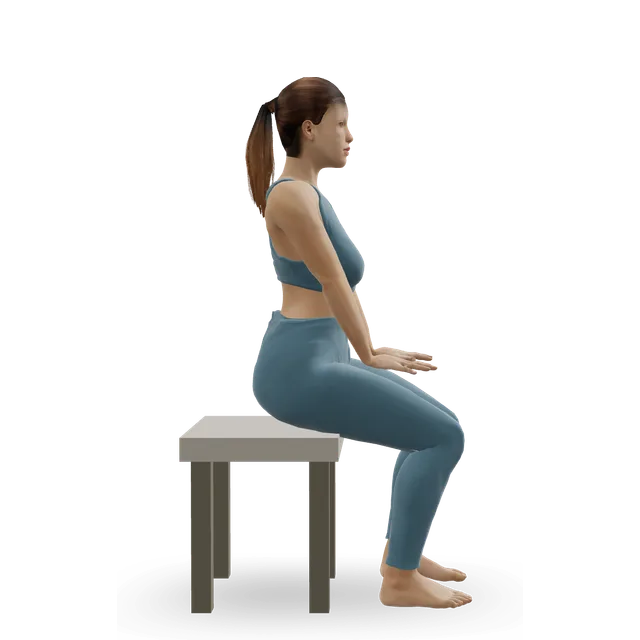
Ankle circles: 10 pumps, then 5 circles each way, each foot; seated march: 1 minute; seated calf raise: 15; sit to stand: 5 slow reps, then wait a moment with your hands on a counter before you let go (all from our yoga for low blood pressure class).
Mountain pose: 5 slow breaths, twice, fingertips on the counter; chair pose: 3 holds of 20 to 30 seconds; warrior II: 5 breaths each side, side-on to the counter; tree pose: 30 seconds each side, fingertips on the counter; standing march: 1 minute, to keep moving rather than standing still between poses (all from our yoga for low blood pressure class). With numb feet, keep a hand on a counter or wall, as tree pose's page says.
Glute bridge: 2 sets of 8, head on the floor (our yoga for low blood pressure class). Supine twist: 45 seconds each side, a cushion under the top knee (our gentle yoga for beginners class). Reclining bound angle: 2 to 5 minutes with a support under each thigh, as its move page suggests. Corpse pose: at least 5 minutes, up to 10, as its move page says; then come up with the steps above.
Downward dog, deep forward folds, fast sun salutations, headstands, shoulder stands, the plough, and legs up the wall followed by standing quickly. The NHS says not to bend down or get up suddenly. Our suggestion: keep folds to a flat-back hinge with your hands on your thighs, and come up slowly.
Kapalbhati, bellows breath and the holds in box and 4-7-8 breathing can bring on light-headedness, which their move pages warn about, and no study shows they add oxygen or haemoglobin to your blood. NCCIH (the US National Center for Complementary and Integrative Health) advises beginners to avoid forceful breathing. One uncontrolled anaemia study taught kapalbhati as something that "purifies the blood", alongside shoulder stands and breath holds: a reason for caution, not a recommendation.
Our suggestion: a room at normal temperature until your treatment is working, since heat is another reason to feel faint. No study of hot yoga and anaemia turned up in our searches. As our yoga guides say, in a hot class, stop if you feel dizzy, sick or unwell.
Power yoga and fast flows can wait until treatment is working and an easy walk feels normal again (our suggestion).
Building back up
While you're being treated
Our editorial starting point while you're being treated: easy activity you can talk through in full sentences, such as walking or cycling, in shorter sessions with a longer warm-up and cool-down, plus light strength work on 2 days a week. Get up slowly if you feel light-headed, because dizziness on standing can come with anaemia. Stop for chest pain, palpitations, dizziness, or breathlessness that's out of proportion to what you're doing.
If light activity is hard
If you're breathless, dizzy or exhausted with light activity, see your GP before exercising, and build up as your treatment works. This is our reading of the guidance, not a rule from a guideline. The NHS says to see a GP if your breathlessness gets worse when you're doing your normal activities.
Once treatment is working and an easy walk feels normal, build up gradually: a moving class such as vinyasa flow for beginners or a hatha class, then the walking and interval workouts in our anaemia exercise guide (our suggestion). NHS inform says your GP will check your blood again 2 to 4 weeks after you start iron.
Endurance training dilutes haemoglobin a little by increasing the fluid in your blood, which isn't anaemia in a clinical sense. True iron deficiency is also common: about 15% to 35% of female and 5% to 11% of male athletes. A blood test settles it; our anaemia exercise guide covers athletes and ferritin.
B12 deficiency, sickle cell disease, thalassaemia and pregnancy
B12 deficiency
Vitamin B12 deficiency can cause problems with balance and coordination, numbness, pins and needles and muscle weakness, which matter for exercise safety. It affects about 1 in 10 people aged 75 and over. NICE says treatment shouldn't be delayed if you have these nerve symptoms.
Do balance poses at a wall or counter, and see a GP about pins and needles, numbness or balance problems. B12 comes from food, tablets or injections, depending on the cause; yoga doesn't replace it.
The NHS suggests gentle to moderate exercise, such as walking or yoga, and avoiding high-intensity exercise because it may affect your breathing, with plenty of fluids and no sudden changes in temperature. With sickle cell disease, skip the breath holds: breathe slowly and evenly instead, as our box and 4-7-8 breathing pages say. The one yoga trial measured pain in children in hospital, not anaemia. Follow your specialist team, and see our sickle cell exercise guide.
Anaemia is common in pregnancy: talk to your midwife before moderate or vigorous exercise, and see our yoga in pregnancy guide. With heart failure, kidney disease, inflammatory bowel disease or cancer, the specialist team manages the anaemia, as our anaemia exercise guide says.
Classes to follow
The yoga for low blood pressure class is the best single fit while you're anaemic and being treated: a 25-minute head-up class for anyone who gets dizzy on standing, lying, then sitting, then standing at a counter. On tired or dizzy days, the chair classes; once treatment is working, gentle yoga for beginners; the restorative sequence on a rest day, rolling to your side and pumping your feet before you stand. The sickle cell workout has rest and drink breaks. Short, easy sessions while you're treated, building as your energy returns (our editorial starting point).
These are the warning signs from our anaemia exercise guide and our yoga guides, word for word, apart from the lines given as the health service's words or marked as our suggestion. This is general information, not a diagnosis. A&E means accident and emergency; in the US, call 911 for 999.
Chest pain, breathing or collapse: call 999
Call 999 if:
You get sudden pain or discomfort in your chest that doesn't go away; it can feel like squeezing or pressure, burning or indigestion.
The pain spreads to your left or right arm, or your neck, jaw, stomach or back.
You have chest pain and feel sweaty, sick, light-headed or short of breath.
Someone faints while exercising, can't be woken within 1 minute, or has chest pain or a pounding, fluttering or irregular heartbeat.
You're having severe difficulty breathing: you're gasping, choking or not able to get words out.
Your lips or skin are pale, blue or grey. On brown or black skin, this may be easier to see on the palms of the hands.
Someone has passed out and is not responding normally.
Call 999 if someone faints while exercising, faints and has chest pain or a pounding, fluttering or irregular heartbeat, can't be woken within a minute, or hasn't fully recovered. See a GP after any faint.
Call 999 or go to A&E (accident and emergency) straight away for severe difficulty breathing (gasping, choking or not able to get words out), a chest that feels tight or heavy, pain that spreads to your arms, back, neck and jaw, lips or skin turning very pale, blue or grey, or sudden confusion. If you're more short of breath than usual, or your heart is racing, fluttering or skipping beats, contact NHS 111.
Call 999 or go to A&E if you vomit blood and feel faint, dizzy or confused, have cold, clammy skin, fast or shallow breathing, tummy pain or black poo, or if bleeding from your bottom won't stop or there's a lot of blood.
You may have heavy periods if you "need to change your pad or tampon every 1 to 2 hours", "have periods lasting more than 7 days", "pass blood clots larger than about 2.5cm" or "avoid daily activities, like exercise, or take time off work because of your periods".
Stop and rest if you get chest pain, palpitations, dizziness or breathlessness that's out of proportion to what you're doing, and sit or lie down if you feel faint (our suggestion). Fainting during exercise is a 999 call.
Iron tablets and children
The NHS warns that an overdose of iron can be fatal for a young child. If a child may have swallowed iron tablets, treat it as an emergency and call 999 (our advice).
During yoga
A joint pain that is sharp, gets worse during a session, lingers into the next day or changes how you move is a reason to use an easier version, and to see a GP or physiotherapist if it keeps happening (the rule in our plans). Muscle soreness for a day or two after something new is normal. In a hot class, stop if you feel dizzy, sick or unwell; our hot yoga guide lists the signs of heat illness.
Before you start
The NHS advises getting advice from a healthcare professional first if you have a health problem, an injury or symptoms, or have recently had a heart attack or an operation.
"Yoga poses raise your iron or haemoglobin"Strong evidence
The better-reported studies found no change, the ones claiming rises are uncontrolled or poorly analysed, and gentle exercise has no known way to add iron. Iron comes from food and, when you're low, tablets, with the cause treated.
"Pranayama puts more oxygen into anaemic blood"Strong evidence
In anaemia, the limit is how much haemoglobin there is to carry oxygen. Deeper breathing doesn't add haemoglobin, and breathing too deeply brings on dizziness.
No. No good trial shows yoga raises iron or haemoglobin, and the better-reported studies found no change. Anaemia is treated by finding the cause, such as heavy periods or bleeding in the gut, and replacing what's missing, usually with iron tablets.
Which yoga poses increase haemoglobin?
None. The pages that say so cite tiny, uncontrolled studies, or confuse yoga with Ayurvedic medicines that share the word "yoga".
Is yoga safe if I'm anaemic?
Gentle yoga is usually fine while you're being treated, if you keep your head up, get up slowly and stop if you feel dizzy or breathless or your heart races. If you're breathless, dizzy or exhausted with light activity, see your GP before exercising.
Why do I feel dizzy when I stand up after yoga?
Anaemia can bring dizziness on standing, and lying still then standing quickly makes it more likely. Pump your feet, roll to your side, sit for a few breaths, then stand slowly. See a GP if it keeps happening.
Does pranayama help anaemia?
It may help you relax, but it can't add haemoglobin, which is what carries oxygen. Fast, forceful breathing and breath holds can make you light-headed, so keep to slow breathing with no holds while you're anaemic.
Should I do hot yoga with anaemia?
Our suggestion is a room at normal temperature until your treatment is working. No study of hot yoga and anaemia turned up in our searches, and in any hot class, stop if you feel dizzy, sick or unwell.
When can I go back to a harder class?
Once treatment is working and an easy walk feels normal, build up gradually. Your GP will usually check your blood again a few weeks after you start iron.
Can yoga help with B12 deficiency?
Yoga doesn't replace B12, which you get from food, tablets or injections depending on the cause. B12 deficiency can affect balance and cause pins and needles, so do balance poses at a wall and see a GP about those symptoms.
Is yoga OK with sickle cell disease or thalassaemia?
For sickle cell disease, the NHS suggests gentle to moderate exercise such as walking or yoga, avoiding high intensity, with plenty of fluids and no sudden temperature changes. Skip breath holds, follow your specialist team's advice, and see our sickle cell exercise guide.
Why am I anaemic if I exercise a lot?
Endurance training dilutes haemoglobin a little, which isn't true anaemia, but true iron deficiency is also common in athletes, especially women. Get a blood test rather than guessing; our anaemia exercise guide covers athletes.
Exercise education, not a personal prescription, and clinical review of these guides is pending. If you are pregnant, have a health condition such as glaucoma, high blood pressure or osteoporosis, or have had recent surgery, check with a doctor, midwife or physiotherapist before starting, and stop for sharp or increasing pain. Health disclaimer.