Pilates won't reshape your legs
We found no trial of Pilates, or any exercise, for the shape of knock knees. The one adult trial that X-rayed the legs after exercise was in bow legs, and the angles changed by about a degree.
Pilates guide
No trial has shown that Pilates, or any exercise, changes the shape of knock knees, and in young children they're a normal stage that usually settles by about 7. What exercise can help is how your knees move. Knees that cave in during squats, step-downs and landings respond to strength work combined with practising the movement, and in one small trial, how the knee lined up in a jump test improved over 6 weeks of supervised Pilates in people whose knees caved in, though it's unclear whether it did better than no exercise. Pilates fits as that hip strength and movement practice.
This guide covers what knock knees are in children and adults, the difference between the shape of your legs and knees that cave in, what the evidence shows for Pilates, hip strength and movement practice, knock knees and arthritis, how to adapt the Pilates stance and reformer footwork, the warning signs for children and adults, and a 25-minute class for the side hips, the feet and knee tracking.
We found no trial of Pilates, or any exercise, for the shape of knock knees. The one adult trial that X-rayed the legs after exercise was in bow legs, and the angles changed by about a degree.
Most children are knock-kneed at 3 to 4, and their legs usually settle by about 7. Exercises, braces and special shoes are rarely helpful. See a GP if one leg is affected, they're getting worse, or they last past about 7.
Knees that move inward during squats and landings improved with technique practice, and with strength work combined with knee position control. Strength training on its own made people stronger without changing how they landed.
In 36 young adults whose knees caved in, 6 weeks of supervised Pilates improved the knee's angle in a jump test, but it's unclear whether Pilates beat the no-exercise group, and the trial was registered after it ran.
Source 8
Across 9 cohorts, no measure of the knee moving inward predicted injury to the anterior cruciate ligament (ACL), a key ligament inside the knee. Prevention warm-ups still cut ACL injuries by about half.
A child's knock knees that affect one leg, get worse, hurt, cause a limp or last past about 7 need a GP. In adults, a knee that locks or gives way needs checking. The full lists are below.
Knock knees (genu valgum) are when the knees touch but the ankles stay apart. Adult knees normally sit in a slight knock-knee. "Knock knees" can mean the shape of the legs when you stand still, which the bones set, or knees that move inward during a squat, step-down or landing (dynamic knee valgus), often with the foot rolling in. The first doesn't change with exercise; the second can.
The knee angle on a phone video from the front is repeatable, but across 16 studies it matched lab (3D) measures moderately in landings and poorly in single-leg squats. Use a video to practise, not to diagnose.
Source 12
On average, women have a slightly more knock-kneed alignment than men, with plenty of overlap.
In people who already have knee arthritis, a knock-kneed alignment raised the odds of the outer part of the knee getting worse about 5-fold, in studies of 237 and 950 people. More than 3 degrees of knock-knee went with new arthritis in the outer knee in one analysis but not in another. Exercise is still the core treatment for knee arthritis: see our Pilates for knee pain guide.
The Pilates stance (heels together, toes turned out) and reformer footwork in that "V" bring the knees together, so with knock knees they may touch before the heels do. Side-lying leg work trains the side hips; bridges, footwork and standing work let you practise keeping the knee over the foot.
Source 18
In 196 children, legs were most bowed at 6 months, straight by about 18 months and most knock-kneed at about 4 (an average of 8 degrees); up to 12 degrees, and a gap of up to 8 cm between the ankles, was normal from 2 to 11. Other groups of children peak a little later or lower, and in one X-ray study the angle kept falling until about 10. Children's orthopaedic services say they usually settle by about 7.
The American Academy of Pediatrics says bracing, corrective shoes and exercise "are rarely helpful" for children's knock knees. Active play is what children need, and Pilates is fine as play.
Source 4
Across 73 studies, mostly snapshots, children with overweight or obesity were more likely to have knock knees, and most of 66 children whose knock knees persisted past 7 had obesity. In 47,588 teenagers, about 6% had knock knees, girls more often than boys.
Knock knees on one side, or that are painful, getting worse or severe, can have a cause such as rickets, a growth plate injury, infection or a bone disorder. Severe knock knees that don't settle can be corrected with a small operation that guides growth, which relies on growth being left: our knock knees guide covers it.
Our searches of PubMed, Europe PMC and ClinicalTrials.gov in October 2026 found no trial of Pilates or corrective exercise for the shape of knock knees in children or adults, only for knees that cave in. The one adult trial that X-rayed the legs after exercise was in 40 women with bow legs: after 12 weeks, the angles changed by about a degree, too little to call reshaping. In children, correction comes from growth.
A 2025 review of 35 studies in 1,095 healthy adults found technique training and core strengthening reduced knee valgus in people whose knees were in line to start with, and that combining strengthening with knee position control may reduce it in people with more valgus. In a review of 10 studies, 7 programmes of 2 to 10 weeks for the muscles that cross the knee reduced it. In 66 women, 9 weeks of strength training alone didn't change how they landed. Hip strength related weakly, if at all, to knees caving in, across 33 and 22 studies. Injury prevention programmes reduced the inward load on the knee in landings (28 studies).
Three small studies, all of knees that cave in, none of the shape of the legs:
In 205 female athletes, the 9 who later tore an ACL had landed with their knees moving further inward. But in 710 elite players, a drop jump test couldn't predict ACL injuries, and across 9 prospective studies "knee abduction kinematics and kinetics during weight-bearing activities may not be risk factors for future ACL injury" (knee abduction is the knee moving inward). Neither the Q angle (how the thigh and shin line up at the kneecap) nor weak hips predicted kneecap pain in 18 cohorts of 4,818 people, though one review of landing and overuse injuries found preliminary evidence that more inward knee movement on landing is a risk factor for it.
Across 8 meta-analyses, injury prevention warm-ups halved ACL injuries overall and cut non-contact ACL injuries in women and girls by about two-thirds. A 2026 position statement puts it at about 60% in teenage girls playing football, basketball or handball, with programmes of 10 to 30 minutes, 2 to 3 times a week, but says direct evidence that training aimed at caving knees itself cuts injuries "remains limited".
Neuromuscular training eased kneecap pain and improved function across 17 trials (871 people, moderate certainty) without consistently changing how the legs moved. Core training may improve how much the knee bends in landings, at low certainty.
From our knock knees guide (editorial starting points): clamshells, 2 to 3 sets of 12 to 20 each side; side-lying leg raises, 2 to 3 sets of 10 to 15 each side. The move pages' doses: side kick, "8 to 10 each side"; side-lying leg circles, "8 each direction, each side"; and for an easy start on your back, the belt press, "3 to 5 holds of 5 to 10 seconds, twice a day, at a light effort: the starting dose in the LEAP trial programme".
 3D demoClamshellBeginner · No equipment
 3D demoSide-lying leg raiseBeginner · No equipment
 3D demoSide kick (Pilates side kick series)Beginner · No equipment
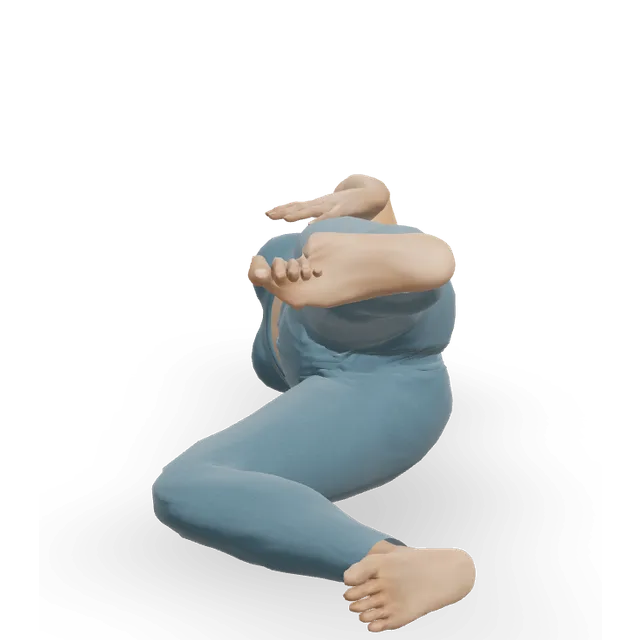 3D demoSide-lying leg circles (Pilates side kick series)Beginner · No equipment
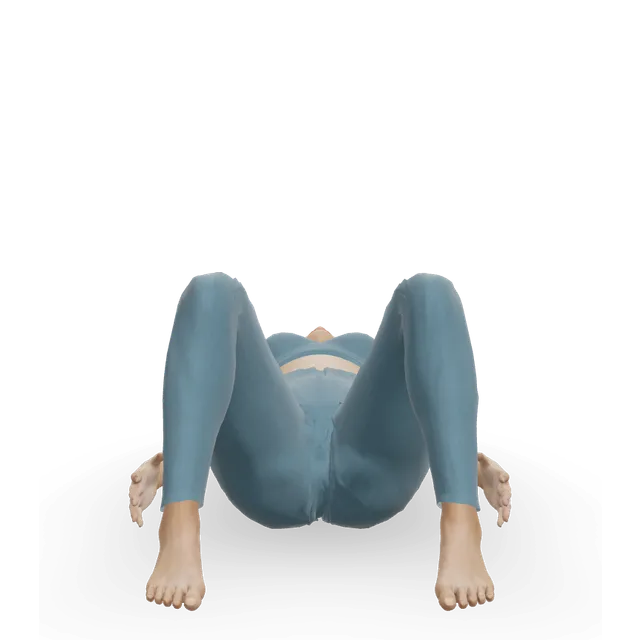 3D demoSupine isometric hip abduction (belt press)Beginner · A band
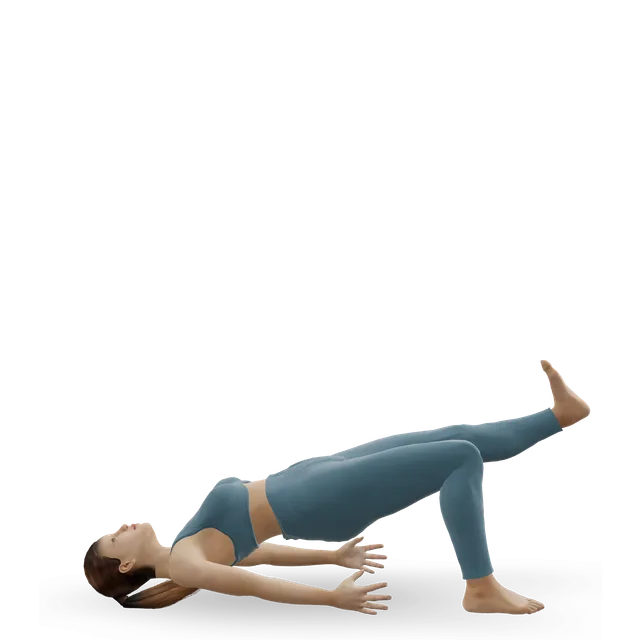
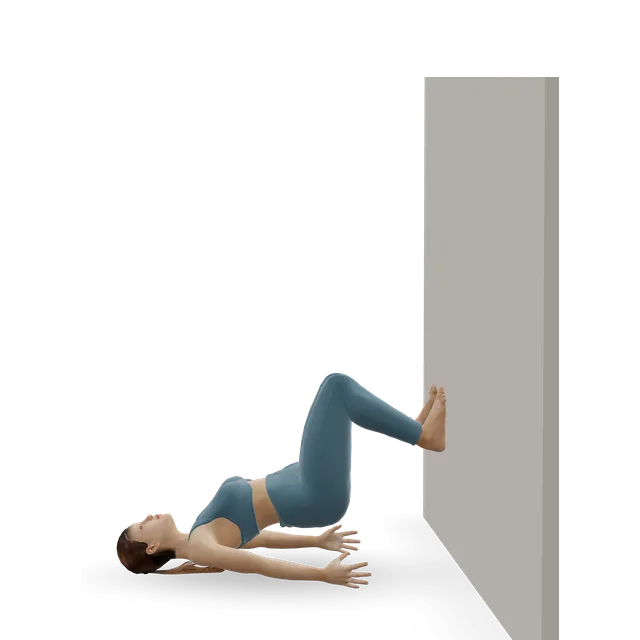
Knees over your middle toes all the way up. The move pages' doses: shoulder bridge, "3 to 5 kicks each leg"; wall bridge, "8 to 10 reps; one-leg version, 5 each side". Single-leg glute bridge, 8 each side (our knee control warm-up).
Keep your knee over your middle toes, and watch in a mirror. Standing wall press, the move page's dose: "3 to 5 holds of 5 to 15 seconds each side, twice a day: the standing hold in the LEAP trial programme". From our knock knees guide (editorial starting points): band walks, 10 to 15 steps each way; squats, 3 sets of 10 to 20; lunges and split squats, 3 sets of 8 each leg; step-downs, 2 sets of 8 slow reps each side, from a low step; one-leg stands, 3 holds of 20 to 30 seconds. The single-leg Romanian deadlift comes later.
 3D demoStanding wall-press hip abductionBeginner · A wall
 3D demoLateral band walkBeginner · A band
 3D demoBodyweight squatBeginner · No equipment
 3D demoReverse lungeIntermediate · No equipment
 3D demoSplit squatIntermediate · No equipment
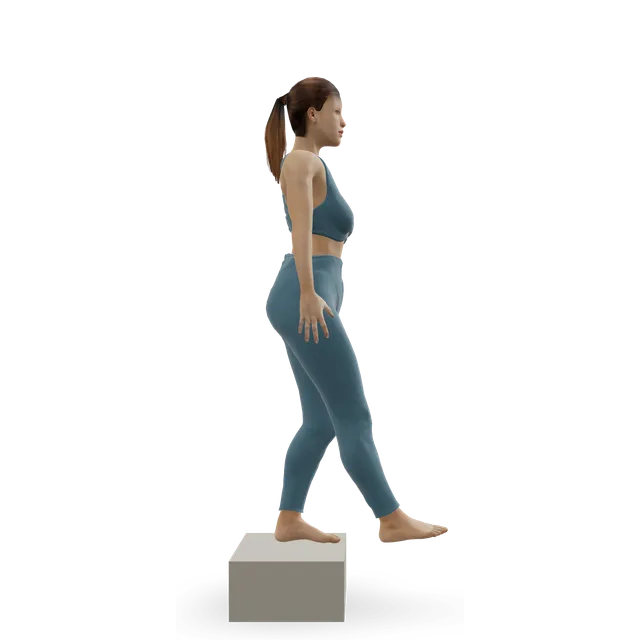 3D demoPatrick step-downIntermediate · A step
 3D demoSingle-leg standBeginner · A wall
 3D demoSingle-leg Romanian deadliftAdvanced · A dumbbell
Our suggestion, following our knock knees guide's advice to film yourself from the front. It is a guide, not a test: a phone angle matched lab measures poorly in single-leg squats, and no movement test predicts an injury for one person.
See the movement on the 3D figure: Bodyweight squat
If your knees touch before your heels do, stand or lie with your feet hip-width and parallel, or let your heels sit apart (our suggestion). For reformer footwork, classical teachers cue: "Avoid hyperextending knees, separate feet hip distance for knees that overlap".
Source 18
Keep your knees over your middle toes. If they drift in, slow the carriage and use a lighter spring, and land jumpboard work softly with your knees in line (our suggestion).
The moves' own lines. Kneeling side kick: "Avoid it with knee problems, and pad the kneeling knee." Mermaid: "If side-sitting bothers your knees or hips, sit cross-legged, on a block or on a chair."
If your knees bend backwards when they're straight, keep them soft in standing work rather than locked (our suggestion).
The step-down's own caution: "Lowering off a step loads the kneecap more than stepping up the same step, and more the higher the step: with pain at the front of the knee, start with low step-ups and add step-downs from a low step once those are comfortable." Our Pilates for knee pain guide has the kneeling swaps.
Slow calf raise, 2 sets of 10, rising through the big toe without your ankles rolling in or out; towel toe curl, 2 sets of 12 each foot (our foot and ankle routine). The foot rolling in goes with the knee moving in, and in one review hip, core and foot strengthening reduced how far the feet rolled in; it hasn't been tested in Pilates or for knock knees.
Our knees-over-toes Pilates class does side-hip work and bridges, then squats, lunges and step-downs with your knees on track; its structure is editorial. Do it 2 to 3 times a week for 6 to 10 weeks, our knock knees guide's editorial reading of the trials. Before sport, the knee control warm-up adds landing practice; with knee pain, the Pilates for knee pain class has no kneeling.
A 25-minute Pilates class for knock knees and knees that cave in: bridges, side-hip work, then squats, lunges and step-downs with your knees on track.
25 minBeginner14 movesA wall, A stepA 20-minute warm-up that trains your knees to track over your toes: side-hip strength, squats and lunges with alignment practice, balance and quiet landings.
20 minBeginner10 movesA wall, A bandA 25-minute Pilates class for sore knees and knee arthritis: lying and side-lying leg work, shallow squats and balance, with no kneeling at all.
25 minBeginner15 movesA bench or box, Something with weightA 25-minute Pilates class for your glutes: bridges, the side kick series, face-down kicks and standing work at a wall, with a band to make it harder.
25 minBeginner16 movesA wall, A bandA 25-minute Pilates class for skiers: trunk endurance, hips and thighs, wall sits and single-leg balance, for the 6 to 8 weeks before your trip.
25 minBeginner17 movesA wall, A bandA 30-minute mat Pilates workout for runners, adapted from one small trial's programme: the abdominal series, side kicks for the hips, planks and balance.
30 minIntermediate18 movesA wallThese are the same warning signs as our knock knees, bow legs and knee pain guides, word for word. This is general information, not a diagnosis. A&E means accident and emergency; in the US, call 911 for 999, and use your doctor's urgent line or urgent care for NHS 111.
Most knock knees and bow legs in young children are normal. Get them checked if:
Call 999 or go to A&E if a child gets sudden pain in the hip, knee or thigh, can't put any weight on a leg, has a leg that has changed shape or points at an odd angle, feels unwell with a high temperature or hot, cold and shivery, has severe pain low in the tummy as well, or is getting worse.
For a limp with no obvious cause, see a GP.
Source 42
Rickets, from a lack of vitamin D, can cause knock knees as well as bow legs.
There are other signs of rickets: swollen, painful wrists, aching bones, weak muscles or teeth coming through late.
Source 43
Source 44
Source 44
Sharp, catching or giving-way pain, or new swelling, is a reason to stop and get it checked.
Rate your knee pain from 0 to 10 during and after exercise. In the pain-monitoring model used in knee trials, 0 to 2 counts as safe, up to 5 as acceptable and above 5 as too much. Aim for 0 to 3 most of the time.
Call 999 if:
Call 999 or go to A&E (accident and emergency) straight away for severe difficulty breathing (gasping, choking or not able to get words out), a chest that feels tight or heavy, pain that spreads to your arms, back, neck and jaw, lips or skin turning very pale, blue or grey, or sudden confusion. If you're more short of breath than usual, or your heart is racing, fluttering or skipping beats, contact NHS 111.
You feel any pain or become unwell, as the NHS advises for its Pilates videos, and especially for chest pain or pressure, unusual breathlessness, dizziness or fainting. If you have a health problem, an injury or any symptoms, get advice from a healthcare professional, such as a GP, before you start.
Source 47
The NHS advises getting advice from a healthcare professional first if you have a health problem, an injury or symptoms, or have recently had a heart attack or an operation.
Source 47
No trial shows exercise changes the shape of the legs. In children, correction comes from growth; in adults, the only X-ray trial (in bow legs) changed the angles by about a degree.
Knees that cave in are a movement, not a bone shape: people with straight legs can cave in too, and it responds to technique and strength training.
Source 6
Hip strength relates weakly at most to knees caving in, and strength training alone didn't change how women landed. Practising the movement matters.
A landing test couldn't predict ACL injuries in 710 elite players, and across 9 cohorts no measure of the knee moving inward did. Prevention warm-ups lower the risk across groups of athletes.
They are normal at 3 to 4 and usually settle by about 7, and bracing, corrective shoes and exercise are rarely helpful.
Core training may improve knee bend in landings at low certainty, and trunk-focused programmes didn't reduce knees caving in, in one review. The ACL prevention programmes that work mix landing, strength, balance and agility.
In people who already had knee arthritis, a knock-kneed alignment sped up wear on the outer knee. Whether it causes new arthritis is unclear: one analysis found a link and another didn't.
The Q angle didn't predict kneecap pain. A knock-kneed alignment matters most for how the outer knee wears in people who already have arthritis.
Not the shape of your legs: no trial shows any exercise changes bony knock knees. What Pilates can help is how your knees move: in a small trial, supervised Pilates improved the knee's alignment in a jump test in people whose knees caved in, though it's unclear whether it beat doing nothing.
Yes, as strength and control work: side-hip moves, bridges and footwork, plus standing practice with your knees over your middle toes. It's safe for most people; check the warning signs if your knees hurt, lock or give way.
Clamshells, side kicks, side-lying leg raises and leg circles for the side hips, and shoulder bridges; then squats, lunges, step-downs and one-leg stands with your knees tracking over your toes. Our 25-minute class puts them in order.
It can be: footwork and standing work let you practise knee tracking against springs, and in one small trial, 8 weeks of reformer and Cadillac Pilates reduced landing errors in teenage volleyball players. Classical teachers separate the feet hip-width "for knees that overlap"; keep your knees over your middle toes and slow down if they drift in (our suggestion).
Stand or lie with your feet hip-width and parallel, or let your heels sit apart. That matches the classical cue to separate the feet for knees that overlap.
It's a mix of how you control your hips, knees and feet. Hip strength on its own barely predicts it, and strength training alone didn't change how women landed. Practising the movement with your knees on track, alongside strength work, is what reduced it in trials.
Yes: most children are knock-kneed at 3 to 4, and up to 12 degrees and an 8 cm gap between the ankles is normal from 2 to 11. They usually settle by about 7. Children don't need special exercises for them, though Pilates is fine as play.
If only one leg is affected, they're getting worse or look severe, they continue after about age 7, the gap between the ankles is more than 8 cm, or your child has knee pain, a limp or difficulty walking, or is unusually short for their age. The full list is in the warning signs.
Not on their own: the Q angle didn't predict kneecap pain in 18 cohorts. In knees that already have arthritis, a knock-kneed alignment goes with faster wear on the outer side.
Knees moving inward is part of how many ACL tears happen, but movement tests can't predict who will be injured. Warm-up programmes with strength, balance and landing practice cut ACL injuries by about half.
The same applies: it won't reshape the bones (the one trial changed X-ray angles by about a degree), but it trains strength and control. Our bow legs guide covers them.
Rarely. Children with severe knock knees that don't settle may have a small operation to guide growth, which needs growth left; adults with severe knock knees, often with arthritis, see an orthopaedic surgeon. Our knock knees guide covers it.
Exercise education, not a personal prescription, and clinical review of these guides is pending. If you are pregnant, have a health condition or have had recent surgery, check with a doctor, midwife or physiotherapist before starting, and stop for sharp or increasing pain. Health disclaimer.