Pilates
Control Pilates for gymnasts: a 25-minute class for trunk endurance, shoulder blades without weight on your hands, hips you control and the landing leg, with no extra stretching
A 25-minute Pilates class for a rest day or after training. Gymnasts are already very flexible, arch their backs hard in training and often have sore wrists, so this class works the other way: control of the range you have, trunk endurance at low load, shoulder blades and the rotator cuff with your hands free, hips you can hold in the middle of their range and one-leg balance in the landing shape. There are no back bends, no weight on the hands, nothing on the neck and no extra stretching, on purpose. It doesn't replace the gymnastics warm-up or the conditioning workout. No trial has tested this class.
Settle
- Knee fold5 each sideBeginner · Abs, Hip flexors · 3D demoLift to a tabletop and no further; pelvis stillEasier: Supine heel slideHarder: Dead bug heel taps
- Beginner · Forearms · 3D demoGentle circles and palm turns, with no weight on your handsEasier: Wrist circlesHarder: Wrist flexor stretch



Trunk at low load
- Hundred (Pilates)50 beatsIntermediate · Abs, Hip flexors, Shoulders · 3D demoHead down if your neck tires; legs high enough that your lower back stays stillEasier: Wall hundred (wall Pilates)Harder: Boomerang (Pilates)
- Dead bug20, alternating sidesBeginner · Abs, Hip flexors · 3D demoLow back resting; reach only as far as it stays stillEasier: Dead bug heel tapsHarder: Forearm plank
- Bird dog2 × 6 each side, 5 s holdsBeginner · Back, Abs, Glutes · 3D demoOn fists or forearms if your wrists are sore; no archingEasier: Bird dog, one limb at a timeHarder: Bear crawl
- Side plank2 holds of 20 s each sideIntermediate · Abs, Hip abductors, Shoulders · 3D demoOn your forearm, knees down to start; elbows and knees soft, not lockedEasier: Knee side plankHarder: Side plank with leg lift




Shoulder blades, hands free
- Prone Y-T-W raises5 of each shapeBeginner · Back, Shoulders, Neck · 3D demoForehead on a folded towel, neck longEasier: Wall angelHarder: Bent-over reverse fly
- Standing band external rotation12 to 15 each armBeginner · Shoulders, Back · 3D demoElbow by your side; a light bandEasier: Stick-assisted external rotation (lying)Harder: Side-lying external rotation


Hips you control
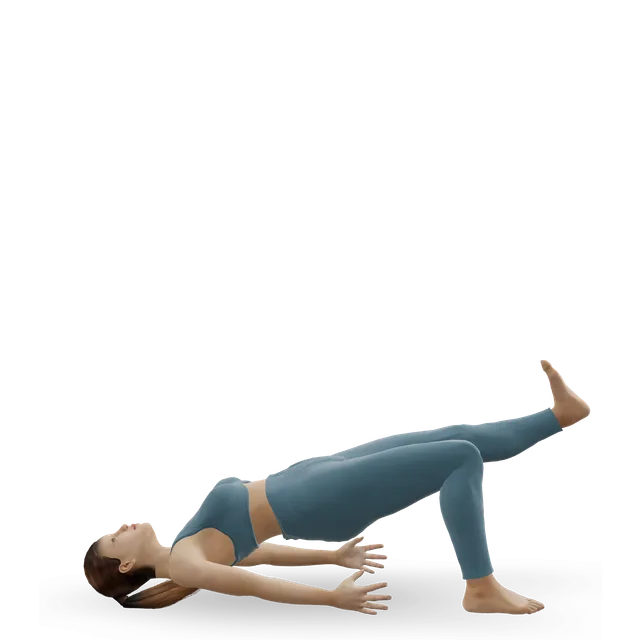
- Shoulder bridge (Pilates)3 kicks each legIntermediate · Glutes, Hamstrings, Abs · 3D demoPelvis level; kick only as high as your pelvis stays stillEasier: Wall bridge (feet-on-wall bridge)Harder: Leg pull back (Pilates leg pull up)
- Side kick (Pilates side kick series)8 each sideBeginner · Hip flexors, Glutes, Hip abductors · 3D demoGlide the leg, pelvis still; stop the swing well before your end rangeHarder: Side-lying leg circles (Pilates side kick series)
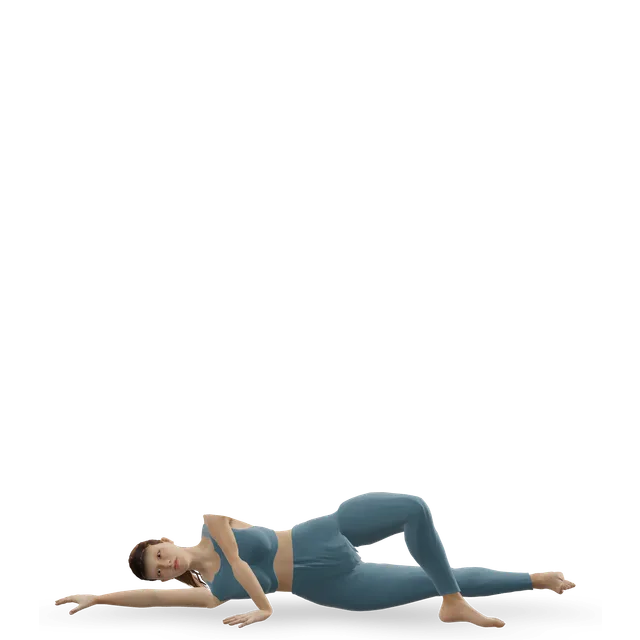
- Clamshell10 each sideBeginner · Hip abductors, Glutes · 3D demoLift only as far as your pelvis stays stillEasier: Supine isometric hip abduction (belt press)Harder: Lateral band walk
- Beginner · Adductors, Abs · 3D demoLift from the inner thigh, not the waistEasier: Side kick (Pilates side kick series)Harder: Kneeling side kick (Pilates side kick kneeling)


The landing leg
- Single-leg stand2 × 30 s each legBeginner · Hip abductors, Calves, Glutes · 3D demoThe landing shape: knee soft over your middle toes; eyes closed only when it's easyEasier: Tandem stance and heel-to-toe walkHarder: Single-leg reach matrix
- Hip airplane5 slow turns each legAdvanced · Glutes, Hip abductors, Abs · 3D demoHold a wall or barEasier: Single-leg standHarder: Single-leg Romanian deadlift
- Single-leg calf raise from a step2 × 12 each legIntermediate · Calves · 3D demoSlow on the way down; a hand on a railEasier: Slow calf raiseHarder: Single-leg pogo hops



Close
- Thoracic rotation6 each sideBeginner · 3D demoTurn your chest, not your hips, in a comfortable rangeEasier: Side-lying open bookHarder: World's greatest stretch
- Beginner · 3D demoIn for about 4, out for about 6, with no holdsEasier: Breath reachHarder: Crocodile breathing (prone diaphragmatic breathing)


Tips
- Once or twice a week on a rest day or after training, not in the hour before skills, for teenagers and adults (our suggestion).
- Before training, use the gymnastics warm-up; for jumps, landings, wrists and shoulders, the conditioning workout. This class doesn't replace them.
- Nothing here pushes your range: if a move feels like a stretch at your end range, back off to where your own muscles hold it. Never let anyone push you into a stretch; British Gymnastics' policy says you must be able to ease off or stop any stretch beyond mild discomfort.
- Wrist pain that is still there the day after gymnastics, or a swollen wrist: no weight on your hands here either, and see a GP or sports doctor.
- Back pain that lasts more than a couple of weeks, is worse arching back or stops you training needs checking by a GP or sports physiotherapist. This class has no back bends for that reason.
- This class adds to your training load, so eat enough for it. See a GP if periods stop or haven't started by 15.
The doses are suggested starting points, not a prescription. Choose a range you can control and stop for sharp or increasing pain, numbness or tingling. Get individual advice after an injury or surgery, or if you are pregnant or managing a health condition.
Guides that recommend it
Find more moves like these
More pilates



Beginner Pilates workout
A 20-minute mat Pilates workout for complete beginners. It covers breathing, spine position and the foundation moves, each with an easier option.
20 minBeginner13 movesNo equipment

10-minute Pilates abs
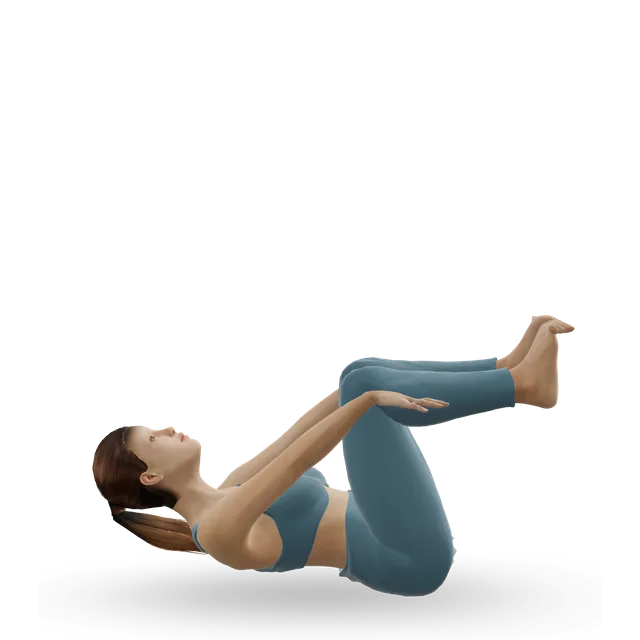
Ten minutes of the classic Pilates abdominal series: the hundred, the roll-up and the series of five, with a plank to finish.
10 minIntermediate11 movesNo equipment
Full-body mat Pilates workout
A 30-minute intermediate mat Pilates class that follows the classical order, from the hundred to the push-up, with prep versions of the hardest moves.
30 minIntermediate22 movesNo equipmentQuestions people ask
How long does the control pilates for gymnasts: a 25-minute class for trunk endurance, shoulder blades without weight on your hands, hips you control and the landing leg, with no extra stretching take?
About 25 minutes, including any warm-up and cool-down listed. Shorten it by doing fewer rounds; lengthen it by adding one.
What equipment do I need?
You need: A band, An anchor point, A wall, A step. Each move links to its guide, where you can find an alternative if you are missing something.
Is it suitable for beginners?
It is written for beginners. 16 of its 18 moves have an easier option listed beside them if you need one.
How do I make it easier or harder?
Use the easier or harder option listed under each move, change the number of rounds, or adjust the rest. Progress one change at a time.