Yoga guide

Yoga for hormone balance: what it means, stress, periods, PCOS, the thyroid and the menopause, what yoga can't change, and a class

"Hormone balance" isn't a diagnosis: hormone levels are meant to change through the day, the month and life, and real hormone conditions such as PCOS (polycystic ovary syndrome, now called PMOS), thyroid conditions and the menopause have names, tests and treatments. No trial has tested yoga for "hormone balance" in healthy women. Trials in conditions found small, mixed changes: cortisol may fall a little on average, and the PCOS and thyroid findings come from small studies.

Yoga is still worth doing: it counts as activity, which helps insulin work, it can ease stress, sleep and mood a little, and it may help period pain. This guide covers what each hormone trial measured, why no pose stimulates a gland, weight and "cortisol belly", the symptoms to take to a GP, and a week that mixes strength, movement and calm. Our guides to yoga for PCOS, the thyroid, the menopause and period pain go deeper.

The short version

"Hormone balance" isn't a diagnosis

That's our reading: hormones are chemical messengers with many feedback loops, and their levels are meant to rise and fall. Cortisol is higher when you wake and falls through the day, and the Society for Endocrinology says women with PMS (premenstrual syndrome) don't have abnormal hormone levels.

Sources 1, 2, 3

No trial has tested yoga for it

Our searches found no trial of yoga for "hormone balance" in healthy women, only trials in particular conditions.

Source 4

Cortisol: maybe a small fall, with mixed results

Across 42 trials, programmes with yoga poses went with lower cortisol, but the programmes varied a lot and the summary gives no sizes. Another review found no clear change from where people started, and in one good trial, group stretching lowered cortisol more than restorative yoga.

Sources 5, 6, 7

PCOS and the thyroid: small trials, unclear changes

In PCOS, changes in testosterone and AMH (anti-Müllerian hormone) weren't significant once a 2026 review recalculated them, and exercise of any kind didn't change sex hormones across 19 trials. The thyroid studies are small and mostly uncontrolled.

Sources 8, 9, 10

Movement helps insulin work, whatever the scale says

Insulin works better for up to about 3 days after any activity, and similarly across types of exercise. Yoga doesn't reliably change weight, and nothing here promises weight loss or a shape.

Sources 11, 12

Symptoms go to a GP, and treatment carries on

Periods that stop or change, very heavy periods, bleeding after the menopause and thyroid symptoms need checking. Yoga goes alongside thyroid tablets, HRT (hormone replacement therapy) or PCOS treatment, never instead.

Sources 13, 14, 15

What "hormone balance" means, and doesn't

Hormones are messengers that are meant to changeStrong evidence

"Hormones are chemical messengers." Some are held steady by feedback; others swing on purpose: "Blood levels of cortisol vary throughout the day, but generally are higher in the morning when we wake up, and then fall throughout the day." Reproductive hormones rise and fall across the cycle, and fall at the menopause, which the Society for Endocrinology calls a normal process.

Sources 1, 16, 2, 17, 18

"Imbalance" is a marketing word

We found no professional body that uses "hormone imbalance" as a diagnosis (our reading; we didn't find one saying so in those words either). Real hormone conditions have names and tests: PCOS, an underactive or overactive thyroid, diabetes, an early menopause, Cushing's syndrome and Addison's disease.

Sources 19, 1

PMS isn't a hormone level problemStrong evidence

"Women with premenstrual syndrome do not have abnormal levels of hormones but they appear to be more sensitive to the effects of progesterone and oestrogen."

Source 3

Adrenal fatigue isn't a recognised conditionStrong evidence

The Endocrine Society says: "No scientific proof exists to support adrenal fatigue as a true medical condition." A review of 58 studies concluded that "adrenal fatigue is still a myth". Tiredness that won't lift deserves a GP visit.

Sources 20, 21

Hormone tests from salivaStrong evidence

The British Menopause Society says "There is insufficient evidence to justify multiple serum and saliva hormone tests" sold to tailor hormone products. Over 45, a hormone test isn't needed to diagnose the menopause.

Sources 22, 18

PCOS has a new nameStrong evidence

PCOS is now called polyendocrine metabolic ovarian syndrome (PMOS), and it "affects one in eight women". The NHS says there is no cure, but treatments and lifestyle changes can help.

Sources 23, 24

What the evidence says: which hormones yoga trials measured

Many of these trials are small, in one centre, and in journals outside the main medical index. We say where the evidence is weak.

No trial of yoga for "hormone balance" in healthy women

Our searches of PubMed (22 records), Europe PMC (527 full-text hits) and ClinicalTrials.gov (8 studies) found trials only in particular conditions.

Source 4

The menopause: no specific change in hormone levelsEmerging evidence

In 80 women aged 40 to 50, a year of a yoga breathing practice against brisk walking found "no significant improvement" in FSH (follicle-stimulating hormone). In 88 postmenopausal women, FSH and LH (luteinising hormone) fell with yoga and with exercise alike. A study reporting higher oestrogen with yoga wasn't randomised: the women chose yoga.

Sources 25, 26, 27

Melatonin, growth hormone and DHEAMixed evidence

A review of 5 small studies of yoga practices and melatonin, in a journal outside the main medical index, and one small study of growth hormone and DHEA-S (a hormone made by the adrenal glands) are too thin to claim anything.

Sources 28, 29

Cortisol and stress

A small average fall, with heterogeneous programmesEmerging evidence

Across 42 trials against other activities, programmes with yoga poses went with lower waking and evening cortisol, but "the reported interventions were heterogeneous", and the summary we could read gives no sizes.

Source 5

Reviews that disagreeMixed evidence

A 2025 analysis ranked yoga first among types of exercise for lowering cortisol, but the trials disagreed a great deal and the analysis showed significant inconsistency. A review of 89 trials of mind-body programmes found no significant change from where people started.

Sources 30, 6

Stretching beat restorative yogaEmerging evidence

In a two-site trial of 180 adults with metabolic syndrome: "At 6 months, the stretching group had decreased cortisol at waking and bedtime compared to the restorative yoga group." The authors think the group support in the stretching classes may have helped.

Source 7

One student trialMixed evidence

In 158 students, cortisol fell within the yoga group, but the summary doesn't compare yoga with circuit training or no programme.

Source 31

Lower isn't automatically betterStrong evidence

Cortisol helps you respond to stress and is meant to peak in the morning. Too much for a long time is Cushing's syndrome; too little is Addison's disease. Our yoga for stress guide has more.

Source 2

PCOS (PMOS)

Hormone changes from essentially one trialMixed evidence

In 90 teenage girls at one college, an hour of yoga a day for 12 weeks changed AMH, LH and testosterone more than matched exercise, going by the trial's own tests. When a 2026 review recalculated the results with confidence intervals, only LH stayed significant. In a US trial of 31 women (22 finished), free testosterone fell within the yoga group, with no comparison between groups reported. The yoga trials together include just 258 people.

Sources 32, 8, 33

Exercise didn't change sex hormonesMixed evidence

A network of 19 trials found "exercise had no impact on sex hormones and regular menstruation". Another, built on only 3 yoga trials in a journal outside the main medical index, ranked yoga first for testosterone.

Sources 9, 34

Insulin: small gains from small trialsMixed evidence

Yoga improved insulin measures in the same teenage trial and in 2 pooled trials, at low certainty. Across 25 trials of exercise in PCOS, aerobic exercise and interval training did best for blood sugar control.

Sources 35, 36, 37

Any exercise you'll keep doingStrong evidence

The 2023 PCOS guideline says there is "a lack of evidence supporting any 1 type and intensity of exercise being better than another", and suggests 150 to 300 minutes of moderate activity a week with muscle strengthening on 2 days. Our yoga for PCOS guide has a sample week.

Sources 38, 23

The thyroid

Small, weak studiesMixed evidence

Reviews of yoga in thyroid conditions found 13 studies (389 people, only 2 randomised trials) and 11 studies (516 people, 1 at low risk of bias), in journals outside the main medical index. In the largest trial, 83 people, TSH (thyroid-stimulating hormone) fell in the comparison group too. A 6-month study in 22 women had no comparison group.

Sources 10, 39, 40

On top of thyroid tablets, not insteadMixed evidence

The trials gave yoga alongside levothyroxine. The NHS says levothyroxine is usually needed "for the rest of your life to prevent your symptoms returning".

Sources 41, 13

Exercise in general doesn't change thyroid testsEmerging evidence

A review of 10 studies concluded: "Exercise does not have a significant impact on thyroid function." The British Thyroid Foundation says exercise can still help energy and mood, and that activities such as yoga can help you relax.

Sources 42, 43

No pose stimulates the thyroid

Our searches found no study of shoulder stand, fish pose, plough or the chin lock on the thyroid. Every trial tested a whole programme. Our yoga for thyroid problems guide has a class without shoulder stand.

Source 44

The menopause

Symptoms ease a little, about as much as with other exerciseEmerging evidence

In 13 trials of 1,306 women, yoga eased overall menopause symptoms against no treatment, mostly on questionnaires that couldn't be blinded. Against other exercise, only a small effect on flushes remained: "Effects are comparable to those of other exercise interventions."

Source 45

Hot flushes didn't fall in the largest trialStrong evidence

In 249 women keeping daily diaries, 12 weeks of yoga didn't reduce hot flushes, though insomnia symptoms eased. A 2025 review of 24 trials found no effect on hot flushes, and the US Menopause Society doesn't recommend yoga for them.

Sources 46, 47, 48

What NICE recommendsStrong evidence

For hot flushes, NICE (the National Institute for Health and Care Excellence) offers HRT, a menopause-specific form of CBT (cognitive behavioural therapy) and, when HRT is unsuitable, fezolinetant. It also asks doctors to explain "the importance of maintaining muscle mass and strength through physical activity". The NHS suggests "try relaxing things such as yoga, tai chi or meditation". Our yoga for menopause guide has more.

Sources 14, 49

Periods and PMS

Exercise may ease period painMixed evidence

A Cochrane review found that exercise, including yoga, "may have a large effect on reducing menstrual pain intensity compared to no exercise", from low-quality evidence. The NHS suggests trying "some gentle exercise like yoga, swimming, walking or cycling".

Sources 50, 51

PMSMixed evidence

In 14 studies, yoga eased PMS symptoms except the physical ones, with differences between studies and possible missing studies. The NHS suggests yoga or meditation to reduce stress.

Sources 52, 53

Hormone changes in mixed menstrual problemsMixed evidence

In 150 women, yoga nidra lowered several hormone levels, but the trial pooled very different problems (heavy, light, painful and infrequent periods), so the changes are hard to read.

Source 54

Too much exercise can stop periodsStrong evidence

The NHS lists stress, big weight changes and "doing too much exercise" among causes of missed or irregular periods. More exercise or eating less isn't a way to "balance hormones". Our yoga for period pain guide covers period pain.

Sources 55, 56

Insulin, weight and "cortisol belly"

Movement helps insulin workStrong evidence

The American College of Sports Medicine says insulin works better for 2 to 72 hours after any physical activity, and that different kinds of structured exercise help about equally when they use the same energy. That's the honest answer to yoga for hormone balance and weight loss: regular movement helps whatever happens on the scale.

Source 11

Yoga and blood sugar in type 2 diabetesEmerging evidence

In 28 trials of 2,241 adults, yoga lowered HbA1c (average blood sugar) by 0.64 percentage points against usual care, at low certainty: 20 trials were in India and none was at low risk of bias. Against other exercise, the difference was 0.39 points in 8 trials that varied a lot.

Sources 57, 58

Weight doesn't reliably changeEmerging evidence

Across 30 trials of 2,173 people: "No effects on weight, body mass index, body fat percentage or waist circumference were found." A 2023 review of 15 trials in people with obesity found no difference in weight or body fat either.

Sources 12, 59

"Cortisol belly" overstates a weak linkMixed evidence

In 2,527 older adults, hair cortisol was only weakly linked with waist size. In another study, "Perceived weight discrimination significantly mediated associations between obesity and hair cortisol": weight stigma is itself a stress. Our yoga for belly fat guide has more.

Sources 60, 61

Move on most days

Sun salutation A: 3 slow rounds, stepping back rather than jumping (our yoga for stress class). Marching on the spot: 2 to 3 minutes to warm up (adapted from our yoga for longevity class). Any activity counts towards the 150 minutes.

Strength on 2 days

Chair pose: 3 holds of 5 breaths. Warrior II and high lunge: 5 breaths each side. Sit to stand: 8 to 10 slow stands. Locust: 3 to 5 lifts, held 3 to 5 seconds. Glute bridge: 6 to 8 slow lifts. Band row: 2 sets of 10 to 15 (all from our yoga for longevity class).

Calm and sleep

Slow breathing: "At least 5 minutes, done regularly as part of your daily routine" (from the move page's dose), with no holds. Child's pose: 1 minute. Lying twist: 45 seconds each side, a stretch rather than a detox. Legs up the wall: 2 minutes, hips on the floor with glaucoma or high blood pressure that isn't controlled. Corpse pose: 2 minutes, or 5 to 10 if you have time (all from our yoga for stress class). Reclining bound angle: "Rest 2 to 5 minutes with a support under each thigh (our editorial starting point)." (from the move page's dose).

On painful period days

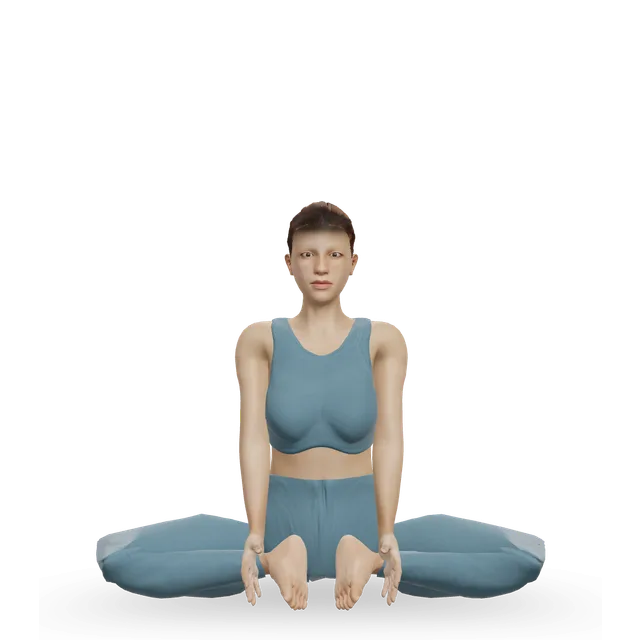
Cat-cow: "8 waves, slower than feels natural" (the move page's dose). Bound angle: 60 seconds, letting the knees fall open. Glute bridge: 10 to 12 slow lifts (both from our gentle exercises for period pain). Use them alongside heat and painkillers.

What to change or leave out

Shoulder stand, plough and fish pose "for the thyroid"

Not needed: no study shows they act on the thyroid. Leave them out with neck problems, glaucoma or high blood pressure that isn't controlled, as their pages say; head-down poses raised eye pressure within a minute in a small study.

Sources 44, 62

Twists "to detox"

Twists are fine as a stretch, but we found no study of twists and the liver, detox or hormones.

Source 63

Forceful breathing

Not needed. US health advice is that beginners avoid forceful breathing; our yoga for belly fat guide covers breath of fire.

Source 64

A week for hormone health

Our editorial plan, following the 2023 PCOS guideline, NICE's menopause guideline and the American College of Sports Medicine on exercise and insulin. No pose or sequence acts on hormones.

  1. Move on most days, building to 150 minutes of moderate activity a week: brisk walking, cycling or a brisk yoga flow.
  2. Do strength work on 2 days: our yoga for longevity class, our strength yoga workout or a strength class.
  3. Have one calm session, such as our yoga for stress or bedtime yoga class, and 5 minutes of slow breathing on stressful days.
  4. On painful period days, use our gentle exercises for period pain, alongside heat and painkillers.
  5. Keep any medical treatment going, and take symptoms to a GP.

See the movement on the 3D figure: Chair pose (Utkatasana)

Classes to follow

The stress class is the calm half of the week and the longevity or strength yoga class the strength half; the walk and yoga workout counts towards the 150 minutes. The menopause, thyroid and period pain classes belong to their own guides.

Yoga for stress relief: a 20-minute class to breathe, loosen, move and slow down

Twenty minutes of yoga for stressful days: the NHS breathing exercise, neck, shoulder and spine moves, standing poses that warm you up, then a slow wind-down.

20 minBeginner13 movesWall

Yoga for longevity: a 35-minute class for strength, balance, stamina and getting up from the floor

A 35-minute yoga class for ageing well: a brisk start, leg and upper-body strength with grip, balance at a counter, and getting down to the floor and up.

35 minBeginner20 movesBench or box, wall

Strength yoga: a 35-minute workout with a band

Thirty-five minutes of yoga built for strength: long standing holds, slow lowering from plank, single-leg balances and a band row, with harder options.

35 minIntermediate18 movesStep, band

Walk and yoga workout

A 45-minute session for weight loss and health: a 20-minute brisk walk, which does more for the scales, then a standing yoga flow for strength and balance.

45 minBeginner12 movesCardio machine

Yoga for menopause: a 35-minute practice for strength, balance and winding down

Thirty-five minutes of standing strength, balance, back strengthening and a long relaxation for the menopause, with no deep forward folds or shoulder stands.

35 minBeginner15 movesFirm cushion

Yoga for thyroid problems: a 30-minute gentle practice, no shoulder stand needed

Thirty minutes of slow breathing, gentle neck and spine movement, standing poses and rest for thyroid problems, with legs up the wall instead of shoulder stand.

30 minBeginner15 movesWall

Gentle exercises for period pain

A gentle 20-minute routine for period pain: an easy walk, then cat-cow, cobra, supported fish, child's pose, bound angle, a twist and bridges.

20 minBeginner9 movesCardio machine

Bedtime yoga: a 20-minute wind-down on the mat, with slow breathing, gentle lying poses and no breath holds

A 20-minute bedtime yoga class on the mat: slow breathing with no holds, a few gentle movements, lying stretches and a long rest before bed.

20 minBeginner9 movesFirm cushion, wall

Breathing exercises to relax

A 6-minute breathing routine: slow breathing, crocodile breathing, alternate nostril breathing, box breathing and 4-7-8 breathing.

6 minBeginner5 movesNo equipment

Plans

For strength and walking alongside yoga.

Who should change what

On thyroid tablets, HRT or PCOS treatment

Keep taking them; yoga goes alongside. With an overactive thyroid that isn't yet controlled, our suggestion is to keep classes gentle until it's treated, and palpitations during exercise are a reason to stop and get checked.

Source 13

Periods that stopped while training or losing weight

See a GP, and don't add more exercise to "balance hormones" (our suggestion, from the NHS list of causes of missed periods).

Source 55

Inversions on your period

Your choice: no study shows harm or benefit.

Source 65

Pregnancy or trying to conceive

Our yoga in pregnancy and yoga for fertility guides cover the changes.

When to see a GP, and warning signs

Hormone symptoms need a diagnosis, not a yoga sequence. These are the site's lines from our period, PCOS, menopause, thyroid, eating and yoga guides, word for word. This is general information, not a diagnosis. A&E means accident and emergency; in the US, call 911 for 999, and use your doctor's urgent line or urgent care for NHS 111.

Chest pain or fainting while exercising: call 999

Call 999 if:

  • You get sudden pain or discomfort in your chest that doesn't go away; it can feel like squeezing or pressure, burning or indigestion.
  • The pain spreads to your left or right arm, or your neck, jaw, stomach or back.
  • You have chest pain and feel sweaty, sick, light-headed or short of breath.
  • Someone faints while exercising, can't be woken within 1 minute, or has chest pain or a pounding, fluttering or irregular heartbeat.

Sources 66, 67, 68

Thyroid storm: call 999

The NHS says a thyroid storm, a sudden flare-up of an overactive thyroid, is a medical emergency: call 999 for an ambulance straight away if you think you or someone in your care has one. The signs are a rapid heartbeat, a high temperature, high blood pressure, yellowing of the skin and eyes (jaundice), severe agitation and confusion, and loss of consciousness.

Source 69

Palpitations or fainting

Call 999 or go to A&E if you have palpitations that don't go away, or that come with chest pain, shortness of breath, or feeling faint or fainting. Call 999 if someone faints while exercising.

Source 70

If you're struggling with your mental health

If you have seriously harmed yourself or feel you may be about to, call 999 or go to A&E. For support now, call Samaritans free on 116 123, call NHS 111, or text SHOUT to 85258. In the US, call or text 988.

Signs of an eating disorder: see a GP

The NHS lists signs such as spending a lot of time worrying about your weight and body shape, exercising too much, and having very strict habits or routines around food. If that sounds like you, see a GP as soon as you can. You can also talk in confidence to the eating disorder charity Beat: 0808 801 0677 (England), 0808 801 0432 (Scotland), 0808 801 0433 (Wales) or 0808 801 0434 (Northern Ireland), 3pm to 8pm, Monday to Friday.

Sources 71, 72

See a GP: periods

  • Periods that become more painful, heavier or irregular, or pain that stops your usual activities.
  • Bleeding between periods, after sex or after the menopause.
  • Heavy periods that affect your life, or signs such as changing a pad every 1 to 2 hours or passing large clots.
  • Missing 3 periods in a row, periods not starting by 15, or cycles that are often longer than 45 days.
  • PMS that self-help hasn't eased, or that affects your daily life.
  • Worries about eating or exercising too much.

Sources 51, 73, 55, 74

See a GP: PCOS

  • You think you might have PCOS (PMOS), or your symptoms are affecting your everyday life, work or relationships.
  • You've missed 3 periods in a row, your periods haven't started by 15, or they've become irregular.
  • You haven't had a period for more than 4 months: you may need treatment to protect your womb lining.
  • Hair growth on your face or body has started suddenly, is severe, or is getting worse quickly.
  • Signs of diabetes: feeling very tired, peeing more than usual, feeling thirsty all the time, losing weight without trying, blurred vision, slow-healing cuts, or itching around the vagina or repeated thrush.
  • You feel low or anxious most of the time, or you worry a lot about food, weight or exercise.
  • Your periods stop while you're training hard or after losing weight quickly.

Sources 23, 55, 75

See a GP: bleeding after the menopause, and menopause symptoms

  • Any bleeding from the vagina after the menopause, even a small amount or only once.
  • You still have periods but you're bleeding more, not less, than before.
  • Hot flushes, low mood or poor sleep that are hard to live with: HRT and CBT have the strongest evidence and start with a GP appointment.
  • Symptoms you've put down to the menopause that don't settle: NICE warns that symptoms of thyroid problems may be mistaken for the menopause; see our yoga for thyroid problems guide.

Sources 76, 77, 14, 78

See a GP: the thyroid

  • You think you might have an underactive or overactive thyroid.
  • You still feel unwell after several months on treatment with normal tests.

Sources 13, 79, 70, 78

During yoga

A joint pain that is sharp, gets worse during a session, lingers into the next day or changes how you move is a reason to use an easier version, and to see a GP or physiotherapist if it keeps happening (the rule in our plans). Muscle soreness for a day or two after something new is normal. In a hot class, stop if you feel dizzy, sick or unwell; our hot yoga guide lists the signs of heat illness.

You can say no to any hands-on adjustment, and a teacher registered with Yoga Alliance must get your explicit consent each time.

Sources 64, 80

Head-down poses, bones and pregnancy

With glaucoma, or high blood pressure that isn't under control, skip headstands, shoulder stands and long head-down holds. With osteoporosis, swap deep forward folds for a flat-back hinge from the hips, and twist smoothly. In pregnancy, our yoga in pregnancy guide covers the changes. NCCIH advises beginners to avoid headstands, shoulder stands, the lotus position and forceful breathing.

Sources 62, 64

Before you start

The NHS advises getting advice from a healthcare professional first if you have a health problem, an injury or symptoms, or have recently had a heart attack or an operation.

If you have a heart, lung or joint condition, are pregnant or have recently been unwell, start gently and read our guide for your condition. Muscle soreness for a day or two after a new exercise is common and fades as you repeat it.

Myths

"Yoga balances your hormones"

No trial has tested it in healthy women. Trials in conditions measured single hormones and found small, inconsistent changes: a possible small fall in cortisol, PCOS hormone changes that weren't significant once recalculated, and no effect of exercise on sex hormones across 19 trials.

Sources 4, 8, 9, 5

"Shoulder stand stimulates your thyroid"

No study has tested a single pose on the thyroid; the trials tested whole programmes, mostly small and uncontrolled. Shoulder stand puts weight on the neck and isn't needed.

Sources 44, 10

"Twists detox your liver or hormones"

No study has tested it, and a review of detox diets found "very little clinical evidence to support the use of these diets". Twists are a stretch.

Sources 63, 81

"Poses massage your ovaries, adrenals or pituitary"

We found no study testing it.

Source 63

"Yoga lowers cortisol, so belly fat melts away"Mixed evidence

Yoga may lower cortisol a little, but it doesn't reliably change weight or waist size, and cortisol and waist size are only weakly linked.

Sources 5, 12, 60

"You have adrenal fatigue, and yoga will fix it"Strong evidence

Adrenal fatigue isn't a recognised condition, and "There is no test that can detect adrenal fatigue." Lasting tiredness deserves a GP visit.

Sources 20, 21

"Never do inversions on your period"

No study shows harm or benefit. Some yoga schools ask you to skip them, and backward flow of period blood into the pelvis is "a very common physiologic event in all menstruating women" anyway. It's your choice.

Sources 65, 82, 83

"Yoga can replace thyroid tablets or HRT"

No trial has tested yoga instead of medicine, levothyroxine is usually needed for life, and NICE's menopause options don't include yoga. Don't stop a medicine without talking to your doctor.

Sources 15, 13, 14

"Seed cycling balances hormones"

We found no controlled trial of timed seed cycling that measured hormones; the evidence is one review in a journal outside the main medical index and small studies of single seeds.

Source 84

Questions people ask

Can yoga balance hormones?

Not in the way it's sold. No trial has tested yoga for hormone balance in healthy women, and hormone levels are meant to change through the day, the month and life. Yoga can ease stress, sleep and mood a little and count as activity, which helps how insulin works.

What is a hormonal imbalance?

It isn't a diagnosis. Real hormone conditions have names and tests, such as PCOS, thyroid conditions, diabetes and an early menopause. If you have symptoms, see a GP rather than treating an imbalance yourself.

Does yoga lower cortisol?

Possibly a little, on average, but the results vary a lot, and in one good trial group stretching lowered cortisol more than restorative yoga. Cortisol isn't bad: it's meant to be higher in the morning. Our yoga for stress guide has more.

Which yoga poses balance female hormones?

None has been shown to. The trials tested whole programmes of poses, breathing and relaxation, not particular poses. Choose poses for strength, calm and comfort instead.

Can yoga help PCOS?

It may help insulin and stress a little, from small trials, and changes in testosterone and AMH were unclear once recalculated. The PCOS guideline says no type of exercise is better than another, so do what you enjoy, including yoga. Our yoga for PCOS guide has the details.

Does yoga help the thyroid?

There's no reliable evidence that it changes thyroid hormones; the studies are small and often uncontrolled. Keep taking your thyroid medicine, and use yoga for energy, mood and fitness.

Can yoga help menopause symptoms?

A little for overall symptoms, sleep and mood, about as much as other exercise, but not for hot flushes in the largest trial. HRT, CBT and fezolinetant are the treatments NICE recommends for flushes.

Can yoga help hormone balance and weight loss?

Yoga doesn't reliably change weight. Regular movement helps insulin work whatever happens on the scale. If you're worried about your eating or your periods have stopped, see a GP.

Is it OK to do yoga on my period?

Yes, if it feels right. Gentle exercise including yoga may ease period pain, though the evidence is low quality, and no study shows inversions on your period cause harm.

Is shoulder stand good for the thyroid?

No study shows it is, and it puts weight on the neck. Skip it with neck problems, glaucoma or high blood pressure that isn't under control; our thyroid class leaves it out.

How often should I do yoga for my hormones?

For health in general, aim for 150 to 300 minutes of moderate activity a week with muscle strengthening on 2 days, as the PCOS guideline suggests. Yoga can fill some of that, alongside walking or other activity.

Do I need a hormone test?

Only if a doctor thinks you need one for your symptoms. The British Menopause Society says repeated saliva or blood tests sold to tailor hormones aren't justified, and a hormone test isn't needed to diagnose the menopause over 45.


Sources

  1. Society for Endocrinology · You and Your Hormones: What is a hormone? (last reviewed August 2024; archived copy, July 2026)
  2. Society for Endocrinology · You and Your Hormones: Cortisol (last reviewed January 2019; archived copy, September 2026)
  3. Society for Endocrinology · You and Your Hormones: Premenstrual syndrome (last reviewed July 2023; archived copy, October 2026)
  4. PubMed · Our search for yoga and "hormone balance" or "hormonal imbalance": 22 records, with Europe PMC (527 full-text hits, 35 randomised) and ClinicalTrials.gov (8): no trial of yoga for hormone balance in healthy women (3 November 2026)
  5. Pascoe 2017 · Yoga, mindfulness and stress-related measures in the body: 42 trials against active controls (systematic review and meta-analysis, Psychoneuroendocrinology)
  6. Lee 2025 · Mind-body programmes, immune and hormone markers: 89 trials (systematic review and meta-analysis, Healthcare (Basel); read in full)
  7. Corey 2014 · Restorative yoga against stretching for cortisol in 180 adults with metabolic syndrome: PRYSMS (two-site randomised trial, Psychoneuroendocrinology; read in full)
  8. Chauhan 2026 · Yoga, AMH, androgens and metabolism in PCOS: 5 trial reports, 258 people (systematic review, BMC Complement Med Ther; read in full)
  9. Motaharinezhad 2024 · Types of exercise, weight and hormones in PCOS: 19 trials (network meta-analysis, BMC Womens Health)
  10. Amrita 2025 · Yoga in thyroid disease: 13 studies, 389 people (systematic review, Int J Yoga; read in full; not indexed in MEDLINE)
  11. Kanaley 2022 · Exercise and physical activity in type 2 diabetes (American College of Sports Medicine consensus statement, Med Sci Sports Exerc; read in full)
  12. Lauche 2016 · Yoga and weight: 30 trials, 2,173 people (systematic review and meta-analysis, Prev Med)
  13. NHS · Underactive thyroid (hypothyroidism) (last reviewed April 2025)
  14. NICE NG23 · Menopause: identification and management (recommendations, last updated April 2026)
  15. PubMed · Our search for yoga in place of levothyroxine or HRT: 38 records, no trial of yoga instead of either (3 November 2026)
  16. Society for Endocrinology · You and Your Hormones: Thyroxine (last reviewed July 2021; archived copy, July 2026)
  17. Society for Endocrinology · You and Your Hormones: Menstrual cycle (last reviewed February 2021; archived copy, June 2026)
  18. Society for Endocrinology · You and Your Hormones: Menopause (last reviewed September 2024; archived copy, October 2026)
  19. Endocrine Society · Hormones and endocrine function (patient information, January 2022)
  20. Endocrine Society · Adrenal fatigue (patient information, January 2022)
  21. Cadegiani 2016 · Adrenal fatigue does not exist: 58 studies (systematic review, BMC Endocr Disord; read in full)
  22. British Menopause Society · Bioidentical HRT (consensus statement page, reviewed April 2026)
  23. NHS · Polyendocrine metabolic ovarian syndrome (PMOS) (last reviewed June 2026)
  24. Teede 2026 · Polyendocrine metabolic ovarian syndrome, the new name for PCOS (global consensus, Lancet)
  25. Swain 2021 · A yoga breathing practice against brisk walking for a year in 80 women aged 40 to 50 (randomised trial, J Obstet Gynaecol Res)
  26. Jorge 2016 · Hatha yoga, exercise or no programme in 88 postmenopausal women (randomised trial, Complement Ther Med)
  27. Cota e Souza 2026 · Yoga and hormones in 182 women aged 40 to 65 who chose yoga or stayed inactive (non-randomised study, J Evid Based Integr Med)
  28. Govindasamy 2025 · Yoga practices and melatonin: 5 small studies (meta-analysis, Int J Yoga; not indexed in MEDLINE)
  29. Chatterjee 2014 · Growth hormone and DHEA-S after 12 weeks of yoga in 45 adults (small controlled study, Evid Based Complement Alternat Med)
  30. Li 2025 · Types of exercise and cortisol in people with psychological distress: 44 studies, 3,284 people (network meta-analysis, Sports (Basel); read in full)
  31. Haag 2024 · Circuit training against yoga against no programme for stress in 158 students (randomised trial, Psychoneuroendocrinology)
  32. Nidhi 2013 · Yoga against matched exercise and hormones in 90 teenage girls with PCOS (single-centre randomised trial, J Altern Complement Med)
  33. Patel 2020 · Mindful yoga and androgens in 31 women with PCOS (small randomised trial, J Am Osteopath Assoc)
  34. Tan 2025 · Types of exercise, insulin resistance and testosterone in PCOS: 19 trials, 3 of yoga (network meta-analysis, Healthcare (Basel); read in full; not indexed in MEDLINE)
  35. Nidhi 2012 · The same trial: blood sugar, insulin and lipids (randomised trial, Int J Gynaecol Obstet)
  36. Verma 2023 · Yoga therapy in PCOS: 11 studies, 2 trials pooled (systematic review and meta-analysis, Am J Lifestyle Med; not indexed in MEDLINE)
  37. Khalafi 2026 · Types of exercise and heart and metabolic health in PCOS: 25 trials, 1,107 women (network meta-analysis, BMC Womens Health)
  38. Teede 2023 · Recommendations from the 2023 International Evidence-based Guideline for PCOS (guideline, J Clin Endocrinol Metab; read in full)
  39. Baishya 2024 · Yoga for an underactive thyroid: 11 studies, 516 people (systematic review, J Ayurveda Integr Med; read in full; not indexed in MEDLINE)
  40. Nilakanthan 2016 · Six months of yoga in 22 women with an underactive thyroid (uncontrolled pilot study, J Complement Integr Med)
  41. Bhandari 2025 · Online yoga added to levothyroxine in 62 women (single-centre randomised trial, Psychoneuroendocrinology)
  42. Duñabeitia 2023 · Exercise in people with an underactive thyroid: 10 studies (systematic review and meta-analysis, Scand J Clin Lab Invest)
  43. British Thyroid Foundation · Coping with fatigue (updated June 2024)
  44. PubMed · Our search for shoulder stand, fish pose, plough or the chin lock and the thyroid: 2 records, with Europe PMC (33, and 204 for inversions): no study of a single pose and the thyroid (3 November 2026)
  45. Cramer 2018 · Yoga for menopausal symptoms: 13 trials, 1,306 women (systematic review and meta-analysis, Maturitas)
  46. Newton 2014 · Yoga for hot flushes in 249 women: MsFLASH (multi-site randomised trial, Menopause)
  47. Wang 2025 · Yoga for menopausal symptoms: 24 trials, 2,028 women (systematic review and meta-analysis, Int J Nurs Stud)
  48. The Menopause Society 2023 · Non-hormone therapy position statement (position statement, Menopause)
  49. NHS · Things you can do to help menopause and perimenopause symptoms (last reviewed May 2026)
  50. Armour 2019 · Exercise for period pain: 12 trials, 854 women (Cochrane review)
  51. NHS · Period pain (last reviewed March 2026)
  52. Pal 2022 · Yoga for premenstrual syndrome: 14 studies (systematic review and meta-analysis, J Psychosom Obstet Gynaecol)
  53. NHS · PMS (premenstrual syndrome) (last reviewed June 2024)
  54. Rani 2013 · Yoga nidra in 150 women with mixed menstrual problems (single-centre randomised trial, J Altern Complement Med)
  55. NHS · Missed or late periods (last reviewed June 2026)
  56. NHS · Irregular periods (last reviewed June 2026)
  57. Li 2026 · Yoga and blood sugar control in type 2 diabetes: 28 trials, 2,241 adults (Bayesian meta-analysis, Front Endocrinol; read in full)
  58. Jayawardena 2018 · Yoga against physical exercise in type 2 diabetes: 8 studies, 842 people (systematic review and meta-analysis, Diabetes Metab Syndr)
  59. Asiah 2023 · Yoga in obesity and central obesity: 15 trials, 1,161 people (systematic review and meta-analysis, Complement Ther Med)
  60. Jackson 2017 · Hair cortisol and body fat in 2,527 adults aged 54 to 87 (cross-sectional study, Obesity)
  61. Jackson 2018 · Weight discrimination, obesity and hair cortisol in 1,872 adults (cross-sectional study, Psychoneuroendocrinology)
  62. Jasien 2015 · Eye pressure in four common yoga positions: 10 people with glaucoma and 10 without (lab study, PLoS One)
  63. PubMed · Our search for yoga twists and the liver, detox or hormones: 0 records, with poses and gland massage (3 records, none testing it) (3 November 2026)
  64. NCCIH 2023 · Yoga: effectiveness and safety (US National Center for Complementary and Integrative Health)
  65. PubMed · Our search for yoga inversions and periods: 5 records, with Europe PMC (123, top 25): no study of harm or benefit (3 November 2026)
  66. NHS · Chest pain (past its review date: reviewed August 2023, review due August 2026)
  67. NHS · Heart attack (last reviewed March 2026)
  68. NHS · Fainting (last reviewed August 2026)
  69. NHS · Overactive thyroid: complications (past its review date: reviewed April 2023, review due April 2026)
  70. NHS · Heart palpitations (last reviewed March 2026)
  71. NHS · Eating disorders: overview (last reviewed January 2024)
  72. Beat · Helplines for England, Scotland, Wales and Northern Ireland (the UK eating disorder charity)
  73. NHS · Heavy periods (last reviewed September 2024)
  74. Endometriosis UK · Pain relief for endometriosis
  75. RCOG 2022 · Polycystic ovary syndrome: what it means for your long-term health (patient information, Royal College of Obstetricians and Gynaecologists)
  76. NHS · Postmenopausal bleeding (last reviewed September 2026)
  77. NHS · Symptoms of menopause and perimenopause (last reviewed May 2026)
  78. NICE NG145 · Thyroid disease: assessment and management (recommendations)
  79. NHS · Overactive thyroid (hyperthyroidism) (past its review date: reviewed April 2023, review due April 2026)
  80. Yoga Alliance · Code of conduct: consent before hands-on adjustments
  81. Klein 2015 · Detox diets for toxin removal and weight: the evidence (critical review, J Hum Nutr Diet)
  82. Iyengar Yoga (UK) · Why is Iyengar yoga ideal for beginners? (a yoga school's advice, no date on the page)
  83. Halme 1984 · Backward flow of period blood in healthy women and women with endometriosis (clinical study, Obstet Gynecol)
  84. Nagarajan 2025 · Seed cycling for PMS and PCOS: 10 studies (systematic review, Cureus; not indexed in MEDLINE)

Exercise education, not a personal prescription, and clinical review of these guides is pending. If you are pregnant, have a health condition such as glaucoma, high blood pressure or osteoporosis, or have had recent surgery, check with a doctor, midwife or physiotherapist before starting, and stop for sharp or increasing pain. Health disclaimer.