Yoga guide

Yoga for lipoedema (lipedema): what it can and can't change, tender legs and sore knees, compression, and a 25-minute low-impact class

Yoga can suit lipoedema (lipedema in the US): it's low impact, much of it can be done standing at a chair or wall or lying on a padded floor, and you can do it in your compression garment. It won't remove lipoedema fat or change the shape of your legs. Lipoedema fat is usually resistant to diet and exercise, and that isn't a failure of effort. What exercise can do, in small studies, is ease pain and heaviness and help you stay strong and mobile.

No study has tested yoga in lipoedema, and guidance that mentions it rests on expert opinion. This guide explains what lipoedema is and how it differs from lymphoedema and weight gain, what the evidence shows, compression in class, how to adapt for tender, easily bruised legs, sore knees and loose joints, which poses to swap, a 25-minute low-impact class, and the warning signs that need a GP.

The short version

Yoga won't slim lipoedema legs, and that isn't your fault

NICE says lipoedema fat "is usually resistant to diet modification and exercise", and the NHS says lipoedema isn't caused by being overweight. What yoga can change is how your legs feel and work.

Sources 1, 2

No trial has tested yoga in lipoedema

Our searches found none, published or registered. Guidance that names yoga is expert opinion: UK guidelines list it among low-intensity activities, and a 2026 international consensus names it among exercises that can help.

Sources 3, 4, 5, 6

Exercise in general seems to help, a little

A 2026 review of 6 small studies in 115 women found that exercise seems to improve pain, other symptoms, quality of life and function, more so with compression.

Source 7

Strength is worth building

Women with lipoedema had weaker legs and shorter walking distances than similar women without it, and a third of 48 women met the criteria for sarcopenia (low muscle mass and strength). So our class favours standing and floor strength over long stretches.

Sources 8, 9

Wear your compression garment if you have one

It can ease pain and heaviness, though it won't change the size or shape of your legs, and a German guideline says movement in compression should be part of care for pain relief.

Sources 10, 11

Adapt for tender legs, sore knees and loose joints

Pad or skip kneeling, keep straps and blocks off tender areas, keep holds in the middle of your range and step rather than jump. Lipoedema UK doesn't recommend high-impact exercise, because it may worsen joint pain and bruising.

Sources 12, 5

What lipoedema is

A build-up of fat in the legs, and sometimes the arms

The NHS: "Lipoedema is an abnormal build-up of fat in your legs and sometimes arms." It's more common in women, usually affects both sides equally and doesn't usually affect the feet, and the legs may be painful, tender or heavy and bruise easily. Lipoedema UK describes fat pads around the knees and a cuff of fat at the ankles or wrists. NICE: "It is a different condition from obesity and from lymphoedema."

Sources 2, 1, 13

Causes

The NHS says the exact cause isn't clear. It can run in families and often starts around puberty, pregnancy or the menopause.

Source 2

How common it is

Nobody knows. Estimates in women range from less than 1% to up to 12%, and a European consensus found no evidence for the often-quoted 11%.

Sources 6, 14

Stages and types

Lipoedema is described in four stages, from smooth skin with small nodules to lipoedema with fluid swelling (lymphoedema) as well, and in types by the areas it affects. Lipoedema UK says the stages don't always reflect how severe symptoms are and that lipoedema isn't automatically progressive, and a European consensus found no evidence that it is progressive.

Sources 15, 14

Diagnosis

There's no test: diagnosis rests on your history and an examination, and lipoedema is often misdiagnosed as weight gain or lymphoedema. In a Dutch survey, diagnosis came 18 years after the first symptoms on average, and in a survey of 1,362 people, those at later stages more often said their GP had given them diet advice and dismissed lipoedema.

Sources 16, 17, 18

Lipoedema, lymphoedema and weight gain

Lipoedema is fat, usually equal on both sides with the feet spared, tender and easily bruised; the skin doesn't usually keep a dent when pressed, and raising the legs makes little difference. Lymphoedema is fluid swelling, often in one limb and often in the feet, which at first leaves a dent when pressed; our yoga for lymphoedema guide covers it. The International Society of Lymphology: "Pure lipedema is a condition of abnormal fat accumulation and is not a lymphatic-related disease (at least in the early stages)." Fluid swelling can come later (lipolymphoedema).

With weight gain, fat spreads over the whole body, including the trunk. Lipoedema and obesity often go together: in specialist centres, 80% to 88% of people with lipoedema also have obesity. BMI can mislead in lipoedema, so experts suggest the waist-to-height ratio instead.

Sources 6, 5, 19, 20, 21, 14

Care, in brief

The NHS: "There's currently no cure, but there are things that can help and stop it getting worse." Its list is eating healthily, more exercise and keeping a healthy weight, compression, skin care, counselling or CBT, and liposuction for severe symptoms, which may not be available on the NHS. Lipoedema UK says referral is usually to a local lymphoedema clinic. NICE says liposuction should only be used in research and is reviewing that advice after a large German trial, in which pain fell meaningfully in 68% after liposuction against 8% with usual care, with more serious side effects (8% against 3%). Our exercise for lipoedema guide covers diet, medicines and surgery.

Sources 2, 16, 1, 22

What yoga can and can't change

Fat that diet and exercise don't shiftStrong evidence

NICE says lipoedema fat is usually resistant to diet and exercise, and US and UK experts agree that exercise won't change the size or shape of the affected areas. That's the condition, not a failure of effort.

Sources 1, 23, 15

Pain, function and quality of lifeEmerging evidence

Across 6 small, varied studies of 115 women, exercise seemed to improve pain, symptoms, quality of life, leg size and function, more so with compression; the review gives no pooled numbers. The trials are tiny. In 33 women everyone exercised, so it can't show what exercise does against nothing, and in 22 women an exercise programme didn't differ from education alone.

Sources 7, 24, 25

Strength and walkingEmerging evidence

In 24 women with lipoedema, leg strength and endurance, function, walking capacity and the pressure they could bear before pain were all lower than in 20 similar women without it. A scoping review found lower walking capacity and strength across 6 studies, from a limited evidence base, and a third of 48 women had sarcopenia.

Sources 8, 26, 9

Fear of movementEmerging evidence

High fear of movement was found in 78% of 40 women with lipoedema against 55% of 40 without. Slow, controlled moves you can stop at any time are one way back in (our suggestion).

Source 27

Realistic goals

Stronger legs and hips, better balance, less pain and heaviness, more confidence moving, and some calm. Slimmer legs aren't a realistic goal for any exercise (our reading of the evidence above).

Sources 8, 7

What the evidence says about yoga

Nothing here tests yoga in lipoedema itself. The yoga trials below are in lymphoedema, a different condition.

No yoga trialStrong evidence

PubMed and Europe PMC found no study of yoga, tai chi, qigong or other mind-body practices in lipoedema, and none of the 87 lipoedema trials registered on ClinicalTrials.gov uses yoga. The nearest is a trial of Pilates with a low-carbohydrate diet in 60 women, completed in March 2026 with no results posted.

Sources 3, 4

Guidance that names yoga is expert opinionStrong evidence

In the 2026 international consensus table, 91.5% of experts agreed that tailored exercise "such as physical activity in water, walking, and yoga" can help, but they rated the strength of the evidence at only 55.9%, and the yoga studies the consensus cites aren't in lipoedema. A US standard of care lists yoga at its lowest grade, UK guidelines list it among low-intensity activities, and a Brazilian consensus names it with level C evidence. The German guideline and the Italian exercise consensus don't mention yoga. The grade is for that fact, not for yoga.

Sources 6, 23, 5, 28, 11, 29

Lipoedema UK's drainage claim is untestedStrong evidence

Lipoedema UK says slow movement, stretching and deep breathing increase blood flow and lymph drainage, but it cites no study, and none has measured it.

Sources 12, 3

Compression with exerciseEmerging evidence

In two small pilot trials (6 and 24 women), adding compression leggings to exercise reduced bruising, pain on pressing and heaviness more than exercise alone, and leg measurements fell in both groups.

Sources 30, 31

Water exerciseEmerging evidence

Water exercise is the activity experts recommend most often, and more than 75% of survey respondents who answered found it helpful, but no trial has finished: the first, comparing water and land exercise in 60 women, began in August 2026. Swimming or water aerobics alongside yoga is a good mix.

Sources 6, 14, 5, 32

Who does yoga nowEmerging evidence

In a survey of 43 Czech women with lipoedema, 9.3% listed yoga or Pilates as their activity, and walking was the most common (34.9%).

Source 33

Yoga for lymphoedema is a different questionEmerging evidence

In women with arm lymphoedema after breast cancer, small yoga trials improved quality of life but not arm swelling. That's lymphoedema, not lipoedema, and no yoga trial exists in leg lymphoedema or lipoedema. Our yoga for lymphoedema guide covers it.

Sources 34, 35, 36, 3

Compression and yoga

Wear it for land exercise

If you've been given a garment, wear it for yoga unless your clinician says otherwise. A German guideline says that, because movement in compression or a training programme is important for pain relief, it "shall be included" in care.

Sources 11, 10, 5

What it does and doesn't do

Lipoedema UK: "Compression garments will not change the size or shape of the areas affected by lipoedema." They can ease pain and heaviness. A European consensus says compression doesn't reduce the amount of fatty tissue, and a US standard of care says a higher compression class doesn't mean better results.

Sources 10, 14, 23

When to take it off

In Lipoedema UK's words: "Numbness, tingling, bruising, blistering and rubbing are common complaints of ill-fitting garments and among the warning signs to look out for. In this case, remove the garments immediately and get in touch with your GP or the healthcare professional who recommended or prescribed them as soon as possible."

Source 10

When compression may not suit you

The NHS says compression "may not be suitable for some people, such as those with arterial problems in their legs", and not to wear compression stockings while you have cellulitis, until you're better. Ask before starting compression if you have poor circulation in your legs.

Sources 20, 37

Tender legs, sore knees and loose joints

Tender, easily bruised legs

UK guidelines: "High intensity exercise or activities that cause or aggravate pain or bruising should be avoided". Lipoedema UK explains that the legs bruise easily because small blood vessels are fragile. Pad the mat, and keep blocks, straps and bands off tender areas (our suggestion).

Sources 5, 15

Sore knees and knock kneesEmerging evidence

In 138 people with lipoedema at one Spanish hospital, a third had foot or knee alignment changes such as knock knees, and 37 of 63 knee X-rays showed osteoarthritis. Fat pads around the knees are common too. Skip kneeling or kneel on a thick cushion, and keep your knees over the middle of your feet in chair pose and warrior II (our suggestion).

Sources 38, 13

Loose jointsEmerging evidence

Joint hypermobility seems common in lipoedema, but the figures are uncertain. In one US clinic series, 58% were hypermobile on a standard joint score; in an online survey using a questionnaire that hasn't been validated, 44% said they had hypermobile areas; and in a US survey, women with lipoedema were far more likely to report hypermobility than women without it. A US standard of care's figure of about half rests on a narrative review, and only 75.4% of experts in the 2026 consensus table agreed that lipoedema "might be associated with connective tissue disorders, such as hypermobility spectrum disorders".

If your joints are loose, favour strength and control and keep holds in the middle of your range; our yoga for hypermobility guide explains how.

Sources 39, 40, 41, 23, 6

Pain, mood and stigma

Pain and quality of lifeEmerging evidence

In a Dutch survey, pain (88.3%) and easy bruising (85.9%) were the main complaints, and quality of life was lower than the Dutch female average. In 98 Polish women, depression explained part of the link between symptoms and lower quality of life.

Sources 17, 42

Weight stigma hurtsEmerging evidence

In 1,070 women with lipoedema, experiences of weight stigma and internalised weight bias were linked to depression. Lipoedema UK says many people feel relief at a diagnosis, because it shows their symptoms are not the result of lifestyle choices.

Sources 43, 13

Support

The NHS offers counselling or CBT if you're finding it hard to cope. A slow class at home is a gentle way back into moving (our suggestion).

Source 2

Legs up, ankle pumps and breathing: what they do and don't do

Raising your legs is for restEmerging evidence

A US standard of care: "In people with lipedema, leg elevation does not improve swelling." UK guidelines give its effect in lipoedema as absent or minimal, and a Brazilian consensus agrees. Raising the legs does help early lymphoedema. In lipoedema, legs up the wall is a restful pose; enjoy it for that.

Sources 23, 5, 28, 21

Moving your calves moves lymph, but it isn't a treatmentEmerging evidence

Working muscle moves lymph: in healthy thigh muscle, exercise raised the clearance rate three- to sixfold. In lipoedema legs, lymph moved more slowly during foot movement than in women without lipoedema. No study tests ankle pumps or legs-up poses as a lipoedema treatment, so do them for comfort and calf strength.

Sources 44, 45, 3

Breathing is for calmEmerging evidence

A full breath widened the main lymph duct only slightly in healthy people (from 1.7 to 1.8 mm), and the US standard of care's advice on deep breathing for lymph flow cites a lymph drainage textbook, not a trial. Slow breathing is for calm and for coping with pain.

Sources 46, 23

Breathe and wake up the legs, sitting

Calf and ankle work for comfort and strength, not drainage. Slow breathing: 1 minute sitting, in for about 4 and out for about 6, no holds (our yoga strength workout). Ankle circles: 10 pumps, then 5 circles each way, legs on a cushion or stool (our yoga for lymphoedema class), or "10 slow circles each way with each foot" (the move page's dose) on other days. Seated march: "1 to 2 minutes as a warm-up" (the move page's dose). Seated calf raise: 15 (our yoga for circulation class).

Standing strength at a chair or wall

Sit to stand: 2 sets of 8 from a sturdy chair, pushing on the arms or your thighs to start (our Pilates for lipoedema class). Mountain pose: "Stand for 5 to 10 slow breaths, 2 or 3 times" (the move page's dose), a hand on the chair. Chair pose: 3 holds of 20 to 30 seconds, weight in your heels; warrior II: 5 breaths each side, front knee over your second toe; tree pose: 30 seconds each side, fingertips on a wall, foot on your ankle or calf, never pressed into the side of your knee (our yoga for circulation class). Slow calf raise: 2 sets of 10, up for 2 and down for 3; wall push-up: 8; wall side leg lift, optional: 10 each side, instead of lying on a tender side (our Pilates for lipoedema class).

On a padded floor

Lying moves let you work with your legs supported. Glute bridge: 2 sets of 8, moving rather than held; heel slide: 8 each side; clamshell: 2 sets of 8 each side, a pillow under your head and between your knees, the hip you lie on padded (our Pilates for lipoedema class). Do the bridge on a bed if getting down is hard (our yoga for lymphoedema class). Reclining twist: 45 seconds each side, knees on a cushion (our yoga for core strength class). Getting up and down from the floor: one slow cycle each way, a chair in front and a folded towel under your knee (our plus-size yoga class), if it's something you want to practise.

Rest with your legs raised

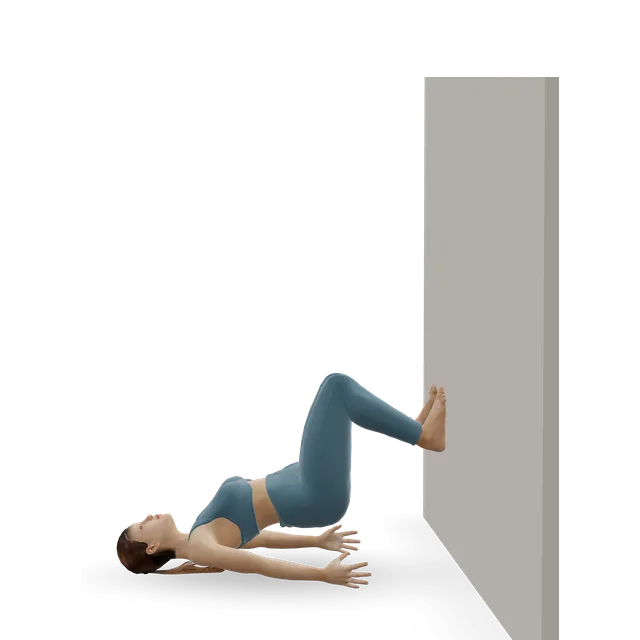
For comfort, not drainage. Legs up the wall: 2 minutes, or calves on a chair seat or cushions (our yoga for lymphoedema class); skip it with glaucoma, and with high blood pressure that isn't controlled keep your hips on the floor (our yoga for circulation class). Corpse pose: 2 minutes, a cushion under your knees, rolling to your side to get up (our yoga for lymphoedema class).

Poses to change or leave out

Our suggestions, unless a source is given.

Kneeling with sore knees or fat pads at the knee

Low lunge with the back knee down, hero pose, camel, child's pose and cat-cow on all fours: use standing versions (warrior I, or high lunge with the back heel lifted), a thick cushion, or cat-cow sitting with your hands on your knees.

Sources 38, 13

Pressure on tender thighs

Pigeon, deep bound angle with the thighs pressed down, blocks or straps across the thighs, and bands round the legs: skip them on sore days.

Sources 2, 5

Jumping

Lipoedema UK says high-impact exercise is "not recommended, as they may exacerbate joint pain and lead to bruising". In sun salutations, step back instead of jumping.

Source 12

Long passive stretches, if your joints are loose

Yin-style forward folds held for minutes: keep holds short and in the middle of your range.

Sources 39, 23

Head-down poses

Headstands, shoulder stands, plough and long downward dog: the head-down cautions in the warning signs below apply, and raising the legs doesn't improve lipoedema swelling anyway.

Source 23

Hot or Bikram classes

We'd skip them, as a precaution: no study has tested heat in lipoedema, and the NHS says heat from saunas, steam rooms and sun beds "may increase the swelling" in lymphoedema.

Sources 47, 3

Class to follow

Our 25-minute low-impact class has no kneeling and no jumping: sitting calf work, standing strength at a chair, padded floor work and a rest with your legs raised. Two or three times a week, with walking, cycling or water exercise on most other days, is our suggestion, following our exercise for lipoedema guide. Yoga for circulation is the closest other yoga class (skip its knee-down lunge option if your knees are sore); yoga for lymphoedema suits lipoedema with fluid swelling; the Pilates class has more lying hip work; and chair yoga suits sore days.

Low-impact yoga for lipoedema (lipedema): a 25-minute class for leg and hip strength, sitting, at a chair and on a padded floor, with no kneeling, no jumping and your legs raised to rest

A low-impact 25-minute yoga class for lipoedema (lipedema): sitting calf work, standing strength at a chair, padded floor work and a rest with your legs raised.

25 minBeginner17 movesBench or box, wall

Yoga for circulation: a 20-minute legs-first class with no head-down poses

Twenty minutes of yoga for blood flow in your legs and feet: ankle pumps and calf raises, standing poses that make your legs work, and a rest with your legs up.

20 minBeginner14 movesBench or box, wall

Yoga for lymphoedema: a 25-minute moving class with arm and leg options, no long holds and no heat

A 25-minute yoga class for lymphoedema: deep breathing, arm or leg pumps, gentle standing poses with a chair and a rest with the swollen limb raised.

25 minBeginner21 movesOther / check instructions, bench or box

Low-impact Pilates for lipoedema (lipedema): a 25-minute leg and hip strength class with no jumping or kneeling

A 25-minute low-impact Pilates class for lipoedema: leg and hip strength lying with your legs raised, on your side and at a wall, with no jumping and no kneeling.

25 minBeginner16 movesWall, bench or box

Calf pump exercises for varicose veins and heavy legs

A 15-minute calf pump routine for varicose veins and heavy, swollen legs: ankle pumps, calf raises, a brisk walk, calf stretches and legs up to finish.

15 minBeginner10 movesBench or box, wall

Low-impact leg workout (no jumping)

A gentle leg strength routine with no jumping: sit-to-stands, step-ups, wall sits, bridges and calf raises.

20 minBeginner7 movesBench or box, step

Seated chair yoga: 15 minutes, no standing

A 15-minute chair yoga routine done entirely sitting: slow breathing, neck, shoulder and wrist stretches, seated twists and side bends, and a calm finish.

15 minBeginner16 movesBench or box

Chair-to-mat yoga for bigger bodies: a 30-minute class seated, standing at a chair and wall, and on the mat, with a chair-only option

A 30-minute yoga class for plus-size and bigger bodies: seated, then standing with a chair and wall, then an optional mat block, with a chair-only option.

30 minBeginner21 movesBench or box, step

Yoga for hypermobility: a 25-minute stability-first class

A 25-minute yoga class for hypermobile joints, HSD and hEDS: supported lying work, all-fours control, standing poses with soft joints, balance and a legs-up rest.

25 minBeginner15 movesBand, wall

Plan

For the walking part of your week.

Warning signs

These are the warning signs from our exercise for lipoedema, lymphoedema and yoga guides, word for word. This is general information, not a diagnosis. A&E means accident and emergency; in the US, call 911 for 999.

Call 999 (911 in the US)

Call 999, and don't drive yourself to A&E, if:

  • You have cellulitis with a very high temperature or feel hot, cold or shivery, a fast heartbeat or fast breathing, purple patches on your skin, dizziness or faintness, confusion, or cold, clammy or pale skin.

Sources 37, 48, 49

A clot in the lungs

Call 999 or go to A&E if breathing suddenly becomes difficult, if pain in your chest or upper back comes on suddenly with breathlessness or a very fast heartbeat, or if someone passes out. Do not drive yourself. It can be a blood clot that has reached the lungs.

Source 49

A clot in the leg

Same day (urgent GP appointment or NHS 111): throbbing pain in one leg (rarely both), usually the calf or thigh; swelling in one leg (rarely both); red, blue or darkened skin around the painful area, which may be harder to see on brown or black skin; or swollen veins. This can be a deep vein thrombosis (DVT). It is more likely after surgery, a hospital stay, 3 or more days in bed, a journey of over 4 hours, pregnancy or a recent birth, cancer, a previous clot, or contraception or hormone replacement therapy (HRT) that contains oestrogen.

Source 49

Get an urgent GP appointment or call NHS 111

  • Your leg or legs become swollen, red, hot and painful and you have flu-like symptoms: it may be cellulitis.
  • You have swelling in one ankle, foot or leg and don't know why, or signs of a blood clot: throbbing pain or swelling in one leg, red, blue or darkened skin around the painful area (harder to see on brown or black skin), or swollen veins.
  • The swelling is severe, painful or starts very suddenly, or you have swelling elsewhere, such as your face or tummy.
  • You have diabetes and your feet, ankles or legs are swollen.

Sources 2, 37, 48, 49

See a GP

  • You have symptoms of lipoedema.
  • Your legs, ankles or feet are swollen and it hasn't improved after a few days.
  • You're finding it hard to cope or you feel depressed: counselling or CBT can help.
  • Before starting compression if you have poor circulation in your legs.

Sources 2, 48, 23

Cellulitis

Macmillan says you should not exercise if you have a skin infection (cellulitis), and the NHS says not to wear compression stockings until you're better. Our exercise for lymphoedema guide covers what to do.

Sources 50, 37

Swelling that changes

If the swollen or at-risk arm or leg changes during or after yoga, stop and ask your lymphoedema specialist. Our exercises for lymphoedema guide lists the signs of infection that need urgent help.

Source 51

Pain or bruising

If anything brings on pain or bruising, swap it for something gentler.

Sources 5, 23, 12

Chest pain or fainting while exercising: call 999

Call 999 if:

  • You get sudden pain or discomfort in your chest that doesn't go away; it can feel like squeezing or pressure, burning or indigestion.
  • The pain spreads to your left or right arm, or your neck, jaw, stomach or back.
  • You have chest pain and feel sweaty, sick, light-headed or short of breath.
  • Someone faints while exercising, can't be woken within 1 minute, or has chest pain or a pounding, fluttering or irregular heartbeat.

Sources 52, 53, 54

Unusual breathlessness

Call 999 or go to A&E (accident and emergency) straight away for severe difficulty breathing (gasping, choking or not able to get words out), a chest that feels tight or heavy, pain that spreads to your arms, back, neck and jaw, lips or skin turning very pale, blue or grey, or sudden confusion. If you're more short of breath than usual, or your heart is racing, fluttering or skipping beats, contact NHS 111.

Source 55

During yoga

A joint pain that is sharp, gets worse during a session, lingers into the next day or changes how you move is a reason to use an easier version, and to see a GP or physiotherapist if it keeps happening (the rule in our plans). Muscle soreness for a day or two after something new is normal. In a hot class, stop if you feel dizzy, sick or unwell; our hot yoga guide lists the signs of heat illness.

You can say no to any hands-on adjustment, and a teacher registered with Yoga Alliance must get your explicit consent each time.

Sources 56, 57, 58, 59

Head-down poses, bones and pregnancy

With glaucoma, or high blood pressure that isn't under control, skip headstands, shoulder stands and long head-down holds. With osteoporosis, swap deep forward folds for a flat-back hinge from the hips, and twist smoothly. In pregnancy, our yoga in pregnancy guide covers the changes. NCCIH advises beginners to avoid headstands, shoulder stands, the lotus position and forceful breathing.

Legs up the wall carries the same cautions: skip it with glaucoma, keep your hips on the floor with high blood pressure that isn't controlled, and skip it in later pregnancy, as our yoga classes advise.

Sources 60, 58

Eating worries

Lipoedema UK warns that diets that don't change lipoedema fat "may lead to eating disorders, malnutrition and low energy". If worries about food or weight are taking over, see a GP; our yoga and eating disorders guide has the support lines.

Source 13

Before you start

The NHS advises getting advice from a healthcare professional first if you have a health problem, an injury or symptoms, or have recently had a heart attack or an operation.


Myths

"Lipoedema is just weight gain"Strong evidence

The NHS says it isn't caused by being overweight, and the 2026 consensus: "Lipedema is not an obesity-related comorbidity". The two often go together, but they're different conditions.

Sources 2, 6, 14

"Yoga, or any exercise, will slim lipoedema legs"Strong evidence

Lipoedema fat is usually resistant to diet and exercise, and no yoga study exists. Stronger, less painful legs are the realistic goal.

Sources 1, 3

"Exercise cures lipoedema"Strong evidence

There's no cure. In small studies, exercise seems to ease pain and help function, which is worth having.

Sources 2, 7

"So exercise is pointless"Emerging evidence

Every guideline recommends it, and small studies found less pain and better function.

Sources 6, 7

"Lymphatic yoga drains lipoedema"Strong evidence

Pure lipoedema is fat, not a lymph problem, at least in the early stages. A European consensus found no evidence that it is an oedema problem, and Lipoedema UK's claim that yoga increases lymph drainage cites no study.

Sources 21, 14, 12

"Legs up the wall reduces lipoedema swelling"Emerging evidence

A US standard of care says raising the legs doesn't improve lipoedema swelling. It's a restful pose.

Source 23

"Hot yoga sweats it out"Emerging evidence

Sweat isn't fat or lymph, no study has tested heat in lipoedema, and the NHS says heat may increase lymphoedema swelling.

Sources 47, 3

"Compression in class will shrink your legs"Strong evidence

Garments won't change the size or shape of the affected areas, though they can ease pain and heaviness.

Source 10

"Yin yoga's long stretches are best for lipoedema"Mixed evidence

No study supports it, joint hypermobility seems common and strength is often low. Favour strength and control.

Sources 39, 8

"Lipoedema is rare"Emerging evidence

Nobody knows how common it is: estimates run from under 1% to 12% of women.

Source 6

Questions people ask

Is yoga good for lipedema?

It can be a good fit: low impact, mostly standing, sitting and lying, and good for strength and balance. UK guidelines list yoga among low-intensity options and a 2026 international consensus names it, though no study has tested yoga in lipoedema. It won't remove lipoedema fat.

Can yoga reduce lipedema legs?

No. NICE says lipoedema fat is usually resistant to diet and exercise, and that isn't a sign you're doing it wrong. What yoga can change is how your legs feel and work.

What are the best yoga poses for lipedema?

Standing poses at a chair or wall (chair pose, warrior II, tree pose and calf raises), sit-to-stands, bridges and clamshells on a padded floor, ankle circles sitting, and legs up the wall to rest. Skip kneeling if your knees hurt, and anything that presses on tender areas.

Does legs up the wall help lipedema?

It's restful and many people find it comfortable, but a US standard of care says raising the legs doesn't improve lipoedema swelling. Use it to rest, not to drain your legs.

Is hot yoga good for lipedema?

We'd skip it. No study has tested heat in lipoedema, fluid swelling can come with it, and the NHS says heat from saunas and steam rooms may increase lymphoedema swelling. Sweating doesn't remove fat.

Is yin yoga good for lipedema?

Gentle yin can feel good, but long passive stretches don't build strength, and loose joints seem common in lipoedema. Keep holds short and add standing strength work.

Should I wear compression for yoga?

If you've been given a garment, yes, unless your clinician says otherwise: a German guideline includes movement in compression for pain relief. Take it off and get advice if it causes numbness, tingling, bruising or blistering.

Is yoga or Pilates better for lipedema?

Either. UK guidelines name both, and neither has been tested in lipoedema. Pilates has more lying hip work and yoga more standing balance, so choose the one you'll keep doing and add walking or water exercise.

Does yoga help lymphatic drainage in lipedema?

Not that anyone has shown. Lipoedema is fat, not lymph, at least early on. Moving your calves does move lymph, but no study has tested yoga as drainage.

What exercises should I avoid with lipedema?

Lipoedema UK doesn't recommend high-impact exercise, such as jogging, because it may worsen joint pain and bruising. In yoga, that means stepping rather than jumping, and swapping anything that hurts or bruises.

Is lipedema the same as lymphedema?

No. Lipoedema is a build-up of fat, usually equal on both sides with the feet spared; lymphoedema is fluid swelling, often in one limb and the feet, that leaves a dent when pressed. Lipoedema can develop fluid swelling later on.

How often should I do yoga with lipedema?

Two or three times a week as your strength and mobility work, with walking, cycling or water exercise on most other days, is our suggestion, following UK activity guidance. Start small and build up.

Sources

  1. NICE HTG618 · Liposuction for chronic lipoedema (guidance under review)
  2. NHS · Lipoedema (past its review date: reviewed July 2023, review due July 2026)
  3. Our searches · PubMed and Europe PMC for yoga, tai chi, qigong and other mind-body practices in lipoedema (2 November 2026): no study found
  4. ClinicalTrials.gov · Lipoedema trial records (2 November 2026): none of 87 uses yoga
  5. Wounds UK 2017 · Best practice guidelines: the management of lipoedema (read in full)
  6. Kruppa 2026 · Lipedema World Alliance position paper on the definition and management of lipedema (Delphi consensus, Nat Commun; read in full)
  7. Lanzi 2026 · Exercise training in women with lipedema: 6 studies, 115 women (systematic review, Vasa)
  8. Haspolat 2026 · Leg strength and walking capacity in 24 women with lipedema and 20 without (case-control study, Physiother Theory Pract)
  9. Ozbek 2026 · Sarcopenia in 48 women with lipedema (cross-sectional study, Phlebology)
  10. Lipoedema UK · A guide to compression therapy for lipoedema
  11. Faerber 2024 · German S2k guideline on lipedema (guideline, J Dtsch Dermatol Ges; short version read in full)
  12. Lipoedema UK · A guide to the best exercises for lipoedema
  13. Lipoedema UK · About lipoedema, and lipoedema symptoms
  14. Bertsch 2020 · Lipoedema: a paradigm shift and consensus (European consensus document, J Wound Care; read in full)
  15. Lipoedema UK · Stages and types, treatment options, and weight management and nutrition
  16. Lipoedema UK · Diagnosing lipoedema
  17. Romeijn 2018 · Symptoms and quality of life in lipoedema (Dutch survey, Dermatol Ther; read in full)
  18. Clarke 2023 · Stages of lipoedema and experiences of health care in 1,362 people (survey, Qual Life Res)
  19. Lymphoedema Support Network · Lipoedema (past its review date: reviewed October 2022, review due October 2025)
  20. NHS · Lymphoedema, and lymphoedema treatment (past its review date: reviewed March 2023, review due March 2026)
  21. International Society of Lymphology 2023 · Diagnosis and treatment of peripheral lymphedema (consensus document, Lymphology; read in full)
  22. Podda 2026 · Liposuction against conservative care for lipoedema: the LIPLEG trial (randomised trial, Lancet)
  23. Herbst 2021 · Standard of care for lipedema in the United States (consensus guideline, Phlebology; read in full)
  24. Atan 2021 · Decongestive therapy, compression or exercise alone in 33 women with severe lipedema (randomised trial, Lymphat Res Biol)
  25. Sakizli Erdal 2026 · An exercise programme against education in 22 women with lipedema (randomised trial, Phlebology)
  26. Åström Malm 2026 · Physical activity and physical capacity in lipedema (scoping review, BMC Womens Health)
  27. Kasap 2026 · Fear of movement in 40 women with lipedema and 40 without (case-control study, Phlebology)
  28. Amato 2025 · Brazilian consensus statement on lipedema (Delphi consensus, J Vasc Bras; read in full)
  29. Annunziata 2024 · Exercise for lipedema: Italian consensus statement (consensus statement, Curr Obes Rep; read in full)
  30. Czerwińska 2023 · Compression leggings with exercise against exercise alone in 6 women with lipedema (randomised pilot study, Int J Environ Res Public Health; read in full)
  31. Czerwińska 2024 · Compression leggings with exercise against exercise alone in 24 women with lipedema (randomised pilot study, Life; read in full)
  32. ClinicalTrials.gov · NCT07756463: water against land exercise in 60 women with lipoedema (recruiting)
  33. Kunzová 2025 · Health and quality of life in 43 Czech women with lipedema (survey, Front Glob Womens Health; read in full)
  34. Loudon 2014 · Yoga for arm lymphoedema after breast cancer in 28 women (pilot randomised trial, BMC Complement Altern Med; read in full)
  35. Pasyar 2019 · Yoga for arm lymphoedema after breast cancer in 40 women (pilot randomised trial, Eur J Oncol Nurs)
  36. Aguilera-Eguía 2025 · Physical therapy for arm lymphoedema after breast cancer (systematic review and network meta-analysis, J Clin Med; read in full)
  37. NHS · Cellulitis (last reviewed April 2024)
  38. Forner-Cordero 2021 · Joint and bone changes in 138 people with lipedema (cohort study, Lymphology)
  39. Beltran 2017 · Telling lipedema and Dercum's disease apart (clinic series, Int J Obes)
  40. Fiengo 2025 · Lipedema and joint hypermobility (cross-sectional online survey, J Clin Med; read in full)
  41. Aday 2024 · Symptoms and treatments in 707 US women with a lipedema phenotype (survey, Vasc Med)
  42. Dudek 2021 · Quality of life in 98 Polish women with lipedema (cross-sectional study, BMC Womens Health)
  43. Clarke 2025 · Weight stigma, weight bias and depression in 1,070 women with lipoedema (cross-sectional survey, Clin Obes)
  44. Havas 1997 · Lymph flow in working leg muscle (lab study, J Physiol)
  45. Zaleska 2023 · Lymph flow in the legs in lipedema (lab study, Lymphat Res Biol)
  46. Hinton 2022 · Breathing, body position and the main lymph duct (ultrasound study, Clin Anat)
  47. NHS · Lymphoedema: prevention (past its review date: reviewed March 2023, review due March 2026)
  48. NHS · Swollen ankles, feet and legs (oedema) (last reviewed February 2026)
  49. NHS · DVT (deep vein thrombosis) (last reviewed April 2026)
  50. Macmillan Cancer Support · Managing lymphoedema with physical activity (past its review date: reviewed March 2023, review due March 2026; Macmillan says it is being reviewed)
  51. Macmillan Cancer Support · Exercising safely with cancer (past its review date: reviewed November 2023, review due November 2026; Macmillan says it is being reviewed)
  52. NHS · Chest pain (past its review date: reviewed August 2023, review due August 2026)
  53. NHS · Heart attack (last reviewed March 2026)
  54. NHS · Fainting (last reviewed August 2026)
  55. NHS · Shortness of breath (last reviewed January 2024)
  56. Cramer 2013 · Adverse events associated with yoga: 76 published cases (systematic review of case reports, PLoS One; read in full)
  57. Cramer 2018 · Injuries and other adverse events with yoga: 9 observational studies (systematic review, J Sci Med Sport)
  58. NCCIH 2023 · Yoga: effectiveness and safety (US National Center for Complementary and Integrative Health)
  59. Yoga Alliance · Code of conduct: consent before hands-on adjustments
  60. Jasien 2015 · Eye pressure in four common yoga positions: 10 people with glaucoma and 10 without (lab study, PLoS One)

Exercise education, not a personal prescription, and clinical review of these guides is pending. If you are pregnant, have a health condition such as glaucoma, high blood pressure or osteoporosis, or have had recent surgery, check with a doctor, midwife or physiotherapist before starting, and stop for sharp or increasing pain. Health disclaimer.