Strain-counterstrain: tender points, the 90-second hold, fascial counterstrain and positional release, what the evidence shows, and what you can do at home
Strain-counterstrain is a gentle, hands-on technique from osteopathy, also called positional release. A practitioner finds a small tender spot, moves you passively into a position that makes it much less sore, holds you there for about 90 seconds and brings you back slowly. Fascial counterstrain is a newer, wider system built on it.
The honest headline: one session eases the tenderness of that spot for a short time, but a fake (sham) version does much of the same, and in the trials we found it did little better than a sham, or than exercise alone, for pain or movement. The easing is real and short-lived, like other hands-on work, and comes mostly from your nervous system.
This guide explains how a session works and where the method came from, how reliably tender points are found, what the trials found, what fascial counterstrain claims and what that rests on, a position of ease you can try at home, and the neck, back, hip and nerve signs that need checking rather than positioning.
A practitioner presses a small tender spot, then moves you passively, usually curling or shortening the sore area, until the spot is much less tender. They hold you there for about 90 seconds and bring you back slowly. You do nothing but relax.
Pooling 5 small trials, the treated spot hurt less when pressed afterwards, on low quality evidence. In a careful study of 28 people with back pain, the gain had faded 1 to 4 days later.
In the same back pain study, a fake version of the technique also made the spot less tender, about half as much. In 61 people with neck pain, one real session did no better than a sham for movement or pain, and in 34 people with shoulder muscle pain, pain eased about as much after sham treatment.
Added to exercise for new low back pain, it made no difference to pain or disability at 2, 6 or 28 weeks in the largest trial (89 people). A review of positional release for back pain found only very low certainty evidence of a small extra benefit alongside physiotherapy, and none on its own.
Fascial counterstrain's wider claims haven't been tested against a sham
Its website says it can treat organs, nerves and blood and lymph vessels as well as muscles. The evidence we found is a theory paper, one small pilot against a waiting list with the method's developer among its authors, and case reports.
Dizziness or a severe headache with neck pain, weakness or spreading numbness in an arm or leg, or new bladder or bowel problems with back pain: the warning signs are near the end of this page.
What strain-counterstrain is
How a session works
The practitioner finds a tender point: a small, round, tender spot, under 1 cm across, in muscle, tendon, ligament or fascia. They press it and ask you to call the tenderness 10 out of 10. Then they move you passively, usually shortening the tissue, until the tenderness falls by at least 70%, which is called the position of comfort.
They hold that position for 90 seconds, sometimes keeping a light touch on the spot, then return you slowly and passively to where you started. In one trial this was repeated 3 to 5 times a session, with 30 seconds' rest between.
The Jones Institute dates it to 1955 and the osteopath Lawrence Jones. It tells the story of a patient with back pain that thrust manipulation hadn't helped: they found him a comfortable position to sleep in, "nearly rolled into a ball", Jones propped him in it and left him, and when he came back the patient could stand upright in comfort.
A 2012 review dates Jones's first published report to 1964, counts over 200 tender points described since, and calls it the fourth most used osteopathic technique. A teaching study mentions 300.
The same review describes tender points as different from trigger points, which sit in a tight band of muscle. Our trigger points guide covers knots and the debate about them.
The main idea is that a strain leaves a muscle's stretch sensors firing too much, and that resting the muscle in a shortened position for long enough lets them settle. The review notes that few studies have tried to test this, and they disagree: in a crossover trial of 20 people with plantar fasciitis, symptoms eased but the calf reflexes measured didn't change. A second idea, better local blood flow, rests on a cadaver study and a study of cells in a dish.
No study has shown fascia or muscle changing shape. As our other hands-on guides say, the easing is real but comes mainly from the nervous system: how much stretch you tolerate, muscle tension and sensitivity.
The 2012 review reports that examiners agreed only fairly when they rated tenderness on a 3-point scale (a kappa of 0.23 to 0.33, where 1 is perfect agreement and 0 is chance), and moderately when they said a point was present or absent (0.45). We haven't read the original studies, so these figures are the review's account. In osteopathic students at 5 colleges, about half of 78 groups of tender points were found in half or more of the students, more often in women and in those with a history of pain: tender spots are common.
Positional release is the family name for techniques that ease tissue by positioning it, and strain-counterstrain is the best known. The review of positional release for back pain has an author from the Positional Release Therapy Institute.
Osteopaths use it, and so do physiotherapists, who gave it in several of the trials. In the UK, osteopaths must be registered with the General Osteopathic Council by law, and the National Health Service (NHS) suggests checking a practitioner's registration.
Fascial counterstrain: what it claims, and what that rests on
What it is
Fascial counterstrain was developed by the physical therapist Brian Tuckey, whom the Counterstrain website calls its founder and one of 4 physical therapists certified by Jones to teach strain-counterstrain. The Jones Institute says it began in 1998, when Tuckey tried an indirect, counterstrain-style approach on restrictions around the organs that he had been taught to find on a visceral manipulation course.
In its own words, "Every organ, nerve, artery, muscle, ligament, tendon, vein and lymphatic vessel in the human body can actively spasm and produce pain", and the method removes "painful, reflexive tissue contractions". It describes a cranial scan that finds problems "in under 60 seconds", and lists conditions from lower back pain to seizures, Parkinson's disease, Lyme disease, postural tachycardia syndrome (PoTS) and vertigo.
A 2021 paper proposes the mechanism: inflammatory chemicals trapped in the spaces between cells and in small lymph vessels. In a pilot of 24 people with post-traumatic stress disorder (PTSD), three 1.5-hour sessions lowered a clinician-rated symptom score by 18.7 points against 1.3 on a waiting list (11 people analysed in each group); the authors include the method's developer and paid instructors, who declare these interests. A case series describes 3 adolescents whose bedwetting stopped after treatment.
We found no trial of fascial counterstrain against a sham, and none for the long list of conditions on its website.
The tender spot eases, for a whileEmerging evidence
Pooling 5 small randomised trials, strain-counterstrain made tender points less painful to press than control conditions, and the reviewers rated the evidence low quality. In 28 people with low back pain, the pressure a tender point could take rose by 93.4 kPa after the real technique, 48.2 after a sham and 30.7 after a control, and the gain hadn't lasted 1 to 4 days later. The authors concluded that some of the effect comes from the hands-on contact.
Against a sham: little or no differenceMixed evidence
In 61 people with neck pain, one session cut movement restriction by 2.0% against 0.6% with a sham, a difference too small to be sure of, with no difference in pain. In 34 people with upper trapezius trigger points, pain at rest fell in every group, including the sham (about 22 mm on a 100 mm scale), with no differences between groups. In 27 people with an unstable ankle, 4 weekly sessions with exercise improved a balance test more than a sham, but not ankle function.
The 2012 review also reports a blinded trial in which both the real and the sham technique eased tenderness straight away and no difference remained at 24 hours; we haven't read that study ourselves.
Added to exercise for new back pain: no differenceMixed evidence
In 89 people with acute low back pain, 4 sessions in 2 weeks added to exercise made no difference to disability at 2, 6 or 28 weeks (a difference of 0, -1 and 2 points on a 100-point scale) or to the other outcomes.
Positional release for back pain: very low certaintyMixed evidence
Across 18 trials of 918 adults, 14 at high risk of bias, positional release added to physiotherapy eased back pain more than physiotherapy alone, on very low certainty evidence, and showed no benefit as a treatment on its own. Muscle energy technique, another hands-on method, did better than positional release for daily activities, on low certainty evidence.
In 60 people with neck pain, adding it to standard therapy 3 times a week for 4 weeks improved every outcome more than standard therapy alone. In 45 people with long-term neck pain, adding it to massage raised pressure tolerance most, while adding active release technique eased pain and disability most. In a trial of people with low back muscle pain, pain fell 26.7% with it against 5.2% with exercise alone, but a published letter points out that the article gives different ages from its summary, describes recruiting people with neck pain, and has a sample size that doesn't match its own calculation.
In a crossover trial of 20 people with plantar fasciitis, 3 weeks of counterstrain eased symptoms more than placebo capsules, most straight after treatment, with relief lasting about 48 hours. Our plantar fasciitis guide covers the treatments with stronger evidence.
One pilot of 22 analysed people against a waiting list, with the developer among its authors, and a case series of 3. Neither can separate the treatment from attention, expectation or time.
Few trials compare against a sham, most are small and short, and none has tested strain-counterstrain as something you do on yourself. We read most studies' summaries (abstracts), not their full texts.
Try a position of ease for a sore lower back
Modelled on the clinic method: the 70% drop and the 90-second hold come from strain-counterstrain trials, and the 3 to 5 repeats from one trial. No trial has tested it as a self-treatment, so the home version and its 90-second hold are our editorial starting point; the knee hug's own page gives a different dose, 20 to 30 seconds, 2 to 4 times.
Check first: numbness around the genitals or bottom, new bladder or bowel problems, weakness or spreading numbness in a leg, or back pain with a fever need the warning signs below, not positioning.
Lie on your back on the floor or a firm bed with your knees bent. Press gently on the sore spot in your lower back or buttock and give it a score out of 10.
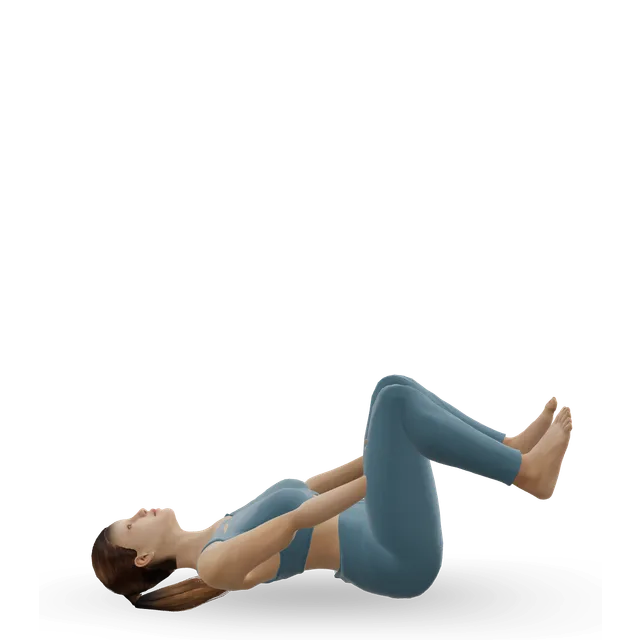
Draw your knees slowly towards your chest, holding under them, and stop where the spot feels clearly less sore when you press it again. Aim for much easier, not zero. One knee at a time, or a slight tilt to one side, may suit you better.
Let your arms and legs go heavy and breathe slowly for about 90 seconds.
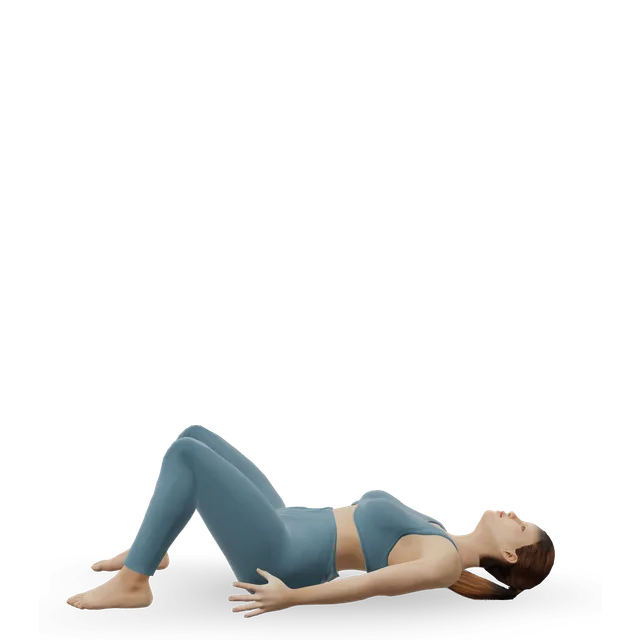
Lower one foot at a time, slowly, as if someone else were moving your legs.
Press the spot again. Repeat up to 3 times if it helps, and stop if it hurts more.
Loading the 3D figure…
Drag to turn
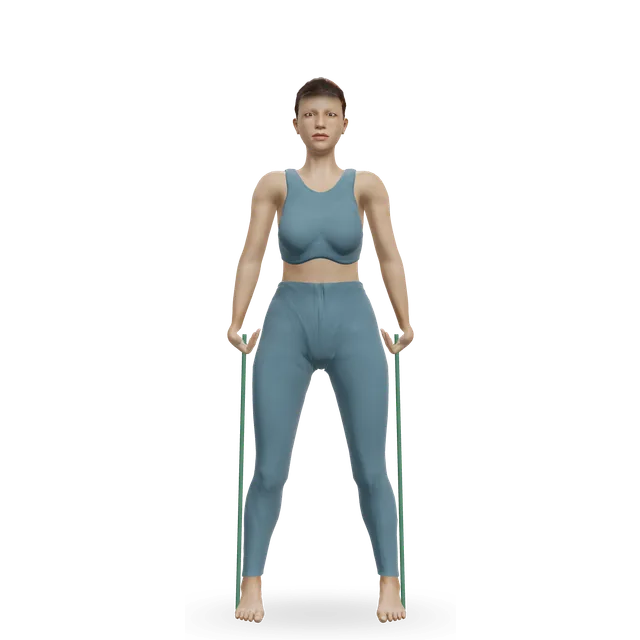
Gets into position, then repeats the movement. Technical checks passed; qualified exercise review is pending.
Each dose names its source or is our editorial starting point. Doses are starting points, not prescriptions.
A position of ease
Rest about 90 seconds in a comfortable position that softens a sore spot, up to 3 times: our editorial starting point, borrowed from the clinic method. As a stretch, the knee hug's dose is hold 20 to 30 seconds, 2 to 4 times, the move page's editorial dose.
Gentle pressure for up to 90 seconds, or a little firmer for about 30 seconds, then a stretch: our trigger points guide's doses, from a trial of 119 people and a home programme. It is the tested home alternative to positioning.
Keep moving and build strength
For a sore back or neck, staying active and strength work have the evidence, as our back and neck guides set out. Two or three sessions a week of moves such as bird dog and glute bridges, building over weeks, is our editorial starting point.
If you see a practitioner
Trials gave 4 sessions over 2 weeks, or 3 a week for 4 weeks, usually alongside exercise. Check that an osteopath is registered, as the NHS advises, and expect any relief to be short-term.
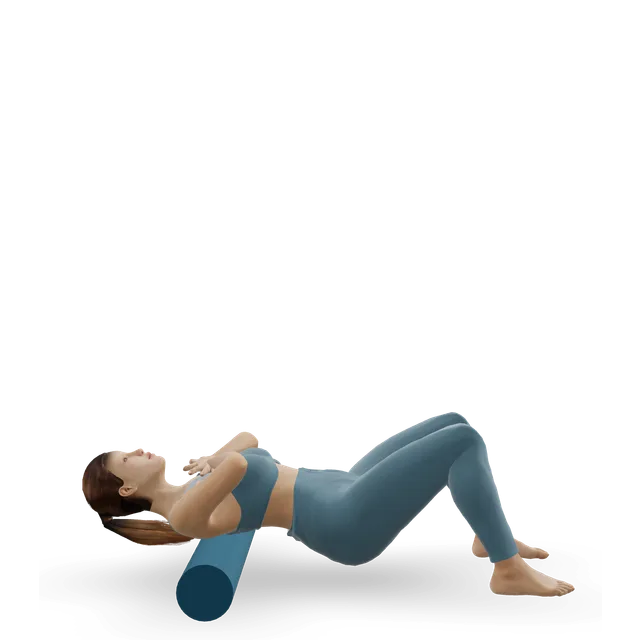
Keep the pressure light, or ask your doctor first, if you take blood thinners, which make bruising more likely, have very weak bones, or have a nerve condition such as peripheral neuropathy that leaves the skin numb: the NHS lists these among the reasons hands-on treatment such as osteopathy may not be safe. With osteoporosis, ask before sitting your full weight on a hard roller (our suggestion).
The front and sides of the neck, the base of the skull and the bony middle of the spine. Stop at once and call 999 for dizziness, a severe headache, blurred vision, slurred speech, a drooping face, or weakness or numbness in an arm, even if it passes.
Side effects
The trial summaries we read didn't report harms, and none of the trials was big enough to find rare ones. The main risk is putting off a check for something that needs one.
When neck, back or leg symptoms need checking
Positioning is never a test for these. A&E means accident and emergency.
Call 999 or go to A&E
Call 999 or go to A&E: a headache that came on suddenly and is extremely painful; numbness or weakness in the face or body; a drooping face, or being unable to lift both arms and keep them up; difficulty speaking, swallowing, balancing, walking or remembering; double vision or loss of vision; drowsiness or confusion. A torn neck artery often starts with headache and neck pain, sometimes with dizziness or tingling, so head or neck pain unlike any you have had before needs checking.
Call 999 or go to A&E: new problems walking, loss of bladder or bowel control, or a sudden loss of coordination, such as difficulty doing up buttons. These can be signs of pressure on the spinal cord.
Call 999 or go to A&E: loss of feeling or numbness around the genitals or bottom, new trouble peeing or controlling your bladder or bowels, changes in genital sensation during sex or problems with erections or orgasm, or pain, tingling, weakness or numbness in both legs. These are signs of cauda equina syndrome, which needs treating in hospital urgently. Don't drive yourself.
Call 999 or go to A&E: severe hip pain after a fall or injury, or you cannot stand, walk or put weight on the leg. In an older adult this can be a broken hip; the leg may be at an odd angle or look shorter. Don't drive yourself.
Same day
Same day (urgent GP appointment or NHS 111): severe neck pain that starts suddenly or gets worse quickly; heaviness or weakness in the arms or legs; pins and needles in an arm along with neck or arm pain; or pain between the shoulder blades.
Same day: clumsiness in your hands, or numbness, pins and needles or weakness in one or both arms, that is getting worse; problems with balance or walking since the neck pain started; or neck pain with a severe headache.
Same day: leg weakness that is getting worse; new leg pain with a history of cancer, HIV, TB or inflammatory arthritis; or leg pain with a fever, feeling unwell, loss of appetite, unexplained weight loss or night sweats.
Same day (urgent GP appointment or NHS 111): new difficulty lifting the front of your foot or toes (foot drop), or a foot that slaps down or catches as you walk, especially if it is getting worse. Weakness in both legs, or with numbness around the genitals or bottom or bladder or bowel changes, is the 999 emergency above.
Ask for an urgent GP appointment or get help from NHS 111 if you have severe hip pain that started suddenly but you've not had a fall or injured your hip, your hip is swollen and feels hot, the skin around your hip has changed colour, or you have hip pain, feel generally unwell and have a high temperature (or feel hot, cold or shivery). A hot, swollen hip with a high temperature can be a joint infection.
Don't let it delay a check
UK advertising rules say claims to treat conditions that need medical supervision could discourage people from getting essential treatment. Don't stop a prescribed medicine without talking to your doctor, and don't put off seeing a GP.
Ask a GP for advice about symptoms that don't go away or keep coming back, and don't just talk to a therapist (our suggestion, adapted from the NHS page on complementary therapies).
A curled-up position that eases tummy or back pain doesn't rule out a serious cause: the NHS notes that appendicitis pain may feel slightly better when you pull your knees up to your chest (our suggestion, from the NHS appendicitis page).
"Counterstrain resets a muscle in 90 seconds"Mixed evidence
The 90 seconds comes from Jones's practice, not from a trial comparing hold times. The reset idea has hardly been tested and the reflex studies disagree. What happens is a short drop in tenderness, part of which a sham also gives, gone within a few days.
"The therapist can feel exactly which point is the problem"Mixed evidence
In the studies the 2012 review describes, examiners agreed only fairly to moderately, and tender points are common in people without a current complaint.
"Fascial counterstrain can treat organs, PTSD and conditions like seizures"Mixed evidence
Its website makes these claims. The evidence is a theory paper, one small pilot against a waiting list with the developer among its authors, and a case series of 3. We found no sham-controlled trial.
Added to exercise for new back pain, it made no difference at 2, 6 or 28 weeks. A review found positional release helped only as an add-on, on very low certainty evidence, and less than muscle energy technique for daily activities.
A gentle hands-on technique from osteopathy. The practitioner finds a small tender spot, moves you passively into a position that makes it much less tender, holds you there for about 90 seconds and brings you back slowly. It's also called positional release.
Does strain-counterstrain work?
It eases the tenderness of the treated spot for a short time. Part of that comes from the contact, since a sham does some of the same, and trials against a sham found little or no difference in pain or movement. Added to exercise for new back pain, it made no difference.
What is fascial counterstrain, and how is it different?
A newer, wider system developed by the physical therapist Brian Tuckey, which its website says treats organs, nerves and blood and lymph vessels as well as muscles. The evidence we found is a theory paper, one small pilot against a waiting list with the developer among its authors, and case reports. We found no trial against a sham.
Why is the position held for 90 seconds?
It comes from Jones's practice, not from a trial comparing hold times. The idea that the hold resets the muscle's stretch sensors has hardly been tested, and the studies that tried disagree.
Is strain-counterstrain the same as positional release?
Positional release is the family name for techniques that ease tissue by positioning it, and strain-counterstrain is the best known. A review of positional release for back pain found only very low certainty evidence of a small extra benefit when it was added to physiotherapy.
What does a strain-counterstrain session feel like?
You lie or sit while the practitioner presses a spot, then moves your body slowly until the spot feels much less sore, and holds you still for about a minute and a half. It shouldn't hurt, and you do nothing but relax.
Can I do strain-counterstrain on myself?
No one has tested a self-version. Resting in a comfortable, curled-up position with slow breathing, such as a knee hug for the lower back, is a gentle thing to try and may ease things for a while. For a tender spot, gentle pressure for up to 90 seconds is the tested alternative.
Can strain-counterstrain help sciatica or piriformis pain?
We found no trial of it for sciatica. Leg weakness, spreading numbness or bladder and bowel changes need checking, not positioning; our fascia and sciatica guide covers what helps.
Does strain-counterstrain help plantar fasciitis?
In a crossover trial of 20 people, symptoms eased for about 48 hours after treatment, more than with placebo capsules. Stretching the sole and calf has stronger evidence; our plantar fasciitis guide covers what helps.
Is strain-counterstrain safe?
It's very gentle, and the trial summaries we read didn't report harms. The risk is putting off a check: dizziness or a severe headache with neck pain, leg weakness or numbness, or bladder and bowel changes need the warning signs on this page.
Strain-counterstrain or muscle energy technique?
In a review of back pain trials, muscle energy technique did better than positional release for daily activities, on low certainty evidence. Both are add-ons: exercise is the core of back pain care.
Movement education, not medical advice. Stop for sharp or increasing pain, numbness or tingling, and get individual advice if you are pregnant, after an injury or surgery, or managing a health condition. Health disclaimer.