Training guide

How to improve squat depth: what limits it, from your ankles and hips to your build, stance and heels, practice and mobility work, and when deep squat pain needs a different plan

How deep you squat depends on your ankles, your hips, your build and practice. Find what stops you first, change what's free (your stance, a small plate under your heels, a weight held in front), then practise the depth you can control and work your ankles or hips on other days. Thighs about level is a good target; deeper is a bonus, not a test.

This guide covers what limits squat depth and how to find yours, stance, heels and shoes, what the evidence shows for mobility work and practice, the moves with doses and a step-by-step session, and when pain in a deep squat, a pinch at the front of the hip or a new joint means our pain guides or your surgical team come first. Our squat guide teaches the technique.

The short version

Depth is a choice, not a test

Our squat guide's target is thighs about level with the floor with your heels down and your back steady, and deeper if you control it. Training through a full range built more strength and muscle than partial range, but nobody needs to squat "ass to grass".

Sources 1, 2

Find what limits you

Ankle bend, hip bend and knee bend best predicted how deep people squatted in small studies. Hold a door frame and squat with your heels down: heels lifting points to your ankles, an early tuck of the pelvis or a pinch at the front of the hip to your hips, and tipping backwards to balance.

Sources 3, 4, 5, 6

The pelvis tucks when the hips run out of bend

That's "butt wink": it happened at about the same hip angle squatting as lying down, roughly 110 degrees in young adults. Our squat guide's advice is to stop just above it under a heavy bar.

Source 7

Bodies differ, and a wider stance helps

Hip shape, the length of your thighs and shins, and the thigh meeting the calf at the bottom all set limits that stretching can't change. A slightly wider stance with the toes turned out gives the hips more room.

Sources 8, 9, 10, 11

Raised heels are a way round stiff ankles, not a fix

Raising the heels added about 4 degrees of ankle and 5 of knee bend across 14 studies, but not hip bend, and weightlifting shoes didn't by themselves bring the thigh closer to level in one study.

Sources 12, 13

Practise the depth you want

We found no trial that measured squat depth after a block of ankle or hip mobility work, and range gained by stretching didn't carry over into movement on its own in one trial. Practise the position with pause squats, goblet squats and a deep squat hold, work your ankles or hips on other days, and stay above any depth that hurts: see the warning signs.

Sources 14, 15

What squat depth is, and what limits it

What depth means

How low your hips go relative to your knees with your heels down and your back steady. Our squat guide's target is thighs about level with the floor, deeper if you control it; powerlifting asks for the hip crease below the top of the knee; a full deep squat brings the hips close to the heels.

The joints that make depth

Ankle bend lets the knees travel forward over the toes; the knee bends; and the hip bends until it runs out, at about 110 degrees in young adults, when the pelvis starts to tuck under. A heels-flat deep squat needed about 95 degrees of hip bend on average, with a wide spread between people, and about 157 degrees of knee bend with the heels up. In small studies, ankle bend (especially with the knee bent), hip bend and knee bend best predicted depth.

Sources 7, 16, 3, 4, 5

What else sets it

Balance: a weight held at your chest or your arms reaching forward let the trunk stay more upright (our reading of our squat guide's goblet squat advice). Proportions: long thighs relative to your trunk or shins change the angles. Hip shape: a bony bump on the thigh bone (a cam shape) limited depth and hip turning. Soft tissue: the thigh meets the calf, and the belly meets the thighs. And strength, control and confidence at the bottom.

Sources 9, 8, 17, 10

Butt wink

The pelvis tucking under at the bottom once the hips run out of bend. Some lower-back rounding is normal under a bar, and our squat guide covers what to do about it.

Sources 7, 18

How people differ

Different things predicted depth in women and men in one study, and proportions differ between people; none of them is a fault. Practice matters too: people get better at positions they use.

Source 3

Find what limits your squat

Our suggestion, from the hip and ankle mobility guides' self-checks. These guide your practice; they don't diagnose anything.

1. The door-frame squat

Hold a door frame and sit into a deep squat with your heels flat, feet about shoulder-width apart and toes turned out a little. Go only as low as is comfortable.

2. What stops you first

Heels lifting points to your ankles (then do the knee-to-wall test in our ankle mobility guide). The pelvis tucking under early, or a pinch at the front of the hip, points to your hips. Tipping backwards points to balance or ankles: try holding a light weight in front. Pain means stop, and see who should change the plan.

3. Try your stance and heels

Try a slightly wider stance, a little more toe-out, and your heels on a small plate, one change at a time, and note which gives you the deepest comfortable squat with your back steady.

What the evidence says

The studies are small and mostly cross-sectional; no trial has measured squat depth after a block of mobility work.

What predicts depthEmerging evidence

In 101 adults, ankle bend with the knee bent and hip bend explained 44% of the difference in squat depth in men, and ankle bend with the knee straight plus shin strength 32% in women. Ankle bend in the lunge test went with back squat depth in 20 people, knee range contributed most in 60 people, and 18 students who could squat fully had more hip and ankle bend, and differed in body size too.

Sources 3, 4, 5, 6

Stiff ankles change the squatEmerging evidence

People with less ankle bend bent the knee less in squats (40 adults); a wedge that limited ankle bend reduced knee bend and increased inward knee drift (30 adults); and less ankle bend went with inward knee drift across 17 studies. Ankle range predicted the ankle angle used in a deep squat in 9 men, and went with more forward lean of the trunk in a back squat in 11 men.

Sources 19, 20, 21, 22, 23

The pelvis tucks when the hips run out of bendEmerging evidence

In 28 adults, the pelvis tucked under at about the same hip angle, roughly 110 degrees, whether squatting, squatting with raised heels or lying on the back. A heels-flat deep squat needed 95 degrees of hip bend on average in 30 adults, with a wide spread, and a review names the hip bend you have as the main limit to deep squatting.

Sources 7, 16, 24

Hip shapeEmerging evidence

People with a cam shape and hip impingement couldn't squat as low (to 41.5% of leg length against 32.3%) and moved the pelvis less, and turned the hip in less at depth, in two small studies. A painful deep squat alone is a weak test for impingement: in 76 people it missed a quarter of cases and flagged many without it.

Sources 8, 17, 25

Proportions and soft tissueEmerging evidence

In 32 adults, limb and trunk proportions and stance width changed the ankle and knee angles, and the authors suggest a wider stance for stiff ankles or long thighs. The thigh met the calf from about 121 degrees of knee bend in 58 men, and in a computer model that contact cut the squeezing force in the knee at full bend from about 4.9 to 2.9 times body weight.

Sources 9, 10, 26

Raised heelsEmerging evidence

Across 14 studies of 177 adults, raising the heels added about 4.3 degrees of ankle and 4.9 of knee range in the squat, but not hip or trunk range, and the ankle effect showed only for lifts over 2.5 cm. A 4.5 cm heel raise increased knee bend from about 100 to 124 degrees in 28 adults but didn't change the hip angle where the pelvis tucked. Weightlifting shoes increased knee bend and kept the trunk more upright in 32 people, but in another study of 25 they didn't by themselves bring the thigh closer to level. Heel wedges didn't change the spine in 14 lifters and changed little in 14 recreational lifters at 80% of their maximum, while helping novices stay upright in a study of 20.

Sources 12, 7, 27, 13, 28, 29, 30

Stance and toe-outEmerging evidence

In 42 squatters, wider stances and more toe-out gave more hip and knee range with the lower back about the same, though joint loads were high at the extremes (a 2020 correction changed one sentence, not the results). Turning the feet out 30 degrees didn't change knee forces in 10 lifters, and in 9 lifters a wider stance worked the glutes and inner thighs harder, but not the quads.

Sources 11, 31, 32, 33

The lower back in the squatEmerging evidence

In 30 trained lifters under a light bar, the lower back rounded a little on the way down, starting as soon as the bar was on the shoulders, and more in men than in women.

Source 18

Does mobility work deepen the squat?Mixed evidence

We found no trial that measured squat depth in degrees after a block of ankle or hip mobility work. Eight weeks of strength and corrective exercise improved the thigh angle in an overhead squat in 37 golfers. Exercise programmes raised a screening deep squat score by about half a point out of 3 across 20 studies, but that score said little about joint range in 60 adults, and hip range gained by stretching didn't carry over into lunges or twists in 24 men.

Sources 15, 34, 35, 14

Rolling and other quick fixesEmerging evidence

Ninety seconds of calf rolling improved ankle bend and the squat pattern straight away in 18 people, and self-massage of 90 seconds or more changed a deep squat score in 20 women, but rolling before back squats didn't change knee range against a dynamic warm-up in 11 trained people. Dry needling improved a deep squat score where calf stretching alone didn't, in 30 men. One session of rolling or stretching adds range that fades within about 30 minutes; rolling programmes of 4 weeks or more add range like stretching.

Sources 36, 37, 38, 39, 40, 41, 42

Full range builds moreEmerging evidence

Across 16 studies, training through a full range built more strength and leg muscle than partial range. Deep squats grew the front of the thigh more than shallow ones in 17 men, and full squats grew the glutes and inner thighs more than half squats in 17 men. No trial has tested squat depth and injury.

Sources 1, 43, 2

Squatting at workEmerging evidence

Squatting or kneeling at work for hours a day over years went with knee arthritis, and in Beijing, older people who had squatted an hour a day or more at 25 had higher odds of arthritis on X-ray, though the trend wasn't significant. These are observational studies; our reading is that they don't describe squats as exercise, which haven't been shown to harm healthy knees.

Sources 44, 45, 46, 47

Ankle and hip range respond to trainingStrong evidence

Calf stretching added about 2 to 3 degrees of ankle bend in 5 trials, and stretching or strength training through a full range raised range at the hip and elsewhere, as our ankle and hip mobility guides set out. Whether that deepens your squat hasn't been tested.

Sources 48, 49, 50

How to improve squat depth: how often, how long and what to do

Find your limiter first

Do the door-frame squat and, if your heels lift, the knee-to-wall test. Write down what stopped you, so you work on the right thing (our suggestion).

Change what's free

A slightly wider stance with the toes turned out, a small plate under your heels while your ankles catch up, and a goblet weight held at your chest as a counterweight. Each gives you depth today, while the slower work goes on.

Sources 12, 11, 9

Practise the depth 2 or 3 times a week

Bodyweight squats at 3 sets of 8, 3 seconds down with a 2-second pause at the deepest point you control; goblet squats at 3 sets of 5 with a 1-second pause; squats to a bench or box you lower a little each week; and a deep squat hold of 30 to 60 seconds holding a support (our squat technique workout). Practising the position is what carries new range into the squat.

Sources 1, 14

Work your limiter on most days

If your heels lift, our ankle mobility routine: knee-to-wall rocks, calf stretches with the knee straight and bent, and slow calf raises. If your pelvis tucks early or your hips pinch, our hip mobility routine, working below any pinch. Hold stretches 30 to 60 seconds on most days, as our flexibility guide suggests.

Sources 48, 49

How long it takes

No trial has timed it. Ankle bend changes by a few degrees over 4 to 8 weeks of calf work, as our ankle mobility guide says; depth in the squat may change sooner as you learn the position (our reading). Retest every 2 to 4 weeks at the same time of day.

Source 48

Under a heavy bar

Squat to just above where your pelvis starts to tuck rather than forcing extra depth, as our squat guide advises, and stay above any depth that hurts. Practise the deeper range with lighter loads.

Common slip-ups

Forcing depth past the tuck under a heavy bar; letting the heels lift or the knees cave in to get lower; bouncing out of the bottom; long static stretches on the day instead of practising the position; pushing through a pinch at the front of the hip or ankle (our editorial list). Our squat guide teaches the technique.

Find what limits your squat, then practise the depth

Our editorial session, built on our squat technique workout, the hip and ankle mobility guides' self-checks and our mobility guide's advice to practise the position you want. Do the drills most days and the loaded squats 2 or 3 times a week.

  1. Find your limiter: hold a door frame and sit into a deep squat with your heels down, feet about shoulder-width, toes turned out a little. Heels lifting first means ankles; the pelvis tucking early or a pinch at the front of the hip means hips; tipping backwards means you need a counterweight; knee pain means our knee pain when squatting guide.
  2. Try your stance: a little wider, toes turned out a little more, and note which gives the deepest comfortable squat with your heels down.
  3. Warm up: 3 slow hip circles each way with each leg, then 10 knee-to-wall rocks each side.
  4. Work your limiter: two ankle moves or two hip moves from the grids below.
  5. Groove the depth: bodyweight squats, 3 sets of 8, 3 seconds down and a 2-second pause at the deepest point you control, with your heels on a small plate if they lift.
  6. Load it lightly: goblet squats, 3 sets of 5 with a 1-second pause, or squats to a bench you lower a little each week.
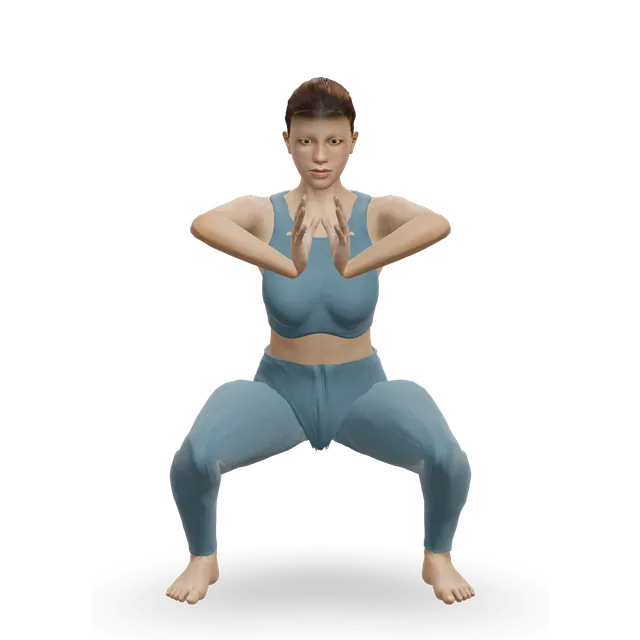
  7. Finish in a deep squat hold, holding a support, for 30 to 60 seconds.
  8. Retest the deep squat and the knee-to-wall test every 2 to 4 weeks, at the same time of day.

Loading the 3D figure…

Gets into position, then repeats the movement. Technical checks passed; qualified exercise review is pending.

The movement on the figure: Deep squat hold

Practise the depth

With support or a light counterweight, slowly, 2 or 3 times a week (our squat technique workout): sit-to-stands at 2 sets of 8, a lower seat as it gets easy; bodyweight squats at 3 sets of 8, 3 seconds down and a 2-second pause with your thighs about level; goblet squats at 3 sets of 5, 3 seconds down and a 1-second pause, stopping 3 or 4 reps short of failure; heel-elevated squats at 2 sets of 6 to 8, only if your heels lift, as a way round stiff ankles rather than a fix; and a deep squat hold of 60 seconds holding a support, with a folded mat under your heels if they lift. For squats to a bench, the move page's dose is "2 to 3 sets of 8 to 12, stopping with 2 or 3 reps in reserve (our editorial starting point)." Lower the bench a little at a time.

If your heels lift: ankles

Our ankle mobility guide has the detail. Knee-to-wall rocks at 10 slow rocks per side, daily (the move page's dose); the wall calf stretch and soleus stretch at 2 holds of 30 seconds each side, back knee straight then bent, and slow calf raises at 2 sets of 12 to 15, 3 seconds up and 3 seconds down (our shin release routine); ankle circles at 5 slow circles each way with each ankle, morning and evening (our editorial starting point).

If your pelvis tucks early or your hips pinch: hips

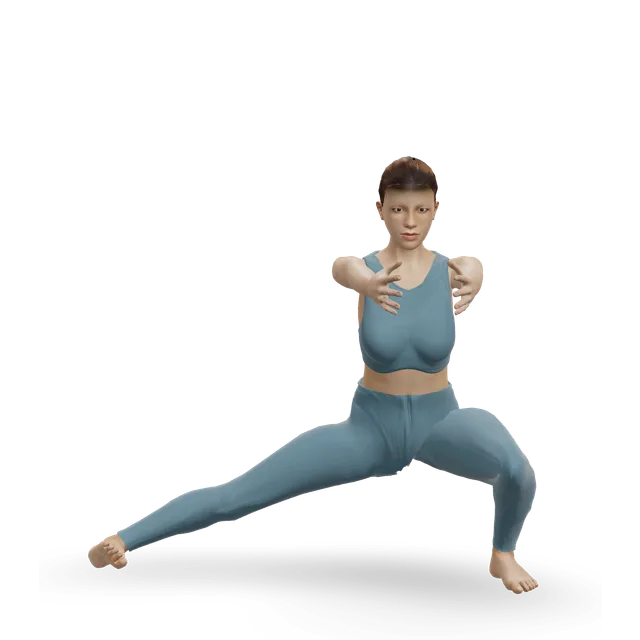
Our hip mobility guide has the detail; work below any pinch at the front of the hip. Standing hip circles at 3 slow circles each way with each leg, 20 to 30 seconds a circle (our editorial starting point); 90/90 switches at 10 slow switches, pause at the ends (the move page's dose); Cossack squats at 6 slow shifts per side, hold the last one (the move page's dose); frog rocks at 12 slow rocks, breathe into the floor (the move page's dose); and dead bugs at 2 sets of 5 to 8 each side, breathing out as the arm and leg reach, for bracing at the bottom (our squat technique workout).

Squat depth for lifting, sport and everyday life

The back squat and powerlifting depthEmerging evidence

Powerlifting asks for the hip crease below the top of the knee. Full-range training built more strength and muscle, so practise the depth you control with lighter loads, and with a heavy bar stop just above the point where your pelvis tucks. Pause squats and box squats keep depth honest.

Sources 1, 43, 7

Front, goblet and overhead squatsEmerging evidence

A weight in front keeps the trunk more upright, so goblet and front squats often go deeper than back squats. The overhead squat needs shoulder and upper back range too, and 8 weeks of strength and corrective work improved it in golfers; our overhead squat progression builds it in steps.

Sources 12, 15

Everyday deep squatting and getting up from the floorEmerging evidence

A heels-flat deep squat needs plenty of hip bend and, with the heels up, about 157 degrees of knee bend. Build towards it with sit-to-stands to a lower seat and a deep squat hold holding a support, and practise getting down to and up from the floor.

Sources 16, 10

Older adultsEmerging evidence

Sit-to-stands to a chair and squats holding a support build the strength and range for daily life, and count towards the NHS's advice for adults over 65 to do activities that improve strength, balance and flexibility on at least 2 days a week.

Source 51

Workouts to follow

Our squat technique workout finds your depth on a chair, grooves it with pause squats and loads it with a slow goblet squat, in 25 minutes; do it twice a week. Add the ankle or hip mobility routine on other days, depending on what limits you.

Squat technique workout

A 25-minute practice session for the squat: find your depth on a chair, groove the bodyweight squat with pauses, then load it with a slow goblet squat.

25 minBeginner8 movesA wall, A bench or box

Ankle mobility routine: the knee-to-wall test, calf stretches and full-range calf raises

A 12-minute routine to improve how far your ankle bends: test it against a wall, rock it, stretch both calf muscles, strengthen through the full range, then use it.

12 minBeginner8 movesA wall, A step

Hip mobility routine

A 15-minute hip opener: 90/90 switches, windshield wipers, CARs, Cossack squats, frog and pigeon.

15 minIntermediate8 movesA wall

Squat challenge workout

A 15-minute squat ladder for the 30-day squat challenge: sit-to-stands and chair squats, then split squats, Bulgarian split squats and skater squats.

15 minBeginner12 movesA wall, A bench or box

Daily mobility routine

A 12-minute routine to move every joint through its range under control: slow neck, shoulder, hip and ankle circles, spine and hip rotation, and deep squats.

12 minBeginner10 movesA wall

Overhead squat progression: ankle, hip and shoulder mobility, then the dowel and the bar

A 25-minute session for the overhead squat: check your ankles and reach, loosen what the check shows, then climb from the goblet squat to a dowel and an empty bar.

25 minIntermediate14 movesCardio machine, A wall

Front squat technique workout: the rack, the grip and the depth

A 30-minute practice session for the front squat: loosen your wrists and upper back, groove an upright squat, then find your grip and depth with a light bar.

30 minBeginner12 movesA wall, A bench or box

Squat strength workout: heavy sets, pause squats and single-leg work

A heavy squat session for lifters past the beginner stage: heavy back squats, paused back-off sets, Bulgarian split squats, Romanian deadlifts and dead bugs.

60 minIntermediate8 movesA wall, A barbell

Plans

The 30-day squat challenge builds depth and reps step by step, the beginner strength programme loads it, and the 7-day plan's mobility day uses the hip mobility routine.

Who should change the plan

Pain in a deep squat

Pain in a deep squat is a reason to stay above the depth where it starts and read the matching pain guide (knee, hip, groin, ankle or lower back pain when squatting), not to push lower (our suggestion).

With a heavy bar, squat to just above where the tuck starts rather than forcing extra depth. A slightly wider stance or raised heels may let you go deeper before it starts, and building hip bend and back strength may help over time. With back pain, squat only as deep as your back stays put. With light weights, a small tuck is common and not worth worrying about (our view).

A pinch at the front of the hip

Work below the pinch rather than into it: stretching into it doesn't change bone shape. If hip pinching keeps happening, see our hip impingement guide.

A deep, sharp catch or click in the groin with the hip turned in at the bottom of a squat, or a 90/90 position that always pinches the front of the hip, is a reason to stay above the pinch and read our hip impingement guide, not to stretch harder (our suggestion, following that guide's advice to work up to the pinch, not into it).

Squat only as deep as your hip allows without a pinch at the front, with a wider stance and your toes turned out, and avoid deep squats. That last piece of advice is expert opinion from a clinical commentary, which also notes that up to 25% of people with impingement can squat deep without pain.

A pinch at the front of the ankle

If the ankle drill gives you a pinch at the front of the ankle rather than a stretch in the calf, don't force it: keep your heels raised and see our anterior ankle impingement guide.

After a broken ankle or ankle surgery, follow your team's advice on when to start.

Kneecap pain

Start with squats to about 45 degrees of knee bend, where the stress behind the kneecap was lowest, and deepen them as the pain allows. A little more forward lean and a wider stance shift work to the hips early on. Our runner's knee guide has the plan.

Knee arthritis

Squats are usually part of the answer. Avoid deep loaded squats at first, then build depth as your knee allows, as our knee arthritis guide explains.

Back pain

Squat only as deep as your back stays put, and keep your trunk more upright: goblet or front squats and a wider stance help.

Pain you'd call mild to moderate, no more than about 5 out of 10, that settles within an hour or so, with your back no worse the next morning, is acceptable; if it is worse, do less next time (fewer reps, a smaller range, a lighter load), not nothing. Stop or shrink any movement that sends pain, pins and needles or numbness further down your leg. That's our back pain guides' rule.

After a hip or knee replacement

Don't attempt the splits, pigeon or deep hip bends unless your surgical team clears it. During recovery, the NHS says not to bend your hip more than 90 degrees (a right angle) and not to sit with your legs crossed.

Follow your surgical team's limits. Our knee replacement, hip replacement and ACL (anterior cruciate ligament) injury guides cover the stages.

Osteoporosis

With osteoporosis or a past spinal fracture, avoid repeated or loaded deep rounding of the back, and bend from the hips. The osteoporosis guide covers impact and lifting.

Pregnancy

In pregnancy, squat to a comfortable depth holding a support, and follow our pregnancy guide (our suggestion).

Very flexible already

If you're already very flexible, put your time into strength and control through the range you have. Stretch only areas that feel genuinely tight, and only to a mild pull, and avoid hanging at the end of your range or pushing joints back past straight. The strength and control moves below are a place to start, and our hypermobility guide has a full routine, the evidence and the warning signs. If you do Pilates, our Pilates for hypermobility guide covers which moves to adapt.

Source 52

Warning signs: when to get help

Stop and get medical help

If you get chest pain or pressure, feel faint or dizzy, are unusually breathless, or your heart races or beats irregularly during exercise, as our plans advise.

Call 999 (911 in the US)

For chest pain that comes on suddenly and doesn't go away, feels tight or like squeezing, spreads to your arms, neck, jaw, stomach or back, or comes with sweating, feeling sick, light-headedness or breathlessness; severe difficulty breathing; someone who faints while exercising; palpitations that don't go away, or come with chest pain, shortness of breath or feeling faint; or a headache that starts suddenly and is extremely painful, especially while lifting or straining, or comes with numbness or weakness, difficulty speaking or loss of vision. The NHS says a bleed on the brain may be more likely when lifting something heavy. Don't drive yourself to A&E.

Sources 53, 54, 55

Back pain with leg or bladder symptoms

Call 999 or go to A&E: loss of feeling or numbness around the genitals or bottom, new trouble peeing or controlling your bladder or bowels, changes in genital sensation during sex or problems with erections or orgasm, or pain, tingling, weakness or numbness in both legs. These are signs of cauda equina syndrome, which needs treating in hospital urgently. Don't drive yourself.

See a GP if pain spreading down a leg hasn't improved after a few weeks of home treatment, is getting worse or stops your normal activities. Sciatica on both sides, or weakness or numbness in both legs that's severe or getting worse, is a 999 call or a trip to A&E.

Sources 56, 57

A hernia

See a GP if you think you have a hernia, a bulge or lump that may get bigger when you strain and smaller when you lie down. Get help from NHS 111 if you have a hernia and pain in or around it, a bloated tummy, you feel or are sick, you're vomiting blood or your vomit looks like coffee grounds, you're constipated, you have a high temperature or feel hot, cold or shivery, or you've suddenly become confused. Call 999 or go to A&E for a femoral hernia (a small lump at the top of your thigh, in your groin) with very bad tummy pain, sickness, being unable to fart or poo, a high temperature or sudden confusion.

The knee

Go to A&E (accident and emergency) if you've injured your knee and it has changed shape, it becomes very swollen very quickly, you felt a pop or snap, you can see bone sticking out, or it's bleeding heavily. Don't drive yourself: ask someone to take you, or call 999 if the pain means you can't move your leg to get there.

Get advice from NHS 111 now: the knee locks, gives way or clicks painfully. Painless clicking is normal.

A pop or tearing feeling at the front of the knee after a fall, a jump, a landing or a heavy squat, then you can't straighten the knee or lift the straight leg, there's a dent above or below the kneecap, or the kneecap sits higher or lower than on the other side. Go to A&E or an urgent treatment centre, or get help from NHS 111, as our knee pain when squatting guide explains. In the US, go to urgent care or the emergency department.

Source 58

The hip

Call 999 or go to A&E for severe hip pain after a fall or injury, if you can't walk or put weight on your leg, or for tingling or loss of feeling in your hip or leg after an injury. Ask for an urgent GP appointment or get help from NHS 111 for severe hip pain that started suddenly without a fall, a hip that's swollen and feels hot, skin around it that has changed colour, or hip pain with feeling generally unwell and a high temperature.

After an injury

After an injury, if you heard a crack, the limb has changed shape or is pointing at an odd angle, it is numb, tingling or has pins and needles, or the skin has turned blue or grey or feels cold.

If a stretch brings on a sudden sharp pain, a snap or a pop, and it's very painful or getting worse, there's a lot of swelling or bruising, or it hurts to walk or stand on the leg. In the US, contact your doctor or urgent care.

Source 59

A nerve or the joint, not a muscle

Burning, tingling, numbness or pins and needles down an arm or leg while stretching usually means a nerve is under tension, so ease off to a position without it. A pinch at the front of the hip or ankle at the end of a stretch is the joint, so work below it. See a GP or physiotherapist if either keeps happening (our suggestion).

A pinch at the front of the hip or ankle is the joint, not a stretch: stay just short of it, and see a GP or physiotherapist if it keeps happening (our suggestion).

Very flexible joints

See a GP if you think you or your child have joint hypermobility syndrome, for example joints that keep dislocating, ongoing joint or muscle pain and stiffness, frequent sprains, tiredness even after rest, poor balance or thin, stretchy skin. A GP may check your Beighton score, arrange tests to rule out other conditions and refer you to a physiotherapist.

Slowly and with control, in the middle of your range, stopping short of locking your knees or elbows or hanging at the end of a joint's range. If a joint feels about to slip, stop or make the movement smaller (our editorial rule, the same as in our shoulder dislocation guide).

Source 52

During any session

Stop straight away if you feel any pain or become unwell, the NHS says, and contact 111 if your symptoms worry you or don't go away.

Pain from 0 to 2 out of 10 is fine, and up to 5 is acceptable if your knee is back to its usual level by the next morning; for tendon pain just below or above the kneecap, keep it to 3 or less. Sharp, catching or giving-way pain, or new swelling, means stop. That's our knee guides' rule.

During the exercise, pain up to about 5 out of 10 is acceptable. It should settle within an hour or so, and your hip should be no worse that night or the next morning. If it is, do less next time (fewer repetitions, a smaller range, a lighter load), not nothing.

Source 60

Ask for an urgent GP appointment or call NHS 111

Ask for an urgent GP appointment or get help from NHS 111 for a headache that's triggered or made worse by coughing, sneezing, bending down or exercising. In the US, contact your doctor or urgent care.

Check first

Speak to your GP first if you haven't exercised for some time or have medical conditions or concerns, as the NHS advises. Get advice before heavy lifting or hard straining work if your blood pressure is uncontrolled, or you have heart disease or chest pain when you're active, a pacemaker or defibrillator, diabetic eye disease, glaucoma, a hernia, recent eye or tummy surgery, or you're pregnant, as our breathing guide lists. After a recent shoulder dislocation or shoulder surgery, follow our shoulder dislocation guide or your surgical team first.

Speak to a GP first if you haven't exercised for some time, or if you have a medical condition or concerns. Get advice first, too, if you have a health problem, an injury or symptoms, have recently had a heart attack or an operation, or are pregnant or have recently given birth.

Source 61

A heart condition or high blood pressure

If you have a heart condition, follow your cardiac team's advice on how hard to work, and stop for the warning signs above. People with long-term conditions may wish to ask their specialist before starting. With uncontrolled high blood pressure, avoid straining against a held breath; the high blood pressure guide has more.

Myths

"Everyone should squat ass to grass"Mixed evidence

Hip shape, proportions and the thigh meeting the calf set limits that differ between people. Thighs about level gets most of the benefit, as our squat guide says, though full range builds a little more.

Sources 8, 9, 10, 1

"Stretch your hips and ankles and the depth will come"Mixed evidence

No trial has shown it, and range gained by stretching didn't carry over into movement on its own in one trial. Practise the position as well.

Sources 14, 15

"Squat shoes or a wedge fix stiff ankles"Mixed evidence

They add a few degrees at the ankle and knee while you squat, but don't change the ankle itself, and shoes didn't by themselves deepen the squat in one study. Use them while your ankles improve.

Sources 12, 13

"Long femurs mean you'll never squat deep"Mixed evidence

Proportions change the angles, but a wider stance, more toe-out and raised heels help, and goblet or front squats keep you more upright.

Sources 9, 11, 12

"Knees must never go past the toes"Emerging evidence

Blocking them moved the load to the hips and back. Let your knees travel forward as far as your ankles allow, as our squat guide says.

Sources 62, 63

"Butt wink will wreck your back"Mixed evidence

Some lower-back rounding is normal under a bar. With heavy loads, stop just above the point where your pelvis tucks.

Sources 18, 7

"Deep squats are bad for your knees"Emerging evidence

There's no evidence of harm to healthy knees, though one older review prefers parallel squats for athletes. With knee pain, squat to the depth that stays comfortable.

Sources 64, 65

"Foam rolling unlocks your squat"Mixed evidence

Changes lasted minutes in the studies, and rolling didn't change knee range in the squat against a dynamic warm-up.

Sources 36, 38

Questions people ask

How do I squat deeper?

Find what stops you first (heels, hips, balance or pain), adjust your stance, try a small plate under your heels, and practise the depth with pause squats, goblet squats and a deep squat hold 2 or 3 times a week. Work your ankles or hips on other days with our ankle and hip mobility routines.

Why can't I squat deep?

Usually stiff ankles or hips, sometimes body proportions or hip shape, and sometimes balance. The door-frame squat check in this guide shows which, and each has its own fix.

How deep should I squat?

Thighs about level with the floor, with your heels down and your back steady, is our squat guide's target. Deeper is fine if you control it, and full range builds a little more muscle.

Do I need to squat ass to grass?

No. Hip shape and proportions differ between people, and there's no evidence that everyone should. Squat to the depth you control without pain.

What is butt wink, and should I stop it?

It's your pelvis tucking under when your hips run out of bend. Some rounding is normal; under a heavy bar, stop just above where it starts, as our squat guide advises.

Do squat shoes or a heel wedge help?

They let your knees travel further, adding about 4 to 5 degrees of ankle and knee bend, but they don't add hip bend and didn't by themselves deepen the squat in one study. Use them while your ankles improve.

How long does it take to improve squat depth?

No trial has measured it. Ankle bend changes by a few degrees over 4 to 8 weeks of calf work, and depth often improves sooner with practice. Retest every few weeks.

How do I deep squat with my heels on the ground?

Turn your toes out a little, widen your stance, hold a door frame or a light weight in front, and work your ankle bend with knee-to-wall rocks and calf stretches. Until then, a small plate under your heels is fine.

How do I squat deep with long femurs?

A wider stance with more toe-out and raised heels let you stay upright and go lower. A goblet or front squat helps too, because the weight in front keeps your trunk more upright.

Are deep squats bad for your knees?

Not for healthy knees, on the evidence so far. With knee pain, squat to the depth that stays comfortable and see our knee pain when squatting guide.

Why do I fall backwards in a deep squat?

Usually stiff ankles or too little counterweight in front. Hold a light weight at your chest or a door frame, and work on your ankles.

I feel a pinch at the front of my hip at the bottom. What should I do?

Stay just above it, try a wider stance and more toe-out, and see our hip impingement guide if it keeps happening. Stretching into it doesn't change bone shape.

Sources

  1. Pallarés 2021 · Full against partial range of motion in resistance training: 16 studies (systematic review and meta-analysis, Scand J Med Sci Sports)
  2. Kubo 2019 · Full against half squats and lower-limb muscle volumes in 17 men (randomised trial, Eur J Appl Physiol)
  3. Kim 2015 · Hip and ankle range and strength in relation to squat depth in 101 adults (cross-sectional study, J Hum Kinet)
  4. Gomes 2022 · Back squat depth and ankle bend: 20 people (cross-sectional study, Sports Biomech)
  5. Zawadka 2020 · Squat timing, joint angles and squat depth in 60 adults (cross-sectional study, J Sports Sci Med)
  6. Okayama 2024 · Soft tissue, joint range and strength in 18 students who could or couldn't deep squat (study, J Bodyw Mov Ther)
  7. Mata 2021 · Hip bend at the point the pelvis tucks, in squats and lying down: 28 people (study, Int J Exerc Sci)
  8. Lamontagne 2009 · Cam FAI and hip and pelvic motion in a maximum-depth squat (lab study, Clinical Orthopaedics and Related Research)
  9. Demers 2018 · Stance width and joint angles in the back squat in 32 adults (lab study, Int J Exerc Sci)
  10. Kingston 2018 · Thigh-calf contact in six deep knee-bending postures in 58 adults (lab study, J Biomech)
  11. Lorenzetti 2018 · Stance width, foot angle and experience in the squat (lab study of 42 squatters, BMC Sports Science, Medicine and Rehabilitation)
  12. Ghasemi 2026 · Heel elevation and ankle and knee range in squats: 14 studies (systematic review and meta-analysis, Sports Biomech)
  13. Sato 2012 · Weightlifting shoes and the barbell back squat: 25 people (lab study, JSCR)
  14. Moreside 2013 · Hip flexibility gains and movement patterns in 24 men (randomised trial, JSCR)
  15. Langdown 2023 · Eight weeks of strength and corrective exercise, the overhead squat and the golf swing in 37 golfers (randomised trial, JSCR)
  16. Hemmerich 2006 · Hip, knee and ankle range in deep everyday movements: 30 adults (study, J Orthop Res)
  17. Bagwell 2016 · Hip movement in a deep squat with and without a cam shape and impingement (lab study, Clin Biomech)
  18. McKean 2010 · Lower back and pelvis movement in the back squat in 30 trained lifters (lab study, J Strength Cond Res)
  19. Dill 2014 · Knee and ankle movement in squats in 40 adults with limited or normal ankle bend (lab study, J Athl Train)
  20. Macrum 2012 · Limiting ankle bend during a squat: 30 people (lab study, J Sport Rehabil)
  21. Endo 2020 · Deep squat depth and hip, knee and ankle range in 9 men (study, J Phys Ther Sci)
  22. Lima 2018 · Ankle bend and knees drifting in: 17 studies (systematic review and meta-analysis, Phys Ther Sport)
  23. Fuglsang 2017 · Ankle range and trunk lean in the barbell back squat in 11 men (lab study, J Strength Cond Res)
  24. Straub 2024 · How stance, trunk and shin position change the squat's joint loads (biomechanical review, Int J Sports Phys Ther)
  25. Ayeni 2014 · The painful deep squat as a test for cam-type hip impingement, in 76 people (diagnostic study, Knee Surg Sports Traumatol Arthrosc)
  26. Zelle 2009 · Thigh-calf contact and knee loading at deep bends (computer model study, J Biomech)
  27. Legg 2017 · Weightlifting shoes and the back squat: 32 people (lab study, J Sports Sci)
  28. Charlton 2017 · A heel wedge and trunk and hip movement in the squat in 14 trained men (lab study, J Strength Cond Res)
  29. Lee 2019 · Raised heels made no difference to the heavy back squat in 14 recreational lifters (lab study, J Strength Cond Res)
  30. Sayers 2020 · Raised heels and spine loads in the back squat in 20 trained and novice lifters (lab study, J Sports Sci)
  31. Lorenzetti 2020 · Correction to the stance width and squat study (correction, BMC Sports Sci Med Rehabil)
  32. Escamilla 2001 · Stance, foot angle and foot height in the squat and leg press, in 10 lifters (lab study, Med Sci Sports Exerc)
  33. McCaw 1999 · Stance width, bar load and leg muscle activity in the parallel squat, in 9 lifters (EMG study, Med Sci Sports Exerc)
  34. Huang 2022 · Exercise programmes and functional movement screening scores: 20 studies (systematic review and meta-analysis, Int J Environ Res Public Health)
  35. Aleixo 2024 · The FMS deep squat score against measured joint angles in 60 adults (validity study, J Bodyw Mov Ther)
  36. Cardoso 2023 · Calf foam rolling, ankle bend and the squat in 18 people (randomised trial, Math Biosci Eng)
  37. Monteiro 2017 · Self-massage volume and the overhead deep squat score in 20 women (study, Int J Sports Phys Ther)
  38. Beier 2019 · Foam rolling and back squat range of motion in 11 trained people (study, Int J Exerc Sci)
  39. Lake 2018 · Dry needling or calf stretching, ankle range and the deep squat in 30 men (randomised trial, Int J Sports Phys Ther)
  40. Behm 2016 · Stretching before activity: performance, range of motion and injury (systematic review, Appl Physiol Nutr Metab)
  41. Wilke 2020 · Foam rolling and range of movement (multilevel meta-analysis of 26 trials, Sports Medicine)
  42. Konrad 2022 · Foam rolling programmes and range of movement (meta-analysis of 11 studies, Sports Medicine)
  43. Bloomquist 2013 · Deep against shallow squats for 12 weeks in 17 men (randomised trial, Eur J Appl Physiol)
  44. Wang 2020 · Occupational risk in knee osteoarthritis: 80 studies (systematic review and meta-analysis, Arthritis Care Res)
  45. Verbeek 2017 · Kneeling and squatting at work and knee arthritis (dose-response meta-analysis, Saf Health Work)
  46. Coggon 2000 · Work activities and knee osteoarthritis in 518 people listed for knee surgery and 518 controls (case-control study, Arthritis Rheum)
  47. Zhang 2004 · Squatting and knee arthritis on X-ray in Beijing: the Beijing Osteoarthritis Study (population study, Arthritis Rheum)
  48. Radford 2006 · Does stretching increase ankle bend? 5 trials (systematic review, Br J Sports Med)
  49. Konrad 2024 · Long-term stretching and range of motion: 77 studies, 3,870 people (systematic review and meta-analysis, J Sport Health Sci)
  50. Afonso 2021 · Strength training against stretching for range of movement (meta-analysis of 11 trials, Healthcare)
  51. NHS · Physical activity guidelines for older adults
  52. NHS · Joint hypermobility syndrome (past its review date: reviewed August 2023, review due August 2026)
  53. NHS · Heart attack
  54. NHS · Chest pain (past its review date: reviewed August 2023, review due August 2026)
  55. NHS · Subarachnoid haemorrhage
  56. NHS · Back pain
  57. NHS · Sciatica
  58. NHS · Knee pain
  59. NHS · Sprains and strains
  60. NHS · How to warm up before exercising
  61. NHS · Physical activity guidelines for adults aged 19 to 64
  62. Fry 2003 · Knees past the toes in the barbell squat: hip and knee loads in 7 men (lab study, JSCR)
  63. List 2013 · Squats with and without the knees held behind the toes (lab study, J Strength Cond Res)
  64. Hartmann 2013 · Squat depth, load, the knee and the spine (review, Sports Med)
  65. Escamilla 2001 · Knee biomechanics of the dynamic squat (review, Med Sci Sports Exerc)

Exercise education, not a personal prescription, and clinical review of these guides is pending. Check with a GP before starting hard training if you have a heart condition, chest pain, dizziness or breathlessness when active, and stop for sharp or increasing pain. Health disclaimer.