Training guide

How to improve ankle mobility: bending the ankle up, the knee-to-wall test, for squats and running, after a sprain, how often, and when ankle pain needs a different plan

Ankle mobility usually means bending the ankle up, the knee travelling forward over the toes with the heel down. You can measure it with the knee-to-wall test, and calf stretching and full-range calf strength both improve it, by a few degrees over a few weeks. Stiff ankles change how you squat and land; they're one factor among many, not a sure route to injury.

This guide covers what limits the ankle, the knee-to-wall test and what's typical, what works and how much, ankle mobility for squats and running, after a sprain, the moves with doses, and our 12-minute ankle mobility routine. Our strengthen your ankles guide covers balance, calf strength and preventing sprains.

The short version

It means bending the ankle with your weight on it

Ankle mobility in training mostly means dorsiflexion: the knee travelling forward over the toes with the heel down, which deep squats, lunges, stairs and running ask of it. The knee-to-wall test measures it, and it gives very repeatable results.

Sources 1, 2

Calf stretches add a few degrees over weeks

Calf stretching added about 2 to 3 degrees in 5 trials, and about 4 to 5 degrees for held or contract-relax stretching across 20 trials. Stretch with the knee straight and with it bent, 30 to 60 seconds, on most days, as our flexibility guide suggests.

Sources 3, 4

Full-range calf strength improves it too

Six weeks of slow, full-range calf raises improved ankle bend about as much as stretching in 36 untrained men, and slow lowering (eccentric) training gave its largest effect at the ankle across 17 studies.

Sources 5, 6, 7

Stiff ankles change how you squat

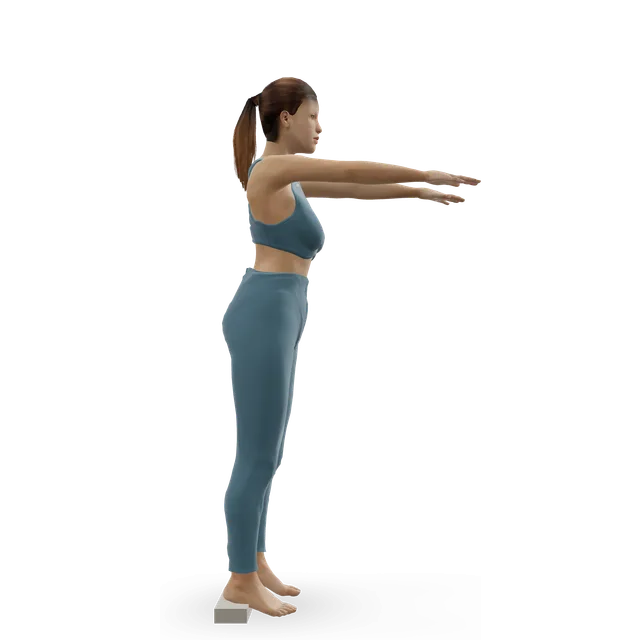
In lab studies, less ankle bend went with less knee bend and knees that drift in. Raising your heels on a small plate lets the knee travel further while the ankle catches up; it's a way round the problem, not a fix.

Sources 8, 9, 10

A possible injury factor, not a proven cause

Single cohorts link stiff ankles with knee tendon pain in basketball and with injuries in army recruits, but reviews found ankle range didn't predict ankle sprains, and no trial shows that loosening the ankle prevents injury.

Sources 11, 12, 13

After a sprain, ankle bend often stays short

People whose ankles keep giving way reached about 1.7 cm less on the knee-to-wall test. Calf stretching with a home programme restored most in the first weeks after a sprain, and exercise cut repeat sprains. A pinch at the front of the ankle, Achilles pain or a hot, swollen ankle changes the plan: see the warning signs.

Sources 14, 15, 16

What ankle mobility is, and what limits it

Two joints

The true ankle bends the foot up and points it down; the joint below it rolls the sole in and out, as our ankle and foot joint page explains. In training, ankle mobility nearly always means bending the foot up (dorsiflexion), especially with your weight on it and the knee travelling forward over the toes.

Knee straight or knee bent

The gastrocnemius, the big calf muscle, crosses the knee, so it limits ankle bend most when the knee is straight; with the knee bent, the soleus deeper in the calf takes over. That's why this guide uses both calf stretches.

What's typical

Lying down with the knee bent, adults pull the foot up about 12 to 14 degrees with help, in a US study of 674 healthy people. With your weight on it, healthy young adults reached about 9.5 cm from the wall, or 35 to 45 degrees, in small studies, and earlier studies reported 11 to 14 cm. Treat these as rough guides: the samples were small and the figures vary between studies. Women had a little more range than men, and ankle bend falls after about 60.

Sources 17, 18, 19, 20

What limits it

The calf muscles and Achilles tendon, how much stretch your nervous system accepts, a stiff joint after an injury, and bone: an expert panel notes that ankle bend is limited by the shape of the bones. A pinch at the front of the ankle rather than a stretch in the calf suggests the front of the joint is meeting, as our squat guide and anterior ankle impingement guide explain.

Sources 21, 22

Why it matters for squats

Ankle bend lets the knee travel forward so you can sit down between your feet with your heels down; our squat guide says the knees travel forward as far as your ankles allow. With less ankle bend, the heels lift, the trunk tips forward or the knees drift in, and the hips can't go as deep either.

Sources 8, 9, 23, 24

How people differ

Shin and thigh length, past sprains or fractures and calf training all change the number. A previous sprain is the clearest reason one ankle is stiffer than the other.

Sources 20, 14

The knee-to-wall test

How to do it

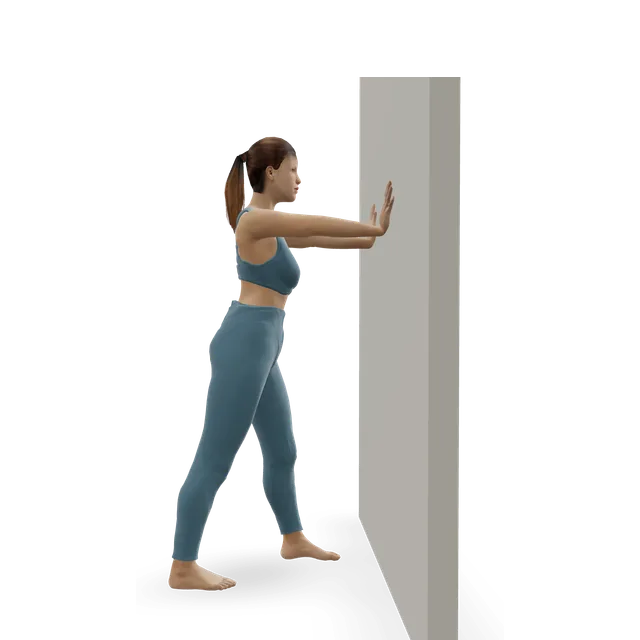
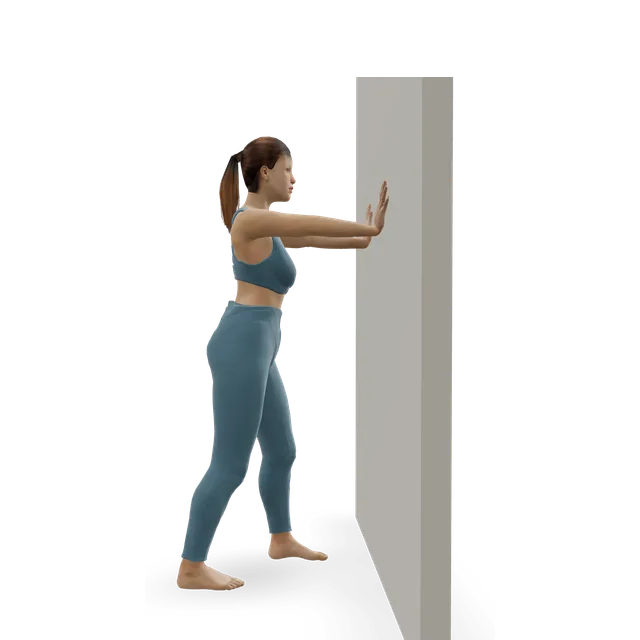
Face a wall with one foot in front, toes pointing at the wall. Bend the knee to touch the wall with the heel down, then move the foot back a little at a time until the knee only just touches with the heel still down. Measure from the big toe to the wall. Do both sides, at the same time of day after the same warm-up (our suggested method, from the studies).

Sources 18, 1

What the numbers mean

Healthy young adults reached about 9.5 cm in one study of 20 people and 11 to 14 cm in earlier ones; about 1 cm is roughly 3.6 degrees. These are rough guides from small samples. Compare your two sides, and yourself over time, rather than chasing a number.

Sources 18, 19, 20

Side-to-side differences are common

In 50 active adults, 44% differed between sides by more than about 2 degrees and 8% by more than 5. In 105 athletes, the average difference was about 9 to 14%, more on the side of a past sprain.

Sources 19, 20

How much change is real

Across 12 studies, a change of about 1.6 to 1.9 cm (about 5 degrees) was needed to be sure it was more than measuring error. Retest every 2 to 4 weeks rather than daily. The test isn't a diagnosis.

Source 2

What the evidence says

Most trials are small and in healthy young adults; injury studies are observational.

The knee-to-wall test is reliableStrong evidence

Two raters agreed almost perfectly in 13 adults, and across 12 studies the test was consistent between raters, with a change of about 1.6 to 1.9 cm needed to be sure it's real.

Sources 1, 2

Calf stretching adds a few degreesStrong evidence

In 5 trials of 161 healthy people, calf stretching added about 2 to 3 degrees, and the authors were unsure the change matters in practice. Across 20 trials, held stretching added about 5 degrees and contract-relax stretching about 4, while bouncing (ballistic) stretching wasn't clearly effective. Across 23 studies of 734 people, stretching and heel raise exercises worked; the longest study ran 8 weeks.

Sources 3, 4, 25

Full-range calf strength works about as wellEmerging evidence

In 36 untrained men, 3 sets of 10 full-range calf raises (1 second up, 3 seconds down) 3 times a week for 6 weeks improved ankle bend about as much as 3 stretches of 40 seconds, mostly by raising stretch tolerance. Six weeks of slow heel drops increased ankle bend in 74 adults, and across 17 studies eccentric training's largest effect was at the ankle.

Sources 5, 6, 7

Mobility work on top of strength trainingEmerging evidence

In 20 people with stiff ankles, adding a 4-week ankle mobility programme to strength training improved ankle bend by about 4 degrees and changed how they landed from a jump; strength training alone didn't. One small trial.

Source 26

SquatsEmerging evidence

People with less ankle bend bent the knee about 15 degrees less in an overhead squat (40 adults), limiting the ankle with a wedge reduced knee bend and increased inward knee drift (30 adults), and less ankle bend went with inward knee drift across 17 studies. Raising the heels added about 4 degrees at the ankle and 5 at the knee across 14 studies, with the ankle effect only for lifts over 2.5 cm, and didn't change hip range.

Sources 8, 9, 23, 10

After a sprainEmerging evidence

People whose ankles keep giving way reached 10.7 against 12.5 cm on the knee-to-wall test (30 against 30), and a past sprain went with less range on that side in 105 athletes. Calf stretching with a home programme restored ankle bend best in the first weeks after a sprain, from one small trial, and hands-on joint mobilisation helped mildly in ankles that keep giving way.

Sources 14, 20, 15, 27, 28

Sprains often come back, and exercise helpsStrong evidence

A sprain about doubles the risk of another in the following year, and up to 70% of people go on to have lasting instability. In pooled trials, exercise after a sprain cut the risk of a repeat sprain to about a third, and the clinical guideline prefers supervised exercise to passive treatments.

Sources 29, 30, 16, 31

Stiff ankles and knee or Achilles tendon painEmerging evidence

In 75 junior basketball players followed for a year, those with ankle bend under 36.5 degrees had an 18.5 to 29.4% risk of knee tendon pain (jumper's knee), against about 2% above it, from only 12 cases. Less ankle bend went with knee tendon pain in 113 volleyball players, in a snapshot study. For Achilles tendon pain, single cohorts linked less ankle bend with more cases, but a review of 10 cohorts calls the evidence conflicting. These come from single cohorts; none shows that loosening the ankle prevents tendon pain.

Sources 11, 32, 33, 34, 35

Stiff ankles and ankle sprainsMixed evidence

In 1,093 army recruits, less ankle bend predicted injury, and a later review reports that the stiffest recruits had about 5 times the sprain risk of average ones. But across 8 studies, and again across 16 studies of 3,636 athletes, ankle range didn't predict ankle sprains, while a previous sprain did. In students, less ankle bend was a risk factor in 241 men but not in 159 women.

Sources 36, 12, 37, 13, 38, 39

RunningEmerging evidence

In small studies, less flexible runners ran more economically (19 men; 48 runners with stiffer calves), and how the legs were lined up when standing didn't predict running injuries in 87 runners. We found no study showing that ankle mobility work improves running.

Sources 40, 41, 42

Stretching before exercise doesn't prevent injuriesStrong evidence

Stretching programmes didn't cut sports injuries across 25 trials, calf stretching before exercise didn't clearly change injury risk in army recruits, and the extra range from one session fades within about 30 minutes.

Sources 43, 12, 44

How to improve ankle mobility: how often, how long and what to do

Test first

Do the knee-to-wall test on both sides and write the numbers down, so you can see change you might not feel (our suggestion).

Calf stretches, knee straight and knee bent

Hold each 30 to 60 seconds, 2 or 3 times, on most days, to a clear pull in the calf rather than pain: our flexibility guide's dose. The wall calf stretch with the back knee straight reaches the gastrocnemius; the soleus stretch with it bent reaches deeper.

Sources 3, 21

Slow, full-range calf raises 2 or 3 times a week

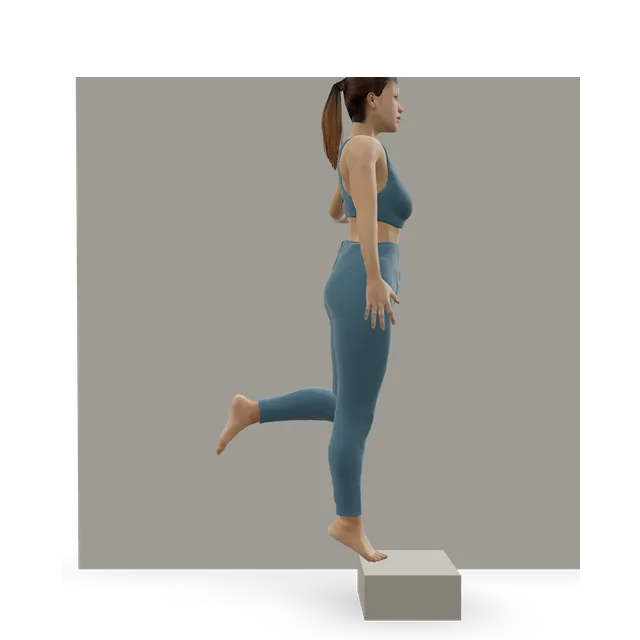
2 or 3 sets of 8 to 15, 3 seconds up and 3 seconds down, through your whole range, then single-leg raises from a step and slow heel drops once two-leg raises are easy (our calf and shin routines; the trial used 3 sets of 10). Keep them on the floor with Achilles pain.

Sources 5, 6

Rocks and circles before squats or runs

10 slow rocks per side, daily, is the knee-to-wall move page's dose, and our squat technique workout uses 10 slow rocks each side, heel down. Ankle circles loosen the joint before a run. Both are warm-ups: the extra range from one session fades within about half an hour.

Source 44

How long it takes, and keeping it

Trials gained a few degrees over 4 to 8 weeks. Retest every 2 to 4 weeks, and expect slow, steady change rather than a jump. Once you're happy, 2 or 3 days a week of stretching kept range in a trial.

Sources 3, 5, 26, 45

Common slip-ups

Letting the heel lift to reach the wall; letting the knee cave in rather than track over the middle toes; bouncing in calf stretches; pushing into a pinch at the front of the ankle; stretching only with the knee straight (our editorial list, with the knee-to-wall move page's common mistakes).

Test and improve your ankle bend, step by step

Our editorial session, built from our squat technique workout, our shin release routine and the trials above; our ankle mobility routine follows the same order. The stretches most days; the calf raises 2 or 3 times a week.

  1. Test first: face a wall, one foot in front, and bend the knee towards the wall with the heel down. Move the foot back until the knee only just touches with the heel still down, and measure from the big toe to the wall. Do both sides and write the numbers down.
  2. Warm the ankle: 5 slow ankle circles each way with each foot.
  3. Knee-to-wall rocks: 10 slow rocks each side, knee over the middle toes, heel down, touching lightly; move the foot back a little as it gets easier.
  4. Calf stretches: the wall calf stretch with the back knee straight, then the soleus stretch with it bent, 2 holds of 30 to 60 seconds each side.
  5. Slow calf raises: 2 sets of 12 to 15, 3 seconds up and 3 seconds down, through the whole range; later, single-leg raises from a step.
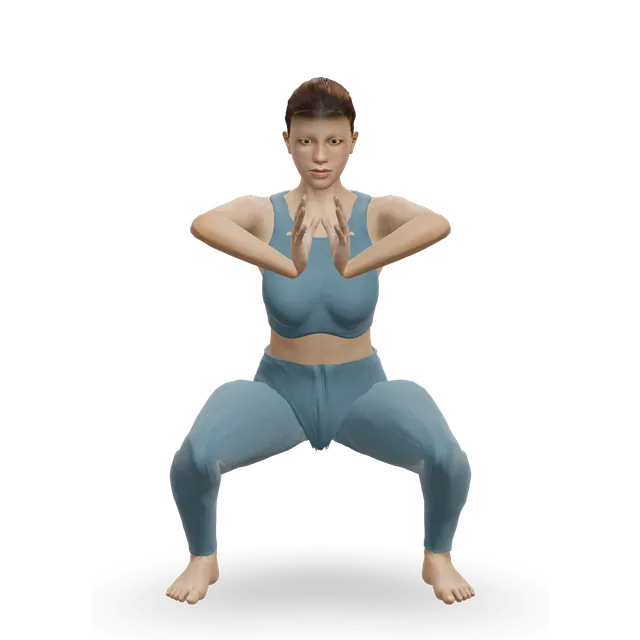
  6. Use the range: a goblet squat or deep squat hold with your heels down, 30 to 60 seconds.
  7. Retest every 2 to 4 weeks, at the same time of day after the same warm-up. Stop at a pinch at the front of the ankle rather than pushing through it.

Loading the 3D figure…

Gets into position, then repeats the movement. Technical checks passed; qualified exercise review is pending.

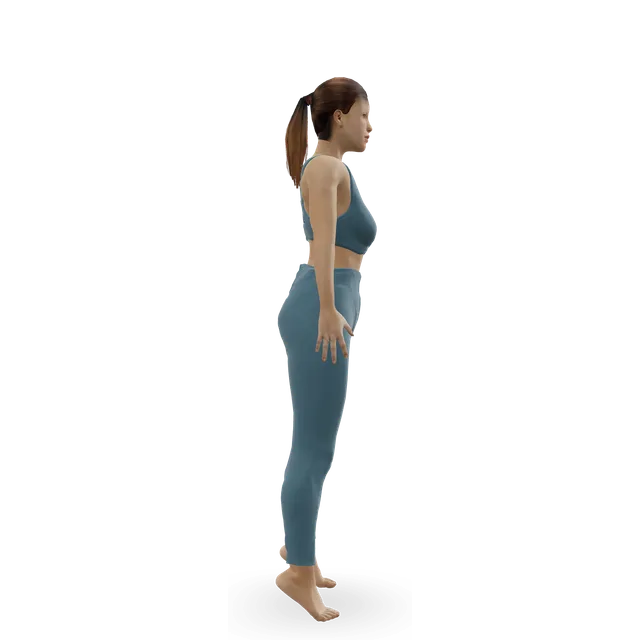
The movement on the figure: Knee-to-wall ankle rock

Bend the ankle with your weight on it

The knee-to-wall rock is both the test and the drill: 10 slow rocks per side, daily (the move page's dose). Ankle CARs at 5 slow circles each way with each ankle (our editorial starting point, as on the move page), the gentler ankle circles for a stiff or recovering ankle, and a deep squat hold of 30 to 60 seconds holding a door frame, with a folded mat under your heels if they lift (our squat challenge).

Calf stretches: knee straight and knee bent

The straight-knee stretch reaches the gastrocnemius and the bent-knee stretch the soleus; do both, 2 holds of 30 seconds each side (our shin release routine), building to 30 to 60 seconds on most days (our flexibility guide's dose).

Strength through the full range of the ankle

Slow calf raises at 2 sets of 12 to 15, 3 seconds up and 3 down, and tibialis raises at 2 sets of 15 (our shin release routine); single-leg raises from a step at 2 to 3 sets of 8 to 12 once two-leg raises are easy (our bounce and load starter); slow heel drops at 2 sets of 10 to 15 once single-leg raises on the floor are controlled (our editorial starting point). With Achilles pain, keep raises on the floor and follow a clinician's plan. Heel-elevated squats are a way to squat deep while the ankle catches up, not a fix for it.

Ankle mobility for squats, running, after a sprain and with age

SquatsEmerging evidence

Build ankle bend over weeks with the calf work above, and meanwhile squat with a slightly wider stance and your toes turned out a little, or with your heels on a small plate, as our squat guide advises. Heel lifts help the knee travel, but they don't change the ankle itself.

Sources 8, 9, 10

RunningEmerging evidence

Runners don't need extreme ankle range: stiffer calves went with better running economy in small studies. Ankle circles and knee-to-wall rocks suit a warm-up; calf strength suits the rest of the week. Our ankle pain when running guide covers pain.

Sources 40, 41

After a sprainEmerging evidence

Once you can walk without a limp and your clinician agrees, practise single-leg balance 3 times a week for at least 8 weeks, a little harder each week: a home programme like this cut repeat sprains by 35%. Our ankle sprain and chronic ankle instability guides cover the rest of the rehab.

Calf stretching with a home programme restored ankle bend best in the first weeks, and the guideline prefers supervised exercise to passive treatments, with a brace or tape for sport.

Sources 15, 16, 31

Older adultsEmerging evidence

Ankle bend falls after about 60, and stretching still works: over 65, 60-second holds gained range faster in a hamstring trial. Hold a wall for the standing moves, and pair the stretches with calf raises and balance work; the NHS asks adults over 65 for strength, balance and flexibility work on at least 2 days a week.

Sources 17, 46, 47

Workouts to follow

Our ankle mobility routine tests your ankle bend, then works it with rocks, calf stretches and full-range calf raises in about 12 minutes. Do the stretches most days and the calf raises 2 or 3 times a week, and retest every few weeks.

Ankle mobility routine: the knee-to-wall test, calf stretches and full-range calf raises

A 12-minute routine to improve how far your ankle bends: test it against a wall, rock it, stretch both calf muscles, strengthen through the full range, then use it.

12 minBeginner8 movesA wall, A step

Runner's warm-up

An 8-minute dynamic warm-up for runners: ankle and hip mobility, lunges, skips and pogo hops.

8 minIntermediate8 movesA wall

Squat technique workout

A 25-minute practice session for the squat: find your depth on a chair, groove the bodyweight squat with pauses, then load it with a slow goblet squat.

25 minBeginner8 movesA wall, A bench or box

Overhead squat progression: ankle, hip and shoulder mobility, then the dowel and the bar

A 25-minute session for the overhead squat: check your ankles and reach, loosen what the check shows, then climb from the goblet squat to a dowel and an empty bar.

25 minIntermediate14 movesCardio machine, A wall

Foot and ankle strengthening routine: toes, arches, calves and balance

A 15-minute barefoot routine for stronger toes, arches, calves and ankles, finishing with balance. You need only a towel, a wall and a resistance band.

15 minBeginner11 movesA wall, Other / check instructions

Calf workout: straight-knee and bent-knee raises with a step

A 25-minute calf workout with a step and a dumbbell: single-leg raises for the big calf muscle, then seated raises for the soleus, with gym swaps for each move.

25 minIntermediate7 movesA wall, A step

Shin release routine: roll, stretch, strengthen

Roll the front and outer shin and the calf, stretch the calf, then strengthen the shin and calf muscles. About 20 minutes, for comfort and strength.

20 minBeginner9 movesOther / check instructions, A foam roller

Post-run stretches

Seven stretches for after a run: calves, soleus, quads, hip flexors, hamstrings and glutes.

10 minBeginner7 movesA wall

Springy starter: calf strength and gentle bounces

A beginner's springy session: calf strength first, then heel drops, calf springs and gentle bounces, building towards skipping and pogo hops.

20 minBeginner11 movesA wall, A step

Yoga for runners: 20 minutes after a run or on a rest day

A 20-minute yoga cool-down for runners: calves, hip flexors, hamstrings and glutes, one balance pose and a rest, after an easy run or on a rest day.

20 minBeginner11 movesA wall

Plans

The runners' strength plan and the 30-day squat challenge both need ankle bend; the plan for seniors adds balance and strength around it.

Who should change the plan

After a broken ankle or ankle surgery

After a broken ankle or ankle surgery, follow your team's advice on when to start.

A pinch at the front of the ankle

If the ankle drill gives you a pinch at the front of the ankle rather than a stretch in the calf, don't force it: keep your heels raised and see our anterior ankle impingement guide.

A pinch at the front of the hip or ankle is the joint, not a stretch: stay just short of it, and see a GP or physiotherapist if it keeps happening (our suggestion).

Achilles pain

A step-based heel drop may be unsuitable for some Achilles problems, as our calf raise move page says: do calf raises on the floor and see our Achilles tendinopathy guide.

Stiff, painful or swollen ankles

Ankles that are stiff, painful or swollen, especially first thing in the morning, are a different problem from tight calves: read our ankle pain and ankle arthritis guides before stretching harder (our suggestion).

Numb feet or diabetes

With numb feet from diabetes or another cause, do the standing moves in well-fitting shoes rather than barefoot, and check your feet afterwards (our suggestion, following our foot and ankle strengthening routine and the ankle pain rule's exceptions).

Very flexible already

If you're already very flexible, put your time into strength and control through the range you have. Stretch only areas that feel genuinely tight, and only to a mild pull, and avoid hanging at the end of your range or pushing joints back past straight. The strength and control moves below are a place to start, and our hypermobility guide has a full routine, the evidence and the warning signs. If you do Pilates, our Pilates for hypermobility guide covers which moves to adapt.

Source 48

Warning signs: when to get help

Stop and get medical help

If you get chest pain or pressure, feel faint or dizzy, are unusually breathless, or your heart races or beats irregularly during exercise, as our plans advise.

Call 999 (911 in the US)

For chest pain that comes on suddenly and doesn't go away, feels tight or like squeezing, spreads to your arms, neck, jaw, stomach or back, or comes with sweating, feeling sick, light-headedness or breathlessness; severe difficulty breathing; someone who faints while exercising; palpitations that don't go away, or come with chest pain, shortness of breath or feeling faint; or a headache that starts suddenly and is extremely painful, especially while lifting or straining, or comes with numbness or weakness, difficulty speaking or loss of vision. The NHS says a bleed on the brain may be more likely when lifting something heavy. Don't drive yourself to A&E.

Sources 49, 50, 51, 52, 53

A possible broken bone

Call 999 or go to A&E: after an injury, you heard a crack, the foot or ankle has changed shape or points at an odd angle, a bone is sticking out, there is a bad cut over it, you're in severe pain, or the toes look blue or white, feel numb or are cold to touch. These can mean a broken bone. Don't drive yourself.

Sources 54, 55

You can't put weight on it

Same day (NHS 111 or an urgent treatment centre): after an injury, you can't put weight on it or walk more than a few steps, the pain is very bad or getting worse, there is a lot of swelling or bruising or it is getting worse, it feels very stiff, or it's not feeling any better after treating it yourself. Get the same help if you also have a very high temperature, or feel hot, cold or shivery: this could be an infection. If you think it's broken, don't treat it yourself.

Source 54

A snap at the back of the heel

Same day: a sudden snap or pop at the back of the heel or calf, or a feeling of being kicked there, then walking flat-footed and being unable to push off, stand on tiptoe or climb stairs. It could be an Achilles tendon rupture or a broken heel bone. Go to A&E or a minor injuries unit, or contact NHS 111.

Source 56

A hot, swollen joint

Same day: a sudden, very painful, hot, swollen, red joint, often the big toe but sometimes the middle of the foot (the midfoot) or the ankle, especially with a high temperature, feeling shivery or being unable to eat. It may be gout, but it could be a joint infection (septic arthritis), which is urgent.

A clot after an injury or a cast

Same day (urgent GP appointment or NHS 111): throbbing pain in one leg (rarely both), usually the calf or thigh; swelling in one leg (rarely both); red, blue or darkened skin around the painful area, which may be harder to see on brown or black skin; or swollen veins. It could be a blood clot (DVT). Watch for it after an ankle injury or time in a cast or boot.

See a GP

Pain that isn't better after 2 weeks of looking after it yourself, is getting worse, keeps coming back, or stops you doing normal things.

An ankle that keeps giving way months after a sprain.

One spot on a foot bone that hurts with every step and later at night: a possible stress fracture.

Source 55

A nerve or the joint, not a muscle

Burning, tingling, numbness or pins and needles down an arm or leg while stretching usually means a nerve is under tension, so ease off to a position without it. A pinch at the front of the hip or ankle at the end of a stretch is the joint, so work below it. See a GP or physiotherapist if either keeps happening (our suggestion).

During any session

Stop straight away if you feel any pain or become unwell, the NHS says, and contact 111 if your symptoms worry you or don't go away.

Some discomfort during exercise is fine. Aim for pain you would call mild to moderate, no more than about 5 out of 10, that settles within an hour, with no more swelling or stiffness the next morning. If it's worse the next day, do a little less (a smaller range, fewer reps, a lighter band), not nothing.

The exceptions: pain in one spot on a bone should be pain-free, because it could be a stress fracture; burning, tingling or numbness means stop that movement; and if your feet are numb, pain won't warn you, so check your skin after exercise.

Source 57

Ask for an urgent GP appointment or call NHS 111

Ask for an urgent GP appointment or get help from NHS 111 for a headache that's triggered or made worse by coughing, sneezing, bending down or exercising. In the US, contact your doctor or urgent care.

Check first

Speak to your GP first if you haven't exercised for some time or have medical conditions or concerns, as the NHS advises. Get advice before heavy lifting or hard straining work if your blood pressure is uncontrolled, or you have heart disease or chest pain when you're active, a pacemaker or defibrillator, diabetic eye disease, glaucoma, a hernia, recent eye or tummy surgery, or you're pregnant, as our breathing guide lists. After a recent shoulder dislocation or shoulder surgery, follow our shoulder dislocation guide or your surgical team first.

Speak to a GP first if you haven't exercised for some time, or if you have a medical condition or concerns. Get advice first, too, if you have a health problem, an injury or symptoms, have recently had a heart attack or an operation, or are pregnant or have recently given birth.

Source 58

A heart condition or high blood pressure

If you have a heart condition, follow your cardiac team's advice on how hard to work, and stop for the warning signs above. People with long-term conditions may wish to ask their specialist before starting. With uncontrolled high blood pressure, avoid straining against a held breath; the high blood pressure guide has more.


Myths

"Stiff ankles cause ankle sprains"Mixed evidence

In the largest review, ankle range didn't predict sprains in 3,636 athletes; a previous sprain did.

Sources 13, 37

"Ankle mobility work prevents injuries"Mixed evidence

No trial has tested it. Calf stretching before exercise didn't clearly change injury risk in army recruits, and stretching programmes didn't prevent sports injuries.

Sources 12, 43

"Calf stretching transforms your ankle"Emerging evidence

It adds a few degrees over weeks, about 2 to 5, and full-range calf strength adds about as much. Worth doing, with realistic expectations.

Sources 3, 4, 5

"Squat shoes or a heel wedge fix stiff ankles"Emerging evidence

Raised heels let the knee travel further while you squat, but they don't change the ankle itself. Use them while you build range, as our squat guide says.

Source 10

"Foam rolling your calves frees up your ankles"Mixed evidence

Rolling programmes improved range in general, but not ankle bend when the calves were rolled.

Source 59

"More ankle mobility is always better"Mixed evidence

Runners with stiffer calves and ankles ran more economically in small studies, and range you can't control isn't an advantage.

Sources 40, 41

"Ankle circles strengthen your ankles"Mixed evidence

They move the joint, which helps a stiff ankle, but strength needs load: in the trials, it was calf raises and heel raise exercises, not circles, that improved ankle bend alongside stretching. Our strengthen your ankles guide covers strength.

Source 25

Questions people ask

How do I improve ankle mobility?

Stretch your calves with the knee straight and with it bent on most days, do slow full-range calf raises 2 or 3 times a week, and use knee-to-wall rocks before squats or runs. Calf stretching added about 2 to 5 degrees over weeks in trials, and full-range calf raises improved it about as much. Our ankle mobility routine puts it together in 12 minutes.

What is the knee-to-wall test, and what's normal?

Face a wall, bend your knee to touch it with your heel down, and find the furthest your big toe can be from the wall. Healthy young adults reached about 9.5 cm in one small study and 11 to 14 cm in earlier ones, so treat any number as a rough guide. Compare your two sides and yourself over time; a small difference between sides is common.

How long does it take to improve ankle mobility?

Trials gained a few degrees over 4 to 8 weeks. Retest every 2 to 4 weeks, because only a change of about 2 cm on the knee-to-wall test is clearly more than measuring error. People vary, so nobody can promise a number.

How do I improve ankle mobility for squats?

Build ankle bend with calf stretches and calf raises, and meanwhile squat with a slightly wider stance and toes turned out, or with your heels on a small plate, as our squat guide suggests. Stiffer ankles go with a shallower squat and knees that drift in, and heel lifts help the knee travel while you build range.

Do stiff ankles cause injuries?

They may matter in jumping sports: basketball players with stiff ankles had more knee tendon pain in one study. But reviews found ankle range didn't predict ankle sprains, and no trial shows that loosening the ankle prevents injury. A previous sprain is the clearest risk factor for another.

My ankle has been stiff since I sprained it. What helps?

Once you can walk without a limp and your clinician agrees, calf stretches and a home programme helped most in the first weeks, alongside balance training, which cuts repeat sprains. If the ankle keeps giving way months later, see a GP or physiotherapist. Our ankle sprain and chronic ankle instability guides have the stages.

Why do I feel a pinch at the front of my ankle when I squat?

That's usually the front of the joint, not a tight calf. Don't push into it: keep your heels raised and see our anterior ankle impingement guide, as our squat guide advises.

Should I stretch my calves before running?

You don't need to: calf stretching before exercise didn't clearly change injury risk in a large trial of army recruits, and any warm-up loosens you for a while. Our runner's warm-up uses ankle circles and knee-to-wall rocks instead.

Is ankle dorsiflexion the same as ankle mobility?

In training, mostly yes: ankle mobility usually means bending the foot up with your weight on it. The ankle also points down and the foot rolls in and out, which our ankle and foot joint page covers.

Can I improve ankle mobility after 60?

Yes. Ankle bend falls with age, but stretching still works, and over 65, 60-second holds gained range faster in a hamstring trial. Hold a wall for balance, and pair the stretches with calf raises and balance work.

Sources

  1. Bennell 1998 · The knee-to-wall (weight-bearing lunge) test is reliable (reliability study, Aust J Physiother)
  2. Powden 2015 · Reliability of the weight-bearing lunge test: 12 studies (systematic review, Man Ther)
  3. Radford 2006 · Does stretching increase ankle bend? 5 trials (systematic review, Br J Sports Med)
  4. Medeiros 2018 · Types of stretching and ankle dorsiflexion: 20 trials (systematic review and meta-analysis, Foot)
  5. Murakami 2025 · Six weeks of static stretching or calf strength training in 36 untrained men (randomised trial, Front Physiol)
  6. Mahieu 2008 · Six weeks of eccentric calf training and calf muscle-tendon properties in 74 adults (randomised trial, Med Sci Sports Exerc)
  7. Kay 2023 · Eccentric training and passive leg range of motion: 17 studies (systematic review and meta-analysis, MSSE)
  8. Dill 2014 · Knee and ankle movement in squats in 40 adults with limited or normal ankle bend (lab study, J Athl Train)
  9. Macrum 2012 · Limiting ankle bend during a squat: 30 people (lab study, J Sport Rehabil)
  10. Ghasemi 2026 · Heel elevation and ankle and knee range in squats: 14 studies (systematic review and meta-analysis, Sports Biomech)
  11. Backman 2011 · Ankle bend and jumper's knee: 75 junior elite basketball players followed for a year (prospective study, Am J Sports Med)
  12. Pope 1998 · Ankle bend, calf stretching and injury in 1,093 army recruits (quasi-randomised trial with a cohort analysis, Aust J Physiother; abstract read)
  13. Mason 2022 · Risk factors for ankle sprains in men and women: 16 studies (systematic review and meta-analysis, Sports Med Open)
  14. Hoch 2012 · Ankle bend and balance in 30 people with chronic ankle instability and 30 without (case-control study, J Sci Med Sport)
  15. Terada 2013 · Treatments to restore ankle bend after an ankle sprain: 9 studies (systematic review, J Athl Train)
  16. Doherty 2017 · Treatment and prevention of acute and recurrent ankle sprain: an overview of systematic reviews (BJSM)
  17. Soucie 2011 · Range of motion reference values by age and sex in 674 healthy people (study, Haemophilia)
  18. Konor 2012 · Reliability of three ankle dorsiflexion measures, including the knee-to-wall test, in 20 adults (reliability study, Int J Sports Phys Ther)
  19. Howe 2020 · Side-to-side differences on the knee-to-wall test in 50 active adults (reliability study, Int J Sports Phys Ther)
  20. Cady 2024 · Sex, past ankle sprains and side-to-side ankle bend in 105 athletes (cross-sectional study, Int J Sports Phys Ther)
  21. Warneke 2025 · Practical recommendations on stretching: a Delphi consensus of research experts (J Sport Health Sci)
  22. Freitas 2018 · Can chronic stretching change muscles and tendons? 26 studies (systematic review, Scand J Med Sci Sports)
  23. Lima 2018 · Ankle bend and knees drifting in: 17 studies (systematic review and meta-analysis, Phys Ther Sport)
  24. Endo 2020 · Deep squat depth and hip, knee and ankle range in 9 men (study, J Phys Ther Sci)
  25. Young 2013 · Ways to increase ankle dorsiflexion: 23 studies, 734 people (systematic review and meta-analysis, J Foot Ankle Res)
  26. Howe 2022 · A 4-week ankle mobility programme and landing in 20 people with stiff ankles (randomised trial, J Strength Cond Res)
  27. Vallandingham 2019 · Joint mobilisation and ankle bend in chronic ankle instability: 10 studies (systematic review and meta-analysis, J Athl Train)
  28. Paula 2025 · Manual therapy and ankle dorsiflexion (systematic review and meta-analysis, J Manipulative Physiol Ther)
  29. Gribble 2016 · International Ankle Consortium consensus on the long-term consequences of ankle sprains (BJSM)
  30. Gribble 2016 · How common lateral ankle sprains are, and their long-term effects (consensus evidence review, Br J Sports Med)
  31. Vuurberg 2018 · Diagnosis, treatment and prevention of ankle sprains: an evidence-based clinical guideline update (BJSM)
  32. Malliaras 2006 · Ankle bend and patellar tendon injury in 113 volleyball players (cross-sectional study, J Sci Med Sport)
  33. Sprague 2018 · Modifiable risk factors for jumper's knee: 31 studies (meta-analysis, Br J Sports Med)
  34. van der Vlist 2019 · Clinical risk factors for Achilles tendinopathy: 10 cohorts (systematic review, BJSM)
  35. Kaufman 1999 · Foot structure and overuse injuries in 449 military trainees (cohort, AJSM)
  36. de Noronha 2006 · Do strength, balance or range of movement predict ankle sprains? (prospective study, Br J Sports Med)
  37. Kobayashi 2016 · Risk factors within the body for ankle sprains: 8 studies (systematic review and meta-analysis, Sports Health)
  38. Willems 2005 · Risk factors for ankle sprains in 241 male students (prospective study, Am J Sports Med)
  39. Willems 2005 · Risk factors for ankle sprains in 159 female students (prospective study, Scand J Med Sci Sports)
  40. Craib 1996 · Flexibility and running economy in 19 sub-elite male distance runners (study, Med Sci Sports Exerc)
  41. Ueno 2018 · Calf stiffness and running performance in 48 trained runners (study, Int J Sports Med)
  42. Lun 2004 · Leg alignment and running injuries in 87 recreational runners (prospective study, Br J Sports Med)
  43. Lauersen 2014 · Exercise programmes to prevent sports injuries: 25 randomised trials (meta-analysis, BJSM)
  44. Behm 2016 · Stretching before activity: performance, range of motion and injury (systematic review, Appl Physiol Nutr Metab)
  45. Rancour 2009 · Stretching 2 to 3 days a week after a 4-week daily programme: 32 adults (randomised trial, JSCR)
  46. Feland 2001 · How long to hold a hamstring stretch at 65 and over (randomised trial, Physical Therapy)
  47. NHS · Physical activity guidelines for older adults
  48. NHS · Joint hypermobility syndrome (past its review date: reviewed August 2023, review due August 2026)
  49. NHS · Heart attack
  50. NHS · Chest pain (past its review date: reviewed August 2023, review due August 2026)
  51. NHS · Heart palpitations
  52. NHS · Fainting
  53. NHS · Subarachnoid haemorrhage
  54. NHS · Sprains and strains
  55. NHS · Ankle pain
  56. NHS · Heel pain
  57. NHS · How to warm up before exercising
  58. NHS · Physical activity guidelines for adults aged 19 to 64
  59. Konrad 2022 · Foam rolling training and range of motion (meta-analysis of 11 studies, Sports Medicine)

Exercise education, not a personal prescription, and clinical review of these guides is pending. Check with a GP before starting hard training if you have a heart condition, chest pain, dizziness or breathlessness when active, and stop for sharp or increasing pain. Health disclaimer.