Yoga guide

Yoga for sway back: what it is and isn't, the hips and the trunk, poses to change, what the evidence shows, and a class

Sway back usually means standing with your hips pushed forward of your ankles and your upper body leaning back. It isn't the same as a deep curve in your lower back, and it isn't the same as an anterior pelvic tilt: the pelvis is shifted forward, not tipped forward. It's a common way to stand, especially in children, and it isn't a proven cause of back pain. No trial has tested yoga, or any exercise, for sway-back posture, so this guide is about strength and comfort, not reaching a shape.

It covers the two meanings of sway back and how to tell it from a pelvic tilt or lordosis, what standing in it does to your trunk muscles, why the muscle charts are theory, what yoga and exercise can and can't change, the poses for the upper back, trunk and hips, the poses to change, flat back, and the classes to follow. Numbness around your genitals or bottom, or new bladder or bowel problems, with back pain needs 999: the warning signs are below.

The short version

Sway back isn't a deep lower-back curve, or a forward tilt

To physiotherapists, sway-back means the hips pushed forward of the ankles, the upper body leaning back, a long rounded upper back and a lower-back curve that looks short, with the pelvis level or tipped slightly back. A forward-tilted pelvis with a deep curve is a different posture. In everyday speech "swayback" often means a deep curve, which our anterior pelvic tilt and lordosis guides cover.

Source 1

A common way to stand

About a third of children aged about 12 stood in sway-back in two large Belgian studies, and standing posture varies widely between people. No study gives a figure for adults.

Sources 2, 3, 4

No trial has tested yoga, or any exercise, for it

Our searches found no trial, published or registered. The yoga studies that measured the lower-back curve were a snapshot comparison, a small study that gave no numbers in its summary and a study of 19 older adults with no comparison group.

Sources 5, 6, 7, 8

It isn't a proven cause of back pain

Boys who stood in sway-back reported more back and neck pain than boys who stood neutrally, but girls didn't, and adults with and without back pain have the same lower-back curve and pelvic tilt on average. These are snapshot studies, so they can't show cause.

Sources 2, 3, 9, 10

Standing tall switches the trunk muscles on

In short lab studies of pain-free people imitating the posture, standing in sway-back turned the deep trunk and back muscles down, and standing tall turned them back on. Practise standing with your hips over your feet as a cue for awareness, not a proven correction.

Sources 11, 12, 13

Train strength, not a shape

Across 23 trials, strengthening changed the upper back but not the lower back and pelvis, and stretching changed nothing. Back muscle endurance, not the curve, was the posture-related measure linked with back pain in 600 adults. And if your back hurts, yoga helps a little, about as much as other back exercise, whatever your posture.

Sources 14, 15, 20

What sway back is

Two meanings

A 2018 review describes sway-back as "(1) anterior pelvic shift, (2) thoracic kyphosis extended to the upper part of the lumbar spine (longer thoracic kyphosis is observed), (3) apparently shorter lumbar lordosis, (4) normal or slightly decreased anterior pelvic tilt". In plain words: the pelvis shifted forward, the rounding of the upper back running further down, a lower-back curve that looks short, and a pelvis that isn't tipped forward. The hips sit forward of the ankles, the knees are straight or pushed back and the upper body leans back.

Source 1

Why it can look like a deep curve

On body-worn sensors, people standing in sway-back had a flat upper part of the lower back and a deeper bend low down, with the same overall angle. Our swayback posture guide explains both meanings.

Source 21

The definitions are clinical, not measured

The review says it was "completed with the authors own experience", and a 2023 study notes that "few studies have quantified sway-back posture". Physiotherapists rating it from photos agreed closely with each other in 30 students, but photos haven't been checked against X-rays.

Sources 1, 21, 22

How common it is

Of 639 boys aged about 12, 41.6% stood in a neutral way, 31.1% in sway-back and 27.2% leaning forward, with similar groups in 557 girls. The researchers found wide variation between children.

Sources 2, 3, 4

Sway back, anterior pelvic tilt, lordosis and flat back

Sway back

The pelvis is pushed forward of the ankles, with normal or slightly less forward tilt, and the upper body leans back.

Source 1

Lordotic posture and anterior pelvic tilt

The pelvis is tipped forward more than usual, with a deeper curve in the lower back. Our yoga for anterior pelvic tilt guide covers it.

Source 1

Flat back

A flattened lower-back curve, with the pelvis level or tipped back. It has a section below.

Source 1

You can have more than one, or none

Tilt and the lower-back curve are only loosely linked: "No correlation was found between angle of pelvic inclination and depth of lumbar lordosis in a standing position" in 90 adults without back pain. A glance in the mirror can't sort them reliably (our reading).

Source 16

What happens in your muscles

Standing in sway-back turns the trunk muscles downEmerging evidence

In 20 pain-free adults, the internal obliques and the back muscles worked less in sway standing than standing tall; the deepest tummy muscle was thinner (3.32 against 4.63 mm) in another 20; and in 17 men imitating it, the deep trunk and hip muscles worked less. Walking in sway-back loaded the front of the hip more. So sway-back is a way of hanging on your hips, at least in these short lab studies.

Sources 11, 12, 13, 23

The muscle charts are theoryEmerging evidence

Tables of which muscles are short or long in sway-back come from clinical experience. When muscles were measured, they barely related to how people stood: hip extension range and pelvic tilt didn't go together (r = -0.04), hamstring length made no difference to standing angles in 30 men, and "No muscle length index was significantly related to pelvic tilt" in 103 teenage girls. In the classic description the hip flexors are lengthened, not tight.

Sources 1, 24, 17, 18, 19, 16

Sway back and back pain

Linked weakly, if at allMixed evidence

In 766 Australian teenagers, posture types other than neutral went with more back pain in 7 of 15 analyses; sway-back boys had more back and neck pain than neutral boys, girls didn't, and lower-back and pelvic angles weren't linked with pain in 1,196 teenagers. In adults, people with back pain had the same lower-back curve and pelvic tilt on skin measures, a slightly flatter curve on X-rays, and a flatter curve weakly predicted new back pain.

Sources 25, 2, 3, 4, 9, 26, 27

No proof that posture causes back painStrong evidence

A review of 54 studies found "no strong evidence for any association between sagittal spinal curves and any health outcomes including spinal pain", and a review of 41 reviews found no consensus that posture causes back pain. An NHS physiotherapy leaflet says "There is no such thing as 'perfect' posture", and the Chartered Society of Physiotherapy says "There is no perfect posture or right or wrong desk set up".

Sources 10, 28, 30, 31

Back muscle enduranceEmerging evidence

In 600 adults, how long the back muscles could hold, not the curve, pelvic tilt or muscle lengths, was linked with back pain. People with sway-back had more fat in their lower back muscles on scans in a small study of 45 adults, which can't show which came first. Back-strengthening poses are worth doing whatever your posture.

Sources 15, 29

What the evidence says: can yoga change it?

No trial has tested yoga, or any exercise, for sway-back posture. The evidence below is about posture in general and about back pain.

No yoga trialStrong evidence

Our searches of PubMed, Europe PMC and ClinicalTrials.gov in November 2026 found no yoga study of sway back, and no randomised trial of yoga with the lower-back curve or pelvic tilt as its main result.

Source 5

Yoga and the lower-back curve: weak studiesMixed evidence

In a snapshot, 667 yoga practitioners had less pronounced upper and lower back curves than 578 students, but the groups differed in age and the effect was tiny. A study of 42 middle-aged women reported a change in the lower-back curve after 10 weeks of yoga without giving numbers in its summary. In 19 older adults with no comparison group, 8 weeks of Iyengar yoga gave only a trend towards less pelvic tilt while walking.

Sources 6, 7, 8

Does any exercise change posture?Strong evidence

In 23 controlled trials (969 healthy people), stretching didn't change posture, and strengthening changed the upper back and neck "but not in the lumbar and lumbopelvic region". The authors concluded that "Moderate-certainty evidence does not support the use of stretching as a treatment of muscle imbalance."

Source 14

Pilates and corrective exerciseMixed evidence

After 12 weeks of Pilates, 50 active adults "did not demonstrate improvements in either posture or balance when compared with the control group.", and in 22 people with back pain, disability improved with no change in X-ray alignment. A review rates the Pilates evidence in adults very low to low certainty. Corrective programmes for a deep lower-back curve had a moderate effect in weak studies, and for a forward-tilted pelvis there is "No overall evidence". None tested sway-back.

Sources 32, 33, 34, 35, 36, 37

The best yoga posture trial is about the upper backEmerging evidence

In 118 adults aged 60 and over, 24 weeks of yoga improved the upper-back curve by 4.4% on one measure, but not on the trial's other curve measure. Our yoga for kyphosis guide covers it.

Source 38

If it's back pain you're worried aboutStrong evidence

In the Cochrane review of 21 trials (2,223 people), yoga improved pain by about 4.5 points out of 100 and function slightly at 3 months against no exercise, about as much as other back exercise. The National Institute for Health and Care Excellence (NICE) recommends considering a group exercise programme for low back pain, and the NHS says "Activities like walking, swimming, yoga and pilates may also help ease back pain." None of this depends on changing your posture.

Sources 20, 39, 40, 41, 42

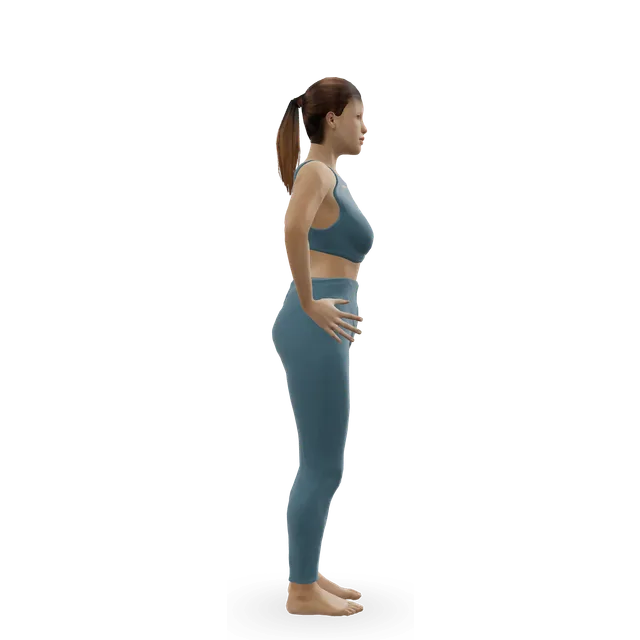
Stand tall over your feet

Our editorial starting point, as our Pilates for sway back guide teaches it, from the classic description of sway-back and lab studies of trunk muscles in pain-free people imitating it. Mountain pose: "Stand for 5 to 10 slow breaths, 2 or 3 times" (the move page's dose). It's a cue for awareness and comfort, not a proven correction.

  1. Stand with your feet hip-width apart and your weight over the middle of your feet, not your heels.
  2. Bring your hips back until they sit over your ankles, rather than pushed forward.
  3. Keep your knees soft, not pushed back.
  4. Let your ribs sit over your pelvis, without leaning back or squeezing your buttocks.
  5. Lengthen through the back of your neck, eyes level, and breathe slowly for 5 to 10 breaths.
  6. Check in a few times a day, for example while you wait for the kettle.

See the movement on the 3D figure: Mountain pose (Tadasana)

The upper back and back muscles

Where strengthening changed posture in trials. Bird dog, one limb at a time: 5 each arm and leg, holding 3 to 5 seconds; sphinx: 2 holds of 3 to 5 breaths; low cobra: 5 lifts held 3 to 5 seconds; locust: 3 to 5 lifts held 3 to 5 seconds (our yoga for posture class). Seated upper-back lift: "3 to 5 repetitions, each held 3 to 5 seconds, at least twice a week" (the move page's dose). Prone Y-T-W raises: 5 to 8 of each shape (our editorial starting point).

The trunk

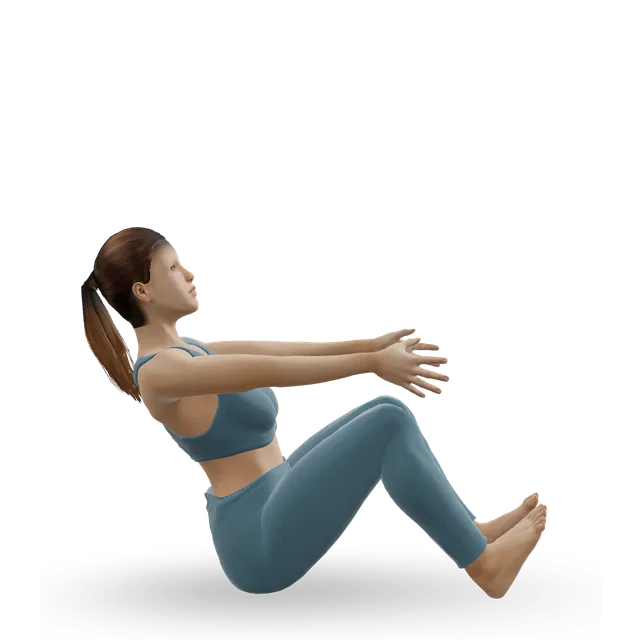
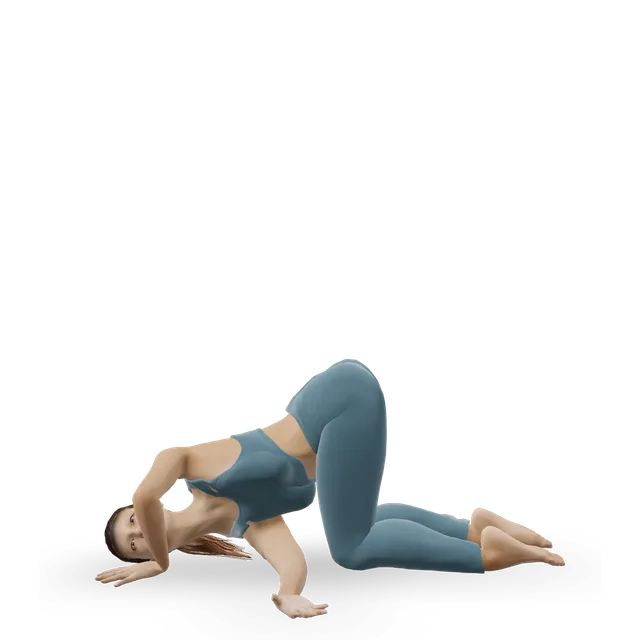
The deep trunk muscles that standing in sway-back turns down. Dead bug: 6 each side; bird dog: 6 each side with a 3-second hold (our posterior pelvic tilt and flat back routine). Knee side plank: 2 holds of 15 to 20 seconds each side; boat pose later, knees bent (our yoga for core class).

The hips and the hinge

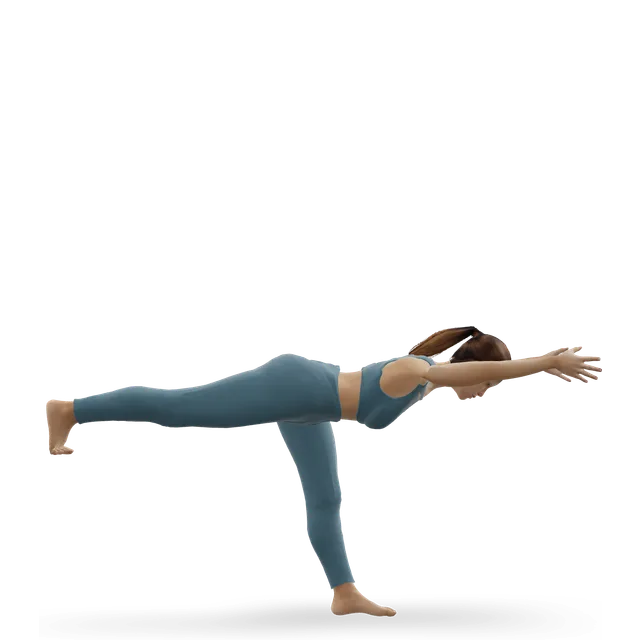
Glute bridge: 12 reps with a 2-second squeeze at the top; hip hinge: 2 sets of 8 slow reps (our posterior pelvic tilt and flat back routine). Chair pose: 3 holds of 5 breaths (our yoga for posture class). Warrior III: 3 to 5 breaths each side, hands on a wall (our yoga for core class).

For comfort: stretching doesn't change posture

Hamstring stretch with a strap: 2 holds of 30 seconds each leg, which our posterior pelvic tilt routine says is optional and "won't change how you stand". Cat-cow: 8 waves (our yoga for posture class). Standing pelvic tilt: "5 to 10 slow tilts, up to 3 times a day" (the move page's dose), finishing in a comfortable middle position.

Poses to change

Our suggestions, unless a move's own caution is quoted.

Pushing your hips forward

In standing poses and standing backbends, stand with your hips over your ankles rather than forward of them. Camel and wheel push the front of the hips forward by design: keep them small, or leave them out if your back complains.

Locking your knees back

In triangle, pyramid, forward folds and mountain pose, keep a soft knee rather than pushing it back, as the mountain pose page cues it.

A tucked tailbone all class

Sway-back already tips the pelvis back or keeps it level. The mountain pose page says "Avoid: tucking your tailbone hard; let your low back keep its natural curve."

Source 1

Hip flexor stretches as the fix

In the classic description the hip flexors are lengthened, not short, and stretching hasn't been shown to change posture. They're fine for comfort.

Sources 1, 14

Arching in a young athlete with back pain

Get it checked first (see the warning signs). The wheel pose page warns that repeatedly arching the low back to its limit is a risk factor for stress fractures in young athletes.

Source 55

Flat back

Flat back posture

Flat back is a flattened lower-back curve with the pelvis level or tipped back. The same approach applies: back and hip strength, moving your pelvis both ways, and upper-back work, for strength rather than a new curve. Our posterior pelvic tilt and flat back routine trains exactly that, with sphinx, locust and a lower back curl.

Sources 1, 14

Flatback syndrome

A fixed stoop, usually after spinal surgery or with age, where you need to bend your knees to stand upright, is a different problem for a GP and a spinal specialist. Our flat back guide covers it.

"Flat back" in a yoga class

Teachers also say "flat back" for a hinge from the hips with a long spine, as in a half forward fold. That's a cue, not a posture problem.

Classes

Our 25-minute yoga for posture class strengthens the back (bird dog, sphinx, low cobra and locust) and then practises standing tall: do it 2 or 3 times a week. The posterior pelvic tilt and flat back routine works the pelvis, back and hips, on 2 other days. Judge it by strength and comfort over 8 to 12 weeks, not by a photo of how you stand (our editorial reading).

When to get help

Standing in sway-back on its own isn't a reason to see anyone. These are the back pain warning signs from our back pain and swayback guides, word for word. This is general information, not a diagnosis. A&E means accident and emergency; in the US, call 911 for 999.

Call 999 or go to A&E

Call 999 or go to A&E: loss of feeling or numbness around the genitals or bottom, new trouble peeing or controlling your bladder or bowels, changes in genital sensation during sex or problems with erections or orgasm, or pain, tingling, weakness or numbness in both legs. These are signs of cauda equina syndrome, which needs treating in hospital urgently. Don't drive yourself.

Call 999 or go to A&E: back pain with chest pain, or back pain that started after a serious accident, such as a car crash.

Source 41

Get help the same day

Same day (GP or NHS 111): back pain and you feel hot, cold, shivery or generally unwell, or severe pain that starts suddenly or is getting worse quickly.

Same day: leg weakness that is getting worse.

Source 41

See a GP or physiotherapist

  • Back pain that hasn't improved after a few weeks of looking after it at home, stops you doing day-to-day activities, worries you, or you're struggling to cope.
  • Unexplained weight loss, or a lump, swelling or change in the shape of your back.
  • Pain that doesn't improve with rest or is worse at night, or pain that is worse when you sneeze, cough or poo.
  • Unexplained back pain with muscle spasms, loss of height, or a curved spine or change in posture: a possible osteoporotic spinal fracture, more likely with older age or long-term steroid tablets.

Sources 41, 43

A young athlete with back pain

Low back pain, stiffness or tight hamstrings that keep going in a young athlete, especially in gymnastics or weightlifting and when arching, can be spondylolysis, a stress fracture. See a GP: early stress injuries may not show on an X-ray.

Source 44

During yoga

Some discomfort during exercise is fine, and it does not mean you are doing damage: the WHO counts "hurt does not necessarily mean harm" among the messages people with back pain need. Aim for pain you would call mild to moderate, no more than about 5 out of 10. It should settle within an hour or so, and your back should be no worse the next morning. If it is worse, do less next time (fewer reps, a smaller range, a lighter load), not nothing.

Leg symptoms are the exception: stop or shrink any movement that sends pain, pins and needles or numbness further down your leg. If leg symptoms move back towards your spine, that is a good sign, even if your back aches a little more for a while.

Our suggestion, from their pages' cautions: come out of low cobra, sphinx or locust if it brings on or spreads pain, tingling or numbness down a leg, and skip arching poses with spinal stenosis.

A joint pain that is sharp, gets worse during a session, lingers into the next day or changes how you move is a reason to use an easier version, and to see a GP or physiotherapist if it keeps happening (the rule in our plans). Muscle soreness for a day or two after something new is normal. In a hot class, stop if you feel dizzy, sick or unwell; our hot yoga guide lists the signs of heat illness.

You can say no to any hands-on adjustment, and a teacher registered with Yoga Alliance must get your explicit consent each time.

Sources 45, 46, 47, 41, 48, 49

Chest pain or fainting while exercising: call 999

Call 999 if:

  • You get sudden pain or discomfort in your chest that doesn't go away; it can feel like squeezing or pressure, burning or indigestion.
  • The pain spreads to your left or right arm, or your neck, jaw, stomach or back.
  • You have chest pain and feel sweaty, sick, light-headed or short of breath.
  • Someone faints while exercising, can't be woken within 1 minute, or has chest pain or a pounding, fluttering or irregular heartbeat.

Sources 50, 51, 52

Unusual breathlessness

Call 999 or go to A&E (accident and emergency) straight away for severe difficulty breathing (gasping, choking or not able to get words out), a chest that feels tight or heavy, pain that spreads to your arms, back, neck and jaw, lips or skin turning very pale, blue or grey, or sudden confusion. If you're more short of breath than usual, or your heart is racing, fluttering or skipping beats, contact NHS 111.

Source 53

Head-down poses, bones and pregnancy

With glaucoma, or high blood pressure that isn't under control, skip headstands, shoulder stands and long head-down holds. With osteoporosis, swap deep forward folds for a flat-back hinge from the hips, and twist smoothly. In pregnancy, our yoga in pregnancy guide covers the changes. NCCIH advises beginners to avoid headstands, shoulder stands, the lotus position and forceful breathing.

Sources 54, 48

Before you start

The NHS advises getting advice from a healthcare professional first if you have a health problem, an injury or symptoms, or have recently had a heart attack or an operation.


Myths

"Sway back and anterior pelvic tilt are the same"Strong evidence

In sway-back the pelvis is pushed forward with normal or slightly less forward tilt; the posture with more forward tilt and a deeper curve is a different one. Tilt and the curve aren't even linked in relaxed standing.

Sources 1, 16

"Swayback means your lower back curves too much"Strong evidence

That's the everyday meaning. To physiotherapists, sway-back is the hips forward and the upper body back, often with a flatter upper part of the lower back and a deeper bend low down.

Sources 1, 21

"Posture causes back pain"Strong evidence

The links are snapshots and inconsistent (sway-back boys yes, girls no), adults with and without back pain have the same curve and tilt on average, and reviews find no strong evidence that spinal curves cause pain.

Sources 2, 3, 9, 10, 28

"Yoga will fix your sway back in a few weeks"Strong evidence

No trial has tested yoga or any exercise for sway-back, and strengthening changed the upper back, not the lower back and pelvis, in trials.

Sources 5, 14

"Stretch your tight hip flexors to fix sway back"Strong evidence

In the classic description the hip flexors are lengthened, not short, and stretching didn't change posture (moderate certainty).

Sources 1, 14

"Tight hamstrings pull you into sway back"Emerging evidence

Hamstring length made no difference to standing angles, and measured muscle length barely relates to how people stand.

Sources 18, 16

"Backbends like cobra make sway back worse"Mixed evidence

No study shows it. Low cobra, sphinx and locust are the kind of back-strengthening the posture trials favour; their cautions are about leg symptoms, spinal stenosis and young athletes' backs.

Source 14

"Yoga is only for flexible people"

The poses that matter here are strength poses held for a few breaths, and none needs flexibility (our reading).

Questions people ask

Can yoga fix sway back?

No trial has tested yoga, or any exercise, for sway-back posture. Strengthening changed the upper back in trials, but not the lower back and pelvis, and stretching didn't change posture. Yoga can build the strength and awareness to stand tall more easily; judge it by how you feel and what you can do, not by a photo.

What's the difference between sway back and anterior pelvic tilt?

In sway back the pelvis is pushed forward of the ankles and is level or tipped slightly back, with the upper body leaning back. In anterior pelvic tilt the pelvis is tipped forward, often with a deeper lower-back curve. People often use the words for each other, but they're different postures.

Is sway back the same as lordosis?

In everyday speech, swayback often means a deep lower-back curve (lordosis). In the physiotherapy meaning, sway-back can have a flatter upper part of the lower back and a deeper bend low down, with the same overall curve. Our lordosis guide covers the curve itself.

What are the best yoga poses for sway back?

Poses that strengthen your back and trunk: locust, low cobra, sphinx and bird dog for the back, dead bug and side plank on your knees for the trunk, and bridges and chair pose for the hips, with mountain pose to practise standing tall. Our yoga for posture class puts most of them in order.

Does sway back cause back pain?

Not that studies can show: sway-back boys reported more back and neck pain than neutral boys, but girls didn't, and adults with and without back pain have the same curve on average. If your back hurts, yoga helps a little, about as much as other back exercise, whatever your posture.

Should I stretch my hip flexors and hamstrings for sway back?

Only for comfort, if they feel tight. In the classic description of sway-back the hip flexors are lengthened rather than short, and stretching hasn't been shown to change posture.

How do I stand to correct sway back?

Stand with your weight over the middle of your feet, bring your hips back over your ankles, keep your knees soft, and let your ribs sit over your pelvis without leaning back. In lab studies this turned the deep trunk muscles back on. It's a cue to practise a few times a day, not something to hold all day.

Which yoga poses should I change with sway back?

Don't push your hips forward or lock your knees back in standing poses, keep backbends like camel and wheel small, and don't tuck your tailbone hard all class. Stop any backbend that sends pain, tingling or numbness down a leg.

What about flat back?

Flat back is a flattened lower-back curve with the pelvis level or tipped back, and the same approach applies: back, hip and trunk strength. In a yoga class, flat back can also mean a hip hinge with a long spine, which is a cue, not a posture problem. A fixed stoop where you bend your knees to stand up needs a GP.

How long does it take to see a change?

Give a practice 2 or 3 times a week for 8 to 12 weeks and judge it by strength and comfort. Posture changes in trials were small, and mostly in the upper back. There's no correct angle to aim for.

Is sway back common in children and teenagers?

Yes: about a third of 12-year-olds stood in sway-back in two large studies. It's a flexible way of standing, not a deformity. A young athlete with back pain on arching, or a back whose shape is changing, needs a GP.

Is yoga or Pilates better for sway back?

No trial has tested either for sway-back. In adults, Pilates didn't change posture in a 12-week trial, and for back pain, yoga and other exercise do about as well as each other. Choose the one you'll keep doing; our Pilates for sway back guide has the Pilates version.

Sources

  1. Czaprowski 2018 · Posture types seen from the side: sway-back, lordotic and flat-back (narrative review, Scoliosis Spinal Disord; read in full)
  2. Dolphens 2013 · Standing posture types and back and neck pain in 639 boys aged about 12 (cohort study, Spine)
  3. Dolphens 2014 · Standing posture types and spinal pain in 557 girls (cohort study, Eur Spine J)
  4. Dolphens 2012 · Standing posture and spinal pain in 1,196 adolescents (school-based study, Spine)
  5. PubMed · Our search for yoga and sway back or flat back (with searches for the lower-back curve and pelvic tilt in PubMed, Europe PMC and ClinicalTrials.gov): no trial (2 November 2026)
  6. Grabara 2021 · Spinal curves in 667 yoga practitioners and 578 students (cross-sectional study, PeerJ)
  7. Momeni 2025 · Cyclic yoga in 42 middle-aged women: posture measures reported without numbers in the summary (controlled study, J Bodyw Mov Ther)
  8. DiBenedetto 2005 · Eight weeks of gentle Iyengar yoga and walking in 23 older adults (exploratory study with no comparison group, Arch Phys Med Rehabil)
  9. Laird 2014 · Lower-back and pelvic posture and movement in people with and without back pain: 43 studies (systematic review and meta-analysis, BMC Musculoskelet Disord)
  10. Christensen 2008 · Spinal curves and health: 54 studies (systematic critical review, J Manipulative Physiol Ther)
  11. O'Sullivan 2002 · Trunk muscle activity in different standing and sitting postures in 20 pain-free adults (lab study, Spine)
  12. Reeve 2009 · Posture and the thickness of the deepest tummy muscle in 20 pain-free adults (ultrasound study, Man Ther)
  13. Fujitani 2017 · Trunk and hip muscle activity in imitated sway-back in 17 men (lab study, J Phys Ther Sci)
  14. Warneke 2024 · Stretching or strengthening and spinal and pelvic posture: 23 controlled trials, 969 people (systematic review and meta-analysis, Sports Med Open; read in full)
  15. Nourbakhsh 2002 · Posture, muscle length, strength and back pain in 600 adults (cross-sectional study, J Orthop Sports Phys Ther)
  16. Youdas 1996 · Lower-back curve and pelvic tilt in 90 adults without back pain (cross-sectional study, Phys Ther)
  17. Heino 1990 · Hip extension range and posture in 25 adults (cross-sectional study, J Orthop Sports Phys Ther)
  18. Gajdosik 1994 · Hamstring length and standing posture in 30 men (cross-sectional study, J Orthop Sports Phys Ther)
  19. Toppenberg 1986 · Spinal curves, pelvic tilt and muscle lengths in 103 teenage girls (cross-sectional study, Aust J Physiother)
  20. Wieland 2022 · Yoga for chronic non-specific low back pain: 21 trials, 2,223 people (Cochrane review)
  21. Shin 2023 · Measuring sway-back posture with body-worn sensors in 30 young adults (cross-sectional study, J Back Musculoskelet Rehabil)
  22. Mylonas 2025 · Rating sway-back from photos: 30 students, four physiotherapists (reliability study, J Phys Ther Sci)
  23. Lewis 2015 · Walking in sway-back and the load on the front of the hip in 15 adults (lab study, Man Ther)
  24. Walker 1987 · Lower-back curve, pelvic tilt and abdominal muscle performance in 31 adults (cross-sectional study, Phys Ther)
  25. Smith 2008 · Standing posture types and back pain in 766 Australian teenagers (cross-sectional study, Spine)
  26. Chun 2017 · The lower-back curve on X-ray and low back pain: 13 studies (systematic review and meta-analysis, Spine J)
  27. Sadler 2017 · What predicts new low back pain: 12 cohort studies, 5,459 people (systematic review, BMC Musculoskelet Disord)
  28. Swain 2020 · No consensus that spine posture causes low back pain: 41 reviews (review of systematic reviews, J Biomech)
  29. Pezolato 2012 · Fat in the lower back muscles in 45 adults with and without sway-back (MRI study, Eur Spine J)
  30. Cambridge University Hospitals NHS · Myth busting about posture, core stability and lifting (physiotherapy leaflet, 2024)
  31. Chartered Society of Physiotherapy · Desk-based exercises (last reviewed May 2019)
  32. Kloubec 2010 · Twelve weeks of Pilates in 50 active adults (randomised trial, J Strength Cond Res)
  33. Huang 2024 · Pilates and X-ray alignment of the lower back and pelvis in 22 people with back pain (study, J Bodyw Mov Ther)
  34. Roque 2024 · Pilates and posture: 18 studies (systematic review and meta-analysis, Musculoskeletal Care)
  35. González-Gálvez 2020 · Nine months of school Pilates in 236 adolescents (randomised trial, Sci Rep)
  36. Dimitrijević 2022 · Corrective exercise and the lower-back curve: 10 studies (systematic review and meta-analysis, Int J Environ Res Public Health)
  37. Falk Brekke 2020 · Non-surgical treatment for excessive anterior pelvic tilt: 4 studies (systematic review, EFORT Open Rev)
  38. Greendale 2009 · Yoga and the upper-back curve in 118 adults aged 60 and over (randomised trial, J Am Geriatr Soc)
  39. Li 2026 · Yoga against other exercise for chronic low back pain: 7 trials (systematic review and meta-analysis, Front Med)
  40. NICE · Low back pain and sciatica in over 16s: assessment and management (NG59, guideline, last updated July 2026)
  41. NHS · Back pain (last reviewed March 2026)
  42. Chartered Society of Physiotherapy · 10 things you need to know about your back (2017)
  43. Royal Osteoporosis Society · Osteoporosis symptoms
  44. Scoliosis Research Society · Spondylolysis
  45. World Health Organization 2023 · Guideline for non-surgical management of chronic primary low back pain in adults (guideline)
  46. Smith 2017 · Should exercise be painful in chronic musculoskeletal pain? 7 trials (systematic review and meta-analysis, Br J Sports Med)
  47. May 2012 · Centralisation and directional preference (systematic review, Man Ther)
  48. NCCIH 2023 · Yoga: effectiveness and safety (US National Center for Complementary and Integrative Health)
  49. Yoga Alliance · Code of conduct: consent before hands-on adjustments
  50. NHS · Chest pain (past its review date: reviewed August 2023, review due August 2026)
  51. NHS · Heart attack (last reviewed March 2026)
  52. NHS · Fainting (last reviewed August 2026)
  53. NHS · Shortness of breath (last reviewed January 2024)
  54. Jasien 2015 · Eye pressure in four common yoga positions: 10 people with glaucoma and 10 without (lab study, PLoS One)
  55. Debnath 2021 · Lumbar spondylolysis, a stress fracture of the vertebra: repeated arching is a significant risk factor (review, J Clin Orthop Trauma)

Exercise education, not a personal prescription, and clinical review of these guides is pending. If you are pregnant, have a health condition such as glaucoma, high blood pressure or osteoporosis, or have had recent surgery, check with a doctor, midwife or physiotherapist before starting, and stop for sharp or increasing pain. Health disclaimer.