Pain guide · Wrist and hand pain

Wrist pain when twisting: the little-finger side, the TFCC, tendons, the thumb side and what helps

Wrist pain when you twist or turn your hand, opening a jar, turning a key or a door handle, or swinging a racquet, is common, and most of it is on the little-finger side, where gripping and turning the palm down press the end of the forearm bone on that side (the ulna) towards the wrist bones. A cushion of cartilage called the triangular fibrocartilage complex (TFCC), a tendon or the ulna itself is often the cause; on the thumb side it is more often de Quervain's or arthritis at the base of the thumb. Scans often find tears in wrists that don't hurt, so where it hurts and what brings it on are the best first clues.

This guide starts with the signs that need help today, from a 999 call or accident and emergency (A&E) to the National Health Service's 111 line (NHS 111) or a general practitioner (GP), including a wrist that locks or clunks after an injury. It then sorts the causes by where it hurts, explains when an X-ray or scan helps, gives changes for jars, keys, tools, racquets and the gym, and a three-stage plan with a 3D demo of every move that ends with turning, carrying and weight through the hand.

When to get help first

Exercise is for pain that has been checked or is clearly mild and settling.

Get urgent medical help if

  • Call 999 or go to A&E after an injury (don't drive yourself) if the arm, wrist or hand is numb, tingling or has pins and needles; a bone is sticking out or a bad cut is bleeding heavily; or the wrist, thumb or a finger has changed shape, is at an odd angle, or has turned blue, grey, white or cold.
  • Same day (NHS 111): severe wrist pain; you feel faint, dizzy or sick from the pain, or you feel unwell, hot, cold or shivery; you heard a snap, grinding or popping noise when you hurt it; you can't move your wrist or hold things; your wrist has changed shape or colour; a lump on your wrist is very painful, hot or red (redness may be harder to see on brown and black skin); or you have lost the feeling in part or all of your hand. These might be signs of a broken wrist or an infection.
  • Same day (NHS 111, an urgent treatment centre or an urgent GP appointment): a wrist or hand injury that is very painful, getting worse, very swollen or bruised, stiff, or that you can't use. It may be broken. Get the same help if you also have a very high temperature, or feel hot, cold or shivery: this could be an infection.
  • Same day: after a fall onto an outstretched hand, pain or tenderness at the base of the thumb on the back of the wrist (the hollow called the snuffbox), even if the wrist moves well or the first X-ray was normal. A broken scaphoid can hide on the first X-ray and is slow to heal if it's missed, so ask what follow-up is planned.
  • Same day (NHS 111): after an injury, the forearm locks so you can't turn the palm up or down, or the end of the forearm bone on the little-finger side clunks or sticks up at the back of the wrist. The joint between the forearm bones may have come out of place.
  • Same day (urgent GP appointment or NHS 111): sudden, severe pain in one joint, with swelling, a change in skin colour or difficulty moving it, especially if you feel unwell, hot, cold or shivery or have a high temperature (although not everyone has one). It could be an infection in the joint, gout or calcium crystals (pseudogout), and only a sample of fluid from the joint can tell them apart.
  • Same day: you have lost the feeling in part or all of your hand.
  • Call 999 or go to A&E: sudden, severe pain in a muscle of the forearm or hand, which may be worse when you stretch it, with swelling, numbness, weakness or pins and needles, or tightness or difficulty moving the fingers. This can be acute compartment syndrome, which needs surgery as soon as possible. It usually follows an injury, a crush, or a cast or bandage that is too tight. Do not drive yourself to A&E.
  • Call 999, even if it passes: sudden weakness or numbness in one arm, with a drooping face or slurred speech. These are signs of a stroke.
  • Call 999: chest pain that spreads to your arm, neck or jaw. It could be a heart attack.
  • Same day after a fracture: the cast feels too tight, or the fingers are numb, swollen, blue or white.

See a doctor or physiotherapist if

  • Not improved after 2 weeks of looking after it at home, getting worse, keeps coming back, or stopping you doing normal activities. In many areas you can refer yourself to NHS physiotherapy.
  • Any tingling or loss of feeling in the hand or wrist, especially in the ring and little fingers.
  • You have diabetes and a hand problem: the NHS says hand problems can be more serious if you have diabetes.
  • See a GP if your wrist is painful, warm, swollen and stiff, or you have wrist pain and also feel unwell with a high temperature.
  • The wrist feels unstable or weak, or clicks with pain: see a GP or physiotherapist. It may need a hand specialist to check it.
  • After a fall or a forced twist, a wrist that feels loose, gives way or clunks when you turn your palm or grip, or pain on the little-finger side that isn't clearly improving by about 6 weeks: see a GP or physiotherapist and ask whether a hand specialist should check it. UK hand surgeons say a sprain that doesn't get better may be a more significant injury, and an unstable joint between the forearm bones is best found early.
  • Constant numbness in the ring and little fingers, a weak or clumsy hand, or visible wasting of the muscle between the thumb and index finger. Ask about referral: one NHS referral guide treats permanent numbness or wasting as urgent.
  • Fingers that go cold, white or blue, with pain in the heel of the hand, especially if you use the hand to strike things: see a GP. An artery there can become blocked.
  • Swollen, stiff joints in several fingers or both hands, with morning stiffness lasting more than 30 minutes. NICE asks GPs to refer suspected rheumatoid arthritis urgently when the small joints of the hands or feet, or more than one joint, are affected, or there has been a delay of 3 months or longer between the symptoms starting and seeking medical advice, even if blood tests are normal.
  • A lump that gets bigger, is hard or doesn't move.
  • After an injury or operation, pain that is getting worse instead of better or far worse than you'd expect, with swelling, colour or temperature changes, or skin that is very sensitive to touch: contact your fracture clinic, physiotherapist or GP promptly. It can be complex regional pain syndrome (CRPS), and early treatment may help.

Where does it hurt?

Location narrows the likely causes; it does not diagnose.

The little-finger side, worse turning a door handle, key or jar, gripping or leaning on the hand, sometimes clicking

Often the TFCC, the cartilage cushion on that side, though several structures sit here and their signs overlap. Our TFCC tear guide covers it, with the look-alikes.

Read: TFCC tear →
Along the back of the little-finger side, worse turning the palm up with the wrist bent, sometimes a painful snap; often in tennis or golf

Possibly the extensor carpi ulnaris (ECU) tendon, sore or slipping in its groove. It usually settles with a few weeks in a splint and gradual loading. A tendon that slips without pain is common and often needs no treatment.

The little-finger side, coming on gradually, worse gripping with the palm down

Possibly the end of the ulna pressing on the wrist bones (ulnar impaction), more likely if the ulna is a little long. An X-ray shows the lengths; a splint and changing how you grip come first.

After an injury: a clunk, the end of the ulna sticking up, or a forearm that locks

The joint between the forearm bones may be unstable or out of place: get help the same day, as the warning signs say.

The heel of the hand on the little-finger side after a jarring golf shot, a bat or racquet hit, or a fall

Rarely, a break of the hook of the hamate, a small wrist bone, which needs a special X-ray view. See a GP or physiotherapist if it doesn't settle, and say how it started.

The thumb side of the wrist, worse lifting the thumb, wringing, using scissors or lifting a baby

Usually de Quervain's, irritated thumb tendons. Our de Quervain's guide covers it.

Read: De Quervain's tenosynovitis →
An ache at the base of the thumb when you turn a key, open a jar or pinch, from about 45

Often arthritis at the base of the thumb. Our thumb arthritis guide covers it.

Read: Thumb arthritis →
A few finger-widths above the wrist on the thumb side, creaking, after rowing, paddling or repeated gripping

Possibly intersection syndrome, where the thumb's muscles cross the wrist tendons.

Read: Intersection syndrome →
After a fall onto the hand: tender in the hollow at the base of the thumb

Possibly a broken scaphoid, even if the wrist moves: get it checked the same day, as the warning signs say.

Read: Scaphoid fracture →
After a twist or a fall: pain and swelling across the wrist that is settling

Usually a sprain, which settles over days to weeks. One that doesn't settle needs checking.

Read: Wrist sprain or fracture →
Only on the front rack, cleans, straight-bar curls or turning under load in the gym

Usually the wrist bent back or twisted under load. Our wrist pain when lifting weights guide covers each lift and grip.

Read: Wrist pain when lifting weights →
Only when typing or using a mouse

Usually tired forearm muscles and tendons. Our typing guide covers the desk.

Read: Wrist pain from typing →
A sudden hot, red, swollen wrist with no injury

Calcium crystals (pseudogout), gout or an infection: get help the same day, as the warning signs say, even without a fever.

Read: Wrist pain in older adults →
Several swollen, stiff joints, sometimes swelling over the back of the little-finger side, with long morning stiffness

Possibly rheumatoid arthritis, which often affects the tendon sheath on that side: see a GP soon, as the warning signs say.

Read: Hand pain in older adults →
Tingling in the ring and little fingers, or a weak or clumsy hand

Usually the ulnar nerve, at the wrist (in cyclists and with tools) or at the elbow. Our ulnar nerve guide covers it.

Read: Ulnar nerve entrapment →
Elbow pain too, worse gripping or turning a door handle

Usually tennis or golfer's elbow. Our elbow pain when gripping guide covers it.

Read: Elbow pain when gripping →
Wrist pain when you bend it back or lean on your hands

Our wrist pain when bending back guide covers push-ups, yoga and falls onto the hand.

Read: Wrist pain bending back →

Understand it

Twisting and gripping load the little-finger sideEmerging evidence

Turning your palm up and down happens at the joints between the two forearm bones, and at the wrist the TFCC holds the ulna in place as the radius turns around it. An NHS hand clinic calls the TFCC "one of the main stabilisers of the wrist, particularly on twisting movements". Gripping with the palm down makes the ulna sit relatively longer: in 120 healthy volunteers, by about 1.3 mm on average, and in 66 wrists a hard grip added about 2 mm, pressing it towards the wrist bones. In 9 forearms from donors, more load went through the little-finger side with the wrist bent that way and the palm turned fully down.

The ECU tendon on the back of that side is under most tension when you turn the palm up with the wrist bent towards the little finger. These are imaging and laboratory studies of people without pain, so they explain why turning hurts there; they don't prove that ordinary turning causes damage.

Sources 4, 5, 6, 7, 8, 9

Several causes sit on the little-finger side, and they're hard to tell apartEmerging evidence

Reviews name TFCC tears, from a fall with a twist or from wear, as the commonest cause. In one specialist clinic of 110 patients with little-finger-side wrist pain, there were 17 different diagnoses; most were TFCC injuries, the ulna pressing on the wrist bones (ulnar impaction), arthritis of small joints on that side, an old break of a wrist bone, or the ECU tendon, and specialists needed MRI or CT to tell four of them apart. No study gives how common each is in the general public.

A clinician presses the soft spot beside the bony knob of the ulna: in 272 people having keyhole surgery, tenderness there picked up 95% of the ligament injuries it looks for, but in the 110 clinic patients it was positive in several different diagnoses. A tendon that snaps painfully as the palm turns up points to the ECU. Ulnar impaction comes on gradually and hurts most gripping palm down; a guideline says it shouldn't be diagnosed without X-ray and MRI findings that fit. The joint between the forearm bones (the distal radioulnar joint) hurts with loading and turning, and after an injury it can clunk or lock.

Sources 10, 11, 12, 13, 8, 9

The thumb side: tendons and the base of the thumbStrong evidence

De Quervain's affected about 1 in 100 women and 1 in 200 men of working age in a UK population survey. UK hand surgeons say its pain is "aggravated especially by lifting the thumb, as in the hitchhiker position or when using scissors", that mothers of small babies seem prone to it, and that some mild cases recover over a few weeks. The usual thumb-in-fist test can also hurt in wrists without the condition: in 72 wrists without symptoms it gave 8 false alarms.

Arthritis at the base of the thumb usually appears after 45 and makes opening jars and turning keys hard. It shows on X-ray in about a quarter of women over 55, but "many people with arthritis of this joint have no significant pain", UK hand surgeons say.

Sources 14, 15, 16, 17

Racquets, clubs and the gymEmerging evidence

In 370 club tennis players, 50 (13%) had had a wrist injury, 30 of them ECU tendon problems, and little-finger-side injuries went with Western and semi-Western forehand grips. In professional players, wrist-driven topspin, the two-handed backhand and high string tension were blamed, and it was the hand nearer the racquet head that was hurt. In 128 European Tour golfers, 30% had had wrist problems; 87% of little-finger-side problems were in the leading wrist, and players blamed hard ground and practice mats.

These are surveys and case series of players, mostly elite, so they show patterns, not causes. A hard jar to the heel of the hand from a club, bat or racquet handle can break the hook of the hamate, an uncommon injury that needs a special X-ray view.

Sources 18, 19, 20, 9, 11

Sprains, arthritis and a hot wristEmerging evidence

"After 2 weeks, most sprains and strains will feel better", the NHS says, and UK hand surgeons say an injury that seems to be a sprain but "doesn't get better ... may indicate a more significant injury". In later life, arthritis of the joint between the forearm bones showed on X-ray in 21% of 676 wrists of people aged 50 to 89 in a Japanese town, though changes on an X-ray aren't the same as pain.

Calcium crystals often settle in the TFCC: they showed there in 74% of 316 wrists of people with calcium crystal disease, though in the general population aged 60 or over crystal deposits are common and usually cause no symptoms. A sudden hot, swollen wrist can be crystals, gout or an infection, and needs help the same day. In rheumatoid arthritis, the sheath of the ECU tendon is one of the most often involved.

Sources 21, 22, 23, 24, 25, 26, 3

What a scan shows, and what it doesn'tStrong evidence

After an injury, an X-ray comes first, for a fracture and the position of the joints; it also shows how long the ulna is. A magnetic resonance imaging (MRI) scan shows the TFCC: across studies it picked up roughly 75% to 90% of full-thickness tears, and an MRI with dye in the joint (an MR arthrogram) did a little better. Keyhole surgery is the most reliable test. Ultrasound shows the ECU tendon moving as the forearm turns.

Scans also find things that don't hurt. TFCC changes showed on MRI in 39 of 103 volunteers' wrists, including 23 complete tears, and in all 3 people over 60; holes in the disc were found in 53% of wrists over 60 after death; and the ECU tendon looked abnormal or slipped in many tennis players without pain. So a scan matters when it changes the plan (a fracture, a long ulna, an unstable joint or surgery), not to put a name to every ache.

Sources 7, 8, 27, 28, 29, 30, 31, 32, 33

How it usually goesEmerging evidence

"The vast majority of TFCC tears heal with time", an NHS hand clinic says: healing takes about 3 months, "it is often 6-12 months before normal function is regained", and tears from wear can take up to 2 years to settle. In one US clinic, 57% of 84 people with a TFCC injury who wore a splint or cast for at least 4 weeks didn't need surgery; in an Australian group of 124, 41% had an excellent result about 6 years on. Different groups, different measures, so no single figure fits everyone.

ECU tendon pain in professional tennis players settled in 2 to 24 weeks. Mild de Quervain's can recover in a few weeks. NHS inform expects a new wrist problem to start settling within 6 weeks. No one can promise a date.

Sources 7, 34, 35, 19, 15, 36

What helps, and how strong the evidence is

Keep it moving, and change how you turn thingsStrong evidence

The NHS suggests resting the wrist when you can, keeping it moving with gentle exercises, cutting down activities that cause the pain, "gadgets or tools to make difficult or painful tasks easier - for example, to open jars or chop vegetables", and "do not lift heavy objects or grip anything too tightly". For repetitive strain, it says don't rest for more than a few days, because the area gets weaker and less flexible; NHS inform says use your hand more after the first 48 hours. Arthritis UK suggests chunkier handles, using both hands, and easier taps and door handles.

For the little-finger side, a wrist guideline's principle is to cut down forceful turning palm down with the wrist bent towards the little finger. This is consistent advice from health services and specialists, not tested in trials.

Sources 1, 37, 36, 38, 13

Exercise: staged programmes helped in small studies, but no trial has tested oneEmerging evidence

No trial has tested exercise for wrist pain on twisting, and the trial now running on TFCC tears says physiotherapy for them hasn't been properly tested either. Small studies without control groups found pain and grip improved over about 3 to 4 months with staged programmes: in 32 people, pain fell from 5.3 to 0.5 out of 10, and all 10 who finished a sensorimotor programme improved by a meaningful amount. A review of 3 small studies agreed.

The plan uses that trial's hand therapy programme: held contractions of the wrist, 10 seconds, 10 times, 3 sets; then turning a light hammer of up to 200 g, 3 sets of 15, and later 300 g; with everyday loads of about 1, then 3, then 5 kg. A Cambridge NHS hand therapy leaflet turns the palm up and down with the elbow tucked in, 5 to 10 times, 4 to 5 times a day. Using these doses for twisting pain in general is our borrowing.

Sources 39, 40, 41, 42, 43, 44, 45

Splints and braces help for a while, not as the whole answerMixed evidence

The NHS suggests a splint, especially at night. After an injury, a few weeks in a splint is the usual start, and ECU tendon pain often settles with about 3 weeks in one plus gradual loading. But in 84 people with a TFCC injury who wore a splint or a cast for at least 4 weeks, 43% still went on to keyhole surgery, and a cast did no better than a splint.

The evidence for braces made for the little-finger side is 3 small studies with short-term gains. For arthritis, the National Institute for Health and Care Excellence (NICE) says don't routinely offer splints or supports unless set conditions apply, and Arthritis UK says "It's best not to use a splint all the time, as this could weaken your hands".

Sources 1, 34, 46, 38, 47, 9, 11

TFCC tears: most settle, and surgery hasn't been tested in a trialMixed evidence

An NHS hand clinic says most stable TFCC tears heal with time; tears that leave the joint between the forearm bones unstable usually need surgery. It says a steroid injection's relief "is often short lived" and it doesn't recommend regular painkillers for it. Keyhole trimming or repair is used when good non-surgical care hasn't worked, but no randomised trial has tested it yet; one is running.

Sources 7, 34, 35, 39

The tendon, impaction and the forearm joint: splint first, surgery for a fewEmerging evidence

For ECU tendon pain, reviews describe held contractions until the pain settles (typically 5 to 10 days), then staged loading, a splint for about 3 weeks for some, an injection into the tendon sheath if it doesn't settle, and a return to sport at about 80% of the other side's strength; surgery is rare. For ulnar impaction, a guideline starts with 4 weeks in a splint and 2 weeks part time, then 6 weeks of rehabilitation, and says this works in under 60%; surgery to shorten the ulna, or a smaller keyhole operation, is offered for pain lasting about 6 months, and across 8 studies of 311 people the two gave similar results, with fewer complications after the keyhole one. For an unstable joint between the forearm bones, a review advises a hand surgeon's opinion if pain persists at 6 weeks.

Sources 9, 48, 13, 49, 8

The thumb side: an injection and a splint for de Quervain's, exercise for arthritisStrong evidence

Across 30 trials of 1,663 people with de Quervain's, a steroid injection plus 3 to 4 weeks in a thumb splint did best, though the extra gain over an injection alone was small. UK hand surgeons say an injection relieves it in about 70%. For arthritis at the base of the thumb, NICE says offer exercise to everyone with osteoarthritis, and UK hand surgeons call surgery a last resort, as the symptoms often settle over the long term. Our de Quervain's and thumb arthritis guides cover both.

Sources 50, 15, 47, 16

Racquet and club changes: patterns, not tested fixesEmerging evidence

No study has tested a change of grip, racquet or practice surface for wrist pain. The injury studies point to Western grips, wrist-driven topspin and the two-handed backhand in tennis, and hard mats and ground in golf. The golf study's authors say most minor problems are managed "through alterations in technique or practice regimes", so a coach's check is a sensible step (our suggestion).

Sources 18, 19, 20, 9

How much pain is OK while you exercise?

About 5 out of 10 at most, and about 3 for the little-finger side, settled within half an hour and no worse the next morningEmerging evidence

Borrowed from the wrist hub: some discomfort during the exercises is fine. Keep it to about 5 out of 10 or less, settling within half an hour or so, with the wrist no worse the next morning; if it is, do fewer, smaller or lighter next time, not nothing. NHS inform rates 0 to 3 out of 10 as minimal pain, 4 to 5 as acceptable and 6 to 10 as excessive, and says pain should be "no worse the morning after you've exercised". In long-lasting pain, exercise that allowed some pain did no worse than pain-free exercise.

For little-finger-side pain, keep it to about 3 out of 10, and 2 or less once weight goes through the hand, as our TFCC tear guide does. A TFCC framework uses those targets (its authors call it a framework, not a tested guideline), a small programme moved on when pain was under 2, and the trial programme kept every exercise "within the pain limit". A Cambridge NHS leaflet says that if you feel a sharp pain, ease off or stop for a couple of days.

For twisting (our suggestion): keep the elbow tucked in so the forearm does the turning, and add load before range. Painless clicking can be ignored; a painful clunk, the wrist giving way, new swelling or pain that is worse the next morning means drop back a stage. Tingling in the ring and little fingers is a nerve signal: stop that position. A wrist that locks or clunks after an injury, or a hot, swollen wrist, isn't a pain-rule question: see the warning signs.

Sources 44, 52, 45, 40, 39, 43

The exercise plan: 3 stages

Start at the first stage. Each move opens a full guide with a 3D demo.

Stage 1

Settle: keep the wrist moving, and hold rather than twist under load

About the first 2 weeks. Gentle turning and bending within comfort, held contractions with the wrist straight, and the turning-task changes in the written steps below. With thumb-side pain, our de Quervain's or thumb arthritis guide suits better. After an injury with a clunk, a locked forearm or a tender snuffbox, get checked first; after a fracture or a diagnosed tear, your clinician's splint and timings come first.

Wrist & forearm flow demonstrated on the 3D figure3D demoWrist & forearm flowBeginner · No equipment

Turn the palm up and down with the elbow tucked into your side, then bend the wrist each way: 5 to 10 slow reps, holding each end for 5 s, 4 to 5 times a day, in a comfortable range · A Cambridge NHS hand therapy leaflet's dose for these movements

Easier: Wrist circles · Harder: Wrist flexor stretch

Tendon glides (hand tendon gliding exercises) demonstrated on the 3D figure3D demoTendon glides (hand tendon gliding exercises)Beginner · No equipment

4 to 6 of each position, holding each for 5 s, up to 4 times a day · The move page's dose, from an NHS hand therapy leaflet; fine in a splint

Harder: Ball squeeze

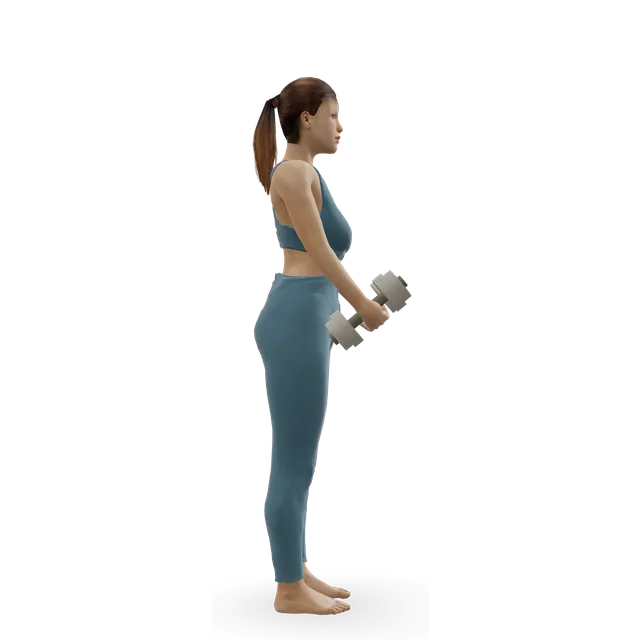
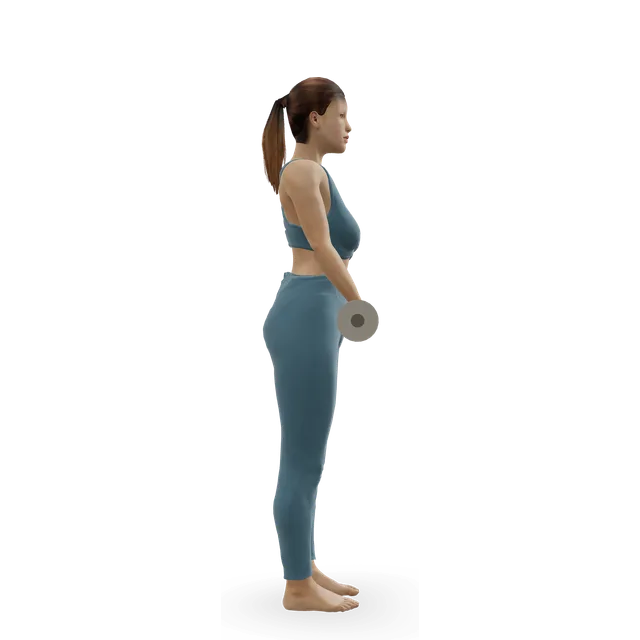
Wrist curls demonstrated on the 3D figure3D demoWrist curlsBeginner · A dumbbell

Held still, not lifted: palm up, forearm on a table, wrist level, 10 holds of 10 s, 3 sets, within the pain limit · The REINFORCER trial programme's held contractions, as in our TFCC tear guide

Easier: Wrist-extensor eccentrics · Harder: Plate pinch

Reverse wrist curl demonstrated on the 3D figure3D demoReverse wrist curlBeginner · A dumbbell + A bench or box

Held still, palm down: 10 holds of 10 s, 3 sets, within the pain limit · The same programme's held contractions

Easier: Wrist-extensor eccentrics · Harder: Plate pinch

Ball squeeze demonstrated on the 3D figure3D demoBall squeezeBeginner · Other / check instructions

A soft ball, wrist straight, 15 squeezes, once or twice a day · The trial programme's soft putty, 15 repetitions; the frequency is editorial, as in our TFCC tear guide

Easier: Tendon glides (hand tendon gliding exercises) · Harder: Band finger extension

Move on when: Turning a door handle, tap or key with the changes below stays within the pain rule, the holds don't flare the wrist the next day, and light tasks of about 1 kg are comfortable (the trial programme's first everyday limit).

Follow along: a timer, a cue and the next move, one step at a time.
Stage 2

Build: turning and gripping under light load

About weeks 2 to 6. Turning against light resistance, wrist strength in every direction, and everyday tasks up to about 3 kg, as the trial programme builds them.

Dumbbell forearm rotation demonstrated on the 3D figure3D demoDumbbell forearm rotationBeginner · A dumbbell + A bench or box

First held still halfway through the turn, pushing gently against the weight: 5 holds of 30 s; then turning a light hammer of up to about 200 g, held by the handle, 3 sets of 15 · The holds follow a small TFCC programme's held turning (30 s, 5 times, daily); the hammer is the trial programme's dose. Hold the handle nearer the head to make it easier

Easier: Wrist-extensor eccentrics · Harder: Plate pinch

Wrist curls demonstrated on the 3D figure3D demoWrist curlsBeginner · A dumbbell

A light band or weight, forearm on a table, 15 reps, building to 2 to 3 sets of 15 · The trial programme's band, 15 repetitions; NHS inform's maximum of 2 sets of 15

Easier: Wrist-extensor eccentrics · Harder: Plate pinch

Reverse wrist curl demonstrated on the 3D figure3D demoReverse wrist curlBeginner · A dumbbell + A bench or box

As above, palm down · As above. The move page says keep any ache mild and settled by the next morning

Easier: Wrist-extensor eccentrics · Harder: Plate pinch

Band finger extension demonstrated on the 3D figure3D demoBand finger extensionBeginner · A band

2 sets of 15, once a day · Editorial, as in our TFCC tear and tennis elbow guides

Easier: Ball squeeze · Harder: Plate pinch

Wrist flexor stretch demonstrated on the 3D figure3D demoWrist flexor stretchBeginner · A wall

Gently, 5 holds of 30 s, within the pain limit · The trial programme's stretches. Ease off if the fingers tingle, as the move page says

Easier: Wrist circles · Harder: Quadruped wrist rocks

Move on when: Turning the hammer for 3 sets of 15 stays within the pain rule, everyday tasks up to about 3 kg are comfortable, and your grip feels close to the other side's (a TFCC framework's untested target is 70%).

Follow along: a timer, a cue and the next move, one step at a time.
Stage 3

Strengthen, take weight through the hand, then tools, racquets, clubs and the gym

From about week 6, often 8 to 12 weeks after a diagnosed tear. Heavier turning and grip, weight through a straight wrist, and back to the twisting tasks and sport you do, one at a time, by the written steps below. How they come back is our suggestion.

Dumbbell forearm rotation demonstrated on the 3D figure3D demoDumbbell forearm rotationBeginner · A dumbbell + A bench or box

A hammer of up to about 300 g, 3 sets of 15, then heavier as the pain rule allows · The trial programme's dose from 8 weeks, with no upper limit from 12

Easier: Wrist-extensor eccentrics · Harder: Plate pinch

Farmer's carry demonstrated on the 3D figure3D demoFarmer's carryIntermediate · A dumbbell + A kettlebell

Light, wrist kept straight, 3 carries of 20 to 30 m · Editorial, as in our TFCC tear guide; the trial programme's everyday tasks reach about 5 kg from 8 weeks

Harder: Suitcase carry

Wall push-up demonstrated on the 3D figure3D demoWall push-upBeginner · A wall

2 to 3 sets of 10, on fists or handles if a flat palm hurts · Editorial. A small TFCC programme ended with wall push-ups and then floor push-ups on push-up bars

Harder: Push-up

Incline push-up demonstrated on the 3D figure3D demoIncline push-upBeginner · A bench or box

Once wall push-ups stay within the pain rule: 2 to 3 sets of 8 to 12, handles or fists if needed · Editorial, as in our TFCC tear guide

Easier: Wall push-up · Harder: Push-up

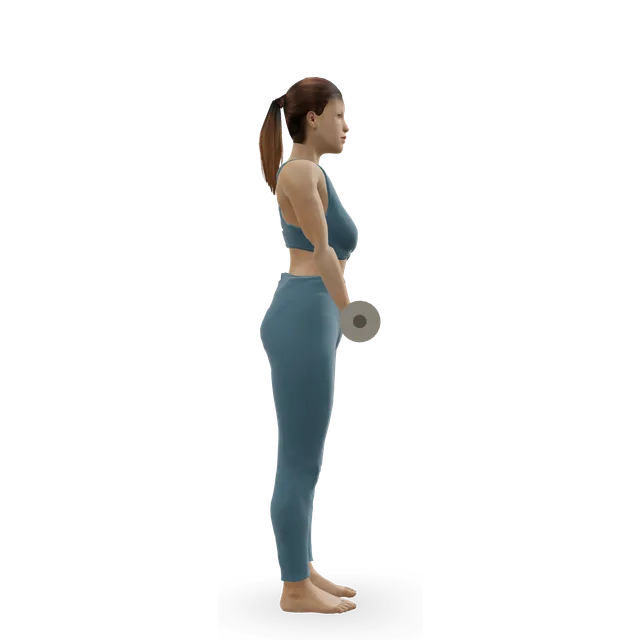
Hammer curl demonstrated on the 3D figure3D demoHammer curlBeginner · A dumbbell

Light, 2 to 3 sets of 10 to 15 · Editorial, as in our TFCC tear guide. Leave it out with thumb-side pain, as the move page says

Easier: Seated dumbbell curl · Harder: Alternating hammer curl

Move on when: Our suggestion: bring back one twisting task or sport at a time (tools and jars, then racquet or club in short sessions, then the gym's twisting and bent-back lifts as our lifting guide describes), keep two strength sessions a week, and drop back a stage for a few days if it flares rather than stopping. A TFCC framework's untested targets before sport are weight-bearing pain of 2 out of 10 or less and about 85% of the other side's strength.

Follow along: a timer, a cue and the next move, one step at a time.

What to change for now

Turning tasks at home and at work (written steps)

Our 3D figure can't show these. They come from the NHS, Arthritis UK, an NHS hand clinic and a wrist guideline; where a step is our suggestion, it says so. None has been tested in a trial for wrist pain on twisting.

  • 1. Jars, bottles and taps: a jar opener or tap turners, both hands for stiff lids, or running a stiff lid under warm water (the NHS and Arthritis UK; the warm water is our suggestion).
  • 2. Keys and door handles: turn from the shoulder with the wrist kept straight, use the other hand for now, and consider lever handles and a key turner (Arthritis UK suggests easier taps and door handles; the rest is our suggestion).
  • 3. Screwdrivers and drills: a power screwdriver, a thicker, softer handle, and a drill's side handle with a low torque setting. An NHS hand clinic names a jamming power drill as one way the TFCC tears (the settings are our suggestion).
  • 4. Wringing and carrying: squeeze cloths between flat palms or use a mop with a wringer, and carry a kettle or pan with both hands, the wrist straight and less in it (our suggestion, following the guideline's advice to cut down forceful palm-down turning with the wrist bent towards the little finger).
  • 5. A splint or support: at night or for the jobs that hurt, not all day for weeks, with exercises when it's off (the NHS and Arthritis UK).

Sources 1, 38, 7, 13

Racquets, clubs and the gym (written steps)

These rest on injury studies of players, not on trials of changes; where a step is our suggestion, it says so.

  • 1. Tennis and other racquet sports: fewer topspin forehands and two-handed backhand drills while it's sore, and a coach's check of your grip (Western and semi-Western grips went with little-finger-side injuries).
  • 2. Golf: practise off grass rather than hard mats, hit fewer balls, and avoid hitting near roots or rocks (golfers blamed hard ground and mats).
  • 3. The gym: dumbbells, an EZ bar or neutral grips for curls; the front rack, cleans and turning under load come back last, as our lifting guide describes (our suggestion).

Sources 18, 19, 20, 9

Positions to swap, and why

Habit or positionWhy it mattersInstead
Forcing a stiff jar lid, key or door handle with the wrist bent towards the little fingerGripping palm down and bending towards the little finger load that side most.A jar opener, both hands, the other hand for now, or turning from the shoulder with the wrist straight.
Wringing out clothsA strong grip and a forced twist together (editorial).Squeeze between flat palms, or use a mop with a wringer.
A heavy drill or screwdriver that can jamAn NHS hand clinic names a jamming power drill as one way the TFCC tears.A power screwdriver, the side handle and a low torque setting.
Straight-bar curls while it's soreThe forearm is forced to turn under load (editorial; our lifting guide).Hammer or dumbbell curls, unless the thumb side hurts.Try: Hammer curl
Push-ups on flat palms, with little-finger-side painLeaning on a bent wrist loads the TFCC, as our TFCC tear guide says.Fists or handles, or a forearm plank.Try: Forearm plank
Hammer curls and lifting a kettle thumb up, with thumb-side painThumb-up loading provokes de Quervain's, as UK hand surgeons and our de Quervain's guide say.Light palm-up or palm-down work first.Try: Wrist curls
Resting the hand completely for weeksThe NHS says resting for more than a few days makes the area weaker and less flexible.Gentle movement little and often.Try: Wrist & forearm flow
Wearing a splint all day for weeksArthritis UK says wearing one all the time could weaken your hands.At night or for the jobs that hurt, with exercises when it's off.
Pushing through a painful clunk or a wrist that gives wayIt can mean an unstable joint between the forearm bones, which is best found early.Stop that movement and get it checked.
Repeated steroid injections for a TFCC injuryAn NHS hand clinic says the relief is often short lived.The staged plan; talk to your clinician.

Routines to follow

More moves for this area

Questions people ask

Why does my wrist hurt when I twist it?

Twisting and gripping load the little-finger side of the wrist most, so pain there is commonest: from the TFCC (a cushion of cartilage), a tendon, or the end of the ulna pressing on the wrist bones. On the thumb side it is more often de Quervain's or arthritis at the base of the thumb. Where it hurts is the first clue.

Why does my wrist hurt on the pinky side when I twist it?

Several things sit there, and even specialists sometimes need a scan to tell them apart: the TFCC, the ECU tendon, the ulna pressing on the wrist bones, or the joint between the forearm bones. Change how you turn things for now and build strength. See a GP or physiotherapist if it isn't improving after 2 weeks, or sooner if it clunks or feels unstable.

My wrist hurts when I twist it but there's no swelling. Is that serious?

Not usually on its own: tendon pain and wear often build up without an injury or much swelling. Swelling after an injury, or a hot, swollen wrist, matters more and needs checking the same day.

Why does it hurt to open jars or turn a key?

Gripping hard while turning loads the little-finger side, and from about 45 an ache at the base of the thumb with jars and keys is often arthritis there. A jar opener, both hands and chunkier handles take the strain off while it settles.

Why does my wrist click when I rotate it?

Often harmlessly: the tendon on the little-finger side slips in many people who have no pain. Clicking with pain, weakness or the wrist giving way, or a clunk after an injury, needs checking.

Is it a TFCC tear?

It may be, but TFCC tears also show on scans of wrists that don't hurt, especially from middle age, so a scan alone doesn't prove it. A clinician checks the tender spot and how stable the wrist is. Our TFCC tear guide covers it in full.

Do I need an X-ray or MRI?

After an injury, an X-ray comes first. An MRI is used when pain doesn't settle and the result would change the plan, for example before surgery. In studies it picked up roughly 3 in 4 to 9 in 10 full-thickness tears, and it also finds tears that aren't causing pain.

Should I wear a wrist brace?

A splint can ease pain, especially at night or for the jobs that hurt. Don't rely on it for weeks: in one study 43% of people with a TFCC injury still went on to have surgery after a splint or cast, and wearing one all the time can weaken the hand.

What exercises help wrist pain when twisting?

Gentle turning and held contractions first, then turning a light hammer, then grip, carrying and weight through the hand, within the pain rule. No trial has tested a programme yet, but small studies found pain and grip improved over about 3 to 4 months.

Can I keep playing tennis or golf?

Often, with less volume and a technique check. In tennis, little-finger-side injuries went with Western grips, wrist-driven topspin and the two-handed backhand; in golf, with the leading wrist and hard mats. Pain in the heel of the hand after a jarring hit needs checking.

How long does it take to get better?

Most sprains feel better within 2 weeks. An NHS hand clinic says TFCC injuries take about 3 months to heal and often 6 to 12 months before the wrist works normally again. No one can promise a date.

When should I see a doctor?

Call 999 or go to A&E after an injury if the wrist has changed shape, a bone is showing or the hand is numb. Get help the same day for severe pain or a snap when you hurt it, a forearm that locks or clunks after an injury, or a hot, swollen wrist. See a GP if it isn't better after 2 weeks, or it clicks and feels unstable. In the US, call 911 where this page says 999.

Related exercise guides

Other pain guides

Sources

  1. NHS · Wrist pain
  2. NHS · Broken arm or wrist
  3. NHS · Septic arthritis
  4. Jung 2001 · How the ulna's length changes with forearm turning and grip, in 120 volunteers (X-ray study, J Bone Joint Surg Br)
  5. Friedman 1993 · The ulna's length with gripping, in 66 wrists (X-ray study, J Hand Surg Am)
  6. af Ekenstam 1984 · Load on the radius and ulna in different wrist and forearm positions, in 9 forearms (cadaver study, Acta Orthop Scand)
  7. Gloucestershire Hospitals NHS Foundation Trust · Injuries to the TFCC (hand clinic page)
  8. Harbrecht 2025 · Instability of the joint between the forearm bones at the wrist (review, Dtsch Arztebl Int)
  9. Campbell 2013 · The extensor carpi ulnaris tendon in sport: anatomy, injury and management (review, Br J Sports Med)
  10. Ou Yang 2021 · Clinical tests in 110 people with little-finger-side wrist pain (prospective diagnostic study, ANZ J Surg)
  11. Satria 2025 · Ulnar-sided wrist pain: a systematic clinical approach (narrative review, Orthop Res Rev)
  12. Tay 2007 · The ulnar fovea sign for little-finger-side wrist pain (diagnostic study of 272, J Hand Surg Am)
  13. Xu 2025 · Asian Pacific Wrist Association guidelines on ulnar impaction syndrome (guideline, J Wrist Surg)
  14. Walker-Bone 2004 · Upper limb disorders in the UK working-age population (population survey, Arthritis Rheum)
  15. British Society for Surgery of the Hand · De Quervain's syndrome (patient information)
  16. British Society for Surgery of the Hand · Basal thumb arthritis (patient information)
  17. Wu 2018 · Finkelstein's and Eichhoff's tests in 72 wrists without symptoms (diagnostic study, J Hand Microsurg)
  18. Tagliafico 2009 · Wrist injuries and grip type in 370 club tennis players (cross-sectional study, Am J Sports Med)
  19. Montalvan 2006 · Extensor carpi ulnaris injuries in 28 professional tennis players (case series, Br J Sports Med)
  20. Hawkes 2013 · Wrist problems in 128 European Tour golfers (cross-sectional study, Br J Sports Med)
  21. NHS · Sprains and strains
  22. British Society for Surgery of the Hand · Wrist sprains (patient information)
  23. Kitamura 2025 · Wrist osteoarthritis on X-ray in 676 wrists of people aged 50 to 89 in a Japanese town (population study, J Hand Surg Am)
  24. Yang 1995 · Calcium crystal deposits around the triangular fibrocartilage in 181 people with calcium crystal disease (X-ray study, Radiology)
  25. Sanmartí 1993 · Calcium crystal deposits on X-ray in 261 people aged 60 or over in rural Catalonia (population study, Ann Rheum Dis)
  26. Filippucci 2012 · Hand and wrist tendons on ultrasound in 90 people with rheumatoid arthritis (imaging study, Semin Arthritis Rheum)
  27. Wang 2015 · How well MRI finds TFCC injuries: 25 studies (meta-analysis, J Hand Surg Eur)
  28. Smith 2012 · MRI and MR arthrography for TFCC tears: 21 studies, 982 wrists (systematic review and meta-analysis, J Bone Joint Surg Am)
  29. Iordache 2012 · TFCC changes on MRI in wrists without symptoms (study of 103 volunteers, J Hand Surg Am)
  30. Wang 2023 · TFCC signal on MRI in 154 people without wrist symptoms (imaging study, J Hand Surg Eur)
  31. Portnoff 2024 · TFCC tears on MRI in people without symptoms (systematic review of 7 studies, Hand Surg Rehabil)
  32. Mikić 1978 · Age changes in the triangular fibrocartilage of the wrist (study of 180 wrists, J Anat)
  33. Sole 2015 · The extensor carpi ulnaris tendon on ultrasound in 26 tennis players without symptoms (imaging study, PM R)
  34. Park 2010 · How many TFCC injuries need surgery after a splint or cast (retrospective study of 84, Orthopedics)
  35. Onggo 2024 · Outcomes of 124 MRI-diagnosed TFCC injuries about 6 years on (retrospective cohort, ANZ J Surg)
  36. NHS inform · Wrist, hand, finger and thumb problems
  37. NHS · Repetitive strain injury (RSI)
  38. Arthritis UK · Osteoarthritis of the hand and wrist
  39. Kaivorinne 2024 · The REINFORCER trial protocol and its hand therapy programme (trial protocol with supplement, BMJ Open)
  40. Chen 2021 · A wrist sensorimotor programme for TFCC injuries in 10 completers (study without a control group, Hand Ther)
  41. Tse 2023 · A structured non-surgical programme for 32 traumatic TFCC tears (study without a control group, Hand Surg Rehabil)
  42. Bell and colleagues · Exercise rehabilitation for TFCC injuries without surgery: 3 small studies (systematic review poster, British Association of Hand Therapists)
  43. Cambridge University Hospitals NHS Foundation Trust · Hand therapy: active wrist exercises (leaflet, 2023)
  44. NHS inform · Exercises for wrist, hand and finger problems (including how to tell if you're exercising at the right level)
  45. Liu 2026 · Diagnosis and non-surgical management of TFCC tears (narrative review, Front Sports Act Living)
  46. Kolb 2026 · The WristWidget brace for TFCC injuries: 3 small studies (literature review, Hand Ther)
  47. NICE NG226 · Osteoarthritis in over 16s: diagnosis and management (2022)
  48. Zarro 2024 · Non-surgical care for extensor carpi ulnaris tendon pain in athletes (review, Hand)
  49. Shi 2024 · Keyhole wafer surgery or ulnar shortening for ulnar impaction: 8 studies, 311 people (systematic review and meta-analysis, J Orthop Surg Res)
  50. Challoumas 2023 · Treatments for de Quervain's: 30 trials, 1,663 people (systematic review and network meta-analysis, JAMA Netw Open)
  51. St George's University Hospitals NHS Foundation Trust · Wrist injuries (hand therapy page)
  52. Smith 2017 · Should exercises be painful in long-lasting muscle and joint pain? (meta-analysis of 7 trials, Br J Sports Med)

Exercise education, not a diagnosis or treatment plan. It is written from the guidelines and studies listed above; review by a clinician is pending. If your pain follows an injury, is severe, is getting worse, or comes with any warning sign listed on this page, get it assessed. Health disclaimer.