Training guide

How to do broad jumps: the swing, the take-off and the landing, the standing long jump test, and how many

A broad jump, also called the standing long jump, is a jump forwards as far as you can from both feet to both feet, the arms swinging hard. Train it with a stuck landing, held still, and test it for distance: it has been a school fitness test across Europe since 1987, and it tracks leg power in adults too.

Children and teenagers have good norms from over a million test results; adults have only averages from a few surveys, and the jump goes with faster sprinting without proving that a longer jump makes you faster.

This guide covers the steps on the 3D figure, how to do the test and measure it, what's a good jump for your age, the link with sprinting, how much training adds, how many to do, and the warning signs.

The short version

Swing, jump forwards, land on both feet

Toes behind a line, dip and swing your arms back, then swing them forward hard and jump forwards off both feet, landing on both feet. "Broad jump", "standing broad jump" and "standing long jump" are the same jump. Train it with a stuck landing held for 2 seconds; test it for distance onto a soft, non-slip surface.

Sources 1, 2

Your arms add about a fifth

In a lab study of 3 men, swinging the arms added 21% to the distance, mostly through a faster take-off, and a forward swing beat a backward one in another study.

Sources 3, 4

It's a real test of leg power

In children and teenagers it tracks other lower- and upper-body strength tests, and in 410 adults aged 18 to 64 it tracked horizontal power measured on a force platform (r = 0.83). It has been a Council of Europe school test since 1987.

Sources 5, 6, 1

Norms exist for children, not adults

In 1.35 million European results, the median at 18 is about 211 cm for boys and 158 cm for girls. There are no adult percentile norms, only averages from a few surveys, so the fairest comparison is your own last test.

Sources 7, 6, 8

It goes with sprinting, but doesn't predict it

In trained adults a longer jump went with faster acceleration and top speed, but that's a link, not proof that a longer jump makes you faster, and in one trial the direction people jumped in training made no difference to sprint gains.

Sources 9, 10

How many

3 or 4 sets of 3, walking back between jumps and resting about a minute between sets, within about 80 to 100 landings a session for beginners, twice a week (our workouts and jump guides). Test jumps land hard: do them onto grass, sand or a mat.

Source 11

What a broad jump is

One jump, three names

Broad jump, standing broad jump and standing long jump are the same two-footed jump from standing. The running long jump is the athletics event; our jumping events page covers it. The American Council on Exercise (ACE) calls it forward linear jumps and rates it beginner.

Sources 1, 2

Two versions on the figure

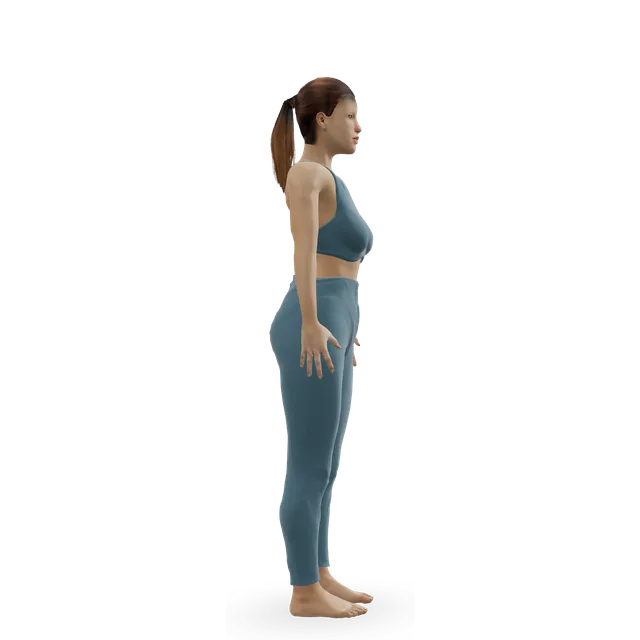
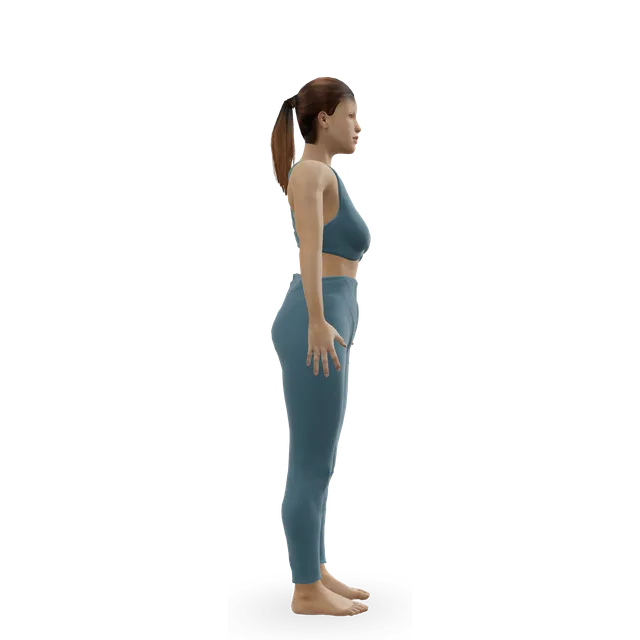
The broad jump with a stuck landing is the training version: jump only as far as you can control and hold the landing still for 2 seconds. It's in 14 of our workouts. The standing long jump is the all-out test version, the feet reaching forward to land; its move page warns that it landed hardest of nine jumping drills, so jump onto sand or grass.

What it worksEmerging evidence

A fast push through your hips, knees and ankles, with the hips doing relatively more and the knees less than in a vertical jump, in a computer simulation and a lab study of 12 male track athletes. The move page lists the glutes and quads, with the hamstrings and calves. The landing asks you to stop a body moving forwards.

Sources 12, 13

As a test

It's the most widely used field test of leg power in children: in the Council of Europe's Eurofit battery since 1987, the ALPHA-Fitness battery and the new international YFIT battery, where 98% of 169 experts agreed on it. Norms come from 1.35 million European results.

Sources 1, 14, 15, 7

What you need first

Quiet snapdown landings and jump squats, as the move pages suggest. ACE rates it beginner, and our teenagers' workout adds it from week 3, only if every landing so far has been quiet.

Source 2

How to do a broad jump, step by step

From the move page's steps and cues, the Eurofit handbook and ACE; the squat depth and the landing details are our editorial wording, as in our landing guides.

  1. Stand with your feet about hip- to shoulder-width apart, toes behind a line, on a non-slip floor or grass.
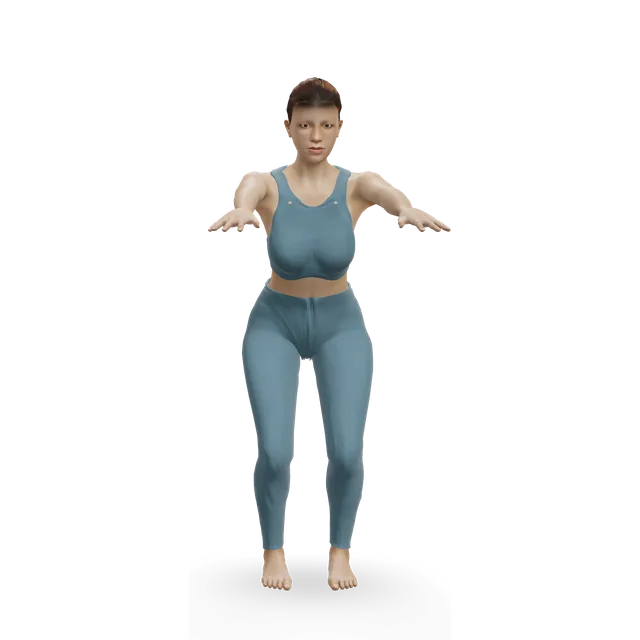
  2. Swing your arms back as you push your hips back and bend your knees quickly into a quarter to half squat; pause only briefly, if at all.
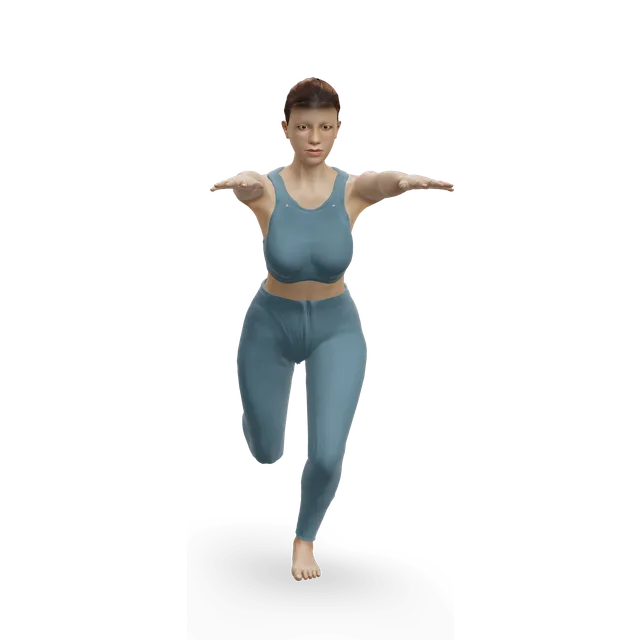
  3. Swing your arms forward and up hard as you drive off both feet, pushing through your hips, knees and ankles, aiming forwards and slightly up.
  4. In the air, bring your legs forward under you, feet side by side.
  5. Land on both feet together, balls of the feet then heels, sinking into a quarter squat with your hips back and your knees in line with your toes.
  6. Hold the landing still for 2 seconds. If you can't, jump shorter. Walk back and reset.

Loading the 3D figure…

Gets into position, then repeats the movement. Technical checks passed; qualified exercise review is pending.

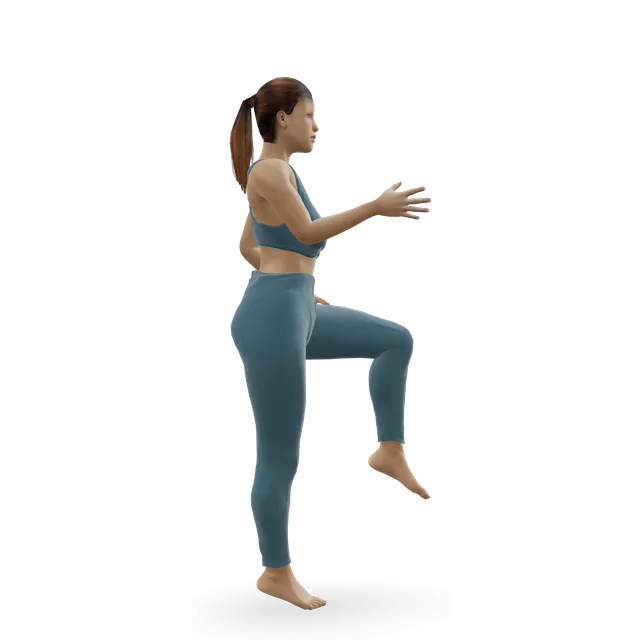
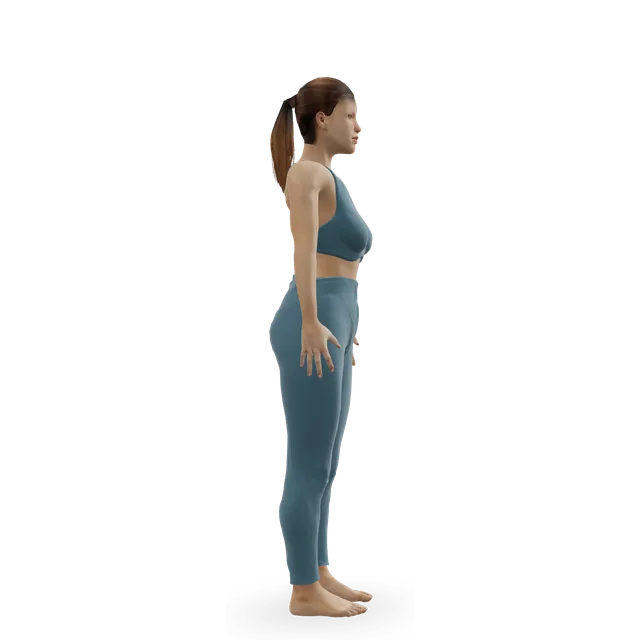
The movement on the figure: Standing broad jump with stuck landing

Swing, take-off and landing

The arm swingEmerging evidence

In 3 men, jumping with an arm swing added 21% (2.09 against 1.72 m), about 71% of the gain coming through a faster take-off. Computer simulations agree (2.00 against 1.60 m), and a forward swing beat a backward one. Small studies, but consistent: swing hard.

Sources 3, 16, 4

The take-off angle matters less than speedMixed evidence

In 5 men the best take-off angle was calculated at 19 to 27 degrees, lower than the 31 to 39 degrees they chose, but the cost of the difference was "relatively small": take-off speed matters more. Studies define the angle differently, so don't chase a number.

Source 17

Getting your feet forward

Coaching pages disagree about tucking the knees in flight. Getting the feet further forward at touchdown added distance in the arm-swing study, so reach your feet forward for a test jump, and accept a shorter jump with a stuck landing in training (our view).

Source 3

The landingEmerging evidence

An all-out standing long jump had the highest landing force and loading rate of nine jumping drills in 20 adults used to jumping, in a conference paper. That's why test jumps go onto sand, grass or a mat, and why training jumps stop where you can still hold the landing.

Source 18

How to do the standing long jump test

The protocol of the Eurofit, ALPHA-Fitness and YFIT batteries and the Adult-Fit study. ALPHA and YFIT add the warm-up and a demonstration (Eurofit's 1987 school protocol allowed no practice); YFIT counts a fall forwards if the back foot stays planted. The rest between tries is our editorial suggestion.

  1. Warm up for 5 to 10 minutes and do a few practice jumps.
  2. Mark a take-off line on a non-slip surface; a sandpit, grass or a fixed gym mat is kinder to land on.
  3. Stand with your toes just behind the line, feet about shoulder-width apart; swing and jump as far as you can.
  4. Land on both feet and stay upright. If you fall back or touch the floor with your hands, the jump doesn't count: try again.
  5. Measure from the line to the back of the heel nearest the line, to the nearest centimetre.
  6. Do 2 tries and keep the better one, resting about a minute between them.

Loading the 3D figure…

Gets into position, then repeats the movement. Technical checks passed; qualified exercise review is pending.

The movement on the figure: Standing long jump

How good is the test?

Valid in children and teenagersStrong evidence

In 94 children aged 6 to 17, the standing long jump tracked other lower-body tests (R 0.83 to 0.86) and upper-body strength tests (R 0.69 to 0.85), and the authors called it a general index of muscular fitness in youth. In 363 children it tracked leg-extension strength (R = 0.70).

Sources 5, 19

Reliable in young peopleStrong evidence

In 123 European teenagers the systematic difference between test and retest was "nearly 0", with no learning or fatigue effect. In under-12s tested by PE teachers, trials differed by about 4 cm.

Sources 20, 21

One validity study in adultsEmerging evidence

In 410 adults aged 18 to 64, distance tracked force-platform horizontal power (r = 0.83) and knee strength (r = 0.66 to 0.67). A 2021 review had found that its validity in adults had not been studied, so this is the first good evidence.

Sources 6, 22

Practise before you testEmerging evidence

Adults jumped about 12 cm further at a second session a week later, and the smallest real change was 29 cm; after three practice sessions the retest difference was under 1 cm. A review rated adult reliability moderate to high. Practise a few times, then test every 4 to 6 weeks the same way (our suggestion).

Sources 6, 23

It responds to training in adultsEmerging evidence

In 62 inactive adults, 12 weeks of mixed training three times a week raised the jump by about 17 cm, while the control group didn't change. One trial, but a clear sign it responds to training.

Source 24

What's a good broad jump? Norms by age

Children and teenagers: European normsStrong evidence

From 1.35 million test results in European children and teenagers, the 20th, 50th (the median) and 80th percentiles, in centimetres, at the middle of each year of age. Girls' medians level off from about 14; boys' keep rising. An earlier European study's medians were nearly identical.

  • Age 6: girls 80, 97 and 113; boys 87, 105 and 121
  • Age 8: girls 97, 114 and 132; boys 106, 125 and 143
  • Age 10: girls 112, 131 and 150; boys 122, 141 and 160
  • Age 12: girls 127, 148 and 169; boys 138, 160 and 181
  • Age 14: girls 134, 157 and 179; boys 162, 187 and 211
  • Age 16: girls 134, 157 and 179; boys 178, 203 and 228
  • Age 18: girls 136, 158 and 180; boys 186, 211 and 234

Sources 7, 25

Where UK children standEmerging evidence

UK children's results averaged the 41st percentile, 29th of 32 countries, though the UK data weren't nationally representative.

Source 7

Adults: no norms, only averages

We found no adult percentile norms. The averages that exist: in the Spanish Adult-Fit study, 121 cm for women and 164 cm for men, falling from about 160 cm at 18 to 34 to about 121 cm at 50 to 64 (women and men together); inactive adults averaged 131 cm and active ones 154 cm.

Japan's national survey, read off its charts, gives about 224 cm for men and 167 cm for women at 20 to 24, falling to about 178 and 132 cm at 60 to 64. A Korean survey analysed in a preprint (not peer reviewed) looked similar to Japan. Nothing covers people over 64. These are averages, not standards to hit.

Sources 6, 8, 26

Your height isn't the targetEmerging evidence

"Jump your own height" has no source. In the Spanish study, average jumps (121 cm for women and 164 cm for men) were shorter than average heights (161 and 175 cm).

Source 6

Athletes' records aren't norms

Combine and record jumps come from elite, trained, mostly young men. Compare yourself with your own last test, done the same way.

It goes with health in young peopleStrong evidence

In young people, a longer jump goes with less body fat and lower heart and metabolic risk, mostly in snapshot studies, and children in the top third had a lower risk of metabolic syndrome 20 years later. That's a link, not proof the jump causes it. We found no study linking adults' jumps to health, falls or lifespan.

Sources 27, 28, 29, 30

Broad jumps and sprinting

They go togetherStrong evidence

In trained adults, a longer standing long jump went with faster acceleration (r = -0.45 with the times) and top speed (r = -0.73, from about 4 samples). In elite sprinters, horizontal jumps and 100 m times were closely linked (r about -0.81). These are correlations, not predictions.

Sources 9, 31

Does training forwards make you faster?Mixed evidence

Pooled trials found forward jump training improved forward outcomes more than vertical training did (effect size 0.65), with no difference for vertical ones. But a 2024 trial in 24 footballers, 100 foot contacts twice a week for 8 weeks, found no direction-specific pattern, and forward jumps helped the first 10 m but not 10 to 20 m in under-20 footballers.

Sources 32, 10, 33

How to use it

Add broad jumps and bounds to sprint training, as our sprint faster guide does (4 × 3 broad jumps), alongside sprinting itself. Don't expect a longer jump alone to make you faster (our reading).

What training does

Jump training adds a few centimetresStrong evidence

Jump training added about 6.5 cm to the standing long jump in adolescent athletes (7 studies, 134 people), with similar effects before and after the growth spurt. Adult footballers gained about 7 cm in 8 weeks whichever direction they jumped. The smallest effective dose was about 4 weeks and 92 jumps a week, at low certainty.

Sources 34, 35, 10

More in beginnersEmerging evidence

Inactive adults gained about 17 cm after 12 weeks of general training, a bigger gain from a lower starting point, in one trial.

Source 24

Strength training helps tooEmerging evidence

In schools, strength training was the most effective method for the standing long jump in a network meta-analysis of 66 studies (standardised mean difference 1.03). Squats and hinges belong in the plan.

Source 36

SandEmerging evidence

Training on sand improved the standing long jump more than hard surfaces in pooled studies, and jump training on sand caused less muscle soreness than on grass in 37 footballers.

Sources 37, 38

Popular promises

Coaching pages promise 15 to 30 cm in weeks, or "a foot in a single session". Trials found about 6 to 7 cm in trained young people, and 17 cm only in inactive adults over 12 weeks.

Sources 34, 10, 24

Easier and harder versions

Snapdowns, 2 sets of 5, holding each landing 2 s (our plyometric workout); jump squats, 3 × 5 (our vertical jump workout); broad jumps with a stuck landing, 3 × 3 (our vertical jump workout, weeks 3 to 5) or 4 × 3 (our plyometric workout); the standing long jump for distance, 3 sets of 3 (its move page's editorial starting point); the sideways standing long jump, 3 sets of 4, 2 each way; lateral bounds, 3 sets of 6 to 8; hurdle hops, 3 runs over 4 or 5 hurdles, walking back (each its move page's editorial starting point); the single-leg hop and stick, 2 × 5 each leg, and bounding, 2 × 20 m (our plyometrics for runners workout).

Other versions, in words

No 3D demo for these; teach them as later steps, over the stuck-landing jump and the single-leg hop and stick.

Repeated broad jumps

Two or three broad jumps in a row, landing and taking off again at once. Only once single jumps land quietly; count every landing.

Single-leg broad jump

Take off and land on one leg, holding the landing. Start with the single-leg hop and stick, short and controlled.

Standing triple jump

From both feet, hop, step and jump: an athletics drill for experienced jumpers.

Burpee broad jump

A burpee followed by a broad jump, as in Hyrox races; our burpee guide covers it.

Common mistakes

No arm swing

It costs about a fifth of the distance. Swing back as you dip and forward hard as you jump.

Source 3

Landing stiff-legged, or knees caving in

Land softly into a quarter squat, knees over your toes, as in our landing guides.

Falling backwards on a test jump

Keep your weight moving forwards as you land: "Fall forward on landing, never back" is the move page's cue.

Jumping further than you can stick

In training, "Jump shorter if you cannot freeze the landing", as the move page says.

Testing on a hard or slippery floor

Use grass, sand or a fixed mat: "Avoid: testing on a hard floor" is the move page's cue.

Testing without practice

Your second session can be 12 cm better from learning alone. Practise first, then compare like with like.

Source 6

How many and how often

Starting points that match our workouts and jump guides. The stuck-landing move page gives no dose.

Training

3 or 4 sets of 3 broad jumps with a stuck landing, walking back between jumps: our vertical jump workout uses 3 × 3, our plyometric workout and sprint faster guide 4 × 3.

Test jumps

3 sets of 3 jumps for distance, walking back and resting about a minute between jumps: the standing long jump move page's editorial starting point.

Rest

About a minute between sets, as the move pages and our jump guides suggest.

Landings a session

About 80 to 100 for beginners, warm-up included, counting every landing, twice a week, 48 to 72 hours apart (expert guidance, untested).

Source 11

How hard

A full effort, but only as far as you can land well. End the set when landings get loud: our editorial rule, as in the site's plyometric workouts.

Testing

Every 4 to 6 weeks, the same way, after a few practice sessions (our suggestion).

Source 6

Teenagers

2 sets of 3 from week 3, only if every landing so far has been quiet, with an adult watching, as our strength workout for teenagers does. The NHS says to start any new exercise slowly and increase it bit by bit.

Source 39

Moves that go with it

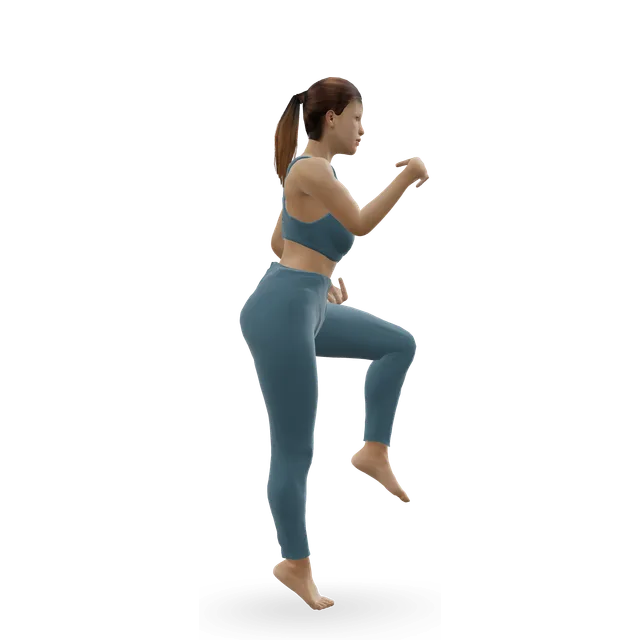
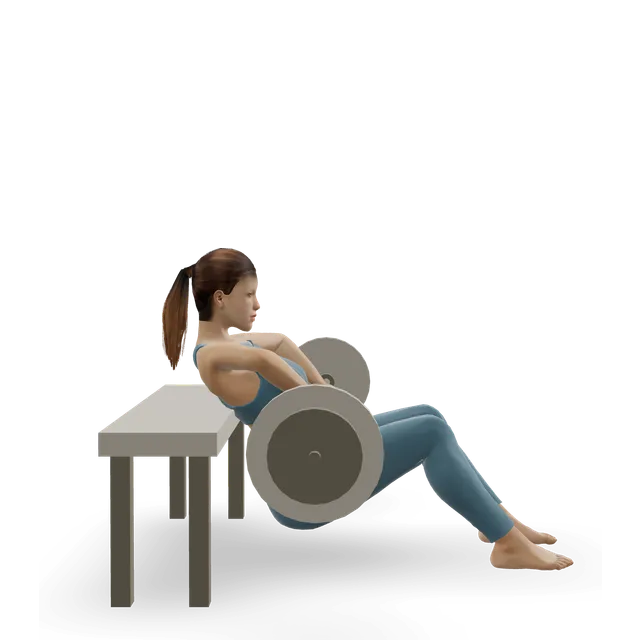
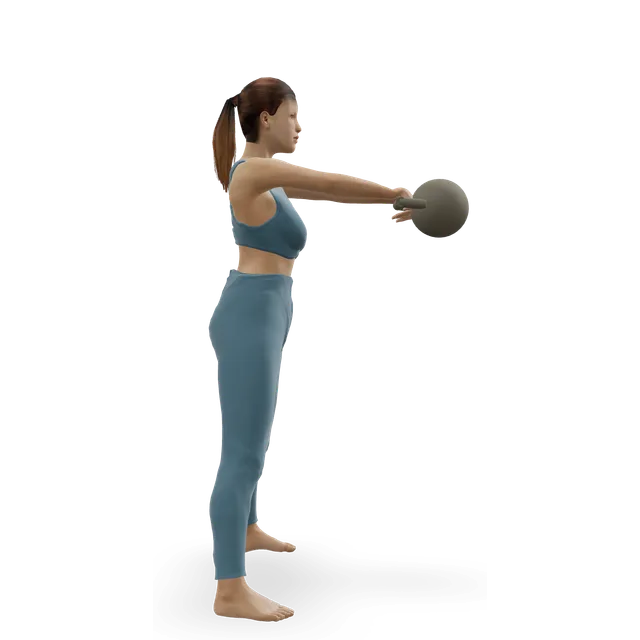
From our vertical jump workout: goblet squats, 3 × 6 to 8, stopping 2 to 3 reps short; dumbbell Romanian deadlifts, 3 × 8, lowering over 3 s; rear-foot elevated split squats, 2 × 6 to 8 each leg; and single-leg calf raises from a step, 2 × 10 to 12 each leg. Hip thrusts for hip extension (no page dose; follow our hip thrust guide), and kettlebell swings, 5 sets of 10 or 30 s on and 30 s off, as our kettlebell swing guide suggests, for fast hip drive.

Workouts to follow

The vertical jump workout adds broad jumps in weeks 3 to 5; the plyometric workout uses 4 × 3; the teenagers' workout adds them from week 3; the runners' plyometrics and sprint speed workouts build forward power.

Plans

The teenagers' plan uses the strength workout for teenagers, with its broad jumps; the others build the leg strength jumping rests on.

Who should change it

Children and teenagersStrong evidence

The test is feasible in children and teenagers (strong evidence) and safe (moderate evidence). Start any new exercise slowly and build up bit by bit, as the NHS says. Pain and swelling below the kneecap or at the heel in a growing child: see our Osgood-Schlatter and Sever's disease guides.

Sources 40, 39

Older adultsEmerging evidence

Jump training trials in older adults reported few injuries, but in a 12-week programme in 40 men aged about 70, 3 of the 14 in the jump group dropped out (2 calf strains and 1 knee pain). No trial has tested broad jumps in older adults, and the safety review found no evidence for adults of any age. Build up from squats, step-ups and small jumps, and keep landings short.

Sources 41, 42, 40

Knee pain

Build up from squats and step-ups first, keep jumps short with a stuck landing, and follow our knee pain guides.

Leaking when you land

Stress incontinence is leaking when your bladder is under pressure, and pelvic floor exercises help. Build up pelvic floor exercises and lower-impact work first, and see a GP or pelvic health physiotherapist.

Source 43

Pregnancy and after a birth

Don't start jumping in pregnancy: the NHS advises against starting new vigorous activity and against activities with a risk of falling. If you already jump, use the stuck-landing version on a soft surface and drop it when it causes leaking, heaviness or pelvic pain. After a birth, wait until walking, hopping and jogging on the spot cause no leaking, heaviness or pain, and at least 3 months (UK expert advice).

Sources 44, 45

Osteoporosis

The UK consensus recommends moderate impacts, about 50 a session, but not very high impact such as landing from height, and impact only up to brisk walking after spinal fractures. Get individual advice before broad jumps; heel drops are the usual first step.

Source 46

Diabetic eye disease

With unstable proliferative or severe diabetic retinopathy, avoid jumping and jarring until your eye team says otherwise.

Source 47

Warning signs

Stop and get medical help

If you get chest pain or pressure, feel faint or dizzy, are unusually breathless, or your heart races or beats irregularly during exercise, as our plans advise. The American Heart Association says these need immediate medical evaluation.

Source 48

Call 999 (911 in the US)

For chest pain that comes on suddenly and doesn't go away, feels tight or like squeezing, spreads to your arms, neck, jaw, stomach or back, or comes with sweating, feeling sick, light-headedness or breathlessness; arm pain that comes on suddenly with pressure, heaviness or squeezing across your chest; severe difficulty breathing, or a chest that feels tight or heavy; someone who faints while exercising; palpitations that don't go away, or come with chest pain, shortness of breath or feeling faint; or a headache that starts suddenly and is extremely painful, especially while lifting or straining. The NHS says a bleed on the brain may be more likely when lifting something heavy. Don't drive yourself to A&E.

Sources 49, 50, 51, 52, 53, 54, 55, 56

After a fall or a bad landing

Call 999 or go to A&E if you heard a crack, the joint or limb has changed shape or points at an odd angle, it's numb or tingling, or the skin looks blue or grey or feels cold. Get help from NHS 111 (in the US, urgent care) if it's very painful, very swollen or bruised, very stiff, or you can't put weight on it or walk more than a few steps.

Source 57

NHS 111 the same day (urgent care in the US)

A snap or pop at the back of your ankle, with pain and swelling near your heel or not being able to stand on tiptoe on that leg. A knee that's very painful, won't take your weight, is badly swollen or has changed shape, or locks or gives way.

Sources 58, 59, 60

A fall onto your hand

Get help from NHS 111 if a wrist is very painful or swollen after a fall, has changed shape or colour, or you heard a snap, grinding or popping noise at the time.

Source 61

See a GP

Pain in one spot on a bone that's worse with jumping or running, eases with rest and hurts when you press it: stop jumping, as it can be a stress fracture, and see a GP. See a GP too for heel pain that hasn't improved after 2 weeks of looking after it yourself, or shin pain that's getting worse or isn't improving.

Sources 62, 59, 63

Back pain

Call 999 or go to A&E: loss of feeling or numbness around the genitals or bottom, new trouble peeing or controlling your bladder or bowels, changes in genital sensation during sex or problems with erections or orgasm, or pain, tingling, weakness or numbness in both legs. These are signs of cauda equina syndrome, which needs treating in hospital urgently. Don't drive yourself.

Source 64

Before you start

Speak to your GP first if you haven't exercised for some time or have medical conditions or concerns, as the NHS advises. Get advice before hard, explosive or straining work if your blood pressure is uncontrolled (140/90 or higher at a clinic, or 135/85 at home), or you have heart disease or chest pain when you're active, a pacemaker or defibrillator, diabetic eye disease, glaucoma, a hernia, recent eye or tummy surgery, or you're pregnant, as our breathing guide lists.

Source 65
Myths

"Broad jumps are just for athletes"Strong evidence

It's a school fitness test from age 6 across Europe, adults to 64 are tested in national surveys, and inactive adults improved theirs with 12 weeks of general training.

Sources 1, 7, 8, 24

"You should be able to broad jump your own height"

No source. In the one adult validity study, average jumps were shorter than average heights for both women and men.

Source 6

"A longer broad jump means a faster sprint"Mixed evidence

The two go together in trained adults, but a correlation isn't a prediction, and the direction of jump training made no difference in one trial.

Sources 9, 10

"Tuck your knees up high in the air"

Getting your feet forward for the landing adds distance; tucking high doesn't help on its own (our reading).

Source 3

"Add 30 cm to your broad jump in a few weeks"Strong evidence

Trials found about 6.5 cm in adolescent athletes and 7 cm in 8 weeks in adult footballers; the bigger 17 cm gain was in inactive adults over 12 weeks.

Sources 34, 10, 24

"Plyometrics wreck your knees"Mixed evidence

Jump training trials reported few injuries, and programmes that include jumps cut knee ligament injuries. A stiff landing raises knee load, so land softly and jump only as far as you can control.

Sources 41, 66, 67

Questions people ask

How do you do a broad jump?

Stand with your toes behind a line, dip and swing your arms back, then swing them forward hard and jump forwards off both feet. Land on both feet with your hips back and knees bent, and hold the landing still.

Is a broad jump the same as a standing long jump?

Yes. The broad jump, standing broad jump and standing long jump are the same two-footed jump from standing. The running long jump is the athletics event.

How is the standing long jump measured?

From the take-off line to the back of the heel nearest the line, to the nearest centimetre. Take two tries and count the better one; if you fall back or touch down with your hands, try again.

What is a good broad jump?

For children and teenagers, compare yourself with European norms: the median at 18 is about 211 cm for boys and 158 cm for girls. There are no adult percentile norms, only averages from a few surveys, so the fairest comparison is your own last test.

What does the standing long jump test measure?

Leg power: how much force you can produce quickly. In children it also tracks overall muscular fitness, and in adults it tracked horizontal power measured on a force platform.

How can I jump further?

Swing your arms hard (it added about a fifth in one study), push off fast, and get your feet forward for the landing. Then train jumps and strength twice a week: jump training added about 6 to 7 cm in trials.

Should you be able to broad jump your own height?

There's no evidence for that rule. In a study of 410 adults, average jumps were shorter than average heights for both women and men.

Do broad jumps make you faster?

Broad jump distance and sprint times go together in trained people, especially at top speed, but that doesn't mean a longer jump makes you faster. Forward jumps, bounds and sprinting itself are all part of our sprint faster guide.

How many broad jumps should I do?

3 or 4 sets of 3, walking back between jumps and resting about a minute between sets, twice a week, as part of about 80 to 100 landings a session for a beginner. End the set when your landings get loud.

Are broad jumps bad for your knees?

Not when you land softly and jump only as far as you can control, but an all-out jump lands hard, so test on grass, sand or a mat. With knee pain, build up from squats and step-ups first.

Are broad jumps only for athletes?

No. It's a school fitness test from age 6, adults up to 64 are tested in national surveys, and inactive adults improved theirs with 12 weeks of general training.

Why did I jump further the second time I tested?

Practice: adults jumped about 12 cm further at a second session, and the difference all but disappeared after three practice sessions. Practise a few times before you test, then test the same way each time.

Sources

  1. Council of Europe 1987 · Handbook for the Eurofit tests of physical fitness, including the standing broad jump (official test manual)
  2. American Council on Exercise · Forward linear jumps (exercise library, rated beginner)
  3. Ashby 2002 · The role of arm motion in the standing long jump, in 3 men (lab study, J Biomech)
  4. Hara 2008 · Arm swing direction in forward and backward jumps, in 7 people (lab study, J Biomech)
  5. Castro-Piñero 2010 · The standing long jump as a general index of muscular fitness in 94 young people aged 6 to 17 (validity study, J Strength Cond Res)
  6. Marín-Jiménez 2024 · Validity and reliability of the standing long jump in 410 adults aged 18 to 64: the Adult-Fit project (validity study, Eur J Sport Sci)
  7. Ortega 2023 · European fitness reference values for children and adolescents from nearly 8 million test results in 34 countries: the FitBack network (population norms, Br J Sports Med)
  8. Japan Sports Agency 2025 · National physical fitness and athletic ability survey, results summary (government survey; adult figures read off its charts)
  9. Lin 2023 · Horizontal jumps and sprint acceleration and top speed in trained adults: 28 studies (meta-analysis, PeerJ)
  10. Moran 2024 · Vertical, horizontal or mixed jump training, 100 foot contacts twice a week, in 24 footballers (randomised trial, PLoS One)
  11. Davies 2015 · Current concepts of plyometric exercise: drill levels, foot contacts and recovery (clinical commentary, Int J Sports Phys Ther)
  12. Nagano 2007 · How the joints share the work in maximal horizontal and vertical jumps (computer simulation, Biomed Eng Online)
  13. Kariyama 2019 · Jump direction and hip, knee and ankle work in 12 male track athletes (lab study, Sports)
  14. Ruiz 2011 · ALPHA-Fitness test battery manual for children and adolescents, including the standing long jump (official test manual, in Spanish, Nutr Hosp)
  15. Ortega 2025 · The Youth Fitness International Test battery: a Delphi consensus of 169 experts from 50 countries (J Sport Health Sci)
  16. Ashby 2006 · How arm movement improves the standing long jump (computer simulation, J Biomech)
  17. Wakai 2005 · The best take-off angle in the standing long jump, in 5 men (lab study, Hum Mov Sci)
  18. Kossow 2014 · Landing forces of nine forward jumping drills in 20 adults (force plate study, ISBS conference proceedings)
  19. Fernández-Santos 2015 · Reliability and validity of lower-body power tests in 363 children (validity study, J Strength Cond Res)
  20. Ortega 2008 · Reliability of fitness tests in 123 European adolescents: the HELENA study (reliability study, Int J Obes)
  21. España-Romero 2010 · Reliability, feasibility and safety of school fitness tests: the ALPHA study (reliability study, Int J Sports Med)
  22. Castro-Piñero 2021 · Criterion-related validity of field fitness tests in adults: 101 studies (systematic review, J Clin Med)
  23. Cuenca-García 2022 · Reliability of field-based fitness tests in adults (systematic review, Sports Med)
  24. Cuenca-García 2026 · How field fitness tests respond to 12 weeks of training in 62 inactive adults: the Adult-Fit project (randomised trial, Int J Sports Med)
  25. Tomkinson 2018 · European normative values for physical fitness in children and adolescents: 2,779,165 Eurofit performances (population norms, Br J Sports Med)
  26. Kang 2020 · Age and fitness in Korean adults, from a national fitness survey (preprint, not peer reviewed, arXiv)
  27. Moreno-González 2026 · Lower-body muscular strength and health in young people: 24 studies (meta-analysis, Sports Med Health Sci)
  28. Castro-Piñero 2019 · Strength field tests to identify adolescents at risk of metabolic syndrome in 969 young people: the HELENA study (cross-sectional study, J Sci Med Sport)
  29. Fraser 2016 · Childhood muscular fitness and metabolic syndrome 20 years later in 737 people (cohort study, Med Sci Sports Exerc)
  30. García-Hermoso 2019 · Muscular fitness in childhood and later health: longitudinal studies (meta-analysis, Sports Med)
  31. Loturco 2015 · Sprint ability and loaded and unloaded jump tests in elite sprinters (cross-sectional study, J Strength Cond Res)
  32. Moran 2021 · Vertically and horizontally orientated jump training compared (meta-analysis, Sports Med)
  33. Loturco 2015 · Vertical or horizontal jump training and sprinting in under-20 footballers (trial, J Sports Sci)
  34. Chen 2023 · Jump training and explosive leg strength in adolescent athletes (meta-analysis, Int J Environ Res Public Health)
  35. Ramirez-Campillo 2023 · Jump training in young people before and after the growth spurt: 11 studies (meta-analysis, Sports Med Open)
  36. Wu 2023 · School-based exercise and physical fitness in children and adolescents: 66 studies (network meta-analysis, Front Public Health)
  37. Wang 2025 · Sand training against other surfaces for jumping and change of direction: 14 studies (meta-analysis, Front Physiol)
  38. Impellizzeri 2008 · Jump training on sand or grass and muscle soreness in 37 footballers (randomised trial, Br J Sports Med)
  39. NHS · Physical activity guidelines for children and young people
  40. Cruz-León 2025 · Feasibility and safety of field fitness tests (systematic review, Sports Med Open)
  41. Vetrovsky 2019 · Jump training in older adults: 12 randomised studies, 289 people (systematic review, Sports Med)
  42. Van Roie 2020 · An age-adapted jump training programme in 40 men aged about 70 (randomised trial, PLoS One)
  43. NHS · Urinary incontinence (past its review date: reviewed June 2023, review due June 2026)
  44. NHS · Exercise in pregnancy
  45. NHS · Your post-pregnancy body
  46. Brooke-Wavell 2022 · Strong, steady and straight: exercise for osteoporosis (UK consensus statement, Br J Sports Med)
  47. Kanaley 2022 · Exercise in type 2 diabetes, including diabetic eye disease (American College of Sports Medicine consensus statement, Med Sci Sports Exerc)
  48. Paluch 2024 · Resistance exercise training with and without cardiovascular disease: 2023 update (American Heart Association scientific statement, Circulation)
  49. NHS · Chest pain (past its review date: reviewed August 2023, review due August 2026)
  50. NHS · Heart attack
  51. NHS · Elbow and arm pain
  52. NHS · Shortness of breath
  53. NHS · Fainting
  54. NHS · Heart palpitations
  55. NHS · Headaches
  56. NHS · Subarachnoid haemorrhage
  57. NHS · Sprains and strains
  58. AAOS OrthoInfo · Achilles tendon rupture (tear) (patient information, American Academy of Orthopaedic Surgeons)
  59. NHS · Heel pain
  60. NHS · Knee pain
  61. NHS · Wrist pain
  62. Gloucestershire Hospitals NHS Foundation Trust · Caring for a stress fracture (patient leaflet)
  63. NHS · Shin splints (past its review date: reviewed February 2023, review due February 2026)
  64. NHS · Back pain
  65. NHS · Physical activity guidelines for adults aged 19 to 64
  66. Al Attar 2022 · Injury prevention programmes that include jump training and knee ligament injuries: 9 trials, 14,394 people (systematic review of cluster randomised trials, J Physiother)
  67. Verniba 2017 · Knee load in drop landings from two heights with soft, natural and stiff landings, in 20 men (lab study, Sports Med Open)

Exercise education, not a personal prescription, and clinical review of these guides is pending. Check with a GP before starting hard training if you have a heart condition, chest pain, dizziness or breathlessness when active, and stop for sharp or increasing pain. Health disclaimer.