Neck pain after a chiropractor: soreness after an adjustment, headaches, rare harms and what helps

Neck pain after seeing a chiropractor is common: about half of people treated for neck pain have a reaction, usually soreness, stiffness or a headache that starts within hours and is mostly gone within a day or two. Some of it is the neck pain you went in with having a bad day. Serious harm is rare, and the UK regulator, the General Chiropractic Council (GCC), says mild aches generally pass within a few days. Very rarely a neck artery tears, which is why a sudden, severe headache or the signs of a stroke need a 999 call, whatever caused them.

It starts with the signs that need help, from a 999 call or accident and emergency (A&E) for a sudden, extremely painful headache or neck pain with dizziness, double vision, slurred speech, trouble swallowing or weakness, to the National Health Service's 111 line (NHS 111) or a general practitioner (GP) the same day for pins and needles down an arm. It then covers what to do now, what to tell your chiropractor or osteopath next time, who should ask first, gentler techniques, how much pain is fine, and a three-stage plan with a 3D demo of every move.

When to get help first

Exercise is for pain that has been checked or is clearly mild and settling.

Get urgent medical help if

  • Call 999 or go to A&E: a headache that came on suddenly and is extremely painful; numbness or weakness in the face or body; a drooping face, or being unable to lift both arms and keep them up; difficulty speaking, swallowing, balancing, walking or remembering; double vision or loss of vision; drowsiness or confusion. A torn neck artery often starts with headache and neck pain, sometimes with dizziness or tingling, so head or neck pain unlike any you have had before needs checking.
  • Call 999: you suddenly can't fully lift both arms and keep them there, because of weakness or numbness in one arm, especially if one side of your face droops or you slur your words or sound confused. It could be a stroke. Call even if the signs have stopped.
  • If you think you had signs of a stroke that passed (a mini stroke) and didn't get advice at the time, make an urgent appointment with a GP.
  • Call 999 or go to A&E after a neck injury if the person is unresponsive, has severe neck pain or cannot move their head, has fallen from a height such as 5 or more stairs, or is drunk or has taken recreational drugs. Do not drive yourself. Being 65 or over, a dangerous fall or crash (from more than 1 metre or 5 stairs, diving, a high-speed or rollover crash, being thrown from a vehicle, a bicycle collision or an accident on a motorised recreational vehicle), or tingling in the arms or legs after an injury puts you at high risk of a broken neck: get checked.
  • Call 999 or go to A&E: new problems walking, loss of bladder or bowel control, or a sudden loss of coordination, such as difficulty doing up buttons. These can be signs of pressure on the spinal cord.
  • Call 999 or go to A&E: a stiff neck and you can't look at bright lights; a very painful headache; a very high or very low temperature, feeling hot or cold to the touch, or shivering; confusion, slurred speech or not making sense; a rash that does not fade when you press a glass on it; or a first seizure (fit). These can be signs of meningitis. Call too for any other symptoms you're worried might be meningitis.
  • Call 999: chest pain that spreads to your arm, neck or jaw, especially with breathlessness, sweating or feeling sick. It could be a heart attack.
  • Get help from NHS 111: pain or tightness in your chest, neck, shoulders, jaw or arms that comes and goes, often brought on by exercise, stress, emotion or cold and easing after a few minutes' rest. It can be angina, a sign of a heart problem. If you've been diagnosed with angina, get help from NHS 111 too if it feels worse than before, is happening more often, lasts longer or happens when you're resting.
  • Same day (urgent GP appointment or NHS 111): severe neck pain that starts suddenly or gets worse quickly; heaviness or weakness in the arms or legs; pins and needles in an arm along with neck or arm pain; or pain between the shoulder blades.
  • Same day: clumsiness in your hands, or numbness, pins and needles or weakness in one or both arms, that is getting worse; problems with balance or walking since the neck pain started; or neck pain with a severe headache.
  • Arm weakness or numbness that keeps getting worse, severe pain that painkillers and rest do not touch, or an unexplained fever.
  • Same day (urgent GP appointment or NHS 111): a headache with vision or eye problems, a headache triggered or made worse by coughing, sneezing, bending down or exercising, or a headache with vomiting.
  • Contact a GP immediately, go to 111.nhs.uk or call NHS 111: a new or frequent headache that usually comes on suddenly (your scalp may also feel sore or tender), pain in the jaw muscles or tongue when eating or talking, or problems with your sight, such as double vision or loss of vision in 1 or both eyes. With pain and stiffness around the shoulders, these can be signs of temporal arteritis (giant cell arteritis), which up to 1 in 5 people with polymyalgia rheumatica develop. If you suddenly can't see from 1 or both eyes, call 999 or go to A&E.
  • Same day (urgent GP appointment or NHS 111): sudden, severe pain in one joint, with swelling, a change in skin colour or difficulty moving it, especially if you feel unwell, hot, cold or shivery or have a high temperature (although not everyone has one). It could be an infection in the joint, gout or calcium crystals (pseudogout), and only a sample of fluid from the joint can tell them apart.
  • Same day (NHS 111) after a neck injury, if any of these are new or getting much worse: severe neck pain; numbness or weakness in the arms or legs; clumsy hands (dropping things, or struggling with handwriting, buttons or zips); changes in bladder or bowel control; changed feeling around the bottom or genitals, or sexual problems such as recently being unable to have an orgasm or an erection; or feeling generally unwell. The same applies if you have a history of spinal problems, such as osteoporosis or rheumatoid arthritis.

See a doctor or physiotherapist if

  • Neck pain or stiffness that has not eased after a few weeks, or after 8 weeks of looking after it yourself; painkillers are not helping; or you are worried. In many areas you can refer yourself to NHS physiotherapy.
  • Neck pain with feeling generally unwell, or that started while you were ill with another condition such as rheumatoid arthritis or cancer; or neck pain with blurred vision, ringing in the ears or dizziness.
  • Severe pain that is constant or disturbs your sleep, a fever or unexplained weight loss, or a history of cancer, inflammatory arthritis, tuberculosis (TB), a weakened immune system, neck surgery or a violent injury. Serious causes are very rare, but these need checking.
  • Pins and needles or a cold arm alongside neck pain, or a new loss of strength or feeling in the arm that you cannot explain (a possible nerve problem).
  • No improvement after 6 weeks of exercise, or arm symptoms still there beyond 6 to 12 weeks.
  • Soreness or stiffness after a neck adjustment that is worse 2 or 3 days later rather than easing, a headache that comes back after each visit, or new pins and needles in an arm: stop the treatment that flares it, tell your chiropractor or osteopath, and see a GP or physiotherapist. The General Chiropractic Council says your chiropractor should discuss other options or refer you if you haven't improved within a few weeks (our suggestion, built on the regulator's words, studies of how long reactions to manipulation last and the neck hub's see-soon line).
  • Feeling light-headed or dizzy for a moment just after your neck is treated, which passes within a few minutes of sitting still, is reported after neck manipulation. Dizziness that lasts, keeps coming back, or comes with a headache, neck pain unlike any before, vision or speech problems, trouble swallowing or weakness isn't: that is a 999 call, as the stroke and torn neck artery line above says (our suggestion, built on a UK survey of neck manipulation, which counted how often it happens but not how long it lasts).
  • You get headaches several times a week or they're severe, painkillers and relaxation don't help, you have a throbbing pain at the front or on one side of your head, or you feel sick, vomit and find light or noise painful: see a GP. These can be signs of migraine or cluster headache.
  • You take painkillers for headaches often: overusing them is one of the causes of headache the NHS lists.
  • A lump in your neck, a hoarse voice that isn't getting better, difficulty swallowing that isn't getting better, or pain in the front of your neck or a feeling of something pressing on it: see a GP.
  • See a GP if you have pain and stiffness for more than a week, especially if you're over 50, it's in both shoulders (often the neck and hips too) and the stiffness lasts longer than 45 minutes in the morning. It can be polymyalgia rheumatica.
  • Before your next neck treatment: tell the chiropractor or osteopath if you've had a torn neck artery, a stroke or mini stroke, migraine, a recent neck injury or infection, a connective tissue disorder, very weak bones or a clotting problem, or take blood thinners, and ask whether neck manipulation, or a gentler technique, is right for you (our suggestion, built on the NHS's advice on chiropractic and osteopathy, the American Heart Association's statement and a review of what raises the risk of a torn neck artery).

Where does it hurt?

Location narrows the likely causes; it does not diagnose.

A dull ache or stiffness in the back or side of the neck where you were treated, starting within hours and mostly gone within a day or two

A common reaction to manipulation. Gentle movement, heat and time help, and this guide covers it.

The neck pain you went in with, worse for a day or two after a visit

A flare of ordinary neck pain. Keep it moving; our stiff neck guide covers a neck that won't turn.

Read: Stiff neck and wry neck →

A pressing headache on both sides, the same day or the next, with tender neck and shoulder muscles

Usually a tension-type headache, which settles with rest and simple painkillers.

Read: Tension headaches →

A one-sided headache starting at the back of the head, set off by neck movement

Possibly a headache coming from the neck.

Read: Headaches from the neck →

Light-headed or dizzy for a moment just after the neck was treated, passing within minutes

Probably a short reaction (our reading: a UK survey counted how often it happens, not how long it lasts). Sit still, then stand slowly; dizziness that lasts isn't this.

A sudden, extremely painful headache, or neck pain unlike any before with dizziness, double vision, slurred speech, trouble swallowing or weakness

A possible torn neck artery or stroke: call 999, whatever caused it, as the warning signs say. It is very rare.

Pain, tingling or numbness down one arm, new or worse

A possible pinched nerve in the neck. Weakness or numbness that keeps getting worse needs a same-day check.

Read: Pinched nerve in the neck →

A sore throat or a tender front of the neck after treatment

Probably tender muscles at the front of the neck (our reading; no study counts it). Trouble swallowing or speaking is a 999 call.

Between the shoulder blades or around the ribs after the upper back was treated

Usually sore muscles and rib joints, easing within a day or two. Our back pain after a chiropractor guide covers it.

Read: Back pain after a chiropractor →

Pain spreading between the neck and the top of the shoulder

Usually the neck and shoulder muscles.

Read: Neck and shoulder pain →

Neck pain after a crash, a fall or a sports injury

Whiplash or a neck injury: check the injury warning signs first.

Read: Whiplash →

Understand it

Common, mostly mild, and usually gone within a day or twoStrong evidence

Studies in different countries agree. In 529 patients treated for neck pain by 79 Dutch chiropractors, 56% reported a new or worse symptom after one of their first three visits, mostly pain or stiffness, and 13% rated it severe, but "No serious adverse events were recorded during the study period". In a US trial of 336 people with neck pain, "Increased neck pain or stiffness was the most common symptom, reported by 25% of the participants". Over up to six visits, 55% of 1,058 new Norwegian chiropractic patients had a reaction, mostly local discomfort, mild or moderate in 85% of patients; 60.9% of 465 Belgian patients had one after a first visit to a manipulative therapist; and 31.0% of 1,090 patients of chiropractors using upper neck techniques had one within 24 hours, intense in 5.1%. A review of manual therapy by regulated therapists found minor or moderate short-lived reactions in about 41% of patients in cohort studies and 22% in trials.

"Sixty-four percent of reactions appeared within 4 hours of treatment, and 74% had disappeared within 24 hours", and Swedish patients' reactions were "usually gone the day after treatment". The US National Center for Complementary and Integrative Health (NCCIH) says "Most of these side effects go away within 24 hours", the General Osteopathic Council (GOsC) tells osteopathy patients "it is not unusual to sometimes feel sore in the first 24 to 48 hours after treatment", and the GCC says "Some patients also report temporary aches and pains during and after treatment".

Sources 1, 2, 3, 4, 5, 6, 7, 8, 9, 10

Part of it is the neck pain you went in withEmerging evidence

Many people see a chiropractor for neck pain that comes and goes, and some soreness afterwards is its ordinary course. In a blinded trial of 183 adults with spinal pain, "Thirty-three percent of the sham group and 42% of the usual care group reported at least 1 adverse event", and the authors concluded "A substantial proportion of adverse events after chiropractic treatment may result from natural history variation and nonspecific effects". In a trial of 767 people with neck or back pain, "Excluding spinal manipulation or stretching do not affect the occurrence of adverse events", and a meta-analysis of 14 trials found that the quick thrust of neck manipulation gave no more mild or moderate side effects than the comparison treatments.

"Reactions are most commonly reported by women and (for both genders) at the beginning of the treatment series". In the Dutch neck study, a technique that rotates the neck, and being off sick or on workers' compensation, went with more reactions, and longer neck pain in the past year went with a headache or worse neck pain after the first visit. The Royal College of Chiropractors says "Sometimes, if you have had a problem for some time, you may experience post-treatment soreness in the early stages of your treatment plan". In the US trial, reactions were somewhat likelier after manipulation than after gentler mobilisation, though the difference could have been chance. In older adults, soreness and stiffness are common, and "No catastrophic AEs were reported in older adults receiving chiropractic treatment services" in the studies reviewed (AEs are adverse events).

Sources 11, 12, 13, 7, 14, 15, 2, 16

Headaches, dizziness, tingling and the throatEmerging evidence

A headache made up 12% of reactions in the Norwegian study, 19.8% of Belgian patients reported one, and upper neck manipulation went with more headaches. In a UK survey of 50,276 neck manipulations, a headache within 7 days followed at most about 4 in 100 consultations, and "There were no reports of serious adverse events". Most fit a tension-type headache or a headache from the neck, as our tension headache and neck headache guides describe; a sudden, severe headache is different, and the warning signs cover it.

In the same survey, "The highest risk immediately after treatment was fainting/dizziness/light-headedness in, at worse approximately 16 per 1000 treatment consultations". Dizziness and nausea were each 5% or less of reactions in the Norwegian study, and tiredness, dizziness, nausea or ringing in the ears affected under 8% of the Dutch neck patients. The survey counted how often, not how long, so our view that a moment of light-headedness passing within minutes is the usual pattern is our suggestion. Numbness or tingling in the arms within 7 days followed at most about 15 in 1,000 consultations, and in the US trial, people with more neck disability at the start had more nerve-type symptoms afterwards.

"Throat pain after chiropractic adjustment" is a common search. No study counts it; tender muscles at the front of the neck after pressure or a stretch are the likeliest reason (our reading). Trouble swallowing needs help straight away, and a lump, a hoarse voice or difficulty swallowing that isn't getting better needs a GP.

Sources 3, 4, 17, 1, 2

Rarely, a torn neck artery: what the studies show, and what they can'tMixed evidence

A tear in a neck artery (cervical artery dissection) is rare in anyone, and it can begin with neck pain and headache before any stroke: the American Heart Association says "Patients with CD may present with unilateral headaches, posterior cervical pain, or cerebral or retinal ischemia" (CD is cervical artery dissection). That is why a link with chiropractic care is hard to read: a tear already under way can send someone to a chiropractor, or a GP, for neck pain and headache.

In Ontario, people under 45 with this kind of stroke were about five times as likely to have visited a chiropractor in the week before. A larger Ontario study found "In those aged <45 years, cases were about three times more likely to see a chiropractor or a PCP before their stroke than controls" (a PCP is a GP), concluded the link "is likely due to patients with headache and neck pain from VBA dissection seeking care before their stroke", and "found no evidence of excess risk of VBA stroke associated chiropractic care compared to primary care" (VBA means the arteries at the back of the neck); an erratum to that study was published in 2010, which we couldn't read. Later studies agree: no link in 1,829 US cases, no excess risk of carotid stroke, none in older adults on Medicare, and, in 431,492 matched pairs of adults with new neck pain or headache, "31 SMT (0.007%) and 58 ibuprofen (0.013%) recipients had new CeAD during the 30-day follow-up" (SMT is spinal manipulation, CeAD a neck artery tear).

One US case-control study disagrees: in 51 people with a tear and 100 controls, manipulation in the previous 30 days was more common in those with a vertebral artery tear, even after allowing for neck pain. A meta-analysis rated all this evidence very low quality and concluded "There is no convincing evidence to support a causal link between chiropractic manipulation and CAD" (CAD is a neck artery tear). The American Heart Association says "It is unclear whether this is due to lack of recognition of preexisting CD in these patients or due to trauma caused by CMT" (CMT is neck manipulation), and that "patients should be informed of the statistical association between CD and CMT prior to undergoing manipulation of the cervical spine"; a correction to its statement was published in 2016, which we couldn't read. A Royal College of Chiropractors review agrees the association in under-45s exists but "it is unclear whether this is causal". These are observational studies: none can show that neck manipulation caused a stroke, and none can rule it out.

Sources 18, 19, 20, 21, 22, 23, 24, 25, 26, 27

How rare, who is at risk, and what the case reports showEmerging evidence

Neck artery tears are uncommon, about 3 per 100,000 people a year for the carotid and 1 per 100,000 for the vertebral artery, as one study summarises. Estimates of serious events after spinal manipulation range "from 1 per 2 million manipulations to 13 per 10,000 patients"; an overview of 118 reviews found estimates "roughly ranging from 1 in 20,000 to 1 in 250,000,000 manipulations" and concluded that "the types of SAEs reported can indeed be significant, sustaining that some risk is present" (SAEs are serious adverse events); and the NCCIH says serious problems "are very rare, and there are no accurate estimates of how often they occur".

Risk factors for a tear in anyone include migraine, recent infection, minor trauma and high blood pressure: "Genetic factors, cardiovascular risk factors, recent infection and minor trauma are risk factors for CAD". The NCCIH adds that "Any kind of sudden neck movement, such as those involved in playing sports, getting whiplash, and violent vomiting or coughing, may also increase the risk of tears". In 227 published cases of a serious event after neck treatment, "Manipulation was reported in 95% of the cases", and "Pre-manipulative cervical instability and arterial integrity tests appear to be unreliable in identifying patients at risk for adverse events" (a corrigendum to this review was published, which we couldn't read). A review of 134 case reports judged that about 45% might have been prevented if every warning sign had been ruled out first. Physiotherapists' international framework says these problems "are rare but are an important consideration as part of patient examination" (a corrigendum to it exists, which we couldn't read). Case reports show that an event followed a treatment, not that the treatment caused it, or how often.

Sources 23, 27, 28, 8, 29, 30, 31, 32

When it isn't the adjustment: the causes the warning signs cover

Neck pain and headaches have causes no treatment created. The NHS lists a drooping face, a weak arm and slurred speech as the main signs of a stroke, and says to call 999 if you've had signs of one within the last 24 hours, even if they've stopped. Taking too many painkillers is one of the causes of headache the NHS lists, and a headache with jaw pain when eating or a sore scalp needs an urgent appointment. A hot, swollen joint with sudden severe pain can be an infection, with a high temperature, although not everyone has one. NHS inform asks for an urgent appointment for clumsy hands, or numbness, pins and needles or weakness in the arms that is getting worse, and the NHS says to see a GP for neck pain that hasn't gone after a few weeks, or comes with pins and needles or a cold arm.

A stiff neck with a very painful headache, a very high or very low temperature, a rash that doesn't fade or bright lights that hurt can be meningitis, and chest pain spreading to the arms, neck or jaw can be a heart attack: both are 999 calls, the NHS says. After a neck injury, NHS inform asks for a 999 call if the person is unresponsive, has severe neck pain or can't move their head, or fell from a height such as 5 or more stairs, and NICE's spinal injury guideline lists what puts someone at high risk of a broken neck, from being 65 or over to a dive, a high-speed crash or a bicycle collision. A new headache with a sore scalp, jaw pain when eating or problems with sight can be temporal arteritis, which the NHS says up to 1 in 5 people with polymyalgia rheumatica develop, and the NHS says to see a GP for pain and stiffness that lasts more than a week; polymyalgia rheumatica is very rare under 50.

The NHS cervical spondylosis page asks for a 999 call for new problems walking, loss of bladder or bowel control or a sudden lack of coordination, such as trouble buttoning a shirt, and for an urgent GP appointment or NHS 111 for severe neck pain that starts suddenly or gets worse quickly, heaviness or weakness in the arms or legs, pins and needles in an arm with neck or arm pain, or pain between the shoulder blades. Chest pain or other symptoms of angina that come and go need NHS 111, the NHS says. The Chartered Society of Physiotherapy lists the rare signs that need a doctor: severe pain that is constant or disturbs sleep, a fever or unexplained weight loss, or a history of cancer, inflammatory arthritis, a weakened immune system or a violent injury. If you think you had a mini stroke (a transient ischaemic attack, or TIA) whose signs have passed and you didn't get advice at the time, the NHS asks for an urgent GP appointment.

An NHS physiotherapy leaflet on a pinched nerve in the neck says new symptoms are likely to settle within 6 to 12 weeks, and asks for urgent help for weakness or numbness that is getting worse, a fever with no other explanation, or severe pain that rest and painkillers don't ease. Headaches several times a week or severe ones, or a throbbing pain on one side with feeling sick and finding light or noise painful, can be another kind of headache, such as migraine, and need a GP, the NHS says. And a lump in the neck, a hoarse voice or difficulty swallowing that isn't getting better, or pain in the front of the neck, needs a GP, as the NHS thyroid cancer page says; these symptoms are very common and usually have other causes.

Sources 33, 34, 35, 36, 37, 53, 54, 55, 56, 57, 58, 59, 60, 61, 62, 63, 64

When a scan helps, and how it usually goesStrong evidence

Not for soreness, stiffness or a mild headache after an adjustment: guidelines don't advise a scan for neck pain without warning signs, as our neck pain guide says, and the Royal College of Chiropractors' standard says imaging shouldn't be "requested routinely for patients with acute neck pain". The warning signs need emergency assessment in hospital, where scans of the brain and neck arteries decide what it is; the American Heart Association lists ultrasound, computed tomography (CT) angiography, and magnetic resonance imaging (MRI) with MR angiography as useful tests. A scan can't show a misalignment that a manipulation corrects.

Most reactions start within 4 hours and three quarters have gone within 24. If the neck pain itself flared, the NHS says "Most neck pain only lasts a few weeks", and NHS inform says "Most problems should have improved within 8 weeks". In seven groups of people followed from the start of new neck pain, average pain fell from 64 out of 100 to 35 by about 6 and a half weeks, but averaged 42 at 12 months, so it often lingers or comes back; in the Dutch neck study, about two thirds of patients were recovered at 3 and 12 months. The GCC says "If you feel your condition has not improved within a few weeks of starting treatment, your chiropractor should discuss other possible care options or refer you to another healthcare professional". No one can promise a date.

Sources 38, 18, 3, 37, 36, 39, 1, 10

What helps, and how strong the evidence is

Keep it moving, with heat or cold and simple painkillersStrong evidence

The NHS suggests paracetamol or ibuprofen, or ibuprofen gel on the neck, a low, firm pillow, and "a hot water bottle wrapped in a tea towel for 20 minutes, 2 to 3 times a day" or a pack of frozen peas for 5 minutes, 3 times a day. It says don't wear a neck collar, as "it's better to keep your neck moving", and "do not do anything that could be dangerous because you cannot move your neck", such as driving or cycling. NHS inform says "Keeping your neck moving is an essential part of your treatment and recovery".

Sources 37, 36

What manipulation does for neck pain: about the same as gentler mobilisationMixed evidence

A Cochrane review of 51 trials (2,920 people) found "manipulation and mobilisation present similar results for every outcome at immediate/short/intermediate-term follow-up", and results for neck manipulation against a control were "few and diverse"; manipulation of the upper back helped pain in the short term, on moderate-quality evidence. A later review of 47 trials (4,460 people) with chronic neck pain found "low-moderate quality evidence that various types of manipulation and/or mobilization will reduce pain and improve function", and in the 25 trials that reported side effects, "either no or minor events occurred".

A 2025 Cochrane review of manual therapy with exercise found little or no difference against a placebo, and a large short-term reduction in pain against no treatment, both on low-certainty evidence. The NCCIH says manipulation can help new (acute) neck pain, and manipulation or mobilisation long-lasting (chronic) neck pain. If it helps you, it is a reasonable part of a plan; it isn't needed for everyone, and the exercise is what lasts, as our neck pain when turning guide says.

Sources 40, 41, 42, 8

Strengthening has the better evidence for neck pain that lastsEmerging evidence

For neck pain that lasts, a Cochrane review found moderate-quality evidence that strength training for the neck, shoulder-blade and arm muscles reduces pain, with a moderate effect, and found no high-quality evidence for any exercise. Our neck pain guide builds on it, and so does the plan below.

Source 43

A gentler technique is an optionEmerging evidence

The GCC notes that "some chiropractors treat using quick but firm manipulation while others have a lighter touch". For neck pain, manipulation and gentler mobilisation gave similar results in a Cochrane review, whose authors called for more research on mobilisation "Since the risk of rare but serious adverse events for manipulation exists". The authors of a US trial suggested a conservative approach to neck manipulation, "especially those with severe neck pain", and in published reports of serious events after neck treatment, manipulation was reported in 95% of cases. After a sore reaction, asking for mobilisation without a thrust, or for treatment to the upper back rather than the neck, is reasonable (our suggestion).

Sources 10, 40, 2, 30

The crack isn't a bone going back into place, and soreness doesn't mean it workedStrong evidence

In real-time MRI scans of one volunteer's finger joints, "Our results offer direct experimental evidence that joint cracking is associated with cavity inception rather than collapse of a pre-existing bubble": the sound comes with a gas-filled space forming in the joint fluid, not a bone moving. A review of 5 studies found "there was no evidence of improved pain outcomes associated with an audible pop", and manual therapy probably eases pain through the nervous system: "only transient biomechanical effects are supported by studies which quantify motion". The GCC says the clicking is "perfectly normal and commonplace with chiropractic treatment".

Soreness afterwards isn't a sign that it worked, either: a third of people given a sham treatment reported reactions too.

Sources 44, 45, 46, 10, 11

Who should ask firstStrong evidence

The NHS says chiropractic or osteopathy "may not be safe" if "you're taking blood thinning medicines or are at increased risk of bleeding or stroke", "you have bones or joints that are very weak or seriously damaged" or "you have a condition affecting your nerves, like peripheral neuropathy". Migraine, a recent infection, minor trauma and high blood pressure raise the risk of a torn neck artery in anyone, and the American Heart Association says practitioners "should strongly consider the possibility of CD as a presenting symptom" (a torn artery causing the neck pain or headache). So tell the chiropractor or osteopath about any of them, and see a doctor first for new neck pain with dizziness, vision or speech problems.

Sources 47, 29, 18

How much pain is OK while you exercise?

The 5 out of 10 rule, and judge a visit 2 days laterEmerging evidence

NHS inform's neck exercise advice: rate your pain from 0 to 10. During exercise, 0 to 3 is minimal and 4 to 5 is acceptable; 6 or more is too much. If it goes higher, do fewer repetitions, move more slowly or rest longer between movements.

Exercise should not make your neck worse overall. Soreness from a new exercise should ease quickly, and your neck should be no worse the next morning. Stop any exercise that makes your symptoms worse or causes new pain.

Arm symptoms are the exception. If an exercise sends pain, tingling or numbness further down your arm, or the extra symptoms last more than an hour afterwards, make the movement smaller or leave it out. (A hospital leaflet on nerve glides allows a short-lived rise in symptoms but not one lasting over an hour; the rest of this rule is this site's suggestion.)

Stop and get checked for dizziness, double vision, slurred speech, trouble swallowing or any of the warning signs above.

For the days after a neck adjustment (our suggestion, built on the rules above, studies of how long reactions to manipulation last, and the General Chiropractic Council's words): soreness or stiffness up to about 5 out of 10 that started within hours and is easing by the next day or two is the usual pattern, so keep turning, tilting and nodding within it. A headache that is getting worse, dizziness, arm symptoms or pain still climbing after 2 or 3 days aren't pain-rule questions: see the warning signs. Judge a course of treatment the same way: each visit should leave your neck no worse 2 days later, and better over a few weeks.

Sources 48, 3, 7, 10, 49

The exercise plan: 3 stages

Start at the first stage. Each move opens a full guide with a 3D demo.

Stage 1

Settle: keep it moving

The first few days, and up to 2 weeks if the neck pain itself flared. Gentle turns, tilts and nods little and often, as NHS inform advises, heat for stiffness, and walking. No neck manipulation, self-cracking, massage gun or roller on the neck for now. With arm symptoms, our pinched nerve guide's first stage comes first; with any warning sign, get checked first.

Neck CARs (controlled articular rotations) demonstrated on the 3D figure3D demoNeck CARs (controlled articular rotations)Beginner · No equipment

Separate nods, tilts and turns, each held for 5 seconds, 5 times · Adapted from the move page's dose (its sore-neck version, from an NHS leaflet), as our neck pain after a massage guide uses it. Full circles wait until stage 3; stop for dizziness or tingling into an arm, as the move page says

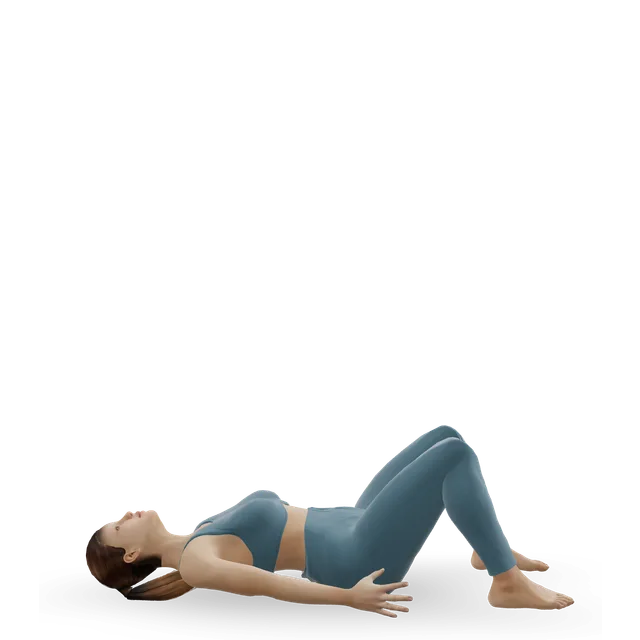
Lying chin tuck demonstrated on the 3D figure3D demoLying chin tuckBeginner · No equipment

5 to 10 gentle holds of up to 10 s, once or twice a day · As in our neck pain after a massage guide (from our neck pain guide), lying with your head supported

Harder: Chin tuck

Thoracic rotation demonstrated on the 3D figure3D demoThoracic rotationBeginner · No equipment

6 rotations per side, moving with the breath · The move page's dose. Turning through the upper back takes some of the turn off the neck, as our turning guide says

Easier: Side-lying open book · Harder: World's greatest stretch

Shoulder rolls demonstrated on the 3D figure3D demoShoulder rollsBeginner · No equipment

10 to 15 slow circles each way, once or twice through · From the move page's dose (an editorial starting point)

Harder: Shoulder CARs (controlled articular rotations)

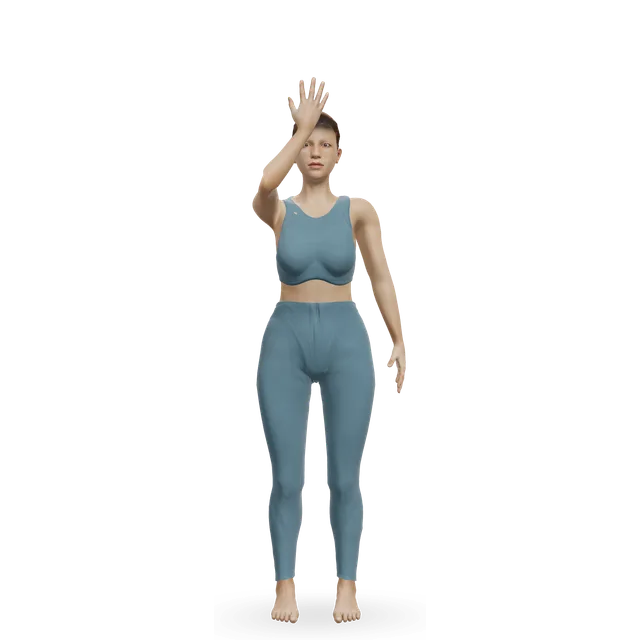
Upper trap release demonstrated on the 3D figure3D demoUpper trap releaseBeginner · No equipment

2 slow holds of 30 seconds per side · The move page's dose. Only if it eases, with the head's weight only and no pulling, as our neck pain after flying guide says

Easier: Side neck stretch

Treadmill walking demonstrated on the 3D figure3D demoTreadmill walkingBeginner · Cardio machine

10 to 20 min a day at a comfortable pace · As in our neck pain after a massage guide (editorial). Walking outdoors counts

Harder: Treadmill jogging

Move on when: Turning is full or nearly full through the day, any headache has gone, and you've woken no worse for a few days (editorial, as our neck pain after a massage guide uses it).

Follow along: a timer, a cue and the next move, one step at a time.
Stage 2

Build: endurance for the neck and shoulder blades

About weeks 1 to 6: neck work daily, and shoulder and upper back work 2 or 3 days a week, as our neck pain and turning guides do.

Isometric neck holds (four-way) demonstrated on the 3D figure3D demoIsometric neck holds (four-way)Beginner · No equipment

3 to 5 holds of 5 to 10 s each direction, light effort, building to 5 holds of 10 s at about half effort · As in our neck pain after a massage guide (from our neck pain guide). Never push into pain, dizziness or visual symptoms, as the move page says

Easier: Chin tuck · Harder: Chin tuck with head lift

Chin tuck with head lift demonstrated on the 3D figure3D demoChin tuck with head liftIntermediate · No equipment

3 to 5 holds of 5 s, building to 10 holds of 10 s · As in our neck pain after a massage guide (head lifts were the endurance exercise in a 12-month neck pain trial, as our neck pain guide says)

Easier: Chin tuck

Band lateral raise demonstrated on the 3D figure3D demoBand lateral raiseBeginner · A band

2 minutes a day, 5 days a week, progressing the band · The dose from a trial in 198 office workers with neck and shoulder pain, as our neck pain guides use it

Harder: Dumbbell lateral raise

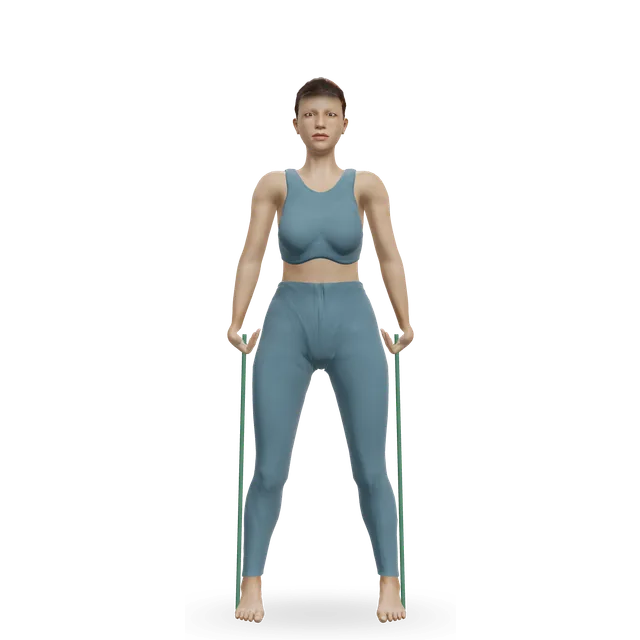
Band row demonstrated on the 3D figure3D demoBand rowBeginner · A band + An anchor point

3 sets of 10 to 15, stopping 2 to 3 reps short of failure · From the move page's dose (an editorial starting point). Check the band and the anchor before every set, as the move page says

Harder: Supported single-arm dumbbell row

Wall angel demonstrated on the 3D figure3D demoWall angelBeginner · A wall

8 slow slides · As in our neck pain after a massage guide (editorial)

Easier: Table slide (seated forward reach) · Harder: Prone Y-T-W raises

Move on when: The holds and head lifts are comfortable, and your neck is no worse the next morning (editorial).

Follow along: a timer, a cue and the next move, one step at a time.
Stage 3

Strengthen, and treatment comes back if you want it

From about week 6, 2 or 3 days a week, then twice a week for the long term: the shoulder and upper back strength with the best evidence for neck pain that lasts, full neck circles, and manual therapy, if you want it, back by the written steps below, with everyday activity and sport back in full. No study has tested how treatment should come back after a sore reaction, so the order is our suggestion.

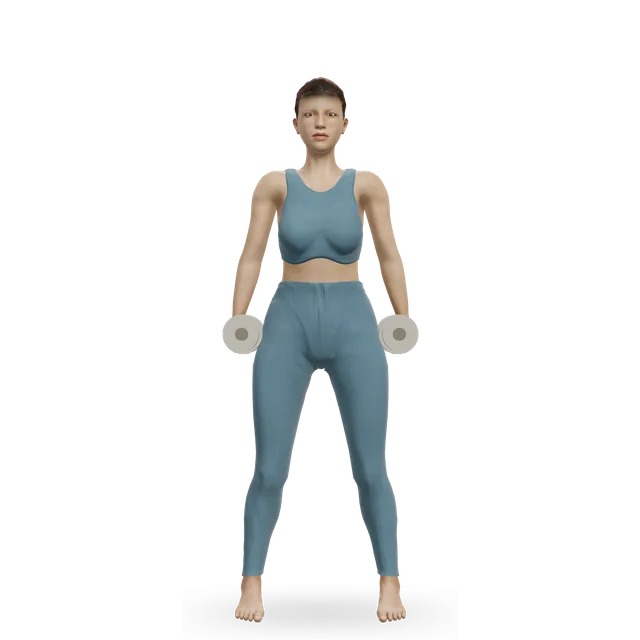
Dumbbell shrug demonstrated on the 3D figure3D demoDumbbell shrugBeginner · A dumbbell

2 to 3 sets of 8 to 12, stopping with 2 or 3 reps in reserve · From the move page's dose (an editorial starting point). Straight up and down, not rolled, as the move page says

Harder: Snatch shrug

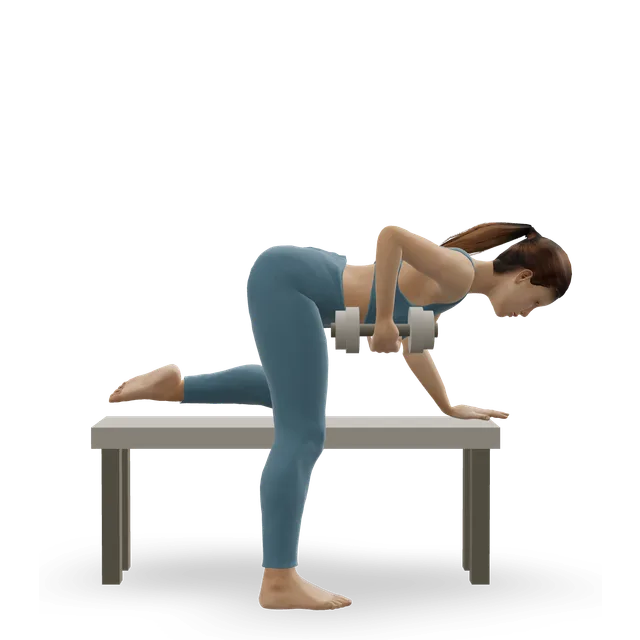
Supported single-arm dumbbell row demonstrated on the 3D figure3D demoSupported single-arm dumbbell rowIntermediate · A dumbbell + A bench or box

3 sets of 8 to 12 each side · As in our neck pain after a massage guide (from our neck pain and turning guides)

Easier: Incline ring row · Harder: Bent-over barbell row

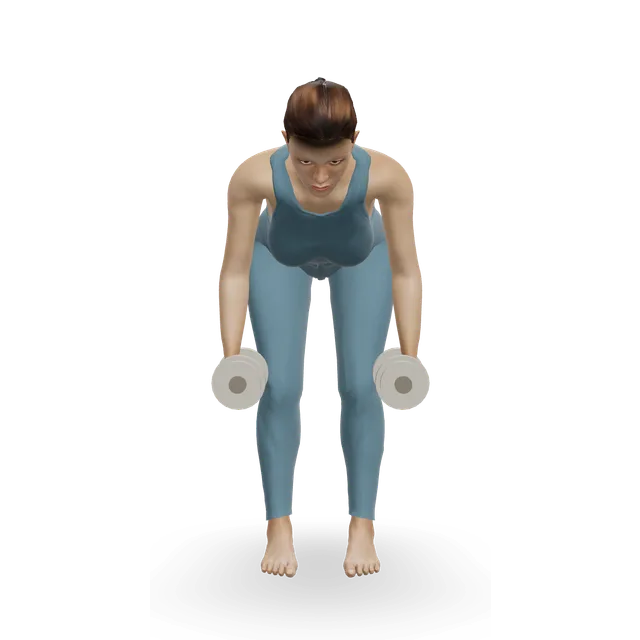
Bent-over reverse fly demonstrated on the 3D figure3D demoBent-over reverse flyIntermediate · A dumbbell

3 sets of 10 to 12 · As in our neck pain after a massage guide (from our neck pain and turning guides)

Easier: Prone Y-T-W raises · Harder: Barbell rear-delt row

Isometric neck holds (four-way) demonstrated on the 3D figure3D demoIsometric neck holds (four-way)Beginner · No equipment

3 holds of 10 s each direction at moderate effort · As in our neck pain after a massage guide (our neck pain guide's later stage)

Easier: Chin tuck · Harder: Chin tuck with head lift

Neck CARs (controlled articular rotations) demonstrated on the 3D figure3D demoNeck CARs (controlled articular rotations)Beginner · No equipment

3 slow circles each way, once or twice a day · From the move page's dose (an editorial starting point). Full circles once separate turns are comfortable, as the move page says

Prone Y-T-W raises demonstrated on the 3D figure3D demoProne Y-T-W raisesBeginner · No equipment

5 to 8 of each shape, 2 rounds · As in our neck pain after a massage guide (from our neck pain guide). Forehead on a folded towel, neck long and face down, as the move page says

Easier: Wall angel · Harder: Bent-over reverse fly

Move on when: Our suggestion: a visit with a gentler technique leaves your neck no worse 2 days later. Keep the strength work going twice a week, because neck pain often comes back. If it flares, go back to the stage 1 moves for a few days, then build again.

Follow along: a timer, a cue and the next move, one step at a time.

What to change for now

What to do now (written steps)

Our 3D figure can't show these. They come from the NHS, NHS inform and the GCC; no trial has tested what to do after a sore adjustment, and where a step is our suggestion, it says so.

  • 1. Keep it moving: gentle turns, tilts and nods little and often, and the stage 1 moves. The NHS says don't wear a neck collar.
  • 2. Heat or cold and painkillers: a hot water bottle wrapped in a tea towel for 20 minutes, 2 to 3 times a day, or frozen peas for 5 minutes, 3 times a day, and paracetamol or ibuprofen, as the NHS suggests.
  • 3. No more cracking for now: leave further neck manipulation until the soreness has gone, and don't crack your own neck to free it (our suggestion; our neck pain guide says forcing a crack isn't a treatment).
  • 4. Don't drive or cycle until you can look over each shoulder, as the NHS says.
  • 5. Tell your chiropractor how long the soreness lasted, where, and whether you had a headache or felt dizzy. The GCC says "If you are uncomfortable with the techniques being used during your treatment, you should talk to your chiropractor".
  • 6. Check the warning signs: a sudden severe headache, dizziness that lasts, double vision, slurred speech, trouble swallowing or weakness are 999 calls, even if they've stopped.

Sources 37, 36, 10

At your next visit, in the regulator's and professional bodies' words (written steps)

Chiropractors and osteopaths are trained, regulated healthcare professionals in the UK. These steps come from the GCC and its Code, the Royal College of Chiropractors, the GOsC, the NCCIH and the NHS, and are our suggestion where they say so.

  • 1. Say how you felt after the last visit, for how long and where, including any headache, dizziness or arm symptoms.
  • 2. Tell them what matters. The GCC says "It is essential that you provide the chiropractor with accurate information regarding your medical history", and the NCCIH says "Tell the chiropractor about your health history, including medical conditions". For the neck, that means migraine, a past stroke or torn neck artery, a recent neck injury, infection or very bad coughing or vomiting, a connective tissue disorder, high blood pressure, blood thinners, a clotting problem and very weak bones (our list, from the NHS, a review of risk factors and the American Heart Association).
  • 3. Ask about the risks before the neck is treated. The GCC says "Any particular risks that may be relevant to you or your condition should be explained by the chiropractor before consent to treatment is given", and its Code requires every chiropractor to "inform the patient of the risks and benefits to the proposed plan of care". The Royal College of Chiropractors' standard for acute neck pain says patients "should expect to be given information about the risks and benefits of treatment" before being asked to consent. For osteopathy, the GOsC says your osteopath "will explain the benefits and any risks of the treatment they are recommending".
  • 4. Ask for mobilisation without a thrust, or treatment to the upper back rather than the neck, if the last neck manipulation flared you (our suggestion).
  • 5. Ask for an exercise plan alongside: manual therapy with exercise did better than no treatment, though on low-certainty evidence.
  • 6. Consent is yours: "Your chiropractor cannot start any course of care until you have provided consent", and "You can decide to stop treatment at any time you like".
  • 7. If you haven't improved within a few weeks, the GCC says your chiropractor should discuss other care options or refer you to another healthcare professional.

Sources 10, 8, 47, 29, 18, 50, 38, 9, 42

When not to have neck manipulation, or to ask first

Our suggestion, built on the NHS's advice on hands-on treatments, the American Heart Association's statement and a review of what raises the risk of a torn neck artery:

  • Any warning sign, or a new headache or neck pain unlike any before: see a doctor first, not a manipulation.
  • Blood thinners, a raised risk of bleeding or stroke, very weak or damaged bones, or a nerve condition: the NHS says chiropractic or osteopathy may not be safe, so ask your GP first.
  • A past torn neck artery, a stroke or mini stroke, a connective tissue disorder, or a recent neck injury or infection: ask your GP before any neck manipulation, and ask the practitioner about a gentler technique.

Sources 47, 18, 29

Checking registration

The GCC says "It is a criminal offence for anyone to describe themselves as a chiropractor without being registered with the General Chiropractic Council (GCC)", and the NHS says "Chiropractors and osteopaths need to be registered by law", with the GCC or the GOsC, and the GOsC says osteopaths "are statutorily regulated health care professionals who must be properly trained". For a private physiotherapist, the NHS says make sure they're registered with the Health and Care Professions Council (HCPC).

Sources 10, 47, 51, 52

Treatment to the neck comes back (written steps)

No study has tested how treatment should come back after a sore reaction. These steps are our suggestion.

  • 1. Stage 1: no neck manipulation. Upper back treatment or soft tissue work only, if you want treatment at all.
  • 2. Stage 2: gentle mobilisation of the neck, without a thrust.
  • 3. Stage 3: your usual treatment if you and your practitioner agree, judged by how your neck feels 2 days later. If it flares, go back a step.
  • 4. Keep the stage 2 and 3 strength work going whether or not you keep seeing a chiropractor or osteopath.

Everyday activity comes back (written steps)

Editorial, with NHS inform's and the NHS's advice where they are named.

  • Desk work from day 1, "moving your neck for short periods every hour", as NHS inform advises.
  • Driving and cycling once you can look over each shoulder, as the NHS says.
  • The gym and sport with the neck spared for a week or two: no headstands, shoulder stands, heavy shrugs or overhead presses while it's sore (our suggestion).
  • Sleeping on a low, firm pillow, and not on your front, as the NHS suggests.

Sources 36, 37

Positions to swap, and why

Habit or positionWhy it mattersInstead
Going back the next day to have the soreness fixed with another adjustmentMost reactions settle within a day or two on their own.Gentle movement within comfort: separate turns, tilts and nods.Try: Neck CARs (controlled articular rotations)
Cracking your own neck to free itOur neck pain guide says forcing a crack isn't a treatment, and new, unusual neck pain needs checking.Turning through the upper back.Try: Thoracic rotation
Keeping your neck still or wearing a soft collarThe NHS says it's better to keep your neck moving.Separate turns, tilts and nods.Try: Neck CARs (controlled articular rotations)
Not mentioning migraine, a recent neck injury or blood thinnersThey can raise the risk of a torn neck artery or of bleeding, and the NHS says to tell your practitioner about medical conditions and medicines.Tell the chiropractor or osteopath first.
A massage gun, or a roller on the sore neckOur massage guns page keeps guns off the neck after rare case reports, and our neck pain guide advises skipping neck self-massage with a roller.The tops of the shoulders and upper back, briefly; the upper trap release eases the same area.Try: Upper trap release
Signing up for months of regular neck adjustments to stay alignedManipulation doesn't change joint position for long, and the GCC says most patients won't need treatment after the initial plan.Strength work twice a week, such as the band row.Try: Band row
Headstands, shoulder stands or heavy shrugs while it's soreThey load a sore neck (our suggestion); our neck pain guide's yoga row says leaving the inversions out usually helps.Rows and light band work.Try: Band lateral raise
Driving while you can't turn your headThe NHS says don't drive or cycle while you can't move your neck.Wait until you can look over each shoulder.

Routines to follow

More moves for this area

Questions people ask

Is it normal for my neck to hurt after the chiropractor?

Yes, often: about half of people treated for neck pain have a reaction, mostly soreness or stiffness that starts within hours and is mostly gone within a day. The GCC says these effects are usually mild and generally pass within a few days. Pain that keeps getting worse, or a sudden severe headache, dizziness or arm symptoms, isn't normal.

How long does neck pain last after an adjustment?

Most reactions start within 4 hours, and about three quarters have gone within 24 hours; the GOsC tells osteopathy patients they may feel sore for 24 to 48 hours. If it flared neck pain you already had, NHS inform says most neck problems improve within 8 weeks. See a GP if it's worse 2 or 3 days later.

Why does my neck hurt more after the chiropractor?

Usually a short-lived reaction to the manipulation, commoner after the first visits, with a technique that rotates the neck and with long-standing neck pain, or the neck pain you went in with having a bad day. Keep it moving gently and use heat or cold; it usually settles within a day or two.

Why do I have a headache after the chiropractor?

A headache follows a minority of neck treatments, more often after upper neck manipulation, and it usually fits a tension-type headache or one from the neck that settles with rest and simple painkillers. A sudden, extremely painful headache, or one with vision, speech or balance problems, is a 999 call.

Is it normal to feel dizzy after a neck adjustment?

Feeling light-headed for a moment just afterwards is reported, at most in about 16 of 1,000 consultations in a UK survey. Dizziness that lasts or comes back, or comes with a headache, double vision, slurred speech, trouble swallowing or weakness, needs 999.

Can a chiropractor cause a stroke?

Very rarely a neck artery tears and a stroke follows, and it has been reported after neck manipulation. Large studies found the link was matched by GP visits, most likely because a tear already under way causes neck pain and headache that send people for care, and found no excess risk after chiropractic care, though one smaller study disagrees. It can't be proven or ruled out, so the American Heart Association says patients should be told about the link before neck manipulation.

Can a chiropractor make my neck worse?

For a day or two, yes, and that's common. Lasting harm is rare: no serious events were reported in a UK survey of 50,276 neck manipulations or in 529 Dutch neck patients. If it's worse after each visit, stop that treatment and see a GP or physiotherapist.

Why does my throat hurt after a neck adjustment?

Probably tender muscles at the front of the neck; no study covers it. Trouble swallowing or speaking needs help straight away, and a lump, a hoarse voice or difficulty swallowing that isn't getting better needs a GP.

Did the crack put something back in place?

No. The crack comes with a gas-filled space forming in the joint fluid, and the pop makes no difference to pain relief.

Should I go back?

If it helped and the soreness settled within a day or two, it's a reasonable option alongside exercise. Tell the chiropractor how you reacted and ask about a gentler technique; if you're no better after a few weeks, the GCC says they should discuss other options or refer you.

Is it the same after an osteopath or a physiotherapist?

Much the same: reactions follow manual therapy whoever gives it, and the GOsC says it is not unusual to feel sore in the first 24 to 48 hours after treatment. The same warning signs apply.

When should I worry?

Call 999 for a sudden, extremely painful headache, or neck pain with dizziness, double vision, slurred speech, trouble swallowing, a drooping face or weakness. Get a same-day appointment for pins and needles in an arm with neck pain or severe neck pain that gets worse quickly, and see a GP if it's worse 2 or 3 days after a visit or hasn't eased after a few weeks. In the US, call 911 where this page says 999.

Related exercise guides

Other pain guides

Sources

  1. Rubinstein 2007 · Benefits and adverse events in 529 Dutch chiropractic patients with neck pain (prospective cohort study, J Manipulative Physiol Ther)
  2. Hurwitz 2005 · Adverse reactions to chiropractic care for neck pain in 336 people (RCT, Spine)
  3. Senstad 1997 · Side effects of spinal manipulation in 1,058 new patients of Norwegian chiropractors (prospective survey, Spine)
  4. Cagnie 2004 · Side effects after a first visit to 59 Belgian manipulative therapists, in 465 patients (prospective survey, Man Ther)
  5. Eriksen 2011 · Reactions after upper neck chiropractic care in 1,090 patients at 83 practices (prospective cohort study, BMC Musculoskelet Disord)
  6. Carnes 2010 · Adverse events and manual therapy: 8 cohorts and 31 trials (systematic review, Man Ther)
  7. Leboeuf-Yde 1997 · Side effects of chiropractic treatment in 625 Swedish patients (prospective survey, J Manipulative Physiol Ther)
  8. National Center for Complementary and Integrative Health (NCCIH, US) · Spinal manipulation: what you need to know (last updated September 2022)
  9. General Osteopathic Council (GOsC, the UK regulator) · What to expect at your appointment
  10. General Chiropractic Council (GCC, the UK regulator) · Patient portal: frequently asked questions
  11. Walker 2013 · Adverse events after usual chiropractic care or a sham in 183 adults: OUCH (blinded RCT, Spine)
  12. Paanalahti 2014 · Adverse events after manual therapy for neck or back pain in 767 people (RCT, BMC Musculoskelet Disord)
  13. Pankrath 2024 · Adverse events after neck manipulation: 14 trials (systematic review and meta-analysis, Pain Physician)
  14. Rubinstein 2008 · Predictors of adverse events after chiropractic care in 529 patients with neck pain (prospective cohort study, J Manipulative Physiol Ther)
  15. The Royal College of Chiropractors (professional body) · Patients and public FAQs
  16. Daniels 2026 · Adverse events in older adults after chiropractic care: 25 studies (systematic review, Chiropr Man Therap)
  17. Thiel 2007 · Safety of neck manipulation in 28,807 UK chiropractic consultations (prospective national survey, Spine)
  18. Biller 2014 · Torn neck arteries and neck manipulation: an American Heart Association statement (scientific statement, Stroke; a correction was published in 2016 that we couldn't read)
  19. Rothwell 2001 · Chiropractic manipulation and stroke in Ontario (population-based case-control study, Stroke)
  20. Cassidy 2008 · Stroke after chiropractic and GP visits: 818 strokes (case-control and case-crossover study, Spine; an erratum was published in 2010 that we couldn't read)
  21. Kosloff 2015 · Chiropractic care and vertebrobasilar stroke in 1,829 US cases (case-control study, Chiropr Man Therap)
  22. Cassidy 2017 · Carotid stroke after chiropractic and GP visits: 15,523 strokes (case-crossover study, J Stroke Cerebrovasc Dis)
  23. Whedon 2022 · Torn neck arteries after neck manipulation in older adults on Medicare (case-control and case-crossover study, BMC Geriatr)
  24. Trager 2026 · Neck manipulation and torn neck arteries in 431,492 matched pairs (retrospective cohort study, Chiropr Man Therap)
  25. Smith 2003 · Spinal manipulation and torn neck arteries: 51 cases and 100 controls (case-control study, Neurology)
  26. Church 2016 · Chiropractic care and torn neck arteries: 6 studies (systematic review and meta-analysis, Cureus)
  27. Swait 2017 · What are the risks of manual treatment of the spine? 250 articles (scoping review by the Royal College of Chiropractors, Chiropr Man Therap)
  28. Nielsen 2017 · The risks of spinal manipulation: 118 reviews (overview of systematic reviews, Syst Rev)
  29. Jacobs 2026 · Risk factors for torn neck arteries: 128 study reports (systematic review and meta-analysis, Stroke Vasc Neurol)
  30. Kranenburg 2017 · Adverse events after neck manipulation or mobilisation: 227 cases (systematic review, Musculoskelet Sci Pract; a corrigendum was published that we couldn't read)
  31. Puentedura 2012 · Could serious events after neck manipulation have been prevented? 134 case reports (systematic review of case reports, J Man Manip Ther)
  32. Rushton 2023 · The international framework for checking the neck for artery problems before treatment (consensus statement, J Orthop Sports Phys Ther; a corrigendum was published that we couldn't read)
  33. NHS · Symptoms of a stroke
  34. NHS · Headaches
  35. NHS · Septic arthritis
  36. NHS inform · Neck problems
  37. NHS · Neck pain (past its review date: reviewed April 2023, review due April 2026)
  38. The Royal College of Chiropractors · Chiropractic Quality Standard: Acute Neck Pain (undated)
  39. Hush 2011 · How new neck pain usually goes: 7 cohorts (systematic review and meta-analysis, Arch Phys Med Rehabil)
  40. Gross 2015 · Manipulation and mobilisation for neck pain: 51 trials (Cochrane systematic review)
  41. Coulter 2019 · Manipulation and mobilisation for chronic neck pain: 47 trials (systematic review and meta-analysis, Pain Physician)
  42. Chacko 2025 · Manual therapy with exercise for neck pain (Cochrane systematic review)
  43. Gross 2015 · Exercises for mechanical neck disorders (Cochrane systematic review)
  44. Kawchuk 2015 · Real-time MRI of a finger joint cracking, in one volunteer (imaging study, PLoS One)
  45. Moorman 2022 · Does the pop during spinal manipulation matter for pain? 5 studies (systematic review, Chiropr Man Therap)
  46. Bialosky 2009 · How manual therapy eases pain: a model (narrative review, Man Ther)
  47. NHS · Herbal medicines and complementary therapies (including chiropractic and osteopathy)
  48. NHS inform · Exercises for neck problems
  49. Smith 2017 · Should exercise be painful in long-lasting muscle and joint pain? 7 trials (meta-analysis, Br J Sports Med)
  50. General Chiropractic Council (GCC) · The Code of Professional Practice (effective from 1 January 2026)
  51. General Osteopathic Council (GOsC) · Is osteopathy safe?
  52. NHS · Physiotherapy
  53. NHS · Meningitis
  54. NHS · Heart attack
  55. NHS inform · Neck injury
  56. NICE NG41 · Spinal injury: assessment and initial management
  57. NHS · Polymyalgia rheumatica (past its review date: reviewed April 2023, review due April 2026)
  58. NHS · Cervical spondylosis (past its review date: reviewed August 2023, review due August 2026)
  59. NHS · Angina
  60. Chartered Society of Physiotherapy · Causes of neck pain
  61. NHS · Transient ischaemic attack (TIA) (past its review date: reviewed June 2023, review due June 2026)
  62. Wrightington, Wigan and Leigh NHS · Cervical radiculopathy: patient information (2021, past its review date of May 2023)
  63. NHS · Tension headaches
  64. NHS · Symptoms of thyroid cancer

Exercise education, not a diagnosis or treatment plan. It is written from the guidelines and studies listed above; review by a clinician is pending. If your pain follows an injury, is severe, is getting worse, or comes with any warning sign listed on this page, get it assessed. Health disclaimer.