Pilates for Achilles tendinopathy: loading the tendon, footwork and calf work on the mat and the reformer, which moves to change, what the evidence shows, and a 25-minute class
No trial has yet reported on Pilates for Achilles tendinopathy, which most people call Achilles tendonitis. What helps is loading the calf: holds and heel raises that get gradually heavier, at least 3 times a week, while you keep moving within a pain rule. Most mat Pilates puts little load on the tendon, so Pilates helps most when calf loading is built in and the moves that strain a sore tendon are changed.
Where it hurts matters. Pain where the tendon meets the heel bone (insertional pain) dislikes positions that bend the ankle fully up, such as heels sinking below the reformer's footbar; pain higher up the tendon (midportion pain) usually copes with the full range.
This guide covers how Pilates loads the Achilles, reformer footwork and the tendon stretch, the 5 out of 10 pain rule, what the evidence shows, which moves to change, and a free 25-minute class with calf loading built in. If you felt a snap at the back of your heel, or one calf is swollen and throbbing, go straight to the warning signs.
A 2023 systematic review found that Pilates "has not been evaluated in any study to date" for Achilles tendinopathy. One registered trial of reformer Pilates (49 people) finished in May 2026 and hasn't published results.
The 2024 US physiotherapy guideline puts tendon loading "with loads as high as tolerated" first, at least 3 times a week, and says complete rest is not indicated. The Dutch guideline asks for progressive calf strengthening for at least 12 weeks. Across 29 trials, every active treatment beat waiting, and none clearly beat another.
In lab studies, the Achilles took about half body weight in a seated heel raise and 7.3 times body weight in a one-leg hop, and a one-leg standing raise stressed it about 13 times more than a seated one. Mat Pilates is mostly lying, sitting or kneeling, so it adds little (our reading). Reformer footwork works the calf against springs, but its load has only been measured on one volunteer.
Heavy slow raises matched eccentric heel drops at a year, and people kept up more of their sessions (92% against 78%). Two well-known calf programmes, Alfredson's and Silbernagel's, gave similar results. Pick the one you'll do.
Carrying on running and jumping while watching pain did no harm in a trial of 38 people. This site's rule: up to 5 out of 10 during exercise, back to its usual level by the next morning, and not creeping up week on week.
Improvement often starts within about 2 weeks and peaks around 12. Recovery can take up to a year, and at a year only a quarter of those who felt recovered had fully normal calf function. Keep loading after it settles.
Pain and stiffness in the Achilles tendon, often worst first thing in the morning. Most people call it Achilles tendonitis; tendinopathy is the preferred name because inflammation isn't assumed. The NHS heel pain page lists Achilles tendonitis for pain at the back of the heel, ankle and calf. Our Achilles tendinopathy guide explains it, with the full loading plan.
The Dutch guideline splits it by place: insertional pain is within 2 cm of where the tendon joins the heel bone, and midportion pain is higher up. Insertional pain is squeezed when the ankle bends fully up, which changes the moves.
How much load each exercise puts through itEmerging evidence
In 8 adults, the Achilles took about 0.5 times body weight in a seated heel raise and 7.3 times in a forward one-leg hop. In 21 men, peak stress in the tendon was about 6.9 megapascals in a seated raise, 40.1 in a two-leg standing raise, 65.9 going up on two legs and down on one, and 89.5 in a one-leg raise. That range is what lets the load be built up step by step.
A 2023 systematic review of exercise types (5 trials, from 5,235 records) concluded that Pilates "has not been evaluated in any study to date" for Achilles tendinopathy. The same group registered a trial of reformer Pilates twice a week for 8 weeks, with the jumpboard added late, against the Alfredson heel-drop programme at home: 49 people, completed May 2026, registered about 4 weeks after it started, and no results yet.
Our searches in October 2026 found nothing else. A study of ankle-focused Pilates in 22 older women improved walking and ankle strength, with no comparison group described, and it wasn't about Achilles pain.
The 2024 US guideline, for pain higher up the tendon: tendon loading "with loads as high as tolerated" first (its top grade); at least 3 times a week (expert opinion); and no complete rest, but staying active within pain tolerance. The Dutch guideline, for both kinds: advice, load management and calf exercise for at least 12 weeks, a pain scale to guide activity, and "For insertional Achilles tendinopathy, consider initially performing exercises on a flat surface." Surgery comes only after at least 6 months of active treatment.
Which loading: it doesn't matter muchEmerging evidence
Heavy slow resistance and eccentric training improved equally at 12 and 52 weeks in 58 people. The Alfredson programme (3 sets of 15 with the knee straight and 3 with it bent, twice a day) and the Silbernagel programme (3 sets of 15 once a day, from two legs to one and from the floor to a step) were within a few points of each other at a year in 40 people; in the first small study of the Alfredson programme, which had no randomised comparison, all 15 athletes were back to running after 12 weeks. High-load holds did as well as other loading in a non-randomised trial of 39 men.
Across 29 trials, all active treatments beat wait-and-see at 3 months and none clearly beat another; across 21, eccentric work beat physical treatments for pain but matched other exercise.
Pooled across 31 groups of patients, pain and function improved from about 2 weeks, with most of the gain by 12. Recovery can take up to a year and often comes back, and at a year only a quarter of those whose symptoms had recovered had fully normal calf function.
What the NHS says, and why this page follows the newer adviceStrong evidence
The NHS running injuries page, which is past its review date, says of Achilles pain: "Even if the pain is not severe, it's a good idea to rest until the pain goes, and get it checked if it does not go away." NHS inform, Scotland's NHS health information service, updated in September 2026, now says it "does not improve with rest" and asks you to keep up as much normal daily activity as you can, and the 2024 US guideline says complete rest is not indicated. So this page follows the newer advice: keep moving within the pain rule.
Footwork and the jumpboard: unmeasuredMixed evidence
Only one study has measured force on the reformer footbar, in one volunteer, and it found spring-based estimates were inaccurate. No study has measured Achilles load or calf activity in reformer footwork or on the jumpboard.
This site's suggested rule: pain during exercise up to 5 out of 10, back to its usual level by the next morning, and not creeping up week on week. If it is worse the next morning, lighten the load for a few sessions rather than stopping.
It comes from the pain-monitoring model: in a trial of 38 people, carrying on running and jumping with it did no harm over a year. Later trials described it as pain during activity no higher than 5 out of 10 and settled within 24 hours, or under 5 during exercise, an hour after and the next morning, with no rise week to week.
Apply it to footwork, calf raises, standing work and the jumpboard alike, and check the tendon the next morning. A sharp pain at the back of the heel during a move, rather than a dull ache, means stop that move (our suggestion). Before running and jumping again, one clinical review suggests pain when walking should be minimal, about 1 to 2 out of 10.
Where it hurts: higher up, or where the tendon meets the heel
Higher up the tendon (midportion)
Full-range calf work, including heel drops off a step, is fine within the pain rule. Calf stretches are an option only with a stiff ankle: the US guideline gives them a weak recommendation.
Where the tendon meets the heel (insertional)Emerging evidence
In a trial of 42 sport-active adults, which wasn't blinded, a programme that kept the ankle out of full upward bend, dropped calf stretching and added 12 mm heel lifts improved a 100-point Achilles score by 12.9 points more at 12 weeks than the same exercises at full range with daily stretching, and by 10.4 points more at 24 weeks. In an uncontrolled study, heel drops to the floor only satisfied 67% of 27 patients. In a 2025 expert consensus, avoiding upward bend early in rehabilitation "may optimise outcomes".
Our reading, extending that one trial to Pilates: with insertional pain, keep your heels level with the footbar or the floor, or higher. No tendon stretch with the heels sinking under the bar, no heels-down deep squats, no standing calf stretches and no heel drops off a step until it settles. With pain higher up, these are fine within the pain rule.
Reformer footwork, the tendon stretch and the jumpboard
What footwork is
A classical class starts with footwork: lying on the carriage with your feet on the footbar, you press it out 10 times in each position (heels, toes, toes wrapped round the bar, heels together in a V), then rise onto the balls of the feet and lower the heels under the bar against the spring, then run in place, on 2 to 4 springs. One maker lists "Ankle issues" as a precaution and asks you to consult a physician first.
Lighter springs and a smaller range at first, and tell your teacher. With insertional pain, stop the heels at the level of the bar instead of lowering them under it (our reading, from the insertional trial). How much footwork loads the tendon hasn't been measured, so treat it as one more calf exercise within the pain rule, not as the calf loading itself.
A classical reformer and Wunda chair exercise whose stated goal includes a "Deep stretch of hamstrings and Achilles tendon", with the heels sinking below the bar or pedal under load. Leave it out with insertional pain; with pain higher up, use it within the pain rule or leave it until the tendon settles (our suggestion).
Hopping against the springs while lying down. No study has measured its load on the tendon, but in standing studies hops loaded the Achilles most. Leave it until the return stage, then use light springs and small jumps first (our suggestion).
The hold dose is the move page's dose; the other doses, the order and the point to move on are our Achilles tendinopathy guide's stages, and the weight on your knees is editorial. The frequency and length are the US and Dutch guidelines'.
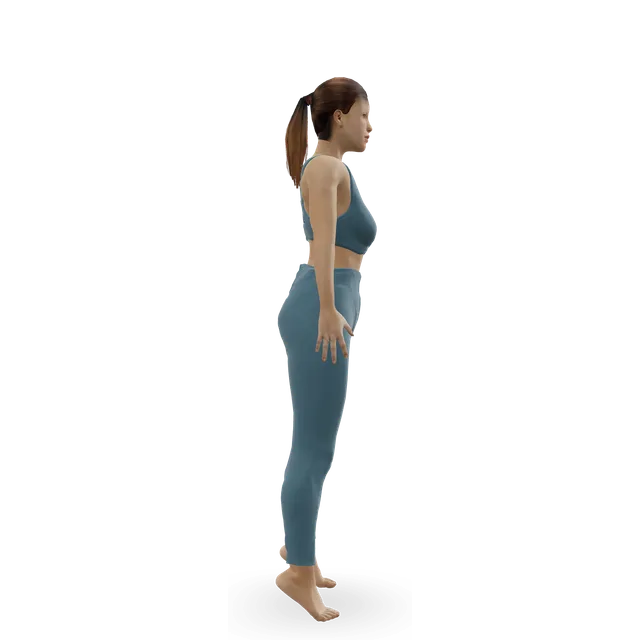
Holds on tiptoe: both feet, hands on a wall, rise halfway and hold, 5 holds of 30 to 45 seconds, once or twice a day.
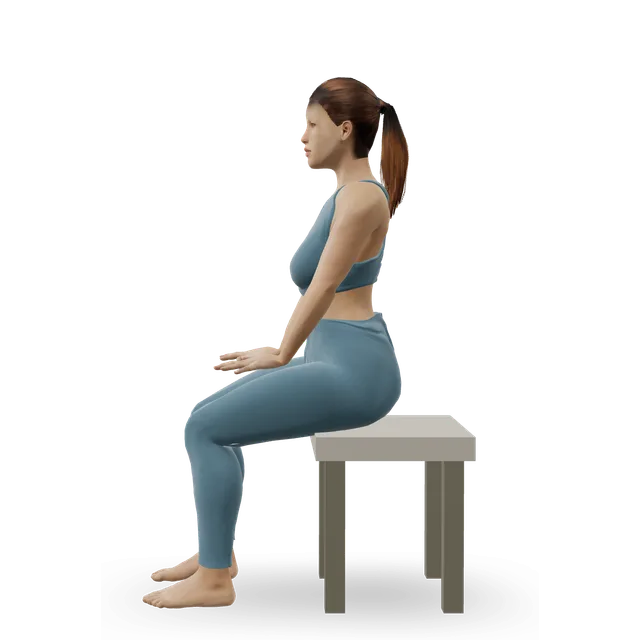
Seated bent-knee calf raises, for the deeper calf muscle (the soleus): 3 sets of 15, with a heavy book or bag on your knees as it gets easy.
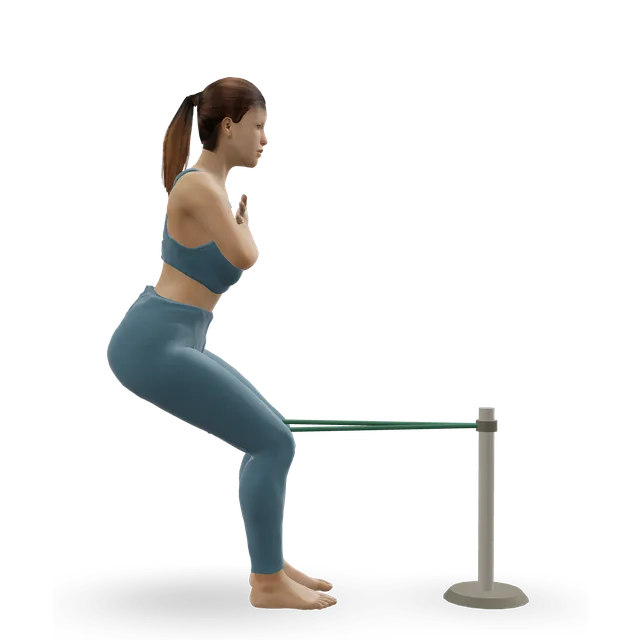
Slow standing raises on both feet: 3 sets of 15, 3 seconds up and 3 seconds down, then shift more weight onto one leg.
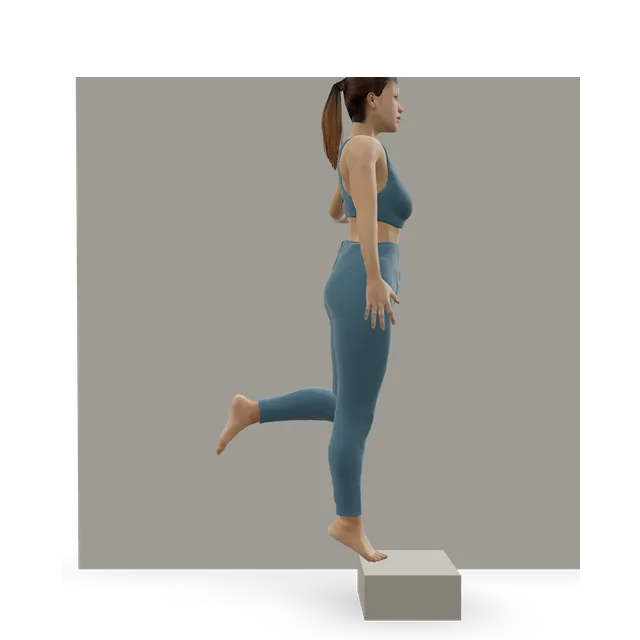
Single-leg raises: 3 sets of 10 to 15 each leg, on the floor; off a step only if the pain is higher up the tendon.
Heavier raises, from about week 6, when 3 sets of 15 single-leg raises stay within the pain rule: a weight in your hands standing, or on your knee sitting.
Keep loading at least 3 times a week for at least 12 weeks, and keep going after it settles.
The treatment, within the pain rule. Holds on tiptoe, "5 holds of 30 to 45 seconds, once or twice a day" (the move page's dose). Seated bent-knee raise, 3 sets of 15; slow raise, 3 sets of 15, 3 seconds up and 3 down, then shifting weight to one leg; single-leg raise, 3 sets of 10 to 15 each leg, on flat ground with insertional pain; eccentric heel drop, 3 sets of 15, knee straight and bent, twice a day, for pain higher up the tendon only (our Achilles tendinopathy guide's stages, for each).
Pilates that keeps you training, light on the tendon
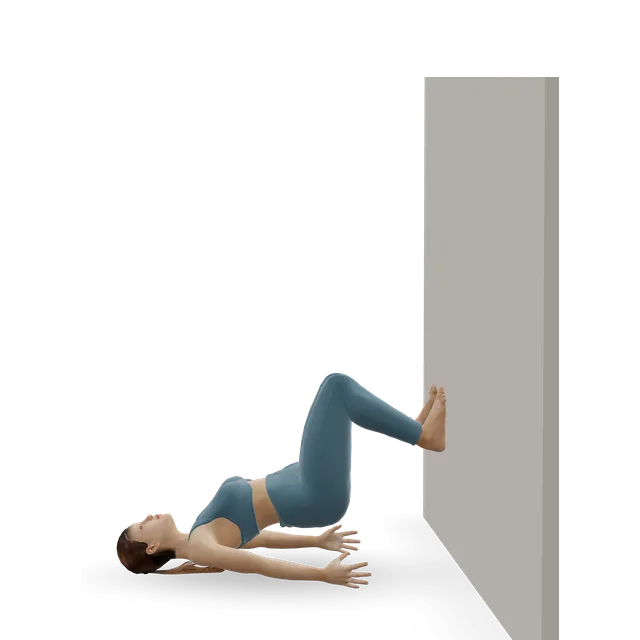
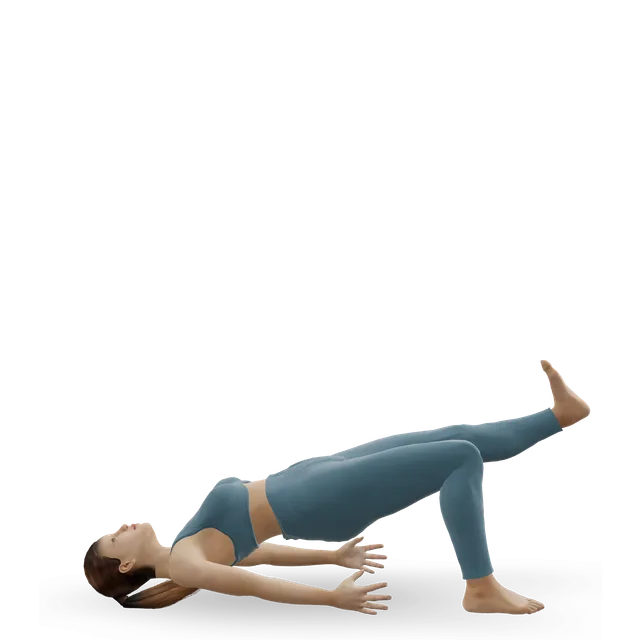
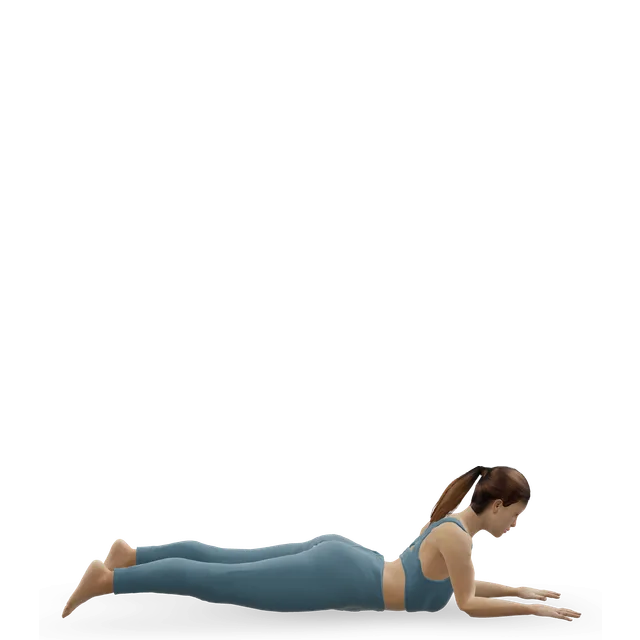
Wall bridge, "8 to 10 reps; one-leg version, 5 each side", feet flat on the wall at first, later on the balls of the feet (the reformer's footwork mirrored on the mat, our suggestion); the hundred, "50 beats to start, building to 100 (the classical count)"; single-leg stretch, "6 to 10 each side"; shoulder bridge, "3 to 5 kicks each leg", standing foot flat; side kick, "8 to 10 each side"; single-leg kick, "6 to 8 each leg"; swimming, "2 to 3 sets of 20 to 30 seconds" (the move page's dose for each). Clamshell, 2 to 3 sets of 12 to 20 each side (editorial, as our Pilates for knock knees guide gives it).
Ankle circles, "5 slow circles each way with each ankle, morning and evening (our editorial starting point)" (the move page's dose). One-leg stand, 2 holds of 30 seconds each leg, once two-leg raises are comfortable (as our yoga for Achilles tendinopathy guide gives it).
Calf stretches: pain higher up, with a stiff ankle, only
2 to 3 holds of 30 seconds each side, only if your ankle is stiff (our Achilles tendinopathy guide). Leave both out with pain where the tendon meets the heel: the insertional trial dropped calf stretching and did better.
With insertional pain, keep your heels level with the bar or leave these out; with pain higher up, they're fine within the pain rule. The same goes for the Wunda chair's tendon stretch (our reading, from the insertional trial).
The jumpboard, hops, skipping and jumping in a cardio class wait for the return stage: in standing studies, hops loaded the tendon most. Our Achilles tendinopathy guide's return stage starts with ankle bounces (3 sets of 20), skipping (3 sets of 20 m) and pogo hops (3 sets of 20).
The elephant on the reformer (heels pressed toward the carriage), deep squats with the heels down and standing calf stretches: keep the heels lifted, or the stance shorter (our suggestion, from the insertional trial).
The single-leg raise from a step: "A step-based heel drop may be unsuitable for some Achilles conditions; use individual advice when symptomatic." The eccentric heel drop: "With an Achilles problem, follow a clinician's plan for the load and the pain you work into."
Bare feet, standing and shoes
Bare feet on a hard floor and longer standing sessions are fine within the pain rule. A heel lift in your shoes may cut how far the ankle bends up for a while, the US guideline says.
This page isn't for ruptures. Our Achilles rupture guide's line for the weeks out of the boot: "No strong calf stretches, no heel drops off a step, and no running, hopping, hills or brisk walking yet: one NHS trust says you're most vulnerable to a re-tear in the first 8 weeks out of the boot." Follow your fracture clinic and physiotherapist; mat Pilates for the trunk, the hips and the other leg can usually carry on in the boot, as they allow (our suggestion).
Classes
Our 25-minute class puts the calf loading first and keeps the heels level, so it suits both kinds of Achilles pain; its structure is editorial. When its raises are easy, move on to the heavier stages of our Achilles tendinopathy guide or the calf workout; the bounce-and-load starter is for the return stage.
These are the same warning signs as our Achilles tendinopathy, Achilles rupture and heel pain guides, word for word. This is general information, not a diagnosis. A&E means accident and emergency; in the US, call 911 for 999, and use your doctor's urgent line or urgent care for NHS 111.
Call 999 or go to A&E
Call 999 or go to A&E if breathing suddenly becomes difficult, if pain in your chest or upper back comes on suddenly with breathlessness or a very fast heartbeat, or if someone passes out. Do not drive yourself. It can be a blood clot that has reached the lungs.
Same day: a sudden snap or pop at the back of the heel or calf, or a feeling of being kicked there, then walking flat-footed and being unable to push off, stand on tiptoe or climb stairs. It could be an Achilles tendon rupture or a broken heel bone. Go to A&E or a minor injuries unit, or contact NHS 111.
Same day (urgent GP appointment or NHS 111): throbbing pain in one leg (rarely both), usually the calf or thigh; swelling in one leg (rarely both); red, blue or darkened skin around the painful area, which may be harder to see on brown or black skin; or swollen veins. This can be a deep vein thrombosis (DVT). It is more likely after surgery, a hospital stay, 3 or more days in bed, a journey of over 4 hours, pregnancy or a recent birth, cancer, a previous clot, or contraception or hormone replacement therapy (HRT) that contains oestrogen.
Ask for an urgent GP appointment or get help from NHS 111: sudden swelling, redness, heat and pain in the calf, which could be a blood clot. Go to A&E: severe pain after an injury, which can mean a broken bone; or you cannot put any weight on the leg.
Same day: the back of the heel is red, hot, swollen and very painful, especially with a high temperature or feeling hot, cold or shivery. It could be an infected bursa or a skin infection.
Contact your doctor straight away if your Achilles tendon becomes painful or swollen while you're taking a fluoroquinolone antibiotic (such as ciprofloxacin, levofloxacin, moxifloxacin or ofloxacin), or in the months after. The UK medicines regulator (MHRA) advises stopping the antibiotic at the first sign and resting the painful area until you've been seen; the risk is higher over 60, with kidney problems, after an organ transplant and with steroid medicines.
See a GP or physiotherapist
Achilles pain that hasn't improved within 12 weeks of following this advice, or is getting worse: talk to a healthcare professional. In many areas you can refer yourself to physiotherapy.
Pain that is getting worse week on week despite cutting back, or is stopping your normal activities.
New or worse pain at the back of the heel after a steroid injection near the Achilles tendon: get it checked, because injections there carry a risk of rupture.
Swelling in several joints, or morning stiffness that lasts more than 30 minutes: see a GP. It can be an inflammatory arthritis such as rheumatoid arthritis rather than osteoarthritis.
Pain in one spot on the shin or a foot bone that you can point to with a fingertip, worse with impact and later present at rest or at night: a possible stress fracture.
This site's suggested rule: pain during exercise up to 5 out of 10, back to its usual level by the next morning, and not creeping up week on week. If it is worse the next morning, lighten the load for a few sessions rather than stopping.
Sharp pain at the back of the heel during footwork or a calf raise, rather than a dull ache, means stop that move (our suggestion).
Chest pain or fainting while exercising: call 999
Call 999 if:
You get sudden pain or discomfort in your chest that doesn't go away; it can feel like squeezing or pressure, burning or indigestion.
The pain spreads to your left or right arm, or your neck, jaw, stomach or back.
You have chest pain and feel sweaty, sick, light-headed or short of breath.
Someone faints while exercising, can't be woken within 1 minute, or has chest pain or a pounding, fluttering or irregular heartbeat.
Call 999 or go to A&E (accident and emergency) straight away for severe difficulty breathing (gasping, choking or not able to get words out), a chest that feels tight or heavy, pain that spreads to your arms, back, neck and jaw, lips or skin turning very pale, blue or grey, or sudden confusion. If you're more short of breath than usual, or your heart is racing, fluttering or skipping beats, contact NHS 111.
Stop the session if
You feel any pain or become unwell, as the NHS advises for its Pilates videos, and especially for chest pain or pressure, unusual breathlessness, dizziness or fainting. If you have a health problem, an injury or any symptoms, get advice from a healthcare professional, such as a GP, before you start.
The NHS advises getting advice from a healthcare professional first if you have a health problem, an injury or symptoms, or have recently had a heart attack or an operation.
"Achilles pain means you must stop all exercise"Strong evidence
The 2024 US guideline says complete rest isn't indicated and to stay active within pain tolerance; NHS inform says it "does not improve with rest"; and carrying on running and jumping while watching pain did no harm in a trial. The NHS's older running page says to rest until the pain goes; the newer sources don't.
"Reformer footwork is perfect Achilles rehab"Mixed evidence
Footwork works the calf, but no study has measured how much, and lowering the heels under the bar bends the ankle fully up, which insertional pain dislikes. Use it within the pain rule, with the heels level for insertional pain.
Pilates hasn't been tested for it: a 2023 review found no study, and the one registered trial hasn't reported. What helps is calf loading at least 3 times a week. Pilates is a good way to keep training around it, with calf raises built in.
Can I do Pilates with Achilles tendonitis?
Yes. Most mat Pilates puts little load on the tendon, and the guideline says complete rest isn't the answer. Keep pain to 5 out of 10 or less, back to normal by the next morning, and leave out jumping for now.
Which Pilates exercises help Achilles tendinopathy?
The calf work: holds on tiptoe, seated heel raises and slow standing raises, building to single-leg and weighted raises. Around them, hip and trunk work on the mat, and balance on one leg once two-leg raises are comfortable.
Which Pilates moves should I avoid with Achilles pain?
The jumpboard and hops until the return stage. With pain where the tendon meets the heel, also anything that drops the heel below level: the reformer's tendon stretch, heels-under-the-bar footwork, deep heels-down squats and standing calf stretches.
Is reformer footwork good for the Achilles?
It works the calf against springs, but nobody has measured how much it loads the tendon. Use light springs and a small range at first, and with insertional pain keep your heels level with the bar.
Should I stretch my calves in Pilates?
Only if your ankle is stiff and the pain is higher up the tendon: the guideline lists stretching as an option, not the treatment. With pain where the tendon meets the heel, a programme without stretching did better.
What's the difference between pain higher up the tendon and at the heel?
Midportion pain sits more than 2 cm above the heel bone; insertional pain is within 2 cm, where the tendon attaches. Insertional pain is squeezed when the ankle bends fully up, so its exercises start on a flat floor.
How much pain is OK?
This site's rule: up to 5 out of 10 during exercise, back to its usual level by the next morning, and not creeping up week on week. Carrying on running and jumping while watching pain did no harm in a trial.
Can Pilates cause Achilles tendonitis?
A sudden jump in calf load can, such as starting jumpboard classes or long standing sessions on tiptoe. Build up gradually, and check the tendon the next morning (our suggestion, from the load studies).
How long does Achilles tendinopathy take to get better?
Improvement often starts within 2 weeks and peaks around 12, and full recovery can take up to a year. Keep the calf loading going after it settles.
Can I do Pilates after an Achilles rupture?
Mat Pilates for the trunk, the hips and the other leg can usually carry on in the boot, as your team allows. Strong calf stretches, heel drops off a step and hopping wait. Our Achilles rupture guide has the stages.
When should I see a doctor about Achilles pain?
The same day for a sudden snap or pop at the back of the heel or calf, a swollen, painful calf, or a red, hot heel, and straight away if it starts while you're taking a fluoroquinolone antibiotic. See a GP or physiotherapist if it hasn't improved within 12 weeks or is getting worse.
Exercise education, not a personal prescription, and clinical review of these guides is pending. If you are pregnant, have a health condition or have had recent surgery, check with a doctor, midwife or physiotherapist before starting, and stop for sharp or increasing pain. Health disclaimer.