Training guide

How to do assisted pull-ups: the machine and bands, how much help, the shoulders, moving to your first pull-up, and how many

An assisted pull-up is a pull-up with part of your weight taken away: you kneel or stand on the platform of an assisted pull-up machine, whose counterweight pushes you up, or put a knee or foot in a loop band hung from the bar. On most machines, the more weight you choose, the more help you get, so you progress by taking weight off. A band helps most at the bottom, where it's stretched furthest, and least near the bar.

No study has tested assisted pull-ups on their own, or compared bands with the machine, but the one trial of a pull-up-building routine used them alongside rows and slow negatives, and coaching bodies teach them as a step to your first pull-up.

This guide shows the machine and band versions step by step on the 3D figure, how much help to take, how many to do, how to look after your shoulders, and how to move on to a full pull-up.

The short version

A pull-up with part of your weight taken away

Kneel or stand on the platform of an assisted pull-up machine, or put one knee or foot in a loop band hung from the bar. Pull from straight arms until your chin passes your hands, then lower slowly. The American Council on Exercise (ACE) and the National Academy of Sports Medicine (NASM) both teach it as a step towards the full pull-up.

Sources 1, 2

On most machines, more weight means more help

The stack you pick is taken off your body weight, so a heavier stack makes it easier and you progress by taking weight off, as our move page says ("More counterweight makes it easier"). A few machines may be built the other way round, so read the label (our suggestion).

Bands and machines help in different ways

A band pulls harder the more it stretches, so it helps most in the hang and least near the bar; a counterweight helps by about the same amount all the way. That's band physics measured in the lab, not in a pull-up: no study has compared them for a first pull-up. Use whichever you have, and reduce the help steadily, as our pull-up guide says.

Sources 3, 4

One step on the ladder, not the whole route

No trial has tested assisted pull-ups on their own. In the one trial of a pull-up-building routine, 30 inactive young men who could already do 3 or 4 pull-ups did assisted pull-ups, rows, chin-ups and negatives twice a week; reps rose in every group, most with grip work added (from 4.0 to 12.9).

Source 5

How much help and how many

The least help that lets you finish every rep of the set. For scale, college women's heaviest single pull-up averaged about 73% of their body weight and men's about 116%. ACE suggests 2 to 4 sets of 8 to 12 and NASM 3 to 5 sets of 5 to 10, written for band-assisted pull-ups; we use the same on the machine (our editorial reading).

Sources 6, 1, 2

Your shoulders, and bands that slip

The bottom of every rep is still a full hang, so our pull-up and dead hang guides' shoulder rules apply. Bands have slipped off a foot or snapped during assisted pull-ups and chin-ups and caused serious eye injuries; how often is unknown, but check the band and seat it securely.

Sources 7, 8, 9

What an assisted pull-up is, and how the help works

Two kinds of help

The assisted pull-up machine (sometimes sold as a "Gravitron") has a platform you kneel or stand on, pushed up by a weight stack. The band-assisted pull-up uses a loop band choked round the middle of the bar, with one knee or foot in the bottom of the loop: ACE says, "Depending on the length and tension of the band, place either your foot/feet or knee/knees into the bottom loop." A foot on a box or a partner holding your ankles help too, but we have no 3D demo of them. Assisted chin-ups are the same with your palms facing you, as our chin-up guide explains.

Source 1

How a band helps (our reading of band physics)

A band's pull rises as it stretches: rubber bands tested in the lab didn't stretch in a straight line, and bands sold as the same colour differed in tension by 8 to 19%. Bands hung from a pull-up bar to assist jumping gave the most help at the bottom, where they were stretched furthest. So a band helps most in the hang and least near the bar. Nobody has measured this in a pull-up, so it's our inference, and a foot in the loop stretches the band further than a knee, so it should help more (also untested).

Sources 3, 4, 10

How the machine helps

The counterweight takes off about the same amount through the whole rep (mechanics, our reading). The one study of the machine noted that the assisted pull-up "requires the same body position of the traditional pull-up from the hips up". Kneeling bends your hips and knees and keeps your legs still; we found no study of what the pad changes.

Source 11

What it works

The same muscles as a pull-up: mainly the lats (the broad muscles down the sides of your back), with the biceps, the trapezius and rhomboids between your shoulder blades, the rear shoulders, the rotator cuff and your grip. In unassisted pull-ups and chin-ups in 25 adults, the lats worked at 117 to 130% of a maximal test effort and the biceps at 78 to 96%.

Source 12

How people differ

Your body weight counts against you on the bar but not on a pulldown machine, so strength for your size is what matters. College women's heaviest pull-up averaged 0.73 times their body weight and men's 1.16, and college women who managed a pull-up after training had more strength for their body mass. Machine numbers also differ between brands, so compare yourself only on the same machine (our suggestion).

Sources 6, 13

How to use the assisted pull-up machine, step by step

From our move page ("Set the assistance, then kneel on the platform"; "More counterweight makes it easier"), its library caution on getting on and off, and our pull-up guide's technique and effort. The 2 to 3 second lowering is editorial. A few machines may work the other way round, so read the label.

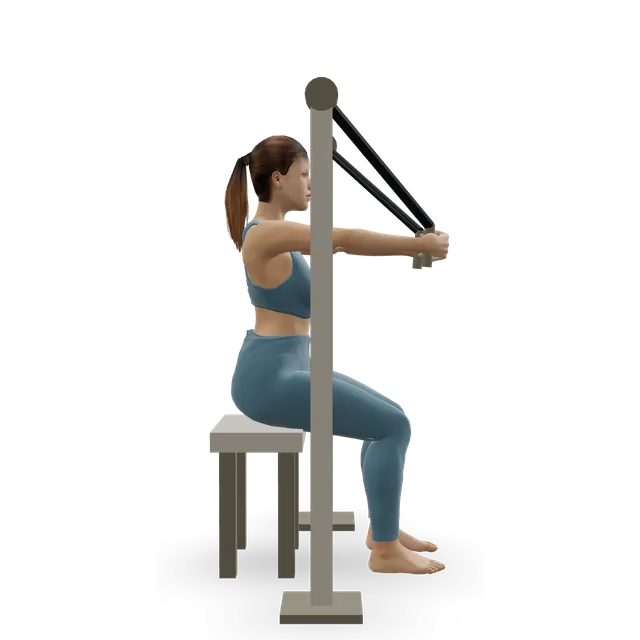
  1. Choose the help first: on most machines the stack you pick is taken off your body weight, so more weight on the stack means more help. Start with plenty.
  2. Hold the frame handles, step up and kneel (or stand) on the platform, pressing it down until you can reach the bar handles.
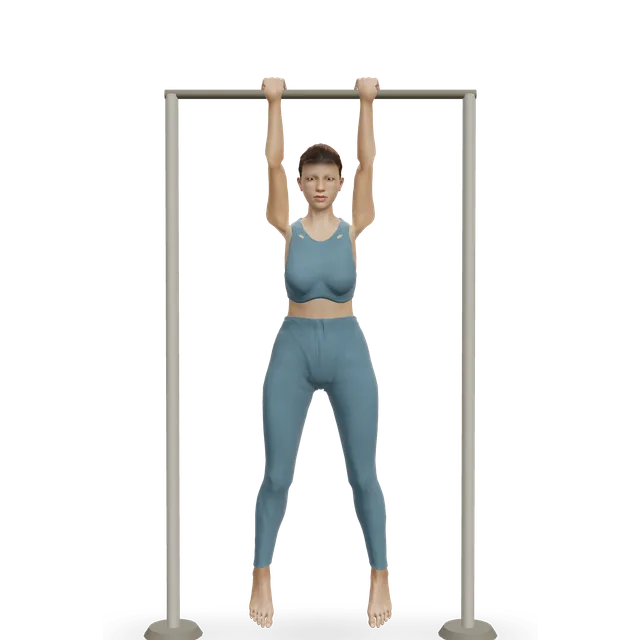
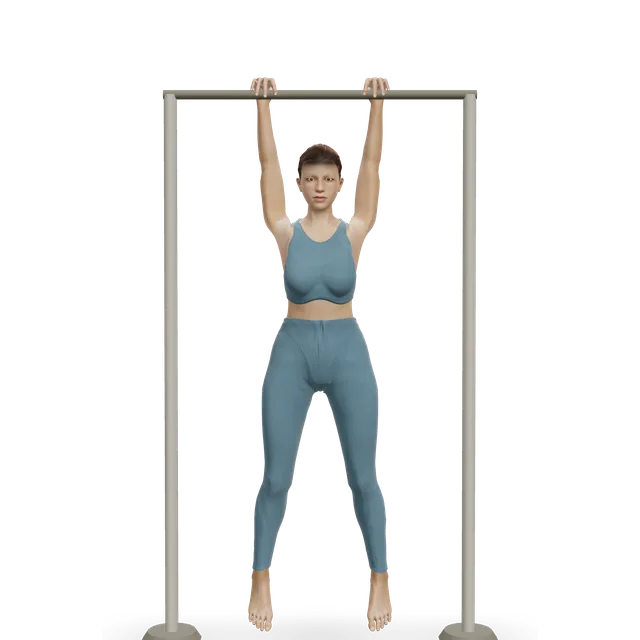
  3. Take an overhand grip a little wider than your shoulders, thumbs round the handles, and hang with straight arms while the platform takes part of your weight.
  4. Draw your shoulder blades down, then pull, driving your elbows down towards your ribs until your chin passes your hands.
  5. Lower slowly, over 2 to 3 seconds, to straight arms, without letting the platform bounce you out of the bottom.
  6. Keep your ribs down and your knees together on the pad, with no swinging.
  7. End the set 1 to 3 reps short of failure. Holding the frame handles, step down carefully once the platform is at the bottom: it rises as you take your weight off it.

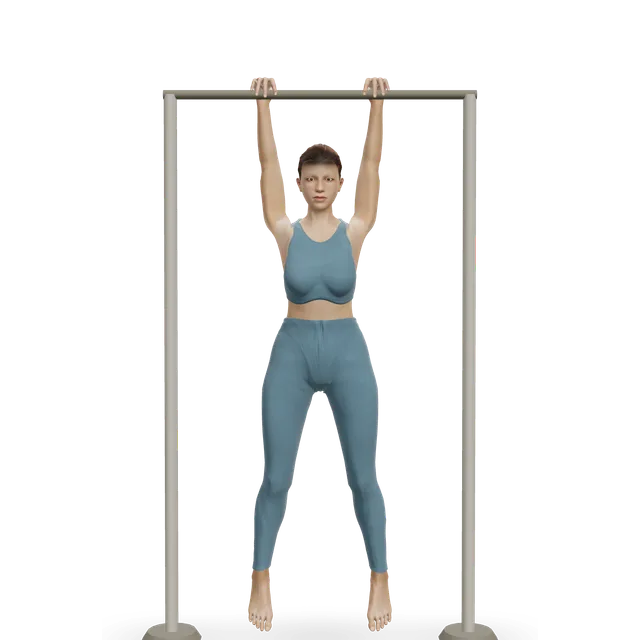
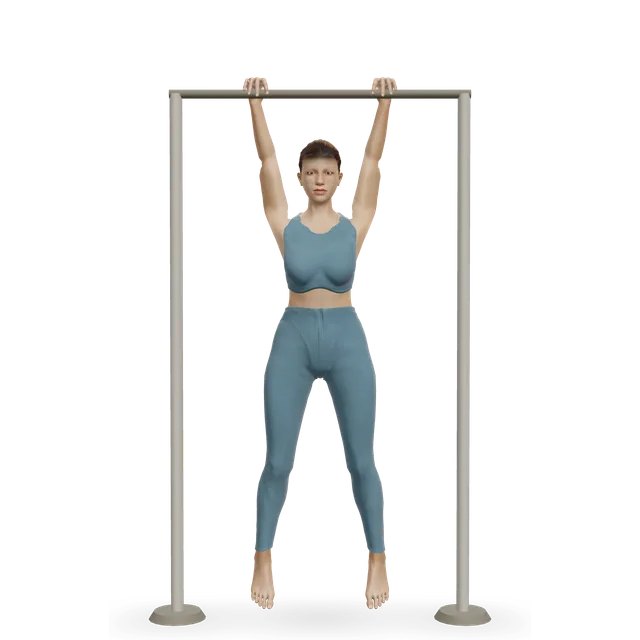
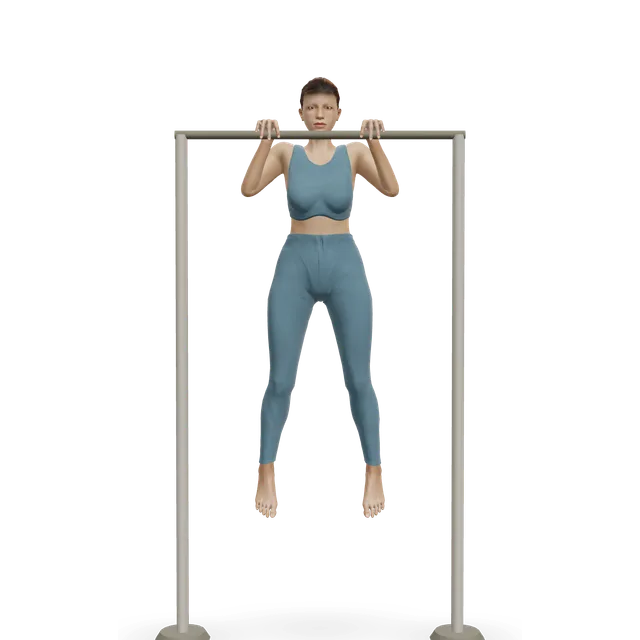
Loading the 3D figure…

Gets into position, then repeats the movement. Technical checks passed; qualified exercise review is pending.

The movement on the figure: Assisted pull-up (machine)

How to do band-assisted pull-ups

From our move page ("Use the lightest band that still lets you finish every rep with control"; its caution that a stretched band stores a lot of energy), ACE's band set-up and the case reports of bands that slipped or snapped. Keeping your face out of the band's line is our suggestion.

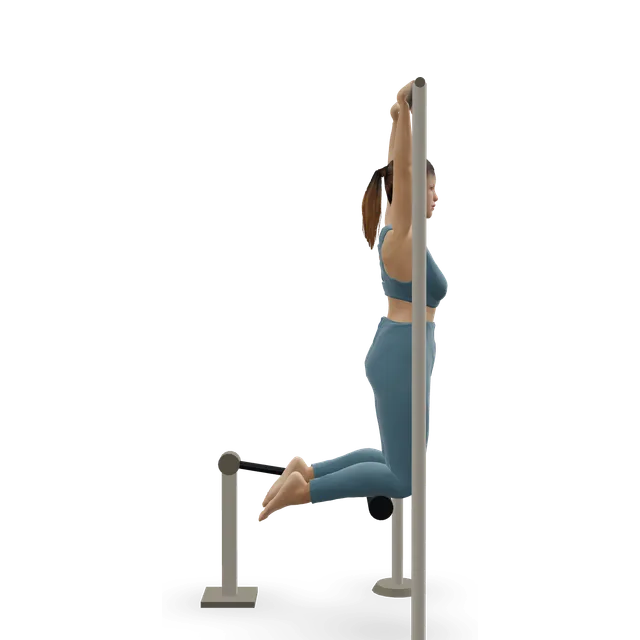
  1. Check the band for nicks or tears, then choke it round the middle of the bar so it can't slide.
  2. Stand on a box, pull the lower end of the loop down and put one bent knee, or a foot, securely in it.
  3. Take an overhand grip a little wider than your shoulders and step off the box onto straight arms.
  4. Draw your shoulders down, then pull until your chin clears the bar, driving your elbows down to your sides.
  5. Lower slowly to straight arms, keeping your knee or foot in the band.
  6. At the end of the set, step back onto the box and take your knee or foot out of the band slowly, keeping your face out of its line.

Loading the 3D figure…

Gets into position, then repeats the movement. Technical checks passed; qualified exercise review is pending.

The movement on the figure: Band-assisted pull-up

How much help to take

The least help that lets you finish every rep

Take enough help to finish every rep of the set with control and 1 to 3 to spare, and no more, as our first pull-up and pull-up challenge workouts say. In your first two weeks, keep 3 or 4 reps to spare, as our plans advise.

What the numbers say (our arithmetic)Emerging evidence

In 35 college men and 23 college women, the heaviest single pull-up, with help or added weight, averaged 1.16 times body weight in men and 0.73 in women. At 80% of that maximum, the women managed about 10.5 reps and the men 8.1. By our arithmetic from those averages (the authors don't state it), the average woman needed about a quarter of her weight taken off for one pull-up and about 40% for a set of about 10. That's one college sample, read from the summary; we found no study of how much help to start with.

Source 6

The machine's numbers are a usable logEmerging evidence

In 9 climbers on a weight-assisted machine set to take off half their body weight, reps to failure were very repeatable from session to session (about 20 to 23 open-handed and 34 closed-handed). So the help you set, and your reps with it, are a fair way to track progress.

Sources 14, 15

Bands vary

Bands of the same colour differed by 8 to 19% in tension in a lab test, so a new band may not match your old one. Note which band you use, not only its colour (our suggestion).

Source 3

Band or machine? What the evidence says

No study has compared themEmerging evidence

We found no peer-reviewed study that measured muscle activity or forces in a band-assisted pull-up, and none comparing band and machine help. A 2026 review of 23 studies of the lats found no assisted pull-up study at all.

Sources 11, 16

The one machine study is weakEmerging evidence

In 41 college-age adults, 5 reps each of a pull-up, two pulldowns at 80% of body weight and the assisted machine with 20% of body weight taken off gave correlations between exercises, not head-to-head comparisons. The authors judged the kneeling pulldown the closest alternative to a pull-up. The journal isn't indexed in PubMed, and muscle activity over a few reps doesn't show what a muscle will build.

Sources 11, 17

Different help, not better help (our reading)Emerging evidence

A band helps most at the bottom, which can let you skip some of the hardest part of the hang; a machine helps evenly and makes the help easy to measure. Neither has been shown to get you to a pull-up faster. Use whichever you have.

Sources 3, 4

From assisted pull-ups to your first pull-up

No trial of assisted pull-ups aloneEmerging evidence

In 30 physically inactive men aged about 21 who could already do 3 or 4 pull-ups, every group did assisted pull-ups, inverted rows, reverse-grip and negative pull-ups, 3 sets each, twice a week for 8 weeks. Pull-ups rose from 4.3 to 7.0, from 2.7 to 6.5, and from 4.0 to 12.9 in the group that added forearm training. Because everyone did assisted pull-ups, their own effect can't be separated, and the paper doesn't say what kind of assistance was used. The sets went to failure, which our guides don't copy.

Source 5

Pulldowns help, but aren't the sameMixed evidence

In two 8-week trials, young men who could already do about 2 pull-ups reached about 6 to 8 with lat pulldowns alone, 4 sets of 12 three times a week. Pulldown strength predicted pull-ups well in college men but not in college women, and only loosely in 28 women swimmers. In 25 trained men, pull-ups tracked a pulldown done with body-weight load, not their heaviest pulldown. Practise on the bar too.

Sources 18, 19, 6, 20, 21

Pair it with slow loweringStrong evidence

Across 27 trials on isokinetic machines (which fix the speed of movement), lowering-only training built lowering strength more than lifting-only training and lifting strength about as well. That's why our pull-up guide pairs negatives with assisted pull-ups rather than choosing one.

Source 22

Your timeline, as our pull-up guide estimates it

No study has timed a first pull-up from scratch. Our pull-up guide's estimate: if you can lower yourself for about 5 seconds, or need only a little help, often 2 to 6 weeks; starting from rows and plenty of machine or band help, commonly 2 to 6 months; with little upper-body strength, longer.

Sources 6, 13

The ladder around it

Train two or three steps in each session, each at the hardest one you can do well, as our pull-up guide advises: hangs at 2 holds of 20 to 30 seconds and scapular pull-ups at 2 sets of 6 to 8 (our first pull-up workout); inverted rows at 3 sets of 6 to 12; the assisted machine at 3 sets of 6 to 10 (our pull-up progression) or the band at its move page's dose, 2 to 4 sets of 8 to 12 (ACE) or 3 to 5 sets of 5 to 10 (NASM); negatives at 2 or 3 sets of 3, lowering for 3 to 5 seconds; then a chin-up and a pull-up.

How many, and how often

Sets and reps

ACE: "two to four sets of eight to 12 repetitions". NASM: "3-5 sets of 5-10 repetitions". Both are written for band-assisted pull-ups; we use the same on the machine (our editorial reading). Our first pull-up workout uses 3 sets of 5 to 8 and our pull-up progression 3 sets of 6 to 10.

Sources 1, 2

How hardEmerging evidence

Stop 1 to 3 reps short, or end the set when a rep slows. In 29 strength-trained men, ending pull-up sets at a 25% loss of speed (about half the possible reps) built more strength and endurance than going on to a 50% loss. Failure added at most a trivial amount of muscle across 15 studies, and people misjudge the reps they have left by about one.

Sources 23, 24, 25

Rest and how often

About 90 seconds between sets, as our pull-up guide says for assisted pulls. Two or three times a week, not on consecutive days, at the start of your session: strength rose more with exercises done early and with 2 or more sessions a week in a 2026 overview of 137 reviews.

Source 26

Weekly amount

Most people working towards a first pull-up start at 6 to 12 hard pulling sets a week across rows, assisted pulls and negatives, and build towards 12 to 18, as our pull-up guide says (our editorial starting point).

Moving on

When every set reaches the top of its range, use a thinner band or less counterweight, as our pull-up guide says, and log the help like a weight. Try a chin-up every second week once you can lower for about 5 seconds and do 10 inverted rows at a low bar (our first pull-up workout).

Other kinds of training help a little tooEmerging evidence

In 30 advanced climbers, 5 weeks of lowering, holding or explosive pull-up work each raised maximal pull-up strength by about 2 to 5%.

Source 27

Common mistakes

Taking more help than you need, or never reducing it

NASM lists "Failing to progressively reduce band assistance as strength improves" as a common mistake. Take off help when every set reaches the top of its range.

Source 2

Reading the stack as the weight you lift

On most machines the stack is the help, so a bigger number is easier. Log it as "help", and celebrate it going down.

Half reps

Start each rep from straight arms and finish with your chin past your hands. If the top is out of reach, take a little more help.

Bouncing out of the bottom

Let the platform or band lift you only as fast as you pull. Lower slowly.

Swinging, kicking or craning your neck

Keep your legs quiet and lead with your chest; count the rep only when your chin clears without craning.

A band that isn't seated securely

Check it for nicks, choke it round the middle of the bar and keep your knee or foot well in the loop.

Stepping off the machine mid-set

Finish the rep at the bottom, hold the frame handles and step down carefully: the platform rises as you take your weight off it.

Your shoulders and elbows

The shoulder rule

Keep shoulder pain to about 5 out of 10 or less during the exercise, back to its usual level by your next session, as our shoulder guides advise. A sharp pinch means lower, lighter or stop.

NHS inform's shoulder exercises use the same bands: 0 to 3 minimal pain, 4 to 5 acceptable, 6 to 10 excessive.

Source 28

Still a hang at the bottom

However much help you take, the bottom of every rep is a full hang with your arms overhead, so our pull-up and dead hang guides' advice applies unchanged: pull in front of your head, start each rep with your shoulders drawn down, and leave hanging out while a shoulder is painful and stiff.

Grip with a sore shoulderMixed evidence

In 11 experienced men, wide and underhand (chin-up) grips moved the shoulder blade in ways the authors linked with impingement, and they wrote that "Weight-assisted front pull-ups require further investigation and could be recommended for weaker participants". Assisted pull-ups weren't measured, so treat that as a suggestion. A model of the same men put more of the load on the rotator cuff with the underhand grip, and a wide grip raised the shoulder's turning force by 7% in 21 men. With a sore shoulder, try a shoulder-width overhand or neutral grip, as our pull-up guide says.

Sources 7, 29, 30

After a dislocation, or a shoulder that slips

Leave hangs and pull-ups out until you've been cleared, as our pull-up and dead hang guides advise; recovery from a dislocation usually takes 6 to 12 weeks, and the NHS says there's an increased risk it could happen again. The machine doesn't make hanging safe for a shoulder that slips.

Your shoulder has partly or fully come out of joint, or you worry it might, including a clunk, a dead arm or a feeling it will slip when you hang from the bar or at the bottom of a pull-up. Get it checked by a GP or physiotherapist soon (our suggestion).

Source 31

Pull-ups in the populationMixed evidence

When the US Marine Corps added pull-ups to women's fitness tests, upper-limb injuries in 49,910 women didn't rise; when it raised the men's standard, a falling injury trend levelled off. These observational studies don't separate assisted pull-ups, but they're broadly reassuring.

Sources 32, 33

Elbows

Keep elbow discomfort to about 3 to 4 out of 10, settled within an hour and no worse the next morning, as our pull-up challenge says. With pain at the front of the elbow, use an overhand or neutral grip and leave chin-ups out.

Moves that go with it

Farmer's carries at 2 walks of 20 to 30 m and wrist curls at 2 sets of 12 to 15, light and slow (our first pull-up workout: grip work gave the biggest gains in the trial); band rows at 3 sets of 10 to 15 stopping 2 or 3 reps short (the move page's dose) at home; face pulls at 3 sets of 12 to 15 and band external rotations at 2 sets of 12 to 15 for the back of the shoulder (our editorial starting point); shoulder circles and band pull-aparts as a warm-up.

Workouts to follow

The first pull-up workout trains band or machine pull-ups alongside hangs, rows, negatives and grip work, which is the design the one trial used. The pull-up progression works one step at a time, the pull-up challenge workout sets the steps by level, and the machine back workout offers the assisted machine in place of the pulldown.

Plans that use it

The 30-day pull-up challenge has a level for a first pull-up; the calisthenics plan uses the pull-up progression.

Who should change it, and warning signs

Stop and get medical help

If you get chest pain or pressure, feel faint or dizzy, are unusually breathless, or your heart races or beats irregularly during exercise, as our plans advise. The American Heart Association says these need immediate medical evaluation.

Source 34

Call 999 (911 in the US)

For chest pain that feels tight, heavy or squeezing, or spreads to your arms, neck, jaw or back; a sudden, extremely painful headache, especially while straining; someone who faints while exercising; or palpitations that don't go away, or come with chest pain, breathlessness or feeling faint. Don't drive yourself to A&E.

Sources 35, 36, 37, 38, 39, 40

A headache with effort

Ask for an urgent GP appointment or get help from NHS 111 for a headache that's triggered or made worse by coughing, sneezing, bending down or exercising.

Source 37

Your shoulder

Ask for an urgent GP appointment or get help from NHS 111 for sudden or very bad shoulder pain, an arm you can't move, a shoulder that has changed shape or is badly swollen, pins and needles that don't go away, no feeling in your arm or shoulder, an arm or shoulder that's hot or cold to touch, pain after an injury or a fall, severe pain in both shoulders, or feeling feverish or unwell. Go to A&E if, after an injury, you can't move your arm or your shoulder looks out of place or has changed shape. See a GP if shoulder pain is getting worse or hasn't improved after 2 weeks.

Call 999 or go to A&E: after a fall or injury, your shoulder looks out of place or has changed shape, you cannot move your arm, or your shoulder is painful, bruised or swollen. Do not drive yourself, and do not try to put it back in yourself.

Sources 41, 31

A pop at the shoulder or elbow, or sudden weakness

Same day (GP or NHS 111): a sudden pop or snap with pain at the shoulder or upper arm during a lift, with or without a bulge low in the upper arm. It's usually a torn long head of the biceps. Most need no operation, but the rotator cuff can tear at the same time.

A pop or snap with sudden pain at the front of the elbow, especially with bruising, a gap at the front of the elbow or a bulge in the upper arm, can be a torn biceps tendon. Go to an urgent treatment centre or A&E (in the US, urgent care) the same day, and don't wait for it to settle, as our biceps guides say.

Same day (GP or NHS 111): sudden weakness lifting the arm after an injury or fall. A rotator cuff tear caused by an injury needs urgent referral to a shoulder specialist. After a dislocation in anyone over 40, the rotator cuff should be checked: about 40% have a tear.

Source 42

Muscles far sorer than the session explains

Same day (call NHS 111, or go to A&E if you feel very unwell): after a big or unusual session, such as hundreds of pull-ups, push-ups, dips or curls, a challenge or a new class, muscle pain, swelling or weakness far worse than the session explains, and dark pee (red, brown, tea or cola coloured), sometimes starting hours or days later. Dark pee isn't always there, so muscles far sorer, more swollen or weaker than the session explains still need the same-day check. It can be rhabdomyolysis, a breakdown of muscle that can harm the kidneys.

It has followed assisted pull-ups: three women trainees developed it in their arms after one session of 125 push-ups and 85 assisted pull-ups in 12 minutes, and another woman after an arm workout of band-assisted chin-ups. Build up gradually, and skip the "100 pull-ups" challenges while you're new.

Sources 43, 44, 45

Bands, bars and the platform

A 15-year-old's band slipped from under his feet during band-assisted pull-ups and struck his eye, leaving a giant retinal hole; another band tore during supported chin-ups. In one series of band eye injuries, every patient described the band slipping from its anchor and none wore eye protection. How often this happens is unknown. Check the band, seat it securely, step out slowly and keep your face out of its line. Pull-up bar injuries in US emergency departments, mostly at home, were most often falls, so step down rather than drop.

Sources 8, 46, 9, 47, 48

A hernia

See a GP if you think you have a hernia, a bulge or lump that may get bigger when you strain and smaller when you lie down. Get help from NHS 111 if you have a hernia and pain in or around it, a bloated tummy, you feel or are sick, you're vomiting blood or your vomit looks like coffee grounds, you're constipated, you have a high temperature or feel hot, cold or shivery, or you've suddenly become confused. Call 999 or go to A&E for a femoral hernia (a small lump at the top of your thigh, in your groin) with very bad tummy pain, sickness, being unable to fart or poo, a high temperature or sudden confusion.

The NHS lists lifting heavy weights among the causes of a femoral hernia. After an inguinal hernia repair, avoid heavy lifting or strenuous activity for at least 4 to 6 weeks.

Sources 49, 50, 51

After heart, lung or breast surgery, or a dislocation

After heart surgery through the breastbone, or a heart or lung transplant, follow your surgeon's advice before pushing, pulling or lifting with your arms.

After breast cancer surgery or reconstruction, follow your surgical team's advice on when you can lift your arm above shoulder height, or push, pull or lift with it.

After a recent shoulder dislocation, or shoulder or elbow surgery, follow your surgical team's limits first.

Pregnancy

The NHS says strength training at a gym is fine if you already do it. Hanging gets harder as your weight changes: machine-assisted chin-ups or rows are easy swaps, and stop if you feel uncomfortable or unwell, as our chin-up guide says. A band near your bump is a reason to choose the machine (our suggestion).

Source 52

Before you start

Speak to your GP first if you haven't exercised for some time or have medical conditions or concerns, as the NHS advises. Get advice before hard or straining work if your blood pressure is uncontrolled (140/90 or higher at a clinic, or 135/85 at home), or you have heart disease or chest pain when you're active, a pacemaker or defibrillator, diabetic eye disease, glaucoma, a hernia, recent eye or tummy surgery, or you're pregnant, as our breathing guide lists.

With controlled high blood pressure, the American Heart Association considers low- to moderate-intensity strength training with proper breathing safe. Breathe out as you lift, as our breathing guide advises.

With a pacemaker or defibrillator, the American Heart Association asks you to check with your doctor before upper-body strength training, because repeated arm movements can damage or dislodge the leads.

Sources 53, 54, 34

Sore, or hurt?

Muscle soreness for a day or two after a new or harder session is common and fades. Sharp pain, or pain that builds during a set or lingers into the next day, isn't: swap to an easier version, and see a clinician if it persists, as our plans advise. The NHS says to stop exercising straight away if you feel any pain or become unwell, and to get help from 111 if symptoms worry you or don't go away.

Source 55
Myths

"Assisted pull-ups are cheating"Emerging evidence

They let you train the whole movement with part of your weight, coaching bodies teach them, and the one trial routine used them. The help you take off is a number you can track and reduce.

Sources 1, 2, 5

"Bands are better than the machine", or the other way roundEmerging evidence

No study has compared them. They help differently (a band most at the bottom, a machine evenly), and either works if you reduce the help steadily.

Sources 11, 3

"More weight on the machine makes it harder"

On most assisted machines, the weight you choose is the help, so more weight is easier. It's one of the commonest questions people ask.

"Assisted pull-ups are the same as lat pulldowns"Mixed evidence

They work the same muscles, but on the bar your body moves and your weight counts. Pulldown strength predicted pull-ups well in college men and poorly in women, and pulldowns alone raised pull-ups in men who could already do a couple. Use both.

Sources 6, 20, 18

"Do every set to failure"Emerging evidence

Ending pull-up sets when a rep slowed built more strength than grinding on in trained men, and failure isn't needed for muscle growth.

Sources 23, 24

"You'll get your first pull-up in 30 days"Emerging evidence

No study has timed it from scratch. Men who could already do 3 or 4 roughly doubled or tripled their reps in 8 weeks; from plenty of help, our pull-up guide's estimate is commonly 2 to 6 months.

Source 5

Questions people ask

How do you use the assisted pull-up machine?

Choose the help on the stack, hold the frame, step up and kneel or stand on the platform, then take the handles overhead. Pull until your chin passes your hands and lower slowly to straight arms. Step down carefully at the end, because the platform rises as you take your weight off it.

Does more weight make assisted pull-ups easier?

On most machines, yes: the weight you choose is taken off your body weight, so a heavier stack means more help. Progress means taking weight off over the weeks. A few machines may work differently, so check the label.

How much weight should I use on the assisted pull-up machine?

The least help that lets you finish every rep of the set with control, with 1 to 3 reps to spare, and 3 or 4 in your first two weeks. For scale, in one study college women's best single pull-up averaged about 73% of their body weight; by our arithmetic, the average woman needed about a quarter of her weight taken off for one pull-up and about 40% for a set of about 10.

Band or machine: which is better for assisted pull-ups?

No study has compared them. A band helps most at the bottom, where it's stretched furthest, and least near the bar; a machine helps evenly through the rep. Use whichever you have, and reduce the help steadily.

Should I put my knee or foot in the band?

Either: ACE says it depends on the band's length and tension. A foot stretches the band further, so it should give more help, though nobody has measured it. Make sure the band can't slip off.

Do assisted pull-ups help you get a pull-up?

They help as part of a routine, not on their own. No trial has tested them alone, but a routine of assisted pull-ups, rows, chin-ups and negatives twice a week raised pull-up reps in young men, most when grip work was added. Practise on the bar and try a full rep every second week.

Assisted pull-ups or lat pulldowns?

Both. They work the same muscles, but on the bar your body moves, and pulldown strength predicted pull-ups well in men and poorly in women. Many people use pulldowns for strength and assisted pull-ups to practise the real movement.

Assisted pull-ups or negatives?

Both, in the same session: negatives build the lowering, and assisted pull-ups train the whole rep. No trial has compared them for a first pull-up.

How many sets and reps of assisted pull-ups?

ACE suggests 2 to 4 sets of 8 to 12 and NASM 3 to 5 sets of 5 to 10, with about 90 seconds' rest, 2 or 3 times a week. When every set reaches the top of the range, use a thinner band or less counterweight.

Are assisted pull-ups cheating?

No. They let you train the full movement with part of your weight, coaching bodies teach them, and the help you take off is a number you can track and reduce.

Why do my shoulders hurt on the assisted pull-up?

The bottom of every rep is still a full hang with your arms overhead. Start each rep with your shoulders drawn down, try a shoulder-width or neutral grip, pull in front of your head, and keep pain to about 5 out of 10, settled by your next session. Leave hangs and pull-ups out after a recent dislocation or if the shoulder slips.

Are resistance bands safe for pull-ups?

Mostly, with care: bands have slipped off a foot or snapped and caused serious eye injuries in case reports. Check the band for nicks, seat it securely, step out slowly, and use the machine if you're unsure.

Sources

  1. ACE · 4 moves to help you master the pull-up (Crockford 2015, American Council on Exercise)
  2. NASM · Band-assisted pull-up (exercise library, National Academy of Sports Medicine)
  3. McMaster 2010 · How rubber bands and chains add resistance as they stretch (lab study, J Strength Cond Res)
  4. Tufano 2018 · How much bands hung from a pull-up bar help, in band-assisted jumps in 18 men (lab study, Front Physiol)
  5. Sepehri Rahnama 2025 · Assisted pull-ups, rows and negatives, with core or grip training, for pull-ups in 30 inactive men (randomised trial, Sports)
  6. Johnson 2009 · Pulldown and pull-up strength and reps in 35 college men and 23 college women (study, J Strength Cond Res)
  7. Prinold 2016 · Shoulder-blade movement in three pull-up grips in 11 experienced men (motion study, J Sci Med Sport)
  8. Chen 2026 · A giant retinal hole after a band slipped during band-assisted pull-ups in a 15-year-old (case report, Case Rep Ophthalmol)
  9. Ng 2022 · Eye injuries from elastic exercise bands in 11 patients (case series, Retin Cases Brief Rep)
  10. Guzmán-Muñoz 2026 · Elastic resistance bands in sports medicine and rehabilitation (narrative review, J Clin Med)
  11. Hewit 2018 · Muscle activity in the pull-up, two pulldowns and the assisted pull-up machine in 41 college-age adults (lab study, J Phy Fit Treatment & Sports)
  12. Youdas 2010 · Muscle activity in pull-ups and chin-ups in 25 adults (lab study, J Strength Cond Res)
  13. Flanagan 2003 · Training college women to do a pull-up (training study, Res Q Exerc Sport)
  14. Bacon 2018 · Chalk and weight-assisted pull-ups to failure in 9 climbers (crossover study, Int J Exerc Sci)
  15. Bacon 2012 · Recovery methods and repeated weight-assisted pull-ups in climbers (crossover study, J Strength Cond Res)
  16. Di Fonza 2026 · Lat muscle activity across common exercises: 23 studies (narrative review, J Funct Morphol Kinesiol)
  17. Vigotsky 2022 · Muscle activity measured in one session is not a validated predictor of muscle growth (review, Sports Med)
  18. Li 2025 · Eight weeks of lat pulldowns and pull-up reps in 34 young men (randomised trial, Eur J Sport Sci)
  19. Li 2025 · Eight weeks of lat pulldowns and pull-up reps in 25 young men (randomised trial, Life)
  20. Halet 2009 · Pulldown strength and pull-ups in 28 elite college women swimmers (study, J Strength Cond Res)
  21. Sanchez-Moreno 2016 · What predicts pull-up performance in 25 trained men (study, J Sports Med Phys Fitness)
  22. Spudić 2025 · Lowering-only against lifting-only training on isokinetic machines: 27 trials (systematic review and meta-analysis, Sports Med Open)
  23. Sánchez-Moreno 2020 · Ending pull-up sets at a 25% or a 50% loss of speed in 29 strength-trained men (randomised trial, J Strength Cond Res)
  24. Refalo 2023 · Training close to failure and muscle growth: 15 studies (systematic review and meta-analysis, Sports Med)
  25. Halperin 2022 · How accurately people predict the reps they have left: 12 studies, 414 people (scoping review and meta-analysis, Sports Med)
  26. Currier 2026 · Resistance training prescription for muscle function, size and performance in healthy adults: an overview of 137 reviews (ACSM position stand, Med Sci Sports Exerc)
  27. Vigouroux 2024 · Lowering, holding or explosive pull-up training in 30 advanced climbers (trial, Bioengineering)
  28. NHS inform · Exercises for shoulder problems (NHS Scotland)
  29. Urbanczyk 2020 · Rotator cuff loading in three pull-up grips (shoulder model study, Scand J Med Sci Sports)
  30. Pouly 2026 · Grip width and angle in pull-ups: muscle activity and joint loads in 21 men (lab study, Sports Biomech)
  31. NHS · Dislocated shoulder
  32. Arnold 2026 · Upper-limb injuries in 49,910 female Marines after pull-ups joined the fitness test (observational study, Mil Med)
  33. McNeal 2026 · Upper-limb injuries in male Marines after the pull-up standard rose (interrupted time series, Mil Med)
  34. Paluch 2024 · Resistance training with and without heart disease: 2023 update (American Heart Association scientific statement, Circulation)
  35. NHS · Chest pain (past its review date: reviewed August 2023, review due August 2026)
  36. NHS · Heart attack
  37. NHS · Headaches
  38. NHS · Subarachnoid haemorrhage
  39. NHS · Fainting
  40. NHS · Heart palpitations
  41. NHS · Shoulder pain (past its review date: reviewed May 2023, review due May 2026)
  42. NHS · Elbow and arm pain
  43. Cohen 2018 · Arm rhabdomyolysis after one session of push-ups and assisted pull-ups in 3 women (case report, Fed Pract)
  44. Mitchell 2018 · Exertional rhabdomyolysis in three young women (case reports, BMJ Case Rep)
  45. MedlinePlus · Rhabdomyolysis (US National Library of Medicine)
  46. Heyn 2023 · Exercise band injuries during lockdown training, including a band that tore in supported chin-ups (case reports, Sportverletz Sportschaden)
  47. Al-Khersan 2021 · Eye injuries from exercise resistance bands in 11 patients during the pandemic (case series, Am J Emerg Med)
  48. Shabbir 2026 · Pull-up bar injuries in US emergency departments, 2015 to 2024 (national surveillance study, Injury)
  49. NHS · Hernia
  50. NHS · Femoral hernia
  51. NHS · Inguinal hernia repair
  52. NHS · Exercise in pregnancy
  53. NHS · Physical activity guidelines for adults aged 19 to 64
  54. NHS · High blood pressure
  55. NHS · How to warm up before exercising

Exercise education, not a personal prescription, and clinical review of these guides is pending. Check with a GP before starting hard training if you have a heart condition, chest pain, dizziness or breathlessness when active, and stop for sharp or increasing pain. Health disclaimer.