Pain guide · Hip pain

Hip pain when swimming: the breaststroke kick, the groin, the hip flexors, turns and what helps

Hip pain when swimming is usually the muscles and tendons round the hip meeting more kicking, more breaststroke or more distance than they're used to. The breaststroke kick is the commonest culprit: it works the inner thigh muscles hard, and in one 2004 survey of competitive swimmers, read as its abstract, groin pain clustered in breaststrokers and rose with breaststroke training. A pull at the front of the hip after kick sets, fast dolphin kicks or flip turns points to the hip flexors (our reading), and a deep pinch in the groin as the knees come up to the hip joint itself. Hip pain is less common in swimmers than shoulder or back pain, and you can usually keep swimming: cut the breaststroke kick, swim front crawl or backstroke with a small kick or use a pull buoy, then bring the kick back narrower, knees about hip-width apart. No trial has tested these changes, so this guide says where each piece of advice comes from.

This guide starts with the signs that need help, from a 999 call for severe hip pain after a slip on the poolside, sudden hip, thigh or knee pain in a child, chest pain or breathlessness in the water, or a painful lump at the top of the thigh with severe tummy pain, to an urgent general practitioner (GP) appointment or the National Health Service's 111 line (NHS 111) for a hot, swollen hip with a fever or a child who is limping. It then maps the causes by where it hurts, explains what the studies of the kicks, turns and swimmers' hips show, and don't, shows how to change your swimming today, and gives a three-stage plan with a 3D demo of every move, back to the breaststroke kick and your usual sessions.

When to get help first

Exercise is for pain that has been checked or is clearly mild and settling.

Get urgent medical help if

  • Call 999 or go to A&E: severe hip pain after a fall or injury, or you cannot stand, walk or put weight on the leg. In an older adult this can be a broken hip; the leg may be at an odd angle or look shorter. Don't drive yourself.
  • Call 999 or go to A&E: tingling or loss of feeling in the hip or leg after an injury.
  • Ask for an urgent GP appointment or get help from NHS 111 if you have severe hip pain that started suddenly but you've not had a fall or injured your hip, your hip is swollen and feels hot, the skin around your hip has changed colour, or you have hip pain, feel generally unwell and have a high temperature (although not everyone has one) or feel hot, cold or shivery. A hot, swollen hip with a high temperature can be a joint infection.
  • Call 999 or go to A&E if your child gets sudden pain in their hip, knee or thigh (hip problems can sometimes be felt in the thigh or knee) or cannot put any weight on their leg. If your child is limping, ask for an urgent GP appointment or get help from NHS 111 the same day. This applies to teenagers too, and in some children knee pain is the only sign.
  • Go to A&E: a teenager with sudden pain at the front or top of the hip bone after a sprint, kick or jump, often with a pop. A piece of growth plate can pull off the pelvis (an avulsion fracture), and it needs an X-ray.
  • Same day, and stop running now: groin or front-of-hip pain in a runner, sometimes felt in the thigh or knee, that builds with running, hurts with every step or at night, or hurts when the hip is turned to the end of its range. Keep weight off the leg, using crutches if you have them, and get an urgent GP appointment or help from NHS 111 the same day: a stress fracture of the hip (femoral neck) needs urgent imaging.
  • Call 999 or go to A&E if you have sciatica on both sides, weakness or numbness in both legs that's severe or getting worse, or numbness around or under your genitals, or around your bottom (anus); if you find it hard to start peeing, cannot pee or cannot control when you pee; or if you do not notice when you need to poo or cannot control when you poo, and this is not normal for you. These could be symptoms of a serious back problem that needs to be treated in hospital as soon as possible.
  • Call 999 or go to A&E now if you have a femoral hernia (a small lump at the top of your thigh, in your groin) and very bad tummy pain, you feel sick or you're being sick, you cannot fart or poo, you have a high temperature or you feel hot, cold or shivery, or you've suddenly become confused. Do not drive to A&E. With any other hernia and pain in or around it, a bloated tummy, feeling or being sick, vomiting blood or vomit that looks like coffee grounds, constipation, a high temperature or feeling hot, cold or shivery, or sudden confusion, get help from NHS 111.
  • Call 999 or go to A&E: a foot or leg that is suddenly cold, pale, numb, weak or very painful without an injury. A sudden loss of blood supply is a vascular emergency.
  • Call 999: chest pain that feels tight or like squeezing on your chest; chest pain that's spreading to your arms, neck or jaw; severe difficulty breathing (you're gasping, choking or not able to get words out); lips or skin that are pale, blue or grey (on brown or black skin this may be easier to see on the palms of the hands); or someone who has passed out and is not responding normally. It could be a heart attack. Don't drive yourself to A&E.
  • Get help from NHS 111: pain or tightness in your chest, neck, shoulders, jaw or arms that comes and goes, often brought on by exercise, stress, emotion or cold and easing after a few minutes' rest. It can be angina, a sign of a heart problem. If you've been diagnosed with angina, get help from NHS 111 too if it feels worse than before, is happening more often, lasts longer or happens when you're resting.
  • Get help from NHS 111: you're suddenly more short of breath than usual; you have chest pain and you feel sick or are being sick; or you have chest pain and you feel like your heart is racing, going too slowly, skipping a beat or fluttering.
  • Someone who faints while exercising, or who has fainted and can't be woken within a minute, has chest pain or a pounding, fluttering or irregular heartbeat, or hasn't fully recovered.
  • Call 999 or go to A&E if breathing suddenly becomes difficult, if pain in your chest or upper back comes on suddenly with breathlessness or a very fast heartbeat, or if someone passes out. Do not drive yourself. It can be a blood clot that has reached the lungs.

See a doctor or physiotherapist if

  • Hip pain that stops normal activities or disturbs sleep, keeps getting worse or keeps coming back, or has not improved after 2 weeks of looking after it at home.
  • Stiffness lasting more than 30 minutes after waking.
  • Bone pain that is constant or worse at night, especially with a lump, unexplained weight loss, fever or tiredness, or a past history of cancer.
  • Hip or groin pain that hasn't settled after 6 weeks, especially with a normal X-ray, or new hip pain if you take high-dose steroids, drink heavily, or have sickle cell disease or lupus: ask your GP about an MRI (magnetic resonance imaging) scan and a hip specialist. It can be avascular necrosis, which an X-ray can miss early on.
  • A lump in the groin, upper thigh or tummy, especially one that appears when you cough or strain and goes when you lie down: see a GP, as it may be a true hernia. A femoral hernia (a small lump at the top of the thigh, mainly in women over 50, though it can happen to anyone) needs treating in hospital.
  • A lump in your groin with hip or groin pain: contact your GP. For pain or swelling around your testicles, ask for an urgent GP appointment or get help from NHS 111.
  • A pop high on the inner thigh, then a large bruise, a dent or a gap you can feel, and weakness squeezing the legs together, can be a complete tear of the adductor longus tendon: get it checked within days, as our inner thigh pain guide says.
  • Painful catching or locking deep in the groin, or a hip that gives way: get it assessed.
  • Outer hip pain that hasn't improved within 6 weeks of following this advice, or that gets worse: talk to a GP or physiotherapist. In many areas you can refer yourself.
  • A stress fracture from ordinary activity, more than one stress fracture, periods that have stopped or become irregular, or worries that you're eating too little for your training: see a GP about bone health and energy intake.
  • Buttock or leg pain, heaviness or tingling that comes on when you stand or walk and only eases when you sit or bend forward, or the distance you can walk keeps shrinking: see a GP or physiotherapist (possible spinal stenosis). Leg weakness that is getting worse, or numbness around your genitals or bottom, is urgent (above).
  • Pain, tingling or numbness spreading below the knee that isn't settling after a few weeks, is getting worse or stops your normal activities: see a GP.
  • A teenager in a sport that arches or twists the back, such as gymnastics, dance, diving, butterfly or breaststroke swimming, volleyball, cricket fast bowling, baseball pitching, weightlifting, football or rugby, with back pain that lasts more than a couple of weeks, is worse arching back or stops them training: get it checked by a GP or sports physiotherapist. It can be a stress fracture in the spine.

Where does it hurt?

Location narrows the likely causes; it does not diagnose.

The inner thigh close to the groin, worse in the breaststroke kick, squeezing the knees together or pushing off

Usually the adductors (adductor-related groin pain), the commonest breaststroke pattern in our reading.

Read: Groin strain →
A sudden sharp pull in the inner thigh on a hard kick or a push-off, sometimes with a bruise

An acute adductor strain. A pop with a gap or a big bruise high on the inner thigh can be a complete tear: see the warning signs.

Read: Groin strain →
The front of the hip or groin after kick sets with a board, fast dolphin kicks off the walls, or as you lift the knee

Usually the hip flexors (iliopsoas-related groin pain) or the muscle at the front of the thigh; that kick sets and dolphin kicks set it off is our reading.

Read: Hip flexor pain →
A deep pinch in the groin as the knees come up in the breaststroke recovery, in the tuck of a flip turn or sitting low afterwards

The hip joint: impingement or a labral tear, especially in younger active adults.

Read: Hip impingement (FAI) →
Deep groin pain with clicking, catching or locking

Possibly a labral tear.

Read: Hip labral tear →
A click or clunk at the front of the hip as the leg straightens after the kick, often painless

A tendon flicking over bone (snapping hip).

Read: Snapping hip →
Just above the groin crease, worse with fast kicking, turns, sit-ups or coughing, with no lump

Inguinal-related groin pain, often called a sports hernia.

Read: Sports hernia →
A lump in the groin or at the top of the thigh that comes and goes

A possible hernia: see a GP, and the warning signs for a painful one.

Read: Groin pain →
Right on the pubic bone at the front, often both sides

Pubic-related groin pain (osteitis pubis).

Read: Osteitis pubis →
The bony point on the outside of the hip, sore to lie on, sometimes after long breaststroke sessions or a tight wetsuit

The outer hip tendons (gluteal tendinopathy, often called hip bursitis).

Read: Hip bursitis (gluteal tendinopathy) →
A deep groin ache from mid-life, stiff to get going, easier once warm in the water

Hip arthritis; swimming is usually comfortable.

Read: Hip arthritis →
The buttock and lower back, worse arching in breaststroke or butterfly

The lower back: our lower back pain when swimming guide covers it.

Read: Back pain when swimming →
The inner knee in the breaststroke kick

Breaststroker's knee: our knee pain when swimming guide covers it.

Read: Knee pain when swimming →
In pregnancy, over the pubic bone or the back of the pelvis, worse with the breaststroke kick

Pelvic girdle pain, which our guide covers.

Read: Pelvic girdle pain (SPD) →
A child or teenager with groin, thigh or knee pain or a limp

Hip pain in a child should always be checked: see the warning signs and our children's hip pain guide.

Read: Hip pain in children →

Understand it

How common it is, and what nobody has countedEmerging evidence

No study counts hip pain in recreational swimmers. The figures come from competitive and masters swimmers. In US college swimming, the hip and groin were 4.8% of men's and 5.9% of women's swimming injuries from 2009 to 2014, and 6.42% of men's and 4.99% of women's from 2014 to 2019, against about 27% to 35% for the shoulder. In 641 college swimmers, groin, hip, pelvis and buttock injuries were 8.5% of their muscle and joint injuries, an estimated 3% of swimmers a year. Among 88 masters swimmers, 5.7% reported hip pain, against 42.0% shoulder and 27.3% lower back pain.

A review of 94 studies (10,973 swimmers) doesn't name the hip among the regions most often injured, and a review of injuries outside the shoulder found only low-certainty risk factors for the pelvis and hip. So this page builds its map from one breaststroke groin survey, lab studies of the kicks and turns, the groin and hip consensus statements, and the conditions each row sends you to; that the kick, the turns and sudden rises in distance are the usual triggers is our reading.

Sources 1, 2, 3, 4, 5, 6, 7

The breaststroke kick and the groinEmerging evidence

In one 2004 survey of 296 competitive swimmers, read as its abstract, 6.92% of breaststroke swimmers had groin pain at the time, against none of the medley swimmers who didn't race pure breaststroke; 42.7% of breaststrokers, 21.5% of medley swimmers and 5.8% of others had been kept off breaststroke training by a groin injury at some point in the past year; and groin injury rose with the amount of breaststroke training.

The kick draws the heels up, turns the feet out and sweeps the legs round and together. The inner thigh muscles were among the most active in it in national-level breaststrokers, a review describes it as needing the hip muscles that pull the legs in and out to work together, and filmed at race pace the hips opened and closed at high speeds. The same kick causes breaststroker's knee, and breaststrokers with frequent knee pain had less inward rotation at the hip.

Sources 8, 9, 10, 11, 12

How wide the knees goEmerging evidence

Elite teenage breaststrokers opened their hips less than amateurs at the start of the glide (36 against 45 degrees), and in 14 swimmers a wider sideways hip swing went with less push from the feet, not more. In an old study of breaststroker's knee, injury rates rose sharply when the hips opened less than 37 or more than 42 degrees at the start of the kick. Swim England teaches knees just a little over hip-width apart, bringing the feet to your bottom rather than the knees to your chest. No study has tested a kick change against groin pain; that a very wide or knees-to-chest kick strains the groin is our reading.

Sources 13, 14, 15, 16

The hip flexors: kick sets, dolphin kicks and turnsEmerging evidence

In front crawl, the flutter kick's force comes through the muscles that bend and straighten the hip. In 8 national-level swimmers, going from 70% to 90% of top speed in the underwater dolphin kick raised activity in the rectus femoris, a hip flexor at the front of the thigh, by about half, and recreational swimmers kept that muscle switched on later in each flutter kick than competitive swimmers. In 32 college swimmers, those with low back pain had a stiffer psoas (the deep hip flexor), arched the lower back more in the dolphin kick and had less hip extension: a link, not a cause.

The flip turn tucks the body by bending at the hips and knees, then pushes off from about 90 degrees of hip and knee bend, with peak forces of roughly 540 to 1,190 newtons in earlier studies. That long kick sets, fast dolphin kicks off every wall and repeated tucks are what flare the front of the hip is our reading: no study links kickboards or flip turns to hip injury.

Sources 10, 17, 18, 19, 20, 21

The hip joint itselfMixed evidence

The hip load figures come from 6 people with hip replacements fitted with sensors, not from healthy swimmers: breaststroke swimming loaded their hips at about 1.6 to 1.9 times body weight, more at higher speeds, and the front crawl kick loaded the hip more than the breaststroke kick (1.79 against 1.18 times body weight at the slower speed tested).

Hip surgeons class breaststroke as an impingement sport, with ice hockey, rowing and water polo. No study has measured hip shape in pool swimmers; in 20 water polo players and artistic swimmers, who tread water with a rotating eggbeater kick, 70% reported hip pain but only 15% had sought care, and 67.5% of hips had a cam shape. Scans of hips without pain often show the same shapes: in a review of 2,114 hips, a cam in 37% (54.8% of athletes) and a pincer in 67%, and a labral tear in 68% in the studies that looked. That is why an impingement diagnosis needs symptoms, examination findings and imaging together.

Sources 22, 23, 24, 25, 26, 27

Who gets itEmerging evidence

In our reading: competitive and masters breaststrokers and medley swimmers; swimmers who suddenly add breaststroke, kick sets, fins, dolphin kicks or flip turns, or build distance quickly at the start of a season; adults learning breaststroke with a wide, knees-to-chest kick; water polo players and artistic swimmers; and swimmers whose dryland training has changed. In one college team, 38% of injuries happened outside practice and competition, for example in strength training, and in another study 13.5% of college swimmers' muscle and joint injuries happened in the weight room.

Serious causes are uncommon. A bone stress injury at the pubic bone has been reported in a swimmer. A lump in the groin that gets bigger when you cough and smaller when you lie down can be a hernia, which needs a GP, and the NHS says a femoral hernia (a small lump at the top of the thigh) needs treating in hospital. The NHS also says hip pain in a child should always be checked. A hot, swollen hip, a painful hernia, a child's limp and pain after a slip on the poolside have their own warning signs.

Sources 8, 25, 28, 4, 29, 30, 31, 32

When a scan or test mattersStrong evidence

Not at first for groin or hip pain that started with the kick or a change in training. The Doha agreement sorts groin pain in athletes by the history and examination: adductor-related pain is tenderness of the inner thigh muscles with pain when you squeeze against resistance, and iliopsoas-related pain is tenderness of the hip flexor, more likely with pain on resisted hip lifting or a hip flexor stretch; inguinal-, pubic- and hip-related pain are separate. A scan helps when the pain doesn't settle with a good exercise programme, when the hip catches or locks, after a pop with a gap in the inner thigh, or when bone pain is suspected, as our hip hub and labral tear guide explain.

Sources 33, 27, 26

How it usually goesEmerging evidence

No study follows hip pain in swimmers. In 641 college swimmers, most groin and hip injuries cost no time or came back within the season: 11 of 16 men's caused no time loss, and 16 of 30 women's missed time but returned that season. In male athletes, sudden adductor strains short of a full tear were pain-free after about 2 weeks and back in full training after about 3, while complete tears took 55 and 78 days. Long-standing adductor pain took 8 to 12 weeks of training in the trial that beat passive care, and hip-related pain needs at least 3 months of exercise first. In one series, swimmers who had keyhole surgery for impingement had cut back or stopped swimming about 6 months before it, and all 26 returned to swimming, at a mean of 3.4 months. No one can promise a date.

Sources 4, 34, 35, 36, 37
What helps, and how strong the evidence is

Change the pool before you stop swimming: borrowed advice, untestedEmerging evidence

No trial has tested a change to swimming for hip or groin pain. The changes on this page rest on the breaststroke groin survey (cut the breaststroke), the breaststroker's knee studies, where cutting breaststroke distance was the first step and distance came back gradually after a proper warm-up, Swim England's kick cues, and lab studies of the kicks and turns. Front crawl and backstroke with a small kick, or breaststroke arms with a pull buoy, keep the swim going; that a pull buoy squeezed hard between the thighs can bother a sore adductor, and should then be swapped for a gentle flutter kick, is our suggestion.

Sources 8, 12, 16, 38, 13, 14, 17, 21

Adductor strengthening beat passive treatment, in land athletesEmerging evidence

In 68 athletes with long-standing adductor groin pain, 8 to 12 weeks of active training for the muscles round the pelvis, especially the adductors, returned 23 to sport without groin pain, against 4 with physiotherapy without active training (an odds ratio of 12.7), and the difference was still there 8 to 12 years later. A Cochrane review calls the evidence low quality: the best of it is that one trial. The athletes were mostly footballers, not swimmers.

Sources 35, 39, 40

The Copenhagen adduction exercise builds the inner thighEmerging evidence

The Copenhagen adduction exercise raised eccentric adductor strength by 35.7% in 8 weeks in 24 young footballers, with little soreness, and a programme built on it lowered the risk of groin problems by 41% in 652 footballers (an odds ratio of 0.59). After a sudden adductor strain, a staged programme brought male athletes back to full training in about 3 weeks, and those who were pain-free on testing before returning had fewer reinjuries (5% against 21%). None of these trials was in swimmers.

Sources 41, 42, 34

Hip flexor strength, and the hip joint: exercise firstEmerging evidence

Elastic band hip flexor training for about 10 minutes, 3 times a week, raised hip flexion strength by 17% in 6 weeks in healthy adults. For hip-related pain (impingement and labral problems), an international consensus recommends at least 3 months of exercise-based treatment and staying active, sport included. If that hasn't helped and the hip limits your life, a hip specialist may discuss keyhole surgery; in one series without a comparison group, all 26 swimmers who had it got back in the pool.

Sources 43, 36, 37

Stretching the hip flexors isn't the fixEmerging evidence

Daily stretching of the hip flexors, chest and neck for 6 weeks didn't make 30 masters swimmers faster over 800 m or change their muscle stiffness. Swimmers with back pain had a stiffer psoas, but that doesn't show stretching fixes hip or back pain. Gentle stretches are fine for comfort once loading is pain-free; strength comes first.

Sources 44, 19

Swimming is still kind to most sore hipsStrong evidence

In a Cochrane review of 13 trials (1,190 people with knee or hip arthritis), water exercise gave small, short-term improvements in pain and function, with moderate-certainty evidence and no serious harms, and in 48 adults with arthritis, 12 weeks of lap swimming eased joint pain as much as cycling did. In 30 adults with long-lasting back pain, breaststroke bent and arched the lower back most and backstroke least. The problem is usually the kick, the turns or a sudden rise in distance, not the water (our reading).

Sources 45, 46, 47

How much pain is OK while you exercise?

Up to about 5 out of 10, 3 or less at first; the breaststroke kick comes back pain-freeEmerging evidence

This guide uses the hip hub's rule. During the exercise, pain up to about 5 out of 10 is acceptable. It should settle within an hour or so, and your hip should be no worse that night or the next morning. If it is, do less next time (fewer repetitions, a smaller range, a lighter load), not nothing.

Pain can go up a little when you start a new exercise programme; guidelines for arthritis say so and still recommend keeping going. If pain climbs week after week, or a warning sign appears, stop and get it checked.

In the first stage, keep pain at 3 out of 10 or less, as our groin strain guide does. Expect muscle soreness in the first fortnight of the Copenhagen exercise, but soreness isn't groin pain: a sharp pain at the pubic bone or in the groin means stop that exercise (our suggestion). In sudden adductor injuries, reaching a pain-free point before moving on went with fewer re-injuries.

In the pool, this guide's rule is adapted from one expert commentary written for competitive swimmers coming back after shoulder surgery, so treat it as a sensible guide rather than a tested rule. If the sore area is back to its usual level by the next morning, the next swim can be the same or a little longer.

Soreness that lasts more than an hour after swimming, or into the next day: take a day off swimming, then repeat your last session rather than adding to it. Sore in the warm-up but gone within the first few hundred metres: repeat the same session, and if it comes back during that swim, stop, take 2 days off and come back a little shorter (the protocol cuts 300 yards, about 275 m). Sore in the warm-up and still sore after the first few hundred metres: stop for the day, take 2 days off and come back a little shorter.

Chest discomfort that comes on with effort, such as brisk walking or stairs, and eases within a few minutes of rest, or feels tight, squeezing or heavy, or comes with breathlessness, sweating or feeling sick, is not a pain-rule question: that is how angina and heart attacks behave. Stop, and follow the warning signs.

In the pool (our suggestion, built on the same rules): judge each swim by its last few lengths, by that evening and by the next morning. Use the strokes, the kick, the distance and the turns at which your hip or groin stays at 5 out of 10 or less, aiming for 0 to 3, starting at 3 or less in the first stage, and no worse the next morning; NHS inform's hip exercises use the same 0 to 5 limit. The breaststroke kick is the exception: bring it back only when it is pain-free in short drills, and stop the kick, not the swim, at the first groin or inner thigh pain, as our knee pain when swimming guide does for the inner knee. A pinch deep in the groin as the knees come up is a sign to make the kick narrower and smaller and to use open turns, not to push into it. Chest pain, breathlessness, faintness or a racing heart in the water aren't pain-rule questions: get out of the pool and see the warning signs.

Sources 48, 34, 49

The exercise plan: 3 stages

Start at the first stage. Each move opens a full guide with a 3D demo.

Stage 1

Settle: the kick out, keep swimming, start loading

About weeks 0 to 2, strength 2 or 3 days a week: keep swimming without the breaststroke kick, calm the groin and the front of the hip, and start loading the inner thigh and hip flexors at 3 out of 10 or less. With a diagnosed condition (an adductor tear, impingement or a labral tear, a hernia, arthritis, a hip replacement, pelvic girdle pain), that guide's plan, or your team's, comes first.

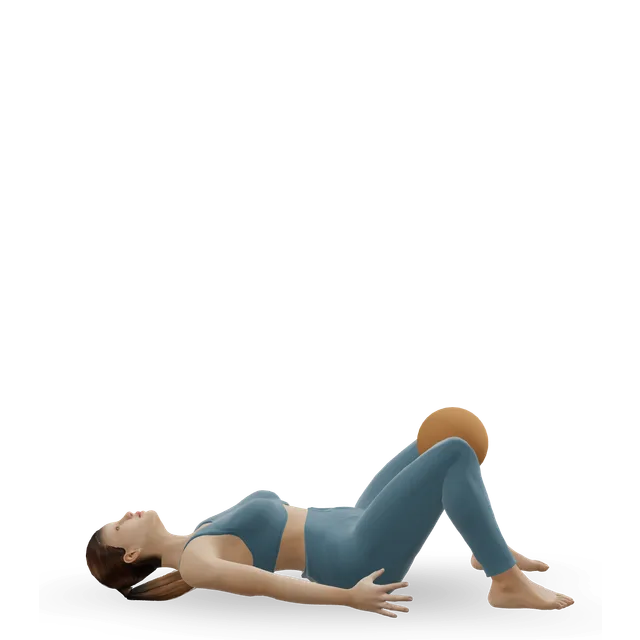
Lying adductor ball squeeze demonstrated on the 3D figure3D demoLying adductor ball squeezeBeginner · Other / check instructions

5 to 10 holds of 5 to 10 s, at a firm effort that stays at 3 out of 10 or less · As in our groin strain guide (editorial)

Harder: Copenhagen plank

Glute bridge demonstrated on the 3D figure3D demoGlute bridgeBeginner · No equipment

2 to 3 sets of 10 · As in our hip impingement guide (editorial)

Easier: Pelvic tilt into bridge · Harder: Single-leg glute bridge

Standing march demonstrated on the 3D figure3D demoStanding marchBeginner · No equipment

10 each side, low knee, keeping front-of-hip pain at 3 out of 10 or less · As in our hip flexor and rowing machine hip guides (editorial)

Easier: Seated march · Harder: Standing band hip flexion

Dead bug heel taps demonstrated on the 3D figure3D demoDead bug heel tapsBeginner · No equipment

2 sets of 6 to 8 each side · As in our hip flexor and hip impingement guides (editorial)

Easier: Bent-knee fall-out · Harder: Forearm plank

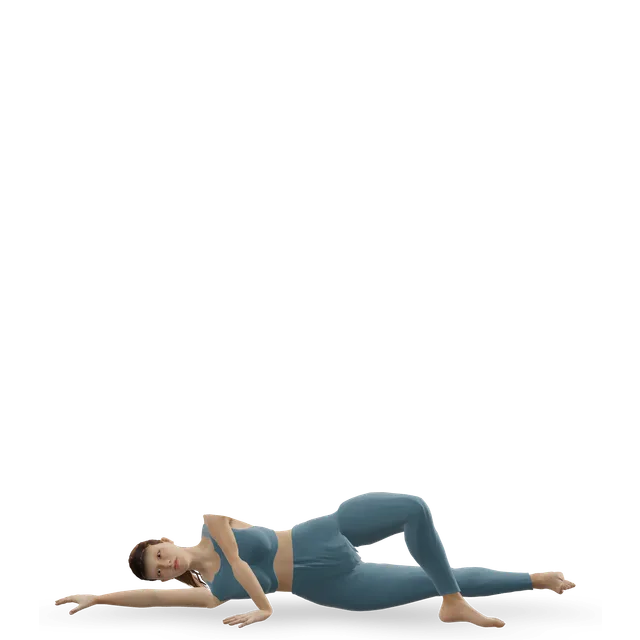
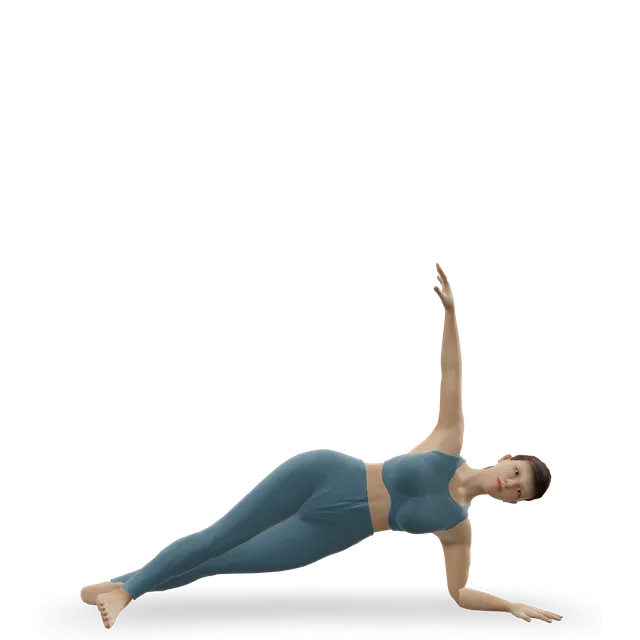
Knee side plank demonstrated on the 3D figure3D demoKnee side plankBeginner · No equipment

3 holds of 15 to 20 s each side · As in our groin strain guide (editorial)

Harder: Side plank

Hip windshield wipers demonstrated on the 3D figure3D demoHip windshield wipersBeginner · No equipment

10 slow passes side to side, 2 rounds (our editorial starting point). · The move page's dose. Stop before any pinch in the groin, as the move page says

Easier: Supine heel slide · Harder: 90/90 switch

Move on when: A firm squeeze is pain-free (our groin strain guide's check), and swimming without the breaststroke kick leaves the hip and groin no worse the next morning, for about a week (our suggestion, as in our knee pain when swimming guide).

Follow along: a timer, a cue and the next move, one step at a time.
Stage 2

Build: the inner thigh, the hip flexors and the outer hip under load

About weeks 2 to 6, strength 2 or 3 days a week: the inner thigh strength the kick's squeeze needs, hip flexor strength for kicking and turns, and side-hip control, while swimming builds with other strokes.

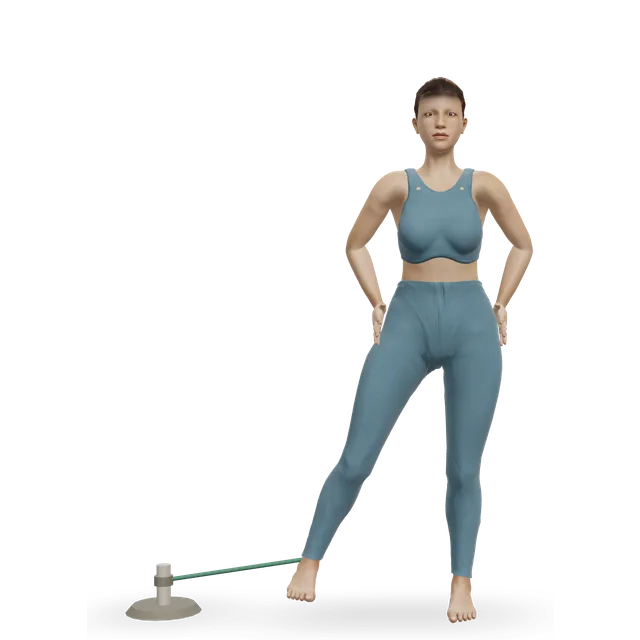
Standing band hip adduction demonstrated on the 3D figure3D demoStanding band hip adductionBeginner · A band + An anchor point

3 sets of 10 to 12 each side · As in our groin strain guide (editorial)

Easier: Lying adductor ball squeeze · Harder: Copenhagen plank

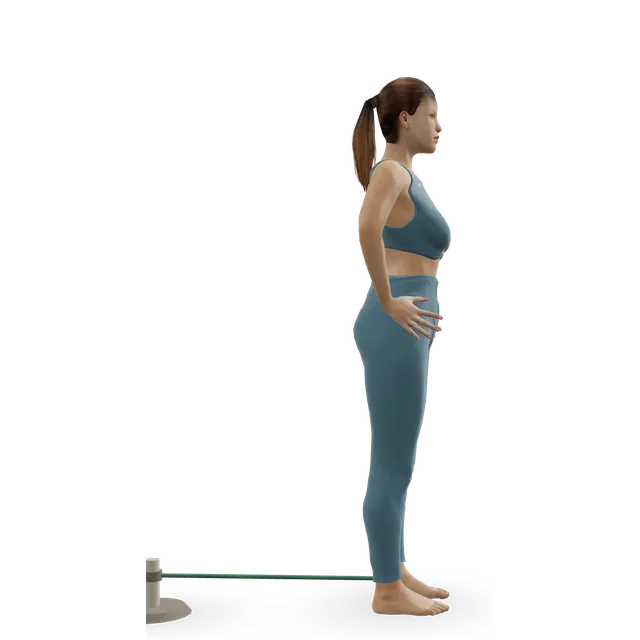
Standing band hip flexion demonstrated on the 3D figure3D demoStanding band hip flexionBeginner · A band + An anchor point

3 times a week, about 10 minutes: from a load you can lift 15 times to one you can lift 8 times over 6 weeks, within the pain rule · As in our treadmill and rowing machine hip guides, from a trial in healthy adults; for front-of-hip pain

Easier: Standing march · Harder: Captain's chair knee raise

Side-lying inner thigh lift (Pilates side kick series) demonstrated on the 3D figure3D demoSide-lying inner thigh lift (Pilates side kick series)Beginner · No equipment

10 to 12 each side. A suggested starting point. No trial has tested this move on its own. · The move page's dose. Start with a small lift with a groin strain, as the move page says

Easier: Side kick (Pilates side kick series) · Harder: Kneeling side kick (Pilates side kick kneeling)

Lateral band walk demonstrated on the 3D figure3D demoLateral band walkBeginner · A band

3 sets of 10 to 15 steps each way · As in our hip impingement guide (editorial)

Easier: Hip abduction machine · Harder: Lateral band walk, band at the feet

Split squat demonstrated on the 3D figure3D demoSplit squatIntermediate · No equipment

3 sets of 8 each side, to a depth within the pain rule · As in our groin strain guide (editorial)

Easier: Bodyweight squat · Harder: Reverse lunge

90/90 switch demonstrated on the 3D figure3D demo90/90 switchIntermediate · No equipment

10 slow switches, pause at the ends · The move page's dose. Hip rotation for breaststrokers; skip it if it pinches the groin or presses on a sore inner knee, as our knee pain when swimming guide says

Easier: Reclined figure four (eye of the needle, Sucirandhrasana) · Harder: 90/90 hip lift-off

Move on when: Squeezing and band hip lifts are strong and pain-free on both sides (our groin strain and hip flexor guides' checks), 30 to 45 minutes of front crawl or backstroke leaves the hip no worse the next morning, and one length of gentle breaststroke kick, holding a float, is pain-free (our suggestion, as in our knee pain when swimming guide).

Follow along: a timer, a cue and the next move, one step at a time.
Stage 3

Back to the breaststroke kick, kick sets and turns, and keep strong

From about week 6, then ongoing, strength twice a week: the end-range inner thigh strength of the kick's squeeze, single-leg strength for push-offs, and your usual swimming back by the written steps below, with fast breaststroke, kick sets, fins and flip turns last. No study has tested a return to swimming after hip or groin pain, so the order is editorial, following the breaststroker's knee advice.

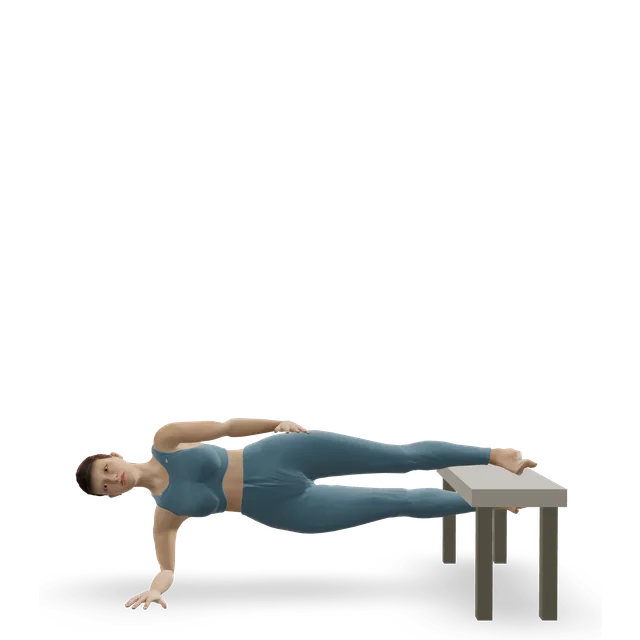
Copenhagen plank demonstrated on the 3D figure3D demoCopenhagen plankAdvanced · A bench or box

Short lever (the knee on the bench) first; small sets, 3 times a week, then once a week · As in our groin strain guide (editorial), following the trial programme's 3 times a week in pre-season and once a week in season. Not during acute groin pain; start with 3 to 5 slow reps a side, as the move page says

Easier: Hip adduction machine

Side plank with leg lift demonstrated on the 3D figure3D demoSide plank with leg liftAdvanced · No equipment

3 sets of 8 to 10 each side · As in our knee pain when swimming guide (editorial), once a side plank on your feet is steady

Easier: Side plank · Harder: Copenhagen plank

Single-leg Romanian deadlift demonstrated on the 3D figure3D demoSingle-leg Romanian deadliftAdvanced · A dumbbell

3 sets of 8 each leg, fingertips on a wall at first · As in our knee pain when swimming guide (editorial)

Easier: Dumbbell Romanian deadlift

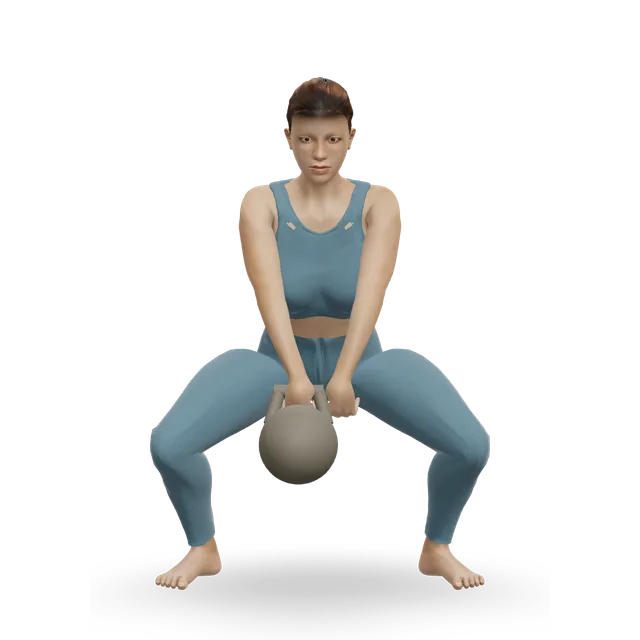
Dumbbell goblet squat demonstrated on the 3D figure3D demoDumbbell goblet squatIntermediate · A dumbbell

3 sets of 8 to 10, to a box set above pinch depth · As in our hip impingement guide (editorial); full depth comes back last

Easier: Bodyweight squat · Harder: Barbell front squat

Dead bug demonstrated on the 3D figure3D demoDead bugBeginner · No equipment

3 sets of 8 each side · As in our hip flexor guide (editorial): trunk control for a long streamline and the kick

Easier: Dead bug heel taps · Harder: Forearm plank

Move on when: Your usual swimming, with the breaststroke kick, kick sets and turns, passes the pain rule for 2 weeks. Keep two strength sessions a week, with the Copenhagen plank once a week, and if a session flares the groin, go back to the last session that was fine, not to none (editorial).

Follow along: a timer, a cue and the next move, one step at a time.

What to change for now

What to change in the pool today (written steps)

Our 3D figure can't show the strokes, the kick, the kit or the turns. These steps come from the breaststroke groin survey, the breaststroker's knee studies, Swim England's technique pages, lab studies of the kicks and turns, and our swimming and hip guides; where a step is our suggestion or our reading, it says so. None has been tested against hip pain.

  • 1. Cut the breaststroke kick first: swim front crawl or backstroke, or breaststroke arms with a pull buoy or a gentle flutter kick (our suggestion, following the knee studies' first step and the groin survey's link with breaststroke training). If squeezing a pull buoy hurts the inner thigh, drop it and keep the flutter kick small.
  • 2. Keep the flutter kick small and steady, legs close together and nearly straight, from the hips, as Swim England teaches; fewer, shorter kick sets with a board for now (our suggestion).
  • 3. Open turns instead of flip turns, and gentle push-offs, while the front of the hip or a groin pinch is sore (our suggestion: the tuck bends the hips and knees deeply and the push-off is forceful).
  • 4. Fewer fast dolphin kicks off the walls for now: faster underwater dolphin kicking worked the front of the thigh much harder in a lab study (our reading for the hip).
  • 5. Leave fins out for now (our suggestion; a return-to-swim protocol lists knee pain, not hip pain, among the reasons not to use them, and our knee pain when swimming guide leaves them out).
  • 6. When the breaststroke kick comes back: knees about hip-width apart, heels drawn to your bottom rather than knees to your chest, and both legs doing the same, as Swim England teaches; agree any change with a coach. A narrower kick is how better breaststrokers kick.
  • 7. Warm up for longer before any breaststroke, and build breaststroke distance back gradually, especially early in a season (our suggestion, from the breaststroker's knee advice); about 10% a week is our suggestion, as in our swimming guides.
  • 8. Water polo and artistic swimming: shorter blocks of eggbeater kicking while the hip settles (our suggestion; the rotating kick went with frequent hip pain in a small study).
  • 9. Dryland: deep squats, wide-stance or side lunges and heavy inner thigh machines wait until stage 3 (our suggestion); many swimming injuries start in the gym.
  • 10. Open water: a wetsuit that presses on the outside of the hip, or a long swim in cold water with a stiff kick, can add to outer hip or front-of-hip soreness (our suggestion; untested).
  • 11. Out of the pool: the NHS's hip pain advice is to keep moving without overdoing it, avoid low chairs and heavy carrying for now, and use ice and painkillers if you need them.

Sources 12, 8, 20, 21, 17, 49, 16, 38, 13, 25, 28, 50

How the swim comes back (written steps)

No trial has tested a return to swimming after hip or groin pain. The order follows the breaststroker's knee advice and our knee pain when swimming guide; the amounts are our suggestion.

  • 1. Front crawl, backstroke and breaststroke arms at about half your usual distance, with a small kick, open turns and no fins.
  • 2. Back to your usual distance in those strokes.
  • 3. The breaststroke kick in short drills, one length at a time, after a long, easy warm-up, holding a float or on your back.
  • 4. Breaststroke distance, about 10% a week, mixed with other strokes, before speed.
  • 5. Kick sets, fins, fast dolphin kicks off the walls and flip turns, one at a time.
  • 6. Race-pace breaststroke last. If the groin hurts during the kick, stop kicking breaststroke for that session and drop back a step; ask a coach to look at your kick if it keeps coming back.

Source 12

Positions to swap, and why

Habit or positionWhy it mattersInstead
Kicking breaststroke through groin or inner thigh painGroin injury rose with breaststroke training in one survey of competitive swimmers.Front crawl, backstroke or breaststroke arms with a small flutter kick, and squeezes on land.Try: Lying adductor ball squeeze
A wide, knees-to-chest breaststroke kickBetter breaststrokers kick narrower, and a wider hip swing didn't add push.Knees about hip-width apart, heels to your bottom.
Long kick sets with a board while the front of the hip is soreThe flutter and dolphin kicks are driven by the hip flexors (our reading for pain).Shorter sets and a small kick, with band hip lifts on land.Try: Standing band hip flexion
Fast dolphin kicks off every wallThey worked the front of the thigh much harder in a lab study.Glide off the wall with a small flutter kick for now.
Flip turns with a groin pinchThe tuck bends the hips deeply (our reading).Open turns and gentle push-offs.
Fins while the hip or groin is soreThey lengthen and load the kick (our suggestion).No fins until stage 3.
Stretching the groin or the front of the hip hard to loosen itDaily hip flexor stretching changed nothing in swimmers, and strengthening did better in groin pain.Squeezes and band work first.Try: Standing band hip adduction
Wide-stance squats, side lunges and heavy inner thigh machines in dryland while it's soreThey load the inner thigh at length (our suggestion).Split squats within the pain rule.Try: Split squat
Stopping all exercise until it stops hurtingActive training beat passive care, and staying active is recommended.Swim other strokes and do the stage 1 moves.Try: Glute bridge
A cold swim with no warm-up, straight into breaststrokeA short warm-up went with more breaststroke knee pain (our reading for the hip).A long, easy warm-up first.

Routines to follow

Dryland workout for swimmers

A 45-minute dryland session for swimmers: jumps for starts and turns, heavy pulls, leg strength and trunk work, twice a week alongside the pool.

45 minIntermediate14 movesA band, A bench or box

Swim workout for beginners: lengths, rests and a steady continuous swim

A 30 to 45-minute beginner pool swim: a shoulder warm-up on the side, easy lengths, a main set of repeats with rests, and an easy swim down, any stroke.

35 minBeginner5 movesOther / check instructions

Yoga for swimmers: a 25-minute dryland class for the upper back, shoulder blades and hips

A 25-minute dryland yoga class for swimmers: upper-back turns, shoulder-blade and trunk holds, hips for kicking and slow breathing, safe for loose shoulders.

25 minBeginner16 movesA wall

Shoulder-safe Pilates for swimmers: a 25-minute dryland class for shoulder blades, trunk and hips

A 25-minute dryland Pilates class for swimmers: shoulder-blade control, trunk endurance, back extension, hips and rotation, built for loose shoulders.

25 minBeginner16 movesA wall

Inner thigh workout: sumo squats, Cossack squats, squeezes and Copenhagen planks

A 25-minute inner thigh workout at home: sumo squats with a dumbbell or kettlebell, Cossack squats, ball squeezes and Copenhagen planks, with bridges and hip mobility.

25 minIntermediate10 movesA dumbbell, A kettlebell

Hip strengthening workout: bridges, side hips, single-leg control and balance

A 30-minute session for hips that don't currently hurt: bridges, side-hip work, step-ups and single-leg control, an optional harder block, then balance.

30 minBeginner13 movesA wall, A band

Yoga after a groin strain: a 25-minute class with squeezes, side planks and short stances, and no wide-legged stretching

A 25-minute yoga class after a groin strain: squeezes, bridges and side planks, then short-stance standing poses and side steps, with no wide-legged stretches.

25 minBeginner15 movesOther / check instructions, A wall

Stretch-and-strengthen Pilates for the hip flexors: a 25-minute class for the front and back of the hip

A 25-minute Pilates class for the hip flexors: pelvic control, hip flexor strength, the glutes and back of the hip, and a gentle pelvis-tucked stretch.

25 minBeginner16 movesA band, An anchor point

Pinch-free Pilates for a hip labral tear or impingement: a 25-minute class for hip strength in every direction

A 25-minute Pilates class for a hip labral tear or hip impingement: hip strength in every direction and trunk control, with every bend kept short of the pinch.

25 minBeginner18 movesOther / check instructions, A band

More moves for this area

Questions people ask

Why does my hip hurt when I swim?

Usually the muscles and tendons round the hip meeting more kicking, more breaststroke or more distance than they're used to. The inner thigh and groin point to the adductors and the breaststroke kick, the front of the hip to the hip flexors, and a deep pinch as your knees come up to the hip joint. Swim front crawl or backstroke with a small kick while it settles.

Why does my groin hurt after swimming breaststroke?

The breaststroke kick works the inner thigh muscles hard and sweeps the legs in and out fast. In one 2004 survey of competitive swimmers, read as its abstract, groin pain was commoner in breaststrokers and rose with breaststroke training. Cut the kick, then bring it back narrower and gradually.

Can swimming cause hip pain?

It can, though less often than shoulder or back pain: the hip and groin were about 5% to 6% of injuries in US college swimming. The kick, the turns and sudden jumps in distance are the usual triggers, in our reading.

Is swimming good for hip pain?

For most sore hips, yes: water exercise helped hip and knee arthritis a little and safely, and lap swimming eased arthritis pain as much as cycling. If one stroke hurts, change the stroke or the kick rather than stopping.

Which stroke is best for a sore hip?

Front crawl or backstroke with a small, steady kick, or breaststroke arms with a pull buoy, usually suit a sore groin best (our suggestion). Breaststroke's kick loads the inner thigh, and backstroke arches the lower back least.

How should I kick breaststroke to protect my hips?

Swim England teaches knees just a little over hip-width apart and drawing your heels to your bottom rather than your knees to your chest. Better breaststrokers kick narrower, but no trial has tested a kick change against pain, so agree it with a coach.

Why does the front of my hip hurt after kick sets?

The flutter and dolphin kicks are driven by the hip flexors, and faster dolphin kicking worked the front of the thigh much harder in a lab study; that kick sets cause the pain is our reading. Shorten the kick sets, keep the kick small, and build hip flexor strength with band work.

Can flip turns hurt my hip?

The tuck bends the hips and knees deeply and the push-off is forceful, so a hip that pinches when bent deeply can flare (our reading). No study links turns to hip injury; open turns for a while are our suggestion.

Could it be hip impingement or a labral tear?

A deep pinch in the groin as your knees come up, sitting low or turning, with clicking or catching, points to the hip joint. Exercise comes first for at least 3 months, and the shapes on a scan are common in hips without pain.

Can I swim with a groin strain?

Usually yes, without the breaststroke kick: front crawl or backstroke with a small kick, within the pain rule. Athletes with a sudden adductor strain were pain-free in about 2 weeks and back to full training in about 3; a pop with a gap or a big bruise needs checking first.

How long will it take?

No one can promise a date. A small adductor strain often settles in a few weeks, long-standing groin pain took 8 to 12 weeks of training in a trial, and hip joint problems need at least 3 months of exercise.

When should I see a doctor?

Call 999 for severe hip pain after a slip on the poolside, a leg you can't put weight on, sudden hip, thigh or knee pain in a child or teenager, chest pain or breathlessness in the water, or a femoral hernia lump with severe tummy pain or being sick. Get an urgent GP appointment or NHS 111 for a hot, swollen hip with a fever, a child or teenager who is limping, or a painful hernia. See a GP for hip pain that isn't better after 2 weeks or a groin lump; in the US, call 911 where this page says 999.

Related exercise guides

Other pain guides

Sources

  1. Kerr 2015 · Injuries in US college swimming and diving, 2009 to 2014 (surveillance study, Br J Sports Med)
  2. Boltz 2021 · Injuries in US college men's swimming and diving, 2014 to 2019 (surveillance study, J Athl Train)
  3. Chandran 2021 · Injuries in US college women's swimming and diving, 2014 to 2019 (surveillance study, J Athl Train)
  4. Trikha 2022 · Injuries and return to sport in 641 US college swimmers (cohort study, Orthop J Sports Med)
  5. Atilla 2020 · Musculoskeletal injuries in 88 masters swimmers in Turkey (survey, Cureus)
  6. Li 2026 · Musculoskeletal injuries in 10,973 swimmers across 94 studies (systematic review and meta-analysis, J Sports Med Phys Fitness)
  7. Hill 2022 · Non-shoulder injuries in swimming (systematic review, Clin J Sport Med)
  8. Grote 2004 · Hip adductor injury in 296 competitive swimmers (survey, Am J Sports Med; read as its abstract)
  9. Guo 2026 · Leg muscle activity in the breaststroke kick in 30 national-level breaststrokers (randomised trial, Sensors)
  10. Hsu 2024 · Swimming anatomy and lower back injuries in competitive swimmers (narrative review, Sports Health)
  11. Keskinen 1980 · Breaststroke swimmer's knee (biomechanical and arthroscopic study, Am J Sports Med)
  12. Rovere 1985 · Breaststroker's knee in 36 competitive swimmers (case series, Am J Sports Med)
  13. Liu 2026 · Breaststroke technique and muscle activity in 26 elite and amateur teenage swimmers (lab study, Front Bioeng Biotechnol)
  14. Koga 2026 · Hip and ankle movement and the push of the feet in the breaststroke kick in 14 swimmers (lab study, Sports Biomech)
  15. Vizsolyi 1987 · Breaststroker's knee in 391 competitive swimmers (survey, Am J Sports Med)
  16. Swim England · Improving your breaststroke technique (2018)
  17. Yamakawa 2022 · Muscle activity in faster underwater dolphin kicks in 8 swimmers (lab study, Front Sports Act Living)
  18. Matsuda 2016 · Thigh muscle activity in the flutter kick in competitive and recreational swimmers (lab study, Hum Mov Sci)
  19. Kitamura 2020 · Lower back extension in the dolphin kick and psoas tightness in swimmers with low back pain (study, J Sport Rehabil)
  20. Swim England · Improving your front crawl technique (2018)
  21. Weimar 2019 · Push-off forces in the flip turn in 20 swimmers (lab study, Sports)
  22. Zhou 2023 · Hip and knee loads while swimming in 6 people with hip replacements and 5 with knee replacements (in vivo load study, J Bone Joint Surg Am)
  23. Weber 2020 · Return to sport after keyhole surgery for hip impingement in 39 US college athletes (case series, Orthop J Sports Med)
  24. Doran 2022 · Does the type of sport shape the hip? 58 studies (systematic review, Am J Sports Med)
  25. Langner 2020 · Hip shape on MRI in 20 water polo players and artistic swimmers (imaging study, J Hip Preserv Surg)
  26. Frank 2015 · Impingement shapes on scans of 2,114 hips without symptoms (systematic review, Arthroscopy)
  27. Griffin 2016 · The Warwick Agreement on femoroacetabular impingement syndrome (international consensus, Br J Sports Med)
  28. Wolf 2009 · Injury patterns in a US college swimming team over 5 seasons (injury records, Am J Sports Med)
  29. Kim 1987 · A stress fracture of the pubic bone in a swimmer (case report, Clin Nucl Med)
  30. NHS · Hernia
  31. NHS · Femoral hernia
  32. NHS · Hip pain in children (irritable hip)
  33. Weir 2015 · Doha agreement on terms and definitions in groin pain in athletes (consensus, BJSM)
  34. Serner 2020 · Return to sport after rehabilitation of acute adductor injuries in 81 male athletes (prospective cohort, OJSM)
  35. Hölmich 1999 · Active training for long-standing adductor-related groin pain in athletes (RCT of 68, Lancet)
  36. Kemp 2020 · Zurich 2018 consensus on physiotherapist-led treatment of hip-related pain (consensus, Br J Sports Med)
  37. Frank 2018 · Return to swimming after keyhole surgery for hip impingement in 26 swimmers (case series, Arthroscopy)
  38. Swim England · Mastering the breaststroke screw kick (2014)
  39. Hölmich 2011 · The same adductor training trial 8 to 12 years later (follow-up of a randomised trial, Am J Sports Med)
  40. Almeida 2013 · Conservative treatments for exercise-related groin pain: 2 trials, 122 people (Cochrane review)
  41. Ishøi 2016 · The Copenhagen adduction exercise and adductor strength in 24 young footballers (randomised trial, Scand J Med Sci Sports)
  42. Harøy 2019 · The Adductor Strengthening Programme prevents groin problems in male footballers (cluster RCT, BJSM)
  43. Thorborg 2016 · A band hip flexor training programme in healthy adults (RCT, Knee Surg Sports Traumatol Arthrosc)
  44. Özsönmez 2026 · Six weeks of chest, neck and hip flexor stretching in 30 masters swimmers (randomised trial, Sci Rep)
  45. Bartels 2016 · Aquatic exercise for knee and hip osteoarthritis (Cochrane review)
  46. Alkatan 2016 · Swimming or cycling for 12 weeks in 48 adults with osteoarthritis (randomised trial, J Rheumatol)
  47. Wareham 2026 · Spinal movement in three swimming strokes in 30 adults with long-lasting back pain (randomised crossover trial, Musculoskelet Sci Pract)
  48. NHS inform · Exercises for hip problems (including how to tell if you're exercising at the right level)
  49. Spigelman 2014 · A return to swimming protocol for competitive swimmers (clinical commentary with one case, Int J Sports Phys Ther)
  50. NHS · Hip pain in adults

Exercise education, not a diagnosis or treatment plan. It is written from the guidelines and studies listed above; review by a clinician is pending. If your pain follows an injury, is severe, is getting worse, or comes with any warning sign listed on this page, get it assessed. Health disclaimer.