Pain guide · Hip pain

Hip pain when doing hip thrusts: hip bones under the bar, a pinch at the front, the groin and swaps

Hip pain when you do hip thrusts often comes from the bar pressing on the bony points at the front of your pelvis, or from the top of the lift, where the front of the hip is stretched. A thick pad with the bar rolled into the crease of your hips, stopping at a straight line from shoulders to knees, and keeping your knees in line with your feet usually ease it. Where it hurts is the best clue: burning on the outer thigh points to a squeezed skin nerve, a deep pinch at the bottom to the hip joint, the inner thigh to the adductors, and the bony point on the side to the gluteal tendons. Hip thrusts aren't shown to be bad for your hips, but no study has measured the hip under the bar, so this guide says where each piece of advice comes from.

This guide starts with the signs that need help, from a 999 call for a fall with a leg you can't put weight on or numbness around your genitals or bottom, to a same-day check through the National Health Service's 111 line (NHS 111) or a general practitioner (GP) for a hot, swollen hip with a fever, a teenager's sudden pop at the hip bone or a painful lump in the groin. It then maps the causes by where it hurts, explains what the studies of the hip thrust, the front of the hip and hip impingement show, and don't, shows how to change your hip thrust today, and gives a three-stage plan with a 3D demo of every move, from the floor bridge back to the bar.

When to get help first

Exercise is for pain that has been checked or is clearly mild and settling.

Get urgent medical help if

  • Call 999 or go to A&E: severe hip pain after a fall or injury, or you cannot stand, walk or put weight on the leg. In an older adult this can be a broken hip; the leg may be at an odd angle or look shorter. Don't drive yourself.
  • Call 999 or go to A&E: tingling or loss of feeling in the hip or leg after an injury.
  • Ask for an urgent GP appointment or get help from NHS 111 if you have severe hip pain that started suddenly but you've not had a fall or injured your hip, your hip is swollen and feels hot, the skin around your hip has changed colour, or you have hip pain, feel generally unwell and have a high temperature (or feel hot, cold or shivery). A hot, swollen hip with a high temperature can be a joint infection.
  • Call 999 or go to A&E if your child gets sudden pain in their hip, knee or thigh (hip problems can sometimes be felt in the thigh or knee) or cannot put any weight on their leg. If your child is limping, ask for an urgent GP appointment or get help from NHS 111 the same day. This applies to teenagers too, and in some children knee pain is the only sign.
  • Same day: a teenager with sudden pain at the front or top of the hip bone after a heavy lift, sprint, kick or jump, often with a pop. A piece of growth plate can pull off the pelvis (an avulsion fracture), and it needs an X-ray the same day.
  • Call 999 or go to A&E: loss of feeling or numbness around the genitals or bottom, new trouble peeing or controlling your bladder or bowels, changes in genital sensation during sex or problems with erections or orgasm, or pain, tingling, weakness or numbness in both legs. These are signs of cauda equina syndrome, which needs treating in hospital urgently. Don't drive yourself.
  • Call 999 or go to A&E now if you have a femoral hernia (a small lump at the top of your thigh, in your groin) and very bad tummy pain, you feel sick or you're being sick, you cannot fart or poo, you have a high temperature or you feel hot, cold or shivery, or you've suddenly become confused. Do not drive to A&E. With any other hernia and pain in or around it, a bloated tummy, feeling or being sick, vomiting blood or vomit that looks like coffee grounds, constipation, a high temperature or feeling hot, cold or shivery, or sudden confusion, get help from NHS 111.
  • Go to A&E or call 999 for sudden, severe pain in a testicle, testicle pain with feeling or being sick or tummy pain, or testicle pain that has lasted more than an hour or continues at rest. It can be a twisted testicle (testicular torsion), which needs treating straight away. Don't drive yourself. For aching or discomfort in your testicles that you're worried about, a lump, swelling or a change in a testicle's size, shape or feel, ask for an urgent GP appointment or get help from NHS 111.
  • Same day: a pop near the sitting bone, a large bruise high on the back of the thigh, or you cannot put weight on the leg. The tendon may have pulled away from the bone, which needs assessing before you start these exercises.
  • Same day (GP or NHS 111): weakness in the leg, or numbness that is spreading quickly or getting worse. Meralgia never makes the leg weak, because the nerve it affects carries only feeling.
  • Same day (call NHS 111, or go to A&E if you feel very unwell): after a big or unusual session, such as hundreds of squats, sit-ups, back extensions or burpees, a challenge or a new class, muscle pain, swelling or weakness far worse than the session explains, and dark pee (red, brown, tea or cola coloured), sometimes starting hours or days later. Dark pee isn't always there, so muscles far sorer, more swollen or weaker than the session explains still need the same-day check. It can be rhabdomyolysis, a breakdown of muscle that can harm the kidneys.

See a doctor or physiotherapist if

  • Hip pain that stops normal activities or disturbs sleep, keeps getting worse or keeps coming back, or has not improved after 2 weeks of looking after it at home.
  • Stiffness lasting more than 30 minutes after waking.
  • Bone pain that is constant or worse at night, especially with a lump, unexplained weight loss, fever or tiredness, or a past history of cancer.
  • Painful catching or locking deep in the groin, or a hip that gives way: get it assessed.
  • Pain that has not improved after a good 3 months of exercise-based treatment: ask about a hip specialist.
  • A pop or sudden sharp pain at the front of the hip or top of the thigh during a lunge, kick or sprint, then a large bruise, a dent, or real weakness lifting your knee: get it assessed within days. Most hip flexor strains settle with rehab, but a torn or pulled-off tendon may need a scan to plan treatment (our suggestion).
  • Outer hip pain that hasn't improved within 6 weeks of following this advice, or that gets worse: talk to a GP or physiotherapist. In many areas you can refer yourself.
  • No improvement after 3 months of good rehabilitation, or sudden weakness walking (a tendon tear is possible).
  • Hip or groin pain that hasn't settled after 6 weeks, especially with a normal X-ray, or new hip pain if you take high-dose steroids, drink heavily, or have sickle cell disease or lupus: ask your GP about an MRI (magnetic resonance imaging) scan and a hip specialist. It can be avascular necrosis, which an X-ray can miss early on.
  • A lump in the groin, upper thigh or tummy, especially one that appears when you cough or strain and goes when you lie down: see a GP, as it may be a true hernia. A femoral hernia (a small lump at the top of the thigh, mainly in women over 50, though it can happen to anyone) needs treating in hospital.
  • Groin pain just above the crease that comes on when you brace, strain or cough under a heavy lift, with no lump: see a GP or sports physiotherapist, as it is often inguinal-related groin pain, and a lump that appears when you strain may be a hernia (our suggestion).
  • A pop high on the inner thigh, then a large bruise, a dent or a gap you can feel, or weakness squeezing your legs together: get it assessed within days. It can be a complete tear of an adductor tendon. In one small series, athletes recovered without surgery, but the tear should be confirmed by an examination or a scan before you load it (our suggestion).
  • Weakness, a knee that gives way, or trouble climbing stairs or getting up from a chair; numbness that spreads to the front or inside of the thigh, below the knee or into the foot; back pain with the thigh symptoms; or symptoms in both thighs. These point to a nerve in the back or another cause, so see a GP.
  • A burning, tingling or numb patch on the outer thigh after a knock near the bony point at the front of the hip: a skin nerve runs there, and our meralgia paresthetica guide covers it.
  • Pain, tingling or numbness spreading below the knee that isn't settling after a few weeks, is getting worse or stops your normal activities: see a GP.

Where does it hurt?

Location narrows the likely causes; it does not diagnose.

The bony points at the front of the pelvis, or just below them, under the bar or a machine belt, sometimes bruised

The bar pressing on bone and soft tissue: a common complaint, though no study counts it. A thick pad, the bar in the crease of your hips and a lighter bar usually help.

Burning, tingling or a numb patch you could draw round on the outer front of the thigh, after heavy sets or a tight belt, with no weakness

Possibly a squeezed skin nerve (meralgia paraesthetica). Tight belts and clothing are known causes; a link to the bar is our reading.

Read: Meralgia paresthetica →
A pinch or pull at the front of the hip at the top of the rep, easing if you stop lower

Often the hip flexors stretched at full extension, or the front of the joint (our reading of a model and the groin pain consensus). Stop at a straight line.

Read: Hip flexor pain →
A deep pinch in the groin crease at the bottom, worse with a wide stance or knees turned in, and in deep squats or low seats too

Possibly hip impingement or a labral tear. A shorter range and hip-width feet usually help.

Read: Hip impingement (FAI) →
Deep groin pain with clicking, catching or locking

Possibly a labral tear: get it assessed.

Read: Hip labral tear →
The inner thigh close to the groin, worse squeezing your knees together or a ball between them

Usually adductor-related groin pain. Leave out the squeeze for now.

Read: Groin strain →
Just above the groin crease when you brace or strain under a heavy bar, with no lump

Often inguinal-related groin pain, sometimes called a sports hernia.

Read: Sports hernia →
A lump in the groin or at the top of the thigh, bigger when you strain and smaller lying down

A possible hernia: read the warning signs first.

Read: Groin pain →
Right on the pubic bone at the front, often both sides

Possibly pubic-related groin pain (osteitis pubis).

Read: Osteitis pubis →
Over the pubic bone or the back of the pelvis in pregnancy or after a birth

Usually pelvic girdle pain, which has its own care. Ask your midwife.

Read: Pelvic girdle pain (SPD) →
Pelvic pain with bleeding, with periods or sex, or a heaviness low in the pelvis

Not a hip thrust problem: our groin pain in women guide sorts the pelvic causes.

Read: Groin pain in women →
The bony point on the side of the hip, sore to lie on, worse on stairs, crossing your legs or with your knees caving in

Usually the gluteal tendons (often called hip bursitis). Knees in line with your feet, and the outer hip trial's plan.

Read: Hip bursitis (gluteal tendinopathy) →
A gripping knot at the back of the thigh during a set, letting go within minutes

Hamstring cramp, common in bridges with the feet walked far out. Bring your feet closer.

Read: Leg cramps →
A deep ache at the sitting bone, or a pop there with bruising

The hamstring tendon: a pop with bruising needs a same-day check, as the warning signs say.

Read: High hamstring tendinopathy →
A knock or fall onto the rim of the hip bone, bruised and tender

A hip pointer, a bruised hip bone: a blow rather than the bar's steady pressure.

Read: Hip pointer →
A teenager with sudden pain at the front of the hip bone during a heavy lift, sprint or kick, often with a pop

A possible avulsion fracture: it needs an X-ray the same day.

Read: Hip pointer →
Across the lower back, or low on one side by the dimple

The back or the sacroiliac joint: our lower back hip thrust guide covers the top position and the bench.

Read: Back pain in hip thrusts →
Around or behind the kneecap, or the back of the knee

The knee: our knee hip thrust guide covers foot position and cramp.

Read: Knee pain in hip thrusts →
A deep groin ache from mid-life, stiff to get going

Often hip arthritis, for which exercise is a core treatment.

Read: Hip arthritis →

Understand it

What a hip thrust asks of the hip, and what no study has measuredEmerging evidence

With your upper back on a bench, a padded bar in the crease of your hips and your feet flat, you drive your hips up until your shoulders, hips and knees line up. In 19 trained men lifting 70% of their best, the hips moved about 75 degrees and the knees about 21. The hip muscles worked hardest early in the lift, with the hip bent about 83 degrees, and least as the hip approached full extension, and the pelvis and trunk moved very differently between lifters: some arched at the top and some didn't.

Across 12 studies, the glutes worked hardest, then the back extensors and hamstrings, and the rectus femoris, the hip flexor at the front of the thigh, least. Feet further forward raised hamstring activity, and in 7 personal trainers changing foot position and the direction of the push changed every leg muscle measured except the gluteus medius. In 11 sprinters, the load at the base of the spine and the hip peaked just after the lowering phase.

No study has measured how far the hip extends at lockout, the force on the front of the hip joint, adductor activity or the bar's pressure on the pelvis in a hip thrust, and no case report or injury survey names it. So the map on this page is built from what each cause is known to do.

Sources 1, 2, 3, 4, 5, 6, 7

The bar on the hip bones, and a squeezed skin nerveEmerging evidence

The bony points at the front of the pelvis sit right under a bar placed too high. Our hip thrust guide says roll the bar into the crease of your hips, not onto your hip bones, with a thick pad, and the move page says use a proper pad. Pain or bruising there is a common complaint in what people search for, but no study has measured it, with a bar or a machine belt, so the advice is coaching and our reading.

The skin nerve of the outer thigh passes the bony point at the front of the pelvis. Squeezing it (meralgia paraesthetica) causes burning, tingling or numbness on the outer front of the thigh, and has been linked to tight clothing, belts, uniforms and seat belts; 12 people with it from tight low-cut trousers all recovered with conservative care, and a review says most cases settle on their own, with normal strength and reflexes. No case from a hip thrust bar has been reported, so the link to the bar is our reading.

Sources 8, 9, 10

A pinch at the front of the hip at the topEmerging evidence

No study has measured the front of the hip in a hip thrust. In a computer model of hip exercises, the forward force on the front of the hip joint was greater with the hip extended than bent, and with the glutes weakened to 5% of normal it rose by an amount equal to about 19% of body weight, mostly because a hamstring took over. The authors say it is untested whether avoiding hip extension beyond neutral helps people with pain at the front of the hip.

The Doha consensus on groin pain in athletes says iliopsoas-related groin pain is more likely if there is pain on hip flexor stretching, which the top of a hip thrust does to the front of the hip. So a pinch at lockout fits the front of the hip being stretched and loaded; stopping at a straight line, driving with the glutes rather than the hamstrings and a small backward tilt of the pelvis are our reading of the model and the definitions, not tested treatments. A clinical review of bridging also advises not arching past a neutral lower back at the top.

Sources 11, 12, 13, 14

Hip impingement and the labrumStrong evidence

The Warwick agreement says hip impingement syndrome needs symptoms, examination signs and scan findings together. In an NHS trial of physiotherapy for it, people were encouraged to avoid extremes of hip bending, moving the leg out and turning it in. The bottom of a hip thrust bends the hip about 83 degrees and the top is extension, so impingement more likely shows at the bottom with a wide, turned-in stance than at lockout (our reading).

Impingement shapes and tears are common in hips that don't hurt: across 26 studies of 2,114 pain-free hips, a cam shape showed in 37%, and 54.8% in athletes; labral tears showed in 54% of pain-free people across studies and in 69% of 45 pain-free volunteers on MRI. So a scan finding alone doesn't explain hip thrust pain.

Sources 15, 16, 1, 17, 18, 19

The groin, the pubic bone and pregnancyEmerging evidence

The big adductor (adductor magnus) is also a hip extensor: in a model study of 15 people, it took high forces in hip extension exercises, though the hip thrust wasn't tested. Squeezing a ball between the knees in a bridge raised glute and tummy muscle activity in 14 women. The Doha consensus defines adductor-related groin pain by tenderness and pain when you squeeze against resistance, and pubic-related pain by tenderness on the pubic bone. So a squeeze cue or a band can bring on inner thigh pain (our reading).

Pubic bone pain in pregnancy is pelvic girdle pain, which the NHS describes over the pubic bone at the front in the centre, and treats with exercises for the pelvic floor, stomach, back and hip muscles.

Sources 13, 20, 21, 22

The outer hip and the back of the thighEmerging evidence

Gluteal tendon pain mostly starts in mid-life and affects women more: in 3,026 adults aged 50 to 79, 15.0% of women and 6.6% of men had it on one side. Positions that take the thigh across the body compress the tendons, such as sitting with your legs crossed; in a hip thrust the equivalent is the knees caving in (our reading). It is diagnosed by examination, usually without a scan.

Feet walked far out shift work to the hamstrings: in 26 adults doing single-leg bridges, bending the knee to 135 degrees rather than 90 cut hamstring activity from about 75% to 23% of a maximal contraction with glute work much the same, and the authors note reports of hamstring cramping in the standard bridge.

Sources 23, 24, 25, 26

How common hip injuries are in liftingEmerging evidence

Across powerlifting studies, the hip and groin made up between 1.7% and 15.5% of injuries. In Swedish powerlifters the hip was among the three commonest injured areas, while in 245 competitive powerlifters the shoulder, lower back and knee were commonest. In one US hospital system, 83 of 982 CrossFit-related injuries (8.5%) were in the hip or groin, a third of them impingement syndrome, and the movements people recalled were deep squats, running, deadlifts and lunges, not hip thrusts.

Sources 7, 27, 28, 6

When a scan or test mattersStrong evidence

Not usually at first. The NHS starts with looking after it at home and a GP if it hasn't improved after 2 weeks, with a specialist who may do a scan. When imaging is needed, the Zurich consensus makes plain X-rays the first choice, with MRI only for more detail, because findings are common in pain-free hips.

A test matters for a fall or a leg you can't stand on, a teenager's sudden pop at the hip bone (an X-ray the same day), a hot, swollen hip with a fever, deep catching or locking, a lump in the groin, numbness spreading beyond the outer thigh or weakness, and pain that hasn't settled after 6 weeks with risk factors for a loss of blood supply to the hip.

Sources 29, 30, 17, 18

How it usually goesMixed evidence

No study follows hip pain from hip thrusts. NHS inform says new hip pain or a flare-up should begin to settle within 6 weeks in many cases. Pressure from the bar usually settles within days once the pad and bar position change (our reading). A squeezed thigh nerve mostly settles once the pressure is off, though a few people keep symptoms.

In the outer hip trial, 51 of 66 people had improved by 8 weeks with education and exercise, against 20 of 68 waiting and seeing. Hip-related pain often needs at least 3 months of exercise, and iliopsoas-related groin pain mostly settles with conservative care. No one can promise a date.

Sources 31, 10, 32, 33, 34

What helps, and how strong the evidence is

The pad, the top position and your feet: coaching and lab studiesEmerging evidence

No trial has tested any change to the hip thrust for hip pain. The hip muscles do least near lockout, and in a model the front of the hip is loaded most in extension; feet walked far out raise hamstring work and cramp; knees caving in compress the outer hip tendons. So a thick pad with the bar in the hip crease, stopping at a straight line with the ribs down, shins about vertical at the top and knees in line with your feet are our reading of these studies and our hip thrust guide, not tested treatments.

Sources 1, 11, 2, 26, 23

Hip-related pain: exercise first, for at least 3 monthsStrong evidence

The Zurich consensus recommends exercise-based treatment for at least 3 months, and staying active, sport included. In two NHS trials of hip impingement syndrome, physiotherapist-led care helped, and surgery helped somewhat more in people already referred to surgeons: 6.8 points on a 100-point hip score at 12 months in 348 people, and 10.0 points on another at 8 months in 222 people. The second trial was corrected in 2021 for two secondary results; its main result is unchanged.

Sources 33, 35, 16

Outer hip pain: education and exercise beat an injectionStrong evidence

In 204 people with gluteal tendon pain, 14 physiotherapy sessions over 8 weeks with daily home exercise and advice on loading succeeded in 51 of 66 at 8 weeks, against 38 of 65 after a steroid injection and 20 of 68 with wait and see, and stayed best at a year (51 of 65, 36 of 63 and 31 of 60).

Source 32

Groin pain: active strengtheningStrong evidence

In 68 athletes with long-standing adductor groin pain, active training returned 23 to sport without groin pain against 4 with passive treatment. A Copenhagen adduction programme cut groin problems by 41% in 652 male footballers, which is prevention in footballers, not treatment in lifters. Iliopsoas-related groin pain succeeded with conservative care in 77% to 100% across low-quality studies.

Sources 36, 37, 34

Swaps that keep the glutes workingEmerging evidence

In a model study of 14 footballers, loaded split squats, single-leg Romanian deadlifts and single-leg hip thrusts put the most force through the gluteus maximus, and in most exercises glute force peaked where the muscle was longest, low in the movement. So the cable pull-through, single-leg bridges and Romanian deadlifts keep the glutes working while the bar is off your pelvis (our reading).

Sources 38, 1

How much pain is OK while you exercise?

Up to about 5 out of 10, no worse that night or the next morningEmerging evidence

This guide uses the hip hub's rule, as our other hip movement guides do. During the exercise, pain up to about 5 out of 10 is acceptable. It should settle within an hour or so, and your hip should be no worse that night or the next morning. If it is, do less next time (fewer repetitions, a smaller range, a lighter load), not nothing. Pain can go up a little when you start a new exercise programme; guidelines for arthritis say so and still recommend keeping going. If pain climbs week after week, or a warning sign appears, stop and get it checked. In long-lasting pain, exercise into some pain did no worse than pain-free exercise (7 trials, 385 people).

For hip thrusts (our suggestion, built on the same rule): judge each set by its last reps, and use the step of the ladder (the floor bridge, single-leg bridges, the pull-through, a loaded floor bridge, then the hip thrust), the height at the top and the load where those reps stay at 5 out of 10 or less and your hip is no worse that night or the next morning. Pressure from the bar on your hip bones isn't a reason to push through: change the pad, the bar's place or the exercise.

Three things aren't pain-rule questions: burning or numbness on the outer thigh (take the pressure off; see the warning signs for weakness), deep catching or locking in the groin, and a lump in the groin.

Source 39

The exercise plan: 3 stages

Start at the first stage. Each move opens a full guide with a 3D demo.

Stage 1

Take the bar off, keep the glutes working

About the first 2 weeks: glute, outer hip, inner thigh and hip flexor work with nothing pressing on your pelvis and short of any pinch. No barbell hip thrusts or machine belts for now. With a diagnosed condition (impingement or a labral tear, gluteal tendon pain, a groin strain, a squeezed thigh nerve, pelvic girdle pain, a hernia), that guide's plan comes first.

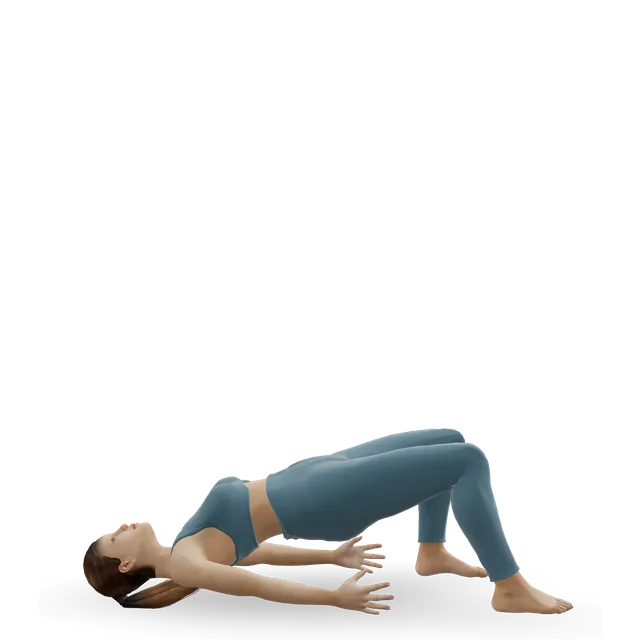
Glute bridge demonstrated on the 3D figure3D demoGlute bridgeBeginner · No equipment

2 to 3 sets of 10, lifting only to a straight line from shoulders to knees, or less if the front of the hip pinches · As in our hip impingement guide (editorial)

Easier: Pelvic tilt into bridge · Harder: Single-leg glute bridge

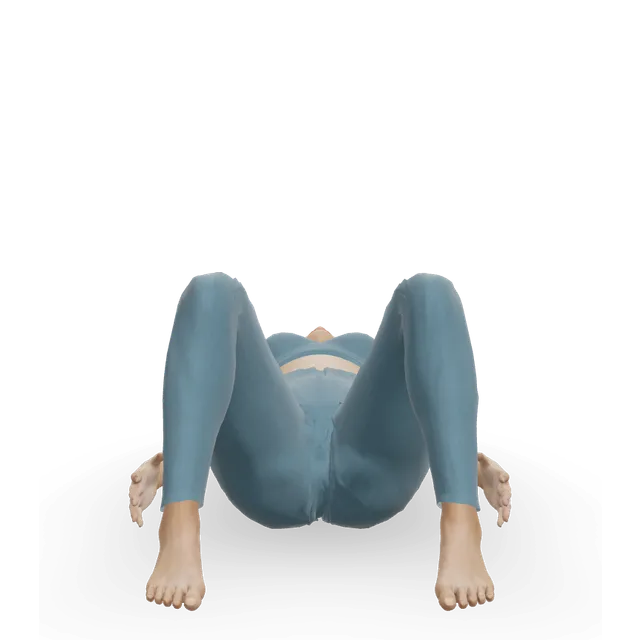
Staggered-stance bridge (offset bridge) demonstrated on the 3D figure3D demoStaggered-stance bridge (offset bridge)Beginner · No equipment

5 slow repetitions each side once a day, building to 2 sets of 5 to 10 at a somewhat hard effort, as in the LEAP trial programme. · The move page's dose. Its caution says check the knees are not drifting inward

Easier: Pelvic tilt into bridge · Harder: Single-leg glute bridge

Supine isometric hip abduction (belt press) demonstrated on the 3D figure3D demoSupine isometric hip abduction (belt press)Beginner · A band

3 to 5 holds of 5 to 10 seconds, twice a day, at a light effort: the starting dose in the LEAP trial programme. · The move page's dose. For outer hip pain; lie on your back, not your side

Harder: Lateral band walk

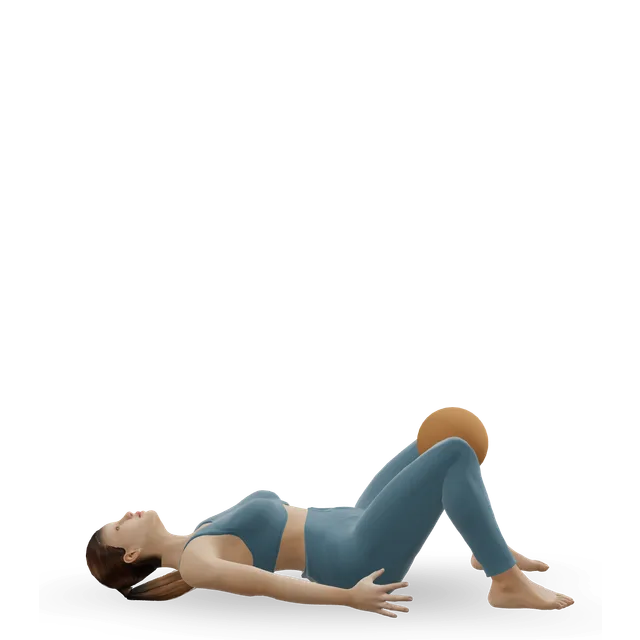
Lying adductor ball squeeze demonstrated on the 3D figure3D demoLying adductor ball squeezeBeginner · Other / check instructions

5 holds of 5 to 10 s · As in our hip impingement guide (editorial). For inner thigh pain only if it stays within the rule; leave it out if it brings on outer hip pain (our suggestion)

Harder: Copenhagen plank

Dead bug heel taps demonstrated on the 3D figure3D demoDead bug heel tapsBeginner · No equipment

2 sets of 6 to 8 each side · As in our hip flexor and back pain guides (editorial): the hip flexors working gently

Easier: Bent-knee fall-out · Harder: Forearm plank

Treadmill walking demonstrated on the 3D figure3D demoTreadmill walkingBeginner · Cardio machine

10 to 20 minutes, most days · Editorial; the NHS says keep moving if you can, but try not to overdo things

Harder: Treadmill jogging

Move on when: Bridges to a straight line pass the pain rule without a pinch, walking is comfortable, and your hip is no worse the next morning (editorial).

Follow along: a timer, a cue and the next move, one step at a time.
Stage 2

Hinge and bridge without the bar

About weeks 2 to 6, 2 or 3 sessions a week: heavier glute work with nothing on your pelvis, single-leg control, and the outer hip and groin loaded step by step.

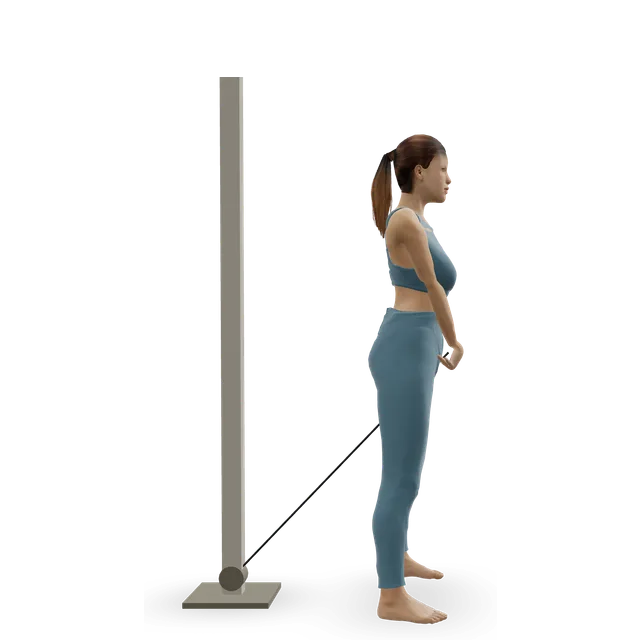
Wide-stance cable pull-through demonstrated on the 3D figure3D demoWide-stance cable pull-throughBeginner · A cable machine

2 to 3 sets of 8 to 12, stopping with 2 or 3 reps in reserve (our editorial starting point). · The move page's dose. A glute lift with no weight on your pelvis

Easier: Cable pull-through · Harder: Clean pull

Single-leg glute bridge demonstrated on the 3D figure3D demoSingle-leg glute bridgeIntermediate · No equipment

3 sets of 8 to 12 each side with a 2 s hold, pelvis level · As in our lower back and knee hip thrust guides (editorial). If the hamstring cramps, bring the working foot closer in, as the move page says

Easier: Glute bridge · Harder: Barbell hip thrust

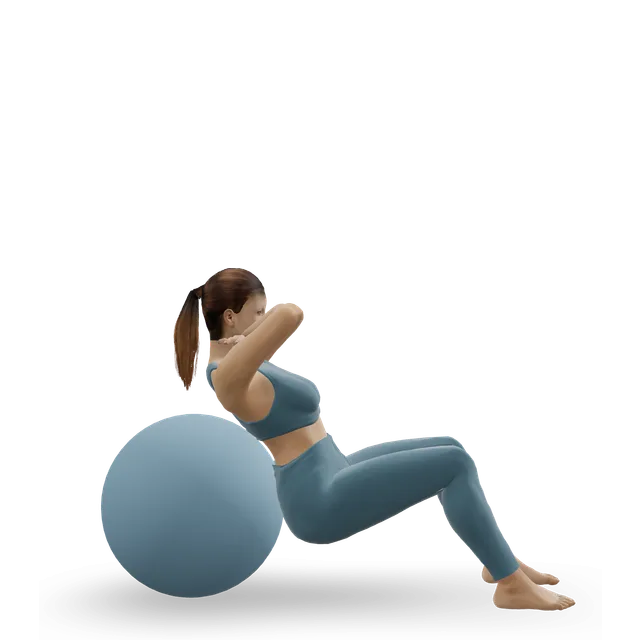
Stability ball hip bridge demonstrated on the 3D figure3D demoStability ball hip bridgeBeginner · Exercise ball

2 to 3 sets of 8 to 12, stopping with 2 or 3 reps in reserve (our editorial starting point). · The move page's dose: the hip thrust's shape with your body weight

Easier: Glute bridge · Harder: Single-leg glute bridge

Dumbbell Romanian deadlift demonstrated on the 3D figure3D demoDumbbell Romanian deadliftIntermediate · A dumbbell

3 sets of 8 to 10 · As in our hip impingement guide (editorial)

Easier: Hip-hinge practice · Harder: Single-leg Romanian deadlift

Lateral band walk demonstrated on the 3D figure3D demoLateral band walkBeginner · A band

3 sets of 10 to 15 steps each way · As in our hip impingement guide (editorial). For outer hip pain, keep the band above your knees and the steps short

Easier: Hip abduction machine · Harder: Lateral band walk, band at the feet

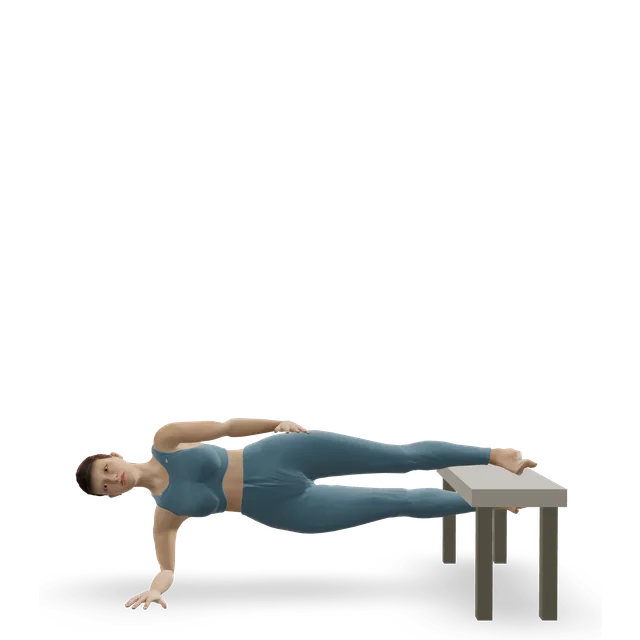
Side plank demonstrated on the 3D figure3D demoSide plankIntermediate · No equipment

3 holds of 20 to 30 s each side, from the knees first · As in our hip impingement guide (editorial)

Easier: Knee side plank · Harder: Side plank with leg lift

Move on when: 3 sets of 12 pull-throughs and 3 sets of 8 single-leg bridges pass the pain rule without a pinch, and your hip is no worse the next morning, for a week (editorial).

Follow along: a timer, a cue and the next move, one step at a time.
Stage 3

Back to the bar

From about week 6, often later, 2 or 3 sessions a week: the loaded floor bridge, then the barbell hip thrust, by the written steps below, one change at a time, with adductor and single-leg strength alongside. No study has tested a return to hip thrusts after hip pain, so the order is editorial.

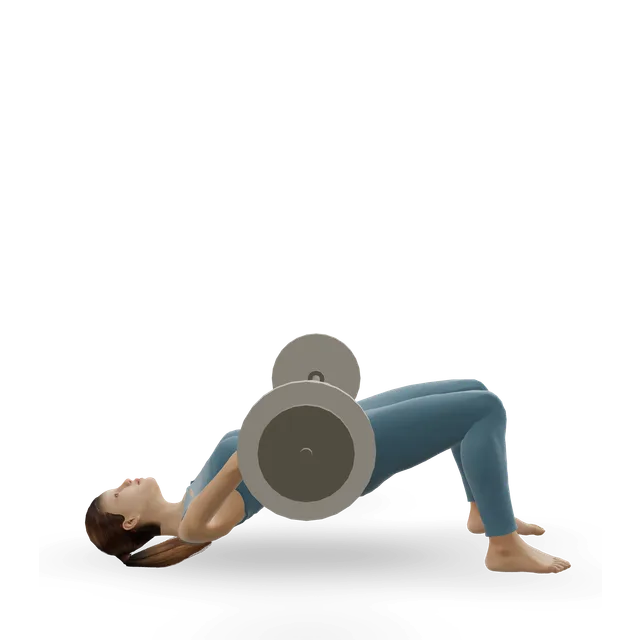
Barbell glute bridge demonstrated on the 3D figure3D demoBarbell glute bridgeIntermediate · A barbell

3 sets of 8 to 12 with a light bar and a thick pad · As in our lower back and knee hip thrust guides (editorial): a shorter range than the bench version

Easier: Glute bridge · Harder: Barbell back squat

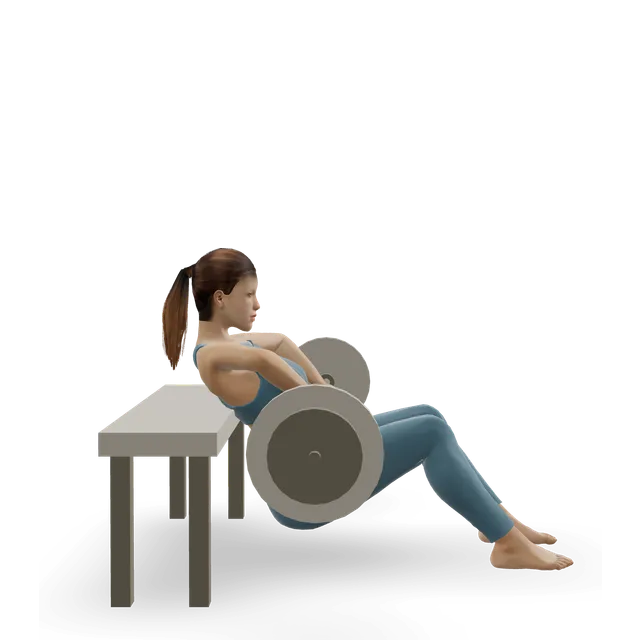
Barbell hip thrust demonstrated on the 3D figure3D demoBarbell hip thrustIntermediate · A barbell + A bench or box

2 sets, stopping with 3 or 4 reps to spare, for the first 2 weeks; then 3 sets of 6 to 10, adding the smallest weight step when every set reaches 10 · As in our lower back hip thrust guide (editorial). Start at about half your old working weight, with a thick pad in the hip crease

Easier: Glute bridge · Harder: Barbell back squat

Copenhagen plank demonstrated on the 3D figure3D demoCopenhagen plankAdvanced · A bench or box

Short lever (knee on the bench), 3 to 5 slow reps a side, building over weeks · Editorial, from the move page's caution, which says avoid it during acute groin pain. Only for groin pain that has settled

Easier: Hip adduction machine

Single-leg Romanian deadlift demonstrated on the 3D figure3D demoSingle-leg Romanian deadliftAdvanced · A dumbbell

3 sets of 6 to 8 each side · As in our hip impingement guide (editorial)

Easier: Dumbbell Romanian deadlift

Step-up demonstrated on the 3D figure3D demoStep-upBeginner · A step

3 sets of 8 each side · As in our hip impingement guide (editorial)

Easier: Low step-up · Harder: Dumbbell step-up

Wide-stance cable pull-through demonstrated on the 3D figure3D demoWide-stance cable pull-throughBeginner · A cable machine

2 to 3 sets of 8 to 12, stopping with 2 or 3 reps in reserve (our editorial starting point). · The move page's dose, kept as the swap on days your pelvis is sore

Easier: Cable pull-through · Harder: Clean pull

Move on when: Your usual hip thrust sessions pass the pain rule for 2 weeks. Keep a hinge and a bridge or thrust twice a week, and if it flares after a big session, go back a stage for a few days, not to nothing (editorial).

Follow along: a timer, a cue and the next move, one step at a time.

What to change for now

Your hip thrust for now (written steps)

Our 3D figure can't show the pad, where the bar sits or how high you go. These steps come from our hip thrust guide and move page and the studies above; where a step is our reading, it says so. No trial has tested a change to the hip thrust for hip pain.

  • 1. A thick pad or a folded mat around the bar, rolled over your thighs into the crease of your hips, below the bony points at the front of your pelvis; load and unload with your hips on the floor (our hip thrust guide and move page).
  • 2. The bench against a wall, its edge just below your shoulder blades (our hip thrust guide).
  • 3. Feet flat, about hip-width, placed so your shins are about vertical at the top; if the back of your thigh cramps, bring them closer (our hip thrust and knee hip thrust guides).
  • 4. Drive through your heels to a straight line from shoulders to knees, ribs down, chin tucked, with a small backward tilt of the pelvis; pause, and don't push higher (our hip thrust guide; pushing higher adds little glute work and, in a model, more load on the front of the hip).
  • 5. Knees in line with your feet: no caving in, and no ball or band squeeze while the inner thigh is sore (our reading).
  • 6. Lower under control, with a lighter bar, 2 or 3 reps short of failure, and no maximal attempts for now (editorial).
  • 7. If the front of the hip pinches at the top, stop lower or use the floor bridge; if it pinches at the bottom, narrow your stance and shorten the range (our reading).

Sources 1, 11, 2, 26, 23, 13, 16, 14

Machines, belts, clothing, pregnancy and everyday life (written steps)

Our suggestions unless a source is named.

  • 1. On a hip thrust machine, pad the belt and keep it in the hip crease; if it still presses on your hip bones, use single-leg bridges or the pull-through for a while.
  • 2. While your outer thigh burns or tingles, loosen tight belts, low-cut trousers and tool belts: tight clothing and belts are known causes of a squeezed thigh nerve.
  • 3. Keep moving: the NHS says it's best to keep moving if you can, but try not to overdo things.
  • 4. With outer hip pain, don't cross your legs when you sit, and put a pillow between your knees in bed (our outer hip guide; crossing the legs compresses the tendons).
  • 5. In pregnancy, pubic or pelvic pain is usually pelvic girdle pain, which has its own care: ask your midwife. After the first trimester, keep time flat on your back to a few minutes, as the bridge move pages say.

Sources 8, 9, 29, 22, 24

Positions to swap, and why

Habit or positionWhy it mattersInstead
The bar on your hip bones, or a thin padIt presses on the bony points and the skin nerve beside them (our reading).A thick pad with the bar in the hip crease, or the cable pull-through for now.Try: Wide-stance cable pull-through
A machine belt pressing on the hip bonesThe same pressure (our reading).Pad the belt, or single-leg bridges for a while.Try: Single-leg glute bridge
Pushing for extra height at the topLittle extra glute work near lockout, and in a model more force on the front of the hip.Stop at a straight line with your ribs down.Try: Glute bridge
Feet walked far outMore hamstring work and cramp; in a model, hamstring-led extension raised the force on the front of the hip.Shins about vertical at the top.Try: Staggered-stance bridge (offset bridge)
Knees caving inTaking the thigh across compresses the outer hip tendons.Knees in line with your feet; the belt press for outer hip pain.Try: Supine isometric hip abduction (belt press)
A ball squeeze or band while your inner thigh hurtsIt loads the adductors (our reading).Leave it out for now; Copenhagen work later.Try: Copenhagen plank
A wide stance with the knees turned in and a deep bottom, with a pinch in the groinIt is close to the positions people with impingement were told to avoid in a trial.Hip-width feet and a shorter range, such as the floor bridge with a bar.Try: Barbell glute bridge
Heavy hip thrusts while it's soreLoad climbs faster than the sore hip adapts (editorial).Body-weight bridges on a ball, then half your old working weight.Try: Stability ball hip bridge
Stretching hard into a pinch at the front of the hipStretching into a pinch doesn't change a bone shape, as our hip impingement guide says.Strengthen first, gently.Try: Dead bug heel taps
Pushing through burning or numbness on the outer thighA squeezed nerve settles once the pressure is off.Take the bar off for now.Try: Wide-stance cable pull-through
Resting the hip completelyThe NHS says keep moving if you can.The stage 1 moves.Try: Glute bridge

Routines to follow

More moves for this area

Questions people ask

Why do hip thrusts hurt my hip bones?

Usually the bar is pressing on the bony points at the front of your pelvis. Use a thick pad and roll the bar into the crease of your hips, below those points; if it still hurts, swap to cable pull-throughs or single-leg bridges for a while. No study has measured it, so this is coaching advice.

Why does the front of my hip pinch at the top of a hip thrust?

At the top, the front of the hip is stretched, and a computer model suggests it is loaded most there; no study has measured it in a hip thrust. Pushing higher than a straight line adds little glute work. Stop at a straight line with your ribs down, keep your feet from going too far out, and see our hip flexor guide if it lingers.

Are hip thrusts bad for your hips?

No study shows that: no injury survey names the hip thrust, and bridges are used in hip rehabilitation. Change the pad, the height and the load rather than stopping.

Can I do hip thrusts with hip impingement?

Usually, yes: the positions that usually pinch are deep bending with the knees turned in, not the top of a hip thrust. Use hip-width feet and a range that doesn't pinch. At least 3 months of exercise is the first treatment.

Why does my outer thigh go numb or burn after hip thrusts?

A skin nerve runs past the bony point at the front of your pelvis, and pressure there from tight belts or clothing can squeeze it; a bar may do the same, though no case has been reported. Take the pressure off, and most cases settle. Weakness isn't part of it: see the warning signs.

Why does my groin hurt during hip thrusts?

The inner thigh, worse squeezing your knees together, points to the adductors; the front of the hip at the top, to the hip flexors; a lump, to a hernia. Leave out the squeeze for now, and see the warning signs for a lump.

Why does the side of my hip hurt?

Often the gluteal tendons, especially if your knees cave in or you cross your legs. Keep your knees in line with your feet; education and exercise did better than a steroid injection in a trial, and our hip bursitis guide has the plan.

What can I do instead of hip thrusts?

Cable pull-throughs, single-leg bridges, a stability ball bridge and Romanian deadlifts work the glutes with nothing pressing on your pelvis. In a model study, single-leg hip thrusts, split squats and single-leg Romanian deadlifts put the most force through the gluteus maximus.

Can I do hip thrusts in pregnancy?

Pubic or pelvic pain in pregnancy is usually pelvic girdle pain, which has its own care, so ask your midwife. After the first trimester, keep time flat on your back to a few minutes, as our bridge pages say.

Do I need a scan?

Not usually: scans often show impingement shapes and labral tears in hips that don't hurt. When imaging is needed, an X-ray comes first.

How long will it take, and when should I see a doctor?

NHS inform says new hip pain should begin to settle within 6 weeks in many cases, though no one can promise a date. Call 999 if you can't put weight on the leg after a fall; get same-day help for a hot, swollen hip with a fever or a teenager's sudden pop at the hip bone; see a GP if it isn't better after 2 weeks. In the US, call 911 where this page says 999.

Related exercise guides

Other pain guides

Sources

  1. Brazil 2021 · A biomechanical analysis of the barbell hip thrust (lab study, 19 trained men, PLoS One)
  2. Neto 2019 · The barbell hip thrust: muscle activity and performance (systematic review of 12 studies, J Sports Sci Med)
  3. Contreras 2015 · Glute, hamstring and thigh activity in the hip thrust against the back squat (EMG study, 13 women, J Appl Biomech)
  4. Collazo García 2020 · Leg muscle activity in hip thrust variations (EMG study, 7 trainers, J Strength Cond Res)
  5. Otsuka 2021 · Lower back and leg joint loads in the hip thrust, deadlift and back squat (lab study, 11 sprinters, PLoS One)
  6. Everhart 2020 · CrossFit-related hip and groin injuries (case series, J Hip Preserv Surg)
  7. Tung 2024 · Injuries in weightlifting and powerlifting (updated systematic review, BMJ Open Sport Exerc Med)
  8. Cheatham 2013 · Meralgia paresthetica (literature review, Int J Sports Phys Ther)
  9. Moucharafieh 2008 · Meralgia paresthetica from tight low-cut trousers (case series of 12, Int J Surg)
  10. Chalk 2024 · Meralgia paresthetica (review chapter, Handbook of Clinical Neurology)
  11. Lewis 2007 · Force on the front of the hip joint with hip extension and weaker glutes (computer model, J Biomech)
  12. Lewis 2009 · Hip joint forces in hip strengthening exercises (computer model, Clinical Biomechanics)
  13. Weir 2015 · Doha agreement on terminology and definitions in groin pain in athletes (consensus, BJSM)
  14. Colonna 2025 · The supine bridge in hip disorders (clinical review, part III, Cureus)
  15. Griffin 2016 · The Warwick Agreement on femoroacetabular impingement syndrome (international consensus, BJSM)
  16. Palmer 2019 · Hip arthroscopy against physiotherapy for hip impingement: FAIT (RCT, 222 people, BMJ; corrected 2021, primary result unchanged)
  17. Frank 2015 · Hip impingement shapes in people without hip pain (systematic review, 2,114 hips, Arthroscopy)
  18. Heerey 2018 · Hip joint findings on scans in people with and without pain (systematic review and meta-analysis, BJSM)
  19. Register 2012 · Hip MRI findings in 45 people without hip pain (blinded study, Am J Sports Med)
  20. Collings 2026 · Hip adductor muscle forces during strength and rehabilitation exercises (model study, 15 people, Med Sci Sports Exerc)
  21. Jang 2013 · A bridge with a knee squeeze and abdominal and hip muscle activity (EMG study, 14 women, J Phys Ther Sci)
  22. NHS · Pelvic pain in pregnancy (past its review date: reviewed December 2022, review due December 2025)
  23. Grimaldi 2015 · Gluteal tendinopathy: mechanisms, assessment and management (review, Sports Medicine)
  24. Grimaldi 2024 · Tendinopathies of the hip: current and future advances (review, Rheumatol Adv Pract)
  25. Segal 2007 · Greater trochanteric pain syndrome in 3,026 adults aged 50 to 79 (cross-sectional study, Arch Phys Med Rehabil)
  26. Lehecka 2017 · Hip muscle activity in modified single-leg bridges (EMG study, 26 adults, Int J Sports Phys Ther)
  27. Strömbäck 2018 · Injuries in Swedish powerlifters (cross-sectional survey, Orthop J Sports Med)
  28. Siewe 2011 · Injuries and overuse problems in 245 powerlifters (questionnaire, Int J Sports Med)
  29. NHS · Hip pain in adults
  30. Reiman 2020 · Zurich 2018 consensus on classifying and diagnosing hip-related pain (BJSM)
  31. NHS inform · Hip problems
  32. Mellor 2018 · Education plus exercise against a steroid injection or wait and see for gluteal tendinopathy: LEAP (RCT, 204 people, BMJ)
  33. Kemp 2020 · Zurich 2018 consensus on physiotherapist-led treatment of hip-related pain (BJSM)
  34. Vandeputte 2026 · Diagnosis and treatment of iliopsoas-related groin pain (systematic review, J Clin Med)
  35. Griffin 2018 · Hip arthroscopy against best conservative care for hip impingement syndrome: UK FASHIoN (RCT, 348 people, Lancet)
  36. Hölmich 1999 · Active training for long-standing adductor-related groin pain in athletes (RCT, 68 athletes, Lancet)
  37. Harøy 2019 · The Adductor Strengthening Programme prevents groin problems in male footballers (cluster RCT, BJSM)
  38. Collings 2023 · Glute muscle forces during hip-focused exercises (model study, 14 footballers, Med Sci Sports Exerc)
  39. Smith 2017 · Should exercises be painful in long-lasting musculoskeletal pain? (meta-analysis of 7 trials, BJSM)

Exercise education, not a diagnosis or treatment plan. It is written from the guidelines and studies listed above; review by a clinician is pending. If your pain follows an injury, is severe, is getting worse, or comes with any warning sign listed on this page, get it assessed. Health disclaimer.