Pain guide · Knee pain

Knee pain in Bulgarian split squats: the front knee, the back knee, stance, depth and what helps

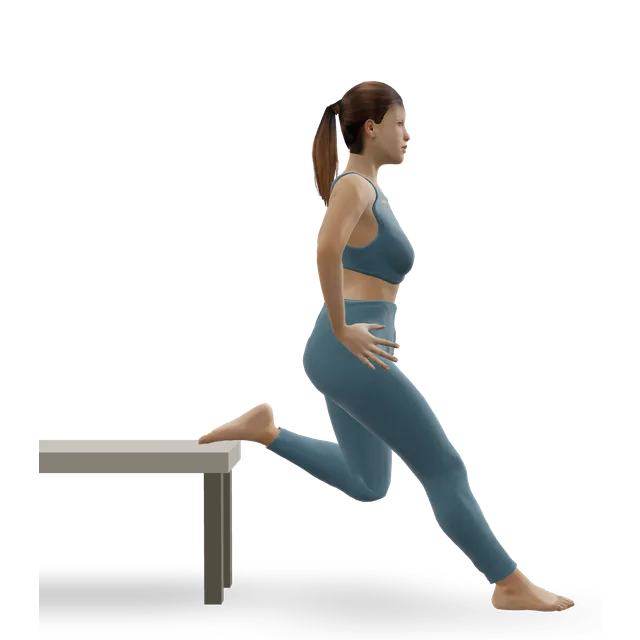
Knee pain in Bulgarian split squats (rear-foot-elevated split squats) usually comes from one of a few places, and which knee hurts is the first clue. Around or behind the kneecap of the front knee is usually kneecap pain (patellofemoral pain); one sore point just below or above it, a tendon; the back knee where it touches the floor, pressure; the back knee bent deeply in the air, its kneecap working too; a stretch at the front of the back thigh, the hip flexors. No study counts what causes knee pain in this exercise, or tests stance, bench height or depth against pain, so the map comes from lab studies of healthy people and kneecap and tendon research. Bulgarian split squats aren't bad for knees: in a lab study they loaded the kneecap a little less than a lunge, and the tendon less than a lunge. Stance length and depth are the main dials.

This guide starts with the signs that need help, from accident and emergency (A&E) for a knee that changed shape or swelled fast after a pop, to a same-day check for a pop at the front of the knee you can't straighten, and advice from the National Health Service's 111 line (NHS 111) for a knee that locks, gives way or is hot and swollen with a fever. It then maps the causes by where it hurts, explains what the lab studies show about stance, trunk lean, depth and the back knee and why a scan rarely helps at first, shows how to change your set-up today, and gives a three-stage plan with a 3D demo of every move, from floor split squats back to loaded Bulgarians.

When to get help first

Exercise is for pain that has been checked or is clearly mild and settling.

Get urgent medical help if

  • Go to A&E if you've injured your knee and it has changed shape, it becomes very swollen very quickly, you felt a pop or snap, you can see bone sticking out, or it's bleeding heavily. Don't drive yourself: ask someone to take you, or call 999 if the pain means you can't move your leg to get there.
  • Get advice from NHS 111 now: you cannot move the knee or put any weight on it, or it is very painful, badly swollen or has changed shape.
  • Get advice from NHS 111 now: the knee locks, gives way or clicks painfully. Painless clicking is normal.
  • Get advice from NHS 111 now: after a twist, your knee won't go fully straight, or something blocks the last part of straightening, even if you can still walk on it. A torn piece of meniscus caught in the joint can do this, and it needs checking promptly.
  • Same day: a pop or tearing feeling at the front of the knee after a fall, stumble, jump, landing or a heavy squat, then you can't straighten the knee or lift the straight leg off the bed, there's a dent above or below the kneecap, or the kneecap sits higher or lower than on the other side. Go to A&E or an urgent treatment centre, or get help from NHS 111. A torn quadriceps or patellar tendon does best when it's repaired soon.
  • You hurt your knee and cannot take 4 steps, or you are 55 or over and have injured it: get it checked the same day for a broken bone.
  • Get advice from NHS 111 now: a hot, red or swollen knee with sudden severe pain, a very high temperature (although not everyone has one), or feeling hot, cold or shivery. This can be a joint infection.
  • Same day: the swelling over or below the kneecap becomes hot, red or more painful, the skin over it is broken, or you have a high temperature or feel shivery, sick or unwell. Ask for an urgent GP appointment or call NHS 111: it may be infected and need antibiotics.
  • Call 999 or go to A&E if your child gets sudden pain in their hip, knee or thigh (hip problems can sometimes be felt in the thigh or knee) or cannot put any weight on their leg. If your child is limping, ask for an urgent GP appointment or get help from NHS 111 the same day. This applies to teenagers too, and in some children knee pain is the only sign.
  • Same day (urgent GP appointment or NHS 111): throbbing pain in one leg (rarely both), usually the calf or thigh; swelling in one leg (rarely both); red, blue or darkened skin; or swollen veins; or sudden worse pain and swelling around a lump at the back of the knee (a possible clot or a burst Baker's cyst).
  • Call 999 or go to A&E if breathing suddenly becomes difficult, if pain in your chest or upper back comes on suddenly with breathlessness or a very fast heartbeat, or if someone passes out. Do not drive yourself. It can be a blood clot that has reached the lungs.
  • Same day (call NHS 111, or go to A&E if you feel very unwell): after a big or unusual session, such as a first spin class, a workout of 100 back squats, or intervals of wall sits, squats, lunges and jumps, a challenge or a new class, muscle pain, swelling or weakness far worse than the session explains, and dark pee (red, brown, tea or cola coloured), sometimes starting hours or days later. Dark pee isn't always there, so muscles far sorer, more swollen or weaker than the session explains still need the same-day check. It can be rhabdomyolysis, a breakdown of muscle that can harm the kidneys.
  • Call 999 or go to A&E: back or leg symptoms with numbness around the genitals or bottom, new trouble controlling your bladder or bowels, or severe or worsening weakness or numbness in both legs.

See a doctor or physiotherapist if

  • Knee pain that has not improved within a few weeks of looking after it at home. Many areas offer NHS physiotherapy without a GP referral.
  • Kneecap pain that hasn't improved within 6 weeks of changing your activities and doing the exercises, or that gets worse: talk to a GP or physiotherapist.
  • The knee gives way, the whole knee swells, or it catches or locks: that isn't typical of kneecap or tendon pain. Get it checked for a ligament or meniscus injury (our suggestion).
  • Tendon pain above or below the kneecap and you take steroid tablets or have steroid injections, use anabolic steroids, have kidney disease, gout, rheumatoid arthritis, lupus or diabetes, or have recently taken a fluoroquinolone antibiotic: tell your GP or physiotherapist and build up more gradually. These can weaken the tendon. If you're taking a fluoroquinolone now, stop taking it and contact your doctor straight away, as the UK medicines regulator advises.
  • A child or teenager with pain at a bump just below the kneecap or at its lower tip, worse with squats, jumps and kneeling: see our Osgood-Schlatter and Sinding-Larsen-Johansson guides, and get it checked if it is getting worse.
  • Bursitis that hasn't improved, or is getting worse, after 1 to 2 weeks of looking after it yourself, a knee you can't move, or very severe, sharp or shooting pains: see a GP.
  • Catching, locking or swelling at the joint line that hasn't settled after about 3 months of exercise and other non-surgical care: ask your GP or physiotherapist about a specialist review. A magnetic resonance imaging (MRI) scan may be considered then.
  • Numbness, tingling or weakness that travels down the leg from the back. That points to a nerve (sciatica) rather than the knee.
  • Swelling in several joints, or morning stiffness that lasts more than 30 minutes: see a GP. It can be an inflammatory arthritis such as rheumatoid arthritis rather than osteoarthritis.
  • After a knee replacement, don't kneel on the new knee until your surgeon or physiotherapist says you can. If kneeling is still very hard months later, ask your physiotherapist to show you how; numbness or pain by the scar is common and is often the reason.

Where does it hurt?

Location narrows the likely causes; it does not diagnose.

Around or behind the kneecap of the front knee, hard to point to, worse at the bottom, on stairs and after sitting with bent knees

Usually kneecap pain (patellofemoral pain), the commonest pattern. A longer stance, less depth and fewer sets usually help.

Read: Runner's knee →
One point at the lower tip of the front kneecap, worse with deep or fast reps, jumping and landing

Usually patellar tendon pain (jumper's knee).

Read: Jumper's knee →
One point at the top edge of the front kneecap, worst at the deepest part of the rep and kneeling

Possibly quadriceps tendon pain.

Read: Quadriceps tendinopathy →
The back knee, at or just below the kneecap, where it touches the floor

Usually pressure: kneeling puts most of the load on the tendon below the kneecap. Pad the floor and stop a little short.

Read: Knee pain when kneeling →
A soft, squashy swelling on the front of the back kneecap, after kneeling

Bursitis (housemaid's knee). Hot and red, with broken skin or a high temperature, it needs a same-day check.

Read: Knee bursitis →
The back knee, a deep ache around or behind the kneecap with the knee bent deeply above the floor

Kneecap pain in the back knee (our reading): the back knee's kneecap is loaded in split stances too. A lower bench and a shorter range bend it less.

Read: Runner's knee →
A stretch or pull at the front of the back thigh or hip at the bottom, worse with a high bench and an upright trunk

Usually the hip flexors and the front thigh muscle being stretched under load. A sudden sharp pain with a bruise is a strain.

Read: Hip flexor pain →
The inner or outer joint line, with catching, locking or swelling later that day

Often a meniscus tear. A knee that locks needs checking, as the warning signs say.

Read: Meniscus tear →
Both knees, a stiff ache from your mid-40s, worse getting going and in deep bending

Often knee arthritis.

Read: Knee arthritis →
A teenager with a tender bump just below the kneecap, sore to kneel on

Osgood-Schlatter disease.

Read: Osgood-Schlatter →
A pop at the front of the knee under a heavy load, then you can't straighten the knee or lift the straight leg

Possibly a torn quadriceps or patellar tendon: rare. Get help the same day, as the warning signs say.

Read: Kneecap tendon rupture →
Behind the knee, with a lump or a squeezed feeling

Our behind-the-knee guide maps the causes; a painful, swollen calf needs a same-day check.

Read: Pain behind the knee →
A pinch at the front of the front ankle as the knee travels forward

The ankle, not the knee. A longer stance usually eases it.

Read: Anterior ankle impingement →
Pain mainly in lunges or squats too

Our lunge and squatting guides cover stride, depth and floor split squats.

Read: Knee pain when lunging →

Understand it

What no study has counted, and what the lab studies showEmerging evidence

No study counts what causes knee pain in Bulgarian split squats, and none has tested stance length, bench height, the back foot or depth against knee pain. So the map on this page comes from what each condition is known to do, lab studies of healthy people, kneeling studies, kneecap and tendon trials and health-service pages.

You stand in a long split stance with the top of your back foot on a bench and lower until your front thigh is about level. In 20 healthy adults, the force behind the front kneecap peaked at about 4.7 times body weight, a little below a lunge (5.1) and running (5.4), and stayed high for longer because the movement is slow and deep; the tendon below the kneecap took about 3 times body weight, less than a lunge or a Spanish squat. That is a moderate load, in the same middle tier as most squats and lunges. The front leg does most of the work: about 84% of the force with heavy loads in 26 men, though with body weight at the bottom the back foot took about a third of the downward force in 9 men. The force behind the kneecap rises as the knee bends, so the bottom is where kneecap pain shows first.

Sources 1, 2, 3, 4, 5, 6

The front knee: kneecap pain and the tendonsStrong evidence

Kneecap pain is pain around or behind the kneecap brought on by loading a bent knee: NHS inform names climbing stairs, kneeling and squatting, and says it is often linked to sudden changes in activity, which is how a new block of Bulgarians, more sets or heavier dumbbells can bring it on. The United States guideline describes the same pattern, often slow to start.

One sore point at the lower tip of the kneecap, worse with jumping and deep or fast loading, is usually the patellar tendon; one point at the top edge, the quadriceps tendon. In a growing teenager, a tender bump just below the kneecap that hurts to kneel on is usually Osgood-Schlatter disease.

Sources 7, 8, 9, 10, 11

The back knee: our readingEmerging evidence

Back-knee pain is one of the commonest searches about this exercise, but no study has measured the back knee in a Bulgarian split squat, so this is our reading. Where it touches the floor, the pain is usually pressure: in kneeling studies, most of the load went through the tendon below the kneecap and the bump at the top of the shin rather than the kneecap, knee pads lowered the peak but didn't remove it, and kneeling on one knee put the most force through it.

With the knee in the air, the back kneecap is still working on a deeply bent knee. In a lab study of the forward lunge (back foot on the floor, 18 people), the back knee had more total kneecap stress than the front knee, and keeping the front shin vertical moved stress to the back knee. An upright trunk also takes the back hip further into extension, which is why the front of the back thigh and hip can pull.

Sources 12, 13, 14, 15, 4

What a scan shows, and when it mattersEmerging evidence

Not usually. Kneecap and tendon pain are diagnosed from the story and an examination. In 76 athletes with patellar tendon pain, abnormal-looking tendons on ultrasound (26% to 78%) and magnetic resonance imaging (MRI) (43% to 81%) didn't predict recovery. The American Academy of Orthopaedic Surgeons (AAOS) keeps MRI for symptoms that don't improve with therapy, though in the US an X-ray is often done to rule out bone problems; NHS pages don't suggest routine scans for knee pain.

Tests matter after a pop with a knee you can't straighten (complete tendon tears can often be seen on an X-ray, and the AAOS says quadriceps tears often happen with a heavy load on the leg, the foot planted and the knee partly bent), with a knee that locks or gives way, and for a hot, swollen knee. A teenager with Osgood-Schlatter disease doesn't need an X-ray for the diagnosis.

Sources 16, 9, 17, 18, 19, 20, 21

How it usually goesStrong evidence

No study follows knee pain from Bulgarian split squats. NHS inform expects new knee pain or a flare to begin to settle within 6 weeks. Kneecap pain is often slower: 55% of 310 people had not recovered well at 3 months and 40% at 12 months, and pain for more than 2 months at the start was the strongest warning sign, so start the exercises early. Of the 60 who replied 5 to 8 years later, 57% still reported a poor recovery, but 48 of the 50 X-rayed had no arthritis.

For patellar tendon pain treated with exercise, 76% of 58 athletes felt recovered at 5 years. Osgood-Schlatter disease can last 12 to 24 months, and NHS inform says sport isn't likely to cause any lasting problems. No one can promise a date.

Sources 22, 23, 24, 25, 11

What helps, and how strong the evidence is

Stance length: a longer stance moves load from the knee to the hipEmerging evidence

In 9 trained men doing bodyweight Bulgarian split squats, a stance of 1.3 leg lengths cut the front knee's turning force by about a third against 1 leg length (25 against 39 newton-metres) and raised the hip's. In 20 men doing split squats with a barbell, the knee's turning force fell about 15% from the shortest to the longest step, with no gain beyond a step of one leg length and feet slipping at 1.2 leg lengths. In forward lunges, a short step raised kneecap force and stress in the deepest part (70 to 90 degrees of knee bend).

The National Academy of Sports Medicine (NASM) sets the stance by standing with your calves touching the bench and stepping forward just short of a forward lunge. These are healthy people in a lab, so the stance advice on this page is our reading of them, not a tested treatment.

Sources 4, 26, 5, 27

Depth, lean and the knee over the toesEmerging evidence

Depth is the main dial: kneecap force rises as the knee bends, and shallow lunges (up to about 40 degrees of knee bend) load the kneecap relatively little, with the load climbing steeply beyond that. With the knee's forward travel held the same, leaning the trunk 10 degrees more or less didn't change the front knee's turning force in 9 men; in 21 female athletes, a 40-degree lean raised glute and hamstring activity without lowering the main thigh muscles'. So stance and depth matter more than lean for the front knee.

Letting the knee pass the toes is a dial, not a danger: blocking it in a squat cut the knee's turning force by about a fifth but raised the hip's about tenfold (7 men), and letting it pass the toes in a lunge raised patellar tendon stress by 11% (25 women). With a sore kneecap or tendon, a longer stance keeps the knee further back for now.

Sources 6, 28, 4, 29, 30, 31

Exercise is the treatment for kneecap painStrong evidence

In a Cochrane review, exercise eased kneecap pain during activity by about 1.5 points out of 10 against no exercise (5 studies, 375 people), and hip and knee exercise together by a further 2.2 points against knee exercise alone (3 studies, 104 people). The evidence was of very low quality but consistent, and the 2018 international consensus recommends exercise, especially hip and knee exercise together.

Lunges appear in 13 of 79 kneecap pain studies, usually 3 sets of 10 at body weight through 0 to 90 degrees of knee bend; none used Bulgarian split squats. In 42 women with kneecap pain, one set per exercise did as well as three over 9 weeks. NHS inform's kneecap programme starts with static quads, side-lying leg lifts and step-ups, at 2 sets of 8 building to a maximum of 2 sets of 15.

Sources 32, 33, 34, 35, 36

Tendon pain: staged loading kept at 3 out of 10Emerging evidence

In the largest patellar tendon trial (76 athletes), staged loading (holds, then slow heavy strength, then springy loading), kept at 3 out of 10 or less, did better than painful eccentric squats: pain during exercise was 2 out of 10 against 4 at 24 weeks. It used the leg press and leg extension, with walking lunges and step-ups when no machine was available, and started its springy stage with jump squats and split jump squats. The researchers behind the tendon load study suggest squat variations such as the Bulgarian before the Spanish squat in tendon rehab.

Sources 10, 2

A floor split squat is a fair swapEmerging evidence

Taken close to failure, a floor split squat, a single-leg squat and the Bulgarian drew similar peak activity from the main thigh and buttock muscles (11 people), so swapping out the raised back foot costs little. The Bulgarian is hip-dominant, with less knee movement than a back squat (20 trained men) and more hip work per leg (8 rugby players), but its kneecap load is still moderate, because these studies measure different things.

Sources 37, 38, 39

How much pain is OK while you exercise?

0 to 2 is safe, up to 5 is acceptable, 3 for a tendonEmerging evidence

This guide uses the knee hub's rule, as our other knee movement guides do. Rate your knee pain from 0 to 10 during and after exercise. In the pain-monitoring model used in knee trials, 0 to 2 counts as safe, up to 5 as acceptable and above 5 as too much. Aim for 0 to 3 most of the time. By the next morning your knee should be back to its usual level; if it isn't, drop back one step next time, not to nothing. For one sore point just below or above the kneecap (a tendon), keep it to 3 out of 10 or less, the limit the largest patellar tendon trial used. NHS inform's knee and kneecap exercise pages use bands of 0 to 3 minimal, 4 to 5 acceptable and 6 to 10 excessive, ask you to keep within 0 to 5, and want your pain no worse the morning after. The numbers in the original pain-monitoring trials weren't in the summaries we could read, so the thresholds here are the knee hub's rule and NHS inform's. In long-lasting pain, exercise into some pain did no worse than pain-free exercise (7 trials, 385 people).

For Bulgarian split squats (our suggestion, built on the same rule): use the step of the ladder (a short floor split squat, a deeper one, the back foot on a stair, the back foot at knee height, then load) and the depth where the last reps stay at 5 out of 10 or less (3 for a tendon) and your knee is back to normal by the next morning. If it isn't, go back one step, not to nothing. Sharp, catching or giving-way pain, new swelling, or a hot, red swelling over the back kneecap isn't a pain-rule question: stop and see the warning signs.

Sources 40, 36, 10, 41, 42, 43

The exercise plan: 3 stages

Start at the first stage. Each move opens a full guide with a 3D demo.

Stage 1

Keep training, take the bench out

About the first 2 weeks, 2 or 3 sessions a week: keep your legs working without the raised back foot, find a split squat range that passes the pain rule, and start the hip and knee strength work the guidelines recommend, with holds for tendon pain. With a diagnosed condition (patellar or quadriceps tendon pain, a meniscus tear, arthritis, Osgood-Schlatter disease, bursitis or a knee replacement), that guide's plan comes first; after surgery, your surgical team's plan does.

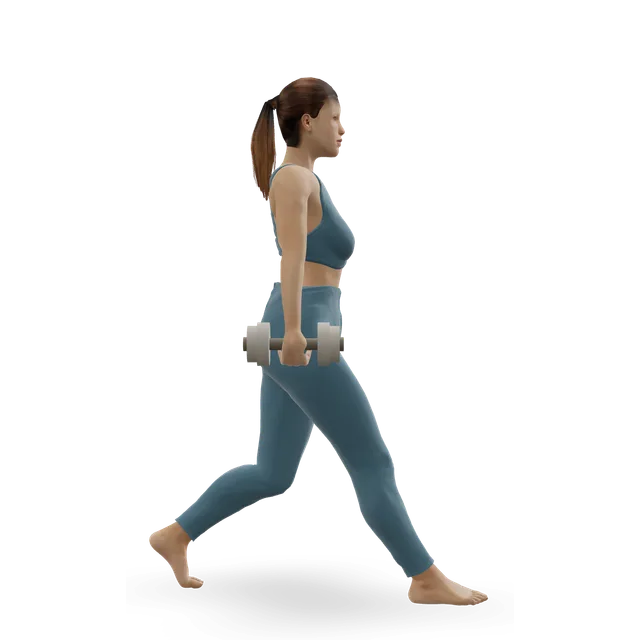
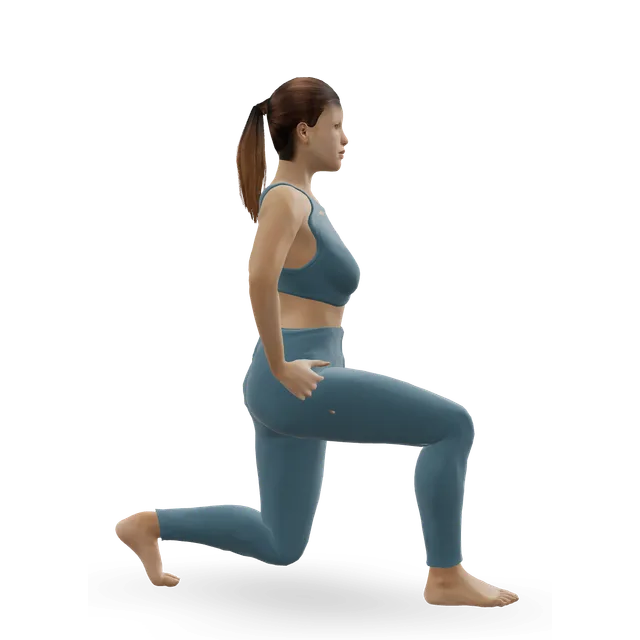
Split squat demonstrated on the 3D figure3D demoSplit squatIntermediate · No equipment

3 sets of 8 each leg, a short range, holding a wall, the back knee padded or stopping short of the floor · As in our lunge guide (editorial). The move page says pad the back knee and shorten the range rather than push through knee pain

Easier: Bodyweight squat · Harder: Reverse lunge

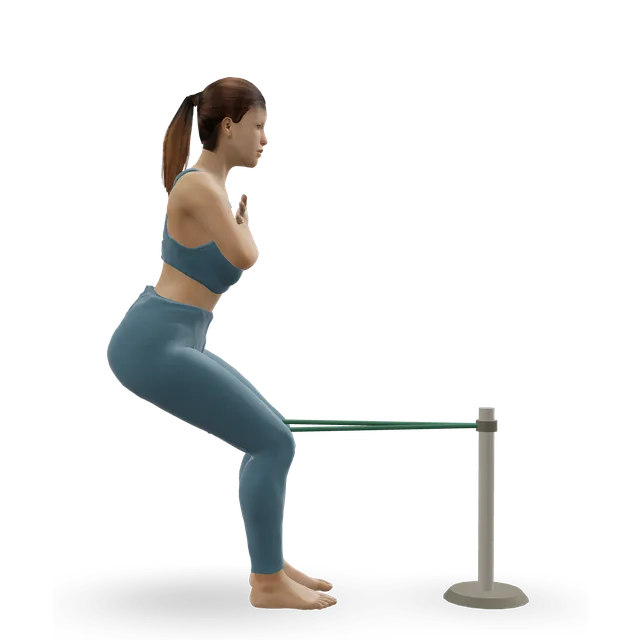
Spanish squat (band squat hold) demonstrated on the 3D figure3D demoSpanish squat (band squat hold)Intermediate · A band + An anchor point

4 to 5 holds of 30 to 45 s at a hard-but-OK effort, 1 to 2 min rest, once a day · The move page's dose, modelled on the tendon trial's holds. For tendon pain; optional for kneecap pain

Easier: Straight-leg raise · Harder: Pistol squat

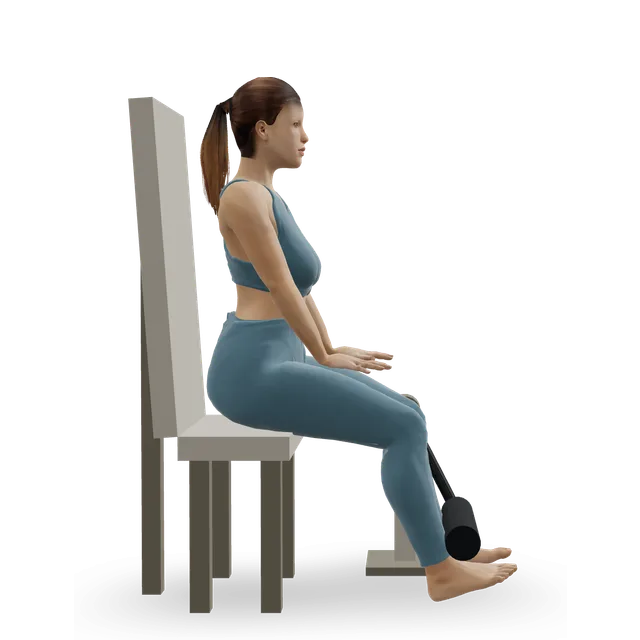
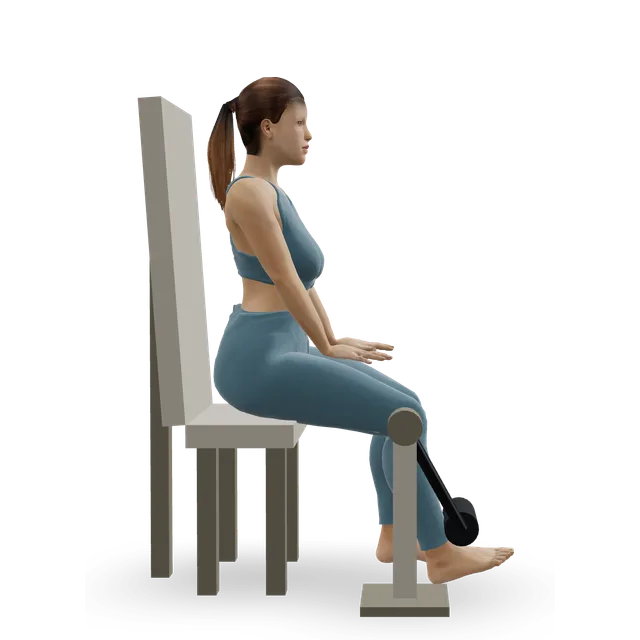
Leg extension demonstrated on the 3D figure3D demoLeg extensionBeginner · Strength machine

Kneecap pain: 3 sets of 10 to 15 from 90 to about 45 degrees of bend only. Tendon pain: 5 holds of 45 s with the knee bent about 60 degrees, building towards about 70% effort · The holds are the tendon trial's stage 1 dose; the range is our leg extension guide's

Easier: Straight-leg raise · Harder: Barbell box squat

Dumbbell squat to a bench demonstrated on the 3D figure3D demoDumbbell squat to a benchIntermediate · A dumbbell + A bench or box

2 to 3 sets of 8 to 12, stopping with 2 or 3 reps in reserve · The move page's dose. A high bench with kneecap pain, so the knee bends less

Easier: Bodyweight squat · Harder: Back squat with bands

Glute bridge demonstrated on the 3D figure3D demoGlute bridgeBeginner · No equipment

3 sets of 8 to 12 · As in our lunge guide (editorial). Hip work alongside knee work, as the consensus recommends

Easier: Pelvic tilt into bridge · Harder: Single-leg glute bridge

Clamshell demonstrated on the 3D figure3D demoClamshellBeginner · No equipment

3 sets of 8 to 12 each side · As in our lunge guide (editorial)

Easier: Supine isometric hip abduction (belt press) · Harder: Lateral band walk

Move on when: Floor split squats in your chosen range pass the pain rule and your knee is back to normal by the next morning, for a week (editorial). With tendon pain, one single-leg squat hurts 3 out of 10 or less after at least a week at this stage, the tendon trial's test.

Follow along: a timer, a cue and the next move, one step at a time.
Stage 2

Raise the back foot a little, and build strength

About weeks 2 to 6, 2 or 3 sessions a week: the raised back foot comes back on a low step in a short range, with single-leg strength through more of the range. With tendon pain, the slow heavy work goes on alternate days, as the tendon trial did.

Rear-foot-elevated split squat (Bulgarian split squat) demonstrated on the 3D figure3D demoRear-foot-elevated split squat (Bulgarian split squat)Intermediate · A bench or box

2 or 3 sets of 6 to 8 each leg, the back foot on a stair or low box, a short range, holding a support · Our Bulgarian split squat guide's step 3 dose (editorial). Lower the back foot if the back knee or the front of the hip pinches, as the move page says

Easier: Reverse lunge · Harder: Split squat jump

Reverse lunge demonstrated on the 3D figure3D demoReverse lungeIntermediate · No equipment

3 sets of 8 each leg, a long step, a short range first · As in our lunge guide (editorial)

Easier: Split squat · Harder: Split squat with dumbbells

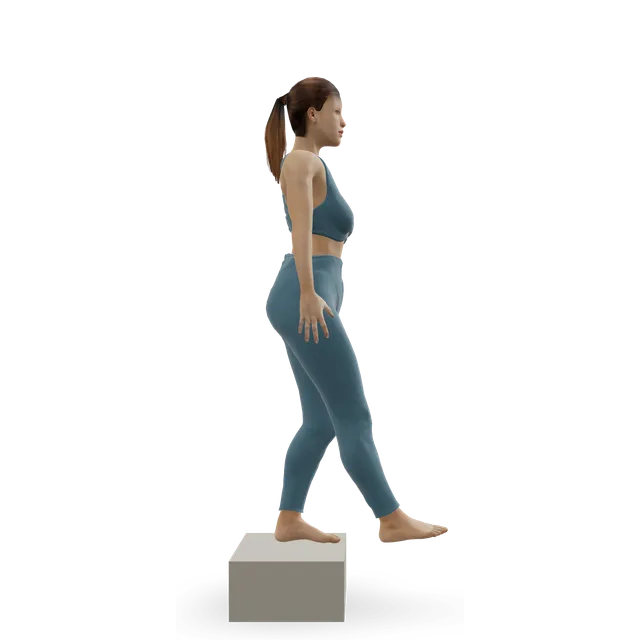
Step-up demonstrated on the 3D figure3D demoStep-upBeginner · A step

2 sets of 8, a minute's rest between, building to a maximum of 2 sets of 15, a low step first · NHS inform's kneecap pain dose for its step-up; step-ups were among the lightest kneecap and tendon loads measured

Easier: Low step-up · Harder: Dumbbell step-up

Leg press demonstrated on the 3D figure3D demoLeg pressBeginner · Strength machine

Kneecap pain: 3 sets of 10, from straight to about 45 degrees of bend at first. Tendon pain: 4 sets of 15 from about 10 to 60 degrees, building towards 4 sets of 6 with more load and towards 90 degrees · The tendon doses are the trial's stage 2; the kneecap range is the median of kneecap pain trials that used the leg press (the sets are editorial)

Harder: Bodyweight squat

Lateral band walk demonstrated on the 3D figure3D demoLateral band walkBeginner · A band

3 sets of 12 steps each way · As in our squatting guide (editorial)

Easier: Hip abduction machine · Harder: Lateral band walk, band at the feet

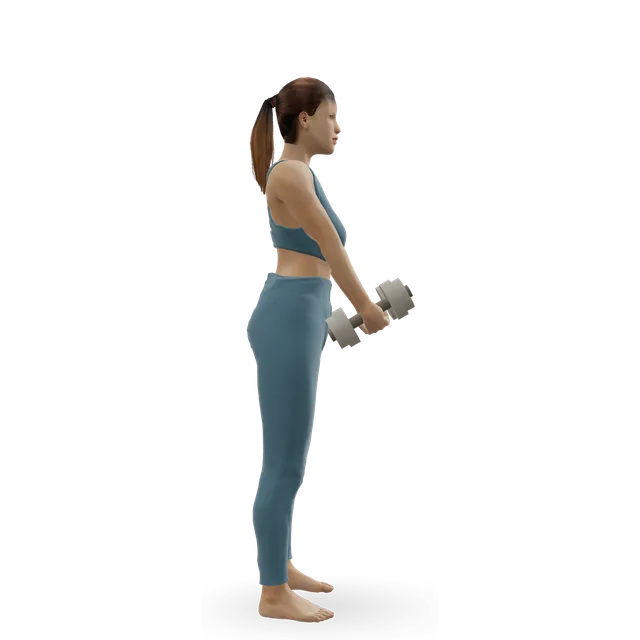
Single-leg Romanian deadlift demonstrated on the 3D figure3D demoSingle-leg Romanian deadliftAdvanced · A dumbbell

3 sets of 8 each leg, fingertips on a wall at first · As in our squatting guide (editorial)

Easier: Dumbbell Romanian deadlift

Move on when: 3 sets of 8 Bulgarian split squats with the back foot on a stair pass the pain rule, and your knee is fine the next morning (editorial). With tendon pain, the single-leg squat test again.

Follow along: a timer, a cue and the next move, one step at a time.
Stage 3

Back to your usual Bulgarians

From about week 6, often later for tendon pain: the bench at about knee height, your usual depth, then load, one change at a time by the written steps below. No trial has tested a return to Bulgarian split squats after knee pain, so the order is editorial, following the lab progressions (depth, then stance, then load).

Rear-foot-elevated split squat (Bulgarian split squat) demonstrated on the 3D figure3D demoRear-foot-elevated split squat (Bulgarian split squat)Intermediate · A bench or box

3 sets of 6 to 10 each leg, the bench at about knee height or lower, a notch deeper each week · Our Bulgarian split squat guide's step 4 dose (editorial)

Easier: Reverse lunge · Harder: Split squat jump

Split squat with dumbbells demonstrated on the 3D figure3D demoSplit squat with dumbbellsIntermediate · A dumbbell

3 sets of 8 to 12 each leg · Editorial: the loaded floor version, before load goes on the Bulgarian

Easier: Reverse lunge · Harder: Barbell Bulgarian split squat

Single-leg leg extension demonstrated on the 3D figure3D demoSingle-leg leg extensionBeginner · Strength machine

2 to 3 sets of 8 to 12 each leg, stopping with 2 or 3 reps in reserve · The move page's dose. From 90 to 45 degrees of bend first with kneecap pain (our leg extension guide's range)

Harder: Barbell box squat

Patrick step-down demonstrated on the 3D figure3D demoPatrick step-downIntermediate · A step

3 sets of 8 to 10 each leg, a low step · As in our squatting guide (editorial). Start low with pain at the front of the knee, as the move page says

Easier: Bodyweight squat · Harder: Skater squat

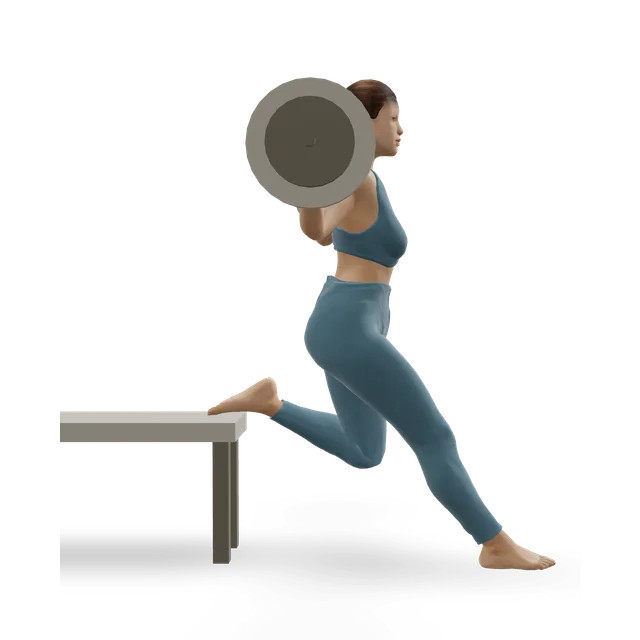
Barbell Bulgarian split squat demonstrated on the 3D figure3D demoBarbell Bulgarian split squatAdvanced · A barbell + A bench or box

3 sets of 5 to 8 each leg, last and optional, in a rack · Editorial. Learn it with dumbbells first, as the move page says

Easier: Reverse lunge

Split squat jump demonstrated on the 3D figure3D demoSplit squat jumpAdvanced · No equipment

Tendon pain and jumping sports only: 3 sets of 10, every third day, last · The tendon trial's stage 3 starting dose, which names split jump squats

Easier: Reverse lunge · Harder: Shrimp squat

Move on when: Your usual Bulgarian sets pass the pain rule for 2 weeks. Keep two strength sessions a week with hip and knee work for a few months after the pain has gone, and keep the tendon holds twice a week if your tendon was sore, as the trial did. If it flares after a big session, go back a stage for a few days, not to nothing (editorial).

Follow along: a timer, a cue and the next move, one step at a time.

What to change for now

Your Bulgarian split squat for now (written steps)

Our 3D figure can't show the set-up. These steps come from lab studies of healthy people, coaching sources and our Bulgarian split squat guide; the bench height and back-knee steps are editorial, because no study compares bench heights or measures the back knee in this exercise. No trial has tested a change to the Bulgarian split squat for knee pain.

  • 1. Stance: stand with your calves touching the bench, then step forward just short of a forward lunge (NASM), about a leg's length. A longer stance cut the front knee's turning force by about a third in a lab study. If your front heel lifts or your knee shoots far forward, move your front foot further out.
  • 2. Depth: stop above the point that hurts, and go a notch deeper each week (editorial). The load behind the kneecap is lowest in the first 40 degrees of knee bend.
  • 3. Bench: ACE (the American Council on Exercise) uses a bench or box about knee height; one lab set it at the length of each person's shin. Lower it to a stair or a low box if your back knee or the front of your back hip pinches, as the move page says (editorial).
  • 4. The back knee: lower it under control, and stop a few centimetres short of the floor or put a folded mat under it (editorial, from kneeling studies).
  • 5. Trunk: a slight forward lean is fine and moves work to the glutes and hamstrings; lean a little if the front of your back hip pulls.
  • 6. Front knee over your middle toes and your whole front foot down; NASM lists the front knee caving inwards as a common mistake.
  • 7. Load: body weight or one dumbbell held at your chest first, with fewer sets and rest days between; one hard set did as well as three for kneecap pain in one trial.
  • 8. Hold a wall or rack while it's sore, so your balance doesn't twist the knee (editorial).
  • 9. Sport: keep running and jumping within the pain rule; with tendon pain, keep it at 3 out of 10 or less, as the tendon trial did.

Sources 27, 4, 26, 6, 44, 29, 13, 45, 35

Back to your usual training (written steps)

No study has tested how Bulgarian split squats come back after knee pain, so these steps are our suggestion unless a source is named.

  • 1. One change at a time: depth, then bench height, then load, then speed or jumps.
  • 2. Add load in small steps, about 2% to 10%, when the last set has reps to spare and your knee is fine the next morning (the American College of Sports Medicine's steps for healthy lifters, as our squatting guide uses).
  • 3. Barbell Bulgarians in a rack last, after dumbbells are comfortable, as the move page says.
  • 4. If it flares after a big session, go back a stage for a few days, not to nothing.

Growing knees, a knee replacement and everyday life

For a teenager with Osgood-Schlatter disease, NHS inform says most can carry on with their activities, finding a balance, and some need to stop completely for 2 to 4 weeks; the AAOS says continued activity won't cause long-term damage. A pad under the back knee, or split squats that stop short of the floor, can help them keep training (our suggestion). After a knee replacement, don't kneel on the new knee until your team says you can.

Everyday life comes back alongside the plan: stairs one at a time while it's sore (editorial); kneeling at work on a pad, with breaks, as NHS inform suggests cutting down kneeling with kneecap pain; and running and jumping within the pain rule (3 out of 10 for a tendon).

Sources 11, 21, 7, 13, 10

Positions to swap, and why

Habit or positionWhy it mattersInstead
A short stance, with your front knee driven far past your toesThe front knee's turning force and the kneecap load were higher with a short stance or step in lab studies.About a leg's length from the bench.Try: Split squat
Full depth while it hurtsThe load behind the kneecap rises as the knee bends.A shorter range, a notch deeper each week, or a floor split squat.Try: Split squat
A high benchIt pinches the back knee or the front of the back hip, as the move page says (editorial; no study compares heights).Knee height or lower, or a stair.
Dropping the back knee onto a hard floorKneeling puts most of the load on the tendon below the kneecap (our reading for split squats).Lower it under control onto a folded mat, or stop short.
Heavy barbell Bulgarians while it's soreThe heaviest version; the move page says use a rack and a weight you can control on one leg.Body weight, or one dumbbell held at your chest.Try: Rear-foot-elevated split squat (Bulgarian split squat)
Split jumps during a tendon flareThe tendon trial cut painful loading for at least 4 weeks and brought springy work back only in its last stage.Holds, then slow heavy strength.Try: Spanish squat (band squat hold)
High-rep Bulgarian challenges and finishersNHS inform links kneecap pain to sudden changes in activity.Stop 2 or 3 reps short, with rest days between.
Resting completelyExercise is the main treatment for kneecap and tendon pain, and NHS inform says use your leg more after the first 48 hours.The stage 1 moves.Try: Glute bridge

Routines to follow

More moves for this area

Questions people ask

Why does my knee hurt when I do Bulgarian split squats?

Your front knee takes most of your weight while it bends deeply, and the force behind the kneecap peaks at the bottom: about 4.7 times body weight in a lab study of healthy adults. Where it hurts is the best clue: around the kneecap is usually kneecap pain, one point below or above it a tendon, and the back knee usually pressure from the floor or the deep bend.

Why does my back knee hurt on Bulgarian split squats?

If it hurts where it touches the floor, it's usually pressure: kneeling puts most of the load on the tendon below the kneecap. If it aches inside with the knee off the floor, the back kneecap is working too, more with an upright trunk and a vertical front shin in a lunge study. Pad the floor, stop short and try a lower bench.

Why does the front of my knee hurt?

Usually kneecap pain, which NHS inform links to squatting, kneeling and sudden changes in activity. Lengthen your stance, go less deep and do fewer sets for now.

Are Bulgarian split squats bad for your knees?

No study shows they are. In healthy adults they loaded the kneecap a little less than a lunge and the tendon less than a lunge. A short stance, full depth too soon and big jumps in volume are the usual problems.

How far from the bench should I stand?

About a leg's length: calves touching the bench, then a step just short of a forward lunge. A longer stance cut the front knee's load by about a third in a lab study, but much beyond a leg's length your feet start to slip.

How high should the bench be?

About knee height or lower; one lab set it at the length of the shin. No study compares heights, so use a stair if your back knee or the front of your back hip pinches.

Should my knee go past my toes?

It's fine for healthy knees, and stopping it moves load to your hips and back. With a sore kneecap or tendon, a longer stance keeps the knee further back for now.

Should I stop doing Bulgarian split squats?

Change them rather than stop: a floor split squat, a shorter range or a lower bench, keeping pain at 5 out of 10 or less (3 for a tendon) and back to normal by the next morning. Stop and get checked if your knee locks, gives way or swells.

What can I do instead?

Floor split squats worked the main thigh and buttock muscles as hard as Bulgarians near failure in one study. Step-ups, the leg press in a part range and the Spanish squat are lighter on the knee.

Do I need a scan?

Usually not: kneecap and tendon pain are diagnosed by examination, and scan changes in the tendon didn't predict recovery. A pop with a knee you can't straighten needs checking the same day.

How long until I can do them normally again?

No one can promise a date. NHS inform expects new knee pain to begin to settle within 6 weeks, but kneecap pain can take months: 40% had not recovered well at a year in one study. Most people keep doing a changed version throughout.

When should I see a doctor?

Go to A&E if your knee changed shape or swelled fast after a pop, get help the same day if you can't straighten it after a pop, and get advice from NHS 111 if it locks, gives way or is hot and swollen with a high temperature. See a GP or physiotherapist if it isn't better within a few weeks; in the US, call 911 where this page says 999.

Related exercise guides

Other pain guides

Sources

  1. Song 2023 · Kneecap joint loads across 35 rehabilitation exercises and daily activities in 20 healthy adults (lab study, Am J Sports Med)
  2. Scattone Silva 2024 · Patellar tendon loads across 35 rehabilitation exercises in 20 healthy adults (lab study, Med Sci Sports Exerc)
  3. Helme 2022 · Force under the front and back foot in the rear-foot-elevated split squat in 26 men (lab study, J Strength Cond Res)
  4. Arakawa 2025 · Stance length, trunk lean and the back leg in the Bulgarian split squat in 9 trained men (lab study, Int J Exerc Sci)
  5. Escamilla 2008 · Kneecap force and stress in short and long-step forward lunges: 18 people (lab study, J Orthop Sports Phys Ther)
  6. Escamilla 2022 · Kneecap loads in forward and side lunges with a step up, 16 adults (lab study, Int J Sports Phys Ther)
  7. NHS inform · Patellofemoral pain syndrome
  8. Willy 2019 · Patellofemoral pain (clinical practice guideline, J Orthop Sports Phys Ther)
  9. AAOS OrthoInfo · Patellofemoral pain syndrome
  10. Breda 2021 · Progressive tendon loading against eccentric squats in 76 people with patellar tendinopathy (randomised trial, Br J Sports Med)
  11. NHS inform · Knee apophysitis (Osgood-Schlatter's and Sinding-Larsen-Johansson syndrome)
  12. Hofmann 2017 · Kneecap stress in the front and back knee during the forward lunge: 18 people (lab study, J Orthop Sports Phys Ther)
  13. Porter 2010 · Pressure on the front of the knee when kneeling, with and without knee pads, in 10 people (lab study, Appl Ergon)
  14. Thwaites 2022 · Where the knee takes load when kneeling: 14 people (lab study, Knee)
  15. Pollard 2011 · Forces on the knee in kneeling and squatting postures: 10 people (lab study, J Appl Biomech)
  16. Deng 2026 · Ultrasound and MRI findings and recovery in patellar tendinopathy, 76 athletes (cohort study, Sports Health)
  17. NHS · Knee pain
  18. AAOS OrthoInfo · Patellar tendon tear
  19. AAOS OrthoInfo · Quadriceps tendon tear
  20. NHS · Septic arthritis
  21. AAOS OrthoInfo · Osgood-Schlatter disease
  22. NHS inform · Knee problems
  23. Collins 2013 · How patellofemoral pain goes over 12 months: 310 people (cohort analysis, Br J Sports Med)
  24. Lankhorst 2016 · Patellofemoral pain 5 to 8 years after diagnosis (cohort study, Br J Sports Med)
  25. Deng 2025 · Patellar tendinopathy 5 years after exercise therapy, 58 athletes (cohort follow-up of a trial, Am J Sports Med)
  26. Song 2023 · Step length and lower-limb loads in the split squat: 20 men (lab study, Front Bioeng Biotechnol)
  27. National Academy of Sports Medicine · Squat alternatives
  28. Escamilla 2023 · Choosing lower-limb exercises for cruciate ligament and kneecap rehabilitation (clinical commentary, Int J Sports Phys Ther)
  29. Aygun-Polat 2025 · Trunk lean in the Bulgarian split squat in 21 female athletes (muscle activity study, BMC Sports Sci Med Rehabil)
  30. Fry 2003 · Knee position and hip and knee torque in the barbell squat: 7 men (lab study, J Strength Cond Res)
  31. Zellmer 2019 · The knee in front of or behind the toes and patellar tendon stress in the forward lunge: 25 women (lab study, J Sport Health Sci)
  32. van der Heijden 2015 · Exercise for patellofemoral pain: 31 trials, 1,690 people (Cochrane systematic review)
  33. Collins 2018 · Exercise and physical treatments for patellofemoral pain (consensus statement, Br J Sports Med)
  34. Gunhamn 2025 · How kneecap pain trials prescribe knee extensor exercise: 79 studies (systematic review, Front Rehabil Sci)
  35. Severo-Silveira 2026 · One set against three sets of strength training in 42 women with kneecap pain (randomised trial, Braz J Phys Ther)
  36. NHS inform · Exercises for patellofemoral knee pain
  37. Mausehund 2019 · Muscle activity in single-leg barbell exercises in 11 people (muscle activity study, J Strength Cond Res)
  38. Mackey 2021 · The Bulgarian split squat and the back squat compared in 20 trained men (lab study, Int J Exerc Sci)
  39. Arakawa 2023 · Hip loads in rear-foot-elevated split squats and back squats in 8 rugby players (lab study, J Strength Cond Res)
  40. NHS inform · Exercises for knee problems
  41. Smith 2017 · Should exercise be painful in long-lasting muscle and joint pain? 7 trials, 385 people (systematic review and meta-analysis, Br J Sports Med)
  42. Thomeé 1997 · A treatment programme for patellofemoral pain in 40 young women (randomised trial, Phys Ther)
  43. Silbernagel 2007 · Continued sport with a pain-monitoring model in 38 people with Achilles tendinopathy (randomised trial, Am J Sports Med)
  44. American Council on Exercise · Bulgarian split squat
  45. National Academy of Sports Medicine · Bulgarian split squat

Exercise education, not a diagnosis or treatment plan. It is written from the guidelines and studies listed above; review by a clinician is pending. If your pain follows an injury, is severe, is getting worse, or comes with any warning sign listed on this page, get it assessed. Health disclaimer.