Standing band hip adduction
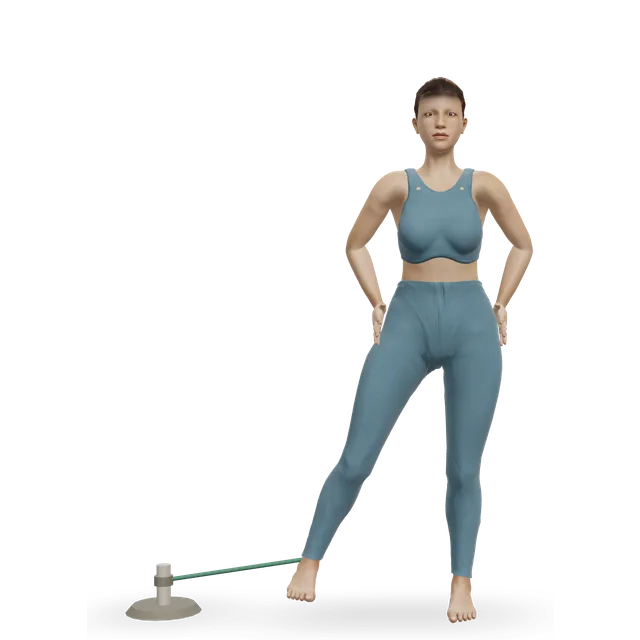
Standing on one leg, the other sweeps in across the body against a band anchored to the side.
Adductor strength family
Standing band hip adduction
Loading the 3D figure…
Source-researched guide.
How to move
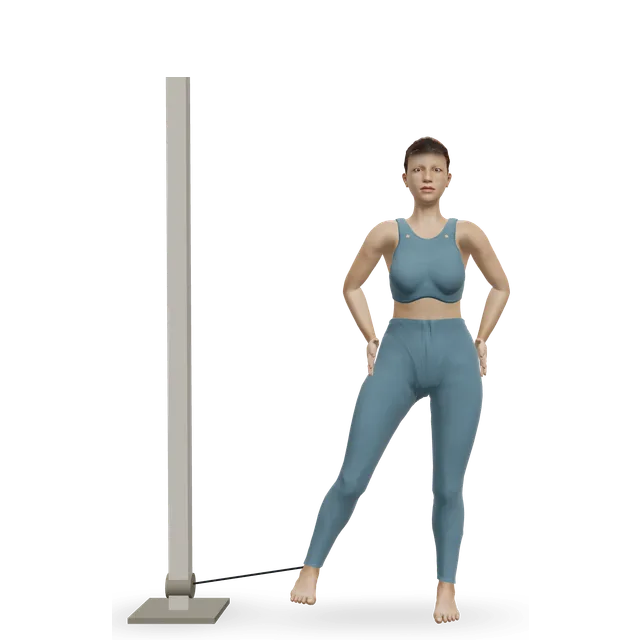
- Tie a band low round a solid post. Stand on your left leg with your right side to the post and the band round your right ankle; hold a support if you need it.
- Keeping the right knee straight and the trunk tall, sweep the right leg in across the front of the left against the band.
- Return slowly out to the side. Change legs by turning the other side to the post.
Form cues
- Move from the hip; the pelvis stays level.
- Stand closer to the post to make it easier.
Practice and cautions
No universal dose is assigned. Choose a manageable amount for your current capacity, leave room for controlled repetitions, and allow recovery. A clinician’s individual plan takes priority.
This is movement education, not an assessment or treatment prescription. Stop for sharp or increasing pain, dizziness, numbness or tingling; seek individual guidance for symptoms, injury or restrictions.
Sources and review status
Sources support the educational description; they do not establish that this exercise is suitable for you.
No variation is labeled clinically validated.
What it works
Workouts that use it
Pain guides that use it
Part of a staged plan, with when to get help first.
- Groin strain and adductor pain: the exercises with the best evidence
- Sports hernia (inguinal-related groin pain): rehab, surgery and how it differs from a hernia
- Pes anserine bursitis: inner knee pain below the joint, and what helps
- Osteitis pubis (pubic bone pain): rehab, recovery time and how it differs from a sports hernia
- Groin pain when running: what's likely, the hip stress fracture not to miss, and how to build back
- Hip pain when cycling: groin, outer hip or buttock, what to change on the bike and how to build back
- Groin pain: a strain, a hernia, the hip joint, the testicles and the other causes to know
- Inner thigh pain: a groin strain, the hip joint, a hernia, a trapped nerve, pregnancy and a clot
Show all 18 pain guidesShow fewer pain guides
- Groin pain when walking: the hip joint, a strain, a hernia, pregnancy and a stress fracture
- Hip pain after a workout: soreness or a strain, the groin, squats and running, and training again
- Groin pain in men: strains, hernias, the hip, the testicles and prostate, and the signs to act on
- Groin pain in women: the hip, inner thigh strains, hernias, the pubic bone, gynae and urinary causes
- Hip pain when doing lunges: the front of the hip, the joint, the outer hip, the groin and stride
- Groin pain when doing squats: the inner thigh, the hip crease, a hernia, stance and depth
- Groin pain when doing lunges: the inner thigh, side and long lunges, the back hip and a hernia
- Groin pain when doing sit-ups: hooked feet, the inner thigh, the lower tummy, hernias and swaps
- Hip pain when swimming: the breaststroke kick, the groin, the hip flexors, turns and what helps
- Hip and groin pain after football (soccer): groin strains, sports hernia, impingement and help
Guides that use it
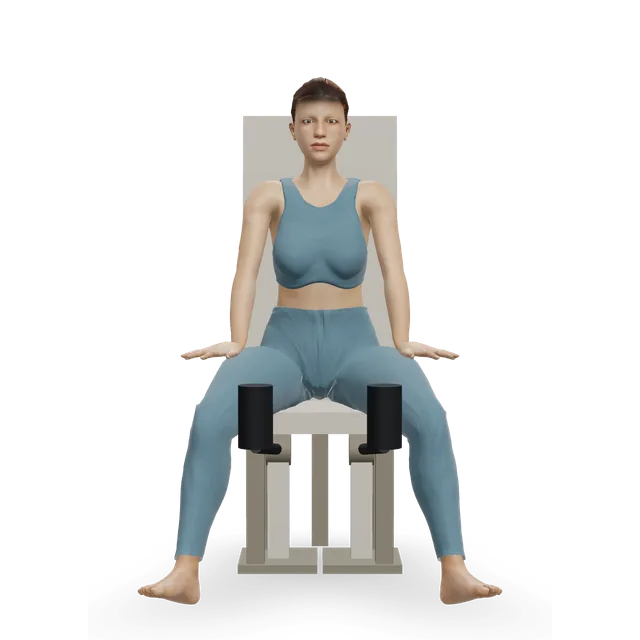
Similar moves
Browse more
Questions people ask
What muscles does the Standing band hip adduction work?
Mainly the adductors, with help from the abs.
What equipment do I need for the Standing band hip adduction?
A band + An anchor point.
Is the Standing band hip adduction good for beginners?
It is graded beginner, so it suits most people starting out. When it feels easy, try the Copenhagen plank.
What is an easier alternative to the Standing band hip adduction?
Try the Lying adductor ball squeeze. It is the suggested step down from this move.
How do I make the Standing band hip adduction harder?
Progress to the Copenhagen plank. Follow that guide’s technique and any stated timing.