Neck pain when driving: the headrest, looking over your shoulder, long journeys and after a crash

Neck pain when you drive is common, and it is nearly always ordinary neck pain from the muscles and small joints: about 4 in 10 people who drive for a living report it over a year, close to the figure for everyone. A drive is a long, still spell with your arms up on the wheel, and shoulder checks and reversing ask your neck for its biggest turns. It doesn't mean driving is damaging your neck. Neck pain after a crash is whiplash, which has its own checks first.

This guide starts with the signs that need help, from a 999 call or accident and emergency (A&E) for neck pain with a sudden, severe headache, double vision, slurred speech or weakness, or after a serious crash, to a general practitioner (GP) or the National Health Service's 111 line (NHS 111) the same day for new pins and needles or weakness in an arm. It then covers the seat and the headrest, shoulder checks and reversing, breaks, driving after whiplash and neck surgery (the Driver and Vehicle Licensing Agency's (DVLA's), the NHS's and insurers' rules in their own words), how much pain is fine, and a three-stage plan with a 3D demo of every move.

When to get help first

Exercise is for pain that has been checked or is clearly mild and settling.

Get urgent medical help if

  • Call 999 or go to A&E after a neck injury if the person is unresponsive, has severe neck pain or cannot move their head, has fallen from a height such as 5 or more stairs, or is drunk or has taken recreational drugs. Do not drive yourself. Being 65 or over, a dangerous fall or crash (from more than 1 metre or 5 stairs, diving, a high-speed or rollover crash, being thrown from a vehicle, a bicycle collision or an accident on a motorised recreational vehicle), or tingling in the arms or legs after an injury puts you at high risk of a broken neck: get checked.
  • Call 999 or go to A&E: a headache that came on suddenly and is extremely painful; numbness or weakness in the face or body; a drooping face, or being unable to lift both arms and keep them up; difficulty speaking, swallowing, balancing, walking or remembering; double vision or loss of vision; drowsiness or confusion. A torn neck artery often starts with headache and neck pain, sometimes with dizziness or tingling, so head or neck pain unlike any you have had before needs checking.
  • Call 999: you suddenly can't fully lift both arms and keep them there, because of weakness or numbness in one arm, especially if one side of your face droops or you slur your words or sound confused. It could be a stroke. Call even if the signs have stopped.
  • Call 999 or go to A&E: new problems walking, loss of bladder or bowel control, or a sudden loss of coordination, such as difficulty doing up buttons. These can be signs of pressure on the spinal cord.
  • Call 999: chest pain that spreads to your arm, neck or jaw, especially with breathlessness, sweating or feeling sick. It could be a heart attack.
  • Chest, neck, jaw, shoulder or arm pain that comes on while you're driving: pull over when it's safe and call 999 if it's severe, spreads, or comes with breathlessness, sweating or feeling sick, and don't drive on (our suggestion). GOV.UK says you may keep driving with angina "unless it happens while resting, driving, or with emotion", and that if it does, you must stop driving until your symptoms are under control.
  • Get help from NHS 111: pain or tightness in your chest, neck, shoulders, jaw or arms that comes and goes, often brought on by exercise, stress, emotion or cold and easing after a few minutes' rest. It can be angina, a sign of a heart problem. If you've been diagnosed with angina, get help from NHS 111 too if it feels worse than before, is happening more often, lasts longer or happens when you're resting.
  • Call 999 or go to A&E: a stiff neck and you can't look at bright lights; a very painful headache; a very high or very low temperature, feeling hot or cold to the touch, or shivering; confusion, slurred speech or not making sense; a rash that does not fade when you press a glass on it; or a first seizure (fit). These can be signs of meningitis. Call too for any other symptoms you're worried might be meningitis.
  • Same day (urgent GP appointment or NHS 111): severe neck pain that starts suddenly or gets worse quickly; heaviness or weakness in the arms or legs; pins and needles in an arm along with neck or arm pain; or pain between the shoulder blades.
  • Same day: clumsiness in your hands, or numbness, pins and needles or weakness in one or both arms, that is getting worse; problems with balance or walking since the neck pain started; or neck pain with a severe headache.
  • Arm weakness or numbness that keeps getting worse, severe pain that painkillers and rest do not touch, or an unexplained fever.
  • Same day (NHS 111) after a neck injury, if any of these are new or getting much worse: severe neck pain; numbness or weakness in the arms or legs; clumsy hands (dropping things, or struggling with handwriting, buttons or zips); changes in bladder or bowel control; changed feeling around the bottom or genitals, or sexual problems such as recently being unable to have an orgasm or an erection; or feeling generally unwell. The same applies if you have a history of spinal problems, such as osteoporosis or rheumatoid arthritis.
  • Same day after whiplash (urgent GP appointment or NHS 111): severe pain despite taking paracetamol or ibuprofen; tingling or pins and needles on one or both sides of the body; problems walking or sitting upright; a sudden "electric shock" feeling in the neck and back, which may also go into the arms and legs; or weak hands, arms or legs. Don't drive or cycle until you've spoken to a GP or NHS 111.
  • Contact a GP immediately, go to 111.nhs.uk or call NHS 111: a new or frequent headache that usually comes on suddenly (your scalp may also feel sore or tender), pain in the jaw muscles or tongue when eating or talking, or problems with your sight, such as double vision or loss of vision in 1 or both eyes. With pain and stiffness around the shoulders, these can be signs of temporal arteritis (giant cell arteritis), which up to 1 in 5 people with polymyalgia rheumatica develop. If you suddenly can't see from 1 or both eyes, call 999 or go to A&E.
  • Same day (urgent GP appointment or NHS 111): sudden, severe pain in one joint, with swelling, a change in skin colour or difficulty moving it, especially if you feel unwell, hot, cold or shivery or have a high temperature (although not everyone has one). It could be an infection in the joint, gout or calcium crystals (pseudogout), and only a sample of fluid from the joint can tell them apart.

See a doctor or physiotherapist if

  • Neck pain or stiffness that has not eased after a few weeks, or after 8 weeks of looking after it yourself; painkillers are not helping; or you are worried. In many areas you can refer yourself to NHS physiotherapy.
  • You can't turn your head far enough to look round when you drive: don't drive until you can (the NHS says not to drive or cycle while you can't move your neck), and see a general practitioner (GP) if it doesn't ease within a few weeks.
  • Pins and needles or a cold arm alongside neck pain, or a new loss of strength or feeling in the arm that you cannot explain (a possible nerve problem).
  • No improvement after 6 weeks of exercise, or arm symptoms still there beyond 6 to 12 weeks.
  • Neck pain with feeling generally unwell, or that started while you were ill with another condition such as rheumatoid arthritis or cancer; or neck pain with blurred vision, ringing in the ears or dizziness.
  • Severe pain that is constant or disturbs your sleep, a fever or unexplained weight loss, or a history of cancer, inflammatory arthritis, tuberculosis (TB), a weakened immune system, neck surgery or a violent injury. Serious causes are very rare, but these need checking.
  • See a GP if you have pain and stiffness for more than a week, especially if you're over 50, it's in both shoulders (often the neck and hips too) and the stiffness lasts longer than 45 minutes in the morning. It can be polymyalgia rheumatica.
  • Whiplash that hasn't improved after 1 week, painkillers that aren't helping, or you're worried about the pain: see a GP. In many areas you can refer yourself to NHS physiotherapy.
  • Still struggling about 3 weeks after the injury: in a large trial, a few physiotherapy sessions gave a small extra benefit.
  • Recovery is slow, or the pain is getting you down: the NHS mentions referral to physiotherapy, a pain specialist or psychological support.
  • Dizziness that lingers once the warning signs above have been ruled out: a physiotherapist can assess it.
  • Since a crash, you feel anxious about driving or being a passenger, avoid it, or keep reliving the crash: talk to your GP (our suggestion). Travel anxiety after a road crash is common, and the NHS mentions psychological support when whiplash is slow to get better.
  • Driving keeps getting harder week after week despite breaks, changes to your seat and the plan, or you can't turn far enough to check your blind spots: our suggestion is to see a GP or physiotherapist, and not to drive until you can look round. The Highway Code asks drivers to "look round to check the blind spots (the areas you are unable to see in the mirrors)".

Where does it hurt?

Location narrows the likely causes; it does not diagnose.

The back of the neck and the tops of the shoulders, building through a long drive and stiff as you get out

Ordinary neck pain from a long, still spell with your arms up on the wheel, easing once you get out and move. This guide covers it, and our neck pain guide goes further.

Read: Neck pain →

One side of the neck, sore at the end of a shoulder check or when you reverse

Usually ordinary neck pain, often from the small joints at the side of the neck. Our turning guide covers looking round, the parked-car check and whether you can drive with a stiff neck.

Read: Neck pain turning your head →

A neck that locks overnight, or is stiff on the morning drive

Often the night's position or pillow, or a wry neck. Our sleeping guide covers pillows and positions.

Read: Neck pain from sleeping →

Pain, pins and needles or numbness down one arm, worse turning or tipping your head to that side

Points to a trapped nerve in the neck. Weakness or clumsy hands that are getting worse need checking the same day.

Read: Pinched nerve in the neck →

Neck pain and stiffness that start hours after a crash, sometimes with a headache or dizziness

Whiplash. Check the injury warning signs first; our whiplash guide covers the rest.

Read: Whiplash →

A one-sided headache from the back of the head, brought on by holding your head still or turning

It can come from the neck (cervicogenic headache).

Read: Headaches from the neck →

A pressing or tight headache on both sides on long drives

Usually a tension headache, often with tender neck and shoulder muscles.

Read: Tension headaches →

The neck and the top of the shoulder together, tense on long drives

Usually the neck and shoulder muscles. Pain in the shoulder joint itself, worse steering or reaching for the seatbelt, has its own driving guide.

Read: Neck and shoulder pain →

Shoulder pain when you steer or reach back for the seatbelt

Usually the rotator cuff. Our shoulder pain when driving guide covers it.

Read: Shoulder pain when driving →

A stiff, achy neck from mid-life that comes and goes, with reversing harder than it was

Often called neck arthritis (cervical spondylosis). Scans show the same changes in many people without pain.

Read: Neck arthritis →

Between the shoulder blades on long drives

Usually tired upper back muscles. Our upper back pain from sitting guide covers it.

Read: Upper back pain from sitting →

The low back on the same drives

Our back pain when driving guide covers the seat, lumbar supports and breaks.

Read: Back pain when driving →
Show all 15 areasShow fewer areas

Recovering from neck surgery (ACDF or a disc replacement)

Your surgical team's plan comes first. Our neck surgery guide covers the stages, the collar and driving.

Read: Neck surgery →

Neck, jaw or arm pain with chest pain, breathlessness or sweating, at the wheel or anywhere

This may be the heart, not the neck: stop safely and call 999, as the warning signs say.

A sudden, extremely painful headache with neck pain, or neck pain with double vision, slurred speech or a drooping face

Call 999 or go to A&E, as the warning signs say. A torn neck artery or a stroke can start this way.

Understand it

Common, and usually ordinary neck painStrong evidence

Neck pain is common in people who drive for a living. In a review of 56 studies of 18,882 professional drivers, 26 studies (3,480 drivers) gave a pooled figure of 42.4% with neck pain, which the authors compare with a 12-month figure of 37.2% for everyone. By job, it was 25.8% of lorry drivers, 38.2% of taxi drivers and 39.9% of bus drivers. These are professional drivers in studies that looked at one point in time and varied a great deal; there is no figure for ordinary car drivers. In the general population, 30% to 50% have neck pain over a year.

Driving hasn't been shown to cause neck pain. In a survey of 12,907 British adults, there was no link with professional driving, and a review of work driving lists long hours sitting, years in the job, the vehicle's set-up and vibration as risk factors from studies that can't show cause. In 1,615 hospital staff, commutes over 50 minutes by any means went with more neck and shoulder pain, again in a study that looked at one point in time.

Sources 1, 2, 3, 4, 5, 6, 7, 8

Why a long drive builds the acheEmerging evidence

In 21 pain-free volunteers who each drove about 3 hours on the same route in three different seats, discomfort rose with driving time in every seat, and the neck and lower back were where it built most. Over 150 minutes in a car seat, discomfort rose while recordings of the neck muscles showed no sign of fatigue, and in a simulator, people shifted in their seats more as discomfort rose.

Holding your hands up on the wheel keeps the upper trapezius muscles working: in 10 volunteers, their activity was lower with the arms resting on armrests. The Chartered Society of Physiotherapy says what contributes to neck pain is holding the body in sustained positions for long periods, rather than poor posture as such. In 160 car drivers who drove at least 2 hours a day, those with neck pain had less neck movement and a more forward head, but that study looked at one point in time and has reporting errors, so it can't show which came first.

Sources 9, 10, 11, 12, 13, 14, 15

The headrest is there for a crashEmerging evidence

The Highway Code asks that "head restraints are properly adjusted to reduce the risk of neck and spine injuries in the event of a collision". In insurance claims from rear-end crashes, head restraints that sat behind drivers' heads went with lower neck injury rates; active head restraints, which move up and forward in a crash, went with about 43% fewer whiplash claims (55% fewer in women); seats rated good had 11.2% fewer injury claims than seats rated poor; and in Victoria, Australia, whiplash-reducing head restraints went with 11.6% lower odds of whiplash. An expert review called this evidence preliminary.

In 14 drivers measured on ordinary roads, the head sat on average 78 mm in front of the head restraint, more than US guidance in 12 of them. A computer model suggests keeping the gap under 60 mm, and a crash-test procedure rates a head restraint by its height and its distance behind the head. No study has linked the headrest with everyday neck pain, so the set-up in this guide is for crash protection.

Sources 16, 17, 18, 19, 20, 21, 22, 23, 24

Looking over your shoulder takes a big turnEmerging evidence

Ordinary driving needs little neck turning: in a pilot on-road study, the neck spent 87% of the time within 15 degrees of straight ahead, with peaks of about 36 degrees left and 43 degrees right. Shoulder checks are the exception. In 20 volunteers driving about 68 minutes on public roads, there were a median of 15 left and 12.5 right shoulder checks, turning the head about 81 to 84 degrees relative to the car, with the trunk turning too. In 60 adults, reversing a car used 92% of the neck's turning range, more than any of 15 everyday tasks.

When the seat or controls stop the trunk turning, the neck has to turn further, as a study of work-vehicle drivers found. In a blind-spot task, older drivers turned their trunks about 10 degrees against 18 in younger drivers, and saw less. Letting the shoulders and trunk share the turn is our reading of these studies, not a tested treatment.

Sources 25, 26, 27, 28, 29

After a crash: whiplashStrong evidence

Whiplash causes neck pain, stiffness and difficulty moving your head, headaches and shoulder and arm pain, and the NHS says "It can take several hours for the symptoms to start after you injure your neck". About half of people still report some neck pain a year later; most of the recovery comes in the first 3 months, and about 3 in 10 report moderate to severe pain at a year. Our whiplash guide covers it.

In 33 people with long-lasting whiplash, the hardest driving tasks were checking blind spots, long drives and reversing, and 75% said they turned the trunk more. Driving difficulty tracked pain and stress more than measured stiffness, and in a simulator, people with long-lasting whiplash drove close to normal over short drives.

Sources 30, 31, 32, 33, 34, 35, 36, 37

When a scan mattersStrong evidence

Not for neck pain from driving. In 1,211 people aged 20 to 70 with no neck symptoms, 87.6% had disc bulges on a magnetic resonance imaging (MRI) scan. After a crash or a fall, doctors use a clinical rule, tested in 8,924 adults, to decide who needs neck imaging: high-risk features such as being 65 or over, a dangerous mechanism or tingling in the limbs, and whether you can turn your head 45 degrees each way. New weakness, clumsy hands or any warning sign needs a doctor, who decides on a scan.

Sources 38, 39

How it usually goesStrong evidence

The NHS says most neck pain lasts a few weeks, and NHS inform expects new neck problems to begin to settle within 8 weeks. It often comes back: half to three quarters of people with neck pain report it again 1 to 5 years later, which is why the plan keeps going after the pain settles. No one can promise a date.

Sources 40, 41, 42

What helps, and how strong the evidence is

Set up the seat and wheel: guidance, not trialsEmerging evidence

No trial has tested a car set-up for neck pain. An NHS pain clinic's advice is to set the seat and wheel before you set off so you reach the pedals and the wheel without stretching, and to check you aren't raising your shoulders in a tense position. The Highway Code asks that your mirrors and seat give comfort, full control and maximum vision, and a road safety organisation suggests at least 30 cm between the centre of the wheel and your breastbone, for the airbag.

In 27 young adults in a lab, turning force and strength were best with the seat at 50% to 70% of arm length from the wheel. But changes to workstations and posture haven't prevented neck pain in workers, the Chartered Society of Physiotherapy says posture plays a much smaller role in neck problems than previously thought, and a viewpoint notes the lack of strong evidence that spinal pain comes from sitting the wrong way. So set the car up for comfort and control, not as a cure, and don't sit bolt upright on purpose.

Sources 43, 16, 44, 45, 46, 14, 47

Breaks: discomfort builds with timeEmerging evidence

The Highway Code recommends "a minimum break of at least 15 minutes after every two hours of driving", for tiredness. An NHS pain clinic's pacing is to work out how long you can drive before the pain builds and stop just before that point. Discomfort rose steadily over 2 to 3 hours in pain-free drivers whatever the seat. While your neck is sore, stopping every 30 to 60 minutes is our suggestion.

Sources 16, 43, 9

Strength work has the best evidence for neck painStrong evidence

Across 27 trials, moderate-quality evidence supports strength training for the neck, shoulders and upper back in long-lasting neck pain, with a moderate to large effect on pain straight after treatment, while stretching alone may not change pain (low-quality evidence). In 198 adults working at least 30 hours a week with frequent neck and shoulder pain, 2 minutes a day of band training cut pain by 1.4 points out of 10 against a control group at 10 weeks. The Chartered Society of Physiotherapy calls exercise the most helpful treatment for neck pain that goes on.

No trial has tested exercise for neck pain in car drivers. In 178 drivers aged 70 and over, a home programme of neck, trunk and limb flexibility and coordination improved on-road driving scores at 3 months, and complaints of pain were rare.

Sources 48, 49, 50, 51

After whiplash: keep moving, no collarStrong evidence

The NHS advises carrying on with everyday activities, which may hurt a little but speeds up recovery, and says a neck brace or collar doesn't help. In 458 people, a collar did no better than acting as usual; in 4 trials, all favoured staying active over a soft collar, though the evidence is low certainty. In the UK MINT trial, extra early advice added nothing over usual advice, and a few physiotherapy sessions gave only a modest early gain for people still struggling; in the PROMISE trial, a 20-session exercise programme did no better than advice for long-lasting whiplash.

Sources 30, 52, 53, 54, 55, 56

Nervous about driving after a crashEmerging evidence

In 188 people seen at an Oxford emergency department after a road crash, "phobic travel anxiety as a driver or passenger was more common and frequently disabling" than post-traumatic stress disorder, which affected one in ten. The authors suggest early information and advice may help. The NHS mentions referral for psychological support when whiplash is slow to get better.

Sources 57, 30

Driving after neck surgery or an injection: thin evidenceEmerging evidence

Evidence on driving after spinal surgery is scarce. In 21 adults after anterior neck surgery, 81% passed an on-road driving test at 6 weeks, and passing went with lower pain and disability and stronger neck muscles rather than more movement. In 40 people, braking was no slower 30 minutes after a neck nerve root injection, though its authors note driving safety can't be proven by a single measure. A test passed is not permission to drive; our neck surgery guide gives NHS hospitals' timings.

Sources 58, 59, 60

Painkillers and drivingStrong evidence

After whiplash, a GP may prescribe a stronger painkiller such as codeine. The drug-driving law covers codeine, tramadol and other opioid-based drugs: GOV.UK says you can drive after taking them if they've been prescribed, you follow the advice on how to take them and they aren't making you unfit to drive. Ask your pharmacist or GP before driving on a new strong painkiller.

Sources 30, 61

How much pain is OK while you exercise?

The 5 out of 10 rule, and judge a drive by timeEmerging evidence

NHS inform's neck exercise advice: rate your pain from 0 to 10. During exercise, 0 to 3 is minimal and 4 to 5 is acceptable; 6 or more is too much. If it goes higher, do fewer repetitions, move more slowly or rest longer between movements.

Exercise should not make your neck worse overall. Soreness from a new exercise should ease quickly, and your neck should be no worse the next morning. Stop any exercise that makes your symptoms worse or causes new pain.

Arm symptoms are the exception. If an exercise sends pain, tingling or numbness further down your arm, or the extra symptoms last more than an hour afterwards, make the movement smaller or leave it out. (A hospital leaflet on nerve glides allows a short-lived rise in symptoms but not one lasting over an hour; the rest of this rule is this site's suggestion.)

Stop and get checked for dizziness, double vision, slurred speech, trouble swallowing or any of the warning signs above.

Turning in daily life (our suggestion): turning towards the stiff side can feel tight and achy, up to about 5 out of 10. Turn to the edge of the comfortable range and back, little and often, rather than into a sharp catch. Pain that changes from day to day "is not a sign that you're doing damage", an NHS trust says, and the next morning is the test. In long-lasting muscle and joint pain, exercise that allowed some pain did no worse than pain-free exercise.

For the drive itself (our suggestion, built on the rules above, an NHS pain clinic's pacing and the Highway Code's breaks): judge a drive by time, not by pain. Find how long you can drive before the ache starts to build, and stop just before that point, every time, to get out and move your neck and shoulders. When that length of drive has left your neck no worse the next morning for 3 or 4 drives, add 15 to 30 minutes. A shoulder check can feel stiff and achy, but if you can't turn far enough to see your blind spot, that isn't a pain-rule question: don't drive until you can. Pain, tingling or numbness spreading down an arm, dizziness or double vision aren't pain-rule questions either: see the warning signs.

Sources 62, 63, 43, 16, 40

The exercise plan: 3 stages

Start at the first stage. Each move opens a full guide with a 3D demo.

Stage 1

Settle: keep turning, short drives and stops

About the first 2 weeks. Keep the neck moving little and often, change the seat and the length of drives first (the written steps below), and don't drive until you can look round. After a crash, start only once the injury warning signs have been ruled out, and follow our whiplash guide in the first weeks.

Neck CARs (controlled articular rotations) demonstrated on the 3D figure3D demoNeck CARs (controlled articular rotations)Beginner · No equipment

Separate turns first, then tilts and nods: turn as far as is comfortable, hold 2 s, return. 2 to 3 each way at a time, every hour or so, adding 1 or 2 every few days towards about 10 · As in our neck pain when turning your head guide (NHS inform's turn and pacing). Full circles wait until stage 3; stop for dizziness or tingling into an arm, as the move page says

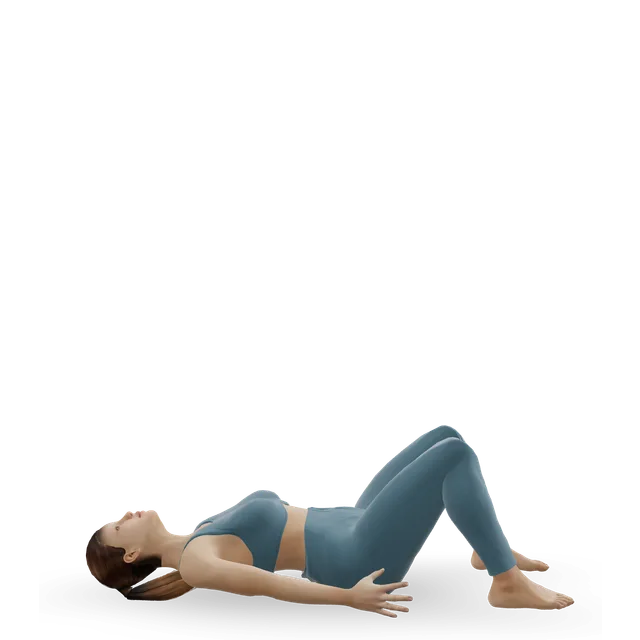
Lying chin tuck demonstrated on the 3D figure3D demoLying chin tuckBeginner · No equipment

5 to 10 gentle holds of up to 10 s, once or twice a day · As in our neck pain when turning your head guide. It can be done lying in bed on waking

Harder: Chin tuck

Thoracic rotation demonstrated on the 3D figure3D demoThoracic rotationBeginner · No equipment

6 rotations per side, moving with the breath · The move page's dose. Turning through the upper back takes some of the turn off the neck, as in a shoulder check (our reasoning)

Easier: Side-lying open book · Harder: World's greatest stretch

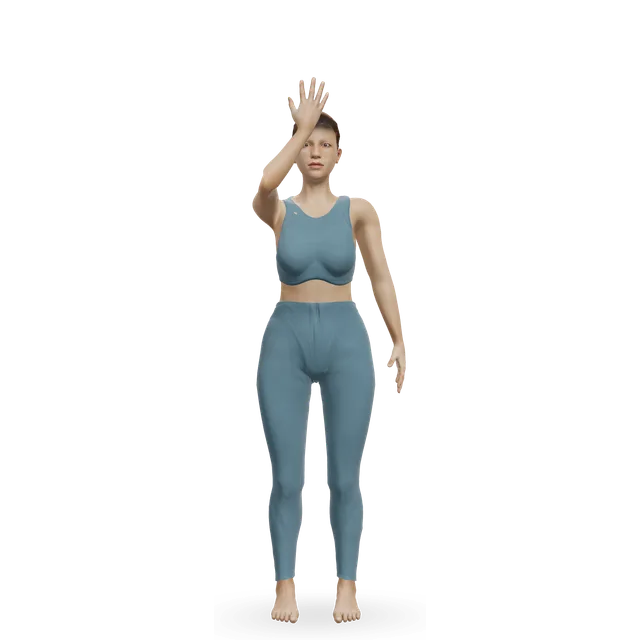
Shoulder rolls demonstrated on the 3D figure3D demoShoulder rollsBeginner · No equipment

10 to 15 slow circles each way, once or twice through · From the move page's dose (an editorial starting point). A few at every stop as well (our suggestion)

Harder: Shoulder CARs (controlled articular rotations)

Upper trap release demonstrated on the 3D figure3D demoUpper trap releaseBeginner · No equipment

2 holds of 20 to 30 s each side, only if it eases · As in our neck pain when turning your head guide (the move page uses 2 slow holds of 30 seconds). The head's weight only, no pulling

Easier: Side neck stretch

Treadmill walking demonstrated on the 3D figure3D demoTreadmill walkingBeginner · Cardio machine

5 to 10 min, several times a day, and at every stop · Editorial, as our driving guides use it. Walking round a car park or a service station counts

Harder: Treadmill jogging

Move on when: Turning is full or nearly full through the day, you can look over each shoulder sitting in a parked car without sharp pain or arm symptoms, and a 30 to 45 minute drive with a stop leaves your neck no worse the next morning (editorial, after our turning guide's test).

Follow along: a timer, a cue and the next move, one step at a time.
Stage 2

Build: endurance for the neck and shoulder blades, and longer drives

About weeks 2 to 6: neck and shoulder strength 2 or 3 days a week, with drives lengthened by the written steps below and a stop at least every 60 to 90 minutes. The moves and doses are our neck pain when turning your head guide's, with the 2-minute band trial's dose.

Isometric neck holds (four-way) demonstrated on the 3D figure3D demoIsometric neck holds (four-way)Beginner · No equipment

3 to 5 holds of 5 to 10 s each direction, light effort, building to 5 holds of 10 s at about half effort · As in our neck pain when turning your head guide. Never push into pain or dizziness, as the move page says

Easier: Chin tuck · Harder: Chin tuck with head lift

Chin tuck with head lift demonstrated on the 3D figure3D demoChin tuck with head liftIntermediate · No equipment

3 to 5 holds of 5 s, building to 10 holds of 10 s · As in our neck pain when turning your head guide

Easier: Chin tuck

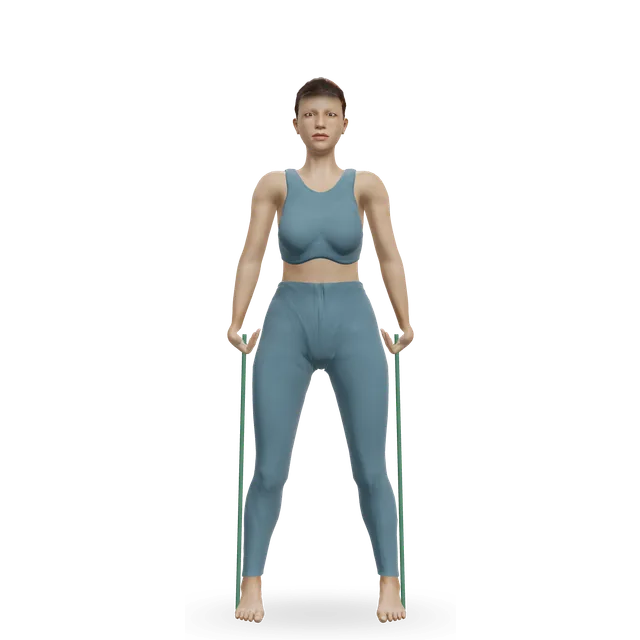
Band lateral raise demonstrated on the 3D figure3D demoBand lateral raiseBeginner · A band

2 minutes a day, 5 days a week, progressing the band · The dose from a trial in 198 adults with frequent neck and shoulder pain, as our neck guides use it

Harder: Dumbbell lateral raise

Band row demonstrated on the 3D figure3D demoBand rowBeginner · A band + An anchor point

3 sets of 10 to 15, stopping 2 to 3 reps short of failure · From the move page's dose (an editorial starting point). Check the band and the anchor before every set, as the move page says

Harder: Supported single-arm dumbbell row

Side-lying open book demonstrated on the 3D figure3D demoSide-lying open bookBeginner · No equipment

8 to 10 slow openings each side, pausing 2 seconds at the end · From the move page's dose (an editorial starting point). Let your head turn with your chest, within comfort (our turning guide's suggestion)

Harder: Thoracic rotation

Prone Y-T-W raises demonstrated on the 3D figure3D demoProne Y-T-W raisesBeginner · No equipment

5 to 8 of each shape, 2 rounds · As in our neck pain when turning your head guide. Keep the neck long and the face down, as the move page says

Easier: Wall angel · Harder: Bent-over reverse fly

Move on when: The holds and raises are comfortable, your usual drives with stops leave the ache mild and settling within an hour of getting out, and your neck is no worse the next morning (editorial).

Follow along: a timer, a cue and the next move, one step at a time.
Stage 3

Strengthen: shoulder and upper back strength, and long journeys

From about week 6, 2 or 3 days a week, then twice a week for the long term: the strength work with the best evidence for neck pain that goes on, full neck circles, and long drives, motorways and reversing into spaces back by the written steps below. No trial has tested how driving comes back after neck pain, so the order is our suggestion.

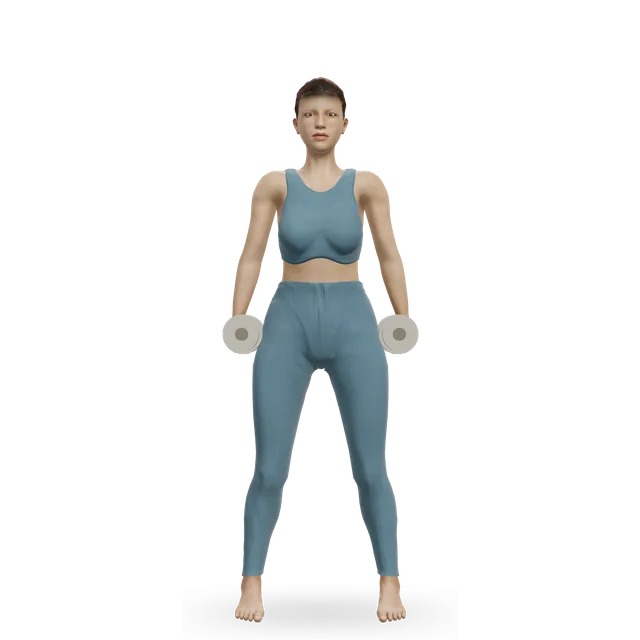
Dumbbell shrug demonstrated on the 3D figure3D demoDumbbell shrugBeginner · A dumbbell

2 to 3 sets of 8 to 12, stopping with 2 or 3 reps in reserve · From the move page's dose (an editorial starting point). Straight up and down, not rolled, as the move page says

Harder: Snatch shrug

Supported single-arm dumbbell row demonstrated on the 3D figure3D demoSupported single-arm dumbbell rowIntermediate · A dumbbell + A bench or box

3 sets of 8 to 12 each side · As in our neck pain when turning your head guide

Easier: Incline ring row · Harder: Bent-over barbell row

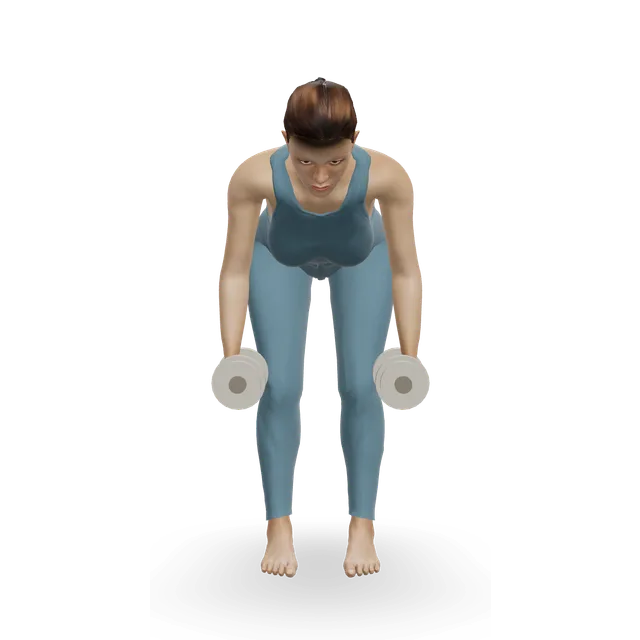
Bent-over reverse fly demonstrated on the 3D figure3D demoBent-over reverse flyIntermediate · A dumbbell

3 sets of 10 to 12 · As in our neck pain when turning your head guide

Easier: Prone Y-T-W raises · Harder: Barbell rear-delt row

Isometric neck holds (four-way) demonstrated on the 3D figure3D demoIsometric neck holds (four-way)Beginner · No equipment

3 holds of 10 s each direction at moderate effort · As in our neck pain when turning your head guide's later stage

Easier: Chin tuck · Harder: Chin tuck with head lift

Neck CARs (controlled articular rotations) demonstrated on the 3D figure3D demoNeck CARs (controlled articular rotations)Beginner · No equipment

3 slow circles each way, once or twice a day · From the move page's dose (an editorial starting point). Full circles once separate turns are comfortable, as the move page says

Move on when: Our suggestion: long drives with a stop at least every 2 hours, shoulder checks and reversing leave your neck no worse the next morning. Keep the strength work going twice a week, because neck pain often comes back. If it flares, go back to the stage 1 moves and shorter drives for a few days, not a collar or rest.

Follow along: a timer, a cue and the next move, one step at a time.

What to change for now

Setting up the car (written steps)

Our 3D figure can't show these. They come from an NHS pain clinic, the Highway Code and a road safety organisation; where a step is our suggestion, it says so. None has been tested as a treatment for neck pain. The head restraint step is our wording of the Highway Code and a crash-test procedure, for crash protection: no study links the headrest with everyday neck pain.

  • 1. Set everything before you set off: the seat height so you can see the road without craning, then the seat forward so you reach the pedals and the wheel without stretching.
  • 2. The wheel close enough that your elbows stay bent, and at least about 30 cm from your breastbone, as a road safety organisation suggests for the airbag.
  • 3. The backrest close to upright but not bolt upright, and sit right back into it, so your head is near the head restraint (our suggestion; no driving posture has been proven best).
  • 4. The head restraint: the top level with the top of your head, or as high as it goes, and as close behind your head as it adjusts (our wording of the Highway Code and a crash-test procedure).
  • 5. Then the mirrors, so you see behind with small eye and head movements (our suggestion), and still look round for the blind spots, as the Highway Code asks.
  • 6. Shoulders down: check them, and shift about in your seat, at every set of traffic lights, as the pain clinic suggests.
  • 7. A neck cushion only if it doesn't push your head forward from the head restraint (our suggestion).

Sources 43, 16, 64, 44, 23

On the road (written steps)

These come from the Highway Code, an NHS pain clinic and a road safety organisation; our suggestions are labelled. None has been tested for neck pain.

  • 1. Breaks: the Highway Code recommends a break of at least 15 minutes after every 2 hours of driving, for tiredness. While your neck is sore, stop before the ache builds, often every 30 to 60 minutes, and get out and move (our suggestion, from the pain clinic's pacing).
  • 2. Shoulder checks: lean forward a little and let your shoulders turn with your head, rather than swinging your head fast to the end of its range (our suggestion).
  • 3. Reversing: turn your trunk, and use your mirrors and any camera as well as looking round (our suggestion, in line with the Highway Code).
  • 4. When you're stopped, rest your hands in your lap or on the armrests, which let the upper trapezius rest in a lab study (our suggestion).
  • 5. While you're building back, plan routes that avoid junctions you know are painful, as a road safety organisation suggests.
  • 6. If you feel nervous driving after a crash, start with short, familiar trips and tell your GP if it isn't easing (our suggestion).

Sources 16, 64, 43, 44, 13, 57

Driving after a crash, after neck surgery and on painkillers (written steps)

No one can give you a date. Your doctor or surgeon advises; you are legally responsible for being in control of the car, which includes being able to look round; your insurer decides whether you're covered; and the DVLA only needs to know in the cases below. These are the rules in their own words.

  • 1. After whiplash, with severe pain despite painkillers, tingling or pins and needles, problems walking or sitting upright, an "electric shock" feeling, or weak hands, arms or legs, the NHS says do not do anything that could be dangerous, such as driving or cycling, until you have spoken to a GP or NHS 111.
  • 2. For any neck pain, the NHS says do not do anything that could be dangerous because you cannot move your neck, for example driving or cycling.
  • 3. GOV.UK says you must tell the DVLA if you have a spinal condition or an injury to your spine that affects your ability to drive, and if you've had spinal surgery, check with your doctor before you start driving again.
  • 4. GOV.UK's guidance for doctors says drivers don't need to tell the DVLA about recovery from surgery unless it is likely to affect driving and last more than 3 months; that you should establish with your own doctors when it would be safe to drive; and that drivers must stay in control and stay insured.
  • 5. An insurer says you really shouldn't drive after any medical procedure until your doctor says it's safe. Check your own policy.
  • 6. Painkillers: GOV.UK says you can drive on prescribed codeine, tramadol or other opioid-based drugs only if you follow the advice on how to take them and they aren't making you unfit to drive. Ask your pharmacist or GP before driving on a new one.

Sources 30, 40, 65, 66, 67, 61

Driving comes back (written steps)

No trial has tested how driving comes back after neck pain. These steps are our suggestion unless a source is named.

  • 1. Before your first drive, the parked-car check in your driving position: can you look over each shoulder through the side window and turn far enough to see out of the rear window, without sharp pain, arm symptoms or dizziness? If not, don't drive yet: the NHS says not to drive while you can't move your neck.
  • 2. Short, familiar drives on quieter roads first, with fewer lane changes and reversing manoeuvres; avoid junctions you know are painful for now, as a road safety organisation suggests.
  • 3. Find your driving time, how long you can drive before the ache builds, and plan a stop just before it, every time (the NHS pain clinic's pacing).
  • 4. When a length of drive has left your neck no worse the next morning for 3 or 4 drives, add 15 to 30 minutes; then motorways, reversing into spaces and shoulder checks in traffic.
  • 5. Long journeys: a stop at least every 2 hours (the Highway Code, for tiredness), sooner while you're building back.
  • 6. If it flares, shorter drives and the stage 1 moves for a few days, not a collar or rest.

Sources 40, 44, 43, 16

Positions to swap, and why

Habit or positionWhy it mattersInstead
Hours at the wheel without a stopDiscomfort builds in the neck over a long drive whatever the seat, and the Highway Code recommends a break of at least 15 minutes after every 2 hours (for tiredness).Stop before the ache builds, get out and move, with a few shoulder rolls.
Driving before you can look roundThe NHS says don't drive while you can't move your neck, and the Highway Code expects you to look round for the blind spots your mirrors miss.A lift or public transport until the parked-car check is comfortable, with gentle neck turns meanwhile.
Swinging your head to the end of its turn for every checkWhen the trunk doesn't help, the neck has to turn further.Turn your shoulders and trunk with your head; the thoracic rotation trains it.
The head restraint left low or far backIt is there for a crash, and good head restraint set-up went with fewer whiplash claims.The top level with the top of your head, close behind it.
Sitting forward with your shoulders hunched, gripping the wheelAn NHS pain clinic asks drivers to check they aren't raising their shoulders.Seat closer, elbows bent, shoulders down; rest your hands when you're stopped.
A soft collar after a crashThe NHS and the trials favour staying active.Keep the neck moving within comfort.
Full neck circles while your neck is soreThe move page says start with small separate turns, tilts and nods before full circles.Separate turns, tilts and nods first; full circles in stage 3.
Driving in the first days of a new strong painkillerYou can drive on prescribed opioids only if they aren't making you unfit to drive.Ask your pharmacist or GP; let someone else drive.
Asking for a scan to find out what driving has done to your neckDisc bulges are normal on scans in people without pain.Get checked if a warning sign appears.

Routines to follow

More moves for this area

Questions people ask

Why does my neck hurt when I drive?

A drive is a long, still spell with your arms held up to the wheel, and discomfort in the neck builds over a few hours even in people without neck problems. Shoulder checks and reversing ask for big turns. It is nearly always ordinary neck pain, not damage.

Can driving cause neck pain?

It can bring it on: about 4 in 10 professional drivers report neck pain over a year, close to the figure for everyone, though those studies looked at one point in time. In a survey of 12,907 British adults, professional driving wasn't linked with neck pain.

What is the best driving position for neck pain?

No position has been proven best. Set the seat so you reach the wheel with your elbows bent, sit back so your head is near the head restraint, then set the mirrors, and keep your shoulders down. Change position at the lights.

How should I set my headrest?

The top level with the top of your head, or as high as it goes, and as close behind your head as it adjusts. That is our wording of the Highway Code and a crash-test procedure, and it is for crash protection. No study has linked the headrest with everyday neck pain.

Why does my neck hurt after a long drive?

Discomfort rises with time at the wheel whatever the seat. Stiffness getting out usually eases once you move. Pain that lasts for days, spreads down an arm or comes with numbness needs checking.

Can I drive with a stiff neck?

Not until you can turn to look round properly: the NHS says don't drive while you can't move your neck, and the Highway Code expects you to check your blind spots. Check in a parked car first. Our neck pain when turning your head guide covers it in more detail.

When can I drive after whiplash?

No one can give you a date. With tingling, weakness, problems walking or an "electric shock" feeling, the NHS says don't drive until you've spoken to a GP or NHS 111. Otherwise, once the injury warning signs have been ruled out and you can look round and control the car.

I feel nervous driving since my crash. Is that normal?

Yes, it is common: after road crashes, travel anxiety as a driver or passenger was more common than post-traumatic stress disorder. Short, familiar trips help some people. If it isn't easing, talk to your GP; the NHS mentions psychological support.

When can I drive after neck surgery?

Your surgeon advises, you must be in control of the car and able to look round, and your insurer must cover you; GOV.UK says check with your doctor before driving again after spinal surgery. The evidence is thin: in one small study most people passed a road test at 6 weeks, which isn't permission to drive.

Do I need to tell the DVLA?

Only if a spinal condition or injury affects your ability to drive, or your recovery from surgery is likely to affect driving for more than 3 months. Ordinary neck pain doesn't need reporting.

What exercises help neck pain from driving?

Gentle turns and shoulder rolls at every stop, then strength work for the neck, shoulders and upper back, which has the best evidence for neck pain that goes on. Even 2 minutes a day of band raises reduced neck and shoulder pain in a trial.

When should I worry?

Call 999 for neck pain with a sudden, severe headache, a drooping face, double vision, slurred speech or weakness, for chest pain spreading to your neck or arm, or after a serious crash if you can't move your neck or have numbness. Get a same-day check for new pins and needles or weakness in an arm. In the US, call 911 where this page says 999.

Related exercise guides

Other pain guides

Sources

  1. Joseph 2020 · Muscle and joint pain in professional drivers: 56 studies, 18,882 drivers (systematic review, J Occup Health)
  2. Tahernejad 2024 · Muscle and joint problems in lorry drivers: 15 studies, 2,662 drivers (meta-analysis, BMC Public Health)
  3. Rezaei 2024 · Muscle and joint problems in taxi drivers: 11 studies, 5,277 drivers (meta-analysis, BMC Musculoskelet Disord)
  4. Makki 2026 · Muscle and joint problems in bus drivers: 22 studies (meta-analysis, Int J Occup Saf Ergon)
  5. Hogg-Johnson 2008 · The burden and causes of neck pain in the general population (Bone and Joint Decade Task Force review, Spine)
  6. Palmer 2001 · Neck pain and work in 12,907 British adults (survey, Scand J Work Environ Health)
  7. Pickard 2022 · Muscle and joint problems linked with driving for work: 25 studies (systematic review, Int J Environ Res Public Health)
  8. Chen 2024 · Commuting time, neck and shoulder pain and burnout in 1,615 hospital staff (cross-sectional study, BMC Health Serv Res)
  9. Lecocq 2022 · Discomfort and muscle fatigue over about 3 hours of real driving in 21 volunteers (crossover study, PLoS One)
  10. Lantoine 2021 · Car seats and discomfort over 195 km of real driving in 21 volunteers (crossover study, PLoS One)
  11. El Falou 2003 · Driver discomfort over 150 minutes in a car seat in 11 volunteers (lab study, Appl Ergon)
  12. Sammonds 2017 · Discomfort and fidgeting over a 140-minute simulated drive (lab study, Appl Ergon)
  13. Watanabe 2022 · Arm position and upper trapezius activity in simulated driving in 10 volunteers (lab study, Int J Occup Saf Ergon)
  14. Chartered Society of Physiotherapy · Causes of neck pain
  15. Alshahrani 2024 · Neck movement and head posture in 160 car drivers with and without neck pain (cross-sectional study, J Multidiscip Healthc)
  16. GOV.UK (Department for Transport) · The Highway Code: rules for drivers and motorcyclists, rules 89 to 102 (guidance)
  17. Farmer 1999 · Head restraint position and driver neck injury in rear-end crashes (insurance claims study, Accid Anal Prev)
  18. Farmer 2003 · Redesigned head restraints and seats and neck injury claims in rear-end crashes (insurance claims study, Traffic Inj Prev)
  19. Trempel 2016 · Head restraint ratings and insurance injury claims (crash and claims study, Traffic Inj Prev)
  20. D'Elia 2021 · Whiplash-reducing head restraints and whiplash injury in Victoria, Australia (crash data study, Accid Anal Prev)
  21. Holm 2008 · The burden and causes of whiplash after traffic collisions (Bone and Joint Decade Task Force review, Spine)
  22. Stemper 2006 · The head restraint gap and neck movement in a simulated rear impact (computer model study, Accid Anal Prev)
  23. Research Council for Automobile Repairs · A procedure for evaluating motor vehicle head restraints (crash-test procedure, issue 3, March 2008, hosted by the Insurance Institute for Highway Safety)
  24. Shugg 2011 · The gap between the head and the head restraint during ordinary driving in 14 drivers (field study, Traffic Inj Prev)
  25. Shugg 2011 · How far the neck turns during ordinary driving (pilot on-road study, Traffic Inj Prev)
  26. Fice 2018 · Head movements and shoulder checks in 20 drivers on public roads (on-road study, Traffic Inj Prev)
  27. Bible 2010 · How much neck movement 15 everyday tasks use, in 60 adults (lab study, J Spinal Disord Tech)
  28. Eklund 1994 · Head posture in work vehicle drivers (field study, Ergonomics)
  29. Chen 2015 · Neck and trunk turning in a blind-spot task in 26 younger and older drivers (lab study, Exp Gerontol)
  30. NHS · Whiplash
  31. Carroll 2008 · How whiplash usually goes, and what predicts it (Bone and Joint Decade Task Force review, Spine)
  32. Kamper 2008 · How whiplash usually goes: 38 cohorts (systematic review and meta-analysis, Pain)
  33. Mayou 2002 · Pain and the mind after whiplash in 1,148 people seen after road crashes (cohort, Br J Psychiatry)
  34. Takasaki 2011 · Driving with long-lasting whiplash: 33 people's views (interview study, Arch Phys Med Rehabil)
  35. Pereira 2008 · Driving difficulty in 30 people with long-lasting whiplash and 30 without (case-control study, Arch Phys Med Rehabil)
  36. Takasaki 2013 · Driving in a simulator with long-lasting whiplash: 17 people and 26 controls (simulator study, Accid Anal Prev)
  37. Takasaki 2013 · What makes driving difficult with long-lasting whiplash, in 40 people (cross-sectional study, Spine)
  38. Nakashima 2015 · Neck MRI findings in 1,211 people without symptoms (cross-sectional study, Spine)
  39. Stiell 2001 · The Canadian C-spine rule for neck imaging after injury, in 8,924 adults (derivation study, JAMA)
  40. NHS · Neck pain (past its review date: reviewed April 2023, review due April 2026)
  41. NHS inform · Neck problems
  42. Carroll 2009 · How neck pain usually goes in the general population (Bone and Joint Decade Task Force review, J Manipulative Physiol Ther)
  43. Queen Elizabeth Hospital King's Lynn NHS Foundation Trust · Driving tips (pain clinic occupational therapy leaflet, 2024)
  44. GEM Motoring Assist (a motoring and road safety organisation) · Simple tips for when driving's a pain in the neck (news article, July 2022)
  45. Yoo 2013 · Seat distance from the steering wheel and turning force in 27 students (lab study, J Phys Ther Sci)
  46. Côté 2008 · The burden and causes of neck pain in workers (Bone and Joint Decade Task Force review, Spine)
  47. Slater 2019 · "Sit up straight": time to re-evaluate (viewpoint, J Orthop Sports Phys Ther)
  48. Gross 2015 · Exercises for mechanical neck disorders: 27 trials (Cochrane review)
  49. Andersen 2011 · 2 or 12 minutes a day of band training for frequent neck and shoulder pain in 198 working adults (randomised trial, Pain)
  50. Chartered Society of Physiotherapy · Treatment for neck pain
  51. Marottoli 2007 · A flexibility and coordination programme and on-road driving in 178 drivers aged 70 and over (randomised trial, J Gen Intern Med)
  52. NHS inform · Whiplash
  53. Kongsted 2007 · A collar, acting as usual or active mobilisation after whiplash in 458 people (randomised trial, Spine; errata on an author's name and an unstated point weren't read)
  54. Christensen 2021 · Soft collars after whiplash: 4 trials, 409 people (systematic review and meta-analysis, Musculoskelet Sci Pract)
  55. Lamb 2013 · Emergency department advice and physiotherapy for recent whiplash: the MINT trial (randomised trial, Lancet)
  56. Michaleff 2014 · An exercise programme or advice for long-lasting whiplash: the PROMISE trial (randomised trial, Lancet)
  57. Mayou 1993 · Mental health and travel anxiety in 188 people a year after a road crash (cohort, BMJ)
  58. Alhammoud 2017 · Driving safety after spinal surgery: 6 studies (systematic review, Asian Spine J)
  59. Ding 2023 · An on-road driving test 6 weeks after anterior neck surgery in 21 adults (cohort, Clin Spine Surg)
  60. Hanley 2024 · Braking time after neck nerve root injections in 40 people (prospective study, Br J Radiol)
  61. GOV.UK · Drugs and driving: the law
  62. NHS inform · Exercises for neck problems (including how to tell if you are exercising at the right level)
  63. St George's University Hospitals NHS Foundation Trust · Median nerve gliding (hand therapy leaflet, 2024)
  64. GOV.UK (Department for Transport) · The Highway Code: using the road, rules 159 to 203 (guidance)
  65. GOV.UK (Driver and Vehicle Licensing Agency) · Spinal conditions, injuries or spinal surgery and driving (guidance)
  66. DVLA · Assessing fitness to drive: driving after surgery, temporary conditions and fractures (GOV.UK guidance for medical professionals)
  67. Aviva · Driving with a medical condition (motor insurer's guide)

Exercise education, not a diagnosis or treatment plan. It is written from the guidelines and studies listed above; review by a clinician is pending. If your pain follows an injury, is severe, is getting worse, or comes with any warning sign listed on this page, get it assessed. Health disclaimer.