Pain guide · Back pain

Lower back pain when doing Russian twists: the rounded twist, your feet, the obliques and swaps

Lower back pain when you do Russian twists usually comes from ordinary back pain that dislikes one combination: turning a lower back that is held rounded, often with the feet up, a weight or fast turns. Your lower back turns only a degree or two at each joint, so most of a good twist should come from your ribs and upper back. Lab studies flag fast, loaded twisting with a rounded back as the version to be careful with, though they were done in animal tissue and don't all agree. Putting your feet down, sitting taller, turning slowly and leaving the weight out usually ease it, with the Pallof press and side plank as swaps. No study has tested the Russian twist itself, so this guide says where each piece of advice comes from.

This guide starts with the signs that need help, from a 999 call for numbness around your genitals or bottom, new bladder or bowel trouble or weakness in both legs, to the hernia warning signs and a same-day check through the National Health Service's 111 line (NHS 111) or a general practitioner (GP) for back pain with a fever or a leg that is getting weaker. It then maps the causes by where it hurts (the back, the side of the trunk, the sacroiliac joint, the tailbone, the hips, a nerve), explains what the lab studies of twisting and bending show, and don't, covers thin bones, shows how to change your twist today, and gives a three-stage plan with a 3D demo of every move, from side planks back to the Russian twist.

When to get help first

Exercise is for pain that has been checked or is clearly mild and settling.

Get urgent medical help if

  • Call 999 or go to A&E: loss of feeling or numbness around the genitals or bottom, new trouble peeing or controlling your bladder or bowels, changes in genital sensation during sex or problems with erections or orgasm, or pain, tingling, weakness or numbness in both legs. These are signs of cauda equina syndrome, which needs treating in hospital urgently. Don't drive yourself.
  • Call 999 or go to A&E: back pain with chest pain, or back pain that started after a serious accident, such as a car crash.
  • Call 999: sudden, severe pain in the tummy or back, which can come with breathlessness, pale or grey skin, or collapse. It can be a burst abdominal aortic aneurysm, most common in men aged 65 or over and in people who smoke or used to smoke.
  • Call 999 or go to A&E: pain spreading from the tummy to the back, with vomiting.
  • Same day (GP or NHS 111): back pain and you feel hot, cold, shivery or generally unwell, or severe pain that starts suddenly or is getting worse quickly.
  • Ask for an urgent GP appointment or get help from NHS 111 if you think you may have a kidney infection (often pain in your lower back or side, with burning or stinging when you pee or needing to pee more often) and you have a very high temperature or feel hot, cold or shivery, a temperature below 36C, pain in the lower tummy or in the back just under the ribs, blood in your pee, you feel or are sick, you haven't had a pee all day, or you're pregnant. Call 999 or go to A&E if you're confused, drowsy or have difficulty speaking.
  • Same day (NHS 111): back pain after a new, significant injury in the last 7 days, such as a fall from a height (off a box, a bar or rings) or a direct blow to the back.
  • Same day: leg weakness that is getting worse; new leg pain with a history of cancer, HIV, TB or inflammatory arthritis; or leg pain with a fever, feeling unwell, loss of appetite, unexplained weight loss or night sweats.
  • Same day (urgent GP appointment or NHS 111): new difficulty lifting the front of your foot or toes (foot drop), or a foot that slaps down or catches as you walk, especially if it is getting worse. Weakness in both legs, or with numbness around the genitals or bottom or bladder or bowel changes, is the 999 emergency above.
  • Same day: you have or have had cancer, and new back pain that is severe and doesn't let up, is getting steadily worse, is worse at night and disturbs your sleep, is worse when you cough, sneeze or strain, or comes with tenderness over the spine. Contact your cancer team or GP urgently. With cancer, new weakness, difficulty walking, numbness or bladder or bowel problems are an emergency.
  • Call 999 or go to A&E now if you have a femoral hernia (a small lump at the top of your thigh, in your groin) and very bad tummy pain, you feel sick or you're being sick, you cannot fart or poo, you have a high temperature or you feel hot, cold or shivery, or you've suddenly become confused. Do not drive to A&E. With any other hernia and pain in or around it, a bloated tummy, feeling or being sick, vomiting blood or vomit that looks like coffee grounds, constipation, a high temperature or feeling hot, cold or shivery, or sudden confusion, get help from NHS 111.
  • If you take a blood thinner (an anticoagulant) and notice severe bruising or bleeding, get medical help immediately: call 111 or go to A&E. A painful lump in the tummy wall that grows after a cough, a strain or a knock can be bleeding into the muscle (a rectus sheath haematoma), which is more likely on blood thinners and easily mistaken for a strain.
  • Same day (call NHS 111, or go to A&E if you feel very unwell): after a big or unusual session, such as hundreds of squats, sit-ups, back extensions or burpees, a challenge or a new class, muscle pain, swelling or weakness far worse than the session explains, and dark pee (red, brown, tea or cola coloured), sometimes starting hours or days later. Dark pee isn't always there, so muscles far sorer, more swollen or weaker than the session explains still need the same-day check. It can be rhabdomyolysis, a breakdown of muscle that can harm the kidneys.
  • A painful lump at the top of your bottom, between the buttocks, that is bleeding or leaking pus: ask for an urgent GP appointment or contact NHS 111. It can be an infected pilonidal sinus.

See a doctor or physiotherapist if

  • Back pain that hasn't improved after a few weeks of looking after it at home, stops you doing day-to-day activities, worries you, or you're struggling to cope.
  • Unexplained weight loss, or a lump, swelling or change in the shape of your back.
  • Pain that doesn't improve with rest or is worse at night, or pain that is worse when you sneeze, cough or poo.
  • Pain, tingling or numbness spreading below the knee that isn't settling after a few weeks, is getting worse or stops your normal activities: see a GP.
  • Pain that is not improving after a few weeks, is getting worse, or is stopping your normal activities.
  • Back pain that started before 45 and has lasted more than 3 months, especially if it started before 35, wakes you in the second half of the night, comes with buttock pain, gets better with movement or within 48 hours of anti-inflammatory painkillers, or you have or have had arthritis, pain where a tendon attaches to bone (enthesitis) or psoriasis, or a parent, brother, sister or child with spondyloarthritis. These can point to inflammatory back pain (axial spondyloarthritis, such as ankylosing spondylitis). The National Institute for Health and Care Excellence (NICE) asks GPs to refer people with 4 or more of these 9 features to a rheumatologist, and to do a blood test for the HLA-B27 gene marker if exactly 3 are present, referring if it is positive.
  • Sudden new back pain after a minor fall, lift, cough or sneeze, from 50 or past the menopause, or if you take long-term steroid tablets; or height loss, a curved spine or a change in posture: see a GP. It can be a spinal fracture.
  • A teenager or young adult whose low back pain is worse arching backwards and hasn't settled after a couple of weeks: stop the lifts that arch the back and get it checked by a GP or a sports medicine doctor or physiotherapist. It can be a stress fracture of the spine (spondylolysis), which usually does well without surgery when it's found.
  • A lump in the groin, upper thigh or tummy, especially one that appears when you cough or strain and goes when you lie down: see a GP, as it may be a true hernia. A femoral hernia (a small lump at the top of the thigh, mainly in women over 50, though it can happen to anyone) needs treating in hospital.
  • A ridge or doming down the middle of your tummy when you strain, during or after pregnancy: see our diastasis recti guide, and ask about a pelvic health physiotherapist.
  • A strain that is getting worse, or isn't feeling better after looking after it yourself: see a GP or physiotherapist. In many areas you can refer yourself to physiotherapy.
  • Tailbone pain that hasn't improved after a few weeks of treating it at home, is affecting your daily activities, or comes with a high temperature and pain somewhere else, such as your tummy or lower back: see a GP. In many areas you can refer yourself to NHS physiotherapy.

Where does it hurt?

Location narrows the likely causes; it does not diagnose.

Across the lower back, one or both sides, as you lean back and turn, worse with your feet up, a weight or fast turns

Usually ordinary low back pain brought on by turning a rounded, loaded back: by far the commonest pattern (our reading). Feet down, sitting taller and slower turns usually ease it.

Read: Back pain →
A sudden catch on one side during a rep, with the muscles locking up

A pulled back muscle or back spasm: common, and it settles over days to weeks.

Read: Back spasm and pulled back muscle →
An even ache across the lower back and tummy a day or two after a new or bigger ab session, not during it

Usually muscle soreness. Muscles far sorer, more swollen or weaker than the session explains, especially with dark pee, need a same-day check.

Read: Back pain after a workout →
A sharp pain at the side of the trunk, between the lowest ribs and the hip bone, during a hard or fast twist

Often a strained oblique (side) muscle, sore to twist, cough or sit up. It can even be felt as one-sided low back pain.

Read: Abdominal strain →
Low on one side, by the dimple at the back of the pelvis, sometimes into the buttock

Possibly the sacroiliac (SI) joint, which only an examination can point to.

Read: SI joint pain →
The tailbone, where you balance on a hard floor, sometimes sore to sit on afterwards

Usually the floor pressing on the tailbone (our reading: no study has counted it). A mat, sitting a little further forward and feet down usually help.

Read: Tailbone pain →
The front of the hips or thighs, aching or cramping with your feet lifted

The hip flexors working hard to hold your legs up. Put your feet down; our hip flexor guide for sit-ups covers pain that lingers.

Read: Hip flexor pain in sit-ups →
Down one leg past the knee, with tingling, numbness or weakness

Sciatica, usually from a disc. A leg that is getting weaker needs a same-day check, as the warning signs say.

Read: Sciatica →
A scan report says bulging or herniated disc

Disc changes are common in people without back pain.

Read: Herniated or bulging disc →
Worse arching back and twisting, from mid-life

Often labelled facet joint pain, which is managed like other back pain.

Read: Facet joint pain →
A teenager or young adult in a sport that arches or twists the back, with back pain lasting more than a couple of weeks

Possibly a stress fracture of the spine (spondylolysis): get it checked, as the warning signs say.

Read: Spondylolisthesis →
Sudden pain after a minor twist or fall, from 50 or past the menopause, or on long-term steroid tablets

A possible spinal fracture from thin bones: rare. See a GP, as the warning signs say.

Read: Spinal compression fracture →
A bulge in the groin or tummy wall, bigger when you strain and smaller lying down

A possible hernia: read the warning signs first.

Read: Groin pain →
A ridge or doming down the middle of the tummy as you lean back, during or after pregnancy

A gap between the six-pack muscles (diastasis recti): ease off that move for now, and ask about a pelvic health physiotherapist.

One side, with a fever, burning when you pee or waves of pain into the groin, or pain that doesn't change when you move

The kidneys or another cause that isn't the back: get help the same day, as the warning signs say.

Read: Lower back pain on one side →
The same pain in sit-ups, leg raises or everyday twisting

Often the same back. Our sit-up, leg raise and twisting guides cover each.

Read: Back pain when twisting →
The front of the neck, holding your head up

The neck muscles, not the back.

Read: Neck pain in sit-ups →

Understand it

What a Russian twist asks of the back, and what no study has measuredEmerging evidence

In the usual version you sit with your knees bent, lean back to about halfway with a long spine, and turn your ribs and shoulders from side to side; harder versions lift the feet and add a weight. The National Academy of Sports Medicine (NASM) starts beginners with body weight and lists rounding the spine and jerky turns among the common mistakes. The tummy muscles hold the lean back, and with your feet up the hip flexors hold your legs.

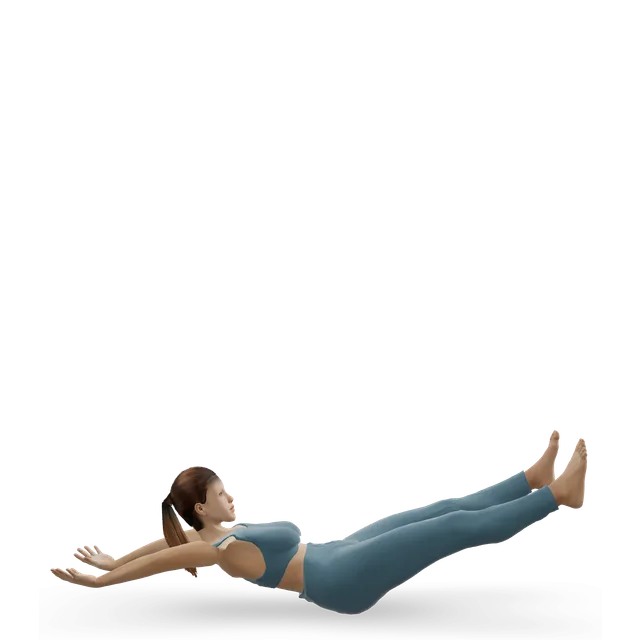
The lean back itself rounds the lower back. In 20 adults, the lower spine was 28 degrees more bent in a V-sit than in a plank, with similar tummy muscle activity in another 30. The turn is started by the outer oblique on one side and the inner oblique and latissimus dorsi on the other, and in 50 young adults muscle activity rose as turns got faster even though the turning force fell; the authors advise keeping load and speed low.

No study has measured the Russian twist's muscle activity, spine load or safety, and none counts back pain from it. A review of 67 studies of core muscle activity in fitness exercises has no Russian twist data. So this page is built from studies of twisting, bending and the V-sit, trials of exercise for back pain in general and NHS pages.

Sources 1, 2, 3, 4

Where it hurts, and who gets itEmerging evidence

No study gives the share of each cause in Russian twists. An ache across the lower back as you lean back and turn is usually ordinary low back pain, the commonest kind: the NHS says a common cause of back pain is a pulled muscle (strain), and that back pain is very rarely a sign of something serious such as a broken bone, cancer or an infection.

The people it usually bothers, in our reading: people who jump to the feet-up, weighted or fast version, or to high-rep challenges; people whose back already dislikes bending forward; people who slump into the lean back; people training on a hard floor; and people back after a baby or a hernia repair, or with thin bones.

Source 5

Bending and twisting together: what the lab studies show, and don'tMixed evidence

The lower back hardly twists. In 10 volunteers turning their trunks 45 degrees in a scanner, lying down, each lower back joint turned only 1.2 to 1.7 degrees. In cadaver spines, the small facet joints resisted most of a twist, and the authors concluded that twisting seems unimportant in disc wear and prolapse. But a partly bent joint behaves differently: some lumbar joints turned further when partly bent, and the authors wrote that bending with twisting raises the disc's vulnerability.

The animal studies are mixed. In pig spines, twisting combined with repeated bending split the layers of the disc wall in 67.5% of specimens, while twisting alone couldn't start a herniation, and repeated bending under load alone, over up to 86,400 cycles, herniated young pig discs. In 25 sheep discs held bent, adding a small twist made one kind of tear easier and another harder; in 30 sheep discs loaded 1,000 times, bending and side bending mattered more than twisting, and no herniation happened; in 12 cow tail discs, fewer cycles of even bending and twisting kept the disc healthy, while more cycles and one-sided loading split its outer wall.

These are dead animal tissues loaded far beyond any workout, and living tissue adapts. In 861 workers followed for 3 years, twisting at work carried a small, uncertain rise in back pain risk that could have been chance. Our reading: fast, loaded, repeated twisting with a rounded back is the version to be careful with, especially when your back is already sore, not proof that a Russian twist harms a healthy back.

Sources 6, 7, 8, 9, 10, 11, 12, 13, 14

Your feet and the hip flexorsEmerging evidence

In 6 men, bent and supported legs raised hip flexor activity in sit-ups without adding tummy muscle work, and in 8 adults every form of sit-up worked the psoas, a hip flexor joined to the lower spine, at 15% to 35% of its maximum. A modelling study found that at full effort the psoas squeezes the lower spine hard.

No study has measured a Russian twist with the feet up and down. That lifting your feet asks more of the hip flexors and adds to the load on a sore lower back is our reading of these sit-up studies and the model. It fits why people search for Russian twists hurting their hips and thighs, and why the feet-down version is the place to start.

Sources 15, 16, 17

The side of the trunk, the sacroiliac joint and nervesEmerging evidence

A sudden sharp pain at the side of the trunk during a hard twist is more likely a strained oblique than the spine. Across 5 seasons of professional baseball, 996 oblique injuries cost about 3 weeks each, most during batting or pitching; and in one high school baseball player, an oblique injury where it joins the back's connective tissue was felt as one-sided low back pain after a twisting movement and settled with 7 weeks of care. These are throwing and batting athletes, not people doing Russian twists.

Pain low on one side by the dimple can be the sacroiliac joint, thought to cause 10% to 25% of lasting low back pain low down, though no single question, test or scan confirms it. Pain, tingling or numbness spreading below the knee is sciatica, usually from a disc; the NHS says it usually gets better in a few weeks to a few months, and that a slipped disc usually gets better slowly with rest, gentle exercise and painkillers.

Sources 18, 19, 20, 21, 22

The tummy wall, the tailbone and young athletesEmerging evidence

A bulge that gets bigger when you cough, sneeze or strain and smaller when you lie down can be a hernia, which a GP examines; the NHS says a femoral hernia needs treatment in hospital. Rarely, strenuous exercise or even a small twist can cause bleeding into the six-pack muscle: one 54-year-old woman, not on blood thinners, had it after muscle training. That is a single case report.

The tailbone takes your weight as you balance on a hard floor, and the NHS says tailbone pain is often worse sitting; no study links it to Russian twists, so the floor explanation is our reading. In one clinic, 47 of 100 young athletes with back pain had a stress fracture of the spine, against 5 of 100 adults, which is why a teenager's back pain that lasts gets checked.

Sources 23, 24, 25, 26, 27

Thin bones: twist smoothly, leave out the rounded, loaded versionStrong evidence

The UK consensus on exercise for osteoporosis says "Rotation (twisting) movements should be safe if performed smoothly and comfortably", but that movements involving sustained, repeated or end-range bending of the spine should be modified or avoided, and it notes reports of spinal fractures with loaded or repeated bending exercises, including sit-ups. A weighted Russian twist from a rounded V-sit combines those, which is why our move page says leave it out with osteoporosis or a past spinal fracture. It is expert advice, not a trial result.

Source 28

What a scan shows, and when a test mattersStrong evidence

The National Institute for Health and Care Excellence (NICE) says "Do not routinely offer imaging in a non-specialist setting for people with low back pain with or without sciatica". In 3,110 people without back pain, disc bulges showed in 30% of 20-year-olds and 84% of 80-year-olds, so a scan report of a bulging disc doesn't explain pain on its own.

A test matters for the warning signs (an emergency magnetic resonance imaging (MRI) scan for the cauda equina signs), a young athlete whose back hurts arching backwards for more than a couple of weeks, sudden pain with thin bones, a lump that may be a hernia, a painful, growing lump in the tummy wall, and one-sided pain with a fever or burning when you pee.

Sources 29, 30

How it usually goesStrong evidence

No study follows back pain from Russian twists. Across 33 groups of people with new back pain (11,166 people), average pain fell from 52 out of 100 at the start to 23 at 6 weeks, 12 at 26 weeks and 6 at a year. An update of 95 studies found a similar early fall, but in pain that had already lasted months it changed little over a year (very low certainty).

The NHS says back pain usually improves within a few weeks but can last longer or keep coming back, and NHS inform says new back problems should begin to settle within 6 weeks, with the biggest change in the first couple of weeks. No one can promise a date.

Sources 31, 32, 5, 33

What helps, and how strong the evidence is

Exercise helps back pain, and no type is specialStrong evidence

Across 249 trials, exercise eased long-lasting back pain by about 15 points out of 100 against no treatment, usual care or a placebo (moderate certainty), and harms were mostly minor soreness. In 29 trials (2,431 people), motor control ("core") exercise was no more effective than other exercise, and the reviewers say the choice should depend on preference, cost and safety. NICE suggests a group exercise programme of any kind.

So this plan uses the back pain trials' kinds of exercise and brings Russian twists back last, feet down first.

Sources 34, 35, 29

Training the obliques to resist a turnEmerging evidence

In a 6-week trial of 36 trained men without back pain, anti-movement exercises (Pallof holds and side plank band rows) raised the activity of both oblique muscles against no training; a group doing dynamic core work, Russian twists included, improved back muscle activity too. Neither group's back pain or injuries were measured, so this shows the Pallof press and side plank work the obliques, not that they treat back pain.

Faster twisting raised muscle activity for the same work in 50 adults, but the researchers advise keeping speed and load low.

Sources 36, 4

Changing the twist: feet, range, speed and loadEmerging evidence

No trial has tested any change to the Russian twist. NASM starts beginners with body weight and lists rounding and jerky turns as mistakes; the V-sit holds the lower back well into bending; faster turns raise muscle activity; and the lower back turns only a little. So feet down, a smaller lean, slow turns from the ribs and a light weight held close, added last, are our reading of these studies, not tested treatments.

Sources 2, 3, 4, 6

Medicines, belts and proceduresStrong evidence

The NHS says take anti-inflammatory medicine like ibuprofen if it suits you, and that paracetamol on its own is not recommended for back pain. NICE says "Do not offer belts or corsets". No injection or operation is for Russian twist pain; the NHS says surgery for a slipped disc is not usually needed.

Sources 5, 29, 22

How much pain is OK while you exercise?

Up to about 5 out of 10, no worse the next morning, never into a legEmerging evidence

This guide uses the back hub's rule, as our other back movement guides do. Some discomfort during exercise is fine, and it does not mean you are doing damage: the WHO counts "hurt does not necessarily mean harm" among the messages people with back pain need. Aim for pain you would call mild to moderate, no more than about 5 out of 10. It should settle within an hour or so, and your back should be no worse the next morning. If it is worse, do less next time (fewer reps, a smaller range, a lighter load), not nothing. Leg symptoms are the exception: stop or shrink any movement that sends pain, pins and needles or numbness further down your leg. If leg symptoms move back towards your spine, that is a good sign, even if your back aches a little more for a while. NHS inform's back exercises use the same bands (0 to 3 minimal pain, 4 to 5 acceptable, 6 to 10 excessive) and say pain should be no worse the morning after; the NHS back pain page is stricter about specific exercises, saying stop if your pain gets worse and see a GP. In long-lasting pain, exercise into some pain did no worse than pain-free exercise (7 trials, 385 people, only one in back pain).

For Russian twists (our suggestion, built on the same rule): judge each set by its last reps, and use the version (feet down, then up, then a light weight held close), the range and the speed at which those reps stay at 5 out of 10 or less, settle within an hour and leave your back no worse the next morning. Add range before speed, and speed before load, as our twisting guide does. A dull ache at the end of a turn that eases in the middle is fine; a sharp catch means a smaller, slower turn.

Pain, tingling or numbness spreading down a leg, a sharp pain at the side of the trunk, a bulge in the tummy wall and doming down the middle after a baby aren't pain-rule questions: see the warning signs.

Sources 37, 38, 5

The exercise plan: 3 stages

Start at the first stage. Each move opens a full guide with a 3D demo.

Stage 1

Keep moving, take the twist out

About the first 2 weeks: daily walking, and trunk work that trains the tummy and side muscles without turning a rounded spine. No Russian twists, V-ups or weighted crunches for now. With a diagnosed condition (sciatica or a disc, a side strain, a hernia or a repair, a gap after pregnancy, tailbone pain, a spinal fracture from thin bones), that guide's plan comes first.

Treadmill walking demonstrated on the 3D figure3D demoTreadmill walkingBeginner · Cardio machine

5 to 10 min, several times a day · As in our back pain and twisting guides (editorial); walking outdoors counts the same. The NHS says stay active

Harder: Treadmill jogging

Cat-cow demonstrated on the 3D figure3D demoCat-cowBeginner · No equipment

8 waves, slower than feels natural · The move page's dose. Use a comfortable range

Harder: Half lord of the fishes (Ardha Matsyendrasana)

Dead bug heel taps demonstrated on the 3D figure3D demoDead bug heel tapsBeginner · No equipment

2 sets of 6 to 8 each side · As in our back pain guide (editorial). Lower each foot only as far as your back stays still

Easier: Bent-knee fall-out · Harder: Forearm plank

Knee side plank demonstrated on the 3D figure3D demoKnee side plankBeginner · No equipment

3 holds of 15 to 20 s each side · As in our back pain guide (editorial): the side muscles working without a turn

Harder: Side plank

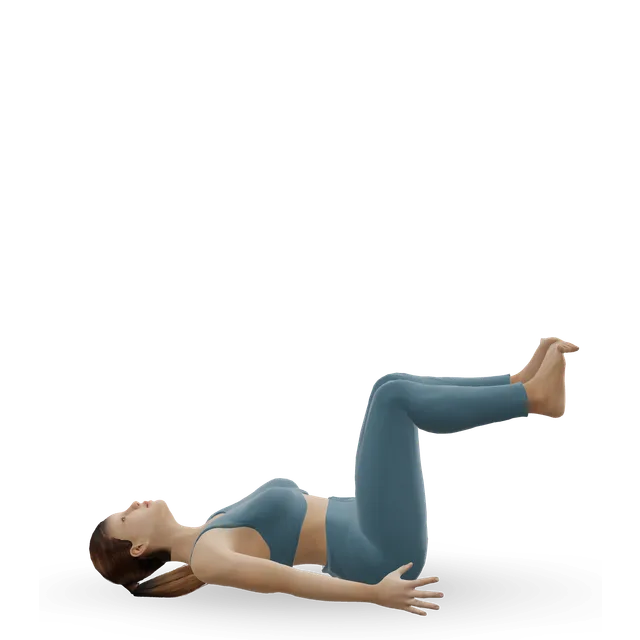
Hip windshield wipers demonstrated on the 3D figure3D demoHip windshield wipersBeginner · No equipment

10 slow passes side to side, 2 rounds (our editorial starting point). · The move page's dose. A small range, starting towards the easier side, as our twisting guide does

Easier: Supine heel slide · Harder: 90/90 switch

Glute bridge demonstrated on the 3D figure3D demoGlute bridgeBeginner · No equipment

2 to 3 sets of 10 · As in our back pain guide (editorial)

Easier: Pelvic tilt into bridge · Harder: Single-leg glute bridge

Move on when: You can walk for 15 to 20 minutes and get through normal daily tasks, heel taps and knee side planks pass the pain rule, and your back is no worse the next morning (as in our back pain guide's first stage).

Follow along: a timer, a cue and the next move, one step at a time.
Stage 2

Resist the twist before you make one

About weeks 2 to 6, 2 or 3 sessions a week, plus walking: the obliques and the rest of the trunk working to stop a turn, a side bend or an arch, and a gentle upper-back turn.

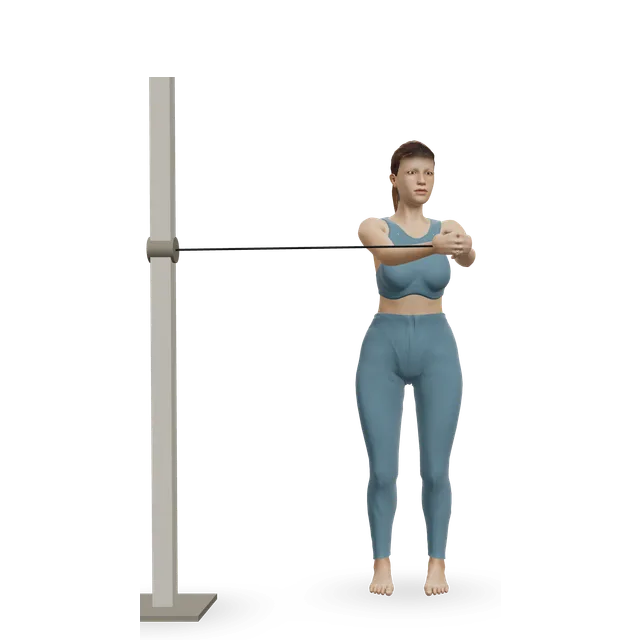
Half-kneeling Pallof press demonstrated on the 3D figure3D demoHalf-kneeling Pallof pressBeginner · A band + An anchor point

2 to 3 sets of 8 to 10 each side · As in our back pain and twisting guides (editorial). It trains the trunk to resist turning

Harder: Pallof press

Side plank demonstrated on the 3D figure3D demoSide plankIntermediate · No equipment

3 holds of 20 to 30 s each side · As in our back pain guide (editorial). From the knees until your hips stay high

Easier: Knee side plank · Harder: Side plank with leg lift

Dead bug demonstrated on the 3D figure3D demoDead bugBeginner · No equipment

2 sets of 6 to 8 each side · As in our back pain guide (editorial)

Easier: Dead bug heel taps · Harder: Forearm plank

Bird dog demonstrated on the 3D figure3D demoBird dogBeginner · No equipment

2 to 3 sets of 6 to 8 each side, 3 to 5 s holds · As in our back pain guide (editorial)

Easier: Bird dog, one limb at a time · Harder: Bear crawl

Suitcase carry demonstrated on the 3D figure3D demoSuitcase carryIntermediate · A dumbbell + A kettlebell

3 walks of 20 to 30 m each side · As in our twisting guide (editorial). If you can't stay level, the weight is too heavy, as the move page says

Easier: Farmer's carry · Harder: Overhead carry (waiter's walk)

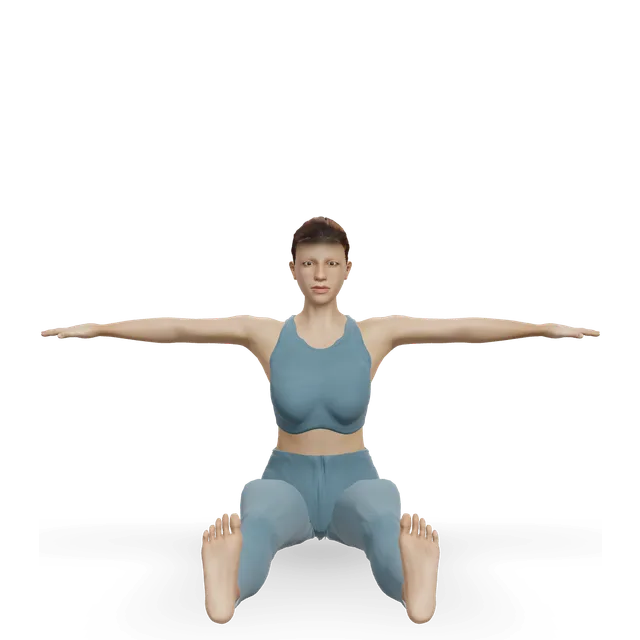
Thoracic rotation demonstrated on the 3D figure3D demoThoracic rotationBeginner · No equipment

6 rotations per side, moving with the breath · The move page's dose. The upper back is where most of a twist should come from

Easier: Side-lying open book · Harder: World's greatest stretch

Move on when: Every set is controlled, the Pallof press and side plank pass the pain rule, and your back is no worse the next morning, for a week (editorial).

Follow along: a timer, a cue and the next move, one step at a time.
Stage 3

Turn again: feet down, slow, then a weight

From about week 6, often later, 2 or 3 sessions a week: turning with control and then load, finishing with Russian twists by the written steps below, one change at a time. No study has tested a return to Russian twists after back pain, so the order is editorial.

Spine twist (Pilates) demonstrated on the 3D figure3D demoSpine twist (Pilates)Beginner · No equipment

3 to 4 each side (the classical sequence uses 3). A suggested starting point. No trial has tested this move on its own. · The move page's dose. Sitting tall with no lean back: the turn without the rounded V-sit

Harder: Saw (Pilates)

Cable press and rotation demonstrated on the 3D figure3D demoCable press and rotationIntermediate · A cable machine

2 to 3 sets of 8 to 10 each side, light and slow · As in our twisting guide (editorial; the move page gives no dose). Hold the Pallof press square first

Easier: Half-kneeling Pallof press · Harder: Cable wood chop

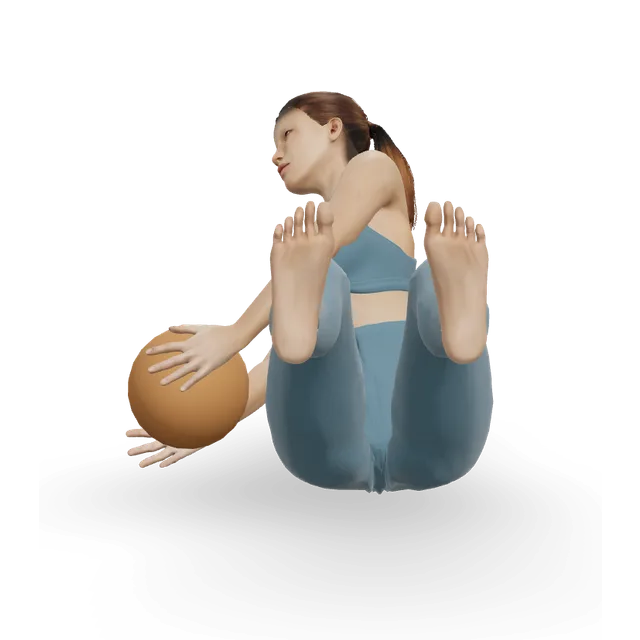
Russian twist with a weight demonstrated on the 3D figure3D demoRussian twist with a weightIntermediate · Medicine ball

2 sets of 6 to 10 each side, feet down and no weight, slow; then feet lifted, then a light weight held close, 8 to 12 each side · Our oblique workout's dose (editorial). The 3D figure shows the hardest version, feet up with a weight

Easier: Seated barbell twist · Harder: Cable wood chop

Side plank demonstrated on the 3D figure3D demoSide plankIntermediate · No equipment

3 holds of 20 to 40 s each side, kept twice a week · Editorial; our oblique workout holds 15 to 40 s

Easier: Knee side plank · Harder: Side plank with leg lift

Suitcase carry demonstrated on the 3D figure3D demoSuitcase carryIntermediate · A dumbbell + A kettlebell

3 walks of 20 to 30 m each side, a little heavier · Editorial

Easier: Farmer's carry · Harder: Overhead carry (waiter's walk)

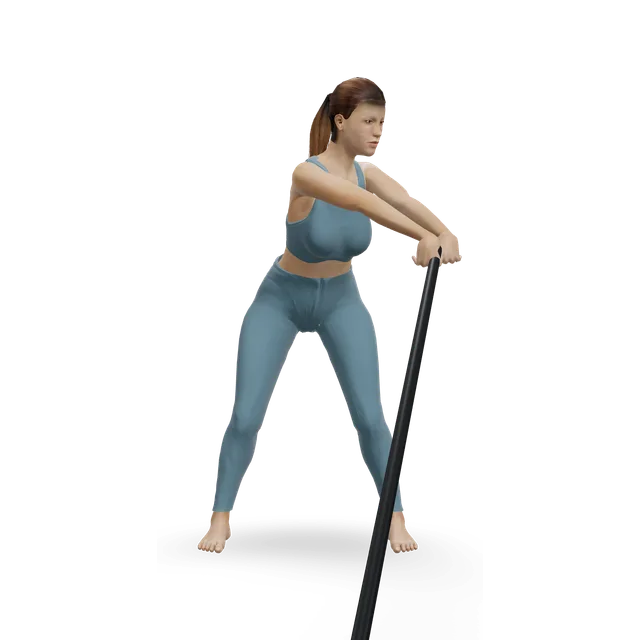
Landmine 180 (landmine rotation) demonstrated on the 3D figure3D demoLandmine 180 (landmine rotation)Intermediate · A barbell + An anchor point

2 to 3 sets of 8 to 12 each side, stopping with 2 or 3 reps in reserve (our editorial starting point). · The move page's dose. Only if your sport needs fast rotation, and last; control the bar rather than letting it swing, as the move page says

Easier: Cable press and rotation · Harder: Barbell pike rollout

Move on when: Your usual core sessions, Russian twists included, pass the pain rule for 2 weeks. Keep two days a week of side planks and Pallof presses, and if a session flares it, go back a stage for a few days, not to nothing (editorial).

Follow along: a timer, a cue and the next move, one step at a time.

What to change for now

Your Russian twist for now (written steps)

Our 3D figure shows the hardest version and can't show your feet down, the range or the speed. These steps come from NASM, our Russian twist and twisting guides, our oblique workout and the studies above; where a step is our suggestion, it says so. No trial has tested a change to the Russian twist.

  • 1. Sit on a mat with your knees bent and your feet flat on the floor, hip-width apart; NASM allows the feet flat or raised.
  • 2. Sit tall, then lean back only as far as you can keep a long spine, often less than halfway (our suggestion: the V-sit rounds the lower back).
  • 3. Hold your hands together in front of your chest, or later a light weight held close.
  • 4. Breathe out and turn your ribs and shoulders slowly to one side, your hands moving with your chest; come back through the middle under control and turn the other way. NASM lists jerky turns as a mistake.
  • 5. Turn only as far as the pain rule allows; add range before speed, and speed before load (our twisting guide).
  • 6. End the set when you start to round or let the weight swing, 2 or 3 days a week (our Russian twist guide).
  • 7. Lift your feet only when 2 sets of 10 each side with the feet down pass the rule, and add a weight only after that (our suggestion, from our oblique workout).
  • 8. With osteoporosis or a past spinal fracture, leave out the weight and keep the turn smooth and comfortable, or swap to the Pallof press, as the UK consensus and our move page advise.

Sources 2, 3, 4, 6, 28

The tailbone, classes and everyday life (written steps)

Our suggestions unless a source is named; no study has tested them for Russian twist pain.

  • 1. Keep moving: the NHS says stay active and try to continue with your daily activities, and don't stay in bed for long periods.
  • 2. A thick mat or a folded towel under your sit bones on a hard floor, sitting a little further forward so you don't rock on your tailbone. The NHS says tailbone pain is often worse sitting, so if it lingers, our tailbone guide covers it.
  • 3. Classes and challenges: no Russian twists against a clock or for hundreds of reps until the last stage has passed the pain rule for 2 weeks.
  • 4. Lifting and turning at home or work, and golf or racquet sports: our twisting guide's steps (face the load, keep it close, turn with your feet), with rotational drills last.
  • 5. After a baby, or with a gap down the middle of the tummy: our diastasis recti and postpartum pages come first, then the twist with your feet down.

Sources 5, 27

The other Russian twist

In older bodybuilding usage, a "Russian twist" was done side-on over a back extension bench, bending sideways and turning the chest to the floor with a plate. It is a different exercise from the seated twist on this page, it bends and twists a loaded spine at the same time, and it isn't in this plan.

Positions to swap, and why

Habit or positionWhy it mattersInstead
Feet lifted while it's soreThe hip flexors hold your legs and pull on the lower spine (our reading of sit-up and psoas studies).Feet down, or the seated Pilates spine twist.Try: Spine twist (Pilates)
A rounded, slumped lean backIn a V-sit the lower back sits about 28 degrees further into bending than in a plank.Sit up more with a long spine, or the Pallof press.Try: Half-kneeling Pallof press
Fast, swinging turnsSpeed raised muscle activity, and the researchers advise keeping speed low.Slow turns from the ribs, or hold still against a band.Try: Half-kneeling Pallof press
A heavy plate, ball or kettlebell while it's soreLoad adds to a rounded, turning spine (our reading).Side planks now, and a light weight held close only in the last stage.Try: Side plank
Twisting from the waist rather than the ribsThe lower back turns only a degree or two at each joint; most of a turn should come from the upper back.The upper-back turn.Try: Thoracic rotation
Hundreds of reps in a challengeRepeated bending and twisting add up (our reading), and big, unaccustomed sessions have been followed by muscle breakdown.2 sets of 6 to 10 each side, and carries for the rest.Try: Suitcase carry
Balancing on your tailbone on a hard floorThe floor presses on the tailbone (our reading).A mat, and sit forward on your sit bones; dead bugs meanwhile.Try: Dead bug
Russian twists with osteoporosis or a past spinal fractureThe UK consensus says modify or avoid sustained, repeated or end-range bending, and the move page says leave it out.The Pallof press and carries.Try: Suitcase carry
Twists that make the middle of your tummy dome after a babyIt can be a gap between the six-pack muscles.Side planks from the knees, and our diastasis recti page.Try: Knee side plank
Pushing through pain spreading down a legIt points to a nerve: see the warning signs and our sciatica guide.Stop, and keep to moves that don't send pain down the leg.Try: Bird dog
Bed rest until it stops hurtingThe NHS says don't stay in bed for long periods.Walking and the stage 1 moves.Try: Treadmill walking

Routines to follow

More moves for this area

Questions people ask

Why does my lower back hurt when I do Russian twists?

Usually because the twist is done from a rounded lean back, with your feet up, a weight or fast turns, and a sore or tired back dislikes that mix. Put your feet down, sit up a little more, turn slowly from your ribs and leave the weight out. Pain down a leg is different: see the warning signs.

Are Russian twists bad for your back?

No study has shown that: no one has tested the Russian twist in people. Lab studies in animal discs, which don't all agree, flag fast, loaded, repeated twisting with the back rounded, so keep it slow, light and long-spined, and swap it out while your back is sore.

Should my feet be up or down?

Down while your back is sore, and to start with. Lifting your feet hands work to the hip flexors, which attach to the lower spine; that this adds to the load on a sore back is our reading of sit-up studies. Lift them only once the feet-down version is easy.

Why does my tailbone hurt during Russian twists?

You're balancing on it on a hard floor. Use a mat or a folded towel, sit a little further forward on your sit bones and keep your feet down. If it hurts to sit for weeks afterwards, our tailbone guide covers it.

Why do Russian twists hurt my hips or thighs?

With your feet lifted, the hip flexors at the front of your hips hold your legs up, and they can ache or cramp. Put your feet down; our hip flexor guide for sit-ups covers pain that lingers.

What does a sharp pain at my side mean?

Usually a strained oblique (side) muscle, which is sore to twist, cough or sit up. Stop twisting and follow our abdominal strain guide. A painful lump in the tummy wall that keeps growing, especially if you take blood thinners, needs urgent help.

Can I do Russian twists with a herniated disc or sciatica?

If bending or twisting sends pain down your leg, leave them out for now and use the Pallof press, dead bug and bird dog. Disc bulges are common in people without pain, and the NHS says a slipped disc usually gets better slowly with rest, gentle exercise and painkillers.

What can I do instead of Russian twists?

The Pallof press, side planks, dead bugs and suitcase carries train the obliques to resist turning and bending; in a trial of trained men, 6 weeks of such exercises raised oblique activity. Bring twists back later, feet down first.

Are Russian twists safe with osteoporosis?

Smooth, comfortable twisting should be safe, the UK consensus says, but rounded, repeated or loaded bending should be changed. So leave out the weighted, rounded version and swap to the Pallof press or carries.

Do I need a scan?

Not usually: NICE doesn't routinely offer imaging for back pain, and disc changes are common in people without pain. The warning signs need checking instead.

How long will it take, and when should I see a doctor?

New back pain usually eases a lot within 6 weeks, though no one can promise a date. Call 999 for numbness around your genitals or bottom, new bladder or bowel trouble or weakness in both legs; get a same-day check for back pain with a fever or a leg getting weaker; see a GP if it isn't better after a few weeks. In the US, call 911 where this page says 999.

Related exercise guides

Other pain guides

Sources

  1. Oliva-Lozano 2020 · Core muscle activity during physical fitness exercises (systematic review of 67 studies, IJERPH)
  2. National Academy of Sports Medicine (NASM) · Russian twist (exercise library)
  3. Musalem 2015 · The prone plank against the V-sit (biomechanical and EMG study, J Appl Biomech)
  4. Kumar 2003 · Trunk muscle activity in seated twisting at different speeds (EMG study of 50 adults, Spine Journal)
  5. NHS · Back pain
  6. Fujii 2007 · How much each lower back joint turns in a trunk twist (MRI study of 10 volunteers, European Spine Journal)
  7. Adams 1981 · The relevance of torsion to damage in the lumbar spine (cadaver study, Spine)
  8. Pearcy 1991 · Axial rotation of lumbar joints in forward flexion (cadaver study, Proc Inst Mech Eng H)
  9. Marshall 2010 · The role of twisting in disc herniation (pig spine study, Clinical Biomechanics)
  10. Callaghan 2001 · Disc herniation from repeated bending under load (pig spine study, Clinical Biomechanics)
  11. Veres 2010 · Torsion combined with flexion and disc failure (sheep spine study, European Spine Journal)
  12. Berger-Roscher 2017 · Complex loading and disc failure (sheep spine study, Spine)
  13. Šećerović 2026 · Bending, twisting and compression in disc failure (cow tail disc study, JOR Spine)
  14. Hoogendoorn 2000 · Bending, twisting and lifting at work and back pain (cohort of 861 workers, Spine)
  15. Andersson 1997 · Abdominal and hip flexor activity in training exercises (EMG study, Eur J Appl Physiol)
  16. Juker 1998 · Psoas and abdominal wall activity in many tasks (fine-wire EMG study, Med Sci Sports Exerc)
  17. Bogduk 1992 · Anatomy and biomechanics of psoas major (anatomical and modelling study, Clinical Biomechanics)
  18. Camp 2017 · Abdominal oblique injuries in professional baseball (996 injuries, Orthop J Sports Med)
  19. Kato 2020 · An oblique muscle injury felt as one-sided low back pain (case report, Fukushima J Med Sci)
  20. Simopoulos 2012 · How common sacroiliac joint pain is and how it is diagnosed (systematic review, Pain Physician)
  21. NHS · Sciatica
  22. NHS · Slipped disc
  23. NHS · Hernia
  24. NHS · Femoral hernia
  25. Ariyoshi 2019 · Bleeding into the tummy muscle after muscle training (case report, Case Rep Emerg Med)
  26. Micheli 1995 · Back pain in young athletes against adults (case comparison, Arch Pediatr Adolesc Med)
  27. NHS · Tailbone (coccyx) pain
  28. Brooke-Wavell 2022 · Strong, steady and straight: UK consensus on exercise for osteoporosis (BJSM)
  29. NICE NG59 · Low back pain and sciatica in over 16s: assessment and management
  30. Brinjikji 2015 · Spine scan findings in 3,110 people without back pain (systematic review, AJNR)
  31. da C Menezes Costa 2012 · The course of acute and persistent low back pain (meta-analysis of 33 cohorts, CMAJ)
  32. Wallwork 2024 · The course of acute, subacute and persistent low back pain (meta-analysis of 95 studies, CMAJ)
  33. NHS inform · Back problems
  34. Hayden 2021 · Exercise therapy for chronic low back pain (Cochrane review of 249 trials)
  35. Saragiotto 2016 · Motor control exercise for chronic low back pain (Cochrane review of 29 trials)
  36. Cinarli 2025 · Anti-movement against dynamic core training (RCT, 36 trained men, Eur J Appl Physiol)
  37. NHS inform · Exercises for back pain
  38. Smith 2017 · Should exercises be painful in long-lasting musculoskeletal pain? (meta-analysis of 7 trials, BJSM)

Exercise education, not a diagnosis or treatment plan. It is written from the guidelines and studies listed above; review by a clinician is pending. If your pain follows an injury, is severe, is getting worse, or comes with any warning sign listed on this page, get it assessed. Health disclaimer.