Yoga guide

Yoga for piriformis syndrome (deep gluteal syndrome): the buttock and the sciatic nerve, hip openers and hip strength

Piriformis syndrome means sciatica-type pain from the sciatic nerve being irritated deep in the buttock, near the piriformis muscle. It's real but debated and uncommon: most buttock pain that runs down the leg comes from the back, so it's worth getting assessed. No trial has tested yoga for it, and no treatment has been shown better than another.

What yoga can offer is what the evidence points to: moving often, sitting less, building hip strength and, if they help, gentle stretches. It sits beside care from your GP or physiotherapist, never in place of it.

This guide covers how it differs from sciatica from the spine, the poses that work the glutes hardest, whether pigeon helps, the poses that sit on or squeeze the sore buttock, which classes to follow, and the warning signs that need help.

The short version

Real, but debated and uncommon

There's no accepted test. The commonest features are pain deep in the buttock, pain worse sitting, tenderness in the buttock and pain when the muscle is tensed. Between 6% and 17% of people seen in hospital clinics with sciatica meet the criteria for the broader deep gluteal syndrome; most sciatica comes from the back.

Sources 1, 2

No yoga trial, and no proven treatment

We found no trial of yoga for piriformis syndrome. A review of treatments found no conservative treatment better than another, and advises following back pain and sciatica care first: physiotherapy and staying active.

Sources 3, 4

Hip strength is the low-risk focus

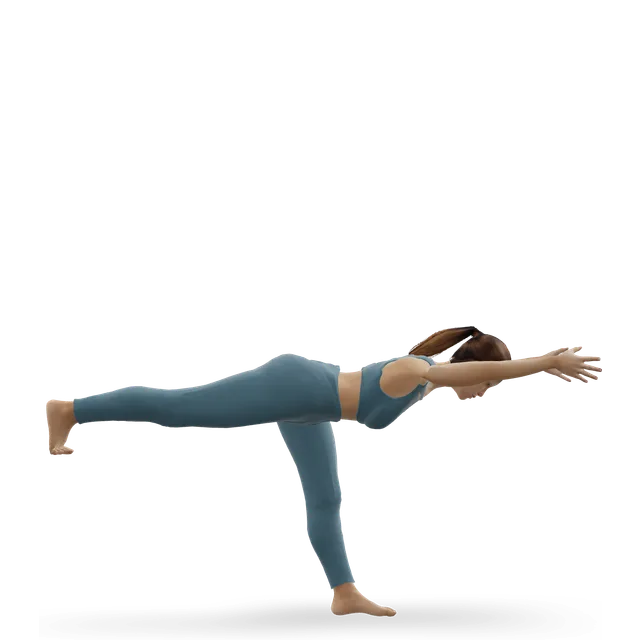
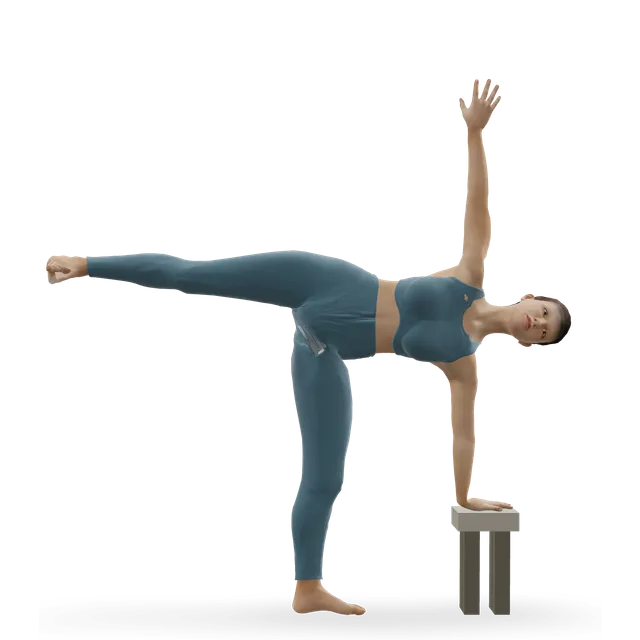
One person's pain went with hip strengthening alone, a single case. In a lab study of young adults, half moon and warrior III worked the buttock muscles hardest of five yoga poses tested.

Sources 5, 6

Stretch gently, and only if it helps

Stretching trials are small, and combined programmes did better than stretching alone. Pigeon may feel good, but no trial shows it treats piriformis syndrome; stop any stretch that sends pain down your leg.

Sources 7, 8

Sit less, and start gently

Break up long spells of sitting, and keep long seated poses short. One case report describes severe piriformis syndrome after three yoga and Pilates sessions in a woman who had been inactive for a year, so build up slowly and don't force deep hip positions.

Sources 9, 10

Know the urgent signs

Sciatica in both legs or numbness around your genitals or bottom needs 999; a swollen, painful calf needs help the same day. The full list is below.

Sources 11, 12

The buttock and the sciatic nerve

The muscle and the nerve

The piriformis runs from the base of your spine to the top of your thigh bone, deep under the buttock muscles. The sciatic nerve usually leaves the pelvis just below it; in a surgical review its path varied in about 16% of people, and the nerve glides about 28 mm as the hip bends. Our piriformis muscle guide has the anatomy.

Source 13

No agreed testEmerging evidence

Across 55 studies, mostly single cases, the commonest features were buttock pain, tenderness near the notch where the nerve leaves the pelvis, pain worse sitting and pain when the muscle is stretched or tensed. An updated review says the accuracy of the tests "cannot be concluded from studies to date". A narrative review calls it "a relatively uncommon, but not insignificant, cause of sciatica".

Sources 1, 14, 15

Deep gluteal syndromeEmerging evidence

Many clinicians now use this broader label for sciatic nerve trouble in the buttock that doesn't come from a disc; piriformis syndrome is one form of it. Between 6% and 17% of people seen in hospital clinics with sciatica meet its criteria.

Sources 16, 2

Is it the buttock or the back?

Pain centred deep in the buttock, worse sitting, with tenderness there, points to the buttock; pain below the knee with numbness or weakness, or pain that began with back pain, points to the back. A straight-leg raise doesn't tell them apart, and a lower back scan doesn't show the deep buttock. The NHS has no piriformis page, and its sciatica page doesn't mention it. Get assessed if symptoms persist.

Sources 2, 9

Tight, weak or neither?Mixed evidence

In a small study of 91 people, the piriformis was no thicker in people with the syndrome, and a thicker piriformis went with a weaker gluteus maximus. A case report found weak hip muscles and suggested overstretching rather than tightness. Neither shows what causes it.

Sources 17, 5

Where yoga fits

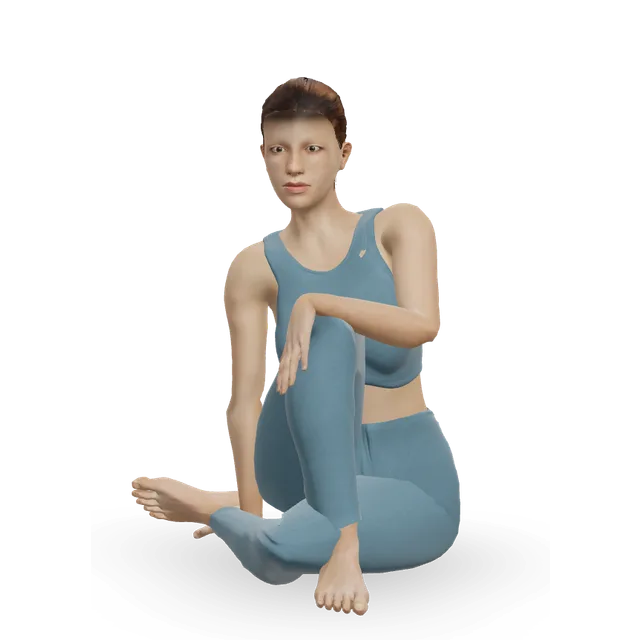
Yoga's hip openers (figure four, pigeon, fire log, cow face) bend the hip and turn it out, the classic piriformis stretch positions. Its standing and balancing poses work the buttock muscles. Long seated poses, lotus and cow face sit on, or press into, the sore area.

Sources 6, 1

What the evidence says

No trial has tested yoga for piriformis syndrome, so this section draws on the small exercise and stretching trials, lab studies and case reports, and says which is which.

No yoga trialStrong evidence

Our searches found two records on yoga and piriformis or deep gluteal syndrome: a case report and a workplace yoga protocol. The treatment reviews list no yoga trial.

Sources 3, 4, 7

No treatment proven better than anotherEmerging evidence

A review of 13 studies (508 people), whose randomised trials all tested injections, rated the evidence low: "no single conservative treatment can be recommended over another. Clinicians should follow general guidelines on the management of back pain and sciatica for first line treatment, namely physiotherapy." In 2019, no controlled trial of physiotherapy had been found.

Sources 4, 2

Stretching: small trials, combined programmes did betterMixed evidence

The first review of stretching (12 studies, 572 people, 4 randomised trials) found combined programmes did better than stretching alone, with small samples and little long-term follow-up. In the small trials, both groups usually improved: two stretching techniques in 40 people, two hands-on techniques with stretching in 48, self-stretching against self-compression in 45 (stretching better for disability), and shock wave against dry needling with stretching in 48. None followed people beyond 4 months.

Sources 7, 18, 19, 20, 21

Which positions stretch the piriformis most: lab studiesEmerging evidence

In a scan study of 7 people, two classic stretches lengthened the piriformis by about 12%, and bending the hip further with the knee drawn across the body lengthened it about 15%. In 21 healthy young men, the muscle was stiffest at full outward turn with the hip bent to 110 degrees and drawn across. Pigeon wasn't tested. These were healthy people, not people with the syndrome, so favouring a figure four pulled across over pigeon is our inference.

Sources 8, 22

The nerve and straight legs: lab and surgical studiesEmerging evidence

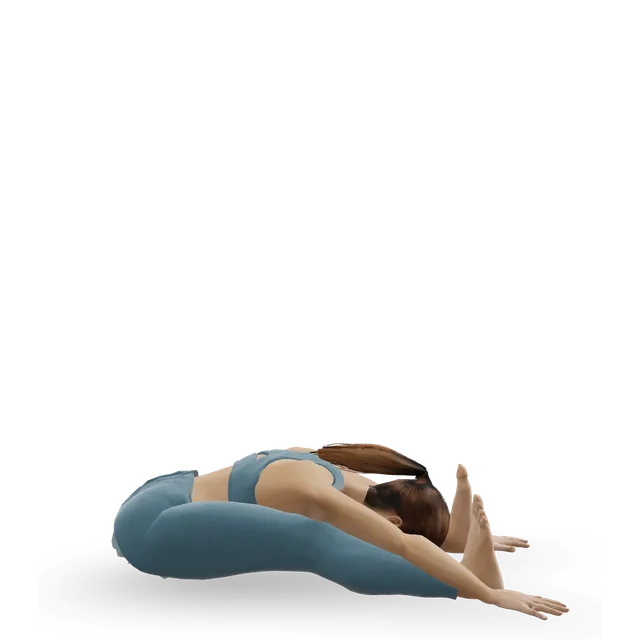
In 10 people having hip surgery, bending the hip with the knee straight raised strain on the sciatic nerve by about a quarter, and in cadavers, pressure inside the nerve passed harmful levels only with the hip bent and the knee fully straight. So folds over straight legs may provoke an irritated nerve more than bent-knee hip openers; that is our inference, not a trial finding.

Sources 23, 24

Hip strengthMixed evidence

In one case report, hip strengthening and movement retraining alone took pain to 0. In 31 healthy adults aged 18 to 35, half moon and warrior III worked the buttock muscles hardest of five yoga poses (the lifted leg's gluteus maximus at about 63% and 46% of its maximum). This supports hip strength as a low-risk focus, not a proven treatment.

Sources 5, 6

Injections and surgeryMixed evidence

Botulinum toxin, anaesthetic and steroid injections eased pain in pooled studies, many of which weren't randomised. They're a later step after exercise and advice, and surgery is for long-standing cases.

Sources 25, 4

Can yoga cause it?Mixed evidence

One case report describes a 60-year-old woman with severe piriformis syndrome "following three consecutive sessions of yoga and Pilates, an exercise regimen she had recently adopted after being inactive for nearly a year". It names no poses, and she recovered on medicines for nerve pain after physiotherapy and injections hadn't helped. In US emergency departments, hip injuries were a larger share of yoga injuries in people over 45. A single case shows it can happen, not how often.

Sources 10, 26

What helps, and how much

Sit less, move often

The NHS sciatica advice applies: start gentle exercise as soon as you can, and don't sit or lie down for long periods. Break up sitting every 30 to 45 minutes, as our piriformis syndrome guide says.

Source 9

Hip strength 2 or 3 times a week

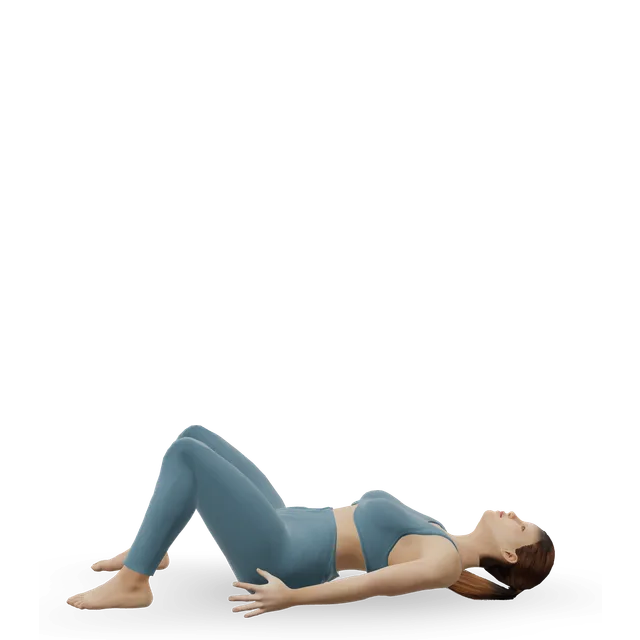
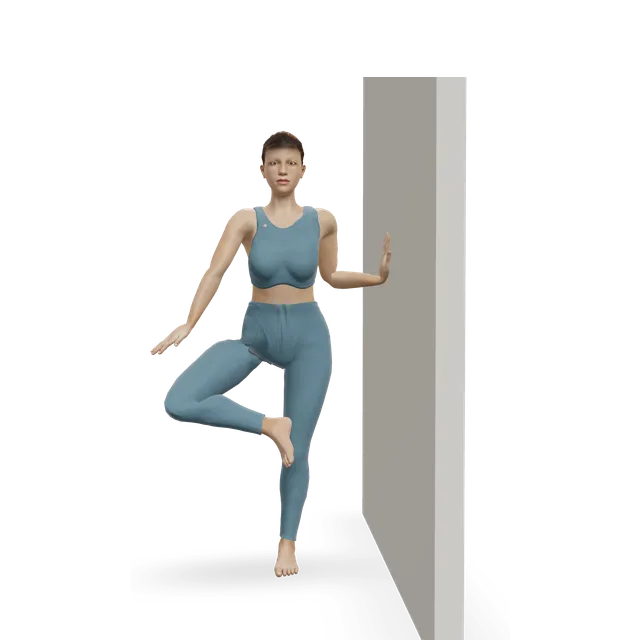
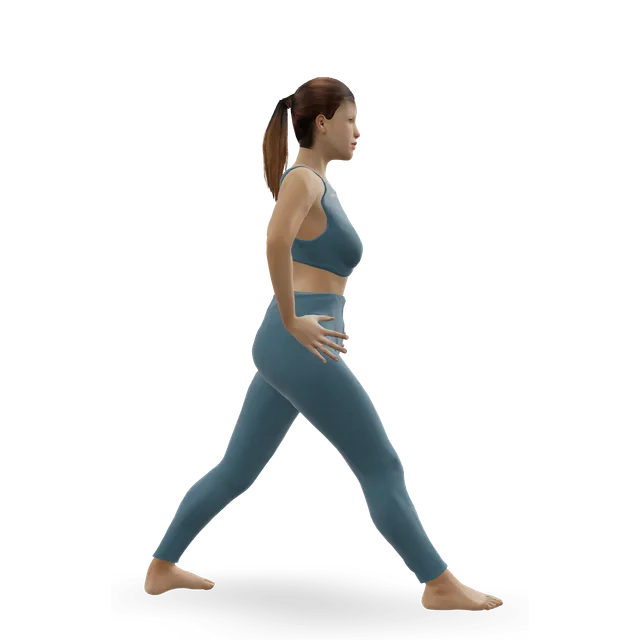
Our editorial starting point: bridges, the belt press, clamshells, chair pose, warrior II and tree pose at a wall, then warrior III and half moon with a wall, 2 or 3 times a week, building over weeks.

Sources 5, 6

Gentle stretches, only if they ease it

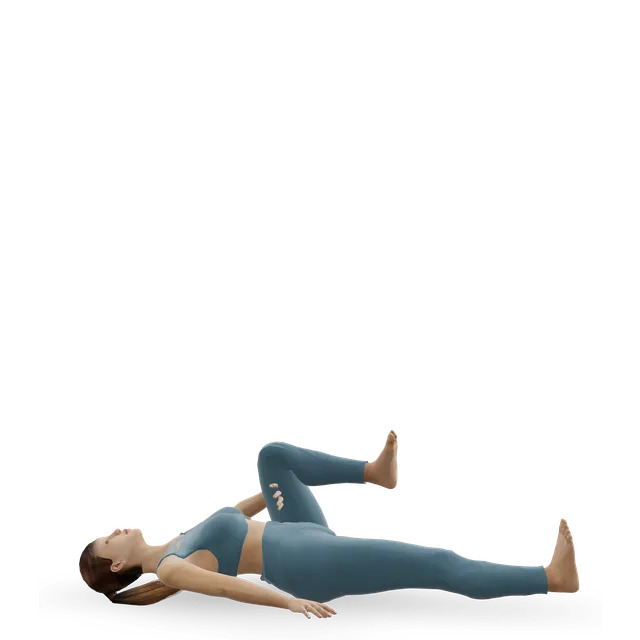
Start with the reclined figure four and never press down on the crossed knee. Keep a stretch only if it eases the pain, and stop any stretch that sends pain or tingling down your leg.

Source 7

Get it assessed

See a GP or physiotherapist if leg symptoms persist, spread below the knee or come with numbness or weakness: piriformis syndrome is one of several causes of buttock and leg pain.

Source 2

Settle: gentle movement

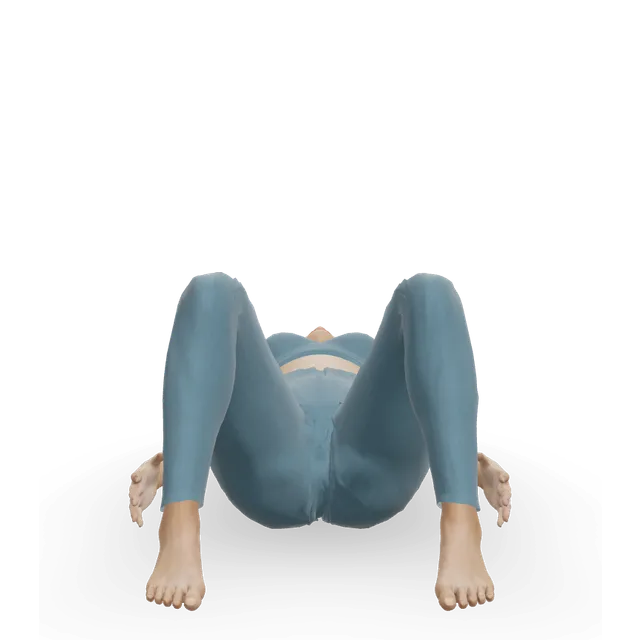
Slow breathing: 2 minutes (our yoga for sciatica sequence). Hip windscreen wipers: 10 slow passes side to side, 2 rounds, and one knee to chest: hold 20 to 30 seconds, 2 to 4 times each side (the moves' pages). Reclined figure four, only if it eases the pain: 2 to 3 holds of 20 to 30 seconds each side, and bridge: 2 sets of 10 (our piriformis syndrome guide).

Hip strength: the core of the plan

Belt press lying on your back: 3 to 5 holds of 5 to 10 seconds, twice a day, at a light effort (the move's page, the LEAP trial's starting dose). Clamshell and side-lying leg raise: 2 to 3 sets of 10 to 12; bird dog: 2 sets of 8 each side (our piriformis syndrome guide). Wall press standing: 3 to 5 holds of 5 to 15 seconds each side, twice a day (the move's page). Chair pose: 3 holds of 15 seconds, building to 20 to 30 seconds; single-leg bridge: 8 to 10 each side; warrior III with your hands on a wall and half moon with a block near a wall: 3 to 5 breaths each side (our yoga for sciatica and yoga for glutes classes). Warrior II: 3 breaths each side; tree pose at a wall: 3 to 5 breaths each side (our yoga for sciatica and yoga for hip pain classes). Side plank from the knees: 2 holds of 15 to 20 seconds each side (our editorial starting point).

Pigeon and other stretches: keep only those that ease it

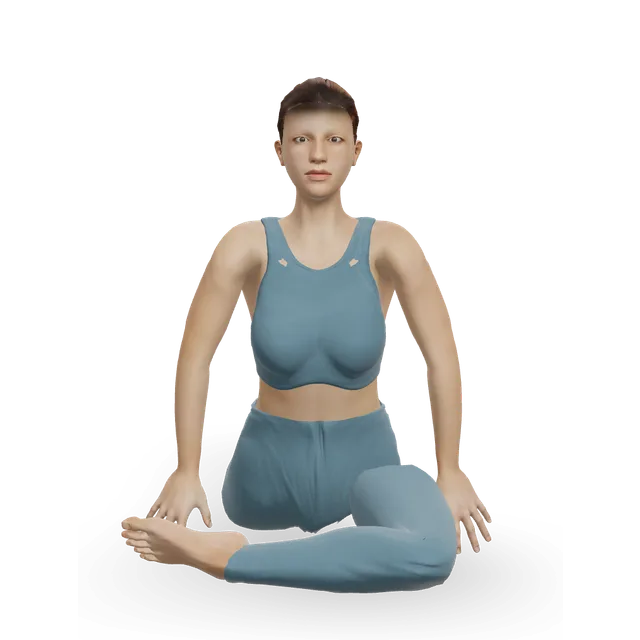
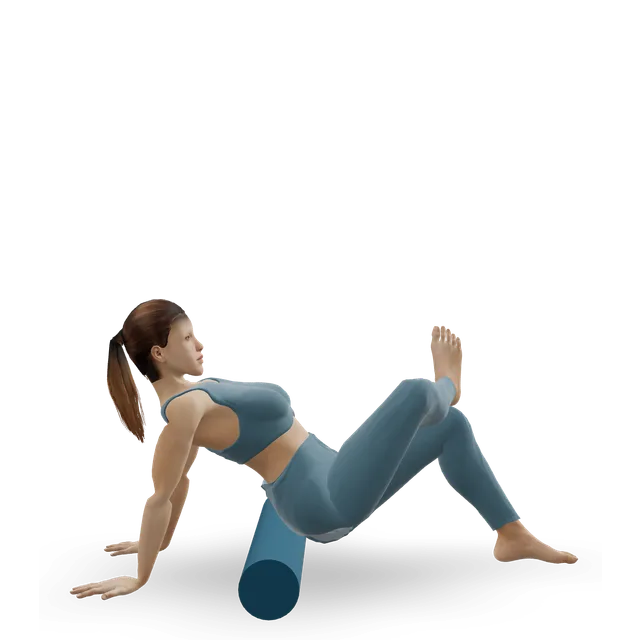
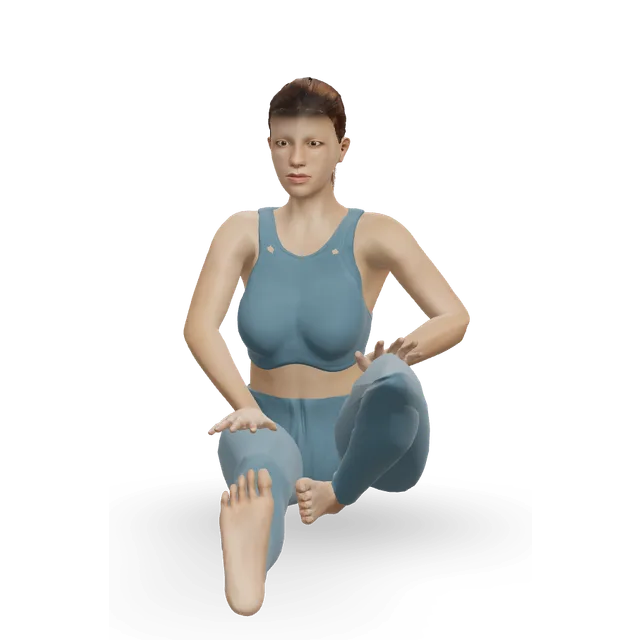
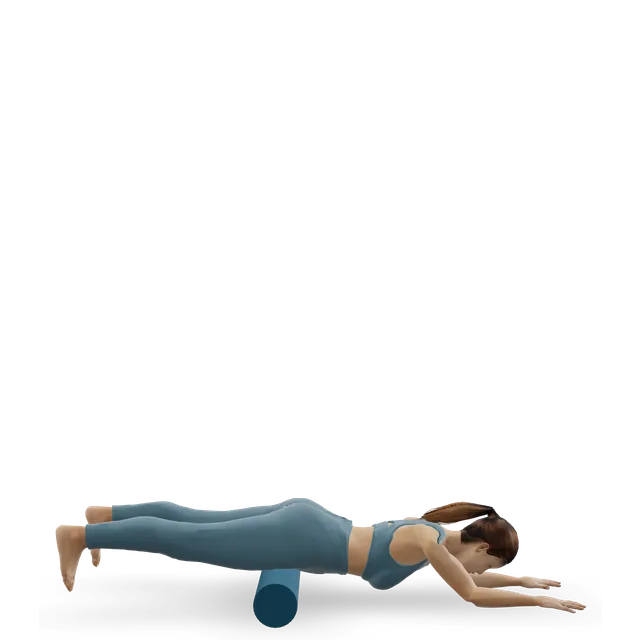
Reclined figure four first, never pressing down on the crossed knee. Lying figure four with your foot on the floor: hold 20 to 30 seconds, 2 to 4 times each side (the move's page). Standing figure four at a wall: 2 holds of 20 to 30 seconds each side (our editorial starting point). Pigeon preparation with a cushion under the front hip, if you enjoy it: 2 to 3 holds of 30 seconds (our piriformis syndrome guide); swap to the reclined figure four if the front knee complains, as its page says. Fire log, sitting high: hold 30 to 60 seconds, about 5 to 10 slow breaths, each side, 2 rounds (the move's page), later if at all, since you sit on the sore side. Rolling: about 90 seconds for each muscle you roll (the move's page), keeping a ball moving and off the middle of the buttock.

Poses to change or leave out at first

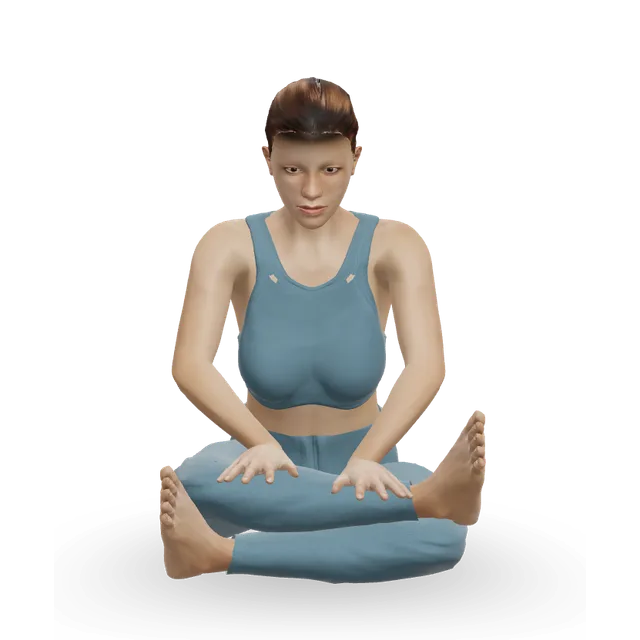
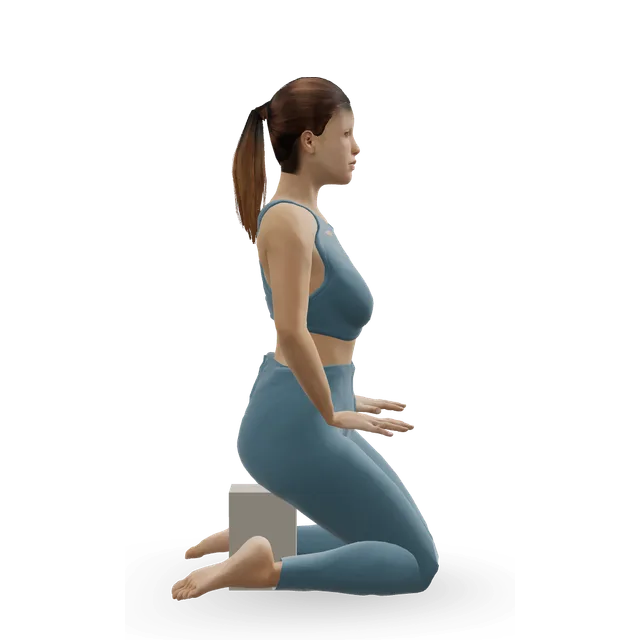
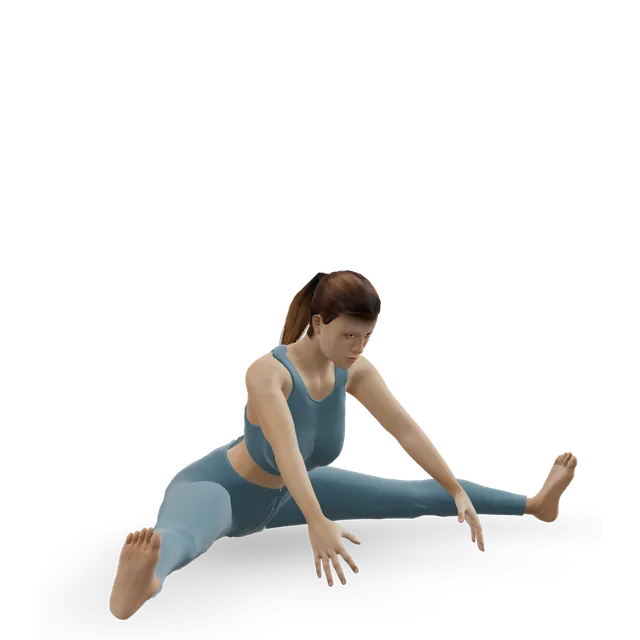
Keep long seated poses short or sit on a block (they press on the sore buttock), and leave lotus, half lotus, cow face and hero for later: long sits in lotus variations have injured leg nerves in case reports, as those poses' pages say. Don't force pigeon or fire log, or let a teacher push you deeper. If your leg is symptomatic, bend your knees in folds over straight legs.

Classes to follow

Start with our yoga for hip pain routine, which strengthens the hips without deep crossed-leg stretches; move on to yoga for glutes when sitting and walking are comfortable. If leg symptoms are the main problem, use the yoga for sciatica sequence. Keep any massage ball off the middle of the buttock.

Warning signs: when to get help

These are the warning signs from our back pain, leg pain, hip pain and Pilates for piriformis syndrome guides, word for word. This is general information, not a diagnosis. A&E means accident and emergency; in the US, call 911 for 999.

Call 999 or go to A&E

Call 999 or go to A&E: loss of feeling or numbness around the genitals or bottom, new trouble peeing or controlling your bladder or bowels, changes in genital sensation during sex or problems with erections or orgasm, or pain, tingling, weakness or numbness in both legs. These are signs of cauda equina syndrome, which needs treating in hospital urgently. Don't drive yourself.

Call 999 or go to A&E if breathing suddenly becomes difficult, if pain in your chest or upper back comes on suddenly with breathlessness or a very fast heartbeat, or if someone passes out. Do not drive yourself. It can be a blood clot that has reached the lungs.

Sources 11, 27

Get help the same day

Same day (urgent GP appointment or NHS 111): throbbing pain in one leg (rarely both), usually the calf or thigh; swelling in one leg (rarely both); red, blue or darkened skin around the painful area, which may be harder to see on brown or black skin; or swollen veins. This can be a deep vein thrombosis (DVT). It is more likely after surgery, a hospital stay, 3 or more days in bed, a journey of over 4 hours, pregnancy or a recent birth, cancer, a previous clot, or contraception or hormone replacement therapy (HRT) that contains oestrogen.

Same day: leg weakness that is getting worse.

Same day (urgent GP appointment or NHS 111): new difficulty lifting the front of your foot or toes (foot drop), or a foot that slaps down or catches as you walk, especially if it is getting worse. Weakness in both legs, or with numbness around the genitals or bottom or bladder or bowel changes, is the 999 emergency above.

Same day (GP or NHS 111): back pain and you feel hot, cold, shivery or generally unwell, or severe pain that starts suddenly or is getting worse quickly.

Ask for an urgent GP appointment or get help from NHS 111 if you have severe hip pain that started suddenly but you've not had a fall or injured your hip, your hip is swollen and feels hot, the skin around your hip has changed colour, or you have hip pain, feel generally unwell and have a high temperature (or feel hot, cold or shivery). A hot, swollen hip with a high temperature can be a joint infection.

Sources 12, 11

After a fall

Sudden mid or lower back pain after a minor fall, lift, cough or sneeze, especially from 50 or with long-term steroid tablets.

Often worse moving or changing position and eased by lying down. It can be an osteoporotic spinal fracture, so see a GP; height loss or a new curve in the upper back are other signs.

Low back, buttock or groin pain in an older person after a minor fall, or with no clear injury, making walking very hard.

This can be a fragility fracture of the sacrum or pelvis, which a plain X-ray can miss: get it checked.

See a GP

Pain that spreads below the knee with pins and needles, numbness or weakness: read about sciatica and get assessed.

Unexplained weight loss, or a lump, swelling or change in the shape of your back.

Pain that doesn't improve with rest or is worse at night, or pain that is worse when you sneeze, cough or poo.

If your sciatica hasn't improved after a few weeks of looking after it at home, is getting worse, or is stopping you doing your normal activities. In many areas you can refer yourself to NHS physiotherapy for back problems.

Sources 11, 9

During yoga

Ease out of any stretch that sends pain or tingling down your leg, don't press down on a crossed knee, keep a massage ball moving and off the middle of the buttock, get up and move if a leg goes numb in a long seated or kneeling pose, and build up slowly if you're new to classes (our suggestion).

You can say no to any hands-on adjustment, and a teacher registered with Yoga Alliance must get your explicit consent each time.

If you're hypermobile, don't use mobility work to push further: the NHS says "do not overextend your joints just because you can". See a GP if you think you have joint hypermobility syndrome: for example, your joints keep dislocating, or you keep getting sprains, strains, pain or stiffness.

A joint pain that is sharp, gets worse during a session, lingers into the next day or changes how you move is a reason to use an easier version, and to see a GP or physiotherapist if it keeps happening (the rule in our plans). Muscle soreness for a day or two after something new is normal. In a hot class, stop if you feel dizzy, sick or unwell; our hot yoga guide lists the signs of heat illness.

Sources 10, 28, 29

Chest pain or fainting while exercising: call 999

Call 999 if:

  • You get sudden pain or discomfort in your chest that doesn't go away; it can feel like squeezing or pressure, burning or indigestion.
  • The pain spreads to your left or right arm, or your neck, jaw, stomach or back.
  • You have chest pain and feel sweaty, sick, light-headed or short of breath.
  • Someone faints while exercising, can't be woken within 1 minute, or has chest pain or a pounding, fluttering or irregular heartbeat.

Sources 30, 31

Before you start

The NHS advises getting advice from a healthcare professional first if you have a health problem, an injury or symptoms, or have recently had a heart attack or an operation.


Myths

"Pigeon pose fixes piriformis syndrome"Mixed evidence

No trial has tested pigeon, or any yoga, for it, and no treatment has been shown better than another. In the lab, other hip positions lengthened the piriformis more. Pigeon may feel good; stop it if it brings on leg symptoms or knee pain.

Sources 3, 4, 8

"Piriformis syndrome causes most sciatica"Emerging evidence

It's uncommon: 6% to 17% of hospital sciatica clinics' patients meet the broader deep gluteal criteria. A slipped disc is the commonest cause of sciatica.

Sources 2, 9

"A tight piriformis is the cause, so stretch it hard"Mixed evidence

The piriformis wasn't thicker in people with the syndrome, one case improved with strengthening alone, and stretching alone did worse than combined programmes.

Sources 17, 5, 7

"Long yin holds release the piriformis"Mixed evidence

No trial supports it, and holds of several minutes sitting on the sore buttock can aggravate it: pain on sitting is a core feature.

Source 1

"Stretching before exercise prevents injury"Strong evidence

Across 25 trials, stretching showed no protective effect, while strength training cut sports injuries to under a third; in 1,538 army recruits, stretching before exercise didn't reduce injuries. Stretch because it feels good, and build strength for protection.

Sources 32, 33

"The more flexible the better"Emerging evidence

Hypermobile people had higher odds of knee injury in contact sport, and one piriformis case pointed to overstretching rather than tightness. Range you can control matters more than range alone.

Sources 34, 5

Questions people ask

Is yoga good for piriformis syndrome?

It can be a way to stay active and build hip strength, which is what the evidence points to, but no trial has tested yoga for it. Choose standing poses and bridges for strength, and keep stretches gentle and only if they ease the pain.

Does pigeon pose help piriformis syndrome?

No trial shows it does. It may feel good for a stiff hip, but the front knee takes twisting load, and other positions stretched the piriformis more in a lab study. The reclined figure four is gentler; stop either if it sends pain down your leg.

Which yoga poses should I avoid with piriformis syndrome?

At first, long seated poses on the sore buttock (lotus, cow face, long seated folds and long yin holds), forced pigeon or fire log, and folds over straight legs if your leg is symptomatic. Sitting is a common aggravator, and one severe case followed a sudden start to yoga and Pilates classes.

What are the best yoga poses for piriformis syndrome?

Poses that strengthen the hips: bridge, chair pose, warrior II and tree pose at a wall, then warrior III and half moon at a wall, which worked the buttock muscles hardest in a lab study. Add a reclined figure four if it eases the pain.

Is it piriformis syndrome or sciatica?

You often can't tell on your own. Pain below the knee with numbness or weakness, or pain that began with back pain, points to the back; deep buttock pain that is worse sitting points to the buttock. A lower back scan doesn't show the deep buttock, so get assessed if symptoms persist.

Can yoga cause piriformis syndrome?

Rarely, it seems. One case report describes severe piriformis syndrome after three yoga and Pilates sessions in a woman who had been inactive for a year. Build up slowly, and don't force deep hip positions.

Is yin yoga good for piriformis syndrome?

It hasn't been tested. Long holds sitting on the sore buttock can aggravate it, so keep holds short, sit on a block, or use lying versions such as the reclined figure four.

Is yoga or Pilates better for piriformis syndrome?

Neither has been tested. Both can build hip strength and gentle movement, so choose the one you enjoy. Our Pilates for piriformis syndrome guide covers Pilates.

Should I use a massage ball on my piriformis?

If you do, keep it moving and off the middle of the buttock: a case report describes a sciatic nerve injury after ball self-massage there. Stop if it brings on leg symptoms.

How long does piriformis syndrome take to get better?

No study gives a typical course with exercise; in the small trials, most people improved over 6 weeks to 4 months. If it isn't improving after a few weeks, or the pain spreads below the knee, get assessed.

When should I see a doctor?

Call 999 for sciatica in both legs, numbness around your genitals or bottom, new bladder or bowel trouble, or sudden breathlessness or chest pain. Get an urgent GP appointment or call NHS 111 for a swollen, painful calf, or a hot, swollen hip with a high temperature.

Sources

  1. Hopayian 2010 · The clinical features of piriformis syndrome: 55 studies (systematic review, Eur Spine J; read in full)
  2. Hopayian 2019 · Deep gluteal syndrome: an overlooked cause of sciatica (editorial review, Br J Gen Pract; read in full)
  3. Europe PMC · Search for yoga studies in piriformis or deep gluteal syndrome: 2 records, a case report and a workplace protocol (30 October 2026)
  4. Hopayian 2023 · Conservative and surgical treatments for deep gluteal syndrome: 13 studies (systematic review, J Bodyw Mov Ther)
  5. Tonley 2010 · Hip strengthening and movement retraining for piriformis syndrome (case report, J Orthop Sports Phys Ther)
  6. Lehecka 2021 · Glute muscle activity in 5 common yoga poses: 31 adults aged 18 to 35 (laboratory study, Int J Sports Phys Ther)
  7. Aali 2026 · Stretching for piriformis syndrome: 12 studies, 4 randomised trials (systematic review, Eur J Transl Myol)
  8. Gulledge 2014 · Piriformis muscle length in different stretch positions: 7 people (CT and modelling study, Med Eng Phys)
  9. NHS · Sciatica
  10. Ibrahim 2025 · Severe piriformis syndrome after yoga and Pilates (case report, Cureus; read in full)
  11. NHS · Back pain
  12. NHS · DVT (deep vein thrombosis)
  13. Martin 2015 · Deep gluteal syndrome (narrative review by hip surgeons, J Hip Preserv Surg; read in full)
  14. Hopayian 2018 · Four symptoms define piriformis syndrome (updated systematic review, Eur J Orthop Surg Traumatol)
  15. Probst 2019 · Piriformis syndrome: anatomy, diagnosis and treatment (narrative review, PM R)
  16. Kizaki 2020 · How deep gluteal syndrome is defined: 14 studies, 853 people (systematic review, Knee Surg Sports Traumatol Arthrosc)
  17. Othman 2023 · Piriformis thickness and hip strength in 91 people with and without piriformis syndrome (case-control study, Life)
  18. Shahzad 2020 · Two stretching techniques for piriformis syndrome: 40 people (randomised trial, J Back Musculoskelet Rehabil)
  19. Danazumi 2021 · Two manual techniques, both with stretching, for piriformis syndrome: 48 people (randomised trial, J Osteopath Med)
  20. Shamsi 2024 · Self-stretching or self-compression for deep gluteal syndrome: 45 people (controlled trial, BMC Sports Sci Med Rehabil)
  21. Dede 2026 · Shock wave or dry needling, both with stretching, for piriformis syndrome: 48 people (randomised trial, Turk J Phys Med Rehabil; read in full)
  22. Itsuda 2024 · Piriformis stiffness in 12 stretch positions: 21 healthy young men (ultrasound elastography study, J Sport Rehabil)
  23. Fleming 2003 · Strain on the sciatic nerve as the hip and knee move: 10 surgical patients (measurement study, J Bone Joint Surg Br)
  24. Borrelli 2000 · Pressure inside the sciatic nerve with hip and knee position (cadaver study, J Orthop Trauma)
  25. Hilal 2022 · Botulinum toxin, anaesthetic and steroid injections for piriformis syndrome (systematic review and meta-analysis, Pain Physician)
  26. Watson 2025 · Hip injuries among yoga injuries in US emergency departments over 20 years (epidemiological study, J Am Acad Orthop Surg)
  27. NHS · Pulmonary embolism
  28. Cho 2019 · Sciatic nerve injury after self-massage of the buttock with a massage ball (case report, Medicine)
  29. Dacci 2013 · Damage to both sciatic nerves during yoga (case report, Neurol Sci)
  30. NHS · Chest pain (past its review date: reviewed August 2023, review due August 2026)
  31. NHS · Fainting
  32. Lauersen 2014 · Exercise to prevent sports injuries: 25 trials, 26,610 people (systematic review and meta-analysis, Br J Sports Med)
  33. Pope 2000 · Stretching before exercise and leg injuries in 1,538 army recruits (randomised trial, Med Sci Sports Exerc)
  34. Pacey 2010 · Joint hypermobility and leg injuries in sport: 18 studies (systematic review and meta-analysis, Am J Sports Med)

Exercise education, not a personal prescription, and clinical review of these guides is pending. If you are pregnant, have a health condition such as glaucoma, high blood pressure or osteoporosis, or have had recent surgery, check with a doctor, midwife or physiotherapist before starting, and stop for sharp or increasing pain. Health disclaimer.