Back pain from horse riding: sitting trot, saddle and stirrups, the tailbone, the yard and falls

Back pain is common in riders, and most of it settles within days to a few weeks. Your lower back and pelvis absorb the horse's movement every stride, most in sitting trot and least at walk and in rising trot, and mucking out, lifting bales and carrying water add their own load. Most often it's tired, overloaded muscles or a strain; pain at the base of the spine on the saddle is the tailbone, pain down a leg is sciatica, and sudden pain in one spot after a fall can be a fracture. Serious back injuries come from falls, and they are uncommon.

This guide starts with the signs that need a 999 call or accident and emergency (A&E), such as back or neck pain with numbness, tingling or weakness after a fall, or numbness around your genitals or bottom, and those that need a general practitioner (GP) or the National Health Service's 111 line (NHS 111) the same day. It then maps the causes by where it hurts, covers the trot, the stirrups and the saddle, what body protectors do and don't do in the riding bodies' own words, and the Health and Safety Executive's (HSE) lifting advice for the yard, and gives a four-stage plan with a 3D demo of every move, back to the saddle.

When to get help first

Exercise is for pain that has been checked or is clearly mild and settling.

Get urgent medical help if

  • Call 999 or go to A&E: loss of feeling or numbness around the genitals or bottom, new trouble peeing or controlling your bladder or bowels, changes in genital sensation during sex or problems with erections or orgasm, or pain, tingling, weakness or numbness in both legs. These are signs of cauda equina syndrome, which needs treating in hospital urgently. Don't drive yourself.
  • Call 999 or go to A&E: leg pain with numbness around the genitals or bottom, new trouble starting or controlling peeing, not knowing when you need to poo or losing control of it, sciatica in both legs, or weakness or numbness in both legs that is severe or getting worse. These can be signs of cauda equina syndrome, which needs treating in hospital as soon as possible.
  • Call 999 or go to A&E: back pain with chest pain, or back pain that started after a serious accident, such as a car crash.
  • Call 999: after a fall, you may have hurt your head, neck, back or hip, or you cannot get up.
  • The NHS's 999 list includes anyone who has hit their head and has fallen from a height of more than 1 metre, which in our reading covers a fall from a horse. British Equestrian's red flags need immediate help from a medical professional, or 999 if none is there: neck pain, a severe or worsening headache, double vision, weakness or tingling in the arms or legs, being sick, losing consciousness or getting drowsier, a fit, or restless, combative or agitated behaviour. Don't move them or take off their riding hat unless you're trained, unless they're having difficulty breathing.
  • Tingling or pins and needles on one or both sides, problems walking or sitting upright, a sudden "electric shock" feeling, or weak hands, arms or legs need urgent help. Call 999 or go to A&E (accident and emergency) for back pain after a serious accident, with symptoms in both legs, or with changes in your bladder or bowels.
  • Call 999 or go to A&E after a neck injury if the person is unresponsive, has severe neck pain or cannot move their head, has fallen from a height such as 5 or more stairs, or is drunk or has taken recreational drugs. Do not drive yourself. Being 65 or over, a dangerous fall or crash (from more than 1 metre or 5 stairs, diving, a high-speed or rollover crash, being thrown from a vehicle, a bicycle collision or an accident on a motorised recreational vehicle), or tingling in the arms or legs after an injury puts you at high risk of a broken neck: get checked.
  • Same day (NHS 111) after a neck injury, if any of these are new or getting much worse: severe neck pain; numbness or weakness in the arms or legs; clumsy hands (dropping things, or struggling with handwriting, buttons or zips); changes in bladder or bowel control; changed feeling around the bottom or genitals, or sexual problems such as recently being unable to have an orgasm or an erection; or feeling generally unwell. The same applies if you have a history of spinal problems, such as osteoporosis or rheumatoid arthritis.
  • Same day after whiplash (urgent GP appointment or NHS 111): severe pain despite taking paracetamol or ibuprofen; tingling or pins and needles on one or both sides of the body; problems walking or sitting upright; a sudden "electric shock" feeling in the neck and back, which may also go into the arms and legs; or weak hands, arms or legs. Don't drive or cycle until you've spoken to a GP or NHS 111.
  • Same day: new numbness, pain or weakness in your legs after a spinal fracture. Very occasionally a piece of broken bone presses on the nerves, and an NHS trust says it needs to see you urgently if this happens. Contact your fracture team or GP, or call NHS 111.
  • After a rib injury, call 999 or go to A&E if your breathlessness or chest pain is getting worse, you have pain in your tummy or shoulder, or you're coughing up blood. Kicks and crushes can injure organs in the tummy without much to see, so get checked the same day after a kick to the tummy or chest, even if you feel fine (our suggestion).
  • Call 999: sudden, severe pain in the tummy or back, which can come with breathlessness, pale or grey skin, or collapse. It can be a burst abdominal aortic aneurysm, most common in men aged 65 or over and in people who smoke or used to smoke.
  • Same day (GP or NHS 111): back pain and you feel hot, cold, shivery or generally unwell, or severe pain that starts suddenly or is getting worse quickly.
  • Ask for an urgent GP appointment or get help from NHS 111 if you think you may have a kidney infection (often pain in your lower back or side, with burning or stinging when you pee or needing to pee more often) and you have a very high temperature or feel hot, cold or shivery, a temperature below 36C, pain in the lower tummy or in the back just under the ribs, blood in your pee, you feel or are sick, you haven't had a pee all day, or you're pregnant. Call 999 or go to A&E if you're confused, drowsy or have difficulty speaking.
  • Same day: leg weakness that is getting worse; new leg pain with a history of cancer, HIV, TB or inflammatory arthritis; or leg pain with a fever, feeling unwell, loss of appetite, unexplained weight loss or night sweats.
  • Same day (urgent GP appointment or NHS 111): new difficulty lifting the front of your foot or toes (foot drop), or a foot that slaps down or catches as you walk, especially if it is getting worse. Weakness in both legs, or with numbness around the genitals or bottom or bladder or bowel changes, is the 999 emergency above.
  • Same day: you have or have had cancer, and new back pain that is severe and doesn't let up, is getting steadily worse, is worse at night and disturbs your sleep, is worse when you cough, sneeze or strain, or comes with tenderness over the spine. Contact your cancer team or GP urgently. With cancer, new weakness, difficulty walking, numbness or bladder or bowel problems are an emergency.
  • A painful lump at the top of your bottom, between the buttocks, that is bleeding or leaking pus: ask for an urgent GP appointment or contact NHS 111. It can be an infected pilonidal sinus.
  • Same day (urgent GP appointment or NHS 111): sudden, severe pain in one joint, with swelling, a change in skin colour or difficulty moving it, especially if you feel unwell, hot, cold or shivery or have a high temperature (although not everyone has one). It could be an infection in the joint, gout or calcium crystals (pseudogout), and only a sample of fluid from the joint can tell them apart.
  • Contact your GP or midwife urgently: back pain in the second or third trimester of pregnancy, or back pain in pregnancy with a fever, vaginal bleeding, pain when you pee, or pain in one or more of your sides (under your ribs). It could be early labour or an infection.

See a doctor or physiotherapist if

  • Back pain that hasn't improved after a few weeks of looking after it at home, stops you doing day-to-day activities, worries you, or you're struggling to cope.
  • Pain, tingling or numbness spreading below the knee that isn't settling after a few weeks, is getting worse or stops your normal activities: see a GP.
  • Pain that doesn't improve with rest or is worse at night, or pain that is worse when you sneeze, cough or poo.
  • Unexplained weight loss, or a lump, swelling or change in the shape of your back.
  • Pain at the top of the back, between the shoulders, rather than in the lower back.
  • Sudden new back pain after a minor fall, lift, cough or sneeze, from 50 or past the menopause, or if you take long-term steroid tablets; or height loss, a curved spine or a change in posture: see a GP. It can be a spinal fracture.
  • Unexplained back pain with muscle spasms, loss of height, or a curved spine or change in posture: a possible osteoporotic spinal fracture, more likely with older age or long-term steroid tablets.
  • You're 50 or over, or past the menopause, and have broken a bone in a fall from standing height or less, or you take steroid tablets long term: ask your GP about a fracture risk assessment. NICE recommends offering a bone density (DXA) scan after a broken hip or spine from thin bones, or another major fragility fracture, such as a broken wrist or shoulder, in the last 2 years.
  • Tailbone pain that hasn't improved after a few weeks of treating it at home, is affecting your daily activities, or comes with a high temperature and pain somewhere else, such as your tummy or lower back: see a GP. In many areas you can refer yourself to NHS physiotherapy.
  • Pain that doesn't ease with rest, or is worse at night.
  • Whiplash that hasn't improved after 1 week, painkillers that aren't helping, or you're worried about the pain: see a GP. In many areas you can refer yourself to NHS physiotherapy.
  • A teenager in a sport that arches or twists the back, such as gymnastics, dance, diving, volleyball, tennis, cricket fast bowling, baseball pitching, weightlifting, football or rugby, with back pain that lasts more than a couple of weeks, is worse arching back or stops them training: get it checked by a GP or sports physiotherapist. It can be a stress fracture in the spine.
  • Back pain that started before 45 and has lasted more than 3 months, especially if it started before 35, wakes you in the second half of the night, comes with buttock pain, gets better with movement or within 48 hours of anti-inflammatory painkillers, or you have or have had arthritis, pain where a tendon attaches to bone (enthesitis) or psoriasis, or a parent, brother, sister or child with spondyloarthritis. These can point to inflammatory back pain (axial spondyloarthritis, such as ankylosing spondylitis). The National Institute for Health and Care Excellence (NICE) asks GPs to refer people with 4 or more of these 9 features to a rheumatologist, and to do a blood test for the HLA-B27 gene marker if exactly 3 are present, referring if it is positive.
  • After a fall from a horse, back pain in one spot over the spine, often where the upper and lower back meet, or pain that makes it hard to stand, walk or take a deep breath, even if you got back on: stop riding and get it checked the same day at A&E or an urgent treatment centre. Riding spinal fractures are often at the junction of the upper and lower back, and most cause no nerve damage, so they can be missed (our suggestion, built on the riding spinal fracture studies and the NHS's advice to call 999 or go to A&E for severe pain after a fall or injury).

Where does it hurt?

Location narrows the likely causes; it does not diagnose.

An ache across the low back during or after a ride, worse in sitting trot or canter, easing at walk or in rising trot

Tired, overloaded back muscles, the commonest cause. Walk, rising trot and shorter rides for now, then the plan below; this guide covers it.

Stiff and sore after mucking out, lifting bales, feed or water, or pushing a full wheelbarrow

Ordinary back pain from bending, twisting and lifting, common in yard staff and riding instructors. Smaller loads and the hip hinge help.

Read: Back pain when bending →

Right at the base of the spine, worse sitting in the saddle or on a chair and getting up, often after a fall onto your bottom

The tailbone (coccyx). A cushion, rising trot and time usually help.

Read: Tailbone pain →

Low on one side, by the dimple at the back of the pelvis

Possibly the sacroiliac (SI) joint; only an examination can point to it.

Read: SI joint pain →

Pain, tingling or numbness spreading down one leg below the knee

Sciatica. It usually gets better within weeks to a few months; symptoms in both legs are a 999 call.

Read: Sciatica →

Sudden pain in one spot over the spine after a fall, often where the upper and lower back meet, worse standing, turning or breathing in

A possible spinal fracture. It's uncommon and most cause no nerve damage, but get it checked the same day, even if you got back on.

Read: Spinal compression fracture →

Sudden back pain after a minor fall or a jolt from 50, or with thin bones

A possible fracture from thin bones (osteoporosis): see a GP, as the warning signs say.

Read: Spinal compression fracture →

Between the shoulder blades, the neck or the shoulders after riding or yard work

Usually the upper back and neck muscles, often reported by event riders and riding instructors. The NHS asks for a GP check for pain between the shoulders.

Read: Upper back pain →

Neck pain and stiffness after a fall, sometimes coming on hours later

Whiplash or a neck injury: numbness, tingling or weakness needs help the same day, or a 999 call.

Read: Whiplash →

The front of the hip or the groin, from gripping with your thighs

The hip flexors or the inner thigh muscles (adductors); our hip flexor and groin strain guides cover them.

Read: Hip flexor pain →

The pelvis or hip after a fall or a crush, painful to stand on

A possible broken pelvis: get help the same day.

Read: Broken pelvis →

The ribs or chest after a kick, a crush or a fall

A rib injury, or after a kick an injury inside: get checked the same day after a kick to the tummy or chest, even if you feel fine.

Read: Rib injury →

Back pain while you ride in pregnancy

Pregnancy back pain. The pregnancy warning line says when to contact your midwife or GP urgently.

Read: Back pain in pregnancy →

Understand it

Common, mostly mild, and it usually settlesEmerging evidence

Back pain is common in riders. In 347 Portuguese federation riders, 61.7% had low back pain in the past 12 months, women and men alike, and it went with riding 7 or more hours a week, riding for a living and daily stable duties. A review of 14 studies of 4,527 riders found that 27.9% to 87.9% had it at any one time, but only 6 studies were high quality, and the authors warn that "the overall low quality of studies limited the comparability of findings". In 886 Italian competitive riders, 74.2% had had low back pain in a year, and in 2,049 US riders, 27.5% reported long-term back pain.

Most of it is mild to moderate. In 508 German competitive riders, 72.5% reported back pain, with an average of about 4 out of 10 whatever the discipline, and "A significant correlation between the intensity of riding or the riding discipline and frequency or severity of back pain could not be found". In 353 young female show jumpers, most had "minimal disability" (65.7% to 81.7% by group). These are surveys: they show how common pain is, not that riding causes it. The NHS says back pain "usually improves within a few weeks".

Sources 1, 2, 3, 4, 5, 6, 7

Your back absorbs the horse's movement, most in sitting trotEmerging evidence

In collected (sitting) trot, 7 elite riders' lower backs arched and then reversed with each diagonal step as the pelvis followed the saddle. In 21 dressage riders, loading at the lower back rose "in all planes in the order walk < rising trot < canter < sitting trot"; in 12 riders, peak pelvic accelerations were 5.52 against 0.85 m/s² in canter against walk; and in 13 riders, "Peak acceleration of the sacrum, C7, and head decreased as the stirrup length was shortened in the standing phase of the rising trot" (the sacrum is the base of the spine, and C7 the bony point at the base of the neck). Strength and core endurance didn't relate to the jolts, so the authors suggest technique training. Professionals kept the pelvis "closer to the mid-position and further forward" than beginners.

None of these studies measured pain. They show where the load goes, not that sitting trot causes back pain, and in 100 South African dressage riders, more hours of sitting trot weren't linked to more back pain.

Sources 8, 9, 10, 11, 12, 13

The saddle, the stirrups and sitting evenlyEmerging evidence

In 108 UK riders, 66% of those on general-purpose saddles had low back pain against 23% on deep-seated or western saddles, with "a possible tendency for there to be more low back pain among riders using a short stirrup length". It's an old, small survey, riders who choose different saddles differ in other ways, and its stirrup finding points the other way from the jolt study above, so neither settles the question. In 8 rider and horse pairs, "even small saddle changes affect the pair's biomechanics", including the rider's pelvis.

Nearly every rider sits a little unevenly: on a riding model, 99.3% put more weight through one stirrup than the other when sitting, and higher-level dressage riders showed small left-right differences in posture. Whether this causes back pain hasn't been tested.

Sources 14, 15, 16, 17

The upper back, neck and shouldersEmerging evidence

In 331 international event riders, 96% had competed in pain, and 76% placed it "in the neck, upper back or shoulders"; in 50 elite dressage riders, 76% placed it in the low back. Both are small, self-selected surveys at single competitions.

Sources 18, 19

Yard work countsEmerging evidence

Mucking out, lifting and carrying add their own load. In a survey of 800 Swedish riding instructors, past-year symptoms were commonest in the shoulders (60%), lower back (56%) and neck (52%), and "Removal of manure from the stable was considered to be the task involving the heaviest work". Video analysis of stable work found that mucking out, bedding and sweeping "involved over 60% work postures where the back was bent, twisted, or both bent and twisted", and the riskiest steps used long-handled tools or the wheelbarrow. In 352 British racing staff, low back pain was one of the commonest complaints and went with 10 to 11-hour days, and Portuguese riders who did daily stable duties had more back pain.

Sources 20, 21, 22, 23, 1

Falls, kicks and crushes: uncommon, but where the serious injuries come fromEmerging evidence

In Swedish federation insurance claims, "87% of the injuries occurred while riding, 9% during horse-handling and 2% while mounting/dismounting", and falls caused 84%; in US emergency departments, most injuries while mounted came from "a fall or being thrown (73.9%)" and most unmounted ones from kicks. Spinal injuries are a minority of riding injuries: 14% of injuries at a Swiss trauma centre and about 10% of riding fractures in Sweden's fracture register. A UK review found that "Head injuries outnumber spinal injuries by five to one", and that "In contrast to other sporting accidents, there are more lumbar and thoracic than cervical injuries": more in the lower and middle back than the neck.

In a Dutch series, "The majority of the fractures (78%) are seen at the thoracolumbar junction Th11-L2", where the upper and lower back meet, and every patient was free of nerve damage. In US emergency departments, riding spinal fractures were in the lower back (49.1%), the upper and middle back (24.4%), the sacrum and tailbone (15.5%) and the neck (11.0%), and "Neurologic injury was rare (1.8%)". In New South Wales there were two spinal cord injuries in 21 years among federation riders and none in the Pony Club. Spinal fractures became more common with age at a Swedish trauma centre, and injury rates rose 139.6% in riders over 60 in US emergency data.

Sources 24, 25, 26, 27, 28, 29, 30, 31, 32

The tailboneEmerging evidence

No riding study of tailbone pain was found. The NHS lists "an injury or accident, such as a fall onto your coccyx" among the common causes, along with strain from long spells of sitting, as when driving or cycling. About 1 in 7 riding spinal fractures in US emergency data were of the sacrum or tailbone, and these were the least often admitted to hospital (33.5%).

Sources 33, 30

When a scan or test mattersStrong evidence

Most riders' back pain needs no scan: the National Institute for Health and Care Excellence (NICE) advises against routine imaging. In 58 elite riders and 30 people who didn't ride, 88% of the riders had a history of low back pain against 33%, but their magnetic resonance imaging (MRI) scans didn't explain it: "there is no conclusive MRI evidence to suggest that the cause lies in undue disk degeneration, spondylolysis, spondylolisthesis, or pathologic changes of the paraspinal muscles of the lumbar spine". Disc changes are common in people without pain.

A scan matters after a fall with pain in one spot over the spine, for anyone from 50 or with thin bones after a fall, with leg weakness or the cauda equina signs, and after a kick or crush to the trunk. Riding fractures were mostly compression fractures where the upper and lower back meet.

Sources 34, 35, 36, 29

How it usually goesEmerging evidence

Ordinary back pain eases within weeks: in people with a new episode, average pain fell from 52 to 23 out of 100 in 6 weeks, and NHS inform says new or flared back problems "should begin to settle within 6 weeks". In German competitive riders with back pain, 61.6% of dressage riders and 40.9% of show jumpers said riding improved it, and for riders who already had back pain, riding at walk "seems to have a positive influence on pain intensity".

After a riding spinal fracture, Dutch patients' average back disability score 7.3 years later was 5.5 out of 24 (low), though 22% had lasting limits at work; in a German series, 9 of 24 people stopped riding after a spinal fracture. No one can promise a date.

Sources 37, 38, 5, 29, 39

When it isn't riding: the causes the warning signs cover

Some back pain has causes riding didn't create, and the warning signs follow the pages behind them. Numbness around the genitals or bottom, new bladder or bowel trouble or both legs weak can be cauda equina syndrome, a 999 call in the words of the NHS back pain and sciatica pages. After a fall, the NHS falls page says to call 999 if someone may have hurt their head, neck, back or hip, and the NHS head injury page's 999 list includes a knock to the head with a fall from more than 1 metre. British Equestrian's concussion guidelines list red flags such as neck pain and weakness or tingling in the limbs, and say not to move the rider or take off their riding hat unless you're trained, unless they're having difficulty breathing. NHS inform's neck injury page and the NHS whiplash page say which neck symptoms need help the same day.

A kick or a crush can hurt the ribs or what lies under them: the NHS broken ribs page says to call 999 or go to A&E for worsening breathlessness or chest pain, pain in your tummy or shoulder, or coughing up blood, and at a Scottish hospital, riders who were kicked or crushed had more injuries to organs in the tummy than those who fell. The NHS osteoporosis page says to call 999 or go to A&E for severe pain after a fall or injury. A sore lump between the buttocks can be an infected pilonidal sinus, which the NHS pilonidal sinus page describes as pain and swelling at the top of the cleft of the buttocks, sometimes with a pus-filled abscess, and back pain with a fever, after cancer, or with weight loss or night pain is rare; the back hub's lines say what to do.

The other warning signs follow the pages they were first written from. A burst abdominal aortic aneurysm (a swelling of the body's main artery) can cause sudden, severe tummy or back pain, a 999 call on the NHS aneurysm page; the NHS kidney infection page says when back or side pain with a very high or very low temperature needs an urgent GP appointment; and the NHS foot drop page covers difficulty lifting the front of the foot. A Leicestershire NHS leg pain leaflet lists the leg symptoms that need a GP or NHS 111 urgently, such as leg weakness that is getting worse; NICE's guideline on spinal metastases covers new back pain in people who have or have had cancer; and NICE's spondyloarthritis guideline sets out the inflammatory back pain features that mean a referral to a rheumatologist. A hot, swollen joint can be septic arthritis, and the NHS septic arthritis page lists a high temperature, "although not everyone has one".

After a fall, NICE's spinal injury guideline lists the dangerous ways to hurt the neck that put someone at high risk, among them a fall from more than 1 metre or 5 steps, a dive and a horse riding accident. Small spinal fractures from thin bones are described on the Royal Osteoporosis Society's symptoms page and the US orthopaedic surgeons' OrthoInfo page, and the UK osteoporosis guideline (NOGG) and NICE's osteoporosis guideline cover how they are found and who needs a bone check; an Essex NHS trust's leaflet says that if broken fragments press on the nerves and the legs become weak, "we need to see you urgently". In a study that followed 500 children from the age of 6, a stress fracture in the spine (spondylolysis) was found in 4.4% at 6 and 6% in adulthood, its slip rarely got worse after the teenage years, and 45 years on, those who had one did about as well as other people. In pregnancy, the NHS back pain in pregnancy page says to contact your GP or midwife urgently for back pain in the second or third trimester, which could be a sign of early labour, or back pain with a fever, bleeding from the vagina or pain when you pee.

Sources 7, 40, 41, 42, 33, 63, 64, 65, 66, 67, 68, 87, 70, 71, 73, 72, 74, 83, 75, 69, 76, 77, 78, 79, 80, 81, 82, 86


What helps, and how strong the evidence is

The trot and the stirrups: lab evidence, not trialsEmerging evidence

No trial has tested a riding change for back pain. In the lab, rising trot and a shorter stirrup cut the jolts at the base of the spine, and the authors infer that "Riding with more weight supported through the legs with a short stirrup length may decrease low back impacts and their associated injury risk"; sitting trot loaded the lower back most. These studies measured load and jolts, not pain, and one survey found more sitting trot wasn't linked to more back pain. Walk and rising trot, a hole or two shorter on the stirrups and short canters in a light seat while your back is sore are our suggestion, built on them.

Sources 11, 9, 13

The saddle, the horse and lessonsEmerging evidence

Small saddle changes altered the rider's pelvic movement, and one old survey linked general-purpose saddles with more back pain, but no trial has tested a saddle change for back pain. A saddle fitted for the horse that also lets you sit evenly without perching or gripping, checked by a qualified saddle fitter, is our suggestion, as is a calm horse with comfortable paces while your back is sore. Experience and a riding qualification went with fewer injuries in Swiss amateur riders, and lessons with a qualified instructor can help with position and the seat (our suggestion).

Sources 15, 14, 26

Body protectors and air jackets: for the ribs and soft tissues, not the spineEmerging evidence

The British Equestrian Trade Association (BETA) says "Level 3 body protectors should prevent minor bruising that would have produced stiffness and pain, reduce soft tissue injuries and prevent a limited number of rib fractures". A review found vests "were not associated with diminished rates of spinal cord injuries; however, they may provide protection to the thorax" (the chest). In US Pony Club reports, "Wearing body protection during cross country reduced the relative risk of injury by 56%", with no link on the flat or in show jumping; in 92 young riders who fell onto the trunk, vests weren't linked with fewer trunk injuries; and in 3,305 eventing falls, air jacket wearers had 1.7 times the odds of a serious or fatal injury, for reasons that aren't known. A review of air vests found they "have not been associated with a reduction in injury", and in a German series, spines were still damaged "Despite wearing a safety vest".

The British Horse Society (BHS) says: "No body protector can prevent serious injury in every situation, but they can increase your chances of staying alive and reduce the severity of injuries". Wear the protector the rules ask for, fitted, without expecting it to protect your spine.

Sources 43, 44, 45, 46, 47, 48, 49, 50

Yard work: the Health and Safety Executive's adviceEmerging evidence

No trial has tested a change to yard work for back pain. The HSE's advice for farms includes "Keep the load close to your waist for as long as possible while lifting", "Avoid twisting your back or leaning sideways, especially while your back is bent", "Turning by moving the feet is better than twisting and lifting at the same time" and "Don't lift or handle more than you can easily manage", and suggests smaller units, "eg use feed blocks or feed bags weighing 25 kg or less", and mechanical aids. The stable work studies point to tools and technique: "it is important to find preventive measures to reduce the workload, which could include improved tools, equipment, and work technique".

Sources 51, 21, 22

Exercise helps back pain (borrowed from back pain in general)Strong evidence

No trial has tested exercise for back pain in riders, so this evidence is borrowed from back pain in general. Across 249 trials in long-lasting back pain, exercise reduced pain by about 15 points out of 100 against no treatment, usual care or placebo, with moderate-certainty evidence, and NICE suggests a group exercise programme for an episode or flare-up.

Sources 52, 34

Exercise in riders: promising, small studiesEmerging evidence

The only study in riders with back pain is an uncontrolled 8-week programme in 9 riders with long-term back pain, after which "all achieved improved pain severity, pain interference and riding functionality (P<0.01)": promising, not proof. Riding instructors who exercised at least 2 hours a week besides riding had about half the odds of muscle and joint problems, and in 44 female riders, only strength training off the horse raised leg and back strength. In 19 young riders, weaker side-plank endurance (under 65 seconds) went with back pain, and in 20 experienced riders, "the ability to actively move the pelvis is more relevant to equestrian performance than static balancing skill".

So the plan builds trunk endurance, including the side plank, hip strength and mobility, and lifting and carrying, with doses from the site's back guides and our strength workout for horse riders.

Sources 53, 20, 54, 55, 56

Medicines and surgeryStrong evidence

As for any back pain, NICE suggests considering anti-inflammatory tablets (non-steroidal anti-inflammatory drugs, NSAIDs) at the lowest effective dose for the shortest time, not paracetamol alone, and doesn't offer belts or corsets. Riding spinal fractures are mostly managed without surgery, with surgery for unstable fractures (10 of 32 people in the Dutch series); your fracture team decides.

Sources 34, 29

How much pain is OK while you exercise?

Up to 5 out of 10, and judge time in the saddle by the clockEmerging evidence

Some discomfort during exercise is fine, and it does not mean you are doing damage: the WHO counts "hurt does not necessarily mean harm" among the messages people with back pain need. Aim for pain you would call mild to moderate, no more than about 5 out of 10. It should settle within an hour or so, and your back should be no worse the next morning. If it is worse, do less next time (fewer reps, a smaller range, a lighter load), not nothing.

Leg symptoms are the exception: stop or shrink any movement that sends pain, pins and needles or numbness further down your leg. If leg symptoms move back towards your spine, that is a good sign, even if your back aches a little more for a while.

If pain climbs day after day, or you notice any warning sign, stop and get it checked. The 5 out of 10 figure matches this site's other pain guides and has not been tested in a back pain trial; in trials of long-lasting muscle and joint pain, exercise that allowed some pain did no harm.

Judge sitting by time, not by pain: sit on your cushion for as long as you comfortably can, stand up and move before the pain builds, and stretch the time by a few minutes every few days. That's our suggestion; the NHS advises not sitting for long.

For riding (our suggestion, built on the rules above and the riding load studies): judge each ride and each yard session by your back during it, that evening and the next morning. Keep it at 5 out of 10 or less and settled within an hour; if it is worse the next morning, ride for less time, with more walk and rising trot and a shorter stirrup next time, or split the yard jobs, rather than stopping altogether. Sitting trot, long canters and jumping come back only when shorter rides pass the rule. Pain in one spot over the spine after a fall, pain spreading down a leg, numbness or weakness, or pain after a kick to the trunk are not pain-rule questions: stop and see the warning signs.

Sources 57, 58, 33, 84, 85

The exercise plan: 4 stages

Start at the first stage. Each move opens a full guide with a 3D demo.

Stage 1

Settle: keep moving, riding at walk at most

About the first 1 to 2 weeks: little and often, walk and move your back gently, as the NHS and NICE advise. Riding at walk on a calm horse can carry on if it's comfortable (our suggestion, built on the survey in which riders said riding helped); hand the heaviest yard jobs to someone else for now. With pain down a leg, our sciatica guide's first stage suits better; with tailbone pain, our tailbone guide's plan; after a spinal fracture, the fracture team's plan comes first.

Treadmill walking demonstrated on the 3D figure3D demoTreadmill walkingBeginner · Cardio machine

5 to 10 min, several times a day · As in our back pain and golf guides (editorial). Walking outdoors or leading a horse counts

Harder: Treadmill jogging

Cat-cow demonstrated on the 3D figure3D demoCat-cowBeginner · No equipment

8 waves, slower than feels natural · The move page's dose. NHS inform's back exercises include the same curl and uncurl on hands and knees

Harder: Half lord of the fishes (Ardha Matsyendrasana)

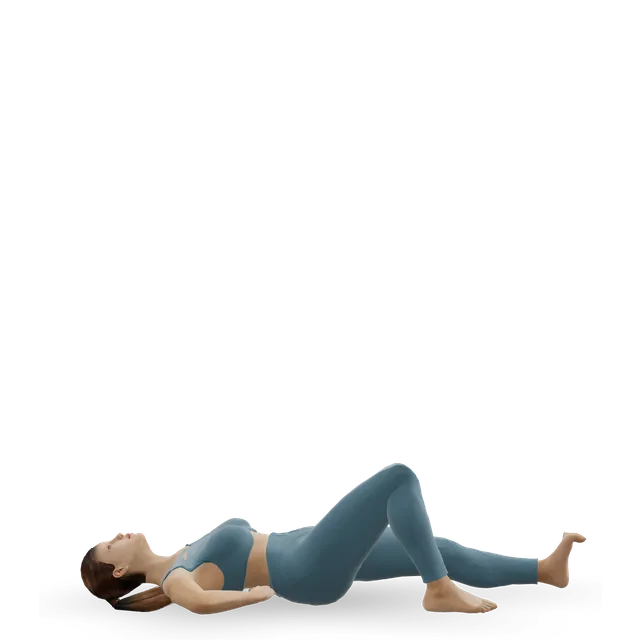
Pelvic tilt into bridge demonstrated on the 3D figure3D demoPelvic tilt into bridgeBeginner · No equipment

The tilt first: 2 to 3 at a time, building to sets of 8 · As in our twisting and golf guides: NHS inform's pelvic tilt, with its pacing. The pelvis's rock in the saddle

Harder: Glute bridge

Hip windshield wipers demonstrated on the 3D figure3D demoHip windshield wipersBeginner · No equipment

10 slow passes side to side, 2 rounds · From the move page's dose (an editorial starting point). Small range, easier side first, as in our twisting guide

Easier: Supine heel slide · Harder: 90/90 switch

Thoracic rotation demonstrated on the 3D figure3D demoThoracic rotationBeginner · No equipment

6 rotations per side, moving with the breath · The move page's dose. Turning from the upper back, as in our horse riding warm-up

Easier: Side-lying open book · Harder: World's greatest stretch

Move on when: You can walk for 15 to 20 minutes, get up from a chair and do the lighter yard jobs within the pain rule, and your back is no worse the next morning (the back hub's test, with the yard added as our suggestion).

Follow along: a timer, a cue and the next move, one step at a time.
Stage 2

Build: trunk endurance and the hips

About weeks 2 to 6, 2 or 3 sessions a week with walking on most days: trunk endurance, the side plank that went with fewer back problems in young riders, hip strength, and the hip flexors that sitting and gripping tighten.

Bird dog, one limb at a time demonstrated on the 3D figure3D demoBird dog, one limb at a timeBeginner · No equipment

3 sets of 6 to 8 each side, with 3 to 5 s holds; then the full bird dog · As in our twisting and golf guides (editorial)

Easier: Side-lying tummy draw-in · Harder: Bird dog

McGill curl-up demonstrated on the 3D figure3D demoMcGill curl-upBeginner · No equipment

5 × 10 s holds · As in our strength workout for horse riders (editorial). Skip it if bending forward sends pain down a leg, as the move page says

Harder: Crunch

Knee side plank demonstrated on the 3D figure3D demoKnee side plankBeginner · No equipment

3 holds of 15 to 20 s each side · As in our back pain guide (editorial); compare the two sides

Harder: Side plank

Glute bridge demonstrated on the 3D figure3D demoGlute bridgeBeginner · No equipment

2 to 3 sets of 10 · As in our back pain and golf guides (editorial)

Easier: Pelvic tilt into bridge · Harder: Single-leg glute bridge

Side-lying leg raise demonstrated on the 3D figure3D demoSide-lying leg raiseBeginner · No equipment

2 × 8 each side · As in our strength workout for horse riders (editorial). Lift from the side of the hip

Easier: Lateral band walk · Harder: Lateral band walk, band at the feet

Half-kneeling hip flexor stretch demonstrated on the 3D figure3D demoHalf-kneeling hip flexor stretchBeginner · No equipment

30 s each side · As in our strength workout for horse riders (editorial). Pad the kneeling knee, as the move page says

Harder: Couch stretch

Move on when: Every set is controlled, you can hold the knee side plank for 20 seconds each side within the pain rule, and your back is no worse the next morning (editorial).

Follow along: a timer, a cue and the next move, one step at a time.
Stage 3

Rider and yard strength: legs, carrying and the jumping position

About weeks 6 to 10, 2 or 3 sessions a week: the leg strength the seat and the jumping position need, lifting and carrying for the yard, and longer side-plank holds, the moves our strength workout for horse riders and the back hub's third stage use.

Side plank demonstrated on the 3D figure3D demoSide plankIntermediate · No equipment

3 × 20 to 30 s each side, building towards 60 s · As in our strength workout for horse riders (editorial); start from the knees if you need to

Easier: Knee side plank · Harder: Side plank with leg lift

Single-leg glute bridge demonstrated on the 3D figure3D demoSingle-leg glute bridgeIntermediate · No equipment

8 each side · As in our strength workout for horse riders (editorial). Hips level

Easier: Glute bridge · Harder: Barbell hip thrust

Dumbbell goblet squat demonstrated on the 3D figure3D demoDumbbell goblet squatIntermediate · A dumbbell

3 × 6 to 8 · As in our strength workout for horse riders (editorial)

Easier: Bodyweight squat · Harder: Barbell front squat

Step-up demonstrated on the 3D figure3D demoStep-upBeginner · A step

8 each side · As in our strength workout for horse riders (editorial): like mounting from a block. A stable, non-slip step, as the move page says

Easier: Low step-up · Harder: Dumbbell step-up

Hip-hinge practice demonstrated on the 3D figure3D demoHip-hinge practiceBeginner · No equipment

8, then hold your jumping position 2 × 20 s · As in our horse riding warm-up (editorial). Also the way to pick up buckets and bales

Harder: Kettlebell deadlift

Farmer's carry demonstrated on the 3D figure3D demoFarmer's carryIntermediate · A dumbbell + A kettlebell

2 × 30 m · As in our strength workout for horse riders (editorial): tall and braced, like carrying water buckets

Harder: Suitcase carry

Move on when: These are within the pain rule, and a normal yard session leaves your back no worse the next morning (editorial).

Follow along: a timer, a cue and the next move, one step at a time.
Stage 4

Back in the saddle: the riding warm-up, then the steps back

From about weeks 6 to 10, as your back allows, then for good: the horse riding warm-up before every ride, and a staged return by the written steps below. The warm-up is the site's own; how riding comes back is our suggestion, built on the loading studies.

Standing march demonstrated on the 3D figure3D demoStanding marchBeginner · No equipment

60 s · As in our horse riding warm-up (editorial). Brisk, arms swinging

Easier: Seated march · Harder: Standing band hip flexion

Cat-cow demonstrated on the 3D figure3D demoCat-cowBeginner · No equipment

6 slow rounds · As in our horse riding warm-up (editorial). Move one segment at a time

Harder: Half lord of the fishes (Ardha Matsyendrasana)

Thoracic rotation demonstrated on the 3D figure3D demoThoracic rotationBeginner · No equipment

6 each side · As in our horse riding warm-up (editorial). Turn from your ribs

Easier: Side-lying open book · Harder: World's greatest stretch

Standing hip CARs demonstrated on the 3D figure3D demoStanding hip CARsBeginner · A wall

2 slow circles each leg · As in our horse riding warm-up (editorial). Hold a fence or wall

Easier: Hip circles on all fours · Harder: 90/90 hip lift-off

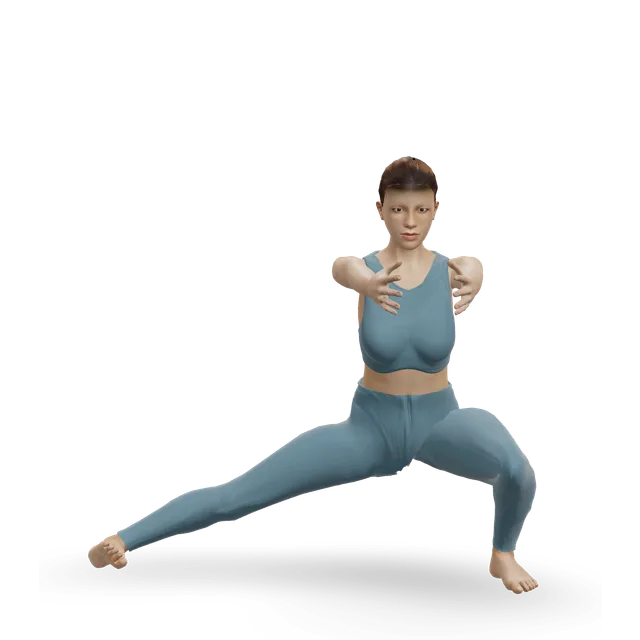
Cossack squat demonstrated on the 3D figure3D demoCossack squatIntermediate · No equipment

4 each side · As in our horse riding warm-up (editorial). Only as deep as is comfortable

Easier: Sit squat (partial squat) · Harder: Pistol squat

Single-leg stand demonstrated on the 3D figure3D demoSingle-leg standBeginner · A wall

20 to 30 s each leg · As in our horse riding warm-up (editorial). Stand tall on a soft knee

Easier: Tandem stance and heel-to-toe walk · Harder: Single-leg reach matrix

Move on when: Our suggestion: an hour's ride including some sitting trot and canter passes the pain rule twice; then add jumping, long rides and competition one at a time. Keep two strength days a week (stages 2 and 3, or our strength workout for horse riders), and drop back a step for a few days after a flare rather than stopping.

Follow along: a timer, a cue and the next move, one step at a time.

What to change for now

What to do now (written steps)

Our 3D figure can't show these. They come from the NHS back pain page, NICE and NHS inform's back exercises; where a step is our suggestion, it says so.

  • 1. Stay active and don't stay in bed for long periods, the NHS says; ibuprofen if it suits you, with ice or heat wrapped in a tea towel. NICE doesn't offer belts or corsets.
  • 2. Riding at walk on a calm horse can carry on if it's comfortable: many German riders with back pain said riding helped, and riding at walk seemed to ease pain (our suggestion, built on that survey).
  • 3. Hand the heaviest yard jobs to someone else for a week or two (our suggestion).
  • 4. NHS inform's back exercises rate pain of 0 to 3 out of 10 as minimal and 4 to 5 as acceptable, and say your pain should be no worse the morning after you've exercised; the pain rule below uses the same band.
  • 5. Pain in one spot over the spine after a fall, pain spreading down a leg, or numbness or weakness isn't an ordinary riding ache: see the warning signs.

Sources 7, 34, 57, 5

In the saddle: the trot, the stirrups, the saddle and mounting (written steps)

The 3D figure can't show these. They are our suggestions, built on the lab studies of load and jolts, which measured no pain; the stirrup rule is the Pony Club's own words.

  • 1. Walk and rising trot rather than sitting trot for now, with your weight through your legs.
  • 2. Stirrups a hole or two shorter than usual while your back is sore: in the lab, a shorter stirrup in rising trot cut the jolts reaching the base of the spine.
  • 3. Short canters in a light or two-point seat, and sitting trot last, in short spells.
  • 4. Mount from a mounting block rather than from the ground, which saves a big twist and reach for the stirrup; no study has tested it.
  • 5. A saddle that fits the horse and lets you sit evenly without perching or gripping, checked by a qualified saddle fitter.
  • 6. The Pony Club: "Stirrups should be of the correct size to suit the rider’s boots", and "It is strongly recommended that the design of the stirrup chosen allows the foot to be released easily in the event of a rider fall".

Sources 11, 9, 15, 59

Hats and body protectors, in the riding bodies' words (written steps)

The 3D figure can't show these. These are the bodies' own rules and advice; body protectors are for the ribs and soft tissues, not the spine.

  • 1. The Pony Club: "Members must always wear a protective hat when mounted", and "Hats must be replaced after a severe impact as subsequent protection will be significantly reduced".
  • 2. The Pony Club: a body protector "is compulsory for all Pony Club Cross Country riding (including Arena Eventing) and Pony Racing activities whether it be training or competition", and an air jacket "must only be used in addition with a normal body protector which meets BETA 2018 Level 3 standard".
  • 3. The Pony Club also recommends that "a rider’s body protector should not be more than 2% of their body weight".
  • 4. BETA: body protectors "should be replaced at least every three to five years", and "If you should have a heavy fall, your body protector should be checked immediately for dents".
  • 5. The BHS: air jackets "do not currently meet any recognised safety standards", and "When worn alone, they offer little protection to the rider".
  • 6. British Eventing: "Even where safety equipment is not compulsory, its use is strongly encouraged, particularly for less experienced riders".

Sources 60, 61, 43, 50, 62

On the yard: lifting, mucking out and carrying (written steps)

The 3D figure can't show these. The lifting advice is the Health and Safety Executive's own words for farms; the rest is our suggestion, built on the stable work studies. None has been tested for back pain.

  • 1. "Keep the load close to your waist for as long as possible while lifting", and "Don't lift or handle more than you can easily manage".
  • 2. "Turning by moving the feet is better than twisting and lifting at the same time": step and turn your feet to throw a forkful of muck.
  • 3. Smaller units and mechanical aids: the HSE suggests "eg use feed blocks or feed bags weighing 25 kg or less".
  • 4. With a sore back: half-full wheelbarrows and water buckets (two to balance), a long-handled fork you don't have to stoop over, split bales before you lift them, and the hip hinge from the plan to load the fork (our suggestion).
  • 5. Share or swap the heaviest jobs for a week or two, and break up a long yard session (our suggestion).

Sources 51, 21, 22

Back in the saddle (written steps)

Our suggestion, built on the loading studies and the riding bodies' rules; none has been tested as a return to riding after back pain. Move on when each step passes the pain rule.

  • 1. Kit first: a hat to a current standard, fastened; a fitted body protector for jumping and cross-country, as the rules require; boots with a heel, and stirrups that fit them.
  • 2. Walk: 20 to 30 minutes at walk on a calm horse with comfortable paces, on good going.
  • 3. Rising trot: short spells, with your stirrups a hole or two shorter than usual and your weight through your legs.
  • 4. Canter: short canters in a light or two-point seat.
  • 5. Sitting trot: short spells only once rising trot and canter pass the pain rule; go back to rising trot when your back tires.
  • 6. Jumping, long hacks and competition: last, one at a time.
  • 7. The yard: half loads, the hinge and turning with your feet, the heaviest jobs shared, and breaks in long sessions.
  • 8. After a fall: if your back hurts in one spot over the spine, don't get back on; get it checked. After a spinal fracture, your team decides when you ride again.
  • 9. If it doesn't settle, or keeps coming back, see a physiotherapist, ideally one who works with riders, as the warning signs say.

Sources 9, 11, 59, 43, 51

Positions to swap, and why

Habit or positionWhy it mattersInstead
Long spells of sitting trot while your back is soreSitting trot loaded the rider's lower back most in the lab.Rising trot with a slightly shorter stirrup; pelvic tilts off the horse.Try: Pelvic tilt into bridge
Getting back on after a fall with pain in one spot over the spineRiding fractures are often where the upper and lower back meet and usually cause no nerve damage, so they can be missed.Stop and get it checked the same day.
Mounting from the groundIt means a big twist and reach with a sore back (our reasoning).A mounting block; step-ups for strength.Try: Step-up
Full wheelbarrows, full buckets and whole balesThe HSE advises keeping loads close and using smaller units, and stable work keeps the back bent and twisted.Half loads, split bales and two buckets to balance; farmer's carries for strength.Try: Farmer's carry
Twisting to throw a forkful of muckThe HSE says turn with your feet rather than twisting and lifting at once.Step and turn your feet; the hip hinge to load the fork.Try: Hip-hinge practice
Relying on a body protector or air jacket to protect your backProtectors are for the ribs and soft tissues and haven't been linked with fewer spinal cord injuries.Wear what the rules require, fitted, and ride within your ability.
A saddle that tips you forward or back, or makes you gripSmall saddle changes alter how the rider's pelvis moves.A saddle fitter's check, for the horse and for you.
Staying in bed or stopping all activityThe NHS says don't stay in bed for long periods.Walking, riding at walk and the stage 1 moves.Try: Cat-cow
A back belt or brace for ridingNICE says don't offer belts or corsets for low back pain.Trunk endurance, starting with the bird dog.Try: Bird dog, one limb at a time
Asking for a scan to find what's wrongElite riders' back pain wasn't explained by their scans.Get checked if a warning sign appears.

Routines to follow

Horse riding warm-up: hips, back and balance before you get on

A 10-minute warm-up before you ride: marching, arm circles, cat-cow, thoracic rotations, hip circles, Cossack squats, bridges, balance and hip hinges.

10 minBeginner10 movesWall

Strength workout for horse riders: core endurance, hips, legs and back

A 40-minute off-horse session for riders: curl-ups, side planks, bird dogs and dead bugs, hip work, squats, step-ups and wall sits, rows, carries and balance.

40 minBeginner17 movesWall, band

McGill big 3 core routine

The McGill big three for the core: curl-ups, side planks and bird dogs, each held for 10 seconds at a time in falling sets of 5, 3 and 1 reps.

12 minBeginner3 movesNo equipment

Beginner core workout

A 15-minute beginner core workout on the floor: dead bugs, bird dogs, knee planks, side planks and curl-ups.

15 minBeginner6 movesNo equipment

Spine mobility routine: neck to pelvis, every direction

A 15-minute routine that moves your neck, upper back and lower back through bending, arching, side bending and twisting, then holds the spine steady.

15 minBeginner12 movesNo equipment

Both-sides yoga for horse riders: a 25-minute class for the hips, back and balance, after riding or on a non-riding day

A 25-minute yoga class for horse riders: the trunk and hips worked equally on both sides, standing balance, your jumping position and slow breathing.

25 minBeginner14 movesNo equipment

Seat-and-symmetry Pilates for horse riders: a 25-minute mat and standing class

A 25-minute Pilates class for horse riders: trunk endurance, pelvis and hip control both sides, upper-back rotation, balance and a two-point hold.

25 minBeginner16 movesWall

More moves for this area

Questions people ask

Why does my lower back hurt after horse riding?

Usually tired, overloaded muscles from absorbing the horse's movement, especially in sitting trot and canter, or a strain from yard work. It's common and usually settles within days to a few weeks. Pain at the base of the spine, down a leg or in one spot after a fall is different, and the guide says what each needs.

Why does my upper back hurt after riding?

Usually the muscles between the shoulders and in the neck, from holding your position and from yard work; event riders and riding instructors report it often. The NHS asks for a GP check for pain between the shoulders rather than in the lower back.

Is horse riding bad for your back?

No. Back pain is common in riders, but a large survey found it wasn't linked to riding discipline or how much people rode, and most young riders' back trouble was minimal. Serious back injuries come from falls, which are uncommon.

Can I ride with back pain?

Usually, if there are no warning signs: walk and rising trot, a slightly shorter stirrup and shorter rides, by the pain rule above. Leave sitting trot, long canters and jumping until shorter rides are comfortable.

Can I ride with sciatica or a slipped disc?

Often, once leg pain is settling and walking is comfortable. Stop any riding that sends pain further down your leg, get help the same day for weakness that is getting worse, and call 999 for numbness in both legs or bladder changes. Our sciatica and herniated disc guides cover these.

My back hurts after falling off my horse. What should I do?

With back or neck pain and numbness, tingling or weakness, stay still and call 999; helpers shouldn't move you unless they're trained. Pain in one spot over the spine, or pain that makes it hard to stand or breathe, needs checking the same day, even if you got back on, because riding fractures are often where the upper and lower back meet and can cause no nerve symptoms.

Why does my tailbone hurt after riding?

A fall onto your bottom or long spells in the saddle can bruise or strain the coccyx, as the NHS describes. A cushion off the horse, rising trot or a light seat, and time usually help; our tailbone pain guide covers it.

Does a body protector protect my back?

Not from spinal fractures: it's designed for bruising, soft tissue injuries and some rib fractures. Wear the Level 3 protector the rules require, fitted, replace it at least every 3 to 5 years, and have it checked for dents after a heavy fall, as BETA advises.

Does saddle fit cause back pain?

Small saddle changes alter how your pelvis moves, and an old survey linked general-purpose saddles with more back pain. It's worth a saddle fitter's check if your back hurts, but no trial has tested a saddle change for back pain.

How do I muck out without hurting my back?

Smaller loads close to your body, turning with your feet rather than twisting, and tools that stop you stooping, as the HSE advises. Share the heaviest jobs while your back is sore.

What exercises help riders' back pain?

Trunk endurance (side planks, bird dogs and curl-ups), hip strength and mobility, leg strength and carrying. The four stages above build them up, each with a 3D demo.

When should I see a doctor?

Call 999 after a fall with back or neck pain and numbness, tingling or weakness, or for numbness around the genitals or bottom or new bladder or bowel trouble. Get help the same day for back pain with a fever or feeling unwell, or pain in one spot after a fall, and see a GP if it isn't better within a few weeks. In the US, call 911 where this page says 999.

Related exercise guides

Other pain guides

Sources

  1. Duarte 2024 · Low back pain in 347 Portuguese riders (survey, Sports)
  2. Duarte 2024 · Low back pain in equestrians: 14 studies (systematic review, Sports)
  3. Ferrante 2021 · Low back pain in 886 Italian competitive riders (cross-sectional survey, Muscles Ligaments Tendons J)
  4. Keener 2023 · Injuries and long-term pain in 2,049 American riders (survey, Comp Exerc Physiol)
  5. Kraft 2007 · Riding discipline, riding intensity and back pain in 508 competitive riders (survey, in German, Sportverletz Sportschaden)
  6. Adamczewska 2026 · Neck and low back disability in 353 young female show jumping riders (cross-sectional survey, J Clin Med)
  7. NHS · Back pain
  8. Byström 2009 · How the saddle and rider move at collected trot: 7 high-level dressage pairs (treadmill study, Equine Vet J)
  9. Mason 2020 · Loading of the lower back in 21 dressage riders (lab study, J Sport Rehabil)
  10. Smit 2026 · Repeated shocks to the low back in 12 riders at walk and canter (field measurement study, J Biomech)
  11. Keener 2021 · Stirrup length, rising trot and jolts through the spine in 13 riders (lab study, J Strength Cond Res)
  12. Münz 2014 · How the rider's pelvis follows the horse in 20 professional and beginner riders (sensor study, Hum Mov Sci)
  13. Landman 2025 · Low back pain in 100 competitive dressage riders in South Africa (cross-sectional survey, J Chiropr Med)
  14. Quinn 1996 · Saddle type and low back pain in 108 UK riders (survey, Br J Sports Med)
  15. Becard 2025 · Small saddle changes and rider and horse movement in 8 pairs (sensor study, Sensors)
  16. Baragli 2022 · Uneven stirrup forces in 147 riders on a riding model (pilot study, Animals)
  17. Hobbs 2014 · Posture, flexibility and grip strength in 127 riders (cross-sectional study, J Hum Kinet)
  18. Lewis 2018 · Pain in 331 international event riders during competition in the UK (survey, Comp Exerc Physiol)
  19. Lewis 2017 · Pain in 50 elite dressage riders during competition in the UK (survey, Comp Exerc Physiol)
  20. Löfqvist 2009 · Musculoskeletal health and working conditions of Swedish riding instructors (survey of 800, J Agric Saf Health)
  21. Löfqvist 2011 · Working postures in stable work with horses (video posture analysis, J Agric Saf Health)
  22. Löfqvist 2015 · Ergonomic risks in daily stable cleaning (task analysis, Work)
  23. Davies 2022 · Injury and pain in 352 British horseracing staff (survey, Int J Environ Res Public Health)
  24. Stigson 2024 · Riding accidents and injuries leading to permanent impairment in Swedish federation insurance claims (retrospective study, BMC Sports Sci Med Rehabil)
  25. Acton 2020 · Horse-related injuries in US emergency departments, 1990 to 2017 (national injury surveillance study, Am J Emerg Med)
  26. Hasler 2011 · Protective and risk factors in amateur riders at a Swiss trauma centre (data review and case-control survey, J Trauma Manag Outcomes)
  27. Eriksson 2025 · Riding fractures in Sweden's national fracture register (register study, Eur J Orthop Surg Traumatol)
  28. Silver 2002 · Spinal injuries from horse riding accidents (review with UK spinal unit counts, Spinal Cord)
  29. Siebenga 2006 · Spine fractures from horse riding in 32 people in the Netherlands (case series, Eur Spine J)
  30. Loder 2025 · Spinal injuries from horse riding in US emergency departments, 2000 to 2023 (national injury surveillance study, J Clin Med)
  31. Roe 2003 · Spinal and spinal cord injuries in horse riding in New South Wales, 1976 to 1996 (case series, ANZ J Surg)
  32. Franzén Lindgren 2023 · Riding injuries at a Scandinavian trauma centre: 3,036 patients (cohort study, BMC Sports Sci Med Rehabil)
  33. NHS · Tailbone (coccyx) pain
  34. NICE NG59 · Low back pain and sciatica in over 16s: assessment and management (2016, updated 2026)
  35. Kraft 2009 · Back pain and spine scans in elite riders (case-control study, Am J Sports Med)
  36. Brinjikji 2015 · Spine degeneration on scans of people without back pain (systematic review, AJNR)
  37. da C Menezes Costa 2012 · The prognosis of acute and persistent low back pain (meta-analysis of 33 cohorts, CMAJ; two published comments, no corrections)
  38. NHS inform · Back problems
  39. Schicho 2015 · Spinal fractures from horse riding at a German university hospital (case series, in German, Sportverletz Sportschaden)
  40. NHS · Sciatica
  41. NHS · Osteoporosis
  42. NHS · Whiplash
  43. British Equestrian Trade Association (BETA) · Body protectors: the BETA 2018 standard
  44. Crawford 2025 · Brain, spinal cord and chest injuries in equestrian sports and their risk factors (review, Sports Health)
  45. Andres 2018 · Body protectors, experience and injuries in 718 US Pony Club incident reports (retrospective study, BMJ Open Sport Exerc Med)
  46. Hessler 2012 · Safety vests and trunk injuries in 92 young riders who fell (case-control study, Klin Padiatr)
  47. Nylund 2019 · Air jackets and injury in 3,305 eventing falls (retrospective study, J Sci Med Sport; a letter by the same authors with the same title couldn't be read)
  48. Meyer 2024 · Airbag vests in equestrian sports: is use associated with harm? (systematic review, Ann Biomed Eng)
  49. Hessler 2011 · Spine injuries from horse riding accidents in 30 riders (case series, in German, Sportverletz Sportschaden)
  50. The British Horse Society (BHS) · Body protectors
  51. Health and Safety Executive (HSE) · Agriculture: manual handling
  52. Hayden 2021 · Exercise therapy for chronic low back pain: 249 trials (Cochrane review)
  53. Weeks 2024 · An 8-week exercise programme for back pain in 9 riders (uncontrolled study, J Sports Med Phys Fitness)
  54. Hyttinen 2020 · Strength, endurance or combined training in 44 female riders (controlled training study, J Sports Med Phys Fitness)
  55. Cejudo 2020 · Trunk side endurance, body fat and back pain in 19 child riders (cross-sectional study, Children)
  56. Uldahl 2021 · Pelvic mobility, balance and riding skills in 20 riders (correlational study, Animals)
  57. NHS inform · Exercises for back pain
  58. Smith 2017 · Should exercises be painful in chronic musculoskeletal pain? (systematic review and meta-analysis, Br J Sports Med)
  59. The Pony Club 2025 · The stirrup rule (safety and welfare)
  60. The Pony Club 2026 · Hat rule (safety and welfare)
  61. The Pony Club 2026 · Body protector rule, with air jackets (safety and welfare)
  62. British Eventing (BE Prepared) · British Eventing rules: a beginner's guide to tack and equipment
  63. NHS · Falls
  64. NHS inform · Neck injury
  65. NHS · Head injury and concussion
  66. British Equestrian 2023 · Concussion and return to riding guidelines, version 1.0
  67. NHS · Broken or bruised ribs
  68. Dick 2021 · Injuries after horse riding accidents in 162 people at a Scottish district general hospital (retrospective review, Scott Med J)
  69. NICE NG41 · Spinal injury: assessment and initial management
  70. NHS · Abdominal aortic aneurysm (past its review date: reviewed June 2023, review due June 2026)
  71. NHS · Kidney infection
  72. Leicestershire Partnership NHS Trust · Leg pain (thigh and calf): physiotherapy leaflet (2026)
  73. NHS · Foot drop
  74. NICE NG234 · Spinal metastases and metastatic spinal cord compression (2023)
  75. NHS · Septic arthritis
  76. Royal Osteoporosis Society · Osteoporosis symptoms
  77. AAOS OrthoInfo · Osteoporosis and spinal fractures
  78. Gregson 2025 · The 2024 UK clinical guideline for the prevention and treatment of osteoporosis (NOGG, Archives of Osteoporosis)
  79. NICE NG259 · Osteoporosis: risk assessment (2026)
  80. Essex Partnership University NHS Foundation Trust · Vertebral compression fracture (patient leaflet, 2025)
  81. Fredrickson 1984 · The natural history of spondylolysis and spondylolisthesis (cohort of 500 children, J Bone Joint Surg Am)
  82. Beutler 2003 · Spondylolysis and spondylolisthesis: 45-year follow-up (cohort, Spine)
  83. NICE NG65 · Spondyloarthritis in over 16s: diagnosis and management
  84. WHO 2023 · Guideline for non-surgical management of chronic primary low back pain in adults
  85. May 2012 · Centralisation and directional preference (systematic review, Manual Therapy)
  86. NHS · Back pain in pregnancy
  87. NHS · Pilonidal sinus (past its review date: reviewed November 2023, review due November 2026)

Exercise education, not a diagnosis or treatment plan. It is written from the guidelines and studies listed above; review by a clinician is pending. If your pain follows an injury, is severe, is getting worse, or comes with any warning sign listed on this page, get it assessed. Health disclaimer.