Shoulder pain from surfing (surfer's shoulder): paddling, pop-ups, wipeouts, the neck and what helps

Shoulder pain is one of the commonest problems in surfers, and it usually comes from paddling, which takes about half of every session. Most often it's an overloaded rotator cuff at the front or outside of the shoulder after more or longer paddles than it's used to, with weaker turning of the arm outwards; "surfer's shoulder" is the common name. Wipeouts can dislocate a shoulder or tear the rotator cuff, and paddling with your head up loads the neck and upper back. Most of it settles with less paddling and a strengthening plan.

This guide starts with the signs that need accident and emergency (A&E) or a 999 call, such as a shoulder that looks out of place after a wipeout or chest pain spreading to your arm while you paddle, and those that need a general practitioner (GP) or the National Health Service's 111 line (NHS 111) the same day, such as sudden weakness lifting the arm or neck pain with numbness down an arm. It then maps the causes by where it hurts, covers paddling volume, the board, the warm-up and the safety bodies' advice in their own words, and gives a four-stage plan with a 3D demo of every move, back to full sessions.

When to get help first

Exercise is for pain that has been checked or is clearly mild and settling.

Get urgent medical help if

  • Call 999: shoulder or arm pain with chest pain that feels tight or squeezing, or chest pain that spreads to your arms, neck or jaw, especially with shortness of breath, sweating or feeling sick. It could be a heart attack.
  • Get help from NHS 111: pain or tightness in your chest, neck, shoulders, jaw or arms that comes and goes, often brought on by exercise, stress, emotion or cold and easing after a few minutes' rest. It can be angina, a sign of a heart problem. If you've been diagnosed with angina, get help from NHS 111 too if it feels worse than before, is happening more often, lasts longer or happens when you're resting.
  • Someone who faints while exercising, or who has fainted and can't be woken within a minute, has chest pain or a pounding, fluttering or irregular heartbeat, or hasn't fully recovered.
  • Call 999 or go to A&E: after a fall or injury, your shoulder looks out of place or has changed shape, you cannot move your arm, or your shoulder is painful, bruised or swollen. Do not drive yourself, and do not try to put it back in yourself.
  • Go to A&E if you can't move your arm, or the shoulder looks out of place or has changed shape.
  • Same day (GP or NHS 111): sudden weakness lifting the arm after an injury or fall. A rotator cuff tear caused by an injury needs urgent referral to a shoulder specialist. After a dislocation in anyone over 40, the rotator cuff should be checked: about 40% have a tear.
  • Same day (GP or NHS 111): sudden or very bad shoulder pain; you cannot move your arm; the arm or shoulder is badly swollen or has changed shape; pins and needles that do not go away; no feeling in the arm; the arm is hot or cold to the touch; pain that started after an injury such as a fall; or severe pain in both shoulders.
  • Same day (GP or NHS 111): the shoulder or arm is hot, swollen or red, or you have a high temperature (although not everyone has one) or feel unwell. A joint infection needs same-day care.
  • Call 999 or go to A&E after a neck injury if the person is unresponsive, has severe neck pain or cannot move their head, has fallen from a height such as 5 or more stairs, or is drunk or has taken recreational drugs. Do not drive yourself. Being 65 or over, a dangerous fall or crash (from more than 1 metre or 5 stairs, diving, a high-speed or rollover crash, being thrown from a vehicle, a bicycle collision or an accident on a motorised recreational vehicle), or tingling in the arms or legs after an injury puts you at high risk of a broken neck: get checked.
  • Severe neck pain is a red flag that needs urgent assessment, and someone with a suspected neck injury should be moved only by trained professionals. Tingling or pins and needles on one or both sides, problems walking or sitting upright, a sudden "electric shock" feeling, or weak hands, arms or legs need urgent help. Call 999 and the lifeguards, who are trained to get injured people out of the water (our suggestion).
  • Never dive head first into water whose depth you haven't checked, or into the shallow end of a pool. The Royal Life Saving Society UK allows a dive only into water at least 1.5 m deep with 7.6 m clear in front, from a standing start, and in open water the depth changes with the tide and you can't always see what's under the surface. If someone hits their head or neck on the bottom, call 999.
  • Same day (NHS 111) after a neck injury, if any of these are new or getting much worse: severe neck pain; numbness or weakness in the arms or legs; clumsy hands (dropping things, or struggling with handwriting, buttons or zips); changes in bladder or bowel control; changed feeling around the bottom or genitals, or sexual problems such as recently being unable to have an orgasm or an erection; or feeling generally unwell. The same applies if you have a history of spinal problems, such as osteoporosis or rheumatoid arthritis.
  • Sudden low back pain while surfing, followed by numbness, tingling or weakness in both legs or trouble peeing, can be surfer's myelopathy. The NHS lists back pain with symptoms in both legs, or changes in your bladder or bowels, as a 999 call.
  • Same day (urgent GP appointment or NHS 111): severe neck pain that starts suddenly or gets worse quickly; heaviness or weakness in the arms or legs; pins and needles in an arm along with neck or arm pain; or pain between the shoulder blades.
  • Same day: clumsiness in your hands, or numbness, pins and needles or weakness in one or both arms, that is getting worse; problems with balance or walking since the neck pain started; or neck pain with a severe headache.
  • Call 999 or go to A&E: new problems walking, loss of bladder or bowel control, or a sudden loss of coordination, such as difficulty doing up buttons. These can be signs of pressure on the spinal cord.
  • Call 999 or go to A&E: a hand or arm that suddenly turns cold, pale, blue or grey and painful, or goes numb and weak. Blood may not be getting through.
  • Same day (urgent GP appointment or NHS 111): throbbing or cramping pain, swelling, redness and warmth in one arm. These can be signs of a blood clot caused by thoracic outlet syndrome, which can be life-threatening if not treated quickly.
  • Call 999 or go to A&E if breathing suddenly becomes difficult, if pain in your chest or upper back comes on suddenly with breathlessness or a very fast heartbeat, or if someone passes out. Do not drive yourself. It can be a blood clot that has reached the lungs.
  • Call 999: you suddenly can't fully lift both arms and keep them there, because of weakness or numbness in one arm, especially if one side of your face droops or you slur your words or sound confused. It could be a stroke. Call even if the signs have stopped.
  • Call 999 or go to A&E: if you are or could be pregnant, shoulder tip pain (where the shoulder ends and the arm begins) with sudden severe tummy pain, dizziness or fainting. It can mean bleeding from an ectopic pregnancy.
  • Contact a GP immediately, go to 111.nhs.uk or call NHS 111: a new or frequent headache that usually comes on suddenly (your scalp may also feel sore or tender), pain in the jaw muscles or tongue when eating or talking, or problems with your sight, such as double vision or loss of vision in 1 or both eyes. With pain and stiffness around the shoulders, these can be signs of temporal arteritis (giant cell arteritis), which up to 1 in 5 people with polymyalgia rheumatica develop. If you suddenly can't see from 1 or both eyes, call 999 or go to A&E.

See a doctor or physiotherapist if

  • Pain that is getting worse or has not improved after 2 weeks of looking after it yourself, or it is very hard to move your arm. In many areas you can refer yourself to physiotherapy.
  • Your shoulder has partly or fully come out of joint, or you worry it might.
  • Pins and needles or a cold arm alongside neck pain, or a new loss of strength or feeling in the arm that you cannot explain (a possible nerve problem).
  • No improvement after 6 weeks of exercise, or arm symptoms still there beyond 6 to 12 weeks.
  • Strength getting worse, or the shoulder not clearly better by 12 weeks of exercise: ask for a specialist opinion.
  • Not improving after a good 3 months of exercise, or the arm is clearly weak: ask for a specialist opinion.
  • A past history of cancer, an unexplained lump or swelling, weight loss, or pain that is constant and does not ease when you change position.
  • You smoke or used to, and have shoulder pain with a cough that will not go away, breathlessness or weight loss. See a GP if you've had a cough for longer than 3 weeks; if you've coughed up blood, ask for an urgent GP appointment or get help from NHS 111.
  • See a GP if you have pain and stiffness for more than a week, especially if you're over 50, it's in both shoulders (often the neck and hips too) and the stiffness lasts longer than 45 minutes in the morning. It can be polymyalgia rheumatica.
  • Neck pain or stiffness that has not eased after a few weeks, or after 8 weeks of looking after it yourself; painkillers are not helping; or you are worried. In many areas you can refer yourself to NHS physiotherapy.
  • The muscle over the back of the shoulder blade looks thinner, or turning the arm outwards is weak, even without pain: see a GP or physiotherapist. In overhead athletes this is usually a squeezed nerve, and it often settles with strengthening.
  • A shoulder that aches after every surf and keeps coming back over a season, even if you can still paddle, or turning the arm outwards that feels weak: see a physiotherapist, ideally one who works with surfers or swimmers, rather than paddling through it. Shoulder problems are the surfing injuries most likely to last more than 3 months, and weaker turning outwards is common in surfers with shoulder pain (our suggestion, built on the shoulder hub's see-a-GP line, two New Zealand surfing surveys and a review of the surfer's shoulder).

Where does it hurt?

Location narrows the likely causes; it does not diagnose.

The front or outside of the shoulder, aching after long paddles or the next day, sore lifting the arm or lying on that side

An overloaded rotator cuff, often called impingement, the commonest cause. Less paddling and rotator cuff strengthening help.

Read: Shoulder impingement (rotator cuff pain) →

The back of the shoulder or around the shoulder blade after long paddles, with weak turning outwards

The muscles that turn the arm outwards and steady the shoulder blade, which are weaker in surfers with sore shoulders.

Read: Back of shoulder pain →

The front of the shoulder at the top of the arm, worse pulling and pushing up

Often the biceps tendon, alongside the rotator cuff.

Read: Biceps tendinitis (shoulder) →

A shoulder that came out in a wipeout, or feels loose, clunks or slips

A dislocation or an unstable shoulder. Go to A&E if it looks out of place; it can slip again.

Read: Shoulder dislocation and instability →

Sudden weakness lifting or turning the arm after a wipeout, especially from 40

A possible rotator cuff tear: get help the same day.

Read: Rotator cuff tear →

Deep clicking, catching or a dead arm

Possibly the labrum, the rim of cartilage around the socket (a superior labrum anterior to posterior, or SLAP, tear), common in professional surfers seen by a surgeon.

Read: SLAP tear →

The top of the shoulder at the end of the collarbone, after a fall onto the shoulder

The acromioclavicular (AC) joint.

Read: AC joint injury and pain →

The neck and between the shoulder blades after paddling with your head up

The neck and upper back muscles, a common overuse complaint in surfers. Sit up between waves and do chin tucks.

Read: Neck pain →

Neck pain with pain, pins and needles or numbness down one arm

A pinched nerve in the neck: the nerve lines in the warning signs say when it needs help the same day.

Read: Pinched nerve in the neck →

Neck pain after hitting the seabed or another surfer

A possible neck injury: call 999 and the lifeguards, as the warning signs say.

Read: Whiplash →

Sudden low back pain while surfing, then numbness, tingling or weakness in both legs or trouble peeing, in a beginner

Possibly surfer's myelopathy, which is rare: call 999.

Low back pain after surfing, from popping up or lying arched on the board

Our back pain guide covers ordinary low back pain; no surfing back guide has been written yet.

Read: Back pain →

Shoulder or left arm pain with chest pain, breathlessness or sweating while paddling

Possibly the heart: call 999.

An arm that swells, throbs and turns red after a big paddling week

A possible blood clot in an arm vein: get help the same day.

Read: Thoracic outlet syndrome →

Understand it

Common, mostly minor, and most surfers seen in hospital go homeEmerging evidence

Across 17 studies, 31% to 35% of recreational surfers and 42% to 49% of competitors had an injury of any kind in a year; in Australia the rate was 1.79 major injuries per 1,000 hours, and a narrative review puts it at "0.74-1.79 injuries per 1000 hours of surfing". Most are cuts and bruises from the board. In UK club surfers, "65% of the surfers never required professional medical treatment"; in Cornwall's main hospital, 90% of surfing injuries "were minor/moderate (allowing for discharge after treatment)"; and a US emergency department study concluded that "Surfing injuries are common but rarely serious", with 95.7% of surfers treated and sent home.

Among upper limb surfing injuries in US emergency departments, nearly half of them at the shoulder, "Only 2.2% of injuries required hospital admission". NHS inform says new shoulder pain "should begin to settle within 6 weeks". The pooled surfing figures come from surveys and hospital records of mixed quality, so treat them as rough guides (low certainty).

Sources 1, 2, 3, 4, 5, 6, 7, 8, 9

Paddling is most of surfing, and it loads the rotator cuffEmerging evidence

Paddling takes about half of every session: 51% of the time in 42 world-class heats, "the greatest amount of time spent during surfing was paddling (54 ± 6.3% of the total time)" in 12 nationally ranked surfers, 44% in heats at 3 professional events, and 47.0% of recreational surfers' sessions, against 2.5% to 8% riding waves. A 2-hour training session and a Portuguese championship showed similar shares.

A review says "Muscles that are active during paddling are mainly internal rotators and muscles that are involved in shoulder flexion": the muscles that turn the arm inwards and lift it forwards. The broad back muscle (latissimus dorsi) worked hardest as paddling sped up, and in a lab study of adults who weren't surfers, the trapezius worked most as the arm came back out of the water.

Sources 10, 11, 12, 13, 14, 15, 16, 17, 18

The shoulder is one of the commonest places surfers get soreEmerging evidence

Across 20 studies of gradual-onset surfing injuries, "Spine/back (29.3%), shoulder (22.9%), and head/face/neck (17.5%) were the most frequently reported locations of musculoskeletal injury, whilst the most common mechanism of injury was paddling (37.1%)". In 1,473 New Zealand surfers, "Prolonged paddling was the most commonly reported mechanism of injury (40% of all injuries)", and the shoulder led with 146 gradual-onset injuries, 64% of them long-lasting. Across 10 studies of shoulder injuries, paddling was the commonest cause (about 58%), and about two-thirds built up over time rather than coming on suddenly; these pooled figures are low certainty. In Australian surfers, the shoulder was 16.4% of sudden major injuries.

"In surfers with shoulder complaints, external rotation range of motion and external rotation strength are impaired", and the review's authors write that "The surfer’s shoulder is characterised by external rotation deficit, as opposed to internal rotation deficit in the thrower’s shoulder, and it differs substantially from shoulder complaints in swimmers". In 13 competitive surfers, "Internal rotation strength was greater than external rotation strength bilaterally". These are surveys and small lab studies: they show where surfers hurt and how paddling works, not that paddling alone causes the pain.

Sources 19, 20, 21, 22, 2, 16, 23

Who gets it, and what the shoulder blade doesEmerging evidence

Gradual-onset injuries went with "board type, higher ability, older age, more hours/year, and years of surfing", and were 13% more common in longboarders than shortboarders, an association the survey couldn't explain. Shoulders were hurt suddenly by 4.3% of recreational and 7.4% of competitive surfers in a year. Older recreational surfers paddled for the same share of a session as younger ones.

Recreational surfers' shoulder blades moved no differently from non-surfers': "Surfers and non-surfers both presented with 48% positive scapular dyskinesis tests". A shoulder blade that moves a little unusually is common in people without pain, so it isn't the whole story.

Sources 20, 24, 25, 26

Popping upEmerging evidence

The pop-up starts as a fast push-up through both hands, with peak hand force about body weight; it lasted 1.20 seconds, "60% push-up and 40% reaching/landing phase". No study links the pop-up to shoulder pain; in our reading it loads the front of the shoulder like a push-up.

Source 27

Wipeouts and dislocations: a small share of injuries, but they matterEmerging evidence

Taking a fall with the arm out and turned outwards can dislocate the shoulder, and in 4 bodysurfers, waves forced arms overhead into the sand. In Cornwall, "Anterior shoulder dislocations accounted for 10% (n = 19) of injuries not requiring hospital admission"; on Australia's Gold Coast, "Dislocation rate was 4.9%, with shoulder dislocation (76.5%), and patella dislocation (12.1%) being the most common types", which by our own calculation makes shoulder dislocations about 3.7% of surfing hospital visits.

In professional surfers seen at one orthopaedic centre, "in shoulder, 48% had instability, 42% had a rotator cuff tear, and 35% had a superior anterior-posterior labral tear"; among surfers sent for a scan, the shoulder was the commonest joint injured, and "Only 17% (n = 11) of acute surfing injuries required surgery". These are selected groups, and they overstate how serious most surfers' shoulder pain is.

Sources 28, 29, 6, 30, 31, 32

The neck and upper back from paddling with your head upEmerging evidence

"Paddling also exposes the surfer to prolonged periods in cervical hyperextension, which may explain why head, neck, and face injuries made up the third largest percentage of all chronic or gradual-onset injuries reported", the review's authors explain (cervical hyperextension means the neck bent backwards). The neck was the third commonest gradual-onset injury in New Zealand (105 injuries, 46% long-lasting), and paddling holds the trunk arched, with the back muscles and middle trapezius working. Surf medicine clinicians link poor upper back (thoracic) mobility with neck, low back and shoulder problems, as an expert opinion.

Serious neck injuries are different: "Spinal injuries most commonly occur when the surfer's head strikes the seafloor", and at Australian beaches "Surfers were more likely to be injured through shallow water diving than swimmers (27.6% vs 2.2%)".

Sources 19, 20, 33, 28, 34, 35

Surfer's myelopathy: rare, but the warning sign to knowEmerging evidence

In 19 novice surfers in Hawaii, "all patients complained of sudden onset of low back pain while surfing, followed by bilateral leg numbness and paralysis progressing over 10-60 minutes", and "Admission severity appears to be most predictive of neurologic outcome". "Sixty-four cases of surfer's myelopathy have been reported to date" (in 2016), the first case series having named it in 9 people after surfing lessons. Across 104 cases of the same injury from arching the back, 58% followed surfing, and "The most frequent clinical feature was bladder or bowel dysfunction (84%)".

"The most common suggested mechanism of injury is static hyperextension" (lying with the back arched), and awareness "may lead to avoidance of the predisposing postures". It is rare, mostly in first-time surfers, and the warning signs say what to do.

Sources 36, 37, 38, 39, 40

When a scan or test mattersEmerging evidence

Most surfers' shoulder pain needs no scan to start treatment: the NHS advises seeing a GP or physiotherapist if shoulder pain hasn't improved after 2 weeks, and shoulder blade "dyskinesis" is as common in non-surfers. An X-ray is needed for a shoulder that may be dislocated or broken: the NHS says "You will usually have an X-ray to check your shoulder is dislocated". An ultrasound or magnetic resonance imaging (MRI) scan matters for sudden weakness after a wipeout (a possible rotator cuff tear), a shoulder that keeps slipping, or deep catching that doesn't settle with rehab, and an urgent MRI for surfer's myelopathy.

Sources 41, 26, 42, 36

How it usually goesEmerging evidence

Most overload settles: NHS inform expects new shoulder pain to start settling within 6 weeks, and the NHS says shoulder impingement "usually gets better in a few weeks or months". But surfers' shoulder problems can linger: 64% of gradual-onset shoulder injuries in New Zealand surfers lasted 3 months or more, and "the shoulder represented the largest proportion of chronic injuries (>3 months) (44.4%)" among sudden injuries, which is a reason to start the plan early rather than paddle through it. After a dislocation, the NHS says "It usually takes 6 to 12 weeks to recover from a dislocated shoulder. It may take up to 16 weeks to fully return to playing some sports". No one can promise a date.

Sources 9, 43, 20, 24, 42

When it isn't surfing: the causes the warning signs cover

Some shoulder pain has causes surfing didn't create, and the warning signs follow the pages behind them. Shoulder or arm pain with chest pain that feels tight or spreads to the arms, neck or jaw can be a heart attack, and pain that comes on with effort and eases with rest can be angina: the NHS heart attack and angina pages give the 999 and NHS 111 signs. The NHS shoulder pain and dislocated shoulder pages say when a shoulder needs A&E or same-day help.

After hitting the seabed, the UK's concussion guidelines for grassroots sport treat severe neck pain as a red flag and say someone with a suspected neck injury should be moved only by trained professionals; NHS inform's neck injury page and the NHS whiplash page say which symptoms need help the same day. Sudden low back pain with symptoms in both legs or bladder changes is a 999 call, as the NHS back pain page says, and surfer's myelopathy is described in case series of novice surfers.

Rarely, shoulder pain is a sign of something else, and the hub's lines follow the NHS pages: weakness in one arm with a drooping face or slurred speech on the stroke page; shoulder tip pain in pregnancy on the ectopic pregnancy page; a sudden headache, jaw pain or problems with sight on the polymyalgia rheumatica page, with the vision loss page's 999 call for suddenly losing sight; and chest or shoulder pain with a cough that won't go away on the lung cancer page. A hot, swollen joint can be septic arthritis, which the NHS page says needs checking quickly. An arm that suddenly turns cold, pale and painful may have lost its blood supply (acute limb ischaemia), and a national confidential enquiry's (NCEPOD) leaflet says "Seek emergency medical help immediately". A throbbing, swollen, red, warm arm can be a clot, which the NHS thoracic outlet syndrome page says needs an urgent GP appointment or NHS 111; the NHS DVT and pulmonary embolism pages describe clots and a clot that reaches the lungs; and the NHS fainting page says to call 999 for someone who fainted while exercising.

The neck lines follow the NHS cervical spondylosis and neck pain pages and NHS inform's neck problems page, which says to contact your GP practice urgently for clumsiness in your hands or arm symptoms that are getting worse. NICE's spinal injury guideline lists diving among the dangerous ways to hurt the neck, and a Wigan hospital leaflet says new nerve symptoms from the neck are likely to settle fully within 6 to 12 weeks. The diving line gives the Royal Life Saving Society UK's rule (water at least 1.5 m deep with 7.6 m clear ahead, from a standing start) and the Royal Society for the Prevention of Accidents' warning that water depths change with the tide.

The rotator cuff lines follow UK care pathways from the British Elbow and Shoulder Society and the British Orthopaedic Association, which say a tear caused by an injury needs urgent referral, with a primary care review. The 12-week and 3-month lines follow a cohort of 452 people with tears that didn't follow an injury, about 75% of whom did well with physiotherapy over 2 years, and a trial in which specific exercise reduced the need for surgery at a year. The shoulder blade nerve line comes from studies of top volleyball players, in whom wasting of the muscle over the back of the shoulder blade was usually painless and most kept playing.

Sources 44, 61, 41, 42, 62, 45, 63, 46, 36, 80, 81, 82, 83, 84, 65, 95, 79, 68, 67, 66, 73, 74, 75, 64, 78, 90, 91, 69, 70, 71, 72, 85, 86, 87, 88, 89


What helps, and how strong the evidence is

Rotator cuff and shoulder blade exercise helps long-standing shoulder pain (borrowed from other groups)Strong evidence

No trial has tested exercise for shoulder pain in surfers, and no injury-prevention programme has been tested in surfers. For long-standing rotator cuff pain in other groups, 12 weeks of rotator cuff exercise with slow lowering (eccentric work) and shoulder blade exercise did better than general movement exercise in 102 people: 69% against 24% reported a successful outcome, and 20% against 63% chose surgery. This is the trial behind the shoulder hub's rule and this plan's early doses.

Sources 47, 3

What surfers' shoulders seem to need: reasonable ideas, untestedEmerging evidence

In surfers, a review proposes "stretching of the internal rotators, external rotator training and optimisation of thoracic extension and scapulothoracic movement", which hasn't been tested, and profiling found turning outwards weaker than turning inwards. The plan leans on turning the arm outwards, shoulder blade work and upper back movement for that reason.

Sources 16, 23

Strength training improves paddling; injuries weren't measuredEmerging evidence

In 17 surfers, 5 weeks of heavy pull-ups and dips improved sprint and 400 m paddling, and an 8-week land-based home programme improved recreational surfers' self-rated performance and pop-up time. Neither study measured injuries.

Sources 48, 49

Less paddling and a bigger board: sensible, but untested for shoulder painEmerging evidence

No study has tested a change in surfing for shoulder pain. Prolonged paddling is the commonest reported cause of surfers' overuse injuries, gradual-onset injuries went with more hours a year, and point breaks asked for "longer continuous durations of paddling" than a beach break in contests. On boards, "Results from this study suggest that increasing BV reduces the metabolic cost of paddling" (BV is board volume), Surfing England says "Generally, the more volume a surfboard has, the easier it is to catch waves and paddle", and Surf Life Saving Australia says "soft boards are perfect for learning how to surf".

The board evidence is about the energy cost of paddling only, and in New Zealand gradual-onset injuries were 13% more common in longboarders, an association the survey couldn't explain. A board with more volume while your shoulder settles is our suggestion.

Sources 20, 19, 12, 50, 51, 52

Warm-ups: warmer surfers and better waves, injuries unknownEmerging evidence

Surfing England says "We always recommend a gentle warm up, loosening up muscles and helping to prevent injury", and Sports Medicine Australia says "Surfers should undertake a warm-up prior to activity". In a wave pool, a 12 to 15-minute land warm-up followed by staying wrapped up kept surfers warmer, and it raised wave scores by about 20% in advanced surfers; injuries weren't measured. Our surf warm-up follows those studies.

Sources 53, 54, 55, 56

Injections, braces and surgeryEmerging evidence

For rotator cuff pain that hasn't settled with exercise, the NHS says some people "may be offered: steroid injections, which may relieve pain if rest and exercises do not help on their own", or surgery. After a dislocation, "Sometimes you may also need surgery to reduce your risk of dislocating the same shoulder again"; our shoulder dislocation and stabilisation surgery guides cover who benefits. No brace or tape has been tested in surfers.

Sources 43, 42

How much pain is OK while you exercise?

Up to 5 out of 10 for strengthening, and judge paddling by the next morningEmerging evidence

During shoulder strengthening, pain up to about 5 out of 10 is acceptable, and a little is expected. By your next session it should be back to where it was before. If it isn't, use a lighter band or weight or a smaller range next time, not nothing.

This is how the Holmgren trial set each person's load: pain was not allowed above 5 out of 10 during the exercises, and any increase had to settle back to the starting level before the next session; otherwise the load came down. If pain climbs week on week, or a warning sign appears, stop and get it checked.

After a dislocation, stop if you get the feeling the shoulder is about to slip out.

Stop and get checked if you get a sharp pain with a sudden loss of strength: a small tear can get bigger.

NHS inform's neck exercise advice: rate your pain from 0 to 10. During exercise, 0 to 3 is minimal and 4 to 5 is acceptable; 6 or more is too much. If it goes higher, do fewer repetitions, move more slowly or rest longer between movements.

Arm symptoms are the exception. If an exercise sends pain, tingling or numbness further down your arm, or the extra symptoms last more than an hour afterwards, make the movement smaller or leave it out. (A hospital leaflet on nerve glides allows a short-lived rise in symptoms but not one lasting over an hour; the rest of this rule is this site's suggestion.)

For paddling (our suggestion, adapted from our shoulder pain when swimming guide's pool rule, which adapts one expert commentary's return-to-swimming protocol for competitive swimmers after shoulder surgery, so treat it as a sensible guide rather than a tested rule): if your shoulder is back to its usual level by the next morning, your next surf can be the same length or a little longer. Soreness that lasts more than an hour after you come in, or into the next day: take a day off surfing, then repeat your last session rather than adding to it. Sore on the first paddle out but gone within the first few minutes: carry on with the same session, and if it comes back during that surf, come in, take 2 days off and come back a little shorter. Sore on the first paddle out and still sore after 10 minutes or so: come in for the day, take 2 days off and come back a little shorter.

Chest discomfort that comes on with effort, such as brisk walking or stairs, and eases within a few minutes of rest, or feels tight, squeezing or heavy, or comes with breathlessness, sweating or feeling sick, is not a pain-rule question: that is how angina and heart attacks behave. Stop, and follow the warning signs.

For surfing (our suggestion, built on the rules above and the paddling studies): count paddling, not waves, and judge each session by your shoulder during it, that evening and the next morning. Pop-ups and duck dives come back once paddling passes the rule. A shoulder that slips, sudden weakness, pins and needles down the arm, chest, jaw or arm pain while paddling, or sudden back pain with leg symptoms aren't pain-rule questions: get out of the water and see the warning signs.

Sources 47, 57, 92, 93, 76, 77, 94

The exercise plan: 4 stages

Start at the first stage. Each move opens a full guide with a 3D demo.

Stage 1

Settle: change the surfing, start light rotator cuff work

About weeks 0 to 2: change the surfing first (shorter sessions, sitting up between waves, no paddle-heavy days), keep the shoulder moving, as the NHS advises, and start light rotator cuff and shoulder blade work about 5 days a week, as our shoulder pain when swimming guide does. Chin tucks start for the neck. After a dislocation, your physiotherapy team's plan and our shoulder dislocation guide come first; with a rotator cuff tear, our rotator cuff tear guide; with neck pain and arm symptoms, our pinched nerve guide.

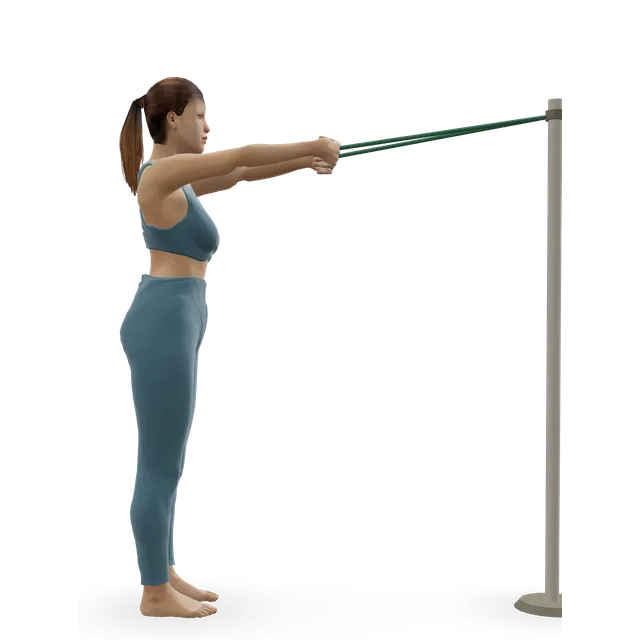
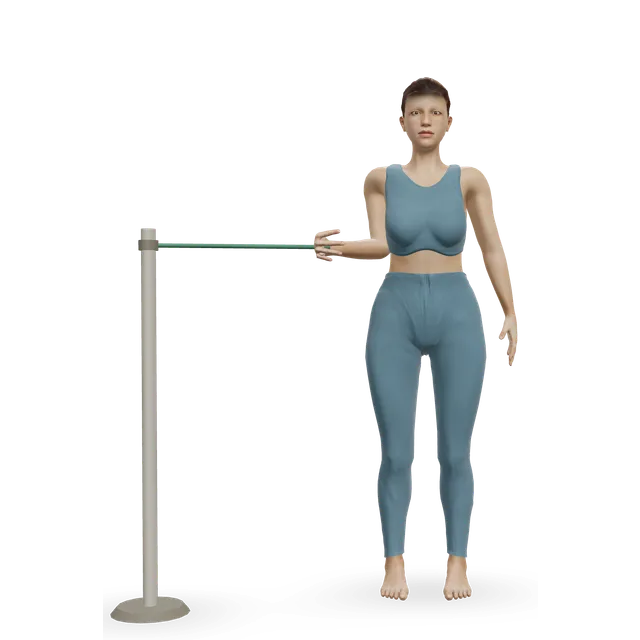
Standing band external rotation demonstrated on the 3D figure3D demoStanding band external rotationBeginner · A band + An anchor point

2 to 3 sets of 15, light band, slow return, elbow at your side · As in our shoulder pain when swimming guide, which takes 3 sets of 15 from the Holmgren trial. The outward turn surfers with sore shoulders lack

Easier: Stick-assisted external rotation (lying) · Harder: Side-lying external rotation

Band row demonstrated on the 3D figure3D demoBand rowBeginner · A band + An anchor point

3 sets of 10 to 15, stopping 2 to 3 reps short of failure · From the move page's dose (an editorial starting point). Check the band and the anchor before every set, as the move page says

Harder: Supported single-arm dumbbell row

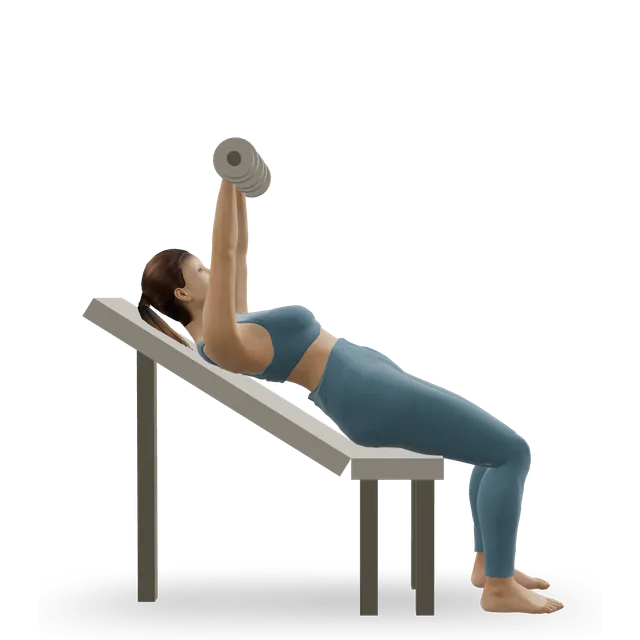
Dumbbell shoulder-blade punch demonstrated on the 3D figure3D demoDumbbell shoulder-blade punchBeginner · A dumbbell + A bench or box

2 sets of 15, no weight or a very light one · As in our shoulder pain when swimming guide: the shoulder blade punch, lying

Harder: Scapular push-up (push-up plus)

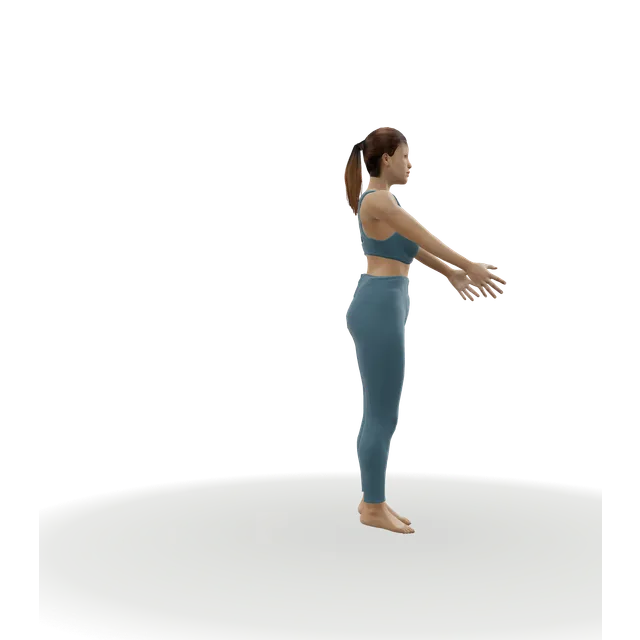
Table slide (seated forward reach) demonstrated on the 3D figure3D demoTable slide (seated forward reach)Beginner · A bench or box

10 slow repetitions, 1 to 3 times a day · From the move page's dose (an editorial starting point). After a dislocation, keep the hand below shoulder height until your clinician says otherwise, as the move page says

Easier: Pendulum exercise (Codman's pendulum) · Harder: Overhead lat stretch at a bench (elbows on the bench)

Chin tuck demonstrated on the 3D figure3D demoChin tuckBeginner · No equipment

5 to 10 slow reps with a 5 s hold, 2 to 3 times a day · As in our neck pain when swimming guide (editorial). For the neck from paddling with your head up

Easier: Lying chin tuck · Harder: Isometric neck holds (four-way)

Thoracic rotation demonstrated on the 3D figure3D demoThoracic rotationBeginner · No equipment

6 rotations per side, moving with the breath · The move page's dose. Upper back movement, which a surfing review suggests improving

Easier: Side-lying open book · Harder: World's greatest stretch

Move on when: Daily tasks and these moves stay within the pain rule, and a short surf of 30 to 45 minutes leaves the shoulder no worse the next morning, for about a week (our suggestion).

Follow along: a timer, a cue and the next move, one step at a time.
Stage 2

Build: rotator cuff and shoulder blade strength and endurance

About weeks 2 to 6, about 5 days a week, lowering each rep slowly, as in the Holmgren trial, with endurance for long paddles and upper back extension. Paddling time builds back by the pain rule.

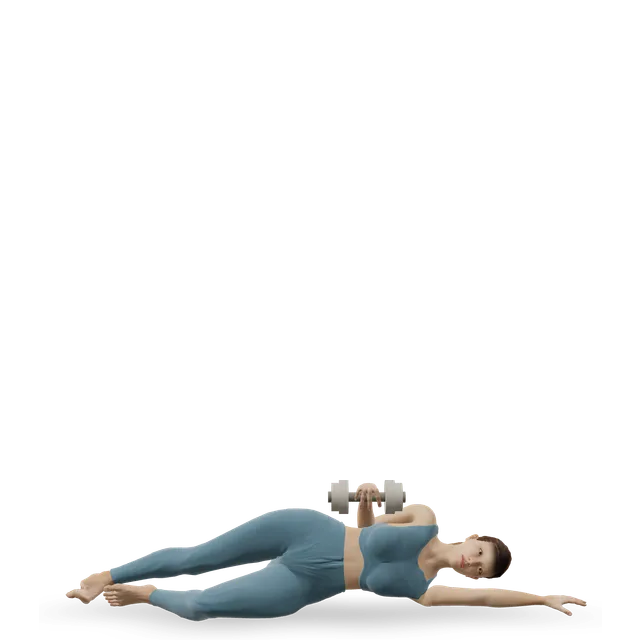
Side-lying external rotation demonstrated on the 3D figure3D demoSide-lying external rotationBeginner · A dumbbell

3 sets of 15, once a day, lowering over 3 s · As in our shoulder pain when swimming guide: the Holmgren trial's dose (twice a day in the trial)

Easier: Standing band external rotation · Harder: Cuban rotation

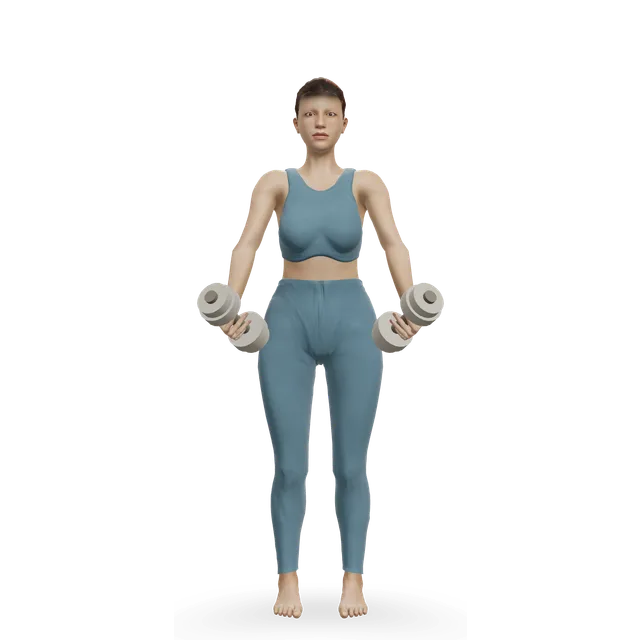
Scaption raise demonstrated on the 3D figure3D demoScaption raiseBeginner · A dumbbell

3 sets of 15, thumbs up, to shoulder height, lowering over 3 s · As in our shoulder pain when swimming guide, modelled on the Holmgren trial's lowering work

Easier: Band lateral raise · Harder: Smith machine upright row

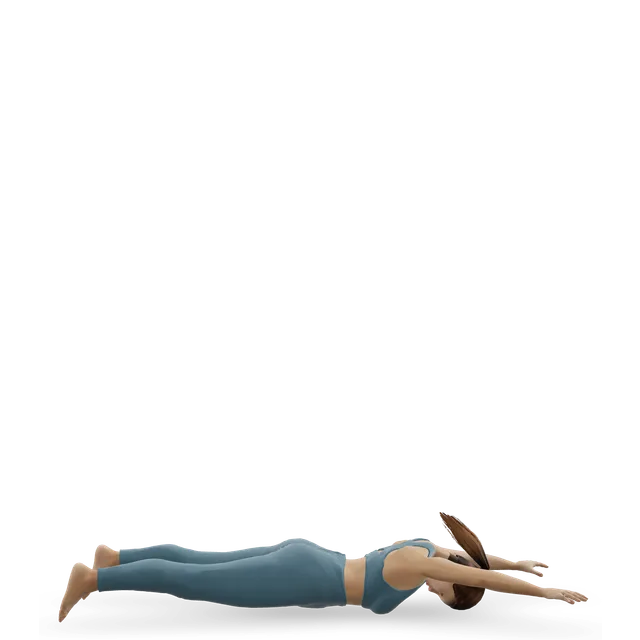
Prone Y-T-W raises demonstrated on the 3D figure3D demoProne Y-T-W raisesBeginner · No equipment

2 to 3 rounds of 8 · As in our shoulder pain when swimming guide. Lying face down like paddling; keep the neck long, as the move page says

Easier: Wall angel · Harder: Bent-over reverse fly

Scapular push-up (push-up plus) demonstrated on the 3D figure3D demoScapular push-up (push-up plus)Beginner · No equipment

3 sets of 10 to 15, on a wall or bench first · As in our shoulder pain when swimming guide. The start of the pop-up

Easier: Dumbbell shoulder-blade punch · Harder: Push-up

Band pull-apart demonstrated on the 3D figure3D demoBand pull-apartIntermediate · A band

2 to 3 sets of 15, building towards sets of 1 to 2 minutes with 30 s rest · As in our shoulder pain when swimming guide (editorial reps, with a swimming review's endurance target). Check the band for nicks first, as the move page says

Easier: Prone Y-T-W raises · Harder: Tuck back lever

Side-lying open book demonstrated on the 3D figure3D demoSide-lying open bookBeginner · No equipment

8 to 10 slow openings each side, pausing 2 seconds at the end · From the move page's dose (an editorial starting point). Keep it pain free with impingement symptoms, as the move page says

Harder: Thoracic rotation

Move on when: Every set stays within the pain rule, you can lift the arm to shoulder height with control, and 60 to 90 minutes of surfing passes the rule on 3 or 4 occasions (our suggestion).

Follow along: a timer, a cue and the next move, one step at a time.
Stage 3

Paddling strength and the pop-up

About weeks 6 to 10, 2 or 3 sessions a week: heavier rotator cuff work, pulling for paddling, pushing for the pop-up, and the paddling stroke on land.

Cuban rotation demonstrated on the 3D figure3D demoCuban rotationIntermediate · A dumbbell + A band

2 sets of 10, 5 s up and 5 s down, at about three-quarters of the most you could lift once, twice a week · As in our shoulder pain when swimming guide: the swimmer trial's dose, as our shoulder care routine for swimmers uses it. Only once side-lying and band rotation are pain-free; a weight that feels insultingly light is correct, as the move page says

Easier: Side-lying external rotation · Harder: Cuban press

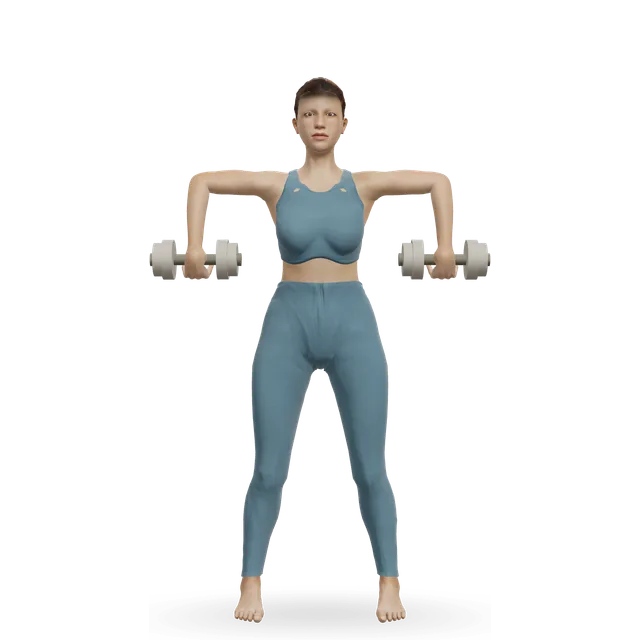
Face pull demonstrated on the 3D figure3D demoFace pullIntermediate · A band

3 sets of 12 to 15 · As in our shoulder pain when swimming, shoulder pain and shoulder impingement guides

Easier: Prone Y-T-W raises · Harder: Tuck back lever

Lat pulldown demonstrated on the 3D figure3D demoLat pulldownBeginner · A cable machine

3 sets of 10, pulling to the front · As in our shoulder pain when swimming guide. The broad back muscle drives the paddle; never behind the neck, as the move page says

Harder: Pull-up

Incline push-up demonstrated on the 3D figure3D demoIncline push-upBeginner · A bench or box

3 sets of 8 to 12 · As in our shoulder pain when swimming guide. Floor push-ups once these are easy: the pop-up's push

Easier: Wall push-up · Harder: Push-up

Prone swimmers demonstrated on the 3D figure3D demoProne swimmersAdvanced · No equipment

4 or 5 slow circles, 2 rounds · From the move page's dose (an editorial starting point). The paddling arm on land; a history of dislocation calls for a slower build-up, as the move page says

Easier: Shoulder dislocates with a strap (pass-throughs)

Standing band external rotation demonstrated on the 3D figure3D demoStanding band external rotationBeginner · A band + An anchor point

2 × 12 to 15 each arm · As in our strength workout for surfers (editorial): elbow at your side, slow on the way back

Easier: Stick-assisted external rotation (lying) · Harder: Side-lying external rotation

Move on when: These stay within the pain rule, and a full session in your usual waves passes the rule twice (our suggestion).

Follow along: a timer, a cue and the next move, one step at a time.
Stage 4

Back in the water: the surf warm-up, then the steps back

From about weeks 6 to 10, as your shoulder allows, then for good: the surf warm-up before every session and a staged return to full paddling by the written steps below, with strength kept twice a week. The warm-up follows the wave pool studies; how surfing comes back is our suggestion.

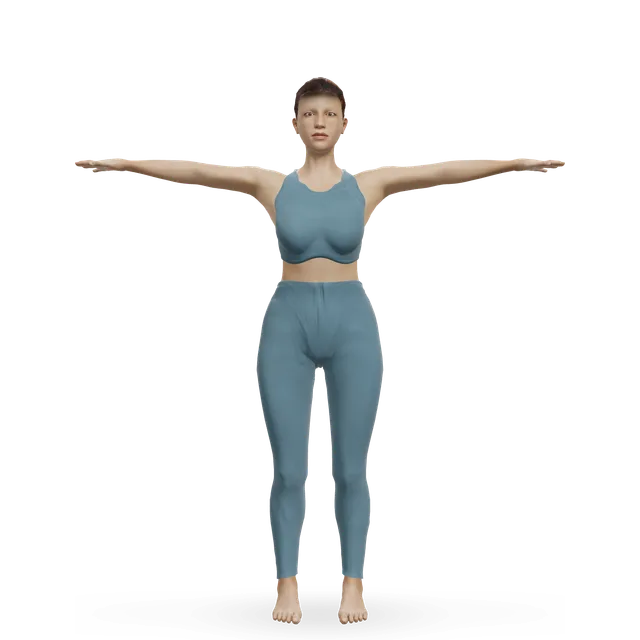
Arm circles demonstrated on the 3D figure3D demoArm circlesBeginner · No equipment

10 each way · As in our surf warm-up (editorial). Lower them a little if holding the arms out pinches, as the move page says

Harder: Shoulder CARs (controlled articular rotations)

Thoracic rotation demonstrated on the 3D figure3D demoThoracic rotationBeginner · No equipment

6 each side · As in our surf warm-up (editorial)

Easier: Side-lying open book · Harder: World's greatest stretch

World's greatest stretch demonstrated on the 3D figure3D demoWorld's greatest stretchIntermediate · No equipment

3 each side · As in our surf warm-up (editorial). Reach up as you turn

Easier: Low lunge (Anjaneyasana) · Harder: Active pancake lift-off

Inchworm walkout demonstrated on the 3D figure3D demoInchworm walkoutIntermediate · No equipment

4 · As in our surf warm-up (editorial). Walk your hands out to a push-up position and back

Easier: Forearm plank · Harder: Plank walk-up

Wall angel demonstrated on the 3D figure3D demoWall angelBeginner · A wall

2 sets of 8 · Editorial. Upper back extension with the arms overhead, the paddling position

Easier: Table slide (seated forward reach) · Harder: Prone Y-T-W raises

Burpee demonstrated on the 3D figure3D demoBurpeeAdvanced · No equipment

2 × 3 fast pop-ups · As in our surf warm-up (editorial): from lying on your front, push hard and land in your surf stance, with no jump. Only once push-ups pass the pain rule

Easier: Mountain climbers

Move on when: Our suggestion: your usual sessions pass the pain rule for 2 weeks; then add longer sessions, bigger days, point breaks and sprint-paddle training one at a time. Keep two strength sessions a week (stages 2 and 3, or our strength workout for surfers, with its heavy pull-ups and dips only once these stages are easy).

Follow along: a timer, a cue and the next move, one step at a time.

What to change for now

What to do now (written steps)

Our 3D figure can't show these. They come from the NHS shoulder pain and impingement pages and NHS inform's shoulder exercises; where a step is our suggestion, it says so.

  • 1. The NHS says "stay active and gently move your shoulder" and "try shoulder exercises for 6 to 8 weeks to stop pain returning", and to get help if it doesn't start feeling better after 2 weeks.
  • 2. For impingement, an ice pack wrapped in a tea towel "for up to 20 minutes, 2 to 3 times a day", and paracetamol or ibuprofen, as the NHS suggests.
  • 3. NHS inform's shoulder exercises rate pain of 0 to 3 out of 10 as minimal and 4 to 5 as acceptable, and say your pain should be no worse the morning after you've exercised; the pain rule below uses the same band.
  • 4. Surf less, not never: shorter sessions in small waves, and none while the shoulder slips or is weak (our suggestion).
  • 5. A shoulder that slipped out, sudden weakness, or pins and needles down the arm isn't an ordinary paddling ache: see the warning signs.

Sources 41, 43, 57

Paddling, the board, the pop-up and wipeouts (written steps)

The 3D figure can't show these. They're our suggestions, built on the paddling studies, with the surfing bodies' advice in their own words; none has been tested for shoulder pain.

  • 1. Shorter sessions, about half your usual time, for a week or two, and sit up on the board between sets rather than lying and paddling.
  • 2. Catch waves that come to you rather than chasing the peak, and skip paddle-heavy days (long paddle-outs, point breaks with long paddles, big swell) and sprint-paddle training until it settles.
  • 3. A board with more volume for now. Surfing England says the more volume, "the easier it is to catch waves and paddle", and "Longboards are a classic surfboard with a length of 9ft or longer. These boards are ideal for beginners, offering great stability, paddling power, and glide on small waves"; Surf Life Saving Australia says "soft boards are perfect for learning how to surf".
  • 4. The pop-up: Surfing England advises "Practice on the sand first", and "The very best way to get your pop up in shape is to have a lesson with a qualified surf instructor". With a sore shoulder, keep your hands under your chest and push from both (our suggestion).
  • 5. Wipeouts: fall flat and away from the board, and cover your head with your forearms rather than reaching out or overhead (our suggestion, built on how surfing dislocations happen).

Sources 20, 12, 50, 51, 52, 53, 28, 29

The neck and upper back (written steps)

Our suggestions, built on how paddling holds the neck and upper back; none has been tested.

  • 1. Sit up between waves rather than lying with your head up.
  • 2. Keep your chin a little tucked while paddling, and build paddling time gradually.
  • 3. Chin tucks and the upper back moves from the plan on surf days.
  • 4. Neck pain with numbness, pins and needles or weakness down an arm needs a same-day check, as the warning signs say.

Sources 19, 33

Surf safely, in the safety bodies' own words (written steps)

These are the Royal National Lifeboat Institution's (RNLI), Surfing England's and Sports Medicine Australia's own words, with our suggestion for beginners labelled.

  • 1. The RNLI: "Always surf between the black and white chequered flags", and "Don’t challenge yourself too early and know your limits".
  • 2. Surfing England: "only go out in conditions that match your capabilities", and "For beginners, sandy, lifeguarded beaches are the best bet".
  • 3. Sports Medicine Australia: "If you have a previous injury consult a sports medicine professional to ensure you are fit to surf", and "Surfers should stop immediately if an injury occurs and seek prompt treatment".
  • 4. The RNLI: "Do not dive head first". Contest injuries more than doubled "when surfing in large waves or over a hard seafloor".
  • 5. First-time surfers: short first sessions, sitting up for breaks rather than lying arched on the board for long spells, and out of the water at the first sudden back pain (our suggestion, built on the surfer's myelopathy reviews).

Sources 58, 59, 54, 60, 40

Back in the water (written steps)

Our suggestion, built on the paddling studies and the surfing and safety bodies' advice; none has been tested as a return to surfing after shoulder pain. Move on when each step passes the pain rule.

  • 1. Kit and place: a board with more volume for now, a leash, a lifeguarded beach between the chequered flags, and the land warm-up.
  • 2. Short sessions: 30 to 45 minutes in small, clean waves at a beach break with a short paddle-out; sit up between sets.
  • 3. Build time: add about 15 minutes a session while the pain rule holds; still no long paddle-outs, point breaks or big swell.
  • 4. Your usual board and waves, once 90 minutes passes the rule twice.
  • 5. Paddle-heavy days, then sprint-paddle training: last, one at a time.
  • 6. After a dislocation, your team decides; the NHS says it may take up to 16 weeks to fully return to some sports, and in the water stop at any feeling of the shoulder slipping.
  • 7. Neck and upper back: chin tucks and the upper back moves on surf days; sit up between waves.
  • 8. If it doesn't settle, keeps coming back each trip, or the arm feels weak turning outwards, see a physiotherapist, as the warning signs say.

Sources 12, 20, 58, 53, 42

Positions to swap, and why

Habit or positionWhy it mattersInstead
Long, paddle-heavy sessions while it's soreProlonged paddling is the commonest reported cause of surfers' overuse injuries.Shorter sessions in small waves, building about 15 minutes at a time; band rotations on land.Try: Standing band external rotation
A long surf trip or a big week straight after a layoffGradual-onset injuries went with more hours of surfing a year.Two or three shorter sessions a week for a few weeks before you go (our suggestion).
Lying with your head up between wavesPaddling holds the neck bent backwards for long spells.Sit up on the board; chin tucks.Try: Chin tuck
A low-volume board while the shoulder is soreMore volume made paddling cheaper in energy.A bigger, higher-volume board for now.
Reaching out or overhead as you fallDislocations come from falls with the arm out and turned outwards, or forced overhead into the seabed.Fall flat and away, forearms over your head.
Diving off the board head firstSurfers' neck fractures mostly came from hitting the bottom, often in shallow water.Fall flat, and know the depth and the tide.
Paddling through pain on painkillersShoulder problems are the surfing injuries most likely to last over 3 months.The pain rule, and a physiotherapist if it keeps coming back.
Heavy pull-ups and dips while it's soreThe surfer strength study used heavy loads, which a sore shoulder isn't ready for.The stage 3 moves first: lat pulldowns and incline push-ups.Try: Lat pulldown
Long, still stretches before paddling outNo study shows stretching prevents surfing injuries; the land warm-up studies used moving drills.The surf warm-up, such as the world's greatest stretch.Try: World's greatest stretch
A first-time surfer lying arched on the board for hoursSurfer's myelopathy follows long spells in that position, mostly in beginners.Short first sessions, sitting up for breaks, and out of the water at the first sudden back pain.

Routines to follow

Surf warm-up: mobility, hops, jumps and pop-ups before you paddle out

A 15-minute beach warm-up in your wetsuit: arm and hip circles, thoracic rotations, pogo hops, quick push-ups, jump squats, fast pop-ups and broad jumps.

15 minBeginner10 movesWall

Strength workout for surfers: pull-ups, dips, pop-up power, shoulders and landings

A 50-minute gym session for surfers: pull-ups and dips for paddling, plyo push-ups and pop-ups, rotator cuff and upper-back work, landings and side planks.

50 minIntermediate17 movesBand, pull-up bar

Shoulder care routine for swimmers

A 20-minute rotator cuff and shoulder-blade routine for swimmers, from a 12-week trial in competitive swimmers, plus a daily cross-body stretch.

20 minBeginner9 movesWall, dumbbell

Shoulder mobility and rotator cuff routine (with a band)

A 25-minute band routine for healthy shoulders: move the shoulder and upper back through their range, then strengthen the rotator cuff and shoulder blades.

25 minBeginner12 movesWall, band

Neck and shoulder strength routine

Deep neck holds and shoulder-blade strength in under 20 minutes: one of the best-supported kinds of exercise for a stiff, sore neck.

18 minBeginner11 movesBand, anchor point

Yoga for surfers: a 25-minute class for the upper back, the back of the shoulder, hips and the pop-up, with breathing on land and no breath holds

A 25-minute yoga class for surfers: upper-back turning, the back of the shoulder, pop-up and stance shapes, hips and slow breathing on land, with no breath holds.

25 minBeginner18 movesWall

Dryland Pilates for surfers: a 25-minute class for the back of the shoulder, upper-back rotation, trunk, hips and ankles, with short back bends and no breath holds

A 25-minute dryland Pilates class for surfers: the back of the shoulder, upper-back rotation, trunk, short back extension, hips, ankles and balance.

25 minBeginner20 movesBand, anchor point

More moves for this area

Questions people ask

Why does my shoulder hurt after surfing?

Usually an overloaded rotator cuff from paddling, which takes about half of every session. It's common and usually settles with less paddling and rotator cuff strengthening. A shoulder that slipped out or went weak after a wipeout is different and needs checking.

What is surfer's shoulder?

A name for shoulder pain from paddling, usually the rotator cuff at the front or outside of the shoulder, with weaker, stiffer outward turning of the arm. It makes up about a fifth to a quarter of surfers' overuse injuries in surveys.

Why does the front of my shoulder hurt after surfing?

Usually the rotator cuff, sometimes with the biceps tendon, after long paddles. A deep catch or clunk can be the labrum or a shoulder that slips. Our shoulder impingement and biceps tendinitis guides cover these.

Why does the back of my shoulder hurt after surfing?

Often the muscles that turn the arm outwards and steady the shoulder blade, which work to bring the arm back out of the water and are weaker in surfers with sore shoulders. The plan's outward-turning exercises target them.

Can I surf with shoulder pain?

Usually, with shorter sessions, small waves, sitting up between sets and the pain rule above. Stop for a shoulder that slips, sudden weakness or pins and needles down the arm. Building time back gradually is our suggestion, borrowed from swimming.

How long does surfer's shoulder take to heal?

No one can promise a date. NHS inform expects new shoulder pain to start settling within 6 weeks, but 64% of surfers' gradual-onset shoulder injuries lasted 3 months or more in one survey, which is why starting the exercises early matters.

I dislocated my shoulder surfing. When can I go back?

Go to A&E first. The NHS says recovery usually takes 6 to 12 weeks, and up to 16 weeks to fully return to some sports. It can slip again, so follow your physiotherapist's plan and our shoulder dislocation guide.

Why does my neck hurt after surfing?

Paddling holds the neck and upper back bent backwards for long spells, and the neck is one of surfers' commonest overuse complaints. Sit up between waves and do chin tucks; neck pain with numbness down an arm needs a same-day check.

What exercises help surfer's shoulder?

Rotator cuff strengthening, especially turning the arm outwards, shoulder blade work and upper back movement, then pulling and pushing strength. The four stages above build them up, each with a 3D demo.

Will a bigger board help?

More volume made paddling cheaper in energy, and Surfing England says it makes paddling easier. It hasn't been tested for shoulder pain, and one survey found more gradual-onset injuries in longboarders, but it's a sensible swap while the shoulder settles.

What is surfer's myelopathy?

A rare spinal cord injury, mostly in first-time surfers, that starts with sudden low back pain while surfing, then numbness or weakness in both legs or trouble peeing within about an hour. Get out of the water and call 999.

When should I see a doctor?

Go to A&E for a shoulder that looks out of place; call 999 for chest pain spreading to the arm, neck or jaw, or sudden back pain with leg symptoms. Get help the same day for sudden weakness lifting the arm after a wipeout or neck pain with numbness in an arm, and see a GP or physiotherapist if it isn't better after 2 weeks. In the US, call 911 where this page says 999.

Related exercise guides

Other pain guides

Sources

  1. Monteiro 2022 · Injury patterns in competitive and recreational surfing: 17 studies (systematic review, Inj Prev)
  2. Furness 2015 · Acute injuries in 1,348 Australian surfers (survey, Am J Sports Med)
  3. Minasian 2022 · Acute and overuse injuries in surfing and their prevention (narrative review, Br J Sports Med)
  4. McArthur 2020 · Acute injuries in surfing: 19 studies (systematic review, Sports)
  5. Woodacre 2015 · Injuries in 130 UK surfers (survey, Injury)
  6. Hay 2009 · Surfing injuries seen in a Cornwall emergency department: 212 visits (case series, Wilderness Environ Med)
  7. Klick 2016 · Surfing injuries in US emergency departments, 2002 to 2013 (national injury surveillance study, Am J Emerg Med)
  8. Obana 2023 · Upper limb surfing injuries in US emergency departments over 20 years (national injury surveillance study, Hawaii J Health Soc Welf)
  9. NHS inform · Shoulder problems
  10. Mendez-Villanueva 2006 · How world-class surfers spend contest time: 42 heats (time-motion study, J Strength Cond Res)
  11. Farley 2012 · Physiological demands of competitive surfing: 12 surfers (time-motion study, J Strength Cond Res)
  12. Farley 2018 · Work and rest in competitive surfing heats at 3 events (time-motion study, J Strength Cond Res)
  13. Barlow 2014 · Wave conditions, ability and effort in 39 recreational UK surfers (field study, J Strength Cond Res)
  14. Secomb 2015 · A 2-hour surfing training session in 15 competitive surfers (time-motion study, Int J Sports Physiol Perform)
  15. Minghelli 2019 · Time-motion analysis of 87 surfers at the Portuguese championship (video study, Rev Assoc Med Bras)
  16. Langenberg 2021 · The surfer's shoulder (systematic review, Sports Med Open)
  17. Nessler 2019 · Muscle activity in the surf paddling stroke at increasing speeds in 12 surfers (lab study, J Strength Cond Res)
  18. Pexa 2024 · Shoulder muscle activity in the surf stroke on a pool board in 20 adults who weren't surfers (lab study, J Strength Cond Res)
  19. Hanchard 2021 · Gradual-onset injuries in surfing: 20 studies (systematic review, Sports)
  20. Remnant 2020 · Gradual-onset surfing injuries in 1,473 New Zealand surfers (cross-sectional study, J Sci Med Sport)
  21. Cianciarulo 2024 · Shoulder injuries in surfing: 10 studies (systematic review and meta-analysis, Acta Ortop Bras)
  22. Furness 2014 · Long-lasting injuries in 1,348 recreational and competitive surfers (retrospective survey, Int J Aquatic Res Educ)
  23. Furness 2018 · Shoulder strength in 13 competitive surfers (lab study, Sports)
  24. Furness 2021 · Traumatic surfing injuries in 1,473 New Zealand surfers (survey, PeerJ)
  25. LaLanne 2017 · Activity and heart rate during surfing in recreational male surfers aged 18 to 75 (observational study, J Aging Phys Act)
  26. Re 2023 · Shoulder blade movement (scapular dyskinesis) in 108 recreational surfers and 107 non-surfers (cross-sectional study, JSAMS Plus)
  27. Borgonovo-Santos 2021 · Forces and movement in the surf pop-up in 23 surfers (lab study, Sensors)
  28. Lima 2025 · Physical assessment in surfers, part 1: the upper body (expert-opinion guideline, Acta Ortop Bras)
  29. Kahn 1987 · Body surfing and a rare downward shoulder dislocation (luxatio erecta) in 4 people (case series, Orthop Rev)
  30. Quinn 2022 · Surfing injuries at Gold Coast hospitals: a 10-year clinical audit (hospital audit, Injury)
  31. Hohn 2020 · Orthopaedic injuries in professional surfers at one US orthopaedic centre (case series, Clin J Sport Med)
  32. Patel 2020 · MRI findings in 90 surfers after surfing injuries (case series, Sports Health)
  33. Nessler 2017 · Trunk angle and muscle activity while paddling a surfboard: 12 surfers (lab study, J Appl Biomech)
  34. Dimmick 2013 · Spinal injuries from surfboard riding (radiology case series, Emerg Radiol)
  35. Thom 2022 · Neck (cervical spine) injuries at the beach on Australia's Sunshine Coast (case series, BMC Public Health)
  36. Chang 2012 · Surfer's myelopathy in 19 novice surfers (case series, Neurology)
  37. Freedman 2016 · Surfer's myelopathy: 64 reported cases (systematic review, Neurosurgery)
  38. Thompson 2004 · Surfer's myelopathy in 9 people (case series, Spine)
  39. Alva-Díaz 2022 · Spinal cord injury after back arching without trauma: 104 cases (systematic synthesis, J Neurol)
  40. Swinney 2017 · Spinal cord injury without trauma in the novice surfer: 66 cases (narrative review, Hawaii J Med Public Health)
  41. NHS · Shoulder pain (past its review date: reviewed May 2023, review due May 2026)
  42. NHS · Dislocated shoulder
  43. NHS · Shoulder impingement
  44. NHS · Heart attack
  45. NHS · Whiplash
  46. NHS · Back pain
  47. Holmgren 2012 · Specific exercise and the need for surgery in subacromial impingement (RCT, BMJ)
  48. Coyne 2017 · Five weeks of heavy pull-ups and dips and paddling in 17 surfers (controlled trial, J Strength Cond Res)
  49. Monaco 2023 · A land-based home programme in 22 recreational surfers (controlled trial, J Sports Sci)
  50. Ekmecic 2017 · Surfboard volume and the energy cost of paddling in 20 surfers (lab crossover study, Ergonomics)
  51. Surfing England · Select a surfboard (how-to guide, 2023)
  52. Surf Life Saving Australia (SLSA), Beachsafe · The right gear (archived copy, February 2026)
  53. Surfing England · Pop up (how-to guide, 2023)
  54. Sports Medicine Australia (SMA) · Surfing (injury fact sheet)
  55. Cook 2024 · A land warm-up and keeping warm before surfing in a wave pool (crossover study, Sports)
  56. Cook 2024 · A land warm-up with heat retention and wave scores in 19 advanced surfers (crossover study, Front Sports Act Living)
  57. NHS inform · Exercises for shoulder problems
  58. RNLI · Surfing: tips and advice on how to surf safely (captured 6 August 2025)
  59. Surfing England · Surf safe (how-to guide, 2023)
  60. Nathanson 2007 · Injuries in contest surfers: 32 contests (prospective study, Am J Sports Med)
  61. NHS · Angina
  62. NHS inform · Neck injury
  63. UK Government and Sport and Recreation Alliance 2024 · UK concussion guidelines for non-elite (grassroots) sport, November 2024 update
  64. NICE NG41 · Spinal injury: assessment and initial management
  65. NHS · Septic arthritis
  66. NHS · Fainting
  67. NHS · Pulmonary embolism
  68. NHS · DVT (deep vein thrombosis)
  69. Kulkarni 2015 · BESS/BOA patient care pathway: subacromial shoulder pain (Shoulder & Elbow)
  70. Brownson 2015 · BESS/BOA patient care pathway: traumatic anterior shoulder instability (Shoulder & Elbow)
  71. Noorani 2019 · BESS/BOA patient care pathway: atraumatic shoulder instability (Shoulder & Elbow)
  72. Mitchell 2005 · Shoulder pain: diagnosis and management in primary care (clinical review, BMJ)
  73. NHS · Cervical spondylosis (past its review date: reviewed August 2023, review due August 2026)
  74. NHS · Neck pain and stiff neck (past its review date: reviewed April 2023, review due April 2026)
  75. NHS inform · Neck problems
  76. NHS inform · Exercises for neck problems (including how to tell if you are exercising at the right level)
  77. St George's University Hospitals NHS · Median nerve gliding (hand therapy leaflet, 2024)
  78. Wrightington, Wigan and Leigh NHS · Cervical radiculopathy: patient information (2021, past its review date of May 2023)
  79. NHS · Thoracic outlet syndrome
  80. NHS · Stroke: symptoms
  81. NHS · Ectopic pregnancy: symptoms (past its review date: reviewed August 2022, review due August 2025)
  82. NHS · Polymyalgia rheumatica (past its review date: reviewed April 2023, review due April 2026)
  83. NHS · Vision loss
  84. NHS · Lung cancer: symptoms
  85. Kuhn 2013 · Physical therapy for atraumatic full-thickness rotator cuff tears: the MOON cohort (prospective cohort, JSES)
  86. Hallgren 2014 · A specific exercise strategy reduced the need for surgery: 1-year follow-up (RCT, BJSM)
  87. Ferretti 1987 · Suprascapular nerve problems in 96 top-level volleyball players (study, J Bone Joint Surg Am)
  88. Mazza 2021 · Suprascapular nerve problems in 82 professional volleyball players (cross-sectional study, Phys Sportsmed)
  89. Ferretti 1998 · Suprascapular nerve injury in volleyball players followed for 5.5 years (case series, Am J Sports Med)
  90. Royal Life Saving Society UK · Guidance on diving (2023, updated 2024)
  91. RoSPA · Tombstoning
  92. AAOS OrthoInfo · Rotator cuff tears
  93. Moosmayer 2024 · Tendon repair vs physiotherapy for small and medium rotator cuff tears: 15-year results (RCT, JBJS Am)
  94. Spigelman 2014 · A return to swimming protocol for competitive swimmers (clinical commentary with one case, Int J Sports Phys Ther)
  95. NCEPOD · Risking life and limb: acute limb ischaemia (patient leaflet, National Confidential Enquiry into Patient Outcome and Death, 2025)

Exercise education, not a diagnosis or treatment plan. It is written from the guidelines and studies listed above; review by a clinician is pending. If your pain follows an injury, is severe, is getting worse, or comes with any warning sign listed on this page, get it assessed. Health disclaimer.