Pain guide · Foot pain

Foot pain in men: heel pain, gout, the Achilles, stress fractures, work boots and sport

Foot pain is common in men, if a little less common than in women: about 1 in 5 men have it on most days. The usual causes are heel pain under the heel, which is as common in men as in women over 50 and twice as common in manual jobs, the Achilles tendon, and gout, which is about 4 times as common in men and usually starts in the big toe. Long shifts on hard floors, boots that don't fit, running and football add their own, and diabetes makes footcare matter more. Most heel and Achilles pain gets better with stretching, the right shoes and steady calf and foot strength, while steroid injections only help for a few weeks.

This guide starts with the warning signs: a foot that suddenly turns cold, pale and very painful needs 999 or accident and emergency (A&E); a snap at the back of the heel, a hot, swollen big toe, or any new wound or hot, swollen foot with diabetes needs help the same day. Then it sorts the causes by where it hurts, covers gout and what does and doesn't cause it, work boots and long shifts, sport and footcare, says when to see a general practitioner (GP) or contact the National Health Service's 111 line (NHS 111), and gives a four-stage plan with 3D demos back to work and sport.

When to get help first

Exercise is for pain that has been checked or is clearly mild and settling.

Get urgent medical help if

  • Call 999 or go to A&E: after an injury, you heard a crack, the foot or ankle has changed shape or points at an odd angle, a bone is sticking out, there is a bad cut over it, you're in severe pain, or the toes look blue or white, feel numb or are cold to touch. These can mean a broken bone. Don't drive yourself.
  • Call 999 or go to A&E: a foot or leg that is suddenly cold, pale, numb, weak or very painful without an injury. A sudden loss of blood supply is a vascular emergency.
  • Call 999 or go to A&E: you have diabetes and a foot ulcer with a fever or signs of sepsis, an ulcer with poor circulation, or gangrene. NICE asks for these to go straight to hospital.
  • Call 999 or go to A&E: a red, hot, swollen foot with a very high temperature, feeling hot, cold or shivery, a fast heartbeat or fast breathing, purple patches on the skin, dizziness or confusion.
  • Same day: a sudden snap or pop at the back of the heel or calf, or a feeling of being kicked there, then walking flat-footed and being unable to push off, stand on tiptoe or climb stairs. It could be an Achilles tendon rupture or a broken heel bone. Go to A&E or a minor injuries unit, or contact NHS 111.
  • Same day: a sudden, very painful, hot, swollen, red joint, often the big toe but sometimes the middle of the foot (the midfoot) or the ankle, especially with a high temperature, feeling shivery or being unable to eat. It may be gout, but it could be a joint infection (septic arthritis), which is urgent.
  • Same day: you have diabetes and a new foot problem, such as an ulcer or wound, signs of infection, or a hot, swollen foot with a change in colour, even if it doesn't hurt. Contact your diabetes foot team or GP: NICE asks for these to reach a specialist foot service within 1 working day, and a suspected Charcot foot is kept off weight until it has been checked.
  • If you have diabetes, see your local foot team urgently, within 24 hours, for a change in the colour or shape of your foot (especially a red, hot, swollen toe, ankle or foot), part of your foot feeling much colder or hotter than usual, new blisters, cuts or wounds (especially ones you can see but don't feel), a cut or wound that smells bad or is leaking fluid or pus, or new or unexplained pain in your foot. Meanwhile sit or lie down, take the weight off it and raise it.
  • Contact a GP immediately (or NHS 111 if you can't): severe burning foot pain that carries on even when you're resting, skin turning pale, shiny, smooth and dry, wounds or ulcers on your feet that don't heal, or toes that become cold and numb, then turn red and then black. The blood supply to the foot may be failing.
  • Same day (NHS 111 or an urgent treatment centre): after an injury, you can't put weight on it or walk more than a few steps, the pain is very bad or getting worse, there is a lot of swelling or bruising or it is getting worse, it feels very stiff, or it's not feeling any better after treating it yourself. Get the same help if you also have a very high temperature, or feel hot, cold or shivery: this could be an infection. If you think it's broken, don't treat it yourself.
  • If you're taking a fluoroquinolone antibiotic, such as ciprofloxacin or levofloxacin, stop taking it and contact your doctor immediately if you get tendon pain or swelling, or pain or swelling in your joints, and rest the painful area until you can see your doctor. Tendon damage can start within 48 hours of starting the antibiotic, or months later.

See a doctor or physiotherapist if

  • See a GP if heel pain is severe or stopping you doing normal activities, is getting worse or keeps coming back, or hasn't improved after 2 weeks of treating it at home.
  • Pain that isn't better after 2 weeks of looking after it yourself, is getting worse, keeps coming back, or stops you doing normal things.
  • Tingling or loss of feeling in the foot, or a foot that feels weak.
  • Any foot pain if you have diabetes: foot problems can be more serious.
  • One spot on a foot bone that hurts with every step and later at night: a possible stress fracture.
  • Pain in the middle of the foot that is hard to pinpoint, on the outer edge of the midfoot, or on the front of the shin bone in a running or jumping athlete. These sites heal less well and need prompt assessment, often with a scan.
  • A stress fracture from ordinary activity, more than one stress fracture, or worries that you're eating too little for your training: see a GP about bone health and energy intake. Low energy can affect men's bones too.
  • See a GP if you have symptoms of gout for the first time (sudden, severe pain in a joint with hot, swollen, red skin), or you have gout and your usual treatments aren't helping.
  • Leg ache when you walk that goes after a few minutes' rest: possible peripheral arterial disease (narrowed leg arteries), especially if you smoke or have diabetes.
  • Pain, tingling or loss of feeling in your feet, loss of balance or weakness, or a cut or ulcer on your foot that isn't getting better: see a GP. These can be early signs of nerve damage (peripheral neuropathy).

Where does it hurt?

Location narrows the likely causes; it does not diagnose.

Under the heel, much worse on the first steps after sleep or rest, easing as you move, worse after long shifts standing

Usually plantar heel pain (plantar fasciitis), about as common in men as in women over 50. Our plantar fasciitis guide has the full plan, and our heel pain guide maps every heel spot.

Read: Plantar fasciitis (plantar heel pain) →
One spot on the heel bone after more marching, running or walking than usual, aching later at rest

Possibly a stress fracture: get it checked, as the warning signs say. Our stress fracture guide covers it.

Read: Stress fracture →
The cord above the heel, stiff in the morning and worse after rest, running or hills

Usually Achilles tendinopathy. Our Achilles guide has the loading plan.

Read: Achilles tendinopathy →
A sudden snap at the back of the heel or calf, as if someone kicked you, then walking flat-footed

Possibly an Achilles rupture, about 3 to 4 times as common in men, often in their 40s: get help the same day, as the warning signs say. Our Achilles rupture guide covers treatment and recovery.

Read: Achilles rupture →
The back of the heel where the tendon meets the bone, or a bump that boots rub

Our back of heel pain guide sorts the causes.

Read: Back of heel pain →
The big toe joint suddenly hot, red, swollen and very painful, often overnight

Often gout, about 4 times as common in men, but it could be a joint infection: get help the same day if it's very painful or you have a high temperature, as the warning signs say. Our big toe pain guide covers it.

Read: Big toe pain →
A stiff big toe joint with a bump on top, sore pushing off

Usually big toe arthritis, which about 1 in 15 men over 50 have with pain. Our big toe arthritis guide covers it.

Read: Big toe arthritis →
The big toe joint after it was bent back in sport

Possibly turf toe, a sprain of the big toe joint. Our turf toe guide covers it.

Read: Turf toe →
Burning or shooting pain between the 3rd and 4th toes, like a pebble, worse in tight shoes or boots

Often Morton's neuroma, more common in women, but about a third of new cases are men. Our Morton's neuroma guide covers it.

Read: Morton's neuroma →
Aching under the ball of the foot

Our ball of foot pain guide sorts the causes.

Read: Ball of foot pain →
One spot on top of the foot, or on the outer edge after football

Possibly a stress fracture of a metatarsal, including the fifth in footballers: get it checked. Our broken foot guide covers recovery.

Read: Broken foot (metatarsal fracture) →
An ache across the top of the foot under tight laces or boots

Our top of foot pain guide sorts the causes.

Read: Pain on top of the foot →
Aching feet at the end of a long shift on hard floors or in safety boots, with no one sore spot

Often tired feet from long hours standing, in boots that may not fit well: the written steps below cover boots, insoles and breaks. Our foot pain when walking guide covers walking.

Read: Foot pain when walking →
Foot pain when you run

Our foot pain when running guide covers shoes, load and a walk-jog plan.

Read: Foot pain when running →
Numbness, tingling or burning in both feet

Often nerve damage; with diabetes, check your feet every day and see a GP. Our foot pain at night guide covers burning feet.

Read: Foot pain at night →
Burning foot pain at rest, pale skin, wounds that won't heal, or calf ache on walking

Possibly poor circulation: contact a GP immediately for pain at rest, as the warning signs say. Our foot pain in older adults guide covers circulation.

Read: Foot pain in older adults →
Foot pain in women

Our foot pain in women guide covers bunions, heels, pregnancy and the menopause.

Read: Foot pain in women →

Understand it

Common in men, a little less than in womenStrong evidence

About 1 in 5 men report foot pain on most days: 19% of men against 29% of women in Framingham in the US, and 15.1% against 19.6% in Adelaide. Across population studies, foot pain rose with age in women more clearly than in men. In 12 English practices, men consulted about the foot more as they got older: 239 per 10,000 a year at 45 to 64 and 329 from 75.

Sources 1, 2, 3, 4

Heel pain: as common in men, and commoner in manual jobsStrong evidence

In 5,109 UK adults aged 50 and over, 9.2% of men and 10.0% of women had plantar heel pain, and it was more than twice as common in routine and manual jobs as in managerial ones (10.9% against 4.6%). Women see a GP about it more often (4.64 against 2.98 per 1,000 a year in Dutch general practice). Higher weight goes with it, and the NHS lists being 40 to 60, a lot of standing, walking or running, and poorly cushioned shoes.

Standing and walking on hard floors at work went with heel pain in a review of 4 studies, all with a high or unclear risk of bias; the clearest example was a car engine assembly plant.

Sources 5, 6, 7, 8, 9, 10

Heel spurs don't cause the painStrong evidence

"most people who have bone spurs on their heels do not have heel pain", the American Academy of Orthopaedic Surgeons (AAOS) says, and "Heel spurs do not cause plantar fasciitis pain". In a cohort followed for up to 15 years, a spur at the start made no difference to how people did. A spur on an X-ray isn't a reason to remove it.

Sources 11, 12

Gout: about 4 times as common in menStrong evidence

Gout affects 3.97% of UK men against 1.05% of women, and the gap is widest in the 30s, when men are about 11 times as likely to have it. The big toe joint is the first joint in most first attacks (56% to 78%, as a review reports older studies), and the midfoot and ankle are common too. The National Institute for Health and Care Excellence (NICE) asks clinicians to suspect it with rapid onset, often overnight, of severe pain, redness and swelling in the big toe joint.

Sources 13, 14, 15, 16

What causes gout: genes and kidneys more than drinkStrong evidence

The NHS lists a family history, being a man, being overweight, alcohol, water tablets and some blood pressure tablets, high cholesterol, high blood pressure, kidney problems and diabetes. In 47,150 men, alcohol raised the risk with the dose (about 2.5 times at 50 g a day or more), beer most, spirits less, and wine not clearly; two or more sugary soft drinks a day raised it too.

But in 16,760 adults, diet explained 0.3% or less of the variation in blood urate, against 23.9% for common genes, and "about three-quarters of the urate in our bodies comes from the breakdown of purines produced within our body", Arthritis UK says. NICE: "there is not enough evidence to show that any specific diet prevents flares".

Sources 17, 18, 19, 20, 14, 16

The Achilles: tendon pain and rupturesStrong evidence

Achilles tendinopathy affects about 2 per 1,000 adults a year in general practice, with only about a third linked with sport; there was no clear difference between men and women there, though male runners had nearly twice the risk in 2 studies.

Achilles ruptures are 3 to 4 times as common in men (79% of 27,702 in Sweden; 3 to 1 in Denmark), at an average age of about 45, and rising in people over 50. About two-thirds happen in sport, often ball and racquet games. Steroid injections near the tendon and some antibiotics (fluoroquinolones such as ciprofloxacin) are linked with tears.

Sources 21, 22, 23, 24, 25, 26, 27, 28

Stress fractures: commoner in women, but men get themStrong evidence

About 3% of male military recruits get a stress fracture, against 9.2% of female recruits, and runners who are women have about twice the risk. Men get them in the second and third metatarsals from running and marching, and footballers in the fifth metatarsal, where 45% had warning symptoms first. Eating too little for your training (low energy availability) affects men's bones too, though it takes a bigger shortfall than in women.

Sources 29, 23, 30, 31, 32, 33

Work boots: discomfort and fitEmerging evidence

Foot pain and discomfort are commonly reported in safety footwear: 42% to 61% in a review of 7 studies of 2,063 workers, and 42.3% of 358 underground coal miners, mostly men, over half of whom felt their boots played a part. But every study was a survey with a high risk of bias, so they can't show that boots cause foot pain rather than long hours, heavy work or weight. What the evidence supports is fit, cushioning and comfort: "Cushioned soles make standing more comfortable", the Health and Safety Executive (HSE) says.

Sources 34, 35, 36, 37

Morton's neuroma and big toe arthritisEmerging evidence

Morton's neuroma was diagnosed in 50.2 men and 87.5 women per 100,000 a year in UK general practice, so about a third of new cases are men. Painful big toe arthritis on X-ray affects 6.7% of men over 50. Tight shoes make Morton's neuroma worse, the NHS says.

Sources 38, 39, 40

Diabetes, nerves and circulationStrong evidence

In England and Wales, people with a new diabetic foot ulcer were "more likely to have Type 2 diabetes, be male and of white ethnicity", and across 22 studies men had a higher risk of amputation. With diabetes, "pain, tingling or numbness" can be nerve damage, and NICE asks for a foot check at least once a year.

Smoking is "the most significant risk factor" for narrowed leg arteries; by the ankle-brachial index they weren't more common in men in high-income countries. The NHS lists erectile dysfunction in men among the symptoms.

Sources 41, 42, 43, 44, 45, 46

When a scan or test helpsStrong evidence

Heel pain needs no scan unless something else is suspected; an X-ray can rule out a break or arthritis, and a spur on it doesn't explain the pain. A suspected stress fracture needs an X-ray and often magnetic resonance imaging (MRI): X-rays "rarely reveal an obvious fracture" early, and in recruits only 15% of heel bone stress injuries on MRI showed on X-ray.

Gout needs a blood urate test (repeated at least 2 weeks after the flare if it was low during it) and, if unclear, fluid from the joint. An Achilles rupture is diagnosed by examination: squeezing the calf (the calf squeeze test) picked up 96% of ruptures in one study. With diabetes, a foot check at least once a year; with leg ache on walking, the ankle-brachial pressure index.

Sources 11, 47, 48, 16, 49, 43, 50

How it usually goesMixed evidence

"More than 90% of patients with plantar fasciitis will improve within 10 months of starting simple treatment methods", AAOS says, but in a hospital cohort half still had symptoms at 5 years, and there men recovered about twice as fast as women. Achilles tendinopathy takes "in most cases several months or more". A gout attack "usually lasts 1 to 2 weeks if left untreated". After an Achilles rupture, sport returns "between 4-12 months depending on the sport". No one can promise a timescale.

Sources 11, 12, 51, 17, 52
What helps, and how strong the evidence is

Heel pain: stretching, shoes, insoles and heavy heel raisesStrong evidence

A best-practice guide built on 51 trials puts stretching, taping, education and footwear advice first, then shockwave, then custom insoles. Heavy heel raises with a towel under the toes, every second day, eased heel pain faster than stretching at 3 months in a trial of 48 people, with no difference later. Insoles reduced pain a little over 7 to 12 weeks across 19 trials, and off-the-shelf insoles did as well as custom ones. All the trials were in mixed groups of men and women.

Sources 53, 54, 55, 8, 56

Steroid injections for heel pain: a month at mostStrong evidence

Across 39 trials, low-quality evidence suggests a steroid injection "may slightly reduce heel pain up to one month but not subsequently". AAOS says doctors limit them because they "can weaken the plantar fascia and lead to a rupture", and the NHS offers injections or shockwave only if other treatments don't help.

Sources 57, 11, 8

Achilles tendinopathy: load it, don't rest itStrong evidence

"Achilles tendinopathy does not improve with rest", NHS inform says. Heavy slow strength training and lowering (eccentric) training both gave "positive, equally good, lasting clinical results" over 12 weeks in a trial of 58 people, and carrying on with running and jumping under a pain-monitoring rule did no harm in a trial of 38.

Sources 51, 58, 59, 60

Achilles rupture: surgery or notStrong evidence

In a trial of 554 people, function a year after a rupture was the same with or without surgery; surgery cut re-tears (0.6% against 6.2%) but brought more nerve injuries. Across 29 studies, complications were 4.9% after surgery and 1.6% without, and with early movement the re-tear gap shrank. Without surgery, a functional brace with early weight-bearing did as well as a plaster cast (540 people in the UK). An NHS trust keeps surgery for late presentation, re-tears and elite athletes.

Sources 61, 62, 63, 52

Gout: treat the attack, then lower the urateStrong evidence

NICE offers an anti-inflammatory, colchicine or a short course of steroid tablets for a flare, then long-term urate-lowering treatment to a target below 360 micromol per litre for repeated flares, tophi, kidney disease or water tablets, usually for life. "It's important to take uric acid-lowering medicine regularly, even when you no longer have symptoms", the NHS says. In UK practice only about 1 in 4 people with new gout started it within a year. Gout goes with higher deaths from heart disease, so blood pressure, cholesterol and kidney checks matter.

Sources 16, 17, 13, 64

Work boots and long shifts: fit, cushioning and breaksEmerging evidence

No trial has tested boots or insoles for workers with foot pain. The HSE wants protective footwear chosen for comfort as well as safety, with wearers involved "with regard to fit, comfort", and an NHS podiatry service notes safety footwear comes in running-trainer, hiking-shoe and boot styles and wide fits. Reviewers suggest proper sizing and insoles for long hours standing; in an engine plant, swapping between pairs of shoes during the week went with less heel pain (an observational finding). "You don't need to be symptom free before you consider returning to work", NHS inform says.

Sources 37, 65, 34, 10, 66

Morton's neuroma: wider shoes, then an injectionEmerging evidence

The NHS advises wide, comfortable shoes with a low heel and a soft sole, soft insoles or pads, and less running and jumping. A steroid injection improved foot health by 14 points out of 100 at 3 months in a trial of 131 people (85% women), and about half go on to have surgery within 2 years.

Sources 40, 67, 68

Diabetes: daily checks and fast helpStrong evidence

NICE asks for any new wound, infection or hot, swollen foot with diabetes to reach a specialist foot service within 1 working day, and for an ulcer with a fever, poor circulation or gangrene to go straight to hospital. "Every day check your feet and wear well-fitting shoes", Diabetes UK says, and "If you're a smoker, giving up smoking is one of the best things you can do to help prevent serious foot problems".

Sources 43, 69

How much pain is OK while you exercise?

Up to about 5 out of 10, settled within an hour and no worse the next morning; one sore spot on a bone is the exceptionEmerging evidence

Some discomfort during the exercises is fine: aim for pain you would call mild to moderate, no more than about 5 out of 10, that settles within an hour, with no more swelling or stiffness the next morning. If it's worse the next day, do a little less, not nothing. That is the rule our foot guides use, and NHS inform's foot exercise page uses the same scale and next-morning check, and says stop exercises that make your symptoms worse or cause new pain.

For the Achilles, NHS inform accepts "short term pain that returns back to your normal level within a few hours", and carrying on with sport under a pain-monitoring rule did no harm in a trial. Expect some soreness in the first heavy heel-raise sessions; if heel pain is clearly worse the next morning, lighten the load. Judge a long shift on your feet the same way: if the foot is worse the next morning, cut standing time and take more breaks rather than stopping work (our suggestion).

One spot on a bone should be pain-free; burning, shooting pain or tingling means stop that movement; and with numb feet, check your skin afterwards. A snap at the back of the heel, a hot, swollen big toe, a cold, pale foot or a new wound with diabetes aren't pain-rule questions: they are warning signs.

Sources 70, 51, 59

The exercise plan: 4 stages

Start at the first stage. Each move opens a full guide with a 3D demo.

Stage 1

Settle: stretch the sole, calm the tendon, keep moving

About the first 2 weeks, a little and often. Choose the heel moves for pain under the heel and the Achilles moves for the cord above it, and swap long walks or runs for cycling or swimming if they push pain past the rule. No trial has tested a plan for foot pain in men; the doses come from NHS inform, the trials named and the move pages, as labelled. With a stress fracture, a rupture, gout in a flare, or diabetes with numb feet, that guide's plan or your foot team comes first.

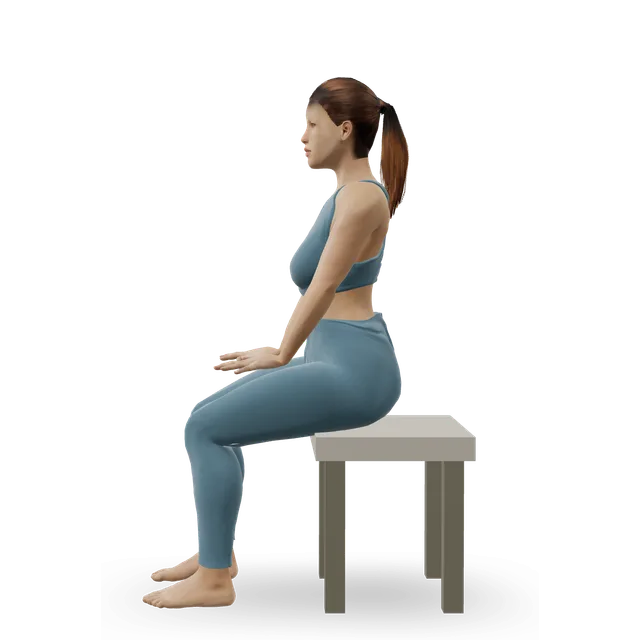
Plantar fascia stretch (seated) demonstrated on the 3D figure3D demoPlantar fascia stretch (seated)Beginner · A bench or box

For heel pain: 3 to 5 holds of 10 to 30 s, 2 to 3 times a day, the first before your first steps · The move page's dose, the hold range used in trials; stretching the sole eased first-step pain in the best-practice guide

Harder: Toes-tucked kneeling (toe squat)

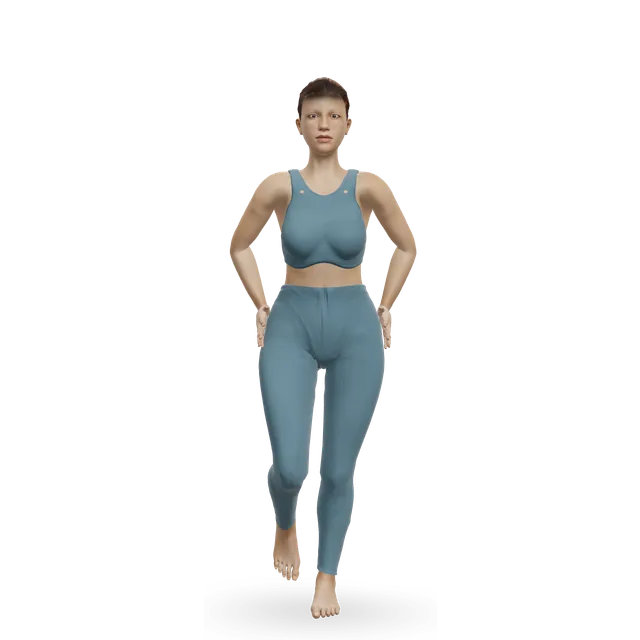
Wall calf stretch (gastrocnemius) demonstrated on the 3D figure3D demoWall calf stretch (gastrocnemius)Beginner · A wall

Hold 20 to 30 s, 2 to 3 sets, 2 to 3 times a day · NHS inform's stretch dose. Go gently with a sore Achilles, as the move page says

Easier: Seated calf stretch with a towel · Harder: Heel-on-step calf and hamstring stretch

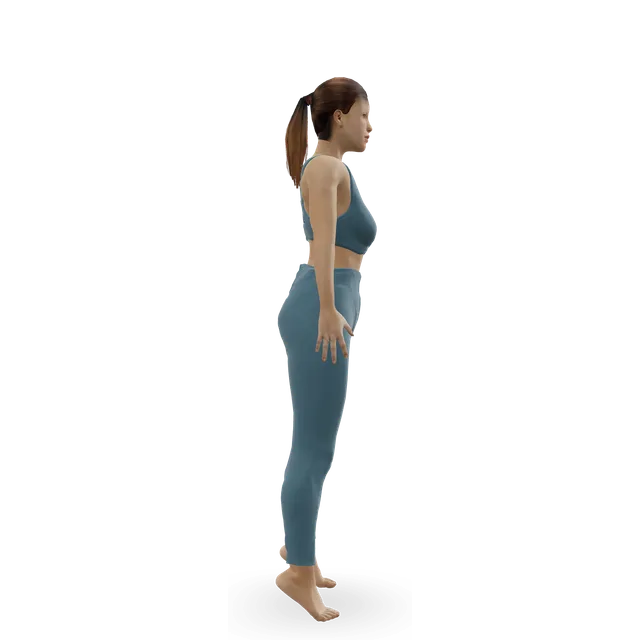
Isometric calf raise hold demonstrated on the 3D figure3D demoIsometric calf raise holdBeginner · A wall

For Achilles pain: 5 holds of 30 to 45 s, both legs, once or twice a day · The move page's dose (an editorial starting point)

Easier: Seated bent-knee calf raise (soleus raise) · Harder: Slow calf raise

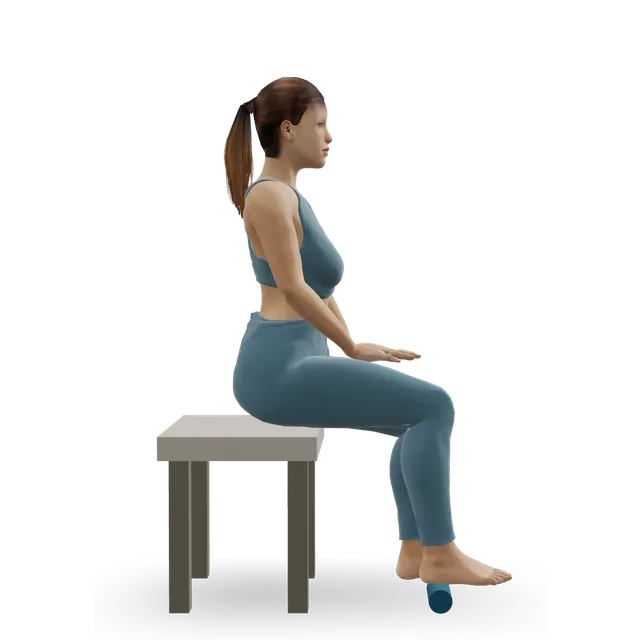
Seated bent-knee calf raise (soleus raise) demonstrated on the 3D figure3D demoSeated bent-knee calf raise (soleus raise)Beginner · A bench or box

2 to 3 at a time, building to sets of 8, up to 2 sets of 15, 2 to 3 times a day · NHS inform's seated heel raise and its pacing

Harder: Slow calf raise

Stationary cycling demonstrated on the 3D figure3D demoStationary cyclingBeginner · Cardio machine

10 to 20 minutes, easy, in place of running or long walks if needed · Editorial; the NHS suggests exercise that keeps pressure off the feet, such as swimming

Easier: Recumbent exercise bike · Harder: Air bike intervals

Move on when: First steps and everyday walking are within the pain rule, and the foot is no worse the next morning (NHS inform's check).

Follow along: a timer, a cue and the next move, one step at a time.
Stage 2

Build: heavy, slow calf and foot strength

About weeks 2 to 8: the heavy heel raise every second day, as in the trial, and the rest 3 times a week.

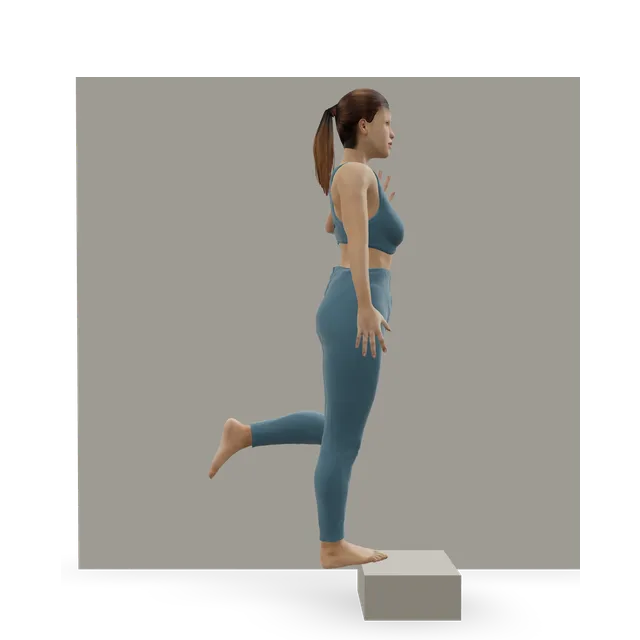
Heel raise with a towel under the toes demonstrated on the 3D figure3D demoHeel raise with a towel under the toesIntermediate · A step + Other / check instructions

For heel pain, every second day: both feet, then one, at a load you can lift about 12 times for 3 sets, building over weeks towards heavier loads you can lift about 8 times · The move page's dose, from the heel pain trial. A lighter NHS trust leaflet option: heel raises 10 to 20 times, twice a day

Easier: Slow calf raise · Harder: Standing dumbbell calf raise

Slow calf raise demonstrated on the 3D figure3D demoSlow calf raiseBeginner · A wall

For the Achilles: 3 sets of 15, 3 s up and 3 s down, shifting your weight towards one leg · Editorial, as in our Achilles tendinopathy guide; 12 weeks of heavy slow loading worked in a trial

Easier: Seated bent-knee calf raise (soleus raise) · Harder: Standing dumbbell calf raise

Single-leg calf raise from a step demonstrated on the 3D figure3D demoSingle-leg calf raise from a stepIntermediate · A step + A wall

3 sets of 10 to 15 each leg; on flat ground for pain where the tendon meets the heel · Editorial, as in our Achilles guide. Keep a hand on a rail, as the move page says

Easier: Slow calf raise · Harder: Single-leg pogo hops

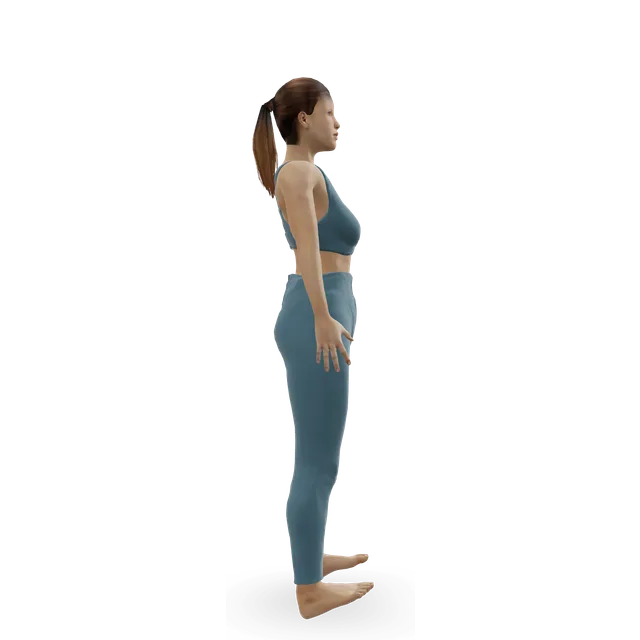
Tibialis raise demonstrated on the 3D figure3D demoTibialis raiseBeginner · No equipment

2 to 3 sets of 10 · Editorial, as in our foot guides

Harder: Single-leg tibialis raise

Single-leg stand demonstrated on the 3D figure3D demoSingle-leg standBeginner · A wall

3 holds of 30 s each leg, a hand near a wall · Editorial, as in our foot guides

Easier: Tandem stance and heel-to-toe walk · Harder: Single-leg reach matrix

Move on when: Single-leg heel raises are within the pain rule, and a long shift or walk leaves the foot no worse the next morning (our suggestion).

Follow along: a timer, a cue and the next move, one step at a time.
Stage 3

Strengthen and return: long shifts, boots and walking

From about week 6, 2 or 3 sessions a week. Build standing and walking time at work and at home, a little more each week, with the boot and shift changes below (our suggestion). If you play sport or run, move on to the last stage; if not, keep two calf and foot sessions a week.

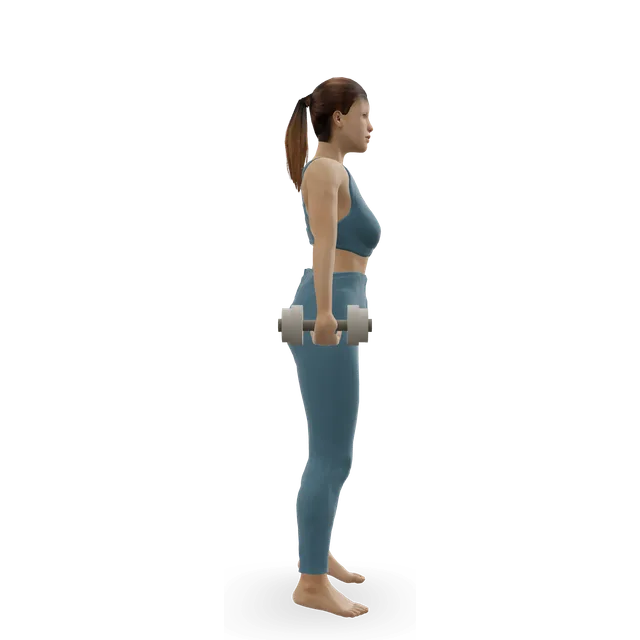
Standing dumbbell calf raise demonstrated on the 3D figure3D demoStanding dumbbell calf raiseIntermediate · A dumbbell

3 to 4 sets of 6 to 10, heavy · Editorial, as in our Achilles guide

Easier: Slow calf raise · Harder: Single-leg pogo hops

Seated one-leg calf raise with a dumbbell demonstrated on the 3D figure3D demoSeated one-leg calf raise with a dumbbellBeginner · A dumbbell + A bench or box

3 to 4 sets of 8 to 12 each leg · Editorial, as in our Achilles guide: it loads the deeper calf muscle

Easier: Seated bent-knee calf raise (soleus raise) · Harder: Slow calf raise

Single-leg reach matrix demonstrated on the 3D figure3D demoSingle-leg reach matrixIntermediate · No equipment

3 rounds of 5 reaches in each direction, each leg · The move page's dose (an editorial starting point)

Easier: Standing crossed-leg side reach · Harder: Single-leg Romanian deadlift

Treadmill walking demonstrated on the 3D figure3D demoTreadmill walkingBeginner · Cardio machine

Build walking and standing time a little each week within the pain rule · Editorial

Harder: Treadmill jogging

Move on when: Our suggestion: a normal working week on your feet passes the pain rule. Keep calf and foot strength work twice a week for the long term.

Follow along: a timer, a cue and the next move, one step at a time.
Stage 4

Back to running, football and jumping

From about weeks 8 to 12, with hops and runs on alternate days. After a stress fracture or a rupture, follow those guides' return steps instead. Speed, hills and kicking come back last (as in our Achilles guide).

Ankle bounces (mini pogo) demonstrated on the 3D figure3D demoAnkle bounces (mini pogo)Beginner · No equipment

3 sets of 20 · Editorial, as in our Achilles guide. Leave it out with a suspected stress fracture, as the move page says

Harder: Pogo hops

Pogo hops demonstrated on the 3D figure3D demoPogo hopsIntermediate · No equipment

3 sets of 20, once ankle bounces are easy · Editorial, as in our Achilles guide

Easier: Ankle bounces (mini pogo) · Harder: Single-leg pogo hops

Treadmill jogging demonstrated on the 3D figure3D demoTreadmill joggingIntermediate · Cardio machine

Walk-jog intervals on alternate days · Editorial, as in our Achilles and running guides

Easier: Treadmill walking · Harder: Sprint intervals

Move on when: Running and sport stay within the pain rule on the day and the next morning (as in our Achilles guide). Keep two heavy calf sessions a week (editorial).

Follow along: a timer, a cue and the next move, one step at a time.

What to change for now

Shoes, work boots and long shifts (written steps)

Our 3D figure can't show these. They come from the NHS, the HSE, NHS foot and physiotherapy services and a review, except where marked as our suggestion.

  • 1. Wear shoes and boots with cushioned heels and good arch support; avoid flip-flops, backless slippers and walking barefoot on hard floors (the NHS).
  • 2. Safety footwear should fit your length and width and be comfortable: it comes in trainer, hiking-shoe and boot styles and wide fits; check boots for wear before use, replace broken laces and worn-out pairs, and tell your employer if they don't fit (the HSE; an NHS podiatry service).
  • 3. Try off-the-shelf insoles first; in boots, make sure there's still room for your toes (an NHS physiotherapy leaflet; the room for your toes is our suggestion).
  • 4. On long shifts on hard floors, take breaks off your feet, sit and stand in turns where you can, use anti-fatigue mats, and swap between two pairs of boots through the week (suggestions from a study of plant workers and a review; untested).
  • 5. Reduce running, long walks and long spells standing while the heel is sore, and rest and raise your foot when you can (the NHS; an NHS physiotherapy leaflet).

Sources 8, 37, 65, 56, 34, 10

Gout, diabetes and antibiotics (written steps)

These come from the NHS, NICE, Diabetes UK and the medicines regulator (MHRA).

  • 1. In a gout attack, take your treatment as soon as possible, rest and raise the foot, keep the joint cool for up to 20 minutes at a time, drink plenty of water unless a GP says otherwise, and keep the bedclothes off it (the NHS).
  • 2. Between attacks: lose weight steadily if you need to (no crash diets), have some alcohol-free days and keep under 14 units a week, cut down on sugary drinks, exercise regularly and stop smoking (the NHS). Ask about long-term urate-lowering treatment if attacks keep coming (NICE).
  • 3. With diabetes, check your feet every day, wear well-fitting shoes, never walk barefoot, and go to your yearly foot check; get any new wound or hot, swollen foot to your foot team within 1 working day (Diabetes UK; NICE).
  • 4. On a fluoroquinolone antibiotic such as ciprofloxacin, stop it and contact your doctor straight away if a tendon becomes painful or swollen (the MHRA).
  • 5. Stopping smoking is the biggest single step for poor circulation (the NHS).

Sources 17, 16, 69, 43, 28, 45

Positions to swap, and why

Habit or positionWhy it mattersInstead
Long shifts standing on concrete in worn or ill-fitting bootsStanding on hard surfaces goes with heel pain, and uncomfortable protective footwear "is unlikely to be worn properly", the HSE says.Well-fitting cushioned boots, breaks, mats and two pairs to rotate.
Walking barefoot on hard floors, or flip-flopsThe NHS says avoid them with heel pain.Supportive shoes or slippers indoors.
Running or football through heel or Achilles pain that climbs each dayIt is past the pain rule.Cycling or swimming for a while.Try: Stationary cycling
Resting a sore Achilles completely"Achilles tendinopathy does not improve with rest", NHS inform says.Load it within the rule.Try: Isometric calf raise hold
A steroid injection near the AchillesInjections there are linked with tendon tears, so doctors avoid them, AAOS says.The loading plan.Try: Slow calf raise
Paying for a heel injection as the fixIt eases pain for a month at most.Stretching, insoles and heavy heel raises.Try: Heel raise with a towel under the toes
Hopping and jumping through one sore spot on a boneIt can be a stress fracture.Stop impact and get it checked.
Walking it off after a snap at the back of the heelIt can be an Achilles rupture.Same day: A&E, a minor injuries unit or NHS 111.
Putting a hot, swollen big toe down to a knockIt can be gout or a joint infection.Same day if it's very painful or you have a high temperature; a GP for a first attack.
Tight, narrow work boots with burning between the toesTight shoes make Morton's neuroma worse, the NHS says.Wider boots or a wide-fit range, and soft insoles.
Ignoring numb feet or a small wound with diabetesPain won't warn you, and men have more foot ulcers and amputations.Check your feet daily, and your foot team within a working day.
Ice or heat on numb feet"If you have any issues with circulation or sensation, you shouldn't use ice", NHS inform says.Check your skin daily instead.

Routines to follow

More moves for this area

Questions people ask

What causes foot pain in men?

Most often heel pain under the heel (plantar fasciitis), the Achilles tendon, gout in the big toe, the ball of the foot, or a stress fracture after more running or marching than usual. Long shifts on hard floors and boots that don't fit can play a part. The map above sends each to its guide.

Is heel pain more common in men?

About as common: in a UK study of people over 50, 9.2% of men and 10.0% of women had it, and it was twice as common in manual jobs as in office ones. Stretching, cushioned shoes, simple insoles and heavy heel raises help most people within months.

Why is my big toe suddenly hot, red and swollen?

Often gout, which is about 4 times as common in men. Get help the same day if it's very painful, getting worse, or you have a high temperature or feel unwell, as it can be a joint infection, and see a GP for a first attack.

Is gout caused by drinking?

Only in part: alcohol, especially beer, raises the risk, but genes, weight, kidneys, blood pressure tablets and water tablets matter more for many men. NICE says no special diet has been shown to prevent attacks, while urate-lowering treatment does.

Can work boots cause foot pain?

Discomfort in safety footwear is common, but studies can't show the boots cause foot pain rather than long hours on hard floors. Get boots that fit your length and width, with cushioned soles, replace worn pairs, try insoles if they help, and take breaks off your feet.

I felt a snap at the back of my heel. What should I do?

Get it checked the same day at A&E, a minor injuries unit or through NHS 111, especially if you're walking flat-footed and can't rise on tiptoe: it can be an Achilles rupture. Ruptures are 3 to 4 times as common in men, often in their 40s.

Do I need surgery for a torn Achilles?

Not always: function a year later was the same with or without surgery in a large trial, and early movement in a brace works without surgery. Surgery means fewer re-tears but more complications; your team will talk it through with you.

Can men get stress fractures in the foot?

Yes, though they are more common in women: about 3% of male recruits get one, runners get them in the metatarsals, and footballers in the fifth metatarsal. One spot on a bone that hurts with every step needs checking, often with an MRI.

Why are my feet numb or burning?

Often nerve damage; with diabetes, the NHS lists pain, tingling or numbness as possible signs and asks you to see a GP or diabetes nurse. Other causes need a GP too. With diabetes, check your feet every day and get any wound or hot, swollen foot to your foot team within a working day.

Will a steroid injection fix my heel pain?

It may ease it slightly for up to a month, but not after, and it can weaken the tissue under the heel. Most people do better with stretching, shoes, insoles and strength work.

Do heel spurs cause heel pain?

No: most people with heel spurs have no pain, and a spur doesn't need removing to treat heel pain. In a study that followed people for up to 15 years, having a spur made no difference to how they did.

When should I see a doctor?

Call 999 for a foot that is suddenly cold, pale and very painful, and get help the same day for a snap at the back of the heel, a hot, swollen big toe, or any new foot problem with diabetes. See a GP if heel or foot pain isn't better after 2 weeks of looking after it yourself, or for tingling or numbness. In the US, call 911 where this page says 999.

Related exercise guides

Other pain guides

Sources

  1. Dufour 2009 · Foot pain and current or past shoes in the Framingham Foot Study (population study, Arthritis Rheum)
  2. Hill 2008 · Foot pain in 3,206 adults in Adelaide (population study, J Foot Ankle Res)
  3. Thomas 2011 · Foot and ankle pain in middle and old age (systematic review, Pain)
  4. Jordan 2010 · How many people consult a GP each year about each body region, by age and sex, in 12 English practices (observational study, BMC Musculoskelet Disord)
  5. Thomas 2019 · Plantar heel pain in 5,109 adults aged 50 and over in a UK population (cross-sectional study, BMC Musculoskelet Disord)
  6. Rasenberg 2019 · Plantar heel pain in Dutch general practice: how often it's seen and how it's managed (retrospective cohort, Br J Gen Pract)
  7. van Leeuwen 2016 · Body mass index and plantar heel pain (systematic review and meta-analysis, BJSM)
  8. NHS · Plantar fasciitis
  9. Waclawski 2015 · Plantar fasciitis and long hours on your feet at work (systematic review, Occup Med)
  10. Werner 2010 · Plantar fasciitis in car engine assembly plant workers (cross-sectional study, PM R)
  11. AAOS OrthoInfo · Plantar fasciitis and bone spurs
  12. Hansen 2018 · Plantar fasciitis followed for 5 to 15 years in 174 hospital patients (cohort study, Orthop J Sports Med)
  13. Kuo 2015 · Gout in the UK by age and sex, 1997 to 2012 (population study, Ann Rheum Dis)
  14. Arthritis UK · Gout
  15. Roddy 2011 · Why gout targets the foot (review, J Foot Ankle Res)
  16. NICE NG219 · Gout: diagnosis and management (2022)
  17. NHS · Gout (past its review date: reviewed August 2023, review due August 2026)
  18. Choi 2004 · Alcohol and new gout in 47,150 men followed for 12 years (cohort study, Lancet)
  19. Choi 2008 · Sugary soft drinks and new gout in 46,393 men (cohort study, BMJ)
  20. Major 2018 · How much diet and genes explain blood urate in 16,760 adults (meta-analysis of population cohorts, BMJ)
  21. de Jonge 2011 · Achilles tendinopathy in Dutch general practice (population study, Br J Sports Med)
  22. Albers 2016 · Lower limb tendinopathy in a Dutch general practice population (cross-sectional study, BMC Musculoskelet Disord)
  23. Hollander 2021 · Running injuries in women and men compared (systematic review and meta-analysis, Sports Med)
  24. Huttunen 2014 · Achilles ruptures and surgery in Sweden, 2001 to 2012 (population study, Am J Sports Med)
  25. Ganestam 2016 · Achilles ruptures in Denmark, 1994 to 2013: 33,160 people (registry study, Knee Surg Sports Traumatol Arthrosc)
  26. Raikin 2013 · 406 Achilles ruptures at a US referral centre: who, and how (case series, Foot Ankle Int)
  27. American Academy of Orthopaedic Surgeons · Achilles tendon rupture (OrthoInfo)
  28. MHRA · Fluoroquinolone antibiotics: only when other commonly recommended antibiotics are inappropriate (Drug Safety Update, 2024)
  29. Wentz 2011 · Stress fractures in women and men in the military and in sport (systematic review, Mil Med)
  30. Ekstrand 2013 · Fifth metatarsal fractures in male professional footballers (cohort of 64 elite teams, BJSM)
  31. Sun 2024 · Risk factors for metatarsal stress fractures in sport: 32 studies (systematic review, Front Bioeng Biotechnol)
  32. Nattiv 2021 · The Male Athlete Triad: low energy, low testosterone and bone health in men (consensus statement, Clin J Sport Med)
  33. Mountjoy 2023 · 2023 International Olympic Committee's (IOC) consensus statement on Relative Energy Deficiency in Sport (REDs) (Br J Sports Med)
  34. Arceri 2024 · Safety footwear and foot problems in workers: 7 studies (systematic review, Healthcare)
  35. Dobson 2018 · 358 underground coal miners and their work boots (survey, Appl Ergon)
  36. Pereira-Barriga 2024 · Injuries caused by work footwear: 27 studies (review, Occup Med)
  37. Health and Safety Executive · Personal protective equipment at work: guidance on regulations (L25, 2022)
  38. Latinovic 2006 · How often common nerve entrapments, including Morton's neuroma, are diagnosed in UK general practice (database study, J Neurol Neurosurg Psychiatry)
  39. Roddy 2015 · Painful foot osteoarthritis on X-ray in 5,109 UK adults aged 50 and over (population study, Ann Rheum Dis)
  40. NHS · Morton's neuroma
  41. Healthcare Quality Improvement Partnership · National Diabetes Foot Care Audit 2014 to 2016: summary for patients
  42. Fan 2021 · Sex and the risk of amputation in diabetes: 22 studies (systematic review and meta-analysis, PLoS One)
  43. NICE NG19 · Diabetic foot problems: prevention and management (2015, updated 2019)
  44. NHS · Complications of type 2 diabetes
  45. NHS · Peripheral arterial disease (PAD)
  46. Song 2019 · Peripheral artery disease worldwide by age and sex in 2015 (systematic review and analysis, Lancet Glob Health)
  47. Paavana 2024 · Stress fractures of the foot: current evidence on management (review, J Clin Orthop Trauma)
  48. Sormaala 2006 · Stress injuries of the heel bone found on MRI in military recruits (imaging study, J Bone Joint Surg Am)
  49. Maffulli 1998 · Diagnosing a torn Achilles tendon: the calf squeeze test in 174 people (prospective study, Am J Sports Med)
  50. NICE CG147 · Peripheral arterial disease: diagnosis and management
  51. NHS inform · Achilles tendinopathy
  52. Cambridge University Hospitals NHS · Achilles tendon rupture: management and rehabilitation (patient information, 2026)
  53. Morrissey 2021 · Management of plantar heel pain: a best practice guide (BJSM)
  54. Rathleff 2015 · High-load strength training for plantar fasciitis (RCT, Scand J Med Sci Sports)
  55. Whittaker 2018 · Foot orthoses for plantar heel pain: 19 trials (systematic review and meta-analysis, Br J Sports Med)
  56. Berkshire Healthcare NHS Foundation Trust · Plantar heel pain (physiotherapy leaflet, 2026)
  57. David 2017 · Steroid injections for plantar heel pain in adults: 39 trials (Cochrane systematic review)
  58. Beyer 2015 · Heavy slow resistance vs eccentric training for Achilles tendinopathy (RCT, AJSM)
  59. Silbernagel 2007 · Continued sports activity with a pain-monitoring model in Achilles tendinopathy (RCT, AJSM)
  60. Alfredson 1998 · Heavy heel drops for long-standing Achilles tendon pain in 15 recreational athletes (case series with a comparison group, Am J Sports Med)
  61. Myhrvold 2022 · Non-operative or surgical treatment of acute Achilles rupture (RCT of 554, NEJM)
  62. Ochen 2019 · Surgery vs non-operative treatment of Achilles ruptures (meta-analysis of 29 studies, BMJ)
  63. Costa 2020 · A plaster cast or a functional brace for Achilles rupture without surgery: UKSTAR (RCT of 540 people, Lancet)
  64. Clarson 2015 · Gout and deaths from heart disease (systematic review and meta-analysis, Eur J Prev Cardiol)
  65. Livewell Southwest (NHS podiatry) · Safety footwear advice (2025)
  66. NHS inform · Foot and toe problems
  67. Thomson 2013 · Steroid injections for Morton's neuroma (patient-blinded RCT of 131, J Bone Joint Surg Am)
  68. Gougoulias 2019 · Morton's interdigital neuroma (instructional review, EFORT Open Rev)
  69. Diabetes UK · Serious foot problems and diabetes
  70. NHS inform · Exercises for foot problems

Exercise education, not a diagnosis or treatment plan. It is written from the guidelines and studies listed above; review by a clinician is pending. If your pain follows an injury, is severe, is getting worse, or comes with any warning sign listed on this page, get it assessed. Health disclaimer.