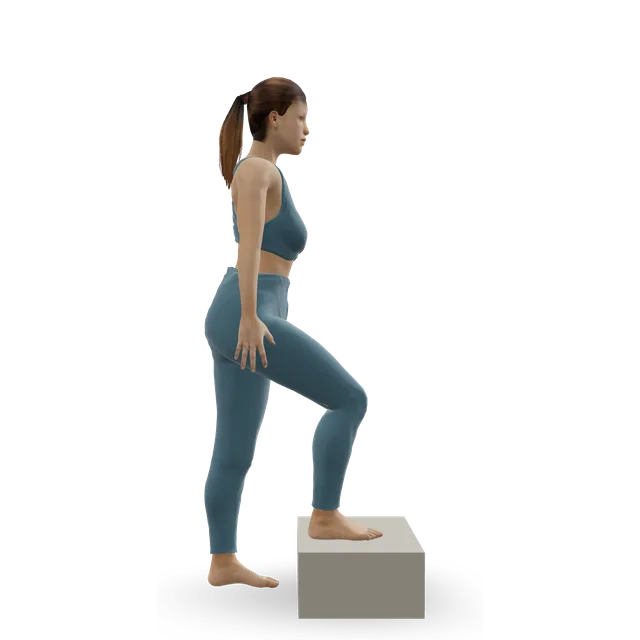
What the treadmill asks of the shin, and what no study has countedMixed evidence
Shin splints are pain along the inner edge of the shin bone with running and other impact. An orthopaedic page lists sudden changes in how often, how long or how hard you train, such as running on hills after running only on the flat, and the NHS adds starting exercise again after a break, hard surfaces and running technique.
No study has counted shin splints or shin stress fractures on treadmills against running outside. The best-known study asks the question in its title, but it fixed strain gauges to the shin bone in 3 people and counted no fractures: strain was 48% to 285% higher on concrete than on the belt. Pooled lab studies found lower shin loading on a treadmill (very low certainty), and shin shock in a road marathon was 24% to 30% higher than on a lab treadmill in 192 runners. But across 33 studies, peak shin acceleration didn't differ, and in 71 adults wearing sensors on a 5 km run, shock and impact were higher on an indoor treadmill than outside. So the evidence is mixed, and none of it counts injuries.
US emergency data show treadmill accidents rather than overuse: in a trade magazine analysis of national data, about a third of an estimated 451,250 treadmill injuries over 23 years were to the leg or foot, 16% of those to the lower leg. So the map on this page is built from lab studies of speed, slope and stride and from what each condition is known to do; that a jump in time, speed or slope is the usual story is our reading.
Sources 1, 2, 3, 4, 5, 6, 7, 8
The belt is not a hillStrong evidence
A common claim is that the belt drags the foot back and makes treadmill running like running downhill. The physics says otherwise: as long as the belt speed is steady, moving on a belt is mechanically the same as moving over the ground. The measured differences are small: on the belt the foot lands a little flatter and stays down 5 thousandths of a second longer, while stride length didn't differ. When walking, people take shorter, quicker steps on a treadmill.
Sources 9, 6, 10
Speed, stride and slopeMixed evidence
Speed is the clearest dial. Faster running raised shin bone loading in 20 runners on a treadmill, each 1 metre a second faster raised peak shin strain by about 9% in a model, and slowing down lowered shin shock on every surface in 35 runners.
Stride: longer strides raised shin acceleration and ankle forces, and in a model a 10% shorter stride cut the chance of a shin stress fracture by 3% to 6%. A quicker step rate lowered modelled damage at the shin, Achilles and knee, and in 54 college cross-country runners each extra step a minute went with a 5% lower risk of a bone stress injury, though a 10% higher step rate had no clear effect on shin load in pooled lab data.
Slope: running up 10% and 15% slopes raised shin bone loading, while 5% didn't differ from level; uphill raised modelled shin and Achilles damage; and impact fell uphill while the shin bone's force rose because the muscles pull harder. Against that, one study found lower shin forces on a 10 degree incline than on the flat, and another found slope didn't change shin strain. So the evidence on incline running is mixed, and speed is the more consistent dial. These are lab studies in healthy runners.
Sources 11, 12, 4, 13, 14, 15, 16, 17, 18, 19
Incline walking and the front of the shinMixed evidence
No study has measured shin bone load in incline walking or linked incline walking to shin pain. For the muscle at the front of the shin, the results depend on who is walking. In 16 adults walking up to a 10% slope, it was the only one of 8 leg muscles that didn't work harder; on gentle slopes in 14 young men it worked less; and it worked less in steep incline walking than in jogging at the same energy cost. But in 24 adults aged about 75, it worked harder on 10% and 16% slopes to lift the foot clear, and people with stiff ankles used it more on a steep slope.
The calf works harder uphill, and more so at faster speeds. The one study of the 12-3-30 workout (12% incline, 3 miles an hour, 30 minutes) measured metabolism only. Problems in the muscle or tendon at the front of the shin are uncommon and described mainly in case reports. Our reading: a big jump to steep or long incline sessions can tire the calf and, in some people, the front of the shin.
Sources 20, 21, 22, 23, 24, 25, 26, 27
Who gets it, and how the causes are told apartStrong evidence
Shin splints are among the commonest running injuries: they affected 13.6% to 20% of runners across studies, made up 15% of injuries in 254 injured new runners, and new runners have about twice the injury rate per hour of running of more experienced ones. In a 10-month study of physical education students, 25% developed shin splints, 39% of the women. Past shin splints, fewer years of running, being female and a higher body mass index raised the risk in a review of 10 studies, while tight ankles weren't a risk factor.
A stress fracture is one spot you can point to with a fingertip, often 3 to 4 weeks after starting a new routine; a past stress fracture and being female are the risk factors best supported. Exertional compartment syndrome is tightness or pain that builds with exercise and goes with rest, sometimes with numbness; about half of people referred with it suspected had it confirmed. So shin pain on the treadmill is most likely after a jump in time, speed or slope, in new runners and people returning after a break, in a new incline routine, and after a switch from walking to running (our reading).
Sources 28, 29, 30, 31, 32, 33, 34, 35, 36, 37, 38
When a scan or test helpsStrong evidence
Shin splints are diagnosed reliably from the story and an examination, and about a third of athletes with them had a second lower leg problem at the same time. Pressing and hopping tests can't rule out a stress fracture: imaging confirms it, and an early X-ray can miss one, so a magnetic resonance imaging (MRI) scan may be needed. Compartment syndrome is confirmed with pressure tests by a specialist, and the usual pressure cut-offs overlap with healthy people.
Sources 39, 40, 41, 42
How it usually goesEmerging evidence
The NHS says shin splints usually get better within a few weeks, and that shin pain is likely to stop you running for a while. In sports medicine studies it takes longer: about 70 days in new runners and 72 in recreational runners, a median of 72 days in new runners, and a mean of 102 to 118 days to finish a graded return to hard running in a trial of 74 athletes. Low-risk stress fractures of the inner shin returned to sport in about 44 days, and more than 90% of athletes with bone stress injuries returned to sport. Exertional compartment syndrome tends to persist without treatment.
No one can promise a date, which is why the plan builds strength while the running comes back.
Sources 2, 43, 44, 29, 45, 46, 47