Training guide

How to do a human flag: the grip, the shoulders and side trunk, the progressions on a pole, and how to train for it

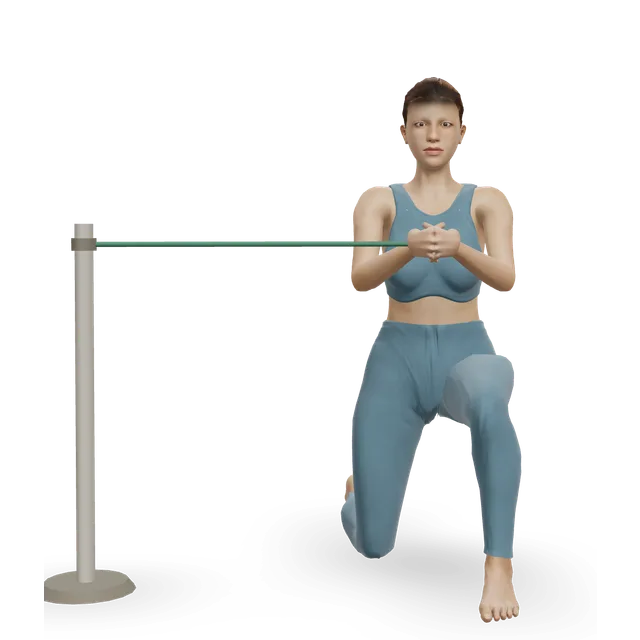
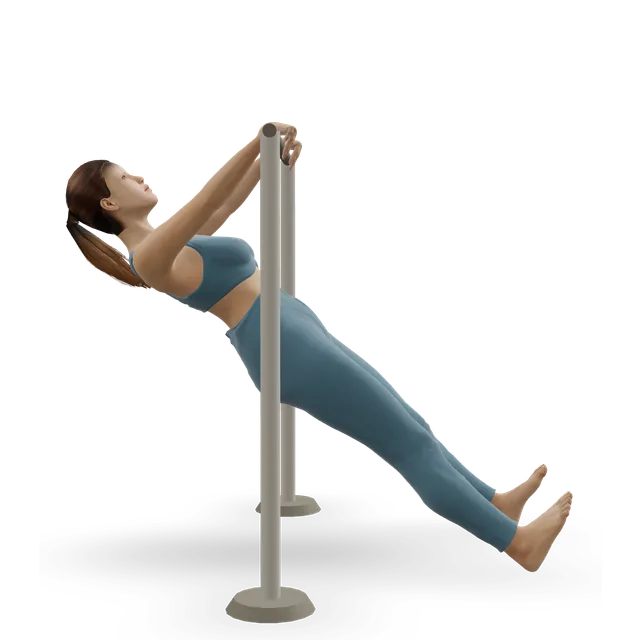
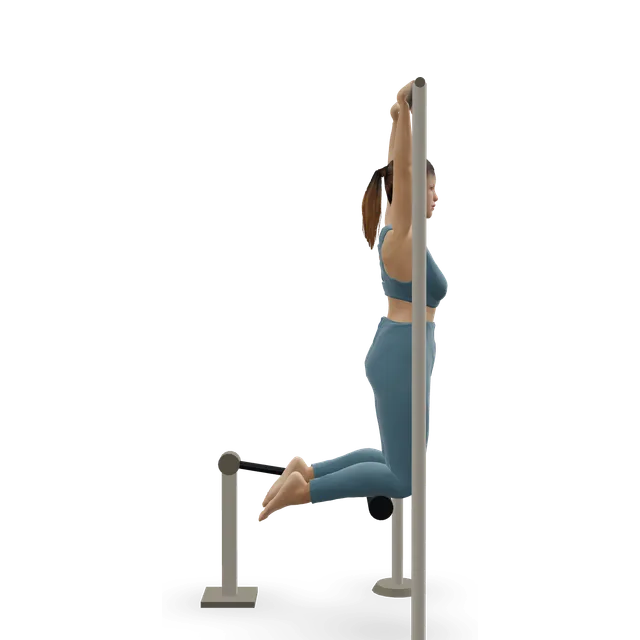
A human flag means holding your body out sideways from a vertical pole: the top arm pulls, the straight bottom arm pushes, and the side of your trunk keeps you level. It's a shoulder skill as much as a core one, and almost everyone learns it in steps, from an upright vertical flag to lowering one leg and then both. There's no 3D demo of the flag itself, so this guide shows the side plank, pull-up and pike push-up that build it.

Nobody has studied the human flag, so the ladder and doses here come from coaching practice and our own judgement, and we say which is which. Shoulders are the most often injured area in calisthenics, and falls are the real risk on a pole.

This guide covers how to set up and grip, the ladder from the vertical flag to the full flag with doses, how long and how often to practise, the strength work behind it, a safe set-up, and who should wait.

The short version

Push with the bottom arm, pull with the top

Grip a vertical pole fixed at both ends, your top hand above your head and your bottom hand lower down. Pull with the top arm and push with the straight bottom arm until your body holds out sideways, level with the floor. There's no 3D demo of the flag itself, so this guide teaches it in words and shows the side plank, pull-up, pike push-up and bar hang that build it.

Sources 1, 2

Nobody has studied it

We found no study of the human flag. Its only mention in the research is one sentence in a street workout survey guessing that it might raise the shoulder injury rate. The ladder and doses here come from coaching practice and our editorial choices, labelled as such.

Source 3

A shoulder skill held level by your trunk

The side of your trunk works hard to hold a body level sideways: in side holds, the deep muscle beside the lower spine reached about half its maximum effort and the outer oblique about 60%. But coaches name the bottom shoulder as the hardest-working part, and ask for pulling and pressing strength first.

Sources 4, 5, 2, 1

Learn it in steps

Start with the vertical flag, your body upright beside the pole, building to holds of 20 to 30 seconds with straight arms. Then lower slowly with a knee tucked, then hold one leg out, then a straddle, and finally your legs together. Practise the hardest step you can hold cleanly, on fresh arms.

Sources 1, 2, 6

Good holds, not all-out attempts

Coaches hold for about half to four-fifths of their best clean hold, adding up to about a minute of holding. Our editorial starting point is the move page's dose, 4 to 6 sets of 1 to 3 attempts or 3 to 8 second holds on fresh arms, 2 or 3 times a week as in our lever guides. Train both sides, weaker side first.

Sources 7, 8

Your shoulders and a fall are the risks

In calisthenics surveys the shoulder was the most often injured area, and on dance poles, falls during upside-down moves caused head, neck and spine injuries where no mats were used. Use a pole fixed at both ends over a soft floor, with someone to spot you at first. Pregnancy, or a recent shoulder dislocation or surgery, means waiting.

Sources 3, 9, 10, 11

What a human flag is, and what it works

The position

A static strength skill: your body held straight and level, side-on to the floor, from a vertical pole, wall bars (stall bars) or two bars stacked one above the other. The top arm pulls, the bottom arm pushes with a straight elbow, and your trunk stops your body sagging sideways.

Sources 1, 2, 11

Press flag and clutch flag

The classic human flag is the press flag, with both hands on the pole. The clutch flag is an easier version with the pole hugged between your upper arm and your side; one coach warns you to be prepared for some chafing or bruising on the inner arms. In pole sport, a straddled flag on straight arms, the "Iron X", counts as a strength element when held for 2 seconds.

Sources 12, 13

The muscles and joints

No study has measured them in the flag, so this is our reading of anatomy and the nearest studies. The top arm's lat, the back of the shoulder and your grip pull. The bottom arm's shoulder and triceps push and keep the elbow straight. On the upper side, the obliques and the quadratus lumborum (the deep muscle beside your lower spine) hold your body up against gravity, while your hips and legs squeeze into a straight line.

Coaches put the bottom shoulder first: the press flag, one says, "heavily stresses the shoulders (particularly on the bottom arm)". The joints most loaded are the shoulders, one hanging and one pressing, then the elbows and wrists.

Sources 2, 4, 5, 14

The strength to build first

Coaching sources ask for pressing and pulling strength rather than a set number of trunk holds. One suggests 3 sets of 5 handstand push-ups against a wall; another a 20-second clutch flag and lots of pull-ups and handstand push-ups. Our move page adds, as coaching opinion, about ten strict pull-ups and ten dips, solid side planks and hollow body holds. None of these has been tested.

Sources 1, 15, 12, 2

What to hold

A vertical pole fixed at both ends, wall bars, or two stacked bars, which let you hold with your palms facing and are steadier for beginners. A free-standing or spring-loaded pole can spin or shift under you (our editorial caution).

Sources 2, 1, 6

How people differ

A longer, heavier body needs more strength for its size to hold any lever level, so it can take longer; tall people do learn the levers, as our front lever guide says. Most people have a stronger side: in 32 pole athletes, a measure of on-pole shoulder strength differed between left and right. Nearly all the related research is in young men doing street workout or women doing pole sport; nothing here changes with sex or age (our editorial view).

Source 16

How to do a human flag, step by step

There's no 3D demo of the flag, so the figure can't show these steps; the moves below show its parts. From our move page, Antranik, Al Kavadlo and Rubberbanditz, in our editorial wording. Keep both arms straight without jamming the elbows back: coaches disagree on locking the bottom elbow, and no study exists.

  1. Choose a vertical pole fixed at both ends, wall bars or two stacked bars, with a soft surface below and, at first, someone to spot you.
  2. Grip with your hands wider than your shoulders: the top hand above your head, overhand or in a mixed grip, and the bottom hand lower down. On stacked bars, hold with your palms facing each other.
  3. Straighten both arms. Set the bottom arm so its upper arm is close to your ear, stacking that shoulder under you.
  4. Push hard with the bottom arm and pull with the top arm at the same time, and lift your legs so your body is upright beside the pole: the vertical flag. Lift by pushing and pulling, not by kicking or jumping.
  5. Squeeze your legs together and your glutes, ribs down, so your body makes one line. If your head drifts towards the pole, you're pulling more than you're pushing.
  6. Lower your legs slowly out to the side, one knee tucked at first, only as far as you can hold still.
  7. Hold briefly, then lower your feet to the ground under control. Swap your hands round and do the other side.

The parts you can see on the 3D figure

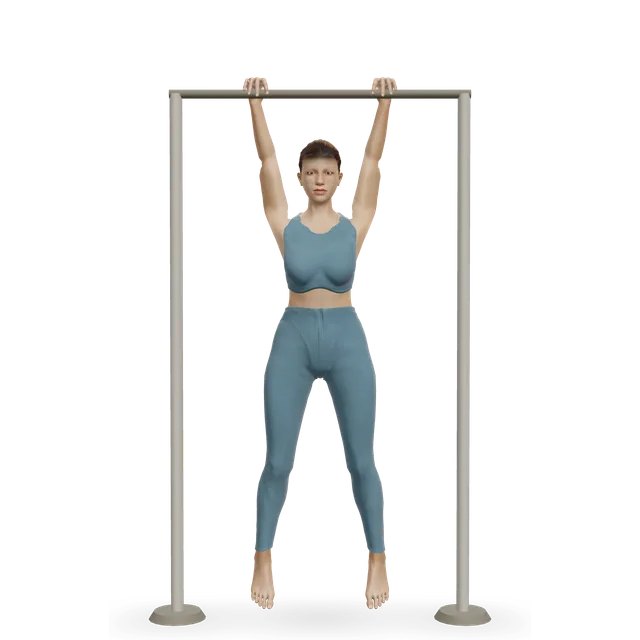
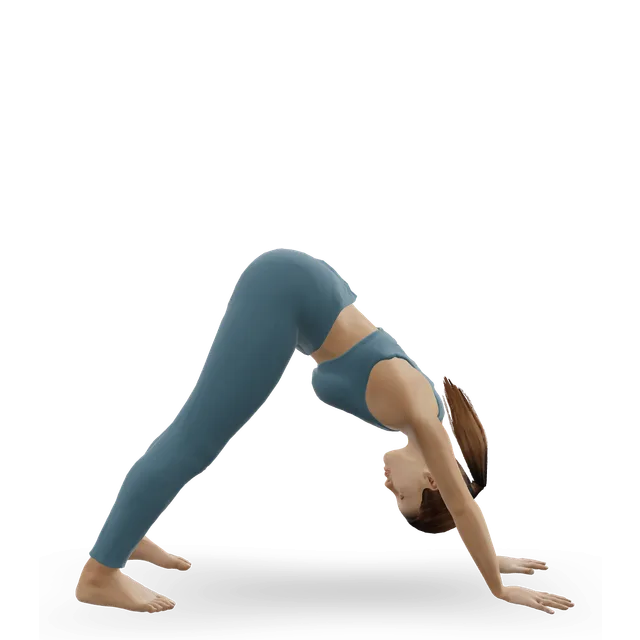
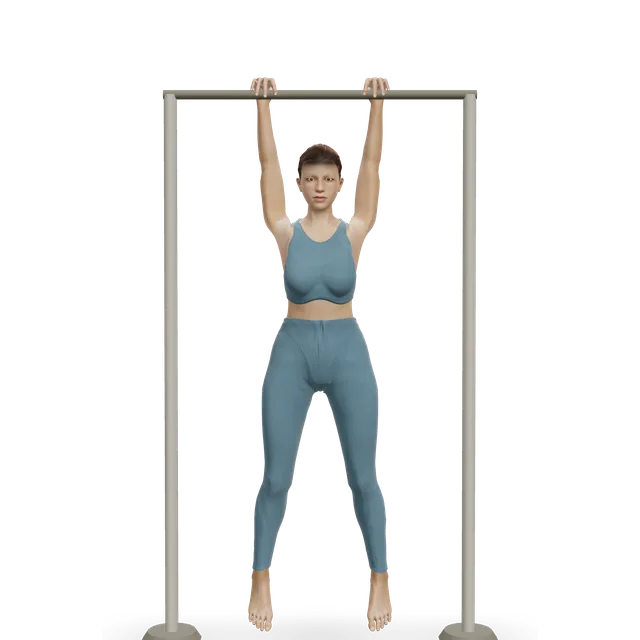
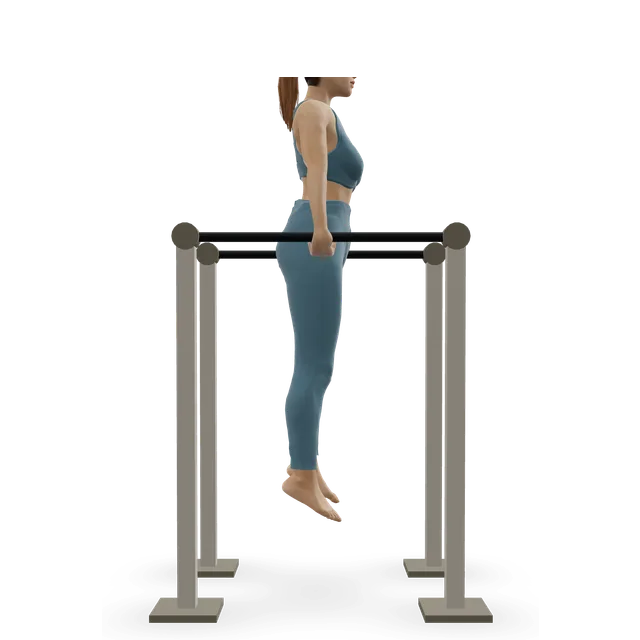
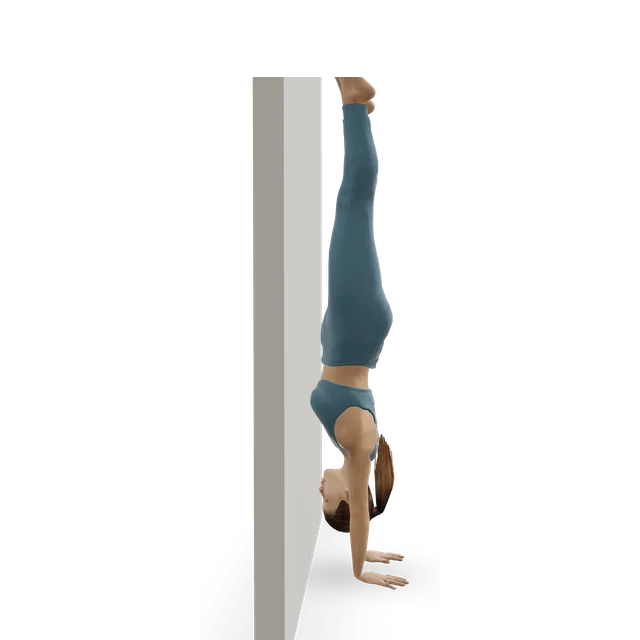
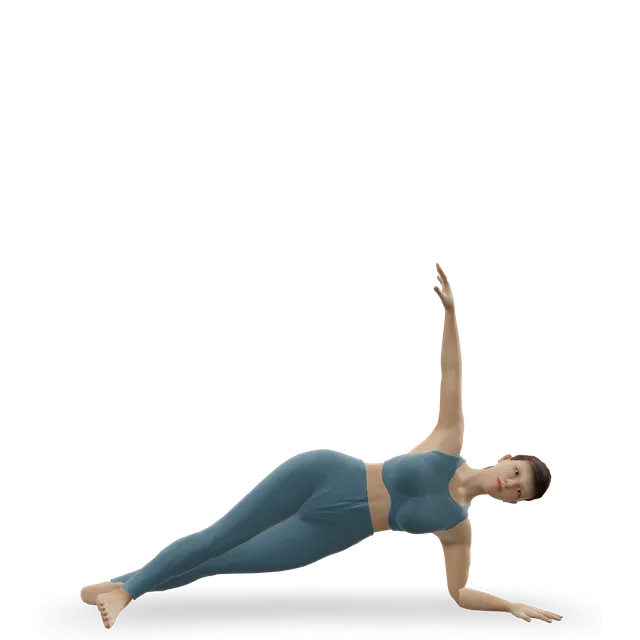
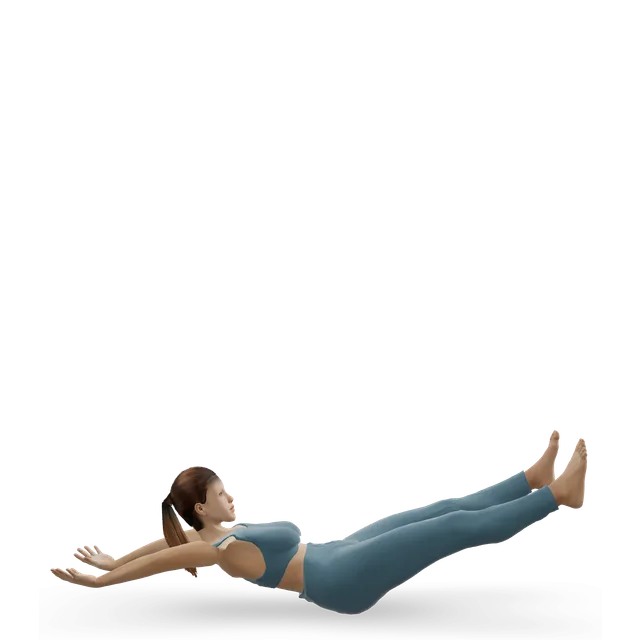
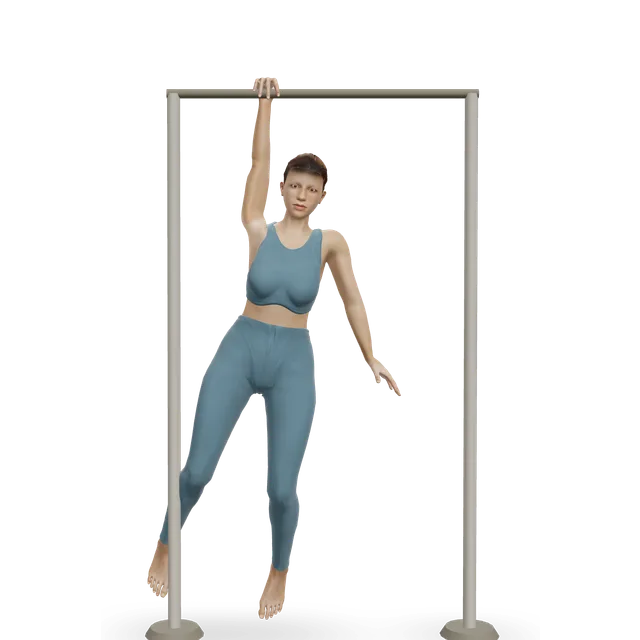
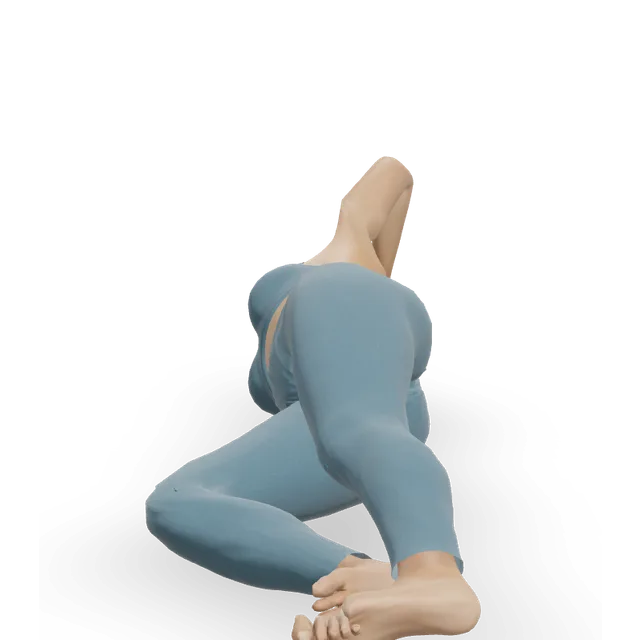
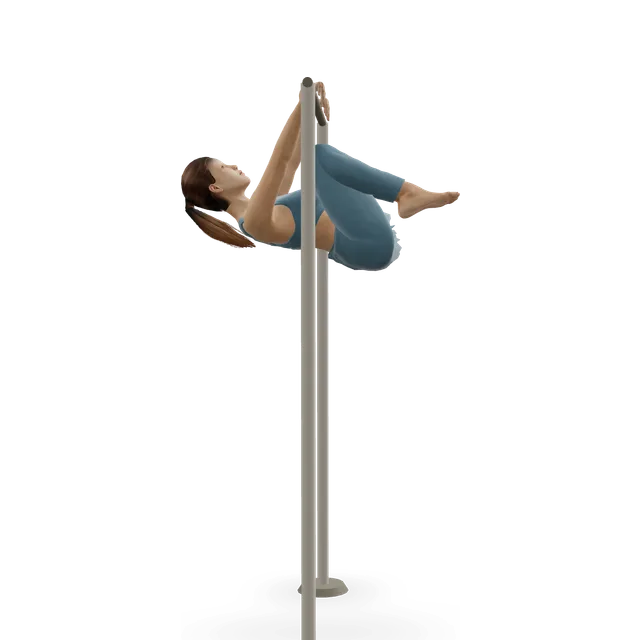
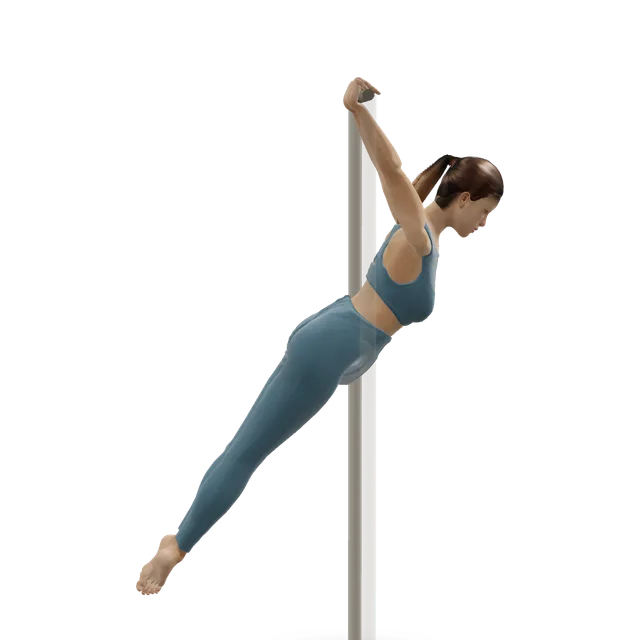
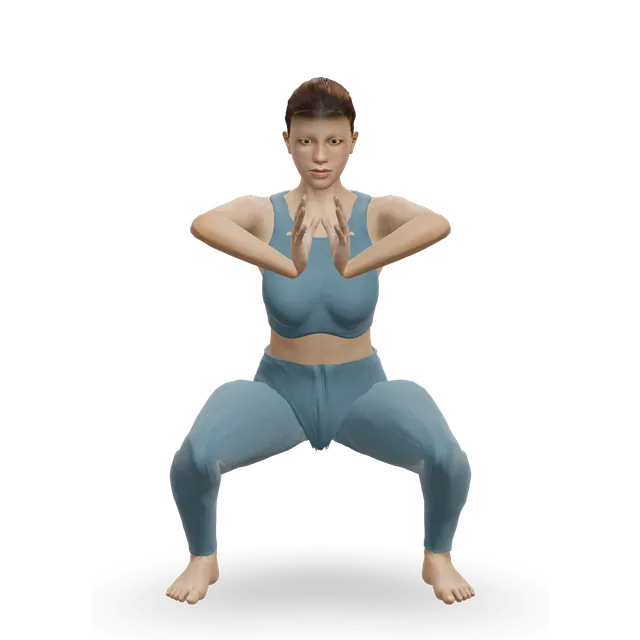
The side plank shows the body line held sideways, the bar hang the top hand's grip, the pike push-up the bottom arm's press and the pull-up the top arm's pull. Doses are under "Build the strength" below.

What the evidence says

No study of the human flag itselfEmerging evidence

We searched PubMed and Europe PMC and found no study of muscle activity, forces, injuries or training in the human flag. It appears once, as a guess: a survey of 93 street workout athletes suggested that moves with similar pulling mechanics, such as the flag, may raise the shoulder injury rate, without measuring it. Everything here about the flag itself is coaching practice, or borrowed from side holds, carries and gymnastics.

Source 3

The side trunk works hard in side holdsEmerging evidence

In 4 young adults with fine-wire electrodes, the quadratus lumborum was more active than other muscles in a side support, at 54% of its maximum. In 18 adults, a side plank on the toes worked the outer oblique at 62% of maximum but the lats at only 12%. In 8 people, the side bridge challenged the abdominal wall most with the least work for the psoas, a deep hip flexor. Nobody has measured these muscles in a flag.

Sources 4, 5, 17

Holding against a one-sided loadEmerging evidence

Carrying 30 kg in one hand gave over 2,800 newtons of low back compression in 6 people, because the side of the trunk works to keep you upright. A suitcase carry of about 25 kg worked the outer oblique on the side away from the weight at about a third of its maximum, similar to a plank, in 18 adults. In strongman events, the quadratus lumborum supplied the sideways turning force.

Sources 18, 19, 20

The lat is mainly an arm muscleEmerging evidence

In 16 men, the outer part of the lat worked harder bending the trunk sideways than in an inverted row, so it helps hold you sideways. But in 10 people, trunk tasks didn't produce maximal lat activity, while arm-pulling tasks drew over one and a half times as much. In the flag, the top arm's pull is the lat's main job (our reading). These studies measure effort, not what a muscle will build.

Sources 14, 21

Holds build strength, slowly and specificallyEmerging evidence

A review of 26 studies found holds build strength at any intensity, but hard holds, at about 70% of maximum or more, were needed to change tendons. In elite gymnasts, ring holds improved by only a few per cent (3.6% and 8.3%) over 3 to 4 weeks of targeted training, and the machine-tested strength needed to hold ring elements ranged from about 57% to 94% of body weight.

Drills didn't reproduce the muscle pattern of the hold they prepared for (7 ring specialists), and an assistance device changed how the shoulder muscles worked in the iron cross (6 gymnasts). Assisted and partial versions help, but you have to practise the position itself. All these studies were small and in elite men.

Sources 22, 23, 24, 25, 26, 27

GripEmerging evidence

In 52 pole dancers, grip strength was higher at more advanced levels, and 30 pole dancers had stronger hands than 30 untrained women. In 30 inactive young men, 8 weeks of pull-up training raised dead-hang time in every group (in one, from about 46 to 71 seconds), and adding forearm training didn't add significantly to it. We found no study of grip as a limit on the flag.

Sources 28, 29, 30

Injuries in calisthenics and pole sportEmerging evidence

In 93 street workout athletes, 62% reported an injury in the past year, the shoulder in 23% of injuries, and tendon problems were the commonest diagnosis. In 181 Dutch calisthenics athletes, 59% reported an injury in a year, the shoulders most often (32%), then wrists (15%) and elbows (10%). In pole sport, the shoulder was a leading injury site: 20% of 103 injuries in a year-long study, and 44 to 55% in surveys. These were self-selected surveys, and none separated the flag.

Sources 3, 9, 31, 32, 33, 34

Falls from a poleEmerging evidence

At one German clinic, 4 women had 5 pole sport injuries, mainly from falls during overhead and upside-down moves: a broken collarbone after a fall onto the head, spinal fractures, a mild brain injury and a neck sprain. Landing mats and a trainer present weren't used in any of the cases. It's a small case series, but it shows where the real danger lies.

Source 10

The ladder

Base: pull, press and the side trunk

Pull-ups, dips or pike push-ups, side planks and hollow holds, plus hangs for your grip. The doses are under "Build the strength" below. Coaching sources use pressing as the benchmark: one suggests 3 sets of 5 handstand push-ups against a wall before training the flag.

Source 1

1. Vertical flag

Hands set, body upright beside the pole, feet off the ground. Build to holds of 20 to 30 seconds with straight arms, each side, as Antranik's first goal; other coaches use 10 to 20 seconds. Easier routes in: the clutch flag, held for 20 seconds before training the press flag, or a band looped round the pole with your top leg through it.

Sources 1, 6, 12, 11

2. Tuck flag

From the vertical flag, lower with your knees tucked, both and then one, until your hips are about level with your hands: 4 to 6 sets of 1 to 3 attempts or 3 to 8 second holds, on fresh arms (the move page's dose).

Sources 2, 1

3. Slow lowerings

From the vertical flag, lower slowly towards level with a knee tucked: "basically an eccentric flag", as one coach puts it. 3 to 5 lowerings of 3 to 5 seconds each side, counted in your holding time (editorial, as in our lever guides).

Source 1

4. One leg, then straddle

One knee tucked and one leg long, then both legs wide apart: the wider your legs, the easier it is. 4 to 6 holds of 3 to 8 seconds each side (the move page's dose).

Sources 1, 2, 11

5. Full flag

Legs together: 3 to 6 holds of 3 to 8 seconds each side (editorial, as the full front lever's dose in our front lever guide).

When to move up

When your best clean hold at your current step reaches about 15 to 20 seconds and 4 or 5 holds of about 10 seconds feel solid. That's our front lever guide's editorial rule; coaching sources differ, and none has been tested.

Without a pole

Wall bars or two stacked bars in a park work. With nothing fixed and vertical to hold, the strength work below still builds what the flag needs, and our human flag strength workout puts it into one session.

How long to hold, how often, and how hard

How long to hold

Test your best clean hold at your step every 2 to 4 weeks, when you're fresh. Practise holds of about half to two-thirds of it, adding up to about 30 to 60 seconds a session, with about 2 minutes between holds: our lever guides' editorial rule. Coaching sources range from 50 to 80% of your best for about 60 seconds in all, to 60 to 70%, and one lists flags among the holds this applies to.

Sources 7, 8

How often

2 or 3 times a week, not on consecutive days, first in your session after a warm-up (our lever guides). Strength rose more with at least 2 sessions a week and with exercises done early in a session. Coaches go to 3 or 4 times a week once settled, starting with two or three.

Sources 35, 7

How hard

End each hold before your hips drop, your elbows bend or your shoulders shrug. Training to failure isn't needed: across 15 studies it added a trivial amount of muscle at most.

Sources 36, 35

Train both sides

"The symmetrical disparity is huge for most people," as one coach puts it. Start each session with your weaker side and give both sides the same holding time.

Source 1

Stick with a plan

Keep the same plan for 8 to 12 weeks before changing it, as one coach's method does, and retest your best hold every 2 to 4 weeks.

Source 7

Warm up and breathe

3 to 5 minutes of easy movement, shoulder circles, scapular pull-ups and a bar hang, then 1 or 2 easy vertical flags (our plans' warm-up; editorial). Keep breathing through every hold; don't strain with your breath held, as our breathing guide explains.

Build the strength

Pull-ups, 3 sets of 3 to 8 stopping 1 to 3 reps short (our front lever progression); dips, 3 sets of 3 to 8 (our back lever progression); pike push-ups, 3 sets of 6 to 8, and wall handstand push-ups, 3 to 5 sets of 1 to 3 slow reps with our handstand push-up guide's cautions (our handstand push-up progression); side planks, 3 holds of 15 to 40 seconds each side (our oblique workout); side planks with a leg lift, 2 sets of 6 to 10 each side (editorial); suitcase carries, 2 walks of 20 to 30 metres each side; hollow holds and bar hangs, 2 of 20 to 30 seconds; side-lying oblique crunches at the move page's dose, 2 to 3 sets of 10 to 15 slow reps each side. The one-arm dead hang is optional and advanced: seconds, not minutes, at first.

Common mistakes

Kicking or jumping up

It overshoots and hides weak spots. Start from a controlled vertical flag instead.

Sources 6, 1

Pulling more than pushing

Your head and hips drift towards the pole. Push the bottom arm harder.

Source 11

Hands too close together

Less leverage. Set them wider than your shoulders.

Source 11

Bent arms

The lever collapses. Keep both arms straight, as our move page cues.

Hips sagging or piking

Squeeze your glutes and abs, or go back a step.

Source 11

One side only

Train both sides every session, weaker side first.

Source 1

All-out attempts every session

Hold below your best and stop while the shape is clean.

Sources 7, 8

A loose pole or a hard floor

Use a pole fixed at both ends over a soft surface, as our move page says.

Source 10

Your shoulders, elbows and a fall

The shoulder pain rule

Keep shoulder pain to about 5 out of 10 or less during the exercise, back to its usual level by your next session, as our shoulder guides advise. A sharp pinch means lower, lighter or stop.

The elbow pain rule

An ache at the front of the elbow of about 3 to 4 out of 10 that settles within an hour and is no worse the next morning is acceptable, as our elbow guides say. If it breaks that rule, drop back a step for a week rather than stopping all training.

Your wrists

Some discomfort during these exercises is fine and doesn't mean you are doing damage. Keep it to about 5 out of 10 or less. It should settle within half an hour or so, and your hand should be no worse the next morning. If it is, do fewer, smaller or lighter next time, not nothing. That's our wrist pain guides' rule.

Set up for a fall

Use a pole fixed at both ends, never a free-standing or spring-loaded one, over a soft surface, and have someone spot you while you learn. Come down by lowering your feet, not by letting go. In the pole sport case series, none of the falls happened with landing mats or a trainer present.

Sources 11, 10

Why the bottom shoulder needs patienceEmerging evidence

The bottom shoulder takes much of your weight in an awkward pressing position, shoulders were the most often injured area in calisthenics surveys, and tendons change over months of hard loading rather than weeks. None of this measures the flag's risk, but it's why the ladder starts short and moves up slowly.

Sources 3, 9, 2, 22

How long it takes

Our rough estimate, not a promise

No study has timed the human flag. With the strength base in place, a steady vertical flag often comes within weeks to a few months, and a level flag with your legs together commonly takes a year or more of regular practice. Taller and heavier bodies often take longer, and many people settle happily at the tuck or straddle flag. That's our editorial estimate, in line with our front lever guide's.

Who should wait or change it

A recent shoulder dislocation or surgery

After a recent shoulder dislocation, or shoulder or elbow surgery, follow your surgical team's limits first.

A shoulder that feels loose or slips

Get it assessed before training the flag (our suggestion): the bottom shoulder takes your weight in an awkward pressing position.

Pregnancy

The NHS advises against starting new vigorous activity in pregnancy and against activities with a risk of falling, so this isn't the time to learn the flag. If you already practise it, ask your midwife (our suggestion).

Source 37

Blood pressure, heart disease, a hernia or glaucoma

Speak to your GP first if you haven't exercised for some time or have medical conditions or concerns, as the NHS advises. Get advice before hard or straining work if your blood pressure is uncontrolled (140/90 or higher at a clinic, or 135/85 at home), or you have heart disease or chest pain when you're active, a pacemaker or defibrillator, diabetic eye disease, glaucoma, a hernia, recent eye or tummy surgery, or you're pregnant, as our breathing guide lists.

With controlled high blood pressure, the American Heart Association considers low- to moderate-intensity strength training with proper breathing safe. Breathe out as you lift, as our breathing guide advises.

Sources 38, 39, 40

Short of the strength base

If you can't yet do about 5 strict pull-ups, start with our pull-up progression; the flag will wait (editorial).

Workouts

No workout can show the flag itself, which has no 3D demo. Our human flag strength workout builds the pulling, pressing and side-trunk strength behind it; do your flag practice first, from this guide. The lever progressions share the same hold rules, and the oblique, grip and pole conditioning workouts build the side trunk and grip.

Human flag strength workout: the pulling, pressing and side-trunk strength behind the flag

A 35-minute strength session for the human flag: pull-ups, dips, pike push-ups, side planks and carries. The flag itself isn't in it; practise it first.

35 minAdvanced12 movesPull-up bar, A step

Front lever progression workout

Build to a front lever: hangs, shoulder-blade pulls and knee raises, then tuck and advanced tuck holds, inverted tuck rows and pull-ups.

30 minIntermediate8 movesPull-up bar, A step

Back lever progression workout

Build to a back lever: shoulder circles, hangs and shoulder-blade pulls, German hangs, then tuck and full back lever holds, pull-ups, dips and a hollow hold.

30 minIntermediate10 movesPull-up bar, A step

Advanced calisthenics workout

An advanced bodyweight strength session: pull-ups, dips, pistol squats, archer push-ups, L-sits and Nordic curls.

45 minAdvanced9 movesPull-up bar, An anchor point

Oblique workout: side planks, Pallof presses, carries and Russian twists

A 25-minute oblique workout at home: side planks, a band Pallof press and a suitcase carry to hold your trunk steady, then slow Russian twists and side-lying crunches.

25 minIntermediate8 movesA band, An anchor point

Pull-up progression workout

Work up to your first pull-up: dead hangs, scapular pulls, rows, negatives and assisted pull-ups.

25 minBeginner7 movesPull-up bar, A step

Handstand push-up progression: pike push-ups to the wall

A 30-minute ladder towards the wall handstand push-up: pike push-ups, then with your feet on a step, box or bench, then slow wall handstand push-ups.

30 minAdvanced12 movesA wall, A band

Grip strength workout: squeezes, curls, carries and hangs

A 20-minute grip session: warm up the wrists and fingers, train the hand and forearm muscles, then carry and hang to load your grip the way everyday life does.

20 minBeginner10 movesOther / check instructions, A band

Pole conditioning workout: hangs and pulls, shoulders, inverts, hamstrings, inner thighs and grip, off the pole

A 45-minute session off the pole: hangs, pulls and rows, hanging knee raises, hollow holds, band rotations both ways, Nordic curls, Copenhagen planks and grip.

45 minIntermediate19 movesPull-up bar, A step

Plans

Warning signs

Stop and get medical help

If you get chest pain or pressure, feel faint or dizzy, are unusually breathless, or your heart races or beats irregularly during exercise, as our plans advise. The American Heart Association says these need immediate medical evaluation.

Source 40

Call 999 (911 in the US)

For chest pain that comes on suddenly and doesn't go away, feels tight or like squeezing, spreads to your arms, neck, jaw, stomach or back, or comes with sweating, feeling sick, light-headedness or breathlessness; arm pain that comes on suddenly with pressure, heaviness or squeezing across your chest; severe difficulty breathing, or a chest that feels tight or heavy; someone who faints while exercising; palpitations that don't go away, or come with chest pain, shortness of breath or feeling faint; or a headache that starts suddenly and is extremely painful, especially while lifting or straining. The NHS says a bleed on the brain may be more likely when lifting something heavy. Don't drive yourself to A&E.

Sources 41, 42, 43, 44, 45, 46, 47, 48

A headache with effort

Ask for an urgent GP appointment or get help from NHS 111 for a headache that's triggered or made worse by coughing, sneezing, bending down or exercising.

Source 47

A fall from the pole

Call 999 or go to A&E: after a fall or injury, your shoulder looks out of place or has changed shape, you cannot move your arm, or your shoulder is painful, bruised or swollen. Do not drive yourself, and do not try to put it back in yourself.

Call 999 or go to A&E if you heard a crack, the joint or limb has changed shape or points at an odd angle, it's numb or tingling, or the skin looks blue or grey or feels cold. Get help from NHS 111 (in the US, urgent care) if it's very painful, very swollen or bruised, very stiff, or you can't put weight on it or walk more than a few steps.

Call 999 if someone has hit their head and has been knocked out and not woken up, can't stay awake, has a fit, has fallen from a height of more than 1 metre or 5 stairs, has problems with their vision, hearing, balance, walking or speech, or has new numbness or weakness. Get help from NHS 111 after a head injury if you're being sick or feel dizzy. If you're told to go to A&E, don't drive yourself.

Sources 49, 50, 51

Your shoulder

Ask for an urgent GP appointment or get help from NHS 111 for sudden or very bad shoulder pain, an arm you can't move, a shoulder that has changed shape or is badly swollen, pins and needles that don't go away, no feeling in your arm or shoulder, an arm or shoulder that's hot or cold to touch, pain after an injury or a fall, severe pain in both shoulders, or feeling feverish or unwell. Go to A&E if, after an injury, you can't move your arm or your shoulder looks out of place or has changed shape. See a GP if shoulder pain is getting worse or hasn't improved after 2 weeks.

In the US, contact your doctor or urgent care. While your shoulder is sore, the NHS says not to make up your own strenuous exercises or use heavy gym equipment.

Source 52

Your elbow and grip

A pop or snap with sudden pain at the front of the elbow, especially with bruising, a gap at the front of the elbow or a bulge in the upper arm, can be a torn biceps tendon. Go to an urgent treatment centre or A&E (in the US, urgent care) the same day, and don't wait for it to settle, as our biceps guides say.

Stop if your fingers tingle or go numb: that's a nerve, not a tired muscle, as our grip strength guide says.

Source 43

A sudden sharp pain in your side

A sharp pain at the side of your trunk during an attempt may be a strained muscle: stop, and see our pulled stomach muscle guide. Get help from NHS 111, or go to an urgent treatment centre (in the US, urgent care), if it's very painful or the pain is getting worse, there's a large amount of swelling or bruising or it's getting worse, it feels very stiff or is difficult to move, it's not feeling any better after treating it yourself, or you also have a very high temperature or feel hot, cold or shivery.

Source 50

Your back

Call 999 or go to A&E: loss of feeling or numbness around the genitals or bottom, new trouble peeing or controlling your bladder or bowels, changes in genital sensation during sex or problems with erections or orgasm, or pain, tingling, weakness or numbness in both legs. These are signs of cauda equina syndrome, which needs treating in hospital urgently. Don't drive yourself.

See a GP if pain spreading down a leg hasn't improved after a few weeks of home treatment, is getting worse or stops your normal activities. Sciatica on both sides, or weakness or numbness in both legs that's severe or getting worse, is a 999 call or a trip to A&E.

Sources 53, 54

A hernia

See a GP if you think you have a hernia, a bulge or lump that may get bigger when you strain and smaller when you lie down. Get help from NHS 111 if you have a hernia and pain in or around it, a bloated tummy, you feel or are sick, you're vomiting blood or your vomit looks like coffee grounds, you're constipated, you have a high temperature or feel hot, cold or shivery, or you've suddenly become confused. Call 999 or go to A&E for a femoral hernia (a small lump at the top of your thigh, in your groin) with very bad tummy pain, sickness, being unable to fart or poo, a high temperature or sudden confusion.

The NHS lists lifting heavy weights among the causes of a femoral hernia. After an inguinal hernia repair, avoid heavy lifting or strenuous activity for at least 4 to 6 weeks.

Sources 55, 56, 57

Sore, or hurt?

Muscle soreness for a day or two after a new or harder session is common and fades. Sharp pain, or pain that builds during a set or lingers into the next day, isn't: swap to an easier version, and see a clinician if it persists, as our plans advise. The NHS says to stop exercising straight away if you feel any pain or become unwell, and to get help from 111 if symptoms worry you or don't go away.

Source 58

Before you start

Speak to your GP first if you haven't exercised for some time or have medical conditions or concerns, as the NHS advises. Get advice before hard or straining work if your blood pressure is uncontrolled (140/90 or higher at a clinic, or 135/85 at home), or you have heart disease or chest pain when you're active, a pacemaker or defibrillator, diabetic eye disease, glaucoma, a hernia, recent eye or tummy surgery, or you're pregnant, as our breathing guide lists.

With controlled high blood pressure, the American Heart Association considers low- to moderate-intensity strength training with proper breathing safe. Breathe out as you lift, as our breathing guide advises.

With a pacemaker or defibrillator, the American Heart Association asks you to check with your doctor before upper-body strength training, because repeated arm movements can damage or dislodge the leads.

Sources 38, 39, 40

Myths

"The human flag is all core"Emerging evidence

The side of your trunk works hard in side holds, but the flag hangs your whole body from two straight arms. Coaches name the bottom shoulder as the limit and ask for pressing and pulling strength first, and the lat is mainly an arm-pulling muscle. It's a shoulder skill held level by your trunk. No study has measured the flag, so this is borrowed evidence.

Sources 4, 5, 2, 1, 21

"Anyone can learn the flag in 7 weeks"Emerging evidence

Nothing supports a timeline: no study has timed the flag, and even elite gymnasts gained only a few per cent in ring holds over weeks of targeted training.

Sources 23, 24

"Grip is the hard part"

Grip matters, but no study shows it limits the flag, and coaches name the bottom shoulder instead. Hang time trains up with ordinary pull-up work.

Sources 2, 30

"Never lock your bottom arm" (or "always lock it")

Coaches disagree and no study exists; pole sport's rules require both arms fully extended in the straddled flag. Keep both arms straight without jamming the elbows back (our editorial advice).

Sources 6, 1, 13

"Training one side will unbalance your body"

We found no evidence for the harm. Train both sides anyway, as coaches advise, because most people start with a much stronger side.

Source 1

"You need a gym"Emerging evidence

A fixed pole, wall bars or stacked bars in a park are enough, and the strength base needs only a bar and the floor. Across 137 reviews, the type of equipment didn't consistently change results.

Sources 2, 35

Questions people ask

How do you do a human flag?

Grip a fixed vertical pole with your hands wider than your shoulders, the top hand above your head and the bottom hand lower. Push hard with the straight bottom arm and pull with the top arm to lift your body upright beside the pole. Then lower your legs out to the side only as far as you can hold still.

What muscles does the human flag work?

No study has measured it. Your shoulders, lats and arms hold you on the pole, with the bottom shoulder working hardest, and the side of your trunk (the obliques and the deep muscle beside your lower spine) holds your body level.

Is the human flag a core exercise?

Partly. The side of your trunk works hard to hold you sideways, but coaches name the bottom shoulder as the limit and ask for pulling and pressing strength first. Think of it as a shoulder skill held level by your trunk.

What should I be able to do before training the flag?

No study has tested a threshold. Coaches suggest 3 sets of 5 handstand push-ups against a wall, or a 20-second clutch flag with plenty of pull-ups and handstand push-ups. Our move page adds, as coaching opinion, about ten strict pull-ups and ten dips and solid side planks.

What is a vertical flag?

The first step: your hands set as for the flag, your body upright beside the pole and your feet off the ground. Build to holds of 20 to 30 seconds with straight arms before lowering towards level.

How long should I hold each step?

Practise holds of about half to two-thirds of your best clean hold, adding up to about 30 to 60 seconds a session, 2 or 3 times a week, each side. That's our lever guides' editorial rule; coaches use 50 to 80% of their best and about a minute in all.

How long does it take to learn the human flag?

No study has timed it, so this is our estimate, not a promise: weeks to a few months for a steady vertical flag once you're strong enough, and often a year or more for a level flag with your legs together. Taller and heavier bodies often take longer.

Can I do a human flag without a pole?

You need something fixed and vertical to hold: wall bars or two stacked bars work, and are steadier than a pole for beginners. Without one, train the strength base: pull-ups, dips or pike push-ups, side planks and carries.

Should my bottom arm be locked?

Keep it straight. Pole sport's rules require both arms fully extended in the straddled flag, but coaches disagree on locking the bottom elbow, and one coaching site says never lock it. No study exists, so keep it straight without jamming it back.

Why do my shoulders hurt after flag practice?

The bottom shoulder takes a heavy, awkward load, and shoulders are the most often injured area in calisthenics surveys. Keep pain to about 5 out of 10, back to its usual level by your next session, and drop back a step if it isn't. See our shoulder pain guide if it persists.

Human flag vs front lever, back lever or planche: which is harder?

No study ranks them. All are straight-arm levers that take months to learn; the flag is the only one held sideways from a vertical pole. Our front lever, back lever and planche guides cover those.

What's the difference between a human flag and a dragon flag?

They're different skills. The dragon flag is a trunk exercise lying on a bench, holding your body straight off it; the human flag is a sideways hold from a pole. Our dragon flag guide teaches that one.

Sources

  1. Antranik (Kizirian) 2014 · Human flag tutorial (coaching article, antranik.org, modified 2024)
  2. Kavadlo 2013 · The human flag, week 3, day 3 (coaching programme, Breaking Muscle, updated 2021)
  3. Ngo 2021 · Injuries in 93 street workout practitioners (online survey, Orthop J Sports Med)
  4. McGill 1996 · Quadratus lumborum activity in many tasks, including the side support, in 4 adults (fine-wire EMG study, Clin Biomech)
  5. Escamilla 2016 · Trunk muscle activity in supine, prone and side exercises in 18 adults (EMG study, Sports Health)
  6. Calisthenics Family 2020 · How to do a human flag: 5 essential steps (coaching article, modified 2021)
  7. Antranik (Kizirian) 2013 · How to implement a steady state training cycle, after Christopher Sommer (coaching article, antranik.org)
  8. Low 2017 · Prilepin tables for bodyweight isometric and eccentric exercises (coaching article, stevenlow.org)
  9. Mohammad 2025 · Injuries in 181 Dutch calisthenics athletes (cross-sectional survey, J Sports Med Phys Fitness)
  10. Dittrich 2020 · Five pole sport injuries, mostly from falls during upside-down moves (case series, Orthop Rev)
  11. Rubberbanditz 2017 · Learn to human flag with logical progressions (coaching article from a band maker)
  12. Kavadlo 2013 · The clutch flag, week 2, day 2 (coaching programme, Breaking Muscle)
  13. International Pole Sports Federation 2022 · Pole sports championships code of points 2021 to 2024 (competition rules)
  14. Park 2015 · Latissimus dorsi activity in four bodyweight holds in 16 men (EMG study, J Electromyogr Kinesiol)
  15. Antranik (Kizirian) 2013 · Bodyweight training guide (coaching programme page, antranik.org, modified 2025)
  16. Ignatoglou 2024 · On-pole strength tests in 32 pole athletes (reliability study, Methods Protoc)
  17. Juker 1998 · Psoas and abdominal wall activity in many tasks, including the side bridge, in 8 adults (fine-wire EMG study, Med Sci Sports Exerc)
  18. McGill 2013 · Low back load carrying a weight in one hand or both in 6 people (lab study, Ergonomics)
  19. Ellestad 2024 · Muscle activity in the suitcase carry and the plank in 18 adults (EMG study, Int J Exerc Sci)
  20. McGill 2009 · Trunk muscle activity and spine load in strongman events, including the suitcase carry (lab study, J Strength Cond Res)
  21. Price 2024 · Trunk tasks don't produce maximal latissimus dorsi activity, in 10 people (EMG study, J Electromyogr Kinesiol)
  22. Oranchuk 2019 · Isometric training and long-term adaptations: 26 studies (systematic review, Scand J Med Sci Sports)
  23. Schärer 2019 · Targeted training and static ring strength in 9 elite gymnasts (training study, Int J Environ Res Public Health)
  24. Schärer 2022 · Combined training and ring-specific strength in 10 elite gymnasts (training study, Sports (Basel))
  25. Schärer 2021 · Strength benchmarks for static ring elements in 19 elite gymnasts (study, Sports (Basel))
  26. Rosaci 2025 · Muscle activity in the support scale and its preparatory drills in 7 ring specialists (EMG study, J Strength Cond Res)
  27. Bernasconi 2004 · Shoulder muscle activity in the iron cross with and without an assistance device, 6 gymnasts (EMG study, J Sports Med Phys Fitness)
  28. Nawrocka 2017 · Grip strength and training experience in 52 pole dancers (cross-sectional study, J Sports Med Phys Fitness)
  29. Naczk 2020 · Injuries and hand strength in 30 pole dancers and 30 untrained women (comparative study, J Sports Med Phys Fitness)
  30. Sepehri Rahnama 2025 · Core or forearm training added to pull-up training in 30 inactive men (randomised trial, Sports (Basel))
  31. Nicholas 2022 · Injuries in 66 pole dancers followed for 12 months (prospective cohort, Med Probl Perform Art)
  32. Lee 2020 · Pole dance injuries from a global online survey (survey, J Sports Med Phys Fitness)
  33. Gołuchowska 2022 · Injuries in 213 women pole dancers (survey, J Sports Med Phys Fitness)
  34. Scott 2024 · Injuries in pole dancers: 5 studies, 787 people (systematic review, Med Probl Perform Art)
  35. Currier 2026 · Resistance training prescription for muscle function, size and performance in healthy adults: an overview of 137 reviews (ACSM position stand, Med Sci Sports Exerc)
  36. Refalo 2023 · Training close to failure and muscle growth: 15 studies (systematic review and meta-analysis, Sports Med)
  37. NHS · Exercise in pregnancy
  38. NHS · Physical activity guidelines for adults aged 19 to 64
  39. NHS · High blood pressure
  40. Paluch 2024 · Resistance training with and without heart disease: 2023 update (American Heart Association scientific statement, Circulation)
  41. NHS · Chest pain (past its review date: reviewed August 2023, review due August 2026)
  42. NHS · Heart attack
  43. NHS · Elbow and arm pain
  44. NHS · Shortness of breath
  45. NHS · Fainting
  46. NHS · Heart palpitations
  47. NHS · Headaches
  48. NHS · Subarachnoid haemorrhage
  49. NHS · Dislocated shoulder
  50. NHS · Sprains and strains
  51. NHS · Head injury and concussion
  52. NHS · Shoulder pain (past its review date: reviewed May 2023, review due May 2026)
  53. NHS · Back pain
  54. NHS · Sciatica
  55. NHS · Hernia
  56. NHS · Femoral hernia
  57. NHS · Inguinal hernia repair
  58. NHS · How to warm up before exercising

Exercise education, not a personal prescription, and clinical review of these guides is pending. Check with a GP before starting hard training if you have a heart condition, chest pain, dizziness or breathlessness when active, and stop for sharp or increasing pain. Health disclaimer.