Your calf is two muscles, so stretch it two ways
With your knee straight, the big calf muscle (gastrocnemius) takes most of the stretch; with it bent, the soleus underneath does. Both join the Achilles tendon.
Source 1
Yoga guide
Yoga stretches your calves well, in downward dog, pyramid and the lunges, and regular calf stretching adds a few degrees of ankle bend over a few weeks, mostly because your body gets used to the stretch. Your calf is two muscles, so stretch it with your knee straight and with it bent. What yoga doesn't do much is strengthen the calves: calf raises do that, and in a trial they loosened the ankle about as well as stretching.
This guide covers what tight calves are, the poses and stretches with doses, how long change takes and how to keep it, why harder isn't better, calf raises and one-leg balance, what tight calves have to do with heel and Achilles pain, a free 25-minute class, and the signs, such as a snap at the back of the heel or one swollen calf, that need help the same day.
With your knee straight, the big calf muscle (gastrocnemius) takes most of the stretch; with it bent, the soleus underneath does. Both join the Achilles tendon.
Source 1
Across 5 trials, calf stretching added about 2 to 3 degrees of ankle bend, and about 5 degrees with held stretches across 20 studies. Whether the calf gains less from stretching than other muscles is unsettled: one review found a smaller effect, the newest found no clear difference.
Programmes of up to 8 weeks mostly change how much stretch you accept, not the muscle itself. Range stayed above where people started 2 to 6 weeks after stopping, but slipped from its peak, mainly in people who weren't otherwise active.
Gains level off at about 10 minutes of stretching a week, and pooled trials found no clear advantage for stretching harder. No study supports stretching into pain.
In 20 adults averaging 71, standing yoga poses loaded the calves at only 32% to 56% of the load of walking. Full-range calf raises improved ankle bend about as much as stretching and also built strength. We found no randomised trial of yoga that measured ankle range or calf flexibility.
Across 25 trials and 26,610 people, stretching didn't reduce sports injuries, while strength training cut them to under a third.
Source 13
The gastrocnemius crosses the knee and the ankle; the soleus underneath crosses only the ankle. In a lab study with the knee straight, the inner gastrocnemius was by far the stiffest muscle as the foot was pulled up; with the knee bent to a right angle, the soleus was. That's why a calf routine needs a straight-knee stretch and a bent-knee stretch. No trial has compared the two for training.
Source 1
Limited ankle bend: your knee can't travel far over your toes with your heel down. The ankle is limited by bone and ligament as well as muscle, which may be why its range grows less with stretching. Our ankle mobility guide has the knee-to-wall test and how to retest. A pinch at the front of the ankle, rather than a pull in the calf, means the front of the joint is meeting: ease off rather than push.
Source 4
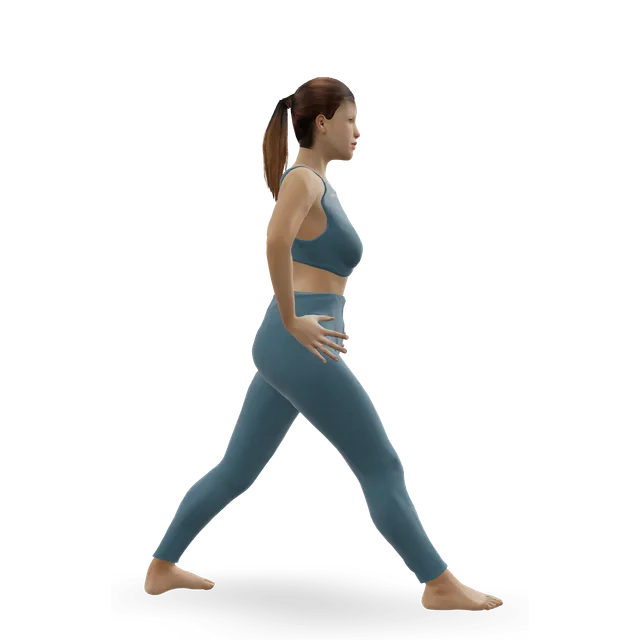
In 20 experienced practitioners holding standing poses as they usually would, the front ankle bent about 10 degrees in crescent lunge and the back ankle about 14 degrees in warrior I. Downward dog's ankle angles have been measured in older adults, but are shown only as charts.
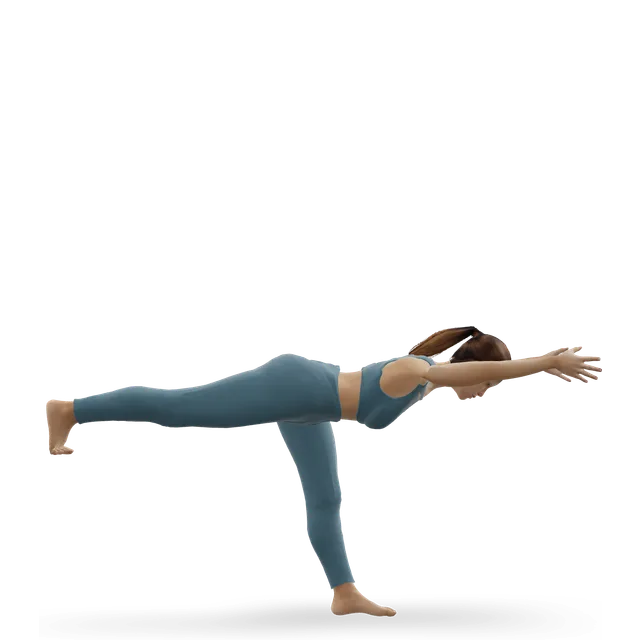
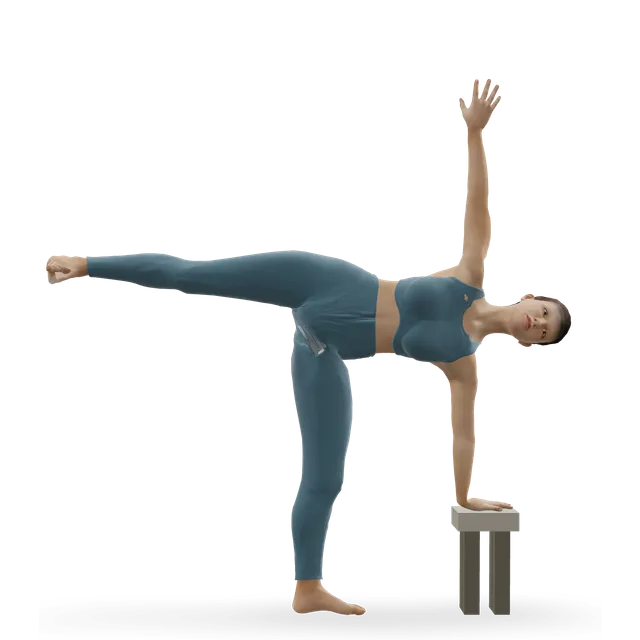
In 20 adults averaging 71, every standing pose used the calves, but the top four loaded them at only 32% to 56% of walking, and none loaded the muscles at the front of the shin. One-leg poses (tree, half moon, warrior III) worked the calf most; chair pose and downward dog least. Across a sun salutation, the calf was the least active of 7 muscles measured.
Healthy adults managed a median of 21 to 25 single-leg heel raises in two studies of 566 and 500 adults; fewer is a reason to train, not to worry. Older age groups have weaker calves, and weaker calves went with slower walking and less steadiness, in studies that compared age groups at one time.
Across 5 trials of 161 healthy people, calf stretching added about 2 to 3 degrees, and the authors were unsure whether that matters. Across 20 studies, held stretching added about 5 degrees and contract-relax stretching about 4, while bouncing stretches weren't clearly effective. In 23 studies the longest lasted 8 weeks.
Across 77 trials, the calf's gain was the smallest of the muscle groups that improved, which the authors put down to the ankle's bones and ligaments. The newest review, of 79 randomised trials, found a moderate gain for the calf and no clear difference between muscle groups. It's unsettled.
Programmes of 3 to 8 weeks mostly raise how much stretch you can tolerate, rather than changing the muscle or tendon. Longer programmes can lower muscle stiffness a little, and the muscle fibres lengthen only slightly, with very large or very hard doses. In a calf trial, the gains in range followed tolerance, not stiffness.
Across 13 studies, range was still above where people started 2 to 6 weeks after they stopped, but had slipped from its peak, mainly in people who weren't otherwise active; the certainty for keeping gains is low. In one calf study of very long stretching, the gain was gone 5 weeks after stopping.
Across 189 studies, there was no added benefit beyond about 4 minutes a session or 10 minutes a week. An older review suggests stretching on at least 5 days a week. An expert panel advises 2 to 3 sets a day of 30 to 120 seconds per muscle for lasting range.
Pooled trials found no significant difference between gentle and strong stretching. In one trial of 40 young men, a calf stretch rated 6 to 7 out of 10 for discomfort gained more over 4 weeks than one rated 0 to 1 (about 8 degrees against 3). Reviews call stretch intensity under-researched, and no study supports stretching into real pain.
We found no randomised trial of yoga that measured ankle range or calf flexibility. In 10 young adults with no comparison group, 8 weeks of yoga raised ankle flexibility by 13%. Soccer players who did yoga for 10 weeks bent the ankle 6.6 degrees further in a lunge than before, in a study that wasn't randomised. An 8-week Iyengar study in older adults measured the hip and stride, not the ankle.
In 36 untrained men, 6 weeks of full-range calf raises (3 sets of 10, rising in 1 second and lowering over 3, three times a week) improved ankle bend about as much as calf stretching, and only the raises built strength and calf muscle. Across 11 trials, strength training and stretching improved range about equally, though only one measured the ankle.
Standing poses load the calves less than walking. After 32 weeks of twice-weekly yoga, 20 older adults went from 21 to 28 single-leg heel raises, with no comparison group. Power yoga raised machine calf strength in a pilot trial of 26 people with Parkinson's.
Two or 3 sets of 10 to 20 straight-knee raises, single-leg from a step once you can, plus a few bent-knee sets, twice a week. The UK guidelines ask for strength work for the major muscle groups on at least 2 days a week.
Stretching didn't reduce sports injuries across 25 trials, while strength training cut them to under a third. Stretching six leg muscle groups before exercise made no clear difference in 1,538 army recruits, and calf stretching made no clear difference in another 1,093, though stiffer ankles predicted injury. An expert panel doesn't recommend stretching to prevent injury in general.
Stretching before or after exercise doesn't meaningfully reduce muscle soreness in the following days.
Source 40
Limited ankle bend is common in people with plantar fasciitis: 83% of 254 patients in one series, and much more likely in a study comparing 50 patients with 100 people without heel pain. But those studies measured the ankle after the pain began, and a 2021 review of active people found no difference in ankle bend. The US physiotherapy guideline recommends calf and plantar fascia stretches to treat heel pain, with the plantar fascia stretch better in the short term. Our yoga for plantar fasciitis guide covers it.
For Achilles tendinopathy, the US physiotherapy guideline puts tendon loading, "with loads as high as tolerated", first, advises against complete rest, and lists calf stretching only as an option for people with a stiff ankle. Our yoga for Achilles tendinopathy guide and class build the loading in.
Source 45
Daily calf and hamstring stretching for 6 weeks may ease the severity of night cramps in people over 55, from one trial of 80, while calf stretching alone made little or no difference in people aged 60 or over (low certainty). The NHS says regular calf stretches "may help to reduce cramps but may not completely stop them from happening".
Ankle circles: "5 slow circles each way with each ankle, morning and evening (our editorial starting point)." (from the move page's dose). Knee-to-wall rock: "10 slow rocks per side, daily" (the move page's dose).
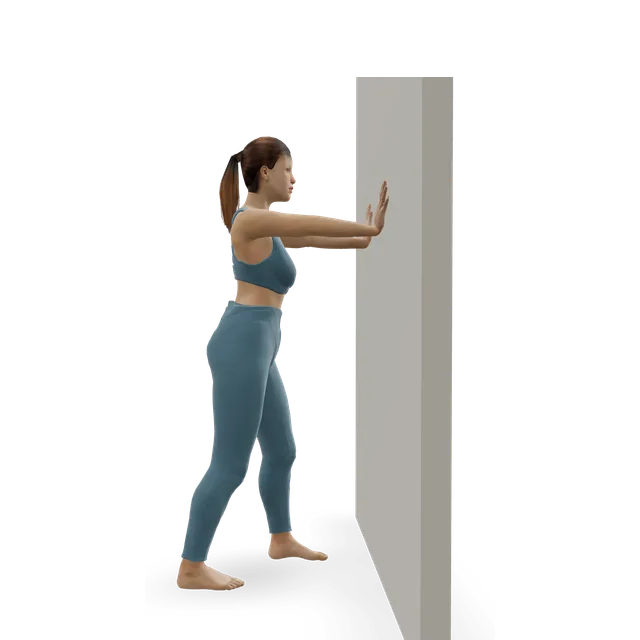
Wall calf stretch: 2 holds of 30 to 60 seconds each side, to a clear pull rather than pain, on most days (our ankle mobility guide's dose). Downward dog: 2 holds of 5 breaths, knees bent first, then one heel at a time (our yoga for Achilles tendinopathy class). Pyramid: 30 seconds each side, hands on blocks or a chair (our yoga for legs class).
Soleus wall stretch: 2 holds of 30 to 60 seconds each side (our ankle mobility guide's dose). Standing soleus and Achilles stretch: "Hold 20 to 30 seconds, 2 to 4 times each side (our editorial starting point). The ACSM suggests about 60 seconds of stretching in all per exercise, on at least 2 days a week." (the move page's dose).
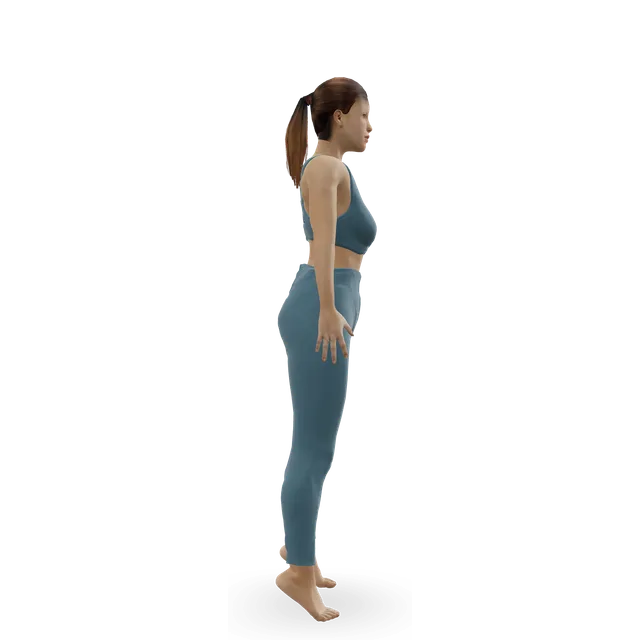
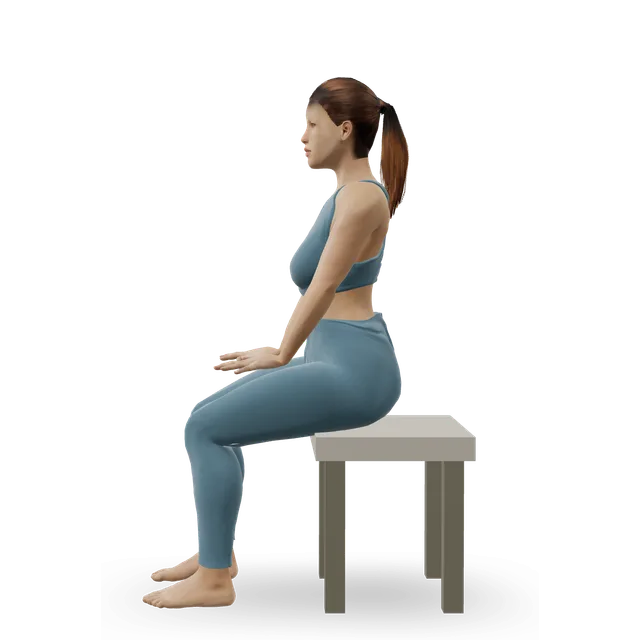
Slow calf raises 2 or 3 sets of 10 to 20 (our calf strengthening guide), rising in 1 second and lowering over 3 (the timing in the calf raise trial). Seated bent-knee raises 3 sets of 15 (our yoga for Achilles tendinopathy class). Single-leg raises from a step 3 sets of 12 to 20 each leg, a hand on a rail (our calf strengthening guide). Isometric hold: "5 holds of 30 to 45 seconds, once or twice a day. An editorial starting point: the 2024 Achilles guideline lists isometric loading among the effective types of tendon loading, but this dose is not from a trial." (the move page's dose).
Tree pose 2 holds of 20 to 30 seconds each side and single-leg stand 2 holds of 30 seconds each leg, a hand near the wall (our yoga for Achilles tendinopathy class); warrior III 3 breaths each side twice, hands on a chair (our yoga for balance class); half moon 3 to 5 breaths each side, bottom hand on a block (our yoga for legs class).
Bouncing stretches weren't clearly effective for ankle range. Hold the stretch still.
Source 3
The wall calf stretch's page says: "Go gently with a recent Achilles tear or sharp morning heel pain, and build depth over weeks rather than forcing it." With a sore Achilles, the step raise's page says to get it "assessed before loading it below step level".
The soleus stretch's page says "a sharp pinch at the front of the ankle means you are jamming the joint, so ease the depth."
The slow calf raise's page says: "With pain in the ball of the foot or big toe arthritis, stop short of full tiptoe."
Hero pose and kneeling on your feet aren't needed for the calves; hero pose's page says to skip it, or clear it with a clinician first, after meniscus or ligament surgery or if the kneecap hurts. Hops and springs come after strength, for running and sport, as our calf strengthening guide orders them (our suggestion).
Our ankle mobility guide's dose; the two positions follow the lab study of which calf muscle takes the stretch with the knee straight or bent.
See the movement on the 3D figure: Wall calf stretch (gastrocnemius)
Our yoga for the calves class does both stretches, calf raises and one-leg balance in 25 minutes. With a sore Achilles, use the Achilles class instead; for ankle range, the ankle mobility routine; for strength, the calf workout.
A 25-minute yoga class for tight calves: ankle circles, calf raises, one-leg balance, then stretches for both calf muscles, knee straight and bent.
25 minBeginner15 movesWall, bench or boxA 12-minute routine to improve how far your ankle bends: test it against a wall, rock it, stretch both calf muscles, strengthen through the full range, then use it.
12 minBeginner8 movesWall, stepA 25-minute calf workout with a step and a dumbbell: single-leg raises for the big calf muscle, then seated raises for the soleus, with gym swaps for each move.
25 minIntermediate7 movesWall, stepA 25-minute yoga class for Achilles tendinopathy: calf holds and slow raises built in, short standing poses, calf stretches only if stiff, and no jumping.
25 minBeginner15 movesWall, bench or boxA 25-minute yoga routine for your legs: standing holds for the thighs, one-leg poses for the glutes, bridges, calf and shin raises, then hip and hamstring stretches.
25 minBeginner17 movesStep, wallA 20-minute yoga cool-down for runners: calves, hip flexors, hamstrings and glutes, one balance pose and a rest, after an easy run or on a rest day.
20 minBeginner11 movesWallSeven stretches for after a run: calves, soleus, quads, hip flexors, hamstrings and glutes.
10 minBeginner7 movesWallA gentle 30-minute evening yoga class for restless legs: breathing, easy standing poses, calf, thigh and hip stretches, and a 10-minute rest.
30 minBeginner15 movesWall, firm cushionA 15-minute barefoot routine for stronger toes, arches, calves and ankles, finishing with balance. You need only a towel, a wall and a resistance band.
15 minBeginner11 movesWall, other / check instructionsKeep downward dog and pyramid brief or use a wall version, as their pages say.
Source 50
Keep a hand on a counter or wall for one-leg poses, as the tree pose and single-leg stand pages say.
Our yoga in pregnancy guide covers what changes as a pregnancy goes on.
See your GP first if you get chest pain, breathlessness or dizziness when you are active, if you have a heart condition and want to exercise harder, or if you have had a fall.
Source 51
These are the site's lines from our yoga for Achilles tendinopathy, restless legs and other yoga guides, word for word. This is general information, not a diagnosis. A&E means accident and emergency; in the US, call 911 for 999, and use your doctor's urgent line or urgent care for NHS 111.
Same day: a sudden snap or pop at the back of the heel or calf, or a feeling of being kicked there, then walking flat-footed and being unable to push off, stand on tiptoe or climb stairs. It could be an Achilles tendon rupture or a broken heel bone. Go to A&E or a minor injuries unit, or contact NHS 111.
Same day (urgent GP appointment or NHS 111): throbbing pain in one leg (rarely both), usually the calf or thigh; swelling in one leg (rarely both); red, blue or darkened skin around the painful area, which may be harder to see on brown or black skin; or swollen veins. This can be a deep vein thrombosis (DVT). It is more likely after surgery, a hospital stay, 3 or more days in bed, a journey of over 4 hours, pregnancy or a recent birth, cancer, a previous clot, or contraception or hormone replacement therapy (HRT) that contains oestrogen.
Ask for an urgent GP appointment or get help from NHS 111: sudden swelling, redness, heat and pain in the calf, which could be a blood clot. Go to A&E: severe pain after an injury, which can mean a broken bone; or you cannot put any weight on the leg.
Source 54
Call 999 or go to A&E if breathing suddenly becomes difficult, if pain in your chest or upper back comes on suddenly with breathlessness or a very fast heartbeat, or if someone passes out. Do not drive yourself. It can be a blood clot that has reached the lungs.
Source 55
Same day: the back of the heel is red, hot, swollen and very painful, especially with a high temperature or feeling hot, cold or shivery. It could be an infected bursa or a skin infection.
Source 52
Contact your doctor straight away if your Achilles tendon becomes painful or swollen while you're taking a fluoroquinolone antibiotic (such as ciprofloxacin, levofloxacin, moxifloxacin or ofloxacin), or in the months after. The UK medicines regulator (MHRA) advises stopping the antibiotic at the first sign and resting the painful area until you've been seen; the risk is higher over 60, with kidney problems, after an organ transplant and with steroid medicines.
Source 56
Leg cramps disturb your sleep, last longer than 10 minutes, or come with numbness or swelling.
Source 57
Call 999 if:
Call 999 or go to A&E (accident and emergency) straight away for severe difficulty breathing (gasping, choking or not able to get words out), a chest that feels tight or heavy, pain that spreads to your arms, back, neck and jaw, lips or skin turning very pale, blue or grey, or sudden confusion. If you're more short of breath than usual, or your heart is racing, fluttering or skipping beats, contact NHS 111.
Source 60
If you get chest pain or pressure, feel faint or dizzy, are unusually breathless, or your heart races or beats irregularly during exercise, as our plans advise.
A joint pain that is sharp, gets worse during a session, lingers into the next day or changes how you move is a reason to use an easier version, and to see a GP or physiotherapist if it keeps happening (the rule in our plans). Muscle soreness for a day or two after something new is normal. In a hot class, stop if you feel dizzy, sick or unwell; our hot yoga guide lists the signs of heat illness.
You can say no to any hands-on adjustment, and a teacher registered with Yoga Alliance must get your explicit consent each time.
With glaucoma, or high blood pressure that isn't under control, skip headstands, shoulder stands and long head-down holds. With osteoporosis, swap deep forward folds for a flat-back hinge from the hips, and twist smoothly. In pregnancy, our yoga in pregnancy guide covers the changes. NCCIH advises beginners to avoid headstands, shoulder stands, the lotus position and forceful breathing.
The NHS advises getting advice from a healthcare professional first if you have a health problem, an injury or symptoms, or have recently had a heart attack or an operation.
If you have a heart, lung or joint condition, are pregnant or have recently been unwell, start gently and read our guide for your condition. Muscle soreness for a day or two after a new exercise is common and fades as you repeat it.
If you have a heart condition, follow your cardiac team's advice on how hard to work, and stop for the warning signs above. People with long-term conditions may wish to ask their specialist before starting. With uncontrolled high blood pressure, avoid straining against a held breath; the high blood pressure guide has more.
Pooled trials found no clear advantage for harder stretching, and no study supports stretching into pain. Stretch to a clear pull you can breathe through.
Limited ankle bend is common in people with heel pain, but those studies measured it after the pain began, and a review of active people found no difference. Calf and plantar fascia stretches still help treat heel pain.
Most of the gain from weeks of stretching is tolerance; changes in the muscle are small and need very large doses, and the gains fade when you stop.
Stretching didn't reduce injuries across 25 trials, while strength training did.
Standing poses load the calves less than walking; calf raises build the strength that stretching doesn't.
Ankle range is limited by bone and ligament as well as muscle, and practitioners' ankles bend only about 10 to 14 degrees in common standing poses. Bent knees and lifted heels are fine (our reading).
Stretching may ease cramps a little in people over 55, but calf stretching alone made little difference in older adults, and the NHS says stretches may not stop cramps completely.
Yoga's calf poses are calf stretches, and regular calf stretching adds a few degrees of ankle bend over weeks. No trial has tested yoga itself for tight calves.
Downward dog and pyramid pose stretch the big calf muscle with the knee straight, and a bent-knee wall stretch reaches the soleus underneath. Do both.
About 30 to 60 seconds, 2 or 3 times, on most days, to a clear pull rather than pain, as our ankle mobility guide suggests. Longer isn't much better: gains level off at about 10 minutes of stretching a week.
Trials found a few degrees over 3 to 8 weeks. Keep going: range slips if you stop, mainly if you're otherwise inactive.
No. Harder stretching isn't clearly better overall, and no study supports stretching into pain; a strong but comfortable stretch is enough.
Only lightly: standing poses load the calves less than walking. Calf raises build strength and improved ankle bend about as much as stretching in a 6-week trial, so add 2 or 3 sets of 10 to 20 twice a week.
Ankle range is limited by bone and ligament as well as muscle. Bend your knees and let one heel at a time sink; the stretch still works.
Tight calves are common in people with heel pain, but that hasn't been shown to cause it. Calf and plantar fascia stretches are recommended to treat it, and our yoga for plantar fasciitis guide has more.
For a sore Achilles, loading exercise comes first, with stretching only if the ankle is stiff; our yoga for Achilles tendinopathy class builds calf loading in. A sudden snap at the back of the heel needs help the same day.
It may ease night cramps a little in people over 55, though calf stretching alone made little difference in older adults. See a GP if cramps disturb your sleep, last longer than 10 minutes, or come with numbness or swelling.
One swollen, throbbing calf can be a blood clot, and a snap or kick at the back of the heel can be an Achilles rupture: both need help the same day. Don't stretch a calf that's hot, swollen or newly injured.
Exercise education, not a personal prescription, and clinical review of these guides is pending. If you are pregnant, have a health condition such as glaucoma, high blood pressure or osteoporosis, or have had recent surgery, check with a doctor, midwife or physiotherapist before starting, and stop for sharp or increasing pain. Health disclaimer.