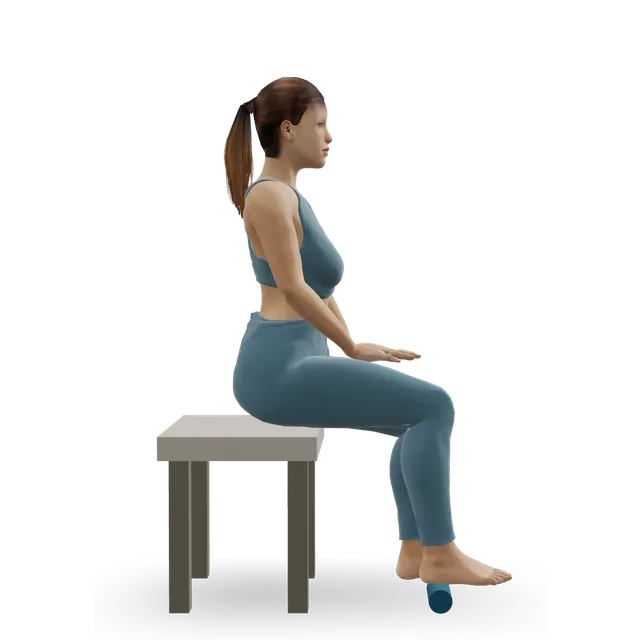
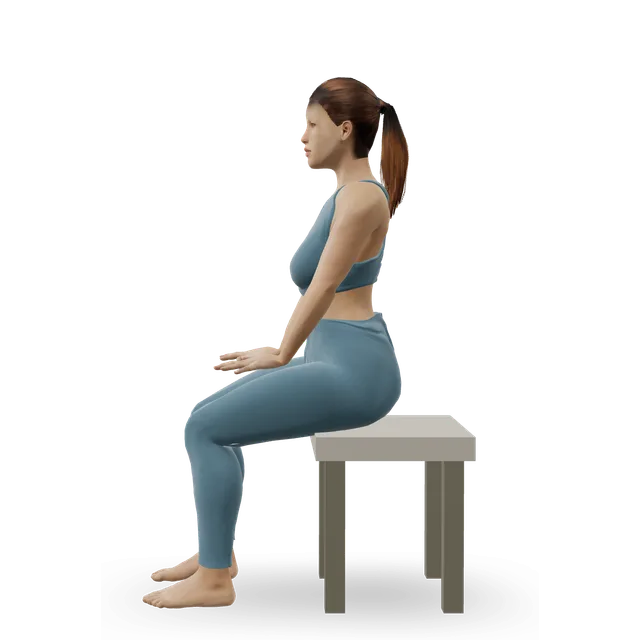
Under the heel: about as common in women as in men, but diagnosed more in womenMixed evidence
Pain under the heel and towards the arch, worst on the first steps after sleep or sitting and easing as you get going, is usually plantar heel pain (plantar fasciitis). The NHS says it is more likely between 40 and 60, with exercise on hard surfaces, a tight calf, a lot more standing, walking or running than usual, poorly cushioned shoes or being overweight.
Whether women get it more is unclear. In the one UK community study, of 5,109 adults over 50, 10.0% of women and 9.2% of men had it in the past month, and in women it was about as common at 75 as at 50. But Dutch general practice records found it diagnosed more often in women, with new cases peaking at 11.23 per 1,000 a year in women at 50 against 5.54 in men at 55, and in the US military women's rate was about twice men's. Women make slightly more of the foot and ankle visits to UK GPs (55%), so part of the gap may be who sees a doctor, and a US physiotherapy guideline describes it as occurring "without a sex bias".
Sources 1, 2, 3, 4, 5, 6
Long hours on your feet, a stiff calf and body weightEmerging evidence
In a study of 50 people with plantar fasciitis, spending most of the working day on your feet went with 3.6 times the odds, and an ankle that barely bent upwards with 23 times the odds. People with heel pain stood about 3.4 hours a day longer than matched people without it and wore shoes with harder heels, while heel height and shoe style didn't differ. In a car engine plant, more time standing on hard surfaces went with heel pain, and rotating shoes through the week went with less. A review calls the work evidence low quality, and no study we found split standing jobs by sex.
A higher body weight goes with heel pain, most clearly in people who aren't athletes: in UK adults over 50, a body mass index (BMI) of 35 or more went with about 4.5 times the odds, and routine and manual work with about 2.5 times. That is a link, not a verdict: weight didn't clearly predict who recovered in a Danish cohort, and no trial has tested weight loss as a treatment.
Sources 7, 8, 9, 10, 2, 11, 12, 13
High heels and flat shoes: not shown to cause pain under the heelMixed evidence
No study shows that high heels cause pain under the heel. UK women over 50 who had worn heels on most days for at least 10 years between 20 and 49 had no more heel pain than other women, and in the US Framingham study, women's past high heels, sandals and slippers weren't linked with pain in the back of the foot (the hindfoot), while past trainers went with less. People with and without heel pain wore the same heel heights. These are snapshot studies relying on what people remember, and women whose heels hurt may have stopped wearing heels, so they can't show whether heels help or harm. A review of 18 studies of high heels found links with bunions, foot pain in general and injuries, but none measured heel pain, and an online survey of Saudi women linked frequent heels with pain after standing.
What heels do is press on a bump at the back of the heel (Haglund's deformity, sometimes called a "pump bump" because tight-backed shoes such as high heels rub it) and, in a small laboratory study of 11 women who wore them every day, shorten the calf muscle fibres and stiffen the Achilles tendon. Thin, flat shoes aren't the answer either: NHS hospital leaflets name very hard, flat soles and soft, flat, flexible soles as risks, and suggest cushioned heels, one with about a 2 cm heel lift.
Sources 2, 14, 8, 15, 16, 17, 18, 19, 20
The back of the heel: the Achilles and a bump that shoes rubEmerging evidence
Pain where the Achilles tendon joins the heel bone (insertional Achilles tendinopathy) sits within about 2 cm of the bone and is often stiff after rest. In one large US records study, Achilles tendinopathy was commoner in men when young and in women in midlife, crossing over at 45 to 49; Dutch general practice figures weren't split by sex, so this is one database's finding.
A bony bump at the back of the heel with an irritated fluid sac (bursa) is Haglund's deformity. Cleveland Clinic lists women among the groups more likely to get it, a review says middle-aged women are affected more than men, and a family-medicine review says this bursitis is commoner in women aged 40 to 60, though none gives figures. Achilles ruptures are about 3 times as common in men, at an average age of 44 in women and 45 in men.
Sources 21, 22, 23, 24, 18, 25, 26, 27
The centre of the pad: the fat padEmerging evidence
A dull, deep ache in the centre of the heel "that feels like a bruise", worse walking barefoot on hard floors and not made worse by bending the toes up, is heel fat pad syndrome. An NHS Glasgow pathway describes it as more common in older, heavier women, but the only population study, of 784 adults 65 and over, found it "did not differ between sexes". Repeated steroid injections are one cause of a thinning fat pad.
Sources 28, 29
One spot on the bone: a heel stress fractureStrong evidence
The heel bone is the second commonest place in the foot for a stress fracture, and it is easily mistaken for plantar fasciitis. It follows more walking, running or marching, or a change to a harder surface. The pain is in one spot you can point to with a fingertip, gets worse with activity and later aches at rest, even at night, and squeezing the sides of the heel hurts.
Stress fractures are commoner in women who train: about 9.2% against 3% in military recruits, and 9.7% against 6.5% in athletes. In 259 active girls and young women, the risk rose to 46% in those with several of these together: 12 hours or more of exercise a week, a sport that rewards leanness, a BMI under 21, missed periods, restricted eating and low bone density. The International Olympic Committee (IOC) calls eating too little for your training relative energy deficiency in sport, and it affects men too.
Sources 30, 31, 32, 26, 33, 34, 35
Burning, tingling or numbness: a trapped nerveEmerging evidence
Burning, tingling, shooting pain or numbness under the heel can come from a small branch of the tibial nerve trapped under the heel, or from the nerve behind the inner ankle (tarsal tunnel syndrome), and it is often mistaken for plantar fasciitis. On 200 magnetic resonance imaging (MRI) scans of the foot, signs of long-standing pressure on that small branch went with age, a heel spur and plantar fasciitis. How often a nerve causes heel pain is unknown.
Sources 26, 36, 37
Pregnancy and after the birthEmerging evidence
In an Australian cohort of 419 pregnant women, 44% had foot pain by 24 weeks and 56% by 36 weeks, mostly mild to moderate and now and then. The feet grow a little longer and wider during pregnancy, and in 49 women the arch was still lower and the foot longer about 19 weeks after the birth, mostly after a first pregnancy, which the authors call "a permanent loss of arch height". No study gives how often heel pain itself occurs. The NHS asks you to get advice before trying its heel pain exercise video if you're pregnant or have recently given birth, and our foot pain in pregnancy guide covers this time.
Sources 38, 39, 40, 41
The menopause: no link foundEmerging evidence
Heel pain is common at the age of the menopause, but no study we found links the menopause itself with heel pain or a thinner heel pad. In a 2026 focus-group study of 17 women with heel pain around the menopause, 76% hadn't linked the two, and the authors call any causal link "uncertain". In 63,836 matched pairs of US women aged 45 and over, those on hormone replacement therapy (HRT) had the same rate of Achilles tendinopathy (14.6% against 14.5%). Bone does matter after the menopause, for stress fractures and the bone check in the warning signs.
Sources 42, 43
Heel spurs are a sign of load, not the causeStrong evidence
"Heel spurs do not cause plantar fasciitis pain", the American Academy of Orthopaedic Surgeons (AAOS) says, and most people with one have no heel pain. In 216 people aged 62 to 94, 55% had a spur under the heel, women and men alike. Spurs are commoner with heel pain and a higher weight, but in a Danish cohort a spur made no difference to the long-term outcome.
Sources 44, 45, 46, 12
Causes that need other care: rare, but checkStrong evidence
Heel pain where tendons attach, often in both heels, with back pain, psoriasis, eye inflammation (uveitis) or inflammatory bowel disease can be an inflammatory arthritis (spondyloarthritis), and the National Institute for Health and Care Excellence (NICE) asks for a rheumatologist's assessment. A red, hot, swollen heel with a fever can be an infection of the skin, a fluid sac or the bone. With diabetes, NICE asks for any new ulcer, infection or hot, swollen foot to reach a specialist foot service within 1 working day, and Diabetes UK says see your foot team within 24 hours.
Bone tumours of the foot and ankle are rare, 1% to 2% of bone tumours, though the heel bone is their commonest site there. Bone pain that is constant or worse at night, or a lump, swelling or weight loss you can't explain, needs a GP.
Sources 47, 48, 49, 50, 51, 52, 53
When a scan or test helpsStrong evidence
Plantar heel pain is diagnosed from your story and an examination, without a scan; an ultrasound scan showing a plantar fascia thicker than 4 mm can support it when the picture is unclear. A spur on an X-ray changes nothing. A suspected heel stress fracture is different: early X-rays are often normal, and only 15% of heel-bone stress injuries found on MRI in military recruits showed on X-ray, so MRI is the preferred test. Heel pain with other swollen joints or back pain may need blood tests and a rheumatologist.
Sources 6, 44, 46, 12, 30, 54, 26, 47
How it usually goesMixed evidence
New foot pain "should begin to settle within 6 weeks" in many cases, NHS inform says, and the AAOS says more than 90% of people with plantar fasciitis improve within 10 months of simple treatment. Hospital patients are the slow end: in 174 Danish hospital patients (91 women), half still had symptoms 5 years after they began, though most remaining symptoms were mild, and pain in both heels did worse.
On sex the evidence is mixed. In that Danish hospital cohort, women became symptom-free more slowly than men (for every 100 men who recovered each year, 49 women did), but this wasn't seen in a Norwegian cohort of 200 referred patients, most of them women, where pain in both heels mattered most. "It is impossible to predict how long it will last for each person", an NHS hospital leaflet says. A heel stress fracture usually takes 6 to 8 weeks to heal. No one can promise a timescale.
Sources 55, 44, 12, 56, 20, 32