Yoga guide

Yoga for diastasis recti (a tummy gap): what the gap is, poses to change, the deep core, after a baby, the evidence, and a class

A tummy gap (diastasis recti, or abdominal separation) is very common after having a baby: in 300 first-time mothers, 60% had one at 6 weeks and a third still did at a year. Yoga is a gentle way to rebuild strength through your middle and your pelvic floor, and UK pelvic health physiotherapists suggest starting with gentle Pilates or yoga. But no study shows that yoga closes the gap: the only trial was retracted, and across trials of tummy exercise the gap narrowed by only a few millimetres more than without it.

What yoga can do is help you get stronger and more comfortable, as other exercise does. This guide explains what the gap is and how to check it, which poses to start with and which to change for now (sit-ups, planks, boat pose and jumping), why a gentle draw-in is better than sucking in hard, what to do if your tummy domes, the signs that need a GP, and a free 25-minute class. It's for the months and years after a birth, and for men with a gap too.

The short version

Very common, and it usually narrows by itself

In 300 first-time mothers, a gap of 2 finger widths or more was found in 33% at 21 weeks of pregnancy, 60% at 6 weeks after the birth, 45% at 6 months and 33% at a year. Most narrowing happens on its own over the first year.

Source 1

Yoga can be your exercise, gently

UK pelvic health physiotherapists suggest starting some gentle Pilates or yoga exercises, and avoiding jumping or running until you're stronger. Breathing, your pelvic floor and gentle tummy work come first.

Source 2

No study shows yoga closes the gap

The only randomised trial of yoga for the gap, in 116 women, was retracted in 2023 after the publisher found the peer review had been manipulated, and our searches found no other yoga study of the gap.

Sources 3, 4

Exercise narrows it a little, and builds strength

Across reviews of trials after birth, tummy exercise narrowed the gap by about 4 to 8 mm more than doing nothing special, and the figure varies a lot between reviews. In the 2026 review it made no difference to disability. What exercise does reliably is make the tummy muscles stronger.

Sources 5, 6, 7, 8

Breathe normally, and draw in gently

The NHS says to keep breathing normally during the exercises. Sucking in as hard as you can briefly widens the gap below the belly button, so use a gentle draw-in as you breathe out. If the middle of your tummy domes, make the pose easier.

Sources 9, 10, 11

Sit-ups, planks and jumps wait, not for ever

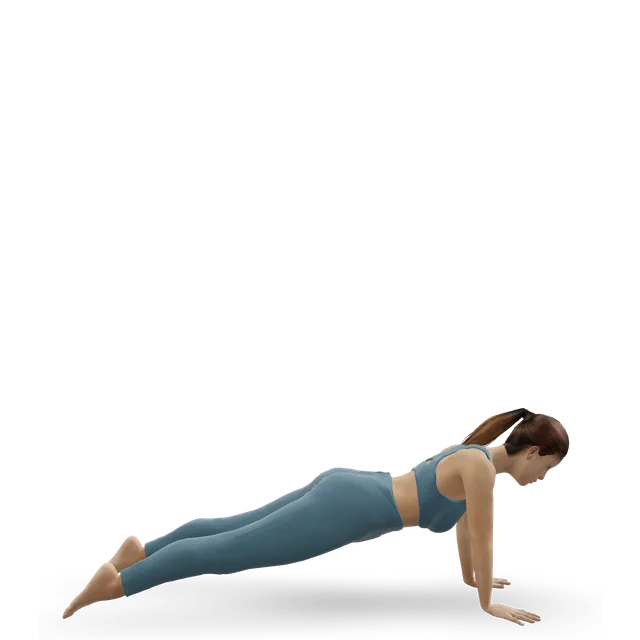
The NHS advises avoiding sit-ups, planks and high-impact exercise to start with. Curl-ups didn't widen gaps in a 12-week trial, so these come back gradually; nothing needs to be banned for ever.

Sources 9, 8

What a tummy gap is

The two halves of the six-pack move apart

The six-pack muscle (rectus abdominis) runs down the front of your tummy in two halves, joined by a band of tough tissue called the linea alba. As your womb grows, the halves move apart and the band thins and widens. The NHS: "It's common for the 2 muscles that run down the middle of your stomach to separate during pregnancy", usually by about 2 finger widths. It's a stretch, not a tear or a hernia. UK pelvic health physiotherapists call it DRAM (diastasis of the rectus abdominis muscle).

Sources 9, 2

How wide is normal

European surgeons call a gap of 2 cm or less "physiologically normal" and a diastasis when it's wider. Normal widths vary along the middle and between people: six months after a first baby, the middle range was 9 to 21 mm just below the belly button and 17 to 28 mm just above it. In 329 adults scanned for other reasons, 57% had a gap wider than 2 cm, and a 2026 study of 1,840 Finnish women found wide normal variation, so the authors of both warn against treating a fixed cut-off as a problem.

Sources 12, 13, 14, 15

How common it is, and how it changes

On ultrasound, every one of 84 first-time mothers had a gap at 35 weeks of pregnancy, and 39% still did at 6 months. In 504 Swedish women, the gap shrank between 3 and 12 months after the birth whether or not they exercised. The NHS says the gap usually goes back to normal by the time your baby is 8 weeks old; the studies show that a third or more of women still have some gap months later, which is common rather than a sign that something has gone wrong.

Sources 1, 16, 17, 18, 9

Men and older adults get one too

In 1,575 men at one hospital in China, 30% had a gap wider than 2 cm and 10% wider than 3 cm; it wasn't linked with back pain, tummy strength or quality of life. In adults of all ages, older age, a higher weight and having had children went with a gap.

Sources 19, 14

How it's checked

Finger widths are a rough guide: two people checking the same gap agreed only about 63% of the time. A physiotherapist may use calipers or ultrasound, which are more reliable, though European surgeons say finger widths are adequate for a diagnosis.

Sources 20, 12

What it does and doesn't cause

In a review of 12 studies (2,242 people), a gap wasn't linked with low back or pelvic pain or with leaking, and had a small link with prolapse. In small studies it went with more tummy pain and a worse feeling about how your body looks, and European surgeons say body image and feeling unsteady through the middle are the commonest complaints. UK physiotherapists say these problems are common but not normal, and shouldn't be put up with in silence.

Sources 21, 22, 23, 12, 2

Why the width isn't the whole story

The review behind Canada's 2025 postnatal guideline says a wide gap may not be a problem if the band in the middle can tighten when you need it. In 26 women with a gap, tightening the deep tummy muscle before a curl-up meant less narrowing but less distortion of the midline. That's why this page aims at a strong, controlled middle rather than a smaller finger count.

Sources 7, 24, 25

How to check your gap

From the NHS's self-check on its post-pregnancy body page. Finger checks are rough, so a physiotherapist may measure the gap with calipers or ultrasound.

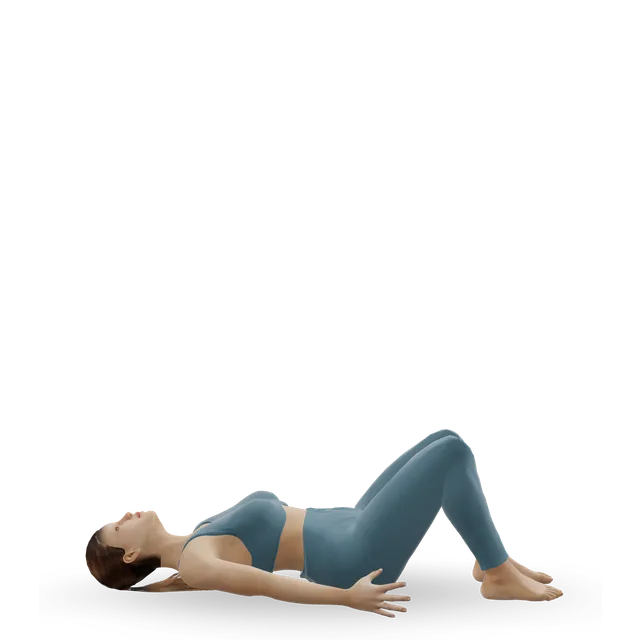
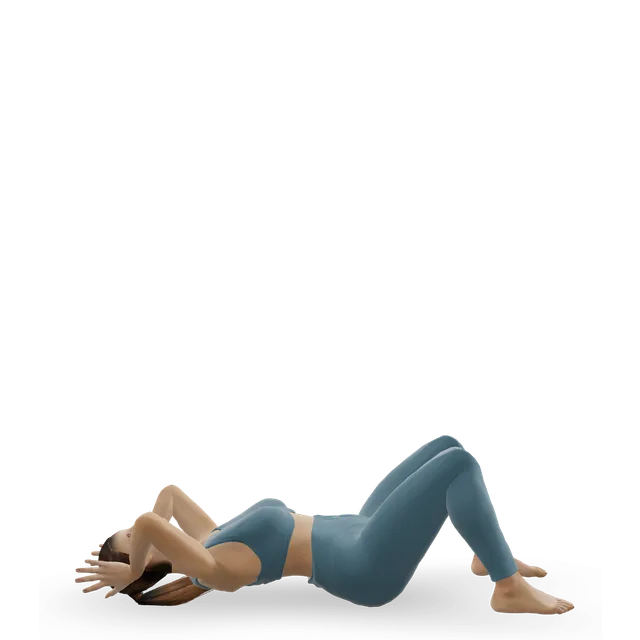
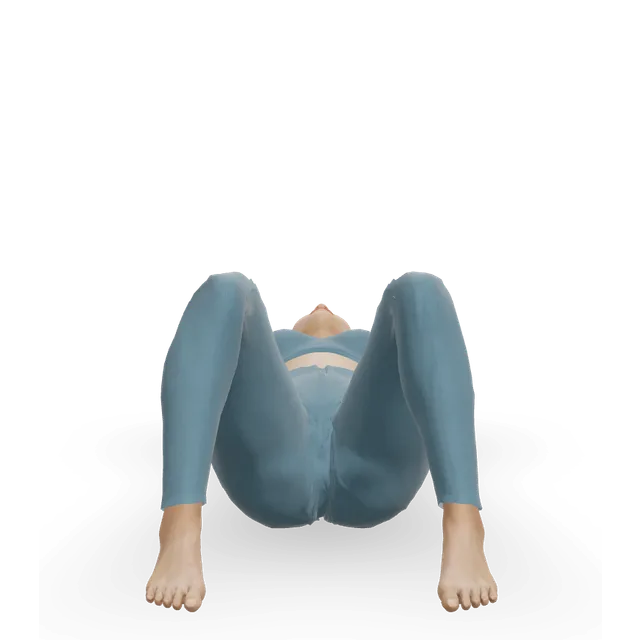
  1. Lie on your back with your legs bent and your feet flat on the floor.
  2. Raise your shoulders off the floor slightly and look down at your tummy.
  3. With the tips of your fingers, feel between the edges of the muscles, above and below your belly button.
  4. Count how many fingers fit into the gap between your muscles.
  5. Do this regularly to check that the gap is gradually getting smaller. If it's still obvious 8 weeks after the birth, contact your GP.

See the movement on the 3D figure: Chest lift (Pilates curl-up)

What the evidence says

Most trials are small, many are at risk of bias, and they measure the gap in different ways. No valid yoga study of the gap exists.

No valid yoga study of the gapStrong evidence

The only randomised trial, of yoga in 116 women after birth, was retracted in December 2023: the publisher found "evidence of systematic manipulation of the publication and peer-review process", so its results can't be relied on. A 2024 review still counts it, so pages relying on that review overstate yoga. Our searches of PubMed, Europe PMC and the US trial register on 2 November 2026 found no other yoga trial, cohort or lab study of the gap.

Sources 3, 4, 26

Exercise narrows the gap a little, by how much depends on the reviewStrong evidence

Against usual care or no exercise, tummy exercise narrowed the gap by 4.3 mm in a 2023 review of 6 trials (moderate certainty), 5.2 mm in a 2025 review of 5 trials (low certainty), 4.8 mm in a network analysis of 21 trials, 6.8 mm in another 2025 review (very low certainty) and 8 mm in a 2026 review of 9 trials. The 2023 reviewers judged the change not clinically significant, and the 2026 review found no difference in disability. Follow-up was weeks to months.

Sources 5, 7, 27, 6, 28

Bigger numbers from ranking studiesMixed evidence

Network analyses that rank programmes give much larger estimates (around 2 cm for combined deep and surface tummy training) or rankings only, from small trials, and their authors ask for caution. One ranked Pilates highly at the belly button; none included yoga.

Sources 29, 30

Training only the deepest muscle: no clear effectEmerging evidence

An earlier review found very low-quality evidence that training the deepest tummy muscle (transversus abdominis) narrowed the gap by 6 mm in 2 trials. The 2026 update, pooling 3 studies, found no difference and "no evidence to support the effectiveness of exercise-based interventions as a standalone treatment" for the width of the gap.

Sources 31, 32

Most of the closing happens by itselfStrong evidence

In 175 first-time mothers, a weekly supervised class plus daily pelvic floor training for 4 months from 6 weeks after the birth didn't change how many had a gap at 6 or 12 months. In 504 women, gaps shrank between 3 and 12 months in exercisers and non-exercisers alike.

Sources 33, 17, 1

Curl-ups don't widen the gap, and build strengthEmerging evidence

In 70 women with a gap 6 to 12 months after the birth, 12 weeks of head lifts, curl-ups and twisted curl-ups 5 days a week left the gap unchanged (1 mm, somewhere between 1 mm narrower and 4 mm wider) and made the tummy muscles thicker and stronger, with no change in pain or pelvic floor problems. In pregnancy, tummy exercises didn't widen the gap more than general exercise in trials of 96 and 63 women.

Sources 8, 34, 35

What each movement does in the momentEmerging evidence

On ultrasound, a head lift or curl-up narrows the gap while you do it. Sucking in as hard as you can widens it slightly below the belly button, by about 2.5 to 4.5 mm after a birth, and a pelvic floor squeeze widened it there too. These are effects in the moment, not long-term changes.

Sources 10, 36, 37

The midline can distort during a curl-upMixed evidence

In 26 women with a gap, an automatic curl-up narrowed the gap but made the band in the middle distort more; tightening the deep tummy muscle gently first reduced that. Nobody knows yet whether this matters for how the gap heals.

Sources 24, 25

Hypopressive breathing and bindersMixed evidence

Hypopressive breathing exercises didn't narrow the gap more than ordinary tummy exercise in 28 women, or more than no exercise in 44 women, though the second trial found better tummy function, body image and fewer pelvic floor complaints. In a review of 13 trials, tummy exercise narrowed the gap below the belly button more than a binder did.

Sources 38, 39, 40

How yoga compares with other exerciseMixed evidence

No trial has compared yoga with Pilates, curl-ups or general exercise for a gap. Yoga's bridges, all-fours balances, side work and standing poses are the same kinds of movement as the physiotherapists' progressing exercises, so a staged yoga class is a reasonable way to build strength, not a better one (our reading).

Sources 30, 41

Breathing, the pelvic floor and the deep core

Breathe normally

The NHS: "It's important to keep breathing normally while you do these exercises. Make sure you do not pull in your stomach when you squeeze." Let your belly and lower ribs widen as you breathe in; there's no need to hold your tummy in through a whole class.

Source 9

A gentle draw-in, not a hard suck-in

The NHS stomach exercise draws in the lower tummy gently as you breathe out, "like a corset". A maximal draw-in briefly widens the gap below the belly button, and training that only does this didn't narrow the gap in the newest review, so keep it gentle and use it for control.

Sources 9, 10, 32

Squeeze your pelvic floor as you breathe out

Pelvic floor exercises are for everyone after a birth: squeeze and lift as if holding in wind and stopping your pee, then let go fully. Build towards 10 long squeezes of up to 10 seconds and 10 quick ones, at least 3 times a day, as the NHS suggests. In yoga, lift as you breathe out and move, and let go as you breathe in.

Sources 9, 41

Doming: a signal to ease off

Doming is a ridge or bulge down the middle of your tummy when you lift your head or legs or sit up. UK physiotherapists' Pilates booklet says your tummy "should not bulge upwards or dome" and, if it does, to concentrate on drawing your lower tummy in and wide. No study shows doming during exercise harms the gap, so treat it as a sign to make the pose easier, not as damage. If it keeps happening, see a pelvic health physiotherapist.

Sources 11, 2, 24

The gentle side-lying tummy draw-in

The NHS stomach exercise from its post-pregnancy body page. The move page gives the same dose: "Hold for up to 10 seconds, up to 10 times".

  1. Lie on your side with your knees slightly bent.
  2. Let your tummy relax and breathe in gently.
  3. As you breathe out, gently draw in the lower part of your tummy like a corset, narrowing your waistline.
  4. Squeeze your pelvic floor muscles at the same time.
  5. Hold for a count of 10, breathing normally, then gently let go.
  6. Repeat up to 10 times.

See the movement on the 3D figure: Side-lying tummy draw-in

When to start after a baby, and after a caesarean

The first days and weeks

After a straightforward birth, the NHS says you can start gentle exercise, such as walking, gentle stretches and pelvic floor exercises, as soon as you feel up to it. UK pelvic health physiotherapists say to build up your exercise tolerance gradually over the first 6 to 8 weeks, and their Pilates booklet says gentle Pilates is safe from 4 weeks if you have no concerns about bleeding, wound healing or your pelvic floor. If you've been diagnosed with a gap, they suggest seeing a specialist pelvic health physiotherapist first.

Sources 42, 41, 11

UK guidance names yoga

The UK's guidance on activity after childbirth lists yoga among moderate activities, says "There is no evidence of harm for post-partum women", and advises: "Depending on your delivery listen to your body and start gently." More intense activity builds up over at least 3 months after the 6 to 8 week check.

Source 43

After a caesarean

The NHS says to start exercising again when you feel able and it isn't uncomfortable: "This may not be for 6 weeks or so." Lift nothing heavier than your baby for at least 6 weeks. Leave head lifts, deep backbends and twists until the scar is comfortable (our suggestion, following our postnatal yoga guide).

Sources 44, 41

Still pregnant

A gap is almost universal by the end of pregnancy, and in two trials tummy and pelvic floor exercises in pregnancy didn't widen it more than general exercise. In later pregnancy, the NHS says to avoid lying flat on your back for more than a few minutes. Our yoga in pregnancy guide covers the changes.

Sources 16, 34, 35, 45

How much

Our editorial starting point: the 25-minute class below 2 or 3 times a week, with daily pelvic floor exercises and walks. The physiotherapists' progressing exercises are done every other day, and the curl-up trial's programme ran 5 days a week for 12 weeks. Judge progress by strength and comfort, not by your finger check.

Sources 41, 8

Breathe and connect (from the first days)

Slow breathing: "At least 5 minutes, done regularly as part of your daily routine", or 2 minutes at the start of a class (our postnatal yoga class). Pelvic floor exercise: "Start with 8 slow holds of up to 10 seconds and 8 quick squeezes, three times a day, and build towards 10 of each"; side-lying tummy draw-in: "Hold for up to 10 seconds, up to 10 times"; pelvic floor relaxation: "5 to 10 slow breaths, 1 to 3 times a day" (from the move pages' doses).

On your back, then head lifts

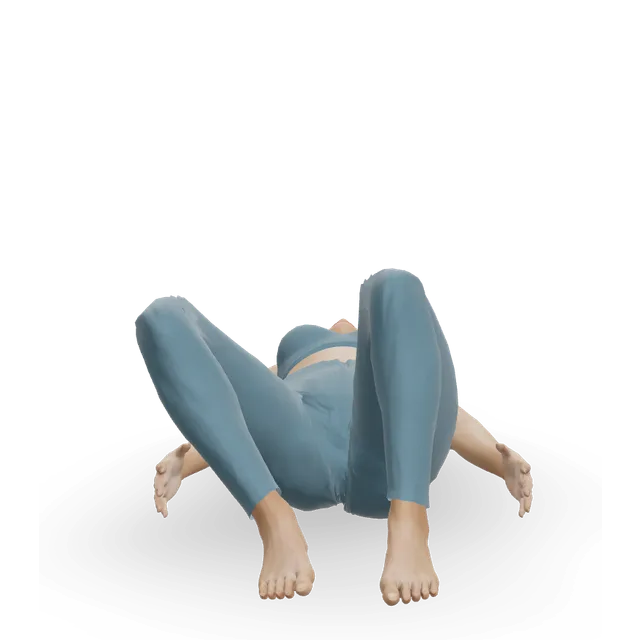
Pelvic tilt into bridge: 8 slow tilts, holding 3 seconds, tilt only at first (our postnatal yoga class). Heel slide: "10 slow repetitions each side, once or twice a day"; knee fold and bent-knee fall-out: "2 sets of 5 to 10 each side, every other day"; head lift (the chest lift): "8 to 10 reps", head only at first and smaller if your tummy domes (from the move pages' doses). Bridge pose: 6 to 8 slow lifts (our gentle yoga for cancer class).

Hands and knees, and on your side

Cat-cow: "8 waves, slower than feels natural", in a small range (the move page's dose). Bird dog, one limb at a time: 5 each arm and leg (our postnatal yoga class); the full bird dog: 6 each side, holding 3 to 5 seconds, once that's easy; knee side plank: 2 holds of 15 to 20 seconds each side, after the first weeks and only without doming (our yoga for core class). Child's pose: "Hold 1 to 3 minutes, breathing into the back ribs", knees wide (from the move page's dose).

Standing, as it feels easy

Mountain pose: "Stand for 5 to 10 slow breaths, 2 or 3 times", lifting your pelvic floor as you breathe out (from the move page's dose). Chair pose: 2 holds of 3 to 5 breaths, shallow (our gentle yoga for beginners class). Warrior II and tree pose: 3 breaths each side, a short stance and fingertips on a wall; sit to stand: 8 reps, squeezing and breathing out as you stand, the same pattern as lifting your baby (our postnatal yoga class).

Upper back and rest

Thoracic rotation: "6 rotations per side, moving with the breath" (the move page's dose), for a back stiff from feeding and carrying. Side-lying open book: 6 each side (our postnatal Pilates class). Reclining bound angle: "Rest 2 to 5 minutes with a support under each thigh"; corpse pose: "Lie still for at least 5 minutes, up to 10" (from the move pages' doses). Roll to your side to get up.

Poses to change, or leave until later

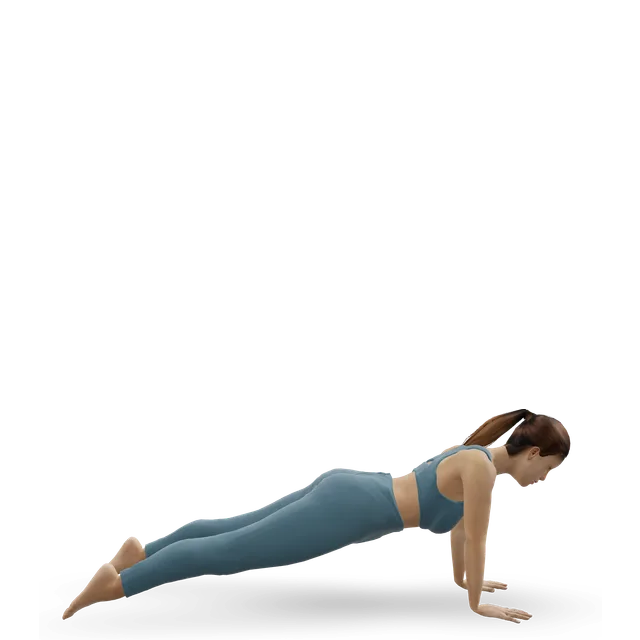
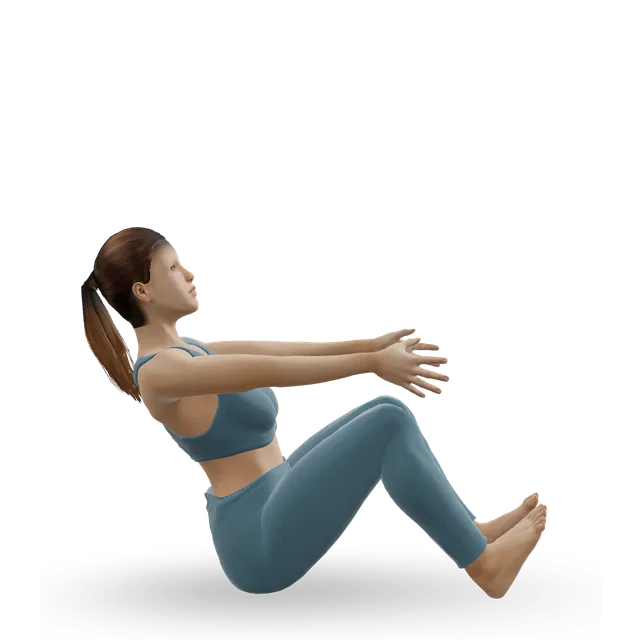
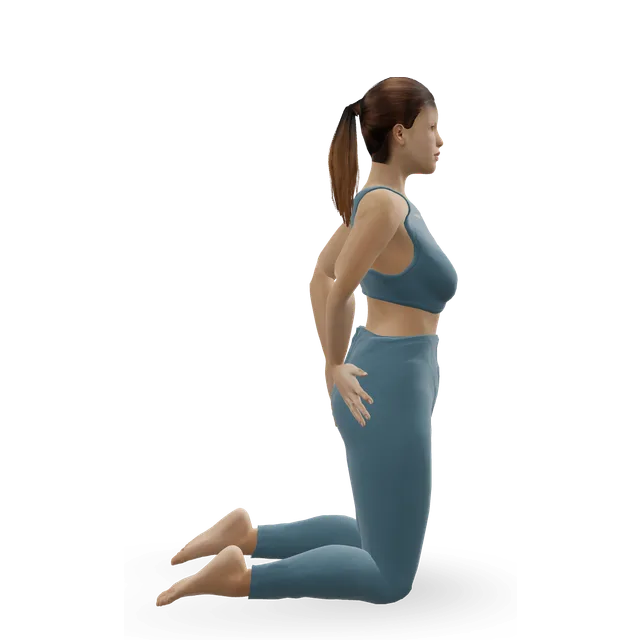
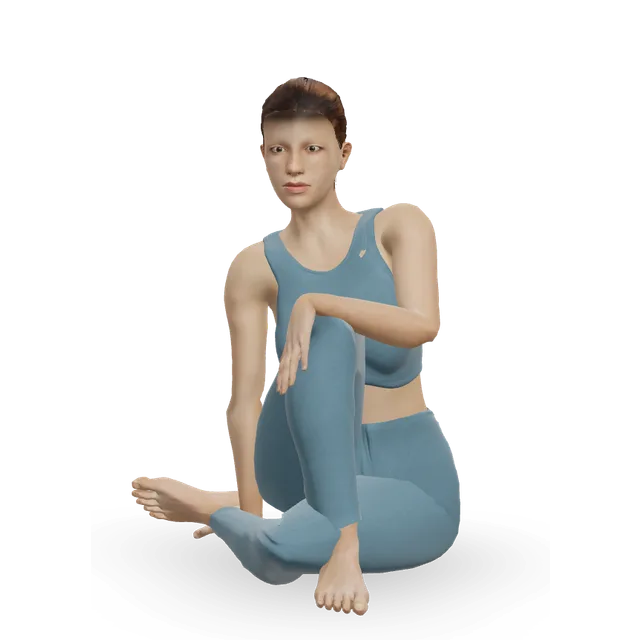
Leave full planks, chaturanga, boat pose and sit-ups out to start with, as the NHS advises, and bring them back once head lifts and side work feel steady with no doming; step back rather than jump in sun salutations until you're stronger; keep deep backbends and deep twists small while the middle domes, and after a caesarean until the scar is comfortable; start downward dog with knees bent or hands on a wall. Our suggestions, following the NHS and the physiotherapists' booklets: nothing needs to be banned for ever.

Running, men with a gap, and surgery

Jumping and running come later

UK physiotherapists advise avoiding high-impact exercise such as jumping or running until you're stronger. Their 2024 booklet points to a return-to-running guide that brings in low-impact running from about 6 to 12 weeks and running from about 12 weeks, once walking for 30 minutes, hopping and jogging on the spot cause no pain, heaviness, dragging or leaking. The weeks are a rough guide.

Sources 2, 41

Men and gaps not linked to pregnancy

The same build-up applies: breathing, a gentle draw-in, then head lifts, all-fours and side work. A gap isn't a hernia, but a lump at or near the belly button that's painful, hard or doesn't go away needs a GP.

Sources 19, 14, 46

When surgery is considered

European surgeons say no particular treatment without surgery can be recommended, but physiotherapy may be tried before surgery. Swedish surgeons suggest surgery only for troublesome symptoms after 6 months of core training, at least 2 years after the last birth; an Italian consensus suggests a gap wider than 2.5 cm. In a Finnish trial of 86 women, repair with or without mesh had similar complications. Our exercise for diastasis recti guide covers surgery in more detail.

Sources 12, 47, 48, 49

A 25-minute class and other workouts

Our 25-minute class is for after the first weeks, or any time later, men included: breathing, the pelvic floor and a gentle draw-in, then head lifts, all-fours and side work, standing poses and rest, with no planks or boat pose. In the first weeks, use the postnatal yoga class or the postnatal exercises; the diastasis recti workout is the curl-up trial's programme; move on to the yoga for core class when head lifts and side work feel steady with no doming. The class is our suggestion and untested.

Yoga for diastasis recti: a 25-minute class for a tummy gap, with head lifts and no planks

A 25-minute yoga class for a tummy gap: breathing, the pelvic floor and a gentle draw-in, then head lifts, all fours, side work and standing poses.

25 minBeginner20 movesBench or box, firm cushion

Gentle postnatal yoga: a 20-minute class from the first weeks after birth, with an early stop point and caesarean options

A gentle 20-minute yoga class for after a vaginal birth or a caesarean: breathing and your pelvic floor first, then lying, all-fours, seated and standing poses.

20 minBeginner18 movesBench or box, firm cushion

Postnatal exercises

A gentle 25-minute routine for the first weeks after birth: pelvic floor, breathing, tummy and hip exercises on the floor, sit-to-stands and a walk.

25 minBeginner12 movesBench or box, cardio machine

Gentle postnatal Pilates: a 20-minute class from about 6 weeks after birth, with an early stop point and caesarean options

A 20-minute postnatal Pilates class: breathing and pelvic floor, lying, side-lying and hands-and-knees moves, upper back work for feeding and a standing lift.

20 minBeginner16 movesBench or box

Diastasis recti workout: a 12-week curl-up programme

A 12-minute tummy routine copied from a trial in women with diastasis recti: head lifts, curl-ups and twisted curl-ups, 5 days a week for 12 weeks.

12 minBeginner5 movesNo equipment

Daily pelvic floor workout

A 5-minute daily pelvic floor workout for women and men: slow holds and quick squeezes, three times a day, with how to find the right muscles.

5 minBeginner2 movesNo equipment

Yoga for core strength: a 20-minute practice

Twenty minutes of plank, side plank, boat pose, back lifts and standing balances: the yoga poses that work the trunk hardest, with easier and harder options.

20 minBeginner13 movesNo equipment

A plan after a baby

The postpartum plan builds week by week from the first days, with a caesarean track.

When to see a GP, and when to get help fast

These are the warning signs from our diastasis recti, hernia and postnatal yoga guides, word for word. This is general information, not a diagnosis. A&E means accident and emergency; in the US, call 911 for 999.

Call 999: a hernia at or near the belly button

Call 999, and don't drive yourself to A&E, if you have a hernia (a bulge at or near your belly button) and:

  • You get very bad tummy pain that doesn't go away.
  • You feel sick, are being sick, or can't keep any food down.
  • The bulge is more swollen than usual and the skin around it has changed colour.
  • You can't fart or poo.

Source 46

After a birth: get help immediately

Call 999 or go to A&E if it feels like an emergency:

  • sudden or very heavy bleeding, especially if you feel faint or dizzy
  • chest pain, or sudden shortness of breath
  • thoughts of harming yourself or your baby: get urgent mental health help

Source 44

Get help from NHS 111: a hernia

If you have a hernia and:

  • You have pain in or around it, or a bloated tummy.
  • You feel sick or are being sick, or you're vomiting blood or your vomit looks like coffee grounds.
  • You're constipated.
  • You have a high temperature, or feel hot, cold or shivery.
  • You've suddenly become confused.

Source 50

After a birth: contact your midwife or GP the same day, or NHS 111 out of hours

Stop exercising and get advice for:

  • vaginal bleeding that gets heavier or comes back after it had settled, or passing clots or tissue
  • a fever or shivering, pain in your tummy, pelvis or the area between your vagina and anus, or a discharge or bleeding that smells unpleasant (possible infection)
  • a caesarean wound that gets more red, painful or swollen, or oozes
  • a swollen, tender leg, or shortness of breath (possible blood clot)
  • a headache that is severe or won't go away (possible high blood pressure or pre-eclampsia, which can happen after birth)
  • red, swollen breasts that don't settle within 24 hours
  • pain when you pee, or not being able to pee

Source 44

Blood clots after a birth

Pre-eclampsia can start after the birth, most often within 48 hours, and the risk lasts for up to 6 weeks. The risk of a blood clot is higher in the 6 weeks after having a baby: the NHS says to call 999 or go to A&E if you have pain and swelling in a leg and feel short of breath or have chest pain. In the US, call 911 or go to an emergency room for sudden breathlessness or chest pain, which can be signs of a blood clot in the lung.

Source 51

After a caesarean

Contact your midwife or GP straight away if you have:

  • severe pain
  • leaking urine, or pain when you pee
  • heavy vaginal bleeding
  • a wound that becomes more red, painful and swollen
  • pus or foul-smelling fluid from your wound
  • a cough or shortness of breath
  • swelling or pain in your lower leg

Source 44

If you need help with your mood

Thoughts of harming yourself or your baby: the NHS says to call 999 or go to A&E if your life is at risk or you can't keep yourself safe, and for urgent help to call 111 and choose the mental health option, or ask for an urgent GP appointment. You can also call Samaritans on 116 123. In the US, call or text 988.

If you are thinking about suicide or can't keep yourself safe, call 999 or go to A&E. For urgent help, call Samaritans free on 116 123, any time, or in England call 111 and select the mental health option. In the US, call or text 988.

If you think you might have postnatal depression, speak to your GP, midwife or health visitor; you can also refer yourself to NHS Talking Therapies.

Sources 52, 53

See a GP

  • The gap is still obvious 8 weeks after the birth: your GP can refer you to a physiotherapist.
  • You have tummy pain or discomfort with a gap.
  • You think you have a hernia, or you have a lump that's painful, hard or doesn't move, or that's getting bigger or won't go away.
  • Your tummy bulges with exercise: ask to see a specialist physiotherapist.
  • You have leaking, or a heavy or dragging feeling in your vagina. These are common after birth and treatable; our pelvic floor guide has more.

Sources 9, 46, 50, 2

Who to see

A specialist pelvic health (women's health) physiotherapist, through your GP or midwife; in some areas you can refer yourself. After a birth, our postpartum guide lists the urgent warning signs, such as heavy bleeding, wound problems, calf pain and breathlessness.

Sources 2, 41

Ease off, and see someone soon

See your GP, health visitor or a pelvic health physiotherapist if you have:

  • leaking urine, wind or poo, or a sudden need to go that's hard to hold
  • heaviness, pressure, dragging or a bulge in the vagina (possible prolapse)
  • pain during sex
  • a tummy gap that's still obvious 8 weeks after the birth, or tummy pain
  • pelvic or low back pain still there at 6 weeks
  • bleeding that carries on or increases beyond 8 weeks and isn't a period
  • feeling low, anxious or unable to cope

Sources 9, 41

If exercise brings your bleeding back

If your bleeding turns red again, gets heavier or restarts after exercise, you've probably done too much. Drop back, and tell your midwife if it continues. This rule is ours, built from the Canadian and NICE guidance.

Sources 54, 55

During yoga

If the middle of your tummy bulges or domes in a pose, make it easier: keep your head down, draw your lower tummy in gently and widely, and come out of strong core poses. No study shows doming harms recovery, as our diastasis recti guide explains; if it keeps happening, see a pelvic health physiotherapist.

Stop and get advice if a hernia hurts, won't go back in when you lie down, or grows or aches more after exercise. If it stays out with severe pain, sickness or no wind, call 999 (our reading of the society's and the NHS's advice).

Stop a pose that brings on leaking, heaviness, dragging, a bulge or pain, and make it smaller or leave it out (our pelvic floor yoga guide).

A joint pain that is sharp, gets worse during a session, lingers into the next day or changes how you move is a reason to use an easier version, and to see a GP or physiotherapist if it keeps happening (the rule in our plans). Muscle soreness for a day or two after something new is normal. In a hot class, stop if you feel dizzy, sick or unwell; our hot yoga guide lists the signs of heat illness.

You can say no to any hands-on adjustment, and a teacher registered with Yoga Alliance must get your explicit consent each time.

Source 11

Chest pain or fainting while exercising: call 999

Call 999 if:

  • You get sudden pain or discomfort in your chest that doesn't go away; it can feel like squeezing or pressure, burning or indigestion.
  • The pain spreads to your left or right arm, or your neck, jaw, stomach or back.
  • You have chest pain and feel sweaty, sick, light-headed or short of breath.
  • Someone faints while exercising, can't be woken within 1 minute, or has chest pain or a pounding, fluttering or irregular heartbeat.

Sources 56, 57

Unusual breathlessness

Call 999 or go to A&E (accident and emergency) straight away for severe difficulty breathing (gasping, choking or not able to get words out), a chest that feels tight or heavy, pain that spreads to your arms, back, neck and jaw, lips or skin turning very pale, blue or grey, or sudden confusion. If you're more short of breath than usual, or your heart is racing, fluttering or skipping beats, contact NHS 111.

Source 58

Head-down poses, bones and pregnancy

With glaucoma, or high blood pressure that isn't under control, skip headstands, shoulder stands and long head-down holds. With osteoporosis, swap deep forward folds for a flat-back hinge from the hips, and twist smoothly. In pregnancy, our yoga in pregnancy guide covers the changes. NCCIH advises beginners to avoid headstands, shoulder stands, the lotus position and forceful breathing.

Sources 59, 60

Before you start

The NHS advises getting advice from a healthcare professional first if you have a health problem, an injury or symptoms, or have recently had a heart attack or an operation.


Myths

"Yoga closes the gap" or "yoga will flatten your tummy"Strong evidence

No valid study shows it: the only yoga trial was retracted, and no other yoga study of the gap exists. Exercise of any kind narrows a gap by a few millimetres on average. Bodies change over months after a birth; yoga can make your middle stronger and more comfortable.

Sources 3, 4, 5, 6

"Crunches close the gap"Emerging evidence

A crunch narrows the gap while you do it, but 12 weeks of curl-ups left it unchanged while building strength.

Sources 10, 8

"Crunches and curl-ups always make the gap worse"Emerging evidence

In a 12-week trial, curl-ups 5 days a week didn't widen the gap, and in pregnancy, tummy exercises didn't widen it more than general exercise. They wait until after the first weeks, as the NHS advises.

Sources 8, 34, 35, 9

"You should never do core work with diastasis recti"Strong evidence

Physiotherapists teach tummy work with a gap, and UK physiotherapists suggest gentle Pilates or yoga. The curl-up trial built strength without harm. What waits is sit-ups, planks and high-impact exercise, to start with.

Sources 2, 41, 8

"Pull your belly button to your spine as hard as you can"Emerging evidence

A maximal draw-in briefly widens the gap below the belly button, and training only the deepest muscle didn't narrow the gap in the newest review. The NHS says to keep breathing normally; a gentle draw-in on the out-breath is enough.

Sources 10, 37, 32, 9

"Doming means you're damaging your tummy"Mixed evidence

Physiotherapists treat doming as a sign to make the move easier. No study shows that doming during exercise harms the gap.

Sources 11, 24

"Planks are the best fix"Emerging evidence

No trial shows that. The NHS advises avoiding planks to start with, and the trial that built strength used head lifts and curl-ups.

Sources 9, 8

"A gap still there at 6 months means something has gone wrong"Strong evidence

About 45% of first-time mothers still had a gap at 6 months and a third at a year, and gaps keep narrowing through the first year with or without exercise. See a GP if it's still obvious at 8 weeks or causes symptoms.

Sources 1, 17, 9

"A gap causes back pain and leaking"Emerging evidence

Reviews and cohorts found no clear link with back or pelvic pain or with leaking. Leaking after a birth is common and treatable with pelvic floor exercises, gap or no gap.

Sources 21, 22, 1

"If two fingers fit, you need surgery"Strong evidence

Gaps up to about 2 cm may be normal, normal widths after a baby are wider still, and surgeons advise physiotherapy first.

Sources 12, 13, 15, 47

Questions people ask

Is yoga good for diastasis recti?

It can be a good way to rebuild strength through your middle and pelvic floor, and UK pelvic health physiotherapists suggest starting with gentle Pilates or yoga. It hasn't been shown to close the gap: exercise of any kind narrows a gap by only a few millimetres on average. Start with breathing, your pelvic floor and gentle tummy work, and build up.

Can yoga fix or heal diastasis recti?

No study shows it. The only yoga trial was retracted, and most gaps narrow by themselves over the first year after a birth. Yoga can make your tummy and back stronger and more comfortable, which is what most people need.

Is yoga bad for diastasis recti? Can it make it worse?

There's no evidence that it does, and head lifts and curl-ups didn't widen gaps in a 12-week trial. In the first weeks, leave out sit-ups, planks, boat pose and jumps, as the NHS advises, and make any pose easier if the middle of your tummy domes.

Which yoga poses should I avoid with diastasis recti?

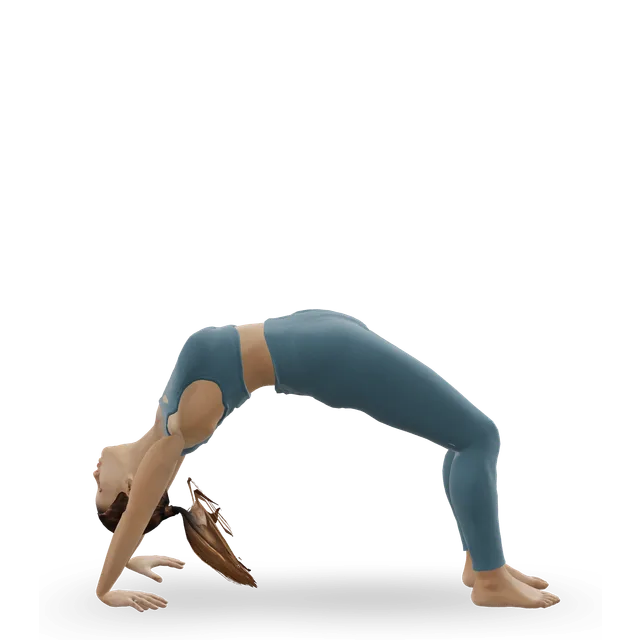
To start with: full planks, chaturanga, boat pose, jumps in sun salutations and deep backbends such as wheel or upward dog. Bring them back gradually once head lifts and side work feel steady with no doming. Nothing needs to be banned for ever.

Is downward dog bad for diastasis recti?

No study has tested it. Start with your knees bent or your hands on a wall, keep breathing, and come out if the middle of your tummy domes.

Which yoga poses help diastasis recti?

None has been shown to close a gap. Good starting points are slow breathing, pelvic floor squeezes, a gentle side-lying tummy draw-in, pelvic tilts, bird dog, bridges and standing poses, then head lifts and knee side planks. Our 25-minute class puts them in order.

When can I start yoga after having a baby?

After a straightforward birth, gentle exercise such as walking, stretches and pelvic floor exercises can start as soon as you feel up to it, and UK physiotherapists say gentle Pilates is safe from about 4 weeks if there are no concerns about bleeding, wound healing or your pelvic floor. After a caesarean, go by comfort: it may not be for 6 weeks or so. Our postnatal yoga guide has the stages.

Should I suck my tummy in during yoga?

Not hard, and not all the time. The NHS says to keep breathing normally, and sucking in as hard as you can briefly widened the gap below the belly button in ultrasound studies. Draw your lower tummy in gently as you breathe out, then let it go.

Is yoga or Pilates better for diastasis recti?

Neither has been tested against the other. Pilates focuses more on trunk control and yoga more on standing poses, balance and breathing; both can be built up the same way, and our Pilates for diastasis recti guide covers Pilates.

Is chair yoga good for diastasis recti?

It's a gentle option in the early weeks or on tired days: seated breathing, pelvic floor squeezes and upper-back turns all suit a gap. You'll need floor and standing work too to build tummy strength.

Can men do yoga for diastasis recti?

Yes. About 30% of men in one hospital study had a gap wider than 2 cm, and it wasn't linked with back pain. The same build-up applies; see a GP about a bulge that's painful, hard or doesn't go away, which can be a hernia.

Will yoga flatten my tummy after a baby?

It can make your tummy muscles stronger, but no trial shows that yoga changes how your tummy looks, and bodies change over months after a birth. A tummy that still bulges or aches months after the birth is worth showing to a GP or a pelvic health physiotherapist.

Sources

  1. Sperstad 2016 · The tummy gap in 300 first-time mothers, from pregnancy to 12 months after birth (cohort study, Br J Sports Med)
  2. Pelvic, Obstetric and Gynaecological Physiotherapy (POGP) · Tummy muscle separation (DRAM) in pregnancy (patient information; read in full)
  3. BioMed Research International 2023 · Retraction notice: Li 2022, the only randomised trial of yoga for the tummy gap (116 women), is retracted (read in full)
  4. PubMed · Our search for yoga studies of the tummy gap: 3 records (the retracted trial, its notice and a scoping review), with Europe PMC and ClinicalTrials.gov searches finding no other (2 November 2026)
  5. Benjamin 2023 · Treatments for the tummy gap after birth: 16 trials, 698 women (systematic review and meta-analysis, Physiotherapy)
  6. Capoccia Giovannini 2026 · Exercise for the tummy gap after birth: 9 trials, 450 women (systematic review and meta-analysis, Hernia; read in full)
  7. Beamish 2025 · Exercise after birth, pelvic floor problems and the tummy gap: 65 studies (systematic review and meta-analysis, Br J Sports Med; read in full)
  8. Gluppe 2023 · Curl-ups for 12 weeks in 70 women with a tummy gap after birth (randomised trial, J Physiother)
  9. NHS · Your post-pregnancy body: separated stomach muscles, the self-check and the stomach exercise (read in full)
  10. Gluppe 2020 · The tummy gap during abdominal and pelvic floor exercises in 38 women (lab study, Phys Ther)
  11. POGP 2022 · Pilates in women's health physiotherapy (physiotherapy booklet, past its review date: reviewed 2022, review due 2025; read in full)
  12. Hernández-Granados 2021 · European Hernia Society guidelines on the management of rectus diastasis (guideline, Br J Surg; executive summary read in full)
  13. Mota 2018 · Normal width of the tummy gap in pregnancy and after a first birth, on ultrasound (cohort study, Musculoskelet Sci Pract)
  14. Kaufmann 2022 · Normal width of the linea alba on CT scans in 329 adults (cross-sectional study, Hernia)
  15. Marttila 2026 · Ultrasound reference values for the tummy gap in 1,840 Finnish women (population study, Hernia)
  16. Fernandes da Mota 2015 · The tummy gap on ultrasound from late pregnancy to 6 months after birth in 84 first-time mothers (cohort study, Man Ther)
  17. Vesting 2024 · Exercise after birth, pelvic symptoms and the tummy gap in 504 women (cohort study, Phys Ther)
  18. Fitzpatrick 2026 · The tummy gap from early pregnancy to a year after a first birth: 213 women (cohort study, World J Surg)
  19. Zhu 2024 · The tummy gap in 1,575 men (cross-sectional study, Hernia)
  20. van de Water 2016 · How well finger widths, calipers and ultrasound measure the tummy gap: 13 studies (systematic review, Man Ther)
  21. Benjamin 2019 · The tummy gap, pain, leaking and quality of life: 12 studies, 2,242 people (systematic review, Physiotherapy)
  22. Gluppe 2021 · Strength, pain and pelvic floor problems in 72 women with and without a tummy gap (cross-sectional study, Physiotherapy)
  23. Keshwani 2018 · Gap width and symptoms 3 weeks after birth in 32 women (cross-sectional study, Phys Ther)
  24. Lee 2016 · The linea alba during a curl-up in 26 women with a tummy gap (observational study, J Orthop Sports Phys Ther)
  25. Beamish 2019 · Linea alba stiffness and distortion in 20 women with and without a tummy gap (lab study, J Orthop Sports Phys Ther)
  26. Skoura 2024 · Treatments for the tummy gap after birth in clinical practice: 28 studies (scoping review, Int Urogynecol J; read in full)
  27. de Oliveira 2025 · Conservative treatments for the tummy gap after birth: 34 trials (systematic review and meta-analysis, Medicine; read in full)
  28. Wu 2025 · Non-surgical treatments for the tummy gap after birth: 21 trials, 1,195 women (network meta-analysis, Sports Med)
  29. Bigdeli 2025 · Rehabilitation for the tummy gap after birth: 27 trials, 1,340 women (network meta-analysis, Sci Rep; read in full)
  30. Zhu 2026 · Rehabilitation treatments for the tummy gap: 17 trials, 783 people (network meta-analysis, Int J Gynaecol Obstet)
  31. Gluppe 2021 · Abdominal and pelvic floor training for the tummy gap after birth: 7 trials, 381 women (systematic review and meta-analysis, Braz J Phys Ther)
  32. Lyons 2026 · Abdominal and pelvic floor training for the tummy gap after birth: 15 studies (updated systematic review and meta-analysis, Hernia)
  33. Gluppe 2018 · A weekly postnatal exercise class and the tummy gap in 175 first-time mothers (randomised trial, Phys Ther)
  34. Theodorsen 2024 · Abdominal and pelvic floor training in 96 pregnant women and the tummy gap (randomised trial, J Physiother)
  35. Cabral 2025 · Drawing-in or crunch exercises added to general exercise in 63 pregnant women (randomised trial, J Physiother)
  36. Mota 2015 · The tummy gap during crunches and drawing-in, in pregnancy and after birth: 84 women (lab study, J Orthop Sports Phys Ther)
  37. Sancho 2015 · Abdominal exercises and the tummy gap in 38 women after birth (ultrasound study, Physiotherapy)
  38. Soto-González 2024 · Hypopressive or conventional abdominal exercise in 28 women after birth (randomised trial, PLoS One)
  39. Moreira 2026 · Hypopressive exercise for the tummy gap in 44 women after birth (randomised trial, Braz J Phys Ther)
  40. Abdullah 2025 · Abdominal exercise or binding for the tummy gap after birth: 13 trials (systematic review and meta-analysis, Physiother Res Int)
  41. POGP 2024 · Fit for the future: essential advice and exercises following childbirth (physiotherapy booklet, for review 2027; read in full)
  42. NHS · Keeping fit and healthy with a baby (read in full)
  43. Department of Health and Social Care · Physical activity for women after childbirth: birth to 12 months (infographic text, updated July 2026; read in full)
  44. NHS · Caesarean section: recovery (past its review date: reviewed January 2023, review due January 2026)
  45. NHS · Exercise in pregnancy (read in full)
  46. NHS · Umbilical hernia (read in full)
  47. Carlstedt 2021 · Recommendations for Swedish national guidelines on diastasis of the rectus abdominis muscles (consensus, Scand J Surg)
  48. Bracale 2025 · Italian national consensus on diagnosing and treating rectus diastasis after pregnancy (Delphi consensus, Hernia)
  49. Tuominen 2025 · Tummy gap repair with or without mesh in 86 women (randomised trial, Br J Surg)
  50. NHS · Hernia (read in full)
  51. NHS · DVT (deep vein thrombosis) (read in full)
  52. NHS · Postnatal depression
  53. NHS · Where to get urgent help for mental health (past its review date: reviewed April 2023, review due April 2026)
  54. Canadian Society for Exercise Physiology · 2025 Canadian guideline for physical activity, sedentary behaviour and sleep in the first year postpartum (guideline)
  55. NICE · Postnatal care (NG194, guideline, 2021, updated June 2026)
  56. NHS · Chest pain (past its review date: reviewed August 2023, review due August 2026)
  57. NHS · Fainting
  58. NHS · Shortness of breath
  59. Jasien 2015 · Eye pressure in four common yoga positions: 10 people with glaucoma and 10 without (lab study, PLoS One)
  60. NCCIH 2023 · Yoga: effectiveness and safety (US National Center for Complementary and Integrative Health)

Exercise education, not a personal prescription, and clinical review of these guides is pending. If you are pregnant, have a health condition such as glaucoma, high blood pressure or osteoporosis, or have had recent surgery, check with a doctor, midwife or physiotherapist before starting, and stop for sharp or increasing pain. Health disclaimer.