Pain guide · Wrist and hand pain

Wrist pain when doing cleans: the catch, the rack, the little-finger side, the hook grip and swaps

Wrist pain when you do cleans usually comes from the catch: if your elbows come round slowly or you grip tightly, the bar lands in your hands instead of on your shoulders and bends your wrist far back under a falling weight. A loose grip with your fingertips under the bar, fast elbows, a lighter bar, and pulls and crossed-arm front squats while it settles usually help. Where it hurts is the best clue: the back of the wrist points to the joint lining or a tendon, the little-finger side to the cartilage cushion there, the thumb to the hook grip, and tingling to a nerve. Nothing measures the wrist during the catch, so this map is our reading where it's inferred, and this guide says where each piece of advice comes from.

This guide starts with the signs that need help, from accident and emergency (A&E) for a wrist that is out of shape, numb or cold after a missed lift or a fall, to a same-day check through the National Health Service's 111 line (NHS 111) or a general practitioner (GP) for pain at the base of the thumb after a missed clean, a hot, swollen wrist with a high temperature or a hand that has lost feeling. It then maps the causes by where it hurts, explains what the studies of the catch, the hook grip, wraps and the nerves show, and don't, shows how to change your clean today, and gives a three-stage plan with a 3D demo of every move, from pulls back to the catch.

When to get help first

Exercise is for pain that has been checked or is clearly mild and settling.

Get urgent medical help if

  • Call 999 or go to A&E after an injury (don't drive yourself) if the arm, wrist or hand is numb, tingling or has pins and needles; a bone is sticking out or a bad cut is bleeding heavily; or the wrist, thumb or a finger has changed shape, is at an odd angle, or has turned blue, grey, white or cold.
  • Same day (NHS 111): severe wrist pain; you feel faint, dizzy or sick from the pain, or you feel unwell, hot, cold or shivery; you heard a snap, grinding or popping noise when you hurt it; you can't move your wrist or hold things; your wrist has changed shape or colour; a lump on your wrist is very painful, hot or red (redness may be harder to see on brown and black skin); or you have lost the feeling in part or all of your hand. These might be signs of a broken wrist or an infection.
  • Same day (NHS 111, an urgent treatment centre or an urgent GP appointment): a wrist or hand injury that is very painful, getting worse, very swollen or bruised, stiff, or that you can't use. It may be broken. Get the same help if you also have a very high temperature, or feel hot, cold or shivery: this could be an infection.
  • Same day: after a fall onto an outstretched hand, pain or tenderness at the base of the thumb on the back of the wrist (the hollow called the snuffbox), even if the wrist moves well or the first X-ray was normal. A broken scaphoid can hide on the first X-ray and is slow to heal if it's missed, so ask what follow-up is planned.
  • Same day: after a missed clean, a dropped bar or a catch that forced your wrist back hard, pain or tenderness in the hollow at the base of the thumb on the back of the wrist (the snuffbox), even if the wrist moves well. A broken scaphoid can hide on the first X-ray, so get it checked and ask what follow-up is planned (our suggestion).
  • Same day (NHS 111): after an injury, the forearm locks so you can't turn the palm up or down, or the end of the forearm bone on the little-finger side clunks or sticks up at the back of the wrist. The joint between the forearm bones may have come out of place.
  • Go to an urgent treatment centre or A&E if you heard a crack or snap when you hurt it, or the pain is severe and you can't move the thumb or hold things.
  • Within days: after the thumb was bent back or away from the hand, pain and swelling at the base of the thumb on the index-finger side, especially with a weak or painful pinch, a loose or wobbly feeling, or a lump there. Ask to be seen in a hand clinic: a complete tear needs a decision on treatment within 2 weeks of referral, and it is easily missed in A&E.
  • Same day (urgent GP appointment or NHS 111): sudden, severe pain in one joint, with swelling, a change in skin colour or difficulty moving it, especially if you feel unwell, hot, cold or shivery or have a high temperature (although not everyone has one). It could be an infection in the joint, gout or calcium crystals (pseudogout), and only a sample of fluid from the joint can tell them apart.
  • Call 999 or go to A&E: sudden, severe pain in a muscle of the forearm or hand, which may be worse when you stretch it, with swelling, numbness, weakness or pins and needles, or tightness or difficulty moving the fingers. This can be acute compartment syndrome, which needs surgery as soon as possible. It usually follows an injury, a crush, or a cast or bandage that is too tight. Do not drive yourself to A&E.
  • Same day: you have lost the feeling in part or all of your hand.
  • Contact your GP practice urgently (or NHS 111 if it's closed): clumsiness in your hands, or numbness, pins and needles or weakness in one or both arms that is getting worse.
  • Same day: both hands numb or clumsy (dropping things, trouble with buttons or handwriting), especially with unsteady walking or falls. Pressure on the spinal cord in the neck can do this, and it is often first mistaken for carpal tunnel syndrome.
  • Call 999, even if it passes: sudden weakness or numbness in one arm, with a drooping face or slurred speech. These are signs of a stroke.
  • Call 999: chest pain that spreads to your arm, neck or jaw. It could be a heart attack.

See a doctor or physiotherapist if

  • Not improved after 2 weeks of looking after it at home, getting worse, keeps coming back, or stopping you doing normal activities. In many areas you can refer yourself to NHS physiotherapy.
  • Any tingling or loss of feeling in the hand or wrist.
  • Carpal tunnel symptoms that are getting worse, not going away, or not helped by treatment at home; sooner if the thumb is weak or the muscle at the base of the thumb looks thinner.
  • Constant numbness in the ring and little fingers, a weak or clumsy hand, or visible wasting of the muscle between the thumb and index finger. Ask about referral: one NHS referral guide treats permanent numbness or wasting as urgent.
  • Pins and needles in the ring and little fingers that last more than 6 months despite the position changes on this page: the same NHS guide refers at that point.
  • Pins and needles that keep coming back or are constant, wherever they are in the hand.
  • See a GP if your wrist is painful, warm, swollen and stiff, or you have wrist pain and also feel unwell with a high temperature.
  • The wrist feels unstable or weak, or clicks with pain: see a GP or physiotherapist. It may need a hand specialist to check it.
  • A deep ache in the middle of the back of the wrist that keeps coming back when you load it, often with a weaker grip, even if an X-ray was normal: see a GP or physiotherapist and ask whether a scan is needed. A hidden ganglion or, rarely, Kienböck's disease (loss of blood supply to a wrist bone) can be missed on early X-rays.
  • A fall on the hand more than about 4 weeks ago that still hurts at the base of the thumb, and was never X-rayed or put in a splint: get it checked. UK hand surgeons ask for a scan and may advise an operation after a delay of more than 4 weeks.
  • A teenager whose wrist still hurts the day after lifting, cleans, handstands or push-ups, or whose wrist is swollen: stop putting weight through the hands and see a GP or sports doctor. In growing athletes it can be a stress injury of the growth plate.
  • A lump that gets bigger, is hard or doesn't move.
  • Swollen, stiff joints in several fingers or both hands, with morning stiffness lasting more than 30 minutes. NICE asks GPs to refer suspected rheumatoid arthritis urgently when the small joints of the hands or feet, or more than one joint, are affected, or there has been a delay of 3 months or longer between the symptoms starting and seeking medical advice, even if blood tests are normal.

Where does it hurt?

Location narrows the likely causes; it does not diagnose.

The back of the wrist, in the middle, at the catch or in the rack, worse loaded bent back

Often the joint lining or a tendon pinched, or a hidden ganglion, in a wrist loaded bent back (our reading of an expert review). A loose grip, fast elbows and pulls without a catch take the bend out first.

Read: Wrist pain bending back →
The back of the wrist with painful clicking or a clunk, often after a missed lift or a fall on a bent-back wrist

Possibly a wrist ligament (the scapholunate ligament): get it checked.

Read: Wrist sprain or fracture →
The little-finger side, sometimes clicking, with a weaker grip, worse turning the forearm or gripping hard

Often the cartilage cushion there (the triangular fibrocartilage complex, or TFCC) or the tendon beside it. The pain rule is lower on this side.

Read: TFCC tear →
The thumb side of the wrist, worse lifting the thumb or gripping with the thumb up

Often de Quervain's tenosynovitis.

Read: De Quervain's tenosynovitis →
The thumb itself in a hook grip: the nail, the knuckle or the pad

The bar pressing the thumb (our reading: no study has looked at it). Build up the hook grip, tape it, or use a closed grip or straps for pulls.

Read: Thumb pain →
The base of the thumb on the index-finger side after the thumb was wrenched back or sideways

Possibly the thumb's ligament (skier's thumb): get it assessed within days.

Read: Skier's thumb →
The hollow at the base of the thumb after a missed clean, a dropped bar or a fall on your hand

A possible broken scaphoid, which can hide on the first X-ray: get it checked the same day, even if the wrist moves well.

Read: Scaphoid fracture →
Tingling in the thumb, index and middle fingers in the rack or at night

Carpal tunnel syndrome: the pressure on the nerve rises with the wrist bent back. A straighter wrist helps; tingling that lasts needs a GP.

Read: Carpal tunnel syndrome →
Tingling in the ring and little fingers, with the elbows bent deep

Usually the ulnar nerve at the elbow.

Read: Ulnar nerve entrapment →
A smooth lump on the back of the wrist that aches at the end of the bend

Often a ganglion, which usually gets better on its own over months to a year.

Read: Ganglion cyst →
A deep central ache that keeps coming back when you load the wrist, with a weaker grip

Rarely Kienböck's disease or a bone stress injury, which early X-rays can miss: see a GP.

Read: Kienböck's disease →
A teenager's wrist, sore the day after cleans or handstands

Possibly a stress injury of the growth plate: stop weight through the hands and get it checked.

Read: Gymnast's wrist →
The back of the wrist or forearm bruised by the bell in a kettlebell clean

Usually the bell's path looping wide and flipping onto the forearm. Our kettlebell clean training guide covers how to stop it.

The collarbone or the front of the shoulder under the bar

Usually the bar resting on the bones in the rack. Our collarbone guide covers pain that lasts.

Read: Collarbone pain →
The same wrist pain in front squats

Our front squat wrist guide covers the rack, crossed arms and straps.

Read: Wrist pain in front squats →
The wrist hurts only overhead, in the jerk or a push press

Our overhead press wrist guide covers where the bar sits in the hand and grip width.

Read: Wrist pain overhead pressing →
The forearm or elbow rather than the wrist

Usually the forearm muscles or tendons: our elbow pain when lifting guide covers it.

Read: Elbow pain when lifting →
Several swollen, warm joints in both hands, with morning stiffness

Possibly an inflammatory arthritis, which needs an urgent referral: see the warning signs.

Read: Wrist and hand pain →

Understand it

What the catch asks of the wrist, and what no study has measuredEmerging evidence

In a clean, you pull the bar from the floor or the hang, jump, then pull yourself under and whip your elbows round so the bar lands on the front of your shoulders. A weightlifting coach writes that "the barbell must be supported directly by the trunk", with a fairly loose grip, because "A very tight grip will nearly always cause the elbows and shoulders to drop". With the elbows high and the hands just outside the shoulders, the wrist bends a long way back.

In the one study that comes close, 20 CrossFit athletes had their resting range measured and their clean filmed 7 months later: the 8 rated as catching well had about 93 degrees of wrist extension at rest against about 83 in the 12 who didn't, and more outward shoulder rotation, but they had also trained longer and more often, and no pain was measured. Daily tasks fit within about 60 degrees of wrist extension, as our wrist joint page explains.

Nothing measures the wrist angle or load during a catch, and no study counts wrist pain from cleans or tests a grip or swap against it. So the map on this page is our reading of what each cause is known to do.

Sources 1, 2

How common wrist and hand problems are in liftingEmerging evidence

The hand and fingers made up 15.3% of weightlifting injuries in an updated review, which doesn't count the wrist separately; the wrist and hand are among the five commonest injured sites across the weight-training sports. In CrossFit, 11% of injured athletes in one large survey had hurt a wrist; in a smaller one, 2 of 4 wrist injuries happened in the Olympic lifts, which weren't split into the clean, snatch and jerk. At the Tokyo 2020 Olympic weightlifting venue, fingers and wrists were 28.7% and 13.8% of training-floor treatments, mostly tape and ice.

Most weightlifting injuries are minor overuse problems: weightlifting causes about 2.4 to 3.3 injuries per 1,000 hours of training, low next to contact sports, and in 6 years of US Olympic Training Center records 90.5% of injuries needed 1 day or fewer off. Elite weightlifters' injuries were mostly the lower back and knees. Of 270 CrossFit athletes, 20.4% had ever hurt a hand or wrist, mostly the wrist, and 29.1% hurt the same area again; 28.8% of 868 female Masters weightlifters reported hand or wrist joint pain, slightly more with heavier lifting.

Sources 3, 4, 5, 6, 7, 8, 9, 10, 11, 12

The back of the wrist and the little-finger sideEmerging evidence

An expert review of pain in the middle of the back of the wrist in athletes describes the joint lining being pinched, made worse by full extension and loading the wrist bent back, with normal X-rays, and says most cases settle with 2 to 3 months of rest, a splint and anti-inflammatory medicines. It also covers a hidden ganglion, a wrist ligament and Kienböck's disease, which is most common in men aged 20 to 40. In one competitive weightlifter, wrist pain worse with extension in training was inflammation around the finger and wrist extensor tendons; that is a single case.

Pain on the little-finger side points to the triangular fibrocartilage complex (TFCC) or the tendon beside it. In 72 people with TFCC tears and a stable joint, treated without surgery, 30% had fully recovered at 6 months and 50% at a year, and across 8 studies (425 people) non-surgical care did about as well as surgery.

Sources 13, 14, 15, 16

The thumb and the hook gripEmerging evidence

In the hook grip, the fingers wrap over the thumb against the bar. In 11 trained men who already used it, every one power cleaned more with the hook grip than with a closed grip, and the gain came from a quicker turnover and catch, not a stronger pull; for lighter pulls without a catch, the authors say the grip may not matter. No study, survey or case series has looked at thumb pain or thumb injury from the hook grip, and our power clean guide says it hurts your thumbs at first, so build up to it.

A thumb wrenched back or sideways is different: the British Society for Surgery of the Hand (BSSH) says a partly torn thumb ligament is usually splinted or put in a cast for six weeks.

Sources 17, 18, 19

Nerves and the bent-back wristStrong evidence

Bending the wrist fully back raised the pressure in the carpal tunnel from 2.5 to 30 millimetres of mercury in healthy wrists, and from 32 to 110 in people with carpal tunnel syndrome. In 37 healthy people, a quarter passed 30 by about 33 degrees of extension, and the pressure was lowest with the wrist almost straight; in cadaver hands it stayed near its starting level for small bends and climbed past 5 times that at 50 degrees.

A catch or a rack goes much further back, so tingling there is a nerve complaining, not a stretch (our reading). Tingling in the ring and little fingers with the elbows bent deep points to the ulnar nerve.

Sources 20, 21, 22, 23

Bone, growth plates and missed liftsEmerging evidence

A review of bone stress injuries in athletes lists the forearm bones in weightlifting and gymnastics, says plain X-rays may be normal early and MRI (magnetic resonance imaging) is most useful, and describes gymnast's wrist as stress around the growth plate from repeated loading bent back. One adult weightlifter had stress fractures of both forearm bones (ulnae) after increasing his training. No series in young weightlifters was found, so the teenager's line on this page is a precaution borrowed from gymnasts.

In US emergency departments, dropped weights and crushes were the commonest cause of upper limb weight training injuries, and the wrist made up 8.2%; in under-19s, most weight training fractures came from improper use such as dropped weights, mostly in fingers and toes. The BSSH says a wrist sprain usually follows a fall that bends the wrist backwards, and across 8 studies of 1,685 injured wrists with a normal first X-ray, 9.0% had a hidden scaphoid fracture and no single sign ruled one out.

Sources 24, 25, 26, 27, 28, 29

Who gets it

In our reading: people new to the clean or the hook grip, or adding load or volume quickly, such as CrossFit cycles of cleans, thrusters and handstands; people with stiff wrists, shoulders or upper backs who catch the bar in their hands; people who grip tightly or catch with slow, low elbows; and people coming back after a missed lift or a fall on the hand. In female Masters weightlifters, hand and wrist pain was slightly more likely with heavier lifting.

Sources 12, 11

When a scan or test mattersStrong evidence

Not at first for gradual pain without warning signs: the NHS starts with looking after it at home, and a GP if it hasn't improved after 2 weeks. After a missed lift or a fall onto the hand, the NHS says a wrist that might be broken probably needs an X-ray, and NICE says consider MRI first for a suspected scaphoid fracture after a thorough examination.

A deep central ache that keeps coming back, or loading pain with a normal X-ray, may need an MRI for a hidden ganglion, Kienböck's disease or a bone stress injury. Clicking or instability on the little-finger side that hasn't settled after a good trial of rehab needs a hand specialist.

Sources 30, 31, 32, 13, 24, 15

How it usually goesEmerging evidence

No study follows wrist pain from cleans. Most weightlifting injuries are minor, with 90.5% needing a day or less off in one training centre. In the CrossFit survey, most people were back to full training within a month, but more than half didn't feel fully healed by then and 29.1% hurt the same area again, which argues for building back gradually.

Pinching at the back of the wrist usually settles in 2 to 3 months, half of TFCC tears fully recover within a year, a ganglion can take several months to a year, and a broken wrist usually takes 6 to 12 weeks. No one can promise a date.

Sources 7, 11, 13, 15, 33, 31

What helps, and how strong the evidence is

The rack and the catch: coaching, not trialsEmerging evidence

No trial has tested any change to the clean for wrist pain. Coaches teach that the bar rests on the front of the shoulders, supported by the trunk, with a loose grip and the hands just outside the shoulders, and that a tight grip drops the elbows. A CrossFit coach says wrist pain in the front rack usually comes from stiff shoulders, lats or triceps rather than the wrist, and suggests opening the hands so the bar rolls to the fingertips, with one or two fingers off the bar if needed. Good catchers had more resting wrist and shoulder range, but no trial shows stretching changes a catch or eases wrist pain.

Sources 1, 34, 2

The hook grip helps the lift, not the thumbEmerging evidence

In 11 trained men, the hook grip raised power clean bests through a quicker turnover; for lighter pulls without a catch, grip type may not matter. So while your thumb is sore, a closed grip or straps for pulls is a fair swap (our reading). Nothing has tested the hook grip, tape or a closed grip for thumb pain.

Sources 17, 18

Wraps and straps change grip and feel, not the wristEmerging evidence

In 54 CrossFit athletes, a tight wrist wrap didn't change grip strength (35.7 against 35.6 kilograms). A review found straps can help grip and maximal strength on pulls, with no evidence on long-term use. Neither has been tested for wrist pain or in the clean, and in one survey a third of injured CrossFit athletes had been wearing wraps before their injury.

Sources 35, 36, 11

Splints, injections and specialist care for the named causesEmerging evidence

For carpal tunnel syndrome, the NHS suggests a splint that keeps the wrist straight, possibly for up to 6 weeks, and cutting down on bending the wrist and gripping hard. For pinching at the back of the wrist, a splint and anti-inflammatories, with an injection if it doesn't settle; for a stable TFCC tear, at least 6 months of non-surgical care first; for a partly torn thumb ligament, a splint or cast. One weightlifter's tendon pain eased after dextrose injections, a single case without a comparison, which doesn't show the treatment works.

Sources 37, 13, 15, 19, 14

How much pain is OK while you exercise?

Up to 5 out of 10, settled within half an hour, and lower on the little-finger sideEmerging evidence

This guide uses the wrist hub's rule, as our front squat and lifting wrist guides do. Some discomfort during these exercises is fine and doesn't mean you are doing damage. Keep it to about 5 out of 10 or less. It should settle within half an hour or so, and your hand should be no worse the next morning. If it is, do fewer, smaller or lighter next time, not nothing. An NHS wrist rehabilitation booklet uses the same limit: an unpleasant stretch of about 5 out of 10 that settles within 30 minutes. Tingling and numbness are different: stop and get advice if an exercise brings them on and they don't fade quickly, or if your grip or thumb gets weaker.

On the little-finger side, keep it lower: about 3 out of 10, as our TFCC tear guide does from a review's targets, which its authors call an untested framework. For an irritable tendon in the first days, Cambridge's still holds are kept pain-free, halving the effort if they hurt. In long-lasting pain, exercise into some pain did no worse than pain-free exercise (7 trials, 385 people, none in the wrist).

For cleans (our suggestion, built on the same rule): judge each set by its last reps, and use the variation (pulls and shrugs, then the hang power clean, then the power clean, then squat cleans), the grip and the load at which the wrist stays at 5 out of 10 or less (3 on the little-finger side) and settles within half an hour. The catch should feel solid, not sharp. Tingling or numbness, a painful click or clunk, pain in the snuffbox after a missed lift, and a teenager's sore wrist aren't pain-rule questions: see the warning signs.

Source 38

The exercise plan: 3 stages

Start at the first stage. Each move opens a full guide with a 3D demo.

Stage 1

Train without the catch, keep the wrist moving

About the first 2 weeks: legs and pulling power with no weight through a bent-back wrist, the wrist and forearm moving daily, and still holds for a sore tendon. No catches, thrusters, push presses or handstands for now. With a diagnosed condition (a TFCC tear, de Quervain's, a broken scaphoid or wrist, gymnast's wrist, a ganglion, carpal tunnel syndrome, Kienböck's disease, a thumb ligament tear), that guide's plan comes first; after a fracture or surgery, your team's plan does.

Wrist & forearm flow demonstrated on the 3D figure3D demoWrist & forearm flowBeginner · No equipment

2 or 3 slow reps of each movement at a time, every hour or so, adding 1 or 2 every few days, then sets of 8 · NHS inform's pacing for hand exercises, as in our front squat and lifting wrist guides

Easier: Wrist circles · Harder: Wrist flexor stretch

Reverse wrist curl demonstrated on the 3D figure3D demoReverse wrist curlBeginner · A dumbbell + A bench or box

If the back or little-finger side is sore: 5 holds of 30 to 45 s, once a day, palm down, wrist level, forearm supported · As in our front squat and lifting wrist guides (editorial): still holds first

Easier: Wrist-extensor eccentrics · Harder: Plate pinch

Wrist curls demonstrated on the 3D figure3D demoWrist curlsBeginner · A dumbbell

If the palm side is sore: the same holds, palm up, wrist level · As in our front squat wrist guide (editorial)

Easier: Wrist-extensor eccentrics · Harder: Plate pinch

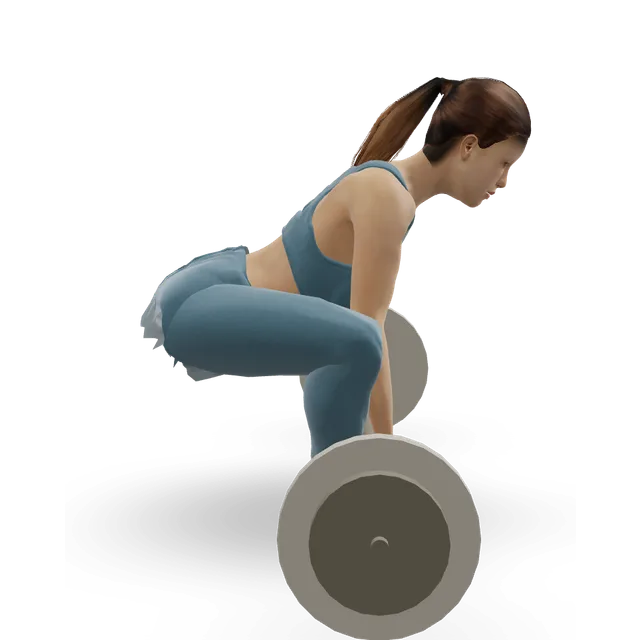
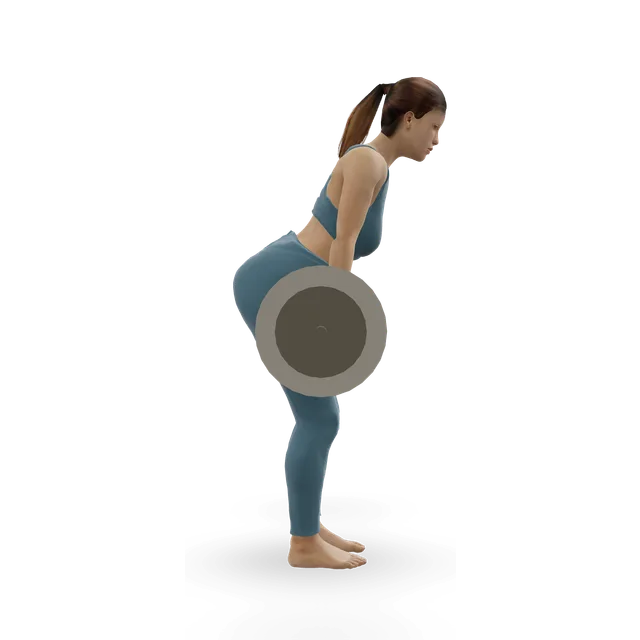
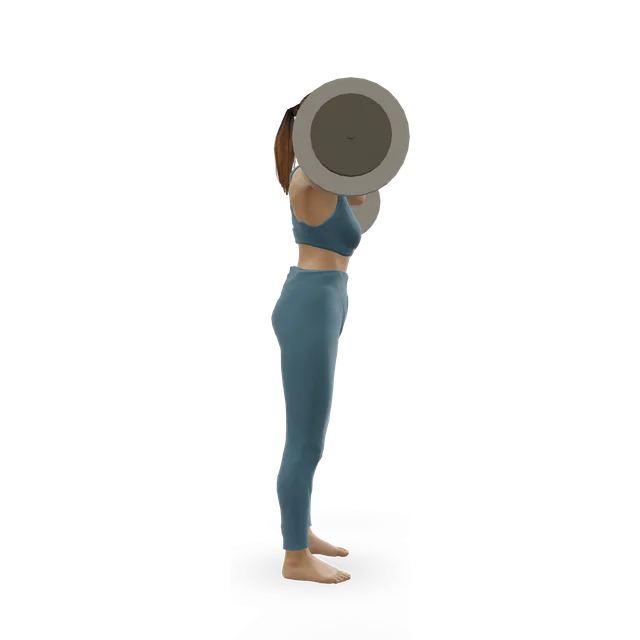
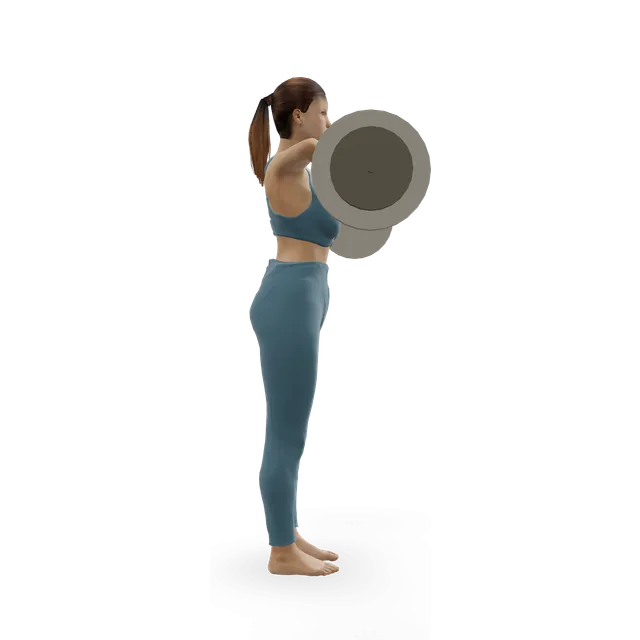
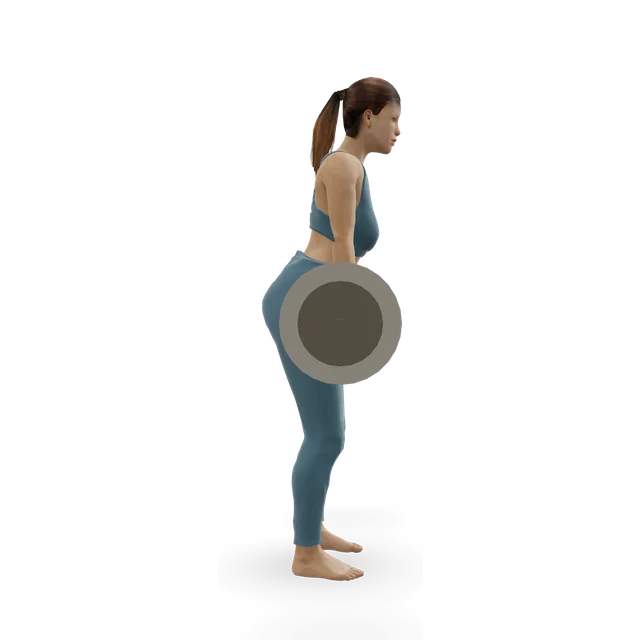
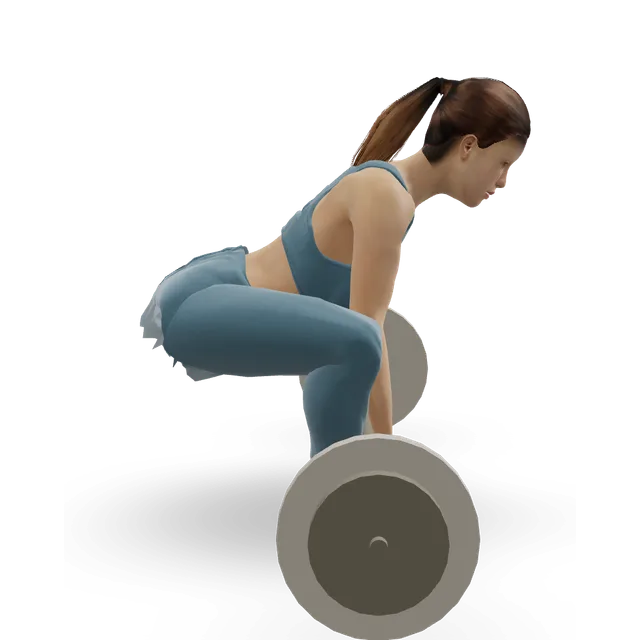
Clean pull demonstrated on the 3D figure3D demoClean pullIntermediate · A barbell

3 × 3, light · Our power clean technique workout's dose (editorial). A closed grip or straps if your thumb is sore

Easier: Cable pull-through · Harder: Power clean

Frankenstein squat (hands-free front squat) demonstrated on the 3D figure3D demoFrankenstein squat (hands-free front squat)Intermediate · A barbell

2 to 3 sets of 5 to 8 with an empty or light bar (our editorial starting point). · The move page's dose: the rack position with no weight through your hands

Easier: Machine hack squat · Harder: Barbell front squat

Dumbbell goblet squat demonstrated on the 3D figure3D demoDumbbell goblet squatIntermediate · A dumbbell

3 or 4 sets of 8 to 12, stopping about 2 reps short of failure, wrists straight under the dumbbell · As in our front squat wrist guide (editorial)

Easier: Bodyweight squat · Harder: Barbell front squat

Move on when: Gripping a bar, a bag or a dumbbell is comfortable, the holds pass the pain rule, and your wrist is no worse the next morning (as in our front squat wrist guide).

Follow along: a timer, a cue and the next move, one step at a time.
Stage 2

Load the forearm, rack the bar without the wrist

About weeks 2 to 6, strength work every other day: forearm strength in every direction, weight back through a bent-back wrist step by step, the shoulders and lats that let the elbows rise, and the jump and the rack without a catch.

Wrist curls demonstrated on the 3D figure3D demoWrist curlsBeginner · A dumbbell

10 slow reps, holding each for a count of 5, with a weight that tires the wrist by the tenth; building to 3 sets of 10, every other day · The Oxford NHS wrist booklet's dose, written for after a broken wrist (borrowed), as in our front squat and lifting wrist guides

Easier: Wrist-extensor eccentrics · Harder: Plate pinch

Reverse wrist curl demonstrated on the 3D figure3D demoReverse wrist curlBeginner · A dumbbell + A bench or box

The same: 10 slow reps with a 5-count hold, building to 3 sets of 10, every other day · The Oxford booklet's dose (borrowed), as in our front squat wrist guide

Easier: Wrist-extensor eccentrics · Harder: Plate pinch

Wall push-up demonstrated on the 3D figure3D demoWall push-upBeginner · A wall

Hands flat on a table, then a wall, holding 5 to 10 s with about a quarter, then a half, three-quarters and all of the weight you can put through them; then 2 to 3 sets of 10 · The Oxford booklet's weight-bearing steps, then our push-up wrist guide's dose, as in our front squat wrist guide (editorial)

Harder: Push-up

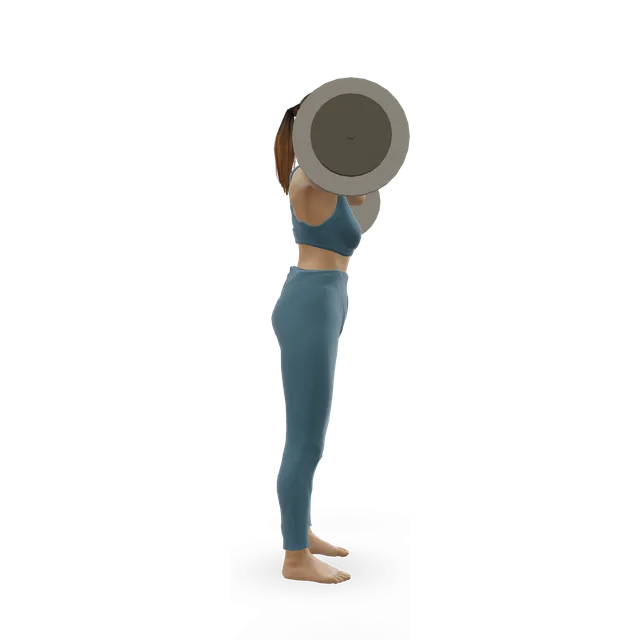
Clean shrug demonstrated on the 3D figure3D demoClean shrugBeginner · A barbell

3 sets of 3 to 5 fast reps, at a load that still moves quickly (our editorial starting point). · The move page's dose: the jump of the clean with no catch

Harder: Snatch shrug

Barbell front squat demonstrated on the 3D figure3D demoBarbell front squatAdvanced · A barbell

3 sets of 5 with the empty bar or a light weight, crossed arms or straps, elbows up, safety pins set · The dose of our front squat technique workout's grip block, as in our front squat wrist guide (editorial)

Easier: Bodyweight squat · Harder: Overhead squat

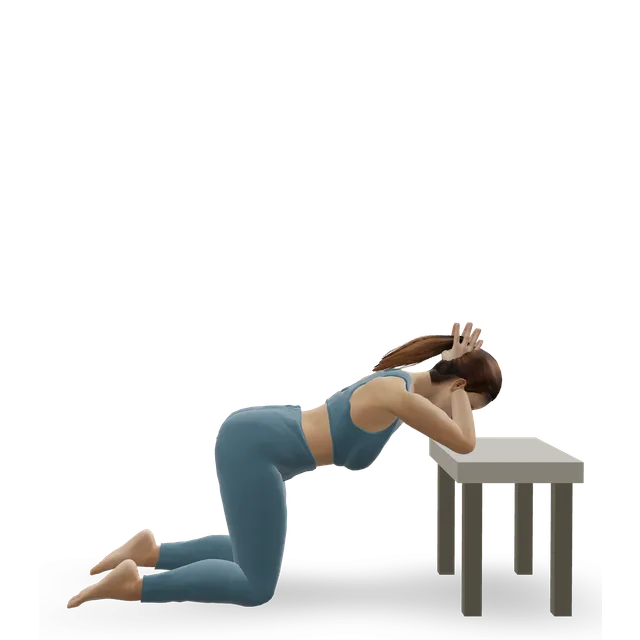
Overhead lat stretch at a bench (elbows on the bench) demonstrated on the 3D figure3D demoOverhead lat stretch at a bench (elbows on the bench)Intermediate · A bench or box

Hold 30 to 45 seconds, 2 to 4 times: the dose ACE gives for its kneeling lat stretch at a bench. · The move page's dose: for elbows that won't rise in the rack, a coaching idea rather than a tested fix

Easier: Overhead triceps stretch · Harder: Sots press

Move on when: 3 sets of 10 wrist bends both ways pass the pain rule, weight through flat hands on a wall or table is comfortable, crossed-arm or strap front squats pass the rule at a moderate weight, and your wrist is fine the next morning, for a week (editorial, from the Oxford progression as our front squat wrist guide uses it).

Follow along: a timer, a cue and the next move, one step at a time.
Stage 3

Back to the catch

From about weeks 4 to 8, often later: the clean-grip rack, then the turnover, then light catches from the hang, then the full clean, one change at a time by the written steps below. No study has tested a return to cleans after wrist pain, so the order is editorial.

Clean-grip front squat demonstrated on the 3D figure3D demoClean-grip front squatAdvanced · A barbell

3 to 4 sets of 3 to 6, leaving about 2 reps in reserve, as for the barbell front squat: the rack position usually gives out before the legs do, and in a 12-week trial some women ended front squat sets early because the bar position was uncomfortable. · The move page's dose. Fingertips under the bar (two or three fingers are enough), elbows high, as coaches teach

Easier: Barbell box squat · Harder: Clean

Clean rack delivery demonstrated on the 3D figure3D demoClean rack deliveryIntermediate · A barbell

Sets of 5 to 10 reps with an empty bar or a light technique bar (Catalyst Athletics). · The move page's dose: the turnover without a catch from height

Easier: Clean shrug · Harder: Barbell clean and press

Hang power clean demonstrated on the 3D figure3D demoHang power cleanAdvanced · A barbell

3 × 3 from mid-thigh, light · Our power clean technique workout's dose (editorial). Fast elbows, a loose grip, the bar onto your shoulders

Easier: Smith machine hang power clean · Harder: Power clean

Power clean demonstrated on the 3D figure3D demoPower cleanAdvanced · A barbell

3 × 2, light · Our power clean technique workout's dose (editorial), once hang power cleans pass the rule for a week

Easier: Clean deadlift · Harder: Clean

Farmer's carry demonstrated on the 3D figure3D demoFarmer's carryIntermediate · A dumbbell + A kettlebell

3 walks of 20 to 30 m, wrists straight · As in our front squat and lifting wrist guides (editorial)

Harder: Suitcase carry

Reverse wrist curl demonstrated on the 3D figure3D demoReverse wrist curlBeginner · A dumbbell + A bench or box

2 sets of 10 to 15, twice a week, with wrist curls the same, kept up for a few months · Editorial, as our front squat wrist guide keeps forearm work going

Easier: Wrist-extensor eccentrics · Harder: Plate pinch

Move on when: Your usual cleans pass the pain rule for 2 weeks. Squat cleans, heavy singles, high-rep cleans in a workout and the hook grip come back one at a time; if a session flares it, go back a stage for a few days, not to nothing (editorial).

Follow along: a timer, a cue and the next move, one step at a time.

What to change for now

Your clean for now (written steps)

Our 3D figure can't show the grip, the hook grip or where the bar lands. These steps come from coaching, our power clean guide and the move pages; where a step is our suggestion, it says so. No trial has tested a change to the clean for wrist pain.

  • 1. Pulls, shrugs and front squats with crossed arms or straps until the stage 2 test passes (our suggestion).
  • 2. Grip a little wider than your shoulders, with chalk; a closed grip or straps for pulls while your thumb is sore, and the hook grip back gradually, taped if that helps (our power clean guide; for pulls, the grip may not matter).
  • 3. Keep the bar close, push the floor away, jump, then pull under and whip your elbows round fast so your upper arms are about level with the floor (our power clean guide).
  • 4. Let the bar land on the front of your shoulders, supported by your trunk, with a loose grip and your fingertips under it; your hands guide the bar rather than hold it up (coaching).
  • 5. Power and hang cleans before squat cleans; light, fast singles and doubles, 2 or 3 reps short of a miss (editorial).
  • 6. If the bar runs forward or your elbows won't come through, push it away, let it drop on bumper plates and step back; never try to save a bad rep (the move pages).
  • 7. Wraps on heavy sets if they make it comfortable; they didn't change grip strength in a trial, so keep the forearm work going (editorial).

Sources 1, 34, 18, 35

Everyday life, CrossFit and kettlebells (written steps)

Our suggestions unless a source is named.

  • 1. The NHS says keep your hands and wrists moving with gentle exercises, and don't lift heavy objects or grip anything too tightly while it's sore.
  • 2. In CrossFit workouts, scale cleans to pulls or dumbbell hang cleans, and thrusters to front squats with crossed arms, until the last stage has passed the pain rule; handstands and push-ups follow our push-up wrist guide.
  • 3. Kettlebell cleans: keep your elbow in so the bell rolls round your hand rather than flipping onto your forearm, as our kettlebell clean guide teaches.
  • 4. Desk and phone work: our typing wrist guide.

Source 30

Positions to swap, and why

Habit or positionWhy it mattersInstead
Catching the bar in your hands with slow, low elbowsThe bar crashes onto your wrists, as our power clean guide says.Fast elbows and a loose grip; drill the turnover.Try: Clean rack delivery
A tight full grip in the rackA coach writes that a very tight grip nearly always drops the elbows and shoulders.A loose fingertip grip.Try: Clean-grip front squat
Heavy or squat cleans while it's soreThe catch loads a fully bent-back wrist under a falling bar (our reading).Pulls and shrugs without the catch.Try: Clean shrug
Thrusters and push presses from the rack while it's soreThey bend the wrist back too, as our front squat wrist guide says.Crossed-arm or strap front squats.Try: Barbell front squat
A hook grip on every rep with a sore thumbNo study has looked at the thumb, and the grip may not matter for pulls.A closed grip or straps for pulls.Try: Clean pull
High pulls with the elbows above your shouldersThe move page links upright rows above shoulder height with signs of shoulder impingement.Stop the elbows at shoulder height, or shrugs instead.Try: Clean shrug
Wrapping every set, or counting on wrapsWraps didn't change grip strength in a trial and haven't been tested for pain.Wraps on heavy sets only, with forearm work.Try: Reverse wrist curl
Pushing through tingling in your fingersThe pressure on the nerve rises as the wrist bends back.A goblet squat, and see a GP if it lasts.Try: Dumbbell goblet squat
Trying to save a missed cleanA forced bend or a fall on the hand can break the scaphoid, and the move pages say never save a bad rep.Let it drop in front of you and step back; drill pulls meanwhile.Try: Clean pull
Long body-weight wrist stretches while it's soreThe kneeling stretch's move page says skip it with a recent wrist injury or carpal tunnel symptoms.The wrist flexor stretch against a wall.Try: Wrist flexor stretch
Resting your wrist completely for weeksThe NHS says keep your hands and wrists moving with gentle exercises.The stage 1 moves.Try: Wrist & forearm flow

Routines to follow

More moves for this area

Questions people ask

Why do my wrists hurt when I do cleans?

Usually the bar is landing in your hands instead of on your shoulders, bending your wrist far back under a falling weight. Loosen your grip, let the bar rest on the front of your shoulders with your fingertips under it, and get your elbows round faster.

Why does the back of my wrist hurt after power cleans?

Often the joint lining or a tendon pinched at the back of the wrist when it's loaded bent back, sometimes a hidden ganglion. It usually settles over 2 to 3 months with less loading. A deep ache that keeps coming back needs checking.

Why does the little-finger side of my wrist hurt?

Often the TFCC, a cartilage cushion there, or the tendon beside it, especially with clicking or a weaker grip. Keep the pain to about 3 out of 10, and see a GP or physiotherapist if it clicks, feels unstable or isn't settling.

Why does the hook grip hurt my thumb?

Your fingers press your thumb into the bar. No study has looked at it, and it usually eases as you build up gradually. Tape can help, and for pulls without a catch a closed grip or straps work as well.

Can I keep training with sore wrists?

Usually, yes: pulls, shrugs and crossed-arm or strap front squats keep your training going without the catch. Bring the catch back light, from the hang, once your wrist passes the pain rule.

Should I wear wrist wraps for cleans?

If they make heavy sets comfortable, but they didn't change grip strength in a trial and haven't been tested for pain. Keep forearm strength work alongside.

Do I need better wrist mobility to clean?

It may help: athletes who caught well had more resting wrist extension and outward shoulder rotation in a small study. But coaches say the shoulders and upper back matter as much, and no trial shows stretching eases wrist pain in cleans.

Why do my fingers tingle in the rack?

A nerve is being pressed: the pressure in the carpal tunnel rises as the wrist bends back. Change your grip, and see a GP if it lasts or your hand feels weak.

Could my wrist be broken after a missed clean?

If the hollow at the base of your thumb hurts after a missed lift, a dropped bar or a fall on your hand, get it checked the same day, even if the wrist moves well: about 1 in 11 injured wrists with a normal first X-ray had a hidden scaphoid fracture. A wrist that is out of shape, numb or cold needs 999 or A&E.

Do I need a scan?

Not usually at first: the NHS starts with looking after it at home and a GP after 2 weeks. A missed lift or a fall, a deep ache that keeps coming back, or little-finger-side pain that clicks or won't settle are the exceptions.

How long will it take, and when should I see a doctor?

No one can promise a date: pinching at the back of the wrist usually settles in 2 to 3 months, and half of TFCC tears fully recover within a year. See a GP if it isn't better after 2 weeks or you have tingling; call 999 or go to A&E for a wrist that is out of shape, numb, white or cold after an injury. In the US, call 911 where this page says 999.

Related exercise guides

Other pain guides

Sources

  1. Everett · The clean and jerk rack positions (coaching article, Catalyst Athletics)
  2. Cejudo 2022 · Arm and wrist range of motion and the clean catch in 20 CrossFit athletes (cohort, IJERPH)
  3. Tung 2024 · Injuries in weightlifting and powerlifting (updated systematic review, BMJ Open Sport Exerc Med)
  4. Weisenthal 2014 · Injury rate and patterns among CrossFit athletes (survey, Orthop J Sports Med)
  5. Feito 2018 · Injuries among 3,049 CrossFit participants over 4 years (survey, Orthop J Sports Med)
  6. Ashikaga 2022 · Medical care at the Tokyo 2020 Olympic weightlifting venue (venue records, Sport Sci Health)
  7. Calhoon 1999 · Injury rates and profiles of elite weightlifters (6 years of training centre records, J Athl Train)
  8. Aasa 2017 · Injuries among weightlifters and powerlifters (systematic review, BJSM)
  9. Raske 2002 · Injuries in elite weight and power lifters (questionnaire, Am J Sports Med)
  10. Keogh 2017 · Injuries across the weight-training sports (systematic review, Sports Medicine)
  11. Tawfik 2021 · Hand and wrist injuries in 270 CrossFit athletes (survey, Cureus)
  12. Huebner 2023 · Joint pain in 868 female Masters weightlifters (survey, BMC Musculoskelet Disord)
  13. Hanson 2022 · Pain in the middle of the back of the wrist in athletes (expert review, Orthop J Sports Med)
  14. Yang 2025 · Wrist pain in a competitive weightlifter (case report, Int Med Case Rep J)
  15. Lee 2019 · The natural history of TFCC tears without joint instability (cohort, 72 people, Clin Orthop Relat Res)
  16. Choi 2024 · Non-surgical care of traumatic TFCC tears (systematic review of 8 studies, J Wrist Surg)
  17. Oranchuk 2019 · The power clean with the hook grip (crossover study, 11 men, Int J Sports Physiol Perform)
  18. Oranchuk 2022 · Why the hook grip improves the power clean (lab study, 11 men, J Sports Sci)
  19. British Society for Surgery of the Hand (BSSH) · Skier's thumb (patient information)
  20. Gelberman 1981 · Carpal tunnel pressures with the wrist bent (lab study, J Bone Joint Surg Am)
  21. Keir 2007 · Wrist posture and carpal tunnel pressure thresholds (lab study, 37 adults, Human Factors)
  22. Weiss 1995 · The wrist position with the lowest carpal tunnel pressure (lab study, J Bone Joint Surg Am)
  23. Li 2026 · Carpal tunnel pressure as the wrist bends (cadaver study, J Orthop Res)
  24. Bojovic 2026 · Bone stress injuries of the arm in athletes (narrative review, Int Orthop)
  25. Steunebrink 2008 · Stress fractures of both forearm bones (ulnae) in a weightlifter (case report, Acta Orthop Belg)
  26. Lee 2026 · Upper limb weight training injuries in US emergency departments (national surveillance, Orthop J Sports Med)
  27. Jain 2026 · Weight training fractures in under-19s from improper use (national injury data, Phys Sportsmed)
  28. British Society for Surgery of the Hand (BSSH) · Wrist sprains (patient information)
  29. Coventry 2023 · Which signs predict a hidden scaphoid fracture? (diagnostic review of 1,685 wrists, Emerg Med J)
  30. NHS · Wrist pain
  31. NHS · Broken arm or wrist
  32. NICE NG38 · Fractures (non-complex): assessment and management
  33. NHS · Ganglion cyst
  34. O'Connor · Ask a coach: wrist pain in the front and overhead squat (coaching article, CrossFit)
  35. Takemura 2023 · Wrist wraps and grip strength in 54 CrossFit athletes (crossover study, Acta Ortop Bras)
  36. Martins 2026 · Lifting straps in resistance training (exploratory review, Int J Sports Physiol Perform)
  37. NHS · Carpal tunnel syndrome
  38. Smith 2017 · Should exercises be painful in long-lasting musculoskeletal pain? (meta-analysis of 7 trials, BJSM)

Exercise education, not a diagnosis or treatment plan. It is written from the guidelines and studies listed above; review by a clinician is pending. If your pain follows an injury, is severe, is getting worse, or comes with any warning sign listed on this page, get it assessed. Health disclaimer.