Back pain from basketball: jumping, landing, contact, stress fractures in teens and what helps

A sore back after a game, a tournament or the first practices of a season is common, and it usually settles within days. Most often it's tired, overloaded back muscles or a strain from a landing, a twist or a knock, and most players are back on court within a day or two. Back injuries are a small share of basketball injuries, especially in young players. In a teenager, though, back pain that is worse arching backwards and won't settle can be a stress fracture of the spine (spondylolysis), which does well when it's found early.

This guide starts with the signs that need a 999 call or accident and emergency (A&E), such as numbness around your genitals or bottom, or back or neck pain with numbness after a fall or a collision, and those that need a general practitioner (GP) or the National Health Service's 111 line (NHS 111) the same day or soon, such as a teenager's arching pain that lasts more than a couple of weeks. It then maps the causes by where it hurts and how old you are, gives the National Basketball Association (NBA) and USA Basketball's limits for young players in their own words, covers jumping, contact, rest days and the warm-up, and gives a four-stage plan with a 3D demo of every move, back to practice and games.

When to get help first

Exercise is for pain that has been checked or is clearly mild and settling.

Get urgent medical help if

  • Call 999 or go to A&E: loss of feeling or numbness around the genitals or bottom, new trouble peeing or controlling your bladder or bowels, changes in genital sensation during sex or problems with erections or orgasm, or pain, tingling, weakness or numbness in both legs. These are signs of cauda equina syndrome, which needs treating in hospital urgently. Don't drive yourself.
  • Call 999 or go to A&E: leg pain with numbness around the genitals or bottom, new trouble starting or controlling peeing, not knowing when you need to poo or losing control of it, sciatica in both legs, or weakness or numbness in both legs that is severe or getting worse. These can be signs of cauda equina syndrome, which needs treating in hospital as soon as possible.
  • Call 999 or go to A&E: back pain with chest pain, or back pain that started after a serious accident, such as a car crash.
  • Call 999: after a fall, you may have hurt your head, neck, back or hip, or you cannot get up.
  • Don't move them: the UK guidelines say someone with a suspected neck injury should be moved only by healthcare professionals with the right training. Call 999 (our suggestion).
  • Call 999 or go to A&E after a neck injury if the person is unresponsive, has severe neck pain or cannot move their head, has fallen from a height such as 5 or more stairs, or is drunk or has taken recreational drugs. Do not drive yourself. Being 65 or over, a dangerous fall or crash (from more than 1 metre or 5 stairs, diving, a high-speed or rollover crash, being thrown from a vehicle, a bicycle collision or an accident on a motorised recreational vehicle), or tingling in the arms or legs after an injury puts you at high risk of a broken neck: get checked.
  • Same day (NHS 111) after a neck injury, if any of these are new or getting much worse: severe neck pain; numbness or weakness in the arms or legs; clumsy hands (dropping things, or struggling with handwriting, buttons or zips); changes in bladder or bowel control; changed feeling around the bottom or genitals, or sexual problems such as recently being unable to have an orgasm or an erection; or feeling generally unwell. The same applies if you have a history of spinal problems, such as osteoporosis or rheumatoid arthritis.
  • Same day (NHS 111): back pain after a new, significant injury in the last 7 days, such as a fall from a height (off a trampoline, a wall or a horse) or a direct blow to the back.
  • Call 999: sudden, severe pain in the tummy or back, which can come with breathlessness, pale or grey skin, or collapse. It can be a burst abdominal aortic aneurysm, most common in men aged 65 or over and in people who smoke or used to smoke.
  • Same day (GP or NHS 111): back pain and you feel hot, cold, shivery or generally unwell, or severe pain that starts suddenly or is getting worse quickly.
  • Ask for an urgent GP appointment or get help from NHS 111 if you think you may have a kidney infection (often pain in your lower back or side, with burning or stinging when you pee or needing to pee more often) and you have a very high temperature or feel hot, cold or shivery, a temperature below 36C, pain in the lower tummy or in the back just under the ribs, blood in your pee, you feel or are sick, you haven't had a pee all day, or you're pregnant. Call 999 or go to A&E if you're confused, drowsy or have difficulty speaking.
  • Same day: leg weakness that is getting worse; new leg pain with a history of cancer, HIV, TB or inflammatory arthritis; or leg pain with a fever, feeling unwell, loss of appetite, unexplained weight loss or night sweats.
  • Same day (urgent GP appointment or NHS 111): new difficulty lifting the front of your foot or toes (foot drop), or a foot that slaps down or catches as you walk, especially if it is getting worse. Weakness in both legs, or with numbness around the genitals or bottom or bladder or bowel changes, is the 999 emergency above.
  • Same day: you have or have had cancer, and new back pain that is severe and doesn't let up, is getting steadily worse, is worse at night and disturbs your sleep, is worse when you cough, sneeze or strain, or comes with tenderness over the spine. Contact your cancer team or GP urgently. With cancer, new weakness, difficulty walking, numbness or bladder or bowel problems are an emergency.
  • Same day (urgent GP appointment or NHS 111): sudden, severe pain in one joint, with swelling, a change in skin colour or difficulty moving it, especially if you feel unwell, hot, cold or shivery or have a high temperature (although not everyone has one). It could be an infection in the joint, gout or calcium crystals (pseudogout), and only a sample of fluid from the joint can tell them apart.
  • Call 999 if someone faints while exercising, or faints and can't be woken within a minute, or has chest pain, a pounding, fluttering or irregular heartbeat, or a fit. Call 999 for sudden chest pain that doesn't go away, pain that spreads to your arms, neck, jaw, stomach or back, or chest pain with sweating, feeling sick, light-headedness or breathlessness.

See a doctor or physiotherapist if

  • Back pain that hasn't improved after a few weeks of looking after it at home, stops you doing day-to-day activities, worries you, or you're struggling to cope.
  • Pain, tingling or numbness spreading below the knee that isn't settling after a few weeks, is getting worse or stops your normal activities: see a GP.
  • Pain that doesn't improve with rest or is worse at night, or pain that is worse when you sneeze, cough or poo.
  • Unexplained weight loss, or a lump, swelling or change in the shape of your back.
  • Pain at the top of the back, between the shoulders, rather than in the lower back.
  • A teenager in a sport that arches or twists the back, such as gymnastics, dance, diving, volleyball, tennis, cricket fast bowling, baseball pitching, weightlifting, football or rugby, with back pain that lasts more than a couple of weeks, is worse arching back or stops them training: get it checked by a GP or sports physiotherapist. It can be a stress fracture in the spine.
  • Lower back pain, or pain in your thighs or bottom, that doesn't go away after 3 to 4 weeks, or pain, numbness and tingling down one leg for more than 3 or 4 weeks: see a GP.
  • See a GP if your child is under 6 and has back pain, or if back pain lasts more than 4 weeks, stops them doing things, is getting worse or disturbs their sleep, or comes with weight loss, night sweats, a change in the shape of their spine, stiffness or difficulty moving, or pins and needles, weakness or numbness. This is the advice of the NHS children's physiotherapy services in Gwent (Aneurin Bevan University Health Board) and in York and Scarborough. A high temperature or feeling unwell needs help the same day, and bladder or bowel changes, numbness around the genitals or bottom, or symptoms in both legs need 999 (see above).
  • Back pain and stiffness that persists in a teenager or young adult. Ankylosing spondylitis tends to start at that age and can affect the whole spine.
  • Back pain that started before 45 and has lasted more than 3 months, especially if it started before 35, wakes you in the second half of the night, comes with buttock pain, gets better with movement or within 48 hours of anti-inflammatory painkillers, or you have or have had arthritis, pain where a tendon attaches to bone (enthesitis) or psoriasis, or a parent, brother, sister or child with spondyloarthritis. These can point to inflammatory back pain (axial spondyloarthritis, such as ankylosing spondylitis). The National Institute for Health and Care Excellence (NICE) asks GPs to refer people with 4 or more of these 9 features to a rheumatologist, and to do a blood test for the HLA-B27 gene marker if exactly 3 are present, referring if it is positive.
  • Sudden new back pain after a minor fall, lift, cough or sneeze, from 50 or past the menopause, or if you take long-term steroid tablets; or height loss, a curved spine or a change in posture: see a GP. It can be a spinal fracture.

Where does it hurt?

Location narrows the likely causes; it does not diagnose.

An ache across the low back the day after a game, a tournament or the first practices, easing as you move

Tired, overloaded back muscles, the commonest cause. A lighter day or two, then the plan below; this guide covers it.

A sudden catch on one side after a landing, a twist or a rebound, sore to bend and straighten

Ordinary back pain, often called a strain or spasm. It's common and settles within days to weeks.

Read: Back spasm and pulled back muscle →

A sore spot after a knee, an elbow or a fall, tender to touch over muscle

A bruise (contusion), common in college players. It settles over days to a few weeks; this guide covers it.

A teenager whose low back hurts arching backwards, rebounding or shooting, for more than a couple of weeks, sometimes on one side

A possible stress fracture of the spine (spondylolysis), common in teenage athletes referred with back pain. Get it checked, as the warning signs say.

Read: Spondylolisthesis →

Pain, tingling or numbness spreading down one leg below the knee, often worse sitting or coughing

Sciatica, often from a disc. It's uncommon in players; symptoms in both legs are a 999 call.

Read: Sciatica →

Low on one side, by the dimple at the back of the pelvis

Possibly the sacroiliac (SI) joint: 7.8% of US college players' low back injuries were recorded as inflammation there. Only an examination can point to it.

Read: SI joint pain →

Sudden pain in one spot over the spine after a hard fall or a collision, worse standing, turning or breathing in

A possible fracture or a deep bruise. It's rare: get help the same day, as the warning signs say.

Read: Spinal compression fracture →

Neck pain after a fall onto the head or a collision, with or without arm symptoms

A neck injury. It's rare: don't move them, and call 999, as the warning signs say.

Read: Whiplash →

Between the shoulder blades or in the middle of the back after games

Usually the upper back muscles. The NHS asks for a GP check for pain between the shoulders rather than in the lower back.

Read: Upper back pain →

Back pain and stiffness lasting months in a teenager or young adult, worse in the morning, better with movement

Possibly inflammatory back pain (axial spondyloarthritis). It's uncommon: see a GP.

Read: Chronic low back pain →

The knee or the ankle rather than the back

Our knee pain from basketball and ankle pain from basketball guides cover these. In young players, back pain often comes with knee or ankle pain.

Read: Knee pain from basketball →

Fainting or chest pain on court

Possibly the heart: call 999, as the warning signs say.

Understand it

Common, usually settles, and most players are back within a day or twoEmerging evidence

A sore back after a game, a tournament or the first practices of a season is common, and it usually settles. The NHS says back pain "usually improves within a few weeks", and in a new episode of low back pain, average pain fell from 52 to 23 out of 100 within 6 weeks.

In US college basketball, "The majority of both female (58.9%; n = 1004) and male (73.1%; n = 2353) athletes returned to play within 24 hours of injury" after a low back injury. In NBA injury reports from 2021 to 2024, "Nonsurgical management was utilized in 98.78% of cases" of back and neck problems, with "median missed games ranging from 1 to 2". Across 11 studies, the trunk and spine were 7.5% of basketball injuries, and "Only 5% of all injuries reported for children and adolescents occurred in the trunk and spine".

Sources 1, 2, 3, 4, 5

Is basketball hard on backs? The studies disagreeMixed evidence

Whether basketball is a high or a low risk sport for back pain is conflicting, and both views have support. Across sports, the high-quality studies in one review found the lowest point prevalence of low back pain in basketball (18%). Back pain is common in athletes in general: about half of adult athletes report it over a year.

Other studies find it common in players too. In 401 young Finnish club players, "Forty-four percentage of the basketball players and 62% of floorball players had suffered from LBP during the previous 12 months" (LBP is low back pain). A pooled analysis of basketball studies put low back pain at 26% (an interval of 16% to 37%), but the studies asked about different time frames, so the figure is rough. The authors of a German survey of elite athletes suggest that in basketball "the high frequency of jumps and landings" might promote back pain, though only 21 basketball players took part. Taken together, back pain is common in players, as in other athletes, but basketball doesn't stand out as especially hard on backs (our reading).

Sources 6, 7, 8, 9, 10

Tired muscles, strains and bruisesEmerging evidence

Basketball changes movement constantly: in 8 elite Australian men, "The mean (+/- S.D.) frequency of all activities was 997 +/- 183, with a change in movement category every 2.0 s". Over 17 NBA seasons, "Lateral ankle sprains were the most frequent orthopaedic injury (n, 1658; 13.2%), followed by patellofemoral inflammation (n, 1493; 11.9%), lumbar strains (n, 999; 7.9%), and hamstring strains (n, 413; 3.3%)".

In NBA injury reports from 2021 to 2024, "The 4 most common injury types were soreness (26.83%), spasm (23.48%), tightness (12.80%), and contusion (11.59%), collectively representing nearly 75% of injuries". In US college basketball, 61.1% of low back injuries were recorded as pain and 18.4% as bruises, and "Contact injuries were the most common injuries in both women (39.8%) and men (39.8%)": a knee, an elbow or a fall onto the court. These counts come from athletic trainers and public injury reports, so they show how common each problem is, not what causes it.

Sources 11, 12, 4, 3

Jumping, landing and reboundingEmerging evidence

A modelling study of more than 600 tasks found "Especially ballistic jumping and landing skills yield high estimated compression at L4/L5 of more than ten times body weight" (L4/L5 is a joint low in the spine), and 50 drop jumps shortened the spine by about 0.6 mm, a small change that reverses. Jumping takes only about 2.1% of live time in junior elite games, and each landing is brief.

But in 383 young Finnish players followed for 3 years, "we did not find an association between LBP and vGRF" (how hard they landed), though a little less hip and pelvis control on one-leg landings went with later back pain. These are lab and modelling studies, and one cohort: they show the load, not that landing causes back pain.

Sources 13, 14, 15, 16

Young players: back pain often comes with leg pain, and comes backEmerging evidence

In young Finnish players, most back pain came during the playing season, and a family history of muscle and joint problems and older age went with it. Back pain that a study doctor confirmed was much rarer, "87 per 1000 athlete-years", but it tended to come back.

In 592 Japanese players aged 6 to 15, "School-aged basketball players had a point prevalence of 12.8% for LBP", and players with knee or ankle pain had more back pain; arm pain went with back pain too. Across 80 studies of adolescent athletes in all sports, 42% had low back pain over 12 months, and risk factors included "sport volume/intensity" and "concurrent lower extremity pain". Back pain isn't growing pains: the NHS describes growing pains as aching or throbbing in both legs in the evening or at night.

Sources 8, 17, 18, 19, 20, 21

A stress fracture of the spine (spondylolysis) in teenagersEmerging evidence

The American Academy of Orthopaedic Surgeons (AAOS) says "Spondylolysis is a weakness or stress fracture in one of the vertebrae", and "The pars interarticularis is the weakest portion of the vertebra"; it comes from "repeated hyperextension and rotation" (arching and twisting). In a US children's sports clinic, "Forty-seven percent of the 100 adolescents were ultimately shown to have a spondylolysis stress fracture", against 5% of adults.

Basketball is named often in these studies: in 533 young patients at a US sports medicine practice, "Soccer, gymnastics/cheer, football, and basketball were the most common sports associated with spondylolysis", and it was one of the four sports most often named in a review of athletes' outcomes. These are clinic series, so they reflect who plays and who is referred, and they give no risk per player. A pooled analysis of basketball studies put spondylolysis at 14%, but with an interval from 0.1% to 27%, so that figure is very uncertain. Young athletes who played one sport had more stress injuries higher in the lower back (adjusted odds ratio 1.80), an association.

Sources 22, 23, 24, 25, 26, 9, 27

Discs, sciatica and serious injuries: uncommon to very rareEmerging evidence

"Disk herniation" was 2.9% of college players' low back injuries. Over 30 NBA seasons, 61 players had a lumbar disc herniation, about 2 a season across the league, and "Return-to-play (RTP) rates did not differ between NOT and OT players (77.8% vs. 79.4%)" (players treated without and with surgery).

Serious spinal cord injury in basketball is very rare. The US National Center for Catastrophic Sport Injury Research recorded 41 traumatic catastrophic injuries of any kind in high school and college basketball over 43 years, about one a year across both. A review says "basketball has the highest number of nontraumatic catastrophic injuries for female athletes", mostly heart-related, which is why the heart line is among the warning signs.

Sources 3, 28, 29, 30

Who gets it, and the loadEmerging evidence

Back pain in athletes went with "A previous episode of LBP, high training volume, periods of load increase and years of exposure". In 49 youth players, "Injured youth basketball athletes had a low previous 3- and 4-week workloads coupled with a high previous 1-week workload" (leg injuries, not backs), and in college women, "Preseason-practice injury rates were more than twice as high as regular-season practice injury rates". Older recreational players are not well studied; the general back pain advice applies.

Sources 7, 31, 32

When a scan or test mattersStrong evidence

Most back pain after basketball needs no scan. The National Institute for Health and Care Excellence (NICE) says "Do not routinely offer imaging in a non-specialist setting for people with low back pain with or without sciatica", and disc degeneration showed on scans of 37% of 20-year-olds without back pain. A pars defect is found in about 1 in 17 adults scanned for other reasons, "5.9% (males: 7.9%, females: 3.9%)", so a defect on a scan isn't always the cause of pain.

For a teenager whose back hurts arching backwards for weeks, a scan does change what happens: a review of imaging found "two-view plain films to be the best initial study" and advised that "MRI should be used in early diagnosis and CT in more persistent courses" (MRI is magnetic resonance imaging, CT computed tomography), and examination tests alone couldn't tell a stress fracture from other back pain. After a fall with pain in one spot over the spine, or with leg weakness or the cauda equina signs, imaging comes first.

Sources 33, 34, 35, 36, 23

How it usually goesEmerging evidence

Most aches settle within days; NHS inform says back problems "should begin to settle within 6 weeks". In college players, most were back within 24 hours of a low back injury, and all the women within 3 weeks; in the NBA, most missed 1 to 2 games. Back pain in young players tends to come back, so build back gradually.

For spondylolysis caught early, "In the very early stage, the bony healing rate was 100%, and average treatment period was 2.5 months" in a Japanese series, though "The average overall recurrence rate was 26.1%"; "The time to return to sports was 4.6 and 6.8 months for conservative and surgical approaches, respectively" across 14 studies; and in a trial, starting physiotherapy straight away brought players back at a median of 74 days against 112. Followed for 45 years, "Subjects with pars defects follow a clinical course similar to that of the general population". No one can promise a date.

Sources 37, 2, 3, 4, 17, 38, 39, 40, 41

When it isn't basketball: the causes the warning signs cover

Some back pain has causes basketball didn't create, and the warning signs follow the pages behind them. Numbness around the genitals or bottom, new bladder or bowel trouble or both legs weak can be cauda equina syndrome, a 999 call in the words of the NHS back pain and sciatica pages. After a hard fall or a direct blow to the back, NHS inform's back problems page asks for help from NHS 111 the same day.

After a fall onto the head or neck, or a collision, the neck lines follow NHS inform's neck injury page and NICE's spinal injury guideline, which lists the dangerous ways to hurt the neck, among them a fall from more than 1 metre or 5 steps. The UK grassroots concussion guidelines say someone with a suspected neck injury should be moved only by healthcare professionals with the right training.

The other warning signs follow the pages they were first written from. A burst abdominal aortic aneurysm (a swelling of the body's main artery) can cause sudden, severe tummy or back pain, a 999 call on the NHS aneurysm page; the NHS kidney infection, foot drop and septic arthritis pages, a Leicestershire NHS leg pain leaflet and NICE's guideline on cancer that has spread to the spine give the same-day signs. The Royal Osteoporosis Society, the AAOS, the UK osteoporosis guideline and NICE describe fractures from thin bones after a minor fall. A stress fracture of the spine in a young athlete is described in a long-term study that followed 500 children from age 6, and the NHS spondylolisthesis page says when lower back pain needs a GP. Two NHS children's physiotherapy services, in York and Scarborough and in Gwent, list when a child's back pain needs a GP. The NHS ankylosing spondylitis page and NICE's spondyloarthritis guideline describe back pain and stiffness that starts in the teens or young adulthood. The NHS chest pain and fainting pages give the 999 signs for chest pain or fainting on court.

Sources 1, 57, 37, 58, 59, 60, 61, 62, 63, 64, 65, 66, 67, 68, 69, 70, 71, 72, 73, 74, 75, 76, 77, 78, 79


What helps, and how strong the evidence is

Cut what hurts, build up gradually and keep rest days: sensible, but untested for backsEmerging evidence

No study has tested a change to basketball for back pain. Skipping the jumping drills, rebounding and contact that hurt for a week or two, keeping shooting and skill work within the pain rule, and adding back one practice or game at a time is our suggestion. A teenager whose back hurts arching backwards stops the painful sport and gets checked first.

The American Orthopaedic Society for Sports Medicine (AOSSM) says "After a period of inactivity, progress gradually back to full-contact basketball through activities such as aerobic conditioning, strength training, and agility training", and "Listen to your body and decrease training time and intensity if pain or discomfort develops". For young players, the NBA and USA Basketball say "Overscheduling of competitive events, overuse injuries and burnout have become too common in youth basketball", and advise "Ensure rest from organized basketball at least one day per week, and extended time away from organized basketball each year" and "Delay specialization in basketball until at least age 14". The American Academy of Pediatrics (AAP) says "A good general rule is that kids should not train more hours each week than their age", and the American Medical Society for Sports Medicine (AMSSM) says "Careful monitoring of training workload during the adolescent growth spurt is recommended, as injury risk seems to be greater during this phase". None of this was written for backs; it rests on expert consensus, and a rise in load goes with back pain in athletes.

Sources 42, 43, 44, 45, 7

Warm-ups: good for knees and ankles, little known for backsEmerging evidence

The developers of the 10-minute SHRed Injuries Basketball warm-up say "Neuromuscular training warm-ups are recommended as the minimal standard of practice for injury prevention in youth basketball"; their evidence is for ankles and knees. In one small trial in 11 teams of an Italian club, mostly young teenagers, a structured warm-up (the FIFA 11+) cut trunk injuries, "trunk (0.07 vs 0.51; P = .013)" per 1,000 times a player took part in a practice or game, and other basketball warm-up studies didn't report backs. Basketball England has an injury prevention warm-up, the Starting Five, but in a survey "Only 36% of coaches were aware of Basketball England’s ‘Starting Five’ programme".

Sources 46, 47, 48, 49

Exercise helps back pain (borrowed from back pain in general, and from athletes)Strong evidence

No trial has tested exercise for back pain in basketball players, and none has tested a core programme in them. Across 249 trials in long-lasting low back pain, exercise reduced pain by about 15 points out of 100 at first follow-up, with moderate-certainty evidence, and in 14 trials in athletes, "Exercise approaches generally reduced pain and improved function in athletes with LBP, but the effect on RTS is unknown" (RTS is return to sport); that evidence is low quality. NICE suggests a group exercise programme for an episode or flare-up. The plan's doses come from the site's back guides and basketball workouts.

Sources 50, 51, 33

Young players with spondylolysis: most do well without surgeryEmerging evidence

The AAOS says "For most patients with spondylolysis and low-grade spondylolisthesis, back pain and other symptoms will improve with nonsurgical treatment". Pooled observational studies found "83.9% of patients treated nonoperatively will have a successful clinical outcome after at least 1 year", and "Bracing does not seem to influence this outcome".

In a trial of 64 adolescent athletes (median age 14.2), players who began physiotherapy within 7 days "returned to sport 38 days sooner (p<0.001), with fewer recurrences of LBP over 12 months (3% vs 29%; p=0.01)", and "There were no adverse events"; both groups rested from sport, and neither was braced. "Adolescent athletes RTP 92.2% of the time with nonoperative management, compared with 90.3% when treated operatively" across 11 studies (RTP is return to play). Our spondylolisthesis guide sets out this approach, with its pain-free rule.

Sources 22, 52, 40, 53, 39

Medicines, braces and surgeryStrong evidence

NICE suggests considering anti-inflammatory tablets (non-steroidal anti-inflammatory drugs, NSAIDs) for low back pain at the lowest effective dose for the shortest time, and says "Do not offer paracetamol alone for managing low back pain" and "Do not offer belts or corsets for managing low back pain with or without sciatica". For spondylolysis, a brace didn't change the pooled outcome. No study links basketball shoes to back pain; court shoes in good repair are our suggestion.

Surgery is for the few: in the NBA, 4 of 285 spine injuries over three seasons needed an operation, all disc-related. "After the diagnosis of an LDH, professional athletes successfully returned to sport 82% of the time" across four professional sports (LDH is lumbar disc herniation), and after disc surgery, "18 of 24 players (75%) returned to play again in the NBA". Our herniated disc and spondylolisthesis guides cover who needs surgery.

Sources 33, 52, 4, 54, 55

How much pain is OK while you exercise?

Adults: up to 5 out of 10. Teenagers with arching pain: pain-freeEmerging evidence

Some discomfort during exercise is fine, and it does not mean you are doing damage: the WHO counts "hurt does not necessarily mean harm" among the messages people with back pain need. Aim for pain you would call mild to moderate, no more than about 5 out of 10. It should settle within an hour or so, and your back should be no worse the next morning. If it is worse, do less next time (fewer reps, a smaller range, a lighter load), not nothing.

Leg symptoms are the exception: stop or shrink any movement that sends pain, pins and needles or numbness further down your leg. If leg symptoms move back towards your spine, that is a good sign, even if your back aches a little more for a while.

If pain climbs day after day, or you notice any warning sign, stop and get it checked. The 5 out of 10 figure matches this site's other pain guides and has not been tested in a back pain trial; in trials of long-lasting muscle and joint pain, exercise that allowed some pain did no harm.

Young athletes with an active stress fracture: exercises and daily activities shouldn't bring on the back pain. Move to the next stage only when you can bend forwards and backwards 10 times standing without pain, and later run, jump and train without pain. Ordinary muscle effort and stretch are fine; back pain is not. If an exercise brings the pain back, tell your physiotherapist and step back for a few days. In the trial, athletes were told that pushing through pain could slow their return to sport, and a specialist programme stops or changes any activity that makes the pain worse during or after it.

For basketball (our suggestion, built on the rules above, the spondylolysis trial's pain-free criteria and the NBA and USA Basketball guidelines): judge each practice or game by your back during it, that evening and the next morning. Adults: up to 5 out of 10 that settles within an hour, with your back no worse the next morning; if it is worse, cut the jumping drills, contact and minutes next time, not all basketball. Teenagers whose back hurts arching backwards: no pain is the rule, during and after, until a doctor or physiotherapist has checked them, and young players keep to their age group's limits whatever their back feels like. Pain in one spot over the spine after a fall, pain spreading down a leg, numbness or weakness are not pain-rule questions: stop and see the warning signs.

Sources 56, 80, 81, 82, 40, 83, 84

The exercise plan: 4 stages

Start at the first stage. Each move opens a full guide with a 3D demo.

Stage 1

Settle: keep moving, put jumping and contact on hold

About the first 1 to 2 weeks: little and often, keep walking and move your back gently in every comfortable direction, as the NHS and NICE advise. Shooting with no jumping can carry on within the pain rule (our suggestion). A young player with a suspected stress fracture of the spine follows our spondylolisthesis guide's plan under a physiotherapist instead.

Treadmill walking demonstrated on the 3D figure3D demoTreadmill walkingBeginner · Cardio machine

5 to 10 min, several times a day · As in our back pain and golf guides (editorial). Walking outdoors counts

Easier: Recumbent exercise bike · Harder: Treadmill jogging

Cat-cow demonstrated on the 3D figure3D demoCat-cowBeginner · No equipment

8 waves, slower than feels natural · The move page's dose. NHS inform's back exercises include the same curl and uncurl on hands and knees

Harder: Half lord of the fishes (Ardha Matsyendrasana)

Pelvic tilt into bridge demonstrated on the 3D figure3D demoPelvic tilt into bridgeBeginner · No equipment

The tilt first: 2 to 3 at a time, building to sets of 8 · As in our twisting and golf guides: NHS inform's pelvic tilt, with its pacing

Harder: Glute bridge

Hip windshield wipers demonstrated on the 3D figure3D demoHip windshield wipersBeginner · No equipment

10 slow passes side to side, 2 rounds · From the move page's dose (an editorial starting point). Small range, starting towards the easier side, as in our twisting guide

Easier: Supine heel slide · Harder: 90/90 switch

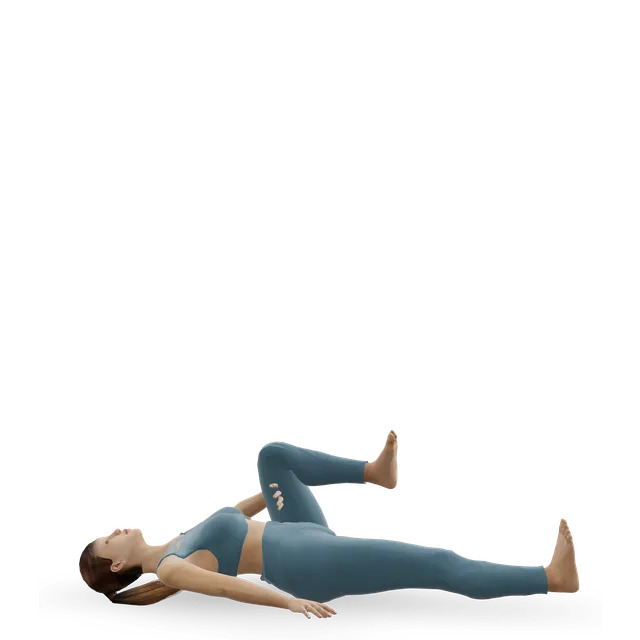
Single knee-to-chest stretch demonstrated on the 3D figure3D demoSingle knee-to-chest stretchBeginner · No equipment

Hold 20 to 30 seconds, 2 to 4 times each side · From the move page's dose (an editorial starting point). Often easier than arching for a back that hurts arching (our note); leave it out if it sends pain down a leg

Harder: 90/90 hip lift-off

Thoracic rotation demonstrated on the 3D figure3D demoThoracic rotationBeginner · No equipment

6 rotations per side, moving with the breath · The move page's dose. Turning from the upper back

Easier: Side-lying open book · Harder: World's greatest stretch

Move on when: You can walk for 15 to 20 minutes and do a few easy squats and a hinge within the pain rule, and your back is no worse the next morning (editorial).

Follow along: a timer, a cue and the next move, one step at a time.
Stage 2

Build: trunk endurance, the hinge and the hips

About weeks 2 to 6, 2 or 3 sessions a week with walking on most days: the trunk and hip strength from the back hub's second stage, with the spine held still, and the hip hinge for picking things up and the ready stance.

Bird dog, one limb at a time demonstrated on the 3D figure3D demoBird dog, one limb at a timeBeginner · No equipment

3 sets of 6 to 8 each side, with 3 to 5 s holds; then the full bird dog · As in our twisting and golf guides (editorial)

Easier: Side-lying tummy draw-in · Harder: Bird dog

Dead bug heel taps demonstrated on the 3D figure3D demoDead bug heel tapsBeginner · No equipment

2 sets of 6 to 8 each side · As in our back pain and golf guides (editorial)

Easier: Bent-knee fall-out · Harder: Forearm plank

Knee side plank demonstrated on the 3D figure3D demoKnee side plankBeginner · No equipment

3 holds of 15 to 20 s each side · As in our back pain guide (editorial); compare the two sides

Harder: Side plank

McGill curl-up demonstrated on the 3D figure3D demoMcGill curl-upBeginner · No equipment

3 to 5 holds of 8 to 10 s · As in our back pain from jump rope guide (editorial). Skip it if bending forward sends pain down a leg, as the move page says

Harder: Crunch

Glute bridge demonstrated on the 3D figure3D demoGlute bridgeBeginner · No equipment

2 to 3 sets of 10 · As in our back pain and golf guides (editorial)

Easier: Pelvic tilt into bridge · Harder: Single-leg glute bridge

Hip-hinge practice demonstrated on the 3D figure3D demoHip-hinge practiceBeginner · No equipment

2 to 3 sets of 10 · As in our back pain guide (editorial). The ready stance and picking up the ball and your bag

Harder: Kettlebell deadlift

Move on when: Every set is controlled and your back is no worse the next morning, for a week (editorial).

Follow along: a timer, a cue and the next move, one step at a time.
Stage 3

Court strength: legs, one-leg control and a trunk that resists a twist

About weeks 6 to 10, 2 or 3 sessions a week: leg strength for jumping and landing, one-leg control (a little less hip control on landings went with later back pain in young players), a trunk that resists a twist, and carrying.

Side plank demonstrated on the 3D figure3D demoSide plankIntermediate · No equipment

3 holds of 20 to 30 s each side · As in our back pain guide (editorial)

Easier: Knee side plank · Harder: Side plank with leg lift

Half-kneeling Pallof press demonstrated on the 3D figure3D demoHalf-kneeling Pallof pressBeginner · A band + An anchor point

2 to 3 sets of 8 to 10 each side · As in our back pain and golf guides (editorial). It trains the trunk to resist a twist, as in contact and cuts

Harder: Pallof press

Dumbbell goblet squat demonstrated on the 3D figure3D demoDumbbell goblet squatIntermediate · A dumbbell

3 sets of 8 to 10 · As in our back pain guide (editorial)

Easier: Bodyweight squat · Harder: Barbell front squat

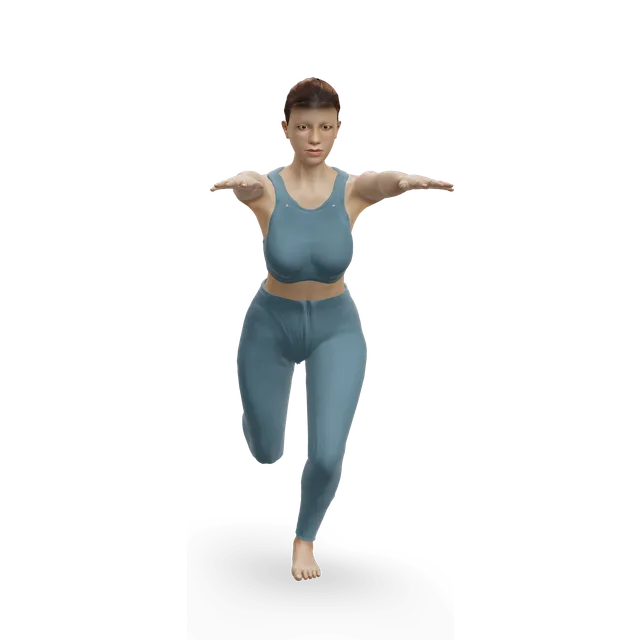
Single-leg Romanian deadlift demonstrated on the 3D figure3D demoSingle-leg Romanian deadliftAdvanced · A dumbbell

3 sets of 8 each leg, fingertips on a wall at first · As in our back pain from tennis guide (editorial). One-leg control at the hip

Easier: Dumbbell Romanian deadlift

Lateral band walk demonstrated on the 3D figure3D demoLateral band walkBeginner · A band

2 to 3 sets of 10 to 15 steps each way · As in our knee pain from basketball guide (editorial). Hip strength for landings and cuts

Easier: Hip abduction machine · Harder: Lateral band walk, band at the feet

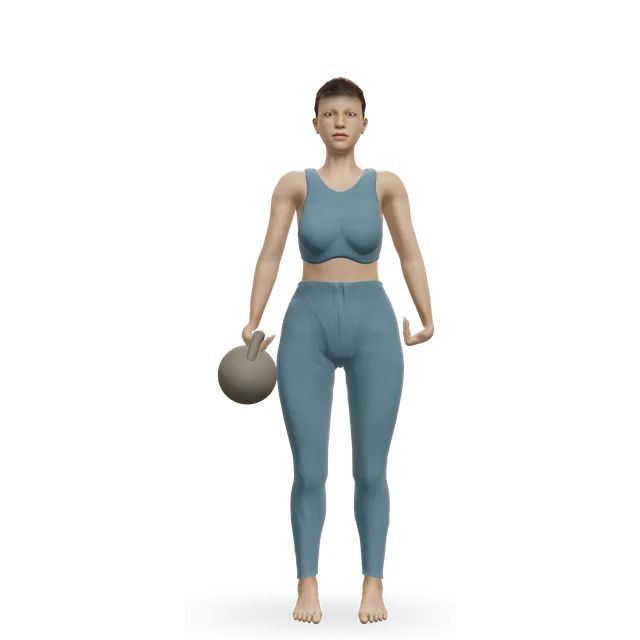
Suitcase carry demonstrated on the 3D figure3D demoSuitcase carryIntermediate · A dumbbell + A kettlebell

3 walks of 20 to 30 m each side · As in our back pain guide (editorial). If you can't stay level, the weight is too heavy, as the move page says

Easier: Farmer's carry · Harder: Overhead carry (waiter's walk)

Move on when: These are within the pain rule, and a long walk or a day of your usual activity leaves your back no worse the next morning (editorial).

Follow along: a timer, a cue and the next move, one step at a time.
Stage 4

Land, then back on court: the warm-up, then practice and games

From about weeks 6 to 10, as your back allows, then for good: soft landings, then springy jumps and sideways bounds, then the warm-up's court movement, then practice and games by the written steps below. How basketball comes back is our suggestion, built on the NBA and USA Basketball guidelines and the AOSSM's advice to progress gradually; no study has tested a return to basketball after back pain.

Snapdown to athletic landing demonstrated on the 3D figure3D demoSnapdown to athletic landingBeginner · No equipment

2 × 5, hold each landing 2 s · As in our basketball strength and jump workout (editorial). Land quietly, hips back, knees over your toes

Easier: Bodyweight squat · Harder: Box drop landing

Pogo hops demonstrated on the 3D figure3D demoPogo hopsIntermediate · No equipment

2 × 10 · As in our basketball strength and jump workout (editorial). Quick, small contacts

Easier: Ankle bounces (mini pogo) · Harder: Single-leg pogo hops

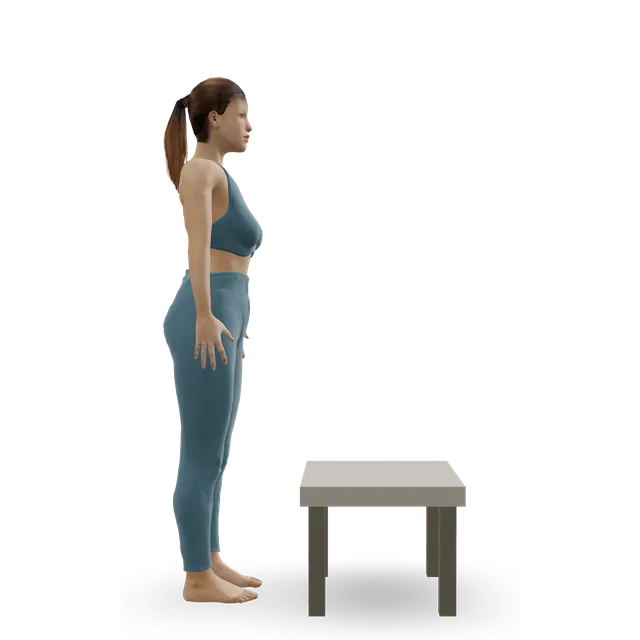
Box jump demonstrated on the 3D figure3D demoBox jumpIntermediate · A bench or box

3 × 5 · As in our basketball strength and jump workout (editorial). Jump up, land softly, step down

Easier: Jump squat · Harder: Depth jump

Lateral bound (skater jump) demonstrated on the 3D figure3D demoLateral bound (skater jump)Beginner · No equipment

3 × 4 each side · As in our basketball strength and jump workout (editorial). Stick each landing for 2 s

Harder: Bench jump-over

Side-stepping (sideways walking) demonstrated on the 3D figure3D demoSide-stepping (sideways walking)Beginner · A wall

1 to 2 court lengths · As in our basketball injury prevention warm-up (editorial). Run forwards, then shuffle back in a zig-zag

Harder: Lateral band walk

Forearm plank demonstrated on the 3D figure3D demoForearm plankIntermediate · No equipment

20 to 30 s · As in our basketball injury prevention warm-up (editorial)

Easier: Stomach vacuum (drawing-in) · Harder: Plank walk-up

Move on when: Drills and practices stay within the pain rule and your back is no worse the next morning (editorial). Keep two strength sessions a week (stages 2 and 3, or our basketball strength and jump workout), and drop back a stage for a week after a flare rather than stopping.

Follow along: a timer, a cue and the next move, one step at a time.

What to change for now

What to do now (written steps)

Our 3D figure can't show these. They come from the NHS back pain page, NICE and NHS inform's back exercises; where a step is our suggestion, it says so.

  • 1. Stay active and try to carry on with your daily activities, the NHS says, and don't stay in bed for long periods.
  • 2. Ibuprofen if it suits you, and ice or heat wrapped in a tea towel, as the NHS suggests. NICE doesn't offer belts or corsets.
  • 3. NHS inform's back exercises rate pain of 0 to 3 out of 10 as minimal and 4 to 5 as acceptable, and say your pain should be no worse the morning after you've exercised; the adults' pain rule below uses the same band.
  • 4. Pain in one spot over the spine after a fall, pain spreading down a leg, numbness or weakness, or a teenager's back that hurts arching backwards for weeks isn't an ordinary basketball ache: see the warning signs.

Sources 1, 33, 56

On court: jumping, contact, minutes and the warm-up (written steps)

The 3D figure can't show these. The advice is in the AOSSM's and the warm-up developers' own words; none has been tested for back pain, and where a step is our suggestion, it says so.

  • 1. For a week or two, skip the jumping drills, rebounding and contact that hurt, and keep shooting and skill work within the pain rule (our suggestion).
  • 2. Keep contact drills and scrimmages for later in the steps back: contact was the commonest way college players hurt their low backs (our suggestion).
  • 3. After a break, "progress gradually back to full-contact basketball", and "decrease training time and intensity if pain or discomfort develops", as the AOSSM says.
  • 4. Warm up before every practice and game with a structured warm-up, such as our basketball injury prevention warm-up.
  • 5. After a hard fall with pain in one spot over the spine, stop and get checked, as the warning signs say.

Sources 42, 46, 47, 3

Young players: hours, rest days and the growth spurt (written steps)

In the NBA and USA Basketball's, the AAP's and the AMSSM's own words; none was written for backs, and where a step is our suggestion, it says so.

  • 1. "Ensure rest from organized basketball at least one day per week, and extended time away from organized basketball each year", and extra time off after tournaments with more than one game a day on consecutive days, as the NBA and USA Basketball advise.
  • 2. "Delay specialization in basketball until at least age 14": other sports through the year, as the same guidelines say.
  • 3. The AAP's rule of thumb: no more hours of training a week than the child's age, and "1 to 2 days of rest every week with at least 2-3 months off during the year".
  • 4. Watch the training load during the growth spurt, when the AMSSM says injury risk seems greater.
  • 5. A teenager whose back hurts arching backwards for more than a couple of weeks stops the painful sport and sees a GP or sports physiotherapist; if it is a stress fracture, our spondylolisthesis guide's pain-free plan, under a physiotherapist, comes first.

Sources 43, 44, 45, 40

Back on court (written steps)

Our suggestion, built on the NHS's advice to stay active, the AOSSM's advice to progress gradually, and the NBA and USA Basketball guidelines; none has been tested for back pain. Move on when each step passes the pain rule.

  • 1. Shooting with no jumping: free throws and form shooting, then set shots.
  • 2. Jump shots and layups at an easy pace, then defensive slides and cuts at half speed.
  • 3. Non-contact drills, half court, then full court; rebounding drills last.
  • 4. A full practice, then controlled scrimmage with contact.
  • 5. Games: limited minutes first, one game a week, then two; no games on back-to-back days while your back is settling.
  • 6. Young players keep within their age group's weekly hours, games per day, rest days and months off, and a player with a stress fracture of the spine returns only when their doctor or physiotherapist clears them, by the pain-free criteria in our spondylolisthesis guide.
  • 7. Every session: the warm-up before practice and games, such as our basketball injury prevention warm-up, and two strength sessions a week.
  • 8. If it doesn't settle, or keeps coming back each season, see a physiotherapist, as the warning signs say.

Sources 1, 42, 43

Positions to swap, and why

Habit or positionWhy it mattersInstead
Playing on with a teenager's back pain that is worse arching back and has lasted weeksIt can be a stress fracture of the spine, which does well when found early.Stop the painful sport and get it checked, as the warning signs say.
Every jumping and rebounding drill while your back is soreJumping and landing load the lower spine heavily, in a modelling study.Shooting and skill work for now; soft landings once stage 4 comes.Try: Snapdown to athletic landing
Contact drills and scrimmages while it's soreContact was the commonest way US college players hurt their low backs.Non-contact drills first; contact last in the steps back.
A big week straight after a break, or a tournament weekendA sudden rise in load goes with back pain in athletes, and injured youth players had a big week after quiet ones.Build minutes and games gradually, with rest days, as the guidelines advise.
Skipping the warm-upA structured warm-up cut trunk injuries in one small trial.Our basketball injury prevention warm-up, with its court movement.Try: Side-stepping (sideways walking)
A young player in one sport all yearThe guidelines advise delaying specialisation until 14, and young athletes in one sport had more spine stress injuries higher in the lower back.Other sports, and months off organised basketball.
Staying in bed or resting completely for daysThe NHS says don't stay in bed for long periods, and even for a stress fracture, starting physiotherapy straight away did better than resting first.Short walks and the stage 1 moves.Try: Cat-cow
A back belt or brace instead of a planNICE says don't offer belts or corsets for low back pain, and a brace didn't change the outcome for spondylolysis.Strength and walking, starting with the bird dog.Try: Bird dog, one limb at a time
Asking for a scan to find what's wrong in an adultNICE advises against routine imaging, and scan findings are common in people without pain.Get checked if a warning sign appears.
Long, still stretches before gamesNo study shows stretching prevents back pain in basketball.The warm-up's moving drills.

Routines to follow

Basketball injury prevention warm-up

A 10-minute basketball warm-up from a Canadian programme: runs, shuffles, line hops, jump landings, planks, Nordics, lunges and one-leg balance with a ball.

10 minBeginner12 movesCardio machine, wall

Basketball strength and jump workout

A 45-minute basketball gym session: landings, box jumps, skater bounds and hop-and-sticks, then squats, hinges, split squats, Nordics, calf raises and planks.

45 minIntermediate13 movesBench or box, dumbbell

McGill big 3 core routine

The McGill big three for the core: curl-ups, side planks and bird dogs, each held for 10 seconds at a time in falling sets of 5, 3 and 1 reps.

12 minBeginner3 movesNo equipment

Beginner core workout

A 15-minute beginner core workout on the floor: dead bugs, bird dogs, knee planks, side planks and curl-ups.

15 minBeginner6 movesNo equipment

Spine mobility routine: neck to pelvis, every direction

A 15-minute routine that moves your neck, upper back and lower back through bending, arching, side bending and twisting, then holds the spine steady.

15 minBeginner12 movesNo equipment

Off-court yoga for basketball players: a 25-minute class for ankles, one-leg balance, landing shapes and hips

A 25-minute off-court yoga class for basketball players: ankle and calf mobility, one-leg balance, landing shapes, side planks, hips and a slow-breathing finish.

25 minBeginner16 movesWall

Off-court Pilates for basketball players: a 25-minute class for trunk control, hips, ankles and one-leg balance

A 25-minute Pilates class for basketball players: planks and side planks, trunk control, hip strength, calf and ankle work and one-leg balance, for lighter days.

25 minBeginner15 movesStep, wall

More moves for this area

Questions people ask

Why does my lower back hurt after basketball?

Usually tired, overloaded back muscles or a strain after more jumping, landing, cutting or contact than your back is used to, often after a big week or the first practices of a season. It's common and usually settles within days to a few weeks.

Is basketball bad for your back?

No. Back injuries are a small share of basketball injuries, especially in young players, and most players with a sore back are back on court within a day or two. Studies disagree on whether basketball is a higher or lower risk sport for back pain, but it doesn't stand out as especially hard on backs.

Can I play basketball with back pain?

Usually yes, if there are no warning signs: cut the jumping and contact that hurt, keep shooting and skill work within the pain rule, and build back by the steps above. A teenager whose back hurts arching backwards should stop and get checked first.

My teenager's back hurts after basketball. Should I worry?

Most back pain in young players is muscle soreness that settles. Back pain that is worse arching backwards, lasts more than a couple of weeks or stops them training needs a GP or sports physiotherapist, because it can be a stress fracture of the spine, which does well when found early.

What is spondylolysis?

A stress fracture in a thin bridge of bone at the back of a lower vertebra, from repeated arching and twisting. Most young athletes get back to sport without surgery, usually within about 3 to 5 months; our spondylolisthesis guide covers it.

Can I play basketball with a herniated disc?

Often, once leg pain is settling and you can move freely; most professional players return after one, with or without surgery. Stop anything that sends pain further down a leg, and call 999 for numbness in both legs or bladder changes.

My back hurts after a fall or a collision on court. What should I do?

A bruise is sore in one spot and settles over days to a few weeks. Pain in one spot over the spine that makes it hard to stand or breathe, or any numbness, tingling or weakness, needs checking the same day, and after a fall onto the head or neck with these signs, don't move them: call 999.

Should I wear a back brace for basketball?

No: NICE doesn't offer belts or corsets for back pain, and for spondylolysis a brace didn't change the outcome. Strength, a warm-up and building load gradually are the evidence-based steps.

What exercises help back pain from basketball?

Walking and gentle movement first, then trunk endurance with the spine still, the hip hinge and leg strength, then landings and court movement. The four stages above build them up, with a 3D demo of each move.

How much basketball is too much for a young player?

The NBA and USA Basketball set maximum weekly hours and games per day by age, at least one rest day a week and months off each year, and advise no specialising before 14. The AAP's rule of thumb is no more weekly training hours than the child's age. A young player whose back hurts arching backwards keeps to the pain-free rule as well, whatever the limits allow.

Do I need a scan?

Usually not: NICE advises against routine imaging for back pain. A teenager with arching pain that won't settle may need an X-ray, then an MRI or CT scan, and a fall with warning signs needs checking.

When should I see a doctor?

Call 999 for numbness around the genitals or bottom, new bladder or bowel trouble, weakness in both legs, or after a fall or collision with back or neck pain and numbness, tingling or weakness. See a GP if it isn't better within a few weeks, or soon for a teenager's arching pain that won't settle. In the US, call 911 where this page says 999.

Related exercise guides

Other pain guides

Sources

  1. NHS · Back pain
  2. da C Menezes Costa 2012 · The prognosis of acute and persistent low back pain (meta-analysis of 33 cohorts, CMAJ)
  3. Makovicka 2019 · Low back (lumbar spine) injuries in US college basketball (national injury surveillance study, Orthop J Sports Med)
  4. Gill 2026 · Back and neck injuries in the NBA, 2021 to 2024, and return to play (descriptive study of injury reports, Orthop J Sports Med)
  5. Andreoli 2018 · Basketball injuries: 11 studies, 12,960 injuries (integrative review, BMJ Open Sport Exerc Med)
  6. Trompeter 2017 · How common back pain is in sport (systematic review, Sports Med)
  7. Wilson 2021 · Back pain in sport: 86 studies (systematic review and meta-analysis, Br J Sports Med; published online in 2020)
  8. Pasanen 2016 · Low back pain in young basketball and floorball players (study, Clin J Sport Med)
  9. de Carvalho Borges 2023 · Musculoskeletal problems in basketball players (systematic review and meta-analysis, Healthcare)
  10. Fett 2017 · Back pain in 1,114 elite German athletes, 21 of them basketball players (cross-sectional study, PLoS One)
  11. McInnes 1995 · The physical load of competition in 8 elite Australian basketball players (observational study, J Sports Sci)
  12. Drakos 2010 · Injuries in the NBA over 17 seasons (surveillance study, Sports Health)
  13. Schäfer 2023 · Estimated spinal loads in over 600 sports tasks (modelling study, Eur Spine J)
  14. Fowler 1994 · Spinal shrinkage in drop jumps, 8 people (lab study, Ergonomics)
  15. Rossi 2020 · Movement and landing tests and later low back pain in 383 young floorball and basketball players (prospective cohort, BMC Musculoskelet Disord)
  16. Ben Abdelkrim 2007 · Movement and effort in 18 elite under-19 basketball players during games (time-motion study, Br J Sports Med)
  17. Rossi 2018 · New back pain in 396 young floorball and basketball players (prospective cohort, Scand J Med Sci Sports)
  18. Yabe 2020 · Low back pain in 592 young Japanese basketball players, and leg pain (cross-sectional study, BMC Sports Sci Med Rehabil)
  19. Hagiwara 2020 · Arm pain and low back pain in 590 young Japanese basketball players (cross-sectional study, Tohoku J Exp Med)
  20. Wall 2022 · Low back pain in adolescent athletes (systematic review and meta-analysis, BJSM)
  21. NHS · Growing pains
  22. AAOS OrthoInfo · Spondylolysis and spondylolisthesis
  23. Lawrence 2016 · Lumbar spondylolysis in the adolescent athlete (clinical review, Phys Ther Sport)
  24. Micheli 1995 · Back pain in 100 young athletes and 100 adults: the causes compared (clinic series, Arch Pediatr Adolesc Med)
  25. Moeller 2025 · Spondylolysis in 533 young patients at a US sports medicine practice (chart review, Clin J Sport Med)
  26. Panteliadis 2016 · Return to sport after spondylolysis with and without surgery: 25 publications (narrative review, Global Spine J)
  27. Kriz 2024 · Spine stress injuries by sport in 902 young athletes (retrospective study, Am J Sports Med)
  28. Minhas 2016 · Lumbar disc herniation in 61 NBA players over 30 seasons, with and without surgery (case-control study, Sports Health)
  29. Kucera 2026 · Catastrophic Sports Injury Research: 43rd annual report, fall 1982 to spring 2025 (national surveillance report, National Center for Catastrophic Sport Injury Research, University of North Carolina)
  30. Boden 2024 · Catastrophic sports injuries: causes and prevention (narrative review, J Bone Joint Surg Am)
  31. Benson 2021 · Workloads of injured and uninjured youth basketball players (cohort study of 49 players, Front Sports Act Living)
  32. Agel 2007 · Injuries in US college women's basketball over 16 seasons (NCAA surveillance study, J Athl Train)
  33. NICE NG59 · Low back pain and sciatica in over 16s: assessment and management
  34. Brinjikji 2015 · Spine degeneration on scans of people without back pain (systematic review, AJNR)
  35. Sakai 2009 · Spondylolysis on CT scans in 2,000 Japanese adults (population study, Spine)
  36. Tofte 2017 · Imaging spondylolysis in children and teenagers: 13 studies (systematic review, Spine)
  37. NHS inform · Back problems
  38. Sakai 2017 · Bony healing with conservative treatment of spondylolysis in 63 children and teenagers (retrospective review, Spine)
  39. Grazina 2019 · Return to sport after conservative or surgical treatment of spondylolysis (systematic review of 14 studies, Phys Ther Sport)
  40. Selhorst 2026 · Immediate physiotherapy vs resting first for adolescent athletes with active spondylolysis (RCT of 64, BJSM)
  41. Beutler 2003 · Spondylolysis and spondylolisthesis: 45-year follow-up (cohort, Spine)
  42. American Orthopaedic Society for Sports Medicine (AOSSM), STOP Sports Injuries · Basketball injuries (reviewed November 2025)
  43. NBA and USA Basketball · Youth Basketball Guidelines: health and wellness, participation and sports specialisation (2016)
  44. American Academy of Pediatrics (AAP), HealthyChildren.org · Too much, too soon: overtraining can lead to injury, burnout (updated July 2024)
  45. American Medical Society for Sports Medicine (AMSSM) · Press release on its position statement on overuse injuries and burnout in youth sports (2014)
  46. Emery 2022 · The SHRed Injuries Basketball warm-up in players aged 11 to 18 (quasi-experimental study, J Orthop Sports Phys Ther)
  47. Longo 2012 · The FIFA 11+ in an Italian basketball club (cluster randomised trial, AJSM)
  48. Taylor 2015 · Preventing leg injuries in basketball: 10 studies (systematic review and meta-analysis, Sports Health; read in full)
  49. Barden 2026 · Injury prevention knowledge and habits of 152 players and 33 coaches in English basketball (survey, Int J Sports Sci Coach)
  50. Hayden 2021 · Exercise therapy for chronic low back pain (Cochrane review of 249 trials)
  51. Thornton 2021 · Treating low back pain in athletes: 14 trials (systematic review and meta-analysis, Br J Sports Med)
  52. Klein 2009 · Non-surgical treatment of spondylolysis in children and young adults (meta-analysis of observational studies, J Pediatr Orthop)
  53. Overley 2018 · Return to play after spondylolysis in 376 adolescent athletes (meta-analysis, Global Spine J)
  54. Hsu 2011 · Outcomes after lumbar disc herniation in 342 professional athletes (retrospective cohort, Spine J)
  55. Anakwenze 2010 · Performance after lumbar disc surgery in 24 NBA players (case-control study, Spine)
  56. NHS inform · Exercises for back pain
  57. NHS · Sciatica
  58. NHS · Falls
  59. NHS inform · Neck injury
  60. NICE NG41 · Spinal injury: assessment and initial management
  61. UK Government and Sport and Recreation Alliance 2024 · UK concussion guidelines for non-elite (grassroots) sport, November 2024 update
  62. NHS · Abdominal aortic aneurysm (past its review date: reviewed June 2023, review due June 2026)
  63. NHS · Kidney infection
  64. Leicestershire Partnership NHS Trust · Leg pain (thigh and calf): physiotherapy leaflet (2026)
  65. NHS · Foot drop
  66. NICE NG234 · Spinal metastases and metastatic spinal cord compression (2023)
  67. NHS · Septic arthritis
  68. Royal Osteoporosis Society · Osteoporosis symptoms
  69. AAOS OrthoInfo · Osteoporosis and spinal fractures
  70. Gregson 2025 · The 2024 UK clinical guideline for the prevention and treatment of osteoporosis (NOGG, Archives of Osteoporosis)
  71. NICE NG259 · Osteoporosis: risk assessment (2026)
  72. Fredrickson 1984 · The natural history of spondylolysis and spondylolisthesis (cohort of 500 children, J Bone Joint Surg Am)
  73. NHS · Spondylolisthesis
  74. York and Scarborough Teaching Hospitals NHS Foundation Trust · Back pain (children's physiotherapy page)
  75. Aneurin Bevan University Health Board (NHS Wales), Move Better Gwent · Low back pain in children and young people
  76. NHS · Ankylosing spondylitis (past its review date: reviewed January 2023, review due January 2026)
  77. NICE NG65 · Spondyloarthritis in over 16s: diagnosis and management
  78. NHS · Chest pain (past its review date: reviewed August 2023, review due August 2026)
  79. NHS · Fainting
  80. Smith 2017 · Should exercises be painful in chronic musculoskeletal pain? (systematic review and meta-analysis, Br J Sports Med)
  81. WHO 2023 · Guideline for non-surgical management of chronic primary low back pain in adults
  82. May 2012 · Centralisation and directional preference (systematic review, Manual Therapy)
  83. Goetzinger 2020 · Spondylolysis in young athletes: an overview of non-operative management (review, J Sports Med)
  84. Chartered Society of Physiotherapy · Back pain myth busters (leaflet)

Exercise education, not a diagnosis or treatment plan. It is written from the guidelines and studies listed above; review by a clinician is pending. If your pain follows an injury, is severe, is getting worse, or comes with any warning sign listed on this page, get it assessed. Health disclaimer.