Common, usually settles, and surfing is a safe sportEmerging evidence
A sore lower back after a surf, a surf trip or a season back in the water is common, and it usually settles. The NHS says back pain "usually improves within a few weeks", and that "Very rarely, back pain can be a sign of a serious problem such as a broken bone, cancer or an infection". In people with a new episode of low back pain, average pain fell from 52 to 23 out of 100 within 6 weeks.
Surfing is a safe sport by most measures. Sports Medicine Australia says "Surfing is regarded as a safe sport" and that "the large majority of injuries are not serious". In US emergency departments, "Surfing injuries are common but rarely serious", and 95.7% of surfers were treated and sent home, and 65% of UK club surfers in one survey had never needed professional treatment for an injury.
Sources 1, 2, 3, 4, 5
Long paddles with the back arched: what the surveys and lab studies showEmerging evidence
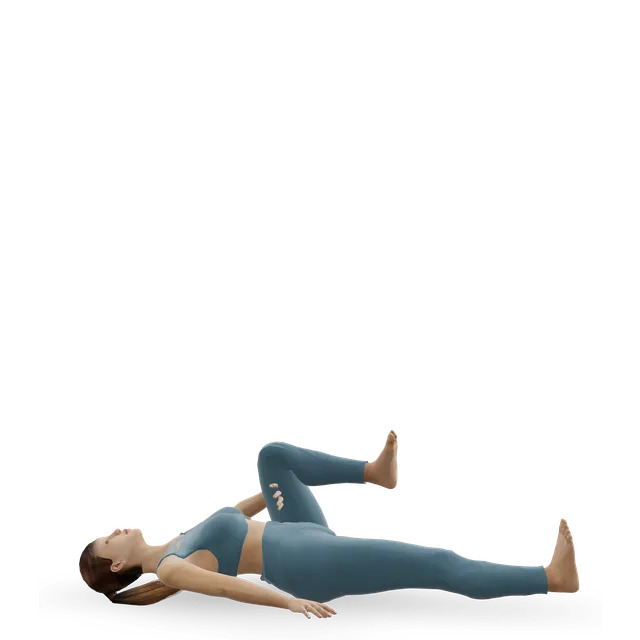
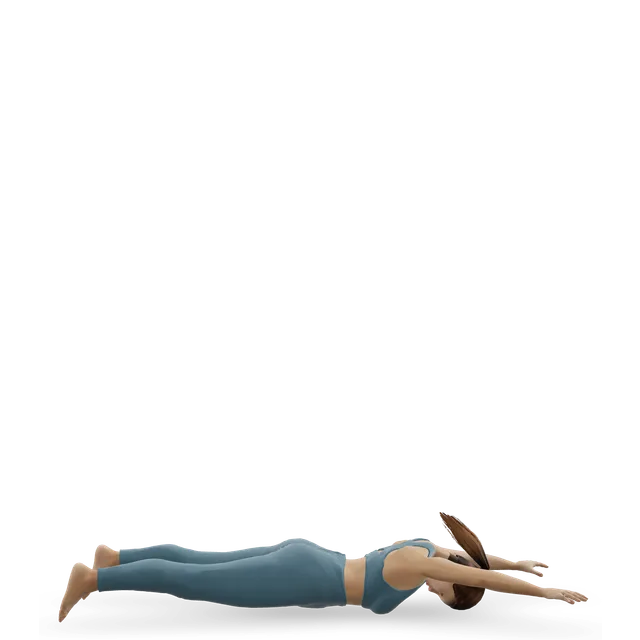
Paddling takes up about half of a session: tracking of 39 recreational UK surfers found "47.0, 8.1, and 3.1%" of the time paddling, riding and on other activities, and world-class surfers were "paddling and stationary 51% (25-70%) and 42% (23-72%) of the total time, respectively". Paddling holds the back arched with the chest and head up, arm stroke after arm stroke.
A review of 20 studies of injuries that build up over time found the spine and back the commonest site (29.3%) and paddling the commonest mechanism (37.1%); its authors write that the back injuries "may be associated with the large proportion of time spent in a paddling position", which "consists of repetitive arm movements and excessive extension of the back". In 1,473 New Zealand surfers, the low back had 115 gradual-onset injuries, 58% of them lasting 3 months or more, and "Prolonged paddling was the most commonly reported mechanism of injury (40% of all injuries)". These figures come from surveys in which surfers reported their own injuries, the studies were of mixed quality, and the pooled figures, such as the 29.3%, are low certainty: they show where surfers hurt, not that paddling causes the pain.
Surf medicine clinicians describe "an extension with rotation of the spine during paddling, with the lumbar and cervical segments being the most affected", and say poor upper back mobility "can be associated with increased cervical and lumbar pain" (expert opinion, not a trial). In 12 recreational surfers, an inflatable vest that lifted the chest less cut the arch of the trunk by 18% and back muscle activity by 12%; the authors note that "Low back pain is a commonly reported problem among recreational surfers", but the study measured posture and muscles, not pain.
Sources 6, 7, 8, 9, 10, 11
Popping up, turning and twistingEmerging evidence
The pop-up is a fast push-up into a stance: in 23 surfers it took 1.20 seconds, "60% push-up and 40% reaching/landing phase". A sports physiotherapy article describing the knee pop-up says "Some surfers with back pain report that they prefer the knee pop-up because it causes less pain or is less likely to exacerbate their low back symptoms". In the one surfer it measured, the usual pop-up from lying took the low back into slight over-arching (4 degrees) and bent it forwards almost three times as fast as the knee pop-up (351 against 131 degrees a second). That is one surfer in a clinical commentary, not a trial.
Turns and twists strain the back too: an early Australian survey of 346 surfers reported "The high incidence of back and shoulder sprains and strains".
Sources 12, 13, 14
Who gets itEmerging evidence
Gradual-onset surfing injuries went with "board type, higher ability, older age, more hours/year, and years of surfing". Competitive surfers reported low back injuries more often than recreational surfers (7% against 3.1%), and among 227 adult competitors at the Australian titles "The most commonly injured body regions were the lower back, foot, knee, and ankle". In 126 Italian board sport surfers, "Low back pain is the most represented among the spine pain subgroups".
Back pain is common in athletes in general: across 86 studies, about half reported low back pain over a year, and "Risk factors for LBP included history of a previous episode with a pooled OR of 3.5" (LBP is low back pain; an odds ratio of 3.5 means a past episode made it much more likely). Older surfers paddle as much as younger ones: "Total time surfing (p = .837) and time spent within each activity of surfing did not differ with age (n = 160)".
Sources 9, 15, 16, 17, 18, 19
The neck and upper backEmerging evidence
"Paddling also exposes the surfer to prolonged periods in cervical hyperextension" (the neck bent back), which the review's authors link to neck problems being the third commonest gradual-onset complaint; in New Zealand the neck had 105 gradual-onset injuries. Our shoulder pain from surfing guide covers the neck and upper back from paddling in full.
Sources 8, 9
Wipeouts, the board and the seabedEmerging evidence
Most surfing injuries are cuts and bruises, often from the surfer's own board. Sports Medicine Australia, whose figures match a survey of Victorian surfers, puts it at "2.2 injuries per 1,000 surfing days or 0.26 injuries per surfer per year", with the trunk and back 13% of injuries, wipeouts 36%, and "striking the seabed accounts for 18% of injuries".
In Cornwall's main hospital, 90% of surfing injuries "were minor/moderate (allowing for discharge after treatment)", and "Sprains to the neck and back represented 53% (21/40) of all sprains"; among the 22 surfers admitted, "fractures of the cervical spine and skull accounting for 32% (n = 7)". "Spinal injuries most commonly occur when the surfer's head strikes the seafloor", and at Australian beaches "Surfers were more likely to be injured through shallow water diving than swimmers (27.6% vs 2.2%)". At a San Diego trauma centre, 47 of 93 surfers admitted over 16 years had a spinal injury and 19 needed spinal surgery. These are the rare serious end, from hospitals that see the worst injuries.
Sources 20, 21, 3, 22, 23, 24, 25, 26
Surfer's myelopathy: very rare, and the warning sign to knowEmerging evidence
Surfer's myelopathy is a spinal cord injury without any impact, and it is very rare: "Sixty-four cases of surfer's myelopathy have been reported to date" in a 2016 review, and 66 by 2017. It "almost uniformly affects young, healthy, novice surfers who have no pre-existent spinal disease", usually the first time they surf; in 19 Hawaiian cases, "17 of 19 were surfing for the first time". The commonest suggested cause is lying with the back arched for a long time.
It starts with back pain, then the legs: "all patients complained of sudden onset of low back pain while surfing, followed by bilateral leg numbness and paralysis progressing over 10-60 minutes". Across 104 cases of the same injury after arching the back (58% after surfing), "The most frequent clinical feature was bladder or bowel dysfunction (84%)", and "At discharge or follow-up, 52% partially recovered". A 2026 report describes three young women in Bali with "acute lower back pain followed by rapidly progressive bilateral lower-limb weakness and urinary retention shortly after recreational surfing". The ordinary aches of a first surf are far more common; sudden back pain followed by leg numbness, weakness or trouble peeing is the sign to get out of the water and call 999. The NHS says to call 999 for paralysis or weakness that "happened suddenly".
Sources 27, 28, 29, 30, 31, 32
Older surfers, and teenage surfersEmerging evidence
Surfing isn't bad for bones: in 104 men, middle-aged and older surfers had denser lower spine bones than inactive men of the same age, and the authors conclude that regular surfing "may be an effective physical activity for middle-aged and older men to decrease bone deterioration related to aging" (a single study at one point in time). In US emergency data, surfers older than 60 and those with trunk injuries were admitted more often, and a fall onto the board or rocks with thin bones can break a vertebra, as the warning signs say.
No study of stress fractures of the spine (spondylolysis) in surfers was found, but surf clinicians advise checking for "possible overload and/or listesis dysfunctions" in surfers' backs, and the warning signs cover teenagers in sports that arch the back.
Sources 33, 4, 10
When a scan or test mattersStrong evidence
Most back pain after surfing needs no scan. The National Institute for Health and Care Excellence (NICE) says "Do not routinely offer imaging in a non-specialist setting for people with low back pain with or without sciatica". In 3,110 people without symptoms, "The prevalence of disk degeneration in asymptomatic individuals increased from 37% of 20-year-old individuals to 96% of 80-year-old individuals", so scan findings often aren't the cause of pain.
A scan matters after a wipeout with pain in one spot over the spine, neck pain or nerve symptoms (an X-ray or a CT scan, as the hospital decides), for a teenager whose back hurts arching backwards for weeks, with leg weakness or the cauda equina signs, and for surfer's myelopathy, where every Hawaiian patient's magnetic resonance imaging (MRI) scan showed changes "from the lower thoracic spinal cord to the conus medullaris" (the lower end of the spinal cord).
Sources 34, 35, 27
How it usually goesEmerging evidence
Aches settle in days. NHS inform says "In many cases, new or flare-up of long-standing back problems should begin to settle within 6 weeks without the need to see a healthcare professional". Across 33 groups of 11,166 people with a new episode of low back pain, average pain fell from 52 out of 100 to 23 at 6 weeks and 6 at a year.
Surfers' back problems can linger, though: 58% of gradual-onset low back injuries in New Zealand had lasted 3 months or more, which is a reason to change the paddling and start the plan early rather than paddle through it. After surfer's myelopathy, "Admission severity appears to be most predictive of neurologic outcome". No one can promise a date.
Sources 36, 2, 9, 27
When it isn't surfing: the causes the warning signs cover
Some back pain has causes surfing didn't create, and the warning signs follow the pages behind them. Numbness around the genitals or bottom, new bladder or bowel trouble or both legs weak can be cauda equina syndrome, a 999 call in the words of the NHS back pain and sciatica pages, and sudden back pain while surfing followed by those signs is the surfer's myelopathy line, which rests on the same NHS page and the Hawaiian case series.
After hitting the seabed, a board or another surfer, the neck lines follow NHS inform's neck injury page and NICE's spinal injury guideline, which lists the dangerous ways to hurt the neck, among them a fall from more than 1 metre or 5 steps and a dive. St John Ambulance's first aid page says don't move someone with a suspected spinal injury unless they're in danger, call 999 or 112, and keep the head, neck and spine in line. The UK grassroots concussion guidelines say someone with a suspected neck injury should be moved only by trained professionals, and the NHS whiplash page gives the same-day signs. The Royal Life Saving Society UK's diving guidance and the Royal Society for the Prevention of Accidents' (RoSPA) tombstoning page are behind the diving line: check the depth, and remember the tide changes it.
The other warning signs follow the pages they were first written from. A burst abdominal aortic aneurysm (a swelling of the body's main artery) can cause sudden, severe tummy or back pain, a 999 call on the NHS aneurysm page; the NHS kidney infection, foot drop and septic arthritis pages, a Leicestershire NHS leg pain leaflet and NICE's guideline on cancer that has spread to the spine give the same-day signs; and NICE's spondyloarthritis guideline lists the features of inflammatory back pain. The Royal Osteoporosis Society, the American Academy of Orthopaedic Surgeons (AAOS), the UK osteoporosis guideline and NICE describe fractures from thin bones after a minor fall. A stress fracture of the spine in a young athlete, and how it usually does over the years, are described in two long-term studies that followed 500 children from age 6. The NHS and NHS inform neck pages say when a stiff neck needs a GP, and the NHS chest pain and fainting pages give the 999 signs for chest pain while paddling or fainting while exercising.
Sources 1, 37, 27, 52, 53, 54, 55, 56, 57, 58, 59, 60, 61, 62, 63, 64, 65, 66, 67, 68, 69, 70, 71, 72, 73, 74, 75, 76