Pain guide · Shoulder pain

Arm pain at night: numb hands, the shoulder, elbow and neck, how to sleep, and the signs to check

Arm pain or numbness that wakes you is common, and on its own it is rarely a sign of anything serious. Most of it comes from the shoulder, which aches more when you lie on it, or from a nerve squeezed while you sleep: at the wrist (carpal tunnel syndrome, which the National Health Service (NHS) says is usually worse at night), at the elbow when it stays bent, or in the neck. Which fingers tingle, and where the ache sits, are the best clues, and pins and needles from lying on your arm goes within minutes of moving.

Arm pain with pressure or tightness in your chest is a 999 call, in either arm and at any hour, and so is a weak or numb arm with a drooping face, even if it passes. Get help the same day, through an urgent general practitioner (GP) appointment or the NHS's 111 line (NHS 111), for a hot, swollen joint, a swollen, throbbing arm, or weakness or clumsiness that is getting worse. This guide covers those signs, how to tell the causes apart, how to set up your bed tonight for each one, what splints and exercise can do, and a three-stage plan with a 3D demo of every move.

When to get help first

Exercise is for pain that has been checked or is clearly mild and settling.

Get urgent medical help if

  • Call 999: shoulder or arm pain with chest pain that feels tight or squeezing, or chest pain that spreads to your arms, neck or jaw, especially with shortness of breath, sweating or feeling sick. It could be a heart attack.
  • Call 999: arm pain that comes on suddenly with pressure, heaviness, tightness or squeezing across your chest, especially with shortness of breath, sweating or feeling sick. It could be a heart attack.
  • Call 999: you've been diagnosed with angina and have chest pain that does not stop after resting for a few minutes or after taking your angina medicine.
  • Call 999: you suddenly can't fully lift both arms and keep them there, because of weakness or numbness in one arm, especially if one side of your face droops or you slur your words or sound confused. It could be a stroke. Call even if the signs have stopped.
  • Call 999 or go to A&E: new problems walking, loss of bladder or bowel control, or a sudden loss of coordination, such as difficulty doing up buttons. These can be signs of pressure on the spinal cord.
  • Arm pain or swelling with breathlessness or chest pain: call 999 or go to A&E, and do not drive yourself. It can be a blood clot that has reached the lungs.
  • Call 999 or go to A&E after an injury (don't drive yourself) if the arm, wrist or hand is numb, tingling or has pins and needles; a bone is sticking out or a bad cut is bleeding heavily; or the arm or wrist has changed colour or shape, or is at an odd angle.
  • Same day (GP or NHS 111): the shoulder or arm is hot, swollen or red, or you have a high temperature (although not everyone has one) or feel unwell. A joint infection needs same-day care.
  • Same day: a joint or lump that is hot, red and swollen, or hand or wrist pain with a high temperature or feeling hot, cold or shivery. It could be an infection or gout.
  • Throbbing pain and swelling in the arm, with red, blue or darker skin and swollen veins: ask for an urgent GP appointment or get help from NHS 111. It could be a blood clot.
  • Same day (urgent GP appointment or NHS 111): throbbing or cramping pain, swelling, redness and warmth in one arm. These can be signs of a blood clot caused by thoracic outlet syndrome, which can be life-threatening if not treated quickly.
  • Same day: clumsiness, numbness, pins and needles or weakness in one or both arms that is getting worse; problems with balance or walking since the neck pain started; or neck pain with a severe headache.
  • Same day (urgent GP appointment or NHS 111): severe neck pain that starts suddenly or gets worse quickly; heaviness or weakness in the arms or legs; pins and needles in an arm along with neck or arm pain; or pain between the shoulder blades.
  • Same day: you wake unable to lift your wrist or fingers, with numbness on the back of the hand, after sleeping on the arm or with it hanging over a chair. It is usually a squeezed nerve in the upper arm that starts to recover within weeks, but a stroke can look similar: call 999 if your face droops, your speech is slurred or you can't lift both arms (our suggestion, from a case series and the NHS stroke page).
  • Same day: you have lost the feeling in part or all of your hand.
  • Get help from NHS 111: pain or tightness in your chest, neck, shoulders, jaw or arms that comes and goes, often brought on by exercise, stress, emotion or cold and easing after a few minutes' rest. It can be angina, a sign of a heart problem. If you've been diagnosed with angina, get help from NHS 111 too if it feels worse than before, is happening more often, lasts longer or happens when you're resting.

See a doctor or physiotherapist if

  • Carpal tunnel symptoms that are getting worse, not going away, or not helped by treatment at home; sooner if the thumb is weak or the muscle at the base of the thumb looks thinner.
  • Constant numbness in the ring and little fingers, a weak or clumsy hand, or visible wasting of the muscle between the thumb and index finger. Ask about referral: one NHS referral guide treats permanent numbness or wasting as urgent.
  • Pins and needles that you have all the time, or that keep coming back: see a GP.
  • Pins and needles or a cold arm alongside neck pain, or a new loss of strength or feeling in the arm that you cannot explain (a possible nerve problem).
  • Pins and needles that can wake you at night, an arm that gets tired easily, pain and swelling in the arm, a cold hand and arm, or a hand that turns blue, grey or pale: see a GP. It can be thoracic outlet syndrome.
  • Burning, tingling or numbness in both hands and both feet: see a GP. It can be nerve damage (peripheral neuropathy), most often caused by diabetes in the UK.
  • A past history of cancer, an unexplained lump or swelling, weight loss, or pain that is constant and does not ease when you change position.
  • Bone pain that is constant or worse at night, especially with a lump, unexplained weight loss, fever or tiredness, or a past history of cancer.
  • Severe shoulder or neck pain, often at night and needing strong painkillers, followed days or weeks later by weakness or winging: see a GP promptly and mention neuralgic amyotrophy, as early treatment may help. Breathlessness that gets worse when you lie down is a reason to see a GP too.
  • Pain that is getting worse or has not improved after 2 weeks of looking after it yourself, or it is very hard to move your arm. In many areas you can refer yourself to physiotherapy.
  • Pain that wakes you most nights for more than a few weeks despite changing how you sleep, or that is just as bad whatever position you lie in: our suggestion is to see a GP or physiotherapist. In many areas you can refer yourself.

Where does it hurt?

Location narrows the likely causes; it does not diagnose.

Tingling, numbness or aching in the thumb, index and middle fingers that wakes you, eased by shaking the hand

Usually carpal tunnel syndrome, a squeezed nerve at the wrist, which can also make the arm ache. A splint that keeps the wrist straight at night is the usual first step.

Read: Carpal tunnel syndrome →
Numb or aching hands and wrists at night, and how to sleep with them

Our wrist and hand pain at night guide covers night splints, wrist positions and the hand causes in full.

Read: Wrist and hand pain at night →
Tingling in the ring and little fingers, worse with the elbow bent or leaned on

Usually the ulnar nerve at the elbow (cubital tunnel). Keeping the elbow fairly straight at night, with a towel wrapped loosely round it, is the first step.

Read: Ulnar nerve entrapment →
A deep ache down the outside of the upper arm, worse lying on that side or lifting the arm

Usually the rotator cuff at the shoulder, felt down the arm. Our shoulder pain at night guide covers how to sleep with it.

Read: Shoulder pain at night →
Stiff in every direction, hard to turn the arm out, very bad at night

Possibly a frozen shoulder, commonest from 45 to 60.

Read: Frozen shoulder →
The outside of the elbow and the top of the forearm, aching in bed and on waking

Usually tennis elbow. Our elbow pain at night guide covers it and the other elbow causes.

Read: Elbow pain at night →
A band of pain, burning or pins and needles from the neck or shoulder blade into the arm

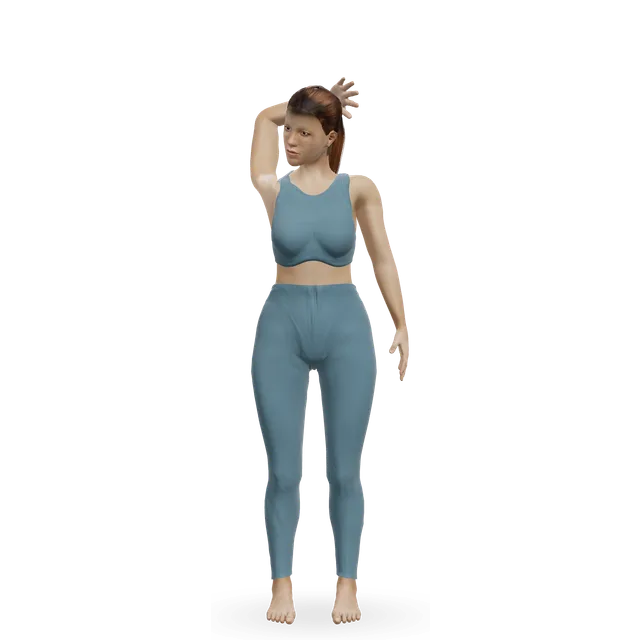
Possibly a trapped nerve in the neck, which can happen without neck pain. Some people find it eases with a hand resting on top of the head.

Read: Pinched nerve in the neck →
Pins and needles after lying on your arm, gone within minutes of moving it

Pressure on a nerve while you slept, not a disease.

You wake unable to lift your wrist or fingers, after sleeping on the arm or with it over a chair

Usually a squeezed nerve in the upper arm that recovers over weeks, but a stroke can look similar: get it checked the same day, as the warning signs say.

Both hands numb and clumsy over weeks or months, with unsteady walking

Possibly pressure on the spinal cord in the neck: get help the same day, as the warning signs say.

Pins and needles in one arm that can wake you, with a tired, cold or pale arm, worse with the arms raised

Rarely, thoracic outlet syndrome.

Read: Thoracic outlet syndrome →
Severe shoulder or arm pain, often at night, then patchy weakness days later

Possibly neuralgic amyotrophy, an inflamed nerve to the shoulder and arm: see a GP promptly.

Read: Winged scapula →
Burning, tingling or numbness in both hands and both feet

Possibly nerve damage (peripheral neuropathy), most often from diabetes in the UK: see a GP.

The forearm, between the elbow and the wrist

Our forearm pain guide maps the tendons and nerves there.

Read: Forearm pain →
Numb or tingling hands on the bike

Our cycling guide covers grips, gloves and hand positions.

Read: Numb hands when cycling →
Numb, tingling hands at night in pregnancy

Usually carpal tunnel syndrome, common in later pregnancy. Our wrist pain in pregnancy guide covers splints and sleep. Sudden swelling of the face, hands or feet needs urgent help.

Read: Wrist pain in pregnancy →
Arm pain with chest pressure, breathlessness, sweating or feeling sick, in either arm

Possibly the heart: call 999, as the warning signs say.

One arm swollen and throbbing, with red, blue or darker skin

Possibly a blood clot in the arm: get help the same day.

Constant pain that doesn't change with position, with weight loss, a lump or a past cancer

Rarely a bone or other tumour: see a GP, as the warning signs say.

The whole arm by day, or not sure where it starts

Our arm pain guide maps the arm from the shoulder to the hand.

Read: Arm pain →

Understand it

Night arm symptoms are common, and the usual causes are ordinaryEmerging evidence

No study has measured "arm pain at night" as one symptom, so this guide ranks the causes by how common each is and whether it typically wakes people. In a US survey of 396 adults (students, volunteers and hand clinic patients), a third had pins and needles at night at least once a week, and 13.9% more than twice a week.

The shoulder is the commonest source of arm pain overall: in 9,696 working-age adults in Britain, shoulder tendon problems were found in 6.1% of women and 4.5% of men. Among trapped nerves, carpal tunnel syndrome is by far the commonest: in UK general practice, 192.8 women and 87.8 men in every 100,000 were newly diagnosed each year, against about 19 to 25 for the ulnar nerve at the elbow. A trapped nerve in the neck affected about 83 people per 100,000 a year in a US population, most often at 50 to 54.

Sources 1, 2, 3, 4

Which fingers tingle, and where the ache sits, point to the causeStrong evidence

Tingling, numbness or aching in the thumb, index and middle fingers that is "usually worse at night" (the NHS) is typical of carpal tunnel syndrome; ring and little finger tingling, worse with the elbow bent or leaned on, points to the ulnar nerve at the elbow. An ache down the outside of the upper arm, worse lying on that side and lifting the arm, is usually the rotator cuff, and frozen shoulder pain "is often worse at night and when you lie on the affected side" (NHS inform).

A trapped nerve in the neck causes pain, numbness, tingling or weakness in the arm or hand, and NHS inform says shoulder and arm problems can come from the neck "even when you don't feel pain in your neck". Thoracic outlet syndrome, which is rare, causes pins and needles that "can be worse at night and wake you up", usually in one arm, with a tired, cold or pale arm.

Sources 5, 6, 7, 8, 9, 10, 11, 12, 13, 14

Why it's worse in bed: what's knownEmerging evidence

Many people sleep with their wrists bent, and US orthopaedic surgeons say this is why carpal tunnel symptoms wake people. In a laboratory study of 15 people with carpal tunnel syndrome, the pressure on the nerve was about three times higher with the wrist fully bent than straight, and in the US survey, sleeping with the wrist bent went with more frequent night tingling. Bending the elbow stretches the ulnar nerve, and "many people sleep with their elbows bent".

Lying on a sore shoulder presses on it, which is why rotator cuff pain disturbs sleep. Sleep was disturbed in 56.5% of 186 people with a trapped nerve in the neck.

Sources 15, 16, 1, 8, 10, 17

A "dead arm" from lying on it is pressure on the nervesEmerging evidence

The NHS says pins and needles "happens when the blood supply to the nerves is cut off. This is usually when you sit or sleep on part of your body. It only lasts a few minutes." So it is the nerves and their own small blood vessels that are squeezed, not the whole arm's circulation: in laboratory work, light pressure slowed blood flow inside a nerve, and both pressure and its release can set off tingling in healthy nerves. No study has measured the arm's blood flow while someone sleeps on it.

Hours on the arm, often over a chair or under a pillow, can squeeze the radial nerve in the upper arm and leave a wrist that won't lift on waking. It is rare (about 1.4 to 3 new cases per 100,000 a year in UK general practice) and usually recovers: improvement began after about 2.4 weeks in 25 people, and all 23 followed up in another series recovered, on average in 3.4 months. Waking with a weak arm can also be a stroke: between 14% and 23% of strokes are first noticed on waking, which is why it needs checking the same day.

Sources 18, 19, 20, 21, 22, 3, 23, 24

The heart, clots and other causes, and how rare they areStrong evidence

Heart pain can be felt in the arm. The NHS angina and chest pain pages say it can spread to "your left or right arm", and in reviews of people seen with chest pain, pain spreading to both arms was one of the stronger signs of a heart attack. Heart attacks happen at any hour, most often in the morning, and the British Heart Foundation says unstable angina "can happen even when you're resting" and the rare vasospastic type "during the night". Arm pain that changes with how you lie or move your arm is much more likely to come from the arm itself.

A clot in an arm vein is rare (4% to 10% of deep vein clots, which affect about 1 in 1,000 people a year) and causes throbbing pain, swelling and red, blue or darker skin. Thoracic outlet syndrome is rare: about 2 to 3 per 100,000 a year for the nerve type, in one US centre's estimate. Neuralgic amyotrophy, an inflamed nerve to the shoulder and arm, affects about 1 in 1,000 a year, with severe pain "often worse at night" followed by weakness. Peripheral neuropathy affects "almost 1 in 10 people aged 55 or over". Bone pain that is constant or worse at night needs a GP; primary bone cancer is very rare, and in 482 people with night pain at a back pain clinic, none had a serious cause (a back pain study, not an arm one).

Sources 25, 26, 27, 28, 29, 30, 31, 32, 33, 34, 35, 36, 37, 38, 39

Numb hands at night don't always mean carpal tunnelStrong evidence

In a Swedish population of 2,466 adults, 14.4% had pain, numbness or tingling in the thumb-side fingers, but only about 1 in 5 of them had carpal tunnel syndrome on examination and nerve tests. A review of 12 studies found night tingling on its own had "little or no diagnostic value", and in a community survey, symptom patterns didn't match nerve tests well. The pattern of fingers, the elbow and the neck, and what eases it, matter more.

Sources 40, 41, 42

When a scan or test helpsStrong evidence

Usually none. Carpal tunnel syndrome is diagnosed from your symptoms and an examination; nerve tests "can also be performed but are not essential" (NHS inform) and are imperfect (18.4% of people without symptoms had abnormal results). For the ulnar nerve, routine nerve tests seemed unnecessary in mild cases in a Swedish trial. For a trapped neck nerve, NHS inform says X-rays and magnetic resonance imaging (MRI) scans "are not required" to diagnose it, and a scan is offered if it isn't improving; worn discs show on MRI in most people without symptoms (87.6% of 1,211 volunteers had bulging discs), so a scan can mislead.

Tests answer specific questions: an MRI for suspected pressure on the spinal cord, an electrocardiogram (ECG) and blood tests for suspected heart pain, an ultrasound within 24 hours for a suspected clot, and an X-ray or scan for suspected thoracic outlet syndrome.

Sources 6, 5, 40, 43, 12, 44, 45, 46, 47, 32, 14

How it usually goesEmerging evidence

Carpal tunnel syndrome "sometimes gets better by itself in a few months, particularly if you have it because you're pregnant" (the NHS), but it often lingers or gets worse; in a UK trial, 16% to 22% of people who started with a splint or an injection had surgery within 2 years. Mild ulnar nerve symptoms improved in 89.5% of people within 6 months after advice on positions.

Arm pain from a nerve in the neck "usually starts to improve within 12 weeks" and can take up to a year (NHS inform); in a US population, 90% were free of symptoms or only mildly limited about 5 years later, though about a third had another episode. New shoulder problems should begin to settle within 6 weeks, a frozen shoulder can take months or years, and night pain from the rotator cuff fell from 46 to 15 out of 100 over 3 months with specific exercise in one trial. Neuralgic amyotrophy is slower. No one can promise a timescale.

Sources 5, 15, 48, 43, 12, 4, 13, 49, 50, 51
What helps, and how strong the evidence is

A splint that keeps the wrist straight at night: the usual first step, with a small average benefitMixed evidence

The NHS, NHS inform and UK hand surgeons all make a night splint the first step for carpal tunnel symptoms, and the NHS says you may need to wear it for up to 6 weeks before it helps. In a Cochrane review of 29 trials (1,937 adults), splints gave a small and uncertain short-term benefit on average (0.37 points better on a 1 to 5 symptom scale, low certainty), though in one trial of 80 people, night splints made overall improvement much more likely; 18% had side effects that passed.

In a UK trial in general practice, 234 adults had a night splint or a steroid injection. The injection worked faster at 6 weeks, but at 2 years results were similar, and fewer people in the splint group had gone on to surgery (16% against 22%). A splint is cheap and safe; it is a sensible first step, not a cure.

Sources 5, 6, 52, 53, 54, 48

Keep the elbow fairly straight at night: advice alone helped most peopleEmerging evidence

For ring and little finger tingling, UK hand surgeons say bending of the elbow at night "can be minimised by a folded towel wrapped around the elbow", which "may be curative in early cases". In a Swedish trial of 70 people with mild or moderate symptoms, everyone was told how to avoid provoking the nerve; 89.5% of those followed had improved at 6 months, and adding night splints or nerve glides made no difference. A Cochrane review found only small single trials for mild cases.

Sources 7, 8, 43, 55

Sleeping positions: no trial, and the studies disagree on side or backMixed evidence

In the US survey, side sleeping went with less night tingling, while in a clinic study of 68 people with carpal tunnel syndrome and 138 without, preferring to sleep on your side went with having it. In 761 workers, sleeping with the arms overhead went with less shoulder pain, not more. People spend about half the night on their side anyway (54% in 664 workers wearing sensors). No study has tested changing position. The message that holds up is about the joints: keep the wrist straight and the elbow from bending fully, and don't lie on a painful shoulder.

Sources 1, 56, 57, 58

Exercise by day eases shoulder night pain; hand exercises help a littleEmerging evidence

In 102 people with long-standing rotator cuff pain waiting for surgery, a programme of rotator cuff and shoulder-blade exercises (15 repetitions in 3 sets, twice a day for 8 weeks, then once a day to 12 weeks) cut night pain from 46 to 15 out of 100, against 40 to 27 with general exercise. It was one trial in a selected group.

For carpal tunnel syndrome, the NHS says there is "a small amount of evidence" that hand exercises help, and the Chartered Society of Physiotherapy (CSP) suggests doing its exercises for at least 6 to 8 weeks to help stop symptoms coming back. Nerve glides can bring on a little extra tingling, which "should not last more than one hour", an NHS hand therapy leaflet says.

Sources 50, 5, 59, 60

Surgery, injections and painkillersStrong evidence

For carpal tunnel syndrome, a steroid injection is an option if a splint hasn't helped, and surgery "usually cures CTS" when symptoms persist or the thumb muscles waste. Painkillers "may help carpal tunnel pain short-term" but don't treat the cause. Surgery for the ulnar nerve is for persistent or severe cases, and thoracic outlet syndrome treatment "usually does not include surgery". For the shoulder, our shoulder pain at night guide covers injections and surgery.

Sources 5, 15, 7, 61

How much pain is OK while you exercise?

Up to about 5 out of 10 for the strength work, tingling that fades within the hour, and tonight is the testEmerging evidence

For the strengthening, NHS inform's rule: rate your pain from 0 to 10, where 0 to 3 is minimal and 4 to 5 acceptable, and "aim to keep your pain within a rating of 0 to 5". If it goes higher, do fewer, move more slowly or rest longer; your pain should be no worse the morning after. The Holmgren trial set loads the same way, and in 7 trials of long-lasting pain, exercise that allowed some pain did no worse than pain-free exercise.

Tingling and numbness are different. With nerve glides, a little extra tingling is expected but should fade within an hour, as an NHS hand therapy leaflet says. Stop and get advice if numbness spreads or lasts, or your grip or thumb gets weaker, and make any move smaller that sends pain or tingling further down the arm.

Tonight is the test (our suggestion, borrowed from our shoulder and elbow night guides): do strength work earlier in the day, and if a new exercise is followed by a worse night two or three times running, make it lighter or do it earlier. Chest pain with arm pain, a weak arm with a drooping face, both hands clumsy, or a swollen, throbbing arm are warning signs, not pain-rule questions.

Sources 62, 63, 64, 50, 65, 60, 5

The exercise plan: 3 stages

Start at the first stage. Each move opens a full guide with a 3D demo.

Stage 1

Tonight: set up the bed for your cause, and gentle movement by day

About the first 2 weeks. Use the night steps for your cause every night (the written steps below), and do these moves earlier in the day, within the pain rule. With a known diagnosis, such as carpal tunnel syndrome, frozen shoulder or a trapped neck nerve, that guide's plan comes first. No trial has tested this plan as a whole; doses name their source.

Median nerve glide (six hand positions, for carpal tunnel) demonstrated on the 3D figure3D demoMedian nerve glide (six hand positions, for carpal tunnel)Beginner · No equipment

About 7 s in each position, 5 times through, 3 times a day · The move page's dose, from a carpal tunnel trial's protocol. For thumb-side tingling. A little extra tingling should fade within an hour; skip the last step if the thumb side of the wrist is sore, as the move page says

Easier: Median nerve slider (neck-to-arm nerve glide)

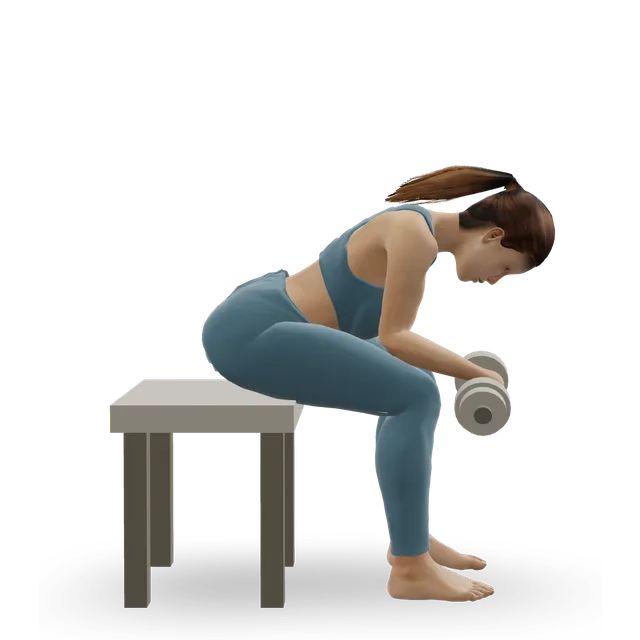
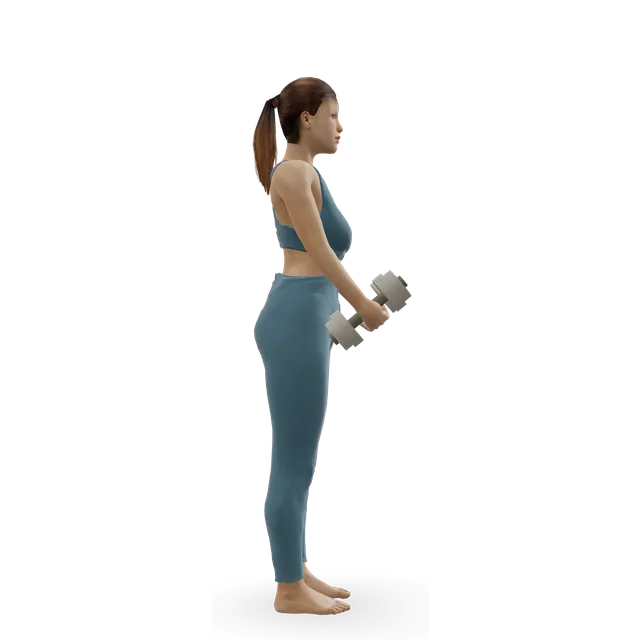
Elbow bend and straighten (elbow range of motion) demonstrated on the 3D figure3D demoElbow bend and straighten (elbow range of motion)Beginner · No equipment

10 slow repetitions, up to 4 times a day · The move page's dose, from an NHS leaflet. With ring and little finger tingling, skip long holds at full bend, as the move page says

Harder: Dumbbell biceps curl

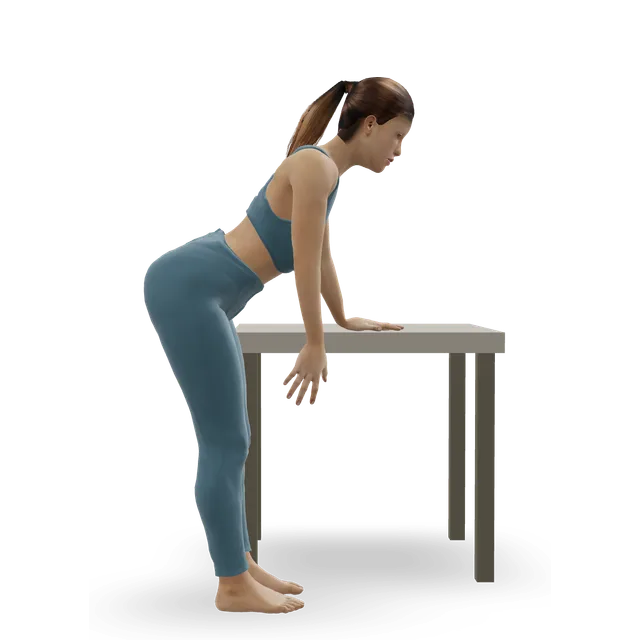
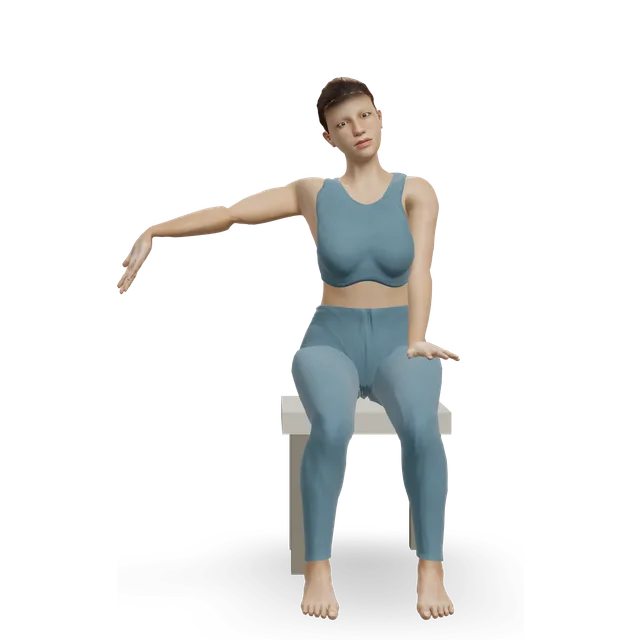
Pendulum exercise (Codman's pendulum) demonstrated on the 3D figure3D demoPendulum exercise (Codman's pendulum)Beginner · A bench or box

About 1 minute (10 small circles each way), 2 to 3 times a day · The move page's dose (an editorial starting point). For a shoulder that aches at night

Harder: Table slide (seated forward reach)

Neck CARs (controlled articular rotations) demonstrated on the 3D figure3D demoNeck CARs (controlled articular rotations)Beginner · No equipment

Separate nods, tilts and turns first: 2 or 3 each way at a time, every hour or so, adding 1 or 2 every few days towards about 10 · NHS inform's neck pacing, not the move page's circles, which wait until the pain settles. Only with neck or neck-to-arm symptoms

Harder: Rabbit pose (Sasangasana)

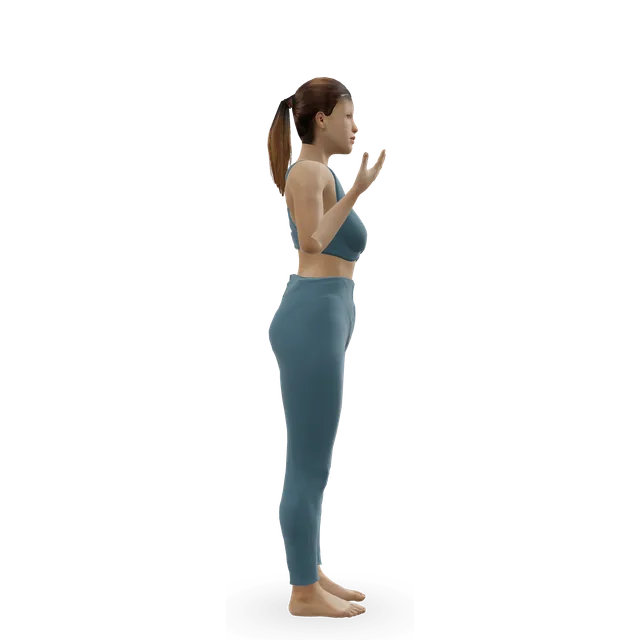
Shoulder rolls demonstrated on the 3D figure3D demoShoulder rollsBeginner · No equipment

10 to 15 slow circles each way, once or twice through · The move page's dose (editorial)

Harder: Shoulder CARs (controlled articular rotations)

Treadmill walking demonstrated on the 3D figure3D demoTreadmill walkingBeginner · Cardio machine

10 to 20 minutes most days, arms swinging naturally · Editorial, as in our shoulder pain at night guide; walking outdoors counts the same

Harder: Treadmill jogging

Move on when: You're waking less often, the glides don't leave tingling for more than an hour, and nothing new, such as weakness or constant numbness, has appeared (our suggestion, from our wrist pain at night guide).

Follow along: a timer, a cue and the next move, one step at a time.
Stage 2

By day: strength for the shoulder, forearm and neck

About weeks 2 to 8: the shoulder work on most days, grip work 3 days a week, all earlier in the day. Keep the night set-up going. Do the parts that fit your cause: shoulder work for shoulder and upper arm pain, grip work for the hand, neck work for arm symptoms from the neck.

Standing band external rotation demonstrated on the 3D figure3D demoStanding band external rotationBeginner · A band + An anchor point

A light band, elbow at your side: 2 sets of 8, building to 3 sets of 15, once or twice a day · The end point is the Holmgren programme's 3 sets of 15, twice a day for 8 weeks; the start is NHS inform's sets of 8

Easier: Stick-assisted external rotation (lying) · Harder: Side-lying external rotation

Band row demonstrated on the 3D figure3D demoBand rowBeginner · A band + An anchor point

3 sets of 10 to 15, stopping 2 to 3 reps short of failure · The move page's dose (editorial): a shoulder-blade exercise like the trial's

Harder: Supported single-arm dumbbell row

Ball squeeze demonstrated on the 3D figure3D demoBall squeezeBeginner · Other / check instructions

A soft ball: squeeze and hold for 5 s, 3 sets of 10 · The CSP's hand squeeze. Leave hard squeezing while a finger catches, as the move page says

Easier: Tendon glides (hand tendon gliding exercises) · Harder: Band finger extension

Reverse wrist curl demonstrated on the 3D figure3D demoReverse wrist curlBeginner · A dumbbell + A bench or box

3 sets of 10 holding a tin of beans, adding weight gradually · The CSP's wrist exercise with a weight

Easier: Wrist-extensor eccentrics · Harder: Plate pinch

Chin tuck with head lift demonstrated on the 3D figure3D demoChin tuck with head liftIntermediate · No equipment

With neck symptoms: 3 to 5 holds of 5 s, building to 10 holds of 10 s · As in our neck pain guides (editorial)

Easier: Chin tuck

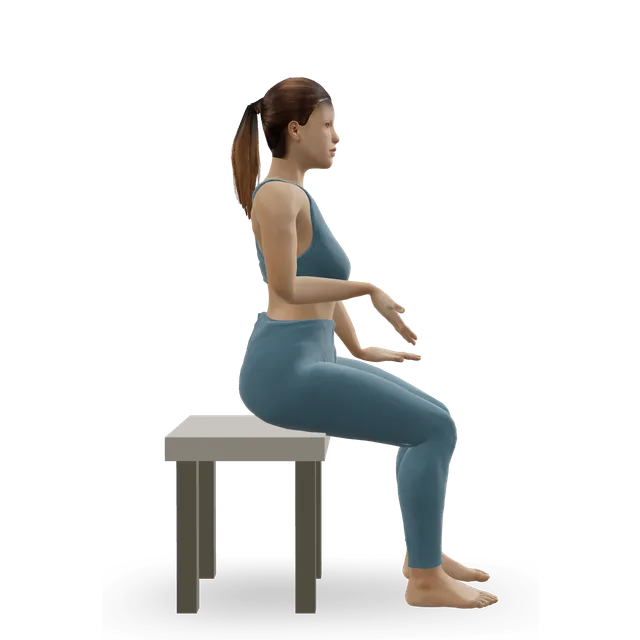
Median nerve slider (neck-to-arm nerve glide) demonstrated on the 3D figure3D demoMedian nerve slider (neck-to-arm nerve glide)Beginner · A bench or box

With arm symptoms from the neck: 10 slow repetitions, 2 to 3 times a day, arm by your side at first · The move page's dose (editorial). Not in the first, most painful days of a trapped neck nerve, as the move page says

Harder: Median nerve glide (six hand positions, for carpal tunnel)

Move on when: Every set stays within the pain rule, nights are no worse after exercise days, and lifting the arm to shoulder height is comfortable (our suggestion, from our shoulder pain at night guide).

Follow along: a timer, a cue and the next move, one step at a time.
Stage 3

Strengthen, and your usual sleeping position back

From about week 6 to 8, 2 or 3 days a week, then twice a week for the long term: heavier shoulder, forearm and grip strength for lifting, carrying and reaching. Your usual sleeping position comes back by the written steps below.

Prone Y-T-W raises demonstrated on the 3D figure3D demoProne Y-T-W raisesBeginner · No equipment

2 rounds of 8 of each shape · As in our shoulder pain guide (editorial). Keep the neck long and the face down, as the move page says

Easier: Wall angel · Harder: Bent-over reverse fly

Face pull demonstrated on the 3D figure3D demoFace pullIntermediate · A band

3 sets of 12 to 15 · As in our shoulder pain guide (editorial). Check the band or cable attachment every time, as the move page says

Easier: Prone Y-T-W raises · Harder: Tuck back lever

Scapular push-up (push-up plus) demonstrated on the 3D figure3D demoScapular push-up (push-up plus)Beginner · No equipment

2 to 3 sets of 10, on a wall or bench first · As in our shoulder pain guide (editorial)

Easier: Dumbbell shoulder-blade punch · Harder: Push-up

Wall push-up demonstrated on the 3D figure3D demoWall push-upBeginner · A wall

2 sets of 8 to 12 · As in our carpal tunnel guide (editorial); only if bending the wrist back doesn't bring on tingling

Harder: Push-up

Farmer's carry demonstrated on the 3D figure3D demoFarmer's carryIntermediate · A dumbbell + A kettlebell

3 walks of 20 to 30 m · Editorial, as in our elbow guides. With an irritable ulnar nerve, keep the elbows straight

Harder: Suitcase carry

Hammer curl demonstrated on the 3D figure3D demoHammer curlBeginner · A dumbbell

2 to 3 sets of 10 to 12 · Editorial, as in our elbow guides. Leave thumb-up curls while the thumb side of the wrist is sore, as the move page says

Easier: Seated dumbbell curl · Harder: Alternating hammer curl

Move on when: Our suggestion: lifting, carrying, gripping and your usual sleeping position are back for 2 weeks without bad nights. Keep two strength sessions a week. If symptoms come back, go back a stage, and see a GP if they don't settle.

Follow along: a timer, a cue and the next move, one step at a time.

What to change for now

Tonight: set up the bed for your cause (written steps)

Our 3D figure can't show these. No trial has tested a sleeping position for arm symptoms, so each step names its source or is our suggestion.

  • 1. Thumb-side tingling: wear a splint that keeps your wrist straight at night; the NHS says you may need it for up to 6 weeks before it helps, and you can buy one from a pharmacy. Keep your hands by your sides or on a pillow, not curled under your pillow, chin or body (the NHS, NHS inform and US orthopaedic surgeons).
  • 2. Ring and little finger tingling: keep the elbow fairly straight, with a folded towel wrapped loosely round it or an elbow pad worn backwards (UK hand surgeons and US orthopaedic surgeons).
  • 3. A sore shoulder: don't lie on it for now. Lie on your good side, hugging a pillow for the sore arm, or on your back with a pillow under it (our shoulder pain at night guide's steps; NHS inform says it can be difficult to lie on the affected shoulder).
  • 4. Arm symptoms from the neck: one low, firm pillow, your head level with your body, and not sleeping on your front (the NHS). If resting your hand on top of your head eases the arm, that's fine for a while (US orthopaedic surgeons).
  • 5. Don't sleep with your head on your forearm or your arm hanging over a chair or the bed edge (our suggestion, from a hand surgery group's positions table).
  • 6. Woken by tingling: shake your hand or hang it out of the bed (the CSP).

Sources 5, 6, 15, 8, 7, 10, 66, 45, 59, 1

Sleep habits, heat and painkillers (written steps)

These come from the NHS.

  • 1. Wake up at the same time every day, relax for an hour before bed, keep the bedroom dark and quiet, and have no alcohol, tea or coffee in the 6 hours, and no exercise in the 4 hours, before bed.
  • 2. Put a heat pack or a pack of frozen peas wrapped in a tea towel on your arm for 10 to 15 minutes, every few hours.
  • 3. Painkillers such as paracetamol or ibuprofen can ease arm pain; for carpal tunnel syndrome they may help in the short term but don't treat the cause, so don't rely on them. In pregnancy, avoid ibuprofen unless a doctor or pharmacist advises it.

Sources 67, 68, 5

By day: hands, the neck and carrying (written steps)

These come from NHS inform, the NHS and US orthopaedic surgeons.

  • 1. Vary your tasks, alternate heavier and lighter jobs, use padded handles for cycling, gardening or golf, and avoid holding the wrist bent for long spells (NHS inform). Cut down on hard gripping and vibrating tools (the NHS).
  • 2. Prop a phone, tablet or book on a cushion rather than holding it with a bent wrist, especially in bed (our suggestion: NHS inform says holding a phone or book can bring symptoms on).
  • 3. With a trapped neck nerve: pace activities, avoid staying in one position for long, and keep moving little and often (NHS inform).
  • 4. With thoracic outlet symptoms: avoid carrying heavy bags over your shoulder (US orthopaedic surgeons).
  • 5. Work: "You don't need to be symptom free before you consider returning to work" (NHS inform).

Sources 6, 5, 12, 61

Your usual night comes back (written steps)

No trial has tested how to stop a night splint or go back to a usual sleeping side. These steps are our suggestion, except where a source is named.

  • 1. Keep the splint or towel going until most nights have been settled for 2 weeks.
  • 2. Then try nights without it, and put it back on for a few nights after a busy day or if tingling returns.
  • 3. Try your usual side for a few minutes at a time, with the arm resting on a pillow in front of you rather than under your body or pillow.
  • 4. Keep the hand exercises going for at least 6 to 8 weeks to help stop symptoms coming back (the CSP).

Source 59

Positions to swap, and why

Habit or positionWhy it mattersInstead
Sleeping with your hands curled under the pillow, your chin or your bodyA bent wrist raised the pressure on the nerve about threefold in people with carpal tunnel syndrome.A splint that keeps the wrist straight, with your hands by your sides or on a pillow.
Sleeping with the elbow tightly bent when the ring and little fingers tingleBending the elbow stretches and irritates the ulnar nerve.A folded towel wrapped loosely round the straight elbow.
Lying on a sore shoulderIt's the usual trigger for rotator cuff and frozen shoulder night pain.Your good side, hugging a pillow, or your back with a pillow under the arm.
Sleeping with your head on your forearm, or the arm over a chairIt can squeeze the radial nerve and leave a wrist that won't lift.Keep the arm supported on the bed or a pillow.
A high pillow, or sleeping face down, with arm symptoms from the neckThe NHS says use a low, firm pillow and don't sleep on your front.One low, firm pillow, with your head level with your body.
Pulling the nerve glides hard into tinglingGlides can raise symptoms, which should settle within an hour.Stop at the first pull, with a smaller range, or use the gentler slider.Try: Median nerve slider (neck-to-arm nerve glide)
Floor push-ups on flat hands while the hand tinglesBending the wrist back raised the pressure on the nerve to 110 millimetres of mercury in people with carpal tunnel syndrome.Push-ups against a wall, then fists or push-up handles.Try: Wall push-up
Hard grip work late in the evening, if a worse night followsOur suggestion: tonight is the test.Grip and forearm work earlier in the day.Try: Ball squeeze
Shaking it out every night for months without getting it checkedShaking eases a bout, but constant numbness or a weak thumb needs treatment.The splint and the glides now, and a GP if it isn't settling.Try: Median nerve glide (six hand positions, for carpal tunnel)
Waiting to see whether arm pain with chest tightness, breathlessness or sweating passesIt can be a heart attack.Call 999.

Routines to follow

More moves for this area

Questions people ask

Why does my arm hurt at night?

Usually because of the shoulder, which aches more when you lie on it, or a nerve squeezed at the wrist, the elbow or the neck while you sleep. Where it hurts and which fingers tingle tell them apart. Pain that doesn't change whatever position you lie in, or comes with feeling unwell, needs checking.

Why does my arm go numb or "dead" at night?

Usually pressure on the nerves while you lie on the arm or bend your wrist or elbow; it goes within a few minutes of moving. If it keeps happening, the fingers involved point to the cause: the thumb side to the wrist, the ring and little fingers to the elbow. See a GP if pins and needles are constant or keep coming back.

Is it carpal tunnel?

Probably, if it's the thumb, index and middle fingers, it wakes you and shaking your hand helps, and it can make the arm ache too. But only about 1 in 5 people with hand tingling had carpal tunnel syndrome on testing in one population study, so the elbow and the neck are worth considering. Our carpal tunnel guide covers it in full.

What's the best sleeping position for arm pain?

No trial has tested one. Keep the wrist straight (a splint helps), the elbow fairly straight with a towel round it, the sore shoulder uppermost or your back with the arm on a pillow, and one low, firm pillow for the neck. Side or back is your choice.

Could arm pain at night be my heart?

Call 999 for arm pain with chest pressure, heaviness or squeezing, or with breathlessness, sweating or feeling sick: heart pain can be in either arm and at any hour. Pain that changes as you move your arm or turn over is much more likely to be the arm itself.

Is arm pain at night a sign of cancer?

Rarely. Night pain is common with ordinary shoulder and nerve problems, and primary bone cancer is very rare. See a GP for bone pain that is constant or worse at night, especially with a lump, weight loss you can't explain or a past cancer.

I woke up and can't lift my wrist. What's happened?

Usually the radial nerve in the upper arm was squeezed by sleeping on the arm or with it over a chair; it usually starts to recover within a few weeks. Get it checked the same day, and call 999 if your face droops, your speech is slurred or you can't lift both arms, because a stroke can look similar.

Should I wear a wrist splint at night?

For carpal tunnel symptoms, yes: it's the usual first step, and it may take up to 6 weeks to help. On average the benefit in trials was small, though some people improve a lot. It won't help a shoulder or neck problem.

Why does my upper arm hurt at night?

Usually the rotator cuff at the shoulder, felt down the outside of the upper arm and worse lying on that side. A specific shoulder exercise programme cut night pain in a trial, and our shoulder pain at night guide covers how to sleep.

Can a trapped nerve in the neck cause arm pain at night?

Yes: it can cause pain, tingling or weakness in the arm, sometimes without neck pain, and it disturbed sleep in more than half of one group. A low, firm pillow helps, and some people find resting the hand on the head eases it. It usually starts to improve within 12 weeks.

I'm pregnant, or going through the menopause, and my arms go numb at night. Why?

Carpal tunnel syndrome is more likely in pregnancy and around the menopause, and a night splint is the usual first step; our wrist pain in pregnancy guide covers it. In pregnancy, sudden swelling of the face, hands or feet needs urgent help, as it can be pre-eclampsia.

When should I see a doctor about arm pain at night?

Call 999 for chest symptoms, or a weak arm with a drooping face. Get help the same day for a hot, swollen joint, a swollen, throbbing arm, or weakness or clumsiness that is getting worse. See a GP if numbness is constant, your grip or thumb gets weaker, or nights haven't improved after a few weeks; in the US, call 911 where this page says 999.

Other pain guides

Sources

  1. Roth Bettlach 2019 · Sleeping position and night-time pins and needles in 396 young adults, volunteers and patients (survey, Hand)
  2. Walker-Bone 2004 · How common arm, elbow and shoulder disorders are in 9,696 working-age adults (population survey, Arthritis Rheum)
  3. Latinovic 2006 · How often common nerve entrapments, including Morton's neuroma, are diagnosed in UK general practice (database study, J Neurol Neurosurg Psychiatry)
  4. Radhakrishnan 1994 · A pinched nerve in the neck in a Minnesota population, 1976 to 1990 (population study, Brain)
  5. NHS · Carpal tunnel syndrome
  6. NHS inform · Carpal tunnel syndrome
  7. British Society for Surgery of the Hand · Cubital tunnel syndrome (patient information)
  8. American Academy of Orthopaedic Surgeons (AAOS, OrthoInfo) · Ulnar nerve entrapment at the elbow (cubital tunnel syndrome)
  9. NHS · Shoulder impingement
  10. NHS inform · Subacromial pain syndrome
  11. NHS inform · Frozen shoulder
  12. NHS inform · Cervical radiculopathy
  13. NHS inform · Shoulder problems
  14. NHS · Thoracic outlet syndrome
  15. American Academy of Orthopaedic Surgeons (AAOS, OrthoInfo) · Carpal tunnel syndrome
  16. Gelberman 1981 · Pressure in the carpal tunnel with the wrist straight, bent and bent back, in people with and without carpal tunnel syndrome (laboratory study, J Bone Joint Surg Am)
  17. Shi 2023 · Sleep disturbance in 186 people with a trapped nerve in the neck (cross-sectional study, Eur Spine J)
  18. NHS · Pins and needles
  19. Rydevik 1981 · How graded pressure on a nerve slows its blood flow (laboratory study in rabbits, J Hand Surg Am)
  20. Mogyoros 2000 · Why healthy nerves produce pins and needles (review, Muscle Nerve)
  21. Han 2014 · Wrist drop from a squeezed radial nerve in 25 people (case series, J Korean Neurosurg Soc)
  22. Arnold 2012 · How people recover from a radial nerve palsy caused by pressure (case series, Muscle Nerve)
  23. Mackey 2011 · How many strokes are found on waking (population study, Neurology)
  24. Zhao 2026 · How common wake-up strokes are (systematic review and meta-analysis, Neurol Res)
  25. NHS · Angina
  26. NHS · Chest pain (past its review date: reviewed August 2023, review due August 2026)
  27. British Heart Foundation (BHF) · Heart attack: symptoms, causes and treatment
  28. British Heart Foundation · Angina
  29. Panju 1998 · Is this patient having a heart attack? What the history and examination show (systematic review, JAMA)
  30. Fanaroff 2015 · Does this patient with chest pain have acute coronary syndrome? 58 studies (systematic review, JAMA)
  31. Muller 1985 · Heart attacks are commonest in the morning (cohort study, N Engl J Med)
  32. NHS · DVT (deep vein thrombosis)
  33. Heil 2017 · Blood clots in the arm (review, Dtsch Arztebl Int)
  34. Illig 2021 · The incidence of thoracic outlet syndrome: 526 referrals to one centre (prospective study, Ann Vasc Surg)
  35. van Alfen 2015 · How common neuralgic amyotrophy is in two Dutch general practices (prospective cohort, PLoS One)
  36. NHS · Peripheral neuropathy (past its review date: reviewed October 2022, review due October 2025)
  37. NHS · Symptoms of bone cancer
  38. NHS · What is bone cancer?
  39. Harding 2005 · Night pain in 482 people at a back pain triage clinic (clinic cohort, Spine)
  40. Atroshi 1999 · How common carpal tunnel syndrome is: 2,466 adults in southern Sweden (population survey, JAMA)
  41. D'Arcy 2000 · Which symptoms and tests point to carpal tunnel syndrome (systematic review, JAMA)
  42. Ferry 1998 · Hand symptom patterns and nerve test results in the community (population survey, Arthritis Rheum)
  43. Svernlöv 2009 · Non-surgical treatment of cubital tunnel syndrome (randomised trial, J Hand Surg Eur)
  44. Nakashima 2015 · Neck MRI findings in 1,211 people without symptoms (cross-sectional study, Spine)
  45. AAOS (OrthoInfo) · Cervical radiculopathy (pinched nerve)
  46. NHS inform · Degenerative cervical myelopathy
  47. NHS · Heart attack
  48. Burton 2023 · A steroid injection or a night splint for carpal tunnel syndrome in 234 adults: 24-month follow-up (RCT, Rheumatology)
  49. NHS · Frozen shoulder
  50. Holmgren 2012 · Specific exercise and the need for surgery in subacromial impingement (RCT, BMJ)
  51. van Alfen 2006 · Neuralgic amyotrophy in 246 people (case series, Brain)
  52. British Society for Surgery of the Hand · Carpal tunnel syndrome (patient information)
  53. Karjalainen 2023 · Splinting for carpal tunnel syndrome (Cochrane review)
  54. Chesterton 2018 · A steroid injection or night splints for carpal tunnel syndrome: the INSTINCTS trial (RCT, Lancet)
  55. Caliandro 2025 · Treatment for ulnar neuropathy at the elbow (Cochrane review)
  56. McCabe 2011 · Preferring to sleep on your side and carpal tunnel syndrome: 68 cases and 138 controls (case-control study, Hand)
  57. Holdaway 2018 · Sleep position, shoulder pain and rotator cuff tendinopathy in 761 workers (cross-sectional study, BMC Musculoskelet Disord)
  58. Skarpsno 2017 · Sleep positions and movements measured in 664 workers (cross-sectional study, Nat Sci Sleep)
  59. Chartered Society of Physiotherapy · Exercise advice: carpal tunnel syndrome
  60. St George's University Hospitals NHS · Median nerve gliding (hand therapy leaflet, 2024)
  61. American Academy of Orthopaedic Surgeons (AAOS, OrthoInfo) · Thoracic outlet syndrome
  62. NHS inform · Exercises for shoulder problems
  63. NHS inform · Exercises for wrist, hand and finger problems (including how to tell if you're exercising at the right level)
  64. NHS inform · Exercises for neck problems
  65. Smith 2017 · Should exercises be painful in chronic musculoskeletal pain? (systematic review and meta-analysis, Br J Sports Med)
  66. NHS · Neck pain (past its review date: reviewed April 2023, review due April 2026)
  67. NHS · Insomnia
  68. NHS · Elbow and arm pain

Exercise education, not a diagnosis or treatment plan. It is written from the guidelines and studies listed above; review by a clinician is pending. If your pain follows an injury, is severe, is getting worse, or comes with any warning sign listed on this page, get it assessed. Health disclaimer.