Skipping
A step then a hop on the same foot, landing on the ball of the foot with the other knee driving up: a beginner plyometric, with the lowest landing force of the horizontal drills measured.
Skip to bound family
Skipping
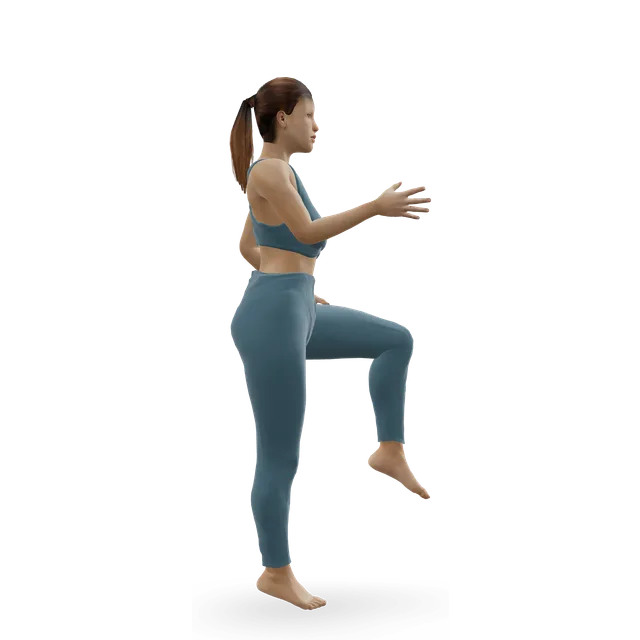
Loading the 3D figure…
Source-researched guide.
How to move
- Step forward and hop on the same foot, landing on the ball of the foot under the hip.
- Drive the other knee up to hip height as the opposite arm swings.
- Step onto that foot and hop again, alternating.
Form cues
- Keep the ankle springy.
- Stay tall.
Practice and cautions
No universal dose is assigned. Choose a manageable amount for your current capacity, leave room for controlled repetitions, and allow recovery. A clinician’s individual plan takes priority.
Leave it out with a suspected stress fracture: bone pain should be gone before you hop. Build gradually with a calf or Achilles history, with low bone density, or if you have avoided impact for years. If you leak when you land, build up pelvic floor exercises first and see a GP or pelvic health physiotherapist; with a prolapse, check with them before impact work. In pregnancy, don't start new jumping or impact work; if you already do it, drop it when it causes leaking, heaviness or pelvic pain. After giving birth, UK guidance suggests waiting until at least 3 months before running and jumping, and only when walking, hopping and jogging on the spot cause no leaking, heaviness or pain. This timing is expert advice. With proliferative or severe non-proliferative diabetic retinopathy, avoid jumping and jarring. With numb feet from diabetes or another cause, choose low-impact options, wear well-fitting shoes, and check your feet for redness or blisters afterwards; with an open sore or ulcer, do no weight-bearing exercise until your foot team says so. With osteonecrosis (avascular necrosis) of the hip or knee, ask your specialist before impact exercise. This is movement education, not an assessment or treatment prescription. Stop for sharp or increasing pain, dizziness, numbness or tingling; seek individual guidance for symptoms, injury or restrictions.
Sources and review status
Sources support the educational description; they do not establish that this exercise is suitable for you.
- Davies 2015 · Current concepts of plyometric exercise (beginner, intermediate and advanced drills; two-hand before one-hand throws; IJSPT) ↗
- Kossow 2014 · Horizontal plyometric intensity (skipping the lowest landing force, below bounding; ISBS) ↗
- Buckthorpe & Della Villa 2021 · Plyometric training after ACL reconstruction (low, moderate, high and very high intensity stages; IJSPT) ↗
No variation is labeled clinically validated.
What it works
Muscles
Main: Calves, Hip flexors. Also: Quads, Glutes.
Anatomy: Gastrocnemius, Soleus, Tibialis posterior, Popliteus, Plantaris, Flexor hallucis longus.
Equipment
None: body weight and floor space.
Level
Beginner. See the easier and harder options above.
Workouts that use it
- Runner's warm-up · 8 min
- HIIT workout at home · 20 min
- Fascial fitness workout · 15 min
- Plyometrics for runners · 20 min
- Racket sport warm-up · 12 min
- Hamstring and groin injury prevention · 15 min
- Springy starter: calf strength and gentle bounces · 20 min
- Tempo run: comfortably hard · 45 min
Show all 63 workoutsShow fewer workouts
- Hill repeats for beginners · 35 min
- Basketball injury prevention warm-up · 10 min
- Basketball strength and jump workout · 45 min
- Volleyball warm-up · 15 min
- Sensory movement break: wake up, focus, calm down · 12 min
- 5K intervals: 3-minute repeats at 5K effort · 50 min
- 5K time trial: warm-up, even pacing and cool-down · 60 min
- Martial arts warm-up with breakfalls: run, fall, move, balance, strengthen · 15 min
- Cricket warm-up · 12 min
- Strength workout for fast bowlers · 40 min
- Netball warm-up: the KNEE programme · 20 min
- Netball strength and landing workout · 35 min
- American football warm-up: run, move, land and accelerate · 15 min
- Off-ice hockey workout: jumps, legs, groins and trunk · 50 min
- Ice hockey warm-up: hips and groins off the ice · 15 min
- Field hockey warm-up: the Warming-up Hockey sample session · 12 min
- Strength workout for field hockey: legs, hamstrings, groins and trunk · 45 min
- Dance warm-up: feet, hips, spine and small jumps · 15 min
- Gymnastics conditioning workout: jumps, landings, wrists, shoulders and trunk · 45 min
- Gymnastics warm-up: wrists, shoulders, spine, hips and landings · 15 min
- Skateboarding warm-up: ankles, wrists, landings and how to fall · 12 min
- Vertical jump workout: landings, jumps and strength · 40 min
- Sprint speed workout: drills, accelerations and flying sprints · 45 min
- Badminton strength and footwork workout · 45 min
- Squash ghosting workout · 30 min
- Squash strength and injury prevention · 35 min
- Table tennis warm-up · 10 min
- Table tennis strength and footwork workout · 40 min
- Strength and landing workout for cheerleaders: legs, shoulders, trunk, wrists and landings · 50 min
- Cheerleading warm-up: wrists, shoulders, spine, hips and landings before stunting · 15 min
- Strength workout for lacrosse: power, legs, hamstrings, groins and rotation · 50 min
- Lacrosse warm-up: run, move, land, cut and rehearse · 15 min
- Strength workout for Gaelic football and hurling: drop jumps and sprints, legs, hamstrings and groins · 55 min
- Off-ice workout for figure skaters: landings, jumps, legs, hips, ankles and trunk · 45 min
- Figure skating warm-up: ankles, hips, spine, balance and landings before the ice · 15 min
- Strength workout for roller skaters: legs, hips, ankles, wrists and how to fall · 40 min
- Strength workout for trampolinists: isometric squats, calves, jumps, trunk shapes and pelvic floor · 45 min
- Obstacle race conditioning workout: hill repeats, carries, crawls and landings · 50 min
- Wrestling conditioning workout: sprint intervals, sprawls and mat drills · 40 min
- Sprint and hurdles warm-up: drills, hips, build-ups and starts before training or a race · 20 min
- Jumps warm-up: landings, take-offs and run-ups before the long, triple and high jump and pole vault · 20 min
- Throws warm-up: safety checks, spine and shoulder mobility, Shoulder Control and build-up throws · 20 min
- Strength workout for handball players: jumps, barbell lifts, Shoulder Control, Nordics and Copenhagens · 55 min
- Strength workout for Australian football: sprints, lifts, Nordics, Copenhagens and neck strength · 55 min
- Dryland workout for divers: take-off jumps, landings, legs, wrists, shoulders and entry shapes · 45 min
- Diving warm-up: wrists, shoulders, spine, hips and take-off jumps on the poolside · 15 min
- Pole dance warm-up: wrists, shoulders, spine, hips and a graded hang before class · 15 min
- Parkour strength and landing workout: landings, precision jumps, rolls, climb-up strength, legs and calves · 50 min
- Parkour warm-up: jog, ankles, hips, wrists, crawls, landings and rolls · 15 min
- Pilates for kids: a 20-minute follow-along class with games · 20 min
- Explosive power workout: jumps, throws and a fast lift · 40 min
- Hip flexor strengthening workout: marches, band knee drives, leg raises and step-ups · 25 min
- Running form drills: skips, quick feet, arm swing and strides · 25 min
- Agility workout: change direction, land and react · 30 min
- Downhill running practice: short, easy descents for stronger thighs · 30 min
Pain guides that use it
Part of a staged plan, with when to get help first.
- Hip flexor pain: strengthen first, and the truth about tight hip flexors
- Groin strain and adductor pain: the exercises with the best evidence
- Achilles tendonitis exercises (Achilles tendinopathy)
- Calf pain: strain, cramp or clot, and the exercises that help
- Hamstring strain exercises: from first days to sprinting
- Osgood-Schlatter disease: knee pain in active children and teenagers
- High hamstring tendinopathy (pain at the sitting bone): a staged loading plan
- Stress fractures of the foot, shin, thigh and hip: recovery and getting back to running
Show all 43 pain guidesShow fewer pain guides
- Achilles tendon rupture: recovery with or without surgery
- Quad strain (pulled thigh muscle): exercises from the first days to kicking
- Sports hernia (inguinal-related groin pain): rehab, surgery and how it differs from a hernia
- Exertional compartment syndrome: leg pain that builds every time you run
- Sever's disease: heel pain in active children, and how to keep them playing
- Exercises after a broken leg (tibia and fibula): the recovery stages and warning signs
- Broken foot (metatarsal fracture): fifth metatarsal and Jones fractures, recovery and exercises
- Lisfranc injury (midfoot sprain or fracture): diagnosis, treatment and recovery
- Osteitis pubis (pubic bone pain): rehab, recovery time and how it differs from a sports hernia
- Sinding-Larsen-Johansson syndrome: pain at the bottom of the kneecap in active children
- Hip pointer: a bruised hip bone, the teenage fractures that mimic it, and getting back to sport
- Accessory navicular syndrome: a painful extra bone on the inner side of the foot, in teenagers and adults
- Iselin's disease: pain on the outer edge of the foot in active children, and keeping them playing
- Freiberg's disease: pain under the second toe joint, offloading, and getting back to sport and dance
- In-toeing (pigeon toes) in children: what's normal at each age, and when to see a GP
- Calf pain when running: a strain, a cramp, the Achilles or a clot, and how to build back
- Hamstring pain when running: strain, sitting-bone tendon or back, and the way back to speed
- Groin pain when running: what's likely, the hip stress fracture not to miss, and how to build back
- Groin pain: a strain, a hernia, the hip joint, the testicles and the other causes to know
- Thigh pain: a strain or dead leg, the hip and back, a burning nerve, a clot and how to build back
- Inner thigh pain: a groin strain, the hip joint, a hernia, a trapped nerve, pregnancy and a clot
- Back of thigh pain: a hamstring strain or tendon, sciatica, cramp or a clot, and how to build back
- Knee pain in children and teens: growing pains, Osgood-Schlatter, the kneecap, injuries and the hip
- Back pain in children and teenagers: muscles, sport, school bags, warning signs and staying active
- Knee pain after a workout or leg day: soreness or an injury, the moves behind it, and training again
- Hip pain after a workout: soreness or a strain, the groin, squats and running, and training again
- Foot pain in children: heel pain, flat feet, growing feet and shoes, sport and the signs to check
- Groin pain in men: strains, hernias, the hip, the testicles and prostate, and the signs to act on
- Groin pain in women: the hip, inner thigh strains, hernias, the pubic bone, gynae and urinary causes
- Ankle or heel pain when doing calf raises: the Achilles, the step, a pinch at the back and cramp
- Back pain from bowling: fast bowling in cricket, young bowlers, ten-pin, and what helps
- Knee pain from volleyball: jumper's knee, kneecap pain, landings, growing knees and what helps
- Knee pain from tennis: the kneecap, the meniscus, arthritis, courts and shoes, and what helps
- Back pain from volleyball: spiking and serving, jumping, stress fractures in teens and what helps
- Hip and groin pain after football (soccer): groin strains, sports hernia, impingement and help
Guides that use it
- Pilates for kids guide
- Pilates for ADHD guide
- Fascia exercises guide
- Fascial fitness guide
- Runners guide
- Exercise for osteoporosis and osteopenia
- Exercise for menopause and perimenopause
- Strength training for women
Show all 31 guidesShow fewer guides
- Pelvic floor exercises (Kegels) for women and men
- Exercise for children and teenagers
- Exercise for ADHD
- Exercise for autistic children and adults
- Exercise after a concussion
- Exercise with cystic fibrosis
- HIIT guide
- Jump higher guide
- Sprint faster guide
- Start running guide
- Jump squats guide
- Jumping jacks guide
- Depth jumps guide
- Strengthen your hamstrings guide
- Strengthen your hip flexors guide
- Strengthen your calves guide
- Strengthen tendons and ligaments guide
- Running form guide
- Bone density guide
- Coordination guide
- Beep test guide
- Running guide
- Sprinting and hurdles guide
Similar moves
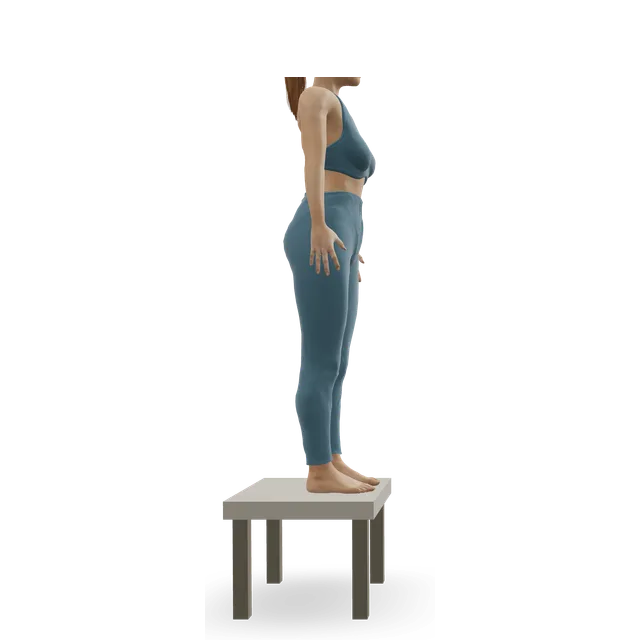 3D demoDepth jumpAdvanced · A step
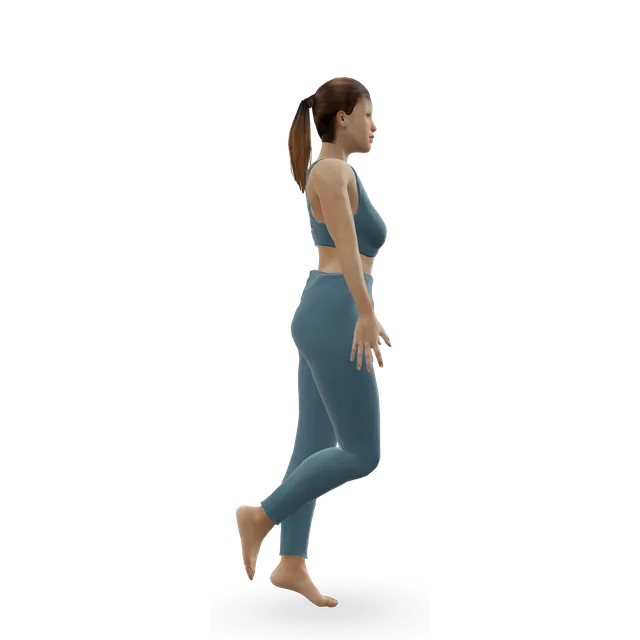 3D demoSingle-leg pogo hopsAdvanced · No equipment
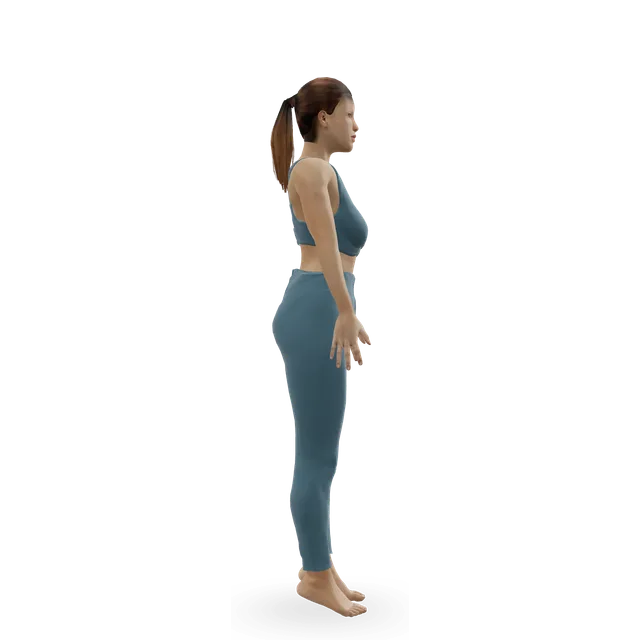 3D demoPogo hopsIntermediate · No equipment
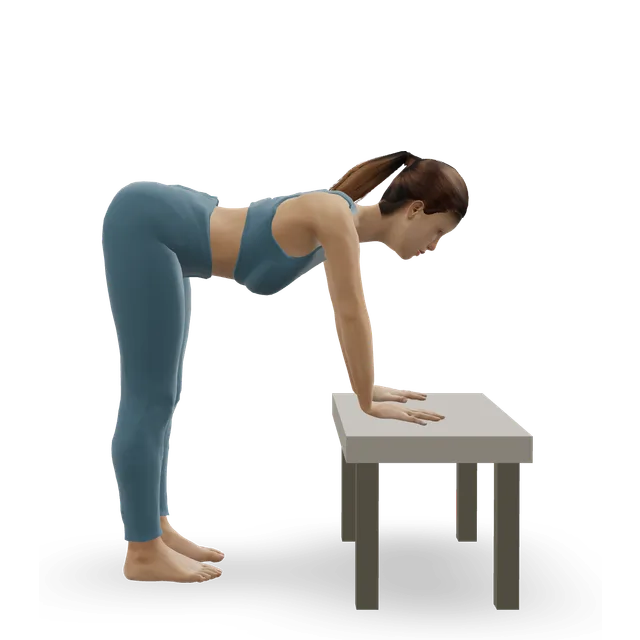 3D demoDonkey calf raiseIntermediate · Other / check instructions
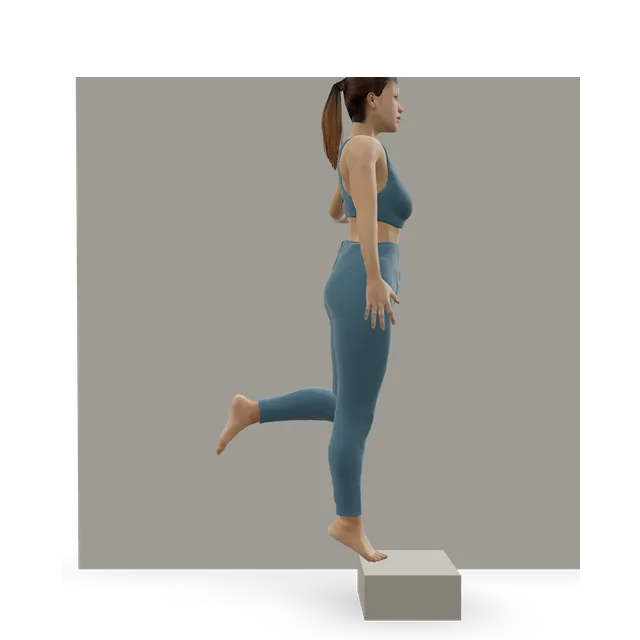 3D demoEccentric heel dropIntermediate · A step
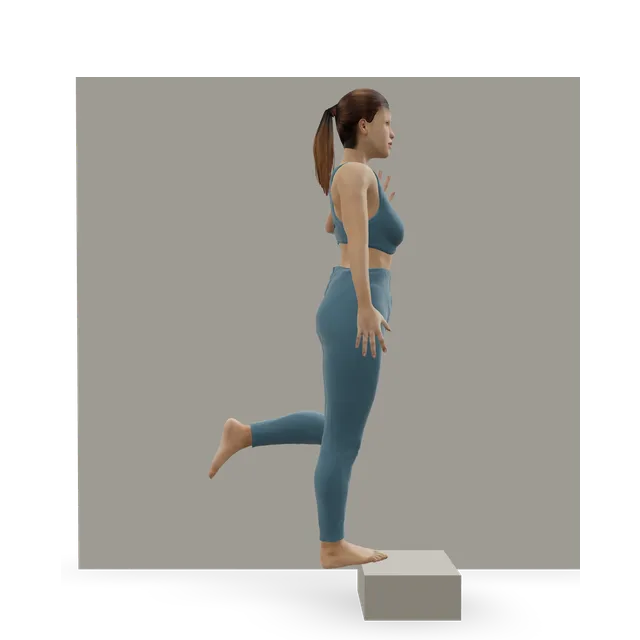 3D demoHeel raise with a towel under the toesIntermediate · A step + Other / check instructions
Browse more
Questions people ask
What muscles does the Skipping work?
Mainly the calves and hip flexors, with help from the quads and glutes.
What equipment do I need for the Skipping?
No equipment: your body weight and a little floor space.
Is the Skipping good for beginners?
It is graded beginner, so it suits most people starting out. When it feels easy, try the Alternate-leg bounding.
What is an easier alternative to the Skipping?
Try the Ankle bounces (mini pogo). It is the suggested step down from this move.
How do I make the Skipping harder?
Progress to the Alternate-leg bounding or the Diagonal bounds. Follow that guide’s technique and any stated timing.