Push-up
A floor push-up supported on the hands and toes.
Push-up family
Push-up
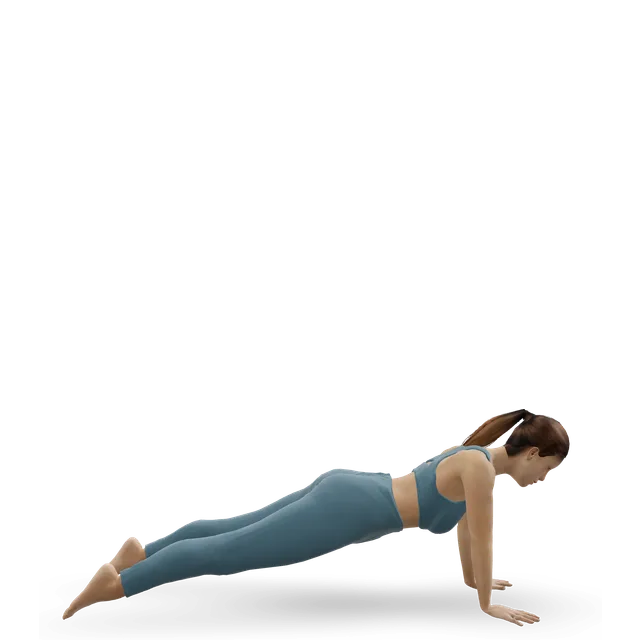
Loading the 3D figure…
Source-researched guide.
How to move
- Set your hands just outside shoulder width and step back onto your toes, making a long line from head to heels.
- Bend the elbows to lower your chest with control; keep your pelvis from dropping or lifting first.
- Press through the hands to return without snapping the elbows or holding your breath.
Form cues
- Keep the elbows about 45 degrees from the body: angled back, not flared straight sideways.
- Choose a range you can control.
Practice and cautions
No universal dose is assigned. Choose a manageable amount for your current capacity, leave room for controlled repetitions, and allow recovery. A clinician’s individual plan takes priority.
If your lower back arches or your hips drop, go back to an incline rather than pushing through. With wrist pain, put your hands on a bench, or use fists, push-up handles or dumbbells to keep the wrists straight. With heart failure, avoid full push-ups: use a wall push-up instead (British Heart Foundation advice). After heart surgery through the breastbone, or a heart or lung transplant, follow your surgeon's advice before pushing, pulling or lifting with your arms. After breast cancer surgery or reconstruction, follow your surgical team's advice on when you can lift your arm above shoulder height, or push, pull or lift with it. This is movement education, not an assessment or treatment prescription. Stop for sharp or increasing pain, dizziness, numbness or tingling; seek individual guidance for symptoms, injury or restrictions.
Sources and review status
Sources support the educational description; they do not establish that this exercise is suitable for you.
- ACE · Push-up ↗
- NASM · Push-up ↗
- Free Exercise DB · alias and muscle metadata ↗
Unlicense · Free Exercise DB contributors; derived from wrkout/exercises.json. Text import; no photographs or media. · Revision f00c92c7dcf1216a928a52c3706c7ce8e2f71ed5
No variation is labeled clinically validated.
What it works
Muscles
Main: Chest, Triceps. Also: Shoulders, Abs.
Anatomy: Pectoralis major, Pectoralis minor, Serratus anterior, Triceps brachii.
Equipment
None: body weight and floor space.
Level
Intermediate. See the easier and harder options above.
Workouts that use it
- Full-body bodyweight workout · 30 min
- Resistance band workout · 30 min
- Chest workout (gym) · 45 min
- Push-up progression workout · 15 min
- Full-body gym workout B · 50 min
- Full-body dumbbell workout B · 35 min
- Upper body workout at home · 30 min
- Full-body mat Pilates workout · 30 min
Show all 41 workoutsShow fewer workouts
- 20-minute full-body strength workout · 20 min
- Weights then cardio: a steadier-glucose workout · 45 min
- Strength workout for runners (gym) · 45 min
- Strength workout for runners at home · 40 min
- Full-body calisthenics workout · 45 min
- Bench press technique workout · 30 min
- Strength workout for cyclists (gym) · 50 min
- Golf strength and power workout · 45 min
- Climbers' antagonist and shoulder workout · 30 min
- Push-up challenge workout · 15 min
- 7-minute workout: follow-along timer, 12 moves · 12 min
- Circuit training workout: 8 stations, dumbbells or bodyweight · 35 min
- EMOM workout: every minute on the minute · 22 min
- Strength workout for boxers: legs, power, shoulders and grip · 45 min
- Drop-set workout: shoulders and arms · 20 min
- CrossFit-style workout for beginners: learn the lifts, then a short scaled workout · 45 min
- Strength workout for rowers: legs, hinge, pull and trunk · 50 min
- Strength and landing workout for skateboarders: legs, ankles, wrists and core · 45 min
- Strength and landing workout for snowboarders: legs, trunk rotation, landings and wrists · 45 min
- Strength workout for mountain bikers: heavy trunk work, legs, pulling and grip · 50 min
- Strength workout for paddlers: heavy pulling, trunk rotation and shoulder care for kayaking, canoeing and SUP · 50 min
- Aerial conditioning workout: pull-ups, hangs, inversions, shoulders, grip and landings for silks, hoop and trapeze · 50 min
- Strength workout for teenagers: technique first, with jumps and landings · 40 min
- Resistance band workout B: rows, push-ups, split squats and hip hinges · 35 min
- Chest workout at home: push-ups, floor presses and flys · 30 min
- Pilates strength workout: a 30-minute class with weights or a band · 30 min
- Bench press strength workout: heavy sets, close-grip presses and the upper back · 60 min
- Arm supersets: push-up steps with rows, curls with triceps · 20 min
- Fitness test workout: chair stands, push-ups, a plank and a timed walk or run · 45 min
- Tricep workout: a close-grip press, then overhead, lying and pushdown extensions · 35 min
- One-arm push-up progression: archer push-ups to one arm · 30 min
- Clap push-up progression: from wall bounces to clap push-ups · 25 min
- More push-ups workout: harder sets, quick practice sets and a pull · 30 min
Pain guides that use it
Part of a staged plan, with when to get help first.
- Shoulder pain: exercises that help, and when to get it checked
- Shoulder impingement and rotator cuff pain: the exercises that help, and what surgery trials found
- After a shoulder dislocation, and shoulders that slip: rehab exercises and the real risk of it happening again
- Tennis elbow: exercises that help, and honest answers on straps and injections
- Sprained wrist or broken? How to tell, the scaphoid fracture to rule out, and a rehab plan
- Wrist pain in push-ups and yoga: what to change now and how to build back
- AC joint injury and pain: a separated shoulder, AC joint arthritis and weightlifter's shoulder
- Winged scapula: why a shoulder blade sticks out, the nerve causes to rule out, and exercises that help
Show all 42 pain guidesShow fewer pain guides
- Gymnast's wrist: growth plate pain in young gymnasts, how long to rest, and the way back to handstands
- Elbow OCD (osteochondritis dissecans): outer elbow pain in young throwers and gymnasts, and Panner's disease
- Pulled chest muscle or torn pec: how to tell, when it needs surgery, and the way back to pressing
- Ganglion cyst on the wrist, hand or foot: will it go away, should you drain it, and training with one
- Stingers and burners: a burning, dead arm after a tackle, when it's an emergency, and playing again
- Exercises after shoulder stabilisation surgery: recovery after a Bankart repair or Latarjet
- Shoulder pain when bench pressing: what's likely, what to change and how to build back
- Triceps tendonitis and tears: back-of-elbow pain, a loading plan, and the weakness to get checked
- Chest muscle pain: a strained muscle, the chest wall, the heart and lungs, and how to build back
- Sternum (breastbone) pain: the chest wall, a blow, reflux, the heart and lungs, and what helps
- Wrist pain when lifting weights: presses, front squats, curls, grip, wraps and the TFCC
- Shoulder pain after a workout: soreness or injury, the lifts behind it, and training again
- Shoulder pain in men: dislocations and the gym, the rotator cuff later, and heart attack signs
- Elbow pain in men: tennis and golfer's elbow, lifting and trade work, a torn biceps, nerves and gout
- Wrist pain when bending it back: push-ups, yoga, a fall, hidden ganglions and the scaphoid
- Elbow pain when straightening your arm: the back of the elbow, tennis elbow, stiffness, what helps
- Shoulder pain when doing push-ups: the rotator cuff, the AC joint, hand position and what helps
- Elbow pain when doing push-ups: the back, inside and outside of the elbow, the nerve and what helps
- Shoulder pain when doing dips: the front of the shoulder, depth, the AC joint and what helps
- Elbow pain when doing tricep extensions: the back of the elbow, the nerve and what helps
- Neck pain when doing push-ups: head position, the shoulder blades, planks and nerve signs
- Wrist pain when doing planks: the wrist bent back, forearm planks, fists, handles and swaps
- Wrist pain when doing the bench press: the bent-back wrist, bar position, grip, wraps and swaps
- Elbow pain when bench pressing: inner and outer elbow, the triceps tendon, grip, lockout and swaps
- Lower back pain when bench pressing: the arch, leg drive, the hips lifting, the set-up and swaps
- Elbow pain when doing dips: the back, inside and outside of the elbow, depth, bench and bar dips
- Neck pain when bench pressing: the traps, your head on the bench, straining, the set-up and swaps
- Upper back pain when bench pressing: between the shoulder blades, the set-up, rib joints and swaps
- Shoulder pain on the chest fly: the front of the shoulder, the pec tendon, depth and the pec deck
- Shoulder pain when doing planks: the front and top of the shoulder, the shoulder blade, side planks
- Lower back pain when doing burpees: the plank, the landing, tiredness and the swaps that help
- Wrist pain when doing dips: the back of the wrist, bars and handles, depth, bench dips and swaps
- Back pain when doing push-ups: the lower back sagging, between the shoulder blades, and swaps
- Shoulder pain from rugby: tackles, dislocations, the AC joint, the rotator cuff, stingers and help
Guides that use it
- Pilates for strength guide
- Pilates for women over 40 guide
- Pilates for the upper body guide
- Pilates for the chest guide
- Pilates for men over 40 guide
- Yoga for arms guide
- Yoga for the upper body guide
- Elbow joint guide
Show all 81 guidesShow fewer guides
- Exercise for osteoporosis and osteopenia
- Strength training for women
- Exercise for men
- Exercise with type 1 diabetes
- Exercise for children and teenagers
- Exercise for ADHD
- Diastasis recti exercises
- Rhabdomyolysis (rhabdo) and exercise
- Exercise with HIV
- Exercise with cystic fibrosis
- Exercise for prediabetes
- Training guide
- Progressive overload guide
- Rest between sets guide
- How often to work out guide
- How to build muscle guide
- Push-ups guide
- How to bench press guide
- Burpees guide
- 7-minute workout guide
- Circuit training guide
- EMOM and AMRAP guide
- Supersets guide
- Drop sets guide
- RPE and RIR guide
- Compound vs isolation guide
- Free weights vs machines guide
- Chest flys guide
- How to lose belly fat guide
- How to get a bigger chest guide
- How to lose arm fat guide
- How to lose face fat guide
- How to tone up guide
- How to gain weight guide
- How to get stronger guide
- How long a workout should be guide
- Incline bench press guide
- Decline bench press guide
- Plank guide
- Inchworms guide
- Diamond push-ups guide
- Pike push-ups guide
- Decline push-ups guide
- Clap push-ups guide
- Renegade rows guide
- Floor press guide
- Scapular push-ups guide
- Chest press machine guide
- Incline push-ups guide
- Dumbbell bench press guide
- Air bike guide
- How to lose back fat guide
- How to lose chest fat guide
- How to lose love handles guide
- Body recomposition guide
- How to get a smaller waist guide
- Do more push-ups guide
- Build muscle at home guide
- Hip fat guide
- Strengthen your shoulders guide
- Muscular endurance guide
- Strengthen your wrists guide
- Strengthen your arms guide
- Build muscle as a woman guide
- Build muscle over 40 guide
- Toned arms guide
- Push-up test guide
- Climbing guide
- Boxing guide
- CrossFit and functional fitness guide
- Mountain biking guide
- Kayaking and paddleboarding guide
- Aerial arts guide
Similar moves
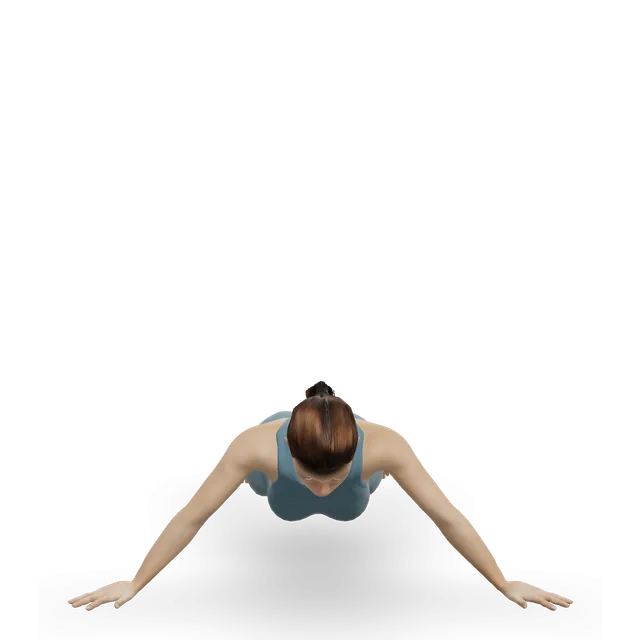
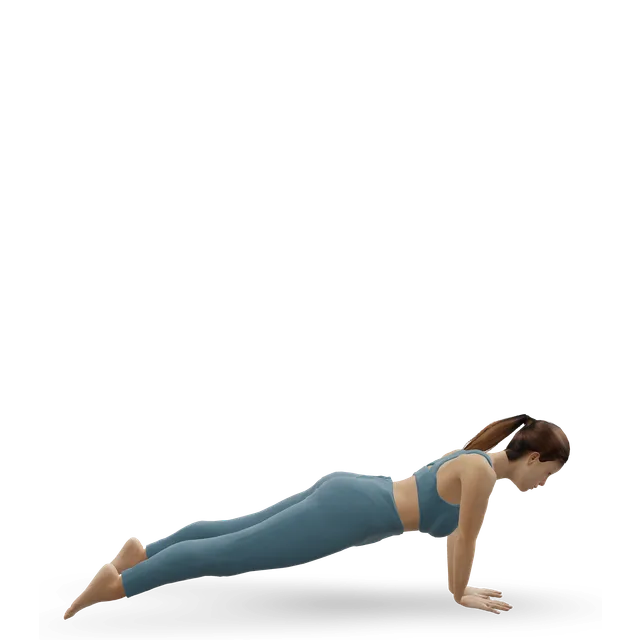
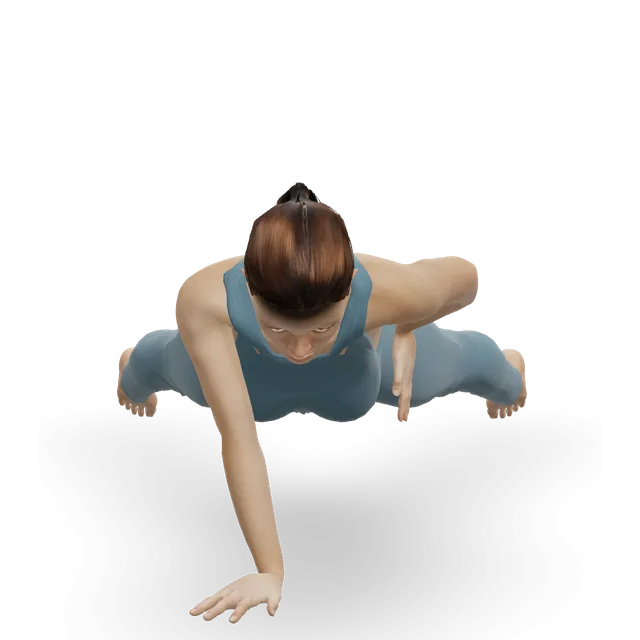
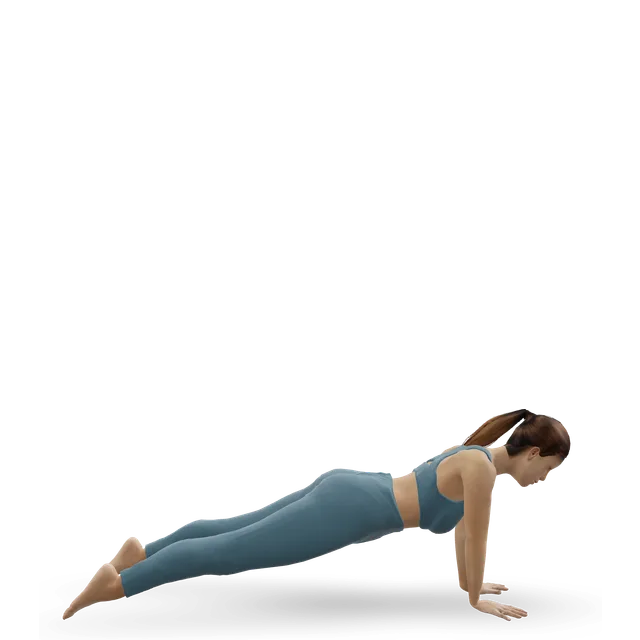
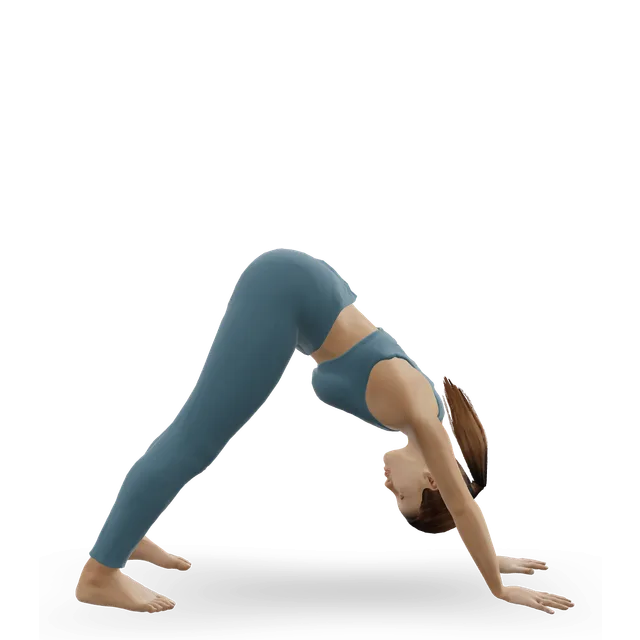
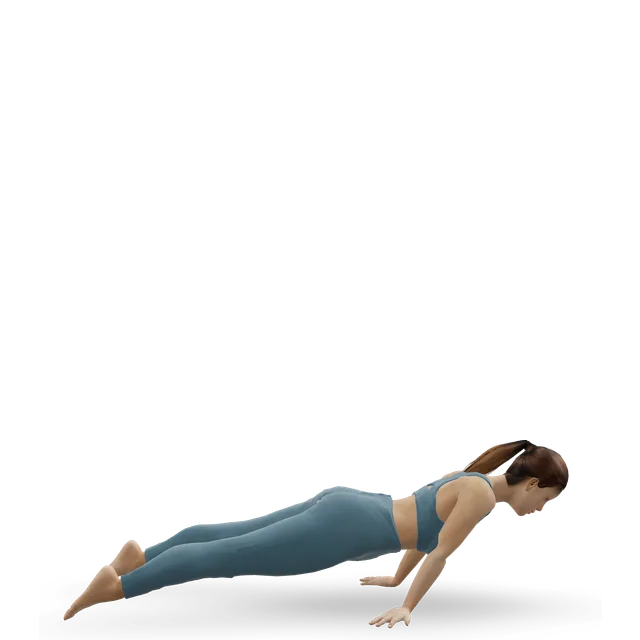
Browse more
Questions people ask
What muscles does the Push-up work?
Mainly the chest and triceps, with help from the shoulders and abs.
What equipment do I need for the Push-up?
No equipment: your body weight and a little floor space.
Is the Push-up good for beginners?
It is graded intermediate. If it is too hard right now, start with the Wall push-up.
What is an easier alternative to the Push-up?
Try the Wall push-up or the Wide incline push-up. Both are written steps in the same progression.
How do I make the Push-up harder?
Progress to the Close-grip push-up (close triceps position) or the Four-limbed staff pose (Chaturanga Dandasana). Follow that guide’s technique and any stated timing.