Bird dog
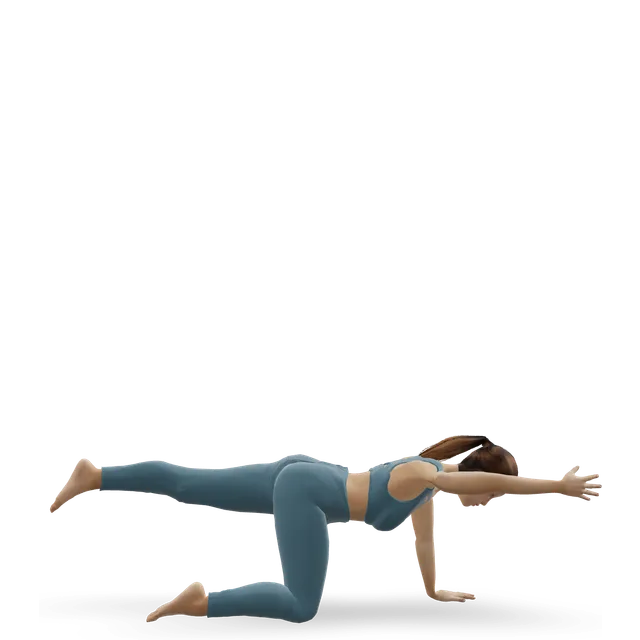
From all fours, the opposite arm and leg reach long together and hold while the back stays still: the back-extensor exercise of McGill's three for spine health.
Bird dog family
Bird dog
Loading the 3D figure…
Source-researched guide.
How to move
- Kneel on all fours, hands under the shoulders and knees under the hips, the back flat and the neck long.
- Reach one arm forward and the opposite leg back until both are level with the body, and hold for a few seconds.
- Return to all fours and repeat on the other side.
Form cues
- Keep the hips and shoulders level: no tipping toward the lifted leg.
- Reach long rather than high; the back should not arch.
Practice and cautions
No universal dose is assigned. Choose a manageable amount for your current capacity, leave room for controlled repetitions, and allow recovery. A clinician’s individual plan takes priority.
After a knee replacement, don't kneel on the new knee until your doctor says you can, as the NHS advises. After that, kneeling is often uncomfortable but hasn't been shown to harm a new knee, so kneel on a cushion, as one NHS trust's leaflet suggests. After ACL surgery, kneel only once it's comfortable and your team agrees, and pad the knee (our suggestion): a Cochrane review found more kneeling problems after a patellar tendon graft than a hamstring graft. Wrist pain is common on all fours. Make fists or use push-up handles instead of flat hands. After heart surgery through the breastbone, or a heart or lung transplant, follow your surgeon's advice before pushing, pulling or lifting with your arms. This is movement education, not an assessment or treatment prescription. Stop for sharp or increasing pain, dizziness, numbness or tingling; seek individual guidance for symptoms, injury or restrictions.
Sources and review status
Sources support the educational description; they do not establish that this exercise is suitable for you.
- Harvard Health · Three moves for better spine health (the bird dog among McGill's three) ↗
- Hayden 2021 · Exercise therapy for chronic low back pain (Cochrane review, 249 trials) ↗
- Callaghan 1998 · Spine load in four back-extensor exercises in 13 young men (one leg extended with the spine held still loaded the spine less than lifting the trunk; the opposite arm added challenge; Phys Ther, read as an abstract) ↗
- McGill and Karpowicz 2009 · The curl-up, side bridge and bird dog in 8 men: progressions, with squares drawn by the hand and foot raising the challenge (Arch Phys Med Rehabil) ↗
- NHS · Recovering from a knee replacement: don't kneel on your new knee until your doctor says you can ↗
- Royal Berkshire NHS Foundation Trust · Advice and exercises after a total knee replacement: kneeling won't harm the replacement; start on something soft, then use a cushion (physiotherapy leaflet, 2024) ↗
- Wylde 2019 · Kneeling after knee replacement: often difficult, with no evidence of a clinical reason not to kneel (narrative review, EFORT Open Rev) ↗
- Mohtadi 2011 · Patellar tendon or hamstring graft for ACL rupture: more kneeling problems after a patellar tendon graft (Cochrane review) ↗
No variation is labeled clinically validated.
What it works
Muscles
Main: Back, Abs. Also: Glutes, Shoulders.
Anatomy: Latissimus dorsi, Teres major, Trapezius, Rhomboids, Erector spinae, Multifidus.
Equipment
None: body weight and floor space.
Level
Beginner. See the easier and harder options above.
Workouts that use it
- Beginner bodyweight workout · 20 min
- Beginner core workout · 15 min
- Beginner Pilates workout · 20 min
- Pilates for back pain (gentle routine) · 15 min
- Beginner Pilates for over-50s · 20 min
- Yoga and Pilates workout (try both) · 25 min
- Pregnancy Pilates workout (no lying on your back) · 20 min
- Fascia release for the back · 15 min
Show all 78 workoutsShow fewer workouts
- Anterior pelvic tilt routine: hips and core · 20 min
- Spine mobility routine: neck to pelvis, every direction · 15 min
- McGill big 3 core routine · 12 min
- Mobility routine for cyclists · 15 min
- Hiking training workout · 35 min
- Plank challenge workout · 12 min
- Volleyball injury prevention · 30 min
- Sensory movement break: wake up, focus, calm down · 12 min
- Postnatal strength workout (from about 6 weeks) · 25 min
- Strength workout for rowers: legs, hinge, pull and trunk · 50 min
- Strength workout for field hockey: legs, hamstrings, groins and trunk · 45 min
- Strength workout for horse riders: core endurance, hips, legs and back · 40 min
- Squash strength and injury prevention · 35 min
- Table tennis strength and footwork workout · 40 min
- Strength workout for spin classes: legs, jumps for bone, back, neck and shoulders · 45 min
- Pilates for osteoporosis: a mat class with safe swaps · 25 min
- Pilates for posture: upper back, shoulders and neck · 20 min
- Pilates for scoliosis: an even, both-sides routine · 20 min
- Pilates for your pelvic floor: squeeze, move, release · 20 min
- Crunch and sit-up workout: from the crunch to the full sit-up · 15 min
- Yoga for scoliosis: a 25-minute even, both-sides sequence · 25 min
- Yoga for menopause: a 35-minute practice for strength, balance and winding down · 35 min
- Yoga for core strength: a 20-minute practice · 20 min
- Posterior pelvic tilt and flat back routine: back, hips and core · 20 min
- Core session B: side planks, bird dogs and a carry · 12 min
- Hip and core control routine: even strength around the pelvis · 25 min
- Standing Pilates for balance: a 25-minute counter and mat class · 25 min
- Flutter kick progression workout: from heel taps to low flutter kicks · 15 min
- Lower ab workout: a leg raise ladder from heel taps to bench leg raises · 15 min
- Lower back strengthening workout: bird dogs to supermans, no equipment · 20 min
- V-up progression: from dead bugs and the hollow hold to the V-up · 20 min
- Mat Pilates after a hip replacement: a 25-minute return class with no deep hip bends · 25 min
- Off-the-bike Pilates for cyclists: a 25-minute class for back extension, trunk and hips · 25 min
- Seat-and-symmetry Pilates for horse riders: a 25-minute mat and standing class · 25 min
- Yoga for glutes: a 25-minute class for the big and side glutes · 25 min
- Spine-extension Pilates for ankylosing spondylitis: a 25-minute class for posture, rotation and breathing · 25 min
- Recovery-day Pilates for footballers: a 25-minute class for trunk, groin, hips and hamstrings · 25 min
- Shoes-on Pilates for diabetes: a 30-minute head-up strength class · 30 min
- Head-up Pilates for high blood pressure: a 30-minute class that keeps you breathing · 30 min
- Hip hinge workout: learn to hinge in 15 minutes, no equipment · 15 min
- Off-the-erg Pilates for rowers: a 25-minute class for trunk endurance, hips, upper back and shoulder blades · 25 min
- Short-block Pilates for ADHD: a 20-minute class with active bursts, coordination, balance and a calm finish · 20 min
- Core strength workout: one move for each job your trunk does · 25 min
- Pilates for a herniated disc: a 20-minute knees-bent class that lets your leg decide · 20 min
- Pilates for bloating: a 20-minute class for a swollen, uncomfortable tummy · 20 min
- V-sit progression: from the boat pose to the V-sit hold and the gymnastic V-sit · 20 min
- Build-stage Pilates for hip bursitis: a 25-minute class that loads the side of the hip without squeezing it · 25 min
- Yoga for a hip labral tear or impingement: a 25-minute class that builds hip strength and stays out of the pinch · 25 min
- Pinch-free Pilates for a hip labral tear or impingement: a 25-minute class for hip strength in every direction · 25 min
- Up-in-stages Pilates for low blood pressure: a 25-minute class that wakes your legs before you stand · 25 min
- Both-sides yoga for horse riders: a 25-minute class for the hips, back and balance, after riding or on a non-riding day · 25 min
- Yoga for rowers: a 25-minute class for the hips at the catch, back endurance and the upper back, off the water · 25 min
- Yoga for cricketers: a 25-minute class for turning both ways, hips, hamstrings and one-leg balance, on a rest day or after a long day in the field · 25 min
- Rest-day Pilates for lifters: a 25-minute class for trunk endurance, the hinge, hips, ankles and the upper back, breathing out on every effort · 25 min
- Both-ways Pilates for cricketers: a 25-minute class for rotation, trunk and side endurance, the hips and hamstrings, both shoulders and front-leg balance, with no back bends · 25 min
- Yoga for gymnasts: a 25-minute control class for wrists, shoulders, the trunk and active range, with no extra stretching · 25 min
- Court-ready Pilates for pickleball players: a 25-minute class for balance and stepping, calves, hips, the trunk, and the paddle shoulder and forearm · 25 min
- Off-ice Pilates for figure skaters: a 25-minute class for both-ways rotation, the trunk, the landing leg, hips and ankles, with back bends kept small · 25 min
- Yoga for wrestlers: a 25-minute room-temperature class for the upper back and shoulders, hips out of the stance, back endurance and slow breathing, with nothing on the head · 25 min
- Control Pilates for gymnasts: a 25-minute class for trunk endurance, shoulder blades without weight on your hands, hips you control and the landing leg, with no extra stretching · 25 min
- Yoga for skateboarders: a 25-minute class for ankles and one-leg balance, the riding stance, wrists in stages, hips and the back, after skating or on a rest day · 25 min
- After-shift Pilates for nurses: a 20-minute class with your legs up, a gentle lower back, hips, neck and shoulders, and a wind-down for sleep · 20 min
- Yoga for firefighters: a 25-minute room-temperature class for the upper back and shoulders, hips and legs, trunk endurance and a slow wind-down, for rest days and after shifts · 25 min
- After-shift Pilates for firefighters: a 25-minute class for back and trunk endurance, the hinge, shoulder blades, one-leg balance and a wind-down · 25 min
- Chair-to-mat Pilates for veterans: a 25-minute class for the back, upper back, legs and balance, with a seated option for every block · 25 min
- Landing-leg Pilates for netball players: a 25-minute class for the ankles, the landing leg for quick stops, trunk control, the hips and shoulders · 25 min
- Yoga for teens: a 25-minute class for strength, balance and a calm finish, with a 10-minute exam-week version · 25 min
- Yoga for diastasis recti: a 25-minute class for a tummy gap, with head lifts and no planks · 25 min
- Strength, balance and stamina Pilates: a 35-minute class for ageing well · 35 min
- Counter-to-mat Pilates for women over 60: a 30-minute class for the pelvic floor, bone, leg and back strength, and balance · 30 min
Pain guides that use it
Part of a staged plan, with when to get help first.
- Lower back pain: exercises that help, and when to get it checked
- Back spasm or pulled back muscle: what to do now, and what helps it settle
- Herniated, bulging or slipped disc: what the scan means and how to exercise
- Lumbar spinal stenosis: exercises that ease leg pain when you walk
- SI joint pain: exercises, belts and what the evidence really shows
- Chronic low back pain: the exercise that works is the one you keep doing
- Hip impingement (FAI): exercise first, and what to expect
- Piriformis syndrome (deep gluteal syndrome): what helps, and what it might really be
Show all 70 pain guidesShow fewer pain guides
- Sciatica exercises: what helps, nerve glides, and when to worry
- Tailbone pain (coccydynia): what helps, what the evidence shows, and when to get it checked
- Spondylolisthesis and spondylolysis: exercises for a slipped or cracked vertebra, at any age
- Degenerative disc disease: what the label means, what scans show, and what helps
- Sports hernia (inguinal-related groin pain): rehab, surgery and how it differs from a hernia
- Pulled stomach muscle and side strain: tummy pain that isn't a strain, recovery times, and a staged plan
- Hip pointer: a bruised hip bone, the teenage fractures that mimic it, and getting back to sport
- Scheuermann's disease (Scheuermann's kyphosis): a stiff, rounded upper back in teenagers, and what helps
- Child's broken elbow (supracondylar fracture): emergency signs and getting back to play
- Lower back pain after deadlifts: what usually happened, the warning signs and the way back
- Lower back pain when running: why it happens, whether running harms your back, and the way back
- Lower back pain when cycling: reach, saddle and bars, back and hip strength, and how to build back
- Lower back pain when swimming: which strokes, kicks and turns to change, and a plan back
- Lower back pain from sitting: why sitting hurts, what to change and how to build back
- Lower back pain in the morning: waking up stiff, mattresses, inflammatory back pain and what helps
- Lower back pain when standing: standing still, work, mats and shoes, stenosis and how to build back
- Lower back pain when bending: bending over and lifting, discs and sciatica, and how to build back
- Lower back pain when lying down: positions, pillows, night pain, the warning signs and what helps
- Buttock pain (bum pain): the back, the hip, the sitting bone, piriformis and when to worry
- Lower back pain after squats: soreness or a strain, depth, bar position, belts and squatting again
- Lower back and hip pain: back or hip, the SI joint, sciatica, the outer hip and the warning signs
- Lower back pain in men: the back itself, lifting at work, the kidneys, the prostate and an aneurysm
- Back pain when sneezing or coughing: a strain, a disc or a fracture, how to brace and when to worry
- Lower back pain after a workout: soreness or a strain, the moves behind it, and training again
- Back pain in children and teenagers: muscles, sport, school bags, warning signs and staying active
- Back pain in pregnancy: why it happens in each trimester, what helps, and the signs to call about
- Elbow pain in children and teens: a pulled elbow, falls, the throwing elbow, and when it's urgent
- Neck pain in pregnancy: posture, sleep and feeding positions, headaches, and the signs to check
- Buttock pain when sitting: the sit bone, deep buttock pain, the back, the tailbone and what helps
- Hip pain when bending over: the hip joint, the groin, the back, socks and shoes, and what helps
- Lower back pain when bending backwards: facet joints, stress fractures, back bends and what helps
- Lower back pain when doing leg raises: the arch, the hip flexors, the tummy muscles and what helps
- Neck pain when doing sit-ups: pulling on your head, the neck muscles, technique and swaps
- Lower back pain when doing planks: the sag, the hip flexors, holding too long and what helps
- Lower back pain on the leg press: the pelvis lifting off the pad, depth, seat, feet and what helps
- Lower back pain when doing hip thrusts: arching at the top, the bench, the bar and what helps
- Lower back pain when doing sit-ups: the arch, the hip flexors, the tailbone, crunches and what helps
- Lower back pain when doing lunges: the arch, the trunk lean, the back hip, stance and balance
- Lower back pain when doing kettlebell swings: the hinge, the top of the swing, the bell and load
- Lower back pain on a rowing machine: the catch, the drive and finish, the damper and how long to row
- Lower back pain when bench pressing: the arch, leg drive, the hips lifting, the set-up and swaps
- Lower back pain when overhead pressing: arching, the ribs and bracing, standing or seated, and swaps
- Lower back pain when doing bent-over rows: holding the hinge, rounding as you tire, load and swaps
- Lower back pain when doing good mornings: the bar, how low you hinge, rounding, load and swaps
- Back pain when doing push-ups: the lower back sagging, between the shoulder blades, and swaps
- Lower back pain when doing Russian twists: the rounded twist, your feet, the obliques and swaps
- Lower back pain when doing lat pulldowns: leaning back, the thigh pad, the bar and what helps
- Back pain from jump rope: landings, posture and rope length, young athletes and what helps
- Lower back pain when doing Bulgarian split squats: the arch, the lean, the load, balance and swaps
- Lower back pain after yoga: backbends, forward folds and twists, what to change and a plan back
- Lower back pain after Pilates: double-leg moves, rolling, swan and the reformer, and a plan back
- Back pain when driving: the seat, long journeys, vibration, sciatica and what to change
- Back pain after gardening: digging, weeding, lifting and mowing, the first big day, and what helps
- Back pain after shovelling snow: lifting and throwing, the first big fall, the heart, and what helps
- Back pain when vacuuming: bending and twisting, the handle and the machine, stairs, and what helps
- Back pain after flying: the seat, sleeping upright, lifting cases, blood clots and what helps
- Back pain after moving house: boxes, furniture, stairs and twisting, lifting for now and what helps
- Back pain after a massage: normal soreness, deep pressure, massage guns and the signs to act on
- Back pain after a chiropractor: soreness after an adjustment, flare-ups, rare harms and what helps
- Back pain after dancing: arching, lifts and landings, heels and pole, young dancers, what helps
- Back pain from bowling: fast bowling in cricket, young bowlers, ten-pin, and what helps
- Back pain from hockey: field and ice hockey, the crouch, drag flicks, young players and what helps
Guides that use it
- Pilates guide
- Pilates for beginners guide
- Classical Pilates mat exercises guide
- Pilates for your core guide
- Benefits of Pilates guide
- Pilates vs yoga guide
- Pilates for back pain guide
- Pilates for seniors guide
Show all 210 guidesShow fewer guides
- Pilates in pregnancy guide
- Pilates for osteoporosis guide
- Pilates for posture guide
- Pilates for scoliosis guide
- Pilates for the pelvic floor guide
- Pilates for sciatica guide
- Pilates for MS guide
- Pilates for knee pain guide
- Pilates for diastasis recti guide
- Pilates for anterior pelvic tilt guide
- Pilates at home guide
- Pilates for women guide
- Pilates for balance guide
- Pilates after a hip replacement guide
- Pilates for cyclists guide
- Pilates for horse riders guide
- Pilates for ankylosing spondylitis guide
- Pilates for skiers guide
- Pilates for footballers guide
- Pilates for sleep guide
- Pilates for diabetes guide
- Pilates for high blood pressure guide
- Pilates for heart health guide
- Pilates for fertility guide
- Pilates for teenagers guide
- Pilates for rowers guide
- Pilates for upper back pain guide
- Pilates for the hip flexors guide
- Pilates for office workers guide
- Pilates for ADHD guide
- Pilates for SI joint pain guide
- Pilates for kyphosis guide
- Pilates for prolapse guide
- Pilates for a herniated disc guide
- Pilates for piriformis syndrome guide
- Pilates for neuropathy guide
- Pilates for bloating guide
- Pilates for lymphoedema guide
- Pilates for rounded shoulders guide
- Pilates for sway back guide
- Pilates for spondylolisthesis guide
- Pilates for degenerative disc disease guide
- Pilates for hip bursitis guide
- Pilates over 50 guide
- Pilates for a hip labral tear guide
- Pilates for asthma guide
- Pilates for thyroid problems guide
- Pilates for erectile dysfunction guide
- Pilates for piles guide
- Pilates for fatty liver guide
- Pilates for low blood pressure guide
- Pilates after a hysterectomy guide
- Pilates after a concussion guide
- Pilates for anaemia guide
- Pilates for weightlifters guide
- Pilates for triathletes guide
- Pilates for cricketers guide
- Pilates for volleyball players guide
- Pilates for pickleball players guide
- Pilates for figure skaters guide
- Pilates for martial arts guide
- Pilates for gymnasts guide
- Pilates for hikers guide
- Pilates for nurses guide
- Pilates for firefighters guide
- Pilates for veterans guide
- Pilates for netball guide
- Pilates for IBS guide
- Pilates after spinal fusion guide
- Pilates for belly fat guide
- Pilates for longevity guide
- Pilates for older men guide
- Pilates for atrial fibrillation guide
- Pilates for epilepsy guide
- Pilates for autism guide
- Pilates for older women guide
- Pilates for digestion guide
- Pilates for love handles guide
- Pilates for back fat guide
- Pilates for spine health guide
- Pilates for the waist guide
- Pilates for men over 40 guide
- Yoga for scoliosis guide
- Yoga for menopause guide
- Yoga for period pain guide
- Yoga for posture guide
- Yoga for core strength guide
- Yoga for cyclists guide
- Yoga for glutes guide
- Yoga for SI joint pain guide
- Yoga for kyphosis guide
- Yoga for a herniated disc guide
- Yoga for piriformis syndrome guide
- Yoga after a hip replacement guide
- Yoga for volleyball players guide
- Yoga for spondylolisthesis guide
- Yoga for degenerative disc disease guide
- Yoga for a hip labral tear guide
- Yoga for a hernia guide
- Yoga for horse riders guide
- Yoga for rowers guide
- Yoga for cricketers guide
- Yoga for hockey players guide
- Yoga for figure skaters guide
- Yoga for gymnasts guide
- Yoga for wrestlers guide
- Yoga for skateboarders guide
- Yoga for badminton players guide
- Yoga for nurses guide
- Yoga for firefighters guide
- Yoga for teens guide
- Yoga for diastasis recti guide
- Yoga for anterior pelvic tilt guide
- Yoga for sway back guide
- Yoga for belly fat guide
- Yoga for love handles guide
- Yoga for back fat guide
- Yoga for confidence guide
- Yoga for spine health guide
- Joints guide
- Spine guide
- Fascia exercises guide
- Thoracolumbar fascia guide
- Cupping guide
- Gua sha guide
- Kinesiology tape guide
- Rolfing guide
- Sports massage guide
- Bowen therapy guide
- Fascial manipulation guide
- Lower back guide
- Strain-counterstrain guide
- Exercise for osteoporosis and osteopenia
- Exercise in pregnancy
- Exercise after giving birth
- Exercise and your menstrual cycle
- Exercise for children and teenagers
- Exercises for ankylosing spondylitis
- Exercise for ADHD
- Diastasis recti exercises
- Exercise for endometriosis
- Exercise for IBS
- Exercise for autistic children and adults
- Exercise and epilepsy
- Exercise with a hernia and after hernia surgery
- Exercise after a hysterectomy
- Exercise and eating disorders
- Exercise with fibroids
- Exercise after weight-loss surgery
- Exercise after a caesarean (C-section)
- Exercise with hypertrophic cardiomyopathy (HCM)
- Exercise while breastfeeding
- Posture guide
- Kyphosis guide
- Anterior pelvic tilt guide
- Swayback posture guide
- Scoliosis guide
- Posterior pelvic tilt guide
- Flat back guide
- Lordosis guide
- Pelvic rotation guide
- Flexibility guide
- Plank times guide
- Mountain climbers guide
- Sit-ups guide
- Start working out guide
- Dragon flags guide
- Glute kickbacks guide
- Back extensions guide
- Dead bugs guide
- Bird dogs guide
- Rowing machine guide
- Pallof presses guide
- Flutter kicks guide
- Bear crawl guide
- Plank guide
- Crunches guide
- Leg raises guide
- Supermans guide
- V-ups guide
- Cable crunches guide
- Reverse hyperextensions guide
- Hip hinge guide
- Y-T-W raises guide
- Ab crunch machine guide
- Elliptical guide
- How to get a smaller waist guide
- Core strength guide
- Strengthen your back guide
- Thoracic mobility guide
- Coordination guide
- Training for a hike guide
- Rucking guide
- Plank test guide
- Sit-up test guide
- Cycling guide
- Volleyball guide
- Rowing guide
- Field hockey guide
- Horse riding guide
- Squash guide
- Spin classes guide
Similar moves
 3D demoFront leverExpert · Pull-up bar
 3D demoTuck front leverAdvanced · Pull-up bar
 3D demoChin-up with a knee raise (gorilla chin)Advanced · Pull-up bar
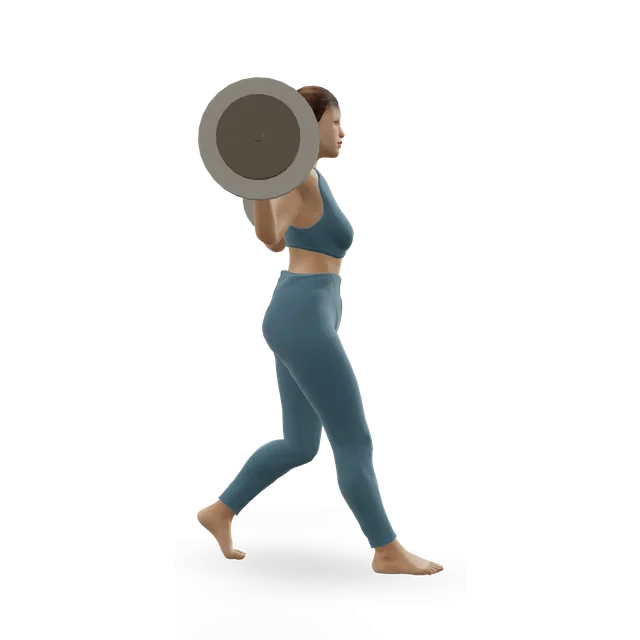 3D demoYoke walkAdvanced · Other / check instructions
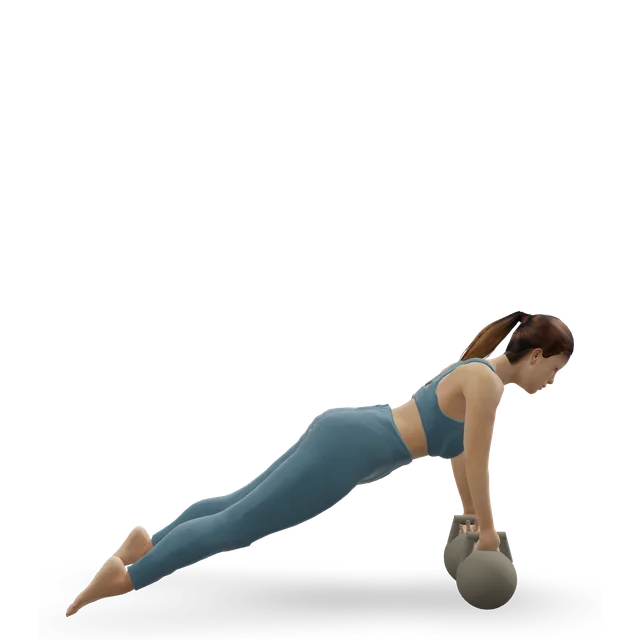 3D demoRenegade rowAdvanced · A kettlebell
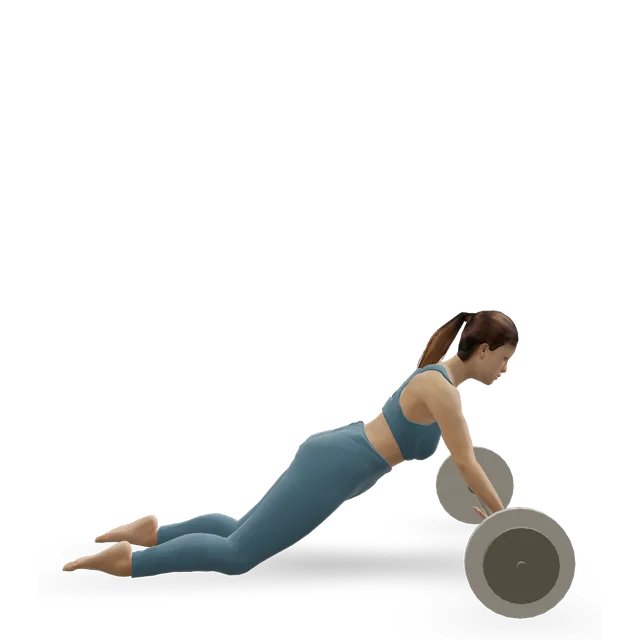 3D demoAb wheel rollout from the kneesAdvanced · An ab wheel
Browse more
Questions people ask
What muscles does the Bird dog work?
Mainly the back and abs, with help from the glutes and shoulders.
What equipment do I need for the Bird dog?
No equipment: your body weight and a little floor space.
Is the Bird dog good for beginners?
It is graded beginner, so it suits most people starting out. When it feels easy, try the Bear crawl.
What is an easier alternative to the Bird dog?
Try the Bird dog, one limb at a time. Both are written steps in the same progression.
How do I make the Bird dog harder?
Progress to the Bear crawl. Follow that guide’s technique and any stated timing.